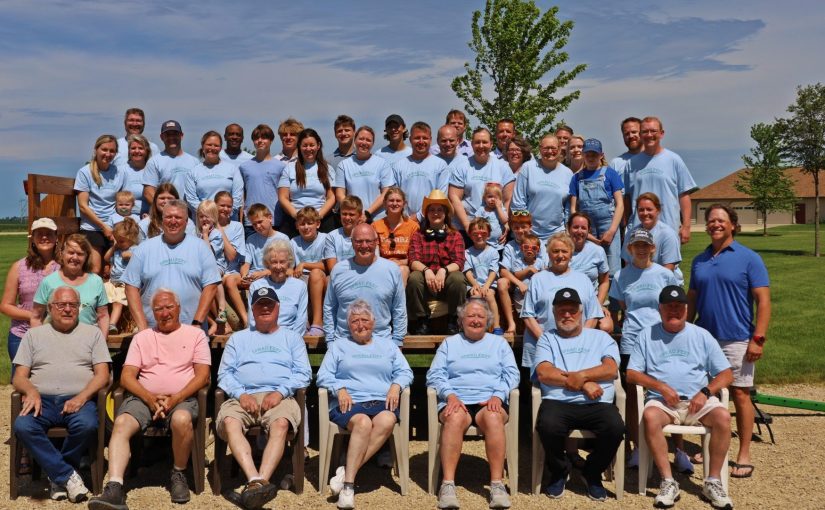
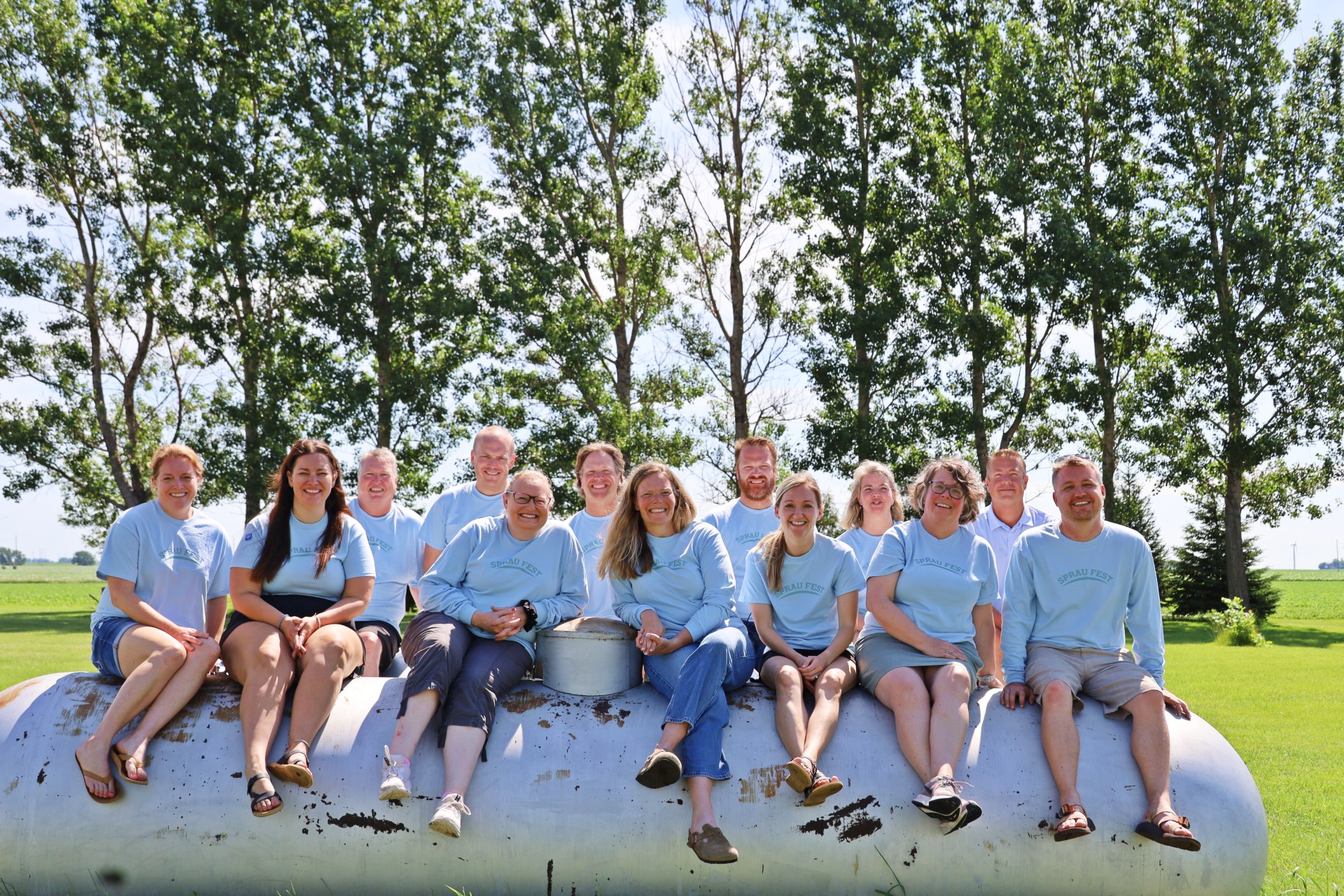
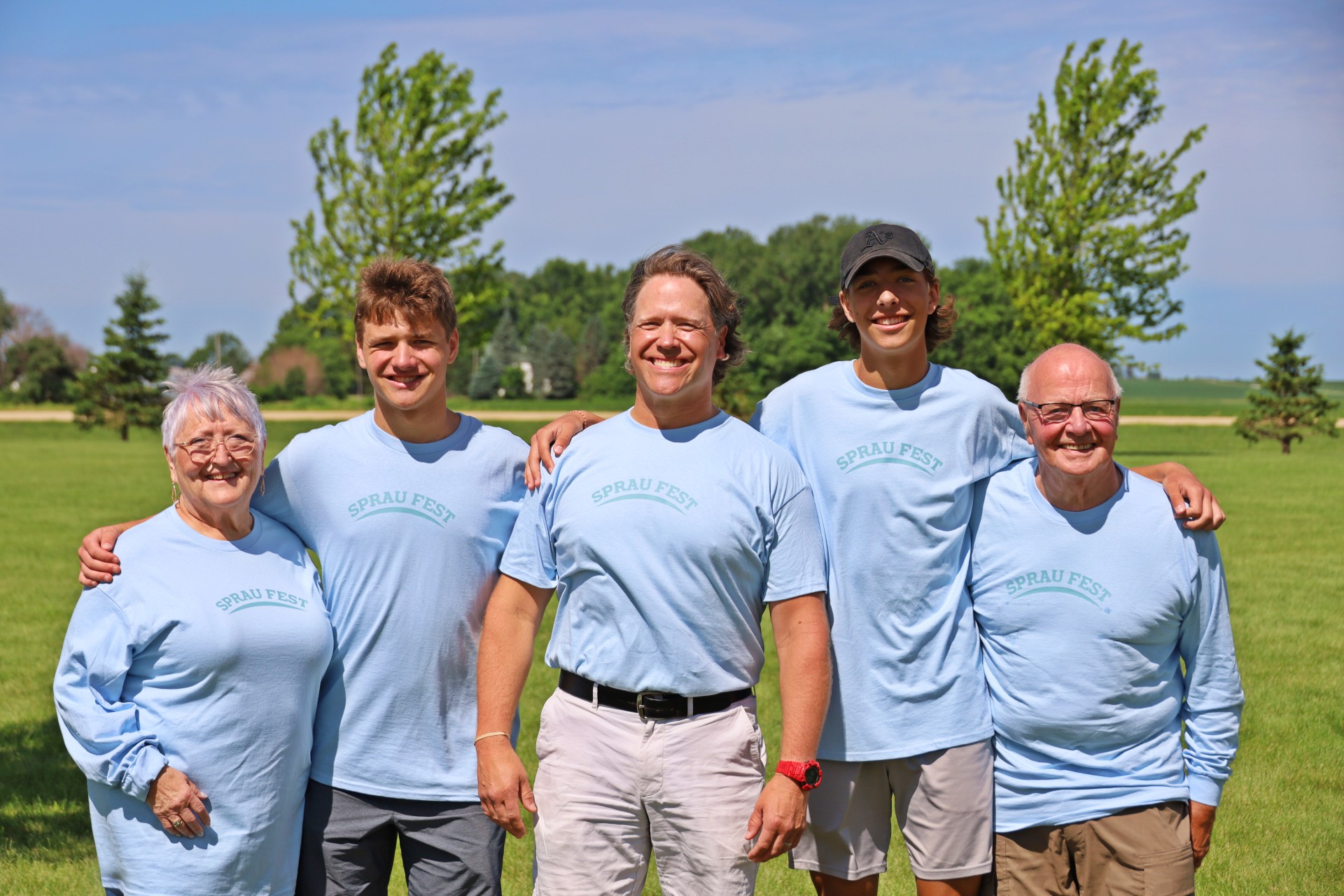
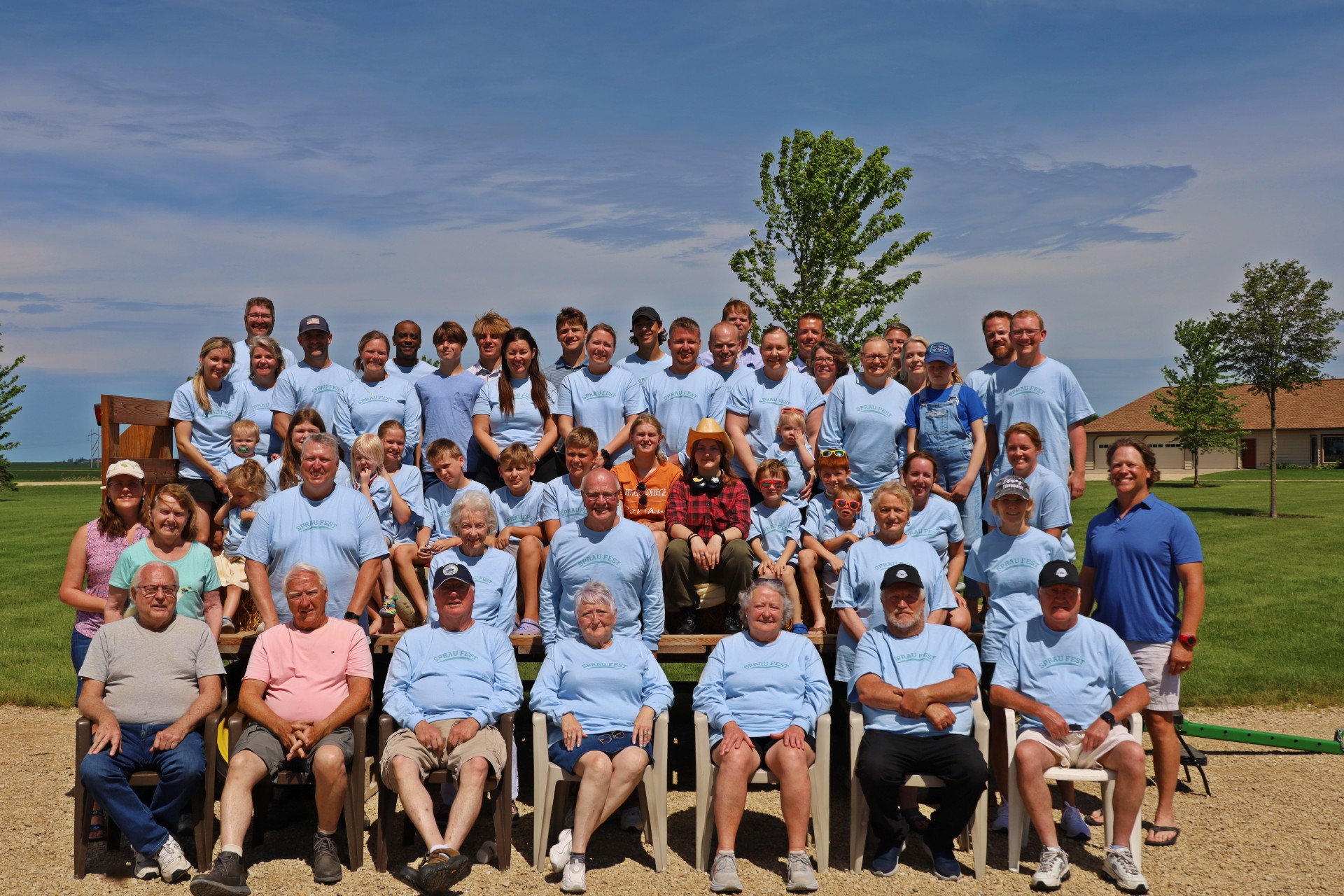
A few weeks ago, I attended a family reunion. It took place in the tiny but personally significant town of Elkton, Minnesota, where my mom Jill (Sprau) Albrecht was born and raised. Elkton is a town of 130 people. My mom is one of 9 kids. So the Sprau family made up a significant percentage of the town. In fact, the town was so small that the gerrymandering lines were drawn between the bedrooms in my Mom’s childhood home.
The Sprau family reunion took place at my Uncle Jerry’s farm. Which is next to my Uncle Randy’s farm, which is next to my Uncle Rod’s farm, where my Grammy’s family, The Andersons, first settled in Mower County, Minnesota. Straight outta Norway.
In addition to the typical cheek-pinching, wow-you’ve-gotten-talling, hot dog and burger eating, photo-taking, game playing and storytelling, we did something else that really got me thinking thoughty thoughts.
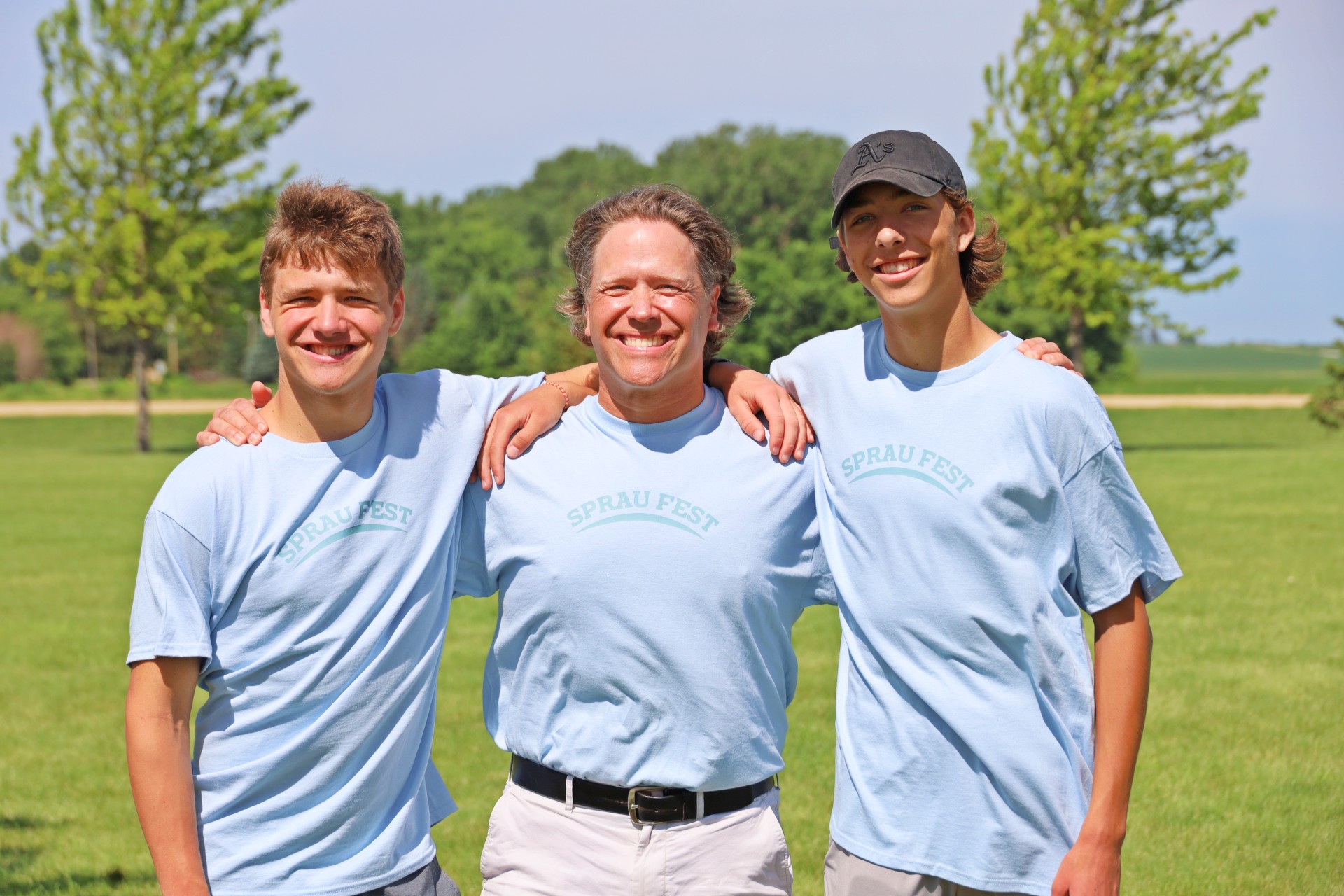
I was asked to lead a session on our Sprau and Anderson family history. I am an amateur genealogist and probably the closest thing we have to a family historian. Much of this started when I was younger and I was told how important my first name, Adam, is on my mom’s side of the family. And of course, my last name, Albrecht, is significant on my Dad’s side of the family. And my middle name, Robert, is both my dad’s first name and my maternal great grandfather, Robert Anderson’s, first name. So it’s not hard to see that I got tangled into this family history through a few well gifted names.
Following my Shed Talk on Friday, which is like a Ted Talk, but in a shed, I had an aha moment. (It was not about a black and white hand drawn music video.)
As a result of my family history talk, and the genealogical homework I did to prepare for the weekend, I started to visualize a model of my life and my place in my family history that I had never considered before.
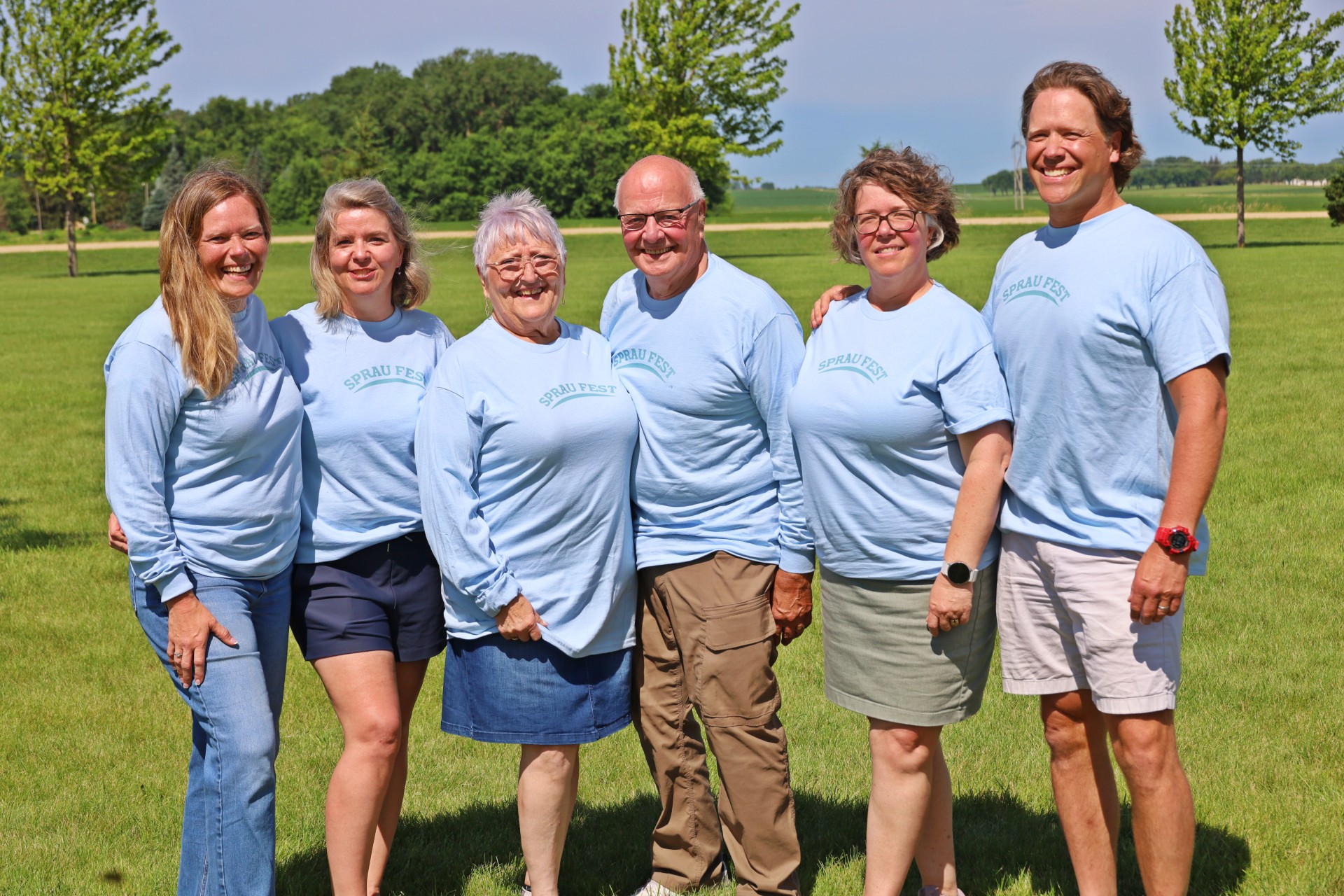
I imagined a simplified version of my family tree that led to me.
Here’s what I pictured:
Above me on my family tree are my 2 parents. So my simplest genealogical tree is an inverted triangle with my parents at the top, and me at the lower point. (Which makes me the low point in our family’s history.)
When you add the layer above that, you find 4 people atop my parents. Obviously, those are my 4 grandparents. And the level above them holds my 8 great-grandparents. Which makes that a pretty great level.
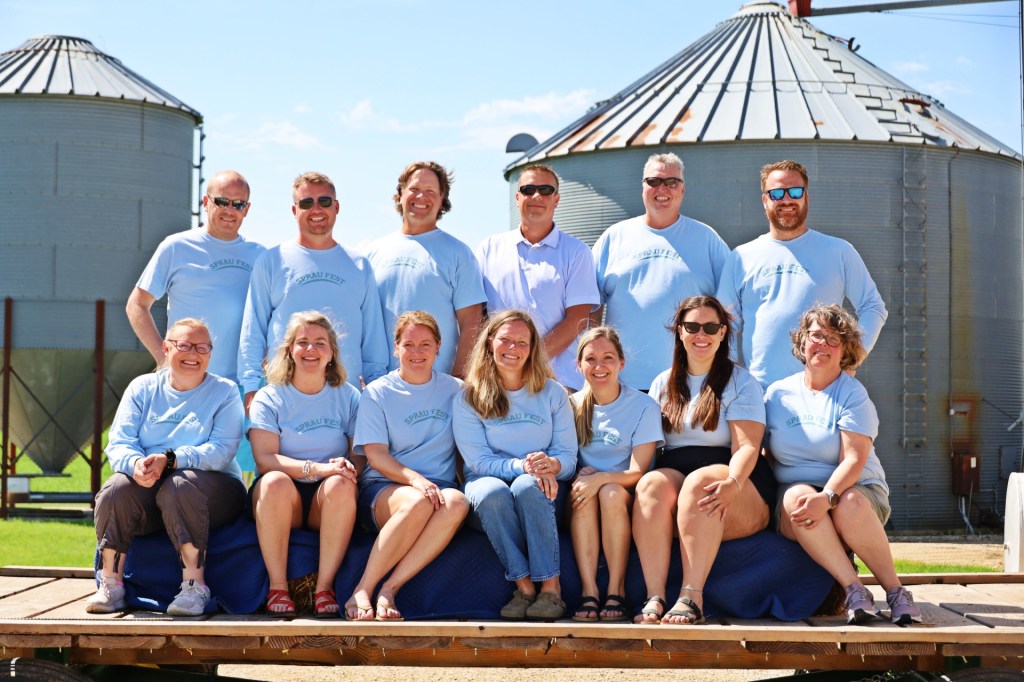
As you trace your family history you just keep building a taller and wider triangle. And by the time you rise 7 generations you have 128 grandparents. By 10 generations, you have 1,024 grandparents on a single level of your tree. That’s like compound interest, in reverse. And we are all a product of this construct. It’s nature’s math.
My realization over the weekend is that all of the genes and traits, skills, lessons, strengths and abilities of the generations before me have poured into me like a funnel. All of these people have been learning and teaching, improving and growing and passing along what they learned in the best way they knew how.
They also accumulated flaws and habits that didn’t serve them. But much of that got passed along too, through the bottom of the family funnel.
I got the accumulated nature and nurture of countless generations before me from as many as 3 different continents.
That is wild.
However, what happens next is just as wild.
Because I married and decided to have children, the pyramid flips over. I am now at the top of a triangle of my own descendants.
My wife Dawn and I will forever sit at the top of a triangle of our own creation.
We know that pyramid has 3 descendants on the next level: our kids, Ava, Johann and Magnus.
The pyramid may stop right there. Like that woman said to Meatloaf. Or it may continue until the end of time. Like Meatloaf was praying for.
But regardless of how long it builds, all of the nature and nurture that follows flows from me and Dawn.
As the next generations grow and multiply it becomes evident that our genealogy really looks like an hourglass.
There is an inverted triangle above us, that funnels down to us.
Below us is the pyramid of accumulating generations.
This means that many, many ancestors have poured not only their genetics, but their experiences, decisions, strengths and accumulated wisdom into you.
It is hard to say where the sayings, prayers, traditions, terms of affection, mannerisms or womanerisms you use today really started. But there is a strong chance they are deeply rooted in your family tree.
If you choose to have your own children, you are not only passing along your genetic traits, but you are also pouring your habits, values and lessons into the next generations.
This means that you are the center of the hourglass.
You are the filter.
You are the gate keeper.
You are the seed of all that comes after you.
Your decisions, biases, lessons, choices, habits and behaviors will influence everyone who comes after you.
Choose wisely what you pass along to the next generations.
Give them your best.
Filter out the worst. (Although, if you are Germanic, you should give them the best wurst.)
Share as much knowledge and wisdom as you can.
Pass along great habits.
Pass along strong traditions.
Eliminate the things that don’t serve you and won’t serve them.
Ensure that your offspring get the best of what is available to them.
You are the teacher.
The coach.
The prioritizer.
And the great example.
They say sex is hereditary. If your parents didn’t have it, it likely you won’t either.
But the same is true for religion.
And a love for books.
And quality time together.
And games.
And travel.
And sports, culture and music.
And love and kindness.
And generosity.
And friendship.
And braveness
And humor.
And resiliency.
And work ethic.
And grit.
Pass the good stuff along.
It’s how you can pass the best of you along deep into the future.
Key Takeaway
Your ancestors have poured the best they have into you. Now you get to pour the best of you into the future generations. Make sure you carefully consider your contributions. And pass along the best inheritance you can.
*If you know someone who could benefit from this message, please share it with them.
+For more of the best life lessons I have learned check out my book, What Does Your Fortune Cookie Say? from Ripples Media. And consider subscribing to Adam’s Good Newsletter.

 Adam Albrecht Blog