Take a little time to save yourself a lot of time.

A few months ago, something coo-coo happened with my default search browser on my laptop. This is not something I would typically write about. (Or read about.) But stay with me. There is a valuable lesson at the end of this techno-rainbow.

Instead of defaulting to Google for search, suddenly my computer was defaulting to Yahoo’s search engine, as if it were 1995.

For months, I would type a search into the search bar and it would take me to Yahoo’s results page, which, unlike a Snickers, was not very satisfying.

So I began to simply type Google into the search bar, then click on Google, and then perform my search once I had arrived at the Googler.

This was inefficient. And a waste of time. (But you already knew that.)

So one day I went to Google, and googled how to make Google your default search engine.

I got the answer immediately.

Because Google is good like that.

The process of changing my search engine took about 20 seconds.

And every day since then I have enjoyed a highly efficient search process.

The Bigger Lesson

The experience served as a reminder that we all have unnecessary inefficiencies that are slowing us down, wasting our time, and negatively impacting our productivity or our quality of life.

Recognize those inefficiencies and eliminate the time-wasting workarounds. Look for opportunities to improve your processes to save you time, energy and money over the long haul.

This may include improving your processes. It may include training others to do tasks so that you don’t have to. It may include fixing a broken or worn-out thing you have been working around. It may involve cleaning or organizing so that you can easily find the things you need when you need them. Which is kind of like Google in the physical world.

Key Takeaway

There are unnecessary inefficiencies in your world right now. Addressing them will take a little bit of time now, but save you a lot of time later. Seek out ways to improve your professional and personal productivity by improving your processes, training others, fixing, and organizing. It will eliminate your time-stealing workarounds. And decrease the friction in your work and in your life.

*If you know someone who could benefit from this message, please share it with them.

+For more of the best life lessons I have learned check out my book, What Does Your Fortune Cookie Say? from Ripples Media.  And consider subscribing to Adam’s Good Newsletter.
There is the easy way, and the Rube Goldberg way.

My daughter Ava is a good student. She just finished 6th grade and her report cards always look like they have my initials all over them. She is a self-starter and a self-finisher. Which means that while I would like to be more involved with her academics, she usually doesn’t need my help.

Final Project

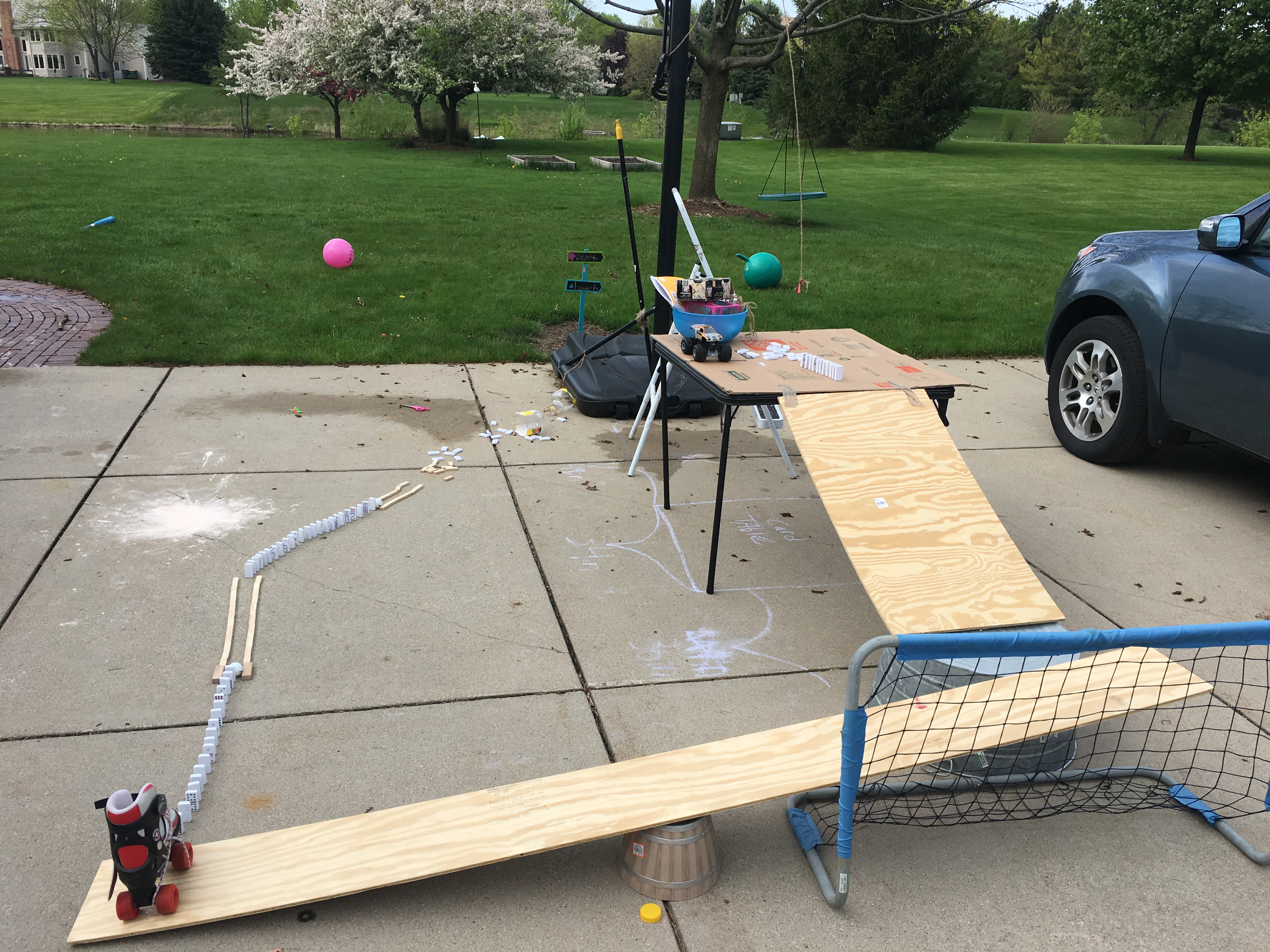
Her final science project of the year finally gave me a chance to get involved. The assignment was to build a Rube Goldberg Machine that incorporated at least four simple machines (#physicstalk).

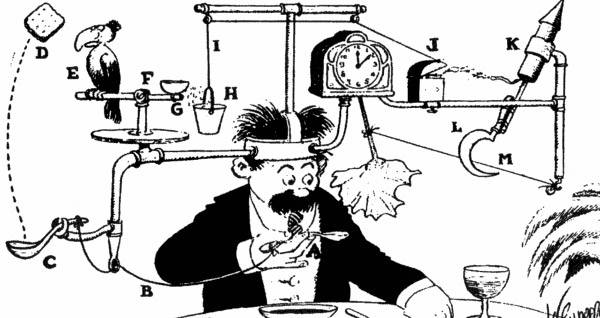
For those of you who aren’t down with RGM, a Rube Goldberg Machine is a machine, device or thingy that uses a chain reaction to perform a very simple task in a very complicated way. I love this kind of project. It combines science, creativity and whimsy (Did I mention that in college I majored in whimsy?)

IMG_0527
Ava’s machine mid-project, featuring ramps, teeter totters, ropes, roller skates, dominos and ping-pong balls. The yard is littered with discarded parts, thrown in frustration.

The Big Question

The project was a mixture of problem solving fun and you-have-got-to-be-kidding-me frustration. But helping Ava with her RGM set off a series of linked thoughts in my head. My Father Brain nudged my Business-Owner Brain which produced the question:

Are organizations unintentionally creating Rube Goldberg Machines to do what should be done easily?

It shouldn’t be that hard.

Most organizations develop processes and procedures, whether officially or by default, that are way too complicated. What should take a one person a few minutes to complete turns into a complicated chain of events, with too many sign-offs, too many check-ins, too much standing in line, too much discussing and not enough doing.

Check yourself before your wreck yourself.

Chances are that you have an RGM in your organization.  But instead of being whimsical and entertaining, it wastes time, adds costs and has a negative impact on customer service.

If you notice an overly complicated process within your organization, or in your interactions with your partners, vendors or clients, let them know. Businesses need this kind of feedback. Because it is really easy to make an easy task difficult.

Taking a fresh look.

When I started the advertising and idea agency, The Weaponry, I reveled in the opportunity to make our processes simple. I also have a long-term vision of the business that should help us avoid unnecessary complexities. But we are not perfect. We will also require regular evaluations and feedback from our team, partners and clients to make sure we are not complicating what should not be complicated.

Key Takeaway

Rube Goldberg Machines offer good opportunities to teach children about physics. They offer great entertainment. In fact, I would subscribe to The Rube Goldberg Machine channel if such a thing existed. But within organizations, let’s not overcomplicate. Let’s always look for ways to de-complicate our processes and procedures to make sure we are not wasting time or money.

In case you were wondering…

*I envisioned Ava creating a small contraption on a table in our basement. But that’s not Ava’s style. She created a large machine in our driveway, despite the fact that she would have to set it all up and take it all down every day until she completed the project.  She finally completed a successful run at 8pm on my birthday. Which meant that my birthday was spent doing a lot more tweaking of components than celebrating me. But that’s what parents do.