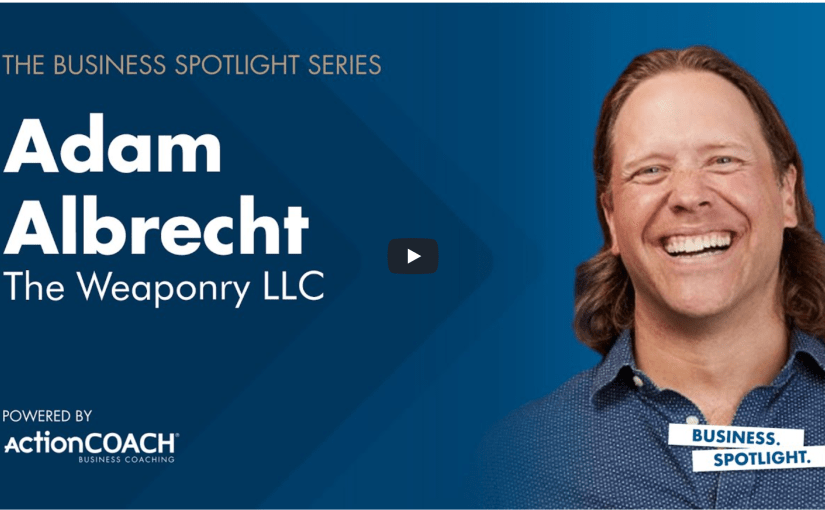
I love to share stories. That’s probably why I started blogging in the first place. Over the 1001 blog posts I have published, I have shared a small country library worth of stories. But recently I sat down for a fun podcast interview to share stories with Kory Dogs, of ActionCOACH. (I kept thinking he sounded like the action hero Kory whose superpower would be saving Corey Feldman and Corey Haim from themselves.)
Kory asked me questions I don’t often get asked. Which means you hear some little-known details about my life.
9 Things You Learn About Me In This Podcast
- The 5 States I lived in as a kid.
- My connection to the Shawshank Prison.
- My unique experience on a bull stud.
- The surprising comment my boss made 2 years into my career that inspired me to start my own advertising agency. (No, it was not You’re Fired!)
- How I describe my leadership style.
- What I would do differently if I could go back and do it all again. (Which sounds like a Garth Brooks song.)
- The new things I want to learn.
- The book I recommend to all entrepreneurs.
- Who I would give a shoutout to at the end of a podcast when surprised with the question, ‘Who would you like to give a shoutout to, right now?’
You can read or watch the interview here.
The Book Recommendation
During the podcast I talked about a book I suggest every entrepreneur, or aspiring entrepreneur, or spiraling entrepreneur should read. Here’s the excerpt, in case you don’t have time to watch, read or listen to the full podcast:
Kory: What advice do you have for business owners trying to do everything on their own?
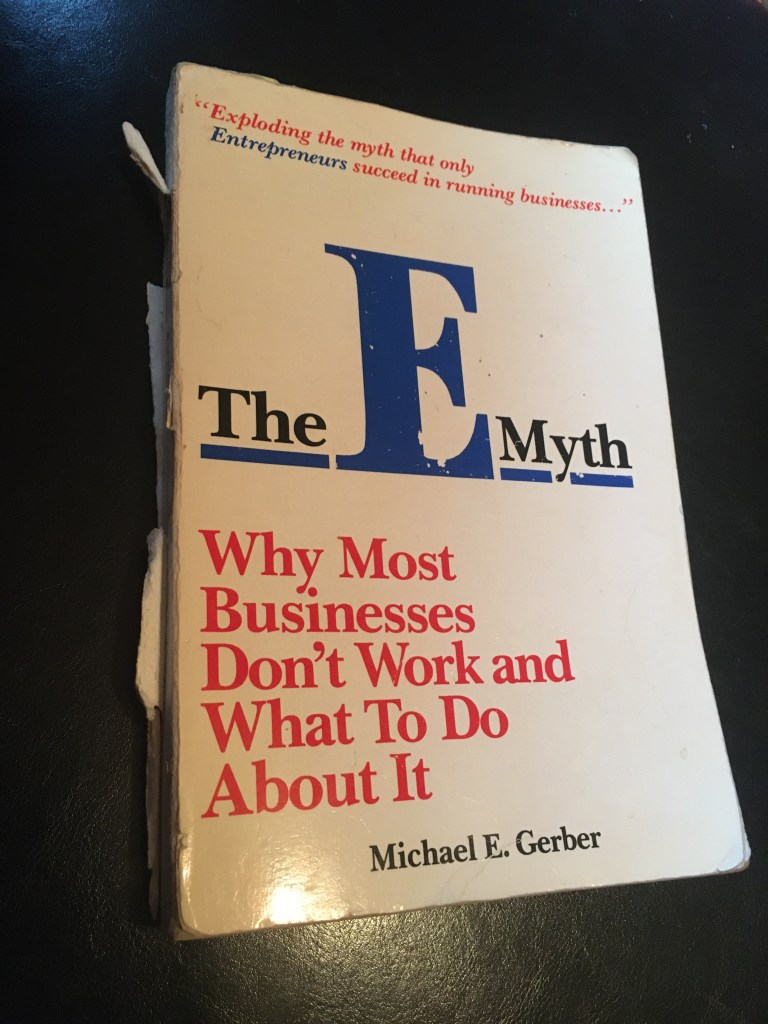
Adam: I often advise business owners and entrepreneurs to read The E-Myth by Michael Gerber. This book offers a fantastic framework for developing your business through systems and processes. It teaches you how to structure your business so that it can operate on a larger scale, similar to a franchise.
By thinking through your business in this way, you ensure that all aspects are well-organized. You create a mature system where you’re not overwhelmed by every detail. Instead, you take on specific responsibilities and avoid getting bogged down by tasks outside your main role.
For example, you don’t want to be the person who not only bakes pies but also handles HR, sales, and operations. The book helps you define your role clearly and understand what additional roles are needed in your organization.
I read The E-Myth before starting The Weaponry, and it provided a strong foundation for me. For any business owner feeling stuck in a cycle of chaos, I recommend this book to help you assess and address your challenges effectively.
For those who aren’t familiar, the book is called The E-Myth and its subtitle is “Why Most Small Businesses Fail and What to Do About It.” Essentially, it argues that if you don’t get the business fundamentals right, it won’t survive. But if you do, it can thrive. The E-Myth refers to the belief that only certain people are born to be entrepreneurs. Michael Gerber challenges this idea, asserting that anyone can be an entrepreneur. He presents a process and approach that can make entrepreneurship work for everyone.
Thank You!
Thanks to Kory Dogs of ActionCOACH for the interview. And for making me feel like I know a real-life action hero.
Thank you blog readers for reading this blog. It’s the only way to earn your title.
+For more of the best life lessons I have learned check out my book, What Does Your Fortune Cookie Say? from Ripples Media.
 Adam Albrecht Blog