I never expected to be a football coach. 7 seasons later, I am a better parent and leader because of it.

I never wanted to be a coach. Some people are innately drawn to it. I am not. I thought it was a cool role for other people. But I just wasn’t that into whistles and sweatpants. When I graduated from college, I fully expected to never be involved in sports again, other than as a fan. Even after I had 3 kids, I never expected to coach them at any level. I didn’t feel like I knew anything well enough to coach. Except maybe being a class clown. But I felt I could teach that through more of a mentoring relationship.

So it is very strange to realize that this fall I wrapped up my 7th season coaching my son Magnus’ football team. So, how did this happen? To find out we’ve got to go back in time, like Marty McFly.

In The Big Inning…

Like most things, my coaching career started very small. When Magnus was in first grade, we signed him up for flag football. At that level, the teams practiced for one hour and then played a game for one hour on Saturdays in the fall. At the first practice-game the two guys coaching Magnus’ team asked me if I could help out the following week because one of them was traveling. I was happy to help. And I felt like a helper more than a coach. Plus the kids were in Kindergarten and first grade. So they wouldn’t be fact-checking my coaching.
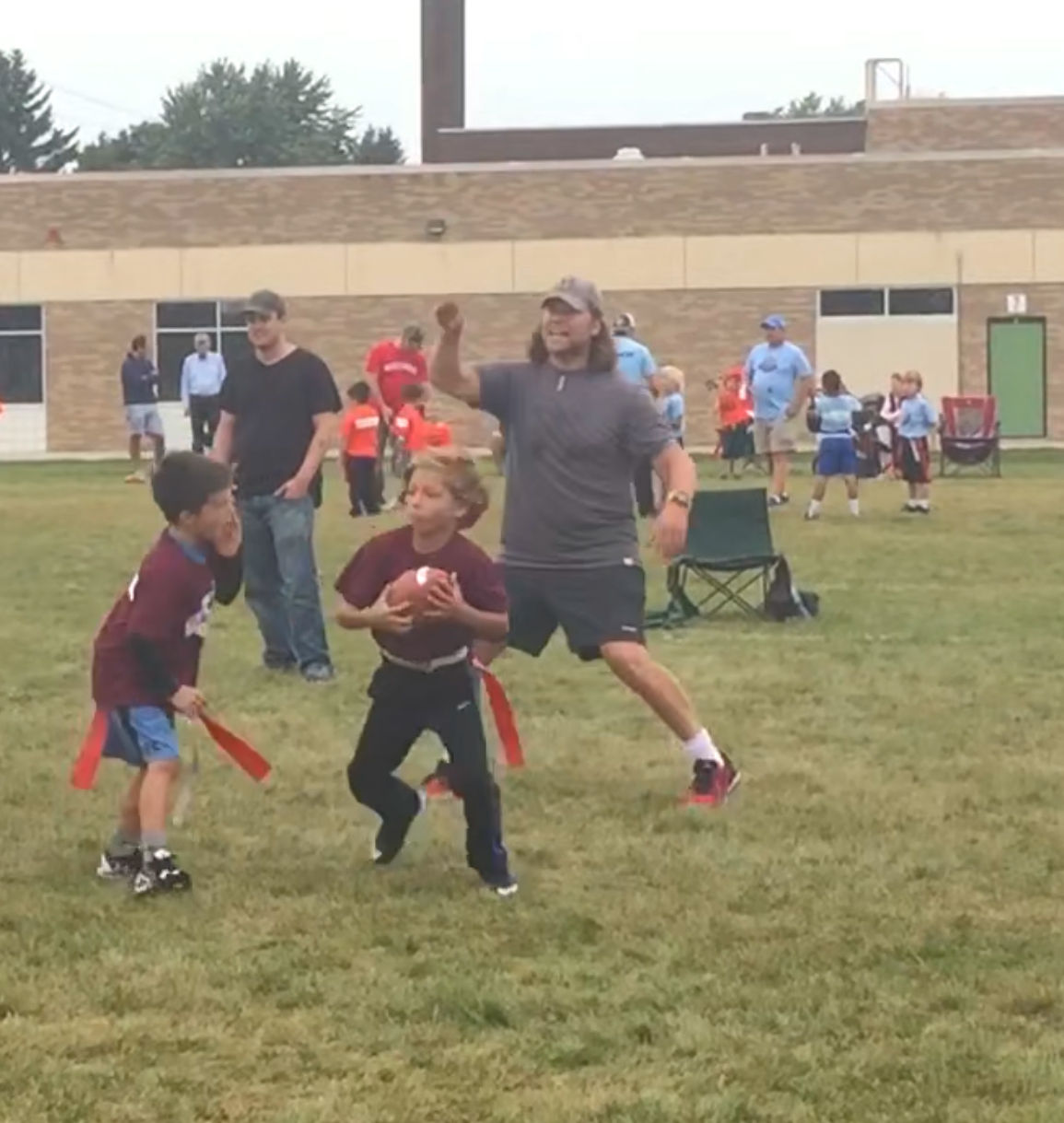
Magnus carrying the ball in 1st grade, when I could point where I wanted the players to go.

That Saturday’s practice-game went well. I had fun. Magnus enjoyed having me involved. None of the kindergartners asked to be traded or held out for more NIL money. So I became the third coach on the staff, helping whenever I could the rest of that cute little 6-week season.

Stepping Up A Notch

When Magnus entered 2nd grade, the program was looking for more parents to coach. My wife Dawn encouraged me to volunteer. So I got paired with another father. And we had a good time. Again, this was just 2nd and 3rd graders with one practice-game combo pack each week on Saturday mornings in the fall. And we were literally on the field placing each player in position and whispering in their ear what we wanted them to do. It was kinda like playing chess with tiny humans. Even better, the play didn’t start until the coaches said they were ready. The hardest part was organizing which parents were bringing the snacks.
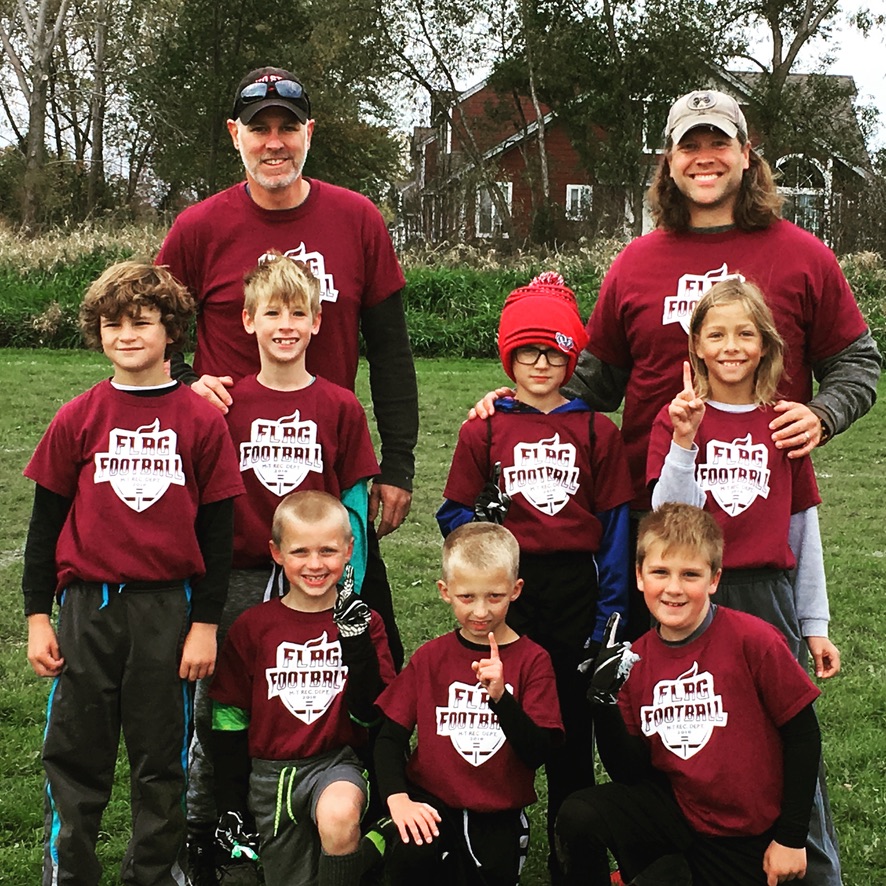
Magnus and Me in our second season together. That’s a happy father/son combo pack.

Gaming The System

By 3rd grade, I realized that you could choose to pair up with another coach to lead a team. And when you did that, it allowed you to stack your team with 2 good players. So my great friend Dr. Mike Brin and I teamed up to coach. DMB played football for the University of Wisconsin Badgers, and we had been friends since we were teenage college athletes in Madison. Mike’s son Josh ‘Aquaman’ Brin was a talented and enthusiastic athlete. Josh and Magnus gave us a strong nucleus to build a team around. Kinda like D-Wade and Chris Bosh. We were lucky enough to land a few other really talented second and third graders, and we had a fun and successful season, even before the snacks.
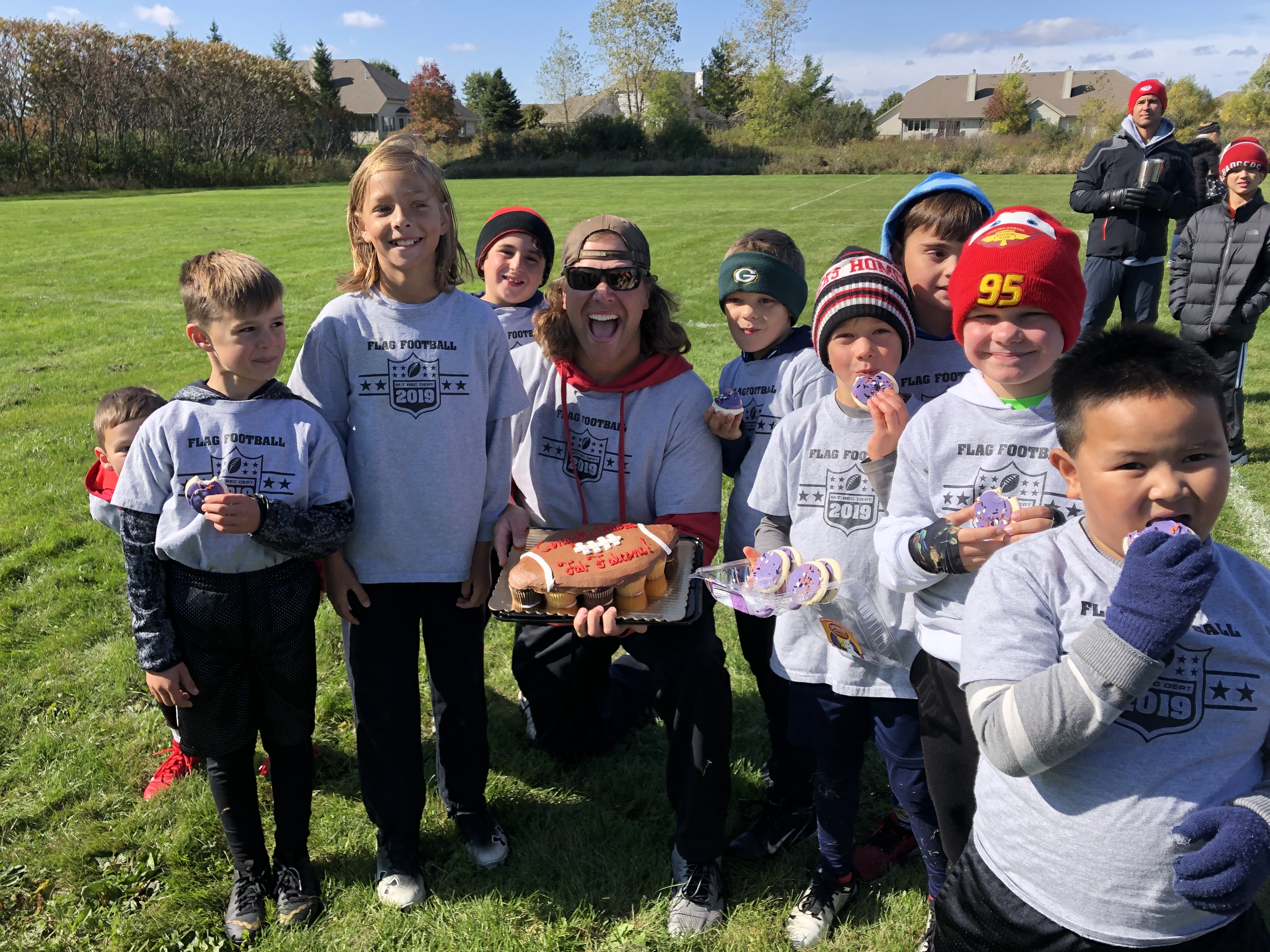
Season 3. We were really upping our snack game by then.
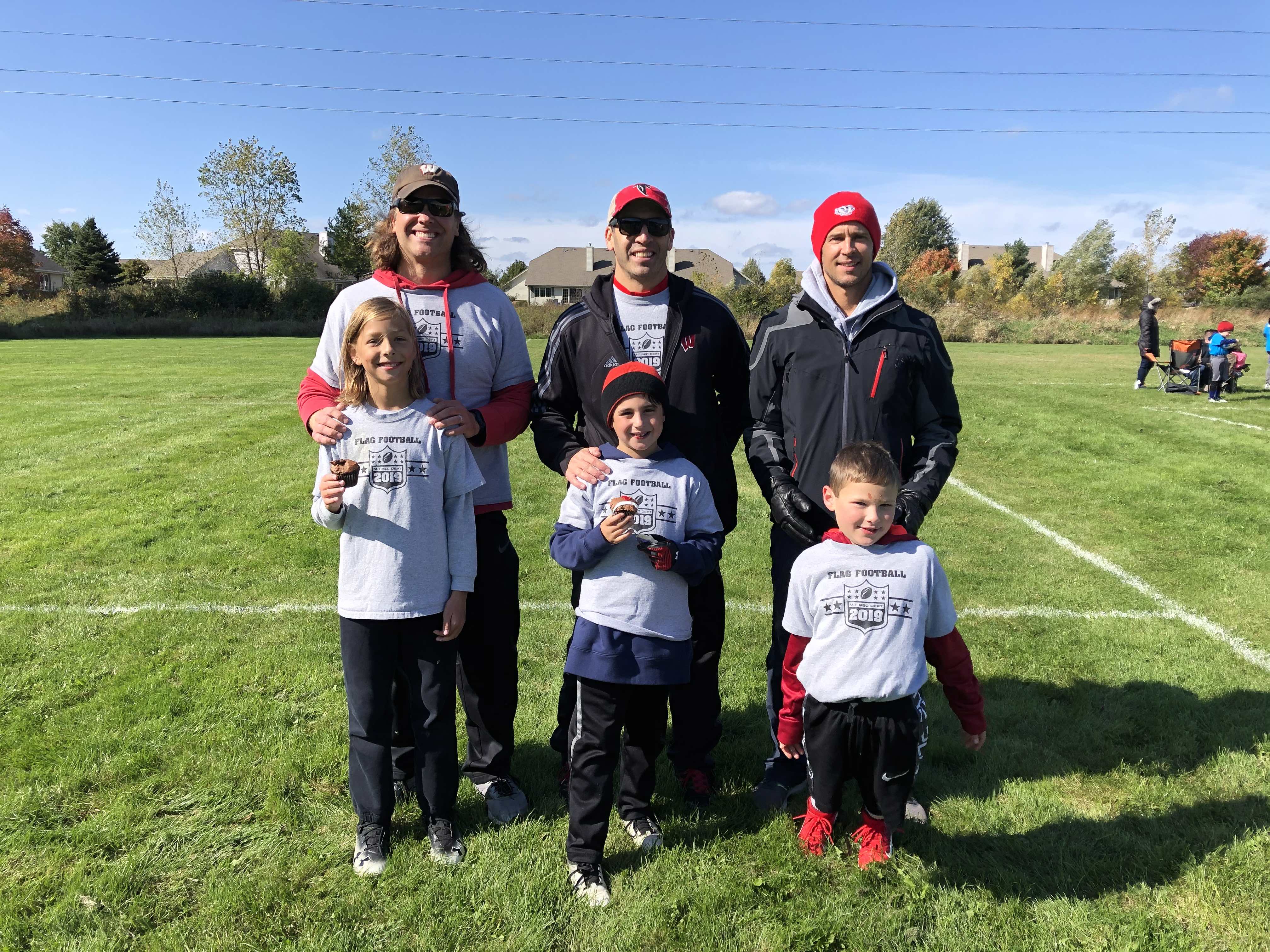
Me and Magnus, Mike and Josh Brin, Josh and Hudson Hunt. All 3 of the guys in the back row were UW Badger athletes, which meant we knew how to recruit. (You do it with cupcakes.)

The Curve Ball

In 4th grade, COVID-19 hit. And the program was canceled for the year. Boo. But Magnus was desperate to play football. So we were allowed to enroll him in the 5th grade Mequon-Thiensville Cardinals tackle football program, where he played up a grade as a tall and eager 4th grader. The boys played with face masks over their face masks, which looked funny and may have had no practical effect, but it made everyone feel better about playing football during a global pandemic. No kids got sick. And I got to sit in the stands, 6 feet apart from other fans, and cheer through a mask like a normal COVID-era parent.

At this point, I thought I was finished coaching. I enjoyed the season as a fan only. (Not to be confused with Fans Only.
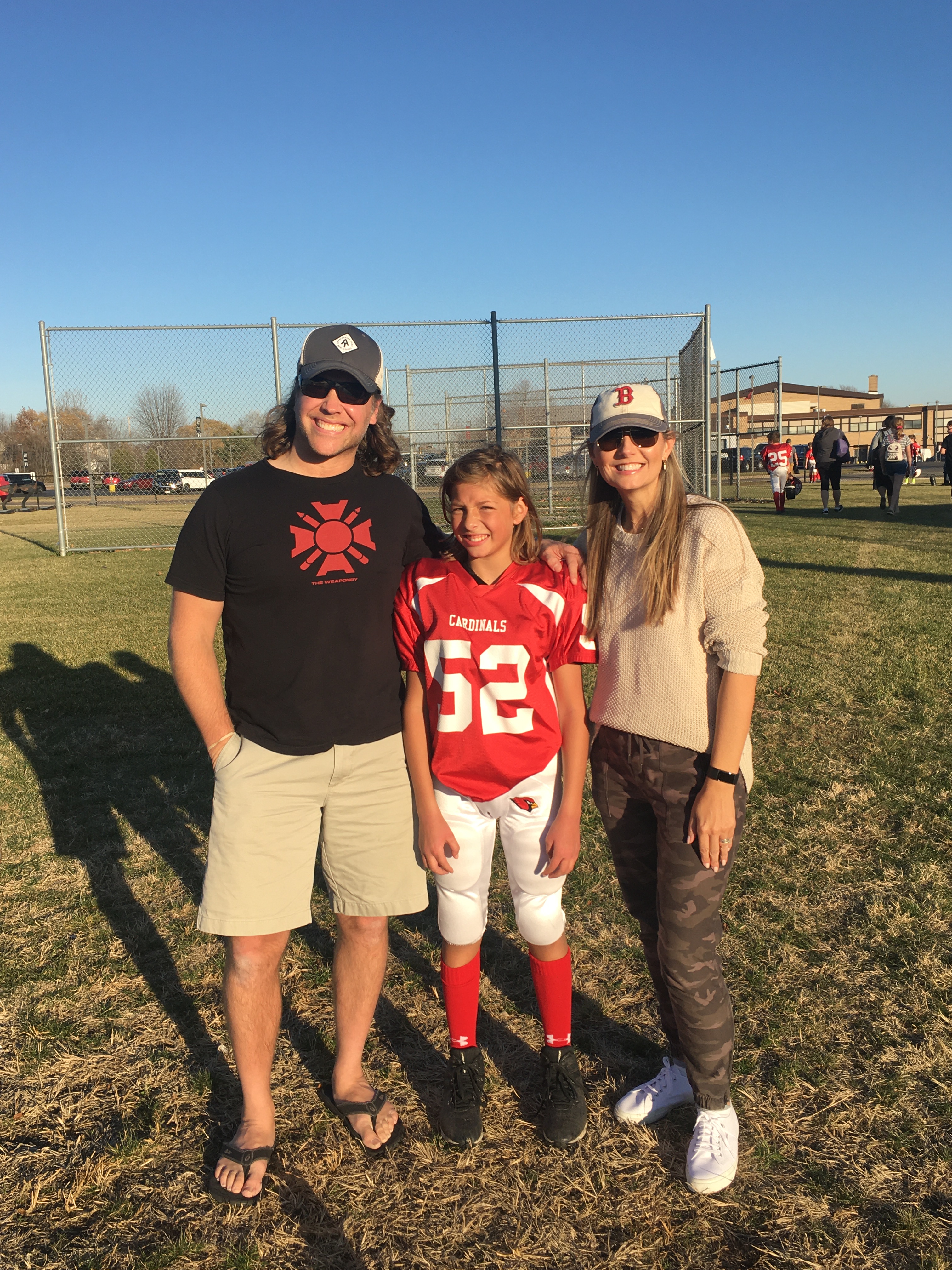
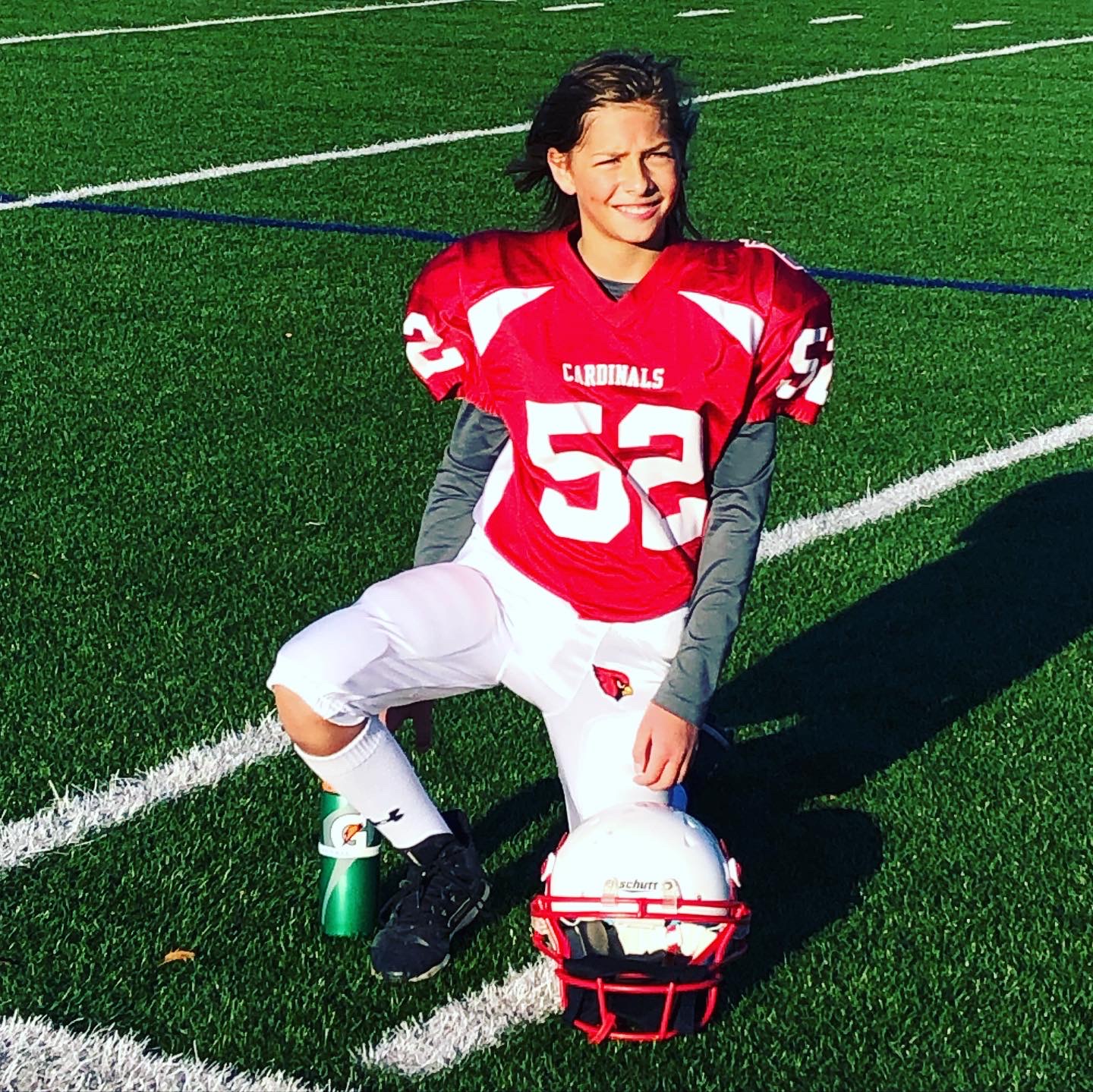
When Magnus was in 4th grade, he played tackle football with 5th graders, And I got to cheer in the stands with Dawn. I also got to wear flip-flops without a fear of getting cleated.
Magnus and a little wind machine for the hair.

Back On Track

That spring, I made a much bigger coaching commitment and started coaching high school track and field. My daughter Ava Albrecht was a freshman at Homestead High School in Mequon, Wisconsin. And I knew that I knew more about throwing the discus and putting the shot than most Mequonians. The flag football coaching experience made me think I could handle track. After all, when you coach throwing, you simply coach technique. There is no strategy. Or defense. Or concussion protocol. Go track!

Tackling Tackle Football

When Magnus entered 5th grade I was asked to help coach his tackle football team. I was reluctant because of the time commitment, especially on the heels of a long track season that went almost to July and left me with just 1 month without coaching obligations. But my coaching confidence was growing. So, I agreed to coach part-time. I was another warm body there to supervise kids and help run drills. I cheered a lot. And I tried to make it fun. For much of the season we only had 16 kids available. So we could only run 8 vs 8 scrimmages. Which was pretty silly. But I like silly.
5th Grade. And We’re back together for Cardinal Rules football.

Jumping Into The Deep End Of The Pool.

When Magnus entered 6th grade my friend Josh Hunt volunteered to become the team’s head coach. Josh played football at the University of Wisconsin and had a lot of coaching experience. He asked me if I would be willing to be the defensive coordinator for the team. I agreed. Because Josh is a nice guy and didn’t seem like the type to burn my house down if I made some mistakes.
Realer Than Real Deal Holyfield

That’s when coaching got real. The slow build of casual coaching obligations helped lead me to a very real coaching position. Suddenly, I would be preparing for every week by watching game film of the teams we would be playing that week. I sketched out every unique formation and play the upcoming opponent ran, noted who carried or caught the ball, how frequently they ran each play, and generally how effective it had been. This represented a huge increase in both my time commitment and my emotional investment. I started to understand why Bobby Knight threw chairs and why Mike Leach went off on a seemingly insane rant about the players fat little girlfriends. Now I certainly don’t condone their behavior. But I started to understand it.

In practice, I taught our team the opponent’s plays and devised strategies to defend against them. Then, on Sundays, I watched our own game film from Saturday and marked up all of the footage on software called Hudl to show what we did right, what we did wrong and how to do things better the next time. I learned that those 3 lessons are the basic pillars of coaching.

I spent more time than I care to admit watching game film, preparing defensive strategies and developing lineups each week. It was a significant commitment. But I loved coaching this group of boys. And I loved spending so much additional time with Magnus.
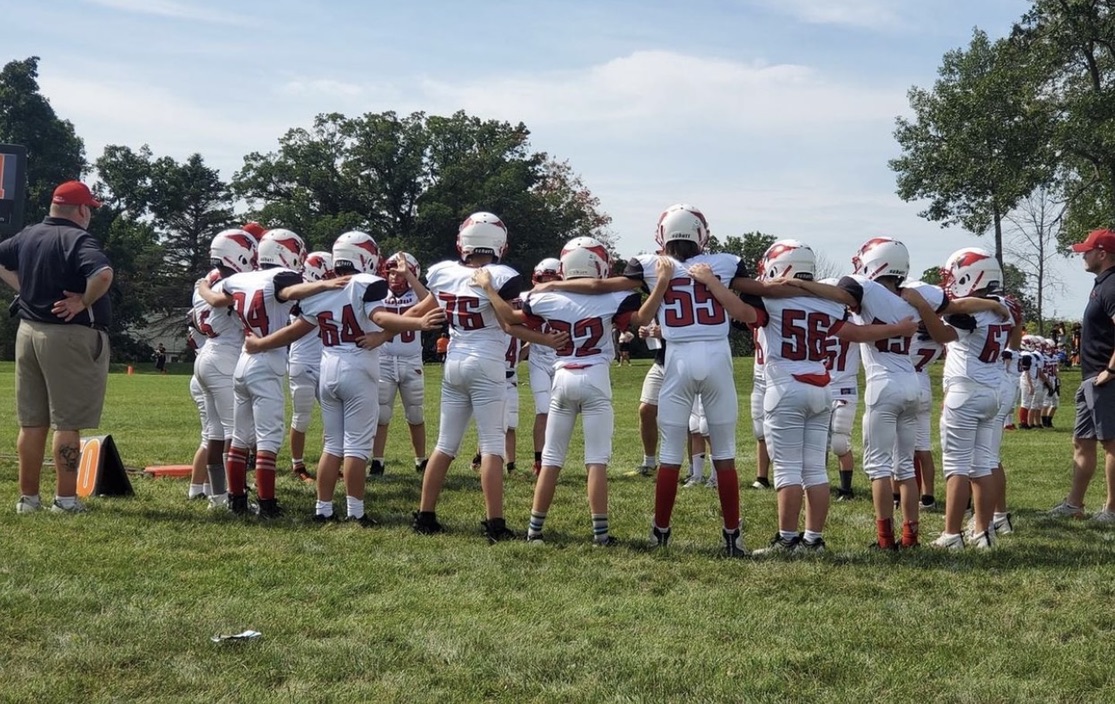
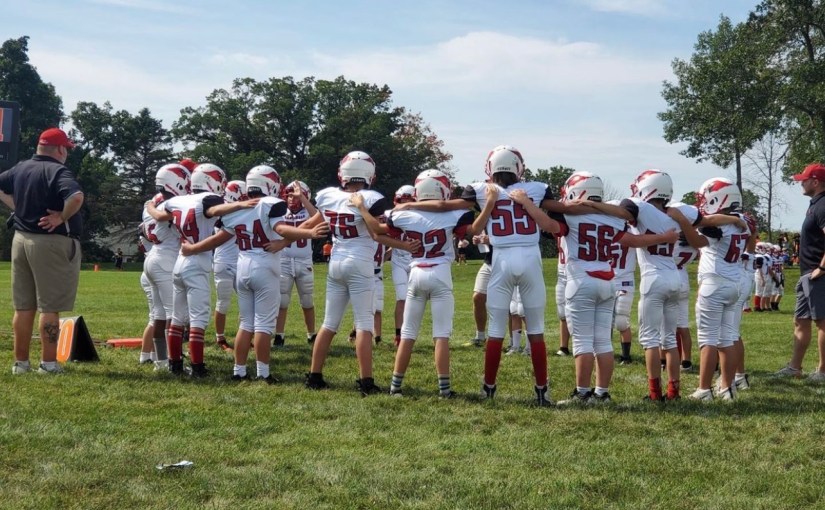
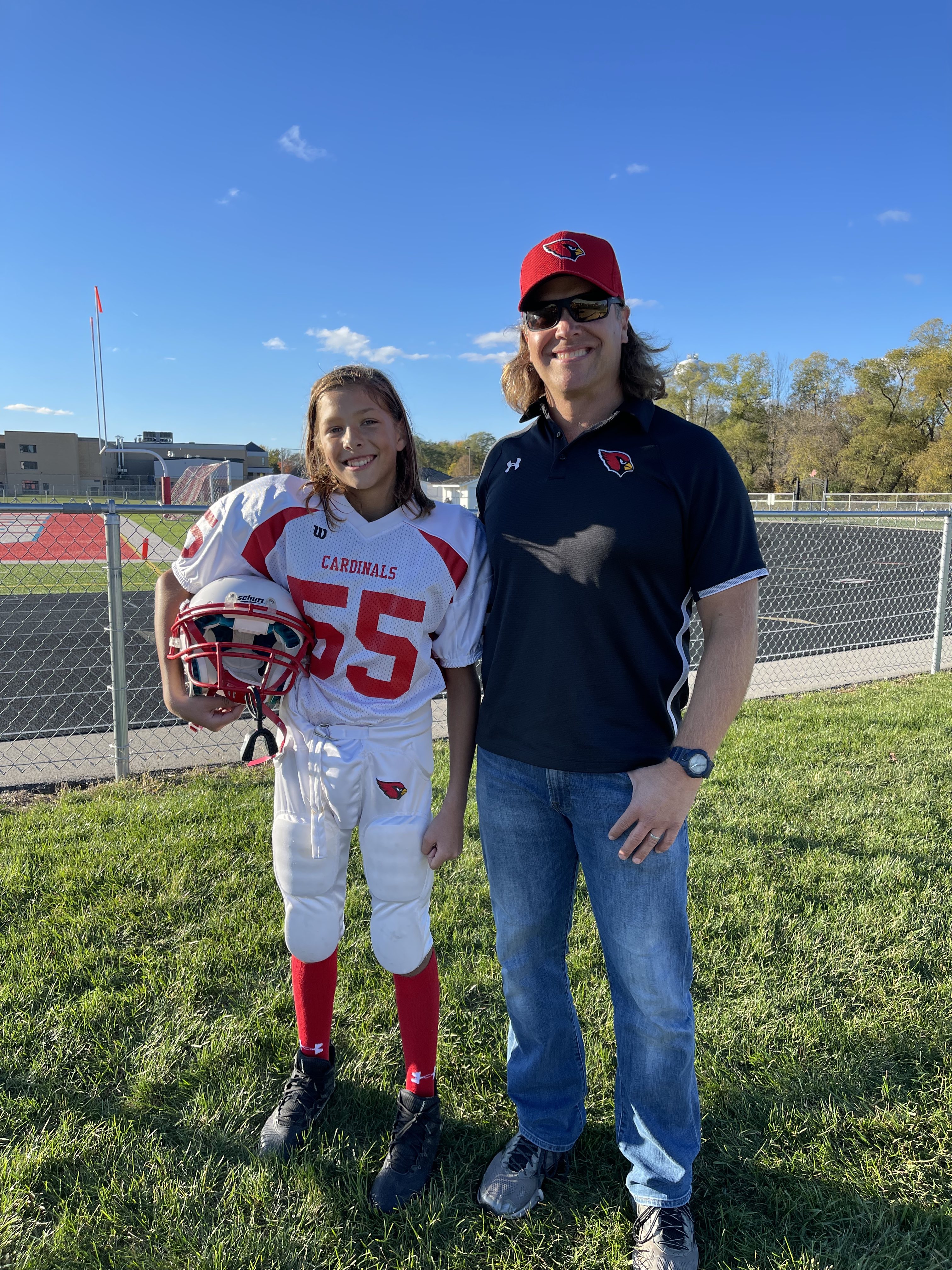
6th Grade. And one of my favorite photos. If you look closely you can see my knee next to Magnus’ (#55)

So I raised my hand to do it again in 7th grade.
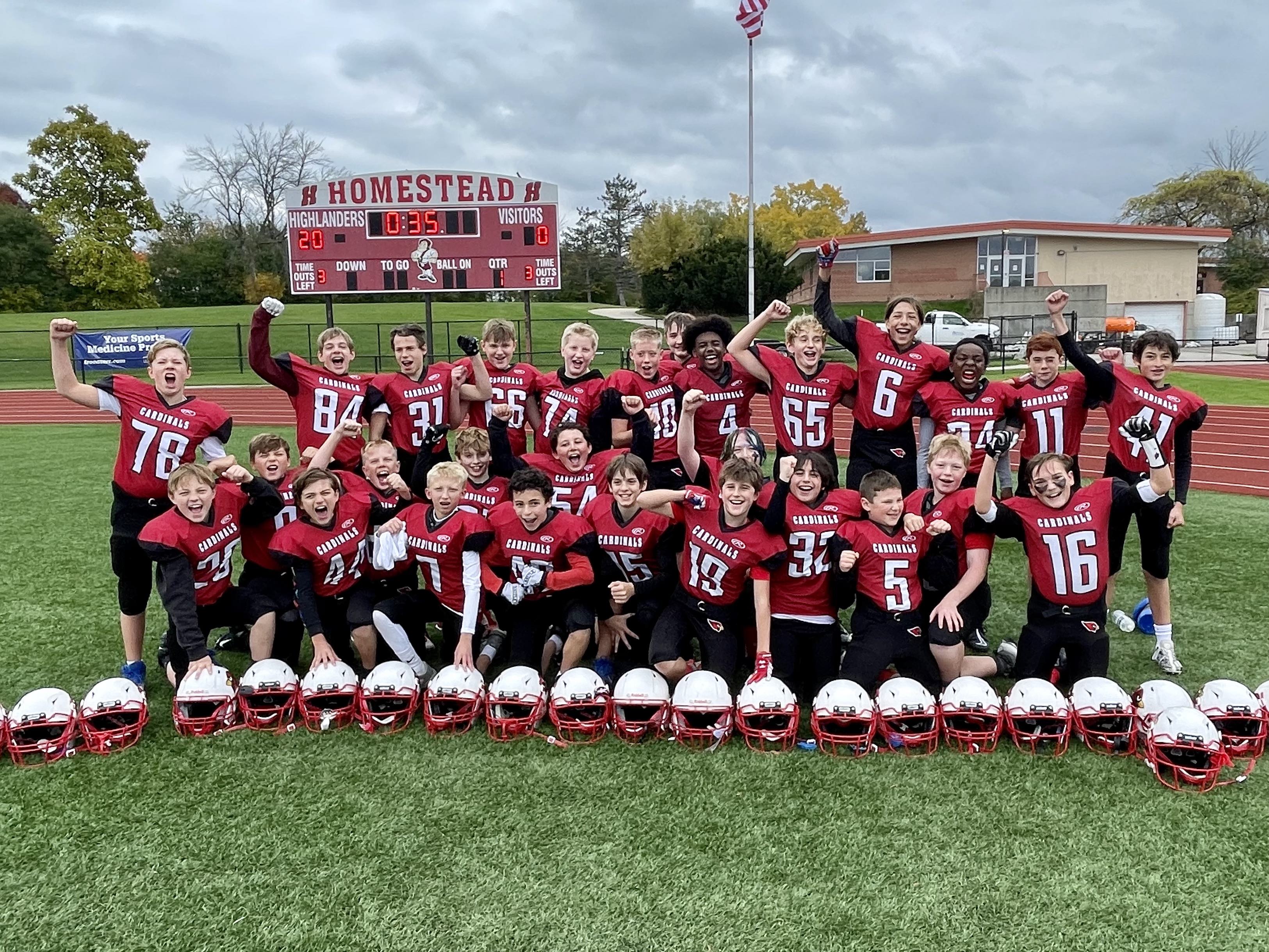
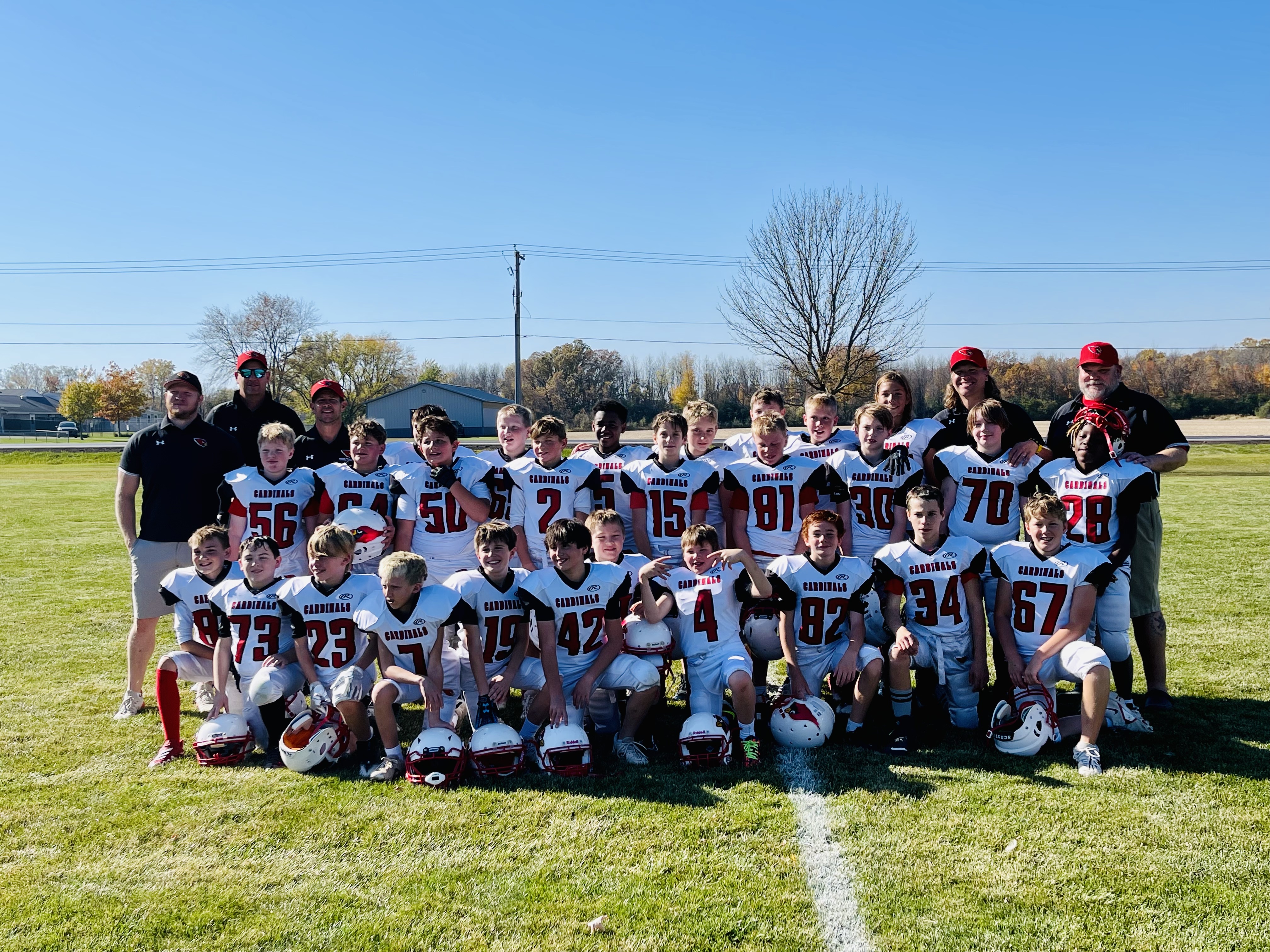
We had a great season in 7th Grade. This was after our last game of the season. Every team should end the year feeling like this.

And again in 8th grade.

For the past four years, from August through October, football has been an intense focus for me. I felt the pressure that comes with being an amateur coach in a high-profile team sport like football. So I prepared as much as I could to help give the boys an edge in the games. Sometimes it really helped. Sometimes it didn’t seem to help at all. This was either because our opponent was so good at doing what they do that we couldn’t stop them, or because they were bigger, faster and stronger than us, and we couldn’t stop them. But either way, I always felt as if I did all I knew to do to prepare our team for each game. And I learned a little from each win and each loss. Which meant that I found a way to win no matter what the outcome was.
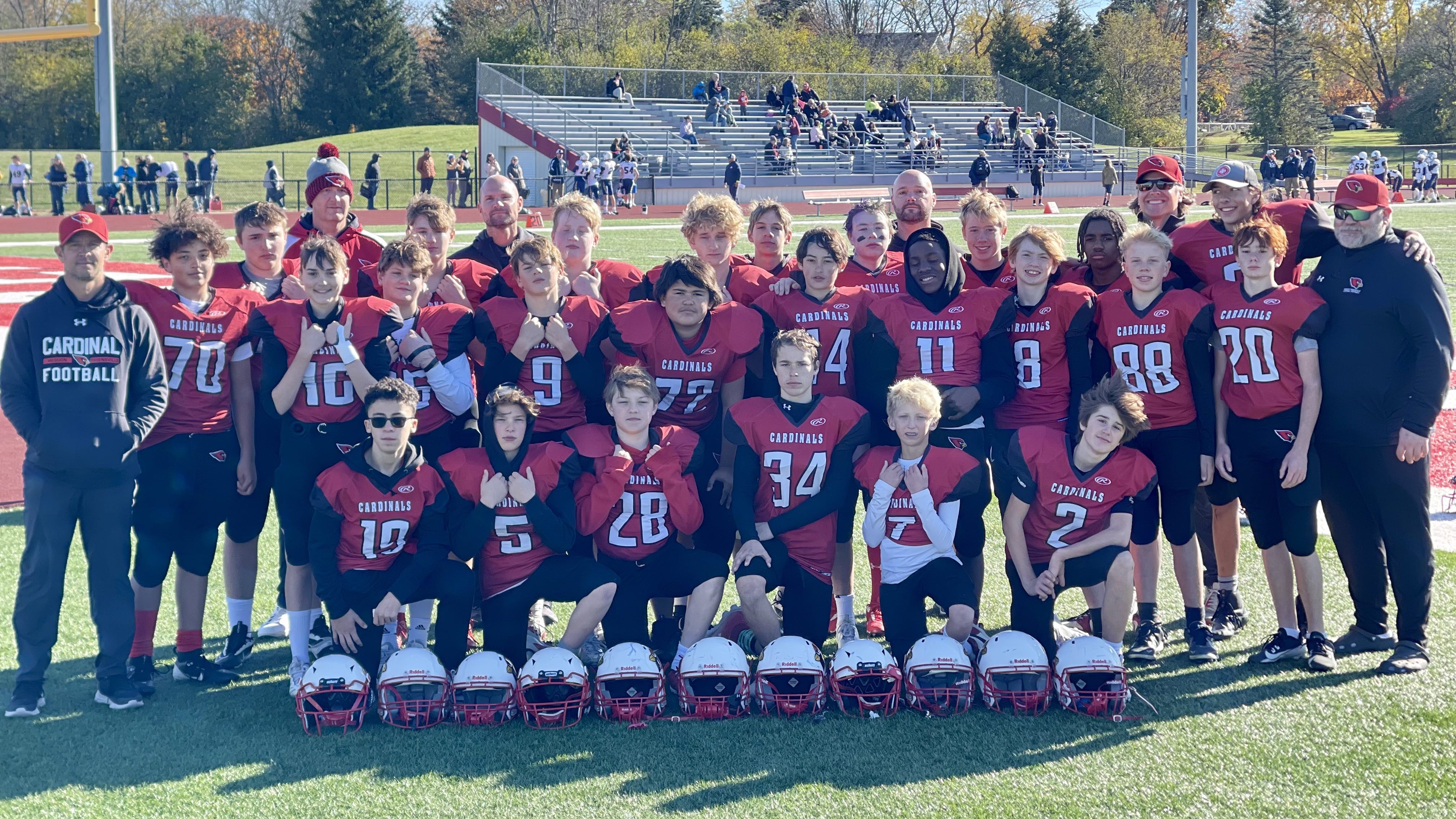
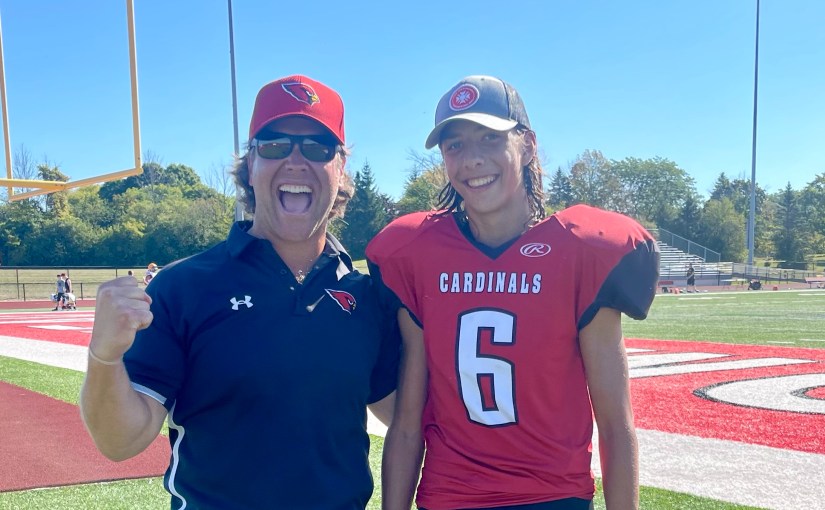
Magnus’ 8th grade season. My last year coaching football. And the first time Magnus was taller than me..

The 10 Best Things About Coaching Football.

1. Winning. There is nothing quite like winning a team sport.

2. Being called Coach. For years, I have been called Coach in our community. It’s always fun and surprising for someone who never expected to coach anything to be called that on the sidewalk, in the schools, and in stores and restaurants. It feels both respectful and as if you had a positive influence on a child’s life. It also makes me feel like I should be wearing a whistle everywhere I go.

3. The Brotherhood: Seeing these boys support each other and coming together as a strong team is amazing. Hearing the stories of them sitting together at lunch at school is rewarding. And knowing how close I still am to the guys I played football with makes me excited for them and the relationships they are forging through their collective football experience.

4. Hearing our defense call out the opponent’s offensive formation and the play they are about to run during a game. It meant the boys were paying attention in practice, they recognized what they were seeing and were prepared to defend the play. I loved that.

5. Stops in the backfield: Quarterback sacks and stuffed runs were the big wins for a defensive coordinator. We have had plenty of those over the past few years. It was a thrill every time.

6. Blocked Punts and Kicks. These have a huge impact on the game. They are magical gifts from heaven. Magnus had a slew of these during his Cardinal football career. And I discovered that a slew is the same amount in both the English and Metric system.

7. Interceptions: These are mission-accomplished plays. They are never not exciting.

8. The Funny Kids: Football is a serious game. But I love the kids who brought their sense of humor to practice and made us all laugh. The funnies often create stronger memories than the wins.

9. The Intense Kids: These kids set the tone for the team at practice and in games. They helped get the team mentally prepared to go to work. I always admired the mentality these winners brought to the field.

10. The Respectful Kids. The kids who responded to all coaching with Yes, Coach and No Coach, who looked you in the eyes, and who asked intelligent questions were a pure pleasure to work with and a sign of good parenting.

Key Takeaway

If you have a chance to positively impact the lives of kids, do it. Coaching, mentoring, volunteering, teaching, chaperoning. All of it helps. And you will get just as much out of it as the kids. Our youth can never have too many positive adult influences in their lives. And you gain by sharing your time, talent and knowledge with others. Don’t worry that you don’t know enough. Raise your hand and learn as you go. That’s what I did. And I can’t imagine my life without this chapter, these experiences, and these boys.

*If you know someone who could benefit from this message, please share it with them.

+For more of the best life lessons I have learned check out my book, What Does Your Fortune Cookie Say? from Ripples Media.
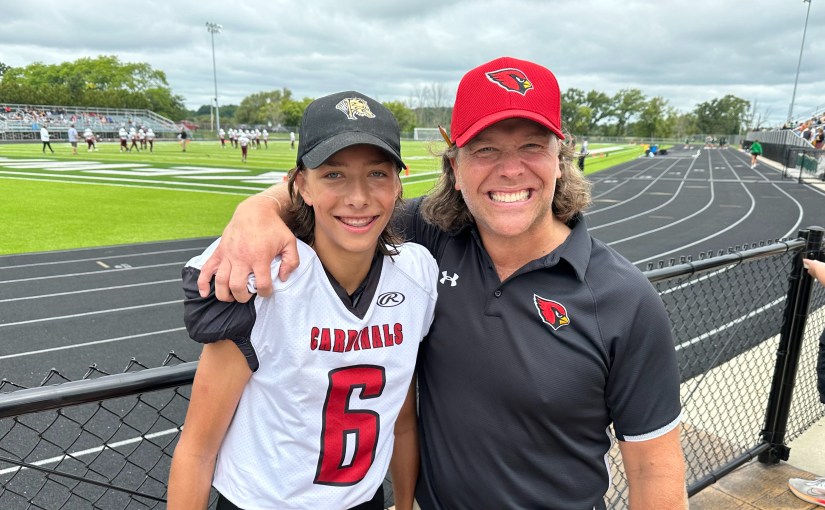
How to be wildly successful through 7 seconds of effort.

This fall marks my 6th year of coaching football. I never had any interest in coaching. I started when my son Magnus’ flag football program needed parent coaches. It was only a Saturday morning commitment back then. But like the mythical slowly boiled frog, who forgot to jump out of the pot, I am now the defensive coordinator for Magnus’ 7th grade tackle football team. Which is an everyday-in-August commitment. Oy.

As a coach, I am really a student. I am trying to learn as much about football as I can to help my players play well, have fun, and be safe. But like Uncle Rico, I still have a strong desire to win.

Back to School

2 weeks ago I had a great opportunity to learn some new things about the game of football. On Varsity Day, Coach Tom Price, President of Cardinal Football, brought the local Varsity football players from Homestead High School in Mequon, Wisconsin to practice to work with the 5th-8th grade players in the Cardinal football program that feeds players into Homestead. While the high schoolers were working with our athletes, one of the outstanding Homestead football coaches on Head Coach Drake Zortmans’s staff talked to the Cardinal coaches about football.

The coach, Dan Juedes, is a 70-something who is not only in the Wisconsin Football Coaches Hall of Fame, he is in the National Football Coaches Hall of Fame. He coaches at football camps across the country, including at many of the Big Ten schools. In fact, Dan has been coaching so long that when he started the Big 10 conference only had 5 teams.

Coach Dan Juedes looking very coachy.

Dan’s Lessons

As the novice coaches gathered around Dan, he shared a few gems about coaching football. His first lesson had been passed along to him by the legendary Bo Schembechler, the former head football coach at the University of Michigan. Dan told us:

‘The average football play lasts 7 seconds. All players look pretty much the same during the first 2 seconds. What separates great players from the ordinary is what they do in seconds 3 through 7.

-Coach Dan Juedes

When Dan shared this I felt like I had heard Einstein explain the Universe with E= MC2. Because Dan’s 7-second rule took a very complex game and broke it down into a very simple formula for success.

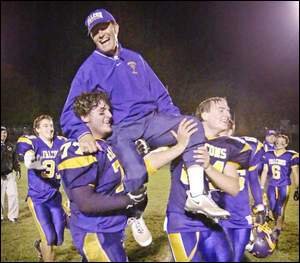
Coach Juedes carried off the field, presumably because he was tired from coaching so hard.

Josh Hunt, our 7th-grade teams’ head coach, and I couldn’t wait to share this valuable insight with our players. So once we were reunited with our athletes (and it felt so good) we eagerly shared our new insight with our team. And we have been resharing the 7-second secret every day since.

Applying the 7-Second Success Formula

On Saturday we had our first game of the season. The last thing I told the players before they took the field was to give a full 7 seconds of effort on every play and great things would happen.

But the much bigger opponents overwhelmed our team out of the gate. They ran around us and over us until they were knock, knock knocking on the endzone’s door.

But with our backs to our own endzone, defending a first and goal play from the 6-yard line our team gave a 7-second effort. My son Magnus fired across the line from his defensive end position and engaged with a tight end. He shed the blocker at 2 seconds and attacked the opposing team’s quarterback. What happened over the next 5 seconds changed everything.

Magnus sprinted after the quarterback, and not only did he tackle him deep in the backfield, he punched the ball out of his hands in the process. Our middle linebacker Jaden Daniels was also giving a 7-second effort and pounced on the loose ball. This meant that we went from our opponent having the ball on first and goal from the 6-yard line, to our team having a first and ten at the 17-yard line. Boom!

Then our offense became a 7-Second Squad. We put together an 83-yard scoring drive that led to a 6-0 lead.

It turns out that’s all we needed to win the game. Because thanks to our 7-second efforts we held our formidable and much bigger opponent to 0 points. A shutout.

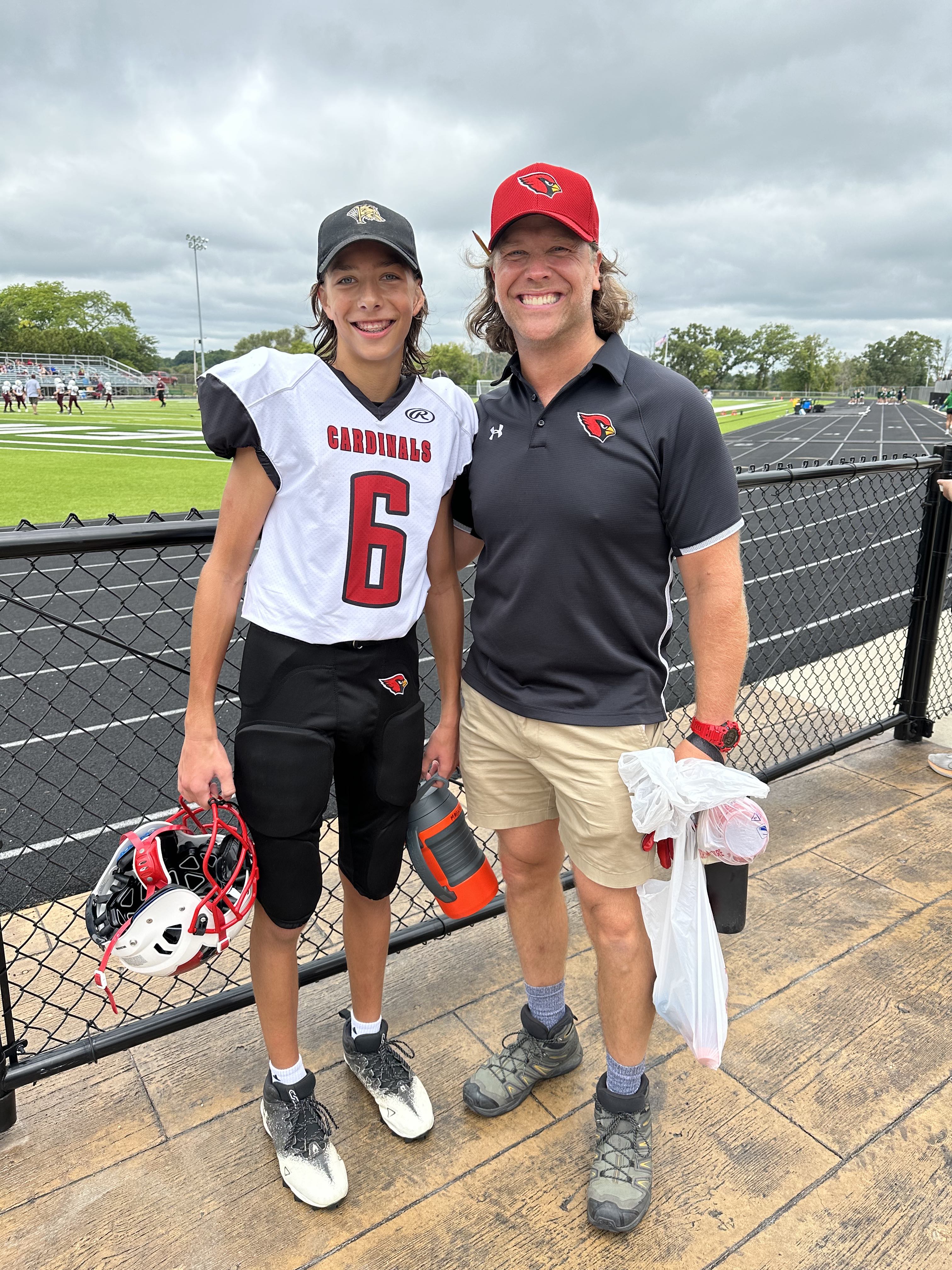
Me and Magnus after our opening game win.

The 7-Second Life Lesson

Dan’s 7-second rule teaches us to go hard to the end of every play. While everyone starts out doing the right thing on nearly every play, at some point, most people stop giving maximum effort and forfeit the advantage to those who go hard until the whistle blows.

But the 7-Second rule doesn’t just apply to football. The basic concept applies to success in all areas of life. Most people start out strong. But they give up too early. They stop or quit just when their effort is needed most. It is true in sports and in your career. It is true in marriage and in parenting. And it is true anywhere effort is needed to create results.

Key Takeaway

The difference in life is not made at the start. It is what you do after the start. Don’t stop 2 seconds in. That’s when most people let up, thinking they have done their job. Don’t fall into that trap. True success comes from your effort during seconds 3 through 7. So play the full play. Give a full effort every time. That effort and the advantage it creates compounds, play after play, day after day, year after year. Play until the end. And the end will be sweeter than you could have imagined. Just like the donuts I will bring my team today to celebrate the donut they put on the scoreboard on Saturday. Boom!

Final Note

Over the weekend as I reviewed the game film to provide feedback, I saw the 7-second rule over and over again. The great plays were made by those playing hard for 7 seconds. The best results of all came when the entire team played hard for 7 seconds. And as a proud Dad-Coach, I saw that Magnus had 3 sacks in the game and the game-winning tackle on 4th down in the 4th quarter. All of which came from giving full effort all the way to whistle. And I was amazed as I counted to 7 seconds over and over on our biggest plays. It turns out that Dan and Bo really know what they are talking about.

Also, I want to note that Dan Juedes and Tom Price have been a great help to me as track and field officials running the shot put and discus events at Homestead’s home meets in the spring. Thanks guys!

*If you know someone who could benefit from this message, please share it with them.

+For more of the best life lessons I have learned check out my book, What Does Your Fortune Cookie Say? from Ripples Media.
There is more than one way to win.

Yesterday I coached my son Magnus’ 6th-grade football team against a really strong opponent. I am the defensive coordinator. Which means that I spent many hours this week preparing for the game.

Here’s a breakdown of my efforts:

  1. I watched game film of our win last week. Then I went all John Madden, and telestrated the game film on Hudl to show our team things they did really well. And things they need to improve. There was plenty of both.
  2. I watched game film of our upcoming opponent to understand their offense. I documented every play and every formation they ran in their past 2 games. Then I strategized a game plan to defend them. I even considered cutting off the sleeves of my hoodie to help me channel my inner Bill Belichick.
  3. I created our 3 different defensive lineups (Black, Red and White) that would ensure everyone on the team got to play defense.
  4. I worked with my fellow coaches Josh Hunt, Jon Eippert, Paul Lillyroot, Scott Steger and Ryan Smith at practice for 2 hours on Monday, Wednesday and Friday to prepare our boys for the Saturday game.

I was confident that we had a great game plan and that our team was talented enough to win the game.

But we got beaten badly.

35-0.

I was frustrated and disappointed with the outcome. But I didn’t throw any chairs, clipboards, or hissy fits. I knew that we were playing a great team. And I saw them do the same thing they did to us to their previous 2 opponents. I realized that sometimes you can have a good plan, feel prepared, and still get beat.

But something interesting happened on my drive home from the game.

In the car, Magnus shared with me and my wife Dawn that the football players on his team sit together at lunch at school. I asked who sat together. He replied, ‘Everybody.’

He continued. ‘It’s really fun. We sit at a table that is supposed to sit like 6 people. But we crowd everybody in. There are probably 15 guys who all pack together at lunch.’

Stunned, I asked Magnus who specifically sat together. He again, said, ‘Everybody.’ Then he listed them by name. And sure enough, he included everyone on his team that attends Steffen Middle School in Mequon. (There are other kids on his team at 2 other schools in town.)

The kids he listed included the stars of the team and kids who are just happy to participate. It included kids who were born and raised in Mequon and new kids who just moved in from other towns and states. All of these 6th graders are in their first month of middle school. Which can be a challenging and lonely time.

As I drove the last couple of miles home after our loss I couldn’t help but think that while we lost the game that day, our team was winning at life. That the team culture we were creating at practice and through the broader Mequon-Thiensville Cardinal football program, and indeed the Homestead High School program, was translating to a winning team culture at school and in our community. The boys have developed strong bonds of friendship and a team identity. And just as importantly, they have someone to sit, talk and laugh with at lunch.

Key Takeaway

Not all of your wins show up on the scoreboard. Focus on developing a team culture where everyone feels included, and everyone feels important. Focus on the goals of unity, support, and continuous improvement. If you do, the wins will surely come. Often in unexpected ways.

*If you know someone who could benefit from this message, please share it with them.

+For more of the best life lessons I have learned check out my new book, What Does Your Fortune Cookie Say? from Ripples Media. For more ideas on team culture, look for my next book, The Culture Turnaround that I co-authored with Jeff Hilimire. The book is scheduled for publication in November.