Why there has never been a better time to wear white.

Welcome to After Labor Day! This, unfortunately, is the darkest time of the year. Because now we are supposed to put away our white clothing until Memorial Day. Or until Diddy invites us to a party. Whichever comes first. I have known about this rule since I was old enough to make my own fashion faux pas. But I didn’t understand the rule, until now.

After long minutes of research (hey, it’s the information age) I discovered the Labor-Day-White-Thing was basically a mean girl rule established by a small gaggle of old money biddies in the late 1800s. They decided that they would use the imaginary rule to identify and ostracize new money ladies who didn’t know the insider rules, and wore white on the wrong days. Yet over time everyone adopted this standard.

How lame is that?  

This isn’t a rule. It’s a joke. Or at best a standard we follow without reason. With this knowledge, how do you pick out your clothes tomorrow?

There are two ways to view these widely followed, but non-rule-rules.

  1. We can adhere to them, just like everyone in-the-know.
  2. We can see them as the gifts they are. And use them to help us stand out from the masses.

When I was in college I had a track teammate named Alex Mautz. Alex liked wearing shorts so much he decided not to pack them away after Labor Day, or Halloween or Thanksgiving. In fact, Alex wore shorts every day for an entire year. Which is no big deal if you live in Florida. Or Ecuador. But we lived in Madison, Wisconsin. Where I experienced -26 Fahrenheit without windchill. Alex turned heads everywhere he went. Not only was he memorable, he provided total strangers with an instant conversation starter from November through April.

One of the most important things we do at The Perfect Agency Project is find ways to help people and organization stand out from the crowd. That’s how you build a memorable brand. And if you want to be noticed, cultural and category norms are a gift.

White wedding dresses don’t stand out. Red ones do. I have seen thousands of diamond engagement rings that all blend together. But my sister Heather’s stands out. Because it’s an emerald ring. Chick-fil-a is one of my favorite restaurants. But unlike most restaurants, it isn’t open on Sundays.  Yet Chick-fil-a is the first restaurant I think of every Sunday (can I get an Amen?).

If you, your brand or business want more attention, find a convention and start doing the unconventional. There are opportunities all around you. If you would like help finding your white clothes after Labor Day let me know. We could grab some caramels and talk.

3 things every business can learn from Super Bowl commercials.

The greatest sporting event in America is this Sunday. Maybe the greatest sporting event in the world. I know there are arguments that the FIFA World Cup is bigger than our football game. And that the Olympics have more flames, more luge and more cowbell. But neither of those is the Super Bowl. Our Super Bowl is the Super Bowl of all Super Bowls. Which I admit is a super dumb thing to say.

In 2015 more than 114 million Americans tuned in to the big game. And for good reason. Actually there are three good reasons to tune into this spectacle. First, for the football. The game is usually exciting. And this year we again have two great teams and a compelling matchup featuring Peyton “Old Man” Manning vs Cam “New Kid” Newton. (see what I did there?)

Second, the Super Bowl is a cultural phenomenon. It’s what everyone in the office will be talking about around the Coca-Cola Freestyle machine on Monday morning. If your office still has a water cooler the talk probably won’t be about the Super Bowl. It will be about why you still don’t have a Coca-Cola Freestyle machine.

And the third reason to watch is the commercials. The Super Bowl commercials are a fascinating study. Because we look forward to the commercials as much as we look forward to the game itself. Even though the commercials slow down the game and make the whole night last longer than a Wagner opera. But why?

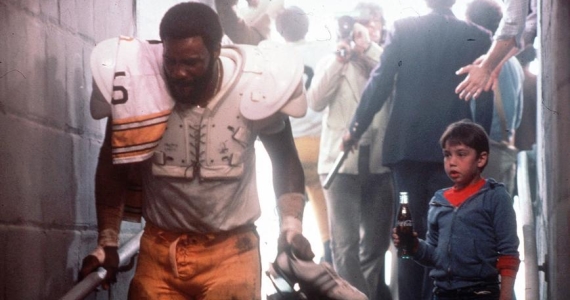
The magic of the Super Bowl is that for at least one night a year we all recognize that the commercials themselves add value to our lives. They are entertaining. And on Sunday night, we as a nation will be in the mood to be entertained. The commercials are usually humorous. Some are big funny. Some are small funny. Some are produced like mini-blockbusters packed with action and drama. Some are touching and cute, usually with an animal tugging at your heartstrings. Which is particularly impressive when you consider that most cardiologists can’t even find your heartstrings.

As a whole the commercials are interesting and engaging. But even the lesser spots enable us to play commercial critic. And as we learned from American Idol, a few train wrecks amongst the stars makes for oddly enjoyable TV.

As you prepare for Super Sunday here are three things every business can learn from the Super Bowl commercials.

Meet people where they are.  As a business you need to put the audience you want to reach first. Understand their wants and needs. Understand their habits and how you can fit into them. If people want to party, like they do during the Super Bowl, party with them. If they want serious information to solve a serious problem, get serious with them. But don’t cross streams. Trust me on this one.

Offer a consistently enjoyable experience. A major reason we look forward to the Super Bowl commercials is that we enjoyed them last year. And the year before. And like Pavlov’s dogs, when we hear talk of the Super Bowl, we start salivating for Doritos, Budweiser and Coca-Cola commercials. So deliver a great experience every time. Because when you do, whether you’re a carpet cleaner, a dentist, a software company or a mortician, your customers will look forward to interacting with you again. Wait, scratch mortician.

Make great things.  Americans love greatness. We have a deep appreciation for things like a well crafted Super Bowl commercial, or say, a well written blog post. Great things get elevated in our culture.  Yeti coolers, iPhones and American Giant sweatshirts are all great products from great companies that generate a lot of love. In turn they help build great brands that command love, respect and a premium price. So focus your business efforts on making things great. And the profits will follow.

I hope you enjoy the game. I hope you enjoy the commercials.  And I hope you enjoy the conversations about the game and the commercials on Monday. But most of all I hope that by this time next year your business is competing in the Super Bowl of your industry. And that you have a long line of customers lining up outside your door.  Unless, of course, you’re a mortician.

I Owe My Career To The Vanilla Ice Philosophy

I have a philosophy about philosophies.  It’s that everyone should have one. I believe we all need something to ground our actions, beliefs and decisions. It is our philosophies that create the bedrock of our character and our personal brands.

I also have a philosophy about the work I do as a professional creative. It encompasses why I believe advertising and marketing exist. And I stole it from Vanilla Ice. Yes, I am an evangelist of the Vanilla Ice Philosophy. What? You’ve never heard of it?  Right now consultants at Deloitte, Accenture and McKinsey are looking at each other asking, “Do you know what hell he’s talking about?” (And I know you guys read this. #analytics!)

Allow me to explain. The Vanilla Ice Philosophy was first introduced 25 years ago in Mr. Ice’s hit song, Ice Ice Baby. The philosophy emphatically states, “If there was a problem, Yo! I’ll solve it!”

It’s that simple. And it reminds me that there is only one reason agencies exist: To solve our clients’ problems. Fortunately for us, our clients always have problems (some more than others).  Sometimes they are really difficult challenges. Sometimes they are good problems to have.  But they are always there.  And solving them puts food on our tables.

I also love the attitude of this philosophy. You know, the “Yo! I’ll solve it!” part.  Because like an athlete who wants the ball, puck or frisbee when the team needs a big play, I always believe I can find a solution. So throw me the problem! Business is now my competitive sport. And I build teams full of people with the same competitive mindset.

Clients constantly warn us of big challenges or tight deadlines that make their problem difficult to solve. But our team never flinches. We’ve seen too much and overcome too many challenges. In short, we are hard to scare.

So what makes the perfect agency good at solving problems?  Again, we turn to Vanilla Ice. He doles out important instructions in the opening line of Ice Ice Baby. Because he knew in his infinite icy wisdom that the key to solving problems is to collaborate and to listen.

Collaborating means we work together. Our agency huddles together to put the best minds to work as one. We also collaborate extremely well with our clients. By representing all perspectives in the solutions we know we come up with better options than we ever could alone.

Listening means we hear the real problem to be solved. We listen for understanding. We listen for insights. We listen to hear the key problem we are trying to solve. In corporate America too much time is wasted by not hearing, identifying or responding to the real problem.

So thank you Robert Van Winkle. Over the past 25 years you’ve made great music. You’ve made us dance. And you have penned some solid philosophy that I follow every day. Word to your mother.


The A-holes Rule.

I’m not a huge fan of rules.  Creative people as a species are naturally averse to them.  But if you want to develop a business with a strong culture you need some rules to guide you.

When I joined my first agency executive team our first order of business was to create some simple rules to govern the organization. Because we believed that a great organization is made of great people who enjoy working together the first rule we unanimously agreed on was the ‘No Assholes’ rule. For those not familiar with the rule, or the obviousness of the phrase, it means that your organization will not tolerate people who act like A-holes.

Preventing the A-holes from joining your team isn’t easy. Because they are on their best behavior in interviews. Sometimes we sniff them out (yeah, I said it). But often they sneak past our filters.  So as much as we try to prevent an A-hole from getting into our organizations in the first place, they get in. So now what?

You just get rid of them, right?  After all, no one likes an A-hole. Unfortunately it’s typically not that simple. Because let’s face it, there are a lot of talented A-holes. The drive, intelligence, confidence and will of a typical A-hole makes things happen. It’s common for them to make a quick impact and create immediate wins.

But that upside comes with an equally significant downside. Because A-holes are uncomfortable to be around, they drain morale and sap energy. The unfortunate reality is that when you retain an A-hole, it sends a terrible message about your values to your most valued employees. You’ll watch them drop like flies.  Among the employee your retain you’ll lose untold dollars in productivity as co-workers gather to talk about what an A-hole the A-hole is.

Of course the worst problem of all occurs when the A-hole develops a close relationship with the client.  Because then the agency has to decide whether they want to lose the valuable contributions of the A-hole and irritate or lose a client.

I recommend a proven 2-step process to handling such problem employees.  First, ask a handful of cross functional team members if they think the co-worker in question is an A-hole.  If the consensus is yes, put on your scrubs and perform the Assholectomy.

There simply is no room for the distraction, the division and the drama caused by A-holes. Accepting them tells the rest of the organization that it’s okay to be an A.  That can’t happen. Because eventually enough people will leave, or threaten to leave that you have no choice but to get rid of the jerk anyway.

After implementing the A-hole rule in the past, I’m proud to say we purged several very talented but very difficult people. And the culture, vibe, productivity  and love for the organization improved as a result. That’s why the ‘No Assholes’ rule will be printed on page one of The Perfect Agency Project handbook.