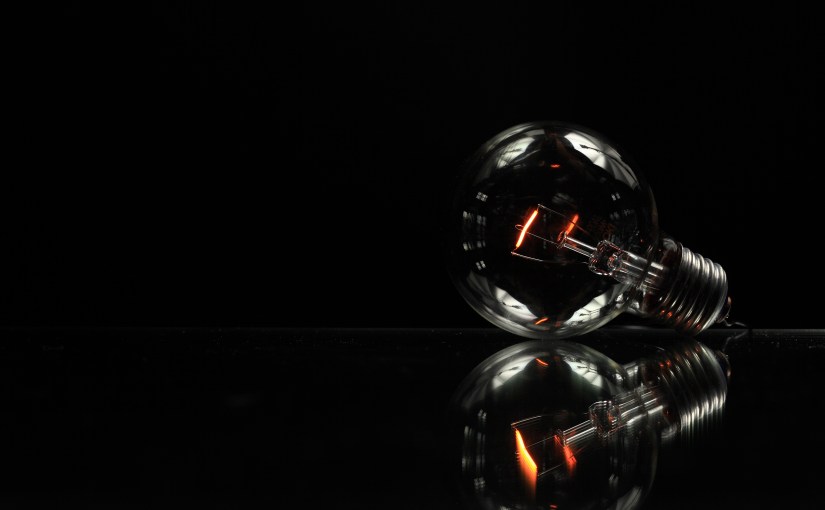
Do you have a Think Well?

The most valuable asset on the planet is a new idea. The surprising new solutions to old problems. The reinventions that change our lives and disrupt the way business is done. Ideas make money. And save money. They create competitive advantages, differentiation and wide motes out of model-thin air.

So why is it that a small handful of organizations seem to have a monopoly on great ideas? Nike, Google, Apple and Facebook all seem to pump out new ideas like Kardashians pump out selfies. While other organizations are simply one-hit-wonders, too busy dancing the Macarena with Rico Suave and Mickey to have another 99 Red ideas.

At The Perfect Agency Project we think the problem is simple. To generate great ideas you need two things.

  1. Time to think.
  2. A place to think.

I won’t get into the time issue here. Time is the most precious and most wasted commodity on Earth. Wait, I just got into the time issue.  Backing out now. Beep. Beep. Beep.

To make sure you are creating the best ideas possible you need to have a great place to think. I call this a Think Well, because:

  1. You think well in that space.
  2. When you find your place, ideas flow like water from a well.
  3. It sounds like Inkwell.
  4. I like a good triple entendre.

Does your office have a space people can escape to, that is quiet and relaxing?  Where people can think uninterrupted for a long stretch? Sure, senior executives usually have offices where they can close the door, put their feet up and imagine things like John Lennon did.  But what about the rest of the team?  Maybe you have a Think Well at home. If so, work there more often.

The downside to the open concept work environment, which eliminate offices, is that you decimate the natural thinking habitat. Which threatens the thinking population. Despite their popularity and low-cost per square foot, cubicle farms are not good at growing ideas.

There is a simple way to discover if your office has Think Wells: ask your employees. ( I thought of that in my Think Well). If they say they have such a place, encourage them to spend more time there.  If they don’t have one, send them on a mission to find one. If they can’t find a Think Well, you need to create one.

I’m a big fan of the quiet section of the library.  I’ve always gotten a lot of work done there. The no-talking mandate simply means I start talking to myself, in my head. Which is exactly what thinking is. That’s why every organization should have a quiet, comfortable space where you can go to let your mind jog. Innovative thinking requires pumping the thoughts and ideas from deep in your mind, into your conscious brain, where you can process them, and translate them into physical form.

As Napoleon Hill wrote in Think and Grow Rich:

“More gold had been mined from the mind of men than the earth itself”

So find your personal Think Well. Create a space for others. Then enjoy the ideas and the value they produce. Oh, if you know anyone from Baha Men, please forward them this post. I’m dying to finally know who let the dogs out, and if they ever came back.


To have more great ideas stop thinking about it.

I love ideas. New ideas tingle and jump in my head like pop rocks. If that is how crack makes you feel I would like crack. A lot. Ideas are the seeds that grow every kind of human-induced improvement on this planet. Yet many of us don’t spend much, if any time ideating.

I love the entire ideation process. I love loading my brain with information by reading and researching. Great ideas come from rearranging the ingredients in your head in new and novel ways. The more ingredients the more possibilities.

But after you top off your brain with input about the problem to be solved comes the most valuable part of the process: Stepping away from the problem completely. And doing nothing. That’s right. Just let the elements do what they want to do. Not what you want them to do. Yet, deep inside your mind, the ideas are growing. And fermenting. Brewing and bubbling. Forming and frothing. Without any additional effort from you.

This part of the process is like making cheese. Or wine. Or a baby. Well not making a baby. Just the baby-growing part. To the naked eye it looks like you are being lazy. The fun distractions at advertising agencies and other creative environments are great at getting team members away from the active thinking and into incubation. That way you don’t get in the way of the natural process. Think of it like baking a cake. Opening the oven door and jabbing toothpicks doesn’t help transform the batter into cake. Time and heat do the work.

The incubation period is the most valuable step in developing unique and differentiating ideas. Yet it is absolutely free. At The Perfect Agency Project we don’t charge for the time when we’re not actively thinking about challenges. During this phase of the process you can multitask. Or sleep. Or make cheese. Or compost. Or babies. The longer the incubation period the more you compound the interesting.

Unfortunately, for the professional creative, the incubation period is an endangered part of the process. Over the course of my career this valuable time has been disappearing like the Brazilian rainforest. And record stores. A lack of planning on the part of the requester hacks at this time. So does a lack of patience. But creatives thinkers have not done enough to promote the ROI clients earn on this free time. I hope sharing this post is a first step in re-establishing the importance of this step.

To make sure you get the most value out of the incubation period start early, build in time for nothing and let the team sleep on it. I often wake up and find myself perched on a great idea like a hen sitting on a warm egg. Resist the temptation to see work ASAP. You will often get the best results if you see the work ALAP.

So spend less money. Offer more time. Let your team know the outline of the challenge early. And watch the great ideas emerge like popcorn. And wine. And babies.

6 lessons from the class everyone should take but no one ever does.

I work in advertising. I know the value of the New and Improved. Which is why I am always trying to create a newer, improved-er version of myself. I realized at the beginning of my career that if I wanted to catch up to the best professionals in this industry I was going to have to do my homework. So I began studying and learning. Not in a structured school program. But in a self-directed, choose-your-own-adventure, movie montage kind of way.

Like most people who are into self-improvement, I have focused heavily on communication skills: public speaking, presentation skills, selling skills. But the deeper I get into this game Prince called, Life, I realize that most people (including me) spend too much time on the wrong side of the equation.

The most effective and important communication skill is not speaking. It’s listening.

Listening is where all success starts. It is only through listening that we understand the problems that we need to solve. It is how we hear what isn’t said (don’t think about this too hard or it sounds really stupid). Through listening we learn about other people. We learn about their history, their values, their styles and their quirks. Which allows for deeper, more meaningful and more valuable relationships. Yet when was the last time you heard about someone going to a listening seminar?

So here are The Perfect Agency Project’s 6 Keys To Improving Your Listening Skills. These are sure to make you a better, bigger-eared version of yourself.

1. Listen Competitively.

Start by trying to be really good at listening. You already know the little things you have to do to be a great listener. We learned them playing Simon Says. Look at the person talking. Give the person speaking your full attention.  And do this like your earning potential, relationships and Parent Of The Year award depend on it. Because they do.

2. Shut your mouth.

We are often so compelled to talk that we stop listening. If you want to be a great listener you have to silence your own impulses. And focus on your role as a listener. This means you are not providing answers, or solutions or opinions. You are harvesting. Not planting. Know what season it is. Bring the right equipment to the field.

3. Keep your partner lubricated.

I don’t mean with alcohol or KY.  With affirmations. And demonstrated interest. Lean in. Show you care. And you will keep others flowing with information. Yet without the annoying public outcry that comes with waterboarding.

4. Listen with your Spidey Sense.

Go beyond the words that are said. Note the tone. The emotion. Those things are like limps, signaling that something deeper is wrong. Or they could signal that someone is in a good mood that exceeds the norm for the current situation. Maybe they just got engaged. Or maybe they are on drugs.

5.  Play back, Jack.

The curtain call of any good listening session is the summary of what you heard.  The highlight, simplified conclusion or takeaway that demonstrates that you really heard what was said. What was implied. And what is now important.  Do this and you will always leave a conversation with more personal equity.

6. Lock up the valuables.

The most important listening skill is keeping the private stuff private. You have to know which things you heard were intended for you alone. And don’t talk about them. When people know that you are trustworthy they tell you more. You become an important confidante. An insider. It’s like being sponge-worthy.

Improve your listening and everything else will improve. Better relationships with your friends, family and co-workers. Better solutions to problems. More and better networking. And better creative ideas. If you have your own tips and tricks for better listening I would love to hear from you.

Could you pass the Fender Bender Test?

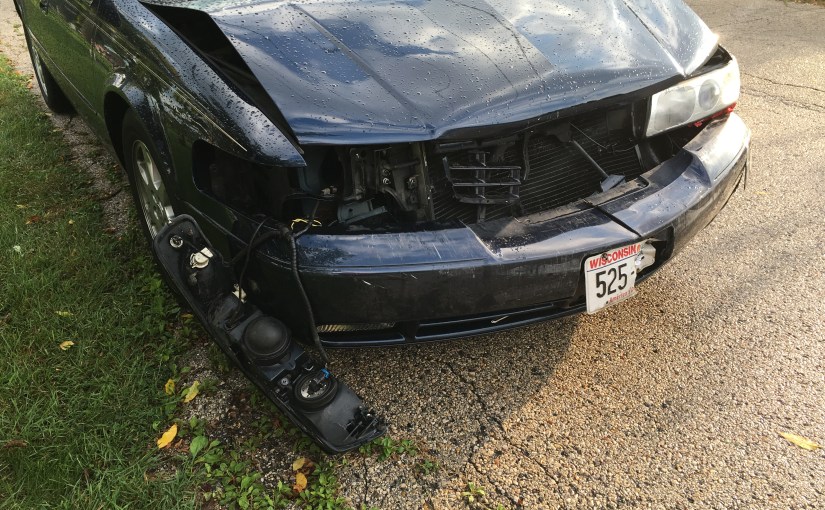
Sunday afternoon I was in a fender bender. Boo. I was driving my daughter home from basketball practice. We were having a nice conversation about her practice and I was looking forward to making chili when we got home. Then I was going to bake a couple of pies with the apples we picked at a local orchard in the morning. Then Normal Rockwell was going to sue me for infringing on his schtick.

I was driving within the notorious Five Mile Circle of Doom: that 5 mile radius that surrounds your home. Statistically, this is where the majority of accidents happen. As I passed into the invisible circle I slowed down because a tanker truck was stopping at a railroad crossing in front of me. Then I heard it. That telltale crunchy metallic BANG of a car slamming into another car. A moment later I heard another BANG. But this time I felt it too. I had been hit from behind. And suddenly the chili, apple pie and Norman Rockwell lay in shattered fragments on the pavement. Now Danica Patrick was going to sue me for stealing her schtick.

I pulled my car off the main drag and onto a side street. I got out of the car. And that’s when I realized what had happened. I had been part of a 3 car pileup. I was the third and final ball in a Newton’s Cradle fender bender.

Back on the main road there were two cars still intimately engaged like two dogs getting it on in public. Which is always such an awkward thing to see. Even for dogs.

After a moment the two cars disengaged and gingerly limped off the main road and onto the side street with me. We got out of our cars and remembered to first ask if everyone was okay. Then we introduced ourselves. This is one of the all-time oddest ways to meet someone new. Hey, crash here often?  How about this crashing inducing weather we’re having?

First I met the woman who hit me. I’ll call her Laura (because that is her first name, and her last name is too difficult to spell). She was driving a new grey Honda Oddessy mini van. She had a car full of humans and was finally heading home from a long day of volleyball at the high school.

The person driving the car that created the crash was a tall goofy boy who was college-dropout aged. He was odd. And he raised an eyebrow of the responding police officer who said, “I’m going to talk to him first. He’s acting pretty shifty.’ But I don’t think he was acting. That was just him being himself.

This left me, Laura, her kids, and soon her husband John (who came to help) to talk amongst ourselves as we waited. And the more we talked the more I liked them. They were nice people. Laura asked my daughter how her basketball practice was. Which was a very nice thing to ask a kid who had just been in her first accident. And it demonstrated Laura’s ability to think beyond herself, even though her brand new minivan has just been dented, gashed and bruised. And her engine was now wheezing like a junkyard conversion van. John was friendly, composed and funny. He said, ‘Well at least it didn’t happen during the Packer game.’ I laughed.

But as we talked we realized we had more in common. Laura and I had both gone to the University of Wisconsin. We quickly found several people we knew in common. And then we realized that we both work in (and love) advertising.

So there we were. Our cars dented and saddened by recent events. Yet Laura was cool, collected, considerate and humorous. Which are the traits you need to have to be successful in advertising. Because in this industry fender benders and traffic jams and last minute surprises are routine. After this surprise-round of speed networking we decided that we should meet again to talk about doing business together.

While we at The Perfect Agency Project don’t recommend getting in an accident, it does provide a valuable look at how people respond to the negative. It gives you a good look at who they really are under pressure. And if you like them then, you will probably like working with them too. Laura passed The Fender Bender Test with flying colors. Would you? I encourage you to think about it. But I hope you never know.

The most common phrase you should never say.

At the Perfect Agency Project we have a fairly obvious goal. In case you’re not great at reading comprehension, the goal is to create the perfect agency. And at the perfect agency people collaborate and are nice to each other.  Which means they don’t do or say jerkilicious things.

That’s why we are banning a very common phrase you probably hear or say all the time. Ready for it? Still ready?  Further ado. Even further ado  Okay, here it is:

I don’t disagree.

Please stop saying this.  This is one of the jerkiest statements we can make to each other.  It paints your reaction in a negative light. Both don’t and disagree are negative words.  Which makes it a double negative.

As most of you don’t not know, the double negative actually makes a positive. So this statement actually says, I agree.  But it states it in the most negative, reluctant, non-affirming way possible.

Instead let us say things like I agree. Or You’re right.  Let us support each other. Let us acknowledge our alignments positively. And most importantly, let us eat more lettuce. Now if you agree with me, please respond to this post by saying, completely don’t disagree with you. It won’t make me not laugh. But it will let me know who read all the way to the end.

Let’s stop TGIFing around.

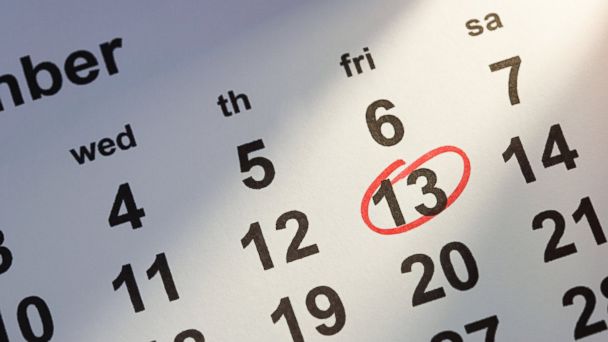
Welcome to the second post in my Days Of The Week Series (my gut says this will be one of the seven best). Today we’re talking about Friday. Which is really more like Friday! It’s one of the most popular days of all time (see what I did there?) Everyone loves Friday. But I don’t love the way we often think about the day.

We all know the phrase TGIF.  The thing I dislike about this is that Thank God It’s Friday is really saying, ‘OMG! I am so thankful I have reached the end of my week of suffering!’

But on Fridays at the Perfect Agency Project we want to: Make the most. Not just coast. So we are rebranding the day as Phone a Friend Friday. Or Fone a Friend Friday. Or Phone A Phriend Phriday. Your choice.

Relationships are really, really important in business. I’ve made a genuine effort to develop, maintain and grow mine. In fact, people are one of my favorite things about this planet. And they were an important factor in me choosing to live on Earth.

Today we use lots of ways to keep in touch. We text, email, tweet, snap, chat, IM, Link and stalk people. But Fridays were made for phone calls. Because schedules free up and the pace slows down at the end of the week. So instead of using that lighter load at the end of the week to knock off early, or hang out at either the real or the proverbial water cooler, I encourage you to call someone in your network that you haven’t talked to in a while.

At a minimum, my Phone a Friend Friday calls are always a highly enjoyable end to the week. But they routinely provide great insights, advice and learning opportunities. They help strengthen my relationships. They often shine a light on another friend or contact that could use a call, a hand or a word of encouragement. And these calls regularly lead to new opportunities for me to work with some of my favorite people again.

So don’t start mailing it in just yet my friends. Pick up the phone today and end the week on a high note. Your Friday calls may prove to be the most valuable part of your week on both a personal and professional level. If you don’t know who to call, call me (614-256-2850). Even if I can’t talk at the time I’m sure to call you back. And my voicemail messages alone are usually  worth the call. Have a great day. And I look forward to catching up soon.

Why lying is so good for you.

I used to think I was an honest person. I can only think of one promise that I’ve made and not kept, since 8th grade. On the night I graduated from high school I promised my friend Simon Phillips that I would sign his yearbook. And I still haven’t done it. A few years ago I reached out to Simon through Facebook to apologize and to try to complete my obligation. Apparently he forgot all about my unkept promise. I have not.

But smack dab in the middle of what I had considered to be a very honest life I realized two shocking truths:

1. I tell lies all the time.

2. I have no idea how smack and dab came to qualify the middle of something.

The lies I’m talking about are not little white lies. Not exaggerations of something mostly true. They are complete and utter falsifications and fabrications. Big league lies.

My string of outlandish lies goes back to high school. I can remember saying that I was the boys high school state record holder in the discus. I first told this lie when I was a scrawny freshman who had only thrown the discus in one meet. And in that one meet my best throw was 60 feet shy of the state record! I was a liar. Yes, I was a liar. And my pants were certainly on fire.

The lies continued in college. After a couple of rough semesters academically my GPA indicated that I was a terrible college student. But I lied and said that I was a great college student who got great grades and made the Dean’s list. All lies.

Once I started my career in advertising the lies just kept coming. Before I even landed a job I started telling outlandish lies about my accomplishments, accolades and income. I was a one man lie-athon.

But a funny thing happened after I told all those lies.

They started coming true.

Sure enough, in the last track meet of my senior year I broke the state high school discus record by 3 feet.

In college, I followed up a couple of terrible academic semesters with 7 straight semesters that included making the Dean’s List, being named an Academic All-Big Ten athlete, achieving a GPA of at least 3.5 every semester and graduating with a GPA of 3.88 within my psychology and journalism majors.

In my advertising career the lies keep coming true too. I lied when as a young writer I said I could help attract fun clients to the agency  where I worked. Then I helped the agency pick up Ski-Doo snowmobiles, Sea•Doo watercraft, Evinrude outboard motors, as well as CanAm ATVs and the Spyder Roadster

Building on that success I then joined a relatively unknown regional agency and lied about how we were going to work with some of the world’s best brands. And over the next few years we won business with Nike, Coke, UPS, Nationwide, Chick-fil-a and Wells Fargo.

The truth is, you need to lie to achieve great things. You have to believe the unbelievable to achieve the unachievable. (That’s some Jessie Jackson-worthy rhyming, right!?!)

Whether you call it lying or living into your dreams or positive thinking or envisioning or auto suggestion, this powerful tool is about lying to yourself so convincingly that you make the lie a reality. Which is exactly what I am doing on my quest to create the perfect agency. I believe it can be done. And I believe I’m the right person to do it. Which is a huge, and completely unsubstantiated lie.

I don’t know of any other way to make great things happen but to tell myself they will, even when there is no basis for it in reality. So I encourage you to try lying to yourself today. If you don’t feel great, say you do. If you haven’t achieved great things, say you have. Say it often. Every morning and every night, in the mirror. Lie to yourself.  Lie until you don’t even realize what the truth is anymore. And then make it all come true.

Now if you’ll excuse me, I have a yearbook to sign.


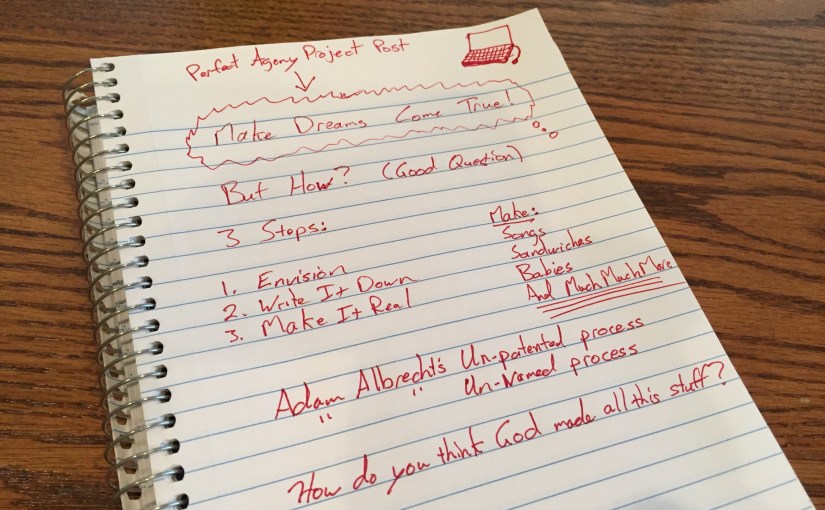
How to make your dreams come true in 3 easy steps.

Do you have dreams?  I do. I dream all the time. You could say I’m dreamy. And I wish more people did. But I also know how to bring my dreams to life. I don’t just blow out birthday candles or wish upon stars or listen to Hall & Oates. While all of those activities may help, I use a simple technique that has proven effective thousands of times.

You may ask yourself why a guy who works in Advertising! would know how to make dreams come true. Well, my job as a creative is to dream of new things and then bring them to life. My proven Adam Albrecht Approach To Creating Things (I just made that up) follows a simple 3 step process. And this process applies to anything you want to create. A commercial. A home. A business. An invention. A baby. Or even a commercial about a home business that invents babies.

Today, the Perfect Agency Project hopes to make the world a better place and help make more of your dreams come true by sharing our process. So without further ado, here is how you can create anything you want through Adam Albrecht’s 3 Steps of Non-Religious Creation (I just rebranded it).

Step 1.  Envision The Dream.  

This is as simple as it sounds. This step is about letting your brain run and play. It is about building castles in your head. It is dreaming up the perfect cookie or car wash or app. Picture your ideal fill-in-the-blank. Create a clear image in your head first. Get it in HD if it is available in your area. The more detail the better. This should be fun. And remember not to dream too small.

Step 2.  Write it down.

This too is about as simple as it sounds. However, 99.9969% of dreams/ideas/visions never happen because they don’t make it to this step. They never get written down. They never get described. The never take any form in the physical world.

Simply talking about your dream doesn’t cut it. Talking is like dreaming aloud. So that still falls under Step 1. To make your dreams come true they have to make it to paper or pixels (this will now be known as The Paper or Pixel Principle). Writing the idea down creates the recipe, the blueprint, the formula, the instructions, the map. You get it.

I have notebooks throughout my home that are filled with dreams. I am certain that these notebooks are the most valuable items I own. Because in them are the descriptions, plans and sketches of great things just waiting for step 3!

But before we move on it is important to note that the more time your spend acting in step 2  the easier the final step is. In step 2 you can start small with a few notes and descriptions. But come back early and often to flesh out your idea (please don’t flush it out).

For example, if you’re making a recipe write down the ingredients and the place you plan to go shopping. If you’re building your dream home, sketch out a crude representation (not in oil). Write down the specialist you’ll need to help you. Write down the materials. And the resources you need to find in order to fill in the gaps in your knowledge or abilities. If you need help financing your dream this step is critical. Because it makes the dream real enough for others to see. This is the plan that others can support too.  Which is what makes KickStarter work.

Step 3.  Make it real.

Despite what you may think, this step is also easy when you follow the process. That is because your dream has already been created, twice.  First, in your head when you created your vision. Then when you wrote it down and created the recipe. Now you simply start cooking. Or moving. Or building. You should see the steps and functions required to make progress from step 2.  If not, bounce back to step 2 for a moment to write it out.

Keep moving. Dreams are like sharks: if they stop moving humans will make up sayings about them both. As long as you are working on one of the 3 steps you are making progress. Although the goal must always be to move forward to the next step in order to complete the process.

So there you have it.  Whether your dream is to build a great BLT, create a hilarious video or put a human on Mars the steps are the same. See it. Write it down. Make it for realsies. So get started today. Keep Moving. Create something great. And then send me a note to tell me all about it.


What leaves the room when you do?

There are a lot of people on this planet. The last time I lined everybody up and counted them I tallied 7.4 billion humans. With that many people, all connected by the interwebs, you have a lot of options when you need a human. Whether you need an employee, a spouse or a plumber the supply works in your favor.

But we often find ourselves on the other side of that equation. We want to be employed. We want to be asked on a date. We want to snake someone’s drain. So how do we stand out in this 7.4 billion person crowd? It’s an important question that people spend far too little time contemplating. Yet I found a quote that states the answer quite succinctly:

Something special must leave the room when you leave the room. -Peter Drucker

Read that again a couple of times. (I’ll wait.)

Do you bring something special everywhere you go? You may have never thought about you in these terms. But you should. Over the next week I want you to think about what you bring to a room when you walk in. What do you add to the meeting, to the organization, to the relationship, to the overall value equation that others do not? What disappears again when you leave? If you can’t come up with anything you are a commodity. Our country places a very specific value on the commodity human. It’s called minimum wage. 

You’ve sat in meetings where there were too many attendees. You know there were too many because the meeting would have been exactly the same had one or more of the attendees not attended. On the other hand, we have also been in meetings when we asked, ‘Why are we meeting if Fill-In-The-Name isn’t here?’ You, my friend, want to be Fill-In-The-Name!

So what leaves the room when you do?

Here is a sample of the things you might bring to a room. Mix and match to create unique combinations. Or collect them all!

  • Energy
  • Experience
  • Connective tissue
  • Humor
  • Creativity
  • Compassion
  • Insight
  • Reason
  • Balance
  • Knowledge
  • Relationships
  • Trust
  • Positivity
  • Diversity
  • Know how
  • Spunk
  • Confidence
  • Reality
  • The wi-fi password

As you think about differentiating and marketing yourself The Perfect Agency Project reminds you that the same Principle of Specialness applies to all products and services.  What changes if your iPhone walks out of your life? Or your Yeti tumbler? Or your Johnsonville brats? You can’t simply replace these things with commodities without feeling you have lost something.

You and I both know you are not a commodity. But you must make sure that others clearly recognize the specialness you bring to the room. So reflect on your brand. What are your features and benefits that make you special. Focus on enhancing and augmenting them. Study the business and social situations you find yourself in. What isn’t there that you could add so that others miss you when you’re gone? I’ve always said that I never want to attend a meeting that I’m not in. Which sounds like something Yogi Berra might say. But if I can bring enough to the party that others are disappointed by my absences, we’re talking pure Drucker.


How I am making the nap my secret business weapon.

Remember Kindergarten?  I do. It was great. Blocks, snacks, learning to read and being the cutest kids in the school. It was a sweet gig for a 5-year old. And, of course, there were the naps. I remember curling up on my squishy little quadrifold mat. Speckled blue on one side. Flecked red on the other. I zonked and drooled for a few minutes every day. And I always came out of the nap better than I went into it.

For most of us Kindergarten was the last time in our lives we were encouraged, if not forced to take a nap. Now, I want to bring the nap back. But this time for creative professionals. I can’t think of anything that would help my mind perform at its best and  make my days more enjoyable than a regular nap-cation. Even at the office.

Too often we push ourselves until we run out of gas. And you are simply not at your best when you are running on fumes. Call me crazy, but I don’t think we should pay great people with great minds great money and have them operate on low batteries. (Yes I mixed fuel and batteries. I’m a hybrid.) 85% of mammalian species are polyphasic sleepers. Which means they sleep in short siestas throughout the day. But somehow we’ve rejected what the rest of our hairy relatives have heartily embraced.

Napping isn’t just important for creative professionals. In various other lines of work the nap is a must. If you drive an 18-wheeler I want you to stop and nap whenever you need to so that you don’t get your Peterbilt in my chocolate. Doctors, if you’re on for a 24-hour shift, wait, scratch that. ANYTIME you need to make sure you are at your best, you take yourself a nap. I’ll even write you a prescription.

Cultures in other parts of the world highly value the workplace nap. In China you’ll find entire teams facedown at their desk over the lunch hour. I love this! And not just because I would take and post hilarious sleeper pics on Instagram every day. In Spain they siesta. Italy has they rock the riposo. And other countries from the Philippines to Nigeria say don’t worry, be nappy.

My friend and former officemate Vince DeMarinis used to announce every day at 3pm, ‘Welcome to the worst hour of the day!’  But with a well timed nap we could be as great at 3pm as we were first thing in the morning. My Grandfathers were both farmers. And you know what they did between the morning and evening chores to prepare for operating heavy and spinny and choppy farm equipment?  They fed their nap-petites on the couch for a few minutes every day. And their cattle and appendages were better off for it.

So I want to apply the same principle to The Perfect Agency Project. When me and my team are worn down from a long day slinging the pickaxe in the Idea Mine, I don’t want the team to simply push through with caffeine. Or 5-Hour Energy. Or Red Bull. Or Crack. What a fatigued mind really needs is a nap. A nap powers us up like our iPhones plugged into the wall. Only without the electricity and charging cords in our orifices.

I’m not proposing long naps where you shut your doors for a few hours and change into your footy pajamas. A quick cat nap will do the trick. A study by the research journal Sleep found that 10 minute naps were optimal in terms of reduced sleepiness and improved cognitive performance. Another study of theirs showed that almost no one reads the research journal Sleep.

NASA performed some rocket science on sleepy military pilots and astronauts. They found that a 40-minute nap improved performance by 34% and alertness 100%. It even made Tang taste tangier. Since most of the ideators and pencil pilots I work with spend a lot of time with their heads in the clouds I find these results highly relevant.

I am planning out a napping policy and facility now. We may have mats, build bunk beds or hang hammocks. But the nap will be used. It will be sacred. It will help us develop better ideas faster. And it will help us be more productive. I firmly believe it will give us a competitive advantage in ideation. I encourage you to consider incorporating naps into your routine as well. And when you do, let me know. I’d be happy to come take some pictures of your team hard at sleep.