11 Essential Truths About Great Advertising.

Advertising is typically thought of as a creative endeavor. More Art Garfunkel than science. But here are 11 simple truths about making great and effective advertising that every marketer, businessperson and communications professional should know. At The Weaponry, these truths drive everything we do. Here they are in a particular order.

11 Truths About Great Advertising.

1. It stems from great strategy: All great advertising and marketing begins with a great strategy. You have to know how you win. You need to know which of your advantages to leverage. You need to know who your audience is. And what they need to hear from you in order to give you their money, their vote, or their blood.

2. It differentiates. Great advertising sets you apart from the crowd. You are no longer a commodity. You are special. Like that little girl from The Help. This is the power we build into strong brands. It makes you irreplaceable. You want to be seen as a special exception. Be the option that sparkles and calls your customer’s name. They have to think, This is the brand that gets me.

3. You haven’t seen or heard it before. Great advertising feels new. It tickles a part of the brain that has never been tickled before. It offers phrases, imagery, design, or attitude that you have never encountered before. Which helps your advertising land in a new place on the perceptual map. Like new art. Or Chipotle. Which is why so many new food concepts are now described as the Chipotle of their cuisine type. You also know that Chipotle has built a strong brand because when people tell you they are going to grab Chipotle, you don’t imagine them grabbing a smoke-dried jalapeno.

4. You have to earn a longer leash to create it. Great advertising often represents a perceived risk. Because it feels different than what you’ve seen from the brand or the category before. Which means that the client-approver needs to trust the creators. The client approvers must trust that the creators have their best interest at heart. They must trust that this is a smart and calculated departure from the past, or from a norm. (Norm!!!) They must trust that you know what you are doing. This type of trust, which I call earning rope, or earning leash, takes time. Sometimes this is earned through a handful of interactions, like during the new business pitch process. Sometimes this is earned over years of working together. But without first earning trust, advertisers are less likely to jump the gap with you. (Which has nothing to do with mugging people at The Gap. Or minding the gap. Or Michael Strahan.)

5. It avoids layers of approval. Great advertising doesn’t get approved by an army of approvers. The more approvers that are involved, the more likely the work gets pushed right back to the center of the expected range from your category. The people who will be approving the great work should all be in the room or on the Zoom when the great work is presented. They should be exposed to the strategic thinking and the insights that birthed the idea. And they should be able to compare the work in question to the other ideas presented and their relative merits. (Not the merits of their relatives.)

6. It can not be evaluated devoid of the strategy. To judge great creative work you need to know the strategy. This is critical. If you don’t know the strategy the work can’t be right and it can’t be wrong. The strategy represents the aim of the work. Without knowing the aim, you can’t know if it hit the target. Armchair quarterbacks don’t know what the insiders know. You have to know the insider information to judge the idea and the execution.

7. A great idea gets better partners than your budget deserves. Creative people love creative ideas. They are more interested in bringing a creative idea to life than making money. Which means they will often slash their rates or even do work for free to be involved in great creative work that they can add to their portfolio, reel, or website. As a result, a great creative idea attracts talent and resources beyond what you can afford. So great ideas often get favorable treatment and privileges that ordinary work does not. In turn, it gets even greater at each step in the process.

8. You have to sweat the details. To make great advertising, you have to start with a great idea. But then you have to pay attention to all of the details throughout the process. You have to set high standards for every aspect of the work, and then be vigilant, and critical, to ensure that every element is done right. The words, colors, imagery, size of everything, performances, sound, casting, announcer, kerning, leading editing, graphics, photography, and retouching all have to be right. A flaw in any of those areas can ruin the whole thing. Like the pea under the mattress, the fly in the soup, or the toothy grin on Mona Lisa.

9. It causes envy. Great work may seem subjective. And in some ways it is. Supreme Court Justice Potter Steward once remarked that hardcore pornography may be hard to define, but “I know it when I see it.’ The same holds true for great advertising. The measure I always use is that it creates envy. When I see great advertising, I wish I had created it. I wish I had it in more portfolio. I wish I could brag about it. In fact, when I am hiring creative talent that is my requirement. The candidate must have work in their portfolio that makes me jealous. That’s what great advertising does. And indeed, great work of any type should create envy. (Side note: Don’t you wonder just how much hardcore porn Justice Steward has seen?)

10. It drives results. Great advertising can’t be great without driving results. Results don’t just mean sales. Because there are other factors that advertising can’t overcome that impact a final sale. But great advertising must drive interest, or engagement, inquiries, calls, store visits, website traffic, leads, votes or whatever it was intended to do. Ultimately, this is the measure that trumps everything else. (That was not a political sentence.) Agencies and marketers alike win when the work works.

11. It makes people look forward to your next idea. Great advertising flips the dynamics in the favor of the advertiser. The audience no longer sees you as an interrupter. They see you as interesting, entertaining, smart, or funny. They see you as adding value to their lives. And when you do that, the world looks forward to what you do next. They want to know what great idea you will share next. Whether it’s your funny Super Bowl commercials, your engaging content, your frame-worthy print ads, your stunning billboards, or your crazy stunts, great advertising means you are no longer interrupting. You are anticipated. You are sought out. This is the ultimate benefit of great advertising. The gatekeeper is keeping an eye out for you. And when you appear, they invite you to cut the line and make your way inside.

Key Takeaway

Great advertising is fundamentally different than technically sound advertising. It is created differently. It is approved differently. It triggers a different and more valuable response from your audience. Great advertising offers tremendous value and creates advantages that help you win your unfair share of the pie. If your advertising is not great, revisit this list to understand why and where it may have gone wrong. Then fix it. You always have the ability to get it right.

*If you know someone who could benefit from this message, please share it with them.

+For more of the best life lessons I have learned check out my book, What Does Your Fortune Cookie Say? from Ripples Media.

Are you offering others promises of what you can do, or proof?

Winning new business is exciting. It means you convinced a customer or client to take a chance on you. (Like ABBA said.) But at this point, you are selling the promise of what you can do for them. Because in the beginning, the promise is all you’ve got.

The best moment in business is when a customer or client comes back for the second helping. Because this time it is not because of a promise you made them. It is because of the proof you gave them. (It’s in the pudding.)

The first transaction is based on your promise. The second is based on your proof.

The first engagement is based on hope. The second engagement is based on expectations met. Businesses live and die based on met expectations. Which is why repeat business is so important. It is the lag indicator that you are offering value and a positive experience.

If you track just one measurement on your way to success it should be repeat purchases. It is the pass-fail measure of long-term success. Because without repeat purchasers, you will run out of new prospects. And your business will be all grind, and no bump.

Recent History

Last week I had two great repeat experiences.

First, The Weaponry, the advertising and idea agency I lead, got a call from one of our first-time clients. We were almost done building a website for this client, and they called to tell us they want us to take on another website build for another division of their business.

Second, we had our first creative presentation to another new client. At the end of the presentation, The Boss Man told us he wanted us to work with their procurement team to get set up as an official, long-term supplier. Boom!

These second projects came because we lived up to expectations. We passed an important test. We weren’t one and done, like a University of Kentucky freshman basketball player. Which means we are running a sustainable business.

A Personal Note

The same principle holds true in your personal life. You get a first shot at relationships, opportunities, and trust based on the promise of delivering the goods. The second shot comes because you proved you were worthy the first time. Keep delivering and good things just keep coming your way.

Key Takeaway

Winning new business is simply an opportunity to prove what you can do. It is where the hard work begins. Make sure to deliver on the promises you made to that first-time customer. Because when you do, they’ll come back for more. And businesses only thrive if happy customers keep coming back for more.

*If you know someone who would benefit from this message, please share it with them.

**If this post lived up to your expectations, please consider subscribing to get the next one emailed to your inbox. The subscribe button is at the top left of this page.

To grow your business you have to find great customers yourself.

I get a boatload of emails, calls, and LinkedIn requests from strangers who are trying to sell to me. Most of them want to help me generate more business leads for The Weaponry, an advertising and idea agency that I lead.

It is crazy how many people want to help me with this. It is as if they all looked at my demographic information alone and want to sell me a hair growth tonic. But if you knew me, or ever looked at my LinkedIn profile pic, you would know I may have problems, but growing hair is not one of them.

The sales promises are often quantified. They say they will deliver hundreds or thousands of qualified leads per month. To the uninitiated, unsuccessful, lazy or naive this must sound amazing.

But business growth and development doesn’t work that way. Qualified leads and prospects are not a commodity. You can’t outsource them to a stranger. The type of clients or customers you want to work with are not like crops in a field. You can’t simply run a harvester through them, load them into a wagon and sell them on the open market.

Prospective customers and clients are not all created equal. The valuable ones come from relationships, connections, and conversations. From shared philosophies and values. You and your team should find the right ones for you. Then earn their trust. Develop a mutual attraction. And decide you are right for each other.

For a stranger to spam* me and tell me that they can find me a steady supply of qualified leads is like telling me that they can find me more friends. ‘We’ll dump a list of friends on you. You’ll really like them and they will like you too.’ But it doesn’t work that way. That’s a job we have to do ourselves.

*No offense to Spam, the innovative meat. If a stranger offered me some fried Spam for breakfast we would be friends for life.

Key Takeaway

Earn your own customers and clients. Create systems and processes to find them. Develop relationships. Keep your promises. Deliver results. Create a core of happy customers that spread the word about you. That never fails.

*If you know someone who could benefit from this message, please share it with them.

To build a successful business make more friends first.

I recently was introduced to the CEO of a really fun business in Milwaukee. A mutual friend introduced us via email. And in the quick hellos and thanks-for-the-introduction exchange that followed the CEO invited me to his office for a pow-wow.

When we met in person a week later we talked and developed a quick friendship. Despite the fact that we had just met it was clear that we were on the same wavelength. Our mutual friend, who I will call Erin, because that is her name, must have detected that too.

The two of us began talking about his business. I loved the conversation. I am a big fan of his company. Like one of those Big Ass Fans you see in a warehouse. I noted the remarkable quality of the product his team creates. I shared my enthusiasm for his brand and the great potential for growth, expansion and domination.

Then something interesting and unexpected happened. The CEO paused and said, ‘Adam, every agency in town has come to me wanting my business. They all talk about what they can do for us. And they share their vision for our brand. But you are the only one who has shared MY vision for the brand.’

At that point the conversation changed from 2 guys getting to know each other to two business leaders collaborating and working through problems and opportunities together. Which is what I love most about business.

I didn’t think of our conversation as a sales call. I didn’t think I was pitching him on working with me and my business. I was just excited to meet a new friend. I’m like a puppy in that way. And in the process of developing a friendship we talked about his business, the same way we talked about his family, the places he has lived and what he likes to do in his free time.

Make Friends. Not Sales.

But sales is not what most people think it is. So much of business development is simply developing friendships and rapport. It is showing a genuine interest in getting to know others. It is about helping and providing value. It is not about asking for business.

I always focus on friendship first. I was genuinely interested in this baller of a CEO first. I was not about to ask for a shot at his business. Perhaps that was part of the appeal.

As the sales expert Jeffry Gitomer says, people hate to be sold, but they love to buy. That is why I always let people buy into me instead of asking for the sale.

Does it work? Well, I now have a meeting scheduled with my new friend and his leadership team next week.

6 Key Takeaways From This Experience

  1. A good introduction from a trusted mutual friend creates a great start to a new relationship.
  2. Make friends. Not sales calls.
  3. Add value first, last, and always.
  4. Think bigger.
  5. Paint a picture others want to buy into.
  6. Let your enthusiasm, energy and passion show.

Follow Up:

Between the time I first wrote this post and published it a lot has happened. We had a great meeting with the executive leadership team. We were asked for a proposal. The proposal was signed last Friday afternoon. We kicked off our official relationship with a 3-hour meeting (Gilligan’s Island-Style) on Monday afternoon. We will present ideas next week. And we will have new ads live for the holidays.

*If you know someone who could benefit from this message please share it with them.

When you develop a new business you develop new hope.

I expected that starting my own advertising agency would be hard. I expected long days and late nights. I expected endless challenges. I expected to make mistakes. I expected to forgive myself for not knowing all the things a business owner really should know. I expected to learn and grow along the way. And I expected to use the word expected more than usual in this opening paragraph.

Hard Things Are The Best Things.

I launched my advertising and idea agency, The Weaponry, in 2016. And all of the things I expected ahead of time have come true. I have no complaints. Because doing great things should be hard. I am not afraid of hard things. They make me feel alive. Where others get anxious, intimidated or nervous, I get excited. It’s a gift. Or maybe there is something wrong with me. Or both.

The Unexpected

But more and more I am noticing something I didn’t anticipate during the pre-launch phase. I am surprised by the number of former coworkers, clients, friends and acquaintances that have come to me hoping, urging, expecting me to build something great that they could be part of too.

There are a significant number of very talented people who have gotten very close to The Weaponry, and put their names on our wait list, preparing for the next opening or opportunity to develop.

IMG_7983
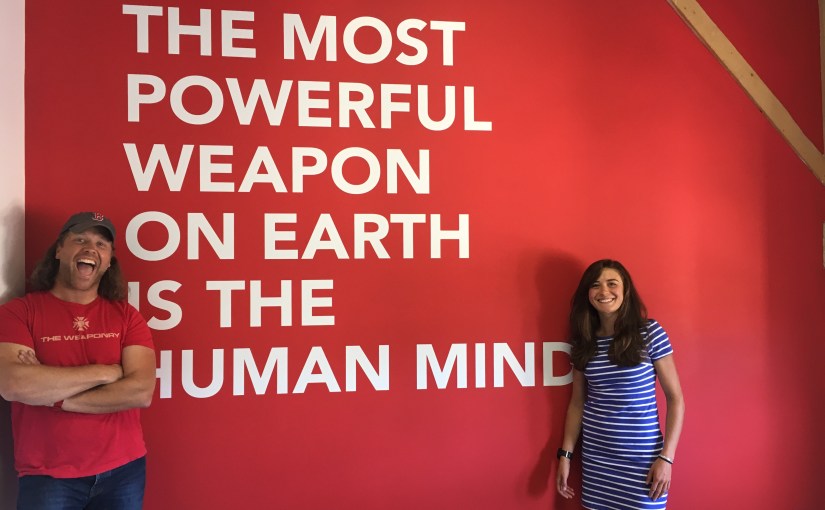
Sarah Disanza created her own opportunity at The Weaponry, worthy of a whole other post. #Prequel

These are smart people with jobs, and freelancers. Recent graduates and pre-retirees. People who are burned out with their current situation, and fed up with their boss. People who want to feel like they are part of a winning and growing team. People who want a little more excitement in their workday. People who believe that The Weaponry offers the type of work experience they are hungry like the wolf for. And I would like to have all of them on our team.

Under Pressure

So the pressure is on to grow this business. To find out just how many people we can accommodate. We need to see how much demand can we generate. While keeping this business as attractive at scale as it is in miniature, and in the collective minds of both our current team members and those who hope to join us next. That’s a good pressure. Like the pressure Queen and David Bowie were under.

Key Takeaway

When you start something new, anything new, you are creating new hope. Hope for a better job, a better experience, a better resource, and ultimately better products and services. All of which ladder up to hope for a better life. If you can make that happen you have done something really special. That’s exactly why I started the The Perfect Agency Project in the first place.