5 reasons brainstorms are a waste of your time and money.

I have an idea. Let’s not do brainstorms anymore. Most organizations believe brainstorm sessions are a great way to generate a lot of ideas quickly. While you may feel like you see a lot of new thinking in these sessions, you don’t see what you don’t see. As a professional creative thinker, I consider the brainstorm session a highly visible, but highly inefficient way to develop new ideas. I thought about hosting a telethon to raise awareness of this problem. But I didn’t know where to find ten landline telephones. So this post will have to do.

Dissecting the Brainstorm Problem

One of the reasons brainstorms are so popular is that in a one hour session you can generate a visible collection of new ideas. But the pile of ideas you leave the meeting with is misleading. Because brainstorm sessions are like gathering 100 horses and only generating 50 horsepower. You would be better off letting those ponies run alone.

horse-herd-fog-nature-52500.jpeg

 5 Problems With Brainstorms

1. Brainstorming is made for extroverts.

Brainstorming is a game where you rapidly blurt out half-baked ideas in front of a small crowd. For extroverts this is good sport. But to the other 50% of the planet this is an uncomfortable and unnatural activity. The quieter half of the population thinks more than they speak. They generate a lot of ideas on their own. Which means that the brainstorm is simply not their natural habitat for idea generation.

QGWNg5J

2. The 80/20 Rule

In line with the core tenants of the 80/20 rule, 80% of the good ideas in a typical brainstorm come from 20% of the people. Brainstorms give the false impression that everyone is birthing ideas. But this is not the reality. If you conducted a brainstorm in a petri dish, and observed it under a microscope, you would see a small population of valuable idea generators, a larger collection of evaluators, and a smattering of cheerleaders and spectators. Of course, they would all be wondering why you were staring at them through a giant microscope.

Screen-Shot-2016-09-14-at-16.02.29

3. The Brainstorm Bottleneck.  

In a polite and orderly brainstorm session you have one person speak at a time. This is also a necessity when you have one scribe capturing the ideas and mounting them on a giant flip pad. The flip side of that orderliness is that when one person is talking, no one else is contributing ideas. There is simply not enough air time for all the ideas that should be generated by just three productive thinkers over the course of an hour.

Bottleneck

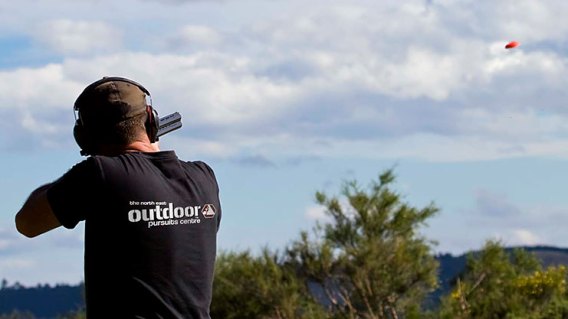
4. Invisible Clay Pigeons:

There are not supposed to be any bad ideas in a brainstorm. Participants are not supposed to evaluate or criticize ideas. But there are a whole flock of less-obvious ideas that never get tossed to the group because the thrower is afraid their idea will get shot down in the minds of the other participants. Even if the group adheres to the rules of brainstorming during the session, participants will still feel judged by the group, in silence.
Clay-pigeon-shooting-2

5. Great Brains Storm On Their Own

Great ideators generate ideas at a faster pace, with greater range and push more boundaries when working alone. A good thinker will quickly gather the low hanging fruit. Then they get to work on the rest of the tree. Then other trees. Then other orchards.  Then they harvest fruit on other continents. And finally, on other planets. You are far less likely to get a bushel basket full of Uranus Apples in a traditional brainstorm.

0bac9fb929ebc6897a1d78a4a71b47c1


The Solution

To generate the most, best and broadest range of ideas, people should always think alone first. Give your team members a quiet place, a pen and a pad of paper. The ideas will flow and fill the pages. Only after the team has thought on their own should you bring them together to share their sparkly new brain gems. During The Thinkers Reunion, you experience the Reece’s moment, when people can get their chocolate in someone else’s peanut butter. The mash-ups, surprise combinations, epiphanies and amplified ideas at this stage are far more valuable.

Key Takeaway

Stop wasting time and money on brainstorm sessions. They are not the Holy Grail of idea generation they are thought to be. Work in isolation. Then pour all the ideas together. You’ll get more and better ideas every time. If you have other idea-generating ideas  you’ve thought of on your own, please share them in the comments section.

The most valuable product my business produces shocked me.

In 2016 I left a salaried position with a large, stable advertising agency. I had amassed almost 20 years of experience as an advertising creative. Over the course of my career I had developed a clear vision of what the perfect ad agency looked like. And like Bob The Builder, I believed I could build it.

1 Year Later

A year later my startup ad agency was buzzing with activity. So I joined a CEO roundtable to surround myself with people who knew things I didn’t know. My Council Of Small Business Executives (COSBE) group meets once a month to compare notes, discuss issues and serve as a thought-provoking sounding board.

My Introduction

At the first meeting I attended back in August, the group asked me to take a couple of minutes to talk about me and my business. It was like the introductions you make at an addiction recovery group. You know, ‘My name is Adam, and I am an Ideaholic.’ Welcome brother Adam.

I told the group that my business, an advertising and idea agency called The Weaponry, had attracted ten clients in the first year. Those clients stretched from Florida to Atlanta, Boston, Montreal, Milwaukee, Salt Lake City and San Francisco.

Then I dropped this fun, and almost unbelievable footnote:

We did this despite the fact that we were a brand new business with:

  • no logo
  • no business cards
  • no website

The Insight

After I finished my quick overview on my business, the guest speaker that day said something that I will never forget.

‘There is only one way you could build a business like that. People really trust you.’

This guy was a total stranger. We had been in a room together for 15 minutes. Yet he gave me an amazing insight as to why my perfect agency project was working.

I knew I had clients that liked me. I knew they had good experiences with me. I knew that some of them thought I was funny or smart or creative, or perhaps a non-alchoholic cocktail of all three. But the only reason my business stood a chance of succeeding is that people I have worked with in the past, and those I meet today, trust me.

It’s a matter of trust. (Like Billy Joel said)

Trust is the key ingredient of a successful entrepreneur. It is the most valuable product that you will ever deliver to your clients.

  • My clients trust me with their money.
  • They trust me with their confidential information.
  • They trust me with their valuable time.
  • They trust me to reflect positively on their personal reputations.

Key Takeaway

If you want to increase your value to other people, increase your trustworthiness. Do what you say you will do. Deliver what you say you will deliver. Meet the timeline you said you would meet at the price you quoted. Always demonstrate that you’ve heard and care about the concerns of others. You’ll find the rewards far exceed the cost of doing business.

*If you found any value in this post, I trust you would find value in this blog. Consider subscribing to get each post delivered via email.

How to invest in people the way Warren Buffet invests in stocks.

I like investing. I started investing in stocks not long after I landed my first job out of college. Back then I didn’t really know what I was doing. I made mistakes. But I wasn’t afraid. I kept reading, and listening and studying investment strategy. Today I have a solid, repeatable approach. That’s because I stole my strategy from Warren Buffet. Who stole his strategy from Benjamin Graham.

I bought Graham’s book, The Intelligent Investor, because I heard it was the bible on stock investing. I boiled the 600 page book down to this headline:

‘Buy when a stock is undervalued. Sell when it is overvalued.’

This strategy has served me well. I’m always looking to get in on a good company’s bad news. When banks were collapsing because of the mortgage crisis, I bought Huntington, Fifth Third and PNC stock. When there was oil gushing in the Gulf of Mexico I bought BP. When Equifax was hacked, I was into Equifax stock. When there were diseases decimating the US chicken population I shouted, ‘Pass me a drumstick and some shares of Pilgrims Pride and Sanderson Farms!’

Investing in People

I invest in people the same way.  When people are hot, have the world by the bizzles and everyone wants to be close to them, I don’t need to be there too. I like to invest in people who have lost their jobs, hit icebergs, or are leaking oil. Those are the ones that really need to be infused with confidence and friendship. It is easy to divest when people hit all-time lows. But that’s when I like to double down.

People always rebound.

Your personal stock always rises again to reflect your true value. Which means that when you pick someone up who feels like they are sitting on the discard pile, the return on your invested time and attention truly appreciates. While you may have known things would get better for that person, they didn’t. Because when you feel like you are swirling around the toilet, it is hard to see past the very near term.

Take Away

Look for ways to invest in those that need it most. The good people, organizations, and teams that have fallen out of favor. Because the belief, support and confidence you invest  in them comes back to you in amazing ways. Oh, and if you have any undervalued stocks to pass my way, please post them in the comments section.

*If you want to invest more time reading blogs, consider subscribing to this one.

Why walking in a blizzard is so good for you.

I recently found this post in my rough drafts folder. It was originally written in June of 2016, but never published. At the time, my advertising and idea agency, The Weaponry, was a startup in the first months of life. The swirling uncertainty of startup-ness surrounded us. And that can mess with you…

From June 10th, 2016

Today I had a long talk with a co-worker who was having a hard time at work. Which is understandable. Because startups are kinda hard. Launching a startup is like walking in a blizzard. Wind and snow are all up in your grill. It’s cold. Visibility goes into the toilet. It’s difficult to navigate in these conditions.

In the middle of a blizzard your survival instincts tell you to seek shelter. It’s natural to want to escape the relentless wind, disorienting snow and mounting drifts. Sitting by a crackling fire, drinking hot chocolate is far more appealing to most people.

But I like walking in blizzards. I like being out when no one else is. I like doing things that build my character, my will and my personal legend. In the same way a callus rises as the result of repeated friction, strength grows from pushing against resistance.

You have to keep walking. You must have faith that you know where you are heading. You have to take steps forward, even when it is hard. Blizzards of the wintry, professional and personal kind are temporary. Eventually the snow will stop falling. The wind will chill the eff out. And the sun will come out again. When that happens, where will you be? It’s a matter of what you did during the blizzard. If you keep pushing, you will find yourself far ahead of where you started, far ahead of those who sought shelter, and closer to your ultimate goal. You’ll find the ultimate rewards far outweigh the hot chocolate you sacrificed along the way.

*To learn what has happened to The Weaponry over the past year and a half, check out some other posts. To see what happens next, consider subscribing to this blog.

My unique spin on the coffee meeting has come full circle.

One of the great traditions of networking is grabbing coffee. When you meet someone for the first time you suggest grabbing coffee. When you see someone you haven’t seen in a long time, you talk about grabbing coffee. Coffee gets grabbed more than an aspiring actress at a Harvey Weinstein pool party. #timesup

I don’t drink coffee. Ok, that’s not fully true. I have now had 4 cups of coffee in my life. That’s about one per decade. But the coffee meeting is one of the most valuable elements of professional development. It is a useful tool for developing and maintaining relationships. It can be used for research, informal mentoring and for stay at home moms to have sanity-preserving conversations with full-sized rational humans.

Despite the fact that coffee tastes like burnt bark juice, I love using coffee meetings to catch up with old friends or get to know new people better. I just do it differently.

Barista, The Usual.

My go to beverage at the coffee shop is chocolate milk. I love that stuff. It reminds me of Fridays in elementary school. Which was the only day chocolate milk was served at school when I was a kid. Today, drinking chocolate milk still feels like a party.


IMG_9320
This is my friend Andy. We regularly grab beverages,where we compare and contrast the merits of different hair styles. 

Andy Salamone

One of the people I regularly grab chocolate milk with is my friend Andy Salamone. Andy is an amazing guy. He started a business called CarSpot right out of college. He developed a way of aggregating used car inventory from dealerships into a centralized, customer-friendly online shopping experience. Andy and his team developed innovative technology to transform and grow the business until AutoTrader made Andy an offer he didn’t refuse. He sold the business several years ago, and now enjoys the fruits of his exit.

It is fascinating to talk to Andy as he scans the landscape looking for the next great entrepreneurial opportunity. He sees businesses the way an engineer sees a machine. He can talk you through the mechanics of creating an efficient device to deliver a great idea. He has been a great influence on me and the way I think about my advertising and idea agency, The Weaponry.

Recent Visit

Andy texted me last week and said he wanted to swing by and see The Weaponry’s new office. I was thrilled to have him see our space. He arrived with some really fun surprises. He had a gallon of Oberwies chocolate milk. Which is the chocolate milk equivalent to a Goody McGood bottle of Scotch. That alone would have been a great office warming gesture. Then Andy reached into the bag that contained the milk and pulled out four glasses with the five Great Lakes printed on them. On each glass there’s a heart printed right where Milwaukee sits on the shores of Lake Michigan.

IMG_9319
Cheers to friends, good fortune and frothy chocolate milk.

A Moment To Absorb.

Now picture this. As I poured my glass full of that chocolatey nectar of the Guernsey’s, I was sitting on a couch at the adverting agency that I always dreamed of creating. I toasted my good fortune with a friend and fellow entrepreneur. Then I set my new Great Lakes glass down on my custom-made The Weaponry surfboard coffee table.

My life was coming together just the way I had always imagined it would. Even my fellow Wisconsin Badger, Abraham Maslow would have grabbed one of my new glasses, raised it towards me and said, ‘Kid, it doesn’t get any better than this.’ #selfactualization.

A Toast

Make the time to grab a drink of your own choice with the people of your own choice. May you find your own version of The Weaponry, and chocolate milk and custom surfboard coffee tables. I hope that you look forward to going to work every day. I hope you get to design your life, your work and your tribe. May your days be full of great moments that are uniquely you. Here’s to feeling as if you are winning at life.

*To find out what happens in my life and business when I am not chugging chocolate milk consider subscribing to this blog.


Can you guess the shocking cost of the first airplane?

We all know the story of Orville and Wilbur Wright, right? These brothers from Dayton, Ohio were the first humans on Earth to build and fly an airplane. They launched their original Flyer in Kitty Hawk, North Carolina in 1903. Their airplane forever changed life on this planet. It opened the possibility of space travel, next-day package delivery, and complaints about spotty wi-fi on transcontinental flights.

The Invoice

Do you know how much they spent to get that first plane in the air? It took them four years. Over that period their expenses included all the materials needed to research, build, test, modify and repair their prototypes. The price tag also included all of their travel between Ohio, where they built their machines, and the Outer Banks of North Carolina, where they attempted to fly them. Remember, this was before Southwest Airlines made it cheap and easy to fly about the country.

wright_bros2

So how much did they spend?

I’m adding fluff to this story to prevent your eye from catching the number below.

It’s my attempt to add suspense.

But now it is time for the number:

All in, they spent less than $1000!

Less than $1000!  That’s unbelievable, Wright?!?  It is so ridiculous that it wasn’t even one of the multiple choice answers!

The Wrights found that the actual inputs were not crazy-expensive (my words, not theirs). They invested more in elbow grease and developed sweat equity in their innovation. They were remarkably frugal with their travel. And as a result, they changed the world for less than $1000.

You can do the same.  Put your own work into your greatest idea. Create an inexpensive prototype. Offer the service yourself. Write that script in your head. Figure out how to develop a minimum viable product. See where things go from there.

Great ideas have a way of taking on a life of their own once you give them the push they need to get started.  So don’t let that great idea in your head shrivel and die. Feed it. Water it. Grow it. Put in the effort. Then watch your idea take off.

Just like the Wright Brothers did.

Epilogue 

*I know this was 115 years ago, and there has been inflation since. So I pulled out my trusty calculator and mathed-up the inflation. In today’s dollars that would be $26,000. But still, it is a frickin airplane! On today’s airplane the barf bags probably cost more than that. The numbers were found in David McCullough’s amazing book, The Wright Brothers, (which I would have titled The Wright Stuff). 


All of the best ideas are nuts.

The acorn is my favorite metaphor for an idea.

It is small. Cute. Harmless. Easily overlooked. The acorn is found everywhere. So common and simple. Yet it has the potential to grow and expand in phenomenal ways.

The acorn is actually a mighty oak tree starter kit. The plans for all of the tree’s complex systems are housed inside: the roots, bark, sap, branches, leaves and the alchemy of photosynthesis. The remarkable ability to create habitat, shade, support, protection and oxygen are all under that cute little beanie.

The acorn is a bomb. When detonated, it expands beyond all possible comprehension.  Its final form is no less of a mushroom cloud than a mushroom cloud.

Your ideas are acorns. Recognize the enormous potential they each hold. Create conditions where acorns can transform into forests of towering trees. Those trees will produce more acorns. Which produce more trees. Which produce more acorns.


The exciting first time my parents visited my office.

Starting your own business brings on a parade of exciting firsts. Each one marks an important milestone in the realization of your dream. There is your first client. Your first employee. Your first office. And your first lawsuit (I assume).

When I first launched my advertising and idea agency, The Weaponry, I created a human-like set of life stages that I expected the business to go through. I listed key developments that would happen at Rolling Over, Crawling and Running. That way I would have some sense of where the business I birthed was on its maturing process from newborn to Olympic athlete.

An Especially Special Day.  

On February 7th I had a uniquely proud first. My parents came to see my office for the first time. As an entrepreneur, your business is like a child. So that day I got to introduce my parents to their Grandbusiness.

My Parents’ Influence

My parents were responsible for planting the seeds that led to The Weaponry. Since I was a small child they taught me how to develop meaningful relationships. They taught me to think about the needs of others. They built my confidence to believe I could do whatever I set my mind to. They taught me how to be financially responsible. My mom taught me writing and public speaking. My dad taught me how to work hard.

They made several important decisions that put me into great schools in my childhood. Their Big 10 educations at the University of Minnesota influenced my Big 10 education at the University of Wisconsin. They helped support me through college. After graduation, when I was offered my first job as an advertising copywriter at Cramer Krasselt, they gave me the $500 I needed to move to Milwaukee, put a security deposit on my first apartment, and stock my pantry with ramen noodles. If it weren’t for my parents I probably wouldn’t be here.

The Tour

Showing off the office was really fun. Kind of like the first time I brought my wife, Dawn, home to meet my parents. I gave Bob and Jill the grandest tour our space would allow. I pointed out all the changes we had made. I shared plans for what’s next. And I got to introduced my Mom and Dad to my team.

My parents brought an office warming gift. It was my favorite celebratory beverage: a bottle of nonalcoholic sparking cider (I still haven’t matured to the hard stuff). It was a meaningful gesture from the people who have helped shape me through meaningful gestures.

Business and Family

This week more of The Weaponry’s broader family have visited the office. We’ve had one Weapon’s husband and another Weapon’s brother spend time with us. It’s important to me to have siblings, parents, children and spouses come to our office.  I want them to understand our culture. And I want them to feel part of it too. The more we can integrate our at-work family with our at-home family the more we are able to understand and support each other.

Conclusion

Thanks Mom and Dad for taking time to come see The Weaponry. Thanks for taking the time to meet my teammates. Thanks for the little boy bottle of bubbly. But most importantly, thanks for giving this little birdie a great nest to grow up in. And thanks for teaching me how to fly.

*If you would like to follow The Weaponry’s maturation process please subscribe to this blog.

The surprisingly simple way to test your risk tolerance.

Starting your own business requires a special mindset. You have to have both a tolerance for risk, and a confidence that you will succeed despite the odds stacked against you. But how do you know if you have the right kind of entrepreneurial wiring? Before I launched my advertising and idea agency, The Weaponry I didn’t have a predictive test to evaluate my risk tolerance. But now I do.

Tom O’Hara

I recenly had a very interesting conversation about risk with my friend Tom O’Hara. Tom is EVP & Enterprise Risk Management Director at Huntington National Bank. Evaluating risk is a challenging task. You must find a way to assess risk tolerance in a way that people can easily articulate.

One question Tom poses in his risk evaluation is this little diagnostic gem:

If you have a meeting with the CEO of your company at 7am, and your commute usually takes 15 minutes, what time would you leave for the meeting?

The answer to this hypothetical question reveals a lot about your risk tolerance. If you say 5:30am you have a very low tolerance for risk. If you say 6:45am you have a very high tolerance for risk. If you say 7am you have trouble understanding the time and space continuum.

My big aha!

As Tom talked through this simple predictive test, a fake lightbulb went off in my real head. I applied the same evaluative criteria to my approach to catching airplanes. When planning my departure for the airport I don’t work off the standard ‘Be at the airport 1-hour ahead of time’ rule of thumb. I know that the check-in period for domestic flights ends 30 minutes prior to scheduled departure. But I don’t use the 30-minute rule either, because I always check in online.

Instead, I use the ‘What time will they close the door?‘ rule of thumb. I have always thought this was the only indicator that really mattered. As a result I am often the last person on the plane. Which has freaked out many of my more conservative coworkers. Yet, I can only remember missing a plane one time in my entire business career. And that was because I had the wrong departure time in my head. Stupid departure time memory malfunction!

What this says about entrepreneurship

Clearly I have a high tolerance for risk. Because those airplanes, they don’t wait (I heard that in a country song). That being typed, I am never unprepared for my  travel too and through an airport. I have timed my airport route to the minute, and I allow for a degree of error in traffic, difficulty finding parking, and for crowds at security. On the other hand, my drive to the airport makes me feel alive. So does owning my own business.

Key Takeaway 

Know thyself (but don’t call thyself ‘thyself’). If you have to be at the airport two hours  before a domestic flight you may struggle with the coo-coo crazy of entrepreneurship. But if you like rolling onto the plane just as it prepares to roll away from the gate, you likely have what it takes to stomach a couple of years of unpredictability. But there is no right or wrong answer to risk tolerance. There are just different types of rewards. So whether you are traveling for work or pleasure, always consider the rewards that make you happy when you file your flight plan.

*If you like living dangerously and don’t mind missing any of my blog posts then don’t subscribe to this blog. But if you want to play it safe, and have every post emailed to your inbox upon publication, please subscribe today.

Only the paranoid survive.

I haven’t read Andy Grove’s book Only The Paranoid SurviveI don’t need to. I get everything I need to know from the title alone. If you want to survive in business you have to be paranoid.

Why I bring this up.

I am part of a CEO roundtable known as the Council of Small Business Executives (COSBE) in Milwaukee. We had our monthly meeting yesterday at my advertising and idea agency, The Weaponry. The theme of the meeting was clear. The CEOs in my group are all feeling paranoid.

But here’s the funny thing: none of us are in imminent danger. There is no grim reaper at the door preparing to cut our internet connections and leave our businesses for dead. Quite the opposite. Our futures all look bright. We continue to grow and add new clients. We are hitting exciting milestones that indicate our businesses are moving in the right direction.

Yet we all seem concerned that we are not doing enough. That we are not as productive as we could be. Or as aggressive as we should be. Or as focused. Or as successful. To a therapist we may all appear to have odd self-image issues. Or a lack of confidence. But that is not the case.

The Real Issue

We are doing exactly what you need to do to survive as an entrepreneur. You have to worry about issues before they become issues. You have to invest in relationships you don’t need today. You have to develop plans and infrastructure that aren’t critical right now.

You need to do the little things that are important but not urgent before they become urgent. Because if you wait until they are urgent it will probably be too late. Self-inflicted paranoia keeps you a step or two ahead of the real danger. It activates your fight or flight responses when there is no imminent fight. That’s how you prevent complacency. And that’s how you thrive.

Your personal life.

The same power of paranoia can also help your personal relationships, fitness and finances. If you are paranoid that you are not doing enough, you will invest action in each of these three critical areas before they become real problems.

Key Takeaway. 

Embrace your self-inflicted paranoia. It’s a great survival tool. By pulling the fire alarm in your head you’ll be prepared before any actual fire has a chance to block your escape route. Better yet, there is a good chance that fire will never happen.

*If you are paranoid that you will miss a post from this blog, please subscribe to receive each new update via email.