How our agency overcame a Biggie Smalls experience.

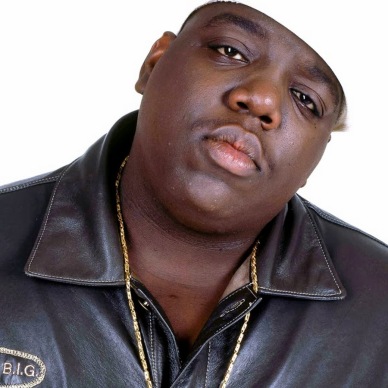
It was the rapper Notorious B.I.G. who once penned that famous American quote: ‘Mo Money. Mo Problems.’ In 2018 I learned Biggie was right. Because as my young advertising and idea agency was growing at an exciting pace, we also faced mo money problems. Or was it less money problems? Maybe it depends on whether you’re more East Coast or more West Coast.

Go With The Cashflow

In 2018 The Weaponry, faced a cash flow problem. It wasn’t as if I hadn’t been warned. My posse of entrepreneurial homies, including Dan Richards of Global Rescue and Jeff Hilimire of Dragon Army, warned me that as you work with larger and larger clients they will use their financial muscle to get longer and longer payment terms. So instead of our standard 30-day terms, new clients began requesting, pushing for or demanding 45, 60 and even 90-day terms. #WhatWouldSugeKnightDo?

The 60 and 90-day terms put growing businesses like mine in a conundrum. Obviously we want to work with the biggest and best companies in the world. The problem is that while we wait to get paid for the work we have completed, we still have to pay the Weapons, vendors and freelancers who work for us. Which means that like a leaky bucket, more money is leaving the system than coming in. #DearLizaDearLiza

the-notorious-big-biggie-smalls-5-1400684427-view-1

Big Poppa

By June of 2018 we had been in business for 2 years. We could clearly feel the momentum build. There was sharp rise in the demand for our work. But with all the new work, longer payment terms, and invoices that seemed to have taken the slow boat to PayMe Town, we started carrying between $500,000 and $700,000 in our monthly accounts receivable stack.

For a business that bootstrapped its way into being just 24 months earlier this was an interesting turn of events. It is nice to be owed that kind of money. But cash is the life blood of a business. And there were serious demands on our blood supply.

We were always able to pay our salaries and all of our bills. But the depleted cash on hand meant that we weren’t able to invest in our own growth. We had started looking at space for our Columbus office in June, then hit pause on our plans to sign a lease in order give ourselves some breathing room. We waited on transitioning some of our freelance help to full-fledged Weapons. And we postponed the company offsite meeting in Monaco.
unnamed-2

It Was All A Dream.

When I shared our mounting money challenge with our team, they once again stepped up to solve the problem. Simon Harper, one of our outstanding account directors, shared how we could adjust our invoice timing to make sure we were paid by our clients sooner. Other account leads also contacted their client contacts about the outstanding bills. Which helped get the money ball rolling.

Our accountant, slash bookkeeper, slash egg dealer, Sally Bretsch, recommended another adjustment to our billing process that would ensure that our invoices got into our clients’ accounts payable systems faster, with greater accountability. Which is either totally meta or just a nice word play (Did I mention I used to read Word UP! magazine?)

From Negative To Positive (And it’s all good.)

With these team-driven enhancements in place, suddenly we dramatically decreased the turnaround time between work performed and payments received. We had our own Black Friday moment, when suddenly, following months of increased billing, but decreased cashflow, we started seeing the fruits of our labor manifest in our bank account.

Key Takeaway

Business is a team sport. As an entrepreneur, leader or department head, it’s important to understand that your team will find ways to solve problems and improve performance faster, and in better ways than you would be able to unearth on your own. Share information with your team. Make them part of the solution. If you’re thinking about starting a business, surround yourself with a strong crew who knows more about their specialties than you do. Then give them a mic and let them flow. That’s how small teams make big things happen.


What do you do when you see a road closed ahead sign?

Yesterday morning my family and I piled into our car to make a 2-hour drive to a basketball tournament in the small town of Freedom, Wisconsin. Freedom is just north of Appleton. If Appleton means nothing to you, Freedom is 20 minutes south of Green Bay. If you are from New York City, or a non-American, Freedom is 4 hours north of Chicago.

The Sign

Fifteen minutes into the drive, as we made our way down a country road, we approached a large sign that said: Road Closed 1 Mile Ahead. Local traffic only. As we approached the sign there was one car ahead of us. Upon seeing the sign the driver pulled to the side of the road, then quickly turned around and headed back the way we came, presumably to find a different route.

I ignored the sign and continued down the road anyway. One mile later, I approached a small fleet of construction vehicles parked neatly on the side of the road. They had clearly been put away for the weekend. Despite the warning from the sign, the road was indeed open and passable, even for non-locals like me. I drove through the hibernating construction site, and within a mile I reached the interstate on-ramp, exactly as I had planned.

Don’t Turn Around, Bright Eyes.

As I pulled onto the freeway, and reached my cruising speed, I reflected on this seemingly small incident. Because it was symbolic of how we go through life. We all see signs that tell us we can’t go this way or that. We are told of rules and limitations and regulations that cause so many among us to stop and turn around. Because most good, rule following  people stop when they are told the road ahead is closed.

But if you want to do great things, hard things or never-done-before things, you can’t follow all the road signs. You can’t pull a u-turn every time you are told no.  You have to question, challenge and push ahead. And when you do, you will be surprised how often the closed path advertised ahead is wide open and waiting for you to take it.

Key Takeaway

If you want to start a business, create an innovative new product or service, or forge a new route, you can’t turn around every time you are told you should. The same holds true in our personal lives. You have to find your way forward. Challenge the rules and laws. Question the assumptions. Don’t just take no for an answer. Find out for yourself what is really possible. Because beyond the no, the stop sign and the dead-end are where all the really great things are found.

To share your goals or not share your goals? That is the question.

Everyone has a goal. If you are ambitious, young or greedy you probably have many. Your goals serve as the magnets on your internal navigational compass. (As opposed to your Jeep Compass). Goals are what feed your actions every day. Without goals you are in danger of drifting through life. With a goal you can paddle, set your sails, or fire up your 300 horsepower Evinrude outboard motor, and set a course across the stormy seas of life towards a meaningful destination.

Getting Personal

Goals are very personal. They represent our desires, dreams and ambitions. If your goals are large, gaudy or outlandish, like a Big Hairy Audacious Goal (BHAG), they can make you seem delusional. But it is impossible to accomplish improbable feats without improbable goals.

2 Schools of Thought

One of the great questions in goalology, the study of goals (okay, maybe I just made that up), is whether it is better to share your goals with other people, or keep them to yourself.  There are two very different ways to think about this. My great friend Jeff Hilimire and I stand on different sides of the aisle. So we thought it would be worthwhile to share our opposing views.

img_0478.jpg
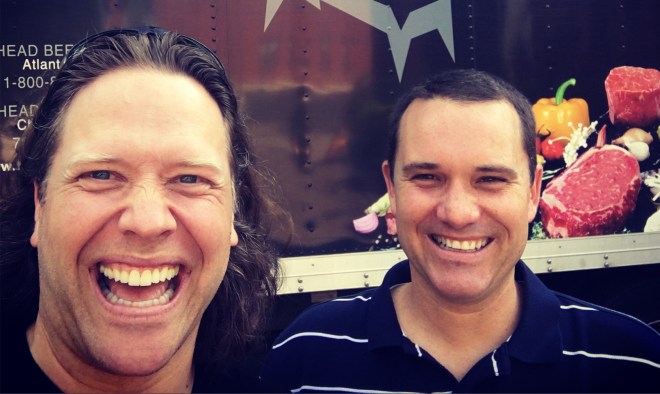
Adam, Jeff, some steak and a yellow pepper.

Analyzing the Analyzers

Adam Albrecht and Jeff Hilimire have interesting similarities. They were both college athletes. Jeff played tennis at the University of North Carolina-Charlotte, and Adam was a discus and hammer thrower on the track and field team at the University of Wisconsin. Both of these cats are also entrepreneurs. Jeff’s businesses include digital agency, Spunlogic, mobile and digital agency, Dragon Army and the great web-building, good-slinging, non-profit 48in48. Adam’s businesses include the advertising and idea agency The Weaponry and t-shirt company Adam & Sleeve. Yet despite these similarities, they have very different takes on goal sharing. 

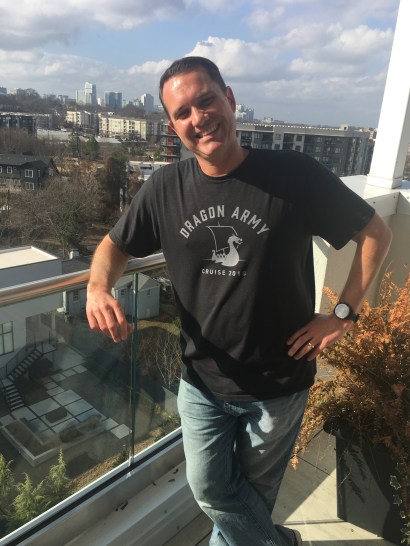
IMG_4308

Jeff’s Views on Goals:

I’m a big believer in not only creating focused, tight, and specific goals (both short- and long-term), but also that you should consider sharing those goals in order to create accountability – for yourself and through others.

Many people have goals, but very few spend the time to write them down. When you force yourself to write something down, you’re creating a new connection in your brain with that “thing”. There have been studies that show this, but I’m not going to share them here, mostly because you have Google*.

But I have found the real power of accountability comes when you share your goals with others. If you’re the only person holding yourself to your commitments, it becomes easy to slack off or move the goalposts. Even if it’s just with a buddy, asking him or her to check in on you periodically dramatically increases the chances of you holding yourself accountable.

Personally, I like to share my goals on my blog, which is as public as it gets. And it works! One of my goals is to read 53 books this year (one more than last year,) and people I know ask me when we get together, “So, how many books are you at so far this year?” At the very least it’s a reminder that I committed to something and need to stick with it. 

Not everyone needs this kind of accountability, but I’d guess 99% of people do. Let’s be real, while everyone has goals, very few people actually accomplish them. Not because they don’t have the skills, but because they don’t keep at it. They don’t stay focused, they find excuses, and sometimes they even forget. Writing your goals down and sharing them with others is at least one way to give yourself a better chance of success. 

* also because I only kinda think I’ve heard that, so I might have made it up.

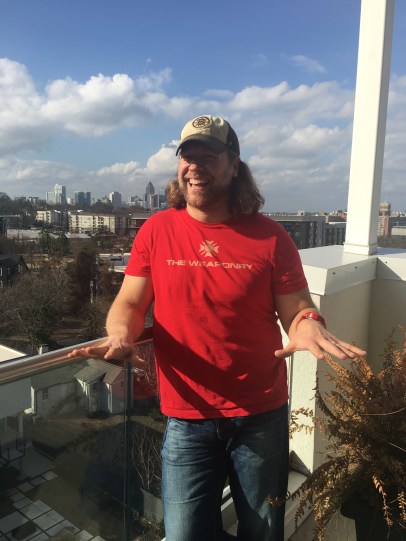
IMG_4311

Adam’s Views on Goals

I used to subscribe to the theory that it was good to share your goals with others. But not anymore. There is a very basic problem with goal sharing. If you tell people you are going to start a business, run a marathon or donate 10 gallons of blood, you start feeling like it is true. Afterall, it has been stated aloud, and those words have floated from your mouth, through the ether, into someone else’s ear hole. That makes it true, right?

Wrong. Talk is cheap. You could say talk is worthless. (Unless of course you host a talk show, or are a police negotiator. In which case talk is your most valuable asset.)

The problem is that talking about your goals makes you feel as if you are making progress towards your goals. And the more you talk about them with others, the more you feel like they are real and true. Even though there has been no real progress. It is that false sense of progress that undermines many a good, worthy goal.

Goal sharing can also cause you to lose confidence in your ability to achieve those goals. If you want to lose a lot of weight, earn a lot of money or find a really hot spouse, and you tell someone this, you are likely to get negativity, doubt or laughter in return. You don’t need that. You need to believe you can do what you set out to do. Like Gwen Stefani, you need to have no doubt. And big goals produce doubt in others.

To avoid that false sense of progress, and to avoid the doubters, I like to keep my goals to myself. I have many goals, hopes and dreams that never get shared. Because I tell myself that my talk does not achieve anything. I find great motivation in showing people what I have done, rather than talking about what I will do.

Key Takeaway:

Goals are personal. And we are all motivated in different ways. You need to find out which approach works better for you. So if keeping your goals a secret isn’t working, try sharing. And if talking about your goals isn’t helping, shut up and get moving.

Despite our differences, we both want to hear what you think. Leave a comment and tell us if you think it’s better to shout your goals to the world like a Mexican soccer announcer, or keep them quiet, like Marcel Marceau.

Tom Brady shares why winning is so important in 6 words.

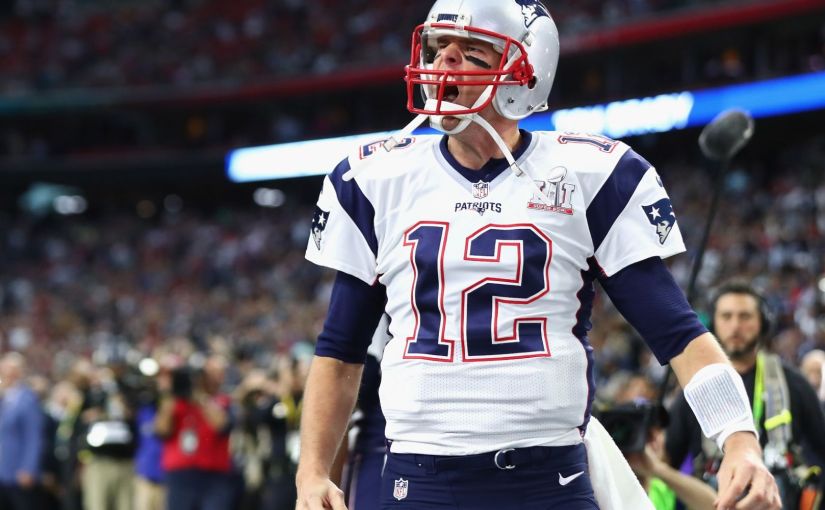
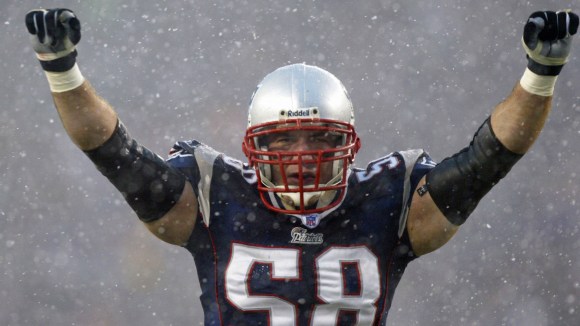
Last night the New England Patriots did it again. They won the Super Bowl, and were crowned as the best football team on the planet. It was Tom Brady’s 6th Championship in 18 years. Which means that every 3 years he lifts a Lombardi Trophy. And many Non-Patriotics hate him for it.

Why is the win still important?

In the middle of the Cray Cray Camera Crush at center field following the game, Tracy Wolfson of CBS asked Tom Brady why the win was so important to him.

He responded immediately with a 6-word answer:

We’ve been this far and lost. -Tom Brady

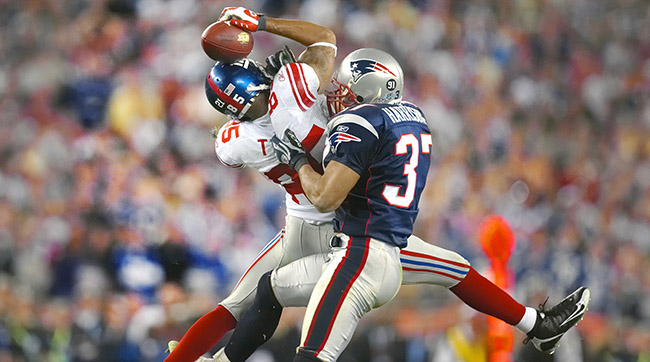
With those 6 words, we can all relate to one of the greatest champions in the history of sports. Because despite the six Super Bowl wins, he has also known loss on the biggest stage. Three times, in fact. Twice to the New York Giants, and just last year to the Philadelphia Eagles. He has lost a Super Bowl in a season when the Patriots went undefeated until the championship game. Ouch. #DavidTyree

tyree-catch-sb-plays
This David Tyree against-the-helmet Super Bowl catch was as improbable as it was heart breaking.

Key Takeaway

This is a great reminder that there is tremendous value in our losses. They drive up the value of each subsequent win.

  • The loss of a game makes you value a win.
  • The loss of a job makes you value your employment.
  • The loss of a new business pitch makes you value winning a new client.
  • The loss of a loved one makes you value your loved ones.
  • The loss of time makes you value the time you still have.
  • The loss of revenue makes you value revenue.
  • The loss of a friend makes you value new friendships.
  • The loss of oxygen makes you value oxygen.
  • The loss of 50 degrees makes you value finding 50 degrees. #PolarVortex
  • The loss of Breaking Bad makes you value Game of Thrones.
  • The loss of your swimsuit makes you value your swimsuit.

The key to the Patriots’ success that most people never notice.

The New England Patriots are my favorite professional team, in any sport, hands down. Heck, I love the Patriots regardless of hand position. I have been a Pats fan since I was a boy growing up in Vermont, which for the international crowd, and the geographically challenged Americans, is one of the six states that make up New England.

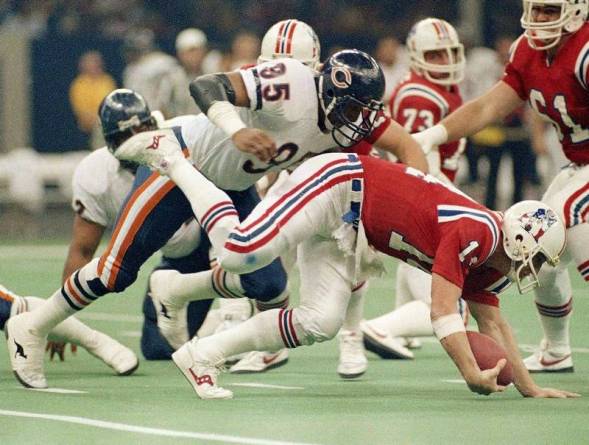
In my youth, the highlight of my Patriots fandom was the kickoff of Super Bowl XX (that’s 20 for those of you who don’t speak Roman). I was so excited and full of hope, until my Pats got refrigerated and Super Bowl Shuffled off like the Buffalo Bills by the historically impressive 1985 Chicago Bears. If that game didn’t completely break my heart, Billy Buckner finished the job just a few months later.

EP-709229792.jpg&updated=201109221639&MaxW=800&maxH=800&noborder
My Patriots took it in the worst way from the Chicago Bears in Super Bowl XX.

A Whole New World

Oh, but this is a new millennium. It has been unbelievable for Patriot fans. But completely annoying for many non-Patriotic Americans. I get that too. Because I can’t stand the New York Yankees.

Since 2001, no team in any sport has been more dominant than the Patriots. Love them or hate them, their record has been spectacular this millennium. Since 2001 they’ve played in the Super Bowl 9 times, winning 5 championships, with a chance to add another W in Super Bowl LIII.

It’s Gets Harder And Harder.

Each return trip becomes less and less likely. Because following a Super Bowl appearance, both teams are rewarded for their efforts with one of the two worst draft positions, and one of the two hardest schedules the following year. Yet here the Patriots are, once again playing for the Lombardi Trophy.

Which Begs The Question…

Just why have the Patriots been able to remain so dominant for so long in the era of the salary cap and free agency? This is an era in which it should be the hardest of all to maintain a Joan Collins-caliber dynasty.

2006-g12a-3284
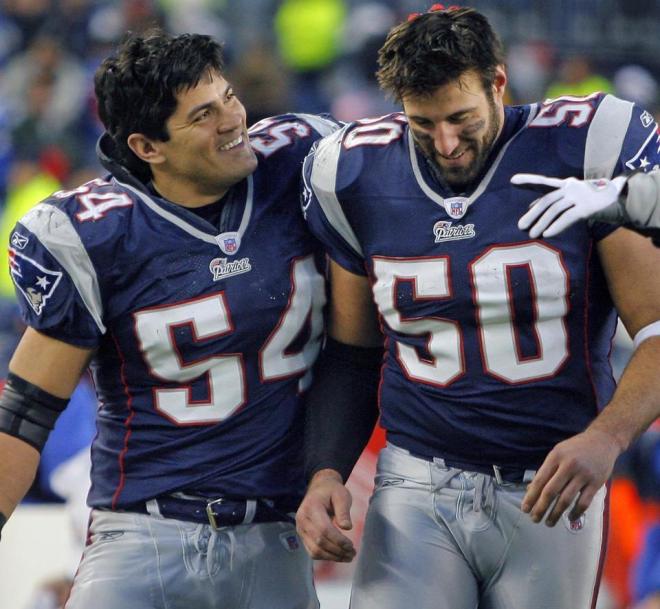
Patriot great Tedy Bruschi checking Mike Vrabel for lice.

The Harder The Problem, The Harder You Look For Solutions.

Budget limitations often encourage us to approach our challenges differently. If you really study the NFL data like Bill Belichick has, it may lead you to create an entirely new formula for success.

Belichick and Brady

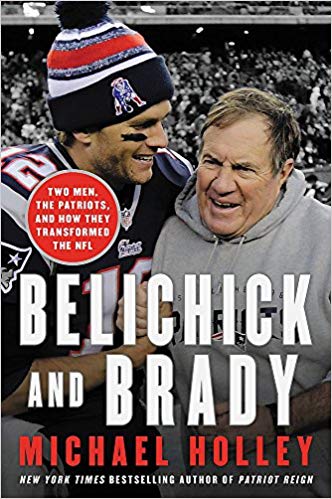
In Michael Holley’s New York Times bestseller, Belichick and Brady, there is an eye-opening analysis of the economics of football. While we are often distracted by the conspicuous performances on the field, we may be missing something far more important. There is far too much emphasis put on the traditional statistics. And Bill Belichick and Scott Pioli were just the people to unearth this non-intuitive truth.

51FeEcGMjLL._SX330_BO1,204,203,200_

The following passage from the book offers one of the great aha’s of how the Patriots have accomplished so much despite the NFL’s systematically promoted parody.

We slowly accumulated winning stat guys as opposed to the high-sack, high-interception guys,” former Patriots linebacker Matt Chatham says. “Willie McGinest, Mike Vrabel. Those guys are way more valuable if they get eight sacks rather than sixteen. Dominating the edge, getting on the tight end, blowing up wide receivers and never letting them get into the pattern. That’s way more valuable than sixteen sacks.

“I think that the world thinks that the sixteen-sack guy is more valuable, but the Patriots don’t think that, and you can get into the economics of this: The sixteen-sack guy costs twice as much as the other guy. And once you get to a certain point, it’s saturation. It’s just sixteen plays and when you play five hundred snaps, it’s not that important. It just isn’t. Who are the best rerouters among outside linebackers? Who are the best edge setter? Does anyone in the media know that?”

-From Belichick and Brady by Michael Holley

gettyimages-2879250
Matt Chatham: Revealer of truth. And guy who got stuck trying to shove his arms through a little kid’s bike inner tubes.

Key Takeaway:

Know your winning stats. The winning formula isn’t always obvious. But understanding what really factors into your success gives you an edge in every endeavor. Analyze your own organization, or your own personal success. Know what works and which part of the performance may be distracting you from the things that matter most.

I hope the Patriots win the Super Bowl again this year. But even if they don’t, it sure is fun being a Pats fan. Because win or lose (and it is mostly win) they have found the winning formula to be in the mix every year.

Go Pats!

It’s time for a new office in a new city!

When I first decided to launch my own advertising agency, I had a clear vision of what the fully formed business would look like. It was spectacular, as visions should be. Because it costs just as much to envision a multi-billion dollar empire as it does to envision a lemonade stand. So you might as well envision big.

In 2015, even though my startup was still in the embryonic-stage, I was confident that great things lie ahead. I just never knew the pace at which success would unfold. But I knew, like a 2-year old in a laundry room, the unfolding was just a matter of time.

Things Started Happening

In the fall of 2015 I ran an alpha test of our minimum viable product (MVP) with our first client. The test run went as well as advertised. (#punsalwaysintended) Then, in the spring of 2016, my home office in Atlanta, where I planned every detail of the business, became The Weaponry’s first headquarters. Suddenly I was in business. And I had the best commute in Atlanta.

By the end of 2016, as part of my life design, I moved to Milwaukee. The Weaponry’s new headquarters was my new  home office. In 2017 the business was humming, we saw plenty of runway ahead, and we signed a lease on 1000 square feet of office space downtown, on the Milwaukee River (actually it was on the side of the river).

IMG_5273
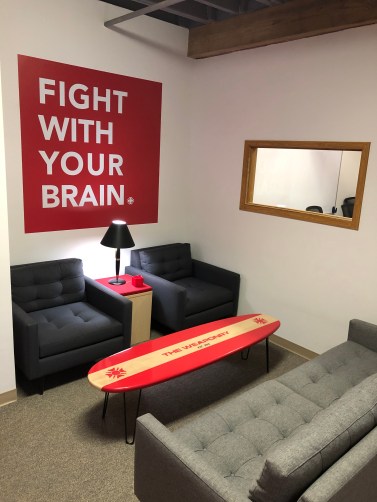
Our Milwaukee office. As they say, home is where custom designed surfboard coffee table is.

But Wait. There’s More!

I never wanted to settle for just one office. That’s why I developed my Home Office Strategy. Which means I plan to establish an office every place I’ve owned a home. This includes Milwaukee, Atlanta and Columbus. I also want an office in New England, where I grew up. So Burlington, Vermont and Boston are possibilities too.

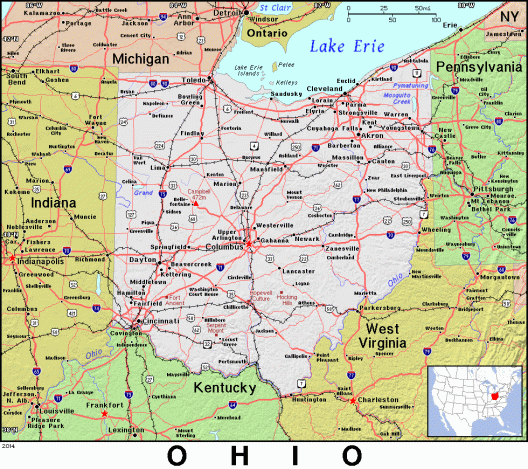
By 2018 we had full-time employees in Milwaukee, Columbus and Atlanta. 6 months ago we started thinking about the next office. And, (drumroll app please…) we’ve decided that Columbus, Ohio will be the home of the next office of The Weaponry.

meetings_skyline_08ac1260-445a-47ce-9655-3039e6a8d6b7
Columbus, Ohio just keeps getting better.

Discovering Columbus.

Columbus, Ohio is a hidden gem. It is well stocked with a highly educated workforce. It offers an amazing quality of life. And thriving industries. We have had full-time Weapons in Columbus for well over a year. And we are eager to add more.

Back Story

I spent 7 great years in Columbus with the ad agency Engauge, before it was acquired by Publicis, and I was asked to move to the new headquarters in Atlanta. Columbus has a 3-ship flotilla of talented advertising and design professionals. And there are more great brands and smart marketers there than even John Lennon could imagine.

Getting Down To Business

Columbus is the home to well-known brands like Nationwide Insurance and Safelite Auto Glass. There are great restaurants headquartered in C-Bus, including Wendy’s, Bob Evans, White Castle, Charley’s Philly Steaks, Sbarro, Donatos and Steak Escape. There are great retail brands, including Victoria’s Secret, Bath & Body Works, Hollister, Abercrombie & Fitch, and Express. Scott’s Miracle Grow is also growing plants miraculously in Columbus. Cardinal Health, which is the 14th largest company in America is headquartered there too.

The Weaponry C-Bus

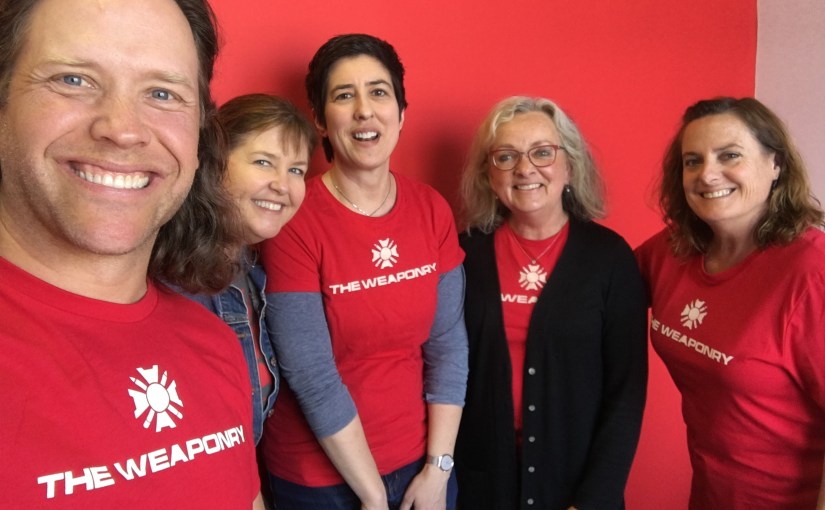
We have collected a great nucleus of talent in Columbus, including both full-time and freelance Weapons. The relatively low-cost of living and high quality of life make the city a great draw. What’s even better is that Columbus is within a 3-hour drive of Detroit, Windsor, Cleveland, Pittsburgh, Cincinnati, Lexington, Louisville and Indianapolis. Not to mention Youngstown, Akron, Canton, Dayton and Toledo (wait, I DID just mention them!) The close proximity enables us to service clients in all of those cities from our Columbus hub.

oh_blu
What is round on both ends, hi in the middle, and loaded with Weapons?

Key Takeaway

There is a lot to love about Columbus. Which is why we are excited to be opening our next office in this great city. I look forward to sharing how we’ve gone about the process of finding our new space, and why we landed where we did. If you are in Columbus and want to be part of a great team, we should talk. Because things are about to get really interesting.

Does your organization trust you to be an insider?

One of the great debates in business is about how much information we should share with our teams. There are two schools of thought:

  1. The ‘You-Can’t-Handle-The-Truth’ Community College.
  2. The ‘There’s-No-Such-Thing-As-TMI’ Prep Academy.

I have gone on recruiting trips to both campuses. They feel very different. One has a work hard, play hard vibe. The other feels like the place where the parents from Footloose went to school.

Solving For Happy

One of the key factors of employee satisfaction is feeling like you know what is happening within your organization. Employees are afraid of being left in the dark. It makes them feel like outsiders, when all they really want is to feel like insiders. #SodaPopAndPonyBoy

A lack of information sharing makes employees suspicious, and encourages them to jump to their own conclusions. In many corporate cultures conclusion jumping is like an Olympic event, and a world-class distraction.

Low Unemployment Means Higher Expectations.

Today, the labor market is tighter than a Boca Raton facelift. Which means that we have to make sure our employees feel valued and included in order to keep them engaged (I mean actively interested and invested in your company, not committed to getting married).

That’s why I believe in this simple philosophy:

Share information to show your employees that you see them as part of the solution. And not part of the problem.

IMG_6468

If You’ve Got A Problem, Yo, Let Them Solve It.

At the beginning of 2018 all of the business at my advertising and idea agency, The Weaponry, was project based. We were thrilled to have the work. And the work we performed for many of our clients was steady throughout the year. However, because we didn’t have any long-term commitments from our clients it limited our ability to plan. And it prevented us from committing to more full-time hires, which would better serve our clients.

I shared this challenge with our team at the beginning of 2018. Our account leaders took matters into their own hands. They had discussions with several of our clients who regularly engaged us for projects. They shared the merits of having a fixed plan in place, dedicated employees who accumulated knowledge on their business, and the ad agency-equivalent of rollover minutes that would never expire.

As a result, by the 3rd quarter of 2018 we had 6 retainer clients who compensated us with a fixed monthly payment. That helped make our revenue stream steadier and more predictable. It makes it easier for our clients to manage their budget. The retainer commitments have enabled us to think longer term about the work we do for our clients. And it has allowed us to invest in our team and infrastructure to better serve our clients.

Key Takeaway

People love solving problems. They love showing that they know, or can find the right answers. So share information with your team. Let them solve more of your organizations challenges by giving them more of the information they need to create great solutions. Remember, leadership will never have all of the best answers to the challenges that face an organization. It’s amazing how much faster and more intelligently you can solve an issue when all of your best minds are working on the problem.


How to collect more points for creative thinking.

Creative thinking requires you to fill your head with interesting stimuli. This takes effort. Because life’s most interesting elements don’t just show up on your doorstep like Ed McMahon, with a giant check, balloons and a camera crew. That’s why I make a regular point of visiting museums.

Long before social media and hipster shopping sites made curation seem like a cool new idea, museums around the world began curating facts, images, stories, ideas and experiences. Museum-style binge-learning helps you stretch your mind in unexpected directions. This is good for everyone. But essential for professional creative thinkers, like me.

My Kind of Museums, Chicago Has.

Over the past 2 days I have visited some of the greatest museums in the world. The Field Museum of Natural History, The Museum of Science and Industry, and the Shedd Aquarium, all in Chicago.

img_4198 2
My family and I hit the museums hard in Chicago this weekend. Not to mention the pizza, hot dogs and donuts.

I visit the Field Museum and the Museum of Science and Industry at least once a year. But there is so much to see that I always find new things to tickle my brain. Here are a smattering of things that caught my attention this weekend.

9 Things That Stretched My Brain

1. Sea Dragons

These beautiful little dragons don’t breathe fire. But they do look like bigger, more elegant versions of sea horses. What really fascinated me were the almost invisible fins near their bums, and behind their heads, that provide propulsion and change of direction. The Mother of Sea Dragons should be very proud of her intriguing little offspring.

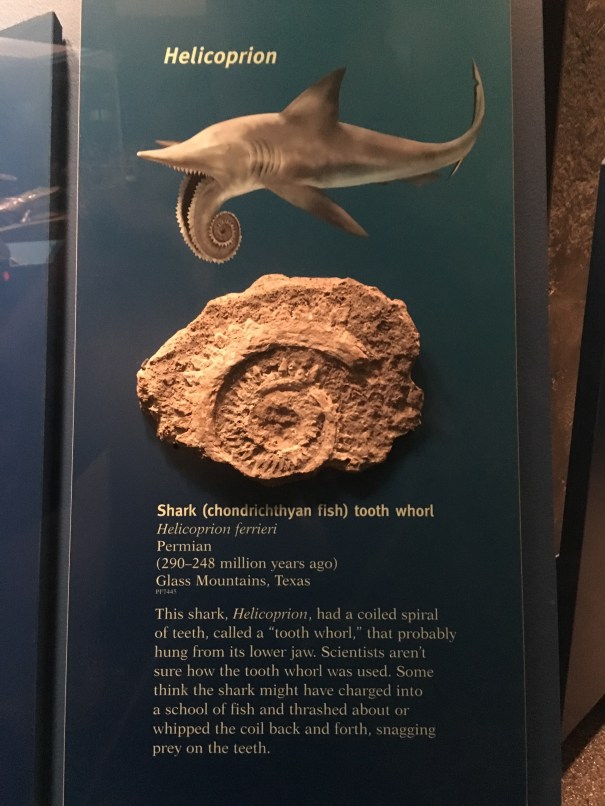
2. The Helicoprion

Check out that lower jaw!  That thing is ridiculous! It is like a weaponized dip-lip. Wait a minute, maybe these sharks chewed tobacco, got mouth cancer and that’s why they went extinct.  #truthsleuth

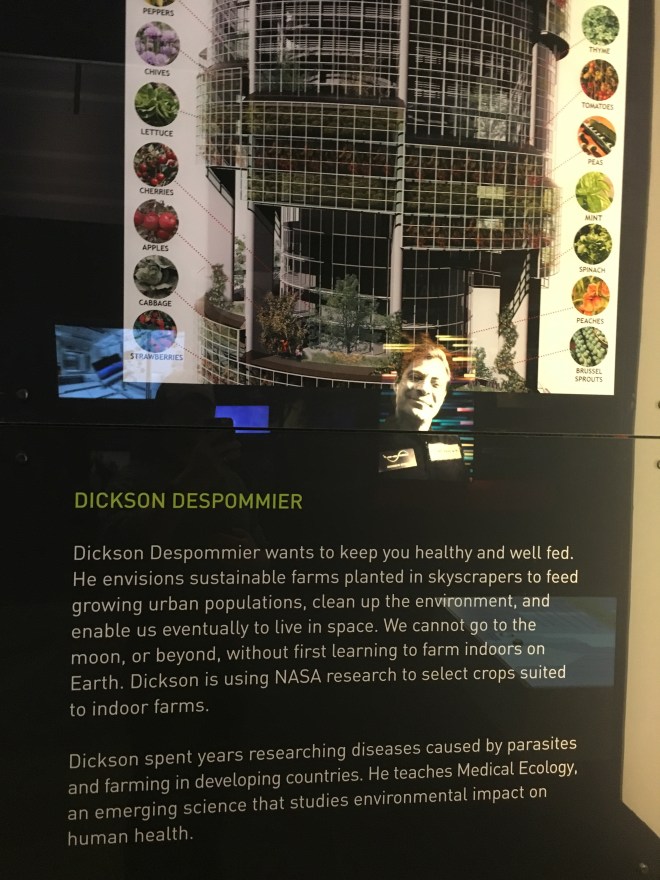
3. Vertical Farms

I learned how vertical farms in sky scrapers could help us feed urban populations, close to home, year round, without weather reliance or threats of drought. I also like the idea of growing popcorn at high enough elevations that it pops itself.

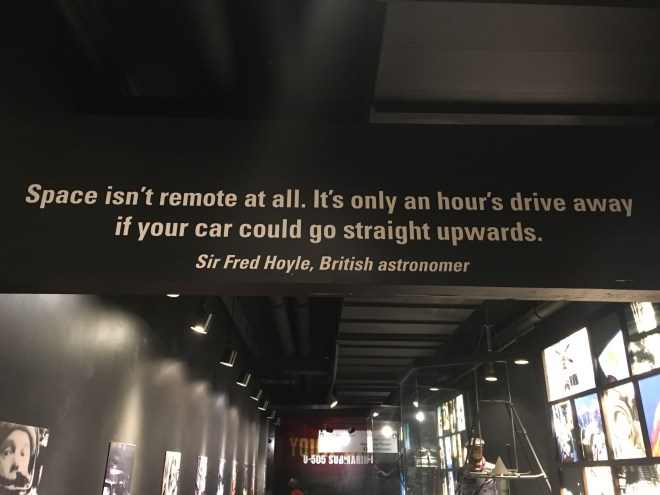
4. Our Proximity to Space

The quote above is a novel thought to me. Evel Knievel and Bo and Luke Duke were more like astronauts than I ever knew. In fact, we are often closer to outer space than we are to neighboring states. It makes me want to stop by to borrow a cup of space sugar.

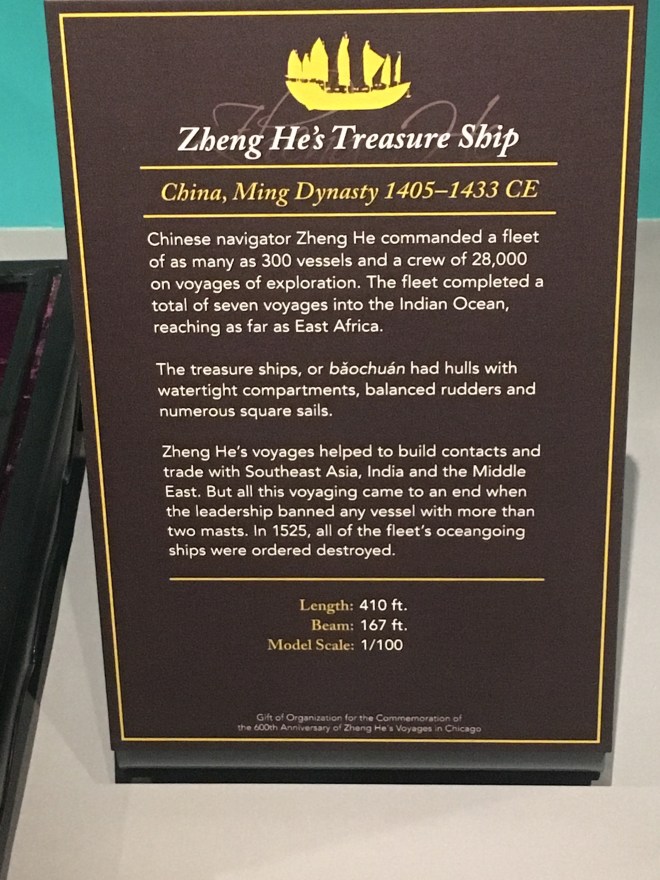
5. Zheng He’s Treasure Ship

Holy Ship! Check out this beautiful Chinese vessel! I had a hard time wrapping my head around how big the actual ship was, based on how long ago it was built. Read the story below for more. 


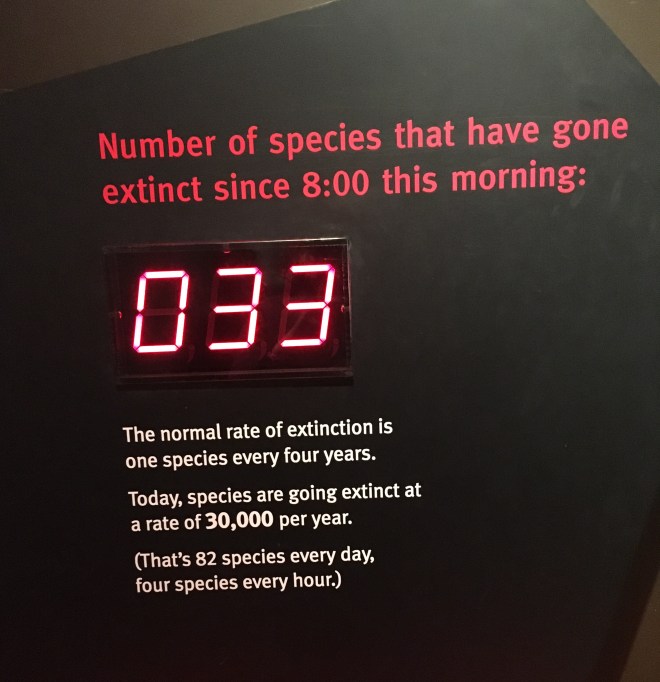
6. The Rate of Extinction

img_4130.jpg
This is a frightening number. Although it also makes me wonder how many species are created every day. Oh, and when the asteroid that killed the dinos hit, it also wiped out half of the other species on Earth. #NeverForget

7. The Tiger River Stingray

img_4034
I was fascinated by the pattern on these rays. It made me wonder which came first, the tiger or the tiger ray? This species should get its own breakfast cereal. Tony-Ray, The Tiger River Ray, would make a Grrrrrrreat spokesperson.

8. How Sue Got Its name

shutterstock_772295212.0
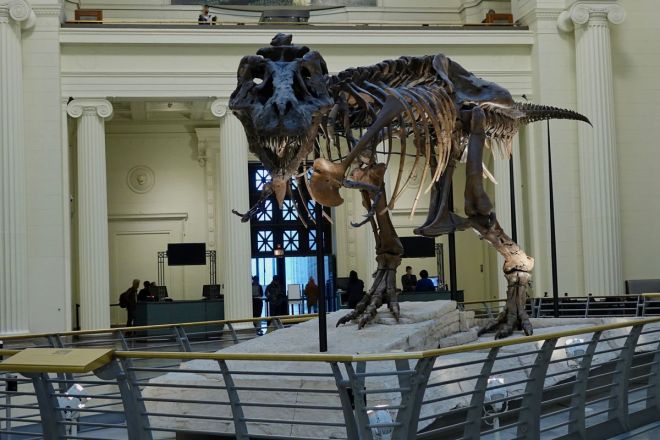
Sue, The T-Rex, is the most famous dinosaur in the world. Ok, maybe it is just the most famous dinosaur in my world. But I never knew why it was named Sue. It was actually discovered by Sue Hendrickson, an explorer and fossil collector in South Dakota. And hence the name. Although scientist don’t know if it was a male or female. (Don’t you just look at it’s private fossils?)

9. How They Got The Boeing 727 to The Museum

msi-727
I have been on this airplane at the MSI many times. But I never thought about how it arrived at its current location. There is a fun video that plays nearby that tells the story. Highlights: It was flown to an airport on the lakeshore. It was loaded onto a barge, and then driven/pulled across the beach, down the street and into the parking lot. Then, one of the museums massive columns had to be removed to bring it into the building. When it was finally in place there was a huge celebration with tiny little bags of peanuts.

Key Takeaway

If you want to think in new and more interesting ways, you have to continue to feed your brain new and more interesting food. There is no better way to expand your thinking than exploring a museum. I encourage you to find one near you with a reciprocal membership that offers access to museums in other cities. That way you can see great museums whenever you travel. Or better yet, you’ll have great new reasons to travel.

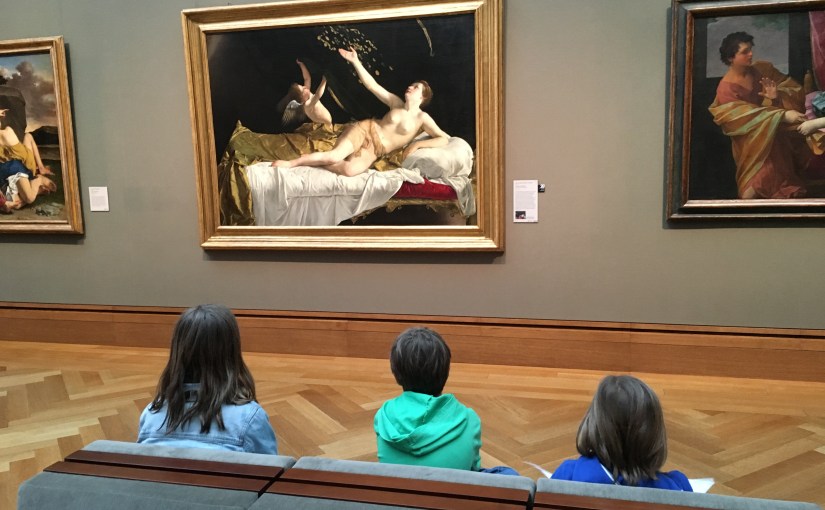
Bonus Points: Can anyone name the art museum in the featured image at the top of this post? Leave your guesses in the comment section!

How I designed my life. And suddenly it became true.

On the eve of my 40th birthday I sketched out a vision for the rest of my life. I wrote in great detail about what I felt was my personal legend. By starting with the end in mind, I was able to determine the actions I needed to start making in order to accomplish all of my personal and professional goals.

It was a transformational evening.  In the last hours of my 39th year I determined the best way to grab control of my life, and design it exactly the way I imagined, was to start my own business.

I became totally focused on bringing my design vision to life. I put my plans into motion. Two years later, I launched my own advertising and idea agency in Atlanta. I named it The Weaponry. And I have been living into the vision ever since.

One Life. One Wife.

img_5405
We are family. Except on the last day of school. Then it’s every Albrecht for her or himself.


My wife, Dawn, gets co-creator credit on my life design. Like Al Jarreau said, we’re in this love together. Because a good marriage is like a 3-legged race, my life plan had to accommodate Dawn’s, and vice versa. We also had to consider our 3 children as part of the design. While we liked Atlanta, it didn’t quite fit all of our design requirements for our perfect long-term home base. So we had to plan our next move.

We didn’t mind moving our children while they were young. But we wanted to stop moving by the time our oldest child, Ava, reached middle school. We wanted to be closer to our families. And as a couple who grew up in Wisconsin and Vermont, we wanted winter. So we began looking for a northern headquarters for our family and bouncing baby business.

The City Search

We began looking for our 13-year home. A 13-year home would mean none of our children would have to move again before they graduated from high school. We drew a circle of acceptability around an area that included Chicago, Milwaukee, Madison and Minneapolis. All of these cities are in the Central Time Zone, which we felt was the best time zone for a well designed life, and maximum business flexibility. These cities also put us within a comfortable driving radius of our parents. And we like our parents.

img_3356
As part of our life design we like to cut down our own Christmas tree. We like them full, with a lot of sap.

In the Goldilocks And The 3 Bears analysis of these cities, we decided that Chicago didn’t offer the best quality of life (cost of living and the commute were Boos). Madison was too small for the business I wanted to build. And Minneapolis needed another ad agency like an NBA player needs another tattoo.

The Brew City Sweet Spot

After much deliberation, we chose Milwaukee as our 13-year home. It put us within a 3.5 hour drive of both of our parents. I have a substantial network in Milwaukee, that includes former clients and co-workers from my time at Cramer Krasselt. Dawn and I both graduated from the University of Wisconsin, and Milwaukee is ground zero for Badger alumni. The city offers a great quality of life. The suburban schools are excellent. Plus, it offers easy access to Madison and Chicago, both just 90 minutes away.

img_8439
This is the view in front of my office on The Milwaukee River. Full disclosure: this photo was not taken in January.

But I’m A Rolling Stone…

While I wanted to provide my wife and children with long-term stability, deep down, and maybe not that deep, I like moving. By the summer of 2016 I had lived in 9 different cities. I wasn’t sure I could commit to one place for 13 years. So I built a solution into the master design.

The Home Office Strategy

As part of my life design, I developed The Weaponry’s Home Office strategy.  Which is my strategic plan to have an office for The Weaponry every place I’ve had a home. This strategy would provide regular travel and consistent interaction with the friends, co-workers and clients I have made along the way. It would also make me feel like I am part of several communities, so I don’t have to choose just one.

The cities on The Weaponry Home Office Strategy list include Milwaukee, Columbus and Atlanta. Because I grew up in New England I also want an office in either Burlington or Boston. Both of which are wicked good options.

Laying The Groundwork

When I began looking at potential employees and freelancers to join The Weaponry, I was biased towards people based in the cities listed above. So I began forming little clusters of resources in the Home Office Cities to help me live into the dream. In the fall of 2017 we signed a lease on 1000 square feet of space overlooking the Milwaukee River in, you guessed it, Milwaukee.

IMG_0260
It’s great having an office where you can point at someone with both hands.

What’s Next…

Today, I am really excited about the next step we are taking to bring the Home Office Strategy to life. We have been putting a lot of time and effort into the next phase, which may mean a new office in a new city. So tune in next week, when I share the unfolding news of our HQ2. I can’t wait to tell you all about it!

ancient antique antique map atlas
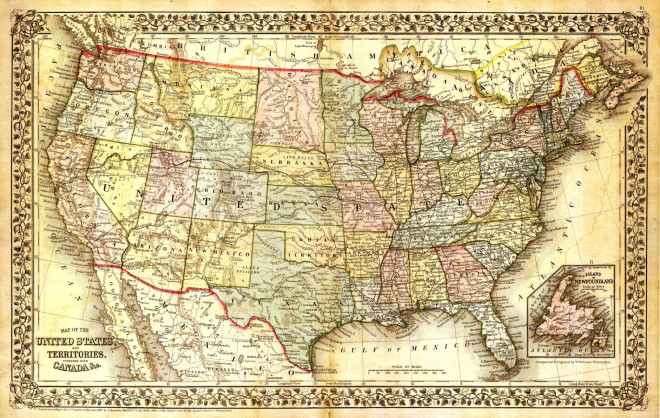
Our next office will be somewhere on this map.

Key Takeaway

If you want to live your ideal life you have to write down a vision of what you want your life to look like. You have to map out the steps to get you to your ideal design. Then you have to take deliberate actions to make it all come true. It’s an amazingly rewarding and fulfilling adventure. I’m typing proof.

*If you want to follow along to see what happens next, consider subscribing to get each post via email.

The most important ingredient to entrepreneurial success.

There is a fun debate about what it really takes to be a successful entrepreneur. Some think the key is having a great idea. Others think it is all about your network. While still others think the key is not running out of cash. I would argue that running out of cash is an awfully bad thing for a business. In the same way that running out of blood is bad for the human body. But that’s kind of like saying the key to solving global warming is not letting the Earth get warmer. It may be accurate. But it will make you look like an idiot when you suggest that at your next Mensa meetup.

Jeff Hilimire’s Recipe

Recently, my friend, and entrepreneur, Jeff Hilimire shared his secret recipe for whipping up a successful entrepreneur on LinkedIn.

 ‘50% amount of runway + 40% hard work/execution + 10% initial idea. I might have overshot the importance of the initial idea.’  -Jeff Hilimire. CEO of Dragon Army and Founder of 48in48

As a good facilitator of engagement should do, Jeff then asked the LinkedIn collective brain if we agreed or disagreed. Which provoked a healthy sharing of opinions. All of which had merit. None of which matched my own.

My Recipe for Entrepreneurial Success

My recipe is simpler than Jeff’s. In fact, I believe there is only one ingredient that matters at all. The absolute essential, non-negotiable, Holy Grail of ingredients, is action.  Without action you are guaranteed not to succeed. But with action, continuous action, all things are possible.

The Idea

The idea is not at all important to entrepreneurial success. Because absolutely everyone has an idea. You have had an idea for a product, service or business that could have worked. I know you have. The only reason that idea hasn’t become a successful business is that you haven’t taken enough action. Yet.

Time, time for some time for some action. (#obscurelyricreference)

Your runway, which is your brine of time and money, is continuously increased by taking more action. Action makes opportunity. Action spins straw into gold. Action is what builds and maintains your network. Action is what makes luck. And action is what makes for a really great date. #amiright

In the past 2.5 years since I took action and launched my advertising and idea agency, The Weaponry, I have had hundreds of discussions with people about the business ideas they wanted to pursuit. Every one of those ideas could have been successful. And every one of those people could have become a successful entrepreneur if it wasn’t for one missing ingredient. You guessed it: Action, Jackson!

Key Takeaway

If you want to be a successful entrepreneur the verb is the word. You have to take action. Absolutely nothing happens without it. The best of ideas, the best networked humans, the deepest pockets and the best of intentions are powerless without action. Talk is cheap. Potential is nothing. Ideas are everywhere. So as Nike once so famously and succinctly commanded, if you want to be successful entrepreneur, just do it.