The most famous 271 word speech in history.

On Thursday, November 19 in Pennsylvania, two men gave back to back speeches. The first man had served as the Governor of Massachusetts, U.S. Senator, and United States Secretary of State. He also taught at Harvard and served as its president. He was in a position to talk as long as he liked. And he liked to talk. His keynote address lasted 2 hours.

The second man took a very different approach. His followup speech consisted of only 271 words, and lasted only 2 minutes. Witnesses say there was no gesturing. No theatrics. And no pyrotechnics.

The first man was Edward Everett. His speech has been all but forgotten.

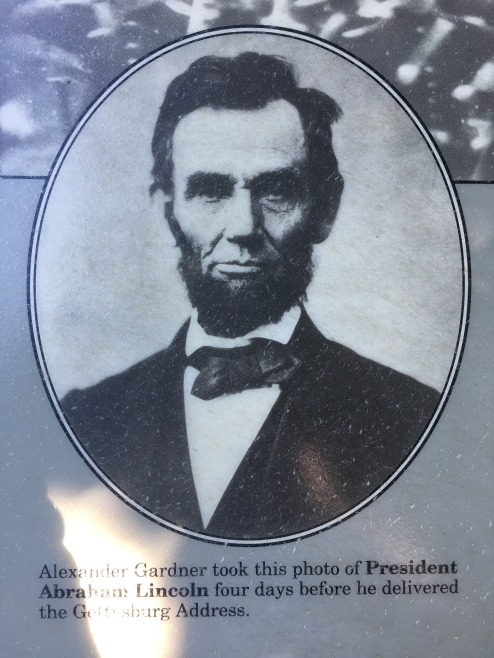
The second man was Abraham Lincoln. His speech, which has come to be known as The Gettysburg address, is one of the most famous speeches in American History. Perhaps it is rivaled only by Martin Luther King  Jr’s ‘I have a dream’, and Billy Madison’s ‘The Puppy Who Lost His way’.

img_1205.jpg
Abraham Lincoln knew less is more. He also knew beards were better than mustaches.

Key Takeaway.

Don’t say everything you can. Fewer words make sharper sentences. Sharp sentences penetrate. And only ideas that penetrate are remembered.


Here are those 10 sentences that make up The Gettysburg Address:

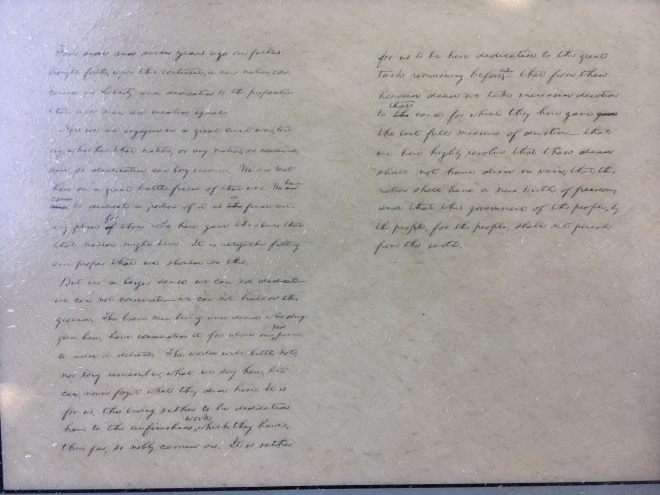
Four score and seven years ago our fathers brought forth on this continent, a new nation, conceived in Liberty, and dedicated to the proposition that all men are created equal.

Now we are engaged in a great civil war, testing whether that nation, or any nation so conceived and so dedicated, can long endure. We are met on a great battle-field of that war. We have come to dedicate a portion of that field, as a final resting place for those who here gave their lives that that nation might live. It is altogether fitting and proper that we should do this.

But, in a larger sense, we can not dedicate — we can not consecrate — we can not hallow — this ground. The brave men, living and dead, who struggled here, have consecrated it, far above our poor power to add or detract. The world will little note, nor long remember what we say here, but it can never forget what they did here. It is for us the living, rather, to be dedicated here to the unfinished work which they who fought here have thus far so nobly advanced. It is rather for us to be here dedicated to the great task remaining before us — that from these honored dead we take increased devotion to that cause for which they gave the last full measure of devotion — that we here highly resolve that these dead shall not have died in vain — that this nation, under God, shall have a new birth of freedom — and that government of the people, by the people, for the people, shall not perish from the earth.

Abraham Lincoln
November 19, 1863

img_1204.jpg
The Gettysburg Address, Original Formula


Why you should give it away, give it away now.

A year and a half ago I was in a fender bender. I was hit by a woman who was hit by a distracted driver, who didn’t realize that everyone else on the road stopped at a railroad crossing. I wrote about the experience in the post, Could You Pass The Fender Bender Test. While waiting for the authorities to show up, Laura ‘The Bumper Thumper’ and I began talking. We quickly struck up a friendship. It turns out that Laura has her own marketing business too.

Chapter Two

A couple of months after the incident I got a call from a potential client about a new marketing challenge they were facing. We agreed to meet face to face, and I invited Laura to bring her face to the meeting too.

The client was dealing with a new law that was dramatically changing the way they could market their service. More bluntly, their primary way of finding customers was now illegal. (So tawdry, I know!) The change posed a monumental threat to their very existence. They needed to quickly replace their old marketing approach with a new one, or there would be no business. (dun, dun, dun)

Laura and I met with two of the partners for two hours. We discussed numerous potential solutions to the problem. As I had imagined, Laura was a valuable asset. She asked a lot of smart questions. She had a very good understanding of the industry, and the major players in the market. Best of all, she didn’t hit anyone with a car.

When we left the potential client’s office, Laura said,

‘You really give a way a lot of ideas for free.’

She’s right. I do.

Here’s why I give ideas away for free.

I love free samples at the grocery store. Nothing sells me on your southern ham, spicy cheese, mango salsa or Fruity Barky Bites like tasting it myself. That tiny plastic cup worth of your product gives me everything I need to know to purchase more.

My business does not make Fruity Barky Bites. At least not yet. We produce ideas. So when I meet with people about their marketing challenges, I dig in. I start thinking through solutions with them. I offer up initial ideas worth considering. I get excited about solving the problem. They get excited about having the problem solved.

People don’t like to be sold to. They want to be in a position to buy. So rather than sell a client on why they should work with The Weaponry,  I like to offer people a sample of what they would get if they work with us. If they like it, they will want to buy. If they don’t like what they hear, they will pass. And both sides win.

Key Takeaway

I believe you should always add value before you try to extract value. Prove your worth. Make new clients and customers feel as if they have received more value than they have paid for. Give them a test drive so they can imagine the future. Once they decide to buy, don’t slow down. Keep over delivering. Always make them feel like they are getting more than they are paying for. Even when they are paying a lot.

*If you found value in this post, and would like more free samples, consider subscribing to this blog.

What is it that makes hard work so hard?

High achievers constantly talk about the importance of  hard work. But hard work is hard to define. Because what is hard for one person is easy for another. Which means that we define hard work individually, relevant to our capacity for struggle, and tolerance for strain. Still, it is useful to have a universal way to think about hard work. Even if you only plan to think about it in a small corner of the universe.

Well, Well, Maxwell

I turn to pastor, author and leader of leadership, John C. Maxwell for his insight into hard work. This is what my man JCM has to say on the subject:

Hard work is the accumulation of easy things you didn’t do when you should have.

– John C Maxwell

I like Maxwell’s definition. But I have modified it for my own purposes. I say:

Hard work is the easy work you didn’t do when you had more time.

Time is not on your side.

The critical element that makes hard work hard is time constraint. Which means that hard work has to do with the density of work. Or written pseudo-mathematically:

Difficulty of Work = Amount of Work To Be Done, divided by Time To Do It.

Which means that if you start the work earlier, and spread it over a longer period of time, it really isn’t that hard. You feel the burden of work when you have to exert a high level of effort over a short amount of time.

Start Now.

To make any type of work easier, start earlier. Start working on that next big project now. Start studying earlier for the exam. Clean a little every day and it won’t feel like a colossal undertaking.

One of the things I have been pleasantly surprised by since launching my advertising and idea agency, The Weaponry, is the number of times that my work was made easier because I unknowingly did the work ahead of time. In fact, I spent the last several decades doing the hard work of entrepreneurship, well before I decided to become an entrepreneur. I did this by developing relationships, building trust, demonstrating real interest, and connecting dots.

Key Takeaway

Be proactive. Spend as much time on the important tasks as possible before they become urgent. The easiest way to build an ark is under blue skies. Because, eventually it will rain. And when it does, you’ll be happy you gave yourself a head start. Just ask Noah.


This is where I encourage you to pitch your elevator pitch.

In 2015 I decided to launch a new advertising agency. I already had a vivid image of the agency in my head. So I began mapping, sketching and listing every detail of the company. I considered the business from every angle. I even created a Life Stage chart of the yet unborn business. It was like What to Expect When You Are Expecting. Except I was expecting a bouncing baby business.

The Elevator Pitch 

However, there was one detail that start-ups typically obsess over that I skipped entirely: the Elevator Pitch. It is supposed to be the centerpiece of a startup’s marketing efforts. If you’ve never heard of an elevator pitch, the idea is that you have to summarize the essence of who you are, and what you do, in a short statement that you could deliver to a captive hostage on a brief elevator ride. Apparently, lots of entrepreneurs stalk high-powered executives on elevators, thinking it would be a great strategy for winning their affection.

I’m not buying it.

I hate the whole concept of the elevator pitch. I think it is the most overrated, over-discussed element of salesmanship. And entrepreneurship. And elevatorship.

Sure, it is important to be able to succinctly talk about your business. Your Great Aunt Petunia doesn’t have enough time left on Earth to waste it on your full story. But I have never bought anything or hired anyone because of a brief discussion I had on an elevator, escalator or Wonk-avator.

In fact, I have been in business for two years. And not once have I found myself in an elevator with someone who told me I had 10 floors of verticality to perform the sales pitch of a lifetime.

My Approach

Instead of scripting and performing an elevator monologue to an audience that never shows up, which feels a little like writing an acceptance speech for an award you didn’t win, I take the opposite approach.

The Quiet Game

I play the quiet game. You know, it’s that game where you see how long you can go without talking. I was terrible at the Quiet Game as a child. Scratch that. I was the Cleveland Browns of The Quiet Game. But today, as an entrepreneur, I am quite good at it. When I meet a marketer, I don’t whip out a polished sales pitch and throw it at her. Instead, I listen.

I want to hear what potential clients talk about. I want to hear what challenges they are facing. I want to know where their pain points are. I want to identify their greatest unmet needs. I continue to grow and transform The Weaponry in response to the unmet needs of our clients. Because we are focused on solving client problems, we grow in the direction that our clients’ needs dictate.

Key Takeaway

If you want to collect more great clients and grow your business, don’t practice your elevator pitch. Practice listening. Play detective. Or doctor. Listen for the discomfort, the bottlenecks, and the solution-less problems your clients and potential clients are facing.  Discover their unmet needs. And you’ll have found your next opportunity.

*If you found anything of value in this post, please consider subscribing to this blog. You’ll receive two fresh-baked posts via email each week. Oh, and you may also dig this post I wrote about My Vanilla Ice Philosophy. Vanilla Ice himself liked it. And Tweeted it. And hung it above his bed (ok, that very last part might not be true).


The best career move high school seniors should make right now.

Most high school seniors will graduate within the next 30 days. High school commencement is one of the most exciting events in a human’s life. And with good reason. The best, most interesting chapters of your story start after high school. Unless, of course, you were in an epic high school-based movie. In which case, it’s all down hill from here.  (You can check the 50 Greatest High School Movies of all time here to make sure you weren’t in one).

1427916022-6c7ca7e2f862948d5c2dbea222a26876b3061f3b


An Open Letter to High School Seniors.

Dear Seniors,

Four to ten years from now, when you graduate from college, finish your military obligations, or give up on your Hollywood/Nashville/Lottery dream, you will start focusing on your real career. When you do, everyone will tell you that you need to start building your network.

But they are wrong. You need to start building your network now. So before you throw your binders in the trash, your graduation cap in the air, and carve your initials into he wood paneling of the senior lounge, you should start building your professional network.
d5da05680908fe5af88b82c2fe514f2e9f41b24211d92d9b7b74fef6a75f62a9

WTF Is A Professional Network?

Your professional network is a collection of the people you know that may be able to positively impact your professional career. The people in your network, or community, will be able to help with career advice, finding a job, and connecting you to other people and businesses that are important to your career advancement. You will also be expected to provide the same sort of help for others in your network. Because it takes a village to keep a child from moving back into their parents’ basement.

So Who Are My Connections?

Your connections are your friends, your family members and your teachers. Your connections are your friends’ parents. They are the adults you know from church, and the extra curricular activities you’ve participated in. They are the kids you competed both with, and against, in sports. They are the kids you know from camp (like that one quirky girl who played the flute).

Starting A Connection Collection.

The best career move high school seniors should make right now is to create a profile on  LinkedIn, and start collecting your connections. LinkedIn is an online social networking site for the business community. And right now, before you graduate, is the best time to start collecting your network. By starting now, you will collect the most connections. And the more connections you properly maintain, the stronger your network will be. It’s kinda like being popular in high school. Only this type of popularity can dramatically impact your salary (your salary is the adult version of an allowance).
greast-best-high-school-movies-2015

Grow As You Go

You will want to continue collecting your friends and acquaintances throughout college, trade school, military service, or your creative exploratory period. Every time you meet someone new, don’t just think about adding them to Snap or Insta.  Sure, do that too. But definitely add them to LinkedIn. Granted, the filters on LinkedIn aren’t as good as Snapchat. But having a good job makes you look better than any photographic editing or augmented reality can.

It’s All About The Network, (and the Benjamins)

Eventually everyone is going to tell you to network and build your network, and that it is all about your network. That’s just an adult way of saying:

Stay in touch with the people you know, because it will connect you to opportunities, advice and endorsements that will prove highly beneficial down the road.

b4022c295327eb4c1af97995edf268fb1c4a27f55882f48669ed6758d62c0370

Why Start As A High School Senior?

You know a lot of people now that you are going to forget. Those kids you go to school with are going to do amazing things with remarkable organizations. And they are going to have opportunities for you, if you stay in touch. You are also going to have opportunities for them. Even better, in the real world, there are things called referral bonuses. Which means you can make extra money for helping your organization find good talent. #chaching

Monitoring Your Classmates

Adding your friends to LinkedIn is like putting a tracking device on them. It will allow you to collect intel on each person, like where they went to school, what they majored in, and where they worked after college.

It also puts a tracking device on you, so that others will remember your educational track, your career path and your special interests and activities. That way your connections will know when their opportunities cross paths with your skills, interests and abilities.

hqdefault

The Adult Rock Stars Around You

Your neighbors, teachers and friends’ parents are more successful and connected than you know. Four or five years from now you could end up in a job interview with them. Or with their friends or relatives. When that happens, you will want every advantage you can get. Like a good endorsement from someone who knew you were always such a good kid. You were always such a good kid, right?

Trust Me. I Know.

I started my career in advertising as a copywriter. But I always envisioned becoming an entrepreneur and someday starting my own ad agency. Twenty years later, that’s exactly what I did. In 2016 I launched my own advertising and idea agency, The Weaponry.

You know who my very first client was? My friend Dan Richards, whom I have known since 7th grade. Dan is the Founder and  CEO of a badass company called Global Rescue.  Which means that Dan and I went from high school classmates, and football and track teammates, to trusted business partners. We have helped each other launch companies, and have exchanged hundreds of thousands of dollars worth of services.
fast-times-at-ridgemont-high01

Key Takeaway

They say the best day to plant a tree is 20 years ago. And the second best day is today. The  same holds true for building your network. Start now by collecting your connections before you leave high school. But if you are already in college, serving your country, or in the workforce, and you haven’t been building your network, start today.

There are amazingly talented people all around you. So start collecting them today. It’s the very best way to assure an abundance of everything you will need later in your career. By doing so may help one of your high school classmates find their dream job. Or launch their own business. I know. Because it happened to me.

-Adam Albrecht

Founder & CEO of The Weaponry


*If you know a high school senior who is about to leave the nest, please share this post with them. If you are a teacher wondering how to keep your students’ attention over the last few days, consider sharing this with your class. And if you want to connect with me, I’d love that. But you might want to read this post I wrote about connecting on LinkedIn first.



Our time here is short. Make the most of it, like Steven did.

The best part of business is the people. I didn’t know that when I started my career. But over the past two decades I have discovered that businesses aren’t just powerful economic engines. They are the primary source of social interactions among adults.  The workplace is dramatically undervalued as a matchmaker of friends, mentors, collaborators and life partners. In fact, I met my wife, Dawn, at work.

Steven Schreibman

On Mother’s Day I got a shocking text from my close friend, Jennifer Hanley, whom I first met when she became a client of mine in 2008. She had bad news. My friend and former client, Steven Schreibman, had passed away the day before. This was totally unexpected. He recently began experiencing severe headaches. Then, on May 7th, he suffered a fall that resulted in a brain injury. He never regained consciousness.

I am truly blessed to have known Steven. But we would have never met had it not been for business. Steven was a fancy pants marketing lead at Nationwide Insurance. I was the creative lead at one of Nationwide’s advertising agencies. And we became fast friends.

The Legend

Steven’s reputation preceded him. My coworkers would come back from meetings with Nationwide telling stories of this wild, rogue client. I couldn’t wait to meet this mythical marketing creature.

He didn’t disappoint. In fact, Steven Schreibman was such a fantastic character, that even though I am only halfway through my advertising career expectancy, I am declaring that I will never encounter another client or coworker that is more spectacularly unique than Steven.

IMG_1191
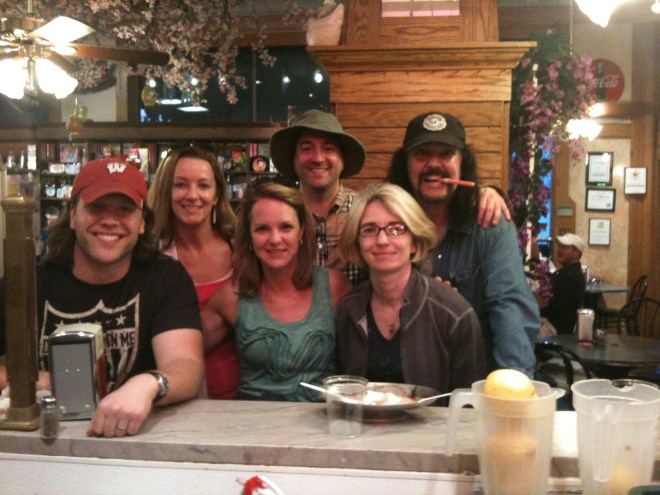
During an all night shoot in LA, we snuck into a diner for the best peanut butter chocolate shake I’ve ever had. I think Steven (back-row middle) had a Burberry Shake.

Today I am reflecting on Steven’s impact on my life. My last 10 years have been much more flavorful thanks to Steven. Here are four of the many things I will never forget about him.

The Steven Schreibman Top 4 List.

1. His Laugh

I love to laugh. But Steven’s laugh made me look like the farmer in American Gothic.  His laugh felt like the essence of life itself. His laugh was big and loud, like an alarm. And it never contained an ounce of restraint. Nor did it adhere to any social norms. I would have loved to have gone to church or synagogue or a library with Steven just to see if he could actually put a lid on his impulse to laugh without a hint of inhibition at the hilarity of the world. We should all live and laugh like that.

2. He cared.

Steven engaged with people as if he were a talk show host. Which is probably the job he should have had. In fact, I hope he gets that gig in Heaven. Because me and St. Peter would watch the Steven Schreibman Show every night.

2010-04-07 17.24.22.jpg
Welcome back to the Tonight Show. I’m Steven Schreibman. And you are not. BWAHAHAHA!

Steven always showed a genuine interest in my life. He was full of questions and remembered everything I ever told him. When we first began working together, my family was small and growing. I have three blonde haired, blue-eyed kids named Ava, Johann and Magnus. Steven would always ask me, ‘How is your little Aryan race coming along?’ I laugh out loud when I think about how completely inappropriate he was, even as he demonstrated how much he cared about me and my family.

3. He Was Eternally Optimistic

Steven was a great client to present creative ideas to, because he recognized the potential in every idea. This is an extremely rare and valuable skill. Everything was Fabulous and Brilliant and Amazing. He loved pushing each idea to see how far it could go. He loved making things bigger, wilder and more attention-getting. He loved making ideas more memorable, and less like everything else. He could have taught a class on getting the most value out of a creative idea. He also could have been the class clown in that very same course.

tonight-show
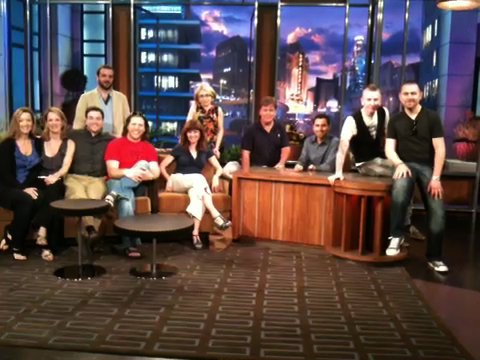
This is a very bad picture from a very interesting night. While out in LA on a shoot, Matt Haritan (far right) and I had the idea to go to a taping of the Tonight Show. Not only did we go to a taping, afterwards we got invited back stage, on stage and even staged a coup d’etat on Jay Leno’s couch. Steven (third from the left) loved this kinda stuff.

4. He Was Entertaining

Steven was outlandish, and over-the-top, all of the time. His personality was completely incongruent with that of a large, conservative insurance company. But Steven reveled in being the pot stirrer. He understood his role as the person who could balance out a conservative corporate culture with his total irreverence for all things conservative.

The Master of Shock Value

We should all have a friend who is as endlessly entertaining as Steven was. He was so funny, and so outlandishly unpredictable, that you just wanted to be around him to see and hear what he would do next. There were no ordinary conversations with Steven. I think it would have been a violation of his personal brand to give you a straight answer. Every conversation with Steven was like a box of Cracker Jacks. And I looked forward to the joke, the surprise, or the shocking commentary that was tucked into every exchange.

My First Impression

I first met Steven on a Nationwide commercial shoot, on a 100 degree day in North Carolina. His face was lathered in sunscreen that was barely rubbed in. Which meant that he looked ridiculous. And he loved it. He kept asking if there was something on his face, and he acted oblivious to the white creamy mess he wore like Halloween makeup, just to get a reaction.

IMG_1846
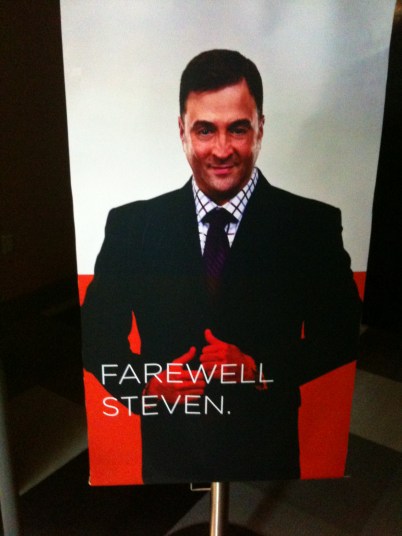
This is from Steven’s going away party when he left Nationwide. Clearly it was significantly retouched. Because he did not have red hands.

The Shirt Incident

One of my favorite Steven memories was from his birthday in 2009. We had a meeting together, and I wore a wild paisley shirt. When the SS waltzed into the meeting he was wearing the exact same shirt! When he spotted me wearing his birthday shirt, his jaw dropped, and he exclaimed, ‘Oh. My. Gawd!  We HAVE to sit next to each other!!!!’ So we did. The rest of the meeting felt like a Saturday Night Live skit. It was all just too ridiculous to take anything seriously. As I think about Steven now, I immediate go back to that meeting. We looked like twin clowns. And we loved every minute of it.

dsc07453-e1274843083156
Steven reacting to a production assistant on a shoot who warned him to be careful on the stairs.

This Blog

Steven was the most engaged reader of this blog. Literally. The insights page on The Perfect Agency Project show that he has provided the most comments on this blog, by far. In fact, Steven has 33% more comments than the next most prolific commenter. This blog will miss him.

Conclusion

I love characters. And Steven was one of the greatest characters I’ve ever known. My conversations with Steven were more provocative and entertaining than the Howard Stern show. Always hilarious. Always inappropriate. And never a bit predictable.

Steven was indeed larger than life. And to those of us whose lives he touched, he is larger than death. Nothing can undo the impact you’ve had on all of us Steven. We will miss you greatly. I can’t wait to hear your laugh again on the other side.

*If you know a friend or family member of Steven’s, please consider sharing this post with them.

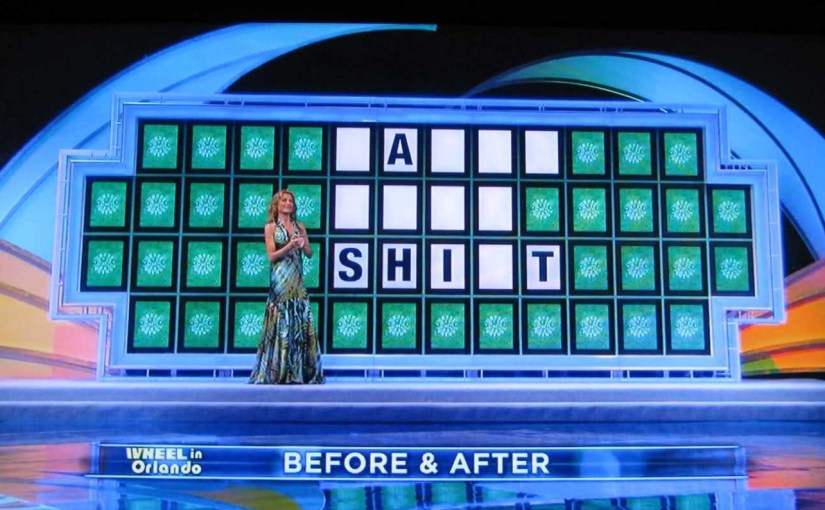
Why Wheel Of Fortune is the perfect interview game.

I like watching Wheel of Fortune. It’s not because of Pat Sajak’s perma-tan, perfect hair or witty commentary. And it’s not because of Vanna White and her seemingly irreplaceable skills at touching lighted rectangles. Although 30 years ago that was a compelling draw.

The best part about Wheel of Fortune is trying to solve the puzzles. In case you hadn’t noticed, life is one big puzzle. As the Founder of the advertising and idea agency, The Weaponry, I am constantly trying to solve client problems. That’s why I am hunting for world-class problem solvers the way Imelda Marcos hunted for footwear.

The Interview

Lately I’ve been thinking about introducing WOF into the interview process. Because the game show offers valuable insights into a candidate’s approach to solving real world puzzles. Not only is this kind of problem solving valuable in marketing, it translates to success in business, finance, medicine, auto repair, courtship and just about every career Sally Struthers might mention.

The 3 kinds of contestants on The Wheel of Fortune.

Early Solvers.

My WOF heroes are the people who solve the puzzle in the least amount of time with the  least amount of information. I’m always impressed by those who find the answer well before I do. They are the see-ers of the unseen. These people are clever, insightful and daring. You should hire as many of these types as you can get your hands on (in an HR appropriate way).

Middle Solvers

The majority of the puzzle solvers take a crack at the answer somewhere in the middle of the fill. They offer an answer once many letters are exposed, and the puzzle is relatively easy to solve. At this point the viewer at home either has the answer or has several of the words figured out, but still fails to see a couple of un-purchased vowels. These are your average people. If you fill your organization with these average people you can build an average company. I would rather go bankrupt.

The Reader

At the tail end of the spectrum are the readers. These are the people who don’t attempt to solve the puzzle until every letter is filled in, and they can literally read the entire answer. These are the types that only bet on a sure thing. They are the belt and suspenders types. But Wheel Of Fortune favors the bold.

Please don’t be the reader. When you wait until the answer is obvious you have lost all competitive advantage. Because when there is no risk there is no reward.

Key Takeaway

The further upstream you can solve a problem the move valuable you are. There is a significant market for those who can see the unseen, forecast a trend, or alert a team to an opportunity or catastrophe hiding in the shadows.

In business development, you can’t wait until the account you want goes into review and invites you and every Tom, Dick and Mary to pitch. To offer value you have to be able to solve a problem before the answer is flashing in the middle of Times Square. Or before Vanna has flipped her final consonant.

Perspective from high above a big week.

It is 11:15pm on a Wednesday night.

My plane from Atlanta to Milwaukee just took off. My past three days have been packed full, like Oreo Double Stuff cookies.

Monday our team conducted an 8 hour branding workshop with one of our great new accounts in Georgia. There were 16 clients and 4 agency people collaborating intensely to forge a new path for the brand. Afterwards I drove 2.5 hours in 2 different rental cars while drinking 4 large sweet teas.

Tuesday between 7:20am and 9pm I had 8 in-person meetings and an hour-long client presentation

Today I had 5 more in-person meetings.

Then I refilled a hole in my concrete driveway in Atlanta, with help from a few neighbors (thanks Steve, Crain, and Chris! I feel like that really cemented our friendship. #DadJokes)* Then I had dinner with some of my great Atlanta neighbors, including all of the above plus Betty, Melinda and Grace. Then I bolted Adam Albrecht-Style to the airport. (I’ve written about that style before here.)

After I finish this post I need to get back to work for the rest of the flight.

Because Tomorrow:

  • I have a huge creative presentation to a brand new client.
  • I have another important kickoff to an exciting new client engagement.
  • I have a call with a major foundation based in New York City that we are supporting  with a really rewarding initiative later this year.
  • And I have a new business pitch.

The Wee Hours Of The Morning

I will get home at 2am ET.  I will sneak into my three children’s bedrooms, and give them each a kiss (my kids, not the bedrooms). I will tiptoe into my room and kiss my favorite person on the planet for the first time in 4 days. (I am referring to my wife Dawn, in case you were unsure). Then I will sleep as fast as I can.

Key Takeaway

As I reflect on the past 72 hours, and prepare for the next 24, I feel like I am the luckiest man 35,000 feet above the Earth. 

*The hole stemmed from a pinhole leak in the main waterline to the home. It was detected by a higher-than-normal water bill. I hired a leak detection company to find the leak. Which they did. Unfortunately it was two feet under the center of the concrete driveway. Hence the hole. Life is an adventure.

How to establish a useful workplace dress code.

The seasons have finally changed across the northern third of America. We can safely put our Icelandic sweaters, mukluks and buffalo robes away for the next 6 months. It’s time to bust out our warm weather wardrobes. Which means revisiting an old issue in the workplace: dress code.

My First Job

Before I started my first job in advertising I had no idea what to wear. So I called the agency for guidance. They assigned me a Fashion Mentor named Shannon. She called me and told me that, ‘polos and khakis were pretty much standard’. While I dressed respectably on my first day, I saw that the creative team wore jeans and t-shirts. So I quickly adopted the more comfortable creative attire. Thanks for nothing Fashion Mentor Shannon.

The Weaponry

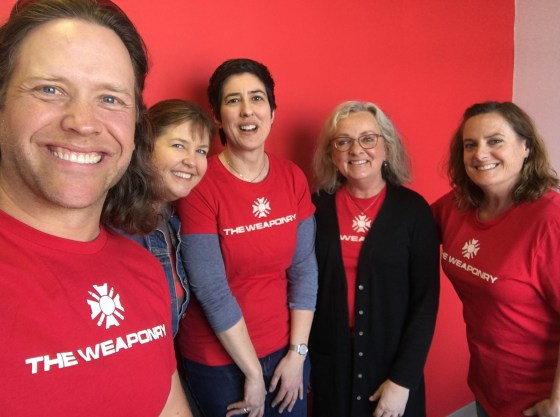
Today I face a new challenge. As the Founder of the advertising and idea agency, The Weaponry, I now have to set the dress code for the entire agency. This spring is the first time we have had warm weather since we moved into our new office in the fall. So I have to determine what types of summer clothing are acceptable, or preferable. The challenge is that they didn’t cover establishing a dress code at the Harvard Business School. Trust me. I read a book about it (Ahead Of The Curve).

I considered writing an explicit dress code. I thought it would be fun to have rules like a strict English boarding school, that said things like, The hem of the broadcloth covering your lower hemisphere must fall within a ruler’s width of your knee’s equator.

IMG_0198
At The Weaponry, a team t-shirt is always up to code.

But I don’t believe in a complicated dress code. Instead, I believe in a very simple rule of thumb. Here is the dress code at The Weaponry:

Dress the way you want people to see you.

Breaking It Down.

This is a bit more complex than it may seem at first glance. Sometimes this direction means dressing up. It means looking professional, polished and well-coordinated.  Sometimes this means looking more interesting, more fashionable or trendy. And sometimes this means dressing down. Some people should look more relaxed. Or more creative. Because you need to dress for the role you want to play in the minds’ of your co-workers and clients.

To that end, I have worn jeans to every client meeting I have had for the past decade. Because I believe clients don’t want their ad agency creatives to look like bankers and lawyers. Then again, they don’t want you to look homeless either. But I’ve found there is a fairly wide field to play with between the two.

Key Takeaway

Ignore the limits of your current workplaces dress code. Instead, dress the way you want people to see you. Make a statement. Use your wardrobe choices as sign that you are ready for the next step in responsibility. That may mean not partaking in Casual Friday. It may mean wearing an elective tie. Or bow tie. But it may also mean that you rock the Ramones T-shirt for the next client meeting.

Don’t ignore your clothes. You can bet your clients and coworkers won’t ignore what you are wearing. So unless you work at a nudist colony, think about your threads. Because every day on the job is a day in costume.

How to use Netflix in the workplace to increase creativity.

Creativity is one of your organization’s most valuable assets. It helps you develop new products, services, systems and processes. It solves problems. And helps you create culture. Creativity is the opposite of conformity. It drives you to think and act in ways that others don’t. Which is why creativity is key to both memorability and competitive advantages.

At my advertising and idea agency, The Weaponry, our core service is creative thinking. We are major exporters of creativity, like Art Vandelay. Which means my number one responsibility is creating an environment conducive to creative thinking.

Growing vs Harvesting

Most businesses think about harvesting creative thinking, but not planting or growing it. Which is like milking cows, but not offering them the water, grain, hay and chocolate they need to produce the milk. You have to fertilize your environment to grow more and better creative thinking. But you can’t just call ScottsMiracle-Gro for that kind of fertilizer. Unless you know a number I don’t know.

Making Connections

Creativity, like innovation, is about connecting dots. It happens when random bits of knowledge that reside in your head meet each other at the community social. They share some thinks, one think leads to another, and the next think you know a new thought is born. That’s why it is important to always be exposing yourself to new ideas. Not like a flasher, of course. But if you don’t get your chocolate in someone else’s peanut butter, you don’t get Reece’s Peanut Butter Cups.

Netflix

One of the tools we use to feed creativity at The Weaponry is Netflix. At lunchtime, we regularly gather in the conference room and find a program on Netflix to stimulate new thinking. We watch documentaries on creative people and their journeys.  We watch programs on noteworthy artists and entrepreneurs. We watch comedy specials, both for a good mid-day laugh, and because comedians offer new ways to think about ordinary things.

What To Watch

To enhance your creativity with Netflix you can watch anything that stimulates your mind. But here are a few starter ideas that have inspired and expanded our thinking. You can click the name of each program to view the trailer.

p13662947_b_v8_ab

Abstract: The Art Of Design

This series profiles great creative thinkers across several fields, including Architecture, Illustration, Sneaker Design and Typography. I recommend starting with this. I’m not sure why I capitalized each of those fields.

p14806772_p_v8_ar

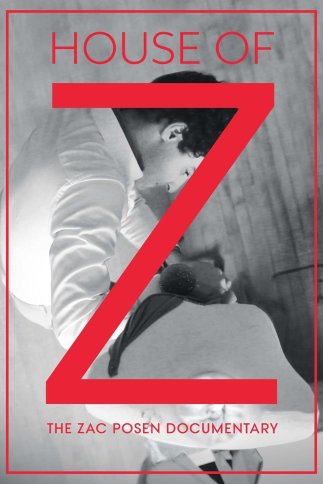
House of Z

This documentary on Zak Posen follows his EKG-like successes and setbacks. It is inspiring to see early wins, his transformations and his comeback. It’s also interesting for creative thinkers to hear from the critics and gatekeepers who felt empowered to judge his work.

p12109657_p_v8_aa

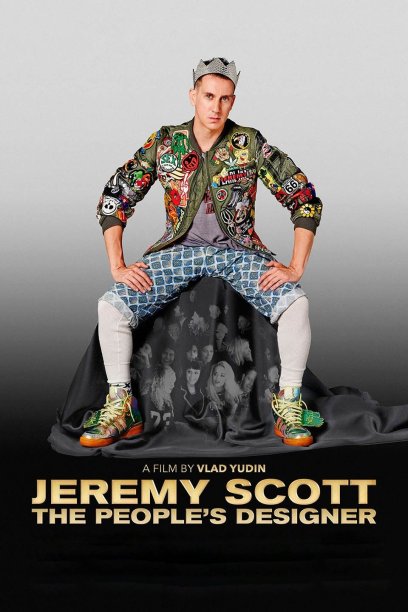
The People’s Designer

Like House of  Z, this documentary follows the career of designer Jeremy Scott as he leaves a little town on the prairies of Missouri to become the Creative Director of Moschino. It’s interesting to compare and contrast the personal styles of Scott and Posen. It’s a great reminder that we all need to find our special formula.

p9364219_b_v8_ad

Comedians in Cars Getting Coffee

In this funny and interesting series, Jerry Seinfeld hosts a talk show. But unlike a traditional talk show, the interveiews are conducted in, you guessed it, interesting cars and coffee shops. There are 4 seasons of this show already. The episodes are short, ranging from 9 to 22 minutes, which makes them easy to squeeze in during a short lunch break.

images-5

Manolo: The Boy Who Made Shoes for Lizards

This is a fascinating find. Manolo is a real character with a truly unique vision. It is interesting to follow his story, his vast body of work (even though the only part of the body it covers is the feet), his quirks and idiosyncrasies.

images-6

Fastest Car

This series pits Super Cars vs Sleeper cars. Which means that each episode follows an owner of a Super Car (Ferrari, Lamborghini, Viper, McClaren etc) and three builders of sleeper cars, which are essentially wolves in pinto clothing. Then, each show concludes with a drag race to see which car is the fastest.

Key Takeaway

It’s important to feed your creativity. And nothing is easier than watching some interesting program while you are eating lunch. Start with any of these shows and follow your own interests. It’s useful to watch as a team, because each of these programs stimulates conversation. You’ll discover what other people find most interesting too. So give it a try. And let me know what you think. If you have a favorite idea-inspiring program on Netflix let me know. I’m always looking for more.