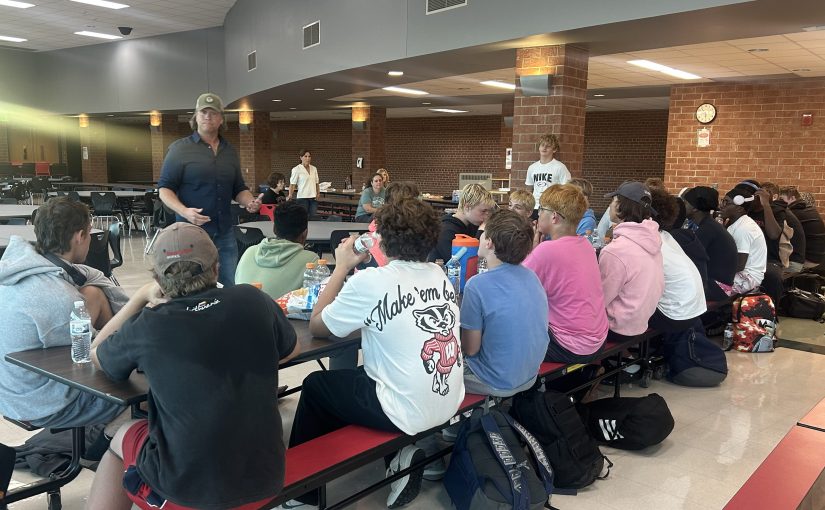
Recently, I was asked to speak to my son Magnus’s freshman football team the night before their last game of the season. Preparing for the talk offered an opportunity to go back in time and reflect on the feelings and thoughts I had at the end of my own freshman football season. But this time I had fewer pimples, my voice didn’t crack, and I had a much longer lens with which to view the whole experience. I wrote about the talk and what happened in The Power of Enthusiasm and Teamwork.
The major insight I gained was that my own reflection at the end of my freshman football experience created one of the most valuable experiences of my life. And it still benefits me today. (Or at least it benefitted me yesterday. It’s too early for today’s results to be tabulated.)
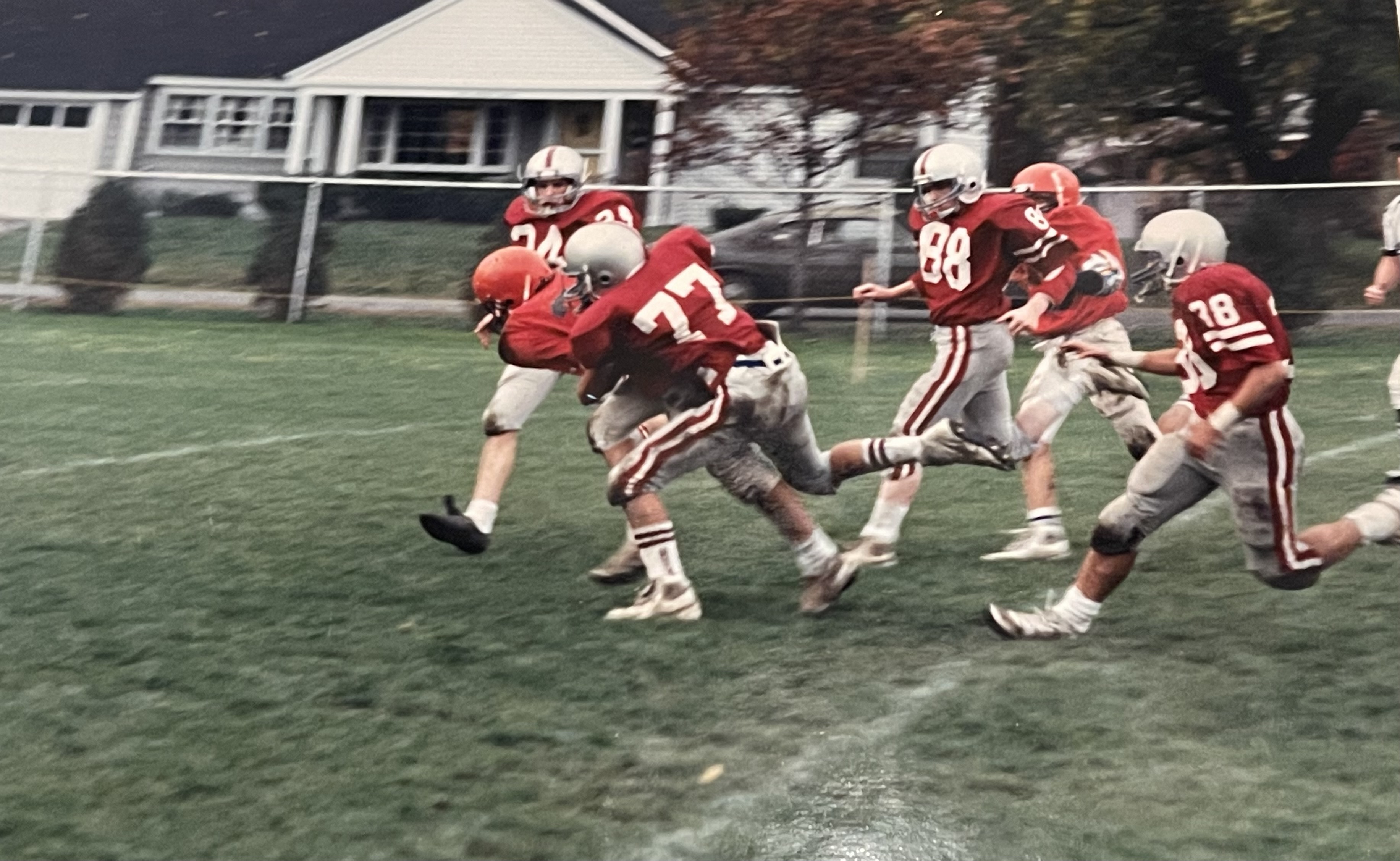
That’s me (77) making the tackle during a game my freshman year of high school. Our uniforms used to get dirty, because we played on real grass and dirt.
The Reflection On My Freshman Football Experience.
By the end of my freshman season of football at Hanover High School in Hanover, New Hampshire, I realized a few things.
First, I loved playing football.
I realized I loved the brotherhood of playing a team sport. Going into battle with a group of badass boys creates a bond. A brotherhood. An identity.
I realized we played better when we played as a team.
I realized how much practice helped. (Yes, Allen Iverson, we’re talking about practice.)
I realized that after a bad play, or a lost game, you had to learn from what you did wrong, but then put that behind you and move forward.
I learned that bringing energy to the game made a huge difference. And I run better on positive energy than negative energy.
I recognized that encouraging each other made a significant impact on our play and our relationships.
I learned that I represented my high school and my community when I wore that uniform. And I could either add to it or reduce it through my actions. (It was this 14-year-old’s first lesson in branding.)
And I realized that I needed to get stronger. There were guys who were a lot bigger and stronger than me. And while I was quick and athletic, sometimes big and strong won. And I wanted to be the bigger guy. Or at least stronger.
What Happened Next?
When my freshman football season wrapped, I was 6 feet tall and 150 pounds. The following Monday, I started lifting weights. And that simple decision, and the strong workout habit I created that year, set in motion the self-improvement journey I am still on today. (Or at least I was yesterday.)
I never got any taller. But by the start of football season my sophomore year, I weighed 170 pounds. My junior year, I weighed 190. By football season my senior year, I weighed 210 pounds. And by the time I graduated from high school, I weighed 215 pounds. I got a lot of new clothes in the process.
My first day in the weight room, I bench pressed 95 pounds. And that was really hard. But my senior year, after years of slow and steady improvement, I benched 335 pounds. It was hard to believe I was the same guy. But slow, steady actions compound in ways that are hard to imagine, unless you read the book The Tortoise And The Hare.
That’s me (78), my senior year. The weight lifting had added 60 pounds, and a lot of grip strength.
The Broader Impact.
My love for football and desire to get better didn’t just help me on the football field. The strength and conditioning that I did to get better at football helped me as a track and field athlete. (Which I chose because I was terrible at baseball.)
By my senior year, I broke 2 school records and a conference record, I was a state champion in both the shot put and the discus, I won the New England Championship in the discus twice, and I set a state record in the discus that stood for 12 years.
Discus throwing my senior year of high school.
But perhaps more importantly, I grew my personal relationships with my football teammates. We became a band of brothers. (A band with no instruments or spandex.) We went to battle together. We made it to the state semi-finals together both my junior and senior years. Both years, we came within one score of the state championship game. But that journey, even with an imperfect ending, brought us closer together. And we have great stories to share every time we are together.
Then we stood up in each other’s weddings.
And we helped each other in our careers.
When I started the advertising and ideas agency, The Weaponry, my very first client was Dan Richards, one of my football teammates from my freshman year in high school, and one of my best friends in the world. (Dan is the other guy making the tackle in the cover photo for this story.) He had also used the lessons he learned through athletics to help build an amazing business called Global Rescue, which does what the name says it does.
The relationship I developed with Dan has had a huge impact on my adult life. And it all started by being a strong, supportive, reliable teammate in football. Which made us trust each other in life and in business.
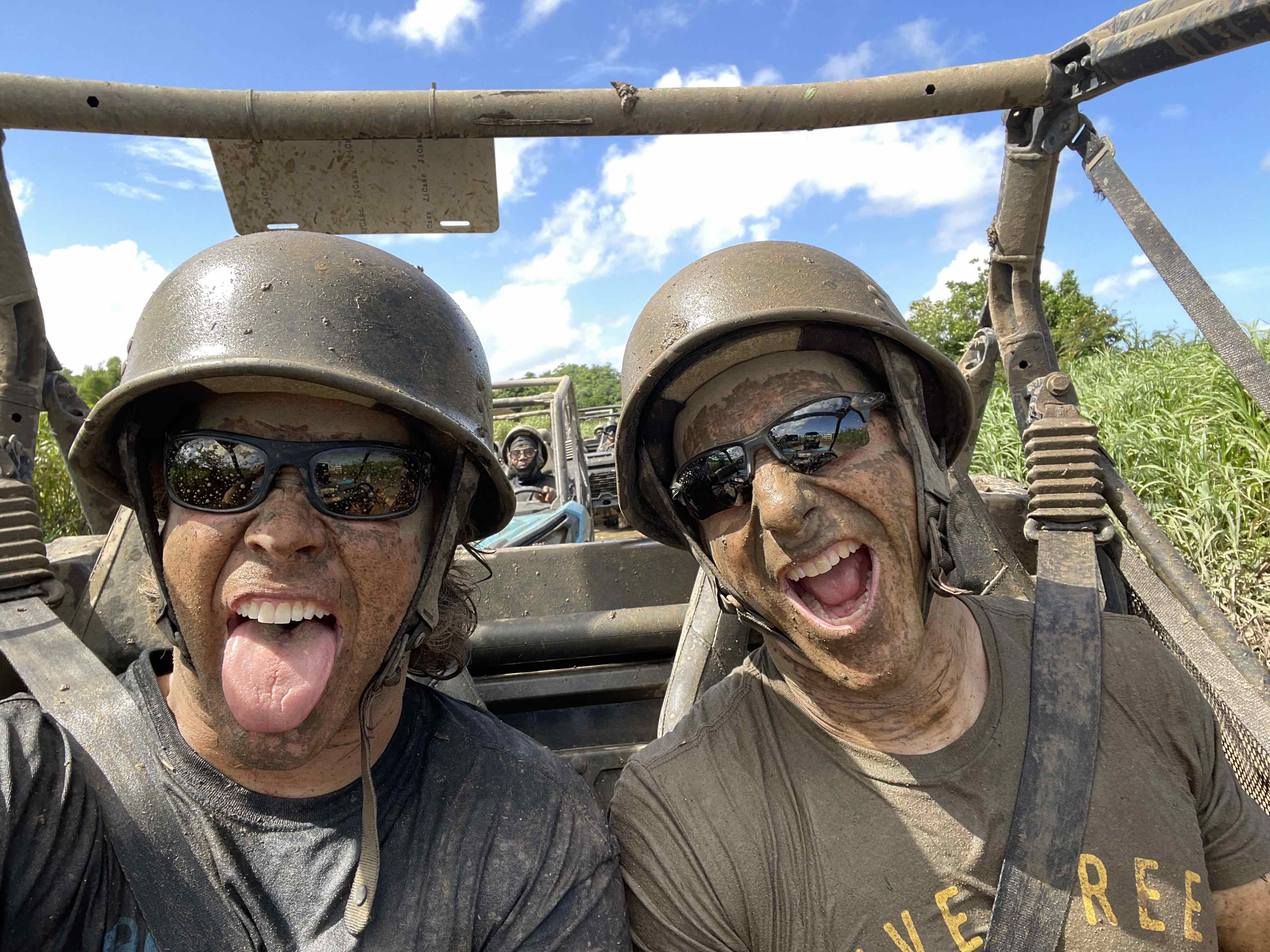
Dan Richards and I, getting muddy in Puerto Rico.
Key Takeaway
Don’t miss your great opportunities. To improve yourself. To create strong bonds and friendships. To use your drive to become better at sports or other competitions. And at life. Become a winner in your mindset first. And you will be a winner on the field and off. Use the same drive to improve in sports to win in your classwork and in your career. Bring the same relationship-building approach you bring to your team, to your family, to your friendships, coworkers, children, and spouse. And you will live a life you can be proud of, that is full of wins every day.
*If you know someone who could benefit from this message, please share it with them.
Last week I had a fun and unique opportunity. Some of the coaches and parents of my son Magnus’s freshman football team asked me if I would come speak to the team at their Wednesday night team dinner before their final game of the season on Thursday. I jumped at the chance, nearly pulling a hamstring in the process.
The team had a frustrating season and hadn’t lived up to their own expectations. Despite good coaching and plenty of talent, they were going into their 8th game with a 2-4-1 record. They were just 5 points away from being 4-3. Which is like the difference between being cute and having a nice personality.
So on Wednesday night, I talked to them about two things that could have a major impact on their final game.
First, I talked about the energy and enthusiasm they brought to the field. The psychological force you bring to the game offers a major advantage. I noticed that they weren’t bringing their full allotment of energetic horsepower to their games, and that hurt their play. (It was like their 10-gallon hat was feeling 10-gallons flat, and they hankered for a hunk of cheese.)
Then I talked about the importance of playing as a team. Even when you make mistakes, and everyone makes mistakes, you have to support each other and move forward. You have to include everyone in the team huddle, treat each other like a band of brothers, because you are stronger when you play together. Otherwise, you’ll all end up living in a van down by the river.
I also shared that when I played football and the other team started pointing fingers and fighting with each other, we knew we had won. Because when teammates fight each other, they beat themselves.
To add color, I told the team that my freshman football teammates were still many of my closest friends. We stood up in each other’s weddings. We helped each other start businesses. And even though we are scattered from New England to California, we still have a group chat, do team Zoom calls, and get together back home every few years. And we have more inside jokes than most people have outside jokes.
This group of 14 and 15-year-old boys listened intently as I encouraged them to bring their best energy and enthusiasm to the field on Thursday. They paid attention as I urged them to end the season on a high note, with the right trajectory going into the offseason, their next sports, and the next football season. I encouraged them to play like a team, feed off each other’s energy, and good things would happen.
So what happened?
From the moment the boys took the field, I could see the difference in their attitude, energy and team dynamics. They were fired up, they were connecting with each other, and ready to bring the heat. (And maybe da noize, and da funk.)
And they did.
On the opening drive, the Homestead Highlanders’ freshman team was hitting on all 11 cylinders. The boys marched down the field with attitude and scored a touchdown and a 2-point conversion to go up 8-0.
On their following defensive series, they bent, but they didn’t break. They played united as a team. Then, cornerback Markey Walker intercepted the opponent’s pass at the 3-yard line. With a key block from my son Magnus and an escort of teammates, Markey returned the interception 97 yards for a touchdown. Boom!
That play fanned the flames of their team spirit. (Not Teen Spirit.) And they just kept rolling. The score at halftime was 20-0.
They came out sharp and aggressive in the second half. Like aged Wisconsin cheddar. In fact, when the opponent fumbled the opening kickoff, our boys jumped on it. A minute later, we punched the ball in for another touchdown.
At that point, the opponent began fighting with themselves and blaming each other. And our boys knew they had won.
Our team scored again. Everyone got significant playing time. The sideline was spirited and the play on the field was inspired. The camaraderie was palpable. And the boys were a force to be reckoned with. The coaches were pumped up. The parents were proud. And when the final whistle blew, the scoreboard accurately summarized the story of the game with the final score of 33-8.
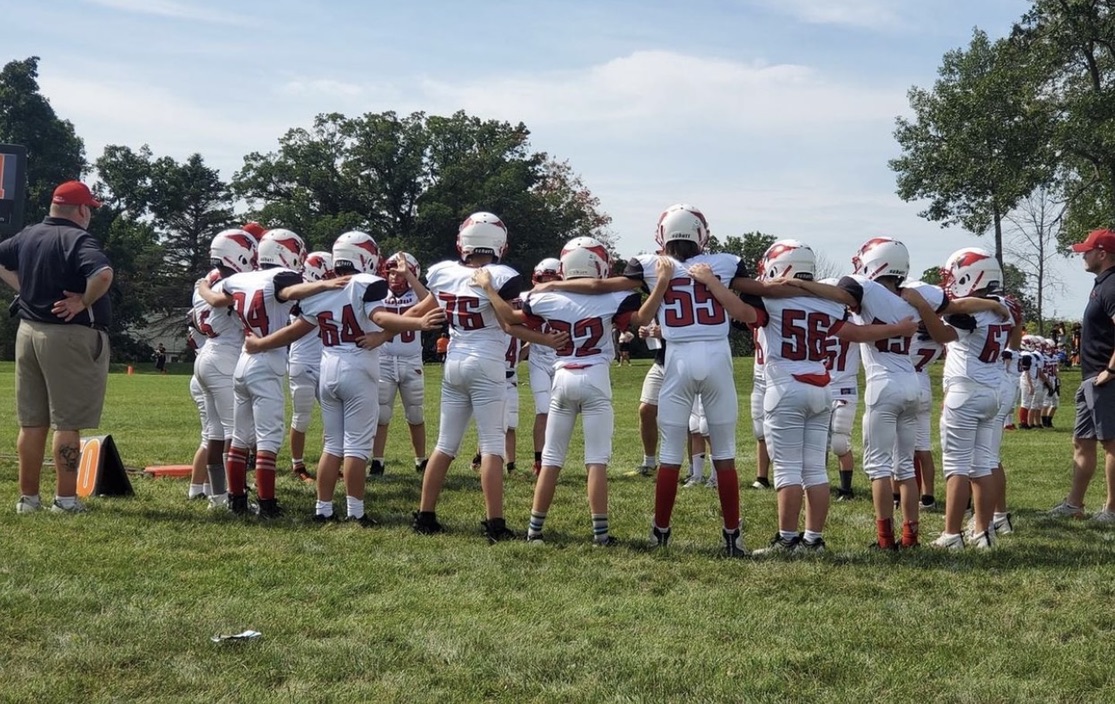
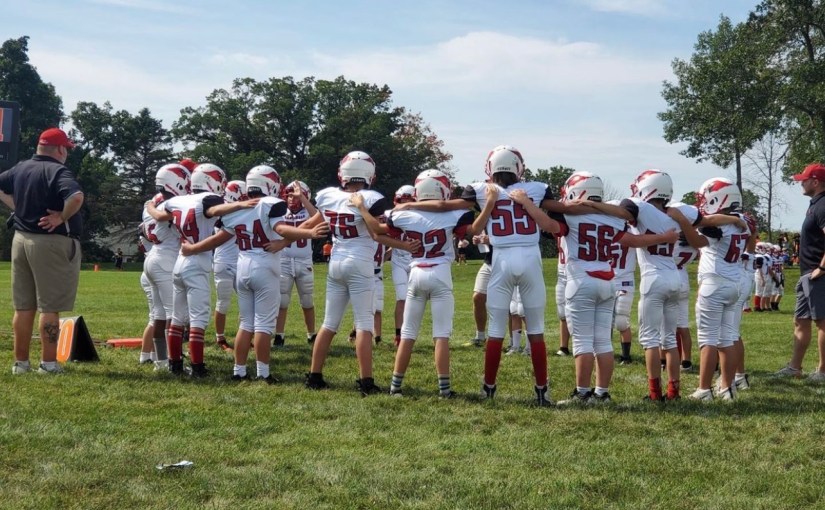
After shaking hands with the opponent, a fired-up group of young men rushed to gather in the endzone, as a team, one last time. The team energy was palpable. The pride and togetherness hung like a halo over the huddled players and their coaches. It was the perfect ending to an imperfect season. A great step in the right direction. And proof of what happens when you play together, with energy.
I am thankful for the opportunity to talk to the boys the night before their last game. I was extremely proud of the way they took full ownership of their mental approach to the game. And I am delighted to see this group finish on such a high note. I hope that over the course of their high school careers they create deep and lasting relationships with each other that last a lifetime. Like the relationships I have with my high school football teammates. And I hope that they learn the most important lesson of all. And that is that the same things that make you successful in sports, make you successful in life. Which is why youth sports are so important.
*If you know someone who could benefit from this message, please share it with them.
I never wanted to be a coach. Some people are innately drawn to it. I am not. I thought it was a cool role for other people. But I just wasn’t that into whistles and sweatpants. When I graduated from college, I fully expected to never be involved in sports again, other than as a fan. Even after I had 3 kids, I never expected to coach them at any level. I didn’t feel like I knew anything well enough to coach. Except maybe being a class clown. But I felt I could teach that through more of a mentoring relationship.
So it is very strange to realize that this fall I wrapped up my 7th season coaching my son Magnus’ football team. So, how did this happen? To find out we’ve got to go back in time, like Marty McFly.
In The Big Inning…
Like most things, my coaching career started very small. When Magnus was in first grade, we signed him up for flag football. At that level, the teams practiced for one hour and then played a game for one hour on Saturdays in the fall. At the first practice-game the two guys coaching Magnus’ team asked me if I could help out the following week because one of them was traveling. I was happy to help. And I felt like a helper more than a coach. Plus the kids were in Kindergarten and first grade. So they wouldn’t be fact-checking my coaching.
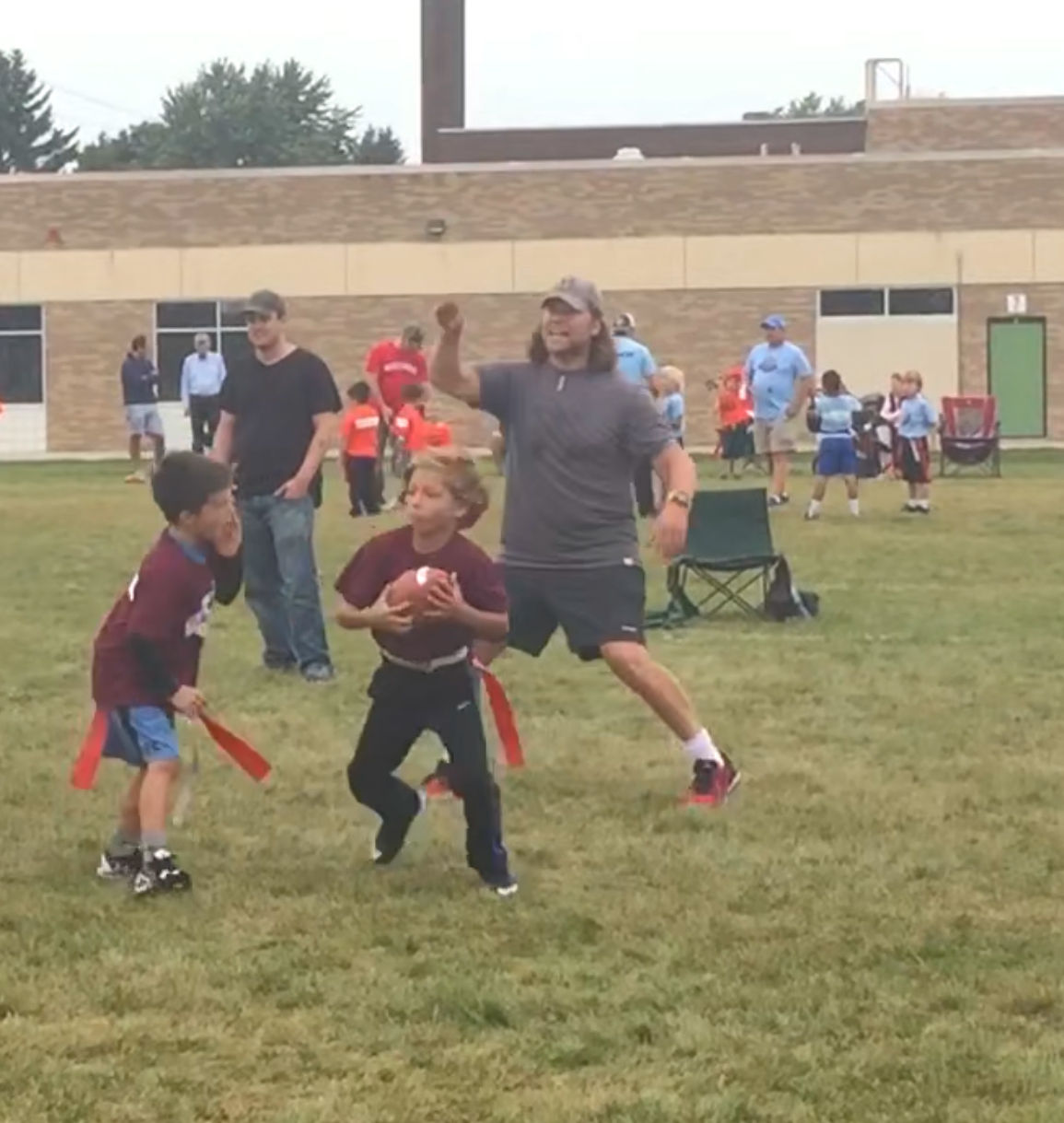
Magnus carrying the ball in 1st grade, when I could point where I wanted the players to go.
That Saturday’s practice-game went well. I had fun. Magnus enjoyed having me involved. None of the kindergartners asked to be traded or held out for more NIL money. So I became the third coach on the staff, helping whenever I could the rest of that cute little 6-week season.
Stepping Up A Notch
When Magnus entered 2nd grade, the program was looking for more parents to coach. My wife Dawn encouraged me to volunteer. So I got paired with another father. And we had a good time. Again, this was just 2nd and 3rd graders with one practice-game combo pack each week on Saturday mornings in the fall. And we were literally on the field placing each player in position and whispering in their ear what we wanted them to do. It was kinda like playing chess with tiny humans. Even better, the play didn’t start until the coaches said they were ready. The hardest part was organizing which parents were bringing the snacks.
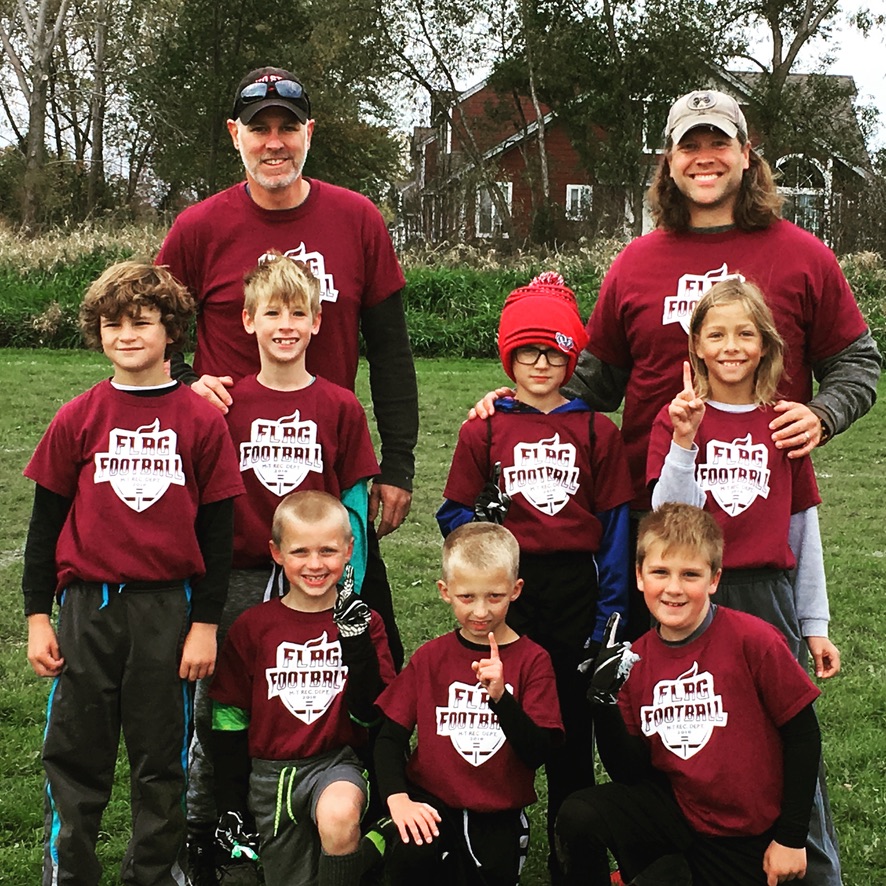
Magnus and Me in our second season together. That’s a happy father/son combo pack.
Gaming The System
By 3rd grade, I realized that you could choose to pair up with another coach to lead a team. And when you did that, it allowed you to stack your team with 2 good players. So my great friend Dr. Mike Brin and I teamed up to coach. DMB played football for the University of Wisconsin Badgers, and we had been friends since we were teenage college athletes in Madison. Mike’s son Josh ‘Aquaman’ Brin was a talented and enthusiastic athlete. Josh and Magnus gave us a strong nucleus to build a team around. Kinda like D-Wade and Chris Bosh. We were lucky enough to land a few other really talented second and third graders, and we had a fun and successful season, even before the snacks.
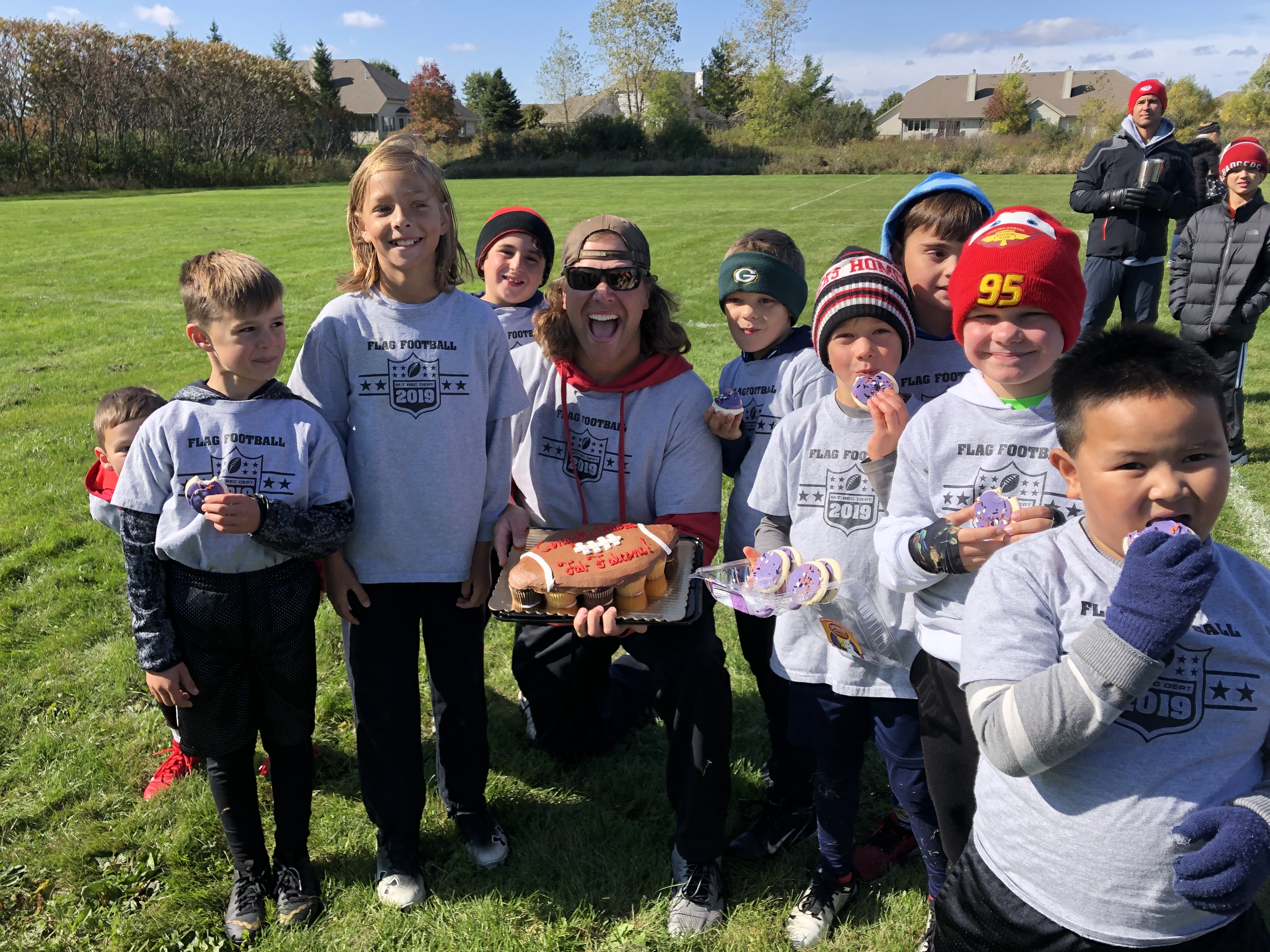
Season 3. We were really upping our snack game by then.Me and Magnus, Mike and Josh Brin, Josh and Hudson Hunt. All 3 of the guys in the back row were UW Badger athletes, which meant we knew how to recruit. (You do it with cupcakes.)
The Curve Ball
In 4th grade, COVID-19 hit. And the program was canceled for the year. Boo. But Magnus was desperate to play football. So we were allowed to enroll him in the 5th grade Mequon-Thiensville Cardinals tackle football program, where he played up a grade as a tall and eager 4th grader. The boys played with face masks over their face masks, which looked funny and may have had no practical effect, but it made everyone feel better about playing football during a global pandemic. No kids got sick. And I got to sit in the stands, 6 feet apart from other fans, and cheer through a mask like a normal COVID-era parent.
At this point, I thought I was finished coaching. I enjoyed the season as a fan only. (Not to be confused with Fans Only.
When Magnus was in 4th grade, he played tackle football with 5th graders, And I got to cheer in the stands with Dawn. I also got to wear flip-flops without a fear of getting cleated.
Magnus and a little wind machine for the hair.
Back On Track
That spring, I made a much bigger coaching commitment and started coaching high school track and field. My daughter Ava Albrecht was a freshman at Homestead High School in Mequon, Wisconsin. And I knew that I knew more about throwing the discus and putting the shot than most Mequonians. The flag football coaching experience made me think I could handle track. After all, when you coach throwing, you simply coach technique. There is no strategy. Or defense. Or concussion protocol. Go track!
Tackling Tackle Football
When Magnus entered 5th grade I was asked to help coach his tackle football team. I was reluctant because of the time commitment, especially on the heels of a long track season that went almost to July and left me with just 1 month without coaching obligations. But my coaching confidence was growing. So, I agreed to coach part-time. I was another warm body there to supervise kids and help run drills. I cheered a lot. And I tried to make it fun. For much of the season we only had 16 kids available. So we could only run 8 vs 8 scrimmages. Which was pretty silly. But I like silly.
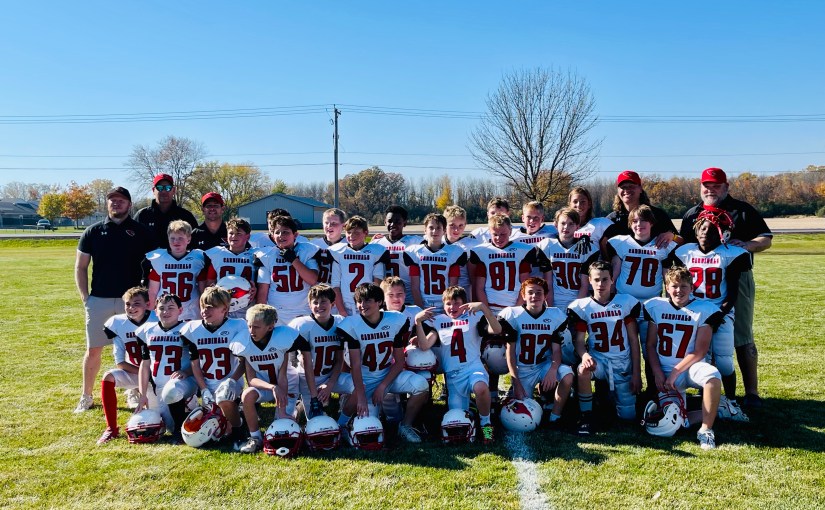
5th Grade. And We’re back together for Cardinal Rules football.
Jumping Into The Deep End Of The Pool.
When Magnus entered 6th grade my friend Josh Hunt volunteered to become the team’s head coach. Josh played football at the University of Wisconsin and had a lot of coaching experience. He asked me if I would be willing to be the defensive coordinator for the team. I agreed. Because Josh is a nice guy and didn’t seem like the type to burn my house down if I made some mistakes.
Realer Than Real Deal Holyfield
That’s when coaching got real. The slow build of casual coaching obligations helped lead me to a very real coaching position. Suddenly, I would be preparing for every week by watching game film of the teams we would be playing that week. I sketched out every unique formation and play the upcoming opponent ran, noted who carried or caught the ball, how frequently they ran each play, and generally how effective it had been. This represented a huge increase in both my time commitment and my emotional investment. I started to understand why Bobby Knight threw chairs and why Mike Leach went off on a seemingly insane rant about the players fat little girlfriends. Now I certainly don’t condone their behavior. But I started to understand it.
In practice, I taught our team the opponent’s plays and devised strategies to defend against them. Then, on Sundays, I watched our own game film from Saturday and marked up all of the footage on software called Hudl to show what we did right, what we did wrong and how to do things better the next time. I learned that those 3 lessons are the basic pillars of coaching.
I spent more time than I care to admit watching game film, preparing defensive strategies and developing lineups each week. It was a significant commitment. But I loved coaching this group of boys. And I loved spending so much additional time with Magnus.
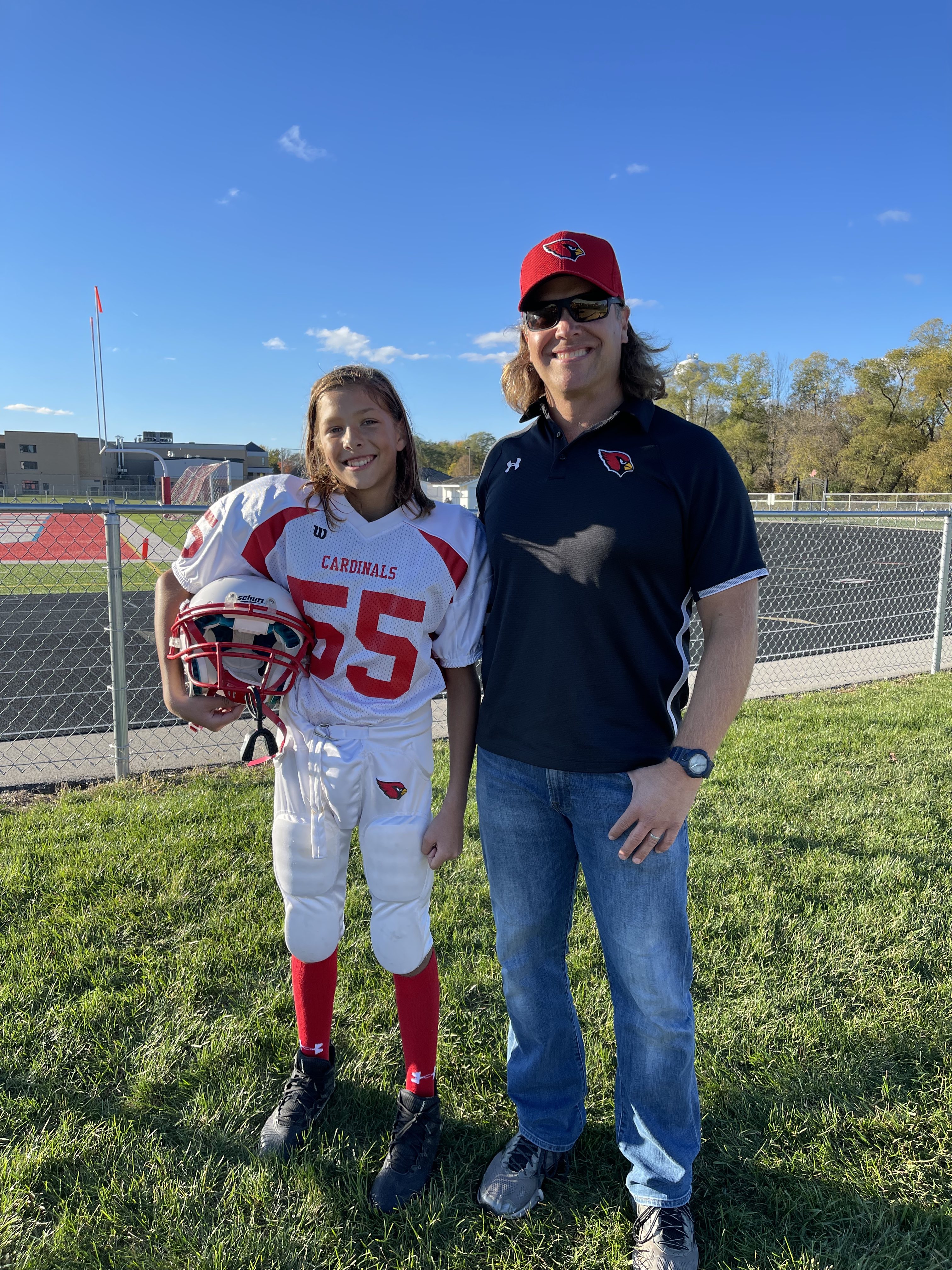
6th Grade. And one of my favorite photos. If you look closely you can see my knee next to Magnus’ (#55)
So I raised my hand to do it again in 7th grade.
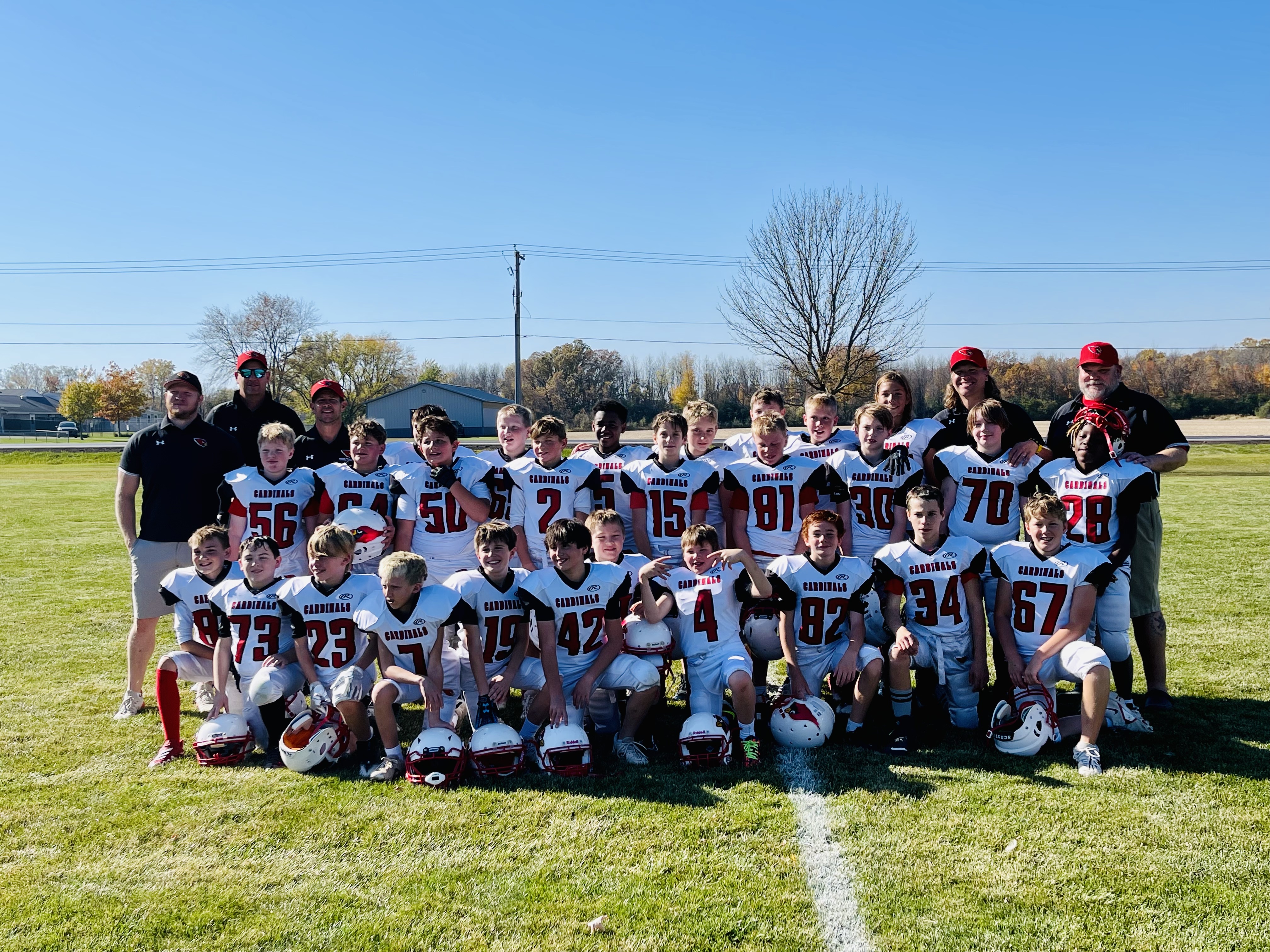
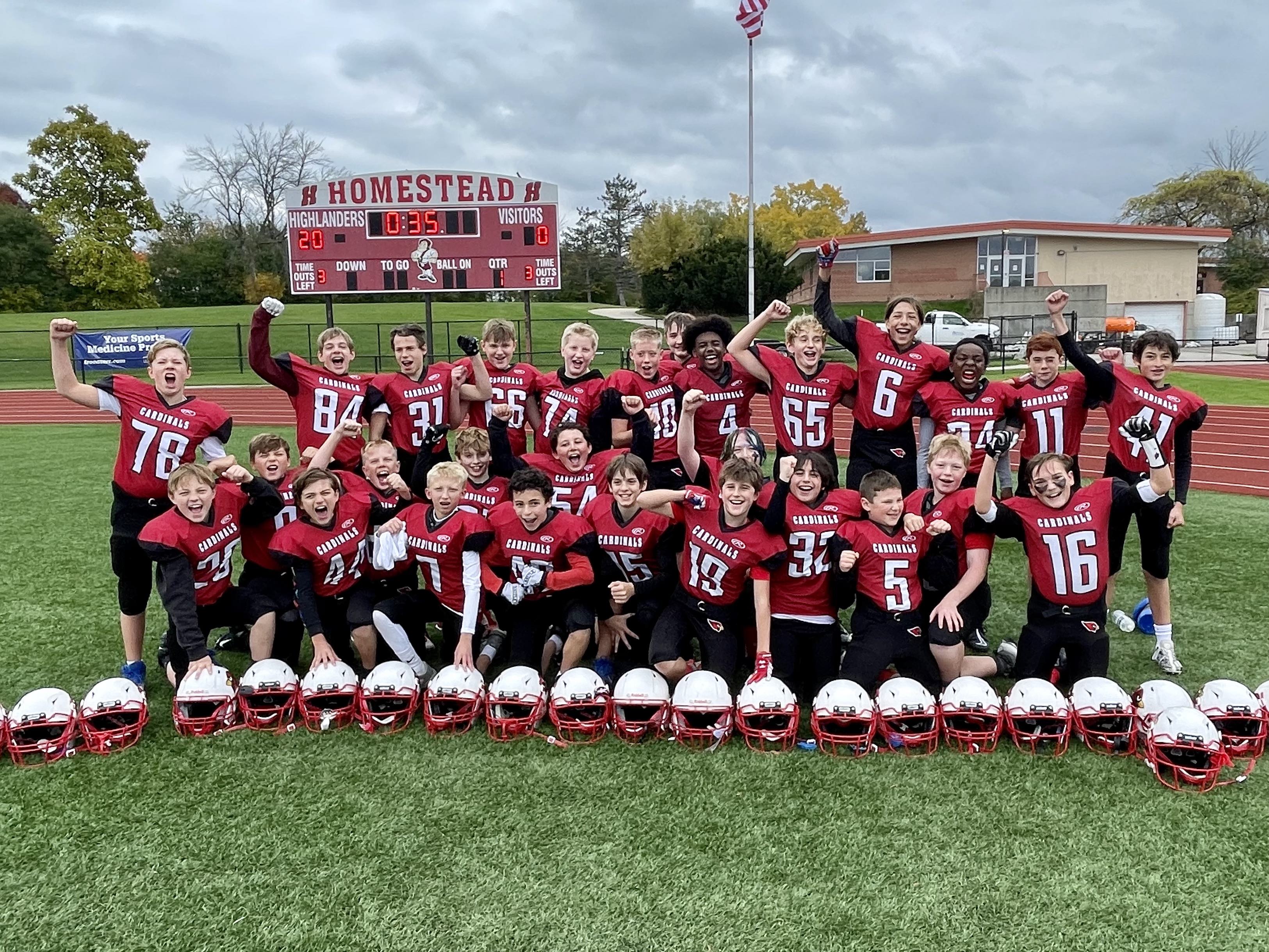
We had a great season in 7th Grade. This was after our last game of the season. Every team should end the year feeling like this.
And again in 8th grade.
For the past four years, from August through October, football has been an intense focus for me. I felt the pressure that comes with being an amateur coach in a high-profile team sport like football. So I prepared as much as I could to help give the boys an edge in the games. Sometimes it really helped. Sometimes it didn’t seem to help at all. This was either because our opponent was so good at doing what they do that we couldn’t stop them, or because they were bigger, faster and stronger than us, and we couldn’t stop them. But either way, I always felt as if I did all I knew to do to prepare our team for each game. And I learned a little from each win and each loss. Which meant that I found a way to win no matter what the outcome was.
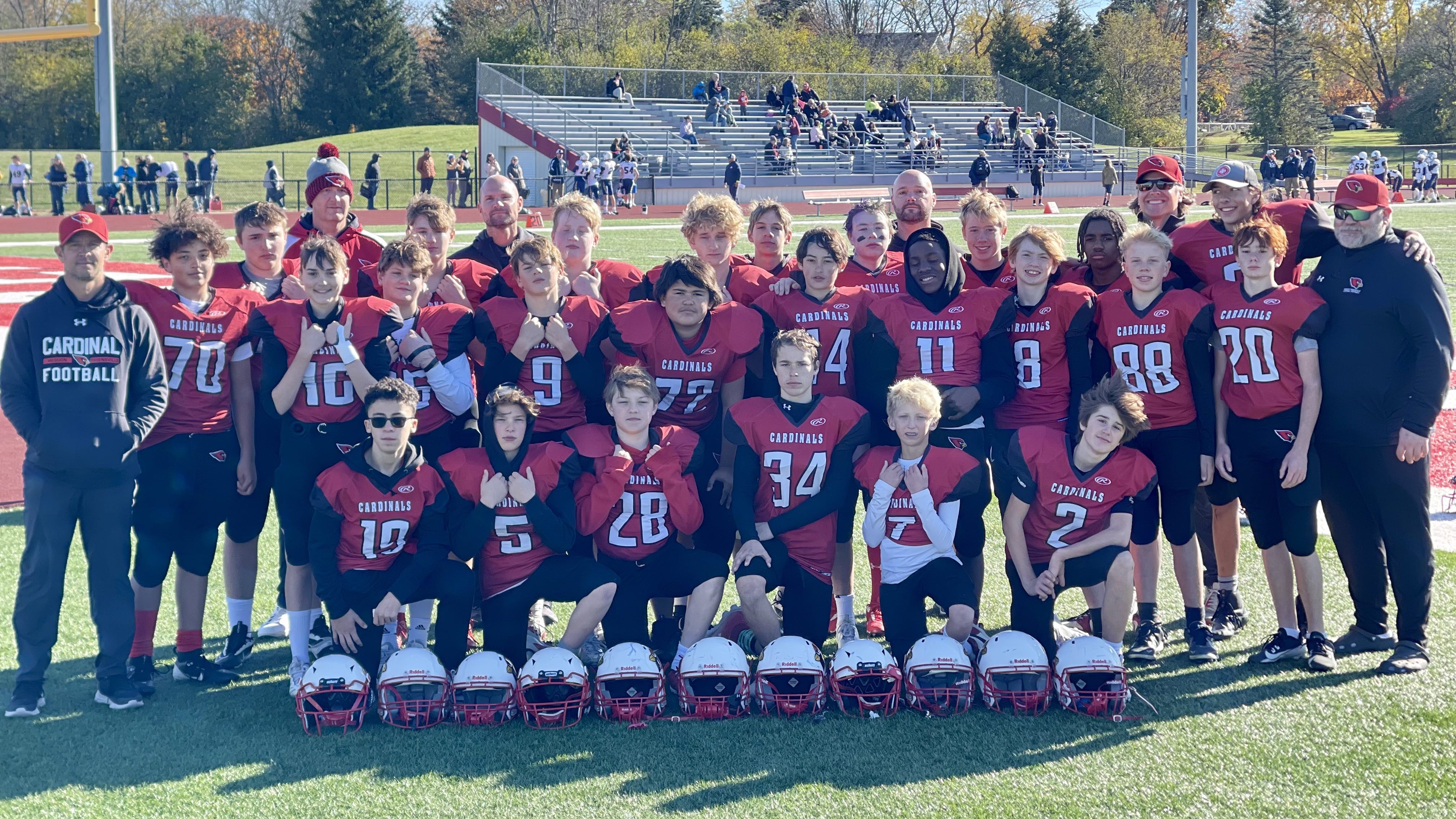
Magnus’ 8th grade season. My last year coaching football. And the first time Magnus was taller than me..
The 10 Best Things About Coaching Football.
1. Winning. There is nothing quite like winning a team sport.
2. Being called Coach. For years, I have been called Coach in our community. It’s always fun and surprising for someone who never expected to coach anything to be called that on the sidewalk, in the schools, and in stores and restaurants. It feels both respectful and as if you had a positive influence on a child’s life. It also makes me feel like I should be wearing a whistle everywhere I go.
3. The Brotherhood: Seeing these boys support each other and coming together as a strong team is amazing. Hearing the stories of them sitting together at lunch at school is rewarding. And knowing how close I still am to the guys I played football with makes me excited for them and the relationships they are forging through their collective football experience.
4. Hearing our defense call out the opponent’s offensive formation and the play they are about to run during a game. It meant the boys were paying attention in practice, they recognized what they were seeing and were prepared to defend the play. I loved that.
5. Stops in the backfield: Quarterback sacks and stuffed runs were the big wins for a defensive coordinator. We have had plenty of those over the past few years. It was a thrill every time.
6.Blocked Punts and Kicks. These have a huge impact on the game. They are magical gifts from heaven. Magnus had a slew of these during his Cardinal football career. And I discovered that a slew is the same amount in both the English and Metric system.
7.Interceptions: These are mission-accomplished plays. They are never not exciting.
8. The Funny Kids: Football is a serious game. But I love the kids who brought their sense of humor to practice and made us all laugh. The funnies often create stronger memories than the wins.
9. The Intense Kids: These kids set the tone for the team at practice and in games. They helped get the team mentally prepared to go to work. I always admired the mentality these winners brought to the field.
10.The Respectful Kids. The kids who responded to all coaching with Yes, Coach and No Coach, who looked you in the eyes, and who asked intelligent questions were a pure pleasure to work with and a sign of good parenting.
Key Takeaway
If you have a chance to positively impact the lives of kids, do it. Coaching, mentoring, volunteering, teaching, chaperoning. All of it helps. And you will get just as much out of it as the kids. Our youth can never have too many positive adult influences in their lives. And you gain by sharing your time, talent and knowledge with others. Don’t worry that you don’t know enough. Raise your hand and learn as you go. That’s what I did. And I can’t imagine my life without this chapter, these experiences, and these boys.
*If you know someone who could benefit from this message, please share it with them.
Yesterday I coached my last youth football game of the season. It was a 3-month commitment of 4 to 6 days each week of practices, scrimmages, and games, beginning August 1st. Plus, as the defensive coordinator, I had to watch our game film at night and scout our opponent’s game film each week. It was a significant commitment of time, energy, and focus. And I loved it.
But there was one thing I didn’t love. The least enjoyable part of coaching in the Wisconsin All-American Youth Football League, WAAYFL, is all of the mandatory online training courses you have to complete to be eligible to coach.
Parents should take great comfort in knowing that their coaches have all been trained in nearly everything related to the health and safety of the players. In fact, I think that the next time I am on an airplane and they ask if there is a doctor onboard I will ring my call button and tell them that while I didn’t technically go to medical school, I did take the marathon health and safety coursework online required to coach in the Mequon-Thiensville Cardinal football program. So I should be good with whatever emergency they were dealing with up in the fuselage.
Yes, we learned how to coach the safest ways to hit and tackle. But we also learned about everything from concussions and heat-related health issues, to heart and neck concerns. And we learned to identify signs of physical and sexual abuse. It’s a lot of heavy stuff to wade through to coach a children’s game.
My Favorite Lesson
But there was one brief unit in our training that stood out the most. It may have felt insignificant to the other coaches compared to the heft of the lessons above. But for me, it offered the best new tool in my coaching toolbox. Granted, my coaching toolbox was pretty empty to begin with. (I only had an old roll of athletic tape and that quote about the size of the fight in the dog.)
The unit I loved was The 4 Points of Coaching Contact. It taught us the importance of developing a connection with our athletes. It provided a simple, memorable framework to follow to connect with each athlete at every practice. My language below may be slightly different than the WAAYFL shares. But the idea is the same.
The 4 Points of Coaching Contact.
1. Eye Contact: You should greet each athlete each day with your eyes. This means, making deliberate eye contact with them daily. (But don’t actually touch their eyes.)
2. Physical Contact: Greet each player with a handshake, fist bump, high five, or pat on the shoulder or back. No bum touching. (That was really part of the broader training.)
3. Ear Contact: This is not about ear flicking or Wet Willys. This is about connecting with a verbal greeting every practice. Say hello in whatever way you say hello. Make it heartfelt. Use their name. There is far great power in this simple act than most coaches realize.
4. Heart Contact: Talk to your athletes about something other than the sport. Ask them how their day is going. Ask about school, their family, or their other activities. Get to know them and develop a relationship with them as a non-athlete. Again, no physical contact with the actual heart is required. Or allowed.
Putting It Into Practice
I thought about The 4 Points of Contact every practice. It used the technique liberally. Although I didn’t hit all 4-points with every athlete every day, I purposefully connected with every athlete as much as was naturally possible. And it made a real difference.
But the impact of this simple relationship-building technique impacted me as much as it impacted the athletes.
Because every time I made eye contact with one of my players, they made eye contact with me.
When we would high-five, fist bump, or shake hands I felt the connective power the way they did.
When I greeted our players by name, they would greet me by name too.
But most importantly, you can’t touch someone else’s heart without them touching yours. It’s the universal law of heartiology. Or cardiology. Or whatever you call it. Remember, I’m not a real doctor.
Key Takeaway
You have an opportunity to connect with other people every day. Connect with your eyes, your hands, your words, and your heart. This approach works wonders in youth sports. But it works just as well in business, in school, within families, and amongst friends. In fact, these 4 points of contact are how we turn strangers into friends. And if you use this approach every day, you’ll find those friends start to feel like family. That’s what happened to our 6th Grade Cardinal Football Team in Mequon, Wisconsin.
*If you know someone who could benefit from this message, please share it with them.
Yesterday I coached my son Magnus’ 6th-grade football team against a really strong opponent. I am the defensive coordinator. Which means that I spent many hours this week preparing for the game.
Here’s a breakdown of my efforts:
I watched game film of our win last week. Then I went all John Madden, and telestrated the game film on Hudl to show our team things they did really well. And things they need to improve. There was plenty of both.
I watched game film of our upcoming opponent to understand their offense. I documented every play and every formation they ran in their past 2 games. Then I strategized a game plan to defend them. I even considered cutting off the sleeves of my hoodie to help me channel my inner Bill Belichick.
I created our 3 different defensive lineups (Black, Red and White) that would ensure everyone on the team got to play defense.
I worked with my fellow coaches Josh Hunt, Jon Eippert, Paul Lillyroot, Scott Steger and Ryan Smith at practice for 2 hours on Monday, Wednesday and Friday to prepare our boys for the Saturday game.
I was confident that we had a great game plan and that our team was talented enough to win the game.
But we got beaten badly.
35-0.
I was frustrated and disappointed with the outcome. But I didn’t throw any chairs, clipboards, or hissy fits. I knew that we were playing a great team. And I saw them do the same thing they did to us to their previous 2 opponents. I realized that sometimes you can have a good plan, feel prepared, and still get beat.
But something interesting happened on my drive home from the game.
In the car, Magnus shared with me and my wife Dawn that the football players on his team sit together at lunch at school. I asked who sat together. He replied, ‘Everybody.’
He continued. ‘It’s really fun. We sit at a table that is supposed to sit like 6 people. But we crowd everybody in. There are probably 15 guys who all pack together at lunch.’
Stunned, I asked Magnus who specifically sat together. He again, said, ‘Everybody.’ Then he listed them by name. And sure enough, he included everyone on his team that attends Steffen Middle School in Mequon. (There are other kids on his team at 2 other schools in town.)
The kids he listed included the stars of the team and kids who are just happy to participate. It included kids who were born and raised in Mequon and new kids who just moved in from other towns and states. All of these 6th graders are in their first month of middle school. Which can be a challenging and lonely time.
As I drove the last couple of miles home after our loss I couldn’t help but think that while we lost the game that day, our team was winning at life. That the team culture we were creating at practice and through the broader Mequon-Thiensville Cardinal football program, and indeed the Homestead High School program, was translating to a winning team culture at school and in our community. The boys have developed strong bonds of friendship and a team identity. And just as importantly, they have someone to sit, talk and laugh with at lunch.
Key Takeaway
Not all of your wins show up on the scoreboard. Focus on developing a team culture where everyone feels included, and everyone feels important. Focus on the goals of unity, support, and continuous improvement. If you do, the wins will surely come. Often in unexpected ways.
*If you know someone who could benefit from this message, please share it with them.
+For more of the best life lessons I have learned check out my new book, What Does Your Fortune Cookie Say? from Ripples Media. For more ideas on team culture, look for my next book, The Culture Turnaround that I co-authored with Jeff Hilimire. The book is scheduled for publication in November.
Indianapolis Colts rookie running back Jonathan Taylor has been the talk of the sports world this week. He lit up the NFL on Sunday, rushing for a Colts record 253 yards and 2 touchdowns. He completed the regular season with 1169 rushing yards, 3rd best in the NFL in 2020. He also used his remarkable speed, agility and hand-washing skills to avoid covid all season long.
Taylor’s standout NFL season comes on the heels of a record-setting college career.
Jonathan Taylor highlights at the University of Wisconsin:
1st running back in college football history to rush for 6,000 yards in 3 seasons.
6th most rushing yards in college football history, despite only playing 3 seasons.
Winner of the Doak Walker Award as America’s best college running back in both 2018 and 2019.
2 time unanimous 1st-team All-American in 2018 and 2019
JT talking about colts and cowboys.
Marketing Opportunities
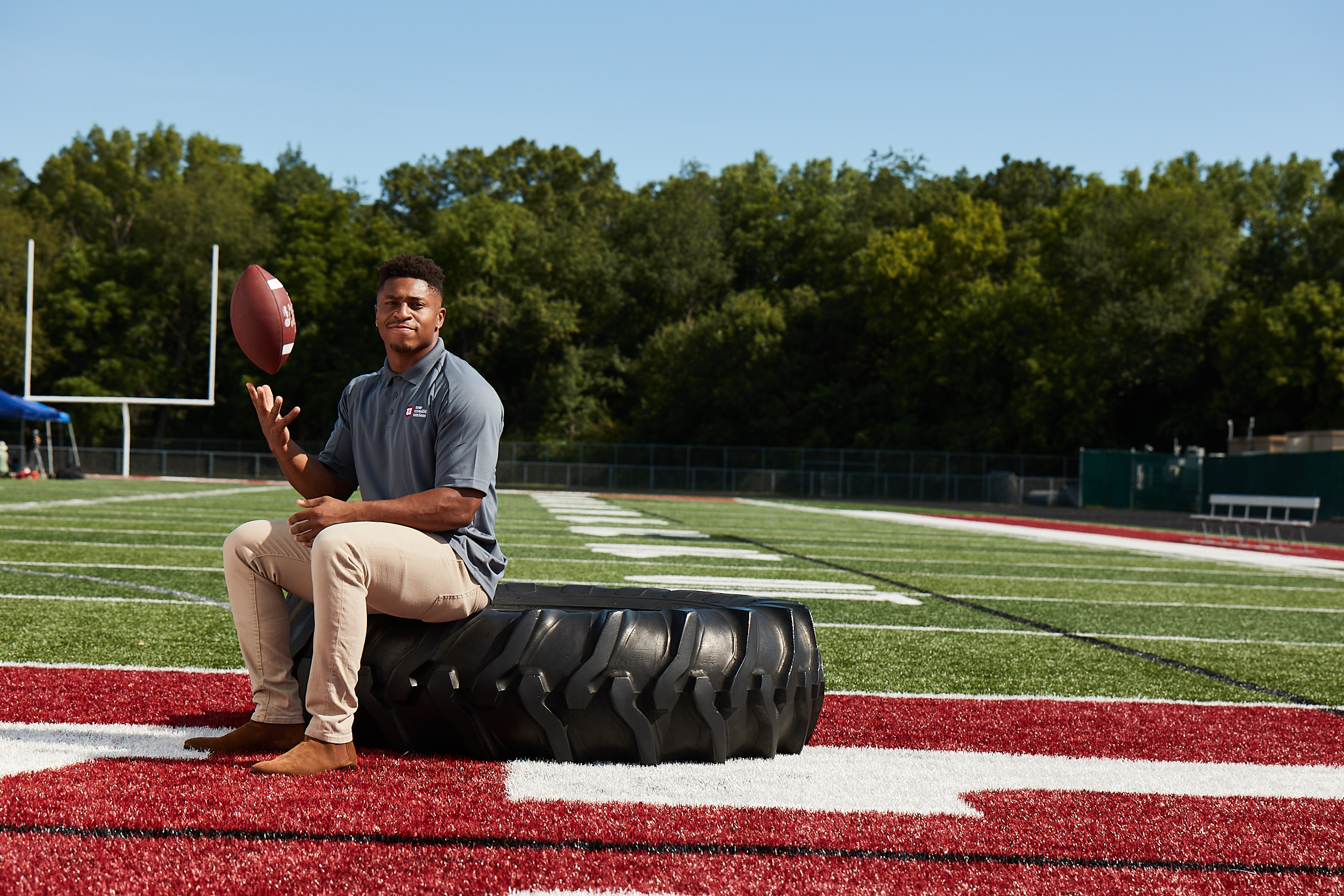
In 2020, as Jonathan Taylor began his NFL career, he also began a partnership with UW Credit Union. Taylor first became a member of UW Credit Union his freshman year in Madison. It was the first bank account the Salem, New Jersey native ever had. In fact, it was Taylor who first approached UW Credit Union about a possible partnership, noting the strong connection he felt towards the brand.
The interview portion of the program.
Starting and Stopping
The first scheduled collaboration between Taylor and UW Credit Union was supposed to happen back in March of 2020, just before the NFL draft. JT was hosting a series of football camps for youth in Milwaukee and Madison that was sponsored by UW Credit Union. But the camps were scheduled for March 14 and 15th. Which was the weekend the coronavirus pulled the plug on all fun and games in America.
Not only were the camps canceled, the entire country went into lockdown-mode for the next 2 months. The only sports happening in America were toilet paper hunting, cleaning supply gathering, and an epic game of covid dodgeball.
JT demonstrating the no-look one-handed catch.
One Last Chance
By the middle of summer, we had all settled into the new normal. Anne Norman, the Chief Marketing Officer of UW Credit Union approached our team at The Weaponry about the JT partnership again. She asked us if we thought we should still try to create some new content with Jonathan if logistics would allow. We said absolutely. So we contacted Team Taylor and Everett Sports Marketing, JT’s marketing agents, to see what if anything was still possible.
Good News
As it turns out, Anne’s call was well timed. JT needed to report to training camp with the Indianapolis Colts the next week. As luck would happen, he was going to be in Madison a day before that to pack up his apartment, move, and enjoy some Toppers Pizza. So we had one day to capture what we needed. However, we had less than a week to prepare.
This meant we had less than a week to figure out what we were going to do with JT, where we were going to do it, and who we were going to work with to film and photograph him. Under normal circumstances, this would be a very tight squeeze. But during the covid-era the opening was so small we didn’t know if even JT could run through it.
The Location
The location was difficult to find. The University of Wisconsin was in full lockdown mode, and wouldn’t allow anyone on campus, including the athletic facilities. Dane County put tight restrictions on gatherings of non-household-sharing humans. So we were in a tough spot.
Jonathan Taylor and Adam Albrecht in pre-game warmups.
Finally, we found a high school that would allow us to film on their football field. It is probably more accurate to say that they said, ‘We don’t want to know anything about this, but the gate might not be locked, and you might be able to get on the field if you are all masked and socially distant.’
The Crew
We found a Milwaukee-based film crew that had safety protocols in place and could run a safe covid-era shoot. We tapped our good friend and great photographer Lucian MacAfee for photography duties. Now we just needed scripts to film and ideas to photograph.
This was the first time in my career that my team had locked in a shoot location and both film and photo crews before we had any ideas about what we were going to create. But then again, this was also my first pandemic.
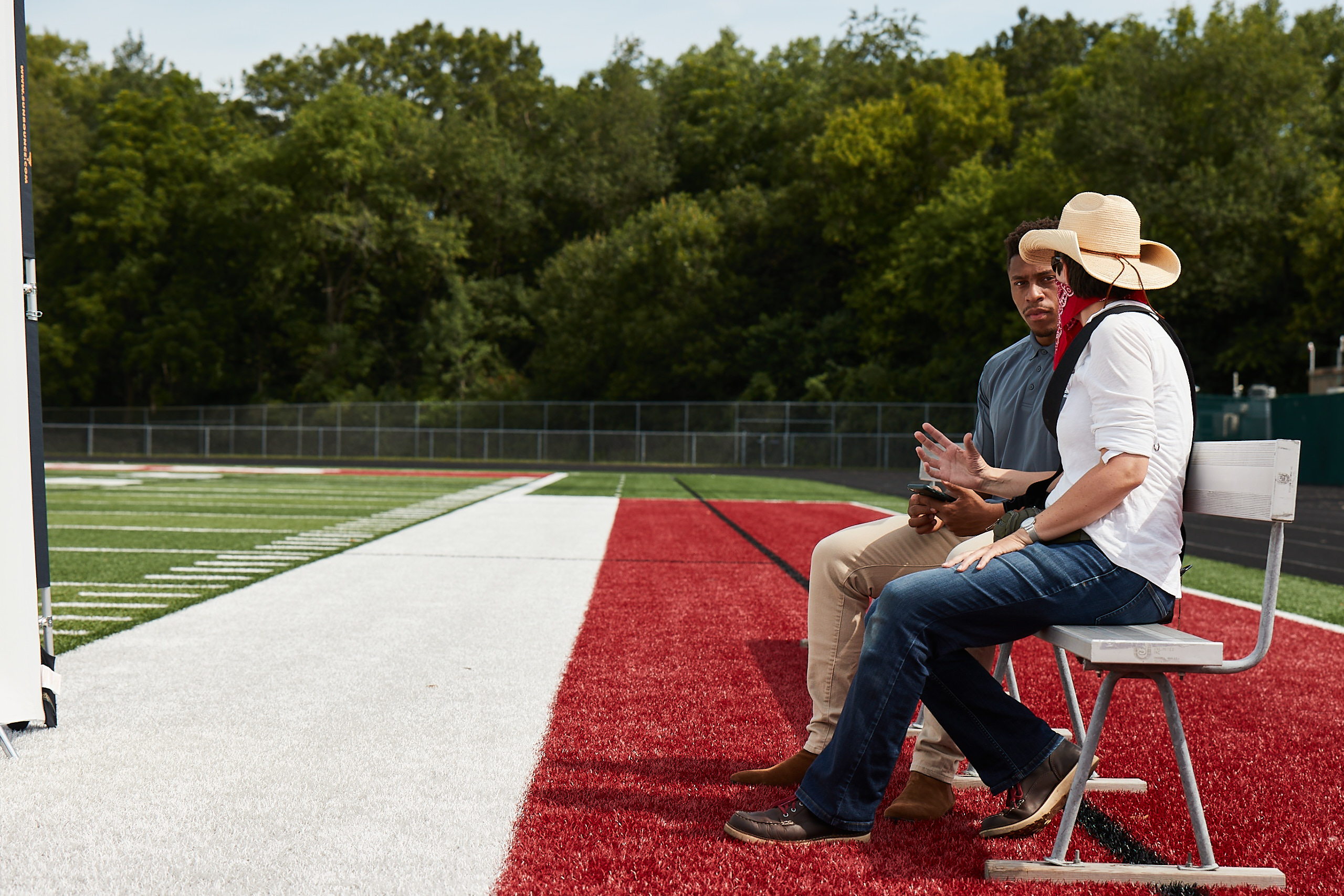
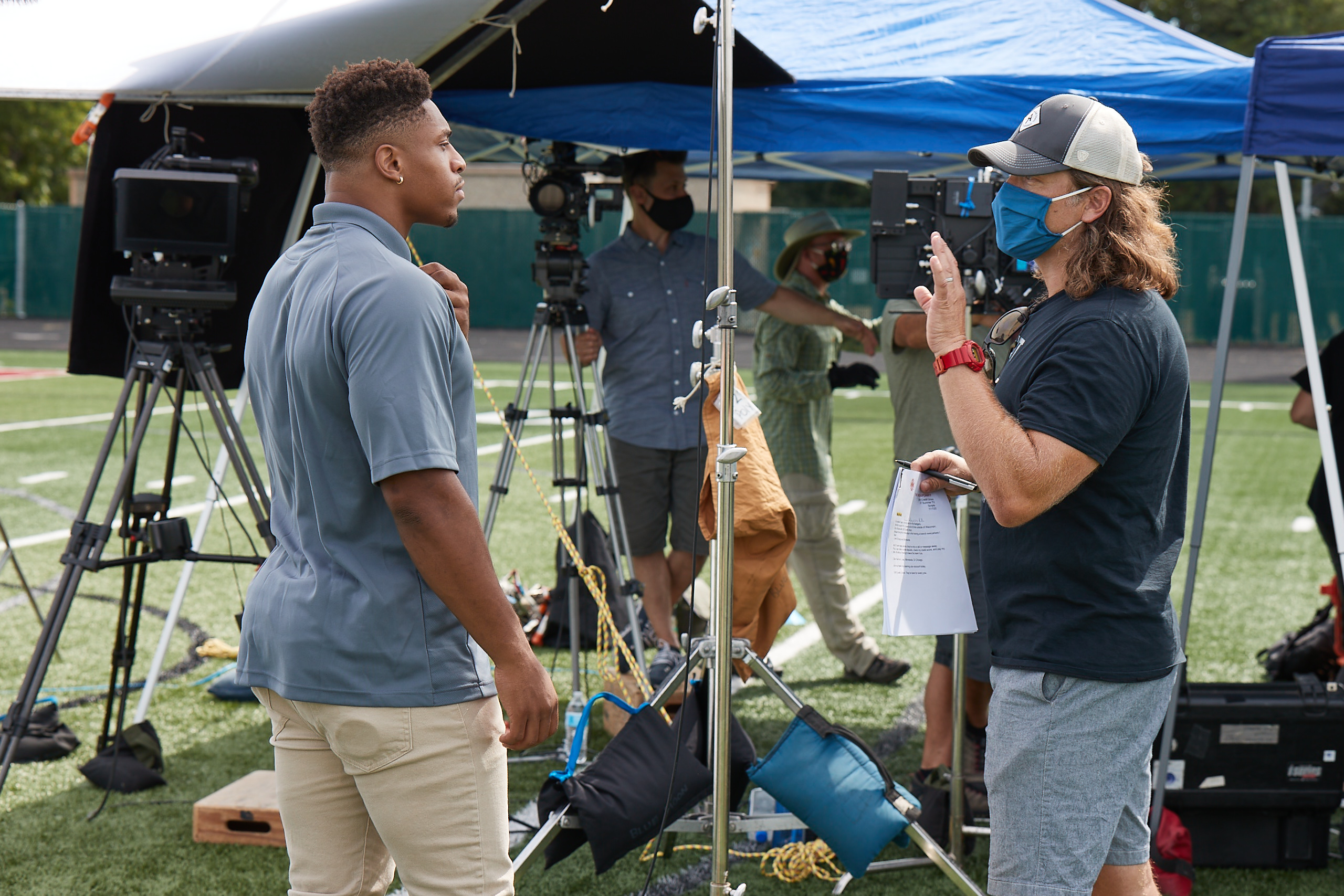
The socially distanced film set.
The Ideas
Our creative team of Kevin Kayse and Kristyn Lilley fired off a barrage of potential video scripts for JT to deliver for social media and the UW Credit Union website. But our timing was limited. And we didn’t know how JT would be on camera, or whether he could deliver humorous ideas. Plus, we couldn’t shoot other actors with JT. To their great credit, the UW Credit Union marketing team trusted that we would come up with something. And we did.
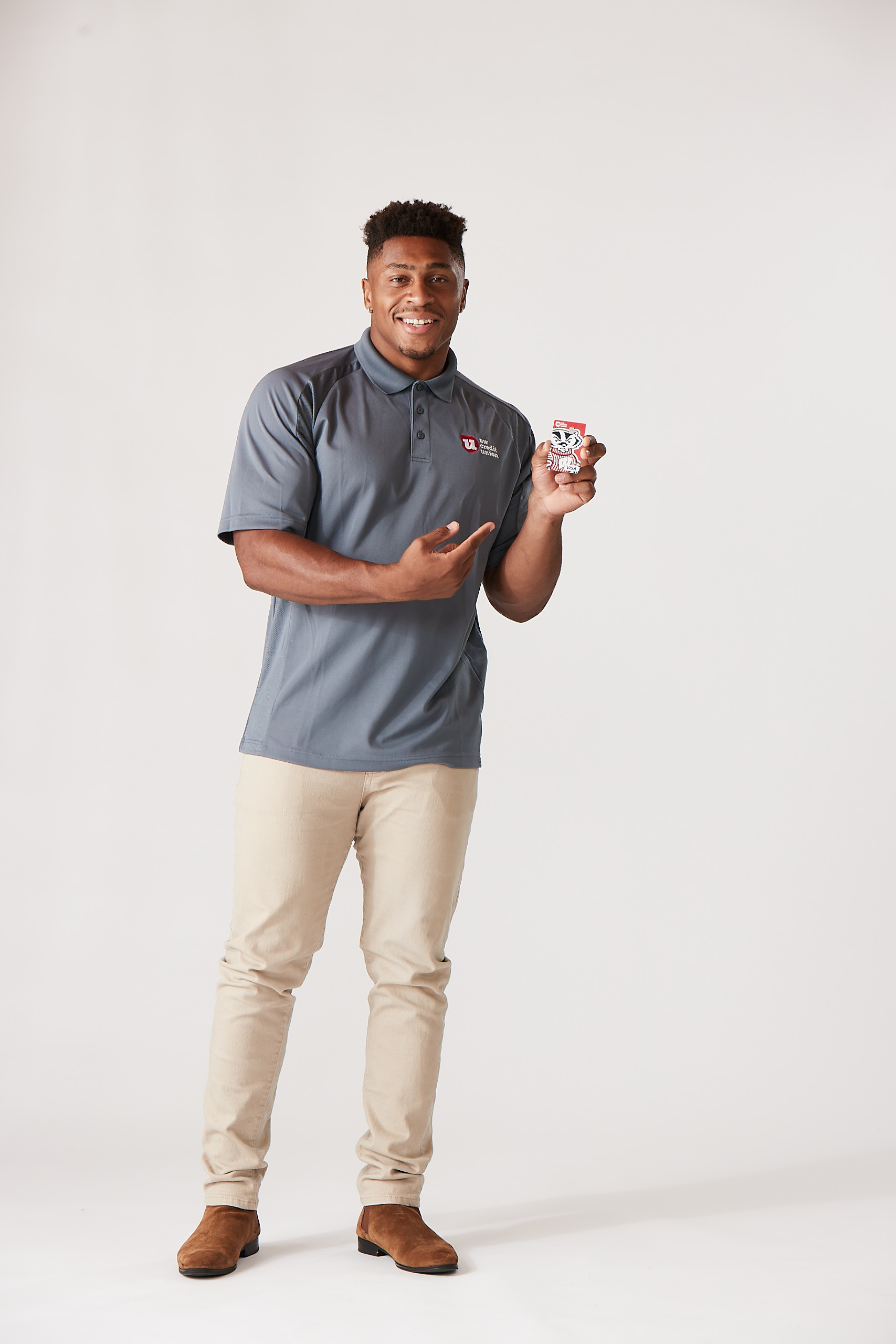
JT and his lucky Bucky Badger debit card.
The Shoot
Despite all of the twists and turns we had experienced since March, on the day of the shoot everything went according to plan. Everyone showed up at the right location at the right time. Everyone wore masks. We used long lenses that allowed JT to be a significant distance from the camera. And we rolled film.
JT was great. He was as good at working with the teleprompter as anyone I have ever worked with. He was extremely coachable and took direction well. We were pleasantly surprised that he was able to deftly deliver the light humor several of the videos required.
In fact, while we were planning on creating a series of online and social videos, we were so pleased with how they turned out that we decided to turn the videos into TV commercials as well. And the response to the spots has been great.
Here is the first commercial to air.
We had a little fun with this spot. Fun fact: It is my voice that talks to JT from off-camera.
Here is the second commercial to air, which focuses on UW Credit Union’s mobile app.
Wisconsin has 2 NFL rival teams. We played off of that in this commercial.
Thanks to UW Credit Union for the opportunity to create this work. Thanks to Anne Norman, Becky Hubing and Jill Rickert of UWCU for your help at the shoot. Thanks to Rachel Everett and ESM for all your help. Thanks to producer Mandi Nodorft for pulling things together. Thanks to Lucian McAfee for all the great photography. And thanks to Jonathan Taylor for being great to work with, and funny too.
JT with Rachel Everett of Everett Sports Marketing. ESM encourages all of its athletes to focus on the brands they have authentic, credible, significant relationships with. Which is a very good philosophy for brand partnerships. Which is why they have also attracted other top NFL players, including Nick Chubb, Tee Higgins and D’Andre Swift.






 Adam Albrecht Blog