The Power Of Enthusiasm And Teamwork.

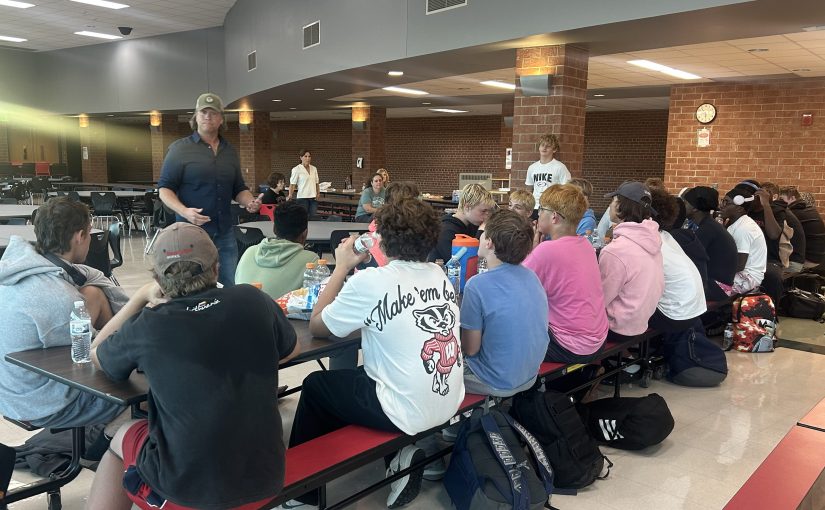
Last week I had a fun and unique opportunity. Some of the coaches and parents of my son Magnus’s freshman football team asked me if I would come speak to the team at their Wednesday night team dinner before their final game of the season on Thursday. I jumped at the chance, nearly pulling a hamstring in the process.

The team had a frustrating season and hadn’t lived up to their own expectations. Despite good coaching and plenty of talent, they were going into their 8th game with a 2-4-1 record. They were just 5 points away from being 4-3. Which is like the difference between being cute and having a nice personality.

So on Wednesday night, I talked to them about two things that could have a major impact on their final game.

First, I talked about the energy and enthusiasm they brought to the field. The psychological force you bring to the game offers a major advantage. I noticed that they weren’t bringing their full allotment of energetic horsepower to their games, and that hurt their play. (It was like their 10-gallon hat was feeling 10-gallons flat, and they hankered for a hunk of cheese.)

Then I talked about the importance of playing as a team. Even when you make mistakes, and everyone makes mistakes, you have to support each other and move forward. You have to include everyone in the team huddle, treat each other like a band of brothers, because you are stronger when you play together. Otherwise, you’ll all end up living in a van down by the river.

I also shared that when I played football and the other team started pointing fingers and fighting with each other, we knew we had won. Because when teammates fight each other, they beat themselves.

To add color, I told the team that my freshman football teammates were still many of my closest friends. We stood up in each other’s weddings. We helped each other start businesses. And even though we are scattered from New England to California, we still have a group chat, do team Zoom calls, and get together back home every few years. And we have more inside jokes than most people have outside jokes.

This group of 14 and 15-year-old boys listened intently as I encouraged them to bring their best energy and enthusiasm to the field on Thursday. They paid attention as I urged them to end the season on a high note, with the right trajectory going into the offseason, their next sports, and the next football season. I encouraged them to play like a team, feed off each other’s energy, and good things would happen.

So what happened?

From the moment the boys took the field, I could see the difference in their attitude, energy and team dynamics. They were fired up, they were connecting with each other, and ready to bring the heat. (And maybe da noize, and da funk.)

And they did.

On the opening drive, the Homestead Highlanders’ freshman team was hitting on all 11 cylinders. The boys marched down the field with attitude and scored a touchdown and a 2-point conversion to go up 8-0.

On their following defensive series, they bent, but they didn’t break. They played united as a team. Then, cornerback Markey Walker intercepted the opponent’s pass at the 3-yard line. With a key block from my son Magnus and an escort of teammates, Markey returned the interception 97 yards for a touchdown. Boom!

That play fanned the flames of their team spirit. (Not Teen Spirit.) And they just kept rolling. The score at halftime was 20-0.

They came out sharp and aggressive in the second half. Like aged Wisconsin cheddar. In fact, when the opponent fumbled the opening kickoff, our boys jumped on it. A minute later, we punched the ball in for another touchdown.

At that point, the opponent began fighting with themselves and blaming each other. And our boys knew they had won.

Our team scored again. Everyone got significant playing time. The sideline was spirited and the play on the field was inspired. The camaraderie was palpable. And the boys were a force to be reckoned with. The coaches were pumped up. The parents were proud. And when the final whistle blew, the scoreboard accurately summarized the story of the game with the final score of 33-8.

After shaking hands with the opponent, a fired-up group of young men rushed to gather in the endzone, as a team, one last time. The team energy was palpable. The pride and togetherness hung like a halo over the huddled players and their coaches. It was the perfect ending to an imperfect season. A great step in the right direction. And proof of what happens when you play together, with energy.

I am thankful for the opportunity to talk to the boys the night before their last game. I was extremely proud of the way they took full ownership of their mental approach to the game. And I am delighted to see this group finish on such a high note. I hope that over the course of their high school careers they create deep and lasting relationships with each other that last a lifetime. Like the relationships I have with my high school football teammates. And I hope that they learn the most important lesson of all. And that is that the same things that make you successful in sports, make you successful in life. Which is why youth sports are so important.

*If you know someone who could benefit from this message, please share it with them.

+For more of the best life lessons I have learned, check out my book, What Does Your Fortune Cookie Say? from Ripples Media. And consider subscribing to Adam’s Good Newsletter.
How to think about meetings like a NASCAR team.

Most businesses have way too many meetings. They last too long. They have too many participants. And they are held in conference rooms with chairs that are too comfortable. Too often our days are defined by these meetings, rather than by the stretches of non-meetingness when the real work gets done.

NASCAR

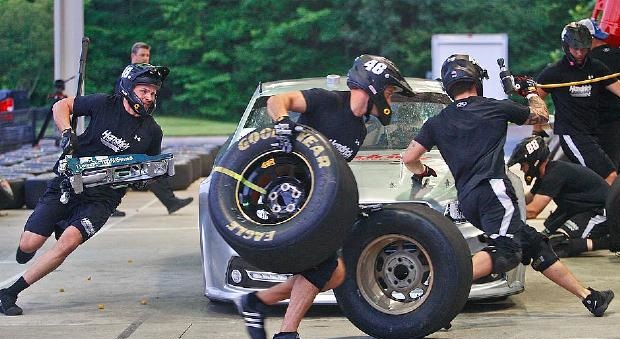
If you want to solve this problem in your organization, watch more NASCAR. Scratch that. Find yourself a NASCAR Pit Crew Meeting Mentor. In a NASCAR race, the goal is to get to the finish line before anyone else. The more time a driver spends driving the car as fast as he or she can, the better. Calling the driver to a meeting during a race sounds crazy, right? But that’s exactly what happens.

The Meetings

In every NASCAR race, the driver will pull into the pits, and a company meeting breaks out. Attendees typically include the driver, the Gas Man (#snickering), The Jack Man, A couple of Tire Jockeys, and maybe someone to extend some fresh beef jerky to the driver.  If you watch a full race you’ll pick up on a few key meeting tips that you can put to work in your place of business.


 5 Meeting Tips You Can Learn From A NASCAR Pit Crew.

  1. Go into each meeting with a clear, concise agenda. If you don’t have a clear agenda, clear the meeting off your schedule.
  2. Only invite critical team members. Which means Barney from accounting will be invited to as many meetings this year as he was invited to parties in college.
  3. Meet as quickly as possible and get out. Time your meetings with a stopwatch, not an hourglass.
  4. Meet as infrequently as possible.  The more time you spend working alone the better. Just like that business trip when you forgot your deodorant.
  5. The longest team meetings should be in the winner’s circle.  And everyone should be wearing confetti and a fizzy beverage.

Key Takeaway

Meetings are occasionally necessary. When they are, think like a pit crew. Plan the meeting ahead of time. Know how many people need to jump over the wall, and how many tires they should bring. Always make the meetings short and sweet. It’s the best way to ensure you and your team will accomplish more of your long-term goals.

The most common phrase you should never say.

At the Perfect Agency Project we have a fairly obvious goal. In case you’re not great at reading comprehension, the goal is to create the perfect agency. And at the perfect agency people collaborate and are nice to each other.  Which means they don’t do or say jerkilicious things.

That’s why we are banning a very common phrase you probably hear or say all the time. Ready for it? Still ready?  Further ado. Even further ado  Okay, here it is:

I don’t disagree.

Please stop saying this.  This is one of the jerkiest statements we can make to each other.  It paints your reaction in a negative light. Both don’t and disagree are negative words.  Which makes it a double negative.

As most of you don’t not know, the double negative actually makes a positive. So this statement actually says, I agree.  But it states it in the most negative, reluctant, non-affirming way possible.

Instead let us say things like I agree. Or You’re right.  Let us support each other. Let us acknowledge our alignments positively. And most importantly, let us eat more lettuce. Now if you agree with me, please respond to this post by saying, completely don’t disagree with you. It won’t make me not laugh. But it will let me know who read all the way to the end.

The first step to make your team work.

Organizations are messy. Because they are made of humans. And humans are unpredictable animals. If you work in a business that trades in creativity, like I do, you deal with even more interesting dynamics. One of the challenges of professional creativity is that it tries to combine professionalism with non-traditional thinking and behaviors.  These can make for strange bedfellows. (Why do we say bedfellows?  Why couldn’t it be umbrellafellows? Or picnicblanketfellows? Or pewfellows?)

Sometimes teamwork is magical.  Other times it is, well, not magical.

Because when humans are involved things go wrong. In fact, there are things that go wrong in organizations every day.  It is not the avoidance of mistakes that makes a company great. It is how we respond to those mistakes that determines the health and strength of the organization and its culture.

I have discovered a very simple guiding principle that helps organizations thrive, even when things go wrong. It’s The Assumption of Positive Intent. It requires that everyone on the team assumes that the actions, choices, statements and decisions of others were made with positive intentions.

It comes down to believing that your teammates are good people who mean well. Even when their intentions aren’t clearly understood.

At the advertising and idea agency, The Weaponry, the Assumption of Positive Intent is core to our culture. This simple assumption has a number of positive effects.  First, it makes us all see each other as good people. It makes me feel better to feel like I am surrounded by good people who want to do good things. High morals and ethical standards are important. We should believe in each other and support one another until we have irrefutable proof that we should not.

The next benefit of the Assumption of Positive Intent is that it encourages people to take action. Make a move, make an impact, make a difference. We’ll support you. We won’t crucify you if it doesn’t work out perfectly. Because we assume you want to make great things happen. Even if an attempt fails. So go ahead, introduce New Coke. Have Kendall Jenner hand a cop a Pepsi. Or stick your chocolate in my peanut butter.  One of those things will work.

The word assumption often has a negative connotation in business and other performance-oriented environments. Because it indicates that we make judgements or decide without knowing. We’ve all heard the saying that when you assume you makes an ‘ass’ out of ‘u’ and ‘me’.  While that is a clever word play, the statement fails to recognize an important reality.  When you assume positive intent, you give people the benefit of the doubt. You presume the good. You believe in the best or most optimistic scenario.  And when you believe in good, you believe in people. This builds a culture of trust.

A Simple 5-Step Formula.

When you encounter an action that you don’t understand try these 5 simple steps:

  1. Assume positive intent
  2. Talk about the issue with the person or people involved.
  3. Make it clear that you assume they meant well and seek a better understanding.
  4. Listen for understanding
  5. Play back what you heard.

I believe in people. I think we all want to be part of a great team  The best way to set our teams up for the greatest success it to minimize the stress on the relationships between teammates. If we assume positive intent at all times, we will get the best out of each other. We will enjoy the attempts. Even when they #fail.