Unlock the personal and professional benefits of RFF.

You probably know all about RBF.

So you know it’s not the cash register code for a sandwich at Arby’s.

Or a pennant and banner industry term for rainbow flag.

RBF refers to Resting Bitch Face.

It is a default facial expression that makes a person appear unfriendly.

It makes people think you are irritated, annoyed or angry. Even when resting.

And it appears in both women and men. (See Kanye.)
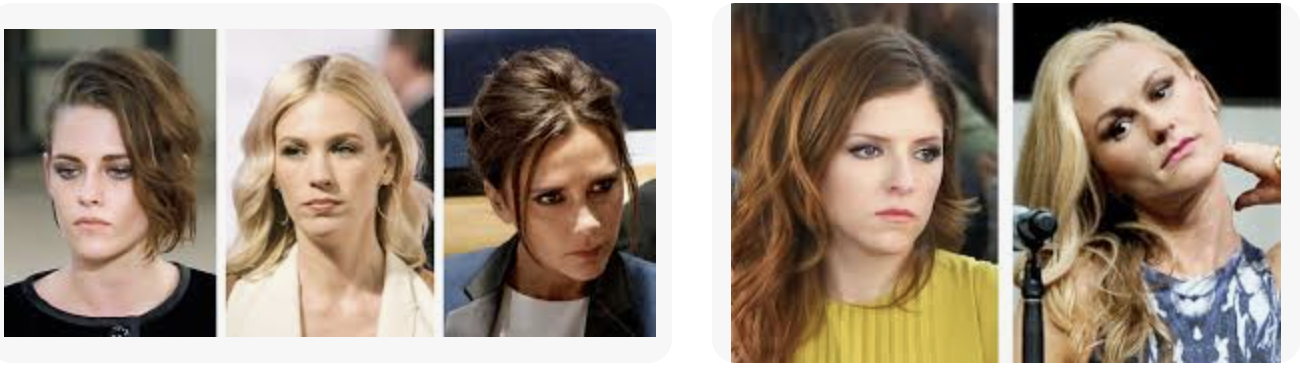
RBF makes people think you are unapproachable

It may be unfair. It may be the furthest thing from the truth.

But if you have RBF, it makes a negative first impression. And it builds a personal brand that works against you.

It sends a message to the people around you that you don’t want to talk.

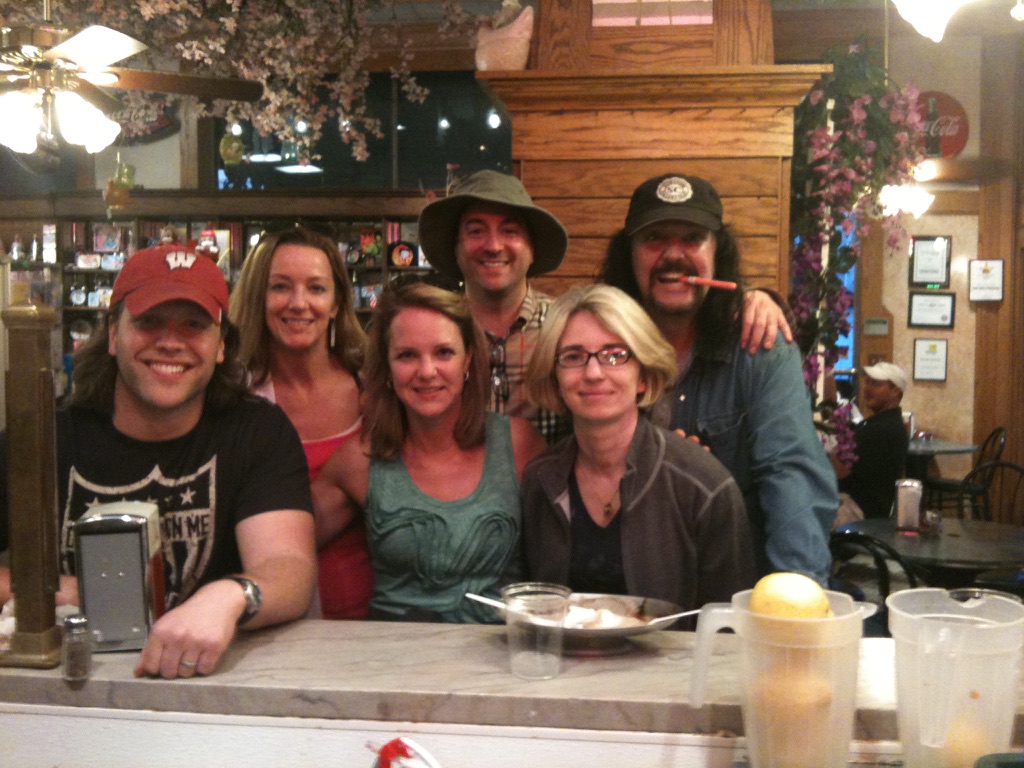
And Jack White can tell that we aren’t gonna be friends.

Unfortunately, you never get a second chance to make a first impression. (Head and Shoulder’s taught me that.)

But there is another default facial expression that gets far less attention.

And it is far more valuable.

RFF

People with RFF have a friendly default countenance.

It may be a smile.

Or a warmth.

Or kindness.

They look like they would be happy to talk to you.

People with RFF look like they want to be your friend.

Resting Friend Face.
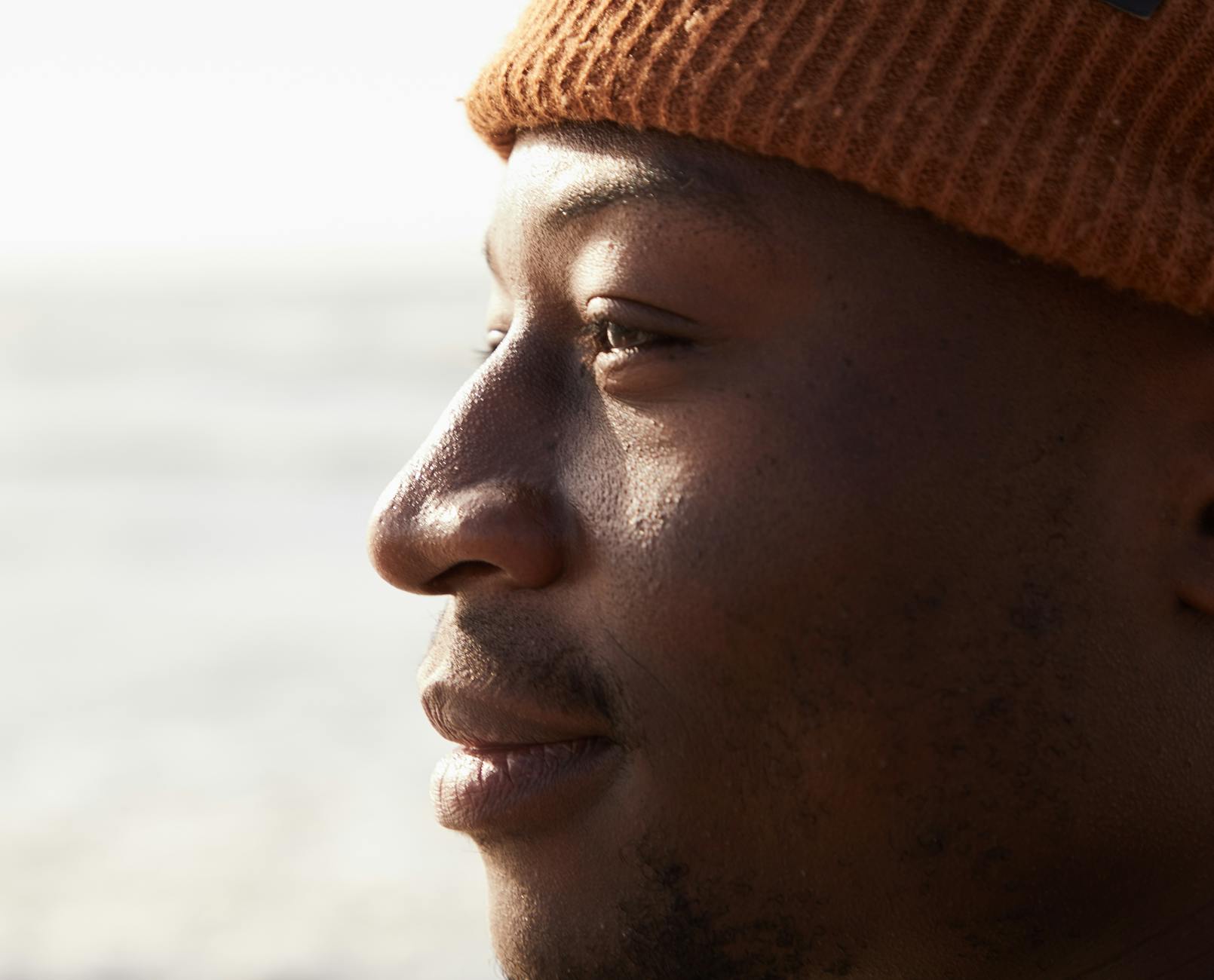
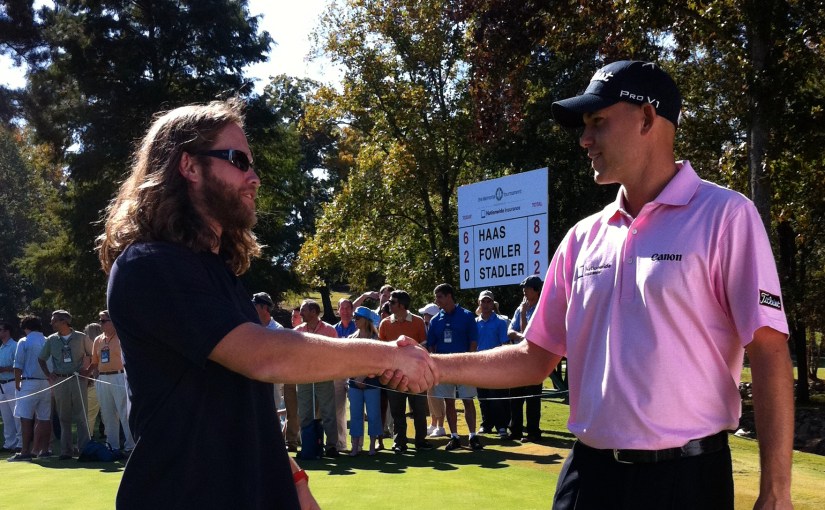
I am talking to this guy in a room full of strangers.

When I was a kid, I lived in 5 different states by the time I started 7th grade. So I learned how to make friends in a room full of strangers. And it always starts by looking for the person with the resting friend face.

Remember when you used to play Red Rover when you were a kid? You would look for the weakest link in the lineup.

Making friends works kinda like that. Only it feels less Lord of The Flies-y

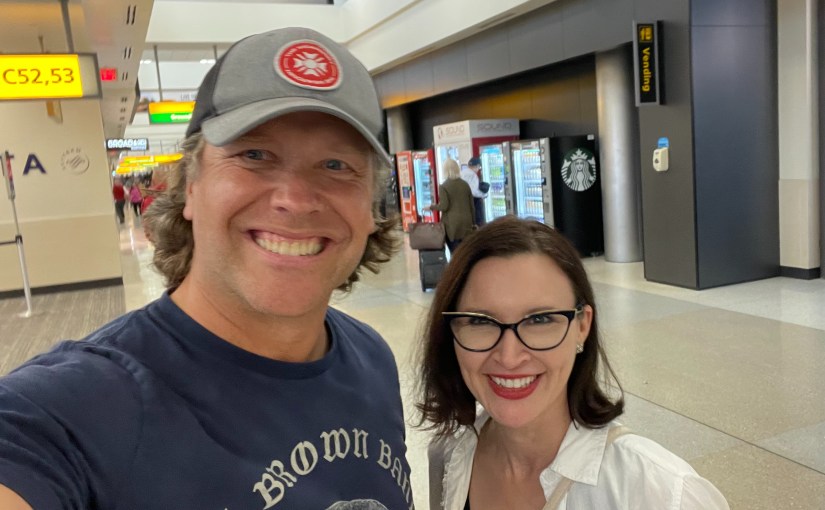
I would ask her for directions.

When you walk into a room full of strangers, you look for someone with RFF as the best person to approach.

They are the person least likely to give you the cold shoulder. And most likely to be interested in having a conversation.

At networking events, people with RFF are approached first.

At a dance, someone with RFF gets invited onto the dance floor first.

At a bar, the person with RFF gets approached. (So be careful if you don’t want to be approached in a bar.)

In business, when the person with RFF walks into a pitch or a sales call, they are immediately likable.

Humans are programed to discern friend from foe.

We do this unconsciously.

Automatically.

It’s coded into our historic software.

That’s why RFF offers an unfair advantage in relationship development.

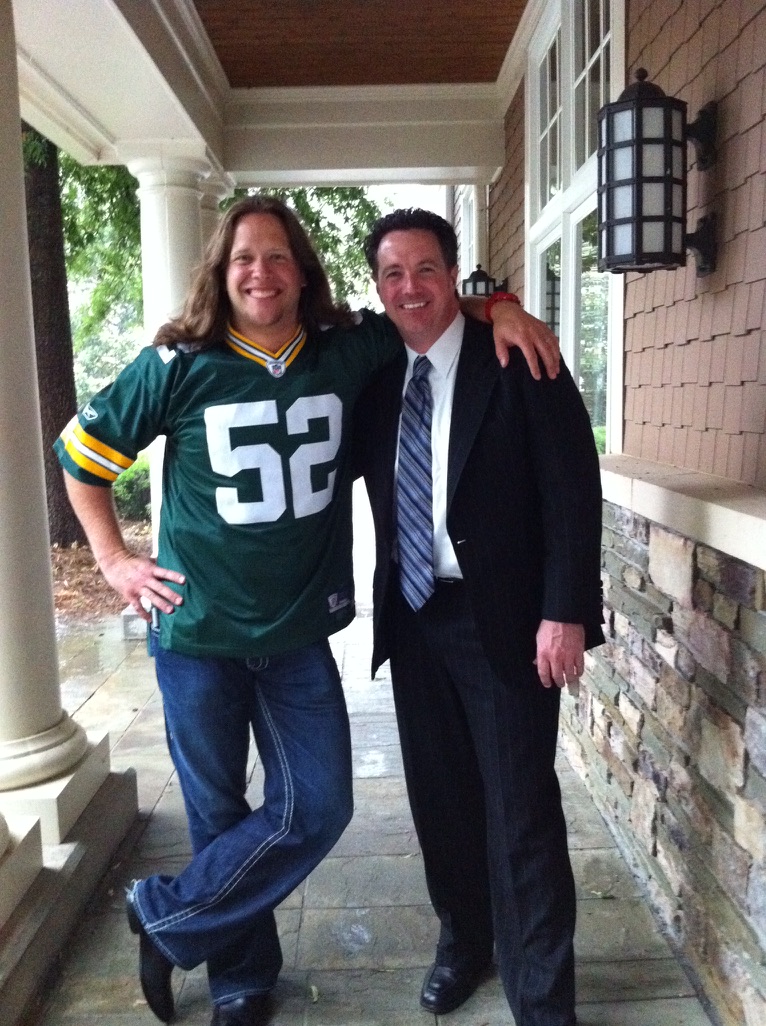
This guy gets it.

So train yourself to develop your Resting Friend Face.

Smile.

Or Smize.

Train yourself to default to a friendly pose.

Put a pleasant look on your face. It doesn’t have to be toothy.

Uncross your arms.

Put your phone away.

And look like a friend other people would like to have.

Practice in front of a mirror.

Film yourself to find what looks friendly on camera.

See what others see.

That’s a pro RFF!

By developing a RFF you will increase the potential for developing more friendships.

You will develop a better social and professional network.

People will choose to talk to you in a room full of other options. Which will make you feel like Sally Field at the `1985 Academy Awards.

You will be the person others will approach at a trade show, job fair, conference or seminar.

It’s how you get people to approach your booth, table or tent.

You will be the person others will choose to sit next to at a dinner party full of strangers.

And ultimately, you will benefit from attracting more good people into your life.

Key Takeaway

Develop your Resting Friend Face. Practice looking friendly and approachable as a default. You will stand out in a crowd. It will help you grow your brand, your network and the number of great opportunities that come your way.

*If you know someone who could benefit from this message, please share it with them.

+For more of the best life lessons I have learned check out my book, What Does Your Fortune Cookie Say? from Ripples Media. And consider subscribing to Adam’s Good Newsletter.

The Power Of Client Friends: Maximizing Your Professional Relationships.

I use a term I never hear anyone else use.

It’s not gazoinkers. Or tootsnickers. Or zwerp. All of which I use as well.

The term I use regularly that others don’t is client friend.

Even Grammarly tells me this is not a thing.

Oh, Grammarly, but it is a thing.

The term client friend is an important addition to my vocabulary, necessary to accurately describe many of the important people in my life.

Client Friend helps me express the duality of my relationship with many of my clients.

The Origin

Early in my career, I realized that I was not accurately representing my relationship with a large swath of people in my orbit by simply referring to them as clients. That was way too transactional, or distant, or businessy.

For me, the client relationship is simply the introductory vehicle to many of my favorite friendships. And the workplace is just the meetup venue for our friending actions.

So for the dictionary entry I propose the following:

Client Friend. /klient frend/ nouny. A friend whom you originally met as a client.

For comparative context, some people have drinking friends or fishing buddies. Other people have friends who they play softball with, or poker, or fantasy football. I have even heard of knitting circle friends. And hunting wives.

I have friends who I do commerce with.

We meet up and talk about their business. We talk about branding, and marketing and advertising. We talk about sales and products and services. We talk about innovation and customer experience, and off-menu creative ideas to enhance their brand image. We talk about competitive pressures, and trends and threats. (Oh My!)

And we love it!

We nerd out on all these things. Because we are gazoinkeers for business, marketing, advertising and creative problem solving.

We also share stories about the fun travel we’ve done together. And film and photo shoots in interesting places. And the great meals we have shared. And all the hilarity that happened along the way. Zwerp!

But we also talk about our families, vacations, hobbies and pets.

I freaking love making new friends. I go gazoinkers for adding new people to my world. Because my clients and I have so much in common, we typically become friends quickly, both because of the work, and beyond the work.

When I began seriously thinking about starting my own advertising and ideas agency back in 2015, a couple of my client friends called me to encourage me to do it. Then I called more client friends to talk about it. I met other client friends at restaurants and talked with them for hours about it. And when I first launched The Weaponry, my very first client was actually my friend, Dan Richards, whom I have known since we were in 7th grade in Hanover, New Hampshire.

Looking back, I can clearly see that it was my client friends who enabled me to start The Weaponry. And it has been client friends who have sustained us for the past 9 years.

We spend something like 100% of our time at work. Which makes the workplace a great place to develop and maintain friendships and deepen relationships with the people you work with. Take advantage of this rich field for meaningful social interactions. (Did I mention I also met my wife, Dawn, at work? I did. And she’s amazing!)

At the end of your career, you won’t care about the awards you won nearly as much as you will value the client friends you won and the work-related relationships you developed. Those client friends are just as good as any other form of friendship. Maybe even better. Because you have so much history and so much to talk about in retirement.

Not everyone has client friends. Instead, you may have customer friends. Or member friends. Or partner friends. Or collaborator friends. Or vendor friends. Or Joey, Chandler, Ross, Monica, Phoebe and Rachel. Collect them all. Enjoy them all. The universe put them in your world so that you can develop a human relationship. We are not just here for business transactions. We are here to engage meaningfully with each other for the greater good of all.

Key Takeaway

Make more client friends. And customer friends. And co-worker friends. And people-you-interact-with-because- of-work friends. Working with your friends makes life more enjoyable. And friending with the people you work with is the ultimate relationship hack. More and better friends lead to a better life. So make friends everywhere you can. Especially at work. And if you want to work with people who want to be your friend, shoot me a text or call me at 614-256-2850, or email me at adam@theweponry.com. I always have room for more friends.

*If you know someone who could benefit from this message, please share it with them.

+For more of the best life lessons I have learned check out my book, What Does Your Fortune Cookie Say? from Ripples Media.And consider subscribing to Adam’s Good Newsletter.

It’s amazing what you can discover when you start asking a stranger questions.

On Thursday afternoon, I was on a plane. I was flying from Detroit Rock City to Columbus. My seatmate was a friendly woman. And like that scene from Kenny Rogers’ The Gambler, we began to speak. (Although, unlike in The Gambler, no one bummed a cigarette, drank down my last swallow, or croaked.)

My goal with the conversation was to see how quickly we could go from perfect strangers like Larry Appleton and Balki Bartokomous to pals, like Forrest and Bubba.

When I meet someone new I am always Curious George’n to know who or what we have in common. So, I broke out my set of proven questions designed to discover where our Venn diagrams overlapped. The only question was how many questions it would take to get to the Tootsie Roll Center.

The conversation went like this:

Me: What’s your name? Answer: Emily. (So we did not have a name in common.)

Me: Where do you live? Emily: Granville, Ohio.

Me: Where did you grow up? Emily: Centerville, Ohio

Me What did you do after Centerville? Emily: I went to college at Ohio Wesleyan University.

Me: Cool! I had two sisters who went to OWU! They were there between 1994 and 2000.

Emily: Interesting! I was there during that time…

Me: My sisters were both on the track and field team at OWU.

Emily: I had a friend who was on the track and field team at OWU. Her name was Donielle Albrecht.

Me: Donielle Albrecht is my baby sister.

Emily: I lived with Donielle in Paris!!!

Me: OMG!

Emily In Paris (Which is how I locked her name in my memory bank): I have traveled all over the country with Donielle! And I know your sister Alison too!

Emily in Paris is also known as Emily Hughes Smith. She’s a Realtor with Remax in Columbus. But she also worked in advertising for several years. We knew many people and agencies in common. And we both have sons who are juniors in high school. Which made for a fun and interesting conversation on our relatively short hop across the contentious Michigan-Ohio border.

However, I am disappointed that during our blitz-Venning session we didn’t discover another important connection. This morning, as I visited LinkedIn and Facebook to prep for this Emily In Paris’ story, I discovered that I know Emily’s husband! Kirk Richard Smith is a Creative Director and great photographer. We have known each other for years.

Key Takeaway

Get to know the people around you. Discover your commonalities. Connect over your shared people, places and interests. It is one of my favorite things to do. Because it quickly turns strangers into friends. It grows and strengthens your friend network. It reveals that there is always a little bit of magic around us. We just need to look for it. And that’s an ace that you can keep.


*If you know someone who could benefit from this message, please share it with them.

+For more of the best life lessons I have learned check out my book, What Does Your Fortune Cookie Say? from Ripples Media.

The 3 types of affluence that lead to happiness.

There is almost nothing more enviable than affluence.

The two inventors of the dictionary, Meaning Miriam and Definition Webster, decided that affluence means an abundant flow or supply.

And when you have an abundant supply of good things your life tends to be good. Unless the things you have in abundance are news coverage and bottles of lube.

Affluence most certainly leads to happiness. But not in the way that most people think.

Here’s how it works:

The Affluence Formula

1. First develop your relationship affluence. The more and better friends the better. This is the greatest investment you will ever make. (Unless you bought Apple at its IPO.)

    2. Relationship affluence leads to financial affluence. Your relationships increase your opportunities, knowledge, support, encouragement and positive peer pressure. It’s not just about a small group of great friends like Monica and Chandler. Your outer ring of relationships is sneaky valuable as you can read here in the study The Strength of Weak Ties.

    3. Financial affluence leads to time affluence. The more financial resources you have the more control you have over your time. This is the greatest freedom in the world.

    4. Time affluence leads to happiness affluence. When you have control over your time you have control over your life. That Janet Jackson-level control enables you to spend your time doing the things you enjoy most with the people you enjoy most.

    Plot Twist!

    The great happiness in life will come from your abundance of relationships and time. Not from the money itself. Never forget that.

    Key Takeaway

    More and better relationships lead to more and better opportunities. Opportunities create financial resources. And financial resources give you control over your time. Which is the greatest affluence of all.

    *If you know someone who could benefit from this message, please share it with them.

    +For more of the best life lessons I have learned check out my book, What Does Your Fortune Cookie Say? from Ripples Media.

    How to remember new names using the simple Nickname Technique.

    I love meeting new people. Which is a good thing. Because on this planet of 8 billion people, there is an endless supply of new people to discover. I meet new people through work, speaking engagements, parties, and a wide variety of social, professional and everyday situations. But like you, If I am not careful I forget names. And I don’t like that.

    So I have made a commitment to absorb and retain the names of the people I meet. After all, people love it when you not only remember their name but prove you know it by using it in conversation.

    Remembering and using names creates intimacy between people. Real relationships start when you learn the other person’s name. Because you can’t go very deep without starting with this foundational element. And how are you going to connect on social media if you don’t know their name? They don’t have an app for that.

    “Names are the sweetest and most important sound in any language.”

    Dale Carnegie

    Lately, I have been looking for new people I can meet and practice my name-retention techniques.

    Here is the 6-Step Nickname Technique I use to dramatically improve name-retention.

    Step 1: The first step is to actually consciously try to remember the names of everyone you meet, even before you meet them. Preparing your mind before each encounter makes you a ready receiver, primed to Randy Moss that name.

    Step 2: I like to be the one to ask for the other person’s name. It’s kinda like being a baseball catcher putting your glove up to tell the pitcher you are ready for them to throw the pitch your way. Only it’s way easier on your knees. If you let the other person share their name before you are ready, it may fly right past you. If this happens, ask them to repeat it. I will also ask people to spell their name if their name is unique. (If they spell it U-N-I-Q-U-E I know their name really is Unique.)

    Step 3: Once the other person shares their name you want to nickname them. Connect the person’s name with something distinct about them. This could be their look, their profession, or where you met them. This leads to fun nickname filings in your Memorodex like Network Ninja Najee (My Spectrum internet tech), Up-In-My-Mouth Mindy (my dental hygienist), Eileen Eyelashes, Big Booty Betty and Gorilla Grip Greg.

    Note: these nicknames simply serve as your personal reminders of their name in your head. When you use their name drop the Big Booty part.

    Step 4: Next, say their name right away. Try something like, ‘It’s great to meet you, Greg. Nice handshake!’

    Step 5: Continue to use their name in your conversation to drill it home and lock it in your mind. You might suggest even suggest singing the name game song with them. I especially like to do this with guys named Chuck and Buck. (Message me at adam@theweaponry when you realize why.)

    Step 6: Soon after your conversation write their name down or connect with them on social media. I keep a list on my phone with nicknames for quick reference.

    A Recent Example

    Yesterday I had a great chance to put my name-remembering challenge to the test. A man came to my house to pump out our septic tank. (We called his company ahead of time. He wasn’t a door-to-door septic tank pumper.) When I greeted the man I reminded myself to find something about him that I could use to remember his name.

    I introduced myself by saying, “Hello! My name is Adam!”

    The septic tank-pumping visitor smiled back at me and said, “Hi! I’m John!”

    I giggled on the inside. I knew I would have no problem remembering John’s name.

    Key Takeaway

    Make an effort to remember names. Go into introductions ready to remember. Then use the nicknaming, repeating and writing-it-down techniques to lock that name in your brain. Name retention is a great skill to develop. It makes you appear more interested in the other person. It helps you deepen your relationship with others. And it makes you a valuable resource to name forgetters who come to you for name help.

    *If you know someone who could benefit from this message, please share it with them.

    +For more of the best life lessons I have learned check out my book, What Does Your Fortune Cookie Say? from Ripples Media.

    Why it’s smart to think about your relationships like fires.

    Do you know how to start a fire? Can you use the materials around you to build a useful fire to keep you warm or cook your food? I’m not talking about a Tom Hanks Castaway fire. You can use a match, a Zippo or a lantern and Mrs. O’Leary’s cow if you like. Even Billy Joel knows how to start that kind of fire.

    Social fire.

    Starting a relationship works just like starting a fire. You first create a little spark. Typically with a question or a comment to another person. Where are you from? Which kid is yours? Do you have any Grey Poupon? Or, you got your chocolate in my peanut butter.

    That little spark is all you need to start a small social fire. From there, the valuable skill is to add more fuel to the fire. Ask bigger and deeper questions. This is like adding bigger sticks and logs to the fire. They provide more fuel. More heat. More light. Through this process of feeding the flames with your questions, comments, and conversation, you create your relationships. (My Grampy also used diesel fuel, and sometimes car tires to create his fires. Which today would be a good way to start a relationship with the EPA.)

    The fire analogy is also useful because if you stop asking questions, stop reaching out, stop getting together, stop texting, calling, or DMing, the fire goes out. This holds true for personal, professional, romantic, and familial relationships. Zzzppp.

    How Are Your Fires?

    Are you maintaining your fires? Are you tending to and adding to your relationships? Or didn’t you realize you needed to?

    It is okay to let some fires die. It’s fair to stop feeding social fires that require too much work to maintain. Especially when they don’t provide enough heat. And when you can’t find more sticks to throw on the fading embers. In that case, let it go, Elsa.

    Spend your time feeding the fires that provide great light. The fires that are warm and nice to sit by. Feed the social fires when others are feeding them too. Keep those flames dancing to the end.

    Key Takeaway

    Relationships are like fires. They need a spark to start. Then they need a regular influx of fuel to burn warm and bright. Recognize which social fires are hard to maintain, and give them less fuel. Or let them go out. Feed the best fires. The ones that kick off the most heat, the best light and the least smoke. Fuel the fires that are the most enjoyable to sit next to. Those are the greatest inventions in human history. Just ask any caveman.

    *If you know someone who could benefit from this message, please share it with them.

    +For more of the best life lessons I have learned check out my book, What Does Your Fortune Cookie Say? from Ripples Media.

    How to tap into the great value of a room full of strangers.

    A couple of months ago I had a meeting with a board of directors. When I entered the room a dozen people were already there. After I greeted the host who invited me, she cheerfully turned to the room and asked, ‘Does everyone here know Adam?’ This is a question I hear often at my witness protection program meetings.

    But I had studied who was going to be in the room. I always prepare for such meetings. From my prep work, I knew that I wouldn’t know anyone but my greeter.

    And I loved that.

    In that meeting, I was introduced to 12 new people in the town I live in. (Which is kinda like being the defendant in a jury trial.) I met leaders. People who were involved. Successful people. Board members. Good people to know. And suddenly 12 unknowns became known to me. My life improved as a result.

    While some people dislike going places where they don’t know anyone, it is among my favorite things. Right behind being in a room where I know half the people. Like at my friend Molly’s recent birthday party.

    Molly and I have a lot of friends in common. But she also knows a lot of people I don’t know. Because, as Digable Planet said, she’s cool like that. The great thing about a room half full of friends is that the familiars introduce you to the unfamiliars. By the end of the evening, I had met 14 new people. (Well they weren’t really new people. I could tell they have been people for a while. But they were new to me.)

    It all adds up.

    Meeting 14 new people at a party or 12 new people in a business meeting is a greater reward than it appears. Because when you meet someone new you are suddenly just a degree away from their friends, families, coworkers, and business associates. Which always leads to an interesting yet unpredictable way of improving your life.

    If you conservatively assume that everyone knows 500 people, when you meet 10 new people, you are now a single degree of separation from 5,000 new people. This increases opportunities for new and better friendships, partnerships, introductions and recommendations. You never know when and how those associations may prove valuable. But experience has taught me that the value always appears.

    Key Takeaway

    Most great opportunities come from humans. The more humans you are connected to, the more opportunities you will enjoy. That’s why a room full of strangers is a room full of value. Take the initiative to make as many new friends as you can. They are among the most valuable assets you will ever collect.

    *If you know someone who could benefit from this message, please share it with them.

    +For more of the best life lessons I have learned check out my book, What Does Your Fortune Cookie Say? from Ripples Media.

    Why you should tell your people that they deserve better.

    We always want the best for the people in our lives. But our people don’t always find the best. We’ve all seen friends or family members in less-than-ideal situations. It’s hard to watch. It’s even harder to bite your tongue and not say anything to them. (Or bite your thumbs if you are the texting type.)

    Sometimes the less-than situation is a bad job that makes them miserable. Or at a minimum, it doesn’t enable them to utilize their full talents. Other times we see our people in bad relationships. It could be a romantic relationship that isn’t so romantic. Or peers who are putting the wrong kind of pressure on your person. Or any number of lesser situations that bring your peeps down rather than raise them up, like a good Josh Groban song.

    What Would Scooby Do?

    When you recognize that your people are in situations that are bringing them down, bring it up to them. Let them know how great and capable and worthy they are of more. Encourage them to find the right job, the right people, or the right situation for them.

    Your people will know you are right. And they will want better for themselves too. But when you hear someone who cares about you tell you that you deserve more it carries more weight. And more urgency.

    If you can help your person stack one more stone on the right side of the scale, you can help them tip their next decision in favor of a better future. Which means you have done your job as a valuable supporter. (Even if you’re not an athletic supporter.)

    My Reminder

    Last night I saw a good friend of mine at a school event. He is successful, well-liked, and well-respected. But a few years ago he found himself in a position where he wasn’t fully appreciated for his talents, vision and work ethic. His greatness had earned him a major opportunity. But the organization wasn’t worthy of my friend. I could see that he was wasting his time in what seemed like a great role. But it really wasn’t. And I told him so. Last night, he told me that my words to him encouraged him to make a change. Today he is in a job that is just as big, but way better, and far more supportive. Like Spanx.

    Key Takeaway

    Tell your people in lesser situations that they deserve better. They know it. Let them know you know it too. Show them you care. Add to their confidence. Give them the push they need. At a minimum, they will know how much you care for them. At a maximum, you will help change their life.

    *If you know someone who could benefit from this message, please share it with them.

    +For more of the best life lessons I have learned check out my book, What Does Your Fortune Cookie Say? from Ripples Media.

    The most valuable thing you can exchange with a stranger this holiday season.

    Welcome to the heart of the holiday season. While it is a time full of great gatherings and good cheer, it is also a time full of encounters with perfect strangers. Like Balki Bartokomous and Larry Appleton.

    I want you to try an experiment. Over the next 24 hours note how many people you encounter that you don’t know. I warn you, it may freak you out. Most of us live anonymously in a sea of strangers. They are everywhere. Like minivans. Yet we have become immune to these strangers that surround us. It’s as if they disappear when we ignore them. Like reality TV stars.

    I was reminded of my own anonymity a few years ago at my gym. After I scanned my membership card, the guy who routinely works at the reception desk said, “Have a good day, man”.

    A normal person would have just done what they were told and had a nice day. But instead, I asked the guy working the counter at Elite Sports Club, “What’s your name?’  He replied, ‘Andrew’. I said, ‘My name is Adam’ (that’s my go-to).  We shook hands. From then on, every time I saw Andrew we greeted each other by name. We had real conversations, instead of an awkward, “Hey-Man” relationship.

    Insiders vs Outsiders

    Everyone we encounter in business, at holiday gatherings and at the grocery store is either an Insider or an Outsider.  The difference is whether or not we know each other by name.  That sense of familiarity and friendship that can only develop once you know a person’s name makes an enormous difference on this planet, where we are so often surrounded by John and Jane Does (that was supposed to be Doe-plural. But it looks like does, doesn’t it?).

    I think about names at work. At the advertising agency, The Weaponry, we encounter people when we visit our clients that we don’t have to know by name. The receptionists. The people who sit next to the conference rooms where we make too much noise.  The IT person who inevitably saves every presentation. But I want to meet them too. So I make a habit of introducing myself, by name. Suddenly we are not just people who see each other regularly. We become people who know each other, by name.

    Key Takeaway

    Convert more of those people you see or say hello to regularly into people you really know by name. It’s easy. Introduce yourself, by name and ask for their name in return. Write the names down. Remember them by starting a list with the names of people you meet and a description of who they are on your phone or in a notebook. Refer back to the list as necessary. The rewards are profound.  Just ask Andrew from Elite. Or Norm from Cheers.

    *If you know someone who could benefit from this message, please share it with them.

    +For more of the best life lessons I have learned check out my new book, What Does Your Fortune Cookie Say? from Ripples Media.

    There is more than one way to win.

    Yesterday I coached my son Magnus’ 6th-grade football team against a really strong opponent. I am the defensive coordinator. Which means that I spent many hours this week preparing for the game.

    Here’s a breakdown of my efforts:

    1. I watched game film of our win last week. Then I went all John Madden, and telestrated the game film on Hudl to show our team things they did really well. And things they need to improve. There was plenty of both.
    2. I watched game film of our upcoming opponent to understand their offense. I documented every play and every formation they ran in their past 2 games. Then I strategized a game plan to defend them. I even considered cutting off the sleeves of my hoodie to help me channel my inner Bill Belichick.
    3. I created our 3 different defensive lineups (Black, Red and White) that would ensure everyone on the team got to play defense.
    4. I worked with my fellow coaches Josh Hunt, Jon Eippert, Paul Lillyroot, Scott Steger and Ryan Smith at practice for 2 hours on Monday, Wednesday and Friday to prepare our boys for the Saturday game.

    I was confident that we had a great game plan and that our team was talented enough to win the game.

    But we got beaten badly.

    35-0.

    I was frustrated and disappointed with the outcome. But I didn’t throw any chairs, clipboards, or hissy fits. I knew that we were playing a great team. And I saw them do the same thing they did to us to their previous 2 opponents. I realized that sometimes you can have a good plan, feel prepared, and still get beat.

    But something interesting happened on my drive home from the game.

    In the car, Magnus shared with me and my wife Dawn that the football players on his team sit together at lunch at school. I asked who sat together. He replied, ‘Everybody.’

    He continued. ‘It’s really fun. We sit at a table that is supposed to sit like 6 people. But we crowd everybody in. There are probably 15 guys who all pack together at lunch.’

    Stunned, I asked Magnus who specifically sat together. He again, said, ‘Everybody.’ Then he listed them by name. And sure enough, he included everyone on his team that attends Steffen Middle School in Mequon. (There are other kids on his team at 2 other schools in town.)

    The kids he listed included the stars of the team and kids who are just happy to participate. It included kids who were born and raised in Mequon and new kids who just moved in from other towns and states. All of these 6th graders are in their first month of middle school. Which can be a challenging and lonely time.

    As I drove the last couple of miles home after our loss I couldn’t help but think that while we lost the game that day, our team was winning at life. That the team culture we were creating at practice and through the broader Mequon-Thiensville Cardinal football program, and indeed the Homestead High School program, was translating to a winning team culture at school and in our community. The boys have developed strong bonds of friendship and a team identity. And just as importantly, they have someone to sit, talk and laugh with at lunch.

    Key Takeaway

    Not all of your wins show up on the scoreboard. Focus on developing a team culture where everyone feels included, and everyone feels important. Focus on the goals of unity, support, and continuous improvement. If you do, the wins will surely come. Often in unexpected ways.

    *If you know someone who could benefit from this message, please share it with them.

    +For more of the best life lessons I have learned check out my new book, What Does Your Fortune Cookie Say? from Ripples Media. For more ideas on team culture, look for my next book, The Culture Turnaround that I co-authored with Jeff Hilimire. The book is scheduled for publication in November.