The problem solving magic of the 3rd option.

I am a professional creative thinker. My job is to come up with ideas, and then bring those ideas to life. Which sounds easy, and fun. Which it is. But there is one major obstacle that often stands in the way of professional creatives: clients. You see, clients also have ideas. And their ideas are sometimes different than yours. And sometimes your clients’ ideas are good. Like, really good.

The Creative Conundrum

So what are you supposed to do when clients go all rogue on you and have their own ideas and opinions? After all, we are hired to be the idea people, right? Aren’t the clients supposed to listen to us? To trust us and our superior ideation abilities?
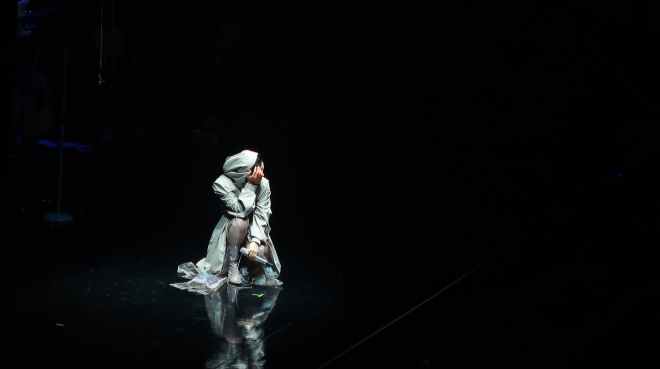
woman performing on stage
A creative super-human, looking all creative and photographable.

Learning From Experience

I have faced this issue a million brazilian fo-fillion times in my career. I have had to contend with client-generated ideas from the time I was a young copywriter until I opened  The Weaponry, the advertising and idea agency I launched in 2016. With over 20 years of thinkering experience under my belt, I have found that there are 3 ways you can handle the client-creative idea clash.

The 3 Alternatives

1. Give Up. You don’t have to stand up for your ideas.  In fact, agencies often surrender immediately when a client proclaims their own idea. Or asks for a change. Or sneezes. This is because there are a lot of people who don’t believe in their ideas enough to stand up for them.

I hate this. It devalues the original creative idea. Which should have been presented for a very good reason. (You did have a very good reason didn’t you?) By simply surrendering to your client’s idea you are suddenly just a production person on behalf of your client. Don’t be that guy. And don’t be that gal.

2. Don’t Budge. This is the option I encourage most professional creatives to choose. Stand your ground. Believe unwaveringly in your idea. Fall on your sword. In fact, I’ll throw you on your sword if you like.

The reason I want you to embrace this idea so strongly is because it is a fast way to lose clients. And I would love to slip in and pick up your clients as you are getting thrown out a second story window.

3. Find A New, Better Option. If the client isn’t fully satisfied with your idea or execution it is because they still have a perceived unmet need. They are offering an idea that helps meet that need or concern. Sometimes their suggestion will be perfect. And a good creative should recognize this. But if the solution isn’t perfect, keep exploring. The greatest creative solution is the one that accommodates for the dreams and desires of both the client and agency. (Dreams and Desires is also the title of the trashy romance novel I’m now inspired to write.)

beach blue sky cheerful clouds

Pushing for that perfect third option has 5 positive benefits.

1. It demonstrates that you want what is best for the project. And not just what the client requested.

2. It shows you are not simply married to your own idea. (Which also means no one gets to throw idea rice at your idea wedding.)

3. It certifies you as an avid problem solver. Clients love a partner who will push further to make everyone happy.

4. It strengthens your skills. It’s like adding more weight to the bar at the gym. Throw more challenges on the problem, add more constraints, and see if you can still Houdini out.

5. It reveals your work ethic. In the workplace your work ethic translates to character and trust and all manner of positive attributes.

Key Takeaway

Everyone loves a problem solver. This is true in business and in your personal life. But problem solving doesn’t mean giving up on your idea. And it doesn’t mean winning at all costs. It means finding a solution for every challenge. Always push for the win-win solution. Develop a reputation for helping everyone get to the best answer. It is the best way to get many more problems to solve.

If you know someone who could benefit from this message, please share it with them. 

I have a strange problem I don’t know how to solve. And I want your help.

There are some business problems they don’t teach you how to solve in business school.  They are too odd and too unlikely to happen to spend time discussing. So today, I am going to serve up an odd, real-life scenario to see how you would respond. Because I am not sure what the right answer is. Or even if there is a right answer. So let’s try to figure this out together.

The Setup

Last night, just before dinner, I went into the bathroom at my home to wash my hands. As I was washing I looked at myself in the mirror and noticed a problem. My left eyeball was completely red. Not as if it was irritated. Or as if I had taken a red eye flight. It was red like a blood vessel had burst in my eye. And it looked disgusting. Like an eye I never want to make eye contact with. Like ever.

When I returned to the table and shared my problem with my family the reaction was not good. My 11-year old son thought I looked hideous and demanded that I not look at him again. My 8-year old son was fascinated, the way a boy may be fascinated by road kill. My 13-year old daughter was greatly concerned for me. (Everyone should have a daughter). And wife Dawn immediately asked if I had any important client meetings this week. The answer was yes.

The Problem

I have an important meeting with a brand new client that is scheduled to start 24 hours from now. The Weaponry, my advertising and idea agency, was just awarded a significant project with this client after an agency review. During the review process we met 3 members of the marketing and sales team, whom we liked very, very, very much. #IThinkTheyWillReadThis

The upcoming meeting is for us to meet the client’s executive team, a team we will be working closely with throughout this project. The purpose of the meeting is to introduce ourselves and take them through the proposal with our color commentary.

The most important outcome from this meeting is for us to make a great first impression on our new client’s senior team. That’s hard to do when you have a horror film eye ball. What makes this worse is that I have had a burst blood vessel in my eye before. It was many years ago. During that red period I had multiple client meetings. And my clients were undeniably grossed out by my gore eye. Sorry clients.

Seeking a Solution

This is where I need your help figuring out what I should do next. There are a couple of details you should know before offering your advice. 1. This problem usually takes 5 to 7 days to clear up. There are only 2 people from my team scheduled to attend this meeting, Just me and the account leader. There was a 3rd member of our team who would have attended if she wasn’t on vacation in Europe. It’s amazing the lengths some people will go to in order to avoid seeing my eye.

The Options As I See Them (through my bloody eye).

  1. Reveal the problem and ask to reschedule the meeting for 1 week later.
  2. Send the account leader alone.
  3. Proceed as if there was no problem.
  4. Make the meeting a phone call or video conference.
  5. Attend the meeting, but wear sunglasses
  6. Attend the meeting but wear an eye patch (Arrrr Matey!)
  7. Attend the meeting but wear a welder’s mask.
  8. Attend the meeting but avoid all eye contact, like Rain Man.
  9. Call the client, explain the situation, and ask them how they want to proceed.

What would you do?

Which of the options do you think I should choose? Or do you have a good solution that is not on the list? I appreciate you sharing your opinion. If you know a wise owl who-who offers good advice, please pass this along to them too. Me and my eye look forward to hearing from you.

How our agency overcame a Biggie Smalls experience.

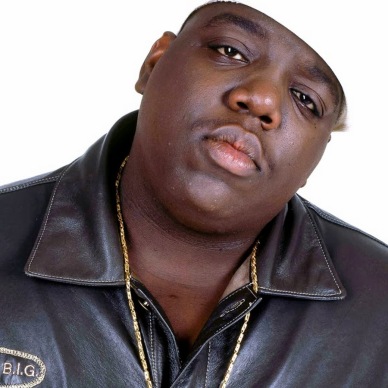
It was the rapper Notorious B.I.G. who once penned that famous American quote: ‘Mo Money. Mo Problems.’ In 2018 I learned Biggie was right. Because as my young advertising and idea agency was growing at an exciting pace, we also faced mo money problems. Or was it less money problems? Maybe it depends on whether you’re more East Coast or more West Coast.

Go With The Cashflow

In 2018 The Weaponry, faced a cash flow problem. It wasn’t as if I hadn’t been warned. My posse of entrepreneurial homies, including Dan Richards of Global Rescue and Jeff Hilimire of Dragon Army, warned me that as you work with larger and larger clients they will use their financial muscle to get longer and longer payment terms. So instead of our standard 30-day terms, new clients began requesting, pushing for or demanding 45, 60 and even 90-day terms. #WhatWouldSugeKnightDo?

The 60 and 90-day terms put growing businesses like mine in a conundrum. Obviously we want to work with the biggest and best companies in the world. The problem is that while we wait to get paid for the work we have completed, we still have to pay the Weapons, vendors and freelancers who work for us. Which means that like a leaky bucket, more money is leaving the system than coming in. #DearLizaDearLiza

the-notorious-big-biggie-smalls-5-1400684427-view-1

Big Poppa

By June of 2018 we had been in business for 2 years. We could clearly feel the momentum build. There was sharp rise in the demand for our work. But with all the new work, longer payment terms, and invoices that seemed to have taken the slow boat to PayMe Town, we started carrying between $500,000 and $700,000 in our monthly accounts receivable stack.

For a business that bootstrapped its way into being just 24 months earlier this was an interesting turn of events. It is nice to be owed that kind of money. But cash is the life blood of a business. And there were serious demands on our blood supply.

We were always able to pay our salaries and all of our bills. But the depleted cash on hand meant that we weren’t able to invest in our own growth. We had started looking at space for our Columbus office in June, then hit pause on our plans to sign a lease in order give ourselves some breathing room. We waited on transitioning some of our freelance help to full-fledged Weapons. And we postponed the company offsite meeting in Monaco.

unnamed-2

It Was All A Dream.

When I shared our mounting money challenge with our team, they once again stepped up to solve the problem. Simon Harper, one of our outstanding account directors, shared how we could adjust our invoice timing to make sure we were paid by our clients sooner. Other account leads also contacted their client contacts about the outstanding bills. Which helped get the money ball rolling.

Our accountant, slash bookkeeper, slash egg dealer, Sally Bretsch, recommended another adjustment to our billing process that would ensure that our invoices got into our clients’ accounts payable systems faster, with greater accountability. Which is either totally meta or just a nice word play (Did I mention I used to read Word UP! magazine?)

From Negative To Positive (And it’s all good.)

With these team-driven enhancements in place, suddenly we dramatically decreased the turnaround time between work performed and payments received. We had our own Black Friday moment, when suddenly, following months of increased billing, but decreased cashflow, we started seeing the fruits of our labor manifest in our bank account.

Key Takeaway

Business is a team sport. As an entrepreneur, leader or department head, it’s important to understand that your team will find ways to solve problems and improve performance faster, and in better ways than you would be able to unearth on your own. Share information with your team. Make them part of the solution. If you’re thinking about starting a business, surround yourself with a strong crew who knows more about their specialties than you do. Then give them a mic and let them flow. That’s how small teams make big things happen.

Do you really want serenity? Or do you want to solve problems?

My time is my most precious asset. Not because my time is any more important than anyone else’s. It is certainly not. Just as Steve Miller’s time keeps on slipping, slipping, slipping, into the future, I know that my finite time on Earth is steadily slipping away too. Like sand through an hourglass. Literally. Yet, it is this scarcity of time that is the major motivating force in my life.

My Increasing Impatience

More and more, I find myself interrupting others as they recount their disappointments in the past. I often crash pity parties to point out that time spent dwelling on the things that went wrong will not make them go right.

Spending Your Time Wisely

I am a problem solver, both by nature and by profession. As an entrepreneur and as a professional creative thinker, I view the limitations of any given situation simply as the rules that govern the solution. I have no time to relive something that went wrong in the past. All I care about is what I can do moving forward.

The Serenity Prayer

I find great value in the Serenity Prayer. If you don’t know it, or don’t know it by name, here it is:

God grant me the serenity to accept the things I cannot change; courage to change the things I can; and wisdom to know the difference.  –Reinhold Niebuhr

Serenity Now!

Many see this statement as a path to Serenity. But I would have named this The Problem Solver’s Prayer. Because what Reinhold is praying for is the essence of problem solving.

Problem solving is like conducting a science experiment. To find a great solution to the challenges you face, you must accept the constants, and vary the variables until you get the results you are looking for.

Focus On The Possible

I don’t spend any time lamenting the constants. I accept the things I cannot change. I pour all of my time, energy and thought into the things I can change. You could say I focus on the positive. But I say I focus on the possible. Mine is not a rose-colored glasses outlook. I focus on reality. Because reality is full of positive possibilities.

Key Takeaway

Memorize the Serenity Prayer. Accept the cold hard realities of life. And spend all of your valuable, and constantly diminishing time focusing on the amazing opportunities and possibilities that exist anyway.

Why Wheel Of Fortune is the perfect interview game.

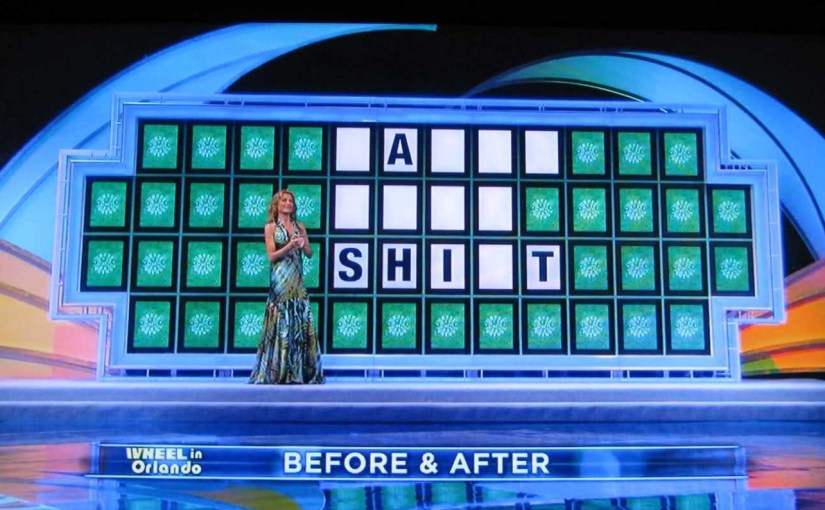
I like watching Wheel of Fortune. It’s not because of Pat Sajak’s perma-tan, perfect hair or witty commentary. And it’s not because of Vanna White and her seemingly irreplaceable skills at touching lighted rectangles. Although 30 years ago that was a compelling draw.

The best part about Wheel of Fortune is trying to solve the puzzles. In case you hadn’t noticed, life is one big puzzle. As the Founder of the advertising and idea agency, The Weaponry, I am constantly trying to solve client problems. That’s why I am hunting for world-class problem solvers the way Imelda Marcos hunted for footwear.

The Interview

Lately I’ve been thinking about introducing WOF into the interview process. Because the game show offers valuable insights into a candidate’s approach to solving real world puzzles. Not only is this kind of problem solving valuable in marketing, it translates to success in business, finance, medicine, auto repair, courtship and just about every career Sally Struthers might mention.

The 3 kinds of contestants on The Wheel of Fortune.

Early Solvers.

My WOF heroes are the people who solve the puzzle in the least amount of time with the  least amount of information. I’m always impressed by those who find the answer well before I do. They are the see-ers of the unseen. These people are clever, insightful and daring. You should hire as many of these types as you can get your hands on (in an HR appropriate way).

Middle Solvers

The majority of the puzzle solvers take a crack at the answer somewhere in the middle of the fill. They offer an answer once many letters are exposed, and the puzzle is relatively easy to solve. At this point the viewer at home either has the answer or has several of the words figured out, but still fails to see a couple of un-purchased vowels. These are your average people. If you fill your organization with these average people you can build an average company. I would rather go bankrupt.

The Reader

At the tail end of the spectrum are the readers. These are the people who don’t attempt to solve the puzzle until every letter is filled in, and they can literally read the entire answer. These are the types that only bet on a sure thing. They are the belt and suspenders types. But Wheel Of Fortune favors the bold.

Please don’t be the reader. When you wait until the answer is obvious you have lost all competitive advantage. Because when there is no risk there is no reward.

Key Takeaway

The further upstream you can solve a problem the move valuable you are. There is a significant market for those who can see the unseen, forecast a trend, or alert a team to an opportunity or catastrophe hiding in the shadows.

In business development, you can’t wait until the account you want goes into review and invites you and every Tom, Dick and Mary to pitch. To offer value you have to be able to solve a problem before the answer is flashing in the middle of Times Square. Or before Vanna has flipped her final consonant.

Who helps you see the invisible?

Business is hard. Unlike the natural world of plants, animals, water and minerals, business is not visible. Business is an abstract concept. Sure, a business is officially formed when you file articles of incorporation. But those are just documents. You don’t invite clients to come and look at your filings. You can’t recruit great talent by showing them your government forms. Except maybe the lawyers. God help the lawyers.

Building, focusing and polishing a great business is a conceptual task. It requires things like missions and visions. It requires strategy, positioning and branding. You can’t just throw these items in your cart at Office Depot. You have to create them. You have to pull them out of the ether (or out of your butt), and breathe life into them to make them real.

Whose job is that?

I work with clients on challenges like this every week. I don’t expect our clients to have all the answers. Quite the opposite. I expect them to have a problem that needs to be solved. I expect them to have questions. I expect them to be a little lost and confused. You know, the way you felt on the first day of high school.

Making the invisible visible.

The greatest value my business offers is our ability to see the unseen. We paint pictures and draw maps so that others can see too. We build structure, we articulate thoughts and create unifying stories. The more answers we find the more valuable we become. But the kind of answers we are looking for can’t be googled. We have to create them ourselves.

The Paradox

Many would-be-collaborators want their clients to clearly articulate what they are looking for. The problem is, clients don’t often know what they are looking for. In fact, that’s why they need to hire outside help in the first place.

 IWKIWISI

Professionals often loathe IWKIWISI clients. Those are the people who say I Will Know It When I See It. They can’t tell you exactly what they want. They can’t offer you a great brief. They can’t narrow the options down to 1 or 2.  They need someone else to find the perfect option for them.

I love these types. They need the most help. Like a Sudoku puzzle with very few initial clues, they offer the greatest challenge. But when you solve those most difficult of puzzles, you experience the most satisfying rewards.

Think of young Helen Keller, who couldn’t see or hear. Then along came Anne Sullivan, who developed a system to teach the blind and deaf to learn language and communicate. She unlocked and unleashed the infinite power in Helen Keller’s mind. Who enjoyed the greatest reward as a result, Helen or Anne?

If you have the kind of skills to make the invisible visible or to make the intangible tangible, you can help transform organizations, people and places. If you need those type of people, take comfort in knowing they are out there. And someone knows where you should look to find them.

Why I embrace last-minute requests and ridiculous deadlines.

Wouldn’t it be nice if everything in life worked according to your schedule?  You simply set the amount of time you need to handle anything, personal or professional. Then nothing ever challenged your pre-established timeline. That would be pleasant. And it would bore me to tears.

The world doesn’t conform to your schedule. Business, and life, are far too unpredictable. As Nationwide Insurance used to say, life comes at you fast. Really fast. Opportunities and threats appear in a blink. In the social era you need to respond before your opportunities become yesterday’s tweets. You must be able to thwart threats before they become Napa-sized wildfires, engulfing your home and vineyard.

Get Creative

But opportunities abound in the imperfect schedule. As the Founder of the Advertising and idea agency, The Weaponry, I am always thrilled by quick deadlines. They add excitement to the work. They test our abilities. They push us to learn what we can do without.

Ridiculous deadlines present favorable conditions for creativity too. When time is short the approval process is also short. You run through fewer approvers, who tend to be more accepting of really great creative solutions. So better ideas are often produced under tight timelines, because the client has less time for second guessing.

Walt Disney’s Magic

Recently I read about a crazy request Walt Disney received from Pepsi in 1963. Pepsi had been working on a collaboration with UNICEF for the World’s Fair, but had failed to come up with a worthwhile idea. So they approached Disney with the daunting task of creating an exhibit to fill their 94,000 square foot exhibit space. But they had far too little time and far too little money for the challenge. So Joe Fowler, the supervisor at Disneyland, turned down their request.

When Walt Disney heard this he was furious. He said, ‘I’ll make those decisions,’ and then informed his team that they would indeed take on the Pepsi project. To solve for the time, space and money challenges, Disney devised a boat ride through a canal, surrounded by animated dolls from around the world. The dolls sang a song that Disney commissioned the Sherman brothers to write. As Disney described the concept of the exhibit to the Shermans, he explained ‘It’s a small world after all.’  That, of course, became the name of the song, and the ride itself.

The World’s Fair exhibit was a resounding success for Pepsi and UNICEF. Today, almost 55 years later, that boat ride is still one of the most popular attractions at Disney World.  And its theme song is known around the world.

Conclusion

Your next great opportunity may show up at your doorstep wearing a really short deadline. But don’t be too quick to shoo it away. Don’t focus on all the reasons you can’t take on the challenge. Focus on the possibilities. That opportunity just may turn into the greatest thing you’ve ever done. But if you truly can’t find a way to make it work, send it my way. I love a short deadline after all.

What’s even better than saying ‘No!’

Ever since I started the advertising and idea agency, The Weaponry, the comment I hear most often is:

It must be nice to be in a position to say “No”.

As employees, most of us feel we don’t have the right to say things like:

  • No, I don’t want to work on that project.
  • No, I don’t want to work those hours.
  • No, I don’t want to work with that client.
  • No, I don’t want to go on that business trip to Newark, again.
  • No, I don’t want to partner with Stinky Frank the close-talker.

There are plenty of benefits to being an employee. But you have to do what the job requires.

However, now that I am a business owner, the ability to say ‘No’ never crosses my mind.  Sure, I’ve heard in-demand artists, actors and musicians talk about being able to say no to opportunities. I know doctors that no longer take new patients (and I kind of hate them for it).

I like having more control over the work my team does. But I approach the opportunity from the opposite direction.

Saying YES!

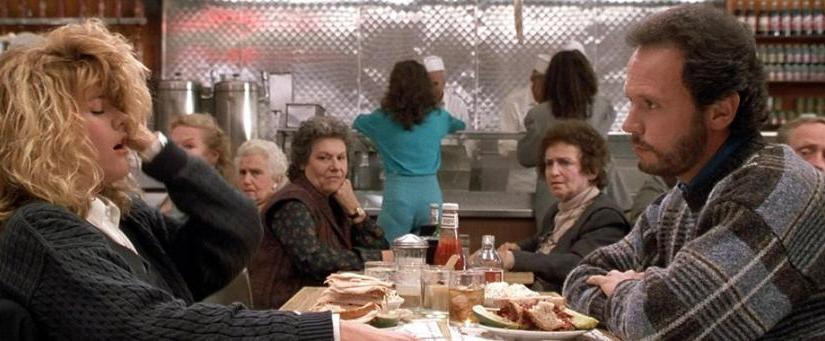
The best thing about owning your own business is being able to say ‘Yes!’  I like to help people as much as I can. So now I say Yes! more than Meg Ryan in the diner scene in When Harry Met Sally. (I’ll have what she’s having).

When-Harry-Met-Sally-LB2-1

  1. I  get to say Yes! to obscure requests.
  2. I get to say Yes! to small projects.
  3. I get to say Yes! to huge projects.
  4. I get to say Yes! to ultra-fast turnaround projects.
  5. I get to say Yes! to demanding celebrities who have unique pet projects.
  6. I get to say Yes! to startups who don’t yet have the money our work is truly worth.
  7. I get to say Yes! to novel partnerships with other agencies and organizations so that we can both take on bigger challenges together.
  8. I get to say Yes! to clients who have never worked with a team like The Weaponry and have no idea how to get started.
  9. I get to say Yes! when The Weaponry is the mistress agency that gets involved when the client’s lead agency can’t or won’t do what they need.
  10. I get to say yes to projects that are less that $2 million, less that $200,000, less than $20,000 and less than $2000.

Saying Yes! makes me happy. It makes me feel empowered to help. It allows me to work with the people I want to work with, and make decisions that are not driven first and foremost by the income I receive today.  It allows me to think about long-term benefits. It allows me to find creative ways to get important work made. It forces me to think creatively. Which is what people come to The Weaponry for in the first place.

If you are looking for more happiness, find more ways to say yes. Help more. Enable more. Get creative more. The world looks better when you are looking for possibilities.

Thanks for reading. If you found any value in this post please consider subscribing to this blog.

My life-altering first lesson in professional problem solving.

When I was in college I spent my summers at home in Vermont working for a party rental company. I set up huge party tents with other college athletes, a few rugged high schoolers and a handful of experienced veterans who had real jobs, but would help set tents on the weekends for extra income (and presumably to show us what brands of jeans were cool a decade ago).

There was lot of beef on that crew. You had to be strong because the job entailed lugging tents that weighed more than you did and carrying all the tables, chairs and dance floors needed to get your party on.  You also had to be able to hammer 40-inch steel spikes into the granite of Vermont and New Hampshire.  This was not a job for the chess club.

Learning the ropes.

The first few tents I set up were in idyllic settings on lush, sprawling lawns. The tents were erected (snicker) in textbook fashion.  You laid the tent out flat. Pulled the ropes straight out from the tent. At each rope you drove a spike into the ground four feet from the tent. You tied the ropes to the spikes. Then you set up a side pole at each rope to support the perimeter of the tent. Finally, you set up the tall center poles in the (surprise…) center of the tent.  I was a pretty smart kid. I caught on quickly.

Then I went on what I thought would be a really easy assignment.  I was sent to set a small 20 foot by 20 foot square tent in a woman’s front yard with one of the veterans. I thought we would be done in twenty minutes.

Then came the problems.

When we got to the house I immediately began to worry.  There was no large field of green. There was what amounted to a small rug-sized lawn squeezed in front of a small house.  There was no 20′ X 20′ space to be found. There was no way to place the spikes back 4 feet from the tent so we could tie the tent down and anchor them properly. In one corner of the yard the porch of the house prevented us from driving any spike at all.

This was not good. A woman was expecting a tent for her party, but we weren’t going to be able to set it up in this space. The backyard had even less lawn. So that wasn’t an option either. I turned to Dave, the veteran, and said, ‘This is bad! We can’t set the tent. It doesn’t fit here.’ Dave was completely unfazed. He said, “Come on Greenhorn.  Let me show you how it’s done.’

The Eye-Opening Transformation

What happened next changed me in ways that will impact my clients for the rest of my career.  Dave found solutions for every single problem. Instead of setting the tent in the standard, follow-the-manual way, he set it in the way the situation allowed.  Dave mapped out a plan that I had completely missed.  He tied the tent ropes, that normally get tied to spikes in the ground, to anything that would hold them.  We tied ropes to the fence. We tied ropes to trees.  We tied ropes to the railing on the front porch of the house. The bushes and flower beds I thought prevented us from setting the tent in the front yard simply ended up under the tent, adding ambiance. And everything looked perfect.  The tent pulled straight and tight and clean, despite the fact that half of the anchor points had been improvised to accommodate for the environment.

It felt like my brain grew 500% that day. I quickly learned to love the challenges of compromised conditions. Over the next three years I became so adept at problem solving I believed there was no problem I couldn’t overcome.


Putting the lessons to work.

Today I use the mindset I developed setting tents in my advertising career. At my advertising and idea agency, The Weaponry, we deeply believe there is a solution to every problem. We don’t focus on what we would have done in the best case scenario.  We explore what can be done given the reality. What can be done with the hand we have been dealt.  That means no excuses. We always work to maximize the outcomes given the current situation. Because the key to life is a good plan B or C or D.

Don’t spend a moment thinking about how things should have been done if the situation were different. Focus on how to bake the best cake with the ingredients you have right now. It’s the only way.  Put all of your time, thought and energy into solving the problem in front of you. Recognize your assets. Make them work for you. Just like Dave showed me how to make that tent work in that small yard back when I was just a Greenhorn.


How Mark Zuckerberg helped me put my life back together.

Some people live their entire lives in one nest. You know the type. You can see the hospital where they were born, their high school, their first job, their bowling alley and their nursing home all from the highest point in town. That’s not me. Life has been an exciting adventure of change from the jump. I lived in five states by the time I started 7th grade. I went to college 1000 miles from home. And I have traded license plates many times since graduation. #WitnessProtectionProgram.

I love my nomadic lifestyle. I have been exposed to traditions, foods, history, religion, weather and sports from a wide variety of angles. This has been a blessing for a creative professional. The one oddity, is that for a very long time, when I changed chapters, I would never see or hear from people in the previous chapter again.

But in 2007 that all changed. Because of Facebook. That thing that we so often take for granted as a silly time waster, quite literally changed my life. It allowed me to reconnect with childhood friends and neighbors from New Jersey, Wisconsin, Missouri, Vermont and New Hampshire.  Then I was able to find classmates from The University of Wisconsin. And coworkers from Cramer Krasselt, and Engauge. (Ohio, Georgia and Moxie/Publicis Groupe were added later).

I reconnected with clients and vendors. Neighbors and distant relatives. And people I’ve met at parties and on planes (I’ve met a lot of people on planes). Suddenly, I stopped losing track of people. As a people collector and connector I no longer have to box friends up and store them on a shelf every time I move or change jobs. Now I can play with them whenever I want.

Of course there is LinkedIn too. Which I love. The great Link-A-Roo has allowed me to reconnect and collect people in another, more quasi professional way. (The quasi is all me LinkedIn. You have been nothing but professional). I recently discovered that my friend Nissa Kubly (UW Track) and Cher Fesenmaier (cousin) both work at the same high school in Phoenix.  One of the craziest connections that I discovered through LinkedIn is that three of my friends, Neil Miklusak (college buddy from Wisconsin), Audrey Lowder (former co-worker at Engauge in Atlanta) and Erika O’Toole (we met on a flight to NYC) all work together, in the Empire State Building, at LinkedIn!

The simple fact is that if it were not for Facebook and other social platforms I would likely never see, or have any interactions with the majority of my friends and Linkys ever again. (I don’t know what you actually call a person on LinkedIn. Linkletters? Linkins? Linklings?

As I have started The Perfect Agency Project, my connections have become even more important. I am always looking for ideas, support and people to join the project.  Over the past few months, thanks to my online network, I have reconnected in person with dozens of people I hadn’t seen in 10 to 30 years. That’s cray.

So thank you to Mark Zuckerberg for allowing me to have my personal “This is your life’ moments every day. It is absolutely mind-blowing to think I may never lose a friend again. Except maybe Alex ‘Big Drawz’ Mautz, my college track teammate who moved to San Diego and must enjoy such perfect weather that he never needs to connect to the rest of us.

As a fun demonstration of the topic of this post, and to see who, if any of my people read this all the way to the end, I would love for you to share a word or a sentence about how we know each other. Thanks for playing.