The best $240 an employer ever spent on me.

My first job in advertising paid me $21,000 a year. I wasn’t sure how I was going to eat. But I was thrilled to be a professional copywriter. I was rolling in that thin dough for three months before I surged to $22,000. I was making it drizzle. Six months later I got another bump to $24,000. I bought a used Toyota 4-Runner with 175,000 miles on it.  Then, 18 months after I started my first job, my salary climbed to $30,000. Ever since then I have felt rich. Seriously.

However, none of those salary adjustments made me any more valuable to my employer.  They spent more money on me because I was good at my job. And because they underpaid for my value from the start.

The Best Investment

But as I look back at my career, there was one investment that an employer made in me that truly made me a more valuable asset to them. In April of 2000 Cramer Krasselt sent me to a seminar in Chicago on presenting creative.  It was led by Toni Louw.  It cost $240. And it made the agency more money than the salary they paid me.

At this one day seminar I learned how to see creative work from the client’s perspective. I learned about persuasion, about pre-selling and demonstration.  I learned about storytelling, about building a case and developing logical conclusions  I learned about showmanship and being a good host to clients. I learned about how to turn a passive audience into an actively engaged audience. I was hooked.  (I also learned that I could sew a rip in my pants, in a bathroom stall, in less than 5 minutes with the sewing kit I kept in my work bag.)

The timing could not have been better.  I had three years of experience. Which was enough time to know a few things and enough experience to recognize what I had previously been doing wrong. Yet I still had the majority of my career to get it right.  I soaked up the ideas and techniques like a Shop-Vac. Presenting was already one of my favorite parts of the job. But now I had a great base of theory and technique to build on.

When I got home I typed up everything I had learned, and added 2 scoops of my own personal style. Suddenly I had a game plan and a process for evaluating client-worthy creative ideas. I now knew how to present them in an effective and entertaining way. Altough the entertainment may be more Branson than Broadway.

Within two months I had the perfect opportunity to put my new skills to use. The Ski-Doo snowmobile account went up for review. Because of my passion for snowmobiling and enthusiasm for the opportunity, I was allowed to lead the creative charge for the pitch, despite the fact that I was only 26 years old.

I poured myself into the Ski-Doo pitch. Through a combination of my personal drive, my new learnings from the seminar and great teammates, we put on quite a show. Not only did we win the account, we proceeded to pitch and win the other Bombardier Recreational Products (BRP) brands too. Those included Sea Doo, Evinrude and Johnson outboard motors, CanAm ATVs and the CanAm Spyder.

Pitching and business development became core strengths of mine.  And despite my early concerns, I continued to eat regularly.

Today I own my own ad agency called The Weaponry. As I think about investments to be made in my fast growing business I am reflecting on the ROI of that $240 that were invested in me.  It grew my skills and abilities. It help win new business and grow the agency substantially. It made the agency money, which made me a much more valuable resource.

It may be more fun to spend money on cappuccino machines, murals and foosball tables.  But if you want to invest your money and enjoy a huge return, invest in growing your people (this includes yourself). Make their strengths stronger. Make their breadth broader. Give them the tools to help them realize their potential.  Because money spent growing good employees will yield a greater return than any other investment you will ever make.

Two lessons we can all learn from a drinking straw.

There are valuable lesson to be found in everyday items. I was reminded of this recently while eating breakfast at a Bob Evans restaurant with my family.  The waitress gave each of us a bendy straw for our drinks. Unlike a crazy straw, these bendy straws don’t come pre-crazied.  You have to add the crazy yourself. The straws were flexible enough to twist, coil and angle in entertaining ways. So we twisted, coiled and angled them.

Lesson 1

As we played with the straws I imagined the creative possibilities with these simple yet interesting devices. And let’s face it, a straw is a moronically simple device. It’s a tube. It’s purpose in life is to help you move liquids short distances. But these particular straws did their job with a flair that made them stand out. Which is a good lesson for us all.

Lesson 1: A simple job done with flair becomes memorable.

If you can find ways to do your simplest jobs with a bit of entertainment you can create valuable memories and experiences.  This is the calling card of Benihana restaurants.  It happens when a pizza maker tosses dough in the air instead of stretching it on a work surface. It’s not hard to add a little wow and wonder.  The payoff lasts a long time in the minds of your audience. This is true if you are an entertainer, a brand trying to create memorable experiences or a parent making pancakes on a Saturday morning. So let your flair flag fly.

Lesson 2

After a bit of creative play, my six-year-old son, Magnus, tried to use his straw to straw-up some lemonade. He turned to me and said, ‘It doesn’t work anymore.’  He handed me the straw and I noticed a tiny hole in its bendy region. I had seen this before. The prognosis was not good.

It reminded me of one of the simple truths of straw-ology.

Lesson 2: A small hole ruins the straw.

If you’ve never experienced this before, take a pin, needle or your favorite pricking device, and put a small hole in a straw. Then try to use it.  It will no longer suck properly.

If a small hole can ruin a straw, small holes in your business, or team can cause serious problems too. Every business and team has a purpose. My advertising and idea agency, The Weaponry, exists to help our clients look more attractive to their most important audiences. Even a small hole in our system could prevent us from delivering our products and services. So we have to continuously scan our system for flaws. Then fix them.

It can be easy to ignore the small things. But if you want to create something great, you have to continuously eliminate weaknesses and keep improving the machine. Watch out for the holes in your straw.  Your small issues or flaws may seem insignificant. But they can ruin the integrity of your entire system.

There you have it. Lessons from a straw.

If this post wasted your time, leave a comment saying ‘The straw post sucked.’

If you got something out of this post, leave a comment saying ‘The straw post didn’t suck.’

Thanks in advance for participating in my straw poll.


5 reasons you should be mentored by a hairdresser. 

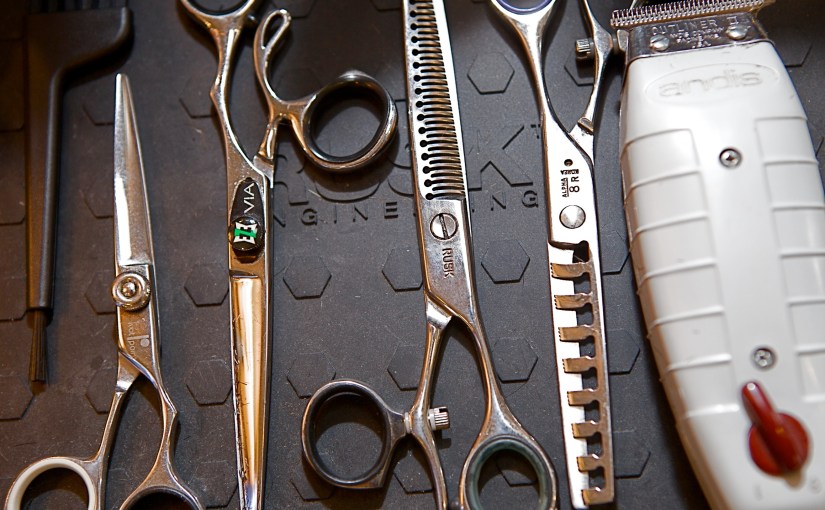
I am trying to become a better businessman. As Founder of the advertising agency The Weaponry, I look for any advantages, advice and examples I can get. To help my cause I regularly read books, blogs and magazines. I listen to podcasts and audiobooks. I meet with other business Founders, CEOs and CFOs. But lately I’ve been studying the tricks and techniques of a profession where many of the industry’s best never went to college. Of course I am talking about hairdressers. (I say ‘of course’ because it’s in the title of the post).

Hair and Me

Since I was a teenager I believed I would go bald. I wasn’t afraid of it. I just believed it would happen based on the extensive foreheads of my forefathers. For 15 years I prepared for the inevitable by shaving my head each year from March until September. Then a funny thing happened. When I turned 35 my doctor told me my hair wasn’t going anywhere. After my ‘Whatchutalkinbout Willis?’ reaction, I celebrated by letting my hair grow for an entire year. (I really know how to party, right?) At the end of that year I had to clean up my new mop.  It was then that I met Angie.

Angie Eger in Columbus, Ohio is an amazing hair-ess. She cut and styled my hair well. She was really fun to be around. But she also had tough conversations with me. Everything she suggested, that I initially resisted, I eventually did.  She was right about everything from long layers, to leave-in conditioner, to eyebrow taming. As I studied  Angie’s approach, I recognized that our businesses are a lot alike (aside from the ear trimming).  And I started using a hairdresser’s model for service with my business.

5 things great hairdressers and barbers do that you can apply to your  career.

1. They listen well.  

This is an essential skill in the hair game. You must listen to what your client or customer is looking for. Once you start cutting hair it is really hard to glue it back together.  Make sure you are clear on the objectives and the vision up front.  At Red’s Classic Barbershop in Indianapolis and Nashville, they take notes on each customer. This helps them accumulate knowledge about individual preferences, products, clippers, shave notes, and general do’s and don’ts.

Any profession can do this with their clients. Do you?

2. They always offer their professional advice.

Hair is too important to get wrong.  So when the customer makes a clearly flawed request, the hairdresser must explain the downside to the ask.  Or the upside to other options. Unlike missteps in many other industries, you can’t quickly recover from a bad haircut.  Alexandra ‘Red’ Ridgway of Red’s says,

 The customer is not always right or reasonable, and they need to know that we have a vested interest in making them look their best.”  

Do you have the fortitude to tell your clients they have asked for a mullet, and that it is no longer 1989?

3. They make you look and feel more attractive. This is the whole point of the profession.  To make you look and feel great. Advertising and marketing works exactly the same way.  At The Weaponry our mission is to make our clients more attractive to their most important audience.  If they don’t look good, we don’t look good. Vidal Sassoon taught me that. Your happy customer is the best marketer of your work.

4. They are trustworthy.  When you get your hair cut you put your self-image in the hands of another person.  This can be very scary.  Alexandra said,

“The sense of self related to image is precious and requires great trust. The major transformations that happen when people shave their beards, cut off a ponytail or dreadlocks are very personal. The trust involved in helping a customer through those transitions is huge.’

Do your clients have a metaphorical beard, ponytail or dreadlocks? If so, the necessary changes they must make to cut them off can be very personal.  Not any old hairdresser will do.

5. You enjoy spending time with them.  Above all else, I looked forward to seeing Angie.  Getting my haircut with her was fun. We talked. We laughed. We developed a great relationship. This is a what separates the pros from the amateurs. You can get all of the other points right and still starve if you don’t nail this. It’s a simple fact that getting your haircut is an intimate act. The hair professional washes your hair. Touches your hair, your ears, your neck. And maybe the top of your toes (we all have issues). If you don’t have great interpersonal skills this becomes a super awkward interaction. If you have great skills in this arena you will book all the hours you are willing to work.

I will continue to encourage the team at The Weaponry to study great advertising minds like David Ogilvy, and great marketers like Richard Branson.  But they will also learn lessons from Angie Eger and other great hair people. If your hair professional does something great that others could learn from, let me know in the comment section.  If you are a hair professional I would love to hear from you too. If you are Angie Eger, I would love for you to set up shop in my new hometown.  Because my hairdo is overdue for a redo.


What we can all learn from the Best Picture snafu at the Oscars.

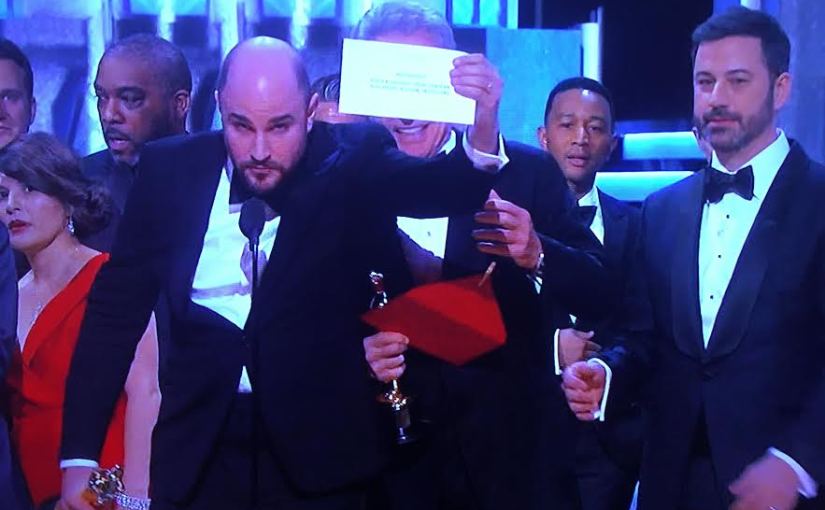
When I woke up Monday morning my iPhone was practically on fire. It was glowing and crackling with texts, tweets and push notes. The world was dying to tell me about the disaster at the Oscars. The wrong movie had been announced as Best Picture. OMG!  Hollywood had been embarrassed on national TV! Those poor, wealthy celebrities…

1280_faye_dunaway_warren_beatty_oscars_2017

I couldn’t wait to see the clip. (You can see the whole thing by clicking here. You’re welcome.)

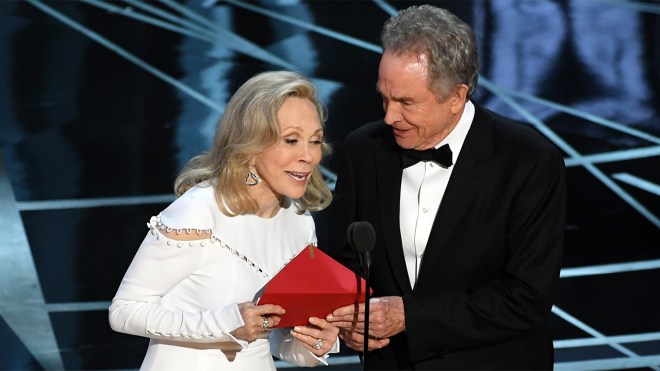
It did not disappoint. The seven minutes of crazy was even better than I could have imagined. It was a train wreck. I squirmed through Warren Beatty’s confusion. I cringed through Faye Dunaway’s quick scan of the card. I felt terrible for La La Land’s la-cast and la-crew celebrating, and thanking, and feeling honored, before having their pants pulled down on stage in front of the world.

I felt even worse for the Moonlighters, who couldn’t really celebrate. After all, they just lost. Now, they didn’t know if they were coming on stage just to have their pants pulled down, before being forced to hand their hand-me-down awards to Manchester By The Sea. I watched it all several times. I will remember those seven minutes of award show infamy longer than I will remember the movies.  

What we can learn.

However, it is important that we take away more from this than the uncomfortable entertainment. Following the debacle I heard many people exclaim, “Someone should get fired over that mistake!”  Let’s think bigger.

We now know that the presenter, Warren Beatty, was handed the wrong envelope by a Price Waterhouse Cooper accountant. PWC has done this for 83 years. Which means a new gremlin was introduced that exposed a flaw in their process. As the founder of the ad agency The Weaponry, I see Envelopegate as a welcomed reminder that we should all use our mistakes to help improve our processes. Not to punish the mistakers.

checklist-book-image

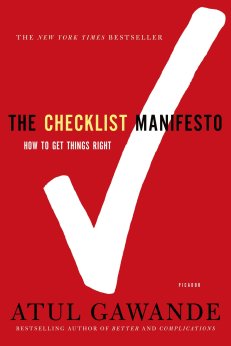
In the book, The Checklist Manifesto: How to Get Things Right (yes, I really read a book about checklists) Atul Gawande, a renowned surgeon, champions checklists as a way to ensure processes are implemented that help save lives in hospitals. He also cites checklists for having done more to prevent airplane crashes than any other innovation. If a checklist helps save lives in hospitals and on aircraft, certainly a checklist could be used to help save some unfortunate moments at The Weaponry and in Hollywood. And probably when you leave a restroom.

Simple Solution

A simple checklist used by the PWC accountants backstage, and the award presenters, would have prevented the mistake.

  1. Ask presenter what award they are announcing.
  2. Check run of show list to make sure the award they are scheduled to present matches answer.
  3. Read the award category written on announcement envelope aloud to make sure it matches before handing it to the presenter.
  4. Make presenter read the category on the announcement envelope aloud to make sure it matches before allowing them on stage.

Boom. Done. Bonnie and Clyde get away.

A Story

Once upon a time I was shooting a TV commercial in Indianapolis for Donatos pizza. When we arrived at the production company’s office for the wardrobe fitting, I was shocked to see the wrong actress there, trying on clothes. After a quick and panicked huddle we understood what had happened. It seemed that once the client signed off on our talent choices for the commercials, a message was relayed to the production house that we would be using all of our first choice talent. So the production company called, and hired, all the first choice talent. However, the first choices were not the same on both the agency’s list and the production company’s list. Yikes!

That afternoon, the production company made magic. They tracked down the actress who should have played the lead, and got her on a flight that night from Iowa City (which is where you go when you don’t think you got the lead in a pizza commercial) to Indianapolis. The next day we shot the commercial and it turned out great. More importantly, we improved our process. After that, my teams have always confirmed the talent choices by name, not first choice or backup.

What you can do now.

Today, I encourage you to watch the clip from the show again. Because it reminds us that mistakes happen. Mistakes are great at indicating flaws in our systems and processes. If we respond correctly, we come out stronger, with a better way of doing things and a lower chance of that same mistake happening again.

Through better processes we can save more lives, we can avoid plane crashes and we can prevent a lot of embarrassment. Getting angry doesn’t prevent a mistake from happening again. Getting better does. There is no need to fire anyone. I think we can all agree that the person responsible for the Best Picture goof will never, ever make that mistake again. Just as Steve Bartman will never again interfere with a fly ball.

If you have a process improvement story spurred by a mistake please share it in the comment section. You may help others avoid the same mistake. Or maybe you’ll just make us laugh. I’ll take either.

What Groundhog Day teaches us about making things up.

There are two types of holidays: meaningful and made up. The meaningful days include The 4th of July, Memorial Day, Thanksgiving and religious holidays. Made up holidays include Groundhog Day, Valentine’s Day and February 29th. It seems February needed a little spicing up. Since today is Groundhog Day, let’s take a moment to reflect on its significance.

Hmmm. Like a groundhog on a cloudy day, I see nothing when I reflect. Because there is nothing to reflect on. There is no meteorological reason to focus on groundhogs. Forget the meteors, there are no logical reasons to focus on groundhogs.  Yet we do.

I’m not writing to pooh-pooh Groundhog Day.  Quite the opposite. I think it stands as an amazing symbol of creativity, and possibility, and making something out of nothing. If a nation of over 300 million people can recognize this fabricated rodent day, you can bring your vision to life too.

MLK Jr. Day, Small Business Saturday and Earth Day are all holidays that were born during my lifetime-ish.  These are all great ideas, made real by someone’s vision, imagination and effort. I’m not saying you need to make up a new holiday, but you could.

The important thing to recognize is that if you want something to exist that currently does not, you can make it happen. If you have an idea that is useful or fun or important I strongly encourage you to write it down, sketch it out and give it as much detail as you can. Then work hard to bring it to life. It could be a product, business, charity, service or event. Heck, it could be a home, a support group, a marketing campaign or a better groundhog trap.  All ideas come to life through the same simple process.

This time last year my advertising agency, The Weaponry, only existed in my head. A year later it is as real as it gets. Like IRS-real. In fact, we have already worked with 11 clients in 6 states and 2 countries.  If I can do this, you can do it.

So what is your Groundhog Day? I know you have something in your head that you wish was real. From now on, when you hear or read Groundhog Day I want this invented holiday to make you think of the things you want to create. Let it inspire your ideas that could have a bigger impact on life than a rodent in Punxsutawney, Pennsylvania or Sun Prairie, Wisconsin. You can do it. I believe it beyond a seeing-your-own-shadow of a doubt.

For the shortest day of the year: a very short post on values.

Yikes! The sun is already sinking. So let’s get right to it.

Know your values. Everything starts with knowing what you care about most.  Both in business and in life. Especially if you are an appraiser. Or an auctioneer (I’ve got one, I’ve got one, I’ve got one value. Who will give me two, two, two?)

At The Weaponry we have 5 core values.  One for each finger.  (My close friend Steve Withycombe has only had room for 3.5 values since his hand had a 30,000 RPM encounter with a shaper in his woodworking shop several years back.)

The 5 Things The Weaponry Values Above All Else:

  1. Creative Ideas
  2. Problem Solving 
  3. Customer Service
  4. Growth (Both business and individual. But not the kind on your neck. Have that removed)
  5. Fun For Everyone Involved

These 5 values help guide everything we do.  I’ll share more detail on each value in a later post. On a longer day. Happy Winter Solstice!  Good night.

Instantly sound more trustworthy by dropping these words.

I love words. I understand, value and utilize the power they each hold. As a professional creative, I prescribe words like a doctor prescribes medicine. People hire me to find the right words to make their brands, products and services sound as attractive as possible.

Just as words have the power to make people, places and things sound more attractive, they can also make them sound uglier. I know which words make me sound like me is dumb. And I know which words make you sound pervy.

In America, we constantly introduce new words and phrases into our banter to see what sticks. Some of these are interesting and innovative (Emoji, FOMO, Photobomb). Some of them are moronic  (Totes, Obvi). Either way, blame Kanye.

Today, there are two unfortunate phrases that are clinging to conversations like cockleburs on corduroy.  If they haven’t arrived in your neck of the cell tower yet, they are coming. I’m referring to the increased use of, “To be honest’ and her twin sister, ” To tell you the truth”.  I know deep down you know this, but when you tack these unnecessary qualifiers onto any other statement, you have told the person on the receiving end of the statement, “Usually I lie to you.’ Or ‘Most of the time I just make up shit without verifying.’

At The Perfect Agency Project we are especially concerned about removing these phrases from business. We don’t want your salespeople or customers support staff dropping, ‘If I’m being honest’ or ‘To be completely truthful’ on your customers and potential clients.  This undermines the trustworthiness bestowed upon your brand. And that will end up costing both you and I real money.

Please coach your team out of using these phrases. You can do that by sharing this post. Or you could do what I do when people drop these phrases on me. I respond immediately to the errant statement with, “Thank you for being honest with me.” The response I get is always very WTF-y. Because people are not thinking about what they are saying.  But I want you to. I want you to sound smart. And trustworthy. And professional. But, hey, It’s all good.*

*’It’s all good’ has been rated as the funniest cocklebur-phrase of all-time by The Perfect Agency Project. Because it is almost always used in instances where something, if not everything, is not good at all.

How I am making the nap my secret business weapon.

Remember Kindergarten?  I do. It was great. Blocks, snacks, learning to read and being the cutest kids in the school. It was a sweet gig for a 5-year old. And, of course, there were the naps. I remember curling up on my squishy little quadrifold mat. Speckled blue on one side. Flecked red on the other. I zonked and drooled for a few minutes every day. And I always came out of the nap better than I went into it.

For most of us Kindergarten was the last time in our lives we were encouraged, if not forced to take a nap. Now, I want to bring the nap back. But this time for creative professionals. I can’t think of anything that would help my mind perform at its best and  make my days more enjoyable than a regular nap-cation. Even at the office.

Too often we push ourselves until we run out of gas. And you are simply not at your best when you are running on fumes. Call me crazy, but I don’t think we should pay great people with great minds great money and have them operate on low batteries. (Yes I mixed fuel and batteries. I’m a hybrid.) 85% of mammalian species are polyphasic sleepers. Which means they sleep in short siestas throughout the day. But somehow we’ve rejected what the rest of our hairy relatives have heartily embraced.

Napping isn’t just important for creative professionals. In various other lines of work the nap is a must. If you drive an 18-wheeler I want you to stop and nap whenever you need to so that you don’t get your Peterbilt in my chocolate. Doctors, if you’re on for a 24-hour shift, wait, scratch that. ANYTIME you need to make sure you are at your best, you take yourself a nap. I’ll even write you a prescription.

Cultures in other parts of the world highly value the workplace nap. In China you’ll find entire teams facedown at their desk over the lunch hour. I love this! And not just because I would take and post hilarious sleeper pics on Instagram every day. In Spain they siesta. Italy has they rock the riposo. And other countries from the Philippines to Nigeria say don’t worry, be nappy.

My friend and former officemate Vince DeMarinis used to announce every day at 3pm, ‘Welcome to the worst hour of the day!’  But with a well timed nap we could be as great at 3pm as we were first thing in the morning. My Grandfathers were both farmers. And you know what they did between the morning and evening chores to prepare for operating heavy and spinny and choppy farm equipment?  They fed their nap-petites on the couch for a few minutes every day. And their cattle and appendages were better off for it.

So I want to apply the same principle to The Perfect Agency Project. When me and my team are worn down from a long day slinging the pickaxe in the Idea Mine, I don’t want the team to simply push through with caffeine. Or 5-Hour Energy. Or Red Bull. Or Crack. What a fatigued mind really needs is a nap. A nap powers us up like our iPhones plugged into the wall. Only without the electricity and charging cords in our orifices.

I’m not proposing long naps where you shut your doors for a few hours and change into your footy pajamas. A quick cat nap will do the trick. A study by the research journal Sleep found that 10 minute naps were optimal in terms of reduced sleepiness and improved cognitive performance. Another study of theirs showed that almost no one reads the research journal Sleep.

NASA performed some rocket science on sleepy military pilots and astronauts. They found that a 40-minute nap improved performance by 34% and alertness 100%. It even made Tang taste tangier. Since most of the ideators and pencil pilots I work with spend a lot of time with their heads in the clouds I find these results highly relevant.

I am planning out a napping policy and facility now. We may have mats, build bunk beds or hang hammocks. But the nap will be used. It will be sacred. It will help us develop better ideas faster. And it will help us be more productive. I firmly believe it will give us a competitive advantage in ideation. I encourage you to consider incorporating naps into your routine as well. And when you do, let me know. I’d be happy to come take some pictures of your team hard at sleep.


10 tips every graduate should use to find a job.

It’s that time of year again. College seniors are triumphantly crossing the stage and grabbing their pricey diplomas to the proud applause of their relieved families. The smiles, pride and sense of accomplishment last until the student loans come and the U-haul carries the humbled graduate’s futon back home to start life in The Basement. That is unless they can land themselves a job in the mysterious new frontier we call ‘The Real World’. If you are anything like I was when I graduated you don’t have a clue how to land that first job. So here are my 10 keys to opening the door to the first job in advertising (and probably most other fields).

1. Request an informational interview.

This is the single best advice I can offer. It’s a free audition for you and the agency. And if the person you are calling won’t take the time to help out a young prospect you don’t want to work for that selfish bastard or bastardette anyway.

2. Research the company you want to talk to.

If you really want to talk to me you should know something about me and my company. So show up with as much knowledge as you can find on the business you’re interested in and its clients. A great tool I recommend using to do your research is the internet. Because it has all the information ever accumulated by mankind. #noexcuses

3. Make connections.

I’m not just talking about people networking. Make connections between the organization’s needs and your own areas of knowledge and expertise. I got my first job because I knew a lot about farming. And the agency had a new client that manufactured farm equipment. The agency seemed to know nothing about agriculture. So to them I was like Doogie Howser in flannel.

4. Show up a little early.

Don’t get carried away here. There is a proper amount of early. Too early and you look socially awkward. And late is the kiss of death.

5. Dress professionally.

Determine what that means in your world. For my first interviews out of school I borrowed a suit from my college buddy, Greg Gill. Greg is now a judge and wears a black dress to work. I have never worn a tie to work since. But I made a good first impression.

6. Lose the like.

If there is one thing that reminds me that you’re still a kid it’s using like the word like like way too like much.

7. Prove direction.

It’s great to be open to various possibilities. But I want to hire someone who knows what she or he wants. So know your skills. Know what interests you. Have a vision. And don’t get lost on the way to or from the bathroom.

8.  Don’t drink at the interview.

Advertising interviews can be tricky. Especially if you show up late in the afternoon or on a Friday. The beer is often available and encouraged (this is starting to sound like an ad for advertising). Don’t play along. The dangers outweigh the risks in this case. Demonstrate your self restraint. Ad people are really good at drinking (see Mad Men).  And there are always plenty of permanent markers around and artists who know how to use them on your face.

9. Talk about how you and your friends never use Facebook anymore.

Even if you are on Facebook all day every day say that you can’t stand it. Advertising people are always trying to spot the next trend they know nothing about. Kids, that is the ace up your sleeve. Tell them about the cool new things you are into and how you are rejecting all previously embraced media. Your stock will rise. Trust me.

10.  Follow up.

After the interview send a note thanking the people you met for their time.  This is important in several ways. It shows that you are considerate. It shows that you follow through. And it ensures that the people you talked to have your contact information. Send a note in the mail or by email. Both work. Email makes it easy for them to reply to you. A mailed note always feels special. And retro.


5 words from my Grampy that will improve your business and marriage.

Marriage is one of life’s greatest adventures. You can never be too prepared for it. Half of marriages end in I don’t. A healthy percentage of the other half aren’t any healthier. So on my wedding day I wanted to cram in one last bit of preparation. I scheduled breakfast with my three marriage mentors, my dad and my two grandfathers (who would all laugh me off the family tree for calling them my marriage mentors). At the time my parents had been married 32 years. My grandparents had been hitched 61 and 63 years.

After we sat down at Emma Krumbies in Wausau, Wisconsin and worked through some Northwoods pancakes and sausage I decided it was time for the knowledge share. I asked The Paternity, ‘What is the key to making a marriage great?’  With 156 years of experience at the table I felt like I just lit the fuse on a 4th of July fireworks grand finale. This was going to be an amazing show. So I sat back to take it all in.

Then my maternal grandfather, Kenny Sprau, crossed his arms, leaned back in his chair and said,

‘Keep doing what you’re doing.’

Um… WTF Grampy?  61 years of trial and error, nine kids and a World War, and that’s all you’ve got?  I wanted to give him a mulligan and see if he could hit it past the women’s tee this time. But he went on. ‘You have to keep doing the things that got you to this point.’

Over time I’ve come to understand what Grampy was saying.  When we are dating we are at our best. The unfortunate tendency is to drop the hard work, the energy, the attention, and charm we put into the relationship after the contract is signed.

This advice holds true in business as well as marriage.  Treat your potential partners well. Act as if you would like nothing more than spending the rest of your time together. Listen. Make them laugh. Show them you are interesting, kind and thoughtful. Get the contract signed.  And then keep doing what you’ve been doing.

If you are a creative it is easy to get precious about the work you do.  It’s easy to throw hissy fits (although the best place to grab the hissy to throw it is hard to determine). It’s easy to be combative. Oh, and it’s easy to go out of business. The statistics aren’t good.

But in business, as in marriage, listening and collaborating are valuable approaches to your growth strategy. Clients and spouses alike really like that stuff. Crazy right?  When you respond favorably to a client’s request they generate something called ‘good feelings’ about you.  And these ‘good feelings’ make them want to see you more and work with you more. And the result is business growth.

The opposite is also true.  If you are the all-time best seller at The Jerk Store no one wants to be around you. This is true of both the individual and the organization.

If you recognize complacency, apathy or combativeness between your organization and your clients stamp that out like a flaming bag of dog poo on your front porch. The behavior may feel justified today. But you’ll regret the justice leveled tomorrow when you’re trading the offspring in the McDonald’s parking lot.

At the Perfect Agency Project our goal is to treat our current business like new business. We never want to take them for granted.  We are trying to re-win them every day. Even after we put a ring on it. Thanks for the wise advice Grampy. Me and Grammy miss you.