Make the most of your magic ingredient.

Yeast is like magic. It is the secret, almost invisible ingredient that makes bread rise. It creates action and life. It creates transformation. And alcohol. And stank.

But yeast only works if the conditions are favorable. If the environment is too cold it won’t activate. If the temperature is too hot it kills the yeast that makes the magic. #TooHotInTheHotTub

The human spirit is like yeast. It is your magic ingredient. It is the will to win. The drive to succeed. The hunger for more.

The human spirit fuels your resilience and determination. It is the force that will transform you into something even more remarkable tomorrow. Something far more remarkable than bread. Or beer.

But just as yeast needs the proper conditions to activate, so does the human spirit.

Remember

If you are a business owner, leader, parent, teacher, coach, or the person who runs Fight Club, you are responsible for creating the environment.

Your most important job is to make sure the environment doesn’t kill the magic ingredient.

Great people won’t stay in a toxic work environment.

Great athletes won’t stay to play on a negative team.

A lion tamer won’t stick his head in the mouth of a stressed-out lion. (At least not more than once.)

And most importantly, a poor home environment will prevent children from growing into the amazing adults they were born to be. We can’t let this happen.

Key Takeaway

Create an environment that lets the human spirit work its magic. Or seek out a supportive environment for yourself. And magic will surely follow.

*If you know someone who could benefit from this message, please share it with them.

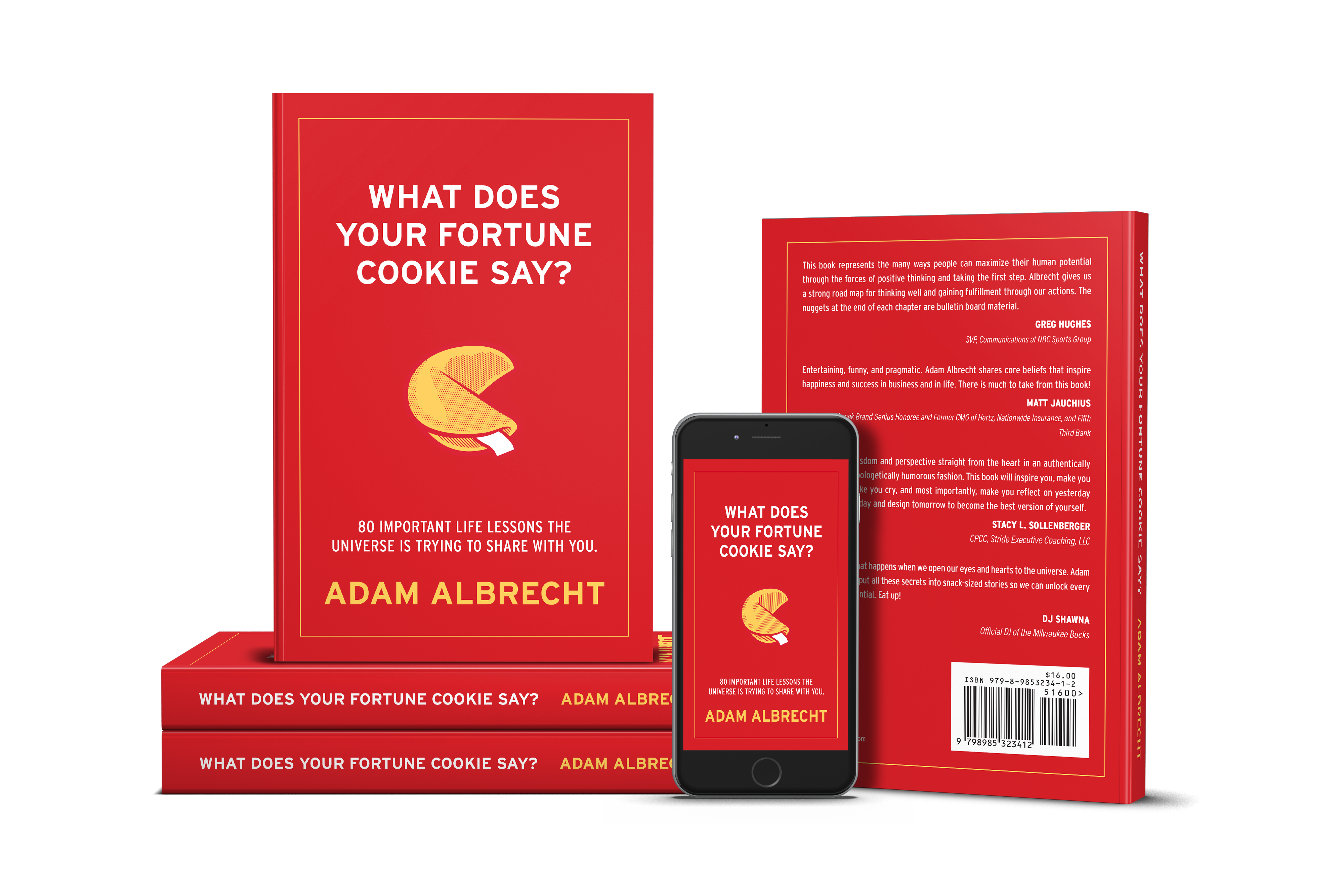
For more, check out my new book, What Does Your Fortune Cookie Say? from Ripples Media.

To enjoy a happier life invest more time in your personal projects.

If you want a better, more interesting and more fulfilling life take on more personal projects. If you don’t, a disproportionate amount of your life will be taken up with your must-dos, and not your want-to-dos.

Personal projects allow you to take on exciting new roles in miniature. Because they let you dip your toe into a new world on a small scale. (Unless you have really big toes.)

Your personal projects are experiments. They let you test and learn. They let you take action and observe reactions. They enable you to adjust the variables to get new and better outcomes. No Bunsen burner required.

Your personal projects are small investments you place on yourself. With a small investment of time, money or energy you can generate significant personal returns, Jedi.

Matt Mullenweg says that WordPress, the platform this blog post is created and published on, was started as a project. It was simply interesting and enjoyable for him to develop. He never thought of it as a business. But that small project is now the hostess with the mostesss, as it now hosts more websites than any other platform in the world. Which allows millions of people to create their own personal projects.

My Projects.

I love starting personal projects. Here are a few of mine:

  1. I love to regularly print original t-shirt designs that interest me. That has evolved into a business called Adam & Sleeve, and a whole bunch of fun shirts I love to wear.
  2. I started an illustrated cartoon series called Kirky. Because I always thought that would be fun. And it has been. Thanks to Dan Koel for teaming up with me on this.
  3. I began writing a blog in 2015. This is my 726th post. But who’s counting? (The WordPress platform counts them automatically. Thanks, Matt Mullenweg!)
  4. I began taking on freelance advertising projects early in my carer. That eventually lead to me starting my own Advertising and Idea Agency called The Weaponry.
  5. A few years ago I volunteered to coach a middle school track program a couple of days a week. That evolved into becoming a high school assistant track coach at Homestead High School in Mequon, Wisconsin. Which led to me coaching a handful of other Milwaukee-area discus throwers and shot putters on the side. Which means that my side projects have spawned side projects.
  6. During the Covid lockdown of 2020 I started a manuscript writing project. That evolved into publishing the book What Does Your Fortune Cookie Say? with Ripples Media in December of 2021.
  7. Since the beginning of my career, I have regularly volunteered to give talks to college and high school students and professional groups. I have gotten pretty good at sharing a good and compelling story. Now businesses, schools, clubs, conferences, tradeshows and other organizations across the United States have invited me to come share what I know. (And I am always up for more.)
  8. I volunteered to organize my high school reunion last year. A few months later I was hanging out in Hanover, New Hampshire with fellow Marauders who I hadn’t seen in decades. Thanks to Covid, we all walked away with a new appreciation for our time together, and some fun new stories to share from our shared experience.

Key Takeaway

Take on more personal projects. They are highly rewarding investments of your time and energy. They are great experiments that let you test, learn and improve. They can add great joy. They can unlock new doors and offer you more control over your life and time. When you take on a personal project it has the potential to both add to your story and change the course of your life. All you have to do is get started.

*If you know someone who could benefit from this message, please share it with them.

+For more life lessons I have harvested, check out my new book, What Does Your Fortune Cookie Say?

The great un-equalizers in life and business.

There are nearly 8 billion people on Earth. Which, according to my quick math, equals a lot of competition.

Every time you apply for a job, promotion, or elected position, someone else will want it too. Just ask Napoleon and Pedro.

Want to woo an attractive mate? Join the crowd. Want to join a team, cast, club, or society? Get in line. Want a pound of that sandwich-sliced turkey breast? Take a number.

It’s important to have an impressive resume. Skillz are good. Experience is helpful. Knowledge is nice. References are respectable. Connections are cool, Jay. But your competitors will have all of those too. And perhaps theirs will be better than yours.

However, the great difference-makers in life don’t show up on your resume, your transcripts, or your personal win-loss ledger.

Online dating sites can’t capture the great difference-makers either. If they did we would have a lot fewer dating disaster stories to share.

Your Way

The secret ingredients that set you apart in life and business are your personality and style. Their importance can’t be overstated. If you have no personality or style you have no chance. If your personality and style are indistinguishable, so are you.

By developing a unique and interesting flavor you stand out. You get noticed. You become memorable. And interesting. And attractive. And sought after. That’s how you win in Nashville, Hollywood, Wall Street, Main Street, and at the Kollege Klub.

Key Takeaway

Embrace your own personality and style. Develop your own voice. Find your own flavor. It will become your unfair advantage in life. And in a crowd of 8 billion people, you could use every advantage you can get.

*If you know someone who could benefit from this message, please share it with them.

+For more life lessons I have learned on my adventure on Earth, check out my new book What Does Your Fortune Cookie Say? from Ripples Media.

What do you do when you find a stuck human?

On my drive to work recently I came across a car that was stopped at a major intersection. This was odd, because the traffic light was green, and the driver should have proceeded through. What made the situation worse was that it was raining heavily. So the intersection felt like a more dangerous and less enjoyable place to be stuck than usual. If I was writing a scene in a TV show about a person having a very bad day I would put the character in this situation.

As I drove around the car I noticed a thirty-something woman in the driver’s seat. She was looking around as if she was trying to figure out her next move. I knew what she was feeling. I used to have a car that enjoyed surprising me too.

I passed through the intersection and nosed down the hill on the other side, towards the Milwaukee River below. I kept looking in the rearview mirror to see if she started moving again. But she didn’t. If it was as if she saw that game of Red Light, Green Light from Squid Games and was afraid to move at all. Finally, just before I crossed the river and arrived at my office, I pulled a U-turn and headed back up the hill.

I eased my car into a parking lot near where the woman was stopped. I got out of my car and hustled to her driver’s side window. This put me in the middle of traffic, in the rain. The woman rolled down her window and I asked if she needed help. She responded, ‘Yes Please!’ She was clearly relieved to have some help.

I asked her if she could put the car in neutral. She tried. She could. So I told her that when the light turned green I would push her through the intersection and she should start rolling down the hill. I pointed to a stretch of open street parking at the bottom of the hill that she should pull into. She nodded in understanding. Then I walked to the back of the car where I assumed the role of her auxiliary human car engine. (Which I will be adding to my LinkedIn profile.)

When the light turned I started pushing on the lifeless car and got it rolling. After it slowly crept through the intersection it nosed downhill and picked up speed. Momentum and gravity made it look as if the car was no longer disabled. I stopped pushing and watched the car roll down the hill and neatly into a parking space below.

I jogged back to my car, hopped in, and drove down to greet the woman at the bottom of the hill. I walked up to the driver’s window again with a big smile and said, ‘You nailed that plan! Nice job! Do you need a ride somewhere?”

She told me that she was on her way to a doctor’s appointment and that she would greatly appreciate a ride. She showed me where the appointment was on the Google Maps app on her phone. Her destination was less than a half-mile down the road from where we were. She hopped in my car, and within a minute I dropped her off at her appointment, on time. She was extremely thankful for the help of a stranger. I was happy to lend a hand. And a couple of arms, legs and a back.

Key Takeaway

Whenever you find someone stuck, try to help them unstick themselves. It’s one of the most basic and helpful things we can do for each other. It doesn’t matter if the person is stuck physically, mentally, emotionally, or developmentally. Help them through if you can. Remember, you never know when it will be you who is stuck in one of life’s intersections, hoping someone comes along to give you that push you need to get going again.

*If you know someone who could benefit from this message, please share it with them.

+For more of the best life lessons I have learned check out my new book, What Does Your Fortune Cookie Say? from Ripples Media.

6 Tips To Establish New Power Habits.

A great life is built on great habits. Do the right things repeatedly and you will build momentum. Do the wrong thing repeatedly and you build a rap sheet.

Your great habits have a compounding effect. Each great step helps amplify the step before. All of which will earn career, social, health, and even financial capital that will open doors for you.

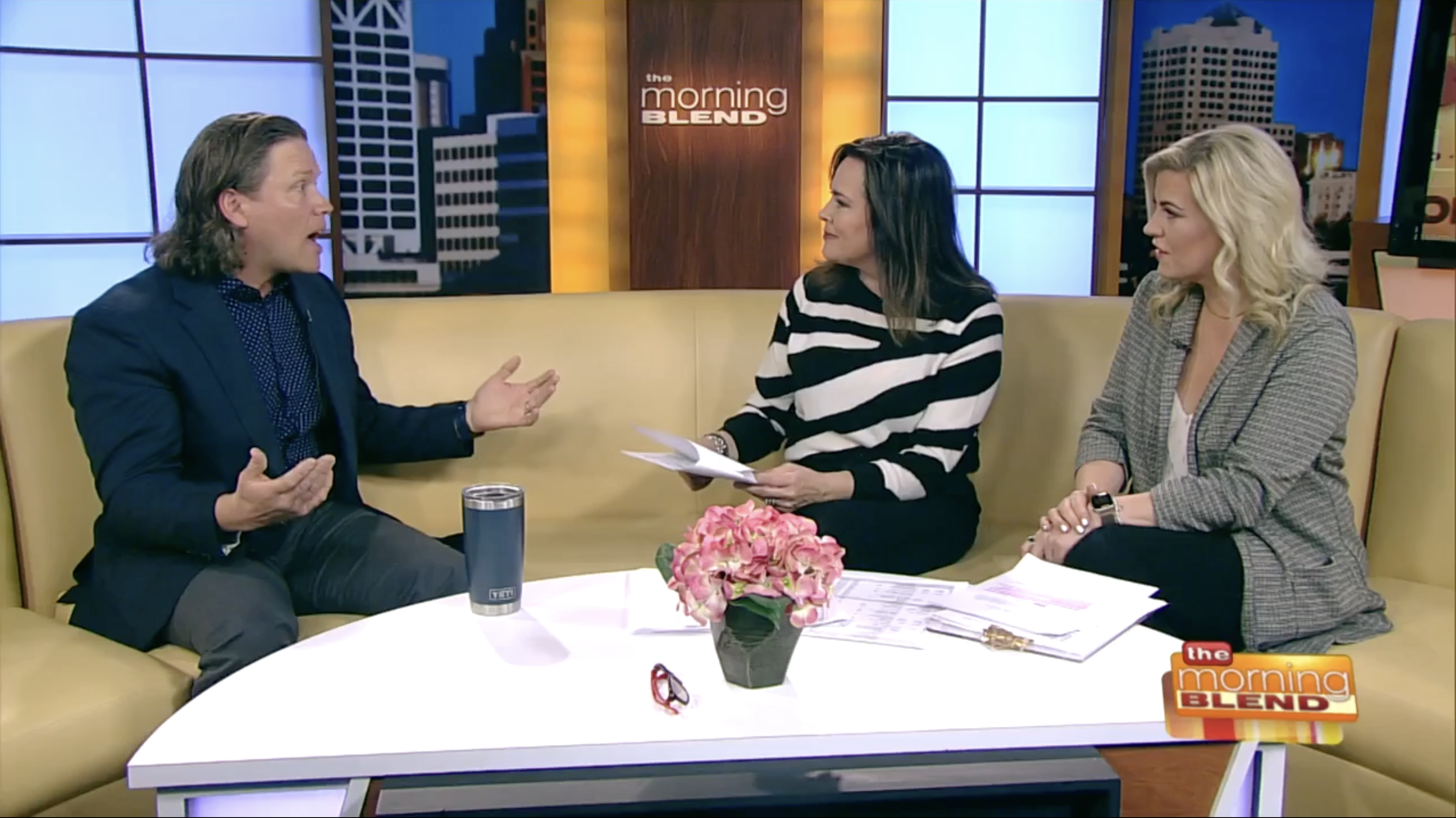
I was on The Morning Blend this week talking about habits. You can see the segment here.

But How?

Habit development is a process. Here are a few of the most important things to know to get the process right, like Bob Barker.

6 Tips To Establishing New Power Habits.

  1. Start with your identity.  Identify as an exerciser, reader, money saver or a neat and orderly person. Once you identify as the person who does these kinds of activities you will do the kinds of activities your identity identifies with. It’s always a case of the chicken and the egg. So just decide that you are a chicken and start laying eggs.

Remember: Identities are all made up anyway. (Just ask Madonna.) None of us came out of the womb as runners, readers or pop singers. We were all just naked and unemployed. One day you simply decide you want to take on an identity and you go with it. The great news is that you can add to or change your identity any day.

2. Make it easy at the start. If you have chosen to identify as a runner, don’t go out the first time and run until you barf. You won’t want to come back. Instead, run until you feel good. Don’t go past that point. Stop before it hurts or feels negative. Run for a couple of minutes. Not a couple of miles. Make it enjoyable, make it easy. Make yourself want to do more next time. In the beginning (#NameThatBook) the most important thing to do is simply create the system or process. The length doesn’t matter.

3. Optimize and intensify over time. Once the routine is established you can adjust it to be more productive. Lengthen the duration of activity. Increase the intensity and focus. But raise the bar slowly and you will build even more momentum.

4. Market the habit to yourself by putting cues in your path.  If you want to journal, leave your journal and pen out where you will be reminded to write. Put your exercise clothes on your dresser or bathroom counter so they are easy to pick up and put on. Place your laundry to be put away on your bed. This provides additional obvious cues and reduces friction to action.

5. You can change your life in one day. Quitting smoking may be hard, but it’s not hard to not smoke for a day. The same holds true for exercising, eating well or playing an instrument. Commit to one day, each day. It will make you feel like a winner every day. You will be inspired to do more when you feel like you are winning.

6. When you have a problem starting or maintaining a habit there is a problem with your system. If your habit is failing it isn’t you. It’s the system. Tweak it to make the habit stick. Make it easier. Change the timing. Change the setting. Use technology for prompts, reminders or encouragement. Pair it with a different reward. Find what you need to nail it.

Key Takeaway

Use good habits to create good habits. Set your identity and your actions will follow. Underdo it at the start. Allow yourself to be an amateur. Create obvious prompts. Optimize and intensify over time. Keep stringing together good days. And just don’t stop.

*If you know someone who could benefit from this message, please share it with them.

+For more of the best life lessons I have learned check out my new book What Does Your Fortune Cookie Say? from Ripples Media.

Beware, the rewards switch with time.

There are 2 ways to think about life.

  1. You can focus on The Now.
  2. You can focus on The Next.

When you think about The Now you are encouraged to do the things that are rewarded now. Sleep in. Relax. Have fun. Indulge. Spend. Eat. Drink. And hang out with Mary.

When you think about The Next you do the things that are rewarded next. You wake up early. Work. Focus. Study. Save. Exercise. Build. Carefully monitor your food, drinks, and activity with Mary. (And Ben and Jerry.)

Focusing on The Now is immediately enjoyable. Focusing on The Next makes now less enjoyable in most ways. (Sorry, Charlie.)

But beware, the rewards switch.

In a literal blink, you are past The Now and into The Next. And what is rewarded in The Next is the opposite of The Now. Which is what makes life and the decisions you make so interestingly complicated. And it is why I encourage you to tie the following quote to your decision tree:

“It almost always happens that when the immediate consequence is favorable, the later consequences are disastrous, and vice versa.

-Frédéric Bastiat, French Economist.

Key Takeaway

Always think about the long-term consequences of your actions and inactions. Invest your time, energy, and growth into a much larger payout in the future. A delay of gratification is most often rewarded with compounded interest in The Next. And it’s always well worth the wait.

*If you know someone who could benefit from this message, please share it with them.

+For more ideas on how to enjoy a better future, check out my new book What Does Your Fortune Cookie Say? from Ripples Media.

How strong is your personal gravity?

Have you ever noticed that when apples break their stematic bonds with trees that they fall to the ground? Sir Isaac Newton noticed. And with this simple observation, he discovered gravity. Which we have come to know as the planetary pull. Gravity is the force that pulls us towards Earth. It also keeps the moon and all of the satellites in orbit. Including the Georgia Satellites. (So don’t give me no lines and keep your hands to yourself.)

But planets aren’t the only ones that create gravity. All heavenly bodies do. And you do too. Even if your body is no longer heavenly.

However, not all gravity is created equal. Which is why you feel like you weigh less on the moon than you do on the Earth. It’s why you feel heavier on Saturn or Jupiter. And it’s why you feel lazy when you are on your Uranus.

Your Gravitational Pull

Your personal gravitational pull is a result of the value you create for others and the energy you radiate. The more value you offer and the more energy you emit the more personal attraction you create.

There is an easy way to evaluate your own gravitational pull. Just look at the people you are attracting and ask yourself these 3 questions:

  1. What kind of people are you attracting? This indicates the quality of your gravity.
  2. Are you attracting many or are there few? This indicates the quantity of your gravity.
  3. Is their orbit growing closer to you or drifting farther away? This indicates your relative growth.

Key Takeaway

The great sign of growth and improvement as a human is to look at who is in your orbit. As you grow wiser and kinder you will attract more and better people. Positive energy attracts. Negative energy repels. Dedicate yourself to improving your personal gravity. It will not only improve your own life, but it will improve the lives of those around you. It will attract more great people to your orbit. And that, my friends, is heavenly.

*If you know someone who could benefit from this message, please share it with them.

+If you’re interested in more ideas on personal growth and self-improvement, check out my new book What Does Your Fortune Cookie Say? from Ripples Media.

The absolute best way to climb the corporate ladder fast.

Every year, throughout your career, you will gain another year of valuable experience. Which means that you will get a little bit smarter every year. This process of steady improvement could go on for 40 or 50 years. The accumulated knowledge makes you more capable and more valuable to your organization. Which leads to more responsibility and more income. Which is good.

The problem is that everyone else who started their career when you did is gaining knowledge and experience at the same pace. So while you are growing as an individual, you are maintaining pace with the cohort who began their careers when you did. Which is like the nuclear arms race. Only without the threat of global destruction and Olympic figure skater subplots.

The Key To A Highly Succesful Career.

The key to a highly successful career is to outpace your peers. This means that instead of gaining 1 year of experience and knowledge in 1 year, you gain 2 years in one. Or 3 years in 1. Heck, why not gain 20 years of experience in just 12 months? That’s what Doogie Howser would do.

How Do You Do This?

To pack multiple years of growth into one year you can’t simply rely on your own experiences. You have to borrow from others. Luckily, there are many ways to absorb mass quantities of knowledge and experience from others in a short time. And none of them involve cannibalism.

1. Books. Books are quite literally the lessons and experiences learned by others, captured and summarized for you. Which means that you can buy 10, 20 or 40 years of knowledge and experience for under $30. Crazy, right? (Do this.)

2. Workshops: Workshops are designed to put you through time-compressed experiences to help you improve your skills at a highly accelerated pace. During a workshop, there are eyes on you to make sure you learn how to perform a task the ideal way. You receive quick and constructive feedback. It’s the kind of feedback that may have taken you years or decades to receive on your own. Especially if you and your Swingline stapler are still stuck in the basement.

3. Coaching: Coaching comes in many forms. From actual career, business or executive coaches. From mentors. From experts who take you under their wings. Coaches feed you their knowledge and experience like a mama bird feeds a baby bird. Which means they are directly regurgitating their knowledge into you. Just not usually by barfing it in your face.

4. Podcasts: Podcasts drop knowledge like an audio college. Podcasts are often great knowledge aggregators that share insights, ideas and experiences from many different perspectives. It’s easy to listen to a podcast while doing something else, like commuting, mowing the lawn, or sitting at your child’s sporting or religious event.

5. Blogs: Blogs are full of smart, informative and actionable tips. They usually come at you fast-paced with dense growth nutrition. Eat that stuff up. If you need a blog to subscribe to I suggest adamalbrecht.blog.

6. Magazines: Magazines that are specific to your industry or role are extremely helpful. The great advantage here is that the knowledge is purposefully fresh and well-polished by a professional staff. There are many different topics covered in every issue which has the potential to add a lot to your knowledge base every month. Pro Tip: Choose magazines where everyone wears clothes.

7. Documentaries: I love watching a film or TV show about a successful person. It’s an easy way to learn what made them successful. Then simply start doing what they did. You just may end up with your own documentary.

Next Level

To gain the most knowledge and experience in the shortest amount of time, stack multiple knowledge sources. Read books, listen to podcasts, and attend workshops. Or any combination that works best for you. The pace at which you gain knowledge will quickly surpass your peers. It will turn heads. And make you seem like you are smarter and more capable than others in your competitive set. Then you will Usain Bolt past those in front of you. You’ll be surprised how quickly you can overtake others who are gaining one year of experience per year.

Key Takeaway

Don’t settle for the natural pace of growth and improvement. Accelerate your knowledge, experience and skill acquisition by learning from other people. The accelerated path is available to anyone interested. But far too few people take the opportunity. Be one of those who do. It’s possible to pack a decade of growth into one year. And you will feel yourself pulling away from others. And when you do, make sure to share what you have learned so that others can benefit from you.

*If you know someone who could benefit from this message, please share it with them.

+To learn more of what I have learned through decades of accelerated learning check out my new book What Does Your Fortune Cookie Say? from Ripples Media.

How to feel like a winner even when your basketball team loses.

March is a thrilling month for sports fans. The NCAA basketball tournaments for both men and women provide an exciting distraction from the weather that never seems to be as warm and Marchy as the March in my head.

The basketball tournaments, affectionately known as March Madness, are fun to watch. Until they aren’t. What we fail to remember each year when the brackets are announced is that of the 64-ish teams in the tournament, all but one of them will end their season with a loss. That’s bad news, bears.

I pull for 3 teams that made the tournament: my home state University of Vermont Catamounts, my current hometown’s Maquette Golden Eagles, and my alma mater, the University of Wisconsin Badgers.

All 3 teams lost this weekend.

UVM and Marquette lost in the opening round. The 3-seed Badgers got bounced by the 11-seed Iowa State Cyclones after our starting point guard went down with a brankle late in the first half. (I don’t know what the official diagnosis was, but it looked like something broke in his ankle.)

Yes, I was disappointed by the losses. But I have noticed something very interesting in my adulthood. Unlike the lingering, long-lasting disappointment of my younger years, my disappointment today is very short-lived. By this, I mean that I bounce from a loss very quickly. In fact, I would say that I consistently move past my team’s losses within about 10 seconds. Which means a major loss now feels more like a mosquito bite than a bee sting or a Pamplona-style bull goring.

The Secret.

I know that the reason I bounce back from disappointment quickly now is that I feel like I am winning on my own scorecard. I engage in many personal and professional challenges and competitions. My progress, wins and successes in those arenas help minimize the negative impact I experience when my teams lose.

Here’s a list of some of my current challenges and competitions:

  1. I own a business. As an entrepreneur and owner of the advertising and idea agency The Weaponry, every day is an exciting challenge to win and get better than the day before.

2. I have written a book. In December I published my first book titled What Does Your Fortune Cookie Say? It features 80 of the most important life lessons I have learned, packaged as simple, memorable fortune cookie fortunes. Promoting the book and related speaking events are fun ongoing challenges. (I currently have 8 speaking events in the works and would be thrilled to do more.)

3. I am coaching high school track and field. The improvement of my shot putters and discus throwers at Homestead High School in Mequon, Wisconsin is a major outlet for my competitiveness. I am challenged to get better as a coach every day. I am constantly trying to improve my processes, systems and coaching techniques. And I have found that I have way more influence over the outcomes of my track athletes’ performances than I do with the college basketball teams I support.

4. I coach youth football. The growth and development of our now 5th-grade boys are way more important to me than the wins and losses of a college basketball team. Which means I can enjoy a Marquette win, but I quickly shrug off a loss. (I am talking about Marquette basketball. Their football team can’t buy a win.)

5. I work out. My personal exercise routine and its impact on my health, strength and fitness is an infinite game that I play every day. I get quick feedback and great returns on my investments in my health.

6. More books. I have more books in the works. Writing a book is a major challenge. So when you make regular progress on major challenges like this it is hard to get thrown off by an external event like a basketball loss.

7. Appalachian Trail. My wife Dawn and I are planning to hike the entire Appalachian Trail in a decade. It is good to have future challenges planned. It gives you something to look forward to. The planning and preparing for this type of challenge makes you feel like you have an ever-expanding life.

Key Takeaway

The best cure for sports fan sadness is to have wins in your personal life. Make sure you are still competing and winning. Set goals and challenges for yourself both personally and professionally. Create your own scorecard. Play your own games and win. Start a business, side hustle or volunteer organization. Exercise. Enter competitions. Write a book. Enter a race or any other challenge that makes you feel like you are pushing yourself to do more. These will keep you focussed on your own wins. Which minimizes the impact, duration and magnitude of external losses.

*If you know someone who could benefit from this message, please share it with them.

+If you’re interested in other messages on how to live a happier, more positive life, check out my book What Does Your Fortune Cookie Say? from Ripples Media. Heck, reading the reviews alone sounds like a win to me.

It’s never too late to start doing what successful people do.

There is a great way of doing everything.

  • Work
  • Exercise
  • Sleep
  • Cleaning
  • Whoopeeing
  • Saving
  • Eating
  • Volunteering
  • Tax preparation
  • Brushing your teeth
  • Investing
  • Treating your spouse well
  • Etc. (That simply means there is a lot more stuff on this list. Not that there is a great way to et cetera.)

There is also a far-from-ideal way to do everything. In fact, there are many far-from-ideal options. They make for good reality TV, bad dental hygiene and something we now call comorbidities.

What Successful People Do

Successful people do things the right way. They develop strong habits. They create great processes and systems that ensure that things are done the right way.

Join The Club

But success is not a private club. The doors are always unlocked. And we all have an open invitation.

To join The Successful People Club just start doing things the right way. The way you know they should be done.

Take the actions you know you should take.

That builds momentum.

Success is a result of momentum.

Momentum is a result of executing good habits.

Habits are simply doing the right things the right way regularly.

But it all starts by doing the right things once.

You can do that today.

Then do it again tomorrow.

It’s easier than you think.


*If you know someone who could benefit from this message, please share it with them.

+If you like this type of message, you will like my new book What Does Your Fortune Cookie Say? from Ripples Media. It shares 80 life lessons the universe is trying to share with you.