The remarkable inheritance I got from my Grandmother!

The greatest asset you can ever create is a strong personal network. That’s why I invest so much time and energy in developing and maintaining my personal relationships. As a result I have an tremendous network of friends around the world. But I am also the beneficiary of what Warren Buffet calls The Ovarian Lottery. Because on the day I was born I was instantly a member of a remarkable network. Despite the fact that I hadn’t done anything to deserve it.
IMG_5607
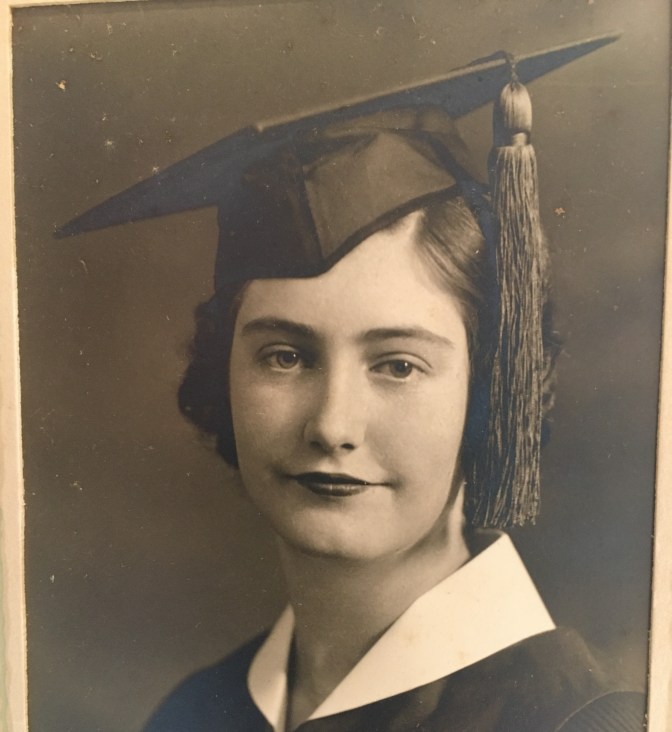
My grandma Judy at her high school graduation in New Ulm, Minnesota.

Grandma Albrecht

My Grandmother, Judith (Benzel) Albrecht was born in 1919, in New Ulm, Minnesota. God blessed her with a sharp mind and unrelenting determination that would have gained her admission to an elite business school had she been born a century later. She spoke German as her first language.

Following high school graduation she was a valuable asset to a local startup, the phone company. Because she could speak both German and English fluently, she could serve as the middle-woman, literally connecting callers in the heavily German area of southern Minnesota.

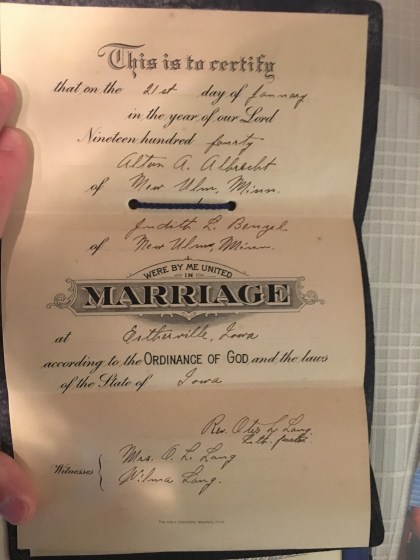
In 1940, at 21 years old, she married my grandpa, Alton Albrecht. Together they thrived. They began farming. They began a family. And they began traveling together. It was an adventure that would last more than 66 years.
IMG_8189
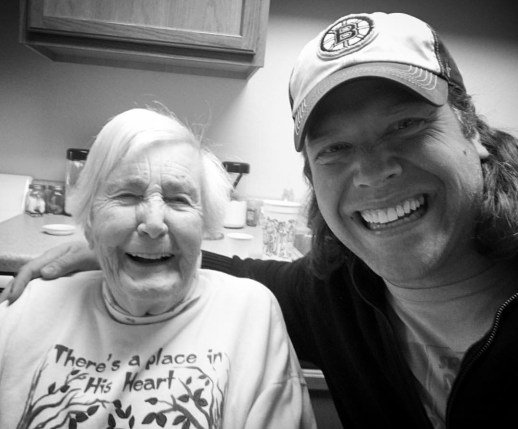
My 98 year old Grandma Albrecht when I surprised her with a visit after a work trip to Minnesota.

The News

On April 15th, 2019, while I was on vacation in Texas, I got a text message from my father, Robert, that Grandma Albrecht had passed away. She was 99 years and 7 months old. A funny thing happened when I got the news. There was a moment of sadness. But that moment soon transitioned to awe at the closing of an amazing story of an amazing woman’s life.
IMG_5606
The marriage license that started it all. In 1940 my grandparents ran off to get married south of the border, in Iowa.

Accumulating Assets

In the wake of Grandma Albrecht’s passing, my family and I started calculating the inheritance that Grandma left for us. My Grandma and Grandpa Albrecht had been farmers in Minnesota. Early on they recognized the value of accumulating assets, and knew a good opportunity when they saw it. As a result, the 2 of them bought the Albrecht Family Farm from my great grandparents. Not long after, they found another good opportunity, and purchased another farm. And then another. And then another.
IMG_5598
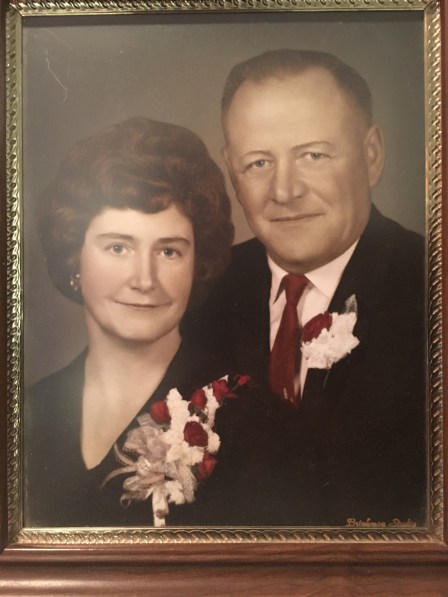
Grandma Judy and Grandpa Alton 25 years into their 66 years of marriage.

They amassed significant real estate holdings, which provided income for decades. As they eventually sold their farms and invested the proceeds they developed a significant nest egg. My Grandpa Alton died in 2006, having battled with Parkinson’s disease for 8 years. Grandma Judy kept marching, right to the doorstep of 100 years.

The Inheritance 

Over the past 2 weeks everyone in the Albrecht family has been buzzing about just how much Grandma Judy left us when she died. We have been scribbling figures on paper. We have been punching numbers into the calculators on our phones.

However, the numbers we have all been crunching are not measured in dollar and cents. Because the most valuable assets Grandma Judy left us are people. They are the members of our ever growing family she started back in 1940. As we tallied up the descendants of this grand matriarch this is what we found:

Grandma Judy Albrecht Statistics:

  • 12 Children
  • 10 Children who grew to adulthood (7 boys and 3 girls)
  • 25 Grandchildren
  • 38 Great Grandchildren
  • 2 Great, Great Grandchildren

That is a total of 77 descendants, represented by 5 generations. When she passed away she had 7 children in their 70s. Those 77 relatives are in Minnesota, Wisconsin, Indiana, New Jersey, Florida, Texas, Arizona and Nevada.
IMG_5706
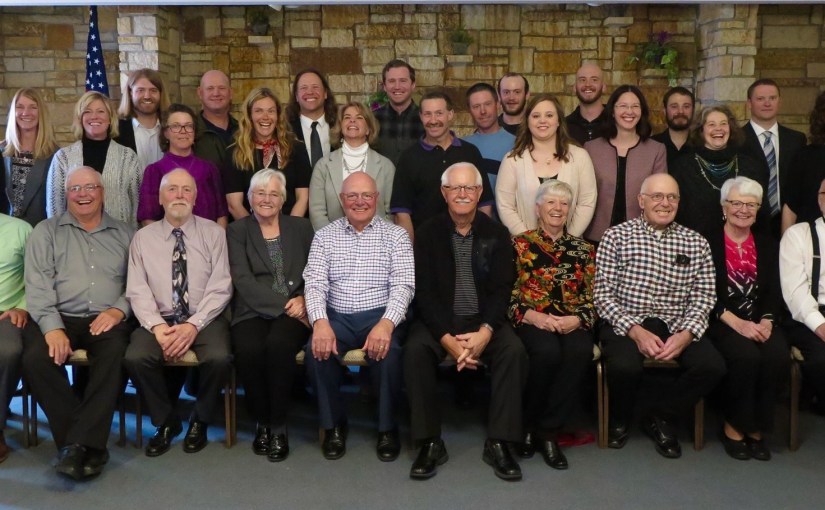
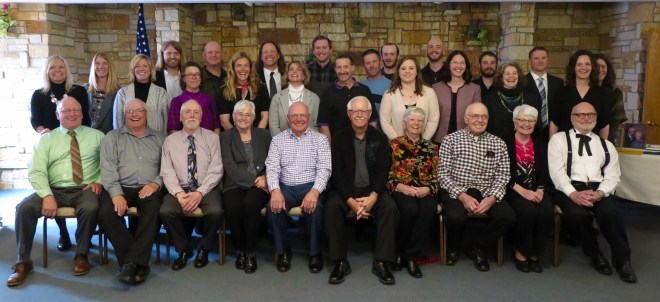
Grandma Judy’s 10 kids and 21 of the 25 grandkids. Her children in the front row, in order from youngest to oldest are Tim, Chuck, Paul, Linda, Robert (my Dad), John, Mary, Tom, Pat and Jerry.

We Are Family

Not only are we a large family, we are a close family. We enjoy being around each other. And we make an effort to spend time together. In fact, in June about 80 family members will gather in Estes Park, Colorado for a week long reunion, as we do every 5 years. We will all stay in one cabin and enjoy daily meals, activities and adventures, and nightly festivities together. Just like Grandma Albrecht taught us.
img_5705.jpg
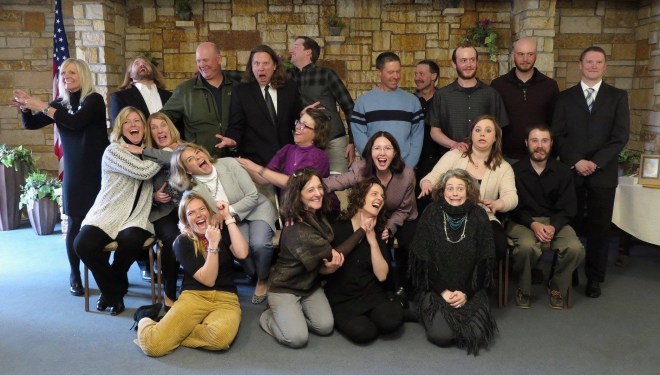
The grandkids having a grand old time.


My large family is one of my most valuable assets. It is an ever-present support system, a cheering section, an army of role models, and constant source of humor. It provides each and every one of us with an unfair competitive advantage in life.
IMG_5639
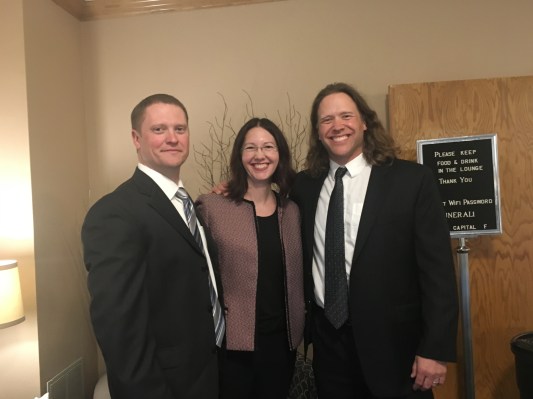
My cousins Dr. Luke Albrecht, Dr. Christine Albrecht and me, bringing down the average.

The Entrepreneurial Influence

My large family also played a major factor in my entrepreneurial journey. I saw the entrepreneurial spirit in my grandparents as they accumulated assets and ran their own farms. Five of my Albrecht Uncles were dairy farmers. And dairy farming is the epitome of entrepreneurship.

The Weaponry

Several years ago my cousin Brooks Albrecht and I began talking about starting a business together. In 2015 the conditions were right, and Brooks and I started planning  our own advertising agency. Despite the fact that I was in Atlanta and Brooks was in Seattle, we worked together perfectly. Like family. Like Grandma Judy taught us. By the spring of 2016 the Albrecht cousins launched The Weaponry like the Wright Brothers launched the first airplane: on a wing, a prayer, a great plan and a familial bond.
IMG_0260
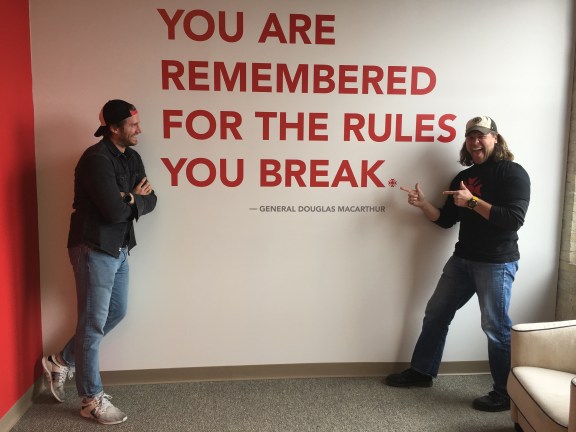
Me and my cousin and co-founder of The Weaponry, Brooks Albrecht.

As the Albrecht Family gathered yesterday to celebrate the remarkable life of my Grandma Judy, I marveled at all she created. Being an Albrecht has always been a source of great pride for me. This large family has given me love, support and encouragement. It has offered me a sense of belonging to something significant. It has been critical to my entrepreneurial success. And it has provided a lifetime of laughs. Thanks you, Grandma.

Key Takeaway 

The greatest asset you will ever inherit from your family is love, support and a sense of belonging. It is also the greatest asset you can hand down. Invest in your family. And you are certain to enjoy a remarkable return, year after year, and generation after generation.
IMG_5760
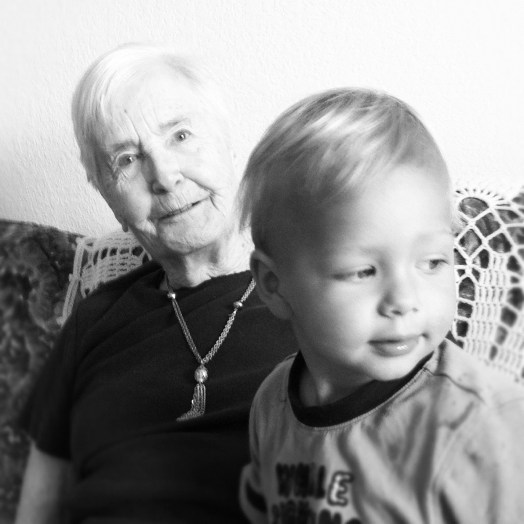
Grandma Judy and her great grandson, my son Magnus Albrecht.


*To read about my Grammy Sprau, who lived to be 100, and had 9 kids, click here


Why you should reject great advice.

When I set out to launch my own business I had no idea what I was doing. So I talked to a lot of successful entrepreneurs. I wanted to learn as much as I could about how to launch and run a company. I was looking for the standard tips and tricks. What I quickly discovered was that there are no standard anythings. Everyone I talked to had their own recipe for success. Or what I call a successipe. Which is a mashup of success and recipe. Admittedly, successipe works better as a spoken word than as a written word. But I have no editor deleting this. So it stays.

Don’t Reinvent The Wheel

When you are learning a new skill or craft, is is a great idea to talk to people who have already done what you are attempting to do. Ask questions. Listen. Observe. Borrow or steal proven plays from someone else’s playbook. It’s how we capitalize on other people’s experiences and mistakes. Which allows you to grow faster than bumbling and fumbling alone. #peeweeherman

A Memorable Encounter

As I prepared to launch my own advertising agency I met with a very successful entrepreneur. I was extremely excited to learn from him, because I greatly admired him as both a friend and a businessman. Over the course of our conversation I remember 3 pieces of good advice he gave me:

  1. Do NOT name your company The Weaponry.
  2. Perfect your elevator pitch.
  3. Focus on your Pro Forma.

This was a trifecta of good advice. All 3 points were grounded in decades of experience. But none of this advice fit with my world view. Or my approach to business. Or my appetite for risk. So I didn’t take any of it.

The Name

I love the name The Weaponry. I love that it sounds strong and provocative. I love that it elicits questions. If you want a great conversation starter tell people you work at The Weaponry. When people ask about our name, and people always ask, I have a great answer that always wins people over. I’ve written about our name in the post: What In The World Does The Weaponry Do?.

I am not trying to play it safe, or avoid a raised eyebrow. In fact, I like a good raised eyebrow. I’ve been getting them my whole life. Today, 3 years into my entrepreneurial journey, I can tell you that The Weaponry’s name has been a powerful weapon for our business.

IMG_8850
Just one of the reasons we love our name.

The Elevator Pitch

I hate the term elevator pitch. I have never once found myself on an elevator with a couple of floors to pitch for my one and only chance to woo a client. It’s a bullshit term that assumes we have one specific offering for our customers. That is not how The Weaponry rolls. And I knew that from the very start.

My sales pitch is not a sales pitch. It is a conversation. It focuses on unmet needs. If you don’t have any unmet needs my elevator pitch is not going to work anyway. And if a potential client ever tells me I have :30 seconds to sell myself or she will bang a gong (#PowerStation), I know we are probably not right for each other. I have written about my disdain for such nonsense in This is where I encourage you to pitch your elevator pitch.

closed yellow elevator door
I have no idea who is pitching and winning business in an elevator, but it’s not me. Maybe it’s Steven Tyler. 

The Pro Forma

Pro forma refers to a method of calculating projected financial results using certain presumptions and projections. It’s a very finance-centric approach that simply isn’t how I process the world. In fact, in these early years of rapid growth creating a pro forma feels like fiction writing.

In our first year, The Weaponry started with no clients. So our projections would have been $0 in revenue. Then, we started acquiring clients, but we had no retainers or contracts guaranteeing how much the clients would ultimately spend. So what could I project? Totally made up numbers? In years 2 and 3 The Weaponry doubled in business. I could neither predict nor plan on that type of growth either. What to do?

The Kite Flying Method

What I use instead of a pro forma is what I call the Kite Flying Method. When you fly a kite, your goal is to get the kite as high in the sky as possible. This is a matter of wind and string. To fly the kite higher and higher you let out string, little by little, based on what your wind will keep aloft. You can’t plan your kite height ahead of time. You have to react to the conditions, in the moment, based on the wind you have to work with.

asian children bridge children clouds
Let’s go fly a kite, up to the highest height.

To do this right I always play it conservatively. I let out less string than the wind would support. This keeps tension on the string and keeps the kite in the air. You also have to know the difference between sustained wind and a short term gust.

All of this is to say that we invest only what our revenue allows. When revenue increases, we can spend more. We have a wish list of positions we would like to hire and resources we would like to have. But we only hire or buy what we can clearly cover today. I have also written about this in a post called If you want to be an entrepreneur start by flying a kite.

Key Takeaway

There are a broad range of ways to be successful. Don’t let anyone make you think there is only one approach. You have to find what works for you, and your unique set of beliefs. It is great to have a Mastermind Group to turn to. It is wonderful to study others who have done or are doing what you aspire to do. But you don’t have to emulate them. In fact, you can do just the opposite if it feels right to you. Study, learn and listen. Incorporate the things you like. Or invent your own approach. There is no right way. Be your own boss. Be true to yourself. And do it your way.

*If you know someone who could benefit from this story, please share it with them.

10 important lessons from my 3rd year of entrepreneurship.

I always wanted to start my own advertising agency. So on April 12th, 2016 I went online and officially registered The Weaponry LLC. I then marched over to another website where I got a federal tax ID number. I surfed over to a Capital One’s website, where I applied for a Visa Spark Card, because my friend Dan Richards recommended that credit card for business. Finally, I headed to the bank to set up a business checking and savings account for The Weaponry. And just like that, I had birthed a business.

The Hard Part

Setting up a business is easy. Any teenager can do it. The hard part is building a machine that will feed, clothe and shelter you and your family. It’s even harder to feed, clothe and shelter additional employees and their dependents. That’s why I am so proud The Weaponry is celebrating its 3rd birthday! We have doubled our business in the past year. And thankfully, I am not naked, starving or homeless.

IMG_4432
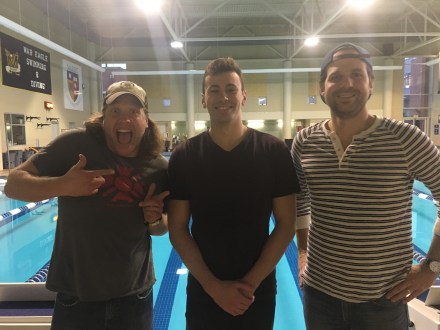
Working with Olympic Gold Medalist Blake Pieroni for Mizuno. He’s the one without the hat. Apparently swimmers where hats enough in the pool.

Momentum

The 3rd birthday is a fun milestone to reach. Just as each wedding anniversary is represented by a different gift (Honey I got you a new sponge!), each business birthday represents something unique. The first birthday is the ‘We’re really doing this!’ birthday. The second is the ‘We’re still alive!’ birthday. And the third is the ‘Now we’re rolling!’ birthday.

IMG_0011
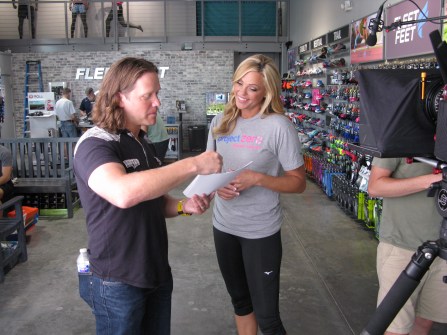
On set, showing Olympic Gold Medalist Jennie Finch my disappearing water bottle trick.

Indeed, The Weaponry is rolling. This past year has been exciting for our team.

A Few Highlights:

  • We hired more full-time and part-time staff.
  • We renewed our lease on our first office in Milwaukee.
  • We opened a new office in Columbus, Ohio.
  • We worked with President Jimmy Carter.
  • We worked with Olympic Gold Medalists Jennie Finch and Blake Pieroni.
  • Members of our team experienced work traveled to Maine, Massachusetts, Ohio, Washington DC, Georgia, Florida, Louisiana, Arkansas, Texas, California, Wisconsin, Illinois and Indiana.
  • We had our first International shoot, on the other side of the world, in India.
  • A fun experience was had by all.
IMG_0198
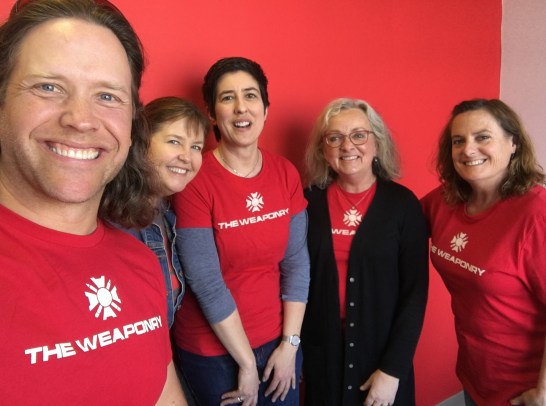
Me and some of the ladies in red!

Client Roster

In the last 12 months we have worked with 23 Clients! Who works with 23 clients? I guess The Weaponry does.

Saying Yes!

Our broad and diverse client roster reminds me of one of my favorite things about being a business owner: I get to say yes to anything I am interested in doing. As result we have a fun mix of large, medium and small clients. Just as crop rotation keeps farm fields producing at their best, the variety of industries we play in keeps our team fresh and stimulated with a constant stream of new and varied challenges.

5EC60C29-D182-4461-B11C-B1A16293CC4C
Our team working with our friends at Safelite Autoglass. Did you know  they both repair, and replace?

10 Lessons From My 3rd Year of entrepreneurship.

As I reflect on this past year I have gathered a few key lessons I’ve learned. Here they are in a particular order.

  1. People make all the difference. A business is nothing but a collection of people running plays together. So find great people to run great plays and you are likely to experience great success.
  2. Slow and steady wins the race. At The Weaponry we are trying to build a business that lasts forever. You make different decisions when your goal is to survive eternally instead of generating hockey stick growth or making a quick sale.
  3. Do the important but not urgent work. Maintain your human relationships and invest time and energy in them. This will pay you back in a wide variety of rewarding ways.
  4. Diversify your clients. With so many different clients we are well-balanced financially. All of our clients are important to us. None of them are critical to our survival.
  5. Nothing is sure. We signed a large monthly retainer with a new client last summer, only to deal with a major reorganization within their business that changed everything one month later. I received a ‘This is your official notice that we are activating our right to cancel this agreement!’ from someone I didn’t know. Those things can happen at anytime.
  6. You never know when you are going to get the next opportunity of a lifetime. I got a random but welcomed call one day from my good friend Dennis Giglio at Fifth Third Bank, telling me that he had a project he wanted us to work on, and that there was a good chance we would have to go to India to shoot part of it. He was right. And it was amazing. Thank you Fifth Third and SLK Global friends for the opportunity!

    IMG_2657
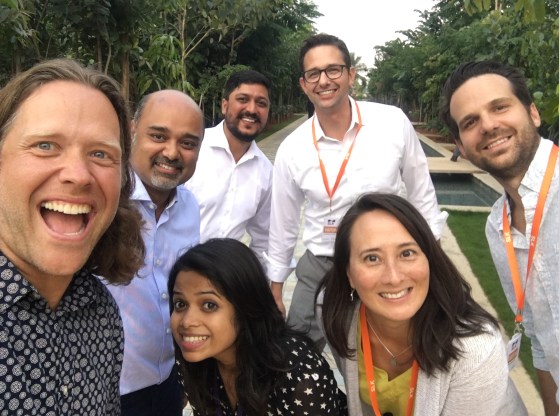
    Working with our friends at Fifth Third Bank and SLK Global in India.
  7. Set Your Sights High. The Weaponry has Big, Hairy, Audacious Goals, and they force us to grow. I share our goals with our team in every agency-wide meeting. And despite the largeness of the goals, or perhaps because of them, I can always see the team focus, and lean in when we restate them. Everyone knows what we are after. We all know that we have a lot of work to do to close the gap between where we are today and our idealized, fully formed version of ourselves. And we are willing to do the work to get there.
  8.  Use A System For Growth. We use the EOS System from the book Traction by Gino Wickman. It makes a huge difference. If you are struggling to make satisfying progress with either a startup or a fully formed business, pick up this book and start the EOS Process. Setting quarterly rocks helps a business focus on continually moving the business forward. (This has been an unpaid endorsement of the book Traction. You can find it by clicking here.)
  9. Make Cash Flow plans This past year The Weaponry was owed a lot of money. For several months we carried an accounts receivable balance of over $700,000. Which meant that we had performed that much work, had paid what it cost us to create the work, but were not yet paid by our clients. You have to have a plan for such times. Because a business that runs out of cash is like a car that runs out of gas, or a human that runs out of blood.
  10. Develop Great Partners  Over the past year other businesses that we partner with on projects have brought great new clients to us. This is a total game changer. Because it is like having an additional business development team, or multiple business development teams bringing you opportunities. Sometimes it comes in the form of a collaboration. But other times the work comes simply as a trusted referral. And it works like compounded interest. Which is why you should compound your interest in great partners.

Key Takeaway

The Weaponry continues to grow. I am learning and growing just as much as the business. I have not done any of this alone. My fellow Weapons have been key to our success. As has the growing list of great clients we are lucky to work with. Thank you for following the story or being part of the story as it unfolds. It’s been an exciting adventure. I look forward to what the next year brings!

*If you know anyone who could benefit from this story, please share it with them.

A lesson from my son on the value of mistakes.

Over the past week my family and I enjoyed a spring break trip to Texas. On Good Friday my son Johann and I got up early to nab poolside seats for our last day before returning home. In fact, we got down to the pool before it was open for the day. But there was no moose out front telling us the pool was closed for two weeks for cleaning and repairs. So we found some Adirondack chairs near an outdoor fireplace, and sat and talked, like fathers and sons should.

Good Talk Russ

Good Talk Russ

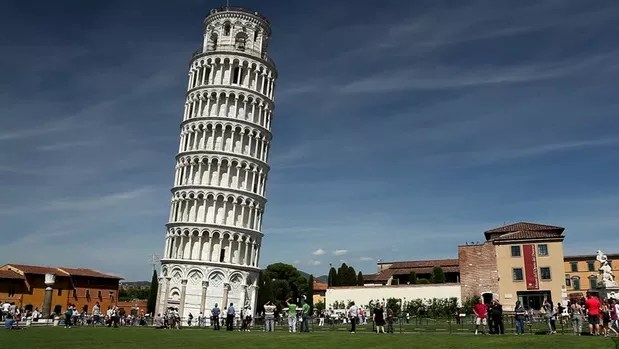
Johann is one of my favorite people to talk to because his mind dances. We talked about whether Star Wars took place in the past or the future. While I said it all seemed futuristic, he reminded me that it took place long ago in a galaxy far, far away. We covered funny Chris Pratt lines from Jurassic World: Fallen Kingdom. And we talked about the leaning tower of Pisa.

The Leaning Tower

As we discussed the leaning tower from a long time ago in a country far, far away, Johann shared an interesting observation. He said, ‘You know Dad, no one would care about the tower if it wasn’t leaning. It is the leaning that makes it interesting.’

I asked Johann if he thought there was a life lesson to be learned from the leaning tower. He quickly replied,

‘Even our failures can be a work of art.’  -Johann Albrecht (age 11)

Key Takeaway

Don’t beat yourself up over your failures. They make you and your story more interesting. Make the lean in your tower work for you. Make a wrong turn at Albuquerque, then make that your catch phrase. Don’t avoid your mistakes. Embrace them. They are often blessing that pay dividends for years, or even centuries to come.

*If you know someone who could benefit from this story, please share it with them.

I found this inspiring JFK quote on the road.

This week my family and I loaded up the old Family Truckster for a road trip across the Lone Star State. We are covering Dallas, Fort Worth, Frisco, Plano, Waco, Austin, San Antonio and more. What I like most about this type of travel are the unexpected gems you discover along the way.

Doing Dallas

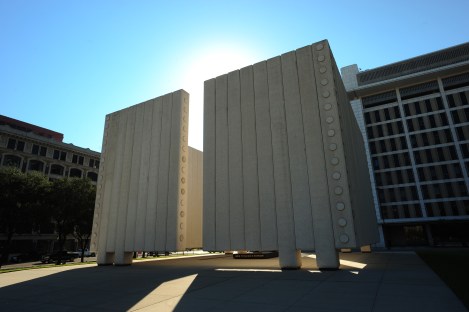
While we were in Dallas we decided to see the site of John F. Kennedy’s assassination. It was both interesting and sobering to see where this historic event occurred in 1963. We saw the book depository, although I still don’t know what a book depository is. We saw the route JFK’s motorcade was traveling in his last moments. We saw some grassiness. We saw some knoll. And we saw the JFK Memorial. Which made me think they must not have had many memorial options.

Kennedy-Memorial-front-view.jpg
The JFK Memorial in Dallas. It’s a cement box.

The JFK Quote

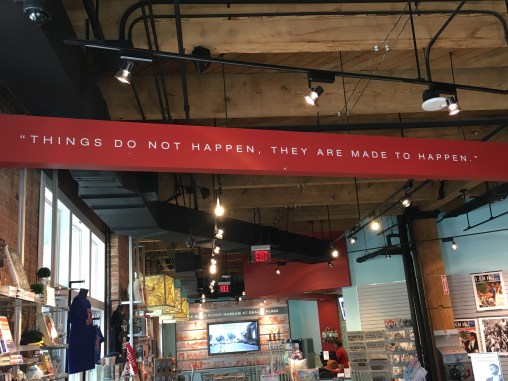
We stopped into the JFK Museum store, where I was greeted by a JFK quote I had never heard before. Of course there are plenty of famous JFK quotes:

  • “Ask not what your country can do for you… ask what you can do for your country.”
  • “We choose to go to the moon in this decade and do the other things, not because they are easy, but because they are hard.”
  • “Honey, let’s keep this our little secret…’

But I liked the new-to-me JFK quote better than any of the others.

“Things do not happen. They are made to happen.”  -John F. Kennedy

Making Things Happen

This quote summarizes everything I know about making an impact and achieving great things. It summarizes how you build and maintain a strong network of friends and family. It applies to everything from gardening to creating a new law to building a business from dust. These things don’t just happen. You have to make them happen.

None of the things you want in life will happen on their own. They require energy and action. This is both a warning and an inspiring call to action. It warns us that without action you will get nothing and have nothing. But with action you can have anything you are willing to work for.

IMG_5172
The inspiring JFK quote in the museum store in Dallas.

Key Takeaway

Action is everything. It is the difference between dreaming and doing. If you want something to happen you have to force it to happen. You have to will it to happen through your vision, action and energy. This simple rule applies to friendship, to entrepreneurship and every other ship in between.

Also, do more road tripping. It is the best way to collect dots and connect dots.

*If you know someone who could benefit from this story, please share it with them.

The latest, greatest life lesson from sports.

Most of the greatest lessons I’ve learned in life have come from sports. They come from the successes and failures I have experienced personally, and from the countless sporting stories I’ve witnessed. The lessons have come from all levels of athletic competition. And from sports ranging from horse racing to floor hockey. #Epic3rdGradeGymClassComeBackStory.

I have been collecting life lessons from sports since I was a little boy. From The Miracle On Ice, I learned that miracles really do happen. From Kirk Gibson and Ray Rice I learned that sometimes all it takes is one swing. Billy Buckner taught me that there is no such thing as a routine ground ball. Steve Bartman taught me that people love a scapegoat (my wife Dawn was at that Cubs game and called me, afraid for his life). Buster Douglas taught me to take every opponent seriously. And my New England Patriots taught me that even when there is a 99.5% chance that you will lose, you can still win. I wrote about that in The most inspiring statistic in Super Bowl history.

My Greatest Lesson

In high school I learned my own sports lessons through football and track and field, with an emphasis on the field. But the greatest lesson I ever learned came in the fall of my senior year back in Hanover, New Hampshire. During an ordinary football practice, 4 weeks into the season, two of my teammates crashed into my left knee, tearing both my ACL and MCL. If you are lucky enough not to know these acronyms, they refer to two of the critical ligaments that hold your knee together.

Not only was my knee crushed, so were my spirits. But following knee reconstruction surgery at the end of October, I set my sights on coming back to compete in the spring track season. Competing was a long shot. But I was 100% determined to make it happen. I rehabilitated my knee completely on my own. I didn’t need any outside motivation. I was obsessed.

The Comeback

Just 7 months after surgery I completed my unlikely comeback. At the New England High School Track and Field Championships in East Hartford, Connecticut, I won the boys discus title. Even better, I set a new New Hampshire state record in the discus. A record that would stand for 12 years. As a result, I learned that determination is your most valuable asset. 

The University of Wisconsin

That fall I enrolled at The University of Wisconsin, where I continued my track and field career. My senior year I became the 4th best discus thrower in school history. Even better, our team won its second consecutive Big 10 Track & Field Championship.

But there was another significant event that happened just before my senior year at Wisconsin that feels even more relevant this morning. That’s when the great Dick Bennett was hired as Wisconsin’s head men’s basketball coach.

The Bennetts

Coach Bennett is a wonderful man and a brilliant coach. He came to Madison from the University of Wisconsin-Green Bay, where he had created an off-broadway powerhouse of a basketball program. The shining star of the UWGB Fighting Phoenix was Dick’s son Tony, who I believe still holds the all-time record for career 3-point shooting percentage.

tonybennettvirginia-e1554755296173
Tony Bennett, pre-dab.

I loved seeing Dick Bennett around the McClain Center, our athletic facility in Madison. He always had a pleasant greeting for this unknown track participant. And I had high respect for everything he did for the basketball program. In fact, he was the 4th head coach for the Badgers in my 5 years of college. Just 4 years later, in 2000, he would lead the team to the Final Four.

During my senior season, and the following summer I would often see young and handsome Tony Bennett in the McClain Center weight room. His wife Laurel would often work out there too. I regularly talked with Laurel, and learned that she was from Baton Rouge, Louisiana, and went to LSU. Her accent was as cute as she was. We talked about some of my favorite memories from competing in track meets at LSU. Including the tiger cage right next to the discus cage, the crawfish, Lou’s Fries, Pleasant Hall and my favorite track and field venue on earth.

Virginia Basketball

Based on my casual acquaintance with the Bennetts, I followed Tony’s career closely, and always pulled for him as if he were one of my own. I was thrilled to see him land the job as the University of Virginia’s head basketball coach in 2009. In fact I began rooting for this seemingly random school’s men’s basketball program. Tony’s rise in Charlottesville came quickly. Which would set Tony and his team up for a historical fall.

The Loss

In 2018, with a 31-2 record, Virginia earned the highly coveted #1 seed in the men’s championship tournament. Everyone who has ever filled out a March Madness bracket knows that you never pick a #16 seed to upset a #1. Because it had never happens. Never-Ever. In fact, it had never happened in the history of the NCAA tournament. Until last year.

Following what had been a dream season, Virginia suffered a nightmarish loss to UMBC. Most people had no idea what those initials even stood for. It was not the University of Michigan-Battle Creek. It was actually the University of Maryland, Baltimore County. But it could have been the University of My Butt Crack for all I knew of this team.

Yet suddenly, the UMBC Retrievers were the ultimate dragon slayers. They did what people said no one could ever do. As a result of their victory, Coach Tony Bennett and his Virginia team would have to carry the burden of their unprecedented defeat for the rest of their lives.

What Happened Next

But Bennett’s response to the unfathomable loss was composed, dignified and gracious. He would later refer to the loss as a painful gift. The Virginia team, lead by Bennett, then did the hardest thing in sports. Perhaps the hardest thing in life. After crashing and burning, they rose again from the ashes, like a fighting Phoenix. They used their historic loss as fuel. And they powered forward with new resolve.

Another Chance

The 2019 regular season would prove to be every bit as successful as 2018 for the Virginia men’s basketball program. The team went 29-3 during the regular season and ended the year ranked 2nd in the country. They once again won a #1 seed in the NCAA Division 1 Championship Tournament. And this time, the whole country watched to see if they would once again exit the Big Dance under historical circumstances.

Unfortunately, it soon appeared they were doomed to repeat the past. In the first half of their matchup against 16th-ranked Gardner-Webb they were down by 14 points, before pulling out of their nosedive, and rallying to a 71-56 win. They then won a series of heart stopping victories over Oregon, Purdue and Auburn.

In the unbelievable win over Auburn in the semi finals, Virginia was down by 2 points with 0.6 seconds on the clock. But a foul on a 3-point shot attempt sent Virginia’s Kyle Guy to the free throw line, where he coolly hit all 3 free throws to win the game and send his team to the National Championship.

The National Championship

Last night in the title game, Virginia played like champions. So did their rivals, Texas Tech. The result was a thrilling 68-68 tie at the end of regulation. But in the overtime period, Bennett’s team showed their true character, pouring on a dominating performance when it was needed most. When the final buzzer buzzed, the scoreboard read Virginia 85, Texas Tech 77.

The New Lesson

And just like that, the world of sports had another lesson for its followers. It came from the too-good-to-be true story of the 2018-2019 Virginia men’s basketball team. The team that suffered the worst defeat in the history of college basketball, and then bounced like no one has ever bounced before. And in just one year, this team of character, grit, brotherhood and respect rebounded to win a national championship. The first in school history.

Tony Bennet has a belief that he often references: ‘The most faithful wins.’ Well, I for one believe. I believe that if you believe in yourself, have faith in your abilities, in your teammates, in the power of hard work, sacrifice and determination, and in a higher power to strengthen you, great things will come your way.

Key Takeaway

Bad things will happen to you. This is a simple fact. But it is how you respond to the setbacks that makes all the difference. If you see your losses as painful gifts, and not prepackaged excuses, you have already won. Because you have put yourself on the right path for future success.

Have faith that if you do all the right things, the right things will come to you. Virginia’s championship now serves as a monumental reminder of this lesson. It’s a wonderful story that will be revisited for decades, as coaches, parents and friends console athletes after devastating defeats. Because with the right mindset a loss is not a loss. It is a painful gift that can positively change your life forever.

*If you know someone who could benefit from this story, please share it with them.

Why I don’t believe in a work-life balance.

I don’t believe in a work-life balance. It implies that our work and our lives are two separate entities. Which they are not. Those hours you spend at work each day comprise a gigantic chunk of your life. If you are not happy at work, you are not only wasting your career, you are wasting your life. Those are just the facts.

The notion of a work-life balance implies a teeter-totter or seesaw life construct. It requires our work to sit on one side of our personal fulcrum, and our lives to sit on the other. The two sides are separate, but equal, and balanced. Other than in fairy tales, outer space, and 1960’s TV programs, you are never going to find the two of equal weight. Which is why I am a registered Work-Life Balance Atheist. (Although I still believe in God, Jesus, and Sampson.)

Something Better

I believe in work-life integration.  We need to construct our lives as a system in which all the parts work together to provide a natural flow. When our personal lives need to step forward and take the lead, they naturally do, even during the work day. And when work needs to be addressed while we are at home or on vacation, we can naturally allow for that to happen.

IMG_0034
Me and my sisters Donielle and Alison, and my nieces Norah and Celia on the set of a film shoot for Mizuno in Houston. Jennie Finch-Daigle, Olympic Gold Medal softball player, was there too.

My perspective could be skewed because I am a business owner, and my life and my work are inextricably linked. But you are no different. And the sooner you and your employer (or employees) accept that, the sooner you can create a happier, more satisfied coexistence of the two.

Work-Life Integration At A Macro Level

This work-life integration is the reason that my family relocated our home base from Atlanta to Milwaukee 2-years ago. For Non-Americans, this is a move of 800 miles, mostly north. And there is a story.

In the summer of 2015 I began serious plans to start my own advertising agency. It was an exciting time in my career, as visions and logistics danced through my head. But at the same time a major storm was brewing in my personal life.

My Mother-In-Law

On an ordinary August evening in Wausau, Wisconsin, my Mother-In-Law, Cynthia Zabel, coughed up blood. Fortunately she has more sense than Jim Henson, so she called her doctor and saw him the next day. He ordered an MRI, which revealed a small spot on her lung. He decided to do a biopsy to investigate. The biopsy revealed a benign tumor, that the doctors decided to remove.

IMG_4873.JPG
My wife Dawn and her mom, Cynthia Zabel.

The Surgery

My wife, Dawn, decided to fly home to Wausau, from Atlanta, to be with her Mom during her surgery.  Everything was calm and routine. Until the doctor emerged from the operating room to talk to Dawn following the operation. He said,

‘Well, that didn’t go as planned. We didn’t see the tumor we were expecting to see. Instead, one of your mother’s lungs was completely encased in a tumor. I only had two options. I could leave everything exactly as it was and we would take our chances. Or I could remove the entire lung. And that is what I did.’

So Dawn’s mom, now 78-years old, had only one lung, and, as the new biopsy would reveal, two forms of non-smoking related lung cancer. She would soon be preparing for aggressive chemotherapy and radiation in order to give her every chance of survival.

Our Tribe

Our Tribe quickly rallied around us. Including our close friend and Atlanta neighbor, Dr. Crain Garrot, who is an Oncologist. He became our cancer translator and counselor throughout the process. My uncle, Allan Sprau used his connections to get us an immediate appointment with a specialist at the Mayo Clinic.

However, Cynthia felt she was in good hands with her local doctors. And with good reason. She had battled cancer with the same team before, and won. In fact, in 2015 she was a 14-year breast cancer survivor. And she trusted her doctors to help her navigate through the new and more daunting challenge.

Life Impacting Work

Cynthia’s cancer diagnoses had a major impact on our family’s life plans. Since Dawn and I were going to start our own business, we believed the business could be located anywhere. With the cancer battle ramping up, and my parents reaching retirement age, it was time to make proximity to our parents a priority.

We considered relocating to 4 great cities. Chicago, Milwaukee, Madison and Minneapolis. After visiting each of the cities, and a thorough evaluation (worthy of a separate post), we decided on Milwaukee. This great city on a great lake, put us right between Cynthia in Wausau, Wisconsin, and my parents in Lafayette, Indiana.

IMG_4638
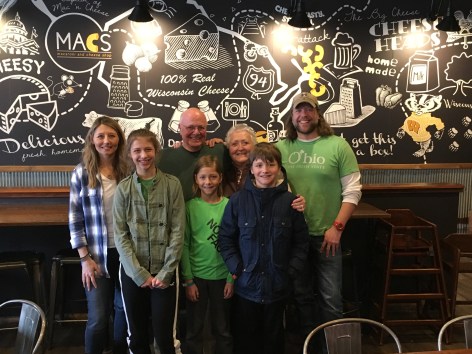
My wife, parents, children and I got together in Wisconsin a few weeks ago for basketball and mac & cheese.  

One year after Cynthia first coughed up blood, we moved to Milwaukee’s northern suburb of Mequon for the excellent schools and quality of life for our family of 5. We found a nice home on a 1-acre lot, on a pond. The Weaponry, the advertising and idea agency I initially founded in Atlanta, moved headquarters to Milwaukee without missing a beat. And just like that, Atlanta had paid back Milwaukee for taking the Braves in 1966.

Update

Yesterday, April 6, 2019 was a great day. In fact, two great things happened. My mother in-law turned 82 years old and is doing great. But even better, we live close enough that we were able to drive to surprise her at a restaurant in Stevens Point, Wisconsin, enjoy several hours together on her birthday, and then drive home again. It was exactly what we envisioned when we decided to integrate our work and personal needs, and be closer to our parents during this chapter of our lives.

IMG_4850.JPG
Dawn, Cynthia & my daughter Ava yesterday, celebrating Cynthia’s 82nd birthday, four years after her lung-ectomy.

Key Takeaway

Integrate your career and life plans into one beautiful, fully functioning design. Don’t force the two to fight against each other. And don’t settle for less. We didn’t. As a result,  Dawn and I have been able to spend quality time with both of our parents in the last few weeks alone, here in Wisconsin. Which makes me feel like I am winning at life.

Additional Takeaway

If you are having health problems see a doctor right away. Take it from Cynthia Zabel, it could save your life.

*If you know someone who could benefit from this story, please share it with them.

Yesterday I had an amazing chance to complete a life goal!

I spent the last hours of my 39th year reflecting on my life. I wrote down a long list of things I was proud I had accomplished so far. It was good to take a 40-year view of life. In fact, I consider this moment one of the pivotal moments in my adventure on Earth. It helped put my journey and path in perspective. After I took inventory of all the good things I had accomplished and experienced I turned my attention to the future.

I asked myself a simple question:

If life ended right here, what things would I regret not doing?

This was an exciting question. Because it would form my to-do list for the next chapter of life. At that point I felt like I was living up to most of my expectations. My personal life was great. I had a wonderful wife (Dawn), a daughter (Ava) and two sons (Johann and Magnus). My parents, sisters and their families were all doing well. I have a huge and wonderful extended family and great friends around the world.

img_5405
My family.

My career was going very well. I was the Chief Creative Officer of a 275-person advertising agency called Engauge, and we were about to finalize a deal to sell the agency to Publicis, the giant advertising agency holding company out of Paris.

The 4 Things

With my personal and professional life on track, what were the things that I would regret not doing if died the next day? There were 4 things that quickly rose to the top.

  1. More international travel. I had visited 11 foreign countries at that time. But that left about 200 that I hadn’t seen.
  2. Starting an advertising agency.
  3. Starting a real estate business.
  4. Donating blood.

This became my checklist of things to accomplish in the decade ahead.

The Advertising Agency

Within 2 years I began plans to launch my own advertising agency. And within 3 years I had actually left my job, started the advertising and idea agency, The Weaponry, and had clients in Atlanta, Boston, Quebec, Milwaukee and San Francisco.

IMG_0260
Me and my cousin Brooks at The Weaponry.

The Real Estate Business

By the end of that 3rd year, Dawn and I had bought a new house and converted our home in Atlanta into a rental property, complete with tenants and rental income. Which meant that we had birthed our real estate business.

The International Travel

Last year I had a really exciting opportunity to travel to India to film a video for a great client, Fifth Third bank. My experience there was incredible. In fact I summarized it in this popular blog post, 20 interesting things you notice when you travel to India. Now America is the only country that reads my blog more than India.

IMG_2606

I am excited to be making good progress on these 3 areas. Which are the toughest 3 on my list to accomplish. Which leaves just one of my goals for the decade unaddressed.

Until yesterday.

Donating Blood

Yesterday morning when I got on the elevator to go to my office I saw a flyer posted above the keypad. There was a blood drive, from 10am to 2pm in the office space directly above The Weaponry. I was thrilled. This was the sign I needed. And today was the day!

IMG_4802
The Flyer

My Dad

A quick bit of background. My Dad, Robert Albrecht donates blood like it is his job. He is the equivalent of a Million Mile Flyer for giving blood. But I had never given blood myself, and have always felt bad about this. When I was on the track team at the University of Wisconsin our coaches discouraged us from giving for training and performance reasons. After graduation I simply never found the on-ramp to giving. I have no fear of blood or needles or ‘I gave’ stickers. I just hadn’t done it.

At 11am I left my office and made my way to suite 307. I was more excited than most people to donate blood. But then again, most people don’t have donating blood on their bucket list. I walked in the room and was greeted by a blue scrubbed technician. I said, ‘If you have any time slots still available I am full of blood, and willing to give some to you.’ She laughed and told me there was an open slot at 11:50am.

I was thrilled. And at 11:50am I was back and got the process started. I signed in on a clipboard and was taken to a semi-private cubicle for my pre-screening. They took my driver’s license and entered a bunch of information about me into a computer. Then they had me scan a binder previewing the questionnaire I was about to take.

The Questionnaire

Then I took the questionnaire. It was crazy. It asked if I was, or ever had been pregnant. It asked if I took any drugs, received a blood transfusion, had AIDS or Cancer. It asked if I had ever had man on man sex, or sex with a prostitute. #thingsIhadn’texpectedtoreadthatday.

When I was finished with the 45 question survey I only said Yes to one question. The technician then reviewed my answers and said, ‘It looks like we have just one question to review.’ It says that you have traveled outside of the US or Canada in the past year. I proudly said, ‘Yes!’

The technician asked where I had traveled. I told her I had been to India. She then asked me what area I visited. I replied that I had been to Bangalore, in southern India.

She then pulled out a binder to check on any restrictions that may apply, based on my travel. Once she found what she was looking for she turned the binder around towards me. She put her finger next to the word India. She then slid her finger to show me that travelers to India were prohibited from donating blood for one year, due to the threat of Malaria.

I was denied.

She told me to come back at the end of September and they would happily take my blood. She then handing me my parting gift. It was a ticket that provided free admission for four people to Mt. Olympus Water Park in Wisconsin Dells. While I love a good water park, this was little consolation for not being able to check off one my major life goals.

Reflecting

But I couldn’t help but smile, reflecting on the last few hours of my 39th year. That night I declared I would launch my own business. Which lead to exciting international travel. Which prevented me from donating blood. In other words, I still have unfinished business.

Key Takeaway

Take inventory of your life. Give gratitude for all you have and all you’ve done, both personally and professionally. And think about the things you will regret not doing next. Write them down. Prioritize them. And give yourself a deadline to accomplish them. Then take action. Even long lives fly by. If you don’t recognize, declare and take action towards the things you want most, they will never happen.

I am excited to have made such good progress on 3 out of 4 Decade Goals. In September I expect to knock off another. Unless, of course, I have more exciting international travel before then. Which is always a possibility. Afterall, it is on my to-do list.

*If you know someone who could benefit from this story, please share it with them. 

How to attract good things by starting early.

I loved my college experience. But when I graduated, I was thrilled to be done with school. Like Alice Cooper. Yet I was far from done with my education. Since I graduated from the University of Wisconsin I have been busy acquiring self-directed micro-degrees. How? First, by making up this silly, but plausible term. Then, by reading. Not just reading for reading. I am constantly looking for new books, magazines and online articles to help me become a smarter, more effective human, a better business person and a more creative thinker.

7 Habits

One of my favorite micro-degrees came from reading  Stephen R. Covey’s classic, The Seven Habits of Highly Effective People. Reading books like these is akin to taking a college course, only without the chance to meet an attractive co-ed. In fact, I have learned, retained and applied more from books like this than from many of my college courses. (Sorry dude who taught that Emotions class junior year. That was worthless.)

Not Urgent, Not Urgent, No Emergency…

In his best-selling book, Covey introduces a concept that I absolutely love. It’s the idea of spending more time doing things that are important but not urgent. This is really where the magic in your life comes from. When I learned about this concept I realized that I already did a lot of work in this quadrant.

Check out the impressive quads on the chart below.

covey_matrix

The important but not urgent work is the key to all of the good things that have happened in my career. But as I have created and grown The Weaponry, my advertising and idea agency, this type of activity has been crucial.

Important but not urgent, in action.

I identify talented people who I want to join our team, and begin planting seeds. I plant seeds all the time that I don’t expect to bear fruit, nuts or vegetables for years. In fact, there are talented people in cities across America that I have been talking to about joining The Weaponry,  not in the next weeks or months, but in the next years.  

Why? Because great things often take a long time to develop. So I want to start the process as early as possible. My goal is not only to appear on the radar of talented people, but for the course of these talented people’s careers to begin steering towards me.

I want to create a gravitational pull towards me and my organization. How?  Through early conversations these valued recruits can begin imagining us making magic together. By creating an attractive vision of the future, the people start steering their courses towards this attractive future reality.

The Power Of Advertising

This early recruiting activity works just like marketing and advertising. Because advertising, through brand awareness and brand affinity, begins to create a gravitational pull towards products and services.

I have spent my entire career planting seeds about the merits of various brands. Eventually, by sharing those merits, customers, clients and members find their way to the brands that can help solve their problems or enrich their lives. And everyone wins. This is what I am doing now, both personally and professionally. And you can too.

Key Takeaway

To attract the people you want to surround yourself with, start early. Start well before you need them. Whether you are looking for friends, co-workers or customers, begin recruiting today. Offer others a picture of what a friendship, career or success could look like when you join forces. Do the important work early, before it becomes urgent. Then watch as paths alter in your direction. It’s a pretty amazing thing to see. It’s what highly effective people do. You know, people like you.

IMG_4755.jpg
Amanda Peraud and I met last week about the possibility of this senior at Illinois working with The Weaponry. It was a classic important but not urgent activity. Also, Amanda’s cousin Melissa Roth, is a good friend of mine. So this was also classic networking activity.


Why you should share what you know for no good reason.

I grew up in Vermont. If you’ve ever met me you know I am very proud of this fact. Vermont was a wonderful place to be a kid. It was beautiful, safe and quiet. There were various career options available to Vermonters. We had a lot of maple syrup farmers, stone fence stackers, and a couple of world-class ice cream makers. But I didn’t know a single advertising professional.

house near road on forest
The maple syrup district in my hometown of Norwich, Vermont

I left Vermont for college and went to the University of Wisconsin. When I graduated and wanted to find a job as a copywriter for an advertising agency, I didn’t know anyone who could help me prepare for my job search.

A Friend of a Friend of a Friend.

However, I did have friends. My college friend Gina Wagner (now Gina Zanik of Salt Lake City) told me that a friend of her Mom’s might know someone who could help. A few calls were made, and through a friend-chain I was put in touch with a man named Paul Zukowski.

Paul Zukowski

Paul, a grown man with a real advertising career, then did something remarkable. He took time out of his day to meet with me, a total stranger, on a Saturday, to offer advice on how to best present my work, to maximize the chances of landing a job as an advertising creative.

Paul not only owed me nothing, he was likely to get nothing in return for helping this penniless, jobless, cotton headed ninny muggins. Yet Paul offered me some of his valuable time and gave me some really great, if not unconventional advice. Advice that ultimately helped me land my first job in advertising. And this blog post, written 23 years later, is all he got for his effort. (Although, upon his death he may receive eternal consciousness. Which is nice.)

Visit-780x460-0006-UnionSouth3.jpg
Union South at the University of Wisconsin, where Paul dropped knowledge like college.

Thinking of Paul

I haven’t seen Paul since the day we met at Union South in Madison, back in 1996, But I have thought of Paul often. In fact, I think of him every time a college student contacts me asking for an informational interview. I think of him every time someone wants advice on launching their own business. I think of him every time someone who is looking for a new job wants to grab coffee. I think of him when an aspiring blogger wants to buy me a chocolate milk and learn how to get started. (You can learn most of what I know here.)

The Impact

Paul Zukowski, a man I have seen once in my life, played an important role in my advertising career. When I was desperately trying to get my foot in the door, he showed me how to put my best foot forward. As a result I got a job as a copywriter. I then got promoted all the way to Chief Creative Officer, before launching my own advertising and idea agency called The Weaponry in 2016.

IMG_8840
Me at work, reflecting. Or at least posing as if I am reflecting.

Paying It Forward

Today, I pay it forward and continue the goodwill that Paul started by helping others. This week I drove from Milwaukee to The Weaponry’s new office in Columbus, Ohio. During my drive I spent more than 3 hours talking to people who reached out to me because:

  1. They were about to graduate from college.
  2. They recently moved and were looking for a job and a network in a new city.
  3. They had lost a job and needed to figure out their next chapter.

I don’t expect a thing from any of the people I try to help. Although I hope my willingness to help encourages them to help others down the road. Just like Paul helped me.

Key Takeaway

Sooner or later we all need a Paul Zukowski. We need someone who can help us chart a new course through a foreign land. While it’s great to find someone who will do that for you, it’s even better to be the Paul Zukowski. To be the one who offers help and guidance while expecting nothing in return. Because it sets off a chain reaction that can make a significant impact on a significant number of people for generations to come. Heck, it can even help a kid from rural Vermont (#redundant) start a career in advertising, launch a business, and launch a blog to share the story with the world.