Yesterday I had an amazing chance to complete a life goal!

I spent the last hours of my 39th year reflecting on my life. I wrote down a long list of things I was proud I had accomplished so far. It was good to take a 40-year view of life. In fact, I consider this moment one of the pivotal moments in my adventure on Earth. It helped put my journey and path in perspective. After I took inventory of all the good things I had accomplished and experienced I turned my attention to the future.

I asked myself a simple question:

If life ended right here, what things would I regret not doing?

This was an exciting question. Because it would form my to-do list for the next chapter of life. At that point I felt like I was living up to most of my expectations. My personal life was great. I had a wonderful wife (Dawn), a daughter (Ava) and two sons (Johann and Magnus). My parents, sisters and their families were all doing well. I have a huge and wonderful extended family and great friends around the world.

img_5405
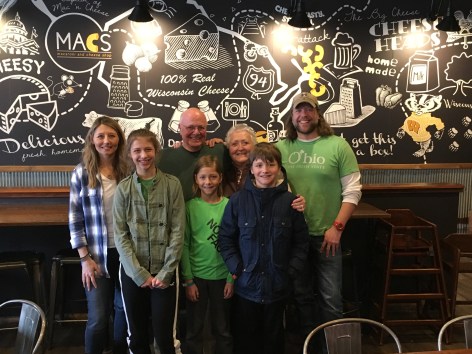
My family.

My career was going very well. I was the Chief Creative Officer of a 275-person advertising agency called Engauge, and we were about to finalize a deal to sell the agency to Publicis, the giant advertising agency holding company out of Paris.

The 4 Things

With my personal and professional life on track, what were the things that I would regret not doing if died the next day? There were 4 things that quickly rose to the top.

  1. More international travel. I had visited 11 foreign countries at that time. But that left about 200 that I hadn’t seen.
  2. Starting an advertising agency.
  3. Starting a real estate business.
  4. Donating blood.

This became my checklist of things to accomplish in the decade ahead.

The Advertising Agency

Within 2 years I began plans to launch my own advertising agency. And within 3 years I had actually left my job, started the advertising and idea agency, The Weaponry, and had clients in Atlanta, Boston, Quebec, Milwaukee and San Francisco.

IMG_0260
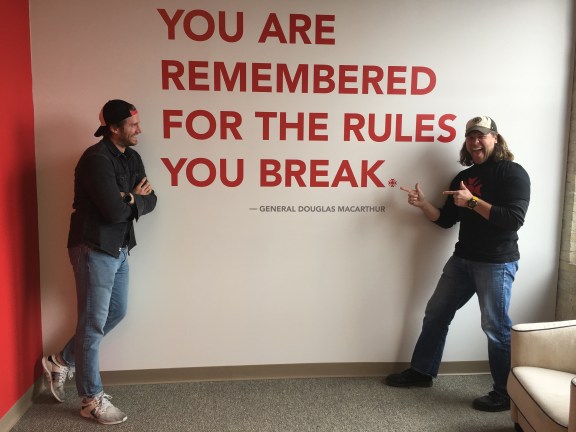
Me and my cousin Brooks at The Weaponry.

The Real Estate Business

By the end of that 3rd year, Dawn and I had bought a new house and converted our home in Atlanta into a rental property, complete with tenants and rental income. Which meant that we had birthed our real estate business.

The International Travel

Last year I had a really exciting opportunity to travel to India to film a video for a great client, Fifth Third bank. My experience there was incredible. In fact I summarized it in this popular blog post, 20 interesting things you notice when you travel to India. Now America is the only country that reads my blog more than India.

IMG_2606

I am excited to be making good progress on these 3 areas. Which are the toughest 3 on my list to accomplish. Which leaves just one of my goals for the decade unaddressed.

Until yesterday.

Donating Blood

Yesterday morning when I got on the elevator to go to my office I saw a flyer posted above the keypad. There was a blood drive, from 10am to 2pm in the office space directly above The Weaponry. I was thrilled. This was the sign I needed. And today was the day!

IMG_4802
The Flyer

My Dad

A quick bit of background. My Dad, Robert Albrecht donates blood like it is his job. He is the equivalent of a Million Mile Flyer for giving blood. But I had never given blood myself, and have always felt bad about this. When I was on the track team at the University of Wisconsin our coaches discouraged us from giving for training and performance reasons. After graduation I simply never found the on-ramp to giving. I have no fear of blood or needles or ‘I gave’ stickers. I just hadn’t done it.

At 11am I left my office and made my way to suite 307. I was more excited than most people to donate blood. But then again, most people don’t have donating blood on their bucket list. I walked in the room and was greeted by a blue scrubbed technician. I said, ‘If you have any time slots still available I am full of blood, and willing to give some to you.’ She laughed and told me there was an open slot at 11:50am.

I was thrilled. And at 11:50am I was back and got the process started. I signed in on a clipboard and was taken to a semi-private cubicle for my pre-screening. They took my driver’s license and entered a bunch of information about me into a computer. Then they had me scan a binder previewing the questionnaire I was about to take.

The Questionnaire

Then I took the questionnaire. It was crazy. It asked if I was, or ever had been pregnant. It asked if I took any drugs, received a blood transfusion, had AIDS or Cancer. It asked if I had ever had man on man sex, or sex with a prostitute. #thingsIhadn’texpectedtoreadthatday.

When I was finished with the 45 question survey I only said Yes to one question. The technician then reviewed my answers and said, ‘It looks like we have just one question to review.’ It says that you have traveled outside of the US or Canada in the past year. I proudly said, ‘Yes!’

The technician asked where I had traveled. I told her I had been to India. She then asked me what area I visited. I replied that I had been to Bangalore, in southern India.

She then pulled out a binder to check on any restrictions that may apply, based on my travel. Once she found what she was looking for she turned the binder around towards me. She put her finger next to the word India. She then slid her finger to show me that travelers to India were prohibited from donating blood for one year, due to the threat of Malaria.

I was denied.

She told me to come back at the end of September and they would happily take my blood. She then handing me my parting gift. It was a ticket that provided free admission for four people to Mt. Olympus Water Park in Wisconsin Dells. While I love a good water park, this was little consolation for not being able to check off one my major life goals.

Reflecting

But I couldn’t help but smile, reflecting on the last few hours of my 39th year. That night I declared I would launch my own business. Which lead to exciting international travel. Which prevented me from donating blood. In other words, I still have unfinished business.

Key Takeaway

Take inventory of your life. Give gratitude for all you have and all you’ve done, both personally and professionally. And think about the things you will regret not doing next. Write them down. Prioritize them. And give yourself a deadline to accomplish them. Then take action. Even long lives fly by. If you don’t recognize, declare and take action towards the things you want most, they will never happen.

I am excited to have made such good progress on 3 out of 4 Decade Goals. In September I expect to knock off another. Unless, of course, I have more exciting international travel before then. Which is always a possibility. Afterall, it is on my to-do list.

*If you know someone who could benefit from this story, please share it with them. 

How to attract good things by starting early.

I loved my college experience. But when I graduated, I was thrilled to be done with school. Like Alice Cooper. Yet I was far from done with my education. Since I graduated from the University of Wisconsin I have been busy acquiring self-directed micro-degrees. How? First, by making up this silly, but plausible term. Then, by reading. Not just reading for reading. I am constantly looking for new books, magazines and online articles to help me become a smarter, more effective human, a better business person and a more creative thinker.

7 Habits

One of my favorite micro-degrees came from reading  Stephen R. Covey’s classic, The Seven Habits of Highly Effective People. Reading books like these is akin to taking a college course, only without the chance to meet an attractive co-ed. In fact, I have learned, retained and applied more from books like this than from many of my college courses. (Sorry dude who taught that Emotions class junior year. That was worthless.)

Not Urgent, Not Urgent, No Emergency…

In his best-selling book, Covey introduces a concept that I absolutely love. It’s the idea of spending more time doing things that are important but not urgent. This is really where the magic in your life comes from. When I learned about this concept I realized that I already did a lot of work in this quadrant.

Check out the impressive quads on the chart below.

covey_matrix

The important but not urgent work is the key to all of the good things that have happened in my career. But as I have created and grown The Weaponry, my advertising and idea agency, this type of activity has been crucial.

Important but not urgent, in action.

I identify talented people who I want to join our team, and begin planting seeds. I plant seeds all the time that I don’t expect to bear fruit, nuts or vegetables for years. In fact, there are talented people in cities across America that I have been talking to about joining The Weaponry,  not in the next weeks or months, but in the next years.  

Why? Because great things often take a long time to develop. So I want to start the process as early as possible. My goal is not only to appear on the radar of talented people, but for the course of these talented people’s careers to begin steering towards me.

I want to create a gravitational pull towards me and my organization. How?  Through early conversations these valued recruits can begin imagining us making magic together. By creating an attractive vision of the future, the people start steering their courses towards this attractive future reality.

The Power Of Advertising

This early recruiting activity works just like marketing and advertising. Because advertising, through brand awareness and brand affinity, begins to create a gravitational pull towards products and services.

I have spent my entire career planting seeds about the merits of various brands. Eventually, by sharing those merits, customers, clients and members find their way to the brands that can help solve their problems or enrich their lives. And everyone wins. This is what I am doing now, both personally and professionally. And you can too.

Key Takeaway

To attract the people you want to surround yourself with, start early. Start well before you need them. Whether you are looking for friends, co-workers or customers, begin recruiting today. Offer others a picture of what a friendship, career or success could look like when you join forces. Do the important work early, before it becomes urgent. Then watch as paths alter in your direction. It’s a pretty amazing thing to see. It’s what highly effective people do. You know, people like you.

IMG_4755.jpg
Amanda Peraud and I met last week about the possibility of this senior at Illinois working with The Weaponry. It was a classic important but not urgent activity. Also, Amanda’s cousin Melissa Roth, is a good friend of mine. So this was also classic networking activity.


How much money do you need to start a business?

I recently watched an interesting story on TV about a business in Brooklyn called Ample Hills Creamery. It was founded by a wife and husband who both quit their jobs and went all-in on their unique ice cream shop. Obviously the business is doing well, or they wouldn’t be profiled on TV. But one specific statement in the story stood out to me.

‘The couple invested their whole life savings into the business.’  

This is a great line to capture attention. It says that the couple was daring, and brave. It says they risked everything. They were in a must-win situation. All the chips were pushed to the center of the table.

Now the audience has to know what happened next! Bravo, dramatic story teller!

Risking It All

Most people seem to think you have to risk everything you have to launch a new business. Most people don’t have the stomach for such risk (although it appears Americans have no shortage of stomach). So most people never consider entrepreneurship an option. And I don’t blame them. But do you really have to dig into your entire life savings to become your own boss?

My Story

I launched my own business in 2016. I had worked in advertising for 2 decades. Then, in 2015, several former clients encouraged me to start my own agency. I began by dabbling with a nights-and-weekends side hustle. I did a little freelance work for my friend Dan Richards at Global Rescue, and earned $16,000. A few months later I launched The Weaponry, my advertising and ideas agency. Global Rescue was our founding client. I opened a business checking and business banking account with Wells Fargo, and put $6000 into the checking account, and $10,000 into the savings account.

My Initial Investment

So how much money did I use to start my business? You could say $16,000, because that’s what I put into my combined bank account at the start. You could say $6000, because that is what I put in the checking account. Either of those answers could be correct. But they would be correct, like saying it takes 3 licks to get to the Tootsie Roll center of a Tootsie Pop.

No Money Down

The truth is that I started my side hustle by investing $0.00 into my adventure. All I needed to get started was my home computer, which I already had at home (hence the name home computer.) I was able to start providing value to others with the things I already owned. I simply needed action to start generating a new stream of income. I then diverted the new stream to form a reservoir. And once the reservoir grew large enough, it became my official pool of money to start my own business.

The Real Costs  

To officially launch The Weaponry I spent $120 to establish The Weaponry LLC with my state. That’s all I can remember initially spending on the business. I started by working out of my home office, using my home computer. That cost me nothing.

My first real investments in the business were a dedicated work computer, a MacBook Pro, and an iPhone. It’s amazing how much commerce you can facilitate with just those two resources. And most people already own those two powerful business tools.

Key Takeaway

Don’t be fooled into thinking you need a lot of money to start your own business. You don’t. It costs almost nothing to birth a business. There are always ways to start small. You can probably go MacGyver-style and create your own business out of things lying around your own home right now (or laying around your own home right now, depending on your grammatical choices and intended meaning).

You’d be amazed by how much you could do with just a single run to the grocery store, or the Home Depot. The cost to get on the entrepreneur-ship is much lower than you think. Even if you ultimately want to do big, capital-intensive things. You don’t have to risk your life savings. You just need to get moving. Follow the Yellow Brick road. And pick up as many of those yellow bricks along the way as you can.

*To find out more of the things I am learning on my entrepreneurial journey, consider subscribing to this blog.

Why you should share what you know for no good reason.

I grew up in Vermont. If you’ve ever met me you know I am very proud of this fact. Vermont was a wonderful place to be a kid. It was beautiful, safe and quiet. There were various career options available to Vermonters. We had a lot of maple syrup farmers, stone fence stackers, and a couple of world-class ice cream makers. But I didn’t know a single advertising professional.

house near road on forest
The maple syrup district in my hometown of Norwich, Vermont

I left Vermont for college and went to the University of Wisconsin. When I graduated and wanted to find a job as a copywriter for an advertising agency, I didn’t know anyone who could help me prepare for my job search.

A Friend of a Friend of a Friend.

However, I did have friends. My college friend Gina Wagner (now Gina Zanik of Salt Lake City) told me that a friend of her Mom’s might know someone who could help. A few calls were made, and through a friend-chain I was put in touch with a man named Paul Zukowski.

Paul Zukowski

Paul, a grown man with a real advertising career, then did something remarkable. He took time out of his day to meet with me, a total stranger, on a Saturday, to offer advice on how to best present my work, to maximize the chances of landing a job as an advertising creative.

Paul not only owed me nothing, he was likely to get nothing in return for helping this penniless, jobless, cotton headed ninny muggins. Yet Paul offered me some of his valuable time and gave me some really great, if not unconventional advice. Advice that ultimately helped me land my first job in advertising. And this blog post, written 23 years later, is all he got for his effort. (Although, upon his death he may receive eternal consciousness. Which is nice.)

Visit-780x460-0006-UnionSouth3.jpg
Union South at the University of Wisconsin, where Paul dropped knowledge like college.

Thinking of Paul

I haven’t seen Paul since the day we met at Union South in Madison, back in 1996, But I have thought of Paul often. In fact, I think of him every time a college student contacts me asking for an informational interview. I think of him every time someone wants advice on launching their own business. I think of him every time someone who is looking for a new job wants to grab coffee. I think of him when an aspiring blogger wants to buy me a chocolate milk and learn how to get started. (You can learn most of what I know here.)

The Impact

Paul Zukowski, a man I have seen once in my life, played an important role in my advertising career. When I was desperately trying to get my foot in the door, he showed me how to put my best foot forward. As a result I got a job as a copywriter. I then got promoted all the way to Chief Creative Officer, before launching my own advertising and idea agency called The Weaponry in 2016.

IMG_8840
Me at work, reflecting. Or at least posing as if I am reflecting.

Paying It Forward

Today, I pay it forward and continue the goodwill that Paul started by helping others. This week I drove from Milwaukee to The Weaponry’s new office in Columbus, Ohio. During my drive I spent more than 3 hours talking to people who reached out to me because:

  1. They were about to graduate from college.
  2. They recently moved and were looking for a job and a network in a new city.
  3. They had lost a job and needed to figure out their next chapter.

I don’t expect a thing from any of the people I try to help. Although I hope my willingness to help encourages them to help others down the road. Just like Paul helped me.

Key Takeaway

Sooner or later we all need a Paul Zukowski. We need someone who can help us chart a new course through a foreign land. While it’s great to find someone who will do that for you, it’s even better to be the Paul Zukowski. To be the one who offers help and guidance while expecting nothing in return. Because it sets off a chain reaction that can make a significant impact on a significant number of people for generations to come. Heck, it can even help a kid from rural Vermont (#redundant) start a career in advertising, launch a business, and launch a blog to share the story with the world.

Why it is so important to just keep swimming.

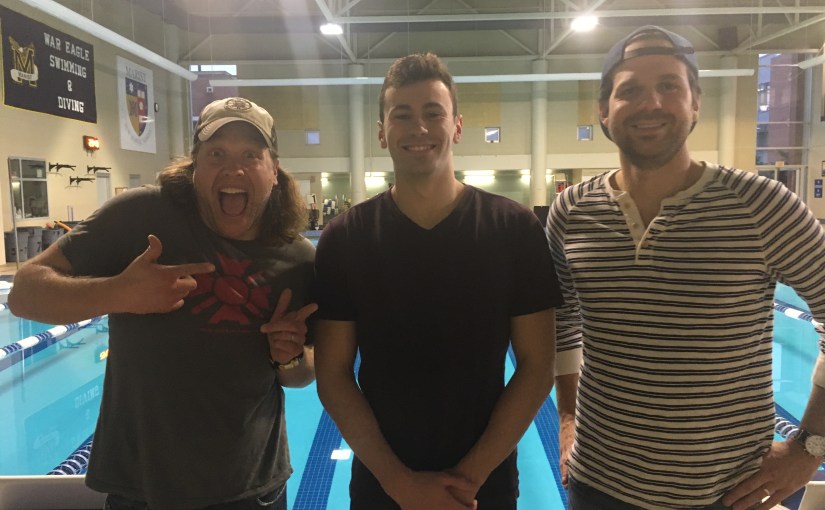
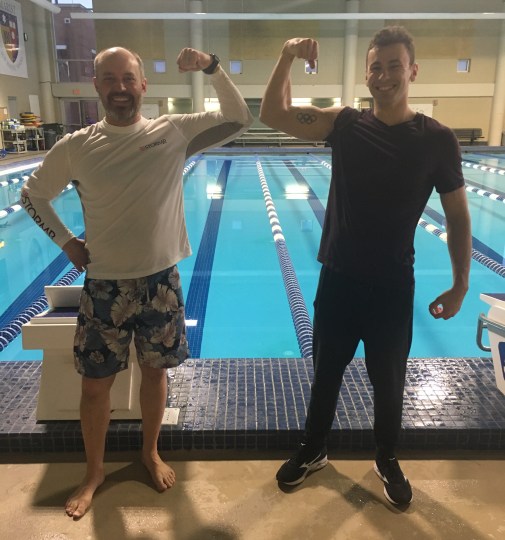
I recently had the chance to work with Olympic Gold medalist Blake Pieroni.  Blake won a gold medal at the Rio Olympics as part of the 4×100 freestyle relay. He is such a strong swimmer that he recently became a Mizuno sponsored athlete. Which is saying something, since Mizuno makes the best racing suit in the pool.

While filming with Blake I asked the Indiana native, and Indiana University student athlete about the major breakthroughs in his career. I was surprised to hear this world-class athlete say he really hasn’t had any.

Slowly Getting Faster

Blake said his progress has been steady and incremental. Day after day he continues to invest time in his training and preparation. As a result, he has slowly gotten faster. Which is a ridiculous thing to write. Yet it’s a proven, oxymoronic formula for success.

Blake’s career is a testimony to the power of slow and steady progress. It is not showy. Or gimmicky. It’s not based on shortcuts, or nepotism, or your mama paying to get you into USC. This is a get rich slow scheme. And if you are willing to put in the work it takes, it is the most certain way to continuously reach beyond your previous best.

img_4434.jpg
Blake and photographer Lucian McAfee. See if you can figure out which one is the 23-year old Olympian.

My Business

I launched my advertising and idea agency, The Weaponry, in 2016. I bootstrapped the business, which is an Arkansas-sounding way of saying the business was self-funded. We have not grown by adding one giant account. Our growth has come by steadily accumulating great clients, and steadily growing our businesses together.

I was looking at numbers related to The Weaponry’s revenue yesterday when I noticed something interesting. At just 2.5 months into 2019 we have already generated more revenue this year than we did in our entire first year. Yet we haven’t acquired an Amazonian client. We didn’t go Uber-style and quadruple our pricing due to heavy rain and an umbrella plague. We have simply accumulated 17 active clients. And they all matter to our success.

The Blog

I also started writing The Perfect Agency Project blog when I launched The Weaponry. My goal was to tell the story of my entrepreneurial journey. I wanted to share my experiences and challenges, so that others could benefit from my learnings.

Coincidentally, I noticed an interesting statistic about this blog yesterday too.  As of March 20th, in 2019 I have already surpassed the total number of visitors and viewers I had in all of 2016.

Perhaps the blog is getting better too. Because my posts have already generated 14 times (14X) more likes than the entire first year. (And by likes I mean signs of social appreciation from readers. Not likes written into the body of my posts, because I write like a 16-year-old, like, kid from Likesylvania.)

The Reward

The business and blog growth are both very rewarding. Especially because they are growing too slowly to notice on a daily basis. But when I look at the year-over-year data, the results are clear.

Key Takeaway

Just keep swimming. Keep doing what you know you need to do to get better. Whether it is swimming, writing, growing a business, studying or any other pursuit worth pursuing. The progress might never be obvious, or dramatic. But keep at it anyway. Because if you do, eventually you will turn around and notice just how far you have come. It is the cumulative progress that matters. Not the speed. Not the attention. Just the results.

Amazing advice I got from a man falsely imprisoned for 20 years.

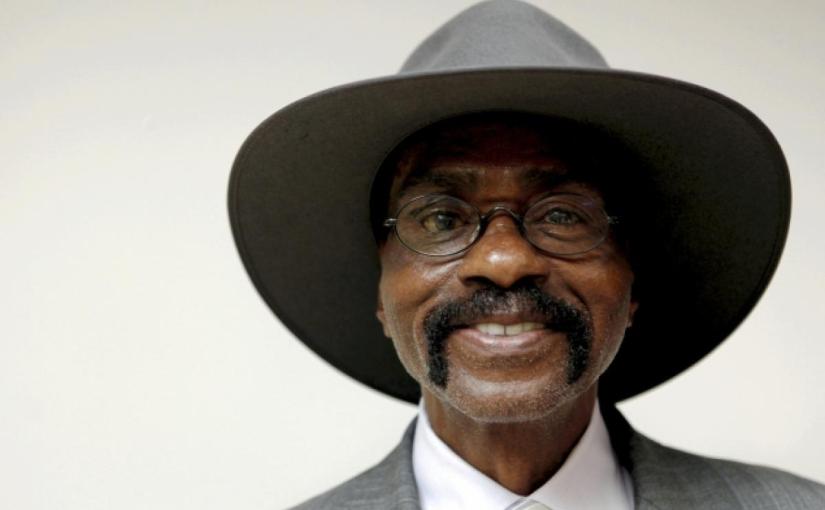
In 1999 I went to see a fascinating  speech by Rubin ‘Hurricane’ Carter. Over 3000 people showed up at Marquette University to hear from this man you have likely never heard of. But Hurricane Carter has a remarkable story, and we wanted to hear it from the man himself.

Things Started Bad

Carter was sent to a juvenile reformatory at 11 years old for stabbing a man. He escaped and joined the army. That didn’t work out so well either. He was court martialed 4 times, then discharged in 1956 as unfit for service. Oops.

Things Got Worse

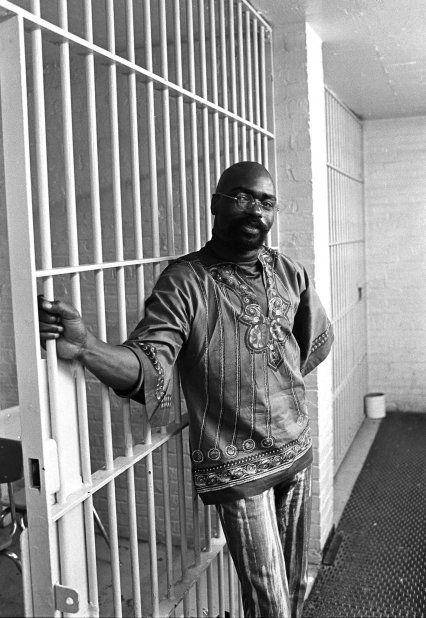
Carter became a professional boxer in the 1960s. He had a very successful career, until 1966, when he ended up in the wrong place at the wrong time. A black man, with a car like his, had murdered people in a restaurant in Patterson, New Jersey. Police found Carter nearby, and he closely matched the description of the suspect. He was arrested, tried and convicted for a crime he did not commit.

20120421_carter-slide-gg57-superjumbo.jpg

Things Got Better

After 20 years in prison, the error was finally revealed, and Carter was released. By that time Bob Dylan had written a popular song about him. Years later Carter wrote a book about his story that was turned into a popular movie called The Hurricane staring Denzel Washington as Carter.

The Question

After Carter’s speech, I stuck around the book signing to ask The Hurricane a question. I waited patiently for all the books to be signed and all the other people to leave. Then I approached Carter and asked him the question I was dying to know.

I said, ‘Mr. Carter, after spending 20 years in prison for a crime you said you did not, could not and would not commit, what was the first thing you did when you got out?’

His answer surprised me.

‘I went blind. I literally lost my sight. Prison is such a stressful place, and I had been fighting for my safety, my sanity and my freedom so hard for so long, that once I got out it was like my body shut down, and I lost my sight for a week.’

I said, ‘Wow! It is crazy that after fighting for your freedom so hard for so long, you couldn’t even enjoy it.

I will never forget what he said next.

‘Life’s funny man. Life’s a trip but you gotta take it. A lot of people will say life’s a shit sandwich. But I tell you what, the more pieces of bread you put on it, the less shit you gotta taste.’  -Rubin ‘Hurricane’ Carter

Remember this the next time you are having a hard day at work or school. Remember this when you have a tough day with your kids, the bank or the neighbors. If Rubin could say that after his time in prison, you can remind yourself of this after a hard commute.

Remember to focus on the bread. Add as much bread as you can. Look for the thick, Texas Toast loaf of life, and just keep adding it to your sandwich.

Key Takeaway

Ask people who have been through extraordinary experiences what they have learned. Grow through their growth. Take their knowledge, lessons and insights and put them in your pocket. That way you don’t have to go through what they have experienced in order to benefit from it too.

Discover the tremendous value of your $100 Ideas.

I have a friend in New York City who works for one of the biggest companies in the world. Everyone knows this e-monster. It’s a technical marvel. And it seems to be taking over the world. Which means it’s a great place to work right now. But my friend, who I will call Flora, also has a strong entrepreneurial drive. She has several great startup ideas and is trying to determine the best one to pursue, and the best time to pursue it.

The Throw Away Ideas

Flora thinks big, and wants to create a really big business of her own. Which is to be expected when you work for a global giant. But she also has several interesting ‘small’ ideas that she quickly dismisses. Flora calls these $100 ideas, and tosses them aside the way you might throw fish back in the water because they are too small to keep.

Caution Young Grasshopper

I warn Flora against disregarding the $100 ideas. There is great power in them. In fact, more people have turned $100 ideas into $1 million ideas than have made a cent off of a billion dollar idea. This is because it is much easier to get moving on a $100 idea. As I wrote about in a prior post, the key ingredient to entrepreneurial success is action.

Take The Money Making Idea And Run

If you have entrepreneurial ambitions, or want to develop a side hustle, don’t dismiss your ideas because they are not likely to get covered by Tech Crunch. See the $100 idea as a great way to start and gain experience.

Your $100 ideas teach you how to create a machine to deliver products or services. They are the intro courses to business building. Once you get started you can always expand and scale them up. You may be surprised how much your $100 idea will ultimately be worth. But only if you get started.

Adam & Sleeve

My first real business was a $100 idea. I designed and sold T-Shirts under the brand name Adam & Sleeve. I learned all kinds of valuable lessons about operating a business from Adam & Sleeve that I put to good use when I started my advertising and idea agency, The Weaponry. The Weaponry’s revenues are in the millions. But it sprung from knowledge gained running a business based on a $100 idea.

IMG_4630
One of my Adam & Sleeve t-shirts. I took down my website when I created The Weaponry in order to focus all my energies on my new business. But I still sell shirts to people who ask about them.
IMG_4632
The Adam & Sleeve shirt I will be wearing today.

Other $100 Ideas

  • Mowing your neighbor’s lawn
  • Selling those baked goods you are so good at making
  • Handmade Jewelry
  • Consulting
  • Painting
  • Raking leaves
  • Anything on Sally Struthers’ list
  • Delivering anything
  • Healthcare Patient Advocate
  • Animal Sitting
  • Reselling wholesale candy at school
  • Braiding hair
  • Cleaning homes or offices
  • Taking engagement photos
  • Critter removal
  • Posing naked for college art classes

These ideas can get you started. They can make you extra money. And you can scale them up and make even more money by growing volume. You can combine multiple $100 ideas, like mowing, snow blowing and raking leaves, then scale up to create a full-fledged yard care business. Or you could create handmade jewelry while posing naked for college drawing classes, and then sell the jewelry to the art students who drew you naked. #doubledip

Key Takeaway

Don’t underestimate the power of $100 ideas. Acting on them gets you off the sidelines and into the game. They help build entrepreneurial muscles, skills and flexibility. They build confidence and experience in sales, operations, quality control and customer service. But most importantly, they start the flow of self-generated income.

$100 ideas usually have low start-up costs. Which means they are low risk ventures that you can grow your own way (…grow your own way-ay-ay! #FleetwoodMac). You can decide how much you want to scale. You can also decide when you have learned enough to take on an even more lucrative challenge. Because an entrepreneur in motion, tends to stay in motion. Which means it is better to start with a $100 idea today than to spend a lifetime on the verge of putting a billion dollar idea into motion.

How to find your secret language and trade it for wealth and happiness.

My son Johann has always been musical. He hummed before he could talk. He sang before he got his first haircut. And he memorized lyrics to songs before he started preschool. Thankfully, my wife and I were smart enough to pick up on this. We started Johann on piano lessons when he was 5 years old. He took to it naturally. Before he even outgrew his baby lisp he was pounding out songs on our piano at home.

A few months after Johann started playing piano I was tuning a guitar at home. 5-year-old Johey walked past as I was strumming and said ‘That sounds like a G Dad.’  I stopped what I was doing and looked at him and said, ‘It is a G!’

But the question was, how did this 5-year-old piano player know this was a G on a guitar? And could he recognize other notes? I then plucked the other strings of the guitar and asked Johann if he knew what they were. Sure enough he named them all with ease. E, A, D, G, B, E.

I quickly researched perfect pitch. I learned that it is the ability to identify musical notes. People with perfect pitch can typically create the sound of a note perfectly without assistance or reference, and they can dissect the notes in a chord. In other words, they are freak shows.

I went to our piano and asked Johann if he could make the sound of middle C. He quickly produced a hum. I hit the middle C key on the piano and had a perfect match. Weird. Then, I tried what seemed really far-fetched. I asked him to face away from the piano. I then played two notes at the same time and asked him what notes they were. He nailed them both. I played 2 other notes. He nailed those too. Then I tried 3 notes together, and he named all 3.

IMG_8667
Johann and his piano teacher Rita Shur, and a bunch of rectangles .

The Secret Language

It was then that I realized that little 5-year-old Johann spoke a language that I don’t speak, and very few people do. In fact, only about 1 in 10,000 people have perfect pitch.  That’s one for each lake in Minnesota. Typically, people who develop PP (#snicker) have musical training before the age of 6. Unfortunately, we lose our ability to develop perfect pitch after the age of 9.

Recognizing his unique musical abilities and interest, we have leaned into his natural skills and talents. He is now 11 years old, and plays the piano, violin and saxophone. He performs in state piano competitions. And he can do things with a harmonica that make me think he could follow in the lip steps of Willie Nelson, Bob Dylan or John Popper.

Your Special Language

We all understand a secret language that most others don’t. Music is just one example. For others it is finance, or sales, or compassion. For still others it may be baking, sports, mechanical interactions or makeup. We all have at least one rare language that we are born with a natural ability to speak and understand.

The key is for you to identify what that is, and lean into it hard. Become fluent. Add value to the world through your mastery of that language. And it is likely to bring you great happiness, and wealth.

Discovering My Language

Johann speaks the elegant and beautiful language of music. God gave me the ability to make wordplay out of anything. Which feels more carny than Carnegie Hall. But hey, I’ll take what I can get.

I knew as soon as I learned to read that I had the innate ability to create headlines. I loved reading them in newspapers and magazines. I loved the way they quickly summarized stories, with a clever twist. I always thought headline writer would be the perfect job for me. That and chocolate milk drinker.

When I took my first advertising class at the University of Wisconsin I was completely hooked. I got straight A’s in everything advertising related. I enjoyed the strategy and the creativity of it immensely. My college professors recognized my abilities and connected me with Paul Counsel, the CEO of Cramer Krasselt, one of the greatest ad agencies in America. Paul hired me, and I got my start as a writer.

Creating a Career

I have spent my career speaking my secret language. I have enjoyed it tremendously. Clients and coworkers value my thinking. As a result, fun and interesting opportunities keep coming my way.

In 2016 I launched my own advertising and idea agency called The Weaponry. We doubled in size in 2017. We doubled again in 2018. And we have unlimited potential ahead. All because me and my teammates are specializing in our secret languages.

Your Secret Language

You can do the same thing with your secret language. Pay close attention to that thing that comes easily to you. Discover it. Develop it. And do amazing things with it. It doesn’t matter if you are young or old. Tap into your secret language and you will have tapped into your path to greatest happiness, value and financial success.

Key Takeaway

You have a secret language that has been programmed into you. It enables you to perform at a very high level. A level that most people have no chance of ever achieving. Specialize in your secret language and play to your strengths. It makes you feel smart and strong. It makes you feel comfortable. It makes you valuable to others. And when you provide great value to others, it translates to both happiness and wealth. Which are two powerful forces we can all understand.

The one phrase that makes me want to scream at work.

Business can be a frustrating game. In this game, a conveyor belt drops challenges at your feet, over and over again. Your job is to solve those challenges before they bury you alive. Like soccer Quidditch and Jarts, some people love this game, and other people hate it.

Team Sport

When a company wins everyone goes home with money. Which makes business the ultimate team sport. It requires great communication to be successful. Since I launched my advertising and idea agency, The Weaponry, I pay even closer attention to the words and phrases used at work. I have found that there are a number of words and phrases you never, ever want to hear in your place of business. They include the following:

  • “Fire!”
  • “You’re not going to like this but…”
  • “Ponzi”
  • “I just called animal Control.”
  • “Sorry, it looked like a real search warrant.”
  • “It worked for Enron.”
  • “The Repo Man”
  • “I handled it, Lorena Bobbit-Style”

But there is one phrase that bothers me more than all others:

“That’s above my pay grade.”

This phrase jolts me like an electric fence. Because it reveals powerful forces at work within the mind of the person who says it, or within the culture where it is used.

A Mindset Problem

Making this statement is a way to shirk responsibility.  It is a way of saying, ‘This is not my problem.’ Or, ‘It is out of my hands.’ Or, ‘I don’t get paid enough to think about these kinds of things.’ This mindset is the polar opposite of entrepreneurial thinking.

A Cultural Problem

If ‘That’s above my pay grade’ is commonly tossed about in your workplace it means your team members feel their opinions don’t matter. Or that they don’t feel free to speak their mind on important topics. It usually represents a clear Us vs Management division within an organization. None of these are good for business.

The Power of Empowered People

I like people who don’t sense a limit to their thinking, responsibility or problem solving abilities. I like people who take ownership. I want my people to operate as if they must make a leadership decision. Which is a product of recruiting the right types of people, and empowering them to always do what they know is right.

Key Takeaway

Take on as much responsibility as you can. Regardless of whether or not the work and the decision-making is part of your job description. Always think like a leader. When you view the world like a manager, department head or CEO, sooner than later that conveyor belt will drop a set of business cards on your desk with a title that matches your take-charge mindset.

Why I really hate my stupid smart phone.

I never wanted a mobile phone. In fact, I held out as long as I could. I finally broke down and bought my first non-land line phone in August of 2005. My wife, Dawn was 38 weeks pregnant with our first child. I wanted to be a responsible parent. That meant being accessible when my wife went into labor, and for all of the craziness that would inevitably follow.

The Garter Snake

My first phone was harmless enough. It was a little blue flip phone that was used for phone calls, and nothing else. Yes, it had a camera. But the images it captured were no better than what I could sketch with a dull crayon.

The Rattler

Two years later the ad agency I worked for issued me a Blackberry Pearl, which meant that I could get my email on my phone. Now I could never escape work. Oh, there was also a rudimentary mapping feature. And buttons. Because back then we thought it was more important to have buttons that screens. Those were quaint times.

The Black Mamba

In 2009 I was issued my first iPhone. It had an amazing camera that could capture hi-def photos and videos. It had apps that did everything but make me breakfast. Since then I have rarely been more than 50 feet from my iPhone.

The technology packed into these smart phones is mind-blowing. They have completely transformed life as we know it. And right now I am focused on how much of my time and focus have been stolen by this little fucker.

Don’t get me wrong. I fully understand that this technology has put the world at my finger tips. That is precisely the problem. I was born with a curious mind that likes to connect dots. I like information. I like to be entertained. I like to know what my friends are doing. And the smart phone has fed my every desire.

Listen All Y’all It’s A Sabotage!

Like Lorelei, the Sirens, and The Gameshow Network, smart phones create a constant distraction. Distraction is the enemy of productivity, imaginative thinking and quality time. My smart phone has repeatedly broken my focus. It has stolen some of my most valuable time, both at work and in my personal life.

On my drive home on Friday afternoon I was analyzing my week. I hadn’t accomplished as much as I thought I would or could. But why? I kept coming back to the little black distraction.

Focused action is the single most important ingredient of success. Distractions sabotage your success. When your attention gets diverted, you lose momentum. You waste energy. And you experience a frustrating loss of traction towards your goals.

The smart phone is the Everlasting Gobstopper of distractions. On any given day I could grab it to check my emails, texts and Slack messages. Then when I am curious about the weather I can grab the phone again. If I want to check in on my company’s cash flow, I can check that on the phone too. Along with the latest updates on my bank account, flight itinerary, the financial markets, and my favorite sports teams.

I can tune in to a quick podcast, listen to music, or get breaking news anytime, anywhere. Then there are the all-knowing twins of Google and Wikipedia that can answer any question that has ever been asked before. This is all before we even mention social media like Instagram, Facebook, Twitter and Snapchat. The distraction is broad and deep. So I am making changes.

This weekend my phone became a phone again. I haven’t used it to explore any curiosities. I didn’t carry it with me yesterday. I didn’t plug it in last night. I don’t even know exactly where it is right now. As a result I have been productive. I have made great progress on several important goals. I had a great new business idea. And I feel more like myself.

Key Takeaway

When you discover chronic distractions you have to eliminate them, or they will prevent you from accomplishing your mission. Smart phones can cause the same type of sabotage as alcohol, drugs, gambling and other vices, simply by diverting your attention. Smart phone time seems harmless enough until you recognize the opportunity cost of that wasted time. Time is our most precious commodity. You must defend it vigilantly if you want to achieve great things.