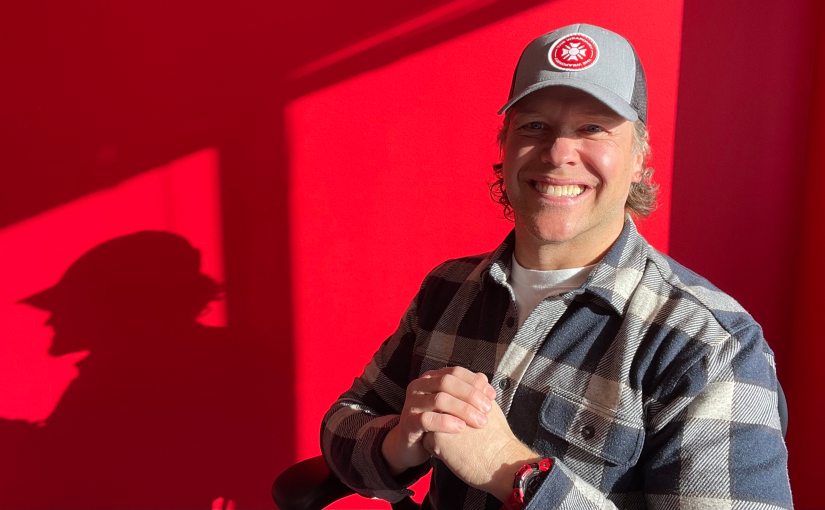
Gamify your life for more daily wins.

Like many avid self-improvers, I’m trying to grow into the best version of myself. This means adherence to healthy and productive habits. Which is hard. Because there are a lot of fun things on this planet that are unhealthy and counterproductive. Like sweet tea and turtle sundaes.

But I have found that if you gamify your life, your life becomes more fun and you get better results. This doesn’t simply mean playing more games. It means turning everything into a game. Like Milton Bradley. Or compulsive gamblers.

My life games start when my alarm first goes off in the morning. And they don’t stop until I am in bed again at night. These games help me feel like I am scoring points and winning all day long. It’s an easy way to make the actions that I know I should take each day more enjoyable and rewarding.

Fill Your Day With Games

Your work is packed with opportunities to win every day. But so is your home life, your social life, your health, your wealth, and your general self-improvement activities.

Consider the following ideas to get started.

You can gamify your sleep. Get to bed by a certain time, and you win. Wake up at a pre-set time and you win. Get a set number of hours of total sleep and you win. Don’t get kicked out of bed for snoring, and you win.

You can make weight loss a competition. Or make weight maintenance a game. I track my weight every day with the Happy Scale app, which gives me the opportunity for daily, weekly, monthly, yearly and even lifetime wins. Plus, you get bonus wins when you look in the mirror. And every time you can button your pants.

You can make your good habits a game.  Stacking days in a row of consistently completing your good habits at work or at home is a win. There are so many good habits worth developing and maintaining that there are hundreds of ways to win every day. Like Lotto games say. (But don’t play Lotto. Bet on yourself.)

You can turn meeting new people into a game. Gamifying people-meeting incentivizes you to expand your circle of friends and grow your network. Give yourself points for every new person you know by name. Having more friends expands your opportunities, supports your mental health, and gives you more phone-a-friend options if you are ever a contestant on Who Wants To Be A Millionaire.

Grow-Your-Net Worth is a game that pays you a cash prize. And increases your peace of mind. Definitely track and stack your assets. And if they hate, then let them hate and watch the money pile up.

I play the Drink-A-Glass-Of-Water-First-Thing-Every-Morning Game. And I am crushing it at this game. Proper hydration is key to great health and human performance. So play this drinking game every morning.

I gamify annual adventures with friends. Gamifying it makes scheduling our time together a priority.

I just gamified a bench pressing competition with myself. You can read about that here.

I play the Start-Each-Day-With-A-Smile game. And I’m happier as a result.

I try to be the first one to apologize when I get into a quarrel with a friend or loved one. I also compete to keep the word quarrel in use, since it has been decreasing in popularity for like 500 years.

I track my time on my phone each week and try to keep it below a winning standard.

I try to get to church every Sunday during Advent and Lent to win the Advent and Lent games.

By turning the positive behaviors you want to see from yourself into a game, they become fun to-dos. You can quantify your positive actions. Through small actions, you can put points on the board every day. Which means you can always count the good things you did, even on bad days.  

Key Takeaway

You win at life in small ways, every day. By gamifying the actions, habits and behaviors you value, you are giving yourself a fun and easy way to track them, and stack them. It’s a great way to make yourself feel like a winner every day. It’s builds confidence and positive self talk.  And it creates a clear and easy guide that you can use to measure your life. So start gamifying your life today. You can play every day. And like the state lottery commission, you can add new games every day to keep your interest up and to encourage the behaviors you value most.

*If you know someone who could benefit from this message, please share it with them.

+For more of the best life lessons I have learned check out my book, What Does Your Fortune Cookie Say? from Ripples Media. And consider subscribing to Adam’s Good Newsletter.

Are you your own bestie or worstie?

I have been listening to a lot of Parker McCollum lately.

The country singer just released his 5th studio album, titled “Parker McCollum.” I am not sure how you decide to name your 5th album after yourself. Unless you are The Jackson 5.

One of the songs on the album is titled, “My Own Worst Enemy.”

The song is interesting. And entertaining.

But I can’t relate to it.

I realized while listening to the lyrics of the song that I am definitely NOT my own worst enemy. I have other people for that.

I am not self destructive.

I don’t talk smack to myself.

I don’t beat myself up.

I don’t have a cluster of bad habits or vices that I can’t unscrew.

Unfortunately, my relationship with myself will not inspire a classic country song. Or anything blues related.

But acknowledging that I am not my own worst enemy led to an interesting new question in my squishy gray matter.

Who am I to me?

Since the worst enemy title doesn’t fit me, I started wondering if the opposite was true.

So I asked myself:

Am I my own best friend?

I found that I could make a strong case for the affirmative.

The conversations I have with myself are supportive.

I give myself pep talks.

I encourage myself.

I remind myself of the reasons to believe in myself.

I keep a list of examples of success close at hand for regular reference.

I keep a list of examples of success in my Rolodex to call on when needed.

I start each day with an encouraging talk. Sometimes in my head. Sometimes aloud. Sometimes I can’t tell the difference.

I turn to myself in challenging situations.

I don’t suffer from imposter syndrome.

Instead, I always ask, “Why not me?”

And as much as I enjoy spending time with others, I am quite happy in my own company.

When people don’t like me, I typically consider it to be their issue, not mine.

I laugh to myself and at myself a lot. Which also feels a little loony.

I reminisce a lot with myself.

I reflect a lot on myself.

In fact, this writing is a reflection on my reflection. Which is totally metta.

When I was considering starting the advertising and ideas agency The Weaponry, I really believed I could do it. And I sent myself out to talk to people I thought would corroborate that belief.

I trust myself.

And while I know I am not perfect, I forgive myself for my shortcomings. I work on getting better every day and focus on the potential and the progress. Which is a friendly thing to do for yourself.

Key Takeaway

For better or worse, I act like my own best friend. (Which may also be a sign that no one else wanted the job.) I encourage you to strive to be your own best friend. Encourage yourself. Forgive yourself. Believe in yourself. Trust yourself. Be kind to yourself. The rest of the world will throw enough challenges your way. Don’t make your relationship with yourself another obstacle to success. Treat yourself as if you were your own BFF. It will make you happier, more confident and more resilient. And you will find there is no limit to what you can accomplish together.

*If you know someone who could benefit from this message, please share it with them.

+For more of the best life lessons I have learned check out my book, What Does Your Fortune Cookie Say? from Ripples Media. And consider subscribing to Adam’s Good Newsletter.

Let your experiences and adventures change you.

This year, I have had a tall flapjack stack of fun and interesting experiences outside of work.

  • I traveled to Nashville in May to visit colleges and enjoy some live music at the Grand Ole Opry. (Although I still have no idea what an opry is.)
  • I spent our family’s spring break in Arizona, splitting time between Scottsdale and Sedona. (I didn’t have time for standing on the corner in Winslow.)
  • I completed a circle tour of Lake Michigan, seeing many things that are not that far away by the way the crow flys or the salmon swims, but quite far away by the way the car drives.
  • I coached 2 great athletes at the Wisconsin State High School Track Championship on the other side of the state in La Crosse.
  • I attended a family reunion in southern Minnesota, in my mom’s hometown of Elkton, with a whole flock of reuning relatives.

How To Profit From Your Experiences

My goal, when I experience such things, is to come back different.

I don’t want these to be inert experiences.

You want the special experiences of your life to have impact.

You want them to expand your view of the world.

You want them to create new or deeper relationships.

You want new learning.

You want new ideas.

You want to grow through each one of your novel experiences and be better as a result. (Your novel experiences don’t have to include a novel.)

You want to be a different and more capable version of yourself after the experience than you were before. (And you want to maintain all of your limbs and phalanges.)

When you aim to grow, expand and improve through your experiences, you will always find your path to accomplish your aim.

You will spot things you have never seen before.

You will recognize the learning, the lessons and the insights when they arrive.

You will grab the opportunity to meet new people you encounter. And you will find that each new person you meet will change you in some way. Sometimes these changes are large and profound. Other times, they are small and seemingly insignificant. But if you genuinely try to get to know people in a greater way, you will walk away a greater person.

Key Takeaway

Throughout your human experience, always look for ways to grow. Collect and connect dots. Add new humans to your world. Expand your circle of friends. Upgrade your world view. Come back from your experiences and adventures smarter, wiser and more informed. It helps generate excitement and curiosity every time you leave home. And it brings you back better, wiser and more creative than you were when you left.

*If you know someone who could benefit from this message, please share it with them.

+For more of the best life lessons I have learned check out my book, What Does Your Fortune Cookie Say? from Ripples Media.And consider subscribing to Adam’s Good Newsletter.

5 Lessons From A Middle School Graduation Speech We Can All Use.

Last week, my son Magnus wrapped up his 3-year run as Magnus In The Middle School. It culminated with a graduation service on Wednesday evening. My friend Dr. Matt Joynt, the Super Duper Intendent of the Mequon-Thiensville School District, spoke at the ceremony and gave the graduating 8th graders five great pieces of advice. And since I am in the business of passing along the good advice I have heard, here is the High 5 from Dr. J.

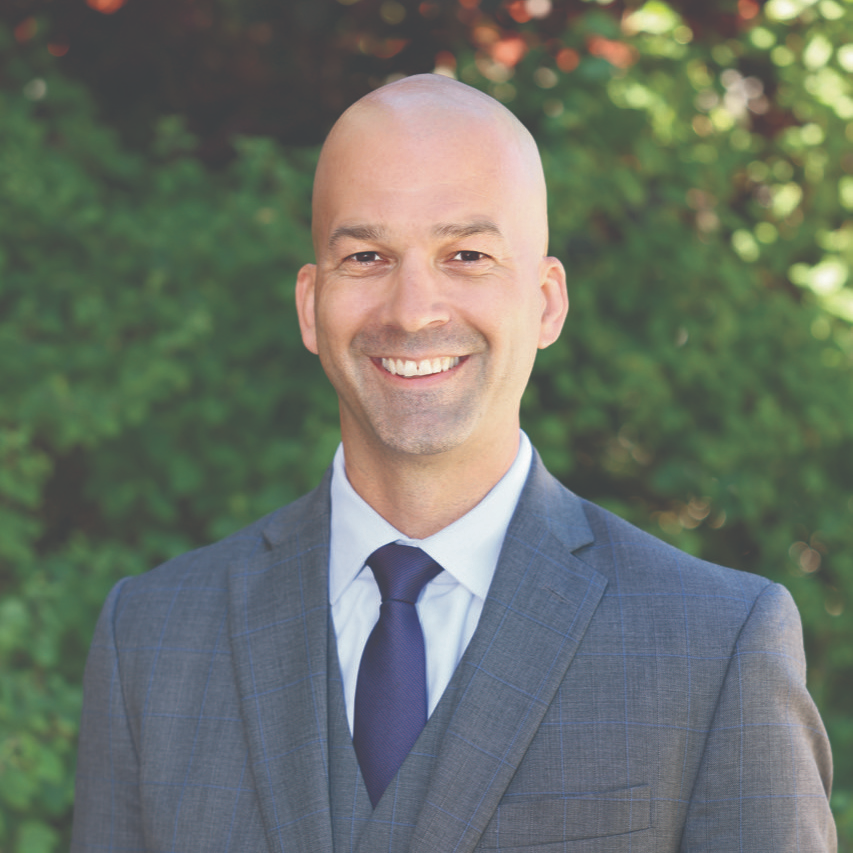
Dr. Matthew Joynt, Superintendent of The Mequon-Thiensville School District and Dropper of Knowledge.
  1. Do More Of What Works For You. I love this. To me, this means figure out what works for you in the broadest sense. The routines. The preparation. The responses. The flossing and deodoranting. It means spending your time in areas that offer you a strong return and doing things that build your confidence and drive good outcomes.

2. Make a plan for handling challenges. Challenges will always come. Like Cold & Flu season. In fact, life is one long hurdle race of interesting challenges. So expect them. And have a framework for working through them ahead of time. Develop a philosophy for dealing with them. (I repeat ‘This Too Shall Pass” a lot.) Keep advisors and supporters you can turn to when times get tough on speed dial. Or at least keep them on speed text.

3. Praise Your Base. And Show Your Gratitude. None of us does this, whatever this is, on our own. We all have people who support our success. It is important to recognize those who help you succeed and to show gratitude for what you have. And thank your tribe for tribing with you.

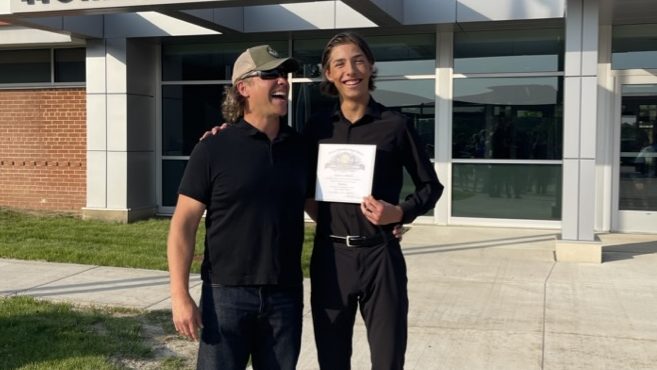
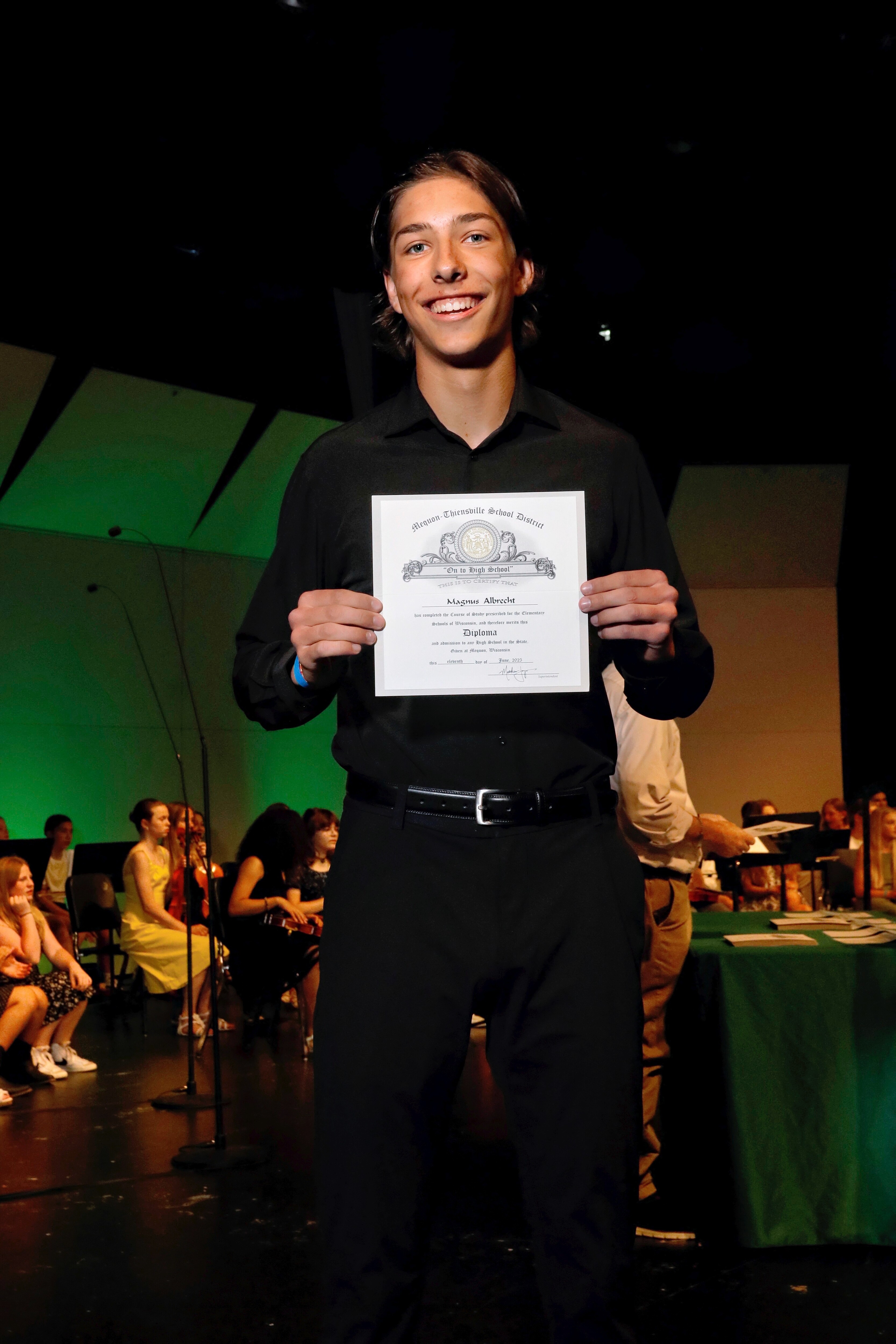
My son, Magnus, and his certificate of high school eligibility.

4. Choose a trusted adult and commit to talking to them about anything. This is strong advice for young people. Developing a trusting relationship with an adult can be one of the greatest relationships and advantages of your life. There are parents, teachers, coaches and bosses who want to help you succeed. They have already experienced many of the things you are going through, or will go through. Having that kind of resource in your corner is a huge help. Even if you don’t have an actual corner. But adults should so the same. Find someone 10 years older than you who you can talk with regularly. They can give your perspective from a decade down the road. That is a valuable resource. Kinda like Google Maps, but better equipped to eat food and drink beverages with you.

5. Thank your community. It is important to recognize that schools are supported by the community. This is through taxes, votes, volunteerism, attendance and a variety of other methods. It takes a village to create and support the schools that support your growth and development. Recognize the efforts and commitment of those in your community to your success.

However, students aren’t the only people supported by their community.

I recognize the variety of communities that support me. As a parent, I recognize that my local community helps support my children’s education and development. As an entrepreneur and business owner, my community of clients, partners and advocates support me and my team in a wide variety of ways. As an author, blogger and newsletterer, my community of readers, including you, provide valuable support through your time, attention, purchases, endorsements, recommendations and feedback. As a track coach, a strong community of athletes, parents, fans, coaches, trainers, administrators, officials, referees and media support my efforts.

Thank you to all of you who help support my efforts. You are much appreciated.

Key Takeaway

Thank you, Dr. Joynt, for sharing this good advice with our kids. But commencement speeches are not just valuable for the graduating students. They offer great advice and reminders for everyone willing to listen. So do more of what works for you, make a plan for facing challenges, praise your base, find a mentor, and thank your community. It’s timeless advice that will compound in value over time.

*If you know someone who could benefit from this message, please share it with them.

+For more of the best life lessons I have learned check out my book, What Does Your Fortune Cookie Say? from Ripples Media. And consider subscribing to Adam’s Good Newsletter.

The Power of 5 Minutes: Creating Big Impact In Small Moments.

Two weeks ago, my daughter Ava and I traveled an hour and a half to attend a Wisconsin high school sectional track meet in Neenah, Wisconsin. (Which is near Pinta and Santa Maria, Wisconsin.)

The meet was the last stop before the state championship meet. I coach 2 athletes who were competing that day in the shot put and discus. Both throwers, Terron ‘And On’ McCall and Luka ‘Ivanarock’ Ivancevic, finished in the top 3 of both events and qualified for the state meet last weekend in La Crosse. Which makes this story a prequel to the post I shared earlier this week about the state meet.

However, just before the shot put was set to start, after all of the throwers were fully warmed, hyped and ready to rock, a thunderstorm rolled in, like a Garth Brooks song, and forced a 1.5-hour delay in the competition. Boo.

This was double boo for me, because I had to leave the meet at 6pm, no matter where we were in the competition. It was my son Johann’s 18th birthday. And we had a family dinner celebration back in Milwaukee.

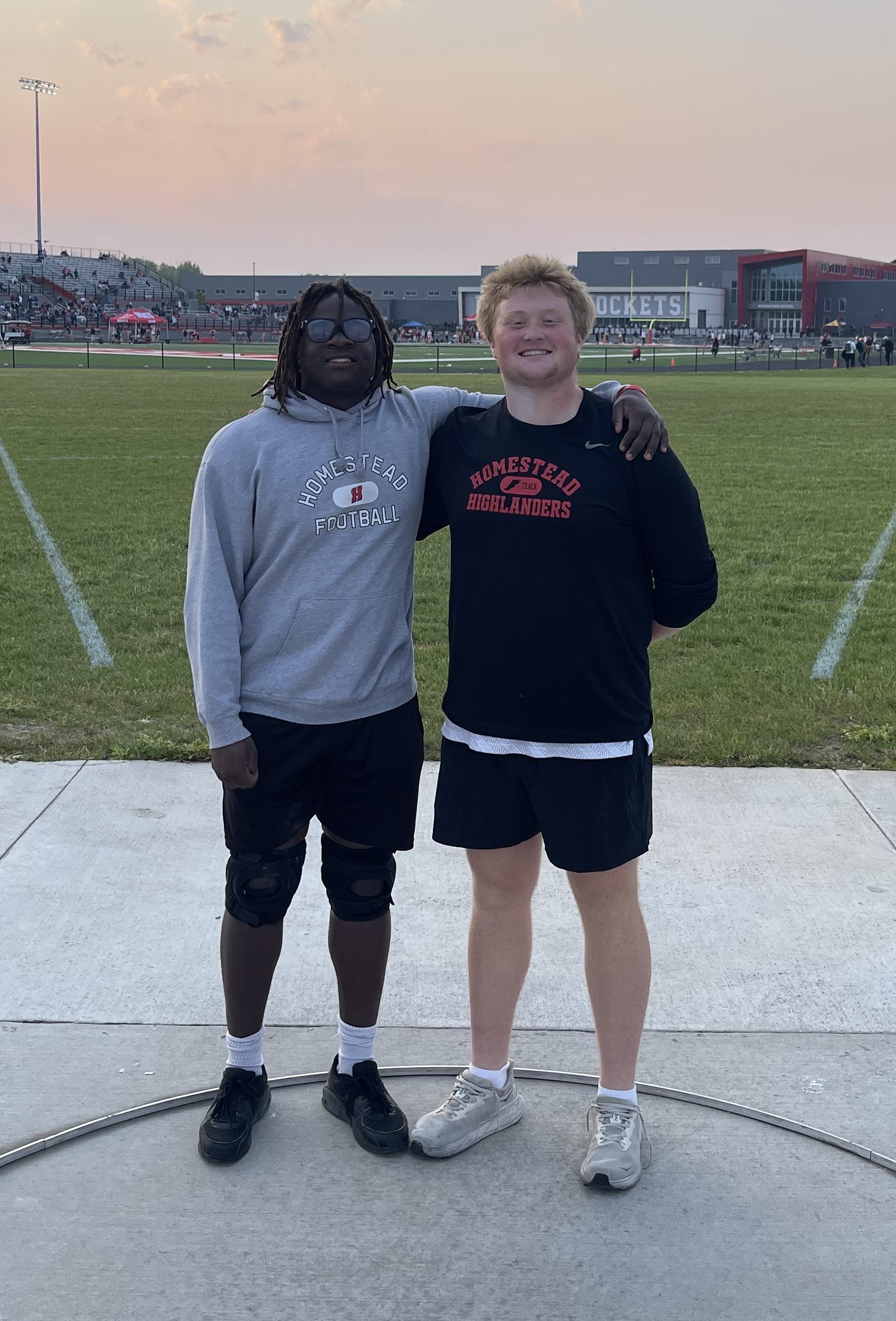
Terron and Luka, after taking 1st and 2nd in the shot put and second and third in the discus. They qualified for the state meet in both events. Fun Fact: behind Luka’s head, you can see part of the sign for Neenah’s school mascot: The Hot Pockets. Their school song is simply the Hot Pockets jingle.

When it was clear that I would miss the boys’ shot put competition, my daughter Ava and I left the shelter of the shiny new Neenah High School and headed for the parking lot to jump in our Expedition and hurry home from our northern expedition.

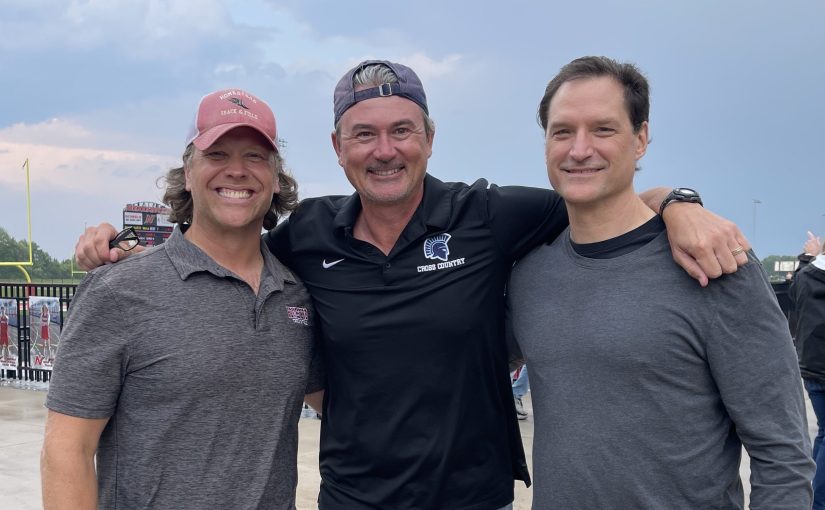
However, between the school and the parking lot, I spotted two familiar faces. One belonged to my college track teammate Scott Hammer. Hammer coaches at West Bend West High School, which is in our conference. So I see him regularly throughout the spring. His son Carson is a great 800-meter runner and qualified for the state meet in the 4 X 800-meter relay.

The other familiar face belonged to Josh White, another college track teammate, and one of my roommates for 3 years of college.

My University of Wisconsin track & field teammates Scott ‘Hammer’ Hammer and Josh ‘Slosh’ White. (In college, everyone had a nickname. Hammer’s was pretty obvious.)

It had been a few years since Josh and I had seen each other. Following huge smiles and hugs we quickly caught up. We said funny things to make each other laugh. We have a lot of funny history. I shared that Ava would be living just a block from our old off-campus house in Madison next year.

We then told Ava a story about the night we threw our first college house party, and how the cops showed up at our door at 4am, telling us there had been noise complaints.

But the noise complaints were not related to the party, which was long over, and very underagey. The loud noise was my roommates and I singing loudly, and repeatedly as we tried to leave the perfect answering machine message on our house answering machine. It’s fun to be around someone with whom you have so much shared history. It’s also fun to spend time with someone who remembers answering machines.

But of course, our time was short. Ava and I had a birthday dinner to get to. As we said our goodbyes, Josh said, ‘It was so good to see you. Even just 5 minutes together was awesome.’

We had to hurry back to Milwaukee for dinner and fun with Johann, the newest adult Albrecht!

As we pulled out of the parking lot and pointed the car south on I-41 towards Brew City, I kept thinking about what Josh said. ‘Even just 5 minutes together was awesome.’

He was right. And I am so thankful he said it. I asked Ava if she remembered what Josh had said before we left. She remembered it word for word, just as I had. We both reflected on the power of that statement.

Reminder

You don’t need a lot of time to catch up. You don’t need a lot of time to have a positive impact on someone. Or to make progress on a challenge, or to make something important happen. 5 minutes well spent can create magic.

In 5 minutes you can:

  • Catch up with an old friend
  • Make a new friend
  • Have a career-altering interaction
  • Make Minute Rice
  • Discover the key to unlocking a problem
  • Connect important dots
  • Make a big decision
  • Learn an important lesson
  • Have an aha moment (And write Take On Me.)
  • Start a flywheel spinning
  • Have a breakthrough
  • Say your are sorry
  • Tell someone you miss them
  • Ask for that thing you really want and get it.
  • Do that simple thing you have been putting off for too long
  • Get medical lab work done
  • Schedule your checkup
  • Call for help
  • Listen to 5 Minutes of Funk by Whodini

Key Takeaway

It only takes 5 minutes to do something that has a major impact on your life, career, or the lives of others. Meaningful reconnections, introductions, breakthroughs, discoveries and actions can happen in a flash. Never underestimate the power of these short blocks of time. Life and success are not built on hour-long blocks. They are built in meaningful moments. Take advantage of those small opportunities, and they can positively impact the rest of your life in big ways.

*If you know someone who could benefit from this message, please share it with them.

+For more of the best life lessons I have learned check out my book, What Does Your Fortune Cookie Say? from Ripples Media.

How I Use An Annual Self-Evaluation As A Guide to Personal Growth.

I just had another birthday. Which I think is great. But it is easy to not think your birthday is great. When you are happy with your life, family, career, health and finances, birthdays can be enjoyable reminders that you are doing well. Because you are where you thought you would be at your stage of life. And not living in a van down by the river.

However, the opposite is also true. When you reach your birthday, but feel that you are not where you expected to be at your age, it can make you feel like you are behind the pace you set for yourself. And the farther off pace you feel you are, the more likely it is to affect your happiness.

A great exercise to do when you feel off pace is an honest self-evaluation. This helps you identify where you are feeling short of your expectations, which gives you an area to focus on for greater happiness and accomplishment.

The other benefit of the self-evaluation is that it often highlights all the things that are going well in your world. This can help you shift your focus from your shortcomings to your longcomings. (I don’t think I will use that parallel phrasing again.)

Despite the fact that I am feeling good about my life right now, I find the annual self-evaluation valuable. It serves as a reminder of the good in my life. And it highlights areas for growth and improvement and helps me prioritize experiences and actions that I identify as important. Remember, what is important to you is both highly personal and fluid. Like your blood, sweat and tears. So your list can change significantly from year to year. Just like your hairstyle or the style of your fashionable jeans.

So without any more color commentary, here’s Adam’s Annual Self-Evaluation 2025.

Doing Well

  • I am happy.
  • I smile a lot (Smiling’s my favorite.)
  • I am very happy in my marriage.
  • I have a good relationship with my 3 kids.
  • I enjoy my work.
  • I have seen my doctor and my dentist in the past year. (And I play Doctor My Eyes by Jackson Browne as my appointment walkup music.)
  • My health labs and screenings are all up to date and in the right zones.
  • I continue to both develop and maintain good relationships .
  • I seek out a lot of knowledge and self-improvement.
  • I believe in myself (Someone has to.)
  • I gather people (Kinda like Noah, but without the ark and the imminent doom.)
  • I read dozens of books each year.
  • I talk to my parents regularly.
  • I believe in my ability to improve.
  • I exercise regularly.
  • I feel strong for my advanced age.
  • I have relatively good endurance. (but not for long boring meetings)
  • I don’t drink or do drugs. (But I understand why others do. #raisingteenagers)
  • I have hobbies and activities I enjoy.
  • I have added to my investments in the past year.
  • I vote regularly. (Typically for Pedro)
  • I travel regularly.
  • The Weaponry is healthy with a great outlook.
  • My speaking opportunities are exciting.
  • I have prioritized my annual guys trip for several years now, making it a real thing.
  • I typically get good sleep.
  • I volunteer a lot of my time.
  • I am sharing my knowledge with youth.
  • I think I am pretty good at admitting when I am wrong.

Want To Do Better

  • Be more patient and tolerant.
  • Be a better Christian. (And a better Adam.)
  • Less time on my phone.
  • Be more present. (Because the present is a present.)
  • Follow through on all the things I say I will do.
  • Get better at giving gifts.
  • I want to drop below my snoring weight. (I’m about 5 pounds over my snore-free weight now.)
  • Get in better shape (But I still want to be human-shaped.)
  • Think bigger.
  • Create a better system for giving to charities and other worthy causes.

Things I have done.

  • Started a business (The Weaponry LLC. This was on my Life List when I turned 40.)
  • Wrote a book (What Does Your Fortune Cookie Say? This was on my Life List when I turned 40.)
  • Created a blog (AdamAlbrecht.Blog) (I tried starting a blog 6 times before it finally took.)
  • Created a newsletter (Adam’s Good Newsletter) (This was on my life list last year. Now there are 16 issues.)
  • Traveled extensively across America (49 Countries and Puerto Rico – no Hawaii by the time I turned 5-0.)
  • Traveled to 6 countries in Europe
  • Traveled to India and Argentina
  • Been married for 22+ years
  • Own a home
  • Paid off my cars
  • Coached Track & Field at a proficient level
  • Coached youth football
  • Helped kids improve their skills and confidence
  • Made people smile and laugh. (I don’t know if they were laughing with me or at me, but I’ll take it.)
  • Found a great wife (Yes, it is you, Dawn!)
  • Created and partially raised 3 pretty great kids
  • I have ridden a snowmobile 113 mph
  • I have bounced back from failure. (And I am still bouncing.)
  • I have volunteered for hard jobs when I knew I was the best person for the job
  • Donated blood regularly (Which I had never done until COVID. This was on my list of things I regretted never having done when I turned 40. Now I give regularly, which is proof that this evaluation helps. And that I have blood.)

Things I haven’t done yet that I really want to do.

  • Write more books.
  • Give a commencement address.
  • Travel to East Asia.
  • Travel to Africa (And bless the rains, like Toto.)
  • Travel to Australia & New Zealand.
  • Travel to Italy and Norway.
  • Rim-to-rim hike of the Grand Canyon. (While drinking Brim)
  • Walk a marathon.
  • Attend a Super Bowl, The Grammys and The Oscars.
  • Become proficient at an instrument. (Preferably a musical instrument.)
  • Become reasonably fluent in another language.
  • Do everything I say I will do.
  • Own enough rental properties to support my retirement.
  • Hike to Havasu Falls.
  • Create a self-sustaining business that doesn’t need me anymore.
  • Go hunting. (Like Good Will)
  • Create my own highly successful brand.
  • Become embarrassingly rich.
  • Go skydiving (I’m waiting for that sweet spot when my dependents don’t depend on me anymore, but I’m still not wearing Depends.)

Key Takeaway

To create the life you want, give yourself an annual self-evaluation. Focus on the positive. Note your accomplishments and what is going well. Then consider areas of improvement, experiences, actions, and accomplishments that would be meaningful to you. Identify them. Prioritize them. And deadline them. It’s the best way to do more of the things you value in the year ahead.

*If you know someone who could benefit from this message, please share it with them.

+For more of the best life lessons I have learned check out my book, What Does Your Fortune Cookie Say? from Ripples Media.

Collecting Dots: A Valuable Life Lesson from Slumdog Millionaire.

Back in 2008, the movie Slumdog Millionaire hit the big screens. This smash hit was about a young boy in India, growing up on the streets of Mumbai. Through a series of fortunate events, he becomes a contestant on the game show Who Wants To Be A Millionaire. And apparently he wanted to be a millionaire.

The movie was nominated for 10 Academy Awards in 2009, winning a remarkable 8 OSCARS, including Best PictureBest Director (Danny Boyle), and Best Adapted Screenplay. It also won an Adam Albrecht Award for Most Badass Type Of Millionaire.

The thing I loved most about the movie was that every question our hero, Jamal (Mr Slumdog), is asked triggers a flashback to the moment or event where Jamal learned the answer to that question.

I have been thinking a lot about this movie lately, even though I only saw it once, nearly two decades ago. I am thinking about the movie now, because I am recognizing the same flashback effect in my own life. It’s kinda like the flashback scenes from Wayne’s World, but without the wavy lines and sound effects.

Today, as I am digging into my ever-larger collection of knowledge, I often experience flashbacks to the moment I acquired the now-useful knowledge. It is as if I am playing an epic game of connect the dots, and as I connect dots, I am not just drawing a line between the dots; I am understanding the origin story of each dot. Which I recognize is getting pretty deep for dots.

This is happening for 2 reasons.

First, I am thinking about the original knowledge-gain experience as I am dippin’ into my dots. I am not mindlessly accessing the answers. I am watching it happen in my head, as if I were the third person, observing the story.

Essentially, the things I could be doing involuntarily, I am performing voluntarily or consciously, which creates a deeper level of insights and understanding.

Second, I am actively trying to collect more dots. Like a knowledge farmer. Or maybe a knowledge hunter and gatherer. I read books with the purpose of collecting dots, which include facts, trivia and history. I am actively collecting tips, tricks, best practices, insights, study results, good news, quotes and positive examples. I ask a lot of questions. I listen closely to details in my conversations. And I am mindful of the knowledge harvest as it happens. It enables me to sort, label and store the knowledge harvest more effectively. Which means that a great reason I am easily accessing my dots is that I am cataloging them on arrival. Like a nerdy librarian. Which may be the only kind of librarian.

The natural question is, ‘Why am I consciously labeling and sorting the new dots I am collecting?’ I believe that this is a result of blogging and writing books. It is rewiring the way my brain works. (Which is good, because my brain has always had pretty wonky wiring.)

As a writer, it is useful to file, organize and label my dots for future use. But the same approach is also beneficial as an advertising professional, strategist, creative thinker and entrepreneur. In fact, creative thinking is nothing more than connecting dots in new and novel ways.

The Insight

We are as wise and worldly as the dots we collect and the dots we can connect. To become a better thinker, more insightful, more creative, more strategic and more empathetic, collect more dots. As you collect, consider the lessons, insights and knowledge you are gaining as you gain them. This helps you store them more effectively and access them more easily. When you have a greater collection of valuable dots, well cataloged, like spice jars stored alphabetically in your spice rack, you can access them when you need them, and create a greater range of outputs with deliberately nuanced flavors. This is a valuable skill and asset. It improves your thinking, and your value to others.

Key Takeaway

Collect more dots so you can connect more dots. Recognize the value of your dots as you amass them. Think like a prospector, and learn to recognize gems when you see them. When you understand what you have collected, whether it is the results of a scientific study, or a broken heart, it becomes more valuable to your human experience. Because you never know when you will need that information again. But when you can easily access your knowledge, you can profit from it greatly, just like the Slumdog Millionaire.

*If you know someone who could benefit from this message, please share it with them.

+For more of the best life lessons I have learned check out my book, What Does Your Fortune Cookie Say? from Ripples Media.

From Surviving to Thriving: The Power of Daily Commitment.

I have a plant in my office. I inherited it 25 years ago from a coworker who was leaving the company and moving to Canada. I don’t think she was dodging the draft. If I remember correctly, she had a thing for men in uniform on horses. And Tim Horton’s.

The plant in my office hasn’t been faring well.

To be fair, I have been watering the plant just enough to keep it alive.

As a result, it looks like a plant that has been watered just enough to keep it alive. Like the office plant version of a Charlie Brown Christmas tree.

But a couple of months ago I altered my plant care routine.

I committed to watering the plant every day. Or at least every day that I was in the office.

And an interesting thing happened.

By day three, I saw a noticeable difference in the plant’s posture. The spindly little fella stood taller. The leaves looked fuller. And prouder. And chlorophyllier.

By day five, I noticed a new leaf beginning to grow and unfurl.

And then another.

And then another.

As I have continued to water, dozens of new leaves have emerged and added a great deal of canopy to this once-struggling office mate of mine.

It’s like I was feeding the little guy plant Rogaine.

Today, the plant is thriving. It is providing more beauty, more greenery, and more oxygen in my office.

But more importantly, it is providing a valuable lesson.

My plant has reminded me that there is a major difference between living and thriving.

The plant serves as a daily reminder that you can put the minimum effort into your relationships and get the minimum out. Or you can pour as much as you can into your most valuable relationships every day and watch them thrive.

The plant’s regeneration also reminds me that when you put more into your health, fitness, spiritual life, passions, career, business and financial well-being, you get more out of all of them. That’s a heck of a valuable lesson to relearn from an adopted office plant and a daily dose of water.

Key Takeaway

To get more out of life, put more in. Pour more into your valued relationships, your health, and your professional endeavors. And watch them all thrive. Pour more into your faith, and God knows what will happen. And don’t forget to water your plants. Because the things you take care of take care of you.

*If you know someone who could benefit from this message, please share it with them.

+For more of the best life lessons I have learned check out my book, What Does Your Fortune Cookie Say? from Ripples Media.

I have finally developed a skill I was never good at.

There are some things that I am good at. And other things I am not good at at all. (Like folding fitted sheets and stopping myself from thinking, ‘That’s what she said…’ a thousand times a day.)

One of the things I haven’t been good at at work is entering my time into our time-tracking software at the end of each day. (I also wasn’t good at avoiding that at-at thing in the previous sentence.)

To be clear, I keep a detailed to-do list each day that lists my activities. Plus, I schedule my daily activities on my calendar, which provides a detailed log of my time. So I have records of how I spent each day for great reference. In fact, when archaeologists someday discover my notebooks, they will have a strong understanding of how I spent my days and could enter my time for me. But I expect it will be too late for us to invoice that time.

Still, I have never liked walking away from the office without completing my time entry for that day. Yet the tight demands on my schedule often meant that I did anyway.

One of my goals for 2025 was to enter my detailed time each day on the day I did the work. So, I added something new and simple to my long list of habits.

On my daily Success List (what you might call a to-do list, and what Scooby Doo might call a Scooby To-Doo list), I have added a line that says, Enter Time in Harvest. Harvest is The Weaponry’s time-tracking software.

As we started February, I noticed something interesting. I entered my time each day for the entire month of January.

The key to my behavior change was simply writing Enter Time in Harvest on my daily Success List.

I love crossing things off my list. It makes me feel accomplished. Having a list keeps me productive and focuses my time on my most important activities throughout the day. Because I already had a strong list-making and list-crossing-off habit established, I simply utilized my habit of doing the things on my daily list daily to create this valuable new habit.

The key was right in front of me all along. Or should I say, write in front of me?

Bonus: Another valuable thing I added to my daily Success List last year was the line No Social Media Before Lunch. This prevented me from falling down social media rabbit holes and wasting precious time during the golden morning hours of productivity. Again, because I love crossing things off my list, I avoided the socials between 9 am and whenever I stopped for lunch. As a result, I got more important work done each day.

Key Takeaway

You are a product of your habits. If you use a daily to-do list or Success List, try adding the behaviors you want to modify to your list. Remember, those may be behaviors you want to add or eliminate. By writing them on your daily activity guide and crossing the actions off your list at the end of the day, you may discover the easiest way to get the results you want.

*If you know someone who could benefit from this message, please share it with them.

+For more of the best life lessons I have learned check out my book, What Does Your Fortune Cookie Say? from Ripples Media.

Recognizing and Avoiding the Slow No.

You should always be aware of the slow no.

It’s the worst of the nos.

Worse than infernos, volcanoes and no-it-alls.

The slow no is the decision that is always going to be no. No matter how much support there is for a yes.

Decision makers will let you explore, research, propose, pile up work towards, and spend a lot of time diddling on things that are always going to finish with a no.

It’s a waste of time, energy, enthusiasm and hope. Like that romantic interest that you know is way out of your league, but they are really nice to you, and you start thinking there is a chance, when there is really no chance there is a chance.

What’s the best way to deal with the slow no?

Cut to the chase.

Ask if this is likely to end in a slow no.

Ask the decision-makers, if all the evidence seems to support a yes, will it still be a no because of politics, budget, bias, distance, favored-competitors, or other factors out of your control.

The slow no is likely to occur when:

  • You wonder why the decision maker hasn’t made a decision like this before
  • The cost seems out of line with the budget
  • It all seems too good to be true (like the whole Lance Armstrong thing)
  • The action would be out of character for the decision maker
  • You smell political factors or nepotism at play
  • They say you are facing 1 in a million odds, and you think they are saying there’s a chance
  • The decision maker puts the word pro in procrastination

The best thing you can do is hit fast forward and turn that slow no into a fast no. Or a know-now no.

You can also openly rescind your proposal or request.

When your change of heart is met with a shrug, you know it was a slow no.

That puts time back into your account. So you can use it more productively on something else. Or someone else.

Key Takeaway

Don’t lose time on a slow no. Sniff them out. Fast forward them to the final answer. And use your time on something more valuable.

*If you know someone who could benefit from this message, please share it with them.

+For more of the best life lessons I have learned check out my book, What Does Your Fortune Cookie Say? from Ripples Media.