The slow no is the decision that is always going to be no. No matter how much support there is for a yes.
Decision makers will let you explore, research, propose, pile up work towards, and spend a lot of time diddling on things that are always going to finish with a no.
It’s a waste of time, energy, enthusiasm and hope. Like that romantic interest that you know is way out of your league, but they are really nice to you, and you start thinking there is a chance, when there is really no chance there is a chance.
What’s the best way to deal with the slow no?
Cut to the chase.
Ask if this is likely to end in a slow no.
Ask the decision-makers, if all the evidence seems to support a yes, will it still be a no because of politics, budget, bias, distance, favored-competitors, or other factors out of your control.
The slow no is likely to occur when:
You wonder why the decision maker hasn’t made a decision like this before
The cost seems out of line with the budget
It all seems too good to be true (like the whole Lance Armstrong thing)
The action would be out of character for the decision maker
You smell political factors or nepotism at play
They say you are facing 1 in a million odds, and you think they are saying there’s a chance
The decision maker puts the word pro in procrastination
The best thing you can do is hit fast forward and turn that slow no into a fast no. Or a know-now no.
You can also openly rescind your proposal or request.
When your change of heart is met with a shrug, you know it was a slow no.
That puts time back into your account. So you can use it more productively on something else. Or someone else.
Key Takeaway
Don’t lose time on a slow no. Sniff them out. Fast forward them to the final answer. And use your time on something more valuable.
*If you know someone who could benefit from this message, please share it with them.
We are all on some type of self-improvement journey. It’s how we are wired as humans. There are always things we can find to improve. And the beginning of a new year is like Improvapalooza. Suddenly, we are thinking of all the things we should do to make more money, read more books and look better naked. (Presumably while reading books.)
There are 3 key points on your self improvement journey.
Your starting point
Your current position
Your ideal
To maintain motivation, you need to balance how much time you spend focused on the distance to your goal, versus the progress you have made.
If you only focus on the ideal goal you will spend somewhere between 99% and 100% of your time on the journey disappointed.
Because you are always falling short. Like Martin.
If you spend all of your time focused on your growth you can feel like you have done enough.
Which will make you feel prematurely satisfied. A condition I call PreMatSat. (Which I think is also the test you take to get into med school.)
In this case, you are likely to settle for less than you set out to achieve.
The key is a balanced diet of both perspectives.
Just as your ideal food intake requires a proper balance of protein and carbohydrates, motivation requires a balance of attention towards both your goals and your growth.
I have found a simple formula that works best for me.
Think of this like spending your work week focused on your goals and your weekends enjoying your growth. It provides a great combination of grind time and satisfaction with your accomplishments.
Key Takeaway
It is important to set lofty goals to push yourself to become the best you can be. But the real win isn’t simply in achieving your goals. The win is in the improvement. The goal is the tool to keep you marching forward. The growth is the reward. It’s the fruit you harvest. If you don’t take a little time to look at your improved physique in the mirror, enjoy a bit of that hard-won money, or admire your elevated skills, you are planting a garden without ever eating the crop. Don’t focus so much on the destination that you forget that the real value is in the journey. And it always has been.
*If you know someone who could benefit from this message, please share it with them.
At the beginning of a new year, I attempt to put my accumulated wisdom to good use. I reflect on the important lessons I have learned so I can project a better year ahead. A year that is packed with the things I consider most important. And a year that minimizes or eliminates the things that work against me. Like sweet tea and peanut brittle.
As a part of this process in 2025, I made a list of reminders as I start the new year. You may find some value in this. Or the value may be in deciding to create your own list.
1. Use your time. It’s your most valuable asset. It’s finite. Don’t waste it. Even if you are sitting on the dock of the bay.
2. Do hard things. They are the most rewarding.
3. Do something valuable for yourself first thing every morning. That is your golden time. The filet of the day. It’s even better than a Filet O’ Fish.
4. Don’t overlook the compounding effect. Good habits, exercise, kindness, investing, being trustworthy, writing, brushing your teeth. They help more the more you do them.
5. Surrounding yourself with great people leads to a great life.
6. Weigh yourself every day. It provides a direct link between your actions and the results. Both good and bad.
7. Reach out to others first. The world is full of lonely people afraid to make the first move.
8. Get rid of the things that don’t serve you. It works the same way editing makes your writing better. It helps you move faster and lighter. And frees up space in your brain.
9. Find a passion project. These help make life more fun and enjoyable. Remember, you are the one responsible for putting fun and enjoyment in your life.
10.Discover your purpose. This is your lifelong quest. The sooner you find it the more meaningful your time after it will be.
11. Don’t stay in a job that has you dreading Mondays. Move along. There is a better option for you. (Unless your job is dreading hair. Then, you should probably also dread on Mondays.)
12.Develop and maintain connections across multiple generations. You can learn a lot from those older and younger than you. Like how to turn on the remote. Or what a manual transmission was.
13.Provide value before you try to extract value. This is always the order.
14.Be an imperfectionist. Take action first. Improve as you go. Be comfortable with mistakes. They are approximations that get you to the right answer faster.
15.Always bet on yourself. It’s the safest bet you will ever make. And listen to Kenny Rogers.
16.Call your parents while you still can. If you no longer can, then make sure to recall your parents often.
17.Remember that you are part of a trustee family. You are entrusted with carrying the family legacy forward for all of those who came before and those who will come after you. Recognize what others have done to put you where you are now. And do your part for those yet to come.
18. Make new memories with old friends. This is the best.
19.Set lofty goals and plans to achieve them.
20. At the end of our days, the only thing that will matter is the impact we have on others. If your actions are selfish, your impact dies when you do. (Note: impact is also a leading cause of death.)
21.Exercise is the best medicine. And it’s available without a prescription.
22.Those who laugh the most have the best life.
23.If you can delay your gratification you can achieve anything.
24.Always do what you know is right.
25.If you can’t eat, sleep. If you can’t sleep, eat. (I use this one more than you know.)
Bonus Jonas:
26. Give people more than they expect.
Key Takeaway
Through trial and error, and through your readings, and wrongings, you will discover great lessons. Collect them. Remind yourself of them often. They will serve as reliable guideposts to health, happiness and success. And they make for a great inheritance for you to pass along.
*If you know someone who could benefit from this message, please share it with them.
The end of the year is always an exciting time for 3 reasons.
We get to reflect on our wins and successes from a good year, preferably with a Kip Dynamite fist pump.
We get to leave a bad year behind the way Bill Murray sneaks away from Father Rat Farts after he gets struck by lightning in Caddyshack.
We get to start a fresh new year full of hope, like Hope Solo.
Preparing For 2025
Now it’s time to prepare for a great 2025. Why prepare? Because great years, like great lives, don’t just happen. You make them happen.
A key element of living a great life is self-reflection. Asking yourself good questions is like conducting your own performance review. It’s a simple way to discover where you need to course correct, where your course is already correct, and where your corset could help correct.
1. Am I educating myself? Getting better starts with getting smarter. Continue to self-educate and your knowledge, abilities, and competitive advantages will grow like compound interest.
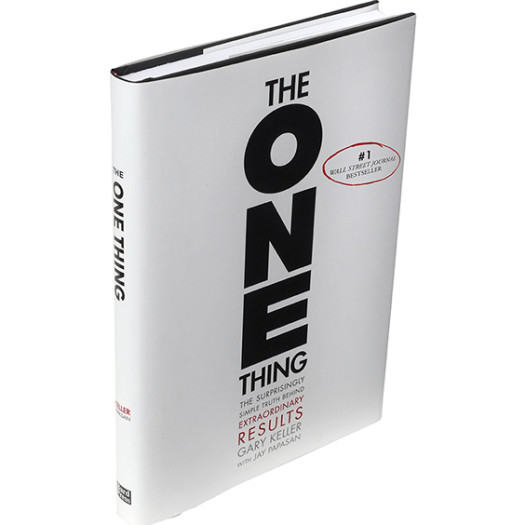
If you only read one thing in 2025, I suggest reading The One Thing.
2. Am I exercising enough? Your body is your life vehicle. Regular exercise keeps it in top shape. Which will allow you to travel further, faster and over rougher terrain without breaking down, like Tone-Loc.
3. Am I giving enough to others? Shel Silverstein famously wrote about The Giving Tree. But there is also a magical Giving Boomerang (perhaps made of wood from the giving tree). Because when you give your time, talent and treasure to others, good things come back to you in even bigger and better ways.
4. Am I disciplined enough? Discipline is what gets the job done. If you are not doing the things you’ve committed to, or if you are not avoiding the things you should avoid, check your discipline. Remember, you only need enough to create a habit. Then the habit takes over and discipline can be deployed towards something else. Read James Clear’s Atomic Habits if you want to become great at developing great new habits.
5. Am I thinking big enough? The answer for 99% of us is no. So start thinking bigger! Think as big as you can. Think Elon Musky. Because bigger thoughts lead to bigger results. It costs the same amount to think big as it does to think small. But the return on your thinking investment is much different. You can always go bigger. #TWSS
6. Am I taking the actions that matter most? Not all actions are created equal. Remember the 80/20 rule. Find the small actions with the biggest rewards. There are a lot of actions that generate very little results. Simply taking the right kinds of action (interacting with the right people for example) can change your life. For proof see Sliding Doors or Run Lola Run.
7. Am I getting better or getting worse? Check your trajectory. You are either headed up or down on every possible measure. The good news is that with all but some physical aging issues you can always improve your own angle through focused effort, commitment and mindset.
8. Am I strengthening my network? Most people think far too little about the strength of their network. But take it from the mobile carriers, it is all about the strength of your network. Continue to develop and maintain meaningful relationships. Make as many genuine friendships as you can. When you do, your social, professional and political capital will continue to grow. Which opens you to more opportunities. Remember, opportunities come through humans.
Some Milwaukee W-Club members flashing our gang sign. (I am very pleased with my font choice.)
9. Am I valuable to know? Do you add value to others? Are you kind, helpful, or inspiring? Do you offer access and connections? Are you are great listener? Really think about the value you offer others. The more value you offer, the more people will seek you out. And you want to be sought after. Just not by police. Or hitmen. Or Glenn Close.
10. Am I keeping my word? Trustworthiness is the bedrock of relationships, and the gateway to opportunity. Check your trustworthiness more often than once a year. Keeping your word is required on a daily basis. Like flossing and changing your undies.
11. Am I living into my vision for myself? You have aspirations. But simply having aspirations is not enough. You have to get yourself to the destination. You have to become the person you imagined, dragon. Do the doing, not just the dreaming.
My son Magnus envisioning at Yosemite this summer.
12. Am I noticing those who need me? We all have people who need us. Family, friends, clients, employees, community members. Do you see them? Do you notice what they need from you? Do you notice what you have to give?
13. Am I being present? Be now. This is all you ever have.
14. Am I taking care of my health? Have you seen your doctor and dentist lately? Do you have a doctor and dentist? How about a mental health specialist? A chiropractor? Take care of yourself. Because everybody needs a body.
15.Am I eating well? You are what you eat. Literally. Be mindful of your personal building materials. It makes a difference. Because you don’t want to look like Cheetos in your Speedos.
16. Do I have a healthy way to de-stress? The world is an all-you-can-eat stress buffet. You need to have ways to rid yourself of the stress. Sleep, exercise and church are my go-to’s. Find your ways to de-stress best.
17. Am I spending enough time in nature? Spending time in nature is great for re-grounding yourself. A little quiet time with Mama Nature provides peace and perspective you can’t get anywhere else.
18. Am I getting enough sleep? Sleep is the great reset button. It enables you to regenerate your best self. Take advantage of it. Get as much as you need.
19. Am I finding joy in my work? Work fills half of your waking hours. Finding joy in work is finding joy in life. If you are not finding joy it is time for a change. A new approach, a new job, or a new career should be on the table. And a bottle of Joy should be on the counter next to the kitchen sink.
20. Does my boss value me? An unfair amount of your happiness is tied to your relationship with your boss. If you have a boss that values you and treats you well you have won half the battle. If not, make a change. Life is too short for bad bosses.
21. Am I living a story worth reading? You only get one shot at life. Make it great. make it a story worth telling, worth hearing and worth reading.
22. Am I positively impacting others? At the end of our days, the only thing that really matters is the impact we have on each other. Focus on making a positive impact and you will live a great life.
23. Am I laughing enough? This is the easiest way to measure happiness. Laughter is more valuable than money. Spend more time with the people who make you laugh. They will make you feel most alive.
All Rights Are Reserved. All Lefts Are Outgoing.
24. Am I investing enough in my most important relationship? Think of the one relationship that means more to you than any other. A spouse or significant other. A parent, child or sibling. A friend, partner or neighbor. Are you investing in that person as much as you should? Always give the most important people the most.
Key Takeaway
Self-improvement starts with asking yourself good questions. You are a work in progress. Knowing what you should work on is how you make the progress.
*If you know someone who would benefit from these questions, please share this with them.
How do you make yourself more important? It’s a simple but valuable question to ask. While there may be a million ways to become more important, there is one proven approach that anyone can use, regardless of your current skills and resources. It even works if you are not really, really good-looking, like Zoolander.
Here it is in two simple steps.
In every situation you are in determine who is the most important person.
Make yourself useful to that person.
Some examples:
In school, become useful to your teacher, professor, principal or Dean. Volunteer. Ask questions or provide answers. Make them look good during their annual evaluations. (Definitely do that last one.)
On a team, make yourself useful to your coach. This could be through actions or attitude. Set a great example. Help set up for practice or clean up after. You could also show up every day really tall, fast, strong, or coordinated. Coaches love that.
As an employee, make yourself useful to your boss, Hugo. Get your work done on time, every time. Help improve processes, efficiencies and effectiveness. Help improve revenue or profitability. If your boss is a bumbling idiot, help them hide it. (I always appreciate it when my team does that for me.)
At a party, make yourself useful to the host. Be a quick set of helping hands. Smile and have a good time. Introduce people. Play the games the host wants played. Unless the host is P-Diddy.
At home, there are always opportunities to be useful to your spouse or your parents. And making yourself more useful at home is one of the most important things you can do.
Try It Yourself
Start by evaluating who is the most important person in every room or situation you are in. Most of the time, this is easier than it sounds.
Then look for opportunities to provide value.
It’s a great habit to develop. And you’ll get better at it the more you practice. Soon you’ll recognize how valuable this approach is when you are the most important person in the room and others are going out of their way to be useful to you.
Key Takeaway
People are deemed important because they add value in some way. It may be through their intelligence, leadership, experience, responsibility, or a range of other skills and attributes. When you make yourself valuable to those people, you are adding to the value they bring. Which in turn increases your usefulness. As a result, you stand out from the crowd in the eyes of the person who already stands out from the crowd. Remember, your value is directly related to your contribution. Contribute to the most important person in the room’s success and you will contribute to everyone in the room’s success. That is how you make yourself important.
*If you know someone who could benefit from this message, please share it with them.
One of the best things you can do in life is keep your commitments to yourself.
There is no better way to build trust.
There is no better way to build confidence.
There is no better way to build personal momentum.
There is probably no better way to build a skyscraper. (But I have never done that so I’m not really qualified to say.)
Keep Your Commitments
Wake up when you say you will wake up.
Exercise when you say you will exercise.
Show up when you say you will show up. (Especially if you are a pilot, a superhero, or my cable guy.)
And don’t eat what you tell yourself you won’t eat. Even when that thing is a donut sprinkled with bacon and filled with Chick-fil-A nuggets and candy.
Resolve
Resolutions are a great idea.
The bad idea is not doing what you tell yourself you would do.
Which means that the best resolution you can make is to simply keep your commitments.
Getting Started
Start by committing to less.
Do everything you tell yourself you will do.
Because when you do that you will soon realize that you can do anything.
& If you know someone who could benefit from this message, please share it with them.
If you met a genie who could grant you 3 wishes do you know what you would ask for? I do. I would wish for happiness, fulfillment and a lifetime supply of cheese curd flavored Pringles. Unfortunately, when I was in 3rd grade, my friend Todd Brudos told me that genies are not real. They are just something lamp polish manufacturers made up to get you to polish your lamps.
So today, I no longer dream of genies. Instead, I now realize we must work for the things we want. And if you want happiness and fulfillment, the key is to figure out what brings you those things well before you are in hospice care or the electric chair.
Through my own research, trial and error, and a couple of lucky guesses I have discovered that there are 5 things to work on for a happy, fulfilled, and rewarding life.
Here they are, in a particular order.
5 Things You Should Always Be Working On.
1. Your Health: When you stop working on your health, your health stops working on you. Eat right. Sleep right. Exercise. Drop habits that are hard on your health. Keep your weight in the healthy-and-feels-good zone. See your doctor and dentist regularly. Get naked and do the uncomfortable exams when you are supposed to. (Although if your dentist asks you to get naked for an exam consider getting a second opinion first.) If you could use a little help with your mental health see someone there too.
2. Your Relationships: At the end of our days the only thing that will really matter is our relationships and the impact we have on each other. Develop more relationships. Develop better relationships. And see your people in real life. Live life like you want to have a packed house at your funeral. And not just because people want to make sure you are really dead.
3.Your Time Utilization: Time is your most valuable resource. And it’s constantly slip-sliding away. Make sure to use your time wisely, old owl. Do things now. Plan your days, weeks, and adventures in advance. Recognize the things that waste your time and eliminate them now. You’ll thank me later, when you have time.
4. Your Growth: Growth means getting better. Aim to get better every day in every way. Read and learn. Reflect on your experiences to gain wisdom. Surround yourself with great people who you can learn from and model. Develop great habits. Improve your listening skills. And your compassion. Become a better model of yourself every day. Even if you are already a supermodel.
5. Your Wealth: When you grow your wealth, your other opportunities grow too. So does your peace of mind, freedom, and the size of the duffel bag you need to carry all of your money when you leave the country. And like the old saying goes, ‘Mo Money, Mo Pringles’.
Key Takeaway
To make the most of your short time on Earth focus on what matters most. Take care of your health to maximize the quantity and quality of your life. Develop and maintain your relationships. Make great use of your time while you have time. Focus on growing your wealth to grow your opportunities, freedom and peace of mind. And get a little better every day.
*If you know someone who could benefit from this message, please share it with them.
In fact, some seeds get packaged in a bag and sent to a ballpark to be chewed up and spit out before they get their chance to blow, like Eminem said.
The key to growth, happiness and success is to plant your seed in soil that supports you.
Then sink your roots down deep, and bloom baby bloom!
So if you aren’t thriving and blooming, onion, it’s time to find new soil.
& This has been a 7 Sentence Sunday Post. Just 7 sentences. (At least just 7 sentences before the little 3-dot divider thingie.) These are quick thoughts before church. Or after church. Or before football if you don’t mark your Sundays with church. Or, if you don’t do church or football, it’s simply 7 sentences before Monday. (Plus this rambling descriptor of how simple the post was supposed to be before I overcomplicated it.)
Your network plays a critical role in your success. It is your safety net when you fall. It is your advisory council when you need advice. It is your feeder system of opportunities. And it is how you find a white Ford Bronco when you are running from the law.
Your network helps you tap into the wisdom of wicked smart people with great experience, ideas and philosophies. It has been said that your network is your net worth. Which means that if you don’t have much of a network you likely don’t have much money either.
However, developing a great network of friends, relatives, and acquaintances that can support, guide and share opportunities with you can be hard. It takes time and energy to develop and maintain your network. And your network-developing capabilities can be severely limited by your geography. Just ask Siberian Sergey. Who is Siberian Sergey? I don’t know. He lives in Siberia. Which is why neither of us know him.
The Great Substitute
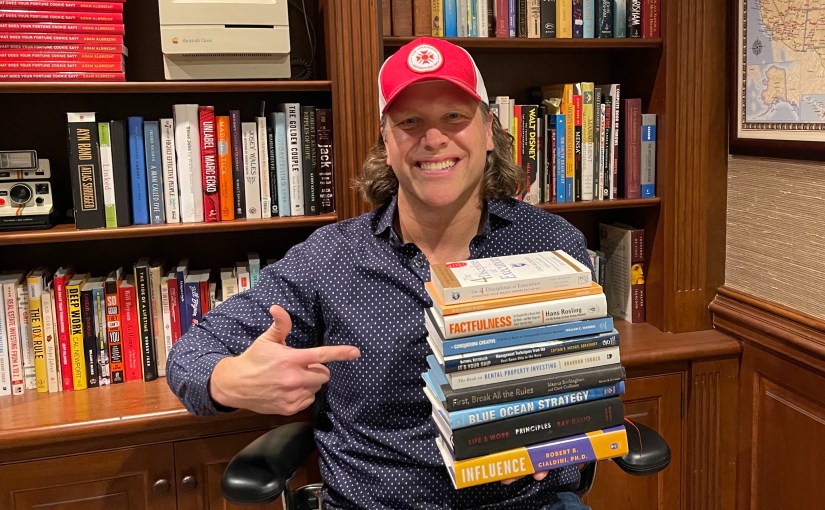
The best substitute for a strong real-life network of helpful human folks is a great library of books. Think of the authors and the people profiled in the books you read as part of your circle, like Edie Brickell.
Authors generously share a lifetime of accumulated knowledge, experience and wisdom with you for $15- $30. That is a bargain you should snatch up whenever you can, Toucan Sam.
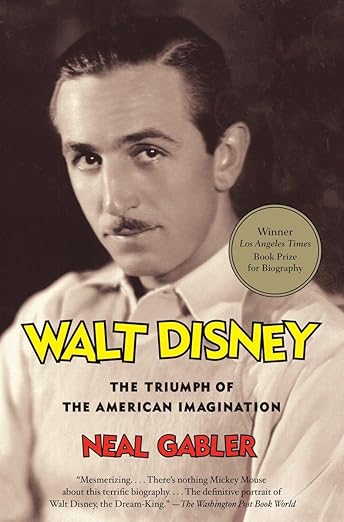
Biographers share the great life stories, lessons, paths, philosophies and mistakes of some of the most successful people to ever roam the planet. So add the biographized to your network. They often have the most to teach. And when you wonder What Would Walt Disney Do? you can quickly get the answer by reading the great biography, Walt Disney by Neal Gabler.
It may be a small world after all, but this book is big. And full of mice.
I have books in my library about Walt Disney, Cornelius Vanderbilt, Steve Jobs, and Ted Turner. They have all provided valuable guidance. And not one of them has slapped me with a restraining order for getting my nose in their business.
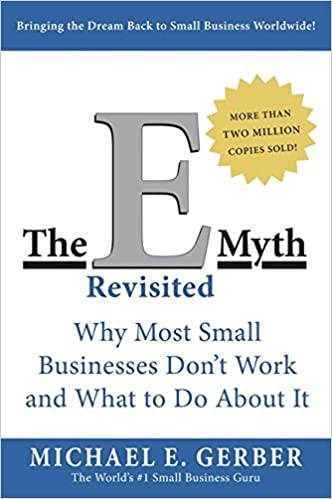
The first book to buy when starting your own business, or once you realize you should have bought a book when you started your own business.
Just look at who reviewed this book for the cover.
The great authors and the biographized icons are ready to share with you what they know. They are never too busy for you. They provide amazing counsel and examples for you to follow. And if you have any subject you want to learn more about you can simply search the topic on Google or Amazon and find the book you need in your network now. (Although you can always buy said book from an independent bookstore in your community. Unless you live in Siberia.)
Key Takeaway
Your network is one of your most valuable assets. But when you need guidance that you don’t yet have in your human network you can often find a great substitute in books. Collect great titles on a great range of subjects to strengthen your network and inner circle of knowledge. And when you find books you find helpful, share them with your real-life network. It is one of the best things we can do for each other.
*If you know someone who could benefit from this message, please share it with them.
I met with an entrepreneur earlier this week who has a startup. My friend is in the early stages of his newborn business where you don’t get much sleep and you change a lot of diapers. (Your own.)
As my entrepreneur friend talked about his startup experience, I realized I had advice that would help with each of his challenges. I shared some actions to take, resources to employ, strategies to consider and helpful materials to read. I also shared the relative merits of Zantac, Tums and Rolaids for heartburn and upset stomachs. Because I know what Rolaids spells.
I could tell that my friend found my guidance valuable. Both because he told me it was useful and because he later texted me and said the same thing. (I’m quick like that.)
However, what I shared wasn’t complicated, specialized or exclusive knowledge. It was simply logical common sense. Or so I thought. Until I thought about it more.
The Insight
It’s important to recognize that much of what feels like logical common sense to you today was once completely foreign and unknown.
You improve your logic and common sense every day. It is a byproduct of your experience and education. The more logic and common sense you accumulate the more valuable you become to others, both as a user of your own knowledge and as acoach, mentor or advisor. (Those are all different things. My friend Stacy Sollenberger taught me that in the book Guide Coaching.)
Since you were a wobbly, pooping-you-pants toddler you have collected a lifetime of logic and common sense. You have racked up far more than you know, and in more areas than you recognize. Realize that others don’t know what now feels obvious and commonplace to you. That makes you a valuable resource to people who are one or more steps behind you. You can offer tremendous help when you pass your baton of wisdom to them. (And good job not pooing yourself anymore.)
Examples
-As an entrepreneur, you can share your wisdom with anyone who is behind you.
-As a career haver, you can pass your knowledge to anyone junior to you to help them advance their learnings at a faster pace than they could through their own experience alone.
-As a married human you can share your learnings with anyone considering getting married, newlyweds and others passing through the various phases and challenges of the most important relationship you will ever have. This is true even if you are bad at marriage because you have discovered what doesn’t work. Like Edison said about his lightbulb moment.
-As a parent, you can pass along great insights and approaches to both new parents and parents who are passing through phases you have already passed through, like the valley of the shadow of death. Or raising 3-year-olds.
Key Takeaway
As you accumulate knowledge and experience it can camouflage itself as common sense. It is not. It just feels like logic because it has become an obvious truth to you. Recognize the value of your earned wisdom and share it with those trailing behind you on the learning curve. It will help them accelerate their own growth and impact. It will help them accumulate wisdom that will increase their value to the world. And as the people you share your knowledge with pass your baton of wisdom to others your positive impact on the world compounds without end.
*If you know someone who could benefit from this message, please share it with them.













 Adam Albrecht Blog