My life-altering first lesson in professional problem solving.

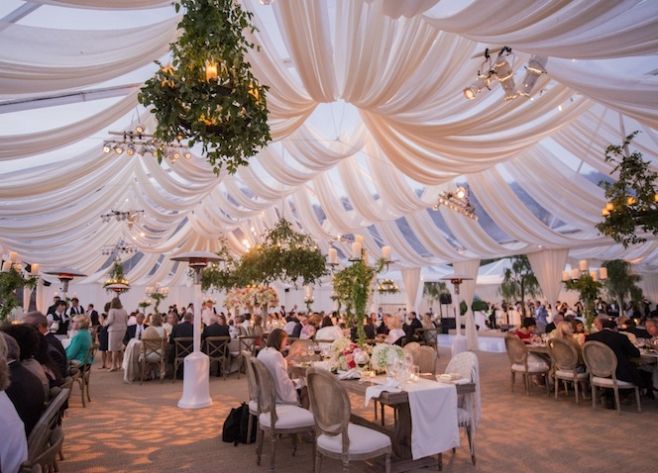
When I was in college I spent my summers at home in Vermont working for a party rental company. I set up huge party tents with other college athletes, a few rugged high schoolers and a handful of experienced veterans who had real jobs, but would help set tents on the weekends for extra income (and presumably to show us what brands of jeans were cool a decade ago).

There was lot of beef on that crew. You had to be strong because the job entailed lugging tents that weighed more than you did and carrying all the tables, chairs and dance floors needed to get your party on.  You also had to be able to hammer 40-inch steel spikes into the granite of Vermont and New Hampshire.  This was not a job for the chess club.

Learning the ropes.

The first few tents I set up were in idyllic settings on lush, sprawling lawns. The tents were erected (snicker) in textbook fashion.  You laid the tent out flat. Pulled the ropes straight out from the tent. At each rope you drove a spike into the ground four feet from the tent. You tied the ropes to the spikes. Then you set up a side pole at each rope to support the perimeter of the tent. Finally, you set up the tall center poles in the (surprise…) center of the tent.  I was a pretty smart kid. I caught on quickly.

Then I went on what I thought would be a really easy assignment.  I was sent to set a small 20 foot by 20 foot square tent in a woman’s front yard with one of the veterans. I thought we would be done in twenty minutes.

Then came the problems.

When we got to the house I immediately began to worry.  There was no large field of green. There was what amounted to a small rug-sized lawn squeezed in front of a small house.  There was no 20′ X 20′ space to be found. There was no way to place the spikes back 4 feet from the tent so we could tie the tent down and anchor them properly. In one corner of the yard the porch of the house prevented us from driving any spike at all.

This was not good. A woman was expecting a tent for her party, but we weren’t going to be able to set it up in this space. The backyard had even less lawn. So that wasn’t an option either. I turned to Dave, the veteran, and said, ‘This is bad! We can’t set the tent. It doesn’t fit here.’ Dave was completely unfazed. He said, “Come on Greenhorn.  Let me show you how it’s done.’

The Eye-Opening Transformation

What happened next changed me in ways that will impact my clients for the rest of my career.  Dave found solutions for every single problem. Instead of setting the tent in the standard, follow-the-manual way, he set it in the way the situation allowed.  Dave mapped out a plan that I had completely missed.  He tied the tent ropes, that normally get tied to spikes in the ground, to anything that would hold them.  We tied ropes to the fence. We tied ropes to trees.  We tied ropes to the railing on the front porch of the house. The bushes and flower beds I thought prevented us from setting the tent in the front yard simply ended up under the tent, adding ambiance. And everything looked perfect.  The tent pulled straight and tight and clean, despite the fact that half of the anchor points had been improvised to accommodate for the environment.

It felt like my brain grew 500% that day. I quickly learned to love the challenges of compromised conditions. Over the next three years I became so adept at problem solving I believed there was no problem I couldn’t overcome.


Putting the lessons to work.

Today I use the mindset I developed setting tents in my advertising career. At my advertising and idea agency, The Weaponry, we deeply believe there is a solution to every problem. We don’t focus on what we would have done in the best case scenario.  We explore what can be done given the reality. What can be done with the hand we have been dealt.  That means no excuses. We always work to maximize the outcomes given the current situation. Because the key to life is a good plan B or C or D.

Don’t spend a moment thinking about how things should have been done if the situation were different. Focus on how to bake the best cake with the ingredients you have right now. It’s the only way.  Put all of your time, thought and energy into solving the problem in front of you. Recognize your assets. Make them work for you. Just like Dave showed me how to make that tent work in that small yard back when I was just a Greenhorn.


Looking for office space: A startup story.

Welcome to the first post in my Finding Office Space series. I am writing a Lord Of The Rings-type of trilogy.  This is the beginning, where we optimistically begin looking for a great new office. The next post will be the journey, conflict and rising action, without resolution. Then finally, after defeating the dark lord, a giant spider and unmasking some Scooby Doo criminals, we will move into our new space.

The Beginning

We launched The Weaponry, an advertising and idea agency, in 2016. We started off working with five brands, all former clients who wanted us to help them make some marketing magic. We were really lucky to have great clients who wanted to help us get started. Or maybe it wasn’t luck. Maybe this was a product of building trust and a history of success with these clients. Nah. It was probably luck.

Like a technology company, we quickly formed a minimum viable product (MVP). It didn’t take much to get The Weaponry cranking. After all, our value is in our people. When you have great people with great ideas offering great service, you’re in business. Literally.

Modern technology has allowed us to create a successful business without a physical office space. What we quickly realized, was that when our first team members fired up their laptops, The Weaponry came alive. The technology we used made us one cohesive team.  Despite the fact that our initial team was in Atlanta, Seattle, Milwaukee and Columbus, technology like Slack, Google’s G-Suite, Dropbox and Zoom made us feel like we were all under one roof, collaborating seamlessly.

The Office

I was surprised when people asked me where we were going to have our office. A physical office was unnecessary. The office was wherever we were. We all had laptops and mobile phones. We were always on and always connected to each other.  We didn’t need 4 walls and a roof. Or two turntables and a microphone. And after enduring Atlanta traffic for a few years I was happy to not deal with a commute for a while. No offense Atlanta, but your traffic is not the jam. #expandmarta

Of course there are some benefits that come from having a physical space. But to be clear, they are a bonus. Not a necessity. In fact, by the time we decided it would be worthwhile to have a physical space we had become so busy that we didn’t have time to go look for one. That, my friends, is a good problem to have.

The Search Begins

Finally, a few weeks ago I had a free Friday afternoon. I drove around town like the property paparazzi, taking pictures of Space Available signs on buildings and then making a lot of phone calls. I was surprised that the process of finding office space wasn’t simpler.  If there is a comprehensive directory of all of the available office spaces in the galaxy, I didn’t find it.

Over the past few weeks I have visited eight buildings and seen twenty possible spaces. I have looked at cool riverfront lofts, an office in a converted brewery and high-rise suites overlooking Lake Michigan. I’ve looked at buildings full of bells and whistles. I’ve seen buildings that have lost their bell and can no longer whistle.  Now, I face some challenges in making the next decision.

Office Space Questions

  1. Do we take a conservative approach and only lease enough space for now?
  2. Do we rent a bigger space to give us room to grow?
  3. How much room should we have to accommodate for growth?
  4. Do we rent as-is space, or have it built specifically for us?
  5. How long should our lease term be?
  6. What amenities are really nice to have in the building, and which ones just don’t matter?

If you have experience with any of these challenges I would love to hear your thoughts. We have narrowed down to a few options and we are sending out our RFP within the next week. As we compare and contrast I’ll share my version of The Two Towers. Thanks for following the story.

The one thing to focus on to be most successful.

Do you know why you are successful?  I know why I am.  Since you are reading this post, I expect you want to learn to be more successful too. So let’s get right to it, after this distraction. And another distraction. Wow, so many distractions before we get to the one thing!  These distractions are ruining this blog post! Or maybe this is an important demonstration of the point of this post.

The common theme of my greatest successes comes down to one word: Focus.

When I have created the best work, come up with the greatest answers or had the most impact on my clients, I was able to focus completely on the challenge in front of me. The same holds true for personal successes and achievements.

Far too often we take on too many responsibilities concurrently, juggling and reordering them like Lucy and Ethel in the chocolate factory.  Focus is about concentrating your energy. Taking on too much dilutes your power, potential and performance.

FOCUS = Focus On Completely Until Solved

Focus means prioritizing. It means scheduling so that everything can be the star for a time. Sometimes that means we focus on projects exclusively for a month. Sometimes it means focusing on a challenge for a couple of days. Or a couple of hours.

Scheduling to eliminate distractions is key.  As my friend and excellent business ideator  Duane Nelson often says, ‘Multitasking is a myth.’  But it is such a popular idea it could win the Myth America Pageant (if there were such a thing).  It’s really a matter of how hard we are able to focus. More focus means greater intensity of thought, deeper evaluation and more intelligent solutions.

When I have won major pieces of new business or created work that helped transform the way a brand behaves and spurred transformational growth, I have been able to clear my plate, my desk and my brainium to get the work done.

As we attack client challenges at my advertising and idea agency, The Weaponry, I am always thinking about focus. I want to deploy the thinking power of each member of our team in a way that drives the greatest client results.  That is why we schedule our work  so that every project can play center stage for the appropriate amount of time.

It can be tempting to take on as much work as one human can shoulder to show how tough, capable or responsible you are.  While seemingly helpful to your team and your employer, this load-it-until-the-axles-bend approach doesn’t lead to the superstar performances you will be most proud of. It may, however, lead to broken axles.

This isn’t just a work thing.  Distractions are everywhere. Volunteering, attending events and getting roped into activities in your personal life can detract from your focus too.

Micro focus moves the needle micrometers.  Macro focus can move it miles. So if you are looking for greater performance, greater ideas and greater results find a way to get greater focus on the project in front of you.

*This blog post has not been brought to you by the Ford Focus, a model of Performance & Efficiency. With available SYNC® 3 · Dual-Zone Temp Control · Smart-Charging USB Ports.  It is designed to inspire | Ford.com “Car of the Year Award” – Autoguide.com

The best $240 an employer ever spent on me.

My first job in advertising paid me $21,000 a year. I wasn’t sure how I was going to eat. But I was thrilled to be a professional copywriter. I was rolling in that thin dough for three months before I surged to $22,000. I was making it drizzle. Six months later I got another bump to $24,000. I bought a used Toyota 4-Runner with 175,000 miles on it.  Then, 18 months after I started my first job, my salary climbed to $30,000. Ever since then I have felt rich. Seriously.

However, none of those salary adjustments made me any more valuable to my employer.  They spent more money on me because I was good at my job. And because they underpaid for my value from the start.

The Best Investment

But as I look back at my career, there was one investment that an employer made in me that truly made me a more valuable asset to them. In April of 2000 Cramer Krasselt sent me to a seminar in Chicago on presenting creative.  It was led by Toni Louw.  It cost $240. And it made the agency more money than the salary they paid me.

At this one day seminar I learned how to see creative work from the client’s perspective. I learned about persuasion, about pre-selling and demonstration.  I learned about storytelling, about building a case and developing logical conclusions  I learned about showmanship and being a good host to clients. I learned about how to turn a passive audience into an actively engaged audience. I was hooked.  (I also learned that I could sew a rip in my pants, in a bathroom stall, in less than 5 minutes with the sewing kit I kept in my work bag.)

The timing could not have been better.  I had three years of experience. Which was enough time to know a few things and enough experience to recognize what I had previously been doing wrong. Yet I still had the majority of my career to get it right.  I soaked up the ideas and techniques like a Shop-Vac. Presenting was already one of my favorite parts of the job. But now I had a great base of theory and technique to build on.

When I got home I typed up everything I had learned, and added 2 scoops of my own personal style. Suddenly I had a game plan and a process for evaluating client-worthy creative ideas. I now knew how to present them in an effective and entertaining way. Altough the entertainment may be more Branson than Broadway.

Within two months I had the perfect opportunity to put my new skills to use. The Ski-Doo snowmobile account went up for review. Because of my passion for snowmobiling and enthusiasm for the opportunity, I was allowed to lead the creative charge for the pitch, despite the fact that I was only 26 years old.

I poured myself into the Ski-Doo pitch. Through a combination of my personal drive, my new learnings from the seminar and great teammates, we put on quite a show. Not only did we win the account, we proceeded to pitch and win the other Bombardier Recreational Products (BRP) brands too. Those included Sea Doo, Evinrude and Johnson outboard motors, CanAm ATVs and the CanAm Spyder.

Pitching and business development became core strengths of mine.  And despite my early concerns, I continued to eat regularly.

Today I own my own ad agency called The Weaponry. As I think about investments to be made in my fast growing business I am reflecting on the ROI of that $240 that were invested in me.  It grew my skills and abilities. It help win new business and grow the agency substantially. It made the agency money, which made me a much more valuable resource.

It may be more fun to spend money on cappuccino machines, murals and foosball tables.  But if you want to invest your money and enjoy a huge return, invest in growing your people (this includes yourself). Make their strengths stronger. Make their breadth broader. Give them the tools to help them realize their potential.  Because money spent growing good employees will yield a greater return than any other investment you will ever make.

What is your St. Louis Arch?

I recently spent a long weekend in St. Louis with my family. It’s a great city with history, excellent food, interesting architecture and such. They have some of the best such in America. The city has a special place in my heart because 17 years ago I proposed to my wife, Dawn, under the St. Louis Arch.  Why would I choose The Arch as my proposal stage?

Top 5 reasons I proposed under the St. Louis Arch.

  1. I could afford to.
  2. It’s the Eiffel Tower of Missouri.
  3. It was April and the weather in St. Louis was way better than Wisconsin.
  4. It seemed better than the monkey house at the St. Louis Zoo.
  5. I heard that Lewis and Clark, one of the great American couples, started their adventure under the St. Louis Arch.

Back to the story.

My family and I enjoyed many of the great attractions of St. Louis: The afore-mentioned Zoo, Grant’s Farm, a great restaurant on The Hill, The City Museum (which is one of the most interesting, mind-opening places I’ve ever seen), historic St. Charles and, of course, The Arch.

The thing that stood out about St. Louis, above all else, was The Arch. It simply makes the city look different than any other city. It is the thing that makes the St. Louis brand memorable.  There are a lot of great cities in America, and the midwest is packed full of them. But it is hard to come up with the distinguishing feature of Detroit, Cincinnati, or Minneapolis. Other than the sitcoms that took place there.

Since proposing under the arch I have noticed just how much it is used as an American icon. Every time a commercial, TV show or movie wants to tell the ‘Sea-to-Shining-Sea’ story they include the following:

Icons that represent America

  • The Golden Gate Bridge
  • The St. Louis Arch
  • The Statue of Liberty
  • A lighthouse in Maine

Not only does the Arch represent St. Louis, for most coasters, it represents the entire Flyover Region of America. (I’ve always thought that ‘The Flyover Region’ sounded funny. Mostly because I imagine people working at Levis discussing the ‘Flyover Region’.  As in ‘We should put a fly over that region’.)

In the city itself, The Arch (aka the Gateway Arch and the Jefferson Expansion Memorial) is the symbol that represents the city. Which makes me wonder, why don’t more places create their own version of The Arch?

And if it works for cities, certainly it works for brands.  Far too few brands take the time to figure out the one thing that will set their brand apart. Of course there are brands that have their thang: A catchy jingle (Nationwide Insurance) Free returns for life (L.L. Bean), Ducks (The Peabody Hotel) Swedish Meatballs (Ikea).

I have spent my advertising career helping clients find the things that will help them stand out from the crowd.  But the same holds true for your personal brand. (And we all have a personal brand).  Do you have something that stands apart?  Do you do something, say something, wear something different?  Do you refuse to eat chocolate? Is one of your eyebrows actually a tattoo of a caterpillar? Do you have a memorable sign-off to your conversations?  If you don’t have anything I encourage you to spend some time thinking about it. Or better yet, try something. See if you like it. See if it sticks.

Today we have an abundance of options for everything. When travelers are looking for their next destination, The Arch helps St. Louis stand out from other great neighbors like Kansas City, Omaha, Memphis and Indianapolis.  Having your own Arch-like differentiator will help your business or personal brand stand out in the same way. If you’d like help finding your Arch, shoot me a note. If you’d like a great place for a weekend getaway, head to St. Louis.

Two lessons we can all learn from a drinking straw.

There are valuable lesson to be found in everyday items. I was reminded of this recently while eating breakfast at a Bob Evans restaurant with my family.  The waitress gave each of us a bendy straw for our drinks. Unlike a crazy straw, these bendy straws don’t come pre-crazied.  You have to add the crazy yourself. The straws were flexible enough to twist, coil and angle in entertaining ways. So we twisted, coiled and angled them.

Lesson 1

As we played with the straws I imagined the creative possibilities with these simple yet interesting devices. And let’s face it, a straw is a moronically simple device. It’s a tube. It’s purpose in life is to help you move liquids short distances. But these particular straws did their job with a flair that made them stand out. Which is a good lesson for us all.

Lesson 1: A simple job done with flair becomes memorable.

If you can find ways to do your simplest jobs with a bit of entertainment you can create valuable memories and experiences.  This is the calling card of Benihana restaurants.  It happens when a pizza maker tosses dough in the air instead of stretching it on a work surface. It’s not hard to add a little wow and wonder.  The payoff lasts a long time in the minds of your audience. This is true if you are an entertainer, a brand trying to create memorable experiences or a parent making pancakes on a Saturday morning. So let your flair flag fly.

Lesson 2

After a bit of creative play, my six-year-old son, Magnus, tried to use his straw to straw-up some lemonade. He turned to me and said, ‘It doesn’t work anymore.’  He handed me the straw and I noticed a tiny hole in its bendy region. I had seen this before. The prognosis was not good.

It reminded me of one of the simple truths of straw-ology.

Lesson 2: A small hole ruins the straw.

If you’ve never experienced this before, take a pin, needle or your favorite pricking device, and put a small hole in a straw. Then try to use it.  It will no longer suck properly.

If a small hole can ruin a straw, small holes in your business, or team can cause serious problems too. Every business and team has a purpose. My advertising and idea agency, The Weaponry, exists to help our clients look more attractive to their most important audiences. Even a small hole in our system could prevent us from delivering our products and services. So we have to continuously scan our system for flaws. Then fix them.

It can be easy to ignore the small things. But if you want to create something great, you have to continuously eliminate weaknesses and keep improving the machine. Watch out for the holes in your straw.  Your small issues or flaws may seem insignificant. But they can ruin the integrity of your entire system.

There you have it. Lessons from a straw.

If this post wasted your time, leave a comment saying ‘The straw post sucked.’

If you got something out of this post, leave a comment saying ‘The straw post didn’t suck.’

Thanks in advance for participating in my straw poll.


How does your job look on you?

How often do you take a good long look at your job? Once a year? Once an hour? Once a never? It is really easy to stop evaluating your job and simply accept it as your reality.  Then years go by, and your job search muscles atrophy to the point where you can barely lift your interviewing suit off the hanger.

Many of us accept our jobs as necessary, but not special. Your job provides the money you need for critical things like food, clothing, shelter and a mobile phone. However, the ‘necessary evil’ mindset leads many of us to jobs that are just… fine.

But life it too short, and the workday is too long for fine.

I have reevaluated my job-love frequently throughout my career. But instead of job-hopping I have used my evaluations to tailor my jobs in ways that kept them feeling enjoyable, dynamic and growth-oriented.

A New Lens

A couple of years ago, while mentally jogging, I began thinking of my job as clothing. It made me consider my personal style, the image I want to show the world and my personal comfort. In that context it was clear to me that my current job didn’t fit me. The size, style and cut of the clothing was nice. But it just wasn’t for me. Clothes are highly personal that way.

So I decided to do something about it. I got all idyllic. I thought a lot about the perfect job. I thought about the perfect place to work, the perfect kind of work and the perfect culture. I even started a blog about it. Maybe you’ve read it.

I concluded that the specific place I was looking for didn’t exist, yet. So I started the advertising and idea agency, The Weaponry.  Today, I couldn’t be happier. Everything about it seems to fit me. It seems the people working at The Weaponry are enjoying their experience too.  Perhaps because we set out to make this a really enjoyable place to work. Perhaps this is because, like fashion designers preparing for a runway show, we have been able to pick people for our team that we knew would look good in our jobs.

Now, back to you.

Today  I want you to think of your job as a piece of clothing.  It could be a dress, a suit, a pair of jeans, a t-shirt, a blouse or jacket. I want you to think about the fit and feel of your current job. Think about the style and the silhouette.

Now, let’s evaluate.

14 Questions To Ask Yourself About Your Job, If It Were A Piece Of Clothing.

  1. Do I like wearing it?
  2. Does it fit me well?
  3. Do I choose to wear it as often as I can?
  4. Would I only wear it if everything else was in the laundry?
  5. How would I feel if an old boyfriend or girlfriend saw me wearing this?
  6. Is it out of style?
  7. It is well-tailored to me?
  8. Does it make my butt look big?
  9. Am I excited that I own it?
  10. Do I get compliments when I wear it?
  11. Does wearing it make me feel stronger, more attractive or more fun?
  12. Could I really benefit from removing it from my closet?
  13. Is it the right style, but too big or too small?
  14. Do I cringe when I see the types of other people who wear what I’m wearing?

Here’s the reality: Your job really is like a piece of clothing. You wear it more than anything else you own.  Yet many people would be better off donating their jobs to Goodwill. You may think your current position is better than nothing. But I know many people who would look better wearing no job than the one they currently have.

You have more career options than you realize. You have the ability to create your own job, perfectly tailored to you.  Don’t ever forget that.  The more you enjoy your job, the more you enjoy your life. As far as I know, we only get one shot to get this right. So find something you love to do and a place you love to do it. If you find it doesn’t exist, make it yourself.

The 12 most popular birthday wishes on Facebook.

Today is my birthday! I have always loved my big day. But technology has made birthdays even more fun. Remember the pre-Friendsterspacebookgram era? You might have gotten a couple of calls from your closest, most thoughtful friends, on your land line, or flip phone. You may have received a few cards via snail mail. Which was kinda like the Pony Express. Only it useds snails. In total, 5-7 people remembered your day. Most of them were blood relatives.

Today, birthdays are way better. Facebook makes you feel like the most popular kid in cyberspace on your birthday. Friends come out of the digital woodwork to send you a birthday wish. Even friends you forgot were on Facebook surface like narwhals to deliver birthday wishes. Perhaps this is because Facebook makes you feel guilty for knowing about a birthday and not acting on it. After all, if we don’t have anything to say to a friend on their birthday, we have no reason to ever interact.

Which raises the question, how do you wish a friend or family member a happy birthday on social media? I’ve been studying birthday trends over the past 10 years. Here is a list of the most common birthday wishes on Facebook.

Top 12 Facebook birthday wishes.

1. The Be-Earlied Birthday wish.  This is the first wish you receive. It comes from a friend who is eager to be your first and most thoughtful FB friend. This can arrive anywhere from a couple of hours to a couple of days early. Sometimes the be-earlied birthday comes from a friend who is confused, or forgot your actual birthday, or is incarcertated and only has internet access for one day per week. Or, perhaps this friend is in a different part of the world where it is already May 25th, even though it is still May 24th where you live (substitute your birthday and birthday eve for May 25th and May 24th).

2. The Happy Birthday wish. As the name implies, this wish simply says Happy Birthday. It is the most common. It is the vanilla. The Chevrolet. But this hardworking message gets the job done without controversy.

3. The Happy Birthday! wish. This message ads an exclamation point to Happy Birthday. It has more energy. More pixel pop on your screen. It is like adding a cherry to your vanilla. Or honking the horn on your Chevy.

4. The Happy Birthday Name wish: Here the Wisher adds your name. This message is nice because it feels custom-made for you. It’s not like your friend cut and pasted the same Happy Birthday message they post on everyone else’s birthday wall.  They took the time to type your name. I like this touch. It’s like a captcha check that ensures your friend is not a robot.

5. The Exclaimed wish For some people, one exclamation point is just not enough. They need more. But 2 and even 3 exclamation points can still fall within the normal range. The Exclaimer has a more-is-better mentality. Like a cat lady. You need 4 or more !s to qualify. I like my crazy cat lady friends. And I love the enthusiasm of my Exclaimer friends!!!!!!!! Seriouosly!!!!!!!

6. The Heart wish.  Some people send you a heart on your birthday. Special friends do this. So do creepy friends.

7. The Birthday Emoji wish. This is a throwback to cave dwelling. This message may include an image of a birthday cake, balloon, streamers, champagne or party hat. Sometimes all of these, and more. Make a note of your friends who are good at emoji stories. You will want them on your team the next time you play Pictionary, or rendezvous with Martians.

8. The Birthday GIF wish.  This quick, humorous wish often adds both energy and humor to your birthday wall. Like a snake jumping out of a can. Or silly string to the face. Keep these coming. They make it feel like a party, 

9. The Birthday Meme wish: These are fun. Or thoughtful. Or both. They often say a lot about the friend who posted them. They are the modern equivalent to the Hallmark card. When I get one of these I imagine my friend spending an hour or so in the meme aisle at digital Walgreen’s, carefully picking out just the right birthday meme for me. Then walking out without paying.

10. The Personalized Message wish. This wish is really nice. Some friends post this wish to your wall. Others send it via messenger. It is a thoughtful birthday wish, tailored just for you. It could be funny or sincere. The key is that it makes your feel like the Wisher couldn’t send this wish to anyone but you. I try to send this kind of wish. But I often send number 11.

11. The Last Train wish.  According to Emily Facebook-Post, it is proper etiquette for you to post a Thank You message for all the birthday wishes you’ve received on the night of your birthday. 10pm or later, local time, is a good time to post your thank you. You will always have friends who failed to post anything before this, who will jump on the chance to attach their message to your thank you. They are kinda like a hobo jumping on the last train outta Cleveland.

12. The Belated Birthday wish.  This is the last hurrah. It’s the birthday wish that comes after your birthday is over. It’s a Lucky Strike extra. Like the firework that goes off after the grand finale ends, while you are walking to your car.

I am excited about my birthday. I plan to spend some time with my family, go fishing, workout, and go for a bike ride. I will also do a little wish-watching on Facebook to see how many different species of birthday wishes I spot.

Birthday Request

If you would like to give me a birthday gift that doesn’t cost you anything, and only takes a few seconds to give, I would love to have you subscribe to this blog. I write about my experiences as Founder of the advertsing agency, The Weaponry. I often write about life lessons and self improvement. But sometimes I write super useless helpful stuff like this.

What makes these siblings freakishly unique.

Do you know what makes you unique? As an advertising professional I am always looking for the things that make brands and people stand out. In marketing, we call this a Unique Selling Proposition. A USP helps a brand, product or service stand apart from the competition in a meaningfully way. At The Weaponry, we help our clients discover and amplify their USP. Sometimes it is obvious. Other times we have to dig. Sometimes we dig to China.

Well isn’t that special…

I love discovering the USP in humans too. Everyone is special in his or her own way.  I remember being told this many times in my preschool and elementary school days. I believed it. While other kids may have had to do some soul-searching or head scratching to discover what made them special, I knew.

My Family

I am one of four children of Robert and Jill (Sprau) Albrecht. My parents got married 4 days before the 1960’s expired. They had my older sister, Heather, 17 months after that. Two years later they had their next child. Their first and only son. Me. Now, when I say I was born two years later, I mean it. My older sister and I have the same birthday.

IMG_1836

My parents then slowed their roll, and waited almost 3 years to have my younger sister, Alison. Two years after that, our family caboose arrived. We named my baby sister, Donielle. (note to SpellCheck, AutoCorrect and Starbucks baristas: it is Donielle, with an ‘o’)

IMG_1834

A-May-Zing

To recap: my older sister, Heather, and I have the same birthday, 2 years apart.  My two younger sisters, Alison and Donielle, have the same birthday, 2 years apart. Heather and I were born May 25th. Alison and Donielle were born May 22nd.  Which means my parents had 4 kids, on two days, just 3 days apart.

That’s pretty unique.

IMG_1835

When telling new friends about our birthdays my parents would always conclude the story with:

…So we always say, “No more vacations in August!”

This always generated a huge laugh from the adults in the room. I’m a quick study. So when I would meet a new friend and tell them my origin story, I would always end it just like my parents did. I remember being at a sleepover and telling my friend’s parents this story, with the standard Albrecht-Family punchline. But as a 7-year old, I didn’t get big laughter. I made parents’ jaws drop. I got a look that even a 7-year-old could read as, ‘That is NOT an appropriate things to say. You won’t be playing with our Johnny again.’

IMG_4897

A Slow Learner

But I had no idea what I was saying.  In fact, it wasn’t until my junior year of high school that I ever bothered to count back the 9 months from May to get some insight on the baby-making. And there it was. August. My parents made me and my 3 sisters in August. Apparently, while on vacation. Which is gross. And TMI. That’s why it wasn’t a cool thing for a 7-year old to say. Suddenly, all those horrified reactions made sense.  They thought I knew something that clearly I did not. I still wish I didn’t know that.

IMG_4912

Me-ness

My family’s unique birthday story has always made me feel special. I now recognize that there are a handful of other things that make me special too. I can make a loud popping sound with my jaw. I may have the flattest feet on earth. I can make a pun out of any word you throw my way. But my birthday story always makes me feel like I was special from day 1. If you are giving birth to a business, brand, product or service, be sure to create it to be special from the start.  Then you’ll have as much fun telling your story as I have telling mine.

IMG_5708

The Albrecht Birthday Week!

This is The Albrecht Family Birthweek. The biggest week of the year in the Albrecht family. Happy birthday today to my sisters Alison and Donielle, who are both in Houston. Happy be-earlied birthday to my sister Heather in Saint Paul.  I love all 3 of you more than footy pajamas, ice cream in a can and roller coasters. You make me proud to be your only bro. And you make me thankful for vacations in August.

The most important and overlooked role of mothers.

To celebrate Mother’s Day my family and I went out to brunch.  Actually, it was late enough that it could have been brupper. Or maybe brinner. As we sat down at our table the waitress brought each of my three kids a card to fill out that had 10 open-ended questions about My Mom.  My Mom is ______ years old.  What I like best about My Mom is __________. My Mom shows me she loves me by _______________. The best thing My Mom cooks is _____________.

The cards gave us something fun and engaging to do while waiting for our food. They stimulated conversation and made us all laugh. These cute questionnaires highlighted the typical way we think about our Moms: As maternal figures who support us, love us, cook for us and clean up after us.  My Mom certainly was that figure throughout my childhood. Today, my wife is that figure for our children. But there is another, far more important role that Moms play that goes mostly unnoticed by children.

As a creative professional, I recognize that our Moms don’t just raise us, care for us and love us.  They Design us. From the Moment we are born, until we leave home, our Moms are designing us as the humans they want us to be.  They implement rules and instill values which shape us. They expose us to people and places that stretch and expand us.

From the day you went home from the hospital your Mom chose your clothing to create an image. Your hairstyle was chosen by your Mom to reflect the person she wanted the world to see.  The birthday parties she threw, the gifts she gave, and the punishments she leveled were all part of the design.  The people she steered you towards and the ones she steered you away from were intential, always with the end result in mind.

Ever thought about why you lived where you lived as a child? Or why you went to the schools you went to?  That was your Mom, and Dad, designing you. Those classes your Mom signed you up for each had a purpose.  The musical instrument, community activities, volunteering, clubs and sports were all part of the design too.

The complicated choices she made to have pets, or not reflected her preferences for your life that may take a long time to understand.  How she taught you to address adults was part of the design.  Her lessons about driving, chores and how to answer the phone were part of the master plan. So were the talks about recycling and turning off the water while you brush your teeth. When she gave you money to put in the offering plate at church, that was shaping you. The decision she may have made not to attend church would have been a design decision too.

More thought went into the choices your Mom made in order to form who your are today than you will ever know.  Thank you Mom for all the decisions you made to help create me according to your vision. To my wife, Dawn, thank you for sweating all of the details that help shape Ava, Johann and Magnus. They are the greatest design concepts, responsibilities and successes we will ever know.