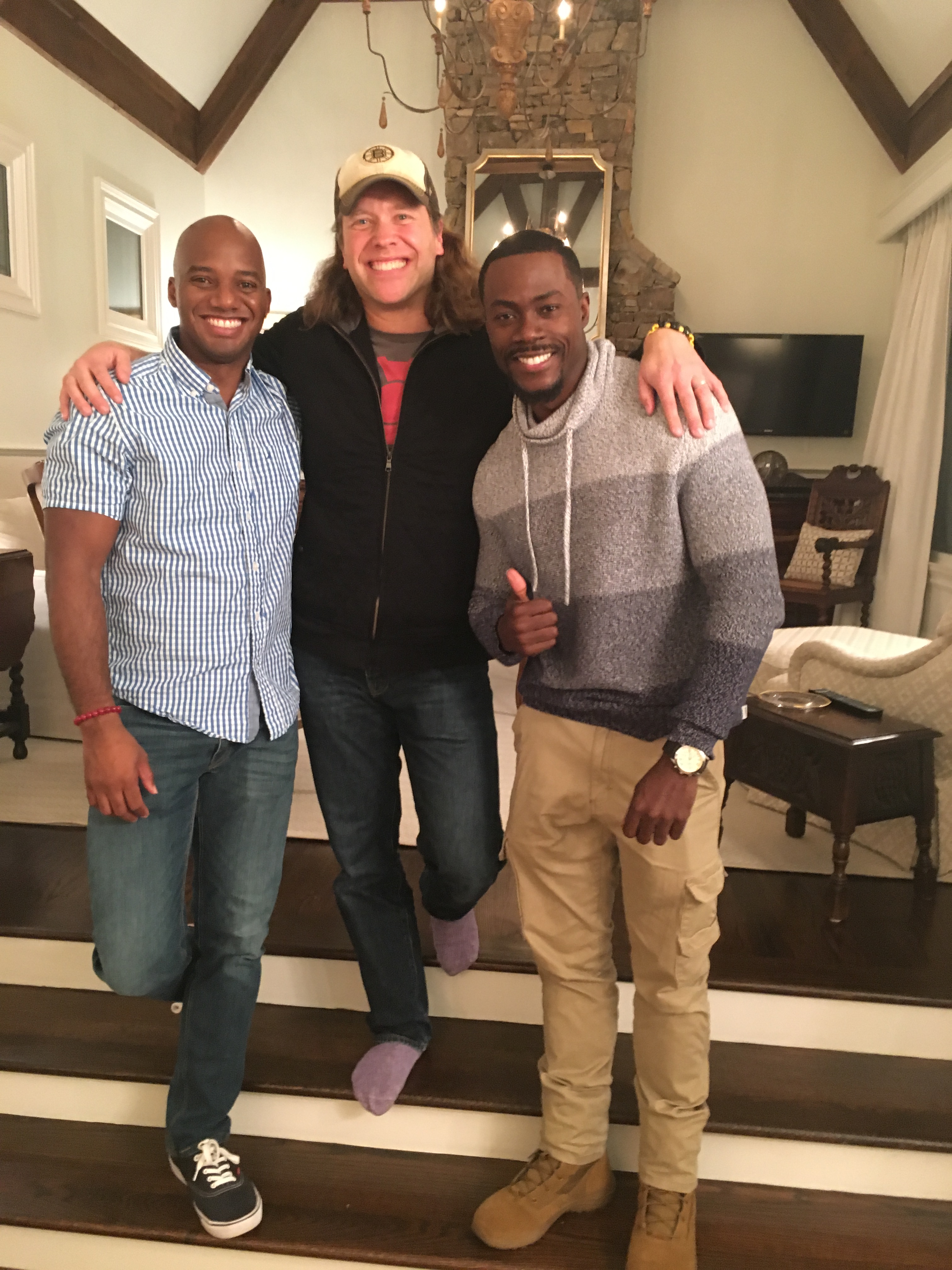
What is the greatest pain?

My daughter Ava and I went out for a mid-week dinner date on Wednesday night. She had qualified for her sectional track and field meet. Which in Wisconsin is the last step before the state championship meet. If she finished in the top 3 at the sectional meet she would make it to the state meet.

So the night before the meet we decided to go grab her favorite carb-loading meal from MACS Macaroni and Cheese joint. Which, in my opinion, should be the official restaurant chain of Wisconsin.

The Conversation

As we drove we talked about track and field. We talked about her upcoming meet. And we talked about life. Our discussion got deep. Like Johnny Deep. Or Deepak Chopra. During our convo, A.C. (Ava Claire) asked me the following question:

Ava: Dad, what do you think is the greatest pain?

Me: (resisting the urge to say T-Pain…) Physical or emotional?

Ava: Emotional.

Me: Regret

Ava: That’s exactly what I was thinking!

Me: In entrepreneurship, we say that failure is far better than regret. When I started The Weaponry I wasn’t afraid of failing. I was afraid of getting to the end of my days and having never tried to start my own business.

Ava: I love that.

Remember what Teddy Roosevelt said:

It is not the critic who counts; not the man who points out how the strong man stumbles or where the doer of deeds could have done them better. The credit belongs to the man who is actually in the arena, whose face is marred by dust and sweat and blood; who strives valiantly; who errs, who comes short again and again, because there is no effort without error and shortcoming; but who does actually strive to do the deeds; who knows the great enthusiasms, the great devotions; who spends himself in a worthy cause; who at the best knows in the end the triumph of high achievement, and who at the worst, if he fails, at least fails while daring greatly, so that his place shall never be with those cold and timid souls who neither know victory nor defeat.

-Teddy Roosevelt

Key Takeaway

Don’t be afraid to try. Don’t be afraid to fail. Don’t be afraid to lose. Be afraid of regret. That feeling hurts more. And it lasts forever.

*If you know someone who would benefit from this message, please share it with them.

Getting the vaccine = Getting back together = Getting back to normal

Wednesday was a big day for me. I didn’t win the lottery. I wasn’t named a Most Beautiful Person. And I wasn’t asked to replace Alex Trebek on Jeopardy. Heck, I wasn’t even asked to replace Alex Trebek in the Colonial Penn commercials. It was a big day simply because it was one of the normalest days I have had outside my home in 15 months.

Vaccination Nation

I got my second vaccine shot 2 weeks ago (I’m Team Pfizer, not Hufflepuff or Slytherin). I now feel that I am as protected from the COVID-19 virus as I am going to be. Better yet, I feel as protected as I need to be. So I have started doing regular life stuff again. And I am reminded how much I love regular life stuff.

Wednesday, Normal Wednesday

Wednesday I traveled from Milwaukee to Madison (which is about a 90-minute drive for those of you who are Wisconsin-illiterate). I went to college at The University of Wisconsin in Madison, and I feel as at home in Madtown as I do anywhere on Earth. I was there to see people that I hadn’t seen since before the planet went cuckoo for Covid Puffs.

The Breakfast Club

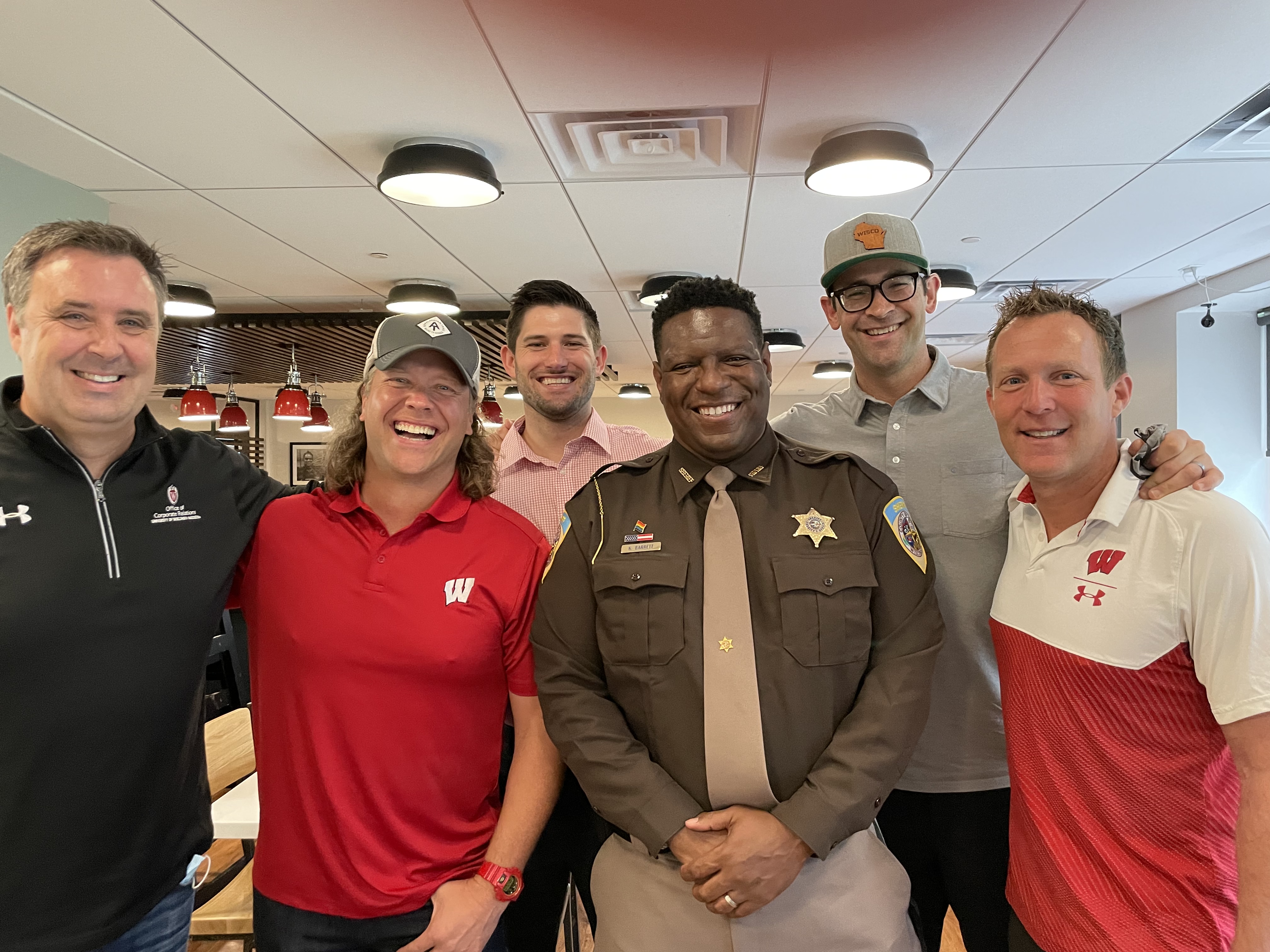
I started my day at a breakfast meetup with a group of former University of Wisconsin Badger athletes. The last time I saw any of these W Club members in person was March 4th of 2020. The Crew included:

  • Charlie Wills: The Owner of the Charlie Wills Team -Real Estate Partners (basketball)
  • Scott Silvestri: VP and General Manager of Learfield’s Badger Sports Properties (swimming)
  • Derek Steinbach: Director of Development for Wisconsin Athletics (track & field)
  • Nicholas ‘Papa’ Pasquarello: Executive Director of the W Club and Strategic Partnerships – Wisconsin Athletics (soccer)
  • Andy Crooks: Managing Broker at T.R. McKenzie (football)
  • Adam Albrecht: Founder and CEO of The Weaponry and Dude Who Writes This Blog (track & field)
  • Kalvin Barrett: Dane County Sheriff (football (but he will tell you he was a swimmer))
Nick, Me, Derek, Sheriff Barrett, Charlie and Scott at the Original Pancake House in Madison. I’m always amazed at how many of those restaurants there are. Which makes me think most of them are lying.

It felt like a reunion. We were hugging and shaking hands and seeing each other’s naked faces. We were sharing stories, smiling, and laughing. And not once did anyone say, ‘You’re on mute.’

This was a group of ballers, that included All-Americans, Final Four participants, school record holders, Big 10 Champions, and Team Captains. But the rockstar of the group was Sheriff Barrett. Other people in the restaurant were asking to take pictures with him and to asked him to stop to talk. It was fun to see.

I asked Kalvin if he no longer likes the Bob Marley song, “I shot the sheriff.” He said that he loves that song and plays it in the office. Which reminded me of Shaq in the Grown Ups 2 clip below.

Brunch

After breakfast, I visited Dave Astrauskas, the rockstar throwing coach of the University of Wisconsin track and field team. Dave has coached 4 NCAA Champions, 1 NCAA Collegiate Record Holder, 41 NCAA Division I All-Americans, 4 Big Ten Records Holder, 11 Big Ten Champions and Olympic discus thrower Kelsey Card.

Coach Dave Astrauskas He can teach you how to throw anything but a hissy fit.

Dave has forgotten more about throwing than I will ever know. And of all the people I know Dave is the most likely to set off a spellcheck alarm. #astrauskas

I spent time with Dave for 3 reasons:

  1. Because he is a good human.
  2. To learn from someone who is at the top of their field.
  3. To foster a strong bond between the UW Track & Field program and alumni.

Spending time with Dave was enlightening. He offered me a number of new ways to think about throwing, human performance, coaching, problem solving, the Big Ten Conference, athletic facilities and competition. My time with Dave was a great reminder of how much we can all learn if we ask good questions of experts, listen, and maintain a beginner’s mind.

Lunch

My lunch meeting was pure joy. I met with my friend-client-superstar, Anne Norman, SVP and Chief Marketing Officer of UW Credit Union. Anne has been a favorite human of mine since we first met for lunch at Hi-Way Harry’s in Johnson Creek, Wisconsin in 2018. We have been working together weekly ever since. But we have only seen each other in-person once since February of 2020, at our TV commercial shoot with Jonathan Taylor, running back for the Indianapolis Colts.

The 3 greatest exports of Kenosha, Wisconsin are Orson Welles, my high school teacher Mr. Bill, and Anne Norman.

Anne is a burst of sunshine on any day. Even on the phone or on Zoom. Especially if she is wearing her banana costume. But to be with her in person provides a full week’s worth of Vitamin C in one sitting.

We talked business and branding and teams. We talked about upcoming marketing initiatives. But we could have talked about hang nails, paper cuts and the DMV and I would have enjoyed it. Because spending time with Anne is even more valuable to me now than it was in 2019.

Key Takeaway

Get vaccinated if you can. See your people in real life. Spending time with great humans is joy fuel. And it is even better now that we have had that ability taken away from us. Today, life isn’t just returning to normal. Life is about to be better than ever. Because we have a newfound appreciation for all of the little things. Like simply being together with other good people. Let us never take that for granted again.

Thank you Charlie, Derek, Scott, Nick, Andy, Dave and Anne for sharing some of your valuable time with me.

*If you know someone who could benefit from this message, please share it with them.

Why you should approach self improvement like a sport.

I first published this post a few years ago while reflecting on my track & field career. I recently shared the post with some track athletes and coaches who really appreciated the message, especially the Key Takeaway (so you could just jump to that). So I decided to repost it again during the heart of track season.

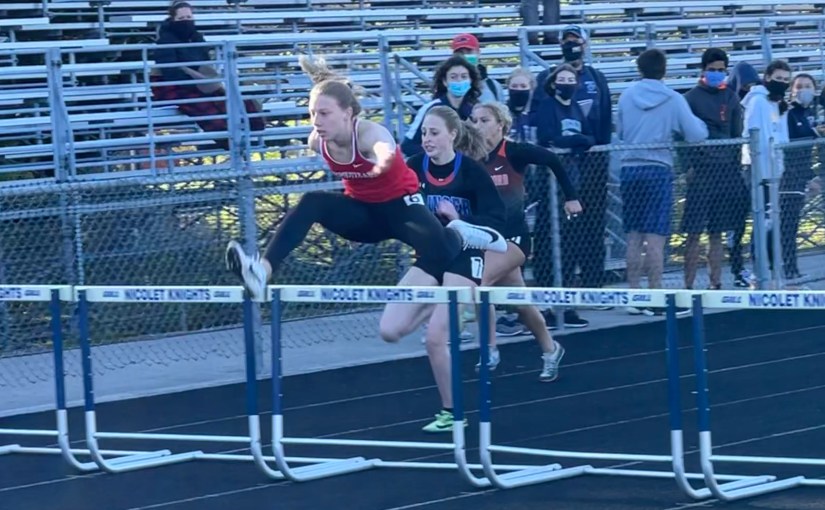
Pre-Note: Wednesday I was at a track meet and took the cover pic of our family friend Eva Brandenburg hurdling. Eva and my daughter Ava (confusing right?) have played basketball together since 5th grade, and are now having fast starts to their freshman track seasons. Keep an eye out for Eva. She is going to do special things!

Here is the original post, now in an unoriginal post...

I love track and field. I first got involved in the sport as a freshman in high school, mostly because I was terrible at baseball. But also because it was co-ed. And, I thought the fact that it was a no-cut sport significantly improved my chances of actually making the team.

Trying Everything

I have competed in a wide variety of track and field events. My resume includes the 100 meters, 400 meters, 1600 meters, high jump, long jump, shot put, discus, javelin, hammer, 35-pound weight, 110-meter hurdles, 4×100 meter relay, 4×400 meter relay, and, yes, even the pole vault (which I approached more like the high jump with a stick).

I have enjoyed every event I have ever competed in (except the 1600 meter run). I love the energy and atmosphere at track meets. But you know when track and field becomes really fun?

The Second Meet.

The second meet is the most important and impactful event in a track athlete’s career. In your first meet, you are just setting a baseline. But once you get to your second meet you walk in with a time, distance, or height to beat. And most of the time, the results in the second meet are a rewarding step forward from the first meet.

In track and field, every result is measured in minutes and seconds, or feet and inches. Which means that your linear progression is clear and quantifiable. Your undeniable improvement in the second meet gets you thinking about the third meet. It makes you think about practicing more, training harder, lifting weights, warming up smarter and getting some better hype music. You start wondering just how much better you can get. The seeds of self-improvement are planted, fertilized and watered in that second meet.

The Broader Lesson

This is not just a track and field thing. This is a life thing. The same principle of self-improvement applies to our careers, our relationships, our responsibilities and our hobbies. Our first attempts simply set a baseline. The second time we do anything we start the improvement process. We recognize that as we pour more energy, time and focus into any activity we get better and better. This is true of presenting a closing argument in court, hiring good employees and folding fitted sheets (although my wife, Dawn is so good at the fitted sheet thing that I focus on the closing arguments in court instead).

Key Takeaway

Don’t be afraid to try something new because you think you will be bad at it. You will be bad at it. Or at least you will be the worst you will ever be. But that first attempt creates a starting point. The climb from there is both exciting and rewarding. As you improve, remember that first attempt. Recognize how far you have come since you first started. It is one of the most rewarding reflections in life.

*If you know someone who could benefit from this message, please share it with them.

How to approach your career like a sport.

Business is the ultimate sport. Not only is it highly competitive, it is played for money. And the better you are at this game the more money you and your teammates make. And while many professional athletes are well paid, it is because someone else is making even more money in business by owning the team or the league the athletes play in.

Sports and Business

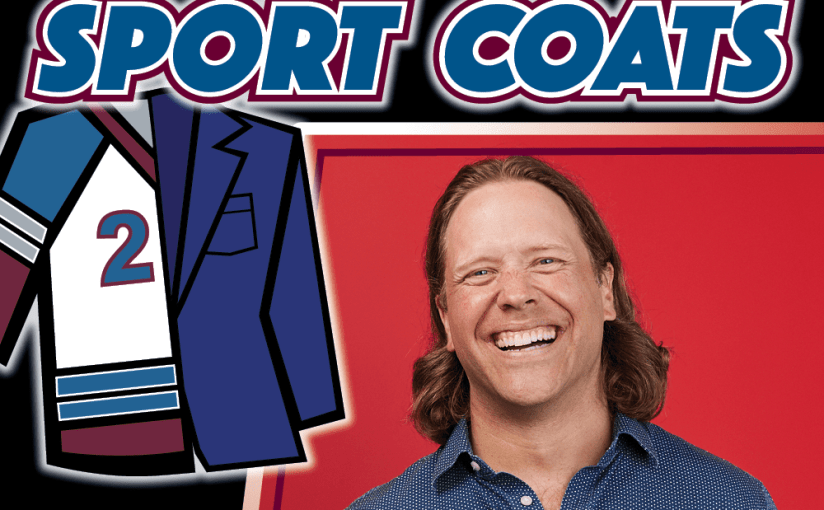
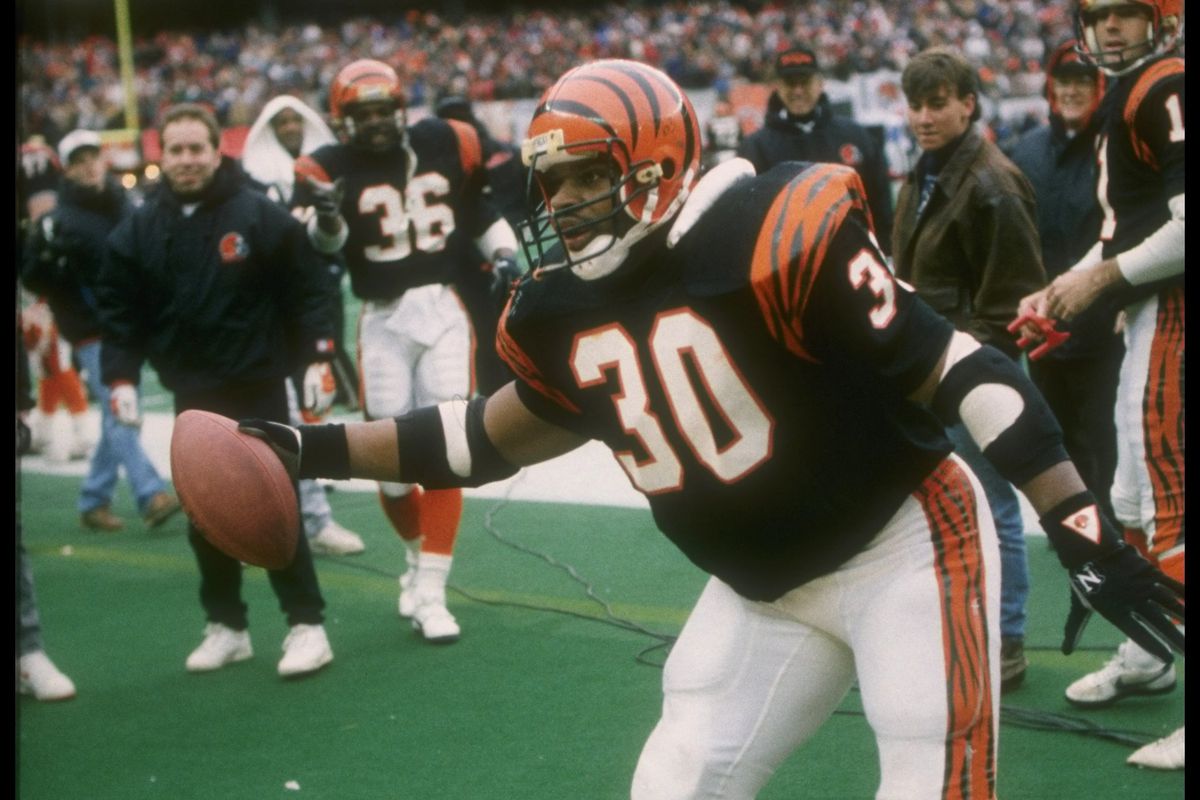
Will Jurgensen loves exploring the parallel between sports and business. In fact, he began a podcast called Sport Coats to profile the stories of athletes who applied their approach to athletics to successful business careers. I would have liked to have been in the room when Will realized how perfect the name Sport Coats was for his sports/business podcast. Because I bet that boy celebrated like Ickey Woods.

Everyday Ickey Woods is shuffling.

I recently sat down with Will to talk about my experience as a track and field athlete at The University of Wisconsin. But more importantly, we talked about how I have applied my approach to athletics to my career in advertising. And we talked about how my athletic career prepared me to become an entrepreneur when I launched The Weaponry.

Sound bites from the podcast:

On Focus:

‘I remember early in my career, getting hyper-focused on concepts for a campaign or ideas for a new business pitch. It felt the same as those times when I was in the weight room focusing hard on getting those last few reps. It’s the same thing, it’s the exact same feeling.’

On Transitioning: (Not like Caitlyn Jenner)

‘When you are done with your athletics, a lot of athletes say, “I was lost, I felt like it wasn’t me without sports.” I would say I never felt that at all. As soon as I graduated, I just turned my attention to my career and took the exact same focus and drive, and willingness to put in the energy to be great that I did for my athletics. I put that into my career and it surprises me how few athletes do this, because it is the exact same blueprint for athletic success that drives the rest of the success in your career.’

On Self Improvement:

‘Track and field is a little different than a traditional team sport because it is all you, and it’s so cut and dry. I would put a tape measure out or use a stopwatch to figure out if I was improving and if I was better than other people who have tried this. From that standpoint, I found the challenge of self-improvement to be intoxicating.’

On Training:

“The structure, the discipline, the focus, the background work that you have to do as an athlete, you know, all the little drills that you do over and over to perfect a piece of what you do, when you do that in your career you become highly specialized. And you become world-class at the smallest things. You add extreme value to organizations that make money off of that kind of work.’

Hear Ye! Hear Ye! Ye Can Hear It Here.

You can listen to my interview here at The Sport Coats Podcast. You can also read more of the transcript if you prefer the voice in your head over mine. I listened to the podcast on the podcast app on my iPhone.

I think you will enjoy it, even if you aren’t into sports. It feels like a motivational talk. Will is a great host. And after listening to the episode I understood why people think I am excited about life.

Key Takeaway

Business is the ultimate competitive sport. It requires discipline, teamwork and strategy. Everything you know about athletic competition, hard work, focus and determination translates directly to business. It is an inherently fun game to play with others. And it is even more fun to win. The money is a bonus. But what a bonus that is.

*If you know someone who could benefit from this message, or from this podcast, please share it with them.

Want amazing success? Do what long jumpers do.

The long jump is one of my favorite track and field events. Not only is it one of the most entertaining, aside from the 100-meter dash, it is the easiest for a non-participant to relate to.

Real Life Applications

Long jumping may also be one of the most useful skills in track and field. Imagine you are visiting Hawaii on vacation and a crack in the Earth opens up between you and your coconut drink. It would be really useful to be able to jump over the fissure and save your drink. I think that happened to Carl Lewis once.

My Rockstar Jumpers

I was lucky to be a part of the track and field team at the University of Wisconsin. And I had some teammates who were really good at the long jump. Here is a list of the notable Badger long jump marks when I was in school.

  • Sonya Jenson: 19 feet 11 inches
  • Heather Hyland: 20 feet 5 inches
  • Jeremy Fischer: 24 feet 8 inches
  • Maxwell Seales: 25 feet 2 inches
  • Reggie Torian: 26 feet 2 inches.

To fully appreciate how good these marks are simply go out in your yard and see how far you can long jump today.

There are 4 things to love about the long jump.

1. The crowd clap.  The crowd watching a meet will often start clapping in unison to motive a jumper. The claps get faster and faster as they speed down the runway. I wish someone did this for me at work as I filled out my time sheets.

2. The run: It is fun watching a jumper accelerate towards the takeoff board. It’s kind of like the countdown for a rocket launch.

3. The jump itself: There is something primal and childlike about watching a human fly through the air self-propelled. It is pure fun. It reminds me of my adventures as a kid, jumping over creeks and jumping into piles of hay, hay, hay, like Fat Albert.

4. The landing (or what I would have called the sanding): What goes up must come down. Watching the jumper hit the ground again, usually in a spray of sand, is good dirty fun.

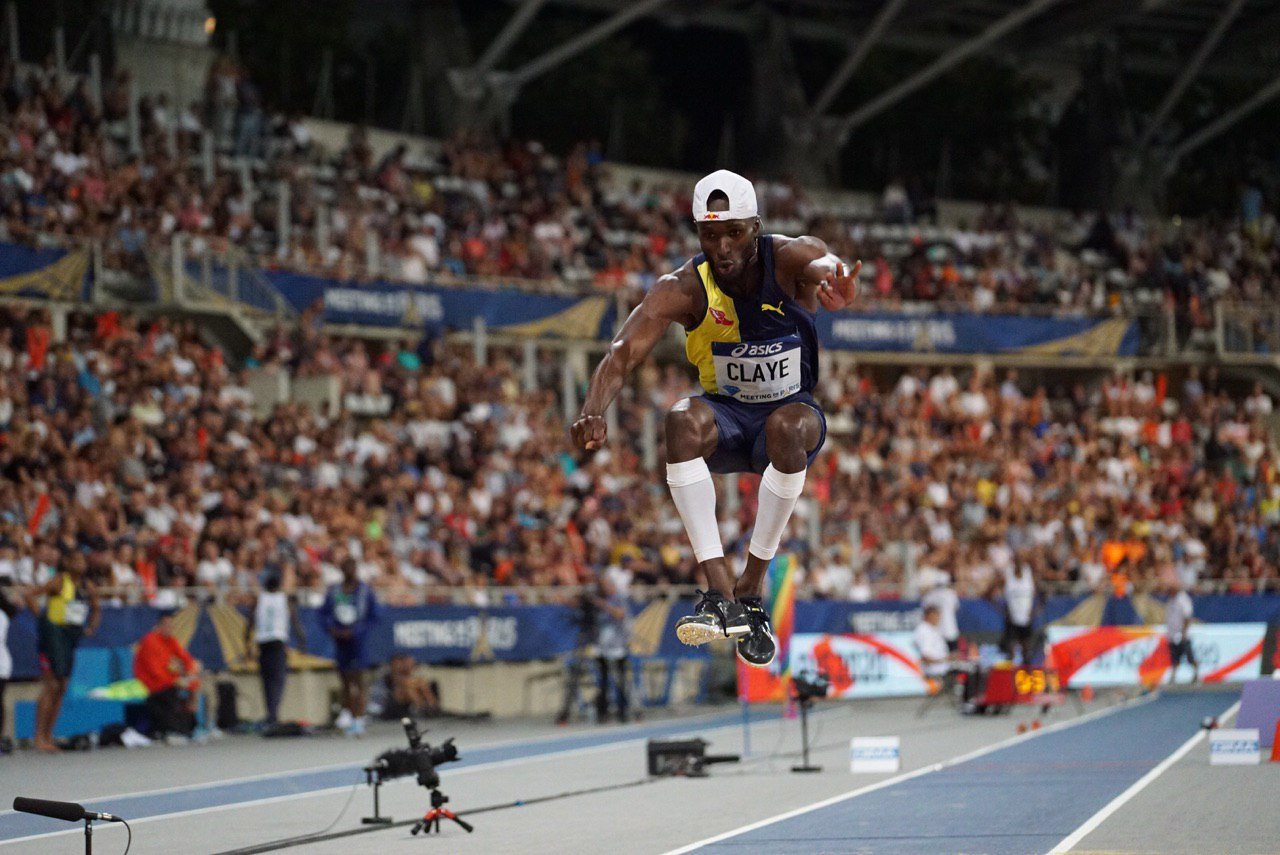
Will+Claye+Paris+Diamond+League+August+2019
Will Claye is one of the best long jumpers and triple jumpers on the planet. He is coached by my college teammate at the University of Wisconsin, and very close friend, Jeremy ‘Shakes’ Fischer.

The Part Most People Overlook.

My favorite part of the long jump actually happens before any of that. It happens as a part of the competition day preparation that most people pay no attention to at all.

A long  jumper doesn’t just show up at the track, walk onto the runway, and start jumping. Instead, they have to find their starting point. To do that they have to start at the end. They go to the takeoff board, and then work their way back from there to determine where they should actually begin their approach.

Finding The First Step

Some jumpers will stand on the takeoff board itself, with their back to the sandpit, and then run down the track, away from the takeoff point, counting their steps, to find their starting point.

Other jumpers use a tape measure. They set the end of the tape at the takeoff board and unreel it until they get to their preordained measurement. Then they mark that point on the runway as their starting point.

Jeremy Fischer.png
Former Badger jumper, Jeremy ‘Shakes’ Fischer now teaches athletes to jump at an Olympic level.

Know Where You Want To End

There is magic in that process that everyone can benefit from. Because the long jumper starts at the end of the run, the most critical point in the process, and then figures out, to the inch, where they need to start to hit that point perfectly. In long jumping, if you step past the board your jump is no good. And every millimeter you are short of the board doesn’t count towards your jump. (Notice how I mixed English and metric measurement systems? That because I am bi-numeric. Which is like being bi-lingual, but not with linguals).

My Entrepreneurial Leap

Before I launched my advertising and idea agency, The Weaponry, I did the same thing long jumpers do. I put myself at the launch, imagining in great detail what my flight would look like once I finally jumped. Then I determined all the of the steps I would need to take in order to launch myself properly.

I figured out how much time it would take me to create everything I needed to create. I put a mark down. Then I started running, accelerating towards the launch point the whole time.

Purposeful Steps

All of my steps have been purposeful to get me the results I am after. It took me 8 months of planning from the time I decided to launch The Weaponry until I was open for business. 3 years later, The Weaponry is a multi-million dollar business and climbing rapidly. Just like I planned.

Key Takeaway

To achieve great things, start with the end in mind. Then work backwards from there. Because when you know your direction, your steps, and your takeoff point, you’ll go as far as you can possibly go. It’s all in the preparation. So put yourself in the best position to succeed. Start today by focusing on the end first. I’ll be clapping for you the whole way.

*If you know someone who could benefit from this story, please share it with them.

Are you surrounding yourself with the best people?

The legendary motivational speaker Jim Rohn once said that you are the average of the five people you spend the most time with. That’s why it’s so important to spend your time with the best people. This past Friday, during the University of Wisconsin homecoming weekend, I spent 6 hours with an amazing group of former University of Wisconsin varsity athletes. These Badgers are some of the brightest, most driven, most fun, and most successful people I know.

Business Up Front

I kicked off homecoming weekend in Madison with a 2-hour advisory board meeting for the W Letterwinner’s Club. The advisory board is like Noah’s Ark. Because it features two former athletes from every varsity sport.

We meet to discuss how we can help our members develop more meaningful relationships with each other, both personally and professionally. We discuss how we can offer assistance, guidance and mentorship to graduating Badger student athletes. And we explore ways that our network can add value to the mission of the University of Wisconsin and its world class athletic department.

IMG_8787.jpg
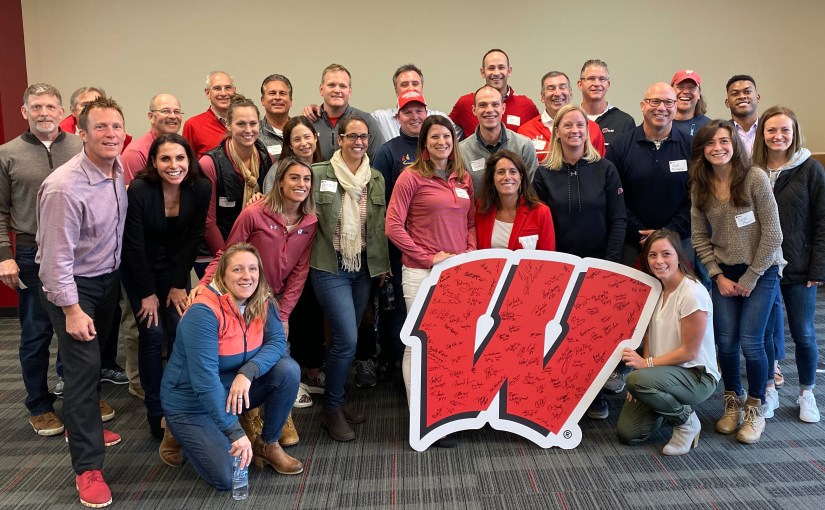
The Dub Club representatives from track & field and cross country. And the handsome profile of a tall soccer alum in the top left.

Up In Da Club

The former Badger student athletes on the board are inspiring. They include Big 10 Champions and National Champions. They include All-Americans and professional athletes. They include school record holders and Hall of Famers. They include athletes who made it to the Final 4 and the Frozen 4.

Our youngest members just graduated from Madison. And our most senior members used to get run with Crazy Legs Hirsch, Alan ‘The Horse’ Ameche and Paul Bunyan when he was just a babe himself.

Today these W Letterwinners are crushing it in their post-collegiate careers. They are executives and entrepreneurs. They are administrators, professors and coaches. They are leaders and volunteers. And they are great parents, wives and husbands. Just spending time with these badasses enhances my own false sense of badassery.

Party In The Back

On Friday night, after the work was done, we did what Badgers do. We played. We migrated to the iconic State Street Brats, and joined hundreds of others at the annual Badger Athlete Reunion. We spent the next few hours together, talking, laughing,  sharing memories, making new friends, connecting dots, drinking beer and eating brats.

While it certainly looked as if we were having fun, we were doing more than that. We were strengthening our personal bonds. The bonds between former student-athletes who know just how hard it is to live up to the demands of academics and athletics at the Big 10 level. We were strengthening the bonds between Badgers who know that if you can excel in both the classroom and athletic arena at The University of Wisconsin, you have the critical tools and the skills to be successful for the rest of your life.

IMG_3222
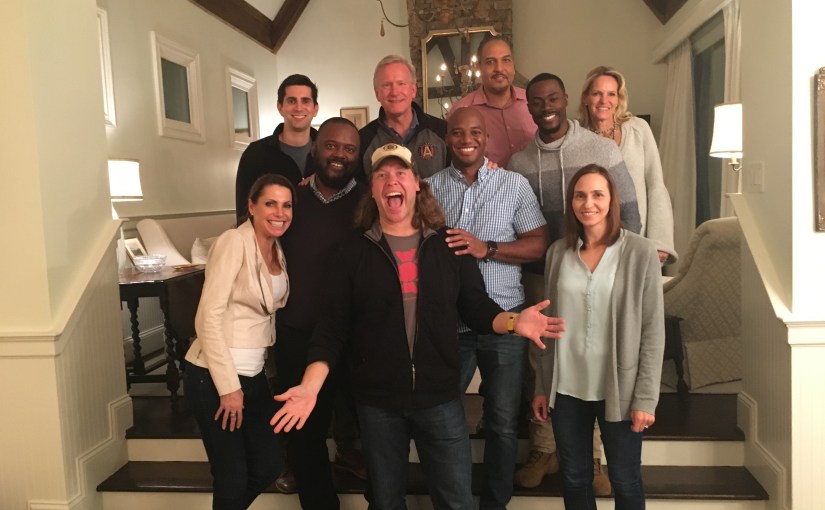
Former Badger athletes at an impromptu meetup in Atlanta. Badgers are everywhere.

Key Takeaway

If you want to be great surround yourself with great people. Find rockstars who inspire you. Spend as much time with those special people as you can. It will make you a better person. I know it will. Because I learned that lesson in Madison as a student athlete at the University of Wisconsin.

*If you know someone you think would benefit from this message, please share it with them.

How to make a business trip more than a business trip.

I like to make the most of my business travel. After my work obligations are Sharpied into my calendar, I always fill the open spaces in my schedule with personal activites. That might include eating at an interesting restaurant, exploring, museuming or exercising. But my favorite activity to add to a work trip, by far, is socializing. Sometimes I meet new people. Sometimes I reconnecting with old friends. And sometimes I do both at the same time.

This Week

I had to travel to Atlanta this week for a film shoot. Since I had to fly in on Monday I began filling my afternoon with interesting activities. Here is what I did between 12:30 and 6:30pm:

  1. Had lunch with a former client
  2. Had back-to-back-to-back meetings with 3 different freelancers who are currently working with my advertising and idea agency, The Weaponry.
  3. Met with a college senior to talk to him about his career options after he graduates.
  4. Guest lectured to a college marketing class about creativity and the creative process.
  5. Stuck around 20 minutes after the lecture to talk to a group of 5 students who had more questions.
  6. Drove to my Atlanta neighborhood in East Cobb and talked to my neighbor, Dr. Betty Garrot about my recent trip to India (Betty’s family is from India, and they contacted me when I was in Bangalore).

Monday Night

It was a fun and interesting day. But what I had planned for Monday evening was really special. Last Friday I texted my college teammate Jabari Pride, who lives in Atlanta, and asked him if he would like to get together Monday night. He said yes. So I reached out to another, former University of Wisconsin track athlete, Lenton Herring, who lives in Atlanta, and invited him too. Then I reached out to Stephanie Herbst-Lucke, who was not only up for getting together, she invited us to gather at her home. So we decided to contact a couple more former Badger track athletes to tell them what we were doing.

IMG_3217
Jabari, Adam and Lenton. One fo these guys is allergic to shoes.

Just three days later, on a rainy Monday night in Atlanta, these are the Badger track alum who showed up:

  1. Adam Abrecht: Discus and hammer thrower from Norwich Vermont, now living in Milwaukee (but still a proud Atlanta home owner).
  2. Jabari Pride: Sprinter and all-around athlete from Los Angeles, now living in Atlanta.
  3. Lenton Herring: Jumper and sprinter from Gainesville Florida, now living in Atlanta.
  4. Stephanie Herbst-Lucke: Distance runner from Chaska, Minnesota, now living in Atlanta.
  5. Tina Erps-McGee: Sprinter and jumper from Bettendorf Iowa, now living in Atlanta.
  6. Terry Reese: Hurdler from Fort Wayne Indiana, now living in Atlanta.
  7. Scott Jenkins: Distance runner from Kenosha, Wisconsin, now living in Atlanta.
  8. Stephanie (Bassett) Orman: Distance runner from Bloomington, Indiana now living in Atlanta.
  9. Mark Euler: Jumper from Madison, Wisconsin, now living in Atlanta.
  10. Reed Connor: Distance Runner from The Woodlands, Texas, now living in Atlanta.

IMG_3231
Tina, Stephanie and Steph, between two lamps.

Socializing not Social Networking

It was an amazing night. I got to see friends and teammates I have known for decades, some of whom I hadn’t seen in decades. I also got to meet three new Badgers. We talked about our families and careers. We shared stories about our days competing for the University of Wisconsin. We talked about our coaches and the things we learned from Ed Nuttycombe, Peter Tegen, Martin Smith, Mark Napier, Scott Bennett, Mick Byrne, Mary Grinaker, Robert Hackett and others.

IMG_3211
Lenton telling us the story of how he invented the fist bump.

We talked about how there is no other experience quite like spending your college career in Madison. We talked about the unique people, the unique setting and the unique educational environment. Because of our shared history, the group instantly felt like a community. We traded contact information and made plans to gather again. Just like that, the W Club-Atlanta was born.

IMG_3222
The W-Club Atlanta, freshly birthed.  

Connect In Person

This was a great reminder to make sure you see your people in real life. It is great to keep in touch with each other on LinkedIn, Facebook and Instagram. But people are better in person. We all need to experience real human connections. Those connections are strongest, and most impactful, when we are in a room, talking to each other, face to face.

Key Takeaway

I encourage you to reach out to your people. Get together with friends from home, from college or camp. Organize a gathering of former co-workers, teammates or roommates. Get together with your neighbors. Or create your own social or professional groups.

At the end of our days, the only thing that will really matter is the relationships we build, and the impact we have on each other. Don’t be afraid to make the first move. I did. And because of it, ten former Badger track athletes are now part of another special community 803 miles from Madison.

*Special thanks to fellow Badger, James Lucke for hosting us and joining us Monday evening! On Wisconsin!

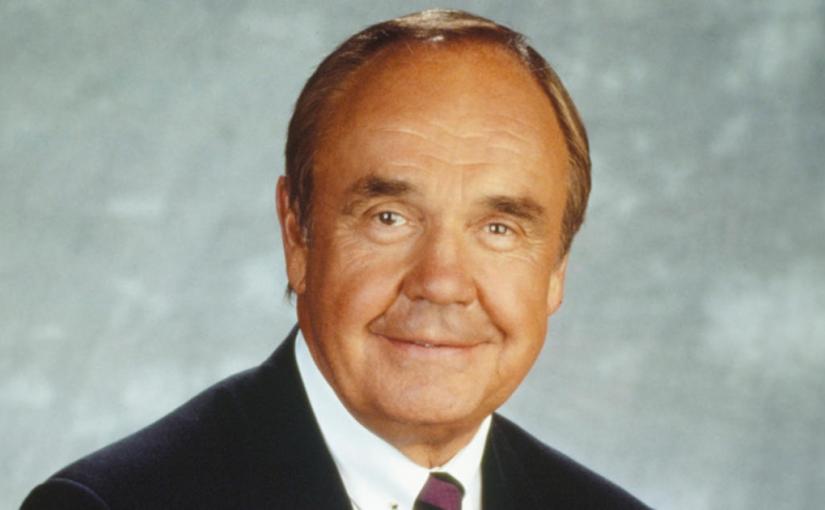
My lunch with one of the greatest sportscasters of all time.

People die every day. This year I lost my friends Kirk McDonald and Kate Gruetzmacher in their early 40’s to brain cancer. I lost my 100-year-old Grammy to, well, being 100. And just before Christmas I lost sports broadcaster Dick Enberg, at 82, to a heart attack.

The Broadcaster

Dick Enberg was the sportscaster of my youth. He broadcast 8 Super Bowls, the Olympics, The Masters, Wimbledon, Major League Baseball, college basketball and boxing, His catch phrase, Oh My, was simple and powerful. And it followed many of the greatest athletic feats I witnessed as a child.

The Invitation

When I was a senior in college Dick Enberg came to the University of Wisconsin to give a speech at a banquet honoring student-athletes for high academic performance. I was a discus and hammer thrower on the track team and was proud to have been invited to the event. I was also being recognized as one of a dozen student-athletes who had earned a 4.0 GPA the previous semester. But I was most excited that Dick Enberg was going to be speaking.

The Luncheon 

Three days prior to the event I was informed that the athletic department had also arranged a private luncheon at the stadium the day of the banquet. 17 student-athletes were invited to have lunch with Mr. Enberg and participate in a discussion about issues facing student-athletes. I was one of the lucky few who received an invitation.

I arrived early to the luncheon, as we were requested to do. The athletic staff gave us the game plan and reminded us we were representing both the University and the athletic department. Which I assumed meant don’t talk with your mouth full.

The student athletes waited with great anticipation for Dick to arrive. He was finally escorted into the room and there was a brief introduction. Then an athletic staff member announced, ‘We will let Mr. Enberg go through the food line first, then the students can follow.’

I quickly realized that someone would have to follow Dick. And I thought:

Why not me?

So this discus thrower from little Norwich, Vermont marched over to the banquet table that held the spread of food, grabbed a plate, and stepped in line right behind Dick Enberg, one of the greatest sports broadcasters of all time. We talked as we walked through the line. And when Dick took his seat, I took the seat right next to him.

The next hour was amazing. We had a great group conversation. Dick showed a genuine interest in our thoughts and perspectives. I talked about the challenges of being an in-season athlete in the spring of my senior year, and not having any time to focus on finding a job and starting my career after graduation.

Dick wisely predicted that the same commitment I had to my athletic and academic success would translate well to my career. He encouraged me to enjoy the rest of my senior year. Which of course, I did.

The Banquet

That evening I attended the banquet with my favorite journalism professor, Roger Rathke, and my aunt, Deanie Sprau, who lived in Madison and was a huge reason I was drawn to The University of Wisconsin.

The banquet was at The Great Hall at the Memorial Union. The room was huge and packed. There were about 500 attendees, including student-athletes, faculty, staff, and family members. It felt like a wedding. Our assigned table was at the center of the large banquet hall.

It was fun to see all of the athletes trade in their athletic department sweatpants and t-shirts for dresses and suits. Everyone was excited to have one of America’s best known sports figures in attendance.

After a warm welcome to the event by the master of ceremonies we were served our meals. Dick Enberg was seated at the head table with Athletic Director, Pat Richter, and other university dignitaries.

In the middle of the meal I saw Dick suddenly stand up and start making his way across the large, packed hall. I presumed he was either going to visit the little broadcasters room, or taking a moment to review his notes one last time before his speech.

All eyes were on Mr. Enberg as he cut across the middle of the room. He was on a path that would take him directly past my table. He got closer and closer to me.  When he reached my table he stopped for a brief moment, gave me a big smile, and patted me on the back like we were old friends. Then he continuing on his way and disappeared from the room.

Suddenly, friends from around the Great Hall flocked to my table to find out why, in this room of 500 people, had the guest of honor stopped to say hi to some random, albeit studious, track athlete. My answer was, “Oh, we had lunch together today.”  By the looks on their faces, that was an even crazier answer than they were expecting.

The rest of the event was nice. Dick’s speech was great. And I was proud to be part of this large group of high-achieving students who happened to participate in some outramural sports in their free time.

Thinking Back

That evening serves as a great reminder of how life works. Your efforts can get you into the room. But it is the relationships that you develop along the way that make you stand out from the crowd.

Dick Enberg was right about my career too. After I graduated my professor Roger Rathke, who was with me at the banquet that night, introduced me to his college buddy  from the University of Wisconsin, Paul Counsell. Paul was the CEO of the remarkable advertising agency Cramer Krasselt. I got an informational interview, and was offered a job as a copywriter. And today I own my own agency.

Thanks

Thank you Dick Enberg. Thank you for the Super Bowls. Thank you for the Olympics. Thank for coming to Madison and having both lunch and dinner with me. And thank you for the wise career advice. Things have worked out just fine for me.