How does your job look on you?

How often do you take a good long look at your job? Once a year? Once an hour? Once a never? It is really easy to stop evaluating your job and simply accept it as your reality.  Then years go by, and your job search muscles atrophy to the point where you can barely lift your interviewing suit off the hanger.

Many of us accept our jobs as necessary, but not special. Your job provides the money you need for critical things like food, clothing, shelter and a mobile phone. However, the ‘necessary evil’ mindset leads many of us to jobs that are just… fine.

But life it too short, and the workday is too long for fine.

I have reevaluated my job-love frequently throughout my career. But instead of job-hopping I have used my evaluations to tailor my jobs in ways that kept them feeling enjoyable, dynamic and growth-oriented.

A New Lens

A couple of years ago, while mentally jogging, I began thinking of my job as clothing. It made me consider my personal style, the image I want to show the world and my personal comfort. In that context it was clear to me that my current job didn’t fit me. The size, style and cut of the clothing was nice. But it just wasn’t for me. Clothes are highly personal that way.

So I decided to do something about it. I got all idyllic. I thought a lot about the perfect job. I thought about the perfect place to work, the perfect kind of work and the perfect culture. I even started a blog about it. Maybe you’ve read it.

I concluded that the specific place I was looking for didn’t exist, yet. So I started the advertising and idea agency, The Weaponry.  Today, I couldn’t be happier. Everything about it seems to fit me. It seems the people working at The Weaponry are enjoying their experience too.  Perhaps because we set out to make this a really enjoyable place to work. Perhaps this is because, like fashion designers preparing for a runway show, we have been able to pick people for our team that we knew would look good in our jobs.

Now, back to you.

Today  I want you to think of your job as a piece of clothing.  It could be a dress, a suit, a pair of jeans, a t-shirt, a blouse or jacket. I want you to think about the fit and feel of your current job. Think about the style and the silhouette.

Now, let’s evaluate.

14 Questions To Ask Yourself About Your Job, If It Were A Piece Of Clothing.

  1. Do I like wearing it?
  2. Does it fit me well?
  3. Do I choose to wear it as often as I can?
  4. Would I only wear it if everything else was in the laundry?
  5. How would I feel if an old boyfriend or girlfriend saw me wearing this?
  6. Is it out of style?
  7. It is well-tailored to me?
  8. Does it make my butt look big?
  9. Am I excited that I own it?
  10. Do I get compliments when I wear it?
  11. Does wearing it make me feel stronger, more attractive or more fun?
  12. Could I really benefit from removing it from my closet?
  13. Is it the right style, but too big or too small?
  14. Do I cringe when I see the types of other people who wear what I’m wearing?

Here’s the reality: Your job really is like a piece of clothing. You wear it more than anything else you own.  Yet many people would be better off donating their jobs to Goodwill. You may think your current position is better than nothing. But I know many people who would look better wearing no job than the one they currently have.

You have more career options than you realize. You have the ability to create your own job, perfectly tailored to you.  Don’t ever forget that.  The more you enjoy your job, the more you enjoy your life. As far as I know, we only get one shot to get this right. So find something you love to do and a place you love to do it. If you find it doesn’t exist, make it yourself.

Why art school students fail to find jobs, and what to do about it.

I love art schools. The creative vibe at these colleges makes me want to make something. I dig the students buzzing around campus, toting art projects with their backpacks crammed full of supplies. The experimental clothing that often adorns these boundary explorers creates a feeling of Kindergarten 2.0. Or Kindergarten 20, since most of the students are in their 20s and still playing with glitter and glue.

Ahh, to be creating art again without clients or the budgetary limitations that kill your hopes and dreams…  I re-experience the excitement of art school every spring when I visit campuses for portfolio reviews and senior exhibits. Having spent 20 years in advertising, collaborating with art directors and designers, I know some of these students are going to experience amazing adventures, create rewarding work and make great money.

But in the next breath (and the next paragraph) I find these schools depressing. While all of these students are following their passion, many of them will never enjoy an art-fed income that will enable them to buy fancy peanut butter and gourmet ramen.

The 3 Types That Fail

The art school students that won’t make it professionally fall into 3 categories:

The Weirdo. This is the weird art kid that is so weird that even the art kids (who are tolerant and even inspired by the odd, unique, and experimental) think is too weird. These students don’t have a natural place in business. So, unless they create their own jobs, they are out of luck. Sorry. (Consolation prize: If you would have followed any other educational adventure you were likely to have had the same result. So study what you love).

The Nartist.  This student is simply not an artist.  They don’t have applicable art skills.  Often they are horrible at art but love it so much they are willing to pay for schooling that will help them learn theory, but not be able to apply it in a meaningful way. Natural selection prevents them from getting, or at least maintaining a meaningful creative job.  It’s sad that their dreams die. But that means it is simply time for a new, more realistic dream. Note: this person exists in every field. There are Nastronauts, Nengineers, Noptometrists, Neducators and Nactors.

The Quitter.  This person has the skills, a passable personality and hides their weirdness well. They just don’t hold out long enough, search hard enough, network, follow up, stand out from the crowd or demand their chance.  This represents the vast majority of students who won’t find a job.

I don’t get bummed by The Weirdo or Nartist. Those people were born to not work in art. I am bummed by The Quitter. The one who could have done more to make her dream a reality. The one who just needed more grit. The Quitter has real skills, even if they are still developing. I hate to see these colorful and interesting berries wither on the vine.  But The Quiter is not unique to art school. Every school develops talented and capable students who fail to find jobs in their chosen profession because they give up too soon.

3 Keys:

Action

If you want to find a great job, doing what you love, initiative is everything. You have to stick to it. You have to spot your opportunities and capitalize on them. You have to learn what works in your book. Keep adding to it. Go well beyond your college art projects and create work that will help you land a job. Ask for informational interviews. Offer to prove your abilities for free.  Stand up and stand out.

Sell

Art students are often so concerned with not selling out, that they fail to sell themselves at all. Selling yourself is key to opening doors and creating opportunities to make a living off your creative skills. Ultimately, to make money in a creative profession you need to make things that sell.  Whether it’s your work itself that sells, or your work helps sell other products or services, no one avoids selling. Understand it. Get good at it.

Network

When I meet students, I usually offer them my business card and invite them to contact me if I can be of assistance. About 1% of the students follow up.  Many of those who contact me have landed internships or jobs.  Last week I handed out about 25 business cards to students. I’ll be surprised if I hear from more than two of them. This is why people fail (or maybe it’s a sign that I’m actually a Wierdo Nartist).

The Bottom Line

You have to take action and be creative in the way you pursue a creative job. Do it. It’s worth it. I can’t think of a better way to earn money than being paid for your creativity. So let’s make sure that more art students who deserve jobs get jobs in art. These are not jobs to be shipped overseas or automated by robots. If you have some good job-finding advice, please add it to the comment section below.  But the responsibility is still on the student. Get out there and network, hustle and sell yourself. It’s your future. Paint it. Sculpt it. Or Photoshop yourself into it.

The one thing you need to know to effectively work a room.

We’ve all been told not to talk to strangers. But I love strangers. The stranger the better. This may be because I have moved a lot. Which means I’ve often found myself amongst people I don’t know. But most people are less comfortable with total strangers than I am. This is probably a good human survival mechanism. A mechanism I lack.

As the Founder of The Weaponry, I know that the ability to talk to strangers is critical for entrepreneurs. If you don’t talk to strangers you are not growing your business. Or helping  anyone else grow theirs. When I meet a potential new client, it is our ability to connect as humans first that leads to us working together.

I believe in building on my strengths. So recently I listened to the audio book How To Work A Room by Susan RoAne.  I figured I would find a valuable new nugget or two.  And I did.

The most important thing I learned from the book is this:

When people find themselves with other people they don’t know, they adopt one of two behaviors:  1. A guest mindset. or 2. A host mindset.

The guest mindset adopts the attitude of the outsider, of the person who waits for others to make the first move. They wait to be introduced, or welcomed or fed. They wait to join or participate until they receive an invitation. If you have a party full of guest-mindsets, you don’t have a party.

The host mindset means you initiate. You welcome others, introduce them, offer them food or drink or a crack at catching the greased pig (depending on what kind of event you typically attend).  You activate the party. If you want to feel at home and enjoy any group of strangers, take on a host mindset.

This is what I do. I just didn’t have a name for it. I don’t wait for someone else to decide whether or not I am worthy to talk to (I probably am not).  I make the first move. I create the introduction. I act as if it were my job to make people feel welcomed.

I’ve found that when you don’t worry about rejection you don’t get rejected. Think of it like a Junior High dance. You just have to walk up to someone and say, ‘Stairway to Heaven is a sweet tune. Let’s dance. And let’s not worry about the fact that this song will gradually speed up, and we’re going to go from a slow dance into a full-on rock song, and we won’t know when we should stop holding on to each other.’ Remember the Stairway analogy. Because holding on to one person too long at a social gathering also becomes awkward.

If you want to enjoy a room full of strangers more, lose the Stranger Danger, and act like it’s your party, your wedding, your conference or luncheon.  Start by introducing yourself to others. Ask people about themselves. So, where are you from? What do you do for work? Where did you go to school?  How do you know the homeowner?  Why are your palms so sweaty?  Why the neck tatttoo?

There are people at every gathering who are just dying for someone else to make the first move. They don’t know they should be doing it. Because they never read this blog. Or How To Work A Room. Or danced with me in Junior High. Help them out. Be a host. They may be extremely interesting or valuable to you. They’re just not comfortable initiating. So you have to be. And you’ll enjoy the rewards.  You never know when that total stranger may have the kindness, connection or kidney you need.

Why I ask job candidates if they can Double Dutch.

Starting something new is hard. I’m not just talking about things like going to prison. Which I imagine is really hard at first. And in the middle. And towards the end.  It’s hard to be a rookie at anything. Some people enjoy the luxury of not caring whether or not they look dumb doing something new. I don’t have that luxury. I care.

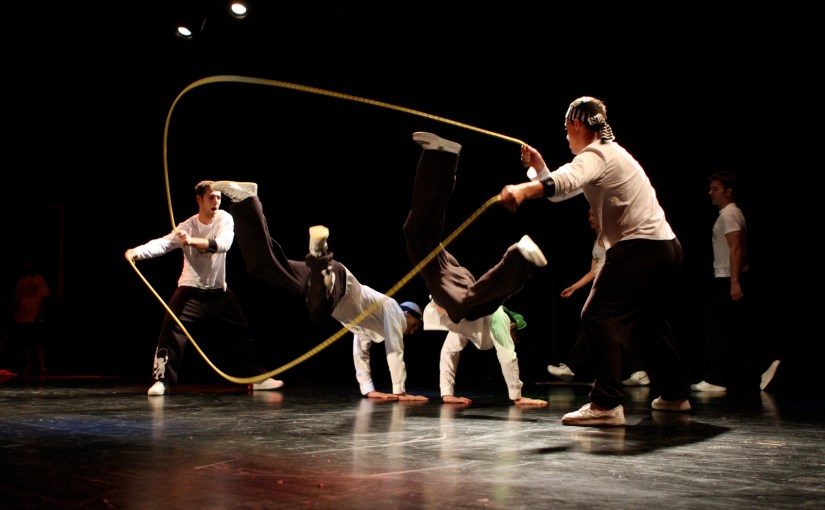
But I also really enjoy taking on new challenges. And I have developed my own technique for starting new activities that you may find usefeul. I refer to it as my Double Dutch technique.  You remember Double Dutch. It’s the playground activity where you try to jump two ropes, swinging simultaneously, in opposite directions. Because jumping one swinging rope just isn’t hard enough.  Double Dutch can be a ridiculously intimidating activity. Those ropes are relentlessly nipping at your heels. And once they bite your foot the game immediately halts to bring everyone’s attention to your failure.

But I like Double Dutch. It’s an activity for people who like to try hard things. It’s much more challengeing than single Dutch, or non-Dutch rope jumping. And it’s infinitely harder than just jumping up and down with no rope (which always earns me funny looks).

I like to try hard things.  It makes me feel stronger, more confident and more capable. It makes me feel like I am growing. And I like to work with others who enjoy pushing themselves.

Today, I utilize my Double Dutch technique all the time as I grow my advertising agency, The Weaponry. Because not only am I taking on new challenges personally, I want our entire team to continuously expand our capabilities and find new and better ways to help our clients.

Here’s how my Double Dutch technique works.

I get close to the activity. To get a feel for Double Dutch you have to step into that space right next to the ropes. And when I start something new I try to first get really close to the action without fully engaging.  There is something about being close to the activity that helps you absorb how it works quicker. If you want to climb Mt. Everest go to basecamp first to get aclimated.

I watch others. Aside from the very first Double Dutchers on Earth, whom I assume were twins from Amsterdam, I bet no one has ever tried jumping the two-ropes-of-doom without first watching someone else do it. That’s why I always watch other people performing the task I want to learn. I study the moves, the attitude and the technique. Much like an actor studies others when preparing to play a role.

I find the rhythm  Double Dutch has a unique rhythm all its own. You have to get in sync with it to succeed. Most human interactions are like this. The interactions at a networking event, a yoga class, and in business meetings follow a certain flow and cadence. Learn them so you can anticipate the order and timing of the activity.

I jump in. At some point if you want to Double Dutch you have to jump in.  Once I have armed myself reasonably well by getting close to an activity, watching it, and finding the rhythm, I channel my inner Davd Lee Roth and I jump (might as well, right DLR?). Sometimes it goes well from the start. Other times I need a mulligan.

I recalibrate  In Double Dutch the rope tells you what you did wrong. And the problem is always that you touched the rope. The question is where. Use that feedback to do better on the next try. If you jumped too soon, wait another beat. If you jumped too late, go a bit sooner.  This is little data at its best. Create a new plan based on the learnings.

I jump in again. And again.  To jump ropes you have to keep trying. This is how life works. Get in and jump, over and over until you get it right. Whether you want to build a great brand, learn how to knit, or run QuickBooks, there is ultimately no substitute for doing. Be a do-er.

As you focus on growth and acquiring new skills consider the Double Dutch approach. Give yourself a chance to get close, observe, absorb, try, learn and try again. Soon you will find yourself in rhythm, jumping, and singing, ‘Big Mac, Filet-O-Fish, Quarter Pounder, French Fries.’ Let’s talk about how well you’re doing when I see you at recess. Until then, here’s a little inspiration.

How to get smarter every time you get in a car.

If you are like most people, you are on a long intellectual decline. Sure, you absorbed a lot of knowledge in school. But once you left high school or college or became a beauty school dropout, you stopped learning. Ok, ok, so you still ‘learn something new everyday.’ Maybe you pick up a little trivia under a Snapple cap. You learn that the very first touch tone phones didn’t have pound or star symbols. Or you learn that Americans invented Mexican, Italian and Chinese food.  But that’s not exactly growth learning.

True growth learning is extremely important to me. Because I learned at an early age that the stock version of Adam Albrecht was pretty ordinary. I have a vision of myself as a much better, smarter, stronger, funnier, nicer, braver, more capable human than I am today. Therefore I’m always trying to close the gap between the me in my head and the me on my couch.

One of the best habits I have developed to create a better me is listening to audio books while I drive. I stumbled onto my audiobook interest accidentally.  In 2009-ish I attended the Hachette Book Group’s annual book sale, just north of Indianapolis.  For one weekend in June everything is on sale for a dollar. So I bet a dollar on Ted Turner’s ‘Call me Ted’ audiobook. I loved the book. But more importantly, I learned from it.

  1. I learned how a kid who didn’t apply himself well in school could become among the wealthiest people on the planet by applying himself at life.
  2. I learned that to make wild leaps in your accomplishments you sometimes need to take wild risks.
  3. I learned that meeting room antics can make you highly memorable.
  4. I learned that pursuing your passionate interests can change the world.
  5. I learned that through mergers and acquisitions you can get tossed out of your own company.
  6. I learned the immense impact of philanthropy.
  7. I learned the value of keeping your eye on the future.
  8. I learned that the first Ted’s Montana Grill was in my former hometown of Columbus, Ohio. (ok, so this is a little more Snapple cap-esque)
  9. I learned how the right people and processes can turn losers like the Atlanta Braves into World Series Champions.
  10. I learned that Jane Fonda is a pretty great lady to have on your arm when you walk into a party.

So I sought out more audiobooks. I listened to biographies and self-help books. I listened to history books and books about the future. Now I pick up nuggets of knowledge and pearls of wisdom every day when I drive. I will often stop the audiobook and ask Siri to take a note for me, repeating a quote I heard, or paraphrasing a lesson so that I can review later.  It’s my way of highlighting the key passages as I listen. Just as I did in college.

Soon, the audiobooks made me feel like I was winning at life. Because I realized that by listening and learning on my commute I would arrive at work smarter than when I left home. Later that day I would arrive home smarter than I was when I left work.

Since I left the University of Wisconsin, no other activity has so clearly added layers of depth to my thinking, new lenses through which to view the world, or examples of how to choose my own adventures like my audiobook lessons. Today, The Perfect Agency Project owns a library of audiobook titles that our team can checkout anytime they want. Which is the easiest way I know to grow a stronger and smarter team without adding new people.

Many of you will be flying or road tripping over the next few days for the Thanksgiving holiday. I encourage you to stop by your local library to check out the audiobook section before you hit the highways or flyways. I bet you’ll be surprised  by the range of titles and topics. And it’s all free (unless you count the taxes you already paid that bought the books). Of course, there are also plenty of digital resources, like Audible and Amazon. When you find something you like, shoot me a message. I am always looking for great new reads, or listens, or learns, or whatever we should call them. If you’re interested, I’m happy post a list of my recommendations too.

Happy Thanksgiving. Safe travels. And I hope your thinking expands as much as your waistline.


6 lessons from the class everyone should take but no one ever does.

I work in advertising. I know the value of the New and Improved. Which is why I am always trying to create a newer, improved-er version of myself. I realized at the beginning of my career that if I wanted to catch up to the best professionals in this industry I was going to have to do my homework. So I began studying and learning. Not in a structured school program. But in a self-directed, choose-your-own-adventure, movie montage kind of way.

Like most people who are into self-improvement, I have focused heavily on communication skills: public speaking, presentation skills, selling skills. But the deeper I get into this game Prince called, Life, I realize that most people (including me) spend too much time on the wrong side of the equation.

The most effective and important communication skill is not speaking. It’s listening.

Listening is where all success starts. It is only through listening that we understand the problems that we need to solve. It is how we hear what isn’t said (don’t think about this too hard or it sounds really stupid). Through listening we learn about other people. We learn about their history, their values, their styles and their quirks. Which allows for deeper, more meaningful and more valuable relationships. Yet when was the last time you heard about someone going to a listening seminar?

So here are The Perfect Agency Project’s 6 Keys To Improving Your Listening Skills. These are sure to make you a better, bigger-eared version of yourself.

1. Listen Competitively.

Start by trying to be really good at listening. You already know the little things you have to do to be a great listener. We learned them playing Simon Says. Look at the person talking. Give the person speaking your full attention.  And do this like your earning potential, relationships and Parent Of The Year award depend on it. Because they do.

2. Shut your mouth.

We are often so compelled to talk that we stop listening. If you want to be a great listener you have to silence your own impulses. And focus on your role as a listener. This means you are not providing answers, or solutions or opinions. You are harvesting. Not planting. Know what season it is. Bring the right equipment to the field.

3. Keep your partner lubricated.

I don’t mean with alcohol or KY.  With affirmations. And demonstrated interest. Lean in. Show you care. And you will keep others flowing with information. Yet without the annoying public outcry that comes with waterboarding.

4. Listen with your Spidey Sense.

Go beyond the words that are said. Note the tone. The emotion. Those things are like limps, signaling that something deeper is wrong. Or they could signal that someone is in a good mood that exceeds the norm for the current situation. Maybe they just got engaged. Or maybe they are on drugs.

5.  Play back, Jack.

The curtain call of any good listening session is the summary of what you heard.  The highlight, simplified conclusion or takeaway that demonstrates that you really heard what was said. What was implied. And what is now important.  Do this and you will always leave a conversation with more personal equity.

6. Lock up the valuables.

The most important listening skill is keeping the private stuff private. You have to know which things you heard were intended for you alone. And don’t talk about them. When people know that you are trustworthy they tell you more. You become an important confidante. An insider. It’s like being sponge-worthy.

Improve your listening and everything else will improve. Better relationships with your friends, family and co-workers. Better solutions to problems. More and better networking. And better creative ideas. If you have your own tips and tricks for better listening I would love to hear from you.

Why September 6th is the most important day of the year.

Happy New Year! That’s right, Tuesday September 6th is the real New Year’s Day. I know you’re probably wondering what the Dick Clark I’m talking about. Allow me to explain.

Americans traditionally celebrate the new year at the worst possible time. In January you are stumbling out of the most hectic and stressful time of the year. Which makes it a poor time to set new goals, quit bad habits and reinvent yourself.

The simple fact is that the fall, not spring, and certainly not January 1st is the best time for new beginnings.

If you were a tree, today is when your next ring would start to grow. Preschool starts in the fall. And so does Kindergarten, middle school, high school and college. Which means fall is the start of the next chapter for kids, parents and teachers alike. The day after Labor Day is the first day schools everywhere are back in session and fully engaged.

When summer break is over for kids summer vacations are over for adults. Which means that starting today we are all back to work. Our businesses are operating at full strength for the first time in 3 months. Factories are humming. Offices are buzzing. And farms are really farmy.

Churches now begin their regularly scheduled programs. So if you see a church, and see a steeple, open it up and you might see all the people.

The new television season starts now.  Both NCAA and NFL football kickoff now too.

This is a great time of year.

For those of you who used your summer vacation days well, you are hitting September 6th fully recharged. Not only did you take the last three months to fill up on Vitamin D, travel, relaxation and inspiration, you got a three-day weekend to top it all off.

Now that your tanks are full and you are refocused it is time to treat this like the new beginning you almost missed. Set new goals. Drop a bad habit. Pick a new challenge. Plan your next chapter. Grab that next rung. Or build your own ladder.

At The Perfect Agency Project we are fully engaged. Your team should be too. We’re all primed, rested and ready.  Let’s push hard. Have fun. And make this the best year ever. And here you thought today was just another Tuesday.


The most common phrase you should never say.

At the Perfect Agency Project we have a fairly obvious goal. In case you’re not great at reading comprehension, the goal is to create the perfect agency. And at the perfect agency people collaborate and are nice to each other.  Which means they don’t do or say jerkilicious things.

That’s why we are banning a very common phrase you probably hear or say all the time. Ready for it? Still ready?  Further ado. Even further ado  Okay, here it is:

I don’t disagree.

Please stop saying this.  This is one of the jerkiest statements we can make to each other.  It paints your reaction in a negative light. Both don’t and disagree are negative words.  Which makes it a double negative.

As most of you don’t not know, the double negative actually makes a positive. So this statement actually says, I agree.  But it states it in the most negative, reluctant, non-affirming way possible.

Instead let us say things like I agree. Or You’re right.  Let us support each other. Let us acknowledge our alignments positively. And most importantly, let us eat more lettuce. Now if you agree with me, please respond to this post by saying, completely don’t disagree with you. It won’t make me not laugh. But it will let me know who read all the way to the end.

Why lying is so good for you.

I used to think I was an honest person. I can only think of one promise that I’ve made and not kept, since 8th grade. On the night I graduated from high school I promised my friend Simon Phillips that I would sign his yearbook. And I still haven’t done it. A few years ago I reached out to Simon through Facebook to apologize and to try to complete my obligation. Apparently he forgot all about my unkept promise. I have not.

But smack dab in the middle of what I had considered to be a very honest life I realized two shocking truths:

1. I tell lies all the time.

2. I have no idea how smack and dab came to qualify the middle of something.

The lies I’m talking about are not little white lies. Not exaggerations of something mostly true. They are complete and utter falsifications and fabrications. Big league lies.

My string of outlandish lies goes back to high school. I can remember saying that I was the boys high school state record holder in the discus. I first told this lie when I was a scrawny freshman who had only thrown the discus in one meet. And in that one meet my best throw was 60 feet shy of the state record! I was a liar. Yes, I was a liar. And my pants were certainly on fire.

The lies continued in college. After a couple of rough semesters academically my GPA indicated that I was a terrible college student. But I lied and said that I was a great college student who got great grades and made the Dean’s list. All lies.

Once I started my career in advertising the lies just kept coming. Before I even landed a job I started telling outlandish lies about my accomplishments, accolades and income. I was a one man lie-athon.

But a funny thing happened after I told all those lies.

They started coming true.

Sure enough, in the last track meet of my senior year I broke the state high school discus record by 3 feet.

In college, I followed up a couple of terrible academic semesters with 7 straight semesters that included making the Dean’s List, being named an Academic All-Big Ten athlete, achieving a GPA of at least 3.5 every semester and graduating with a GPA of 3.88 within my psychology and journalism majors.

In my advertising career the lies keep coming true too. I lied when as a young writer I said I could help attract fun clients to the agency  where I worked. Then I helped the agency pick up Ski-Doo snowmobiles, Sea•Doo watercraft, Evinrude outboard motors, as well as CanAm ATVs and the Spyder Roadster

Building on that success I then joined a relatively unknown regional agency and lied about how we were going to work with some of the world’s best brands. And over the next few years we won business with Nike, Coke, UPS, Nationwide, Chick-fil-a and Wells Fargo.

The truth is, you need to lie to achieve great things. You have to believe the unbelievable to achieve the unachievable. (That’s some Jessie Jackson-worthy rhyming, right!?!)

Whether you call it lying or living into your dreams or positive thinking or envisioning or auto suggestion, this powerful tool is about lying to yourself so convincingly that you make the lie a reality. Which is exactly what I am doing on my quest to create the perfect agency. I believe it can be done. And I believe I’m the right person to do it. Which is a huge, and completely unsubstantiated lie.

I don’t know of any other way to make great things happen but to tell myself they will, even when there is no basis for it in reality. So I encourage you to try lying to yourself today. If you don’t feel great, say you do. If you haven’t achieved great things, say you have. Say it often. Every morning and every night, in the mirror. Lie to yourself.  Lie until you don’t even realize what the truth is anymore. And then make it all come true.

Now if you’ll excuse me, I have a yearbook to sign.


Why everything you’ve thought about Wednesday is wrong.

Today I’m starting a new Days Of The Week series. It focuses on the importance of each day of the week. The series will feature all of the best known days, including Monday, Friday and Saturday. But it will also touch on less popular days like Tuesday. But we are going to start the series with Wednesday. (Did the name of the post give it away?)

At The Perfect Agency Project we have deep experience in both branding and positioning. After performing careful research, analysis, a few focus groups, an online survey and interviews with key stakeholders, it is clear that Wednesday needs to be repositioned.

As the middle child of the work and school week this day has often been overlooked or forgotten. To most people Wednesday is Hump Day. It’s best known for being the half way point in the week. It represents the weekly hill to get over in order to start the downhill slide to the weekend.

This is so sad.  It is a horrible commentary on life, work and school. A week is not something to get through. To endure. Or to survive. The week, my friends, is your life. If you want the week to go faster and you’re thankful to be halfway done, you are saying that about your life.

Instead of calling Wednesday Hump Day, I would like to call it Evaluation Day. It is the day that we evaluate our progress towards our goals. It is the day we check to see if we should change something in our approach. Or if there is something more fruitful we can do in the last days of the week to make it a week to remember.

After beginning the week with goals in mind, on Wednesday we should take corrective action to make sure we achieve those goals and accomplish what we set out to accomplish. Wednesday should help you build momentum that you can carry through Thursday and Friday. Not to mention Saturday and Sunday, which apparently I just did.

I love me some Wednesday.  It represents the meat of progress. It is the full engagement day. Because it is equidistant from both Sunday and Saturday. Which allows us to keep our focus on the business at hand. If you are not finding the reward in your Wednesday you should find another way to spend your week. A new job, new career or new quest could completely change the way you see the day.

Wednesday is the American Midwest. Hardworking. Honest and real. Wednesday is farming and manufacturing and producing. Wednesday is where great things happen. Wednesday is not the fly-over states of some New Yorker magazine cartoon. (Which is really funny by the way).new-yorker-Map

So let’s all have a great Wednesday. Or Evaluation Day. Or Momentum Day. Or Full Engagement Day. Or maybe even Midwestern Day. Let’s make this the best part of the week. Because whether or not you realize it now, Wednesday is your life.