Thoughts on extroversion from a raging extrovert who doesn’t believe he’s an extrovert.

I like good theories. They help simplify the world and make it easier to understand. They create order and predictability. But I often find that theories don’t apply to me.

Take the theory that people are either introverts or extroverts. I liked this theory when I first heard it. It seemed intuitive. It seemed obviously correct, at first. But it felt most correct when I applied the theory to others. It has always felt much less correct when I applied it to myself. Kinda like makeup.

Most people would categorize me as an extrovert. They would call me outgoing, personable, or engaging. They may call me a talker. Or talkative. Or loud. And sometimes I am. And sometimes I am not.

My great friend and University of Wisconsin Track and Field teammate Bryan Jones used to call me Sybil, referencing the 1976 film about a woman with a multiple personality disorder. I thought this was a funny observation. B.J. noted how I could laugh and joke around in the locker room, but when it was time to practice or lift weights, everything changed. No joking. Just intense focus, and yes, even quiet.

I am far too complex of a machine to simply label as an extrovert. Although most people will never see past an oversimplified categorization. I am outgoing. I interact easily with others. I can be loud. Really loud. Sorry, librarians. But that’s only part of me. The highly identifiable part. But just a part.

The other part of me is different. I enjoy my time alone. Because I like to think as much as other people think I like to talk. That’s why I enjoy my commute. That’s why I enjoy a long road trip by myself. I enjoy walking the dog, with or without a yo-yo.

While I have met many fun and interesting people on airplanes, I engage with my seatmates less than half the time. (And I don’t mean I only talk half of each flight.)

I write a lot. Writing is a quiet and solitary act. The kind of writing I do for my blog and my books requires a lot of self-reflection and analysis. This is the world of the introvert. And I spend a lot of time in this world. Which is why I identify with The Little Mermaid.

I have heard the theory that extroverts are energized socially. Interacting with others recharges them. Conversely, introverts recharge during quiet time alone. Like a mobile phone plugged in on the vanity overnight.

But this doesn’t apply to me for two reasons.

First, I don’t get my energy from other people. God gave me a lot of natural energy. I have a 2-year-old Border Collie named Lola. I see that God gave her the same energy package I got. It’s replenished with food and sleep. But as long as I do those 2 things, the energy is supplied whether I am socializing or not. Baby, I was born this way.

The other flaw in the theory that extroverts are reenergized by socializing is that, unlike Thomas Jefferson, I don’t believe that all people are created equal. At least not when it comes to socializing. There are loads of people that are not energizing to talk to. They are not interesting socially. And that’s ok. We don’t all need to be the Dos Equis man.

My theory is that people fall into 3 categories.

  1. Socially Energizing: These people are fun to be around. You leave interactions with them feeling a boost. Like those nutritional shakes they swig at nursing homes.
  2. Socially Inert: These people don’t move the needle one way or another. There are a lot of people in this category. Like people who go crazy for vanilla, and wear size medium.
  3. Socially Draining: These people are energy vampires. They suck the energy out of you. Sometimes they are negative. Sometimes they are difficult. Sometimes they are obnoxious. They are the reason you have to enter social situations with a prepared exit strategy. And maybe alcohol.

Remember, not all socializing is the same. Interesting, energetic, charismatic, and fascinating people are energy enhancers. Find those people. Spend time with them. But avoid the drains. You would be better off with a little quiet time by yourself. Regardless of how the world thinks you recharge.

Key Takeaway

Theories are nice ideas. But they are not rules. You don’t have to be categorized. Or labeled. Or stereotyped. Humans are custom-made. We don’t fall neatly into types. We are a messy scatterplot of non-conforming machines. You are hard to understand. So am I. That’s what makes this human adventure so interesting.

If you know someone who could benefit from this message, please share it with them.

+For more of the best life lessons I have learned check out my book, What Does Your Fortune Cookie Say? from Ripples Media.

Here’s my favorite kind of table for my favorite kind of gatherings.

When my family and I lived in Atlanta we bought a new patio table. There were a crazy number of options to choose from for something as simple as a table. Because for a table to properly perform its job it simply has to have a flat top and reliable steadiness, so the meatballs don’t roll onto your lap.

We decided on a 5-foot round table with a lazy Susan built into the middle. (Although I like to spin the center as fast as I can, so it’s more like a crazy Susan.) It was the first round table my wife Dawn and I ever bought. And it was the best furniture decision we ever made. In fact, we love that round table so much that we recently replaced our kitchen table with a new round stone-top table. (Perfect for serving stone-top stuffing.)

I have a family of five. And the round table is ideal for our family. We gather around the table and it feels like a huddle. Like a true meeting of equals. There is no head of the table. No bad or lesser seat. Eye contact is easy. And conversation flows most naturally around and across a round table. That’s why they are preferred by knights.

Key Takeaway

Remember the power of the round table. There are no lesser seats. You sit next to, or across from everyone. It is great for families. It is perfect for social gatherings. And it is a powerful setting for professional meetings. Because the round table offers a microcosm of equality and inclusion, by placing everyone on equal seating.

*If you know someone who could benefit from this message, please share it with them.

+For more of the best life lessons I have learned check out my book, What Does Your Fortune Cookie Say? from Ripples Media.

I have a new and improved way to exchange names with new people.

There are roughly 8 billion people on the planet. You can categorize them in all kinds of ways. You can group them by their gender, smell, like or dislike of mushrooms, or their opinion on various TikTok dances.

But I find it most valuable to sort people into 2 simple groups:

  1. Those whose names I know.
  2. Those whose names I don’t know.

One of my most important goals here on Planet #3 is to shift as many people as possible from Group 2 to Group 1. Because real relationships don’t begin until you exchange names.

For most of my life, I have used a very simple introductory technique. During a conversation or in response to awkward proximity, I traditionally made the following statement:

My name is Adam.

While I have used this line thousands of times, I have not been very happy with the results. And if you are going to use a technique thousands of times, you should really like the results.

The 2 main problems with this approach

First, the other person doesn’t always know what to do next. I am always amazed when I share my name with another person and they don’t respond by sharing their name with me. It feels like I have whacked the front of their knee with a small rubber-headed mallet, and their foot did not kick forward. Which makes me think there is something wrong with their wiring.

The other problem with my introduction technique is that the name retention rate is fairly low. In other words, The other person doesn’t absorb or remember that my name is Adam nearly as often as you might expect. Especially given the fact that I just told them my name right to their face.

However, I read Jocko Willink and Leif Babin’s book Extreme Ownership. So I find it useful to explore how I am at fault for the lower-than-expected retention rate. As a result, I have radically transformed my standard introductory technique. Today, when I want to get to know someone better, I use the following new line, that I wrote myself:

What is your name?

The results from this approach have been amazing. I have found that nearly everyone knows their own name and is willing to share it when prompted using this technique.

But wait, there’s more!

I have also found that far more people remember my name when I use this technique, as measured by a name-based goodbye at the end of our conversations, and first-name greetings on follow-up encounters.

Contributing Success Factors

When I ask you for your name, you know the answer and are prepared to share it. I am also fully prepared to receive your name because I just asked you for it.

However, the real magic of this technique comes in Phase 2 of Technique 2.

In Technique 1, the receiver is not always ready to absorb my name. While well-intentioned, my initial name share could come in hot, like a ball thrown at someone when they didn’t have their hands up and ready to protect their nose.

In Phase 2 of Technique 2, when the other person asks to know your name they are prepared to receive the answer. So when they hear your name they already have created a space for it to live in their brain. It might be on a shelf, hanging on a wall, or on a comfy bean bag chair, depending on how the other person has decorated the namespace in their brain. But because that space was prepared before you shared your name it is far more likely to be found later when the person needs or wants it.

Key Takeaway

For more successful name exchanges ask for the other person’s name first. This sequence enables both parties to be best prepared to remember the other’s name. Plus, it feels fun to have someone ask ‘what’s your name?’ Because in the movies, that’s the question the gatekeepers always ask right before they give the main character their big break.

*If you know someone who could benefit from this message, please share it with them.

+For more of the best life lessons I have learned check out my book, What Does Your Fortune Cookie Say? from Ripples Media.

Start with a script to make sure you stay on the rails.

A surprising number of humans have a major fear of public speaking. Or maybe it’s just surprising if you are not one of them. I have no issue giving a speech, presentation or eulogy. Although I do limit eulogies to one per person.

I once had a supervisor ask me if I ever got nervous about public speaking. I replied, ‘I get nervous that they’ll cut me off.’ But a major reason I feel comfortable speaking in front of others is that I prepare.

When I address an audience I often begin in a way that feels very informal. Usually there is some kind of ice breaker or introductory humor. But what appears to be a casual start to my talks is designed.

I learned many years ago that my energy and my eagerness to talk about anything can work against me if I am not careful. I can start a presentation or speech hard and fast with loads of enthusiasm. But that can approach can feel like bull riding, with lots of surprising jumps and turns, but not much forwards progress.

To control the story flow, and make sure I hit the key points I need to hit upfront, I use a special technique: I always script my opening.

Even if I am only given a brief moment to prepare to speak I use all the time I have to craft my opening. I know the first word, sentence, and paragraph, cold. (Which means I have it memorized, not the my knowledge is temperature-dependent.)

I have found that if the first 60 seconds of my talks are predetermined, everything goes well. I spend time learning and perfecting that opening. And by delivering that well, I know I am staying on track. Then, like a freight train, I find my rhythm and follow the track all the way to the destination.

Key Takeaway

Whenever you speak in public script your opening. By organizing your introductory words and ideas you will point your speech, presentation, or toast in the intended direction. When the beginning goes well, it is easy to relax, enjoy and pick up momentum as you roll. Preparation is the best way to minimize your fear or anxiety. And it’s the best way to do your best every time you talk.

*If you know someone who could benefit from this message, please share it with them.

How to use video conferences to improve your appearance.

According to the Chinese calendar, 2020 was the year of the rat. No one is likely to argue that designation. But for most of us, 2020 was also the year of the video call. In 2020 I used Zoom, Google Meet, Microsoft Teams, Cisco Webex, Go To Meeting, Ring Central, Skype, and PantsOptional. (Ok, I may have made the last one up.)

Zoom and its various alternatives have provided a way for life to continue with some sense of normalcy since covid-19 burst on the scene and began stealing our toilet paper. Thanks to these platforms we can still have meetings and meetups. We can still conduct business. We can still educate our youth. And we can still answer No when asked if we drink alone on those pesky diagnostic questionnaires.

The Zoom Advantage

While it is easy to think of a Zoom meeting as inferior to in-person meetings, there is at least one major advantage Zoom offers over in-person get-togethers. And it’s not related to deodorant.

Watch Yourself!

Zoom offers you the unique opportunity to see yourself the way others see you in meetings. It is arguably the greatest gift of 2020. And it’s a gift you should take advantage of.

When you are on a video conference, and you select to view the meeting in gallery mode, meaning that you can see all participants, you also get to view yourself, in real-time.

This self-view is extremely valuable whether you are talking and presenting or simply listening to others.

7 things to look for when you see yourself on Zoom.

  1. How do you look? Check your attire and your grooming. Do you look professional and respectable? Are you well dressed? Are you properly groomed? Or do you look like you just stumbled in from a pajama party? Your clothing and your hair still matter on Zoom. Look the part.
  2. Are you smiling? Do you look friendly? Are you scowling? Do you have RBF? It makes a big difference. Especially when you are not in the room together. A pleasant smile is a good default.
  3. How is your posture? Are you upright and attentive? Or are you lounging like you are watching a late-night informercial? I am surprised at how many loungers I see on Zoom. Especially among the student population. Don’t be that kid.
  4. Do you appear engaged and interested in the conversation? Or do you look like you would rather be anywhere else? People take as much interest in you as you take in them. So engage.
  5. Do you come across as energetic or lethargic? When you bring energy to the screen others do too. When you lack energy you put people to sleep, like narcolepsy.
  6. Are you providing affirmations? On video conferences, simple head nods go a long way to convey that you agree and support the points being made. However, one long head nod means you have fallen asleep.
  7. How are people responding? You can easily tie your delivery to the response you see on screen form others. Are you connecting? Are you knocking it out of the park? Or have you lost the audience? Make adjustments to make sure you are getting the response you are looking for.

Additional Considerations

To make sure you are presenting yourself well check the following:

  1. How is the lighting? Are you bright enough? Are you too bright? Do you look like you are beaming in from Heaven? Adjust your lighting using lamps or windows until you look great.
  2. Does your background help your brand image or hurt it? Be aware of what is behind you. It has the ability to make you seem more interesting, or reveal that you are really a slob.
  3. Check the camera angle. Think about TV news anchors. The camera should be at eye level. It should not be looking up your nose. Use books or boxes to raise your computer camera if necessary.
  4. Are you looking at the camera? If you have a second monitor it can appear as if you are never looking at the camera. This happens to me sometimes. It is weird. Fix it if you can. It makes you appear distracted or disinterested.

Take The Fast Feedback

Zoom and other video conference platforms provide you with a mirror during meetings and meetup. They allow you to monitor, evaluate and adjust how you are presenting yourself to the world. This is a rare opportunity to see what you are offering the world in real-time. It is like watching game film. It enables you to see how you are being received. And it allows you to change up your style and delivery, on the fly, and see how your audience responds.

Key Takeaway

Take advantage of the opportunity video conferencing offers and tune in to see how others see you. Notice how others respond to you. And experiment with adjustments. Zoom will teach you how to become a better presenter and a better audience. All you have to do is pay attention.

*If you know someone who could benefit from this idea, please share it with them.

9 Tips on how to give a great TV interview from home.

Today, nearly everything that is fun or interesting has been cancelled thanks to COVID-19. In this desert of  action, the smallest activities you are doing appear fun and interesting to the rest of the stuck-at-home world. Which means that right now there is a better than average chance you will be interviewed by the news media. Even if you haven’t done anything truly interesting. Or illegal.

Your place. Not mine.

However, due to social distancing, stay-at-home regulations and lockdowns, no reporter will show up at your home or business to talk to you. And they aren’t going to invite you and your potential cooties into the news studio for a chat. Instead, you will be asked to give your interview at home on your computer, smart phone or tablet.

Prison interview
Just because you are doing an interview doesn’t mean you are getting out.

Air Time

I have been asked to do 2 TV interviews in the past week. The first was with Julia Fello about how our team at The Weaponry is adjusting to working from home. The other was an interview with George Balekji about a video chat reunion that 16 of my University of Wisconsin college track teammates held last Friday to revive the camaraderie of our locker room during this time of social and physical isolation.

You can see the working from home interview here.

You can see the track team reunion interview here.

Here’s a dumb video of a guy inhaling over and over again that is trending at my house. 

You May Be Next

In case you get called by the local or national news to do an interview from home, here are a few tricks to increase the likelihood of you giving a great interview that will actually get used.

9 Tips For A Great Interview From Home

1. Find A Good Background

Find a simple, uncluttered place in your home to conduct the interview. To find an appealing background you may have to get creative. Prop your backdrop if necessary. In the Pro Tip below, my friend Katrina Cravy, a media training expert and long time news anchor demonstrates that the setting you choose sends an important message about your brand.

2. Adjust The Camera Height to Eye Level

Our computers and hand-held phone cameras are typically well below our natural eye line. Which means that we look down at them when we are in our normal operating mode. But for an interview it is much better to raise the camera up to eye level. This will make it look as if you are having a conversation with a real human, not your little digital buddy. Use boxes or books to elevate your laptop. If you have a music stand in your home, it will work perfectly to hold your smart phone at eye level. Best of all, it will prevent the rest of us from staring up your nose and seeing bats in the cave during your interview.

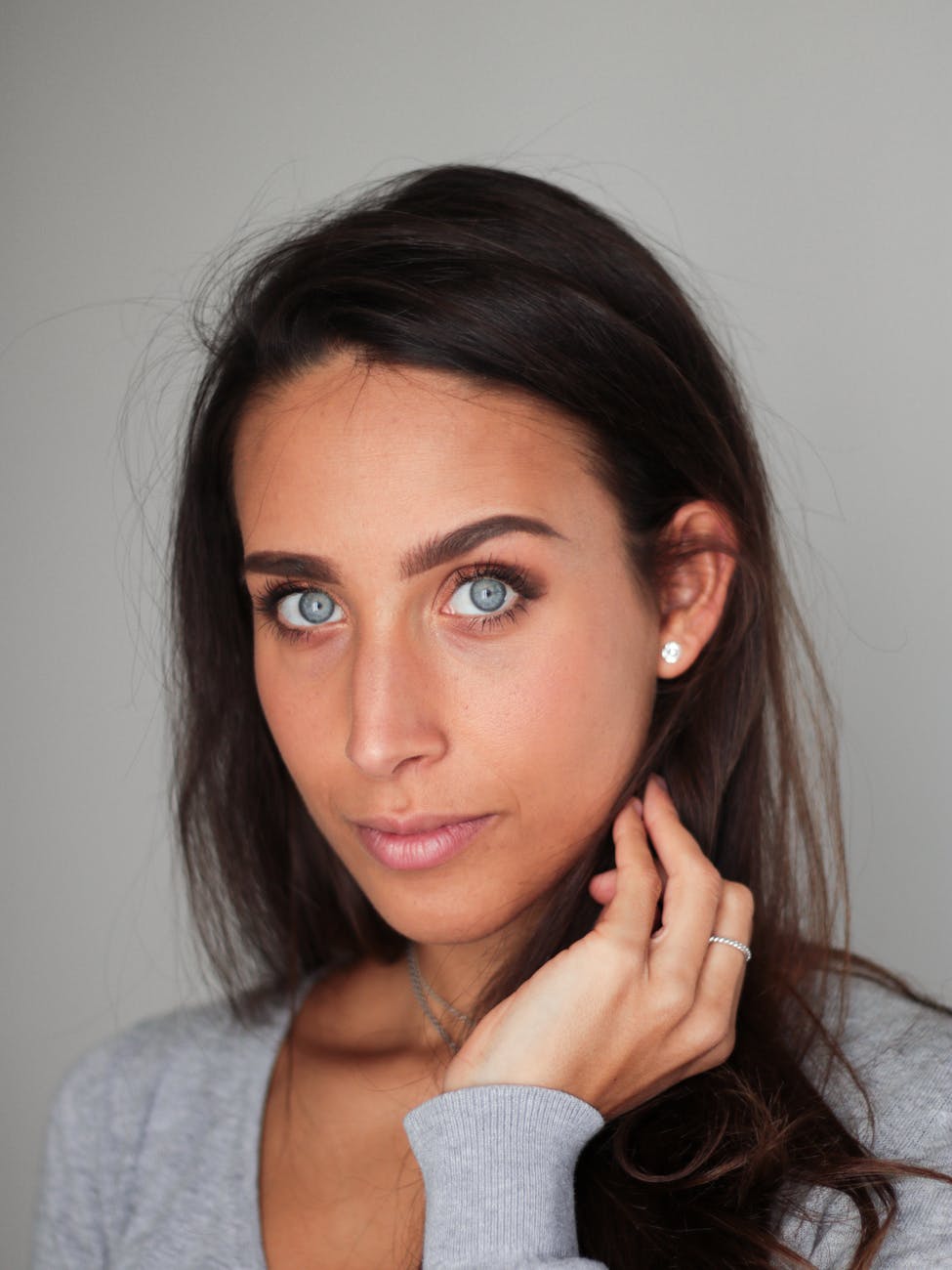
woman in gray sweater taking selfie
Adjust the camera height so that the camera is at eye level.  If your eyes turn this color you did it right.

3. Go Landscape Mode 

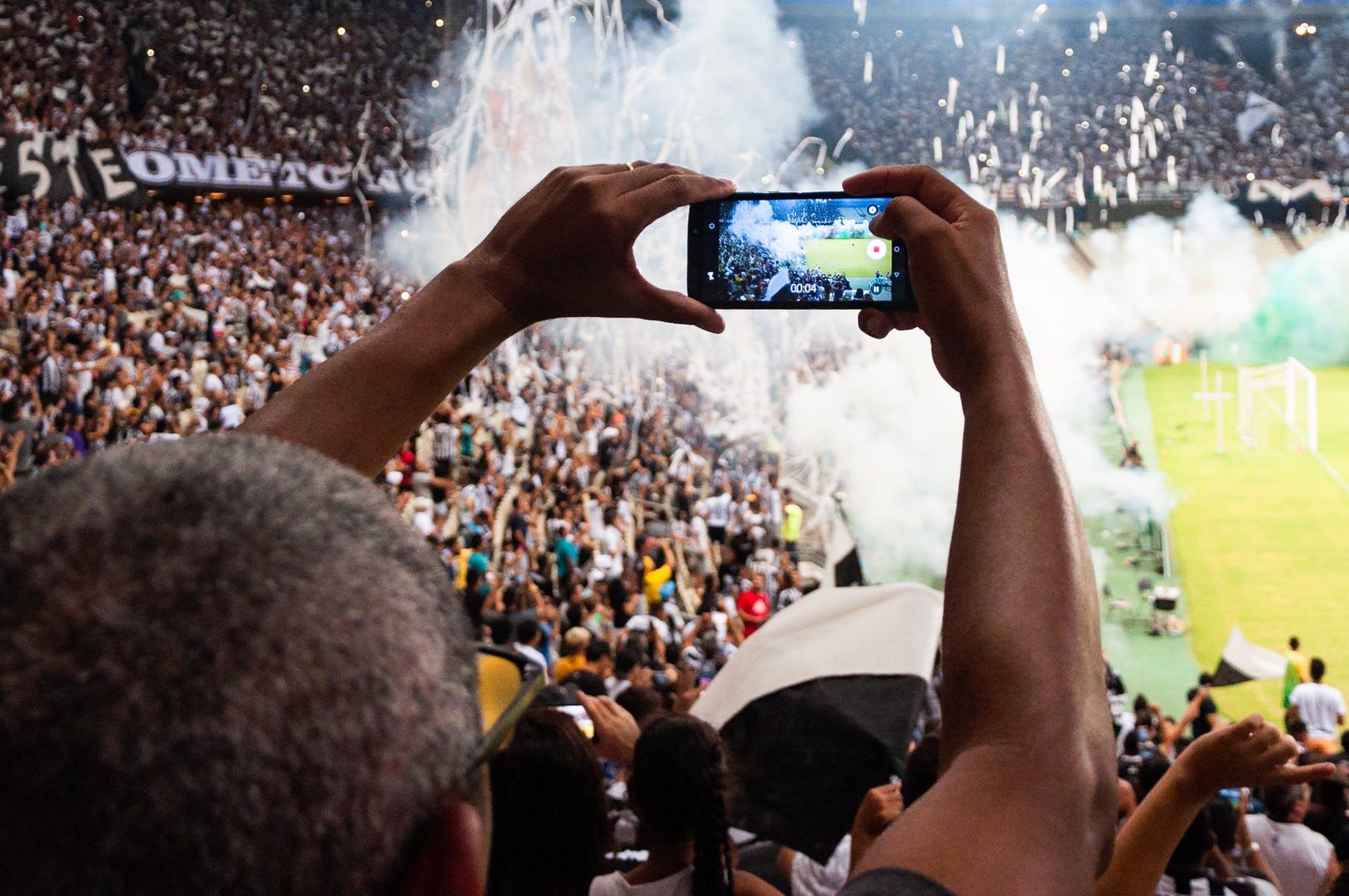
We naturally hold our smartphones vertically when we use them. Which is called portrait mode (named after Francois Portrait*). But a television has a horizontal orientation. To make sure your picture properly adapts to the TV screen, turn your phone sideways into landscape mode for your interview. It will look much better on TV.

person taking photo of stage stadium presentation
This is how you and Montell Jordan do it.

4. Hold Still

There will likely be a lag in the video based on your technology, wi-fi strength or internet speed. So the more you move (like I tend to do) the funkier your interview is likely to look. Keep you body movements to a minimum in order to not draw attention to picture quality.

psychotic-depression-adrian-swancar-1205637-unsplash-1280x429
You want your interview to turn heads. But don’t turn your head during your at-home interview.

5. Improve the Sound

Bad sound will ruin an interview. If you have a good microphone, use it. A headset can work well too. Earbuds are good. Air Pods work really well, because they don’t dictate where you sit. Even better, they don’t have wires to dangle and distract viewers.

Ray Davies Tip: Remember to workout the kinks in your audio technology well before the interview starts.

Ray Davies
Ray Davies knows things.

6. Prepare Your Talking Points

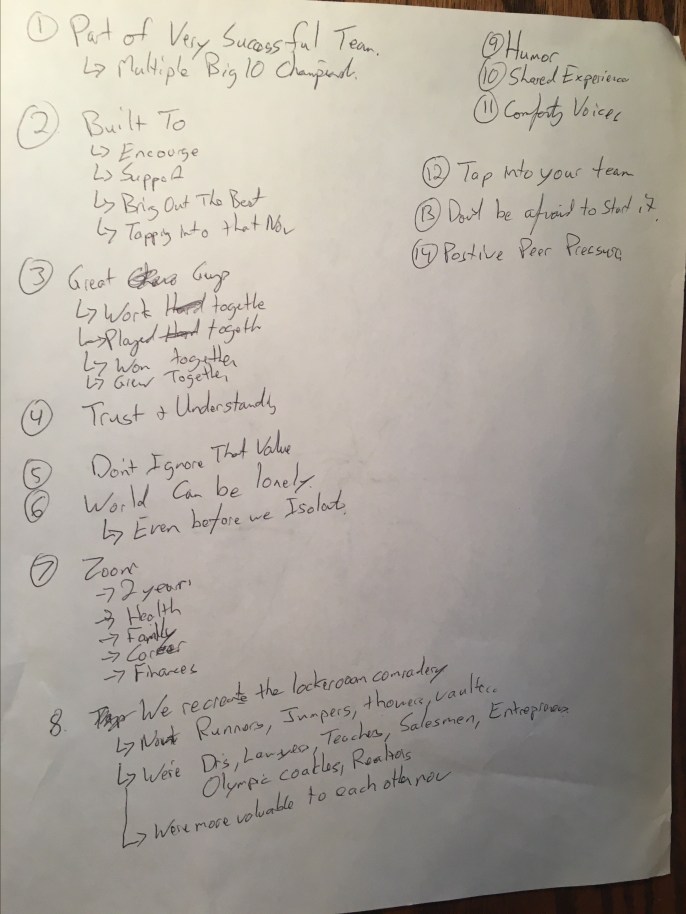
TV news is all about the sound bite. So make sure you have some strong, simple sound bites to share. Before the interview write down your thoughts on the topic. Craft them into short, interesting or memorable statements. A unique, but easily understood statement makes for great TV. Keep your notes nearby to reference during the interview.

Pro Tip: Practice delivering your talking points before the interview. Write down the name of the reporter on your notes. If you are nervous, write down your own name too.

IMG_1450
An example of my pre-interview notes. What does #13 say?

7. Properly Frame Yourself.

Position yourself within the picture so that you look great. You should be centered left and right. Don’t leave a lot of room over your head. If you notice the ceiling in your shot you are doing it wrong. If you can smell your own breath through the screen, back up. And have a mint.

97a680480674d7fadedd63123531b947
This would be wrong. Beautiful, but wrong.

8. Light It Up.

You are not in a perfectly lit studio. So you will have to control the lighting yourself. First, make sure there is enough light on your face so you don’t look dark and creepy. Natural light works great. If you can position yourself to get even light from a window it will make you look even more naturally beautiful than you already are. Then consider grabbing an additional lamp, especially a flexible, direct-able lamp to add additional light if needed.

Side Note: I believe in Crystal Light, cause I believe in me. #nowthatswhatIcall80s

photo of woman in pink long sleeve shirt and blue denim jeans sitting on brown sofa with her eyes closed
Channel your inner Bob Barker and make sure the light is right.

9. Next Level Background

Zoom enables you to use a virtual background. To do this you will either need a very good computer, a plain wall, or a green screen backdrop. Grab a green blanket, sheet or towel, and hang it behind you to create your own green screen at home. On Zoom, go to Preferences…Virtual Background, and then manually pick the background color by clicking the small oval. Then click on your background to sample the background color your photo will replace. You can upload any photo to create your perfect backdrop.

IMG_1446
You can change your background to suit the interview. Here I was interviewed about a crop circle I thought I saw. It turns out it was running track.

Key Takeaway

This is a great time to share a little of your good news with the world. Make the most of your opportunity by preparing yourself ahead of time. A little planning will go a long way towards ensuring that you look good and sound good on TV. Good luck. And Stay Classy San Diego.

*Don’t waste your time googling Francois Portrait. I just made that up.

**If you know someone who could benefit from these tips, please share this with them.

The most famous 271 word speech in history.

On Thursday, November 19 in Pennsylvania, two men gave back to back speeches. The first man had served as the Governor of Massachusetts, U.S. Senator, and United States Secretary of State. He also taught at Harvard and served as its president. He was in a position to talk as long as he liked. And he liked to talk. His keynote address lasted 2 hours.

The second man took a very different approach. His followup speech consisted of only 271 words, and lasted only 2 minutes. Witnesses say there was no gesturing. No theatrics. And no pyrotechnics.

The first man was Edward Everett. His speech has been all but forgotten.

The second man was Abraham Lincoln. His speech, which has come to be known as The Gettysburg address, is one of the most famous speeches in American History. Perhaps it is rivaled only by Martin Luther King  Jr’s ‘I have a dream’, and Billy Madison’s ‘The Puppy Who Lost His way’.

img_1205.jpg
Abraham Lincoln knew less is more. He also knew beards were better than mustaches.

Key Takeaway.

Don’t say everything you can. Fewer words make sharper sentences. Sharp sentences penetrate. And only ideas that penetrate are remembered.


Here are those 10 sentences that make up The Gettysburg Address:

Four score and seven years ago our fathers brought forth on this continent, a new nation, conceived in Liberty, and dedicated to the proposition that all men are created equal.

Now we are engaged in a great civil war, testing whether that nation, or any nation so conceived and so dedicated, can long endure. We are met on a great battle-field of that war. We have come to dedicate a portion of that field, as a final resting place for those who here gave their lives that that nation might live. It is altogether fitting and proper that we should do this.

But, in a larger sense, we can not dedicate — we can not consecrate — we can not hallow — this ground. The brave men, living and dead, who struggled here, have consecrated it, far above our poor power to add or detract. The world will little note, nor long remember what we say here, but it can never forget what they did here. It is for us the living, rather, to be dedicated here to the unfinished work which they who fought here have thus far so nobly advanced. It is rather for us to be here dedicated to the great task remaining before us — that from these honored dead we take increased devotion to that cause for which they gave the last full measure of devotion — that we here highly resolve that these dead shall not have died in vain — that this nation, under God, shall have a new birth of freedom — and that government of the people, by the people, for the people, shall not perish from the earth.

Abraham Lincoln
November 19, 1863

img_1204.jpg
The Gettysburg Address, Original Formula


Why you should put a smile on every time you get your dial on.

Have you ever thought about how you look when you make a phone call? It is easy to think that your appearance doesn’t matter. After all, the person on the other end of the call doesn’t see you. Unless you are a Close Caller. Which is like a Close Talker, only you use your phone, because you can. Which is weird.

But your appearance on a phone call does matter. Because how you look influences how you feel. Even if you are thousands of miles away, the person on the other end of the conversation will pick up on how you feel. And it will influence what they send back to you.

You’re Never Fully Dressed Without A Smile.

When I make or take a phone call, I always put a smile on my face before I start talking. It magically brightens my mood. Because smiling is the ultimate human happiness hack. You don’t have to be happy to smile. You can smile to be happy.

In fact, many a scientific study have proven that your responses to questions are significantly more positive when you hold a pencil between your teeth the broad way. Holding a pencil this way forces you to smile. And the forced smile has the same effect as the real thing. And while Marvin Gaye and Tammi Terrell would have you believe there ain’t nothing like the real thing (baby), Guy Smiley and Happy Gilmore would disagree.

When you put a smile on your face before a phone call it makes good things happen. It influences what you say, how you say it, and how you respond to your telephonic partner. It makes the call more enjoyable for the other person. It helps you overcome anxiousness when making an important call. And if the call goes poorly, well, it’s easy to laugh it off if you are already in a smiling position.

Key Takeaway

Next time you pick up the phone, first pick up the corners of your mouth. Wearing a smile will positively impact everything about the call. It will make you sound warmer and more likable. It will influence the words you choose. It will leave a lasting impression on the person on the other end. It can even make them look forward to talking to you again.

If you want to try it now, put on a smile and call my number at 614-256-2850. If I don’t answer, leave a message and let me know you’re practicing your Smile Call. When I call you back you can bet I’ll be smiling too.

*If you’d rather not call me, but would still like to hear what I’m thinking, consider subscribing to this blog. If you want to read about another fun smiling technique I use, read Kickstart your day with this powerful and simple habit.

Are you really playing catch or are you just throwing?

People regularly ask me if I am a full-time blogger. This always makes me laugh. I assume that would mean that I blog 24-hours a day. Which would make it really hard to shower. Or trim my fingernails. I actually have several other responsibilities. I am the Founder of the advertising and idea agency, The Weaponry. And when I am not blogging or foundering I spend my time husbanding and fathering.

Fathering

I got my fist job as a father in 2005. Since then I have tripled my responsibilities. My youngest son is a 7-year old viking named Magnus who inherited my love for football.  In fact we toss a football around every morning while waiting for the school bus.

Yesterday Magnus must have eaten his Wheaties (which is a reference that you’ll only understand if you were born before 1980). Because every time Magnus tossed the ball he threw it way over my head. So I jogged to pick up the ball, and tossed it back. But after several of these Wheaties-fueled throws I stopped and asked Magnus,

‘Are we playing catch, or are you just playing throw?’


IMG_8260
Magnus always wants me to go long.

As I asked the question I recognized that Magnus’ approach was emblematic of a common problem that occurs every day in communications. Both personal and professional.

Tossing Marketing Messages

In the most basic form, marketing communications are a simple game of catch. The game starts with a marketer throwing a message to a prospective buyer. The prospective buyer catches the message and throws his or her message back. That message could be, I’m interested, I’m not interested, I’m confused, or Tell me more. As long as you are communicating there is an opportunity to get to a mutually beneficial transaction.

But far too often marketers throw their messages the way Magnus threw the football. Hard. Fast. High. Marketers are focused on their own perspective. In their eagerness to drive results (ROI) they shout what they think is important. They don’t think enough about the person at the other end of the message. Thus, their message sails way over the head of the intended recipient. And there is no reply at all.

Before you throw your next message: 

  1. Know who you are throwing to.
  2. Understand how they like to catch.
  3. Account for the distance.
  4. Throw something catchable.
  5. Observe what happens when you throw your message, and recalibrate accordingly.
  6. Prepare to receive the message that gets tossed back to you.

Remember, communication is a two-way interaction. Account for your audience in everything you do. Make it an enjoyable experience for everyone involved. When you do you’ll be surprised how many people will happily play catch with you.

If you found anything I threw your way useful, or think I am off target, please share a comment or subsrcibe to this blog so we can keep playing catch.


The simple way to make anyone feel like an insider.

I want you to try an experiment. Over the next 24 hours note how many people you encounter that you don’t know. I warn you, it may freak you out. Most of us live anonymously in a sea of strangers. They are everywhere. Like minivans. Yet we have become immune to these strangers that surround us. It’s as if they disappear when we ignore them. Like reality TV stars.

I was reminded of my own anonimity recently at my gym. After I scanned my membership card, the guy who routinely works at the reception desk said, “Have a good day, man”. A normal person would have just done what they were told, and had a nice day. But instead, I had a flashback to college…

It was my freshman year at the University of Wisconsin. I was on the track team, and was lifting weights in the weight room (research indicates that’s the best place for such activities). One of the football players who I saw regularly walked through the room. When he passed by he said, “Hey! What’s up man?”  I replied with something like, “Hey, Man. What’s up?’ I thought nothing of it.

But then he stopped and asked, ‘What your name?’

I said, ‘Adam’ (that’s my go-to answer).

We shook hands.

He said “My name’s Aaron. Enough of this bullshit, saying, “Hey man.” or “What’s up bro?” F-that! I see you in here every day.  We should know each other’s names!’

Aaron ‘Scrappy’ Norvell was right. It was bullshit that we would repeatedly see each other, even greet each other, and not know each other’s names. After this introduction he was no longer a guy I saw. He was a guy I knew. The difference is profound.

I expect I wasn’t the only person Scrappy made an effort to get to know by name (he currently has 4,912 friends on Facebook).  He is  funny, outgoing and entertaining. We would see a lot of each other over the next few years in Madison. Today, he is an actor in Hollywood.  If you ever need to cast a police officer, Obama look-a-like, former college linebacker, or someone who can deliver the line, ‘Hey, what’s your name?’ he is your guy.

Now, back to the story…

With this random flashback playing in my head, I asked the guy working the counter at Elite Sports Club, “What’s your name?’  He replied, ‘Andrew’. I said, ‘My name is Adam’ (that’s my go to).  We shook hands. Now, every time I walk into the gym we greet each other by name. We have real conversations. Instead of an awkward, “Hey-Man” relationship.

Insiders vs Outsiders

Everyone we encounter in business, at social gatherings and at the grocery store are either Insiders or Outsiders.  The difference is whether or not we know each other by name.  That sense of familiarity and friendship that can only develop once you know a person’s name makes an enormous difference on this planet, where we are so often surrounded by John and Jane Does (that was supposed to be Doe-plural. But it looks like does, doesn’t it?).

I think about names at work. At the advertising agency, The Weaponry, we encounter people when we visit our clients that we don’t have to know by name. The receptionists. The people who sit next to the conference rooms where we make too much noise.  The IT person who inevitably saves every presentation. But I want to meet them too. So I make a habit of introducing myself, by name. Suddenly we are not just people who see each other regularly. We become people who know each other, by name.

I encourage you to convert more of those people you see or say hello to regularly into people you really know by name. It’s easy. Introduce yourself, by name and ask for their name in return. Write the names down. Start a list with a description of who they are on your phone or in a notebook. Refer back to the list as neccesary. The rewards are profound.  Just ask Andrew from Elite. Or Norm from Cheers.