It’s time to talk less and listen more.

I am always trying to create a newer, better version of myself. Soon after I began my professional career I realized that there are a lot of smart, talented people on this planet. To catch up to the impressive people I admired most I was going to have to do my homework. So I began studying and learning, again. Not in a structured school program. But in a self-directed, movie montage kind of way.

Communications Skillz.

Like most people who are into self-improvement, I have focused heavily on communication skills: public speaking, presentation skills, selling skills. But the deeper I got into this game Prince called, Life, I realized that most people, including me, spend too much time on the wrong side of the equation.

The most effective and important communication skill is not speaking. It’s listening.

George Floyd

George Floyd told the police officers arresting him that they were killing him. When you saw the video you heard it right? Because you were listening. Now, in the wake of the killing of George Floyd, we should all be listening more. We are all being called to create a better world. A world where police brutality stops. Where everyone has safety, freedom, and equal access to opportunities. But creating a better world starts with each of us becoming better versions of ourselves.

Listening

Listening is where all improvement starts. It is only through listening that we understand the problems that we need to solved. It is how we hear what isn’t said (don’t think about this too hard or it sounds really stupid).

Through listening, we learn about other people. We learn about their history, their values, their fears, their styles, and their quirks. Which allows for deeper, more meaningful, more valuable relationships.

Yet when was the last time you heard about someone going to a class on listening? So here is a free mini-class on listening that takes 2 minutes to complete. But it is sure to make you a better, bigger-eared version of yourself.

6 Keys To Improving Your Listening Skills.

1. Close your mouth.

We are often so compelled to talk that we stop listening. If you want to be a great listener you have to silence your own impulses. And focus on your role as a listener. This means you are not providing answers, or solutions or opinions. You are harvesting. Not planting. Know what season it is. Bring the right equipment to the field.

2. Listen Competitively.

Try to be really good at listening. You already know the little things you have to do to be a great listener. We learned them by playing Simon Says when we were kids. Look at the person talking. Give the person speaking your full attention. Do this as if your relationships, influence and earning potential depend on it. Because they do.

3. Keep your partner lubricated.

I don’t mean with alcohol or Vaseline. With affirmations. And demonstrated interest. Lean in. Show you care. You will keep others flowing with information. Yet without the backlash that comes with waterboarding.

4. Listen with your Spidey Sense.

Go beyond the words that are said. Note the tone. The emotion. Those things are like limps, signaling that something deeper is wrong. Or they could signal that someone is in a good mood that exceeds the norm for the current situation. Maybe they just got engaged. Or maybe they are on drugs. You should know the difference.

5.  Play back, Jack.

The curtain call of any good listening session is the summary of what you heard. The highlight, simplified conclusion, or takeaway that demonstrates that you really heard what was said.  Show that you know what was implied and what is important. Do this and you will always leave a conversation with more personal equity.

6. Lock up the valuables.

The most important listening skill is keeping the private stuff private. You have to know which things you heard were intended for you alone. And don’t talk about them. When people know that you are trustworthy they tell you more. You become an important confidante. An insider. It’s like being sponge-worthy.

Key Takeaway

Improve your listening and everything else will improve. Better relationships with your friends, family and co-workers. Better networking. And better solutions to problems. The Lord knows we need better solutions to our problems right now.

If you have more tips, tricks and techniques for better listening I would love to hear from you.

A reminder of the business leader’s primary responsibility.

We’re all experiencing some crazy right now. But if your biggest challenge is that your kids are home from school, demanding fruit snacks, and TikTok-ing around the clock, you are dealing with a great kind of crazy. Enjoy it.

Business Crazy

Unfortunately, many business owners and leaders are dealing with a more challenging kind of crazy right now. For many, everything has gone off script. And now they have to figure out what to do next. Kind of like the fake wrestler who gets hit in their real face, with a real medal folding chair, and it really hurts. But the show must go on.

Right now leadership is all improv, all the time. In many industries business and revenue have been shut off like a water faucet. In times like this, entrepreneurship feels a lot less sexy, and I know it.

Decision Making

If you own a business, or are part of an organization’s leadership team, you are likely facing some very challenging decisions in the immediate future, or as part of your early planning for worst case scenarios (not to be confused with wurst casing scenarios at the sausage factory).

In your war room you will weigh the pros and cons of various decisions. You will model and remodel. You will debate and disagree. And none of it will be easy.

But before you make any final decisions, remember this:

A business leader’s primary responsibility is to make sure the business survives forever.

Key Takeaway

Do what you have to do to keep the business going. The difficult decisions you make now will ensure that once the current climate changes you will once again be able to provide great opportunities for great people and great partners.

*If you know a business leader facing difficult decisions right now, please share this with them.

Why you should lick and groom other people.

We could learn a lot from rats. Which is why rats get studied more than any other animal on the planet. Kinda. The most studied is probably the fruit fly. But rats and mice are the most studied invertebrates, because they reproduce quickly, and their little rat brains are a lot like yours. #sadbuttrue

Lick A Rat

An interesting body of research was performed on rats by neuroscientist Michael Meaney, at McGill University. Meaney found that there are 2 types of rat mamas. Those who do a lot of licking and grooming of their little rat babies. And those who don’t. I don’t blame those mamas who don’t want to lick their rat babies. After all, they are rats. But it turns out that a little rat licking helps them keep on ticking.

‘Eeny’ Meany and his crew of Miny Moes discovered that the licking and grooming does a lot to reduce levels of stress in little ratlings. Imagine a baby rat is having a bad day. She saw her friend get chomped in a trap. Or she just watched the opening scene to Ratatouille. Or found out that a builder in New York City was not using union labor. That stuff stresses her out. One of the best ways to dissipate that stress is to have your mama lick you, groom you and make you feel all better.

Long Term Effects

It turns out that there are huge long-term benefits to the lick’n and the groom’n. In fact, the Licking Grooming Mamas help reduce stress so that the long-term elevation of stress-related chemicals in the body doesn’t usher in illness, disease and death. Even better, researchers found that rattlings who were raised by the LG Mamas were bolder, braver and better equipped for the stresses of life over the long haul.

Licking Humans

We can apply this finding to humans too. When parents perform the human equivalent of licking and grooming, the benefits are immense. By hugging, doting, soothing, comforting, and spit-cleaning children’s faces, parents are helping to reduce stress. In turn, they are also improving their children’s health by reducing the stress in their bodies and reducing the threat of disease. Of course, the kids could still die from embarrassment, but that’s on them.

Licking Your Coworkers

You can carry this finding to the workplace too. While your HR handbook may say that you can’t lick your coworkers, you can certainly show care, compassion and concern for your work mates and direct reports. By doing so, we can not only make the workplace more enjoyable, we can actually help make employees happier, reduce stress and illness. And even help our coworkers live longer, happier lives.

Key Takeaway

Lick and groom those you are responsible for. Show them that you care. Let your friends, neighbors, coworkers, and family know that they are not alone. Go Bob Marley on them and let them know that every little thing is gonna be alright. Not only will you help them feel better in the near term, you could help them live longer, healthier lives.

*If you know someone who could benefit from this message, please share it with them.

The best teaching technique I ever learned, kind of.

When I was in school I never wanted to be a teacher. I didn’t want to deal with kids like me. So I chose a very different profession as an advertising creative. But along the way I learned that if you are a manager, leader, coach or parent, you are also a teacher. You teach other people new skills. You teach processes and procedures. You teach them how to not freak out when they don’t get their way. Because sometimes dealing with adults is even worse than dealing with kids like me.  #AmIRight

Learning to teach

When I realized that I had indeed become a teacher myself I began studying teaching techniques. I reflected on what tricks my teachers had used on me (like standing in the corner, and wearing a tall pointy hat). Today I keep my eyes open for great teachers and teaching techniques in the workplace, in my children’s sports and in academia. As a result, I found a really great teaching technique from my son Johann’s piano teacher.

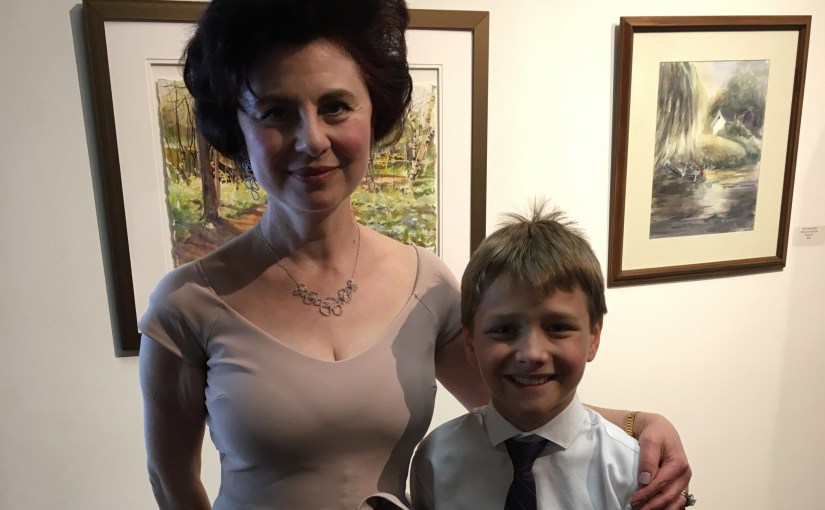
My son Johann is now on his 4th piano teacher. He started playing in Ohio when he was 5-years old. Then had 2 teachers in Georgia, and now has one in Mequon, Wisconsin. All of them have been interesting characters. But the current teacher, Miss Rita, is my favorite. She is Russian, with enough energy and optimism to light up all of Leningrad. She is a wonderful teacher who all the students love. Maybe it is because she tells all of her students that they are “Za best!’ Or more often, “Za Best of Za Best!’

IMG_8668
Miss Rita, my son Johann, and a bunch of sparkly rectangles.

However, there is one teaching technique that Miss Rita uses that I love so much that I have stolen it from her. When Miss Rita is teaching a new concept, introducing a new technique, explaining a mistake, or reiterating a point she punctuates the lesson with a short and simple question:

Do you understand, or kind of?’  -Miss Rita Shur

The Magic

There is real magic in that little phrase. First, it is great to check to see if the lesson sunk in. But I really love the ‘or kind of’ section of the question. It is so much easier to say that you ‘kind of’ get something than to admit to not understanding a lesson at all.

The question covers a wide swath of comprehension that ranges from, ‘Whaaa whaaa whaaa, whaa, whaaa whaaa,’  to ‘I heard what you said but I have no idea what you mean,’ to ‘I think I know but we should clarify that I am right.’

Make it easy to learn more

Most people are not comfortable saying I don’t understand. Especially in front of others who do. Using ‘Do you understand, or kind of?’ provides a beautiful detour around a No answer. It also offers everyone partial credit for at least kind of learning the lesson. The question also acknowledges that learning is not always binary. There is often a lot of gray area. And a teacher’s job is to help add color to the gray areas. Like a house that falls out of a tornado onto a witch.

Key Takeaway

Whether you are a professor at Dartmouth, or training a newbie how to make fries at McDonald’s, you have to know how to teach. To be effective you should make sure your lessons land. Following up your teachings with ‘Do you understand, or kind of?’ let’s you know if there is more teaching to do. It tells the student that you know they are smart, and must have picked up at least part of the lesson. It makes it easier for others to express that they could use more explanation. So try this follow-up question the next time you teach something new. I think you’ll find it is za best. If not za best of za best.

*If you know someone who teaches, coaches, manages, leads or parents, and could benefit from this technique, please share it vis zem.

A better approach to the first day on the job.

Do you remember the first day of your career? I do. It was weird. On the first day of my advertising career I got shown to a mostly empty cubicle, was handed a schedule of my departmental orientations, and was mostly abandoned. The 2 highlights of the day were that I was taken out to lunch by a handful of other creatives at the agency, and that I didn’t get fired.

The Weaponry

Two decades later when I launched my own advertising and idea agency, The Weaponry, I wanted to do things differently. I wanted something more profound to happen on the first day. And I wanted it to be OSHA compliant.

This Week

We had an exciting new employee start at The Weaponry this week. She is significant in that she is the first member of our team who started with us right out of college, without prior advertising or marketing experience.

After talking with the new team member for an hour about what we do and who we do it for and why we do it the way we do it, and Mountain Dew and the Dewey Decimal system, we gave her The Weaponry’s unique first day assignment.

The Assignment

The assignment for our new team members is to spend 1 hour writing. Even if you are not a writer.

First: We ask that you spend 30 minutes writing down your career goals and aspirations. We want you to think about the journey you are on and all that you want to accomplish. We ask that you think big, be specific and paint a clear picture of what success looks like to you.

Second: We ask you to write down your goals, aspirations and expectations for the upcoming year. We want to know what you want to know and how you expect to grow. We want you to think about how the first year fits within the Elon-Musky career you just wrote about.

Sharing

We ask our team members to share their goals for the first year. It helps us understand what they are expecting to get out of the year. It ensures that they will get the support and knowledge they most want over the next 365 days.

However

The Career Goals Overview is private. That is just for the new team member. We want our teammates to feel as if they can think really big. We want them to set gonzo goals without judgements. We want them to start their careers with the end in mind, so that they can clearly understand how the next step in their career can help them make progress towards their ultimate goals.

We also acknowledge that their career goals may not involve us. Or even working in our industry. I am Ok with that.

Direction

This exercise helps create career clarity, direction and calibration. It will help them refocus when they lose their way, or stall. It will provide guidance when making decisions about the opportunities that come their way. And It will help them prioritize long term goals over short term rewards. Plus, the writing exercise will make for a cool scene when a movie is made about their amazing career. Note to the director: I want my role to be played by Morgan Freeman or Awkwafina.

Key Takeaway

We all have the ability to positively influence those we interact with. As a business leader, coach, parent or teacher you can have a profound impact on the lives of those you have the privilege to lead and guide. Take that opportunity seriously. Look for ways you can have a positive, long lasting influence. Because at the end of your career and the end of your days, the only thing that really matters is the impact you had on others.

*If you know someone who could benefit from this idea, please share it with them.

5 reasons you should think of people like bicycles.

My family and I went for our first bike ride of the year yesterday. It was amazing. I was once again reminded that bicycles are magical. They are The Two-Wheeled Fountain of Youth. Because the instant you start riding a bike you feel like a kid again. They make exercise fun. They allow you you to travel much faster and farther than any other human powered form of locomotion. And unlike swinging a golf club, once you learn how to ride a bike you never forget.

Revelation

As I rode yesterday I thought about how friends are like bicycles. How? I’m glad I asked for you. And for simplicity’s sake, I am rolling the terms coworker, business associate, and family into the word friend. It will save us a lot of verbosity between here and the end of the post. Let’s ride…

forest bike bulls
A bike is a great thing. But it needs a person to make it work.

5 Ways Friends Are Like Bicycles

1. Sometimes you need to prop them up. Recognize when a friend needs a kickstand to lean on. And be that kickstand.

2. Sometimes you need to help them balance. Life constantly throws challenges at us. Knowing how to handle it all can be overwhelming. Notice when a friend is struggling to find their own balance. And help them stabilize. Lend a helping hand or prioritizing advice. Sometimes you just need someone else to show you how to shift your load so you’re not constantly fighting with it. 

IMG_2053
My wife Dawn and son Magnus spinning some quality miles together on Hilton Head Island in South Carolina.

3. Sometimes you need to help them steer.  We don’t always know which way to go. This is a simple fact of life. We need help when we come to crossroads. We need help navigating around obstacles. So help your friends make those challenging decisions they will inevitably encounter along their journey.

4. Sometimes you need to help them pedal faster. It is easy to fall off your personal pace. Apply constant, gentle pressure on your friends when you know they should be moving faster than they are.

IMG_6404
My son Johann taking on the world on his Little Orangey.

5. Sometimes you need to help them stop. We can often see that our friends are heading towards a cliff, a tree or a car before they notice. In those moments, help your friends pump the brakes. Or slam on the brakes. Or remind them that they have brakes. Helping your friends recognize and stop bad behavior is one of the most valuable things you can do for them.

Key Takeaway

Your friends, family, and coworkers need you just as much as your bicycle does. Learn to recognize what inputs would be most beneficial. It could be encouragement, stability, direction or warnings. Remember, life is challenging. And we all benefit from having someone else along for the ride.

*If you know someone who could benefit from this message, please share it with them.

What to do when you realize your greatest limitation is you.

Planning the launch of your own business is one of life’s most enjoyable experiences. From the day you first start thinking about your new company until you actually open for business you are living on Fantasy Island with Tattoo and Mr. Roarke. On the island you create an ideal vision of your fully formed business. You should dream big. Because ginormous dreams cost exactly the same as itsy bitsy teeny weeny yellow polka dot dreams. And that dream you create during the planning phase is the blueprint for the reality.

Fantasy-Island-700x525
Everything changes when you leave Fantasy Island on da plane.

Reality

But the moment you open for realsies, your business will face an unavoidable limitation. And that limitation is You. When you are an entrepreneur your business is only as good as you are.

I have been thinking about that since 2016 when I first launched The Weaponry, my advertising and idea agency. Knowing that you are the great limiter is a scary motivator.  It means your business will either be forever limited by who you were and what you knew when you first launched. Or it means you have to continuously push yourself to get better so that your business can too. I have chosen the second option.

Let It Grow. Let it Grow.

I have chosen to grow. As a result, I am on a high knowledge diet. I am constantly seeking books, magazines and blogs that grow my knowledge and perspective. I am listening to podcasts. I am meeting with other entrepreneurs, both informally and in formal meet ups (although never in formal wear).

IMG_3169
I’m trying to grow my brain. (Extra points for anyone who knows where this pic was taken).

I am learning. And getting better. Although I feel as if I have no choice. Because only the growing entrepreneur can grow a business. And as Andy Grove, the famed CEO of Intel once said, ‘Only the paranoid survive.’ (But remember, you need 2 noids to be considered paranoidal).

Righting Wrongs

I am also learning from my mistakes. I am identifying flaws in my thinking, and gaps in my knowledge, and addressing them like Gettysburg. It forces me to be both honest and self aware (but not a werewolf #MichaelJFox).  You have to know your strengths and use them. You have to know your weaknesses, and hire great people with strengths you don’t have.

Key Takeaway

You are your own greatest limitation. This is true for entrepreneurship, relationships and most other kinds of ships. But you have an endless opportunity for improvement. It simply takes a growth mindset. Read, ask questions, study and learn. End each day a little smarter than you started. Seek feedback. And use that to help create a better plan, a better business and a better you. Because once you leave the fantasy world your success depends on it.

*If you know someone who could benefit from this story, please share it with them.

The one phrase that makes me want to scream at work.

Business can be a frustrating game. In this game, a conveyor belt drops challenges at your feet, over and over again. Your job is to solve those challenges before they bury you alive. Like soccer Quidditch and Jarts, some people love this game, and other people hate it.

Team Sport

When a company wins everyone goes home with money. Which makes business the ultimate team sport. It requires great communication to be successful. Since I launched my advertising and idea agency, The Weaponry, I pay even closer attention to the words and phrases used at work. I have found that there are a number of words and phrases you never, ever want to hear in your place of business. They include the following:

  • “Fire!”
  • “You’re not going to like this but…”
  • “Ponzi”
  • “I just called animal Control.”
  • “Sorry, it looked like a real search warrant.”
  • “It worked for Enron.”
  • “The Repo Man”
  • “I handled it, Lorena Bobbit-Style”

But there is one phrase that bothers me more than all others:

“That’s above my pay grade.”

This phrase jolts me like an electric fence. Because it reveals powerful forces at work within the mind of the person who says it, or within the culture where it is used.

A Mindset Problem

Making this statement is a way to shirk responsibility.  It is a way of saying, ‘This is not my problem.’ Or, ‘It is out of my hands.’ Or, ‘I don’t get paid enough to think about these kinds of things.’ This mindset is the polar opposite of entrepreneurial thinking.

A Cultural Problem

If ‘That’s above my pay grade’ is commonly tossed about in your workplace it means your team members feel their opinions don’t matter. Or that they don’t feel free to speak their mind on important topics. It usually represents a clear Us vs Management division within an organization. None of these are good for business.

The Power of Empowered People

I like people who don’t sense a limit to their thinking, responsibility or problem solving abilities. I like people who take ownership. I want my people to operate as if they must make a leadership decision. Which is a product of recruiting the right types of people, and empowering them to always do what they know is right.

Key Takeaway

Take on as much responsibility as you can. Regardless of whether or not the work and the decision-making is part of your job description. Always think like a leader. When you view the world like a manager, department head or CEO, sooner than later that conveyor belt will drop a set of business cards on your desk with a title that matches your take-charge mindset.

The most frightening result of scaring your employees.

I am always surprised when I hear people say they want to be entrepreneurs, but don’t want to manage other people. Without employees you greatly limit the potential scale, scope and impact of your business. Because businesses are powered by people. Just as we measure engine output in horsepower, business output is measured in human power.

To harness and apply human power you have to be able to lead other humans. Which is easier typed than done. A shocking number of smart, talented and hard-working people are shockingly horrible at leadership. In fact, a significant segment of the population fails to even recognize what leadership is. And I have worked with a few of them.

Leading

Leadership means you are out in front, leading people along the right path.  It means you are showing a way forward that others will eagerly and voluntarily follow, because you have made it look smart, right, and even fun.

The Critical Leadership Mistake

Don’t use your position of leadership to push people around. Don’t scare or intimidate your employees or teammates. You may get them to do what you want. But you won’t get them to do anything else. Colin Powell, former U.S. Secretary of State and Chairman of the Joint Chiefs of Staff, summarized intimidation leadership this way:

Frightened people don’t take initiative or responsibility. And their organizations suffer as a result. -Colin Powell

If you want people to think for themselves, to take interest and ownership, they can’t be frightened. Creative thinking and innovation require a spirit of support. Because they require risk taking. If your people are afraid to make a mistake they will make sure they don’t. Of course the easiest way to avoid making a mistake is to do exactly what you are told to do. And nothing more. Just like Simon Says.

Key Takeaway

Fright has no place in the work place. In fact, it is so detrimental to business success it’s scary. Initiative and responsibility are the hallmarks of a successful organization. They are the key ingredients that create momentum. Without initiative and responsibility there is no growth. There is no future. And there is no reason to think. Which is the ultimate waste of human power.