Why your experience is worthless until you do this important activity.

There is tremendous value in experience. People with a great deal of experience are typically paid more and command greater respect and authority. I expect that’s why Jimi Hendrix kept asking about it.

But the true value of experience does not come from the experience itself. After all, Elizabeth Taylor had a great deal of marriage experience thanks to her 8 trips down the aisle. And Nick Cannon has a great deal of parenting experience thanks to the 11 kids he’s sired with 6 different women. But few of us would turn to either of them for quality advice on marriage or parenting.

The true value comes not from the experience itself, but from the time we spend reflecting on the experience. It comes from the evaluation of what did and didn’t work. It comes from considering the constants, the variables, and through reflection, the results. (Although I have also found True Value in those cute neighborhood hardware stores.)

It’s your reflection that creates learning and understanding. That’s when the value is gained. You don’t need to have a good experience to learn and grow. In fact, you will often learn more from a bad experience. Because it is the evaluation process that alchemizes both good and bad experiences into valuable experiences. Which means the only experience your won’t profit from is the one you don’t examine.

My friend Anne Norman once called me a master of self-reflection. I was surprised to hear her evaluation. Although, once I reflected on her comment I recognized that I do indeed make self-reflection a priority. It is the engine that drives my self-improvement journey. It is my greatest entrepreneurial asset. It inspires my writing. And it helps me recognize when I have a bat in the cave.

Key Takeaway

Experience is not inherently valuable. Your evaluation of the experience creates the long-lasting value. Take time to reflect on your experiences to understand why you got the results you did. Repeat the actions and behaviors that contributed to good outcomes. Eliminate those that contributed to bad outcomes. That’s how you convert experience into wisdom. And applied wisdom creates the greatest value of all.

If you know someone who could benefit from this message, please share it with them.

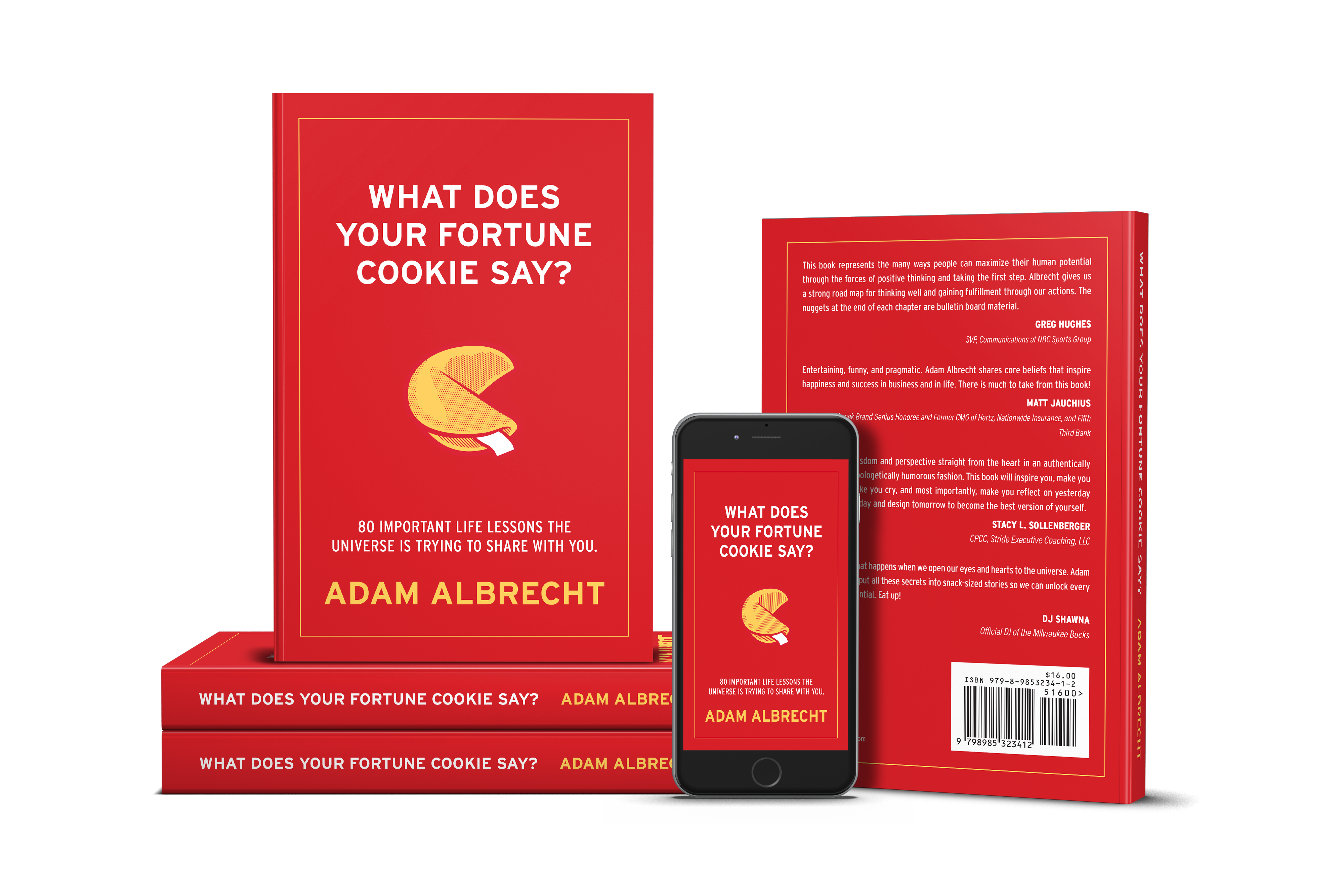
+For more of the best life lessons I have learned check out my book, What Does Your Fortune Cookie Say? from Ripples Media.

The 7 simple steps of the self-improvement process.

If you want to get better at anything it is important to understand the self-improvement process. Like a week, and a house full of dwarfs, it is made of 7 parts.

1. Desire is the root of all self-improvement.

If you have no desires you have no life force pushing you to improve or achieve. Or reproduce. So make sure you have a desire. Like U2. Or that streetcar in New Orleans.

2. Your desire leads to goals.

Goals are your wants clearly stated. This gives you a target. Which provides focus and direction. Or obsession. Like Calvin Klein.

3. Goals lead to plans.

Plans define a course of action to bridge the gap between you and your goals. The plan declares how you will get to your goal. It determines how you will change yourself or the world to obtain your goal. So make sure you plan, Stan.

4. Plans drive your calendar.

Your calendar determines what you need to do and when. The when, or the time you carve out to act, is critical. Time is the stage for change. You must first find and protect the time needed to act. Just like an Under Armor athlete must protect this house.

5. Your calendar drives your actions.

Action is the key ingredient of progress. It is the doing. Action is the step on the 1000-mile journey. Repeated actions create habits. Habits create more action. And more action and more action, Jackson.

6. Your actions drive your results.

Your actions create progress and momentum. Actions build the bridge. As you build the bridge you reduce the gap between you and your desire.

7. Your results deliver your desires.

Performing the right actions for long enough will create the results needed to attain the things you desire. Keep going. And keep investing your time until you get what you want.

Key Takeaway

Desire –> Goal –> Plan –> Calendar –> Action –> Result –> Attainment

Remember, the process is simple. Not easy.


If you know someone who could benefit from this formula, please share it with them.

+For more of the best life lessons I have learned check out my book, What Does Your Fortune Cookie Say? from Ripples Media.

12 important life lessons for new graduates.

It’s graduation season! Students across the country are thrilled to finally be done with classes, done with books and done with teachers’ dirty looks. But what they will soon find out is that the real life lessons start now. Because suddenly your life becomes one big multiple-choice test. And if you thought you were done with all that writing, here comes the big surprise:

Now you have to write the story of your own life!

Looking back, I can see that I have learned far more since graduating from Hanover High School in Hanover, New Hampshire and The University of Wisconsin than I did in school. In fact, I read more now than I did in school. I ask more questions. I study people and events. I analyze cause and effect. And I know far more now than I did when I thought I knew it all. (Which may also be lyrics to a country song.)

If you are a new graduate, congratulations! Welcome to the club! Here are a few things that will help you in your exciting next chapter of life. They have been a huge help for me. Which is why I shared them in my book, What Does Your Fortune Cookie Say?

12 Important Life Lessons For New Graduates.

  1. Kickstart your day with a smile. The first thing you should do every day, while still lying in bed, is put a big smile on your face. Science has proven that not only do we smile when we feel good, we actually feel good when we smile. Smiling is the easiest positive thing you’ll do all day. Yet it has the power to propel and protect you until you crawl back into bed at night. (So, if you haven’t smiled yet today, do it now, brown cow.)

2. Fill your attitude with helium. Life is unpredictable. One moment you feel like you are on top of the world. the next moment you feel like the world is on top of you. But a helium attitude rises anyway. Don’t let setbacks, curveballs, and negative people drag you down. Do what helium does, and just keep rising. Your attitude is everything in life. Make sure you fill it with the right fuel. (And if you ever need a good laugh, suck in some real helium and say ‘Luke, I am your Father.’)

3. Your Success Is Directly Related to Your Contribution. Success is easy to understand. If you want more, contribute more. If you want to earn more money, add more value. If you want more social capital, add more value. If you want more political capital, add more value. It is the value you bring to the world that determines what the world offers you in return, Jedi.

4. The best way to live a great life is to start at the end. By viewing your life from the end you can clearly see what you could have done and what you should have done. Do this now, while you can do something about it. And you will be able to turn your life into an epic story as big as your imagination. (And go to funerals. They will teach you more about life than death. Plus, there are always free ham sandwiches.)

5. It’s the first step that matters most. Far too many people dream about the things they want to do but never take a single step towards making it happen. Your dreams start with that first step. Take it. Make it happen. (And watch Hamilton. That dude did not throw away his shot.)

6. Let envy be your guide. Don’t get fooled into thinking envy is a deadly sin and try to squash it. Envy offers insight. Note the things you envy and truly want and add them to your life list. Then create a plan to make them yours. And get to work. (Sloth, however, is a deadly sin. Don’t mess with sloths, Sid.)

7. Nothing will happen unless you make it so. JFK said, ‘Things do not happen. They are made to happen.’ Remember that action is everything. It is the difference between dreaming and doing. If you want something to happen you have to force it and will it to happen through your vision, action, and energy. This wisdom applies to friendship, entrepreneurship, and every other ship in between.

8. Always bet on yourself. Don’t buy lottery tickets. Don’t bet on sports or horses. Instead, bet on yourself. Bet on your ideas. But on your intuition. Bet on your determination. And on your willingness to affect the outcome. Stack the odds in your favor. It is the easiest way to mitigate risk and set yourself up for an epic payout. (And add Take A Chance On Me by ABBA to your life soundtrack. It’s a real toe-tapper.)

9. Find your Sliver Mentors. Everyone will offer you advice. But only take advice from people who are already doing what you want to do be doing. And rather than have one mentor for everything it is useful to have many mentors for slivers of your life. Learn the tips and tricks of the people who behave the way you want to behave. Don’t listen to every voice in the wind. Instead, carefully curate the advice you accept from those who offer great examples. (And keep a good tweezer around for regular slivers.)

10. Ask For What You Want. Don’t be afraid to ask for what you want. A closed door will often open when you show just how much you want to go inside. Remember, someone holds the key to unlock every locked door. (Don’t simply take what you want. Unless you look great in an orange jumpsuit.)

11. Constantly Upgrade Your Thinking: You may have graduated, but you are not done growing. Never stop improving yourself. You are like an iPhone. You should constantly be creating better versions of yourself. Each one is smarter, stronger and more capable than the one before. (And now that you will start paying for your own phone you’ll want to put a screen shield and protective case on that thang. Because phones are freak’n expensive.)

12. Don’t Build A Network. Build Friendships. Throughout your career, people will tell you that you should network. This essentially means you should meet people who can help further your career. This is bad advice. Don’t network. Instead, befriend as many people as you can. Prioritize developing genuine relationships. When you make great friends you will have a great network. Because when you make people the most important thing in your life, everything else magically falls into place. (And keep eating Lucky Charms. They’re magically delicious.)

Key Takeaway:

Commit to a lifetime of learning and growing. Get a little better every day. Read. Think. Make friends. Find people who can teach you. And always bet on yourself. The best is yet to come. But it’s up to you to make it happen.

*If you know someone who could benefit from this message, please share it with them.

+If a $16 graduation gift fits into your budget, consider grabbing a copy of What Does Your Fortune Cookie Say? for yourself or the graduate in your life. You’ll get 70 more important life lessons.

10 things to do to increase your personal energy.

There is one thing about me that people comment on all the time. It’s not my very subtle good looks. Or my intelligence. Or my sense of humor. It’s not even about my hair.

I get a lot of comments about my energy. In fact, recently, in a 24-hour span, I was asked where my energy comes from, I was told that my energy is even more noticeable in person than on the phone, and that my energy is just what my fellow elevator passenger needed that day.

Last week as the keynote speaker at an energy symposium in Dallas (thanks to David and Molly Sengstock), I gave a talk on how to energize your life. After my talk, the entire audience stuck around for 20 minutes asking more questions. This was despite the fact that my talk ended at 6pm and there was free alcohol and appetizers awaiting them just outside the room.

What makes this energy thing even more exciting to me is that I am in the last 10 days of my 40s. So as I approach my 50th birthday with energy that makes people comment I expect I am doing something worth knowing.

So lately I have been evaluating my personal energy inputs. I have collected a list of 10 things I do that contribute to my energy. But before we get into them it may also be worth noting that I don’t drink coffee or energy drinks. And I have never drunk alcohol. I don’t know the actual effect of the things I don’t do. So the rest of this is focused on things I do do. (I just dropped a do-do…)

10 Ways To Increase Your Personal Energy.

  1. Sleep. I make sleep a priority. I think of sleep like stopping at a gas station to fill your car with gas. Your sleep is doing the same thing for your body. (Except you can’t grab a Slim Jim and a 64-ounce Bladder Buster soda pop in bed.) Every night you should fill your body with as much sleep fuel as you can. Note: I also like to nap. Especially on the weekends. And when talking to boring people.

2. Eating. I make sure to eat 3 good meals a day. I prefer not to snack. But I have snacks around in between meals to keep me going. Together, sleeping and eating provides a great foundation for my energy. But I have also implemented a policy of only eating until just-full. This helps prevent me from feeling sluggish and chunky. I have lost 16 pounds over the past year with this approach. Being less fat is definitely more good for my energy.

3. Exercise. I exercise about 5 days each week. Exercising for energy is a paradox. Because while it is easy to feel like you are too tired to exercise, the exercise itself is energizing and ultimately increases your go. Within the past year, I have added significant exercise resources to my home gym. This includes a treadmill, elliptical trainer, Rogue Monster rack, bench, and about 600 pounds of free weights, and dumbells up to 90 pounds. I found that I had plenty of will to workout, but often lacked the time to get to the gym during normal operations. So the home setup has helped me get my workout on. And all that weight and equipment in my basement should make my house less likely to get sucked up in a tornado.

4. Work I Love. Your work is a major part of your life. Finding work you love adds significantly to your daily energy. When you look forward to going to work, performing the tasks required of your day, and when you are challenged in a healthy and enjoyable way, it fuels you. Rather than dreading work, your work becomes exciting and interesting. You start loving Mondays the way other people love Fridays. Or Applebees on a date night, eating Bourbon Street steak with the Oreo shake.

5. Smiling. The smile is like the pilot light of the human body. When you put a smile on your face, everything seems to catch fire. Your body feels the energy and responds appropriately. The people around you smile back and add their energy to yours. It’s remarkable. And overlooked. I smile a lot. Smiling is my favorite.

6. Goals: I have a lot of goals. Both having goals and making progress toward your goals are energizing. They excite, inspire and encourage you to bring more to every day. My goals keep me busy and focused. I suspect that my goals are one of the greatest sources of energy that I tap into that others don’t. So get yourself some goals that you really, really want. Like a Spice Girl.

7. Surround Yourself With Great People. We feed off the energy of others. I am no different. I love to be around ambitious, energetic, and successful people. I am inspired by the success and undertakings of others. They push me to do and accomplish more. I am always seeking more world-beaters to spend time with. Their appetite for work, accomplishment, and adventure is like positive peer pressure. Which is better than an appetite for destruction, Axl.

8. Time Scarcity: The lack of time I have left to achieve my goals and experience all that I want provides a great source of energy. It creates urgency in each day. That urgency makes me go. I know that time keeps on slipping, slipping, slipping, into the future. Which means it is always go-time.

9. Optimism: If nothing else, I am optimistic. I believe that good things are coming. And I can’t wait to greet them. Or make them happen. I believe both me and the world around me will be better tomorrow. That belief is exciting. And energizing. I believe that hard work pays off. I believe I will reach my goals if I just keep working toward them, and I don’t get hit by a bus or a mosquito carrying malaria. I believe that new friends are around every corner. And I believe my friendships are getting better and deeper all the time. Those are great reasons to get out of bed every morning.

10. A Healthy Home Life: I really enjoy my home. I enjoy my relationships with my children Ava, Johann and Magnus. I am blessed with a wife I love talking to and spending time with, even after 23 years of togetherness. A healthy, happy and supportive home life helps feed and reinvigorates you.

Key Takeaway

Tap into your own energy sources. Start with the basics of sleep, food and exercise. Then discover the people, situations and activities that energize you. Set goals you really want to achieve. Work toward them every day. Smile. Believe in yourself, in others, and in the world. Share your energy with others. When you do, it will multiply and come back to you.

*If you know someone who could benefit from this message, please share it with them.

+For more of the best life lessons I have learned check out my book, What Does Your Fortune Cookie Say? from Ripples Media.

Here is the critical first step of self-improvement.

Self-improvement is a fun and exciting challenge. Perhaps the greatest challenge is that in order to improve, which strengthens your confidence and self-image, you have to do something that negatively affects your confidence and self-image. It’s a paradox. Like two physicians. Or two places to park your boat.

Here’s The Deal

To improve you must see your faults.

If you can’t see them, or refuse to acknowledge them, you can’t work on them.

You will be a clumsy dancer for the rest of your life unless you recognize the flaws in your footwork.

You will be a flawed parent or spouse unless you spot your subpar patterns. But you will be a poor golfer unless you understand your over-par habits.

You will lose out on closing the sale over and over until you understand why you are losing.

If you go to your eye doctor and don’t admit that you can’t see very well you won’t get the corrective lenses you need.

And if you don’t see the Martin Shortcomings in your actions and behaviors you won’t take the corrective actions to Pauly Shore up your weaknesses.

Those who make the most progress and improvement see their faults. Which also empowers them with the prescription for improvement.

Key Takeaway

To improve you must know where you stand today. That means acknowledging your flaws and accepting the recipe for fixing them. It is in the deficiency that we find the key to improvement.

*If you know someone who could benefit from this message, please share it with them.

+For more of the best life lessons I have learned check out my book, What Does Your Fortune Cookie Say? from Ripples Media.
Goal setting allows you to make these 2 valuable evaluations.

Careers are journeys. They have a starting point, a middle, and an end. Which direction you travel, and how far you go are up to you. But setting your career goals is important because it tells you how quickly you need to paddle and which turns to make.

But if you’ve never been in a canoe, think of your career like an airplane flight. That flight starts with an origination and a destination. The interesting thing about commercial flights is that they are off-course for 95% of the flight. This is because of the air highways that pilots follow, weather, traffic, the fact that the runways are not lined up like Evil Knievel ramps, and occasionally because the pilot didn’t ask for directions and took a wrong turn at Albuquerque.

But knowing where you want to end up paints a vision of your ideal carer path and allows for a constant set of adjustments that allow you to reach your destination. And with that in place, you can use it to make the following 2 valuable career decisions.

1. Opportunity Evaluation

Opportunities of all shapes and sizes will come your way. You need to decide which ones are right for you. But how do you know? The career goals tell you if the next opportunity is aligned or misaligned with your goals. It is like choosing rocks to step on as you try to cross a stream.* Does the rock opportunity take you in the right direction? Your path doesn’t need to be a straight line. It just needs to add to your skills, knowledge or experience in a way that will serve you on your journey to your goal. (*If you are not hunting ghosts it’s okay to cross streams.)

2. Pace Evaluation

Your career won’t last forever. This is true of your work career, athletic career, music career or whatever other career you may have in high school, college, or after graduation. Although if you are sentenced to life in prison, that career will last as long as you do.

Because you have a finite amount of time to reach your goals, you need to keep yourself moving and progressing at a minimum pace. Unless you are a monk you can’t sit in any one position too long, or you won’t be able to make it to your goal before the career buzzer sounds.

Size Matters

Don’t set your goals too small or you won’t challenge yourself enough. Don’t let anyone tell you not to set your goals too big. Because big goals help you grow. And even if you don’t reach them, they will push you to go as far as you can. Which is the goal of an aggressive goal. Which is totally meta.

Key Takeaway

Establish your goals. They will keep you moving in the right direction. They will force you to think about your pace and progress. They will force you to think about the skill development work, self-education, and training you will need. And goals provide a scorecard and progress indicator that make your career a fun and interesting game to play.

*If you know someone who could benefit from this message, please share it with them.

+For more of the best life lessons I have learned check out my book, What Does Your Fortune Cookie Say? from Ripples Media.
How to use worry as a powerful force for good.

Yesterday I listened to the Ed Mylett Podcast interview with Matthew McConaughey. I recently finished McConaughey’s audiobook Greenlights, which I thought was more than alright, alright, alright. And I was interested in hearing more color.

The interview was good. The answers were good. But I found myself preempting M&M’s answers with my own. In other words, when Mylett asked a question, before letting M&M answer, I considered the question as if I was the one being asked.

There is great value in considering how an interview subject’s answers differ from your own. It offers an interesting contrast in perspective and philosophy. It’s kinda like hearing how different contestants on The Family Feud answer the same question. Only without the buzzer and big red Xs telling you that you are dumb.

Deep into the interview, Mylett asked M&M, ‘Do you worry?’

I thought this was a juicy question. So I paused the podcast to contemplate the question myself. And I found my own answer interesting. Because it was a 2 part answer.

The simple answer: Yes, I worry.

  1. But I don’t worry about things beyond my control. If I can’t do anything about the subject I let it go, like the girl from Frozen. I expect that I can deal with whatever happens when it happens. But I won’t spend time fretting over what that means until it means something.

2. I use worry as an active ingredient. I worry myself into action. And typically, I worry myself into pre-emptive action. As Andy Grove, former CEO of Intel said, only the paranoid survive. And like Beyonce, Richard Hatch, and the band that sang Eye Of The Tiger, I’m a survivor.

I often worry that my actions are not enough. I worry that something will go wrong if I don’t prepare. If I don’t do my homework. If I don’t invest my time and energy properly. Then I get to work.

I worry that I am running out of time. I realize that time is my most precious resource. (Well, that and my 10 pints of blood.) In order to accomplish and experience all that I want and avoid regrets, I have to make great use of my time.

I worry forward. I worry productively. I worry with an outcome in mind. And I use that worry to help create the desired outcome. But I don’t worry that I said the wrong thing. Or that people won’t like me. Or that I didn’t lock a door. Those things have all happened. And I survived.

Key Takeaway

Used correctly, worry is a great tool. It prevents regret and pushes you to achieve more, out of concern for the alternative. But if you can’t do anything about the situation, worrying in place is of no use. Focus on what you can do to prepare, and what you can do to respond. But don’t waste a moment of your life worrying about outcomes you can neither influence nor control.

*If you know someone who could benefit from this message, please share it with them.

+For more of the best life lessons I have learned check out my book, What Does Your Fortune Cookie Say? from Ripples Media.

We all make mistakes. Here’s how to make the most of them.

I recently had a talk with someone who had made a mistake. They didn’t break any rules or laws. The mistake was more of a personal accountability issue. It was like a failure on a mental fortitude challenge. The kind of mistake that won’t get you in trouble with the law, but it could get you voted off an island.

After discussing the mistake I shared 2 simple lessons with this person. Because there are lessons in everything. Kind of like high fructose corn syrup.

The 2 lessons:

  1. Know how The Ideal You would handle this type of situation. The Ideal You provides a north star for navigating all decisions.
  2. Allow this experience to help your self-confidence, not hurt it. This is the key difference between a learning and a losing situation.

When you identify a mistake and can quickly learn and adjust from it, the mistake is a win. A positive. A way to quickly get better. You fail fast, learn, and improve. It’s a basic success formula for startups and sitcoms with teenage casts.

When you make a mistake don’t continue to beat yourself up over it. Because then you deal with both the mistake and the loss of self-confidence. Which is a lose-lose proposition.

Mistake identification and correction should always lead to both growth and an increase in confidence. After all, you have just learned how to avoid the same mistake in the future. You are better equipped. You have more experience. And more knowledge. All of which should make you feel more confident. Like Demi Lovato. Or like you used Sure deodorant.

Pay careful attention to your mental trajectory when you leave a mistake. If you are still pointing down, you are mistaking wrong. You have already made your error. You have learned your lesson. You already know what to do better next time. So point your attitude arrow up and to the right. It is time for growth and improvement. Time to rise and shine.

Key Takeaway

When you make a mistake learn from it. Let the learning add to your confidence. Emerge from a mistake better and more prepared for whatever comes your way next. Give yourself permission to be an amateur at everything. Then just keep getting better with every mistake you make.

*If you know someone who could benefit from this message, please share it with them.

+For more of the best life lessons I have learned check out my book, What Does Your Fortune Cookie Say? from Ripples Media.

Why it is so important to understand your dark side.

You are a good person. I know this, even if we have never met. Most people are good. I am willing to bet you are reasonable, friendly, and tolerant. At least most of the time. And I am fairly confident that you are not currently in prison. Because the restricted internet access that comes with that type of residence would probably prevent you from reading this blog post.

But even good people have a dark side. A side of them they would prefer never showed up. A side that is not patient or kind. Not logical or understanding. Kinda like that side of Michael Jackson that showed up in the Thriller video. And at the Neverland Ranch.

It’s not good to deny that you have that dark side. It’s best to understand it. It’s especially good to know what triggers it. Or what conditions make it favorable for your dark side to appear. Just as the full moon triggers the werewolf and pain triggers the Incredible Hulk, you should know your triggers.

Generally speaking, I handle stress well. I handle a heavy workload well. I handle little sleep well. And I think I would even handle falling down a well well. But there is one condition I always need to be aware of.

Hunger makes me vulnerable to a bad mood. I definitely get hangry and I know it. My wife knows it. My family knows it. So I am careful to eat regularly. I make sure to have food around, ready to save me from becoming a Hangry Hangry Hippo.

Make sure you know what brings out your dark side. Acknowledge it. Accept it. And take steps to prevent it. And when you can’t prevent it, do what you can to minimize your interactions with others until conditions have changed.

Key Takeaway

We all have a dark side. The key is to understand it. Know what triggers it or makes you vulnerable to it. Know how to minimize it. And how to reduce your exposure to others when your dark side conditions arise.

*If you know someone who could benefit from this message, please share it with them.

+For more of the best life lessons I have learned check out my book, What Does Your Fortune Cookie Say? from Ripples Media.

How positive and negative thinking end up in very different places.

As I drove south for spring break I kept noticing signs that I was entering different watersheds. A watershed is an interesting geographical designation. It means that a drop of rain that falls in that area will flow into a specific river, sea or other body of water. And while it is poetic to think about the flow of that pure drop of rain, the forces of a watershed work just as well on a spilled can of Mountain Dew or that 40-ouncer you poured out for your homie.

Attitude Flow

The same dynamics that govern water in a watershed also apply to your thoughts and attitude.

Negative thoughts land in a negative watershed where they will collect with other negative thoughts. They create a river of negativity that will naturally flow into a sea of negativity. And in that sea, everything sinks. No one wants to go there. Yet almost everyone ends up there at some point. Kinda like a funeral home. Or the Newark airport.

Conversely, your positive thoughts land in a positive watershed and will naturally flow into a river and ultimately a sea of positivity. That Sea of Positity provides boundless buoyancy. It is where everyone wants to be. And the cost of admission is simply a positive attitude.

Key Takeaway

Your attitude determines your thoughts. Your thoughts determine your future. This flow of thoughts into watersheds is a universal law as reliable as gravity. So choose your attitude carefully. Because it will dictate your destination.

*If you know someone who could benefit from this message, please share it with them.

+For more of the best life lessons I have learned check out my book, What Does Your Fortune Cookie Say? from Ripples Media.