Two valuable money-making skills you need to develop now.

Sunday afternoon I told my 14-year-old son Magnus we were going for a drive. He looked both confused and curious as he followed me towards the garage, pulled on his shoes and hurried out the door behind me.

As we tore out of the driveway like Bo and Luke Duke in my White Ford Bronco Expedition I explained that I had just seen a brand new listing on Facebook Marketplace for 3 large boxes full of 1980s-era baseball cards. The woman selling them posted that she didn’t know what was in the boxes. She simply wanted them out of her house. $25 took all 3 boxes. And I was hyperventilating. (Well, I was actually just hyper while I was ventilating.)

I collected these baseball cards when I was a kid. And I knew this created an opportunity to teach Magnus a valuable lesson. As we sped down the rural Wisconsin highway I told Magnus that one of the most valuable skills you can develop is a sense for undervalued assets. Those assets could be baseball cards. But they could also be stocks, real estate, businesses, antiques, coins, stamps, equipment and countless other things. Including undervalued people. (Especially undervalued people.)

The other valuable skill I encouraged Magnus to develop is the ability to move quickly. You have to act on your detection of undervalued assets before other people do. Hence the quick reply on Facebook and the Smokey and The Bandit-style driving.

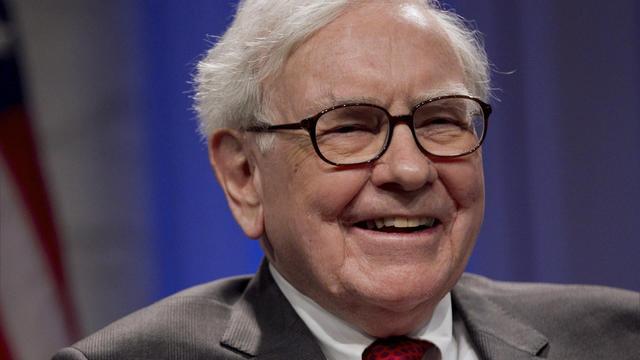
You can’t do what Warren Buffet calls thumbsucking, and lose time re-contemplating when you already know what the right action is. Because as you wait, other people are discovering the undervalued asset. And only one person will be able to grab that asset at that price. So you gotta act like Sir Mixalot when they toss it. And leave it. And pull up quick to retrieve it.

When we arrived at the seller’s home the couple selling the cards were already in the garage, ready to tote the large boxes of cards to my vehicle. After some quick pleasantries, the woman shared that right after I responded to her listing she was flooded with others who also wanted to buy the cards. This confirmed my suspicion of undervaluedness. And it underscored the importance of acting quickly. From the time I first spotted the baseball card listing to the time they were in the back of my vehicle was less than an hour. Boom.

When we returned home, we estimated that there were 9000 baseball cards in the collection we just bought. We began picking out a few random cards from one of the boxes and immediately discovered 3 Randy ‘The Big Unit’ Johnson rookie cards from 1989 that were rare and desirable because they were printed with his wrong birth year. (But his correct height of 6′ 10″!) One of those cards alone was worth more than we paid for the entire collection.

Key Takeaway

Develop a sense for undervalued assets. This comes from understanding markets just well enough to have an undervalued item ping on your radar. All you need is that ping. Because once you sense it, you can perform quick research online or by phoning a friend to get a better sense of the specific value and opportunity. As soon as you have a high degree of confidence that you have discovered a good deal that you can capitalize on, you have to act. Commit and complete the sale swiftly. Because gold doesn’t lie on the sidewalk for long.

*If you know someone who could benefit from this message, please share it with them.

+For more of the best life lessons I have learned check out my book, What Does Your Fortune Cookie Say? from Ripples Media.

How many times do you need to succeed to know your approach works?

When I started my career as an advertising copywriter I learned about the power of a campaign. While it is relatively easy to come up with a single idea to promote your client’s offerings, it is much more difficult to come up with a campaign.

To determine if an idea was campaignable, you had to come up with at least 3 executions based on the same conceptual idea that would allow you to broadly extend the advertising message. Think of the Got Milk? campaign, Allstate’s Mayhem campaign, or the way KFC recently reintroduced Colonel Sanders without the use of CGI, AI, or a mortician.

The campaignability of an idea is the difference between having a one-hit wonder, like Chumbawamba, and having something bigger and more useful, like Taylor Swift’s 44-song Eras Tour. (It’s funny that the Tubthumpers, who admitted to getting knocked down but claimed to get right back up again, only had one hit. Maybe it was the Whiskey drink, or the Vodka drink, or the Lager drink, or the Cider drink that did them in.)

The Rule of 3s

The campaignability rule of 3s is a great rule to apply to other areas of life as well. Because until you have had success in a specific area 3 different times you don’t have proof that you have a repeatable process for success.

For example:

Investors don’t know if they have a valid investment strategy until they have applied it successfully 3 times and gained the targeted rate of return on their money invested.

A coach doesn’t know whether their system truly works until they have had 3 teams or 3 athletes achieve great success following their process.

An artist doesn’t know how to create commercially viable or critically acclaimed art until they do it at least 3 times, without their parents buying their work.

A blogger can’t claim to have proof for their theory of 3s unless they can provide 3 examples, like the 3 I’ve listed above.

What Success 3 Times Means

Once you have had success with an undertaking 3 times, you have proven that you have a repeatable process. Once you have proof that your way works, your opinion carries more weight. You become a credible authority on that subject. In discussions and debates, your perspective has more value because it has been validated by your track record of success.

Investing

As an investor, I have had success buying stock in great companies in industries that have run into bad times. My first success was buying banking stocks during the housing crisis of 2008. I repeated that success with oil stocks in 2020. Then cruise line stocks in 2021. All of these have proven to be great investments. Which provides me with a validated approach that I could share with you.

Coaching

As a track coach all 3 of the girls who I have coached for 3 years have improved their discus throws by at least 45 feet. So I am confident in telling any young athlete I work with that wherever they start out, we will be able to improve at least 45 feet if they follow my system.

Advertising

In advertising, the approach that my team uses for developing brands has proven effective and helped drive business for our clients over and over and over again. So we are confident that our process can be applied to virtually any brand to help drive growth through marketing.

Key Takeaway

If you can achieve success in an area 3 times you have a proven process. Your experience is valuable and transferrable. Remember that you should only take qualified advice from someone who has successfully implemented the advice they are sharing with you at least 3 times. This indicates credibility and a high probability of future success. Anyone can get lucky once. But luck is not a safe bet.

*If you know someone who could benefit from this message, please share it with them.

+For more of the best life lessons I have learned check out my book, What Does Your Fortune Cookie Say? from Ripples Media.

Beware, the rewards switch with time.

There are 2 ways to think about life.

  1. You can focus on The Now.
  2. You can focus on The Next.

When you think about The Now you are encouraged to do the things that are rewarded now. Sleep in. Relax. Have fun. Indulge. Spend. Eat. Drink. And hang out with Mary.

When you think about The Next you do the things that are rewarded next. You wake up early. Work. Focus. Study. Save. Exercise. Build. Carefully monitor your food, drinks, and activity with Mary. (And Ben and Jerry.)

Focusing on The Now is immediately enjoyable. Focusing on The Next makes now less enjoyable in most ways. (Sorry, Charlie.)

But beware, the rewards switch.

In a literal blink, you are past The Now and into The Next. And what is rewarded in The Next is the opposite of The Now. Which is what makes life and the decisions you make so interestingly complicated. And it is why I encourage you to tie the following quote to your decision tree:

“It almost always happens that when the immediate consequence is favorable, the later consequences are disastrous, and vice versa.

-Frédéric Bastiat, French Economist.

Key Takeaway

Always think about the long-term consequences of your actions and inactions. Invest your time, energy, and growth into a much larger payout in the future. A delay of gratification is most often rewarded with compounded interest in The Next. And it’s always well worth the wait.

*If you know someone who could benefit from this message, please share it with them.

+For more ideas on how to enjoy a better future, check out my new book What Does Your Fortune Cookie Say? from Ripples Media.

The money lesson I taught my son that he then shared with his class.

Over the past year, I have been able to spend more time with my family than ever before. For several months I conducted all of my work from my home office. Which allowed my 3 kids to see more of what I do during the day. This created interesting new opportunities to talk to them about work, business, and making money.

As an entrepreneur and business owner, I couldn’t resist talking to my kids about the challenges the pandemic was causing for businesses. And how toilet paper didn’t grow on trees. (They corrected me). But more importantly, I shared how much opportunity there was for businesses to innovate, solve new problems, and benefit from helping others.

As the stock market went into the toilet like a dooky, I shared that this was an amazing time to invest. My kids asked me if they could invest some of their money. So I helped them buy their first stock.

We also read books on money, investing, and wealth. I was surprised by how interested they were in the topic. And it gave me hope that someday they may be able to afford to put me in the good nursing home.

I was even more surprised when my youngest son Magnus came home one day and told me he wrote a story in school on how to get rich. I was curious to read it. I wanted to know what his 10-year old mind was thinking. When the paper finally came home I was tickled, like Elmo, to read what he wrote. I have reprinted the story here in its entirety with permission from Magnus.

How To Get Rich!

The first thing you need to know to be rich is the difference between what you need and what you want. Another way you can put this is you need to know the difference between an asset and a liability.

A asset is something that makes you money. A liability is something that wastes your money.

Some assets would be starting a business, buying stocks, set up a lemonade stand, or any stand, mow someone’s lawn or sell things.

But buying stock is the most efficient way to make money. Especially at a time like this when all the stocks are down.

If you don’t know what a stock is, it’s something you buy on any device and without doing anything you make money. You can also hold on to your stock and get paid four times a year.

My stock pays me 30 cents four times a year. When I bought the shares of my stock each one cost me $3.75. So in total I paid $37.50. And that stock has went up so high that last time I checked it was worth $120 if I sold it.

You can sell things, but I sometimes wouldn’t recommend it. What my Dad taught me is sell when it is high, buy when it is low.

A book I would recommend to get you started is called, Rich Dad. Poor Dad. That was the first book I read about how to get rich. So after reading this get up and ‘Act Now!’

-Magnus Albrecht 3-9-21

Key Takeaway

Teach others what you know. By sharing your knowledge you raise the intelligence and confidence of others. Talk to kids about important life lessons and skills, including financial literacy, when they are young. They are like sponges, primed for learning. Make it fun. Make it interesting. And you can make a positive, life-long impact. It may just be the most valuable investment you ever make.

*If you know someone who could benefit from this message please share it with them.

Passionate people don’t focus on passive income.

People love the idea of passive income. Or earning money while doing nothing. I blame Dire Straits. But if you focus your attention on making money while doing nothing there is a high likelihood that you will earn nothing too.

The focus should be on passionate income. The money you make from aggressive moves, serious work, and taking risks. The money you make from following your passion. And harvesting that passion fruit. (Which sounds abstractly naughty.)

Don’t get me wrong. I’ve read Rich Dad. Poor Dad. Everyone should. And I understand the value of accumulating assets, investing and letting your money work for you.

But I don’t believe that should free you from work. It should free you from the work you don’t want to do. And let you work hard at your favorite challenges and opportunities. That’s the sweet spot. Aim there.

Now is the time to be bold.

This has been an interesting 2 weeks for our planet. Like the movie Parasite, the coronavirus has come out of nowhere, and messed up plans from Wuhan to Hollywood. As a result, the financial markets have gone totally Tom Petty. From Learning to Fly Into The Great Wide Open, to Free Falling.

In the midst of one of the strongest sustained period of economic growth in American history, suddenly we are dealing with travel restrictions, cancelled national and international events, medical supply shortages and panic at the disco.

The Stock Market

Today, the stock markets are in the toilet. And I couldn’t be more pleased.

Because if you are looking for an amazing financial opportunity, this is it. In bad times, when people are panicking, the table is set for you to dig in and take advantage. If you need a refresher course on this lesson, rent the movie The Big Short or Trading Places tonight.

Be Bold Like Barbecue Sauce

If you have a little money to work with, it is time to be bold. You have to find your chance, and take it, like Steve Winwood. Which means picking up an asset that others have dropped like a bad habit in January. It means doing your homework. Taking action. And having faith, like Tim McGraw. Because nothing is guaranteed. And you could go bust. But there is a very good chance that you will go boom boom pow.

The Mortgage Crisis

During the subprime mortgage crisis from 2007 to 2010, American banks were in major trouble. There were fears that some banks would not survive. And some didn’t. But there was an opportunity with those that did. To take advantage of the opportunity you had to buy into those stocks during the darkest days of uncertainty.

During that time I went dumpster diving, and bought stock in 4 different banks that were in the trash. I bought those stocks for as low as $2 per share. And I learned a valuable lesson from that experience. I swore that if I was ever in such a position again, I would buy far more next time. Because those banks stocks have proven to be the smartest financial investment I ever made. Aside from my decision to start my own advertising and idea agency, The Weaponry.

Key Takeaway

I am not telling you to buy stocks. Or to start your own business. I am simply reminding you that fortune favors the bold. And this is a prime time for the bold. So be bold. Make bold choices. And see what happens next.

How to invest in people the way Warren Buffet invests in stocks.

I like investing. I started investing in stocks not long after I landed my first job out of college. Back then I didn’t really know what I was doing. I made mistakes. But I wasn’t afraid. I kept reading, and listening and studying investment strategy. Today I have a solid, repeatable approach. That’s because I stole my strategy from Warren Buffet. Who stole his strategy from Benjamin Graham.

I bought Graham’s book, The Intelligent Investor, because I heard it was the bible on stock investing. I boiled the 600 page book down to this headline:

‘Buy when a stock is undervalued. Sell when it is overvalued.’

This strategy has served me well. I’m always looking to get in on a good company’s bad news. When banks were collapsing because of the mortgage crisis, I bought Huntington, Fifth Third and PNC stock. When there was oil gushing in the Gulf of Mexico I bought BP. When Equifax was hacked, I was into Equifax stock. When there were diseases decimating the US chicken population I shouted, ‘Pass me a drumstick and some shares of Pilgrims Pride and Sanderson Farms!’

Investing in People

I invest in people the same way.  When people are hot, have the world by the bizzles and everyone wants to be close to them, I don’t need to be there too. I like to invest in people who have lost their jobs, hit icebergs, or are leaking oil. Those are the ones that really need to be infused with confidence and friendship. It is easy to divest when people hit all-time lows. But that’s when I like to double down.

People always rebound.

Your personal stock always rises again to reflect your true value. Which means that when you pick someone up who feels like they are sitting on the discard pile, the return on your invested time and attention truly appreciates. While you may have known things would get better for that person, they didn’t. Because when you feel like you are swirling around the toilet, it is hard to see past the very near term.

Take Away

Look for ways to invest in those that need it most. The good people, organizations, and teams that have fallen out of favor. Because the belief, support and confidence you invest  in them comes back to you in amazing ways. Oh, and if you have any undervalued stocks to pass my way, please post them in the comments section.

*If you want to invest more time reading blogs, consider subscribing to this one.