Here’s the other reason reading is so good for you.

Reading is better for you than you know. Yes, reading is a great way to learn things. That’s why I read Judy Blume novels in middle school. But that’s only part of the benefit. Just as importantly, reading is mental exercise that helps you maintain your mental strength and fitness. Which means that reading can help prevent your brain from getting any softer and flabbier than it already is.

One of the most important reasons to read books is that reading for long periods of time is hard. Reading is a grind. And not the kind R. Kelly sang about. Reading is not something you can rush through. It is slow, deliberate, unrushable work. Reading is something you have to do at a walking pace. And walking a great distance takes time and steady effort. That slow, steady effort is how things get done. It is how learning happens. It is how knowledge gets accumulated. It is how brains and the humans that walk them around transform into better versions.

Remember, success, like reading, is slow. So is growth. And wisdom accumulation.

Reading helps you develop your patient pursuit of greatness. Word by word, day by day, you learn to stay with your self-improvement tasks.

If you hired someone else to read for you, which is essentially what you do when you listen to an audiobook, your pace is basically the same. You just read with your ears, rather than your eyes. Which means there really isn’t a way around the pedestrian pace of reading. There is no hack, other than hacking your way through a book like a slow, steady walk from Hackensack to Hacksaw Ridge.

It is often said that the average CEO reads a very above-average number of books each year. That number has been reported to be as high as 5 or 6 books per month, or 60 books per year. The question is, do CEOs start to read a lot once they become CEOs? Or do people who have trained themselves to slowly and steadily accumulate knowledge through reading become CEOs? The answer should be clear.

Brain coach and speed-reading expert Jim Kwik breaks it down like this:

“I went to Amazon and looked at the medium average number of words per book, and it came out to about 64,000 words. So let’s say the average person reads 200 words per minute. We’re talking about 320 minutes to get through a book, which is about 45 minutes a day, to read a book per week. That makes it a little more realistic.”

-Jim Kwik

Have you ever thought about reading in terms of distance? I have. Because I am curious, like George. If all those lines you read in an average book were laid out in a straight line, on the earth, you would read for half a mile. This is according to my calculations of width per line (4 inches) multiplied by number of lines per page (27) multiplied by pages in book (263). Then I converted the inches into miles. Because I read on American roads. And always on the right side.

That steady mental march along mile after mile of words laid out in books improves you along the journey. As you travel that great literary distance, you pick up new words and expand your vocabulary. You gain new knowledge. You learn about people and places and things. (Oh, my!) You improve your understanding of people, history and problems. That’s why reading creates such a valuable adventure.

As you read, you collect knowledge to draw upon to create new and novel products, services, and art. You collect tools that can be used to solve problems. And you accumulate best practices and all the things that people before you learned in much harder ways than reading.

Strengthening your reading muscles helps you develop mental stamina to focus on all kinds of tasks longer. Reading helps you write for longer stretches. It helps you sit still and quiet. (And if I can sit still and quiet, you can too.)

By learning to read books, you become better at reading reports, studies, and briefings. All of which help make you smarter and more informed. And if you ever find yourself in court and they try to throw the book at you, being able to read that book is highly beneficial to you and your lawyer.

But patiently reading books also helps you learn to read the world. Including nature, people, weather, and art. You learn to slow down and pick up on clues all around you. You learn to slowly and patiently observe how the world works and how humans and animals feel. You notice the health of plants. And countless quiet signs and signals from the universe.

So put down your phone and your other electronics. (After you finish this post.) Find books on bestseller lists. Find the greatest books you haven’t read. They get you on track for developing those very valuable reading muscles that will improve your life.

Key Takeaway

Dedicate time to the slow, deliberate process of reading. It helps train your brain to work at its most effective pace. It teaches you patience and rewards you with a steady, long-term return on your invested time. It strengthens your focus and task stamina. And it provides a road map to reach your most important long-term goals.

*If you know someone who could benefit from this message, please share it with them.

+For more of the best life lessons I have learned check out my book, What Does Your Fortune Cookie Say? from Ripples Media. Don’t worry, it’s a quick read.

Why it is so darn important to be patient with yourself.

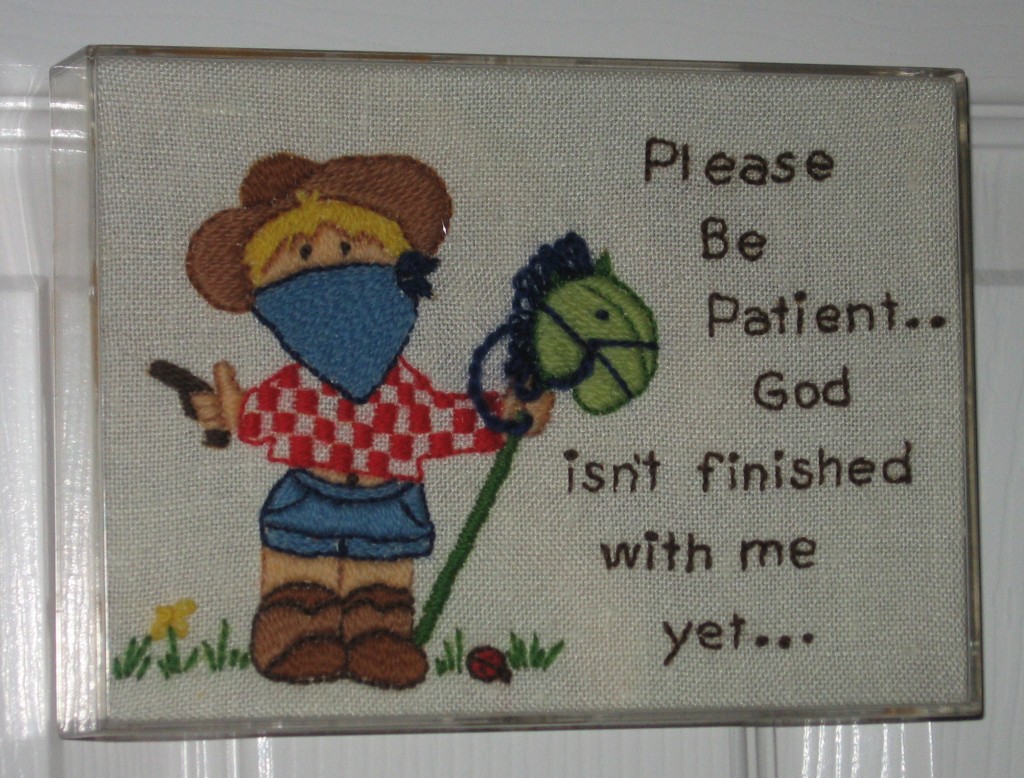
When I was a little boy I had a piece of needlepoint art hanging on my wall. It featured a simple image of a little cowboy and his broomstick horse. On the needlepoint were the words, Please be patient… God isn’t finished with me yet… It was a daily reminder to a growing boy that I was a work in progress.

My art looked a lot like this. Except it had a wooden frame. And both of my ellipses had 3 dots.

Today, most people would consider me a full-grown man. After all, I can grow a full beard and mustache. I am over 6 feet tall and can reach the highest shelves on my tippy toes. I am married with 3 children. I own my own business. I can legally drive a car, vote, and drink alcohol. Although I vote not to drink alcohol because my tastebuds stopped maturing when I was 13, right in the middle of my chocolate milk/ Fun Dip/ Pop Rocks phase.

Despite the fact that I have been wearing the same shoe, pant, and shirt size for multiple decades now, I can proudly say that I am still growing. I am still learning new things every day. I ask questions. I read books and magazines. I listen to audiobooks and podcasts when I drive. And I watch a lot of hilarious videos that teach me things, like how much human weight is too much for a porch swing.

Plus, I still make mistakes. A lot of mistakes. But I learn from them. In fact, I get better by making mistakes. Because my mistakes help me discover more things I didn’t know. Like the fact that dickssportinggoods.com is a better place to find running shoes than dicks.com.

I am willing to bet that you are still learning and growing and making mistakes too. I hope you are. It is how the human machine continuously improves itself. It is the hallmark of intelligent life. And it is how we can all end each day a little better than we were when we woke up.

Key Takeaway

Let’s all remember that we are all still works in progress. Let’s be patient with ourselves and with each other. Because as I was reminded daily when I was a boy, God isn’t finished with me yet. And he isn’t finished with you either.

*If you know someone who could benefit from this message, please share it with them.

Opportunities are like showers. They need time to warm up.

Action and patience are like the chocolate and peanut butter of success. You need both. First, you need to act in order to create conditions for growth and achievement. You need to put the ball in motion. You need to hit start. You need to raise your hand. You need to plant seeds.

But then comes the hard part. You need to be patient. Because the universe doesn’t run on your timeline. The big break you are looking for doesn’t care how much you want it to happen right now, Sammy Hagar.

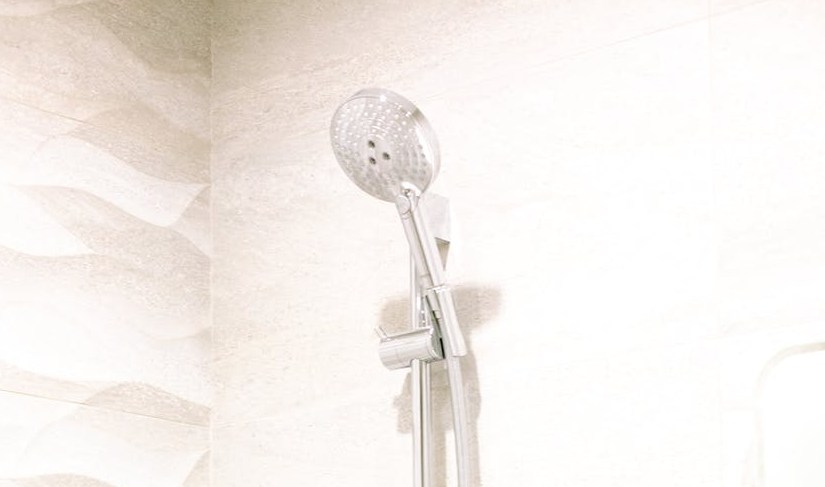
Opportunities are like showers. They take time to warm up. Which means you need to plan ahead. You need to take action early, so you can create opportunities later. You can’t wait until the moment you need results to get started. Or you are sure to get the cold shoulder, along with a whole bunch of other cold body parts.

Why? It takes time for the warm water of your positive actions to reach you. Remember, each shower works on its own timeframe. It depends on how far the shower is from the hot water heater, the size of the pipe, and how long it has been since you showered last.

Reminder

Once you have met a new contact, prospect, potential customer, hottie or employer, remember that you need to wait on their timing to be right to create a mutually beneficial transaction. If you insist on moving quickly, expect a cold shower.

Key Takeaway

Take initial action. Then be patient. We are all dependent on others. Arriving at synchronization takes time. Let the water warm up before you jump in. The wait is well worth it.

*If you know someone who could benefit from this message, please share it with them.

Sometimes the most important thing to work hard at is patience.

Hard work is important to almost every variety of success. Unless you aspire to be an outstanding subject in a sleep clinic, you have to put in a lot of effort to achieve your goals. That’s why it is so important to pursuit the things you are most passionate about. It is much easier to put in long days of work when you are genuinely excited about the work and the mission.

However…

While hard work is important, it is not the only contributor to business and personal success. Since I launched my advertising and idea agency, The Weaponry, I have found that the most surprisingly important ingredient to our success has been patience.

Patience

There have been dozens of times over the past 2.5 years when putting in more hard work would have worked against us. That’s because our clients and customers, (and potential clients and customers) have their own timing that has nothing to do with us.

I have had exciting conversations about great opportunities that then took a long time to materialize. I am talking about gestational periods of a year or even 2 years. There are other opportunities that I still expect will materialize 3 years or more after our initial conversations.

That’s a long time to wait for a cake to bake. But there is nothing I, or any of my teammates can do to speed the process along. In fact, calling and asking and pressing the client, or potential client, would only hurt the opportunity.

Key Takeaway

Recognizing when you have done all the hard work you can to generate a new opportunity is an important skill that pays huge dividends over time. Because once you have reached a critical point, less is more. Let the timing that is out of your control take its course. But don’t give up. This is a hard perspective to master. Master it anyway.

*If you have a story to corroborate this need for patience instead of more work, please share.

**Also, this post had nothing to do with people in need of medical care. Thanks anyway spellcheck.