Our time here is short. Make the most of it, like Steven did.

The best part of business is the people. I didn’t know that when I started my career. But over the past two decades I have discovered that businesses aren’t just powerful economic engines. They are the primary source of social interactions among adults.  The workplace is dramatically undervalued as a matchmaker of friends, mentors, collaborators and life partners. In fact, I met my wife, Dawn, at work.

Steven Schreibman

On Mother’s Day I got a shocking text from my close friend, Jennifer Hanley, whom I first met when she became a client of mine in 2008. She had bad news. My friend and former client, Steven Schreibman, had passed away the day before. This was totally unexpected. He recently began experiencing severe headaches. Then, on May 7th, he suffered a fall that resulted in a brain injury. He never regained consciousness.

I am truly blessed to have known Steven. But we would have never met had it not been for business. Steven was a fancy pants marketing lead at Nationwide Insurance. I was the creative lead at one of Nationwide’s advertising agencies. And we became fast friends.

The Legend

Steven’s reputation preceded him. My coworkers would come back from meetings with Nationwide telling stories of this wild, rogue client. I couldn’t wait to meet this mythical marketing creature.

He didn’t disappoint. In fact, Steven Schreibman was such a fantastic character, that even though I am only halfway through my advertising career expectancy, I am declaring that I will never encounter another client or coworker that is more spectacularly unique than Steven.

IMG_1191
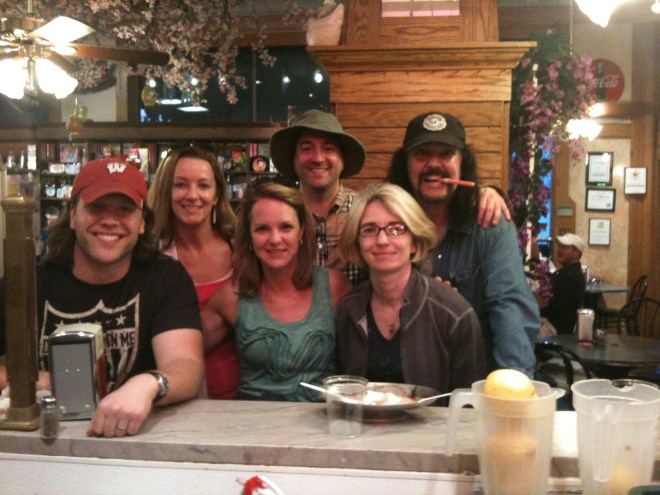
During an all night shoot in LA, we snuck into a diner for the best peanut butter chocolate shake I’ve ever had. I think Steven (back-row middle) had a Burberry Shake.

Today I am reflecting on Steven’s impact on my life. My last 10 years have been much more flavorful thanks to Steven. Here are four of the many things I will never forget about him.

The Steven Schreibman Top 4 List.

1. His Laugh

I love to laugh. But Steven’s laugh made me look like the farmer in American Gothic.  His laugh felt like the essence of life itself. His laugh was big and loud, like an alarm. And it never contained an ounce of restraint. Nor did it adhere to any social norms. I would have loved to have gone to church or synagogue or a library with Steven just to see if he could actually put a lid on his impulse to laugh without a hint of inhibition at the hilarity of the world. We should all live and laugh like that.

2. He cared.

Steven engaged with people as if he were a talk show host. Which is probably the job he should have had. In fact, I hope he gets that gig in Heaven. Because me and St. Peter would watch the Steven Schreibman Show every night.

2010-04-07 17.24.22.jpg
Welcome back to the Tonight Show. I’m Steven Schreibman. And you are not. BWAHAHAHA!

Steven always showed a genuine interest in my life. He was full of questions and remembered everything I ever told him. When we first began working together, my family was small and growing. I have three blonde haired, blue-eyed kids named Ava, Johann and Magnus. Steven would always ask me, ‘How is your little Aryan race coming along?’ I laugh out loud when I think about how completely inappropriate he was, even as he demonstrated how much he cared about me and my family.

3. He Was Eternally Optimistic

Steven was a great client to present creative ideas to, because he recognized the potential in every idea. This is an extremely rare and valuable skill. Everything was Fabulous and Brilliant and Amazing. He loved pushing each idea to see how far it could go. He loved making things bigger, wilder and more attention-getting. He loved making ideas more memorable, and less like everything else. He could have taught a class on getting the most value out of a creative idea. He also could have been the class clown in that very same course.

tonight-show
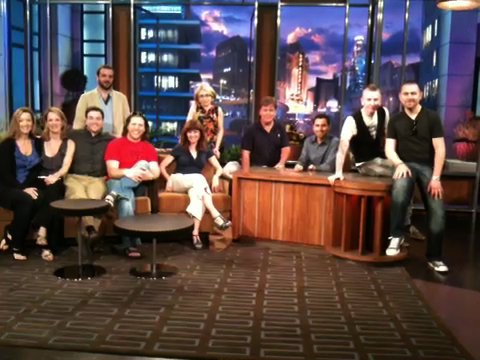
This is a very bad picture from a very interesting night. While out in LA on a shoot, Matt Haritan (far right) and I had the idea to go to a taping of the Tonight Show. Not only did we go to a taping, afterwards we got invited back stage, on stage and even staged a coup d’etat on Jay Leno’s couch. Steven (third from the left) loved this kinda stuff.

4. He Was Entertaining

Steven was outlandish, and over-the-top, all of the time. His personality was completely incongruent with that of a large, conservative insurance company. But Steven reveled in being the pot stirrer. He understood his role as the person who could balance out a conservative corporate culture with his total irreverence for all things conservative.

The Master of Shock Value

We should all have a friend who is as endlessly entertaining as Steven was. He was so funny, and so outlandishly unpredictable, that you just wanted to be around him to see and hear what he would do next. There were no ordinary conversations with Steven. I think it would have been a violation of his personal brand to give you a straight answer. Every conversation with Steven was like a box of Cracker Jacks. And I looked forward to the joke, the surprise, or the shocking commentary that was tucked into every exchange.

My First Impression

I first met Steven on a Nationwide commercial shoot, on a 100 degree day in North Carolina. His face was lathered in sunscreen that was barely rubbed in. Which meant that he looked ridiculous. And he loved it. He kept asking if there was something on his face, and he acted oblivious to the white creamy mess he wore like Halloween makeup, just to get a reaction.

IMG_1846
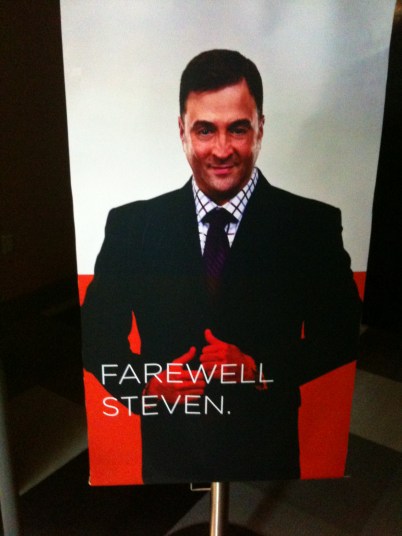
This is from Steven’s going away party when he left Nationwide. Clearly it was significantly retouched. Because he did not have red hands.

The Shirt Incident

One of my favorite Steven memories was from his birthday in 2009. We had a meeting together, and I wore a wild paisley shirt. When the SS waltzed into the meeting he was wearing the exact same shirt! When he spotted me wearing his birthday shirt, his jaw dropped, and he exclaimed, ‘Oh. My. Gawd!  We HAVE to sit next to each other!!!!’ So we did. The rest of the meeting felt like a Saturday Night Live skit. It was all just too ridiculous to take anything seriously. As I think about Steven now, I immediate go back to that meeting. We looked like twin clowns. And we loved every minute of it.

dsc07453-e1274843083156
Steven reacting to a production assistant on a shoot who warned him to be careful on the stairs.

This Blog

Steven was the most engaged reader of this blog. Literally. The insights page on The Perfect Agency Project show that he has provided the most comments on this blog, by far. In fact, Steven has 33% more comments than the next most prolific commenter. This blog will miss him.

Conclusion

I love characters. And Steven was one of the greatest characters I’ve ever known. My conversations with Steven were more provocative and entertaining than the Howard Stern show. Always hilarious. Always inappropriate. And never a bit predictable.

Steven was indeed larger than life. And to those of us whose lives he touched, he is larger than death. Nothing can undo the impact you’ve had on all of us Steven. We will miss you greatly. I can’t wait to hear your laugh again on the other side.

*If you know a friend or family member of Steven’s, please consider sharing this post with them.

Why Wheel Of Fortune is the perfect interview game.

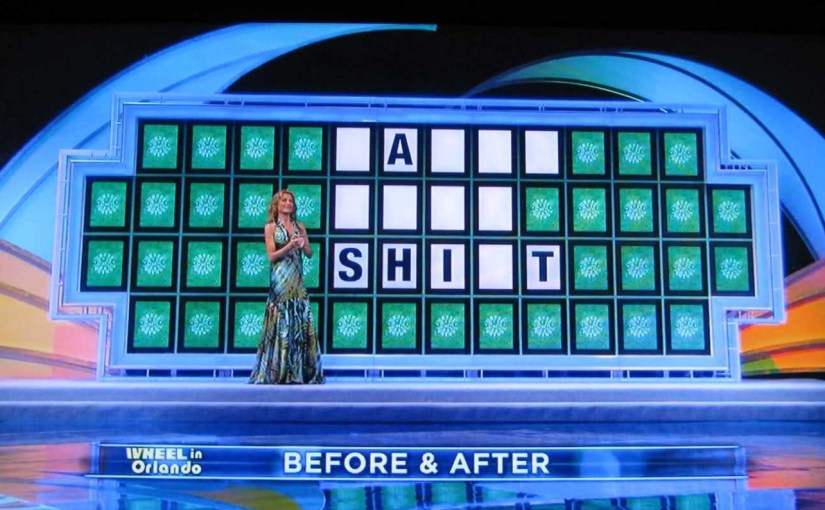
I like watching Wheel of Fortune. It’s not because of Pat Sajak’s perma-tan, perfect hair or witty commentary. And it’s not because of Vanna White and her seemingly irreplaceable skills at touching lighted rectangles. Although 30 years ago that was a compelling draw.

The best part about Wheel of Fortune is trying to solve the puzzles. In case you hadn’t noticed, life is one big puzzle. As the Founder of the advertising and idea agency, The Weaponry, I am constantly trying to solve client problems. That’s why I am hunting for world-class problem solvers the way Imelda Marcos hunted for footwear.

The Interview

Lately I’ve been thinking about introducing WOF into the interview process. Because the game show offers valuable insights into a candidate’s approach to solving real world puzzles. Not only is this kind of problem solving valuable in marketing, it translates to success in business, finance, medicine, auto repair, courtship and just about every career Sally Struthers might mention.

The 3 kinds of contestants on The Wheel of Fortune.

Early Solvers.

My WOF heroes are the people who solve the puzzle in the least amount of time with the  least amount of information. I’m always impressed by those who find the answer well before I do. They are the see-ers of the unseen. These people are clever, insightful and daring. You should hire as many of these types as you can get your hands on (in an HR appropriate way).

Middle Solvers

The majority of the puzzle solvers take a crack at the answer somewhere in the middle of the fill. They offer an answer once many letters are exposed, and the puzzle is relatively easy to solve. At this point the viewer at home either has the answer or has several of the words figured out, but still fails to see a couple of un-purchased vowels. These are your average people. If you fill your organization with these average people you can build an average company. I would rather go bankrupt.

The Reader

At the tail end of the spectrum are the readers. These are the people who don’t attempt to solve the puzzle until every letter is filled in, and they can literally read the entire answer. These are the types that only bet on a sure thing. They are the belt and suspenders types. But Wheel Of Fortune favors the bold.

Please don’t be the reader. When you wait until the answer is obvious you have lost all competitive advantage. Because when there is no risk there is no reward.

Key Takeaway

The further upstream you can solve a problem the move valuable you are. There is a significant market for those who can see the unseen, forecast a trend, or alert a team to an opportunity or catastrophe hiding in the shadows.

In business development, you can’t wait until the account you want goes into review and invites you and every Tom, Dick and Mary to pitch. To offer value you have to be able to solve a problem before the answer is flashing in the middle of Times Square. Or before Vanna has flipped her final consonant.

Perspective from high above a big week.

It is 11:15pm on a Wednesday night.

My plane from Atlanta to Milwaukee just took off. My past three days have been packed full, like Oreo Double Stuff cookies.

Monday our team conducted an 8 hour branding workshop with one of our great new accounts in Georgia. There were 16 clients and 4 agency people collaborating intensely to forge a new path for the brand. Afterwards I drove 2.5 hours in 2 different rental cars while drinking 4 large sweet teas.

Tuesday between 7:20am and 9pm I had 8 in-person meetings and an hour-long client presentation

Today I had 5 more in-person meetings.

Then I refilled a hole in my concrete driveway in Atlanta, with help from a few neighbors (thanks Steve, Crain, and Chris! I feel like that really cemented our friendship. #DadJokes)* Then I had dinner with some of my great Atlanta neighbors, including all of the above plus Betty, Melinda and Grace. Then I bolted Adam Albrecht-Style to the airport. (I’ve written about that style before here.)

After I finish this post I need to get back to work for the rest of the flight.

Because Tomorrow:

  • I have a huge creative presentation to a brand new client.
  • I have another important kickoff to an exciting new client engagement.
  • I have a call with a major foundation based in New York City that we are supporting  with a really rewarding initiative later this year.
  • And I have a new business pitch.

The Wee Hours Of The Morning

I will get home at 2am ET.  I will sneak into my three children’s bedrooms, and give them each a kiss (my kids, not the bedrooms). I will tiptoe into my room and kiss my favorite person on the planet for the first time in 4 days. (I am referring to my wife Dawn, in case you were unsure). Then I will sleep as fast as I can.

Key Takeaway

As I reflect on the past 72 hours, and prepare for the next 24, I feel like I am the luckiest man 35,000 feet above the Earth. 

*The hole stemmed from a pinhole leak in the main waterline to the home. It was detected by a higher-than-normal water bill. I hired a leak detection company to find the leak. Which they did. Unfortunately it was two feet under the center of the concrete driveway. Hence the hole. Life is an adventure.

How to warm up your entrepreneurial spirit.

Admit it, you would really like to own your own business. Most of us would. But getting started is a gnarly tangle of question marks.

  • Do I have what it takes?
  • What do I do first?
  • Do I have the appetite for risk?
  • Should I find a partner?
  • If my business doesn’t take off quickly do I give up food, shelter or clothing first?

Curious-but-careful types turn to books for answers to these questions. While you can read about entrepreneurship all you want, you can’t actually become an entrepreneur without taking action. Which means the best thing to do to warm up your entrepreneurial spirit is practice taking entrepreneurial action (without spending or losing money in the process).

The Challenge

I offer people enamored with the idea of entrepreneurship a simple one week challenge. If you bail on the challenge in the first day, it is a sign that you should not be a sailor on the entrepreneur ship. But if you complete the challenge, not only have you exercised the right behavior, you’ve primed the pump for the next step too.

So here is my challenge to you:


Adam Albrecht’s Unpatented One Week Entrepreneurial Warm Up Exercise.

  1. Pick a good starting day that offers flexibility in your schedule. Saturdays, Sundays and Holidays work well.
  2. Every time you think of someone, reach out to them. Send an email,  text or a call them. Shoot them a message on LinkedIn, Instagram, Twitter or Facebook. Write the impulse down if you can’t send a message at that moment. But send the message that day. If there is a reason that person popped into your mind let them know. *only contact each person once, even if you think of them multiple times during the week. You don’t want to creep them out.

3. Write down the number of days in a row that you completed the mission.


The 3 Reasons You Should Try This Exercise:

1.Entrepreneurship is about turning thoughts into actions. Everyone has thoughts, ideas and impulses. But most of the time these impulses dissipate before they become actions. This exercise helps you transform your moments of inspiration into actions.

2. Entrepreneurship also requires you to actively maintain your network. That means investing time, thought, action and care into other people. It also involves expanding your network. Which could mean reaching out to people you don’t know, or don’t know well.

3. Entrepreneurship requires persistence. You have to keep at it day after day. Even if you really enjoyed a day or two of this exercise, don’t try to launch a business until you can string together a full week of successful impulse activation. 

5 Things You Will Learn From This Exercise:

1. What it is like to activate your thoughts.

2. Whether or not you can activate your thoughts with consistency.

3. Your connections with others will grow stronger.

4. The recency of your communications with make others more likely to think of you again in the near future.

5. Human interactions often set off a chain of interesting positive events. 

Key Takeaway

In entrepreneurship action is everything. In order to invent Facebook you actually have to invent Facebook. And it starts by doing the things you’ve thought about doing but haven’t done. Entrepreneurship requires you to spend a good chunk of your time outside your comfort zone. So practice getting over that discomfort by reaching out to friends and family you haven’t contacted for quite some time. By the end of this Unpatented One Week Entrepreneurial Warm Up Exercise, you won’t have spent any money on your business idea. But you will have created a more fertile environment for it to grow.

How to establish a useful workplace dress code.

The seasons have finally changed across the northern third of America. We can safely put our Icelandic sweaters, mukluks and buffalo robes away for the next 6 months. It’s time to bust out our warm weather wardrobes. Which means revisiting an old issue in the workplace: dress code.

My First Job

Before I started my first job in advertising I had no idea what to wear. So I called the agency for guidance. They assigned me a Fashion Mentor named Shannon. She called me and told me that, ‘polos and khakis were pretty much standard’. While I dressed respectably on my first day, I saw that the creative team wore jeans and t-shirts. So I quickly adopted the more comfortable creative attire. Thanks for nothing Fashion Mentor Shannon.

The Weaponry

Today I face a new challenge. As the Founder of the advertising and idea agency, The Weaponry, I now have to set the dress code for the entire agency. This spring is the first time we have had warm weather since we moved into our new office in the fall. So I have to determine what types of summer clothing are acceptable, or preferable. The challenge is that they didn’t cover establishing a dress code at the Harvard Business School. Trust me. I read a book about it (Ahead Of The Curve).

I considered writing an explicit dress code. I thought it would be fun to have rules like a strict English boarding school, that said things like, The hem of the broadcloth covering your lower hemisphere must fall within a ruler’s width of your knee’s equator.

IMG_0198
At The Weaponry, a team t-shirt is always up to code.

But I don’t believe in a complicated dress code. Instead, I believe in a very simple rule of thumb. Here is the dress code at The Weaponry:

Dress the way you want people to see you.

Breaking It Down.

This is a bit more complex than it may seem at first glance. Sometimes this direction means dressing up. It means looking professional, polished and well-coordinated.  Sometimes this means looking more interesting, more fashionable or trendy. And sometimes this means dressing down. Some people should look more relaxed. Or more creative. Because you need to dress for the role you want to play in the minds’ of your co-workers and clients.

To that end, I have worn jeans to every client meeting I have had for the past decade. Because I believe clients don’t want their ad agency creatives to look like bankers and lawyers. Then again, they don’t want you to look homeless either. But I’ve found there is a fairly wide field to play with between the two.

Key Takeaway

Ignore the limits of your current workplaces dress code. Instead, dress the way you want people to see you. Make a statement. Use your wardrobe choices as sign that you are ready for the next step in responsibility. That may mean not partaking in Casual Friday. It may mean wearing an elective tie. Or bow tie. But it may also mean that you rock the Ramones T-shirt for the next client meeting.

Don’t ignore your clothes. You can bet your clients and coworkers won’t ignore what you are wearing. So unless you work at a nudist colony, think about your threads. Because every day on the job is a day in costume.

What this entrepreneur is suddenly afraid of.

I’m not easy to scare. I’m not an anxious or nervous person. In fact, I am so normal that I am often bored by my lack of lunacy. My kids say that the only thing I am scared of is missing out on a fun time. In the past, they may have been right.

But I have a new fear that seems to have crept up on me when I wasn’t looking. I feel it in libraries and bookstores. It makes me truly uncomfortable in these places that should be quiet and calming.

So What’s Up?

I have tracked and analyzed this feeling and have discovered its source. Libraries and bookstores make me anxious, because I am now comparing all of the books I want to read with how little time I have left to read them. The equation does not work in my favor. And this freaks me out.

img_9812.jpg
I enter each bookstore as if it were my last. And it is wigging me out.

Organ Transplants

I love to read. Reading a book is like being the recipient of an organ transplant. Because as you read, someone else’s knowledge gets transferred to your body of knowledge. Yet, unlike when you receive a new, kidney, heart or appendix, your body rarely rejects new reading material. Even when you disagree with what you’ve read, you incorporate it into your understanding and world view.

Entrepreneurship Makes Symptoms Worse

I have always loved to read. But ever since I founded my advertising and idea agency, The Weaponry, my reading pace has picked up. So has my phobia. My FOLAB (Fear Of Libraries and Bookstores) is like FOMO (Fear of Missing Out). Except the FOLAB stems from the knowledge, perspective, and mental stimulation I know I will never receive.

I have read several sources that say the average CEO reads one book per week. This doesn’t surprise me. Because entrepreneurs are looking for as much knowledge as they can accumulate. I turn to books as my primary source of professional inspiration and education. I pick up something useful in everything I read. I always juggle several books at once (because they are safer than chainsaws). And most of my commute is done listening to audio books. Yet, time is slipping away.

Key Takeaway

I am confronting the finite amount of book-reading life I have left. And I am in desperate  need of some knowledge donors. Please share some of your go-to books that you feel I  should prioritize. The average age of my four grandparents was only 95 years old.* So I may only have 50 years of reading left. Oh, my gosh. Seeing that in print is totally freaking me out. Please help by sending your reading recommendations today.

*My Grandma Albrecht is 98 and still going strong. So the average is still going up. But  still…

How to use Netflix in the workplace to increase creativity.

Creativity is one of your organization’s most valuable assets. It helps you develop new products, services, systems and processes. It solves problems. And helps you create culture. Creativity is the opposite of conformity. It drives you to think and act in ways that others don’t. Which is why creativity is key to both memorability and competitive advantages.

At my advertising and idea agency, The Weaponry, our core service is creative thinking. We are major exporters of creativity, like Art Vandelay. Which means my number one responsibility is creating an environment conducive to creative thinking.

Growing vs Harvesting

Most businesses think about harvesting creative thinking, but not planting or growing it. Which is like milking cows, but not offering them the water, grain, hay and chocolate they need to produce the milk. You have to fertilize your environment to grow more and better creative thinking. But you can’t just call ScottsMiracle-Gro for that kind of fertilizer. Unless you know a number I don’t know.

Making Connections

Creativity, like innovation, is about connecting dots. It happens when random bits of knowledge that reside in your head meet each other at the community social. They share some thinks, one think leads to another, and the next think you know a new thought is born. That’s why it is important to always be exposing yourself to new ideas. Not like a flasher, of course. But if you don’t get your chocolate in someone else’s peanut butter, you don’t get Reece’s Peanut Butter Cups.

Netflix

One of the tools we use to feed creativity at The Weaponry is Netflix. At lunchtime, we regularly gather in the conference room and find a program on Netflix to stimulate new thinking. We watch documentaries on creative people and their journeys.  We watch programs on noteworthy artists and entrepreneurs. We watch comedy specials, both for a good mid-day laugh, and because comedians offer new ways to think about ordinary things.

What To Watch

To enhance your creativity with Netflix you can watch anything that stimulates your mind. But here are a few starter ideas that have inspired and expanded our thinking. You can click the name of each program to view the trailer.

p13662947_b_v8_ab

Abstract: The Art Of Design

This series profiles great creative thinkers across several fields, including Architecture, Illustration, Sneaker Design and Typography. I recommend starting with this. I’m not sure why I capitalized each of those fields.

p14806772_p_v8_ar

House of Z

This documentary on Zak Posen follows his EKG-like successes and setbacks. It is inspiring to see early wins, his transformations and his comeback. It’s also interesting for creative thinkers to hear from the critics and gatekeepers who felt empowered to judge his work.

p12109657_p_v8_aa

The People’s Designer

Like House of  Z, this documentary follows the career of designer Jeremy Scott as he leaves a little town on the prairies of Missouri to become the Creative Director of Moschino. It’s interesting to compare and contrast the personal styles of Scott and Posen. It’s a great reminder that we all need to find our special formula.

p9364219_b_v8_ad

Comedians in Cars Getting Coffee

In this funny and interesting series, Jerry Seinfeld hosts a talk show. But unlike a traditional talk show, the interveiews are conducted in, you guessed it, interesting cars and coffee shops. There are 4 seasons of this show already. The episodes are short, ranging from 9 to 22 minutes, which makes them easy to squeeze in during a short lunch break.

images-5

Manolo: The Boy Who Made Shoes for Lizards

This is a fascinating find. Manolo is a real character with a truly unique vision. It is interesting to follow his story, his vast body of work (even though the only part of the body it covers is the feet), his quirks and idiosyncrasies.

images-6

Fastest Car

This series pits Super Cars vs Sleeper cars. Which means that each episode follows an owner of a Super Car (Ferrari, Lamborghini, Viper, McClaren etc) and three builders of sleeper cars, which are essentially wolves in pinto clothing. Then, each show concludes with a drag race to see which car is the fastest.

Key Takeaway

It’s important to feed your creativity. And nothing is easier than watching some interesting program while you are eating lunch. Start with any of these shows and follow your own interests. It’s useful to watch as a team, because each of these programs stimulates conversation. You’ll discover what other people find most interesting too. So give it a try. And let me know what you think. If you have a favorite idea-inspiring program on Netflix let me know. I’m always looking for more.

Are you really in control of your career?

It was December of 1999. The world was facing a possible Y2K apocalypse, and I was surrounded by cranberries. I had written a national TV commercial for Northland Cranberry Juice and was now preparing to shoot the spot in their hometown, Wisconsin Rapids, Wisconsin. Wisconsin Rapids (just in case you’ve never been there) is to cranberries what Nashville is to country music.

The premise of the commercial we were shooting was that the honest, hardworking people of Wisconsin Rapids put 100% into everything they do. So they would never consider putting anything less than 100% juice into a bottle of Northland. The same could not be said for those villains at Ocean Spray. Their cranberry cocktails ranged from just 17% to 27% juice. Cut to the close up of the Ocean Spray ingredient label, and cue the horror movie music.

The Director

But this story is not about juice. It is about the director. Ashley Lazarus. While Ashley Lazarus is one of the most beautiful names I have ever heard, it belongs to a bear of a man. A South African man. A man best known in America for launching the Saturn car brand with the iconic Spring in Springhill commercials. In other words, Ashley had mad directing skillz.

AshleyLazarus-1-563x365
Ashley Lazarus and a camera that won’t fit in your pocket.

Location Scouting

My first two days with Ashley were spent scouting for locations to shoot the commercial.  We were looking for the most interesting locations in and around Wisconsin Rapids to capture on film.

The conversation

While driving between locations in the Wisconsin countryside, Ashley, who was in his 60s, turned to me and slowly asked in his deep, South African accent, ‘Adam, how old are you?’

I replied, ’26’.

Not only will I never forget what he said next, it helped steer the course of my career, and my life.

Ashley continued,

‘Adam, eventually you must open your own advertising agency. You will be promised great positions in your career. You may even be offered them. But eventually all creatives are either passed over or forced out of agencies. The only way for you to remain in control of your career is to own your own agency.’

I had dreamed of owning my own agency since I first started my career three years earlier. But now, at 26 years old, I was told I had no choice. If I wanted to be in control of my career and my life’s path, I would have to start my own advertising agency and create my own opportunities.

That advice stuck in my head like a cocklebur to corduroy. I believed Ashley was right. Over the next 15 years I was promoted from Copywriter, to Senior Writer, to Associate Creative Director, to Creative Director, to Executive Creative Director to Chief Creative Officer. But I never forgot what Ashley said. And I wanted the ultimate control over my career path.

The Weaponry

In 2016, when I was 42 years old, I launched my own advertising and idea agency, The Weaponry. I also launched this blog to chronicle the entire journey (if you’d like to follow along at home consider subscribing). Today, I’d like Ashley to know that I listened, appreciated and followed the advice he gave me in the back of that SUV in Wisconsin, Rapids in 1999.

Key Takeaway

What Ashley said about my career holds true for you too. Your career path, and your life path will be determined by someone else if you don’t take control of it. You too should start your own business, or side hustle, or consulting gig. Prepare your own plan B before you need it. It’s the key to writing your own script with your own happy ending.

Who you should always compare yourself to.

I always say something ridiculous at the beginning of our quarterly meetings. Ok, even typing that sentence sounds ridiculous. For someone who started his advertising career as a precocious young copywriter, the idea of being a business owner who ‘begins quarterly meetings’ sounds kinda crazy. But I digress.

At the beginning of each quarter meeting at my advertising and idea agency, The Weaponry, I say,

“The Weaponry is a (insert ridiculously large revenue number) business, with (insert ridiculously large number) of offices, and (insert ridiculously large number) of employees. Our job, ladies and gentlemen, is to close the gap between The Weaponry I just described, and The Weaponry that exists today.”

We then identify the most important things the business must add, remove, implement, enhance or change in order to close the gap between who we are today and our ideal self. We use the Entrepreneurial Operating System (EOS), as spelled out in Gino Wickman’s book Traction to help us do this.

Every Day I Write The Book.

We compare ourselves to The Ideal Weaponry constantly.  It’s our version of What Would Jesus Do? When making decisions about hiring, copier machines, our website, or business development, we constantly asks, What Would The Fully Formed, Fully Realized Version of The Weaponry Do. You know, the classic WWTFFFRVOTWD.

By creating a strong, tangible and detailed vision of your future self, you can mentally google any questions about your ideal state. Just ask yourself, ‘How does Future State You handle performance reviews?’ Or ‘How does Future State You invoice, or develop a pipeline of new business opportunities?’ When you ask such questions, you’ll usually find the answers sitting right there at the top of the search results. Because your ideal state is optimized for mental SEO.

I’m Talking About You Too (And Maybe U2)

This works for individuals too. By creating a strong image of your future self, you always have a great model to follow. When you stand back-to-back with your future self,  you can easily find the gaps in knowledge, professionalism, patience, trust or reliability that you need to close. This helps you focus your efforts on acquiring new knowledge, skills, and maybe updating your wardrobe.

Key Takeaway.

Don’t compare your business to a competitor. Don’t try to keep up with the Jones’s. The only organization you should be benchmarking against is your organization’s ideal state.  The only person you should be jealous of is Fully Formed You. These are the only comparisons that matter. And they are the only comparisons that you can do anything about. That’s why the guy sitting in my chair at my company’s quarterly meeting didn’t completely surprise me. I’ve been comparing myself to him my entire life.

This is what people really remember about you.

I don’t have any tattoos. But each time we get a meaningful image or quote added to the walls of our new offices at The Weaponry, I feel as if an important statement has been tattooed on me. Of course our wall art is much larger and much less painful than a real tattoo. And I don’t have to hide the wall art from my Mom.

I’ve written about our wall statements before. But last week we had another quote tattooed to our office. Not only do I find this quote inspiring, it states a critical tenant of brand-building.

Our Latest Wall Quote:

 “You are remembered for the rules you break.”

-General Douglas MacArthur

MacArthur hit the nail on the head, and sent it into concussion protocol with this line. In Nike Founder, Phil Knight’s book Shoe Dog, he references this quote several times. I find myself referencing it often too.

There are multiple ways to interpret this quote. But I see it in the most positive light possible. You are remembered for the norms the standards and the expectations you don’t follow. You are remembered for the parts of you that stick out. Not the ones that fit in. You are remembered like Frank Sinatra, for doing it your way.

IMG_0260
Me and my cousin Brooks Albrecht and some 504 point type.

This is true of people, businesses, brands, products, services, plants, minerals and animals. Speaking of animals, consider mammals for a moment. They are warm-blooded and fur-bearing creatures. But the dolphins doesn’t seem like a mammal because it lives in the ocean. The bat doesn’t seem like a mammal because it frickin flies! And the platypus, well, it breaks so many rules I don’t even know what it was to start with.

Conformity

Conformity is the opposite of creativity. Conforming to every rule means you disappear. If you want to be remembered by your peers, in job interviews, or in customers’ minds, you have to break some rules.

Key Takeaway

Look for ways to be different. Break stupid rules. Break smart rules when you have an even smarter reason to do so. Rules were made to be broken. You were made to be remembered. You are not a sheep, or a cow. Don’t follow the flocking herd. Give them something to remember you by.  Your Mom and Dad will eventually get over it. Trust me, I know.