Great advice I didn’t take, but maybe you should.

In the first half of 2013 I was in New York City every week. I was the Chief Creative Officer of a 275 person ad agency called Engauge. And we were in the process of selling the agency. A four person leadership team from Engauge shared our story, our work and our finances with 15 potential suitors, ranging from Conde Nast to the Paris-based advertising agency holding company, Publicis, who eventually purchased the agency. However, Conde Nast provided the greatest challenge in the process, because the room that we presented in was plastered with oversized prints of topless women. Which lead to my short-term bout with Attention Deficit Disorder.

LGA

One evening after one of our many meetings with potential investors on Wall Street, Engauge President Jeff Hilimire and I headed to the Laguardia airport for our flight home. But first we stopped and grabbed burgers at a barely-open Five Guys at the airport. It was in that small, yet-highly caloric moment, that we proceeded to have one of the most important conversations of my entrepreneurial journey.

Going through an exit (sale) process like we were going through, you are forced to think about the next chapter of your career. Because depending on who purchases your business, some unknown combination of the leadership team will no longer be needed in the new organization. Some of us were on the business equivalent of a Kamikaze mission. Or maybe it was the business equivalent to Russian Roulette. Or maybe I am just being dramatic with an international flair. Either way, Jeff and I each discussed our future in a very open Komono way (I can’t stop).

The Only Job For Jeff.

Jeff told me, ‘There is only one title I ever want again.’

I was curious what that was, so of course I asked, ‘What’s that?’

He said, ‘Founder.’

As a successful entrepreneur, his only interest was in starting businesses and in being an entrepreneur. He found no appeal in helping the company who bought the company that bought the company that he started.

But what about me?

I also had a great desire to start my own business. But unlike Jeff, I didn’t have experience starting my own agency from dust and growing it into a thriving success. So in between bites of my oversized Adam Albrecht Burger from Five Guys, I asked Jeff for advice on how I should get started on my entrepreneurial journey.

Jeff said, ‘The first thing you need to decide is where you want to start your business. Find a job in that market, move there, and spend two years developing your network there, while working for someone else.’ He said that after two years of serious networking, you should have the base you need to go out on your own, and start your own agency.

What I Did

This was really good advice. But I didn’t take it. Instead, I launched my advertising and idea agency, The Weaponry, in 2016 in Atlanta. But then, for family reasons, decided to relocate my family to Milwaukee. And of course, the business had to move too. Which means that I did the opposite of what Jeff suggested. I started a business, and then moved it to a new city, where I hadn’t warmed up my network at all.

From the beginning, my strategy was different. My network is very broad, with strong and valued friends and connections across North America. So I was determined to develop The Weaponry to be geographically agnostic. Technology has enabled us to live into my vision, and serve clients across the United States and Canada.

2 Years Later

This week marks the 2-year anniversary of our move to Milwaukee. So I couldn’t help but reflect on Jeff’s advice. The Weaponry is thriving, with great clients from coast to coast. But there is something special happening now. There is an interesting momentum building. We are being talked about when we aren’t around. We are contacted more than ever. People are stopping by, and inquiring about us, and wanting to talk to us, and get to know us at a distinctly different pace today.

I believe this is 2-year momentum. We are building on the 2-year base that Jeff originally recommended. It is an incredibly exciting time for us. And we no longer feel like a start-up. We feel like a confident collection of Weapons that know exactly how to handle whatever our clients need. Kind of like the A-Team, without Mr. T (aka B.A. Baracus, aka Mr. I Pity The Fool).

Key Takeaway

There is no one right way to go about launching a business. The key is to get moving. If you have been considering starting your own business, or making another significant change in your life, I encourage you to set your 2-year timer now, and start the process today.  Two years will give you plenty of time to go from that first step, to a confident swagger. Be persistent, be patient, and let’s talk about this again in two years.


A great reminder from a bad dream.

Last night I had a dream that I was invited to The OSCARS. But I was indifferent about going. I made no real attempt to find appropriate attire. In fact, I figured some blue jeans and a decent shirt would do. Apparently I had The Oscars confused with The Allman Brothers.

On the afternoon of the big event I slowly put on my far-under-dressed OSCARS costume. My wife walked in, looked me over, and said, ‘You are not seriously going to wear that!?!’ But I was going to wear it. And I wasn’t being serious.

Making My Way

I slowly meandered towards the venue, not really caring if I got there. Then my Mom called via FaceTime. She was thrilled about me going to the show. Until she saw how I was dressed. My Mom implored me to find something appropriate to wear, but I didn’t listen.

A Lucky Break

After I hung up, I looked down and saw that somehow my very best clothes, including my tuxedo, were at my feet. I finally realized that if I wanted to go to the OSCARS, and actually be let in, I would have to put on the tuxedo. Which I finally decided to do. Then I slowly set off again on my journey towards the venue.

But as I got closer to the event, I could hear an announcement over a loud-speaker. A woman was warning, ‘You must be in your seat in five minutes or you won’t be permitted to enter.’ I began to panic. I ran as hard as I could.  But it was too late. I was too far away to make it to the show on time. Then I woke up.

Facing Reality

When I opened my eyes and realized it was all a dream, I quickly reflected on what I thought the dream meant. Here is my summation:

Breaking It Down

It was a classic bad dream. It played off of my greatest concerns. I had a major opportunity and I blew it. I had everything I needed, served up on a silver platter, and I didn’t realize it. I didn’t care. I didn’t prepare. I wasn’t listening to my Wife and my Mom, who I considered to represent the Universe. I caught lucky breaks, like having my right clothes show up when I needed them. Which, of course, is classic dream nonsense. But still, I didn’t act with urgency until it was far too late. The time had passed. The opportunity was gone. I blew it. As the other Cinderella once said, ‘You don’t know what you got, till it’s gone.

Key Takeaway

This dream played into my biggest fear. Which is not taking advantage of the great opportunities that come my way. I am afraid of not recognizing the chances and advantages and lucky breaks I have been given. I am worried that I won’t hear the messages that the Universe is sending me. I have a serious case of FOMO. But my FOMO is the vaccine that prevents me from contracting a boring life.

*Happy Monday!  Please recognize and take advantage of all the great opportunities that come your way.

My reflections on an interesting week from the weekend.

This past week was intense, and dense, and interesting. Like the way a good nutrition bar crams a random mix of natural ingredients into a an unnatural rectangle. From Monday morning, through the very end of the day on Friday, I binge-experienced new opportunities, new relationships, intense strategic sessions, and interesting creative explorations that suck you in like a black hole. Or maybe a Dyson vacuum. I forget which one is stronger.

This week I had video conferences with clients, or potential clients in Washington D.C., New York City, Atlanta, San Francisco, Denver, Portland and Minneapolis. I worked on plans for upcoming shoots in Houston, Cincinnati, Atlanta and India. We finalized contracts with 3 new clients. And we added new members to our team.

When I started my advertising and idea agency, The Weaponry, I had a vision of creating the perfect agency, the perfect place to work, and the perfect partner for clients. While we are not perfect, we are on the right path, and we are getting closer. The question is how close to perfection can we actually get. The other question, of course, is who put the bop in the bop shoo bop shoo bop?

On Friday afternoon, I locked up The Weaponry, walked to my car, and drove the 17 miles to my home in Mequon, Wisconsin. I parked my car in my driveway (not Harvard Yard). I sat there for a minute and reflected on my week with pride, gratefulness and satisfaction. I soaked up the wins of the week. I thought about all the new doors that are  opening. I wasn’t Thanking God it was Friday. I was thanking God for the entire week. And for my wife, daughter and two sons that I would now get to spend the weekend with.

Do you really want serenity? Or do you want to solve problems?

My time is my most precious asset. Not because my time is any more important than anyone else’s. It is certainly not. Just as Steve Miller’s time keeps on slipping, slipping, slipping, into the future, I know that my finite time on Earth is steadily slipping away too. Like sand through an hourglass. Literally. Yet, it is this scarcity of time that is the major motivating force in my life.

My Increasing Impatience

More and more, I find myself interrupting others as they recount their disappointments in the past. I often crash pity parties to point out that time spent dwelling on the things that went wrong will not make them go right.

Spending Your Time Wisely

I am a problem solver, both by nature and by profession. As an entrepreneur and as a professional creative thinker, I view the limitations of any given situation simply as the rules that govern the solution. I have no time to relive something that went wrong in the past. All I care about is what I can do moving forward.

The Serenity Prayer

I find great value in the Serenity Prayer. If you don’t know it, or don’t know it by name, here it is:

God grant me the serenity to accept the things I cannot change; courage to change the things I can; and wisdom to know the difference.  –Reinhold Niebuhr

Serenity Now!

Many see this statement as a path to Serenity. But I would have named this The Problem Solver’s Prayer. Because what Reinhold is praying for is the essence of problem solving.

Problem solving is like conducting a science experiment. To find a great solution to the challenges you face, you must accept the constants, and vary the variables until you get the results you are looking for.

Focus On The Possible

I don’t spend any time lamenting the constants. I accept the things I cannot change. I pour all of my time, energy and thought into the things I can change. You could say I focus on the positive. But I say I focus on the possible. Mine is not a rose-colored glasses outlook. I focus on reality. Because reality is full of positive possibilities.

Key Takeaway

Memorize the Serenity Prayer. Accept the cold hard realities of life. And spend all of your valuable, and constantly diminishing time focusing on the amazing opportunities and possibilities that exist anyway.

How to evaluate your career and your life with one simple question.

I love a good rule of thumb. While other people collect stamps, art or sports memorabilia, I collect rules of thumb. In fact I have far more rules of thumb than I have thumbs. Which, upon further reflection, is not saying much. But I love a good, simple lens through which to view complex issues.

The Search

A few years ago when I was looking to hire an Executive Creative Director in Atlanta, I found  many interesting candidates. While discussing their various merits, Michael Palma, my headhunter, dropped an interesting rule of thumb into the conversation. He said,

‘I think you always have to ask yourself, is the candidate’s best 5 years in front of them, or behind them.’

Evaluating The Path

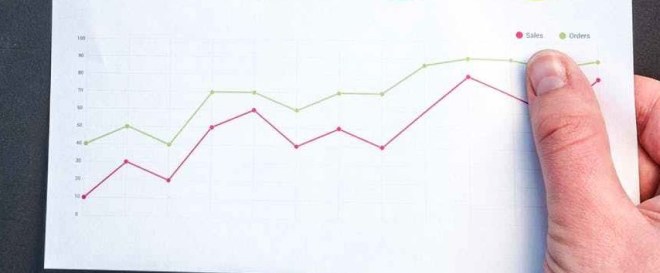
person holding chart and bar graph

I found this to be a startlingly simple way to evaluate a job candidate. Because it boils a career down to trajectory. Is the candidate growing and learning and becoming more capable, more energetic, more inspired, more influential, more well-connected and more wise? Or have they peaked?  Have they begun coasting? Have they begun living off of past successes? Are they still seeking out bigger challenges? Are they still hungry and feisty? Are they still showering on a regular basis?

Self Evaluation

person on a bridge near a lake

Palma’s rule of thumb isn’t just useful when evaluating job candidates. Its real power is that it is a great way to think about our own careers. And our own lives. I have sought out and surrounded myself with people who maintain an upward trajectory. I am inspired by people who continue to grow and challenge themselves to do, learn and be more.

I started my advertising and idea agency, The Weaponry, as part of a personal growth plan. I knew it was the next challenge I needed to maintain my trajectory of growth, passion and impact. As the business continues to grow and expand, it is clear to me that the best 5 years of my career are still ahead.

Key Takeaway

Take a moment today to look at your own big picture. Are you getting better? Are you pushing yourself? Are you taking on challenges that scare you? Are you maintaining a commitment to life-long learning and self-improvement? Are your interpersonal skills, maturity and accountability improving? If not, it is time for you to spend more time working on you.

Why it is so positive to focus on the negative.

I am a naturally positive person. I like to start with the positive. I like to end on the positive. And I like to fill the middle with as much positive as I can. Yet, I don’t claim any responsiblity for my positivity. As Lady Gaga once said, Baby, I was born this way.

Team Meetings

On Tuesday mornings I meet with my entire team at The Weaponry, the advertising and idea agency I launched in 2016. I share updates on our clients, people, and growth opportunities. We discuss our long-term vision for the organization and our progress towards that goal. And yes, it is a positive experience.

The Good

This Tuesday I gave an update on our latest developments. The headline was:

In the past 3 months we have added 8 new clients in 5 different states.

I walked through the new additions, gave an overview on what we are doing for each of them, and mentioned the people who had either helped us secure the business, or who were already working on the accounts.

The Bad

After sharing the good news of the week I asked the team to keep looking for the peas under the mattress. I want to make this agency the perfect place to work, and the perfect partner for our clients. The only way you get to that point is by removing the elements that cause discomfort. I want to find the pain points and confusion. I want to know what is causing slowdowns and bottlenecks and head scratching.

Why So Negative?

It is easy to ignore your problems, especially when things are going well. But if we do, we won’t improve our machine. And if we don’t improve our processes, procedures, structure and people, we will never achieve the elusive goal of creating the perfect agency.

The Paradox. (Or is it a Pair of Docks?)

Admittedly, it is a little odd, especially for an optimistic, can-do, positive organization like The Weaponry to focus on the blemishes, weaknesses and flaws. But, Mama, that’s where the fun is.

One of the most enjoyable aspects of growth is eliminating weakness. By shoring up our weakest points the machine gets stronger and stronger. The entire team can feel it when a reoccurring problem goes a way. And when it does, we can then focus on the next issue up. There will always be a next issue up. But just as with technological advances and innovation, as challenges are solved, the new challenges that take their place are smaller and smaller issues.

Key Takeaway

If you really want to be great, don’t just acknowledge or admit your flaws. Seek them out. Root them out. Mark them in highlighter. Then develop a plan to eliminate them.  We use the EOS Rocks system, as outlined in the book Traction by Gino Wickman to take on our issues, gain traction as an organization, and continue on our path of organizational improvement. We are not perfect. But we want to be. And we are committed to getting as close to the dream as we can.

*I’d love to know your thoughts on either of the following questions:

  1. Do you feel that your organization makes a priority of discovering and eliminating your organizational and operational flaws?
  2. Do you try to proactively identify flaws in yourself, your outlook, your processes, your knowledge or your procedures in a quest for self-improvement? Or, do you beat yourself up over your shortcomings?

This is the best fuel for the best attitude.

I  am in the middle of a major research project on life. While the research is ongoing, I have discovered, after collecting more than four decades worth of evidence, that life is hard. My study reveals that life is hard at work, at home, in your relationships, and even on vacation. No one is immune. And there is no cure (except that 80’s band with Robert Smith).

Facing Reality

Things go wrong all the time. Disappointment shows up repeatedly without an appointment. Things break. Bills pile up. Bills lose Super Bowls. And just when you think you are in the clear, something happens to remind you that you are clearly not in the clear.

Entrepreneurship

I started my advertising and idea agency, The Weaponry, two years ago. And I have faced a constant stream of challenges, requirements, setbacks and surprises. As an entrepreneur, you have to be ready for whatever craziness comes your way. Because it will come, and it will be crazy. Like marrying-a-Kardashian-crazy .

A Common Trait

Since starting my entrepreneurial journey I have surrounded myself with other entrepreneurs. I have noticed that the rock stars have a special trait that enables them to be successful in the face of the constant barrage of adversity and the WTF-ity they will inevitably face. And it just may be the most valuable asset in their organizations.

A  Helium Attitude.

Helium is perhaps the most magical element on Earth. Because it floats! In fact, you can fill a balloon with helium and the balloon floats too! Had Sir Issac Newton seen a helium balloon float skyward as he saw that apple fall earth-ward, he would have had a much tougher time discovering the laws of gravity. Because helium always rises above the gravity of a situation. Your attitude can too. If you let your attitude get sunk by setbacks, then your attitude is not an asset.

I don’t think about having a good attitude. Because I don’t know what that means. I think about having a helium attitude. Which is a mindset, an approach and an interpretation of the facts that rises above the circumstances. A helium attitude remains up, even when your plans fall down. Thus it always provides the perspective that things will get better. This is an entrepreneurial imperative.

Lifting Others

The helium attitude helps lift others too. Someone needs to rise above the disappointment and frustration that we all inevitably face. The helium attitude bounces back quickly, and offers other people a high point to focus on as they navigate forward. Which is why it is important for parents, leaders, teachers and preachers to fill their attitudes with as much helium as they can get (#highandfunnyvoices).

Key Takeaway

Life is unpredictable. One moment you feel like you are on top of the world. The next moment, you feel like the world is on top of you. But a helium attitude rises anyway. Don’t let setbacks, curveballs, and negative people drag you down. Do what helium does, and just keep rising. Your attitude is everything in life. Make sure you fill it with the right fuel.

A lesson from the most overlooked event in track and field.

I love track and field. I first got involved in the sport as a freshman in high school, mostly because I was terrible at baseball. But also because it was co-ed. And, I thought the fact that it was a no-cut sport significantly improved my chances of actually making the team.

Trying Everything

I have competed in a wide variety of track and field events. My resume includes the 100 meters, 400 meters, 1600 meters, high jump, long jump, shot put, discus, javelin, hammer, 35-pound weight, 110 meter hurdles, 4×100 meter relay, 4×400 meter relay, and, yes, even the pole vault (which I approached more like the high jump with a stick).

I liked every event I ever competed in. I love the energy and atmosphere at track meets. But you know when track and field becomes really fun?

The Second Meet.

The second meet is the most important and impactful event in a track athlete’s career. In your first meet you are just setting a baseline. But once you get to your second meet you walk in with a time, distance or height to beat. And most of the time, the results in the second meet are a rewarding step forward from the first meet.

In track and field, every result is measured in minutes and seconds, or feet and inches. Which means that your linear progression is clear and quantifiable. Your undeniable improvement in the second meet gets you thinking about the third meet. It makes you think about practicing more, training harder, lifting weights, warming up smarter and getting some better hype music. You start wondering just how much better you can get. The seeds of self-improvement are planted, fertilized and watered in that second meet.

The Broader Lesson

This is not just a track and field thing. This is a life thing. The same principle applies to our careers, our relationships, our responsibilities and our hobbies. Our first attempts simply set a baseline. The second time we do anything we start the improvement process. We recognize that as we pour more energy, time and focus into any activity we get better and better. This is true of presenting a closing argument in court, hiring good employees and folding fitted sheets (although my wife, Dawn is so good at the fitted sheet thing that I focus on the closing arguments in court instead).

Key Takeaway

Don’t be afraid to try something new because you think you will be bad at it. You will be bad at it. Or at least you will be the worst you will ever be. But that first attempt creates a starting point. The climb from there is both exciting and rewarding. As you improve, remember that first attempt. Recognize how far you have come since you first started. It is one of the most rewarding reflections in life.

*To see if these posts improve over time, please consider subscribing to this blog. Like the measurements of my track and field days, I now track follows, likes and comments to see if I am getting better. And like track and field, I am happy blogging is a no-cut sport.

How in the world do you schedule your time?

My daughter Ava wants to work at The Weaponry. She is 12. While a 12-year-old may not seem like a valuable asset to an ad agency, she is a really great writer and a very creative thinker. She has a blog, she has adapted a novel she read into a screenplay, and is currently writing a murder-mystery chapter book. Oh, and she has created a series on the new Instagram TV. But she rarely makes her bed. So there’s that.

She recently asked me when she can come to work with me and help out. I told her that I would have to check my schedule to see what might work. She responded with a very simple, but surprisingly profound question:

How do you determine your schedule?

 Good Question

This made me think more deeply about my schedule in an attempt to explain it. I told her that I start with deadlines. I look at all of the things that The Weaponry has to create and the due dates for each. Then I schedule my time to focus on those projects, in order of priority, from hottest to coolest.

flat lay photography of calendar
Your schedule starts as a blank slate. How much time do you put into thinking about how you fill it?   

But this begs the question, ‘If it weren’t for deadlines or due dates, what would your schedule look like?’ For entrepreneurs, there is always something more to do. But this is really true of every job, right? So, how do you add tasks to your schedule that don’t have deadlines?

blur close up depth of field focus
If you haven’t thought deeply about how you schedule your day, maybe you need a 12-year-old daughter.

How I Do It.

I have found there are 3 things that I incorporate into my schedule, despite the fact that they don’t have due dates.

Connecting:  I am a natural connector.  I think people are the most interesting machines on the planet. I highly value my relationships. More importantly, I maintain my relationships. And when I think of someone, or have a little bell that dings in the back of my head that lets me know it has been too long since we’ve last spoken, I reach out. This is an important part of my regular schedule, and should be part of yours too.

Closing Gaps: At The Weaponry we spend time exploring the gaps between where our organization is today, and our idealized, fully formed organization of the future. As a result, we often think about our shortcomings. Although I don’t think of them as shortcomings. I simply see things that we are not doing, or don’t have yet, that we will in our ideal state. This is about improving our processes, procedures, systems and infrastructure. Entrepreneurs call this working on your business. But I think everyone can benefit from more gap closing. Except maybe The Gap.

Things that excite me: I always leave room for things that interest me. Since we are an idea generating machine, there are always exciting ideas bouncing around our office. I try to find as much time to explore those ideas as possible. This could involve a new way to look at our clients’ challenges. It could be a new product idea, an additional service, or an idea that could transform our business. I often get excited about new ideas for t-shirts, buttons, stickers or hats for The Weaponry. I love thinking about new messaging for our walls too. Most businesses could benefit from more time exploring good ideas. I do it everyday. You should pencil in some Idea Time this week.

Key Takeaway

Our lives are full of deadline-driven must do’s. They become the studs around which we build our daily schedules. But the key to making each day great is the elective activities you work into your calendar. Whether you use the same approach I do (time for connecting, closing gaps and ideas that excite) or your own formula, make sure your daily schedule isn’t simply driven by email requests and meetings. As Steven R. Covey notes in his book The 7 Habits of Highly Effective People, engaging in important, non-urgent activities is a key determinant of success. Remember that as you schedule your week.

And Ava, this Friday looks like a good day for you to come to work with me. Make sure your pencils are sharp. (That’s just an old expression. I guess it means, make sure your laptop is fully charged.)


The best way to find a career you love.

Our planet is full of scary things. The one that scares me the most is lack of planning. What, you’re not frightened? You’re not going to tell scary stories around the campfire about the man without a plan?

Let me explain.

I recently talked to a graduating college senior. I asked him what he planned to do next. He said, ‘Honestly, I have no idea. I’ll see what kind of opportunities come my way.’ To me this sounded like giving up on life. Or letting someone else write your story. Or signing up to become a pawn in someone else’s chess game (a pawn is a chess piece, and not another name for a shrimp, right?).

Reality Check

Without your own plan you will end up in a job that doesn’t fulfill you, in an industry you don’t care about. You will get tossed around like a plastic garbage bag in the wind, with no direction, like the opening scene from American Beauty (or was that the closing scene?). You have to push to find work you are passionate about dong. Even if the money isn’t great. Because not all rewards come in cash.

The Unhappy Drug Salesman

Had I not planned my career I would have ended up in pharmaceutical sales. I studied psychology and journalism at the University of Wisconsin. But before graduation I was approached by some pharma sales people who were recruiting college athletes, because apparently we are competitive people.

The money they offered me was twice what I would earn in an entry-level job in advertising. But I held out for a creative role. Because I had a plan. While pharmaceutical sales is a really great career choice for some people, it did not fit into my plan. Not even a little. Not on a train. Not in the rain. Not with a fox.

I stayed focused, and landed a good, but low paying job as a copywriter with a well-known advertising agency. Over the next 15 years I progressed from a writer to Creative Director to Chief Creative Officer. Then, twenty years after I started my career I launched my own advertising and idea agency, The Weaponry. It was all part of the plan. And I love it when a plan comes together. #A-Team

Start Today

If you don’t have a career plan, or a life plan, start working on it today. Write down what you love to do. Write down what you are good at doing. Then find a way to get paid to do one of those things. Maybe you are already on that track. But maybe you are far away and heading in the wrong direction. You can turn around. But no one else can turn the wheel for you. That’s your job.

If you are a recent college grad, or just got out of the military, or are a career-minded alien who just landed on the planet, start your job search by thinking about your retirement. Plan your entire career with the end in mind. It’s the best way to ensure you’ll make the right decisions, introduce yourself to the right people, continue to properly educate yourself, and finish your career exactly where you wanted to be.

Key Takeaway.

You have to plan your own career. You have to find something that makes you happy. Your career will occupy 50% of your waking life. If you want to be happy in life, you have to be happy in your career. Make a plan and follow it. Don’t follow the money. Because if you love what you do, everything else, including the money, will take care of itself.