You are the greatest project you will ever have. As a human being, you are the most complicated machine on Earth. Which means there is no limit to the amount of self-improvement you are capable of.
Your improvements can be highly specific. They can be physical, mental, emotional, spiritual, psychological, philosophical, or professional. But even these broad categories that all end in -al barely scratch the surface.
You can get better at signing your name, walking, selling, replacing an organ, or serving a tennis ball. You can get better at eating hot dogs. Just ask Joey Chestnut. You can get better at streaking. Just ask the dude who invited himself onto the field at Super Bowl LV. Heck, you can get better at eating hot dogs while streaking. And if you do you can probably get a sponsorship deal.
The 2 Ingredients
Regardless of what you want to do better, there are 2 key drivers of self-improvement: the things you learn and the things you do. Because you improve through a combination of knowing better and doing better.
1. The things you learn.
This is all about gaining new information. This can come in many ways.
Reading books, magazines, articles, and reports.
Watching instructional videos
Taking classes and courses.
Learning from others through discussions, conversations, observation, and spying.
Working with a coach or mentor
Experimenting
Experience
2. The things you do.
All the knowledge in the world does no good without action. Your actions drive results. Those actions include:
Effort
Focus
Commitment
Practice
Habits
Stamina
Optimization
Key Takeaway
Learn all you can. Then put that new knowledge to work through your deliberate actions. By doing so you will end each day better than you began. You are the greatest project you will ever have. And you are nowhere near finished.
*If you know someone who could benefit from this idea, please share it with them.
Happy Valentine’s Day! I have been thinking a lot about love this weekend. Love is the most powerful and most positive emotion in our collection. To make the most of your time on Earth you should spend as much time as you can doing things you love, with people love, in places you love.
The first step is to know what you really love. Today, take an hour to write down 100 things you love. Not only will it force you to think about your favorite people, places, and things, it will serve as a guide, and show you how to live a life you love.
Here’s what I came up with. Surely there are many more things that should be on this list that I didn’t come up with in my limited time this morning. (And I’ll stop calling you Shirley.)
100 Things I Love (in no particular order, except the first ones.)
My wife Dawn
My kids Ava, Johann and Magnus
My Mama, Dad and Sisters
The rest of my ginormous family.
My work
Sweet Tea
Hammocks
Cliff jumping
Road tripping
Vermont
Fishing
Glacier National Park
Boogie boarding
Pizza
Great puns
Snowmobiling
Laughing
Making people laugh
Mountain biking
A great church service
Great books
Weddings
Shawshank Redemption
Lobster
Hiking in the mountains
Sunrises
Black olives
Elkton, Minnesota
Thanksgiving
Stompers
Playing the card game Pit
Throwing the discus
Cheese curds (squeaky or fried)
India
Winning new business
Running into people I know in random places
Inside jokes
My best friends from high school
Outside voices
The fresh tortilla chips from the Whole Foods in Dublin, Ohio
Sabra Field art
Wisconsin Badger football games
Simon Pearce Glass
Needing 4 wheel drive
Montreal
The Art Institute of Chicago
Perfectly ripe pears
Snowfall measured in feet
My college track teammates
Hilton Head Island
ACDC
Zucker Brother’s movies
Canoeing
Game night
Roller coasters
New York strip steaks
Iceland
My Madison Hall friends in ATL
My funniest stories
Investments that paid off
Hearing that someone found value in something I wrote or said
Energizing people
Game of Thrones
Real maple syrup
Driving a tractor
The smell of roses
Handing out bonus checks
A great quote
The Patriots winning the Super Bowl (never gets old)
Ben & Jerry’s New York Super Fudge Chunk ice cream
Discovering common friends (meaning finding out people we both know, not finding commoners and befriending them.)
Raincoats
Boots of all sorts. (Except the monkey from Dora the Explora)
G-Shock watches
Making my own t-shirts
Making my sisters snarf
The show Yellowstone (The park isn’t too shabby either.)
TheHow I Built ThisPodcast
Anything with Will Ferrell
American Giant hoodies
My Gerber tool
My Kraken belt buckle
Mount Ranier
Manhattan
Convertibles
Overdelivering
Campfires
People who read my blog posts all the way to the end.
Key Takeaway
Fill your life with the things you love. The people, places, activities, feelings, food, and drink you love will lead you to a life you love. And life is too short to fill with anything else.
*If you know someone who could benefit from this message, please share it with them.
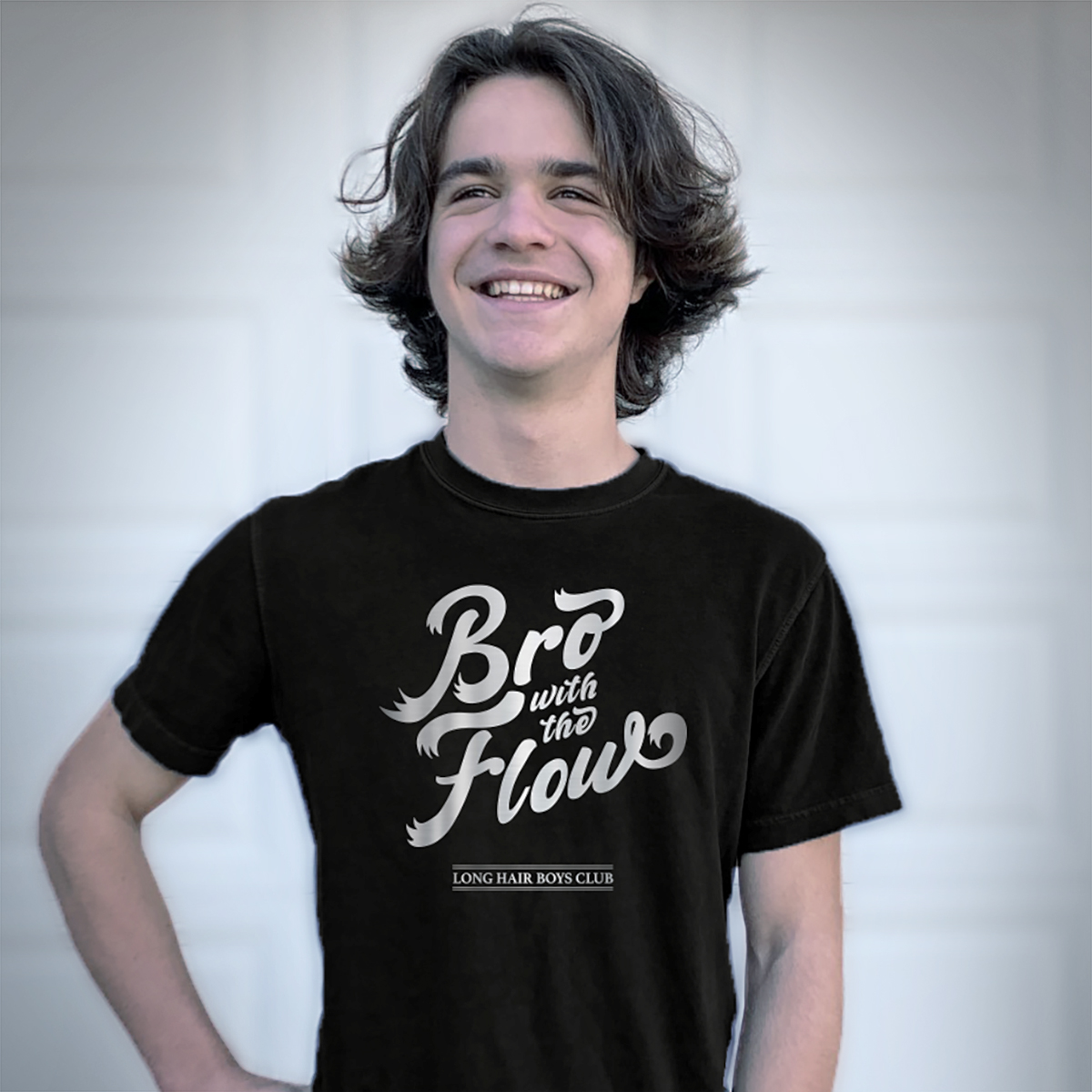
This week I had a fun interview on entrepreneurship. I wasn’t talking to Inc., How I Built This or Squawk Box. I was interviewed by Jayson Koel, a sophomore at Germantown High School in Germantown, Wisconsin with great hair. Jayson is taking an entrepreneurship class and is working on his own business, an apparel company called Midwest Running Club. Which I assume doesn’t sell Speedos to New Englanders.
Jayson (Y ask Y there’s a Y) had 8 good questions for me that I thought would be worth sharing with others who are considering entrepreneurship, or who simply wonder how someone gets started on their entrepreneurial journey.
This is Jayson Koel. Check out that flow! (And the t-shirt his Dad and I designed.)
8 Questions on Entrepreneurship with Jayson Koel
When did you know you wanted to own your own business?
At the very beginning of my career. I immediately loved the idea of creating my own version of an advertising agency. I was always envious of entrepreneurs for being brave enough to do what everyone else dreams of doing. And I think envy is a great navigational tool. (Unless you are on a ship. Then you should use real navigational tools.) 3 years into my career a film director I was working with told me I had to start my own agency in order to secure my future. I took the advice. And I wrote about it here.
2. How did you prepare to get started?
I spent 19 years learning how advertising works, building relationships, creative skills, leadership skills, and nunchuck skillz. Because girls only like guys who have great skills. I had a subscription to Inc. magazine that whole time and continuously studied entrepreneurship. I surrounded myself with other entrepreneurs, and learned how they thought, and increased my courage and confidence through their examples. Then, in the last 6 months before I launched The Weaponry, my advertising and idea agency, I bought The E-Myth, by Michael Gerber, which is a great how-to book on how to run a business the right way. Even for southpaws.
3. Who helped you start your business?
My cousin Brooks Albrecht and I launched The Weaponry together. Brooks was in Seattle working for Amazon, I was in Atlanta, working at Moxie, the largest ad agency in Atlanta. We collaborated and planned and made things happen from opposite corners of the country, with a 3-hour time difference between us. We used Zoom, Slack, Google G-Suite, and Dropbox while planning the business because we had to to bridge our distance. That created a perfect infrastructure for the business operations too. Brooks was like a rocket booster and stayed with us for the first year, then peeled off and rejoined Amazon full time. He is now a rockstar at Chewy.
4. What obstacles were incurred in starting the business and how were they overcome?
Our first and largest client in year one was only a 1-year client. Which meant that we had to figure out how to quickly grow and replace that revenue in year 2 and beyond. I had seen what happens to businesses that don’t continuously grow by attracting new clients. (They go out of business.) So from the beginning, I developed a mindset that all of our clients were going to disappear on New Year’s Eve each year, and we would have to start again with all new clients the next year. But at the same time, I wanted to treat our clients so well that they never wanted to leave. Those 2 approaches of continuous business development and excellent customer service have kept us going and growing.
5. What are your characteristics that have benefited you the most as an entrepreneur?
My relationship skills. Personal relationships have always been important to me. And I quickly realized once I started The Weaponry that the hardest part of entrepreneurship, which is relationship development and maintenance, was something I had been working at for the past 30 years. And that has made my entrepreneurial journey really enjoyable. My creative skills, strategic thinking, and careful financial approach have also benefited me significantly as an entrepreneur. My optimism and sense of humor help a lot too. Entrepreneurship is a roller coaster ride. Believing each down will be followed by an up keeps you from throwing up your cereal every morning.
6. Where do you see this business in 10 years?
Large and in charge like Large Marge. We will grow significantly, have offices across the country, and will be sought after by the very best brands. (I shared my actual goals with real numbers and specifics with Jayson to give him a sense of how big I am thinking. But talk is cheap. So I’d rather show the rest of the world what we have done than talk about what we hope to do.)
7. What are the rewards of owning your business?
There is great peace of mind when we go through difficult economic times like we have experienced over the past year. I am still in control of my own future, and won’t be ejected by a business that wants to save money by dropping me like a hot bowling ball. There is also a great sense of control over my life and my future. I sink, swim or fly based on my own actions. I love creating a team culture, working with people I enjoy. Your earning potential when you own your own business is unlimited. I also get to decide on the company t-shirts and hoodies. And I never have to regret not starting my own business.
8. What advice would you give to my classmates and me?
Start thinking about owning your own business right now, while you are still in high school. Keep your eyes open for entrepreneurial opportunities all along your journey. Learn a craft really well so that you are good enough at it that you can start your own business someday. Develop and maintain your relationships. And read Rich Dad. Poor Dad. by Robert Kiyosaki and The E-Myth.
Oh, and start a blog. Share what you know with people and make them laugh if you can. People love to laugh as they learn, except when they are drinking really hot coffee or peanut brittle and it shoots out their nose.
There are 3 grades to everything. Which means everything you do can be evaluated, sorted, and stacked into 3 distinct categories. Everything.
Failure
The first grade is failure. It means you didn’t live up to the standards set. It reveals you either didn’t know or didn’t try. You never want to be in this world. Because failure never fails to fail. It is the easiest thing to do.
Passing
Passing means you met the standard. But that is it. The problem with meeting the standard is that everyone else worth a poo also meets the standard too.* It is not differentiating. It is just enough to get you into the game. (*Italicized, rhymed, and infused with poo for memorability)
A passing grade puts you in the commodity category. When you simply meet the standard you have to keep on fighting. You have no leverage. You are like a teeter with no totter. You have to lower your wages or your fee because so many others are right where you are. The world of the passing grade is crowded. Which means you have to stand in line for doors you may never get through. #anightattheroxbury
Flying Colors
The only grade that gets ahead is Flying Colors. When you push beyond the passing grade you earn this enviable distinction. This is where you earn options. People seek you out when your performance, product, or service is in this range.
When you earn Flying Color grades you can choose what you do and who you do it with. You can charge a premium. You can maximize profit. Maximize opportunities. This is where you have options. Because you are adding value. And when you add value first you can extract value.
Key Takeaway
The top tier is the only group that has control over their world. This is where you should always push to be. It takes more work. But not that much more. Plus, there is inherent joy and satisfaction in doing a job at a high level. Aim here. Get here. Take control of your opportunities here. Never settle for less.
*If you know someone who could benefit from this message, please share it with them.
Super Bowl LV will be remembered for some important firsts. It was the first time a team ever played a Super Bowl in their home stadium. Which, if you ask the Tampa Bay Buccaneers, seemed to be a great advantage. It was the first time cardboard cutout attendees outnumbered real people attendees at the Super Bowl. And it was the first time a female officiated a Super Bowl. You go Sarah Thomas! (But don’t go before the snap of the ball, or that is a penalty.)
The non-cardboard crowd attending the Super Bowl was mostly comprised of America’s frontline workers. And rightfully so. But there was another type of worker that slowly stole the show: the older employee.
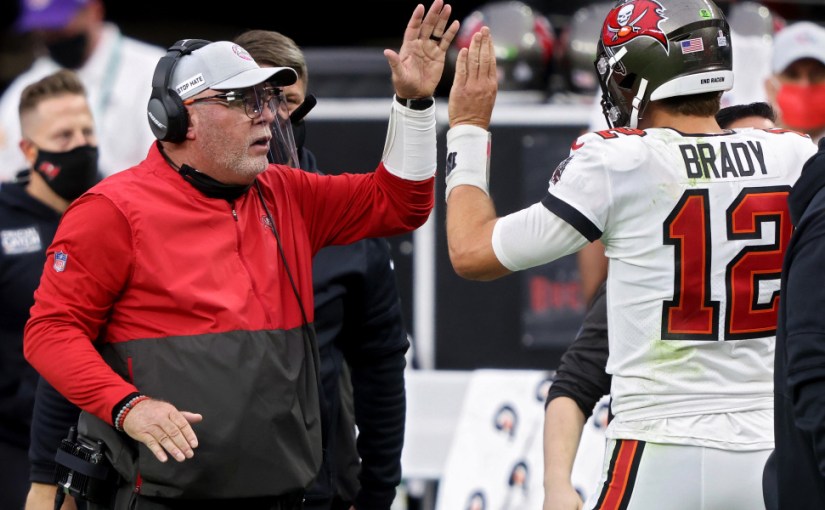
At 43 years old Tom Brady became the oldest quarterback to ever win the Super Bowl. And not only did he win the game, he won his 7th Super Bowl. And his 4th since he turned 37. For those who don’t follow American football, 43 in the NFL is like 85 years old in the normal person workplace.
Bruce Arians also became the oldest coach to ever win a Super Bowl. At 68 years and a whole bunch of days, Arians broke Bill Belichick’s old record by 2 years. In fact, Arians was out of football, and just came back to coach the Tampa Bay Buccaneers in 2019. 2 years later this senior citizen won the Super Bowl of, well, Super Bowls. Plus he got to live in Florida like so many other 68-year olds.
The noteworthy takeaway is not that Brady and Arians are old. Which they certainly are in relative terms. It is that they are older employees who bring a stadium worth of experience and knowledge to their organization. Experience can be a major game-changer. Even in the NFL.
In a time when employers are quick to pass on older talent, let Brady and Arians serve as a valuable reminder. Their success with the Bucs was not a product of them running the same old proven system in the same old place and having the same old success. This was Arians’ second season in Tampa Bay, and Brady’s first. Yet their applied knowledge and experience transformed the Buccaneers and made them the best team in the NFL. And success in the NFL is harder to come by than most other industries.
Key Takeaway
Don’t overlook the value of older employees. Their accumulated knowledge and experience is a tremendous asset. Organizations of all types benefit from senior experts. They have seen all there is to see. They know what works and what is doomed to fail. They know that people power businesses and that systems create winners. To win more, make sure you have senior talent on your team that knows how to get you where you want to go because they have already been there. And if you are highly experienced, never forget how much value you bring to any organization lucky enough to have you.
*If you know someone who could benefit from this message, please share it with them.
Content is the marketing buzzword of the millennium. If Jan Brady was alive today, (and was a marketing expert), she would be exclaiming, ‘Content, content content!’ instead of, ‘Marsha, Marsha, Marsha!’
Experts say that both personal brands and business brands need to put out content to draw more attention. It’s easy to understand why Netflix, Hulu and HBO need content. It is the product they sell. But why do non-entertainment brands and individuals need content? Inquiring minds want to know.
Connect The Dots
Think of life like a giant game of connect-the-dots. When you share your content you are enabling others to connect to your dots. Your dots may be your ideas, products, services, advice, knowledge, experience, expertise or friendship. All of those things have value in this epic game of connect-the-dots we are all playing.
A Recent Example
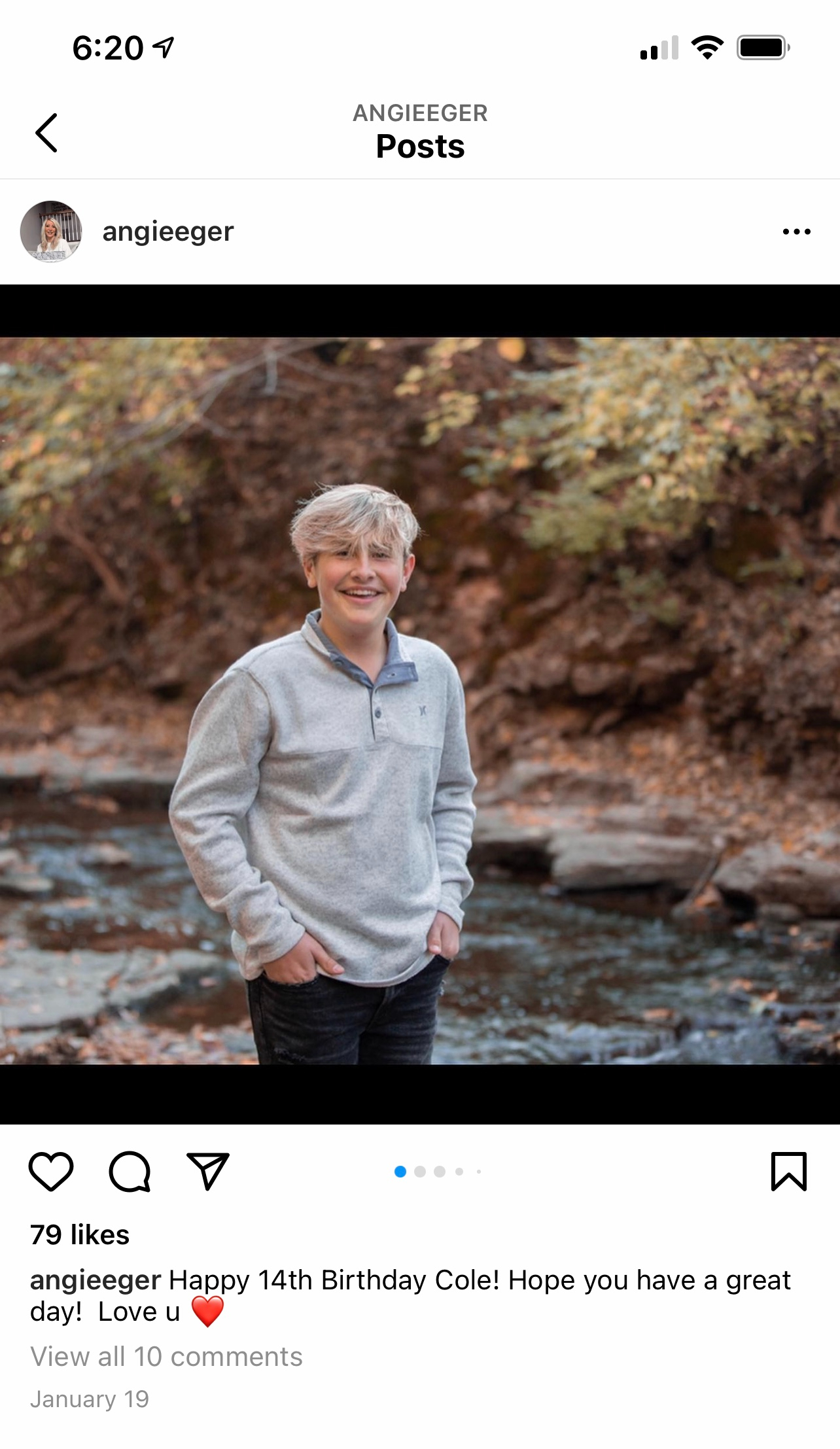
Last weekend Angie Eger from Columbus, Ohio posted a picture of her son on Instagram. And when she did, a curious chain of events happened.
I thought about Angie for the first time in quite a while. Angie cut my hair from 2009 to 2014 when I lived in Columbus. Then I remembered that I have a problem. I need a haircut. However, I have a bigger problem, which is that my hair person in Milwaukee, Sara Holzem, moved to Naples during the pandemic. And I have only had my hair cut once since. The cranky woman who cut my hair did a good job, but the experience was poor. And by the looks of it, she has been fired by the hair place where I saw her. It’s likely because her cranky pants were a violation of the salon’s dress code.
As I read Angie’s Instagram post I realized that I would be in Columbus, Ohio the following Friday. So I sent Angie a note through Instagram asking her if she had any spare hair time on Friday. Luckily for me, she did.
This is Angie, with a mask, for safety.
So last Friday morning I got my hair cut by Angie for the first time in 7 years. It was a major win-win. Angie offered a great solution to a problem I was struggling to solve. My fresh new hairdo looks a lot better than my expired one. I got to start my Friday morning catching up with an old friend. And Angie increased her business last week, by re-attracting a lapsed customer. As a result, she made money doing something she loves.
Share Your Content
This transaction only happened because Angie posted a picture of her son on Instagram. I was connecting dots, and she put her dot right where I needed it. Which meant that I connected Angie’s Instagram-post dot to my hair-problem dot to my trip- to-Columbus dot. Problem solved.
This is the image of Angie’s son on Instagram that started it all. Happy Birthday Cole!
Key Takeaway
Keep sharing your world with others. Every piece of content you share has the potential to help someone. It makes you or your organization top of mind when others are trying to solve a problem. We are all playing a giant game of connect-the-dots every day. So add your dots. And help others win.
*If you know someone who could benefit from this message, please share it with them.
I woke up this morning to one of the heaviest snowfalls I have seen in several years thanks to winter storm Orlena. The lake effect snow machine is in full effect here on the Wisconsin side of Lake Michigan. On top of that, the winds are whipping like the Dazz Band. And I say let it whip.
I love this kind of weather. Unlike hurricanes, tornados, floods and wildfires that leave massive destruction in their wake, a blizzard leaves the world better and more beautiful. After Orlena transforms the midwest and northeast into a fresh powder playground, images of the snowfall will be trending on social media like Gamestop. Or Grumpy Bernie.
My Daughter Ava sent me this pic from her room this morning.
Life Is Full of Blizzards
It’s useful to think of the challenges in your life like blizzards. They can be frustrating and disorienting. But once they pass, they often leave you better than they found you.
The Startup Blizzard
When I was first launching my advertising and idea agency, The Weaponry, the swirling uncertainty of startup-ness surrounded us. And that can really mess with you. Here is something I wrote about the experience we were going through 4 years ago.
From June 10th, 2016
Today I had a long talk with a co-worker who was having a hard time at work. Which is understandable. Because startups are kinda hard. Launching a startup is like walking in a blizzard. Wind and snow are all up in your grill. It’s cold. Visibility goes into the toilet. It’s difficult to navigate in these conditions.
In the middle of a blizzard, your survival instincts tell you to seek shelter. It’s natural to want to escape the relentless wind, disorienting snow and mounting drifts. Sitting by a crackling fire, drinking hot chocolate is far more appealing to most people.
But I like walking in blizzards. I like being out when no one else is. I like doing things that build my character, my will and my personal legend. In the same way a callus rises as the result of repeated friction, strength grows from pushing against resistance.
If a blizzard confronts you on your journey you have to keep walking. You must have faith that you know where you are heading. You have to take steps forward, even when it is hard.
Blizzards of the wintry, professional and personal kind are temporary. Eventually, the snow will stop falling. The wind will chill the eff out. And the sun will come out again.
When that happens, where will you be? It’s a matter of what you did during the blizzard. If you keep pushing, you will find yourself far ahead of where you started, far ahead of those who sought shelter, and closer to your ultimate goal. You’ll find the ultimate rewards far outweigh the hot chocolate you sacrificed along the way.
Key Takeaway
Blizzards are a part of life. They will make life hard for a while. But keep going anyway. Everything is more beautiful on the other side.
Follow Up Note
The Weaponry will turn 5 years old in April. Today we have 23 clients. Because we didn’t stop walking when things were hard.
*If you know someone who could benefit from this message, please share it with them. If you would like a regular delivery of positive sunshine to your email, consider hitting the follow button on the left column.
Life is a curvy journey. There is a definite beginning, a muddy middle, and a certain end. The government issues you a certificate to mark the start and endpoints. But the rest is up to you to chart.
Do you know where you are right now? Knowing where you are on your path is key to navigation. So is knowing your ultimate destination. So take a moment to evaluate where you are on your journey, like Steve Perry. You can use this evaluation on your personal life, professional career, or spiritual journey.
Where are you right now?
On the right road. This means you are doing what you expected to be doing right now. You have chosen a career you like or a role in your family or community that you enjoy, and it aligns with your vision. Keep going.
Make sure to bring Twizzlers and Funyuns.
On a detour. A detour means you were on the right road, but something has forced you off. Now you are having to find a new path forward. If you are on a detour keep your eyes open for opportunities to get back on track. It may take a series of approximations and corrections. Just make sure you a still magnetized to the original destination.
This is French for The Tour.
Driving aimlessly Yes, you are driving. But there is no destination. You are traveling just to travel, not with purpose. While this can be an interesting way to see what is around you, it is also a way to lose time, like Morris Day. It helps to set a limit on how long you will allow yourself to move this way. Then it’s time to pull out the map and determine where you need to go next. Which may also require you to redefine your ultimate destination.
Eventually, driving aimlessly will bug you.
Lost You thought you knew where you were headed. But somehow you have gotten turned around, bright eyes. A job, a boss, a workplace, or a significant other has made you question whether you were on the right path for you. Maybe you have never found your purpose and have been driving aimlessly for too long. It’s time to stop and think about your purpose, your goals, and your ultimate destination. Think about what makes you happy. Write your own obituary. The way forward can often be found through this exercise because it forces you to start again with the end in mind.
It’s time to find yourself again.
On a dead-end road. There is no path forward on the road you are on. If you find yourself here, turn around now. Any other road is better than this.
Turn around. There is a reason this is called a dead-end.
In a Cul-De-Sac This is like a dead-end, only it is really comfortable. You may be in a job that is paying you well, but it is not getting you all the way to your original goals. Or you may be settling for good enough. The Cul-De-Sac can be very comfortable today. But may lead to significant regrets in your final evaluation.
The comfortable dead-end.
Headed directly towards a clear destination This is the ultimate goal. If you know where you are headed and you are pointing in the right direction the only question is how fast are you moving? Check your speedometer, Casey Jones. Are you moving fast enough to get to your destination on time? Are you moving too fast, and likely to damage the equipment at your current pace? Or do you need to give it more gas? Chances are you could give it more gas.
Enjoy the ride.
Key Takeaway
To get the most out of life it is important to regularly evaluate where you are on your journey. Noting your where and when coordinates will tell you what you need to do next to get to your destination on time. Know your endpoint. Use all the navigational tools you have available to help you get there. And keep moving forward.
*If you know someone who could benefit from this message, please share it with them.
If you have always wanted to start your own business but didn’t know where to begin, check the trash. I know several entrepreneurs who got their start turning trash into treasure. There is no cheaper way to get your raw materials than in the garbage can. Which makes me wonder why Oscar is so grouchy.
My friend Mark Thompson of Logan, Utah worked in a warehouse in his younger years. He noticed that truckers would discard broken pallets. So he got the idea to fix or replace the broken wood on the pallets and sell them back to truckers. The cost of goods was very low. The market was there. It just took some elbow grease. Or was it elbow sawdust? Today, Pallets of Utah creates custom pallets for companies around the world.
I recently worked with William Starkey who owns Flat Out Motorsports in Indianapolis. He got his start by fixing up wrecked motorcycles and reselling them. Kinda like Fixer Upper for bikes. Only with less shiplap. Again, the input costs were low. The market was there. He just needed to put in the time and effort to bring the busted bikes back to life.
In the classic book Rich Dad. Poor Dad., author Robert Kiyosaki’s first business was created when he fished discarded comic books out of the garbage and created a comic book library. He then charged other kids an hourly access fee, and soon discovered comics could be serious business.
Check The Trash
Look for things that others have discarded that still have latent value? Are there old books you can bundle by color and resell as design elements? Can you turn old album covers into framed pieces of art? Can you take jeans that are discarded because they are too holey, and re-market them to people who think they are just holey enough?
Far too much value is thrown in the wastebasket. So look for your entrepreneurial starter kit in the discard pile. And don’t let your opportunity go to waste.
Key Takeaway
The start of your entrepreneurial journey may be as close as the garbage can. Keep your eyes open for straw that you can spin into gold. Up-cycle, recycle, re-position or transform. Make the discarded into art. Make the old new again. There is opportunity all around you. Just open your mind to see it.
*If you know someone who could benefit from this message, please share it with them.
Action and patience are like the chocolate and peanut butter of success. You need both. First, you need to act in order to create conditions for growth and achievement. You need to put the ball in motion. You need to hit start. You need to raise your hand. You need to plant seeds.
But then comes the hard part. You need to be patient. Because the universe doesn’t run on your timeline. The big break you are looking for doesn’t care how much you want it to happen right now, Sammy Hagar.
Opportunities are like showers. They take time to warm up. Which means you need to plan ahead. You need to take action early, so you can create opportunities later. You can’t wait until the moment you need results to get started. Or you are sure to get the cold shoulder, along with a whole bunch of other cold body parts.
Why? It takes time for the warm water of your positive actions to reach you. Remember, each shower works on its own timeframe. It depends on how far the shower is from the hot water heater, the size of the pipe, and how long it has been since you showered last.
Reminder
Once you have met a new contact, prospect, potential customer, hottie or employer, remember that you need to wait on their timing to be right to create a mutually beneficial transaction. If you insist on moving quickly, expect a cold shower.
Key Takeaway
Take initial action. Then be patient. We are all dependent on others. Arriving at synchronization takes time. Let the water warm up before you jump in. The wait is well worth it.
*If you know someone who could benefit from this message, please share it with them.