The 2 Key Factors That Determine Success in Sports and Life.

I have spent a lot of time coaching and participating in sports. Both team sports and individual sports. My teams have won and lost. The individual athletes I have coached have both dominated and been dominated. Along the way, I have carefully analyzed what creates wins and losses. And I have discovered that there are 2 key factors that determine the outcomes of all sporting events. And despite what Nike and Mars Blackmon would like you to believe, it is not da shoes.

The key 2 factors that determine the outcomes of all sporting events are effort and errors.

Effort

In sporting competitions, the effort exerted by a team or individual competitor is stacked directly against the effort exerted by the other team or individual competitor.

The more effort you exert, the more likely you are to win. This is true in contact sports, races of all types, gymnastics, putting the shot, dodgeball, and Red Rover. (Where you always ask your opponent to send that low-effort kid over.)

However, effort is not the only factor at play. (See what I did there?)

Errors

The other key element that impacts every sporting event outcome is errors.

There is an ideal way to perform every move in sports, from the discus throw to the jump shot to the form tackle to the Triple Lindy. Any deviation from that technique, form, move or execution is an error. The more errors you commit, the less likely you are to win. Like Bruce Hornsby said, that’s just the way it is,

Sometimes, errors result from a lack of focus and are self-created. Other times, your errors are forced by your opponent. In fact, it is your job as a competitor to force errors in your competitors. You do this either through physical effort or through mental or psychological stress applied through pressure, confusion, conditions, or crowd noise. (Although crowd noise is illegal in tennis and golf.)

However, you and your opponent aren’t the only ones committing errors. There are also errors made by officials, judges, referees, umpires, scoreboard operators, timekeepers, and eager Cubs fans in left field excited to catch a foul ball. Their errors have the potential to completely change the outcome of a competition. Those are simply the facts of life, like Tootie, Blair, Jo and Mrs. G.

As a competitor, there are two things you can do to impact the outcome of a sporting event.

  1. Maximize your own effort.
  2. Minimize your own errors.

The rest is beyond your control.

Beyond Sports

The impact of effort and errors doesn’t just apply to sports. The same key factors influence such varied fields as business, relationships, and academic success. They are the key ingredients in gardening, investing, music performance, and even picking up hotties at a nightclub. So pay close attention to both your successes and failures. You’ll find these two critical variables play a major role in each.

Key Takeaway

Success in sports is simply a result of maximizing effort and minimizing errors. It is why you train and improve your strength and stamina. It is why you practice and drill over and over and over again. But these same influences on sports also determine the outcomes in most areas of life. From marriage to sales to self-confidence. Which is why sports are so valuable. They teach you how to be successful in all areas of life. And that’s the great win for us all.

*If you know someone who could benefit from this message, please share it with them.

+For more of the best life lessons I have learned check out my book, What Does Your Fortune Cookie Say? from Ripples Media.

Keys to a Successful Marriage or Business Relationship: Lessons from My Grandfather.

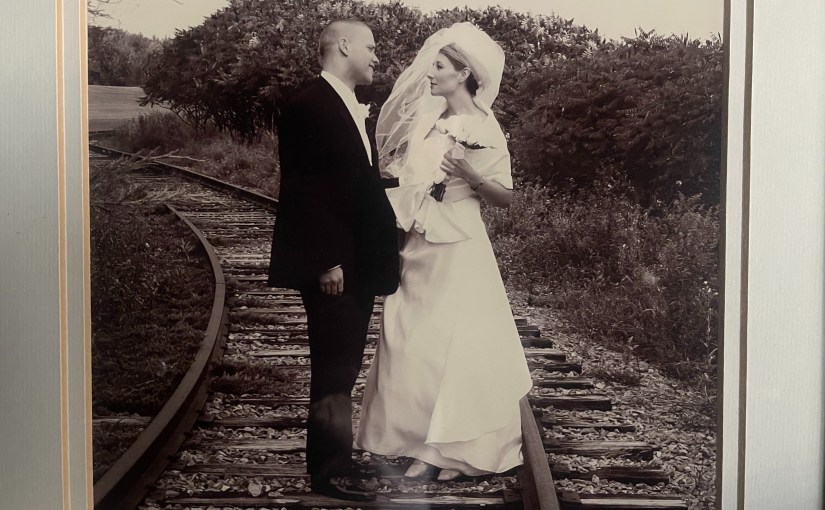
Marriage is a fascinating human experience. It’s both highly rewarding and challenging. Yet while most couples put a lot of preparation into the wedding day, few put much, if any effort into preparing for the marriage itself. Which is why half of marriages end in I don’t. And a healthy percentage of the other half of marriages aren’t as healthy as they could be.

The Program

To help prepare for our marriage, my wife Dawn and I listened to an audio program called Marathon Marriage. We learned the many lessons and philosophies of the program and did all of the exercises shared in the 4 CD set. (At least it wasn’t on 8-track cassettes.) It was a good reminder that just as you need to prepare to run a successful marathon, you need to prepare for a long and successful marriage. So we stocked up on plenty of Gatorade and snacks. And we felt like we had a good game plan.

The Mentors

Then, on our wedding day I wanted to cram in one last bit of preparation. So I scheduled breakfast with my three marriage mentors, which included my dad and my two grandfathers (who would all laugh me off the family tree for calling them my marriage mentors). At the time, my parents had been married 32 years. My two sets of grandparents had been hitched for 61 and 63 years.

After we sat down at Emma Krumbees in Wausau, Wisconsin and worked through some Northwoods pancakes and sausage, I decided it was time for the knowledge share. I asked The Paternity Council, ‘What is the key to making a marriage great?’  With 156 years of experience at the table, I was about to get the fatherlode of great advice.

Then my 86-year-old maternal grandfather, Kenny Sprau, crossed his arms, leaned back in his chair and shared,

‘Keep doing what you’re doing.’

Um… WTF Grampy?  61 years of trial and error, nine kids and a World War, and that’s all you’ve got?  I wanted to give him a mulligan and see if he could hit it past the ladies’ tee this time. But he went on. ‘You have to keep doing the things that got you to this point.’

My Grampy, Kenneth Adam Sprau. (Thanks for the hair.)

Perspective On The Advice

While at the time the 29-year-old me was totally underwhelmed by the advice, over the past 22 years I have developed a deep appreciation for what Grampy Sprau said. Because when we are dating, we are at our best. The unfortunate tendency is to drop the hard work, energy, attention, and charm we put into the relationship after the contract is signed. Without pouring that effort, care and prioritization into the relationship, the relationship isn’t as healthy and strong as it was during your courtship and engagement. Which is kind of like leaving the cap off a bottle of soda-pop, only to realize that it’s the cap that keeps the soda popping.

Over our 22 years of marriage, I have recognized plenty of times when I was not putting in the same kind of attention and prioritization into our relationship as I did when we were just kids in the heartland, like in that little ditty ’bout Jack and Diane. It gets much harder alongside the demands of raising children, building a successful career, growing a business, and the effort required to fend off the Dad bod creep. But whenever I find that my attention to my bride has slipped (or I am reminded by my bride that my attention to my bride has slipped), I use Grampy Sprau’s advice, to help make the appropriate adjustments and corrections.

Applying The Advice To Business

Eight years after launching the advertising and ideas agency, The Weaponry, I have discovered that Grampy Sprau’s advice holds true in business as well as marriage.  You need to treat your potential clients and partners well. Act as if you would like nothing more than to spend the rest of your time together. Listen. Make them laugh. Show them you are interesting, kind and thoughtful. And then after you get the contract signed, keep doing what you’ve been doing.

In business, as in marriage, listening and collaborating are valuable approaches to your growth strategy. Clients and spouses alike really like that stuff. (Crazy right?)  When you respond favorably to a client’s request, they generate something called ‘good feelings’ about you.  And these ‘good feelings’ make them want to see you more and work with you more. And the result is business growth.

The opposite is also true.  If you are the all-time best seller at The Jerk Store, no one wants to be around you. This is true of both the individual and the organization.

If you recognize complacency, apathy or combativeness between your organization and your clients or between you and your spouse, stamp that out like a flaming bag of dog poo on your front porch. The behavior may feel justified today. But you’ll regret the justice leveled tomorrow when you’re trading the offspring in the McDonald’s parking lot.

Key Takeaway

Treat your spouse the way you did when you were dating. Treat your current business like new business. Never take either of them for granted. Work to re-win them every day. Even after you put a ring on it.

Thanks for the wise advice, Grampy.

*If you know someone who could benefit from this message, please share it with them.

+For more of the best life lessons I have learned check out my book, What Does Your Fortune Cookie Say? from Ripples Media.
12 Lessons I have learned from 8 years as an entrepreneur.

When I set out on my entrepreneurial adventure 8 years ago I had a lot to learn. So I became a student of entrepreneurship in the same way that I became a student of Journalism, Psychology and Bratwurst at The University of Wisconsin. I read books, magazines, and blogs. I talked to friends who were entrepreneurs and business leaders. The non-standardized tests started in April of 2016 when I launched the advertising and ideas agency, The Weaponry. And I am still tested every day.

8 years later, I can’t imagine my career without this chapter. I have learned a lot about what it takes to launch and run a business. It turns out there is a lot more to it than printing up a batch of business cards and cool company t-shirts. (Although you should do those things too.)

I wanted to share 8 lessons I have learned along the way. Because 8 ideas from the past 8 years seemed well-balanced. But I had too many lessons to stop at The Ocho. So here are 12-ish lessons I have learned that you should know if you are thinking about starting your own business, or if you already have a business and you now need to get your fecal matter straight.

12 Lessons I have learned from 8 years as an entrepreneur.

  1. Don’t quit your day job*. This is the most important lesson. Start working on your new business as a side hustle. Use your nights and weekends to study, plan and create your business. Use the income from your day job to fund your embryonic startup. Start generating revenue from the new entity. Then, as your startup indicates that it will be able to replace your required income, you can transition out of your full-time employment. But allowing your startup to grow as a side hustle will take a lot of pressure and stress off the early stages of entrepreneurship. From my first paid project to leaving my day job was 5 months. But a year or two of side hustling is not crazy. It is time well spent. *Note: This lesson is only for people who currently have day jobs. If you don’t have a day job the next 11 lessons are for you.

2. Good people are gold, Pony Boy. Business is the ultimate team sport. A great business is simply a great team of people running great plays. Find the right people. Treat them well. They will make the company and the culture amazing. As an entrepreneur, you get to pick your entire team. It’s one of the best parts of entrepreneurship. That and picking the dress code.

3. Good processes make it happen. Your systems and processes enable success, reduce friction, and organize the organization. Determine your organization’s way of doing everything. Write it down. Share it broadly. It ensures that everyone in your organization knows that you always pass the Dutchie on the left-hand side. Don’t worry if the process isn’t perfect. You can always improve it when you discover a better way. Read The E-Myth by Michael Gerber and Traction by Gino Wickman to help you dial this in.

4. Great creative thinking is key. As an advertising and ideas agency, creativity is what our clients come to us for. This has to be great or nothing else matters, like Metallica said. However, all entrepreneurial organizations should focus on creative thinking. It is how you get things done when you don’t have all the resources you wish you had. And it is how you beat competitors who always do things the same old way. Because creativity creates competitive advantages.

5. Great customer service is a must. This is why your clients stay. Always think about your service, and how you can make it better. We want to treat our clients so well that they never want to leave. And we want to make sure they hire us again when they leave their current job for a new opportunity. This has happened more times than I can count. And I am relatively good at counting.

6. Business development is critical. You have to put focused effort into expanding your business. There is natural attrition that happens in business, even if your product and your service are great. The economy plays games you can’t control. So do a dozen other influences. Businesses that forget to find new customers eventually die. Sometimes they die slowly. Sometimes they die all at once. But the net result is the same.

7. Trust is everything. At the beginning of your entrepreneurial adventure, people will take a chance on buying from your new entity solely because of you. The company will have no real track record or history of doing what it says it will do. But you do. Be a trustworthy human. That personal trust will be the bridge that gets early customers to try your offering before you have real proof that your business is as good as advertised. (Also remember to advertise that you are good.)

8. Build in a fair profit. It’s not enough to have paying customers. You have to understand the cost of your goods or services. Then you have to build in a fair profit. Which means if your offering costs you $100 to deliver, you must charge $5, $10, $20, or $100 on top of that to make sure the business makes a fair profit. That profit is what keeps the business sustainable. Some customers and most procurement departments will try to beat the profit out of your business. Don’t let them. Know what you need to make, know your value, and stick to it. Like a cocklebur on corduroy.

9. Share the success with your team. Business success is team success. You have to recognize and celebrate the contributions of everyone involved. When you do, a good team is eager to create even more success. That stuff is addicting. Like Dot’s Pretzels.

10. Relationships are extremely important. The personal relationships you create help create your success. Those include your relationships with your team, clients, partners, vendors, bankers, brokers, accountants, lawyers and the media. But all your relationships matter to business. Because you never know where your next referral will come from. And you never know who you may need as a character witness. Or who may be carrying an extra kidney that you may need one day. And don’t neglect your relationships with your family to make the business work. My relationship with my wife Dawn has been the most valuable relationship on my entrepreneurial adventure. And I get to spend more time with my kids now as an entrepreneur than I did as an employee. Which is perhaps the biggest win of all.

11. You have to keep experimenting. Business success is an interesting combination of running tried and true plays and trying new things that create new advantages. It’s kinda like the way you have to keep things spicy in your romantic relationship. Businesses that keep experimenting with new technology, new offerings, and new models survive changes. So stay on your toes. (If you have toes.) Watch the horizon for change, both in your industry and the broader economy. Expect that the future will be different than the past and you will be prepared for the strange changes. Like David Bowie said.

12. Create a newsletter. This is a great way to stay in contact with your community, which includes team members, customers, partners, supporters, potential customers, potential employees, the media, fans, and your parents. Add value through each issue. Share your news and successes. Social media channels are beyond your control, and it can be challenging to get your message in front of your audience there. But a newsletter is your own media outlet. It is like an express train to your audience’s inbox. Choo Choo! We use Mailchimp for our newsletter. There are many good options you can find using the Googler. You can sign up for The Weaponry newsletter here to see how we do it.

Bonus

13. Learn to spell entrepreneur. When you become one you end up writing the word a lot. At least you do if you have a blog sharing your experience as an entrepreneur. To spell entrepreneur, remember that all of the vowel holes start with ‘e’ and you come last. Which is how I remember that there is a ‘u’ after the last ‘e.’

Key Takeaway

Starting your own business is an exciting and rewarding adventure. It enables you to design your own life. It combines the thrill of competitive sports with the satisfaction of having a positive impact on your team members and your community. To start your journey, do some prep work. But then get going. You will learn what you need to know along the way. Remember to always bet on yourself. It is the safest bet you will ever make.

*If you know someone who could benefit from this message, please share it with them.

+For more of the best life lessons I have learned check out my book, What Does Your Fortune Cookie Say? from Ripples Media.

The Weaponry turns 8 years old!

When I first started my career in advertising I dreamed of starting my own agency one day. And one day I did. That one day was eight years ago. Today, I can say that there is almost nothing better than to say that your one day happened in the past. That your one day has an actual date. That your one day is not a hope, dream, or wish. It is part of your permanent record. Like that suspension from high school.

How It Happened

I didn’t just dream about starting my own business. I envisioned it. I planned it. I took action. And I made it happen. I did what I told myself I would do. And because I did, I started believing that I could take on other big challenges. Like starting a blog, writing a book, or swallowing a spoonful of cinnamon without crying for my mommy.

You may have noticed there were a lot of ‘I’s in the last paragraph, eleven to big exact. That is because it takes a lot of personal action, initiative and determination to start a business. But once you’ve started, it takes a lot of weness to keep it going. I am extremely thankful to our talented team of Weapons for building The Weaponry into the organization it is today.

The Weaponry was born on April of 2016. (I know that because I checked its born-on date, like a can of Budweiser from 1996.) In the beginning, it was a huge accomplishment to get to our first birthday. In fact, it was a huge accomplishment to make it to each of our first 5 birthdays, because such a high percentage of businesses don’t last 5 years. Kinda like a Kim Kardashian marriage.

But the thing that I love most about The Weaponry turning 8 years old is that there is no real significance to it. 8 years is not a memorable milestone. The business is simply taking care of business. Like Bachman-Turner Overdrive. If we put out a press release saying The Weaponry Celebrates 8 Years of Business no media would reshare our news. Except maybe The Adam Albrecht Blog. Because I know a guy there.

No Surprise Party

The other thing I love about turning 8 years old is that it is not a surprise. No one worried when we hit 7 years that we wouldn’t be here for the 8th. We didn’t eke out another year by the skin of our teeth. (Although I have never understood that saying. And I’ve never met a dental dermatologist.) Quite to the contrary, The Weaponry has had our two best years in 2022 and 2023, growing steadily each year.

Key Takeaway

When you start a new business there is a lot of instability. Which is part of the fun. And most of the challenge. But there is a great reward in reaching stable ground. It’s important to appreciate the steadying effect of hard work, smart systems, tested processes, a strong team, and accumulated experience. They make your business more predictable. Undoubtedly, there will always be more challenges ahead. And you will be ready for them when they come.

*If you know someone who could benefit from this message, please share it with them.

+For more of the best life lessons I have learned check out my book, What Does Your Fortune Cookie Say? from Ripples Media.
4 Keys to entrepreneurial success I wish I had known before I got started.

I am asked about my entrepreneurial journey a lot. It seems that far more people are interested in starting their own business than ever sail their own entrepreneur ship. If you are considering starting your own business, either as a side hustle or as your main hustle, here are 4 things that I have done that I highly encourage you to do too.

1. I Took Action. 

Everyone has a dream. And I dreamed of starting my own advertising agency for a long time. But to actually start your own business you have to move beyond dreaming to doing. Starting in the fall of 2015 I took an endless series of small actions that led me to today. My business, The Weaponry, will turn 8 years old next month.  So if you want to make sure you don’t die with your dream still inside you, take action to make it real. (Also look both ways before you cross the street.)

Suggested readings to spur your action:

2. I Saved. (Not Like Jesus)

As a professional creative thinker, I take lots of risks with idea exploration. However, I am fiscally conservative. I have been cautious with our expenditures, our office space and our staffing size. I have been conservative about leaving cash in the business, versus taking it home as part of my return. As a result, The Weaponry has strong reserves to outlast downturns. This was a key reason I didn’t panic at the disco in 2020 during the Covid Cray Cray Fest.

3. I Planted Seeds.

Business development is critical to creating a pipeline of opportunities. Over the years I have stayed in touch with old friends. I’ve made one hundred billion new friends. I have had phone conversations, chocolate milk meetings and lunches. I have volunteered my time. I have guest lectured and given talks. I write a blog. I wrote a book called What Does Your Fortune Cookie Say? I co-wrote a book titled The Culture Turnaround with Jeff Hilimire. I have given interviews and served on committees and boards.

All of those things are like planting seeds. You never know when they will sprout or what they will turn into. So keep planting seeds and watch what happens, with Andy Cohen.

4. I Delivered

The best source of new business is a happy client. And you develop happy clients by delivering for them. (Especially if you are an obstetrician, or a milkman.) The Weaponry has grown by keeping our clients happy and expanding our work with them. We are also expanding by having happy clients leave for great new jobs and bringing us with them to their new companies. I have a really great team. And I appreciate all that they do for our clients. It is why we are still here, and still growing strong.

Key Takeaway:

To develop a successful business you have to take action. Without action, you are just a dreamer. You have to save money so that you are prepared to weather the storms that will surely come. You must keep planting seeds by creating and nurturing relationships and providing value to others. Then you must deliver the goods. Nothing grows a business like happy customers. None of it is easy. And none of it is that hard. It is simply the price you have to pay to get what you want in life.

*If you know someone who could benefit from this message, please share it with them.

+For more of the best life lessons I have learned check out my book, What Does Your Fortune Cookie Say? from Ripples Media.

What kind of reputation are you building?

Earlier this month I was in Orlando for a speaking engagement. I was invited to talk to an organization about branding and customer experience. The two are inextricably linked. Like flotsam and jetsam, dilly and dally, or Tony Orlando and Dawn.

Because we were in Orlando, and nearly everyone flew in for the meeting, I used airlines to illustrate an important point about customer experience. I said that every employee who works for an airline has the ability to impact the customer experience. And like blood types, the impact could be either positive or negative.

Then I asked the audience if they could name an airline that offers a bad customer experience. Immediately, a chorus of brand names was shouted out from across the large hotel conference room. Clearly, there were a lot of people in the room who had negative customer experiences while flying.

However, this wasn’t a condemnation of the airline industry. Because everyone in the room who spoke up shouted the same name. This specific airline was called out as the airline with the bad customer experience. Like The Ohio State University.

In the minds of these customers, this airline brand was synonymous with bad customer experience. And by the number of witnesses who testified against them, the airline in question had clearly earned that brand reputation over and over and over again.

The important reminder.

Every interaction you have contributes to the brand reputation of the organization you represent. This is true whether you are the CEO, a front-line worker, the newest employee, or a volunteer. You are creating the brand and the customer experience through the experience you offer to those with whom you interact.

You also have a personal brand. Your brand is one of your greatest assets or your greatest liabilities. And while Joan Jett doesn’t give a damn ’bout her reputation, you should. And you should remember that it is created by each interaction you have with other people.

Key Takeaway

You earn your brand reputation every day. Consider the experience you are offering those you interact with. A positive experience enhances both your personal brand and the brand of the company or organization you represent. It is true when you are reliable, helpful, funny and kind. And it is true when you are unreliable, unresponsive, and rude. So choose to be great to others. You’ll earn the best reputation you could ever want.

*If you know someone who could benefit from this message, please share it with them.

+For more of the best life lessons I have learned check out my book, What Does Your Fortune Cookie Say? from Ripples Media.

A simple rule of thumb to get the most out of your people.

When I was a kid I loved the movie Smokey and The Bandit. I was into trucks and Trans Ams. So a movie about those two vehicles racing across America, starring Burt Reynolds and his mustache, was an obvious Oscar winner to me.

I also loved the theme song from the movie, East Bound and Down by Jerry Reed. My favorite line from the song is the classic, ‘We’ve got a long way to go, and a short time to get there.’

Those lyrics still play in my head today. Because as a business owner, and both a football and track and field coach, I have big goals for my teams to accomplish. And I have a short time to make them happen.

Getting The Most Out Of Your People

To get the most out of your people there is a simple exercise to help you budget the time and energy you spend with each of the members of your team.

Grab a sheet of paper. (Yes, they still make paper.) On the left side write down a list of those you manage or coach in order from most productive to least productive. Your productivity rock stars will be at the top. Your ‘Why-are-they-still-here’ person is at the bottom.

Then, to the right of that, create a list, in order, of how much time you spend managing or coaching each of the people you lead.

Now, you are going to draw a good old-fashioned straight line connecting the names on the left list to the same name on the right list.

If you are drawing straight lines, and the lines don’t cross, you are budgeting your time appropriately. If your lines Christopher Cross, you spend too little time with your most talented people, and too much time with your least talented people. It is time to re-budget.

Key Takeaway

Maximize the return on your time invested in your team. This means the most productive people should get the most time and attention. The least productive people should get the least of your time. This rewards good behavior from your best people. And it ensures that your time and energy are invested where they will get the greatest return. Spending more time with your less productive team members sends the wrong signal to your great talent. And it is a waste of time. With rare exceptions, the least productive team members will always generate the least results.

*If you know someone who could benefit from this message, please share it with them.

+For more of the best life lessons I have learned check out my book, What Does Your Fortune Cookie Say? from Ripples Media.

All successful results are a product of these 2 simple factors.

I have competed all my life. As an athlete. As a businessman. And as a coach. I have seen how some teams and businesses always generate great results, while others never do. (Coughing: Cleveland Browns.)

I have learned what it takes to achieve great results. And like Bennifer, Hall & Oates, and Gin n’ Juice, successful results are a product of two things.

The System and The Subject.

The System is the way of doing things.

It is the process. The expectations. The values. The technique. It is the school of thought. The philosophies. It is the declared purpose and priorities. It is the tolerances permitted. It is the culture. It is the rituals and norms. And the people with other names besides Norm.

The Subject is the person being coached, led or taught.

Subjects vary in skills, talent, commitment, attitude, experience, determination, resolve and grit. They vary in natural ability and capacity. They vary in tolerance for pain and suffering. They vary in height, weight and speed. And subjects vary in loyalty, royalty, and the price they are willing to pay.

What This Means.

The system will determine how much you can get out of the subject.

The subject will determine how much you can get out of the system.

A better system will generate better results for a subject.

A better subject will generate better results within a system.

Key Takeaway

For the team to create the greatest results, continuously improve your system, and attract better subjects. For the individual to achieve the greatest results, find the greatest system.

*If you know someone who could benefit from this message, please share it with them.

+For more of the best life lessons I have learned check out my book, What Does Your Fortune Cookie Say? from Ripples Media.
How to become a great entrepreneur without going to business school.

I was listening to a podcast over the weekend while mowing the lawn. I always listen to something educational while doing yard work. I imagine that I am a professional landscaper, working for the man, and I plan to bust out of my lawn jockey job by learning as I mow.

In the podcast, the interviewee told the host that he went to business school to get his MBA because he wanted to learn how to start and run a business. When I heard this I laughed out loud. In fact, I laughed so loud that I heard myself over the roar of the lawn mower, despite the fact that I was also wearing ear protection.

The idea that you need an MBA to start a business is hilarious. I launched The Weaponry, the advertising and ideas agency I lead, 7 years ago. I studied Psychology and Journalism in college. I took only one business class at the University of Wisconsin. But I did stay at a Holiday Inn Express.

The Knowledge You Need Is Everywhere

There has never been a better time to start a business. There are countless books on the topic. There are only slightly more countable podcasts. (Although it is odd to compare the relative countability of countless things, no?)

You can follow the blogs and social feeds of entrepreneurs to learn from them. And many you can reach out to directly through social media by slipping into their DMs.

Entrepreneurship is not a secret club you get into by attending to an Ivy League business school. You can learn everything you need to know through self-directed education. And through a little trial and error.

Adam Albrecht’s Entrepreneuerhsip 101

If you really want to become an entrepreneur here is what you need to know:

To start a successful business you need to:

  1. Offer a product, service or experience people want or need.
  2. Learn how how to sell the thing you offer.
  3. Spend less than you make.

Your assigned reading starts with the great how-to book on entrepreneurship, The E-Myth by Michael Gerber.

To learn from other great entrepreneurs check out the How I Built This podcast wherever your favorite pods are cast.

Key Takeaway

You can be an entrepreneur without an MBA, without going to business school, and without going to college. You just need a strong desire to start your own business. The keys to successful entrepreneurship and business ownership are available at your local library, your local bookstore or your local Amazon website. Inspiring stories and examples are available on podcasts, in magazines, and in books. There are no barriers to entrepreneurial education. Which means there are also no excuses. If you think entrepreneurship is the next step in your career then get going. There is nothing stopping you but you.

*If you know someone who could benefit from this message, please share it with them.

+For more of the best life lessons I have learned check out my book, What Does Your Fortune Cookie Say? from Ripples Media.

If you are struggling to find your next great job, create it yourself.

In 2014 I moved to Atlanta. The amazing advertising agency I worked for had been acquired by a public holding company a year earlier and the new company wanted me at the Atlanta headquarters. I had been banana-splitting my time between Atlanta and Columbus for 3 years at that point. And I was happy to finally move to the ATL full-time. But I could tell the new holding company was going to make things very different. And I expected a plot twist. And I wanted to write the script for that twist myself.

Shortly after moving to Atlanta, I began looking beyond the horizon to plan for the next step in my career. I was looking for the next great ad agency to join within a circle of acceptability near my nearly retired parents and my mother-in-law (who was not actually a lawyer). After living in 3 states in 8 years I was making plans to set the circus down someplace where my 3 children could enjoy middle school and high school in one town.

I had conversations and meals with many different agencies. But like those guys combing the dessert in Spaceballs, I didn’t find what I was looking for. Not to say there were not a lot of great people and great agencies. But I could afford to be choosey. I had a new job. And a jar of Jif.

The conclusion I came to was that the business I was looking for in the place I wanted to live, with the culture I wanted, with the compensation I expected, did not exist. So I decided that I would create my own business. Within a year I had a full-fledged passion project on my hands. I spent my nights planning and building what would become The Weaponry. And it checked all my boxes. Because I designed it specifically so that it would.

Creating your own business means that you get to create your own dream scenario. Like Wayne and Garth. You get to decide what you do every day. You get to decide where you live, what the culture is like, and who you work with. Better yet, you never have to apply for a job, wait for a gatekeeper to reply to you, or wonder why some other employer didn’t like you more. Which is pretty fricken great.

Key Takeaway

If you are not finding the place you want to work, consider creating that place yourself. Don’t wait for someone who doesn’t know you or recognize your full potential to get back to you. Don’t let other people close doors on you. Take control of your future. And your income. And your happiness. It’s easier than you think. I started the advertising and ideas agency The Weaponry 7 years ago. Along with asking my wife Dawn to marry me, it was one of the 2 best decisions of my life. If you have questions about how I did it, email me at adam@theweaponry.com. Or reach out to me on the socials. I’m typically @adamalbrecht. If you know someone who really should start their own business please share this with them too.

+For more of the best life lessons I have learned check out my book, What Does Your Fortune Cookie Say? from Ripples Media.