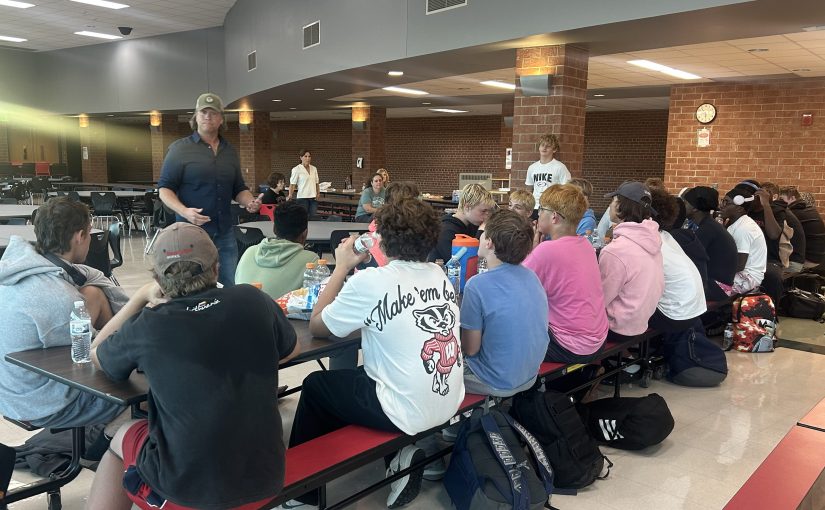
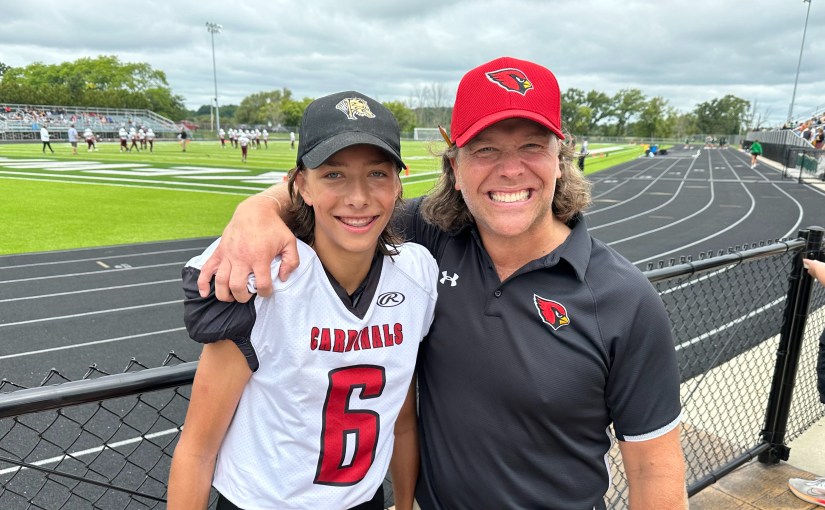
Last week I had a fun and unique opportunity. Some of the coaches and parents of my son Magnus’s freshman football team asked me if I would come speak to the team at their Wednesday night team dinner before their final game of the season on Thursday. I jumped at the chance, nearly pulling a hamstring in the process.
The team had a frustrating season and hadn’t lived up to their own expectations. Despite good coaching and plenty of talent, they were going into their 8th game with a 2-4-1 record. They were just 5 points away from being 4-3. Which is like the difference between being cute and having a nice personality.
So on Wednesday night, I talked to them about two things that could have a major impact on their final game.
First, I talked about the energy and enthusiasm they brought to the field. The psychological force you bring to the game offers a major advantage. I noticed that they weren’t bringing their full allotment of energetic horsepower to their games, and that hurt their play. (It was like their 10-gallon hat was feeling 10-gallons flat, and they hankered for a hunk of cheese.)
Then I talked about the importance of playing as a team. Even when you make mistakes, and everyone makes mistakes, you have to support each other and move forward. You have to include everyone in the team huddle, treat each other like a band of brothers, because you are stronger when you play together. Otherwise, you’ll all end up living in a van down by the river.
I also shared that when I played football and the other team started pointing fingers and fighting with each other, we knew we had won. Because when teammates fight each other, they beat themselves.
To add color, I told the team that my freshman football teammates were still many of my closest friends. We stood up in each other’s weddings. We helped each other start businesses. And even though we are scattered from New England to California, we still have a group chat, do team Zoom calls, and get together back home every few years. And we have more inside jokes than most people have outside jokes.
This group of 14 and 15-year-old boys listened intently as I encouraged them to bring their best energy and enthusiasm to the field on Thursday. They paid attention as I urged them to end the season on a high note, with the right trajectory going into the offseason, their next sports, and the next football season. I encouraged them to play like a team, feed off each other’s energy, and good things would happen.
So what happened?
From the moment the boys took the field, I could see the difference in their attitude, energy and team dynamics. They were fired up, they were connecting with each other, and ready to bring the heat. (And maybe da noize, and da funk.)
And they did.
On the opening drive, the Homestead Highlanders’ freshman team was hitting on all 11 cylinders. The boys marched down the field with attitude and scored a touchdown and a 2-point conversion to go up 8-0.
On their following defensive series, they bent, but they didn’t break. They played united as a team. Then, cornerback Markey Walker intercepted the opponent’s pass at the 3-yard line. With a key block from my son Magnus and an escort of teammates, Markey returned the interception 97 yards for a touchdown. Boom!
That play fanned the flames of their team spirit. (Not Teen Spirit.) And they just kept rolling. The score at halftime was 20-0.
They came out sharp and aggressive in the second half. Like aged Wisconsin cheddar. In fact, when the opponent fumbled the opening kickoff, our boys jumped on it. A minute later, we punched the ball in for another touchdown.
At that point, the opponent began fighting with themselves and blaming each other. And our boys knew they had won.
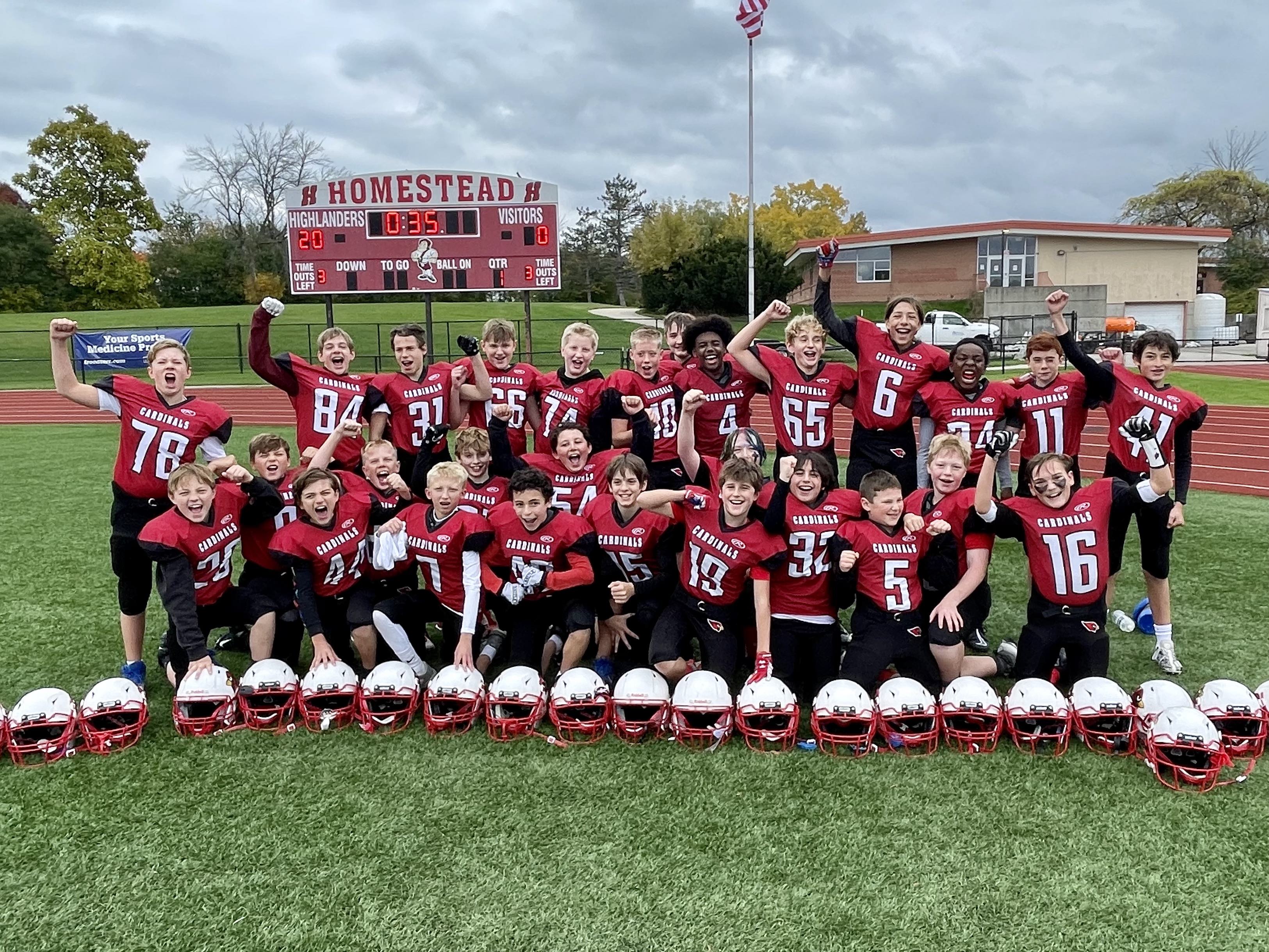
Our team scored again. Everyone got significant playing time. The sideline was spirited and the play on the field was inspired. The camaraderie was palpable. And the boys were a force to be reckoned with. The coaches were pumped up. The parents were proud. And when the final whistle blew, the scoreboard accurately summarized the story of the game with the final score of 33-8.
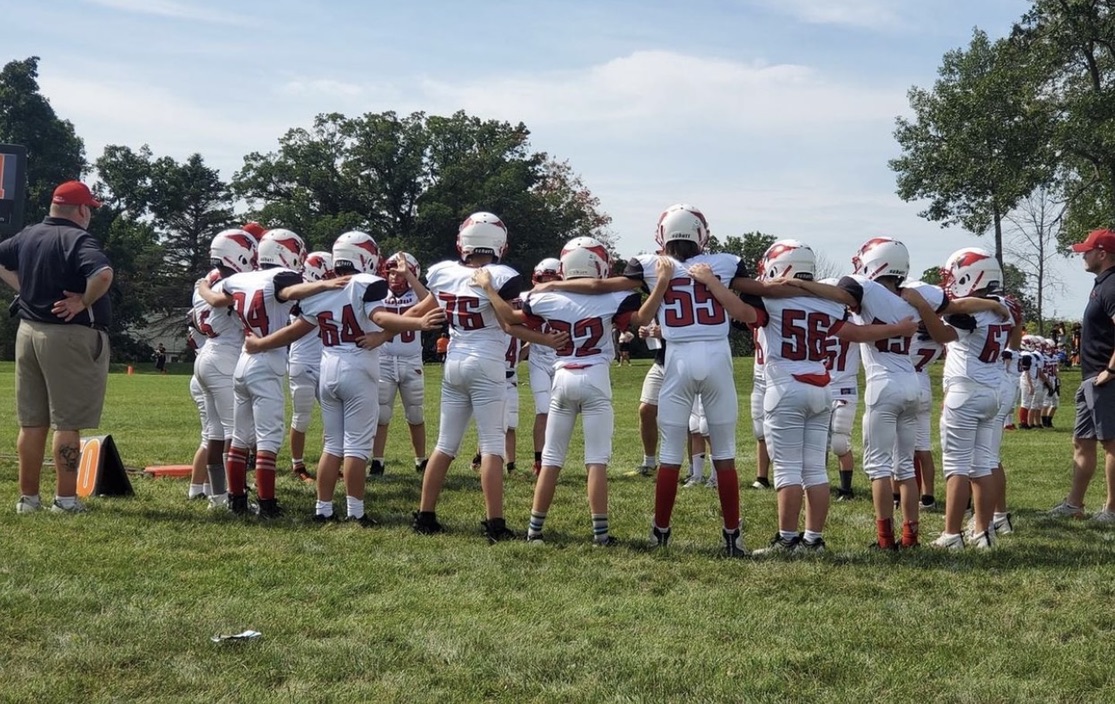
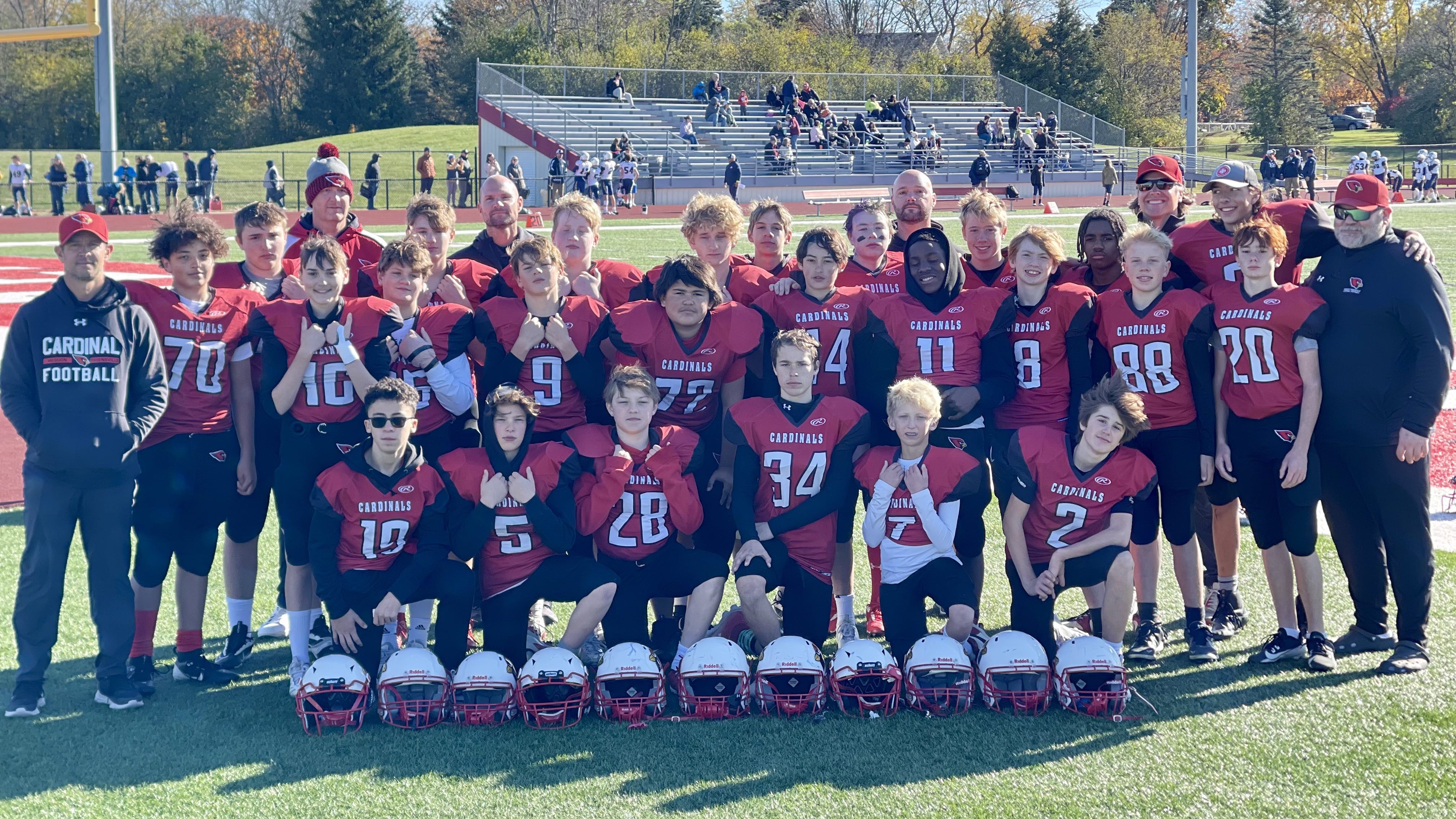
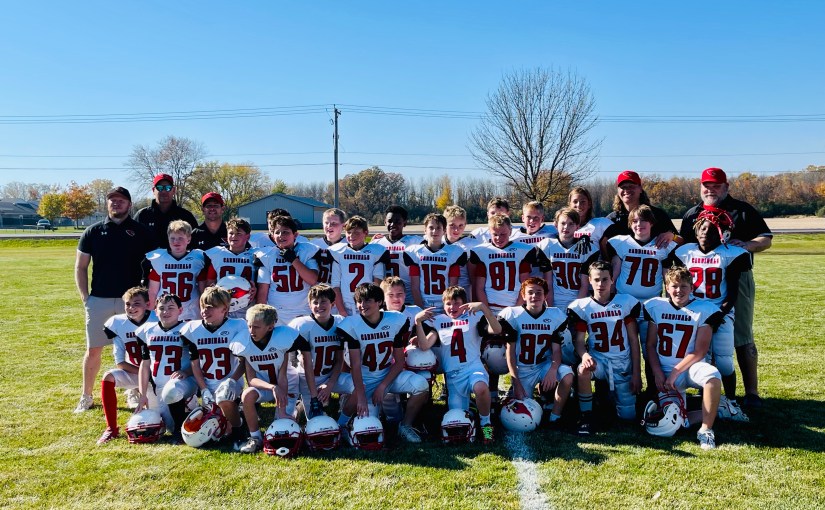
After shaking hands with the opponent, a fired-up group of young men rushed to gather in the endzone, as a team, one last time. The team energy was palpable. The pride and togetherness hung like a halo over the huddled players and their coaches. It was the perfect ending to an imperfect season. A great step in the right direction. And proof of what happens when you play together, with energy.
I am thankful for the opportunity to talk to the boys the night before their last game. I was extremely proud of the way they took full ownership of their mental approach to the game. And I am delighted to see this group finish on such a high note. I hope that over the course of their high school careers they create deep and lasting relationships with each other that last a lifetime. Like the relationships I have with my high school football teammates. And I hope that they learn the most important lesson of all. And that is that the same things that make you successful in sports, make you successful in life. Which is why youth sports are so important.
*If you know someone who could benefit from this message, please share it with them.
I have spent a lot of time coaching and participating in sports. Both team sports and individual sports. My teams have won and lost. The individual athletes I have coached have both dominated and been dominated. Along the way, I have carefully analyzed what creates wins and losses. And I have discovered that there are 2 key factors that determine the outcomes of all sporting events. And despite what Nike and Mars Blackmon would like you to believe, it is not da shoes.
The key 2 factors that determine the outcomes of all sporting events are effort and errors.
Effort
In sporting competitions, the effort exerted by a team or individual competitor is stacked directly against the effort exerted by the other team or individual competitor.
The more effort you exert, the more likely you are to win. This is true in contact sports, races of all types, gymnastics, putting the shot, dodgeball, and Red Rover. (Where you always ask your opponent to send that low-effort kid over.)
However, effort is not the only factor at play. (See what I did there?)
Errors
The other key element that impacts every sporting event outcome is errors.
There is an ideal way to perform every move in sports, from the discus throw to the jump shot to the form tackle to the Triple Lindy. Any deviation from that technique, form, move or execution is an error. The more errors you commit, the less likely you are to win. Like Bruce Hornsby said, that’s just the way it is,
Sometimes, errors result from a lack of focus and are self-created. Other times, your errors are forced by your opponent. In fact, it is your job as a competitor to force errors in your competitors. You do this either through physical effort or through mental or psychological stress applied through pressure, confusion, conditions, or crowd noise. (Although crowd noise is illegal in tennis and golf.)
However, you and your opponent aren’t the only ones committing errors. There are also errors made by officials, judges, referees, umpires, scoreboard operators, timekeepers, and eager Cubs fans in left field excited to catch a foul ball. Their errors have the potential to completely change the outcome of a competition. Those are simply the facts of life, like Tootie, Blair, Jo and Mrs. G.
As a competitor, there are two things you can do to impact the outcome of a sporting event.
Maximize your own effort.
Minimize your own errors.
The rest is beyond your control.
Beyond Sports
The impact of effort and errors doesn’t just apply to sports. The same key factors influence such varied fields as business, relationships, and academic success. They are the key ingredients in gardening, investing, music performance, and even picking up hotties at a nightclub. So pay close attention to both your successes and failures. You’ll find these two critical variables play a major role in each.
Key Takeaway
Success in sports is simply a result of maximizing effort and minimizing errors. It is why you train and improve your strength and stamina. It is why you practice and drill over and over and over again. But these same influences on sports also determine the outcomes in most areas of life. From marriage to sales to self-confidence. Which is why sports are so valuable. They teach you how to be successful in all areas of life. And that’s the great win for us all.
*If you know someone who could benefit from this message, please share it with them.
I never wanted to be a coach. Some people are innately drawn to it. I am not. I thought it was a cool role for other people. But I just wasn’t that into whistles and sweatpants. When I graduated from college, I fully expected to never be involved in sports again, other than as a fan. Even after I had 3 kids, I never expected to coach them at any level. I didn’t feel like I knew anything well enough to coach. Except maybe being a class clown. But I felt I could teach that through more of a mentoring relationship.
So it is very strange to realize that this fall I wrapped up my 7th season coaching my son Magnus’ football team. So, how did this happen? To find out we’ve got to go back in time, like Marty McFly.
In The Big Inning…
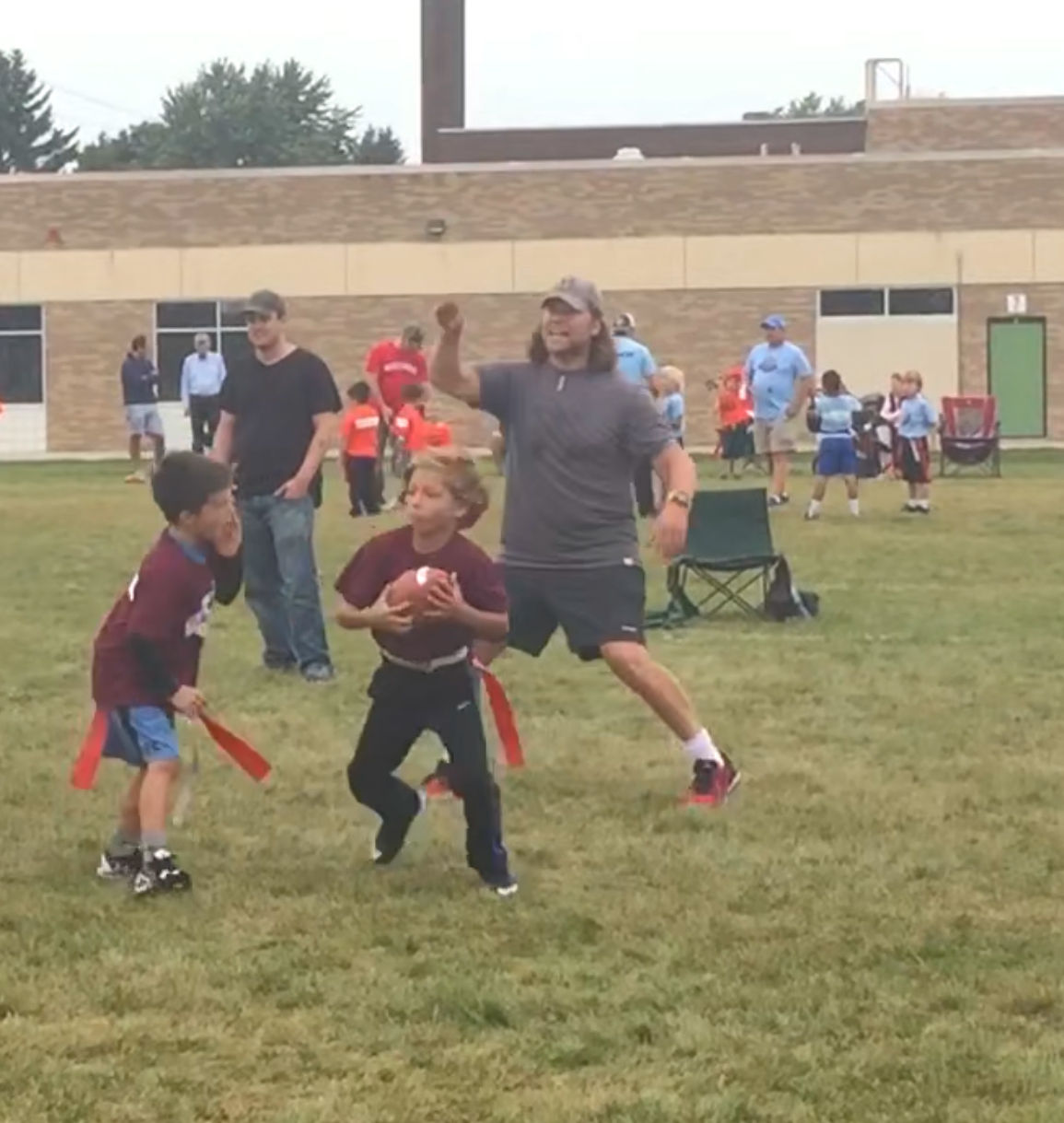
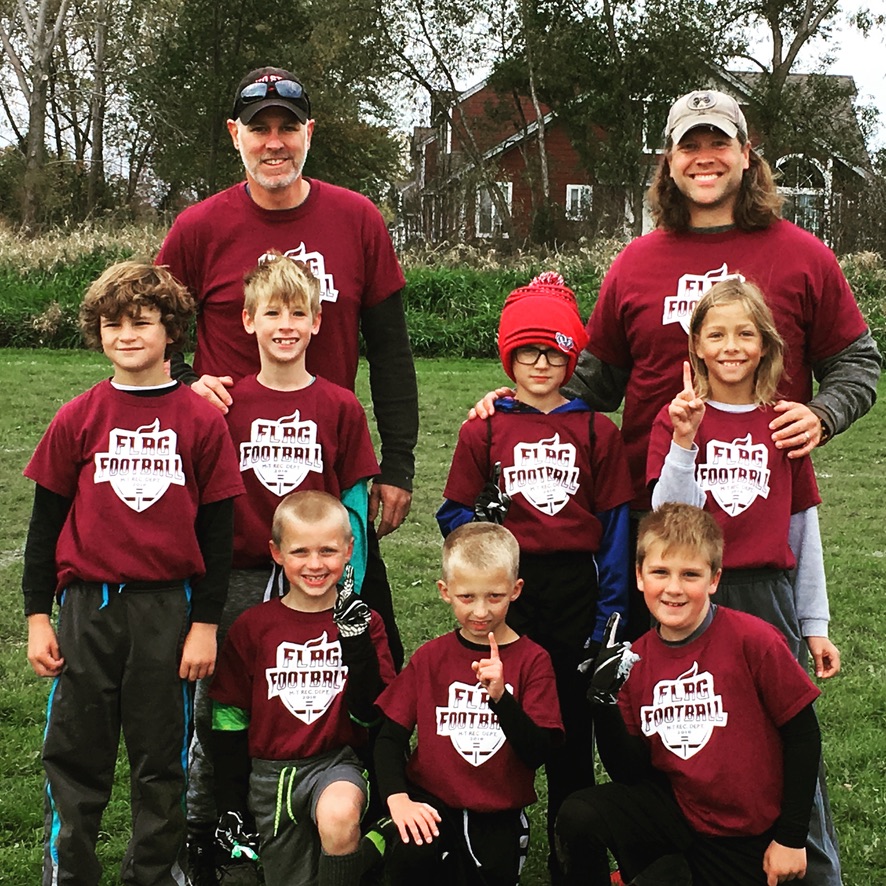
Like most things, my coaching career started very small. When Magnus was in first grade, we signed him up for flag football. At that level, the teams practiced for one hour and then played a game for one hour on Saturdays in the fall. At the first practice-game the two guys coaching Magnus’ team asked me if I could help out the following week because one of them was traveling. I was happy to help. And I felt like a helper more than a coach. Plus the kids were in Kindergarten and first grade. So they wouldn’t be fact-checking my coaching.
Magnus carrying the ball in 1st grade, when I could point where I wanted the players to go.
That Saturday’s practice-game went well. I had fun. Magnus enjoyed having me involved. None of the kindergartners asked to be traded or held out for more NIL money. So I became the third coach on the staff, helping whenever I could the rest of that cute little 6-week season.
Stepping Up A Notch
When Magnus entered 2nd grade, the program was looking for more parents to coach. My wife Dawn encouraged me to volunteer. So I got paired with another father. And we had a good time. Again, this was just 2nd and 3rd graders with one practice-game combo pack each week on Saturday mornings in the fall. And we were literally on the field placing each player in position and whispering in their ear what we wanted them to do. It was kinda like playing chess with tiny humans. Even better, the play didn’t start until the coaches said they were ready. The hardest part was organizing which parents were bringing the snacks.
Magnus and Me in our second season together. That’s a happy father/son combo pack.
Gaming The System
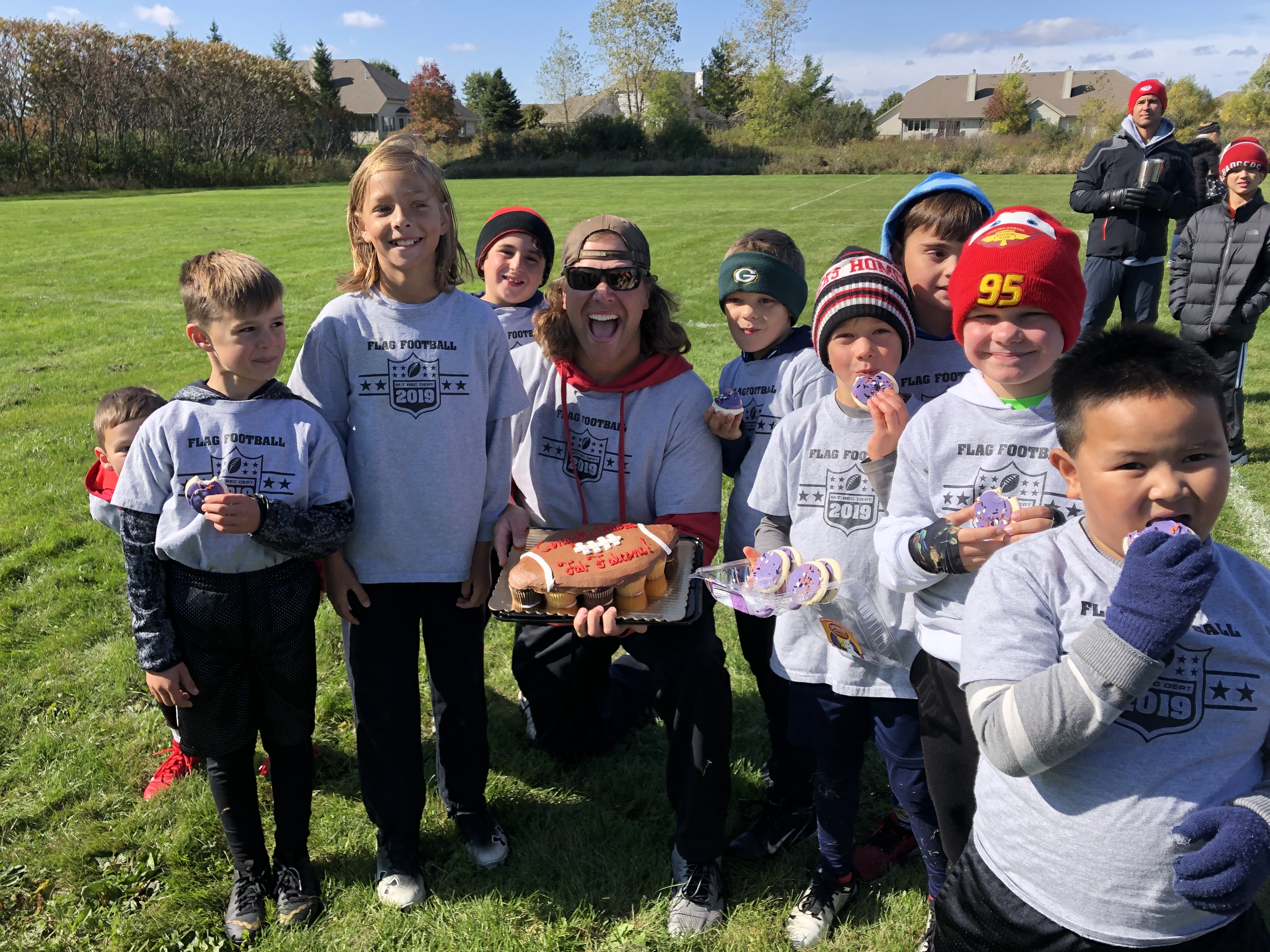
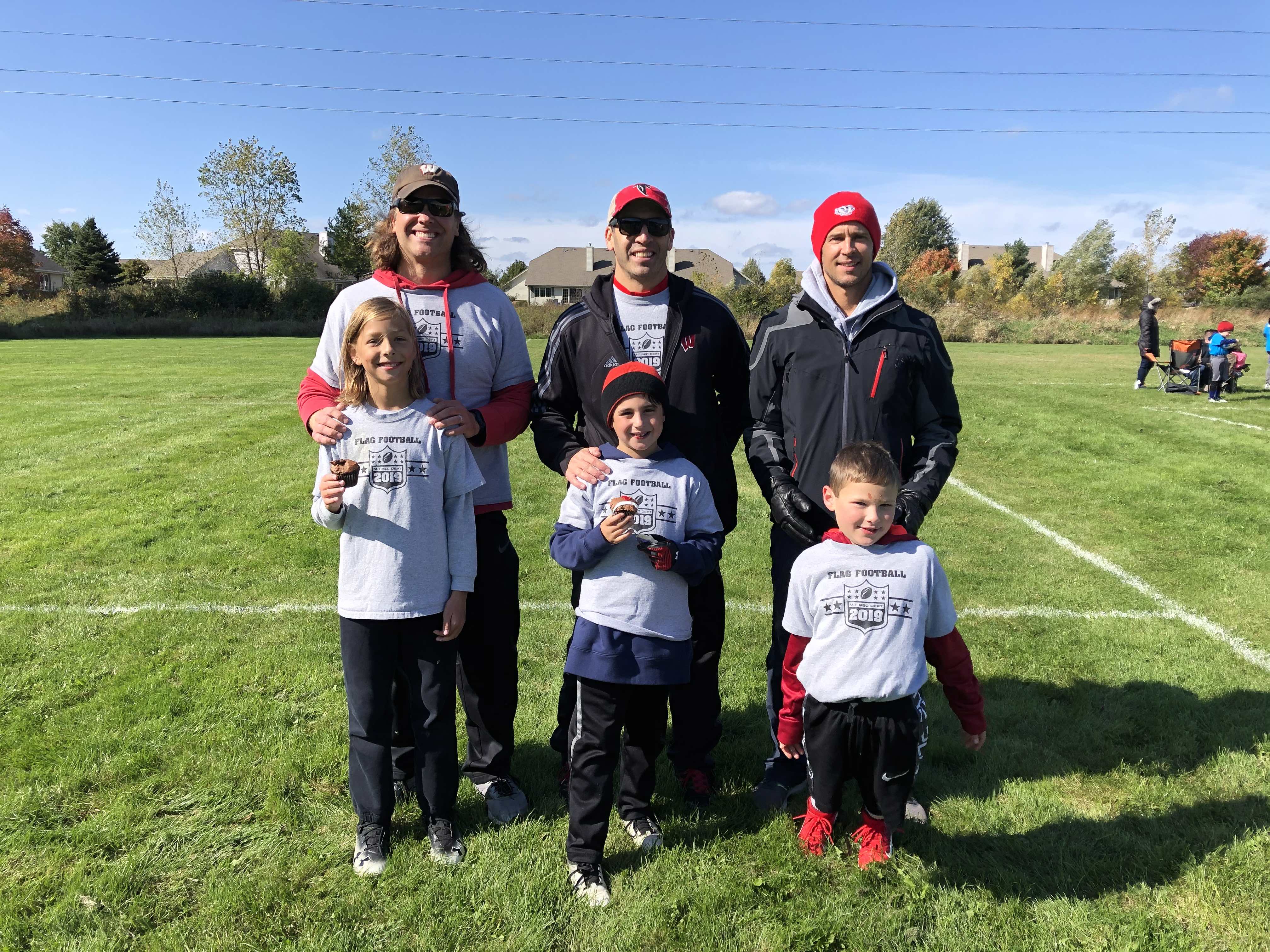
By 3rd grade, I realized that you could choose to pair up with another coach to lead a team. And when you did that, it allowed you to stack your team with 2 good players. So my great friend Dr. Mike Brin and I teamed up to coach. DMB played football for the University of Wisconsin Badgers, and we had been friends since we were teenage college athletes in Madison. Mike’s son Josh ‘Aquaman’ Brin was a talented and enthusiastic athlete. Josh and Magnus gave us a strong nucleus to build a team around. Kinda like D-Wade and Chris Bosh. We were lucky enough to land a few other really talented second and third graders, and we had a fun and successful season, even before the snacks.
Season 3. We were really upping our snack game by then.Me and Magnus, Mike and Josh Brin, Josh and Hudson Hunt. All 3 of the guys in the back row were UW Badger athletes, which meant we knew how to recruit. (You do it with cupcakes.)
The Curve Ball
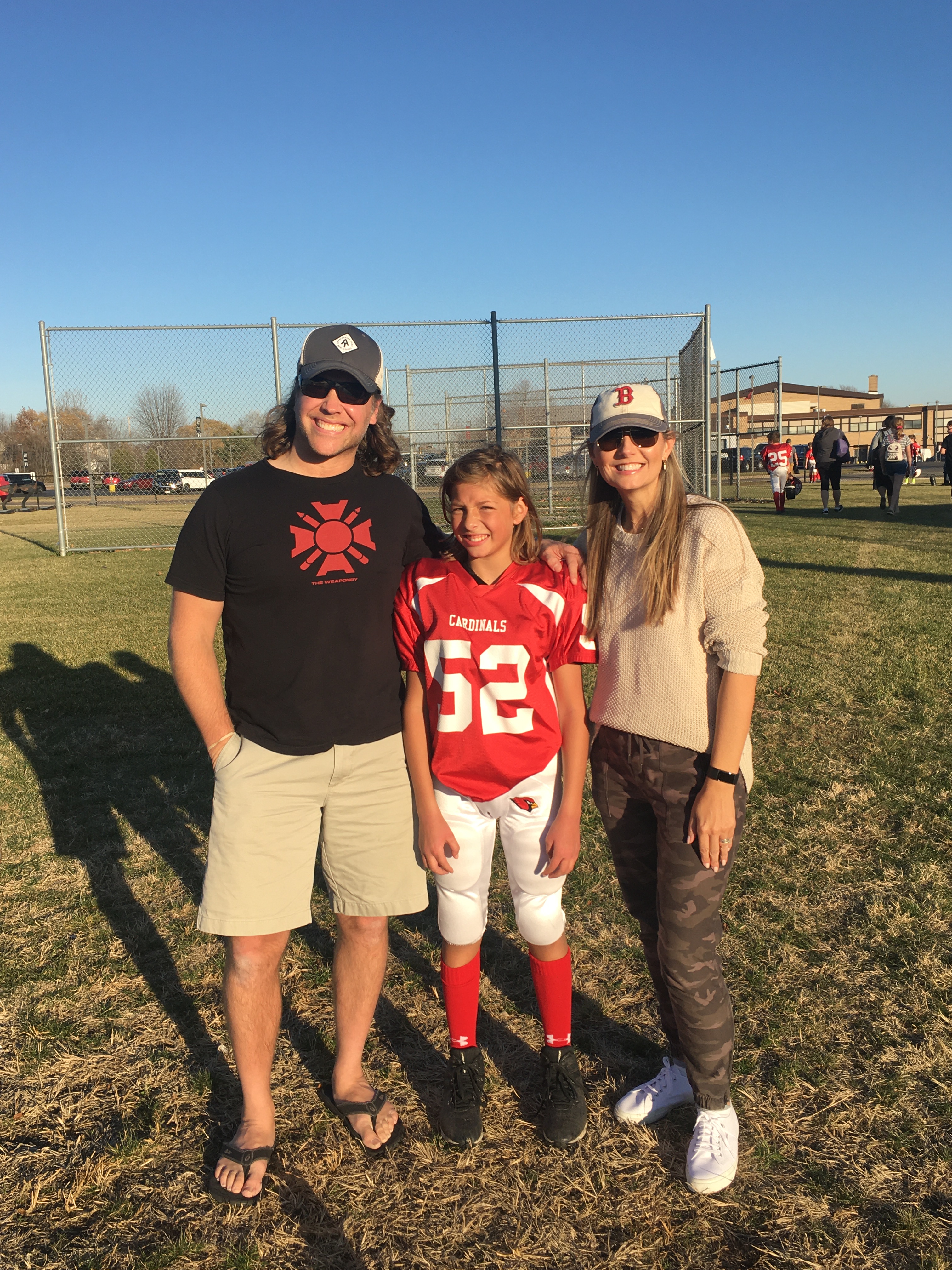
In 4th grade, COVID-19 hit. And the program was canceled for the year. Boo. But Magnus was desperate to play football. So we were allowed to enroll him in the 5th grade Mequon-Thiensville Cardinals tackle football program, where he played up a grade as a tall and eager 4th grader. The boys played with face masks over their face masks, which looked funny and may have had no practical effect, but it made everyone feel better about playing football during a global pandemic. No kids got sick. And I got to sit in the stands, 6 feet apart from other fans, and cheer through a mask like a normal COVID-era parent.
At this point, I thought I was finished coaching. I enjoyed the season as a fan only. (Not to be confused with Fans Only.
When Magnus was in 4th grade, he played tackle football with 5th graders, And I got to cheer in the stands with Dawn. I also got to wear flip-flops without a fear of getting cleated.
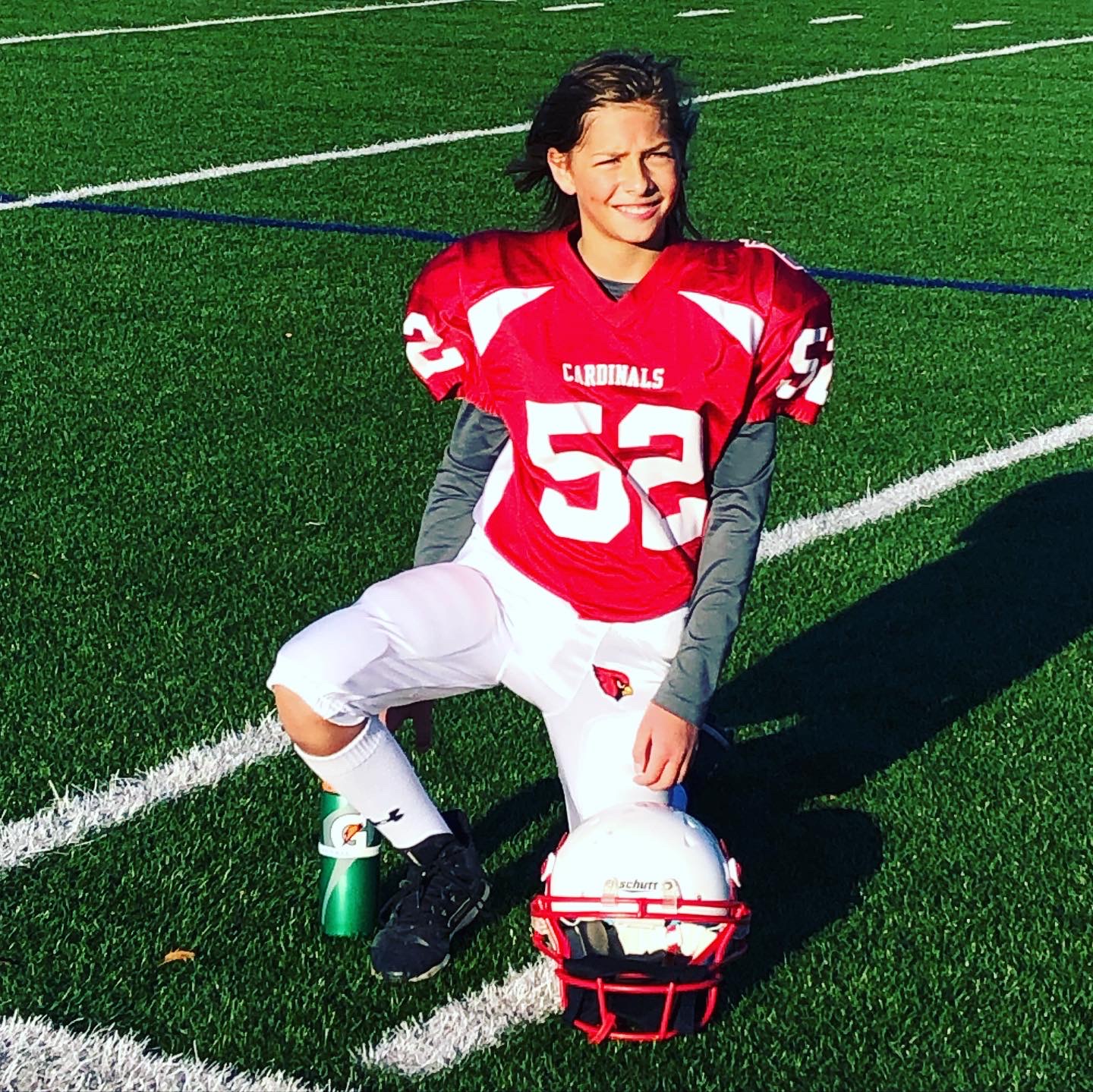
Magnus and a little wind machine for the hair.
Back On Track
That spring, I made a much bigger coaching commitment and started coaching high school track and field. My daughter Ava Albrecht was a freshman at Homestead High School in Mequon, Wisconsin. And I knew that I knew more about throwing the discus and putting the shot than most Mequonians. The flag football coaching experience made me think I could handle track. After all, when you coach throwing, you simply coach technique. There is no strategy. Or defense. Or concussion protocol. Go track!
Tackling Tackle Football
When Magnus entered 5th grade I was asked to help coach his tackle football team. I was reluctant because of the time commitment, especially on the heels of a long track season that went almost to July and left me with just 1 month without coaching obligations. But my coaching confidence was growing. So, I agreed to coach part-time. I was another warm body there to supervise kids and help run drills. I cheered a lot. And I tried to make it fun. For much of the season we only had 16 kids available. So we could only run 8 vs 8 scrimmages. Which was pretty silly. But I like silly.
5th Grade. And We’re back together for Cardinal Rules football.
Jumping Into The Deep End Of The Pool.
When Magnus entered 6th grade my friend Josh Hunt volunteered to become the team’s head coach. Josh played football at the University of Wisconsin and had a lot of coaching experience. He asked me if I would be willing to be the defensive coordinator for the team. I agreed. Because Josh is a nice guy and didn’t seem like the type to burn my house down if I made some mistakes.
Realer Than Real Deal Holyfield
That’s when coaching got real. The slow build of casual coaching obligations helped lead me to a very real coaching position. Suddenly, I would be preparing for every week by watching game film of the teams we would be playing that week. I sketched out every unique formation and play the upcoming opponent ran, noted who carried or caught the ball, how frequently they ran each play, and generally how effective it had been. This represented a huge increase in both my time commitment and my emotional investment. I started to understand why Bobby Knight threw chairs and why Mike Leach went off on a seemingly insane rant about the players fat little girlfriends. Now I certainly don’t condone their behavior. But I started to understand it.
In practice, I taught our team the opponent’s plays and devised strategies to defend against them. Then, on Sundays, I watched our own game film from Saturday and marked up all of the footage on software called Hudl to show what we did right, what we did wrong and how to do things better the next time. I learned that those 3 lessons are the basic pillars of coaching.
I spent more time than I care to admit watching game film, preparing defensive strategies and developing lineups each week. It was a significant commitment. But I loved coaching this group of boys. And I loved spending so much additional time with Magnus.
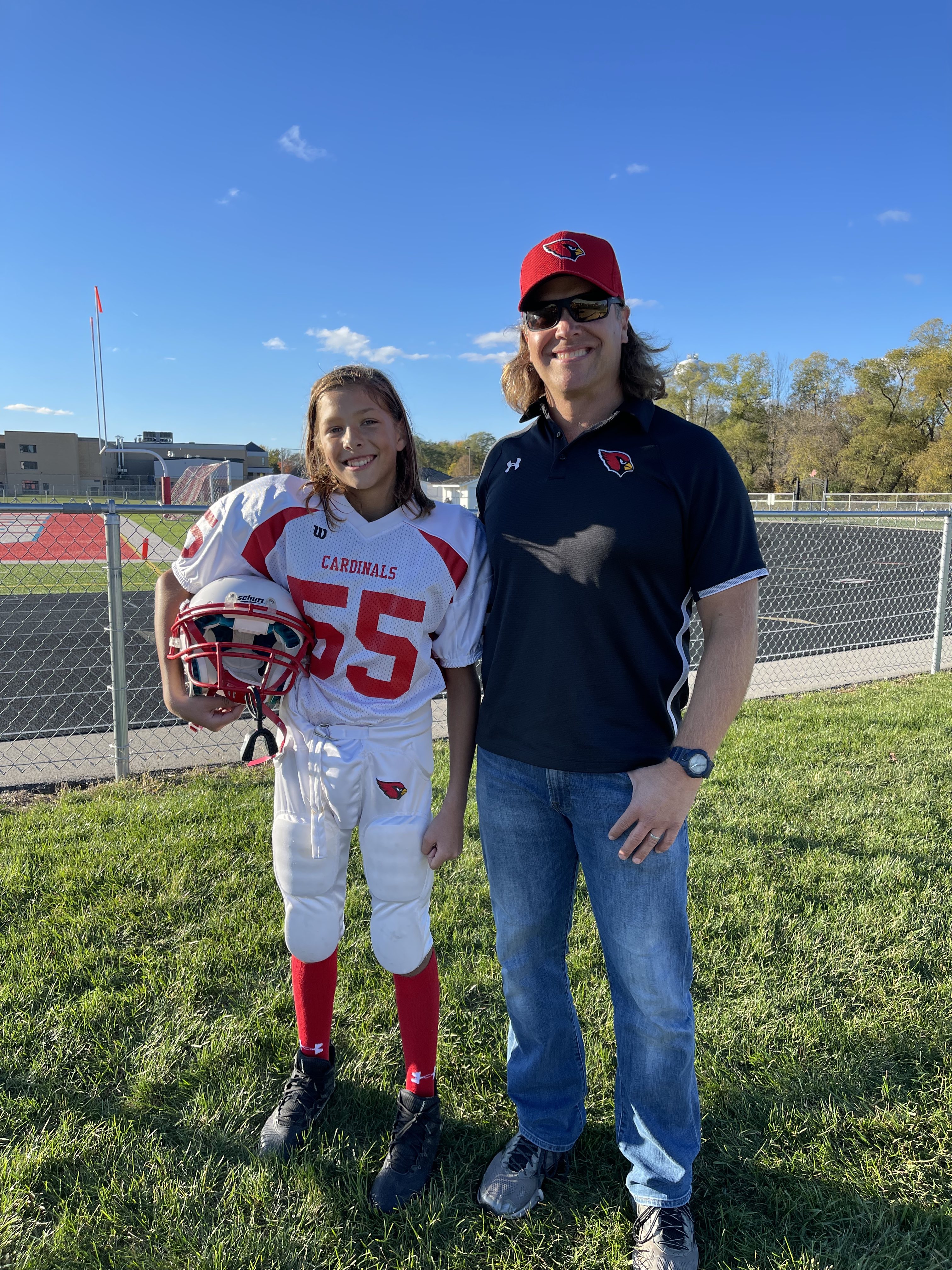
6th Grade. And one of my favorite photos. If you look closely you can see my knee next to Magnus’ (#55)
So I raised my hand to do it again in 7th grade.
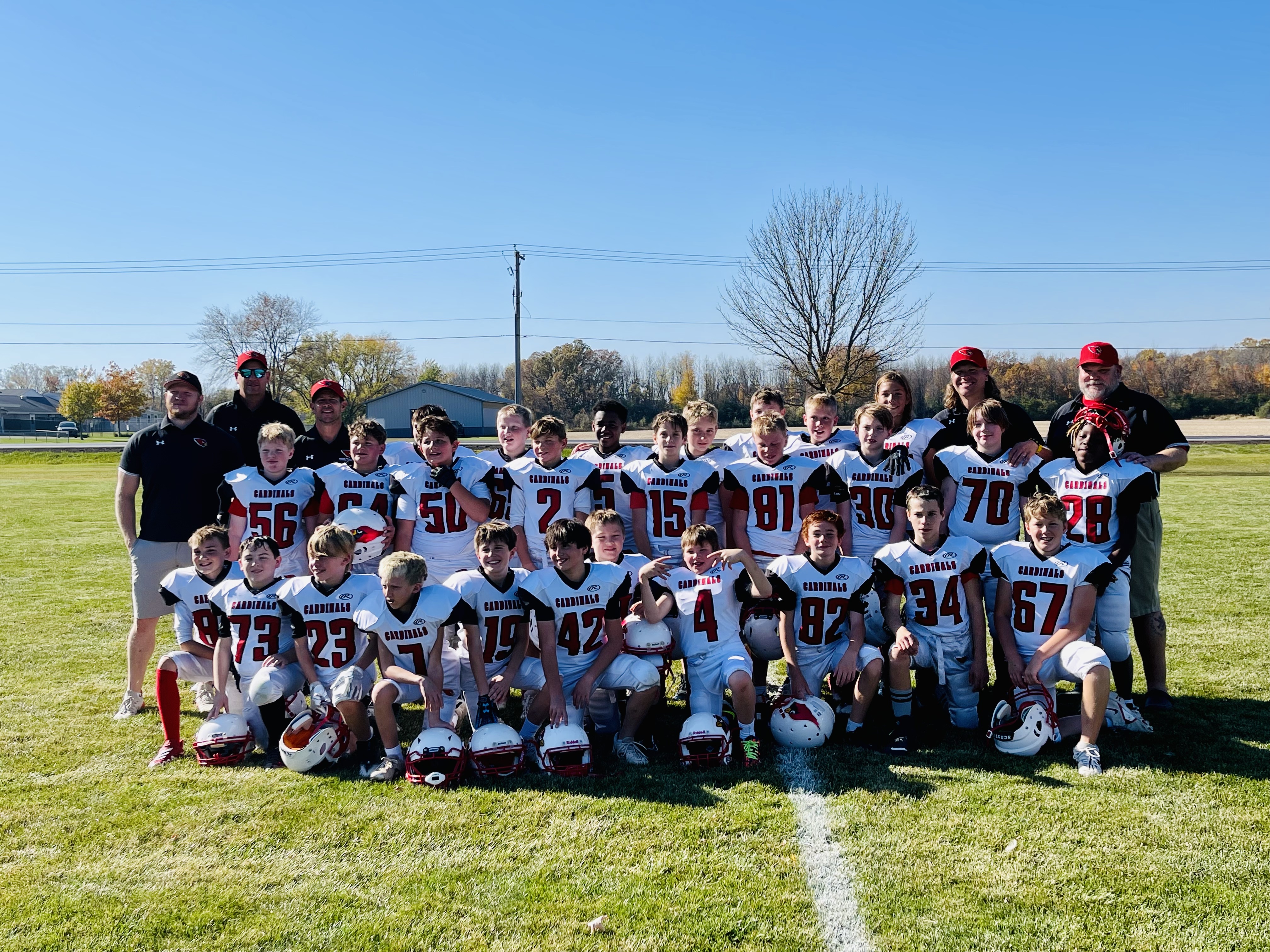
We had a great season in 7th Grade. This was after our last game of the season. Every team should end the year feeling like this.
And again in 8th grade.
For the past four years, from August through October, football has been an intense focus for me. I felt the pressure that comes with being an amateur coach in a high-profile team sport like football. So I prepared as much as I could to help give the boys an edge in the games. Sometimes it really helped. Sometimes it didn’t seem to help at all. This was either because our opponent was so good at doing what they do that we couldn’t stop them, or because they were bigger, faster and stronger than us, and we couldn’t stop them. But either way, I always felt as if I did all I knew to do to prepare our team for each game. And I learned a little from each win and each loss. Which meant that I found a way to win no matter what the outcome was.
Magnus’ 8th grade season. My last year coaching football. And the first time Magnus was taller than me..
The 10 Best Things About Coaching Football.
1. Winning. There is nothing quite like winning a team sport.
2. Being called Coach. For years, I have been called Coach in our community. It’s always fun and surprising for someone who never expected to coach anything to be called that on the sidewalk, in the schools, and in stores and restaurants. It feels both respectful and as if you had a positive influence on a child’s life. It also makes me feel like I should be wearing a whistle everywhere I go.
3. The Brotherhood: Seeing these boys support each other and coming together as a strong team is amazing. Hearing the stories of them sitting together at lunch at school is rewarding. And knowing how close I still am to the guys I played football with makes me excited for them and the relationships they are forging through their collective football experience.
4. Hearing our defense call out the opponent’s offensive formation and the play they are about to run during a game. It meant the boys were paying attention in practice, they recognized what they were seeing and were prepared to defend the play. I loved that.
5. Stops in the backfield: Quarterback sacks and stuffed runs were the big wins for a defensive coordinator. We have had plenty of those over the past few years. It was a thrill every time.
6.Blocked Punts and Kicks. These have a huge impact on the game. They are magical gifts from heaven. Magnus had a slew of these during his Cardinal football career. And I discovered that a slew is the same amount in both the English and Metric system.
7.Interceptions: These are mission-accomplished plays. They are never not exciting.
8. The Funny Kids: Football is a serious game. But I love the kids who brought their sense of humor to practice and made us all laugh. The funnies often create stronger memories than the wins.
9. The Intense Kids: These kids set the tone for the team at practice and in games. They helped get the team mentally prepared to go to work. I always admired the mentality these winners brought to the field.
10.The Respectful Kids. The kids who responded to all coaching with Yes, Coach and No Coach, who looked you in the eyes, and who asked intelligent questions were a pure pleasure to work with and a sign of good parenting.
Key Takeaway
If you have a chance to positively impact the lives of kids, do it. Coaching, mentoring, volunteering, teaching, chaperoning. All of it helps. And you will get just as much out of it as the kids. Our youth can never have too many positive adult influences in their lives. And you gain by sharing your time, talent and knowledge with others. Don’t worry that you don’t know enough. Raise your hand and learn as you go. That’s what I did. And I can’t imagine my life without this chapter, these experiences, and these boys.
*If you know someone who could benefit from this message, please share it with them.
There is a boy on the 7th-grade football team I coach named Josh. He’s a good athlete. He can run the ball well, he’s a strong receiver, and he’s a great defender. He plays both running back and linebacker. And he is one of the most energetic and enthusiastic kids on the team. And I have a special affinity for energetic and enthusiastic types.
While Josh has a broad range of valuable football-related skills, one thing he doesn’t do very well is ride a bike. And unfortunately at the beginning of the season, Josh fell off his bike and broke his arm. Boo. He has been in a light blue cast, that extends to his upper arm since the second week of the season. I expect he inherited this biking inability from his father, Mike, whom I have known since we were athletes at the University of Wisconsin.
Despite the broken wing, Josh and his positive attitude come to practice every day. He helps the coaches run drills. He plays practice quarterback and hands off the ball for running back drills with his good arm. He cheers. He encourages. He laughs at my jokes. He has all the valuable intangibles.
On Saturdays during our games, Josh is in charge of the water. On most teams, this role is called the waterboy. But I never liked that term. It has always felt diminutive, even before Adam Sandler and Fonzy’s hilarious hit movie Waterboy. (You can do it!)
The role of keeping our players hydrated during games is extremely important. And Josh approaches the role with such enthusiasm that I felt we needed to rename the position.
So on game days, we don’t call Josh the waterboy. We call him Aquaman.
The name is fun. It feels as important as the job really is. Just like the superhero Aquaman, Josh and his bottles of magic liquid have special powers that are used for good. Those bottles of water that Josh brings to his teammates on the field and on the sideline help the players in their moments of greatest need. In fact, there are many times during a game when the players need Aquaman more than they need the coaches. (Don’t tell Josh I said that, or he may get a big head and his bike helmet will no longer fit. And he needs that helmet.)
Key Takeaway
Names matter. They affect the way you think. They affect the way you feel. If you want more out of a role, consider the title you use for it. If you want people to love your product, service, process or place, carefully consider the name you give it. Perception is reality. And a more attractive name creates a more attractive brand. And better brands get better results.
*If you know someone who could benefit from this message, please share it with them.
This fall marks my 6th year of coaching football. I never had any interest in coaching. I started when my son Magnus’ flag football program needed parent coaches. It was only a Saturday morning commitment back then. But like the mythical slowly boiled frog, who forgot to jump out of the pot, I am now the defensive coordinator for Magnus’ 7th grade tackle football team. Which is an everyday-in-August commitment. Oy.
As a coach, I am really a student. I am trying to learn as much about football as I can to help my players play well, have fun, and be safe. But like Uncle Rico, I still have a strong desire to win.
Back to School
2 weeks ago I had a great opportunity to learn some new things about the game of football. On Varsity Day, Coach Tom Price, President of Cardinal Football, brought the local Varsity football players from Homestead High School in Mequon, Wisconsin to practice to work with the 5th-8th grade players in the Cardinal football program that feeds players into Homestead. While the high schoolers were working with our athletes, one of the outstanding Homestead football coaches on Head Coach Drake Zortmans’s staff talked to the Cardinal coaches about football.
The coach, Dan Juedes, is a 70-something who is not only in the Wisconsin Football Coaches Hall of Fame, he is in the National Football Coaches Hall of Fame. He coaches at football camps across the country, including at many of the Big Ten schools. In fact, Dan has been coaching so long that when he started the Big 10 conference only had 5 teams.
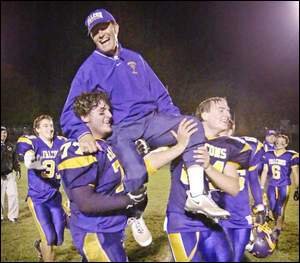
Coach Dan Juedes looking very coachy.
Dan’s Lessons
As the novice coaches gathered around Dan, he shared a few gems about coaching football. His first lesson had been passed along to him by the legendary Bo Schembechler, the former head football coach at the University of Michigan. Dan told us:
‘The average football play lasts 7 seconds. All players look pretty much the same during the first 2 seconds. What separates great players from the ordinary is what they do in seconds 3 through 7.‘
-Coach Dan Juedes
When Dan shared this I felt like I had heard Einstein explain the Universe with E= MC2. Because Dan’s 7-second rule took a very complex game and broke it down into a very simple formula for success.
Coach Juedes carried off the field, presumably because he was tired from coaching so hard.
Josh Hunt, our 7th-grade teams’ head coach, and I couldn’t wait to share this valuable insight with our players. So once we were reunited with our athletes (and it felt so good) we eagerly shared our new insight with our team. And we have been resharing the 7-second secret every day since.
Applying the 7-Second Success Formula
On Saturday we had our first game of the season. The last thing I told the players before they took the field was to give a full 7 seconds of effort on every play and great things would happen.
But the much bigger opponents overwhelmed our team out of the gate. They ran around us and over us until they were knock, knock knocking on the endzone’s door.
But with our backs to our own endzone, defending a first and goal play from the 6-yard line our team gave a 7-second effort. My son Magnus fired across the line from his defensive end position and engaged with a tight end. He shed the blocker at 2 seconds and attacked the opposing team’s quarterback. What happened over the next 5 seconds changed everything.
Magnus sprinted after the quarterback, and not only did he tackle him deep in the backfield, he punched the ball out of his hands in the process. Our middle linebacker Jaden Daniels was also giving a 7-second effort and pounced on the loose ball. This meant that we went from our opponent having the ball on first and goal from the 6-yard line, to our team having a first and ten at the 17-yard line. Boom!
Then our offense became a 7-Second Squad. We put together an 83-yard scoring drive that led to a 6-0 lead.
It turns out that’s all we needed to win the game. Because thanks to our 7-second efforts we held our formidable and much bigger opponent to 0 points. A shutout.
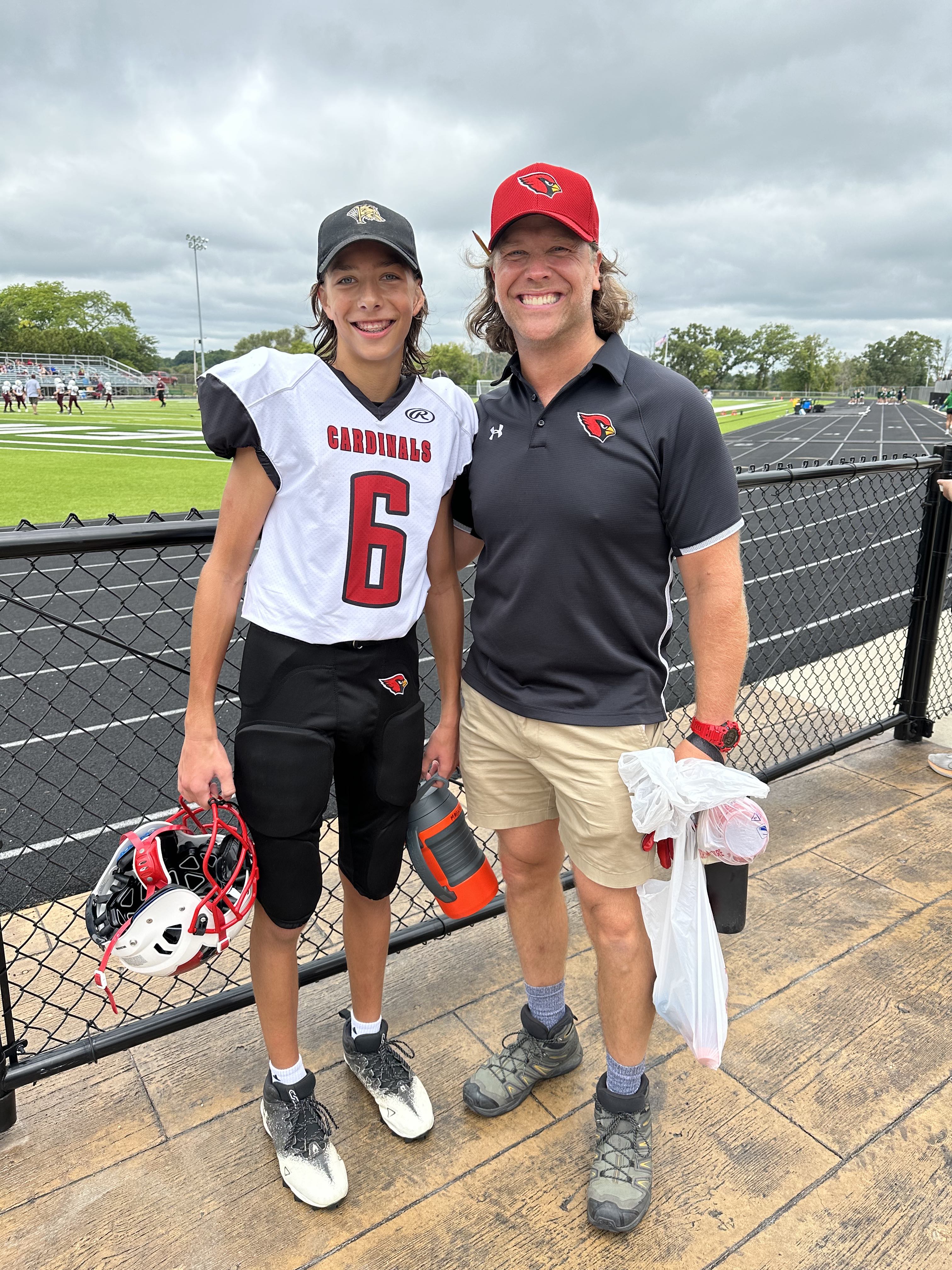
Me and Magnus after our opening game win.
The 7-Second Life Lesson
Dan’s 7-second rule teaches us to go hard to the end of every play. While everyone starts out doing the right thing on nearly every play, at some point, most people stop giving maximum effort and forfeit the advantage to those who go hard until the whistle blows.
But the 7-Second rule doesn’t just apply to football. The basic concept applies to success in all areas of life. Most people start out strong. But they give up too early. They stop or quit just when their effort is needed most. It is true in sports and in your career. It is true in marriage and in parenting. And it is true anywhere effort is needed to create results.
Key Takeaway
The difference in life is not made at the start. It is what you do after the start. Don’t stop 2 seconds in. That’s when most people let up, thinking they have done their job. Don’t fall into that trap. True success comes from your effort during seconds 3 through 7. So play the full play. Give a full effort every time. That effort and the advantage it creates compounds, play after play, day after day, year after year. Play until the end. And the end will be sweeter than you could have imagined. Just like the donuts I will bring my team today to celebrate the donut they put on the scoreboard on Saturday. Boom!
Final Note
Over the weekend as I reviewed the game film to provide feedback, I saw the 7-second rule over and over again. The great plays were made by those playing hard for 7 seconds. The best results of all came when the entire team played hard for 7 seconds. And as a proud Dad-Coach, I saw that Magnus had 3 sacks in the game and the game-winning tackle on 4th down in the 4th quarter. All of which came from giving full effort all the way to whistle. And I was amazed as I counted to 7 seconds over and over on our biggest plays. It turns out that Dan and Bo really know what they are talking about.
Also, I want to note that Dan Juedes and Tom Price have been a great help to me as track and field officials running the shot put and discus events at Homestead’s home meets in the spring. Thanks guys!
*If you know someone who could benefit from this message, please share it with them.
Yesterday I coached my last youth football game of the season. It was a 3-month commitment of 4 to 6 days each week of practices, scrimmages, and games, beginning August 1st. Plus, as the defensive coordinator, I had to watch our game film at night and scout our opponent’s game film each week. It was a significant commitment of time, energy, and focus. And I loved it.
But there was one thing I didn’t love. The least enjoyable part of coaching in the Wisconsin All-American Youth Football League, WAAYFL, is all of the mandatory online training courses you have to complete to be eligible to coach.
Parents should take great comfort in knowing that their coaches have all been trained in nearly everything related to the health and safety of the players. In fact, I think that the next time I am on an airplane and they ask if there is a doctor onboard I will ring my call button and tell them that while I didn’t technically go to medical school, I did take the marathon health and safety coursework online required to coach in the Mequon-Thiensville Cardinal football program. So I should be good with whatever emergency they were dealing with up in the fuselage.
Yes, we learned how to coach the safest ways to hit and tackle. But we also learned about everything from concussions and heat-related health issues, to heart and neck concerns. And we learned to identify signs of physical and sexual abuse. It’s a lot of heavy stuff to wade through to coach a children’s game.
My Favorite Lesson
But there was one brief unit in our training that stood out the most. It may have felt insignificant to the other coaches compared to the heft of the lessons above. But for me, it offered the best new tool in my coaching toolbox. Granted, my coaching toolbox was pretty empty to begin with. (I only had an old roll of athletic tape and that quote about the size of the fight in the dog.)
The unit I loved was The 4 Points of Coaching Contact. It taught us the importance of developing a connection with our athletes. It provided a simple, memorable framework to follow to connect with each athlete at every practice. My language below may be slightly different than the WAAYFL shares. But the idea is the same.
The 4 Points of Coaching Contact.
1. Eye Contact: You should greet each athlete each day with your eyes. This means, making deliberate eye contact with them daily. (But don’t actually touch their eyes.)
2. Physical Contact: Greet each player with a handshake, fist bump, high five, or pat on the shoulder or back. No bum touching. (That was really part of the broader training.)
3. Ear Contact: This is not about ear flicking or Wet Willys. This is about connecting with a verbal greeting every practice. Say hello in whatever way you say hello. Make it heartfelt. Use their name. There is far great power in this simple act than most coaches realize.
4. Heart Contact: Talk to your athletes about something other than the sport. Ask them how their day is going. Ask about school, their family, or their other activities. Get to know them and develop a relationship with them as a non-athlete. Again, no physical contact with the actual heart is required. Or allowed.
Putting It Into Practice
I thought about The 4 Points of Contact every practice. It used the technique liberally. Although I didn’t hit all 4-points with every athlete every day, I purposefully connected with every athlete as much as was naturally possible. And it made a real difference.
But the impact of this simple relationship-building technique impacted me as much as it impacted the athletes.
Because every time I made eye contact with one of my players, they made eye contact with me.
When we would high-five, fist bump, or shake hands I felt the connective power the way they did.
When I greeted our players by name, they would greet me by name too.
But most importantly, you can’t touch someone else’s heart without them touching yours. It’s the universal law of heartiology. Or cardiology. Or whatever you call it. Remember, I’m not a real doctor.
Key Takeaway
You have an opportunity to connect with other people every day. Connect with your eyes, your hands, your words, and your heart. This approach works wonders in youth sports. But it works just as well in business, in school, within families, and amongst friends. In fact, these 4 points of contact are how we turn strangers into friends. And if you use this approach every day, you’ll find those friends start to feel like family. That’s what happened to our 6th Grade Cardinal Football Team in Mequon, Wisconsin.
*If you know someone who could benefit from this message, please share it with them.
This fall I have helped coach my 11-year old son Magnus’ football team. The experience has been extremely rewarding. It’s fun to get back involved in tackle football and all that it teaches players about teamwork, strategy, execution, brotherhood, and eye makeup.
It is fascinating to see how much our team is improving every week. Several parents came up to me after our game on Saturday to tell me that they are impressed by how much the team has grown over our first 5 games.
A significant part of our improvement plan is watching game film. We film each game and then use a platform called Hudl to share it with the players. We break each play down Clint Eastwood-style, noting the good, the bad, and the ugly. #DoodaloodalooWaaWaaWaaaa
We call out the good plays, the great tackles, the key blocks, the great hustle that made a difference. But perhaps more importantly, we call out where players did the wrong things, and what they should do differently next time. Sharing the example and the recipe for correction is a huge part of the learning experience.
When I see how much learning and improvement comes from studying our team game film I find myself wanting to rewatch my days and see my opportunities to get better.
I would look for wasted time and missed opportunities.
I want to look for better alternatives to the decisions I made.
I would want to review the times I could have accomplished more and been more productive. That is a frequent concern of mine at the end of each day.
I would like to study the cause and effect of my actions.
I would like to find opportunities to grow and learn.
I would like to find more ways to connect with my kids, my wife, my coworkers, and friends.
I would like to see the hilarious things that happened around me that I missed.
The Problem
Unless you Truman Show yourself, you are never likely to have a full game film of your day. Plus, it would take a full day to watch. Which is as practical as getting a life-size tattoo of yourself on yourself.
Journaling
However, at the end of each day, you can reflect on your day. You can watch the game film of your day in your head. You can keep a journal to help you grow. You can write down what went well, what you learned, and what you would do differently next time. The writing itself will help reinforce the lessons. But revisiting the journal later will be like a self improvement book you wrote for yourself.
Key Takeaway
Take 5 minutes at the end of your day to review the game film of the day in your head. Quickly step through your events, interactions, accomplishments, and misses. Capture the key wins, learnings and observations in a journal or an app. Consider what you should do differently and your corrected or improved behavior. And make yourself a little better every day.
*If you know someone who could benefit from this message, please share it with them.
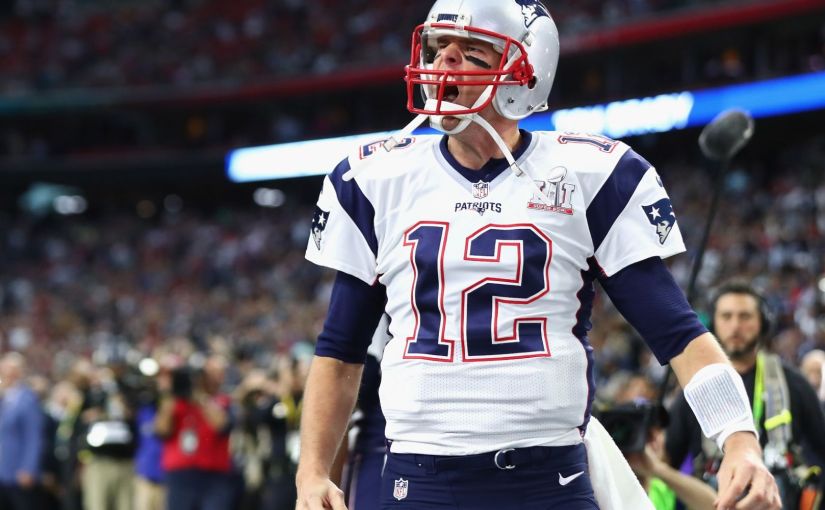
Last night the New England Patriots did it again. They won the Super Bowl, and were crowned as the best football team on the planet. It was Tom Brady’s 6th Championship in 18 years. Which means that every 3 years he lifts a Lombardi Trophy. And many Non-Patriotics hate him for it.
Why is the win still important?
In the middle of the Cray Cray Camera Crush at center field following the game, Tracy Wolfson of CBS asked Tom Brady why the win was so important to him.
He responded immediately with a 6-word answer:
We’ve been this far and lost. -Tom Brady
With those 6 words, we can all relate to one of the greatest champions in the history of sports. Because despite the six Super Bowl wins, he has also known loss on the biggest stage. Three times, in fact. Twice to the New York Giants, and just last year to the Philadelphia Eagles. He has lost a Super Bowl in a season when the Patriots went undefeated until the championship game. Ouch. #DavidTyree
This David Tyree against-the-helmet Super Bowl catch was as improbable as it was heart breaking.
Key Takeaway
This is a great reminder that there is tremendous value in our losses. They drive up the value of each subsequent win.
The loss of a game makes you value a win.
The loss of a job makes you value your employment.
The loss of a new business pitch makes you value winning a new client.
The loss of a loved one makes you value your loved ones.
The loss of time makes you value the time you still have.
The loss of revenue makes you value revenue.
The loss of a friend makes you value new friendships.
The loss of oxygen makes you value oxygen.
The loss of 50 degrees makes you value finding 50 degrees. #PolarVortex
The loss of Breaking Bad makes you value Game of Thrones.
The loss of your swimsuit makes you value your swimsuit.
People regularly ask me if I am a full-time blogger. This always makes me laugh. I assume that would mean that I blog 24-hours a day. Which would make it really hard to shower. Or trim my fingernails. I actually have several other responsibilities. I am the Founder of the advertising and idea agency, The Weaponry. And when I am not blogging or foundering I spend my time husbanding and fathering.
Fathering
I got my fist job as a father in 2005. Since then I have tripled my responsibilities. My youngest son is a 7-year old viking named Magnus who inherited my love for football. In fact we toss a football around every morning while waiting for the school bus.
Yesterday Magnus must have eaten his Wheaties (which is a reference that you’ll only understand if you were born before 1980). Because every time Magnus tossed the ball he threw it way over my head. So I jogged to pick up the ball, and tossed it back. But after several of these Wheaties-fueled throws I stopped and asked Magnus,
‘Are we playing catch, or are you just playing throw?’
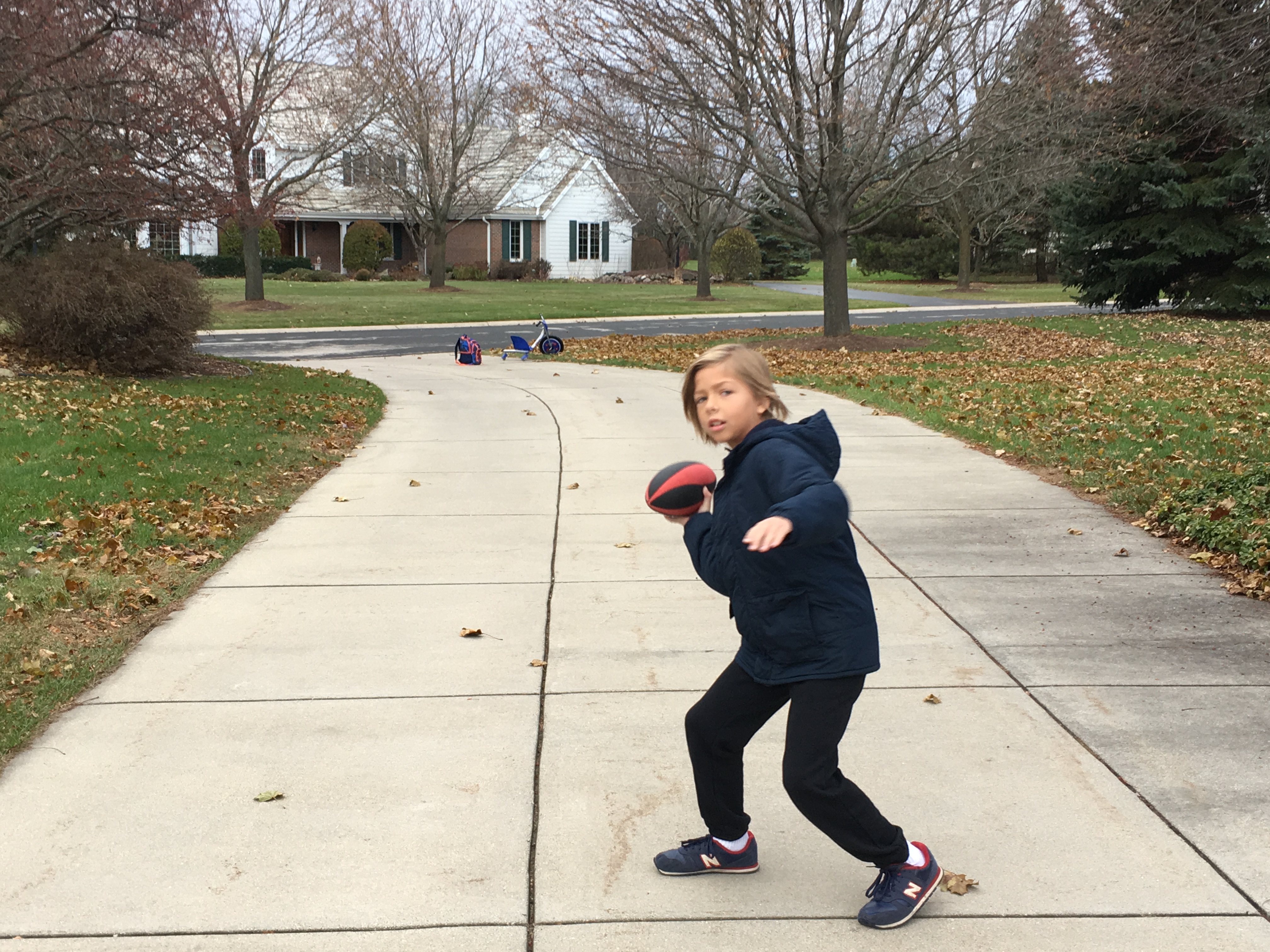
Magnus always wants me to go long.
As I asked the question I recognized that Magnus’ approach was emblematic of a common problem that occurs every day in communications. Both personal and professional.
Tossing Marketing Messages
In the most basic form, marketing communications are a simple game of catch. The game starts with a marketer throwing a message to a prospective buyer. The prospective buyer catches the message and throws his or her message back. That message could be, I’m interested, I’m not interested, I’m confused, or Tell me more. As long as you are communicating there is an opportunity to get to a mutually beneficial transaction.
But far too often marketers throw their messages the way Magnus threw the football. Hard. Fast. High. Marketers are focused on their own perspective. In their eagerness to drive results (ROI) they shout what they think is important. They don’t think enough about the person at the other end of the message. Thus, their message sails way over the head of the intended recipient. And there is no reply at all.
Before you throw your next message:
Know who you are throwing to.
Understand how they like to catch.
Account for the distance.
Throw something catchable.
Observe what happens when you throw your message, and recalibrate accordingly.
Prepare to receive the message that gets tossed back to you.
Remember, communication is a two-way interaction. Account for your audience in everything you do. Make it an enjoyable experience for everyone involved. When you do you’ll be surprised how many people will happily play catch with you.
If you found anything I threw your way useful, or think I am off target, please share a comment or subsrcibe to this blog so we can keep playing catch.
There are a lot of factors that go into developing The Perfect Agency. But the ultimate goal of creating such an ad agency is to create the right conditions to consistently generate great work that has a meaningful impact on the clients we serve. Just before the college football season began this fall my team and I were working feverishly to bring a really exciting new campaign to life for UPS. The basic premise of the project was that college football has a tremendous economic impact on college football towns. So we profiled these great towns that often double in population thanks to the pilgrimages that occur on football Saturdays.
We talked to local businesses and they shared the opportunities and challenges associated with the swelling demands of game day. And I was proud to hear business owners declare that our client, UPS, played an instrumental role in enabling them to meet those demands.
Thanks to this campaign my football season started in Tuscaloosa, Alabama last August in 99 degree heat. We spent two days covering the town, the school, the Crimson Tide football program and the local small businesses. I came away with a real affinity for the town, the beautiful campus, and the people. I also developed an even deeper admiration for the championship caliber football program. And since we brought a film crew with us I left with a video that summarized it all in about 60 seconds. And because my phone has a camera, I’ve included a few images from the experience below.
Congratulations to The University of Alabama on your fourth national championship in seven years. And thanks for offering us such a great story to tell. Roll Tide. And roll the video.
Me at the end of a very hot day. I was surprised to find they had hung my initials on the columns to welcome me.
I beat Nick Saban in a heated game of Rock, Paper, Scissors.
Bear Bryant. The bird that tarnished his fedora was deported.
If you’re ever in Tuscaloosa stop by Dreamland for some dreamy barbecue.
And if the contacts start moving in your eyes football isn’t so simple.
Let there be light. And Alabama football. And a flag. And maybe an umbrella.
It was hot. Not triple-digit hot. But close.
Turns out Alabama has had some success turning out quarterbacks. (Although doesn’t that building in Green Bay say that Don Hutson was a Center?)
The Black Warrior River at sunrise. This photo may be upside down.
You don’t want to hear me drone on about our drone.






![IMG_4475[1]](https://adamalbrecht.blog/wp-content/uploads/2016/01/img_44751.jpg)



 Adam Albrecht Blog