
How some people do so much more with their time.

We all know people who do more than everyone else.

They do the family things and the home things.

They do the friends things, the travel things, the work things, and the wild things.

And miraculously, they seem to be enjoying it all.

Like cyborgs. Or Stepford Wives.

They are creating things that interest them.

They are volunteering for causes they care about.

They are having success in their career, running their own business or leading their family.

They do the networking activities you would like to do.

They exercise.

And they get to worship, too, God bless them.

Plus, they coach or chaperone or team parent for the activities their kids do.

You wonder How do they do it all?

How are they involved in so many things? How do they fit it all in? And how do they not Chernobyl like it’s 1986?

The answer is simple.

Capacity is a state of mind.

You decide how much you can handle, how much you can take on, how much you can fit in.

You decide how much you can do with your hours, days and weeks.

When you decide you are full and overwhelmed, you stop. (Presumably in the name of love.)

People who do more believe they have a capacity to do more.

They see spaces to add things.

They find time in their schedule to make things happen.

They see opportunities that are worth their time and their energy.

And they recognize that at some point, they will run out of time, energy and opportunity.

So they go now.

The scarcity of time is precisely what drives them to see more capacity in their everyday.

Now is the time.

Now is the opportunity.

Now is the alternative to never.

Key Takeaway

If you want to fill your life with meaning, action and contribution, adjust your mindset to create capacity. Because when you want to find the time for more, you will find it. Or you will optimize, prioritize, reduce or eliminate things to make room. There is more space and time in your continuum for the things you really want to do. Find it. Enjoy it. Do more with it. And make others wonder how you do it all.

*If you know someone who could benefit from this message, please share it with them.

+For more of the best life lessons I have learned check out my book, What Does Your Fortune Cookie Say? from Ripples Media. And consider subscribing to Adam’s Good Newsletter.
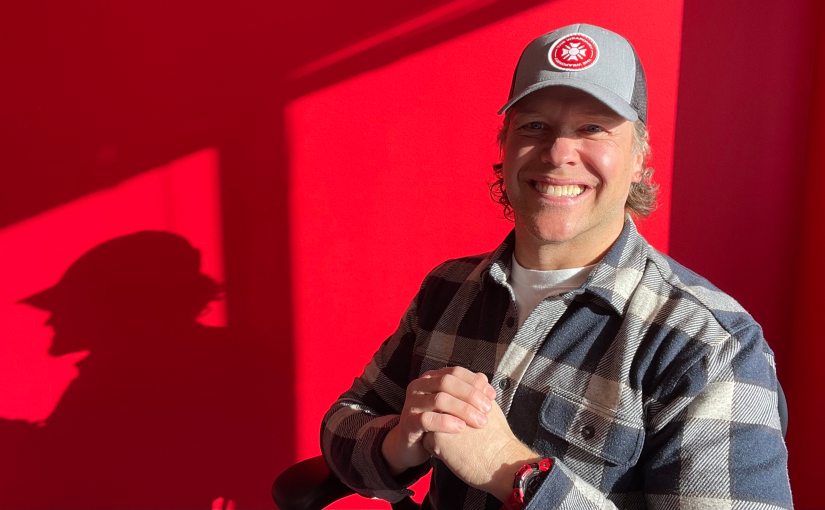
The Ultimate Cure For Boredom.

Do you ever feel bored?

I never do.

Because the foolproof cure for boredom is to have big goals.

And I am the fool with the proof.

Big goals, and many of them, help fill your days with purpose.

I have so many goals that they govern my days. (In a non-political governing kind of way.)

From the moment I wake up, my routine is constructed to help me achieve my goals.

Because when you have a strong vision for your future, it shapes your now.

And you see time as a tool for you to use to achieve your goals.

Fitness goals inspire you to exercise. Even when you would rather TexMexercise.

Travel goals squash boredom with planning, adventure, reflection and memories.

Career goals inspire you to work harder, more focused, and with more zeal. (Or a more contemporary word for zeal.)

Financial goals drive you to save and invest. Even when you have the urge to splurge, Virg.

And your financial goals will inspire you to explore and discover smarter things to do with your money, honey.

Entrepreneurial goals mean you are never bored. Ever. Like ever, ever.

Reading goals mean that you always have a good reason to log off of electronics and fill your time with something that adds value to your life. (And increases your vocabularium.)

Writing goals drive you to sit down and write every day. And it is hard to be bored when you are creating. Just ask God. Or Tyler Perry.

Domestic goals around improving your home, and yard keep you busy and productive. Not bored.

Relationship goals influence the way you invest your time, the way you treat the important people in your life, and the hashtags you use on social media.

Your goals help you make decisions all day long about the things you should and shouldn’t do with your time. Which means that goals enhance productivity, decision making, time management, and relationships. Not to mention the positive impact they have on your happiness, adventurousness, and good old-fashioned usefulness. (Basically all the nesses.)

Key Takeaway

The next time you find yourself bored, think about the goals that you could be working towards. If you find that you don’t have any, set new ones that you can work towards right now. Boredom is a signal that you need more meaningful activity in your life. And goals are the greatest way to make that happen.

*If you know someone who could benefit from this message, please share it with them.

+For more of the best life lessons I have learned, check out my book, What Does Your Fortune Cookie Say? from Ripples Media. And consider subscribing to Adam’s Good Newsletter.
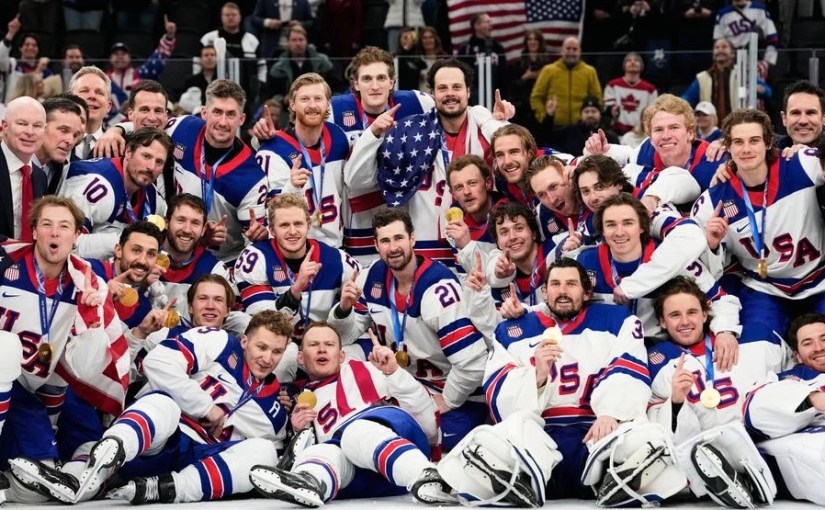
Get Lazy To Get Productive.

On a recent Saturday morning, I was really lazy. Like, pro-level lazy. I was lazy like a boy in an overstuffed recliner.

I got up early, as usual. I made my son Johann breakfast and made sure he had everything he needed to take the ACT’s that morning. Basically number 2 pencils. But hey…

After Johann left, my wife and I had an empty nest. Our daughter Ava was off at college. Johann was testing at school, and then would be off to practice music with his bandmates. And our youngest son, Magnus, was at a water park for the weekend with his friend Phineas and his family. I assume Ferb was there, too.

So Dawn and I were alone. And we sat in our living room and read. We read for a long time. It was great. And lazy. It felt as if we were finally recovering from our very active trip to Arizona. I hadn’t allowed myself to feel that lazy for a long time.

But then something quite predictable happened. I got itchy to do something. I had sat long enough that I was now compelled to work, to do, to be productive.

So I went outside with a rake and trimming equipment. I cleaned up, cut down and spruced up all of the beds in the back of my house. I then took 3 loads worth of yard waste to the dump.

After that, I came in the house and had a light bulb moment, which sent me on a mission to replace every burned-out light bulb I could find in the home.

Before I knew it, I had 5 hours of productive work done on the laziest Saturday in recent memory. Because for me, laziness serves as a springboard to productivity. I saturate with laziness, and then I have to do something. I lounge until I must labor. Then I labor until I must lounge. It’s a strong and satisfying approach that I recommend everyone have in their playbook.

Key Takeaway

Everyone needs a little downtime to recharge. It provides both a physical and mental reset. As soon as your batteries are fully recharged from rest, get right back to it. Then go until you need a good rest. The cycle will leave you feeling both productive and restored. That’s a win-win.

*If you know someone who could benefit from this message, please share it with them.

+For more of the best life lessons I have learned check out my book, What Does Your Fortune Cookie Say? from Ripples Media. And consider subscribing to Adam’s Good Newsletter.
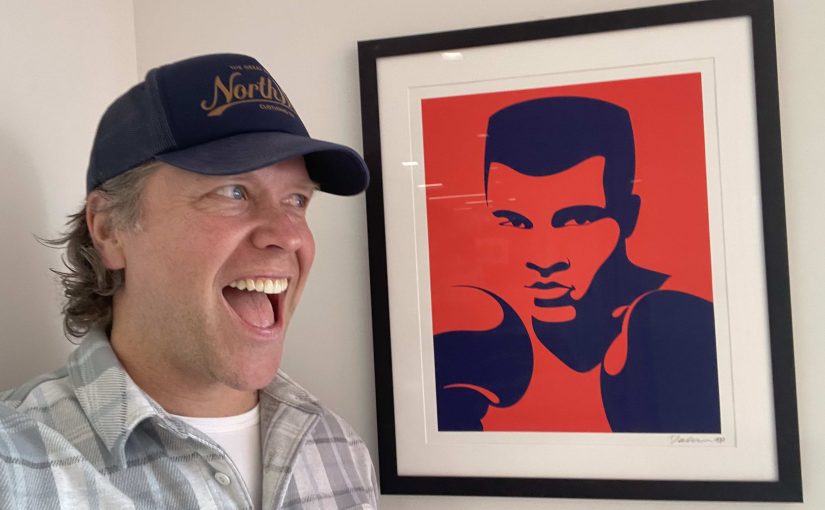
How High School Football Helped Shape My Life And Career.

Recently, I was asked to speak to my son Magnus’s freshman football team the night before their last game of the season. Preparing for the talk offered an opportunity to go back in time and reflect on the feelings and thoughts I had at the end of my own freshman football season. But this time I had fewer pimples, my voice didn’t crack, and I had a much longer lens with which to view the whole experience. I wrote about the talk and what happened in The Power of Enthusiasm and Teamwork.

The major insight I gained was that my own reflection at the end of my freshman football experience created one of the most valuable experiences of my life. And it still benefits me today. (Or at least it benefitted me yesterday. It’s too early for today’s results to be tabulated.)

That’s me (77) making the tackle during a game my freshman year of high school. Our uniforms used to get dirty, because we played on real grass and dirt.

The Reflection On My Freshman Football Experience.

By the end of my freshman season of football at Hanover High School in Hanover, New Hampshire, I realized a few things.

First, I loved playing football.

I realized I loved the brotherhood of playing a team sport. Going into battle with a group of badass boys creates a bond. A brotherhood. An identity.

I realized we played better when we played as a team.

I realized how much practice helped. (Yes, Allen Iverson, we’re talking about practice.)

I realized that after a bad play, or a lost game, you had to learn from what you did wrong, but then put that behind you and move forward.

I learned that bringing energy to the game made a huge difference. And I run better on positive energy than negative energy.

I recognized that encouraging each other made a significant impact on our play and our relationships.

I learned that I represented my high school and my community when I wore that uniform. And I could either add to it or reduce it through my actions. (It was this 14-year-old’s first lesson in branding.)

And I realized that I needed to get stronger. There were guys who were a lot bigger and stronger than me. And while I was quick and athletic, sometimes big and strong won. And I wanted to be the bigger guy. Or at least stronger.

What Happened Next?

When my freshman football season wrapped, I was 6 feet tall and 150 pounds. The following Monday, I started lifting weights. And that simple decision, and the strong workout habit I created that year, set in motion the self-improvement journey I am still on today. (Or at least I was yesterday.)

I never got any taller. But by the start of football season my sophomore year, I weighed 170 pounds. My junior year, I weighed 190. By football season my senior year, I weighed 210 pounds. And by the time I graduated from high school, I weighed 215 pounds. I got a lot of new clothes in the process.

My first day in the weight room, I bench pressed 95 pounds. And that was really hard. But my senior year, after years of slow and steady improvement, I benched 335 pounds. It was hard to believe I was the same guy. But slow, steady actions compound in ways that are hard to imagine, unless you read the book The Tortoise And The Hare.

That’s me (78), my senior year. The weight lifting had added 60 pounds, and a lot of grip strength.

The Broader Impact.

My love for football and desire to get better didn’t just help me on the football field. The strength and conditioning that I did to get better at football helped me as a track and field athlete. (Which I chose because I was terrible at baseball.)

By my senior year, I broke 2 school records and a conference record, I was a state champion in both the shot put and the discus, I won the New England Championship in the discus twice, and I set a state record in the discus that stood for 12 years.

Discus throwing my senior year of high school.

But perhaps more importantly, I grew my personal relationships with my football teammates. We became a band of brothers. (A band with no instruments or spandex.) We went to battle together. We made it to the state semi-finals together both my junior and senior years. Both years, we came within one score of the state championship game. But that journey, even with an imperfect ending, brought us closer together. And we have great stories to share every time we are together.

Then we stood up in each other’s weddings.

And we helped each other in our careers.

When I started the advertising and ideas agency, The Weaponry, my very first client was Dan Richards, one of my football teammates from my freshman year in high school, and one of my best friends in the world. (Dan is the other guy making the tackle in the cover photo for this story.) He had also used the lessons he learned through athletics to help build an amazing business called Global Rescue, which does what the name says it does.

The relationship I developed with Dan has had a huge impact on my adult life. And it all started by being a strong, supportive, reliable teammate in football. Which made us trust each other in life and in business.

Dan Richards and I, getting muddy in Puerto Rico.

Key Takeaway

Don’t miss your great opportunities. To improve yourself. To create strong bonds and friendships. To use your drive to become better at sports or other competitions. And at life. Become a winner in your mindset first. And you will be a winner on the field and off. Use the same drive to improve in sports to win in your classwork and in your career. Bring the same relationship-building approach you bring to your team, to your family, to your friendships, coworkers, children, and spouse. And you will live a life you can be proud of, that is full of wins every day.


*If you know someone who could benefit from this message, please share it with them.

+For more of the best life lessons I have learned check out my book, What Does Your Fortune Cookie Say? from Ripples Media. And consider subscribing to Adam’s Good Newsletter.
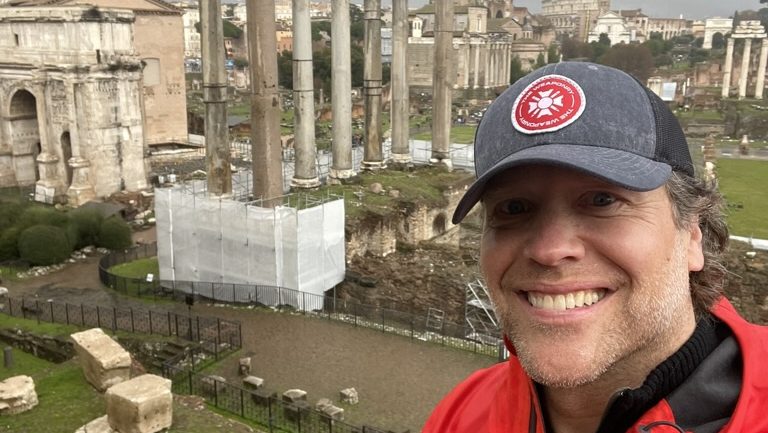
How to use milestones as the secret to your success.

If you are not careful, your life will pass by in a flash. Your career will be over in a snap. Your kids will be grown and will have flown in a Blink-182. Because time is a crafty thief that lulls you into someday thinking. Like Sugar Ray. And then it yanks that someday away just like your prankster friend, pulling your chair away just before you’re about to sit on it, Potsy.

Milestones

One of the great ways to create a far more enjoyable and successful life and create memorable experiences is to utilize the power of milestones.

Milestones are those moments on the calendar that humans have made to mark the passage of time. Those days or events offer valuable markers for accomplishments, challenges and traditions. They are there to host rites of passage and other memory-making events. And without milestones, Hallmark would have a hard time selling you paper.

You know the big and obvious milestones. At Halloween, you dress up in a costume and do candy things. At Thanksgiving, you gather with family or friends, feast, and get thanky. At Christmas, you exchange gifts, eat, drink and praise Mary. At New Year’s, you celebrate and create lists of how the next 2 weeks will be different.

Deadlines and Opportunities

But milestones also create deadlines for accomplishments and opportunities for memorable experiences.

I sit down to write every morning by 6:10am. But Tuesdays and Thursdays are milestones to publish blog posts. Every 3 weeks, I publish Adam’s Good Newsletter. And every five years, I want to publish a new book. Those are all random and arbitrary deadlines. But they become useful milestones that make my elective activities time-bound. Milestones offer navigational markers on the naked landscape of time. Which ramps up your self-imposed productivity.

I had a major speaking event yesterday, and I used it as an opportunity to get in better shape. I committed to doing 30 minutes of cardio every day for 30 days leading up to the talk, so that I would look and feel more fit on stage in front of 1,000 people. (And I requested to have no cameras in the venue, because the camera adds 10 pounds.)

I always use my birthday as a motivating milestone. I’ve also used class reunions, New Year’s Eve, and the birth of my children as important starting points, end points and exclamation points.

I have used milestones to gain traction towards health and fitness goals, to measure my business success, and to create deadlines for my entrepreneurial launches. (Which are a lot less launchy than Elon Musk, Richard Branson or Jeff Bezos’ entrepreneurial launches.)

I used the end of the COVID-19 lockdown in 2020 as a milestone to finish the first draft of my manuscript for my first book, What Does Your Fortune Cookie Say? Then I used Thanksgiving of 2021 as my milestone to publish the book. I made both of those goals happen, thanks to the power of milestones. (Since then, I have learned how to write a manuscript without a worldwide pandemic.)

I use milestones to schedule big travel. For my wife Dawn’s 40th birthday, I surprised her with a trip to Europe. We scheduled a trip to Europe in the summer before my daughter Ava’s senior year of high school. We realized that the milestone provided the last summer opportunity for us to all travel together before college obligations made summer travel problematic. Using milestones is one of the best ways to visit the big places on your life-travel list. (Using airplanes is the other best way.)

I used a milestone to plan a major move. My wife and I wanted to find a place where we could settle to allow our children to finish their schooling without moving by the time my daughter Ava entered middle school. We moved from Atlanta to Mequon, Wisconsin, a large-yarded, low-taxed, great-schooled northern suburb of Milwaukee that sits on the Western shore of Lake Michigan. We called this our 13-year home. Which meant that we would stay in Milwaukee for 13 years, until we hit another major milestone: our son Magnus’s high school graduation. Then Dawn and I are free to hit the road again and take on more adventures.

Key Takeaway

Your greatest ambitions, experiences and traditions are far less likely to happen if you don’t tie them to a milestone. Use those special days to inspire your work, to create deadlines, and to force urgency. Use them to create regular events to bring your people together. Or to reset your ambitions, spark your goal setting and help you accomplish more elective activity than you could without them.

*If you know someone who could benefit from this message, please share it with them.

+For more of the best life lessons I have learned, check out my book, What Does Your Fortune Cookie Say? from Ripples Media. And consider subscribing to Adam’s Good Newsletter.
The Power Of Enthusiasm And Teamwork.

Last week I had a fun and unique opportunity. Some of the coaches and parents of my son Magnus’s freshman football team asked me if I would come speak to the team at their Wednesday night team dinner before their final game of the season on Thursday. I jumped at the chance, nearly pulling a hamstring in the process.

The team had a frustrating season and hadn’t lived up to their own expectations. Despite good coaching and plenty of talent, they were going into their 8th game with a 2-4-1 record. They were just 5 points away from being 4-3. Which is like the difference between being cute and having a nice personality.

So on Wednesday night, I talked to them about two things that could have a major impact on their final game.

First, I talked about the energy and enthusiasm they brought to the field. The psychological force you bring to the game offers a major advantage. I noticed that they weren’t bringing their full allotment of energetic horsepower to their games, and that hurt their play. (It was like their 10-gallon hat was feeling 10-gallons flat, and they hankered for a hunk of cheese.)

Then I talked about the importance of playing as a team. Even when you make mistakes, and everyone makes mistakes, you have to support each other and move forward. You have to include everyone in the team huddle, treat each other like a band of brothers, because you are stronger when you play together. Otherwise, you’ll all end up living in a van down by the river.

I also shared that when I played football and the other team started pointing fingers and fighting with each other, we knew we had won. Because when teammates fight each other, they beat themselves.

To add color, I told the team that my freshman football teammates were still many of my closest friends. We stood up in each other’s weddings. We helped each other start businesses. And even though we are scattered from New England to California, we still have a group chat, do team Zoom calls, and get together back home every few years. And we have more inside jokes than most people have outside jokes.

This group of 14 and 15-year-old boys listened intently as I encouraged them to bring their best energy and enthusiasm to the field on Thursday. They paid attention as I urged them to end the season on a high note, with the right trajectory going into the offseason, their next sports, and the next football season. I encouraged them to play like a team, feed off each other’s energy, and good things would happen.

So what happened?

From the moment the boys took the field, I could see the difference in their attitude, energy and team dynamics. They were fired up, they were connecting with each other, and ready to bring the heat. (And maybe da noize, and da funk.)

And they did.

On the opening drive, the Homestead Highlanders’ freshman team was hitting on all 11 cylinders. The boys marched down the field with attitude and scored a touchdown and a 2-point conversion to go up 8-0.

On their following defensive series, they bent, but they didn’t break. They played united as a team. Then, cornerback Markey Walker intercepted the opponent’s pass at the 3-yard line. With a key block from my son Magnus and an escort of teammates, Markey returned the interception 97 yards for a touchdown. Boom!

That play fanned the flames of their team spirit. (Not Teen Spirit.) And they just kept rolling. The score at halftime was 20-0.

They came out sharp and aggressive in the second half. Like aged Wisconsin cheddar. In fact, when the opponent fumbled the opening kickoff, our boys jumped on it. A minute later, we punched the ball in for another touchdown.

At that point, the opponent began fighting with themselves and blaming each other. And our boys knew they had won.

Our team scored again. Everyone got significant playing time. The sideline was spirited and the play on the field was inspired. The camaraderie was palpable. And the boys were a force to be reckoned with. The coaches were pumped up. The parents were proud. And when the final whistle blew, the scoreboard accurately summarized the story of the game with the final score of 33-8.

After shaking hands with the opponent, a fired-up group of young men rushed to gather in the endzone, as a team, one last time. The team energy was palpable. The pride and togetherness hung like a halo over the huddled players and their coaches. It was the perfect ending to an imperfect season. A great step in the right direction. And proof of what happens when you play together, with energy.

I am thankful for the opportunity to talk to the boys the night before their last game. I was extremely proud of the way they took full ownership of their mental approach to the game. And I am delighted to see this group finish on such a high note. I hope that over the course of their high school careers they create deep and lasting relationships with each other that last a lifetime. Like the relationships I have with my high school football teammates. And I hope that they learn the most important lesson of all. And that is that the same things that make you successful in sports, make you successful in life. Which is why youth sports are so important.

*If you know someone who could benefit from this message, please share it with them.

+For more of the best life lessons I have learned, check out my book, What Does Your Fortune Cookie Say? from Ripples Media. And consider subscribing to Adam’s Good Newsletter.

11 Things I Have Learned From Publishing 1,100 Blog Posts.

10 years ago, in the fall of 2015, when Donald Trump was still best known as the star of The Apprentice, I began publishing the Adam Albrecht Blog.

I had just read a book by Jeffrey Gitomer called Little Black Book of Connections, where Gitomer wrote about the importance of having a platform to broadcast your ideas. By doing so, you can share your experience and perspective with many people at once. Which is a far more effective and efficient way of connecting and staying in touch with people than communicating one-on-one. Like Hall & Oates.

At the time, I was planning the launch of The Weaponry, the advertising and ideas agency I have led for the past 9.5 years. I had already dabbled with 6 different blog attempts at that point. In each case, I stopped writing almost as quickly as I started. I simply didn’t have the motivation or the habit to keep them going.

But The Adam Albrecht Blog stuck. Like bubble gum in hair. I spend as much time writing each week as I do eating food or exercising. I spend as much time writing as I do commuting to and from work each week.

All this writing has changed my life. The blogging has led to writing books, which have led to amazing speaking opportunities all over the country. (I would also be happy to speak in any of the other 135 countries where my blog has been read.)

The writing keeps my thinking sharp, like aged cheddar. It creates something of value to contribute to the world 2-3 times each week. Remember, your value to others is directly related to your contribution.

Additionally, because I share all of this writing on broadly visited platforms, I am often top of mind when other people have relevant opportunities. Which means I get more than my fair share of great opportunities. Which is the whole point of advertising.

The Math

This is my 1,100th blog post. It’s a crazy big number to think about. But it’s a simple example of small, consistent efforts compounding over time. 1,100 published blog posts over 10 years equals 110 posts per year. That means, on average, I have published a new blog post every 3.3 days. Or 2 blog posts per week, consistently for 10 years.

If all this math talk sounds like the teacher from Charlie Brown to you, just know that I have written a lot over the past decade. And while I have shared a pile of ideas, lessons and insights with the blog-accessing world, the person who has learned the most through this process is me. Because if you don’t learn a great deal from writing that much, you probably aren’t all that smart to begin with.

11 things I have learned from publishing 1,100 blog posts.

You can’t get to 1,100 without the first step.

1. Get started.

While a journey of 1000 miles begins with a single step, a blog of 1100 stories begins with a single post. I started with a post titled The Perfect Agency Project, which I published on November 9th, 2015. (That was also the name of the blog for the first few years.) Two days later, I followed up with a post titled The perfect agency could be like the DMV. On November 17th, 2015, I published the seminal work, The A-holes Rule. And I was off and writing.

Those first 3 posts gave me a taste for what could be. Just like Neil Armstrong said, it was the first small step that mattered most. If you want to create a blog, podcast, YouTube channel, newsletter, column or any other knowledge share, don’t overthink it. Just get started. That is the pass/fail of any undertaking. Action is the best teacher. You can figure out the rest as you go. Need more help here? Try reading Why you should be an Imperfectionist, like me.

This is my blogging in-action shot.

2. Write About Things You Really Care About.

This makes all the difference. Don’t just write about things you think you should write about. Choose things you really care about, and really think about. It will mean you have a deep well of inspiration. I write regularly about advertising, entrepreneurship, business, creativity, and self-improvement and human relationships.

Unlike a magazine, newspaper or professional blog, the beautiful thing about a personal blog is that you don’t have anyone telling you what you can and can’t write about. I have developed a rule not to complain in my blog posts. But other than that, anything goes. Including these random posts about the fly that landed in my ranch dressing and a strange encounter I had at my local Piggly Wiggly.

3. Create A Strong Writing Habit.

I quickly realized that the best time for me to write is first thing in the morning. I wake up at 6 am and write for an hour, Sunday through Thursday. I don’t think about it. I just do it, automatically. Like Nike.

My writing habit was created in the first year, and it made everything easier. Find a time that works for you every day, or every weekday, or every weekend day, and make it happen. Then watch the production pour in. As Will Durant (not Aristotle) wrote, “We are what we repeatedly do. Excellence, then, is not an act, but a habit.” If you consistently write, you are a writer. And as Matthew McConaughey said, “All write, all write, all write!”

4. Don’t Worry About Readership.

I would love it if every blog post was read by millions of people. But I learned early on that even when you write really good posts on really important topics, you never know what is going to be read and what won’t. You’re blog relies on a series of algorithms to get in front of people. Whether you are posting it on WordPress, sharing on Facebook, LinkedIn, Medium or other platforms, the algorithms play gatekeeper. So write to positively impact just one person, and you have created real value. I also learned that it is valuable to create your own newsletter so that you control the channel. So write good posts that offer value. That is all you should ever care about. Well, that and human rights. 

I’ve never heard this guy sing, but I can tell he has a distinct voice. Or he couldn’t rock that hat.

5. Create Your Own Voice.

I have discovered that my favorite writing style mirrors my speaking style. So I write the way I talk. Which is full of random asides and pop culture references. Because that’s the way my mental machine works.

But I have also landed on a recipe that creates a distinct flavor for my writing. I want everyone who reads my work to learn a little, laugh a little and lift a little. Which means my writings should be educational, humorous and optimistic. Most non-fiction writing is educational. It’s the addition of humor and optimism that makes my writings more Rocky Road than vanilla. Find your own flavor. Blogging is great for helping you find it. Just keep writing and experimenting until you find a style that suits you. Like a business suit, jumpsuit or birthday suit.

6. Start A Draft Whenever You Have An Idea.  

Inspiration for posts can come from anywhere. When inspiration strikes, write the basic idea into a quick draft on your phone, computer or notebook. I currently have hundreds of unpublished drafts. In fact, my blog is so drafty I am regularly served ads for weather-stripping. Your ideas are likely to disappear if you don’t write them down. Having several drafts started gives you plenty of options to work with on days when you are less inspired to write something new.

7.  Posting Brings Good Things.  

Every time I publish a post something good happens. I get an opportunity or an introduction. I hear from a friend or family member. Or I get a kind, thankful or supportive comment from a reader. And sometimes, I get asked to emcee a charitable luncheon by my friend Stacy Sollenberger (second from right), where I meet a future employee who helps bring great new opportunities to The Weaponry. Or my friend Tim McKercher forwards a post to Vanilla Ice, who tweets the post out to the world. You know, that kinda stuff.

 8. There Is Always Something To Fix.

When I look back at my published posts I feel like Michael Jackson looking at his face. Because there is always something I want to change. Always. I would add another example, smooth a transition, insert another joke. (Or take out a joke I would no longer make.) But the blog posts must get published. Published is better than perfect. It’s a blog. Not a book. You get a round of writing. A round of improving. And then you have to push that post out of the nest to fly or flop.

9.  The Real Impact Is Not Measured In Views, Follows, Likes Or Comments.

Let me address measurement one more time. After having published 1,100 posts, I am certain that you can not measure the impact of a blog in views, followers, likes or comments. The true impact of a blog is in how it impacts a life. It is in how the story, insights, information, motivation or inspiration you share improve the lives of your readers.

Blog posts are meant to help in some way. That help is not measured in likes and comments. It is measured in things like confidence, reassurance, life lessons learned, successful actions taken, and opportunities seized. Never lose sight of this. The real impact of your blog may not be recognized for years, or even decades. Be patient. And just keep writing.

10.  The Blogger Learns More Than The Reader.

When I first began writing my blog I expected to teach others a bit about the things I write about. But I learn more than anyone else. Regular writing forces a lot of self reflection, and analysis. You start viewing everything in life as lessons and insights worth sharing. The writing and editing process teaches you to clarify and refine your thinking. You draw scores of new connections and aha’s along the way. #takeonme  So regardless of whether or not anyone ever reads your writings, you will profit from the writing itself.

11. You Can Create A Massive Library Of Knowledge.

My regular blogging habit over the past decade has resulted in an estimated 550,000 words published. That is the equivalent of 11 full-sized, 50,000 word books. That means I have written a shelf worth of books for your home library. It is my contribution to the compounding pile of human knowledge. And it would take you a long time to read it all. The quantity of information, insights and experiences I have shared is almost beyond my own comprehension. But, like Sonny Bono, I am glad I have shared so much. It has provided as least one more perspective for others to consider as they navigate their own adventure.

Key Takeaway

Blogging pays off. But it pays off slowly. You have to be patient. And persistent. When you are, the cumulative effect of writing and sharing good work regularly increases your value to others. Which in turn becomes valuable to you in ways that are both monetary and life-i-tary. Blogging keeps your voice and your viewpoint top of mind for others. Which means that you are both recently and relevantly recalled when opportunities surface. It works for me. It can work for you too. And despite all the tips it really comes down to this:

Think, Write, Review, Publish, Repeat.

Thanks for reading. I really appreciate your time.


*If you know someone who could benefit from this message, please share it with them.

+For more of the best life lessons I have learned check out my book, What Does Your Fortune Cookie Say? from Ripples Media. And consider subscribing to Adam’s Good Newsletter.
Success Is A Percentage Game.

Success is a percentage game.

The more options you create, the more success you will find.

Comedians know this.

The more jokes you come up with, the more likely you are to have really funny jokes.

To be a raging success, you write lots of jokes. Perform those jokes in front of small crowds. Keep only the ones that work. Toss the rest. Repeat.

If you want more innovation, explore more what-ifs. While it may only take 3 licks to get to the center of a Tootsie Pop, it took Thomas Edison 10,000 attempts to create a light bulb. (And it took Natalie Merchant 10,000 Maniacs to create a hit song.)

The more people you know, the more likely you are to know a person who can help you open the next door, overcome a challenge, or offer you a kidney.

To find your prince or princess, you must kiss a lot of frogs. Or frogettes.

To catch one muskie, studies show you have to cast an average of 3,000 times.

To create a bag of tricks, you need many tricks. (And a bag.)

At The Weaponry, the advertising and ideas agency I lead, one of our hallmarks is that we explore a lot of options.

We explore a wide variety of strategies.

We explore as many creative options as the time and budget allow.

Great advertising doesn’t come from crafting one great headline. And designing one look.

There are often hundreds of headlines explored when creating a single ad. And dozens, if not hundreds, of looks.

It creates a large population of options to choose from. And large populations increase the potential for greatness.

So consider many strategic options.

Consider many, many creative options.

Consider many candidates.

And life partners.

Write a lot of jokes.

Pick only the very best ones.

That’s how you do smart things that set you apart.

Key Takeaway

To be successful, you first have to be productive. Create lots of options. You will both become better and create better by doing more. So drill more holes. That’s how you find the gusher.

*If you know someone who could benefit from this message, please share it with them.

+For more of the best life lessons I have learned, check out my book, What Does Your Fortune Cookie Say? from Ripples Media. And consider subscribing to Adam’s Good Newsletter.
Act As If.

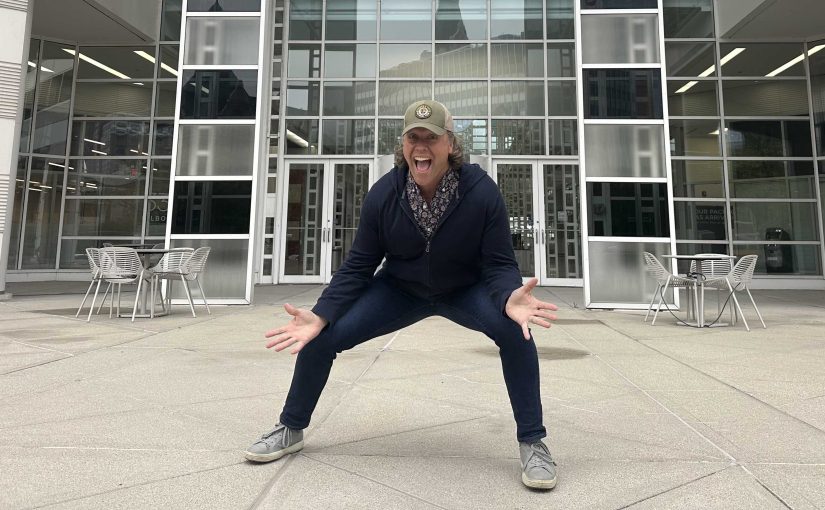
Go through life as if all of your dreams have come true.

Or are coming true.

Act as if you are the you that you imagined you would be.*

Do the things that the person you want to be would do.

Make the decisions your ideal you would make.

Act as if you have the role you want. And maybe the roll you want. (Kaiser, Lobster, Tootsie)

Act as if you are the person who does what you want to do.

Talk the talk.

Walk the walk.

Think the way you want to be.

And you will become the person you think you are.


If you know someone who could benefit from this message, please share it with them.

+For more of the best life lessons I have learned check out my book, What Does Your Fortune Cookie Say? from Ripples Media. And consider subscribing to Adam’s Good Newsletter.

*The quadruple-you sentence. The Triple Lindy of sentences.

Why You Should Embrace Last Minute Opportunities.

I have some friends who produce and host a TV show. They call me when a planned guest cancels and they need a replacement on short notice. (And no, the show is not Cops.)

There is a teacher in my kids’ school district who has me on speed dial when they need a last-minute classroom speaker. Even though my kids are not in their class and I can’t barter favors for grades.

I was once asked if I could speak for 15 minutes to a company meeting of 1,000 people, just an hour before I was supposed to be on stage. I had nothing prepared. But I did it anyway. I figured that even if I crashed and burned, it would make for a good story. But if I crushed it, I imagined there was an outside chance that I would earn a lifetime supply of ham.

Recently, a woman who has hired me 3 times to speak recommended me to a colleague who had a speaker cancel a week before her big event. I had never given a talk on the topic they were looking for. (But I did stay at a Holiday Inn Express.)

And over the course of my advertising career, I have had too many last-minute requests from clients for even Count Dracula to count.

Be At The Top Of The Go-To List.

I step up and say yes to last-minute requests all the time.

Because I am a problem solver.

Because, like a firefighter, I can be ready for action on short notice.

Because I am prepared.

Because I stay ready.

Because I figure it out.

I have a process that allows me to deliver on short notice. Or nearly no notice.

Being the go-to backup plan when things go wrong is an honor.

People don’t forget those who helped them out when they were in a tight spot.

Throughout your life, you will have many opportunities to save the day.

Save it for others whenever you can.

Plus, more repetitions make you better at what you do.

So you improve through the process, too.

It bolsters your brand reputation.

And I have heard there are better accommodations in Heaven for those who help others here.

Key Takeaway

Be at the top of other people’s last-minute list. Save the day whenever you can. Be the person others turn to when they really need help. You will always help yourself in the process.

*If you know someone who could benefit from this message, please share it with them.

+For more of the best life lessons I have learned check out my book, What Does Your Fortune Cookie Say? from Ripples Media. And consider subscribing to Adam’s Good Newsletter.