Why brainstorming is a bad idea and what to do instead.

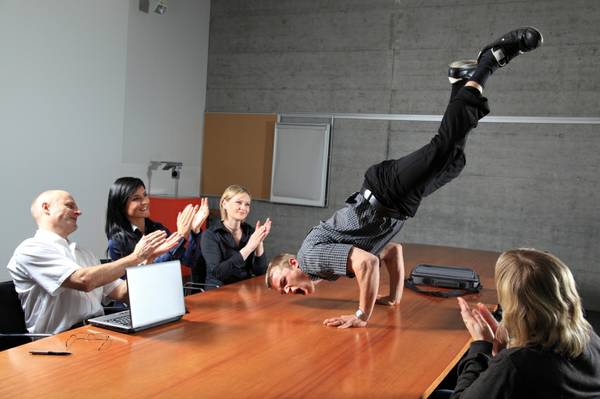
I have never liked brainstorming. Ok, that is not entirely true. At first, I loved brainstorming. You know, the classic meeting that sounds like barnstorming, but without the barns, biplanes and scarves. In brainstorming sessions, a group gathers in a conference room with markers and candy to generate a collective storm of creative ideas that come from the brain.

In the very beginning of my career, I loved these meetings because I was good at them. Brainstorming sessions allowed me to show off just how stormy my brain was. I would blast the room with my ideas. I would build on the ideas that others stormed. I felt like I was in my element. Like a hottie in a swimsuit contest in Panama City on Spring Break.

But then I started realizing what was really happening in those brainstorming sessions.

  1. A small number of people shared a large number of ideas.
  2. A large number of people shared a small number of ideas.
  3. Too many people weren’t sharing any ideas. They were just eating the candy.

Boo.

The key to valuable ideation is volume and variance. You need to generate a lot of ideas. Because great ideas are a percentage of total ideas generated. You also need variance because you want different types and styles of ideas to compare and contrast with each other to weigh the relative benefits of each approach. If your volume is low, or your variance is low, your options are low. And your creative possibilities are limited.

Social dynamics also degrade the potential power of brainstorming sessions. The loudest and most influential people tend to Boss Hogg the air time. They create a hierarchy that prevents others from wanting to share ideas or stick their neck out with contrarian ideas. Which is what brainstorming sessions must have to provide maximum value.

Once I recognized how inefficient these group thinking sessions were I became a born-again non-brainstormer. And I have never liked them since.

A Better Solution

The best way to create the most ideas is to have people think on their own and write down as many ideas as possible. By ideating independently, each person maximizes their thinking time, which leads to more ideas, and a greater range of exploration. An hour spent with 10 people generating ideas independently means everyone has 1 hour of air time. That’s 10 hours of idea generation. Which beats 10 people together sharing 1 hour of air time every time. (See the talk show The View for proof.)

For maximum effectiveness, the ideas should be collected and shared anonymously, so they are evaluated without biases towards their creators. Once all of the ideas are available it is valuable to gather, evaluate, discuss and build on the ideas as a team. And you can still serve candy and sniff markers.

At The Weaponry, the advertising and ideas agency I lead, we’ve created something we call Seed Sessions. In these sessions, we share a broad range of pre-generated ideas that we call seeds. Each seed is shared as a slide with 3 elements.

  1. The name of the idea
  2. A short paragraph summarizing the essence of the idea
  3. A visual representing the idea

In a Seed Session, we may sow anywhere from 20 to 40 seeds. We discuss the ideas and build on the favorites. Everyone in the room has the opportunity to feed and water them. We shine sun on the favorites. And by the end of the session, the seeds have grown into vibrant plants full of potential.

The Seed Session process offers a great way to maximize idea generation and utilize the collective intelligence of the group to identify and build on the best ideas. Which is exactly what brainstorming sessions are intended to do. *Unless brainstorming sessions were actually created by candy companies to sell more candy to adults. Which is a pretty sweet idea.

Key Takeaway

Great ideas create competitive advantages for organizations. To generate the best ideas you should maximize both the volume and variance of your ideas. This is best done through individual ideation, which maximizes thinking time and minimizes social inhibitors and biases. Share the generated ideas and build on them together. It’s the greatest way to harness the collective brain power of your team.

*If you know someone who could benefit from this message, please share it with them.

+For more of the best life lessons I have learned check out my book, What Does Your Fortune Cookie Say? from Ripples Media.

The most important work you do is invisible.

We often think of work as visible. Showy. Demonstrable. That used to be the case. For most of history, until the latter half of the 1900s, most work was easy to see. It was blue-collar and physical. And it drove a lot of sales of Bengay.

But today, machines do much of the physical work. This means that much of the important work you do is not seen. Because it happens in your head.

Today nearly 40% of jobs are classified as managers, officials or professionals. Roughly the same percentage are service jobs. While I am no mathemetician, I think that means that 80% of jobs require you to think. Like Aretha Franklin said. Because today, most work is mental.  

It is easy to tell when a manual laborer is not laboring. The person on the construction crew leaning on the shovel is both conspicuous and maddening. But when your work is not easily visible, you must bring your own mental discipline to stay on task. Focus is the key to mental productivity. Thinking work requires you to defend your focused time to get the thinking things done.

Focus is critical to strategizing and organizing in your head. Focus is needed to then translate those ideas to your coworkers, customers and partners for alignment and execution. Real focus. Not just focus pocus. 

The work performed by your mental machinery is the most valuable type of work there is today. The better you are at this work the more valuable you are to your team, and the more value you create for others.

Key Takeaway

Get good at your own inner workings. Master the work that no one else can see. Create structure and space to think and strategize. Organize the world in your head so you can organize the organization in the real world. This means both finding the quiet to do the work, and the discipline to be diligent about the work you must do to make a difference.

*If you know someone who could benefit from this message, please share it with them.

+For more of the best life lessons I have learned check out my book, What Does Your Fortune Cookie Say? from Ripples Media.
Why the computer in your head is your greatest asset.

In 2006 Apple began running a popular ad campaign called Mac Vs PC. In the campaign, the 2 computers were personified and represented by 2 very different spokespeople.

The Mac dude was an easy-going, fairly hip cat who always seemed to know things. The PC guy was nerdy, out of touch, and always seemed less ready for the world. The 2 guys were clearly supposed to represent Steve Jobs and Bill Gates, only without the telltale money coming out of their wazoos.

Watching the commercials felt like you were being forced to choosing which team captain you were going to join for a game of Red Rover, nerd style.

But the idea that there are just 2 different types of computers is a gross oversimplification. The truth is that there are as many different computers as there are humans on the planet.

Your Personal Computer

We all run on the personal computers in our heads. Yours is unlike any other. It has different hardware. It operates different software. It arrives at different calculations and conclusions based on different inputs, filters, and if-then statements.

Your machine also has its own bugs. And its own glitches. Which are affected by how many windows are open, how long it has been since you rebooted, and that soda pop you spilled on the keyboard.

The computer in your head has rare and valuable capabilities. It can produce outputs that no other computer on Earth can. Never forget that. And never underestimate the power that your unique thinking has on the world around you.

Key Takeaway

We all think differently and process the world differently, thanks to the personal computers in our heads. Take good care of yours. Appreciate it. Upgrade it as you are able. Respect the conclusions of others. They are processing the world differently than you are. It’s all part of the master design. And we all benefit from the diversity of thought.

*If you know someone who could benefit from this message, please share it with them.

+For more of the best life lessons I have learned check out my new book, What Does Your Fortune Cookie Say? from Ripples Media.

How deeply do you think?

Great ideas come from time spent thinking.

One of the best ways to think is to write.

Writing is like mining for ideas.

But with less black lung disease.

And more Carpal tunnel syndrome.

Every line you write digs deeper into a vein of thought.

The more you write, the digger you deep.

The digger you deep, the more you discover.

If you force yourself to sit down and write for an hour or 2 or 3 you will discover new thoughts and ideas that you had never considered before.

The pencil is your pick.

The pen is your shovel.

The keyboard is your drill.

Write to find new ideas.

Mine deep.

The more you write the more you will reach.

There are deeply buried gems waiting for you to discover.

But the only way to unearth them is with your writing utensils.

Scratch with each stroke.

Tap and type and claw toward those ideas.

Don’t stop short.

Get to the gold.

Discover the diamonds.

Mine for the motherlode.

The clues on the surface give you a starting point.

But the treasure is always deep below the surface.

Well below the obvious.

So write and find it.

Write fast and furiously. (Like Vin Diesel)

Write slow and smart.

Get to the spot where each word feels hard.

And important

And real.

And new

Go as deep

and

far

as

you

can

think

to

go.

Why you are less creative today, and what to do about it tomorrow.

The Torrance Test is like the IQ test, but for creativity. New research on the Torrance creativity scores by researchers at the University of William and Mary show that U.S. Torrance creativity scores have been dropping steadily since the ‘90s. (The decade not the age.)

One of the main reasons for our decrease in creativity is that we are no longer doing one of the most important things you need to do to think creatively. It is not creating Shrinky Dinks, wearing acid wash jeans, or rocking a mullet.

We no longer simply sit and think.

We don’t allow ourselves to be quiet and un-entertained. Today, we have cured ourselves of boring moments with our arsenal of digital devices, televisions, and computers. As long as you have electrical power you have something to do to fill your empty time.

But the ubiquitous digitization of our planet has a devastating effect on our creativity. It is like the burning of the South American rainforests. Or the melting of the polar ice caps. Except what we are losing isn’t trees or ice. It is our creative thinking and innovation.

So how do we solve this?

We need to be bored.

We need to stop entertaining ourselves at all times.

We need to turn our digitals off regularly.

We need to lie quietly in bed at the start and end of the day.

We need to turn our idea generators on and let them run uninterrupted for long stretches.

We need to reprogram ourselves to use these incredible digital machines as tools for creativity rather than time killers, entertainment crutches, and boredom erasers.

Creativity Tip: While you are waiting you should be creating.

Employers need to adjust expectations too. If you expect your employees to respond to emails, calls, texts and slacks quickly, you are programming them to check their digitals often. And that leads to the type of check-in habit that eliminates room to think. Instead, we should slow down our response expectations. And put a premium on regular stretches of total focus on creation, problem-solving, and strategic thinking.

Key Takeaway

The longer you spend thinking the closer you get to great ideas. Make sure you spend the time you need to get all the way there. Long, uninterrupted stretches of thinking are where the gold is. So go there. Get yours. You’ll find your quiet time pays off in many valuable ways.

*If you know someone who could benefit from this message, please share it with them.

Why it is so valuable to wonder as you wander.

In 2005 I spent a week working in Iceland and never saw the sun go down. While in the land of the ice and snow (with the midnight sun where the hot springs flow), I enjoyed a few closeup experiences with icebergs. In fact, one day we filmed my friend Thor Kjartanson waterskiing among freshly-calved icebergs. Which made Thor the most badass Viking since Fran Tarkenton.

Icebergs are magical creations. They are beautiful. Like floating sculptures. Icebergs are always moving and always transforming. However, as magnificent as one of these floating masses of Titanic-sinking ice art is to look at, roughly 90 percent of an iceberg is below the surface, and thus goes unseen.

Below The Surface

I feel like an iceberg. On a typical day, 90% of my activity is below the surface and goes unseen. Because my mind is always going somewhere. I am always thinking, wondering, and building in my brain.

Mental Jogging

One of my favorite hobbies is mental jogging. I simply start to think about anything I am interested in. Then I quickly jump from topic to topic and idea to idea, noting the connective tissue between each. It’s an enjoyable and useful form of mental parkour. (If you don’t know what parkour is check out this video explanation and the hilarious twist on the sport from The Office.)

Valuable Thinking

I spend a large percentage of my time thinking. But I am not just thinking about things I need to do or remember. I am exploring, creating, ideating and wondering as I wander. Like Fred Savage.

But despite the millions of miles of mental jogging that I have logged, only recently have I ever thought that not everyone does this. Which I think is a form of thinking bias I didn’t think I had.

I can jump into full ideation and creation mode, anywhere, anytime. I have made a career out of it. Heck, I have created two businesses out of it, including my t-shirt business, Adam & Sleeve, and my advertising and idea agency, The Weaponry.

This person has magical feet that leave the footprints of many people.

Get Quiet And Get Thinking

I can think of new ideas, adventures, inventions and connections all day long. You can too. But do you? It simply requires a little quiet spot in your day. You can find time while you drive, or shower or lie in bed. Don’t fill your quiet moments with digital distractions. Allow yourself a little boredom, and let your thinking fill the void.

Thinking is the most valuable activity you can do.

Here are 14 Reasons Why:

  1. Thinking is what creates new ideas.
  2. Thinking is where winning strategies are born.
  3. Thinking leads to paradigm-shifting innovations.
  4. Thinking is where entertainment comes from.
  5. Thinking solves problems.
  6. Thinking creates opportunities.
  7. Thinking creates advantages and helps reveal them.
  8. Thinking changes perceptions and outlooks.
  9. Thinking inoculates you from a sense of helplessness
  10. Thinking provides freedom.
  11. Thinking creates adventure.
  12. Thinking turns the tables
  13. Thinking develops habits
  14. Thinking can give your courage, and heart, and a brain, and helps you find a lift back home.

Key Takeaway:

Thinking is the seed from which all great realities are born. To improve both your situation and your outlook, improve your thinking. Make a habit of thinking, and your thinking habit will make you.

*If you know someone who you think would benefit from this message, please share it with them.

Why right now is the perfect time to create outside the lines.

If you want to develop as a creative thinker you have to color outside the lines. I don’t mean the way a young kid does when they have no sense of how to stop themselves when they get to a delineating line on a piece of paper.

What I mean is that creative thinking can not and should not be contained. To improve your creative thinking don’t simply create when and where you are told to create. Don’t create only when a teacher gives you a creative project. Don’t create only when a boss says they want you to help develop a new idea for the summer picnic (which was a fun event we used to have pre-covid, or what I am now calling PC).

As a creative thinker, you should create all the time, because you can’t help thinking, creating and making stuff. And we should all see ourselves as creative thinkers.

Since the initial covid lockdown back in March, I have written over 80 blog posts. I started an illustrated cartoon series called Kirky. I have written the manuscript for a book, which I am deep into the second draft of right now. I am working on bringing a new brand to life in my spare time with my son Magnus and friend Dan Koel. And I have been using Moleskin notebooks the way most people use mousetraps to catch my ideas and make sure they don’t get away.

I always ask people interviewing for creative jobs what they do creatively in their spare time. This isn’t just a curiosity. It helps me tell if you are a true creative thinker who can’t help but develop ideas and bring them to life. Or if you are someone who wants a fun job. But if they tell me they like to make furniture and lampshades out of human remains I know not to hire them. #SorryNotSorryEdGein

One of the women who freelances for The Weaponry (whom I hope to hire full time) is regularly sharing her extracurricular creative projects on social media. I love that. It shows me that she is really a creative thinker at her core. Those kinds of thinkers don’t have to be spurred into action. They can’t stop the thinking and the valuable actions that follow even if they wanted to. Those are the most valuable thinkers to have on your team. And they can’t be replaced by an app or a monkey, or automated by a machine. #JobSecurity

My great friend Betty Garrot, who lived across the street from me in Atlanta, is a Pediatrician by day. But Mrs. Dr. Garrot as we call her at our house, because her husband Crain is an Oncologist, paints a lot. Her home is full of beautiful paintings she has created of scenes she has witnessed around the world. But she paints so much that I expect she has a secret self-storage space stuffed full of paintings that she doesn’t have wall space for in her home. Betty is an amazing painter. But she rarely paints for money. Because it removes the joy of creating. Which is why she does it.

However, I have recognized that some people simply don’t know that they can think and act creatively when they aren’t asked to. They don’t realize that they can create their own assignments and deliver their own ideas.

So here is your reminder to create. Write, paint, photograph, draw, bake, cook, brew, garden, dance, make music, design, develop a business idea, host, decorate, or whatever you like to do to tap into and express your own ideas. Do it even if no one asks you to. Even if no one is watching. Even if you are not getting paid. Even if you are not great at it at first. Because it is great for your brain and your mental health.

Key Takeaway

When I visited Iceland several years ago I met a man named Sven (of course), who told me that Icelanders embrace the short and dark days of winter to engage in their creative activities. Now that we are to our short days and long nights in the Northern Hemisphere, I encourage you to do as the Icelanders do. And make the darkest days of the year the brightest days for thinking and creating.

*If you know someone who could benefit from this message, please share it with them.

It’s a great time for you to take more showers.

There are a lot of activities you can’t do right now. In fact, most things outside your home that involve anyone other than a cashier, pharmacist, healthcare worker or delivery professional are currently off the table. At the same time, many of the hard working among us have been prohibited from working. Which creates another level of challenges.

Time to Think

When you can’t take action, the most valuable thing you can do is think. I have spent my entire career as a professional creative thinker. I’ve worked through thousands of business challenges of all sizes and shapes (except for a tiny rhombic dodecahedron). And the great solutions always come during times of deep, focused thinking.

And there is no place to think like the shower. It’s a perfect environment to relax, clear your head and do the type of thinking that makes a real difference. The type of thinking that solves problems, sparks valuable new ideas, and helps you rebalance again. All while controlling your dandruff. #multitasking

The Thinking Prescription

  • Find some time each day for a long hot shower.
  • Make sure there is no music or sound from a TV.
  • Shower by yourself. (Otherwise you’ll be thinking other thoughts.)
  • Relax. And think of what you can do right now. For yourself, your community, your clients, your family or friends.
  • Think about what you can do tomorrow.
  • Think of the opportunities.
  • Work through your work challenges
  • Think bigger than you think you should.

You’re sure to come out with a clear head and new ideas. Oh, and you’ll also be clean. And right now that’s more valuable than ever.

Key Takeaway

The 2 most valuable ingredients of success are strong actions and strong thinking. When you can’t act, think. It will help you solve problems and create a plan of action. Thinking  unlocks doors. And it reminds you, in case you forgot, that you are still in control.

*If you know someone who could benefit from this message, please share it with them.

6 things I didn’t do on my trip to India that will surprise you.

My childhood friend, Marcus Chioffi, once made an interesting statement about me. He said,

‘Adam would be the best person I know at solitary confinement. He would just entertain himself.’ -Marcus Chioffi

I was reminded of Marcus’s statement on my recent work trip to Bangalore, India. I had two 24-hour travel days: one going to India and one coming back (you probably could have guessed that, but I didn’t want any confusion). I had back to back 10-hour flights each way. And what I did on those 10-hour flights is not as interesting as what I didn’t do.

6 Things I Didn’t Do On My Travels To India.

  1. I didn’t watch any movies.
  2. I didn’t watch any TV.
  3. I didn’t listen to any music.
  4. I didn’t play any games.
  5. I didn’t do any puzzles.
  6. I didn’t mind the travel at all.

IMG_2508

Solitary And Confined.

The long flights gave me a lot of time to think, which is one of my favorite hobbies. I watched the flight tracker on the screen in front of me, and I looked out the window.  Combined, those two activities provided me with plenty to think about.

I connected dots about global geography. I flew over beautiful places like The Netherlands. I flew over inhospitable places in the Middle East that have been boiling with cranky people. And I realized that I may be cranky too in such a desolate environment.

IMG_2578

Reading

I finished reading the book Thinking Fast and Slow, about behavioral economics. I read Yes, And…, which is about Second City, and what we can all learn about life and business from improv. My friend, and regular Weapon, Tony Sharpe gave me the book. Thanks Tony.

I also read the body laungauge of a couple of seatmates that said, ‘Don’t talk to me you smiley American! It’s the middle of the night!’ So I didn’t talk to them. Their loss.

Work

The Weaponry has several exciting projects going on right now. So I had a lot of enjoyable work to do. I even texted a project estimate to a new client just after takeoff, because sometimes client service and FAA rules are in opposition.

Writing

I also wrote. (In fact, as I write these words I am flying over Thunder Bay, Ontario). I wrote a lot of notes about my trip and my experience. I found almost no time to write when I was in India because my sleep-eat-work* schedule was so dense there was no time for anything else. (*not to be confused with my Eat. Pray. Love. schedule.)

Key Takeaway

I enjoyed my flights to the other side of the world and back a great deal. They never felt painful, prisony, torturey or claustrophobic. I never felt like I needed to be entertained. I loved having so much time to think, read, write and observe. Most importantly, I never felt like I was killing time. I felt as if I was using the time I had. Which is what I hope to do if I ever do end up in solitary confinement.

5 reasons brainstorms are a waste of your time and money.

I have an idea. Let’s not do brainstorms anymore. Most organizations believe brainstorm sessions are a great way to generate a lot of ideas quickly. While you may feel like you see a lot of new thinking in these sessions, you don’t see what you don’t see. As a professional creative thinker, I consider the brainstorm session a highly visible, but highly inefficient way to develop new ideas. I thought about hosting a telethon to raise awareness of this problem. But I didn’t know where to find ten landline telephones. So this post will have to do.

Dissecting the Brainstorm Problem

One of the reasons brainstorms are so popular is that in a one hour session you can generate a visible collection of new ideas. But the pile of ideas you leave the meeting with is misleading. Because brainstorm sessions are like gathering 100 horses and only generating 50 horsepower. You would be better off letting those ponies run alone.

horse-herd-fog-nature-52500.jpeg

 5 Problems With Brainstorms

1. Brainstorming is made for extroverts.

Brainstorming is a game where you rapidly blurt out half-baked ideas in front of a small crowd. For extroverts this is good sport. But to the other 50% of the planet this is an uncomfortable and unnatural activity. The quieter half of the population thinks more than they speak. They generate a lot of ideas on their own. Which means that the brainstorm is simply not their natural habitat for idea generation.

QGWNg5J

2. The 80/20 Rule

In line with the core tenants of the 80/20 rule, 80% of the good ideas in a typical brainstorm come from 20% of the people. Brainstorms give the false impression that everyone is birthing ideas. But this is not the reality. If you conducted a brainstorm in a petri dish, and observed it under a microscope, you would see a small population of valuable idea generators, a larger collection of evaluators, and a smattering of cheerleaders and spectators. Of course, they would all be wondering why you were staring at them through a giant microscope.

Screen-Shot-2016-09-14-at-16.02.29

3. The Brainstorm Bottleneck.  

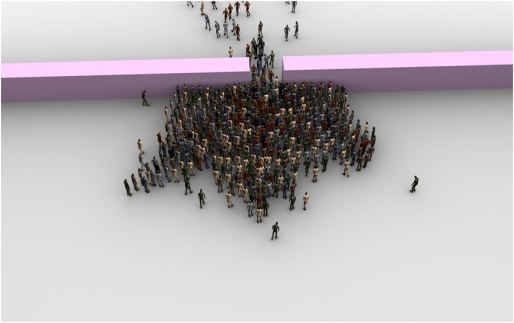
In a polite and orderly brainstorm session you have one person speak at a time. This is also a necessity when you have one scribe capturing the ideas and mounting them on a giant flip pad. The flip side of that orderliness is that when one person is talking, no one else is contributing ideas. There is simply not enough air time for all the ideas that should be generated by just three productive thinkers over the course of an hour.

Bottleneck

4. Invisible Clay Pigeons:

There are not supposed to be any bad ideas in a brainstorm. Participants are not supposed to evaluate or criticize ideas. But there are a whole flock of less-obvious ideas that never get tossed to the group because the thrower is afraid their idea will get shot down in the minds of the other participants. Even if the group adheres to the rules of brainstorming during the session, participants will still feel judged by the group, in silence.

Clay-pigeon-shooting-2

5. Great Brains Storm On Their Own

Great ideators generate ideas at a faster pace, with greater range and push more boundaries when working alone. A good thinker will quickly gather the low hanging fruit. Then they get to work on the rest of the tree. Then other trees. Then other orchards.  Then they harvest fruit on other continents. And finally, on other planets. You are far less likely to get a bushel basket full of Uranus Apples in a traditional brainstorm.

0bac9fb929ebc6897a1d78a4a71b47c1


The Solution

To generate the most, best and broadest range of ideas, people should always think alone first. Give your team members a quiet place, a pen and a pad of paper. The ideas will flow and fill the pages. Only after the team has thought on their own should you bring them together to share their sparkly new brain gems. During The Thinkers Reunion, you experience the Reece’s moment, when people can get their chocolate in someone else’s peanut butter. The mash-ups, surprise combinations, epiphanies and amplified ideas at this stage are far more valuable.

Key Takeaway

Stop wasting time and money on brainstorm sessions. They are not the Holy Grail of idea generation they are thought to be. Work in isolation. Then pour all the ideas together. You’ll get more and better ideas every time. If you have other idea-generating ideas  you’ve thought of on your own, please share them in the comments section.