A blog about self improvement, creativity, entrepreneurship, and advertising.
Author: Adam Albrecht
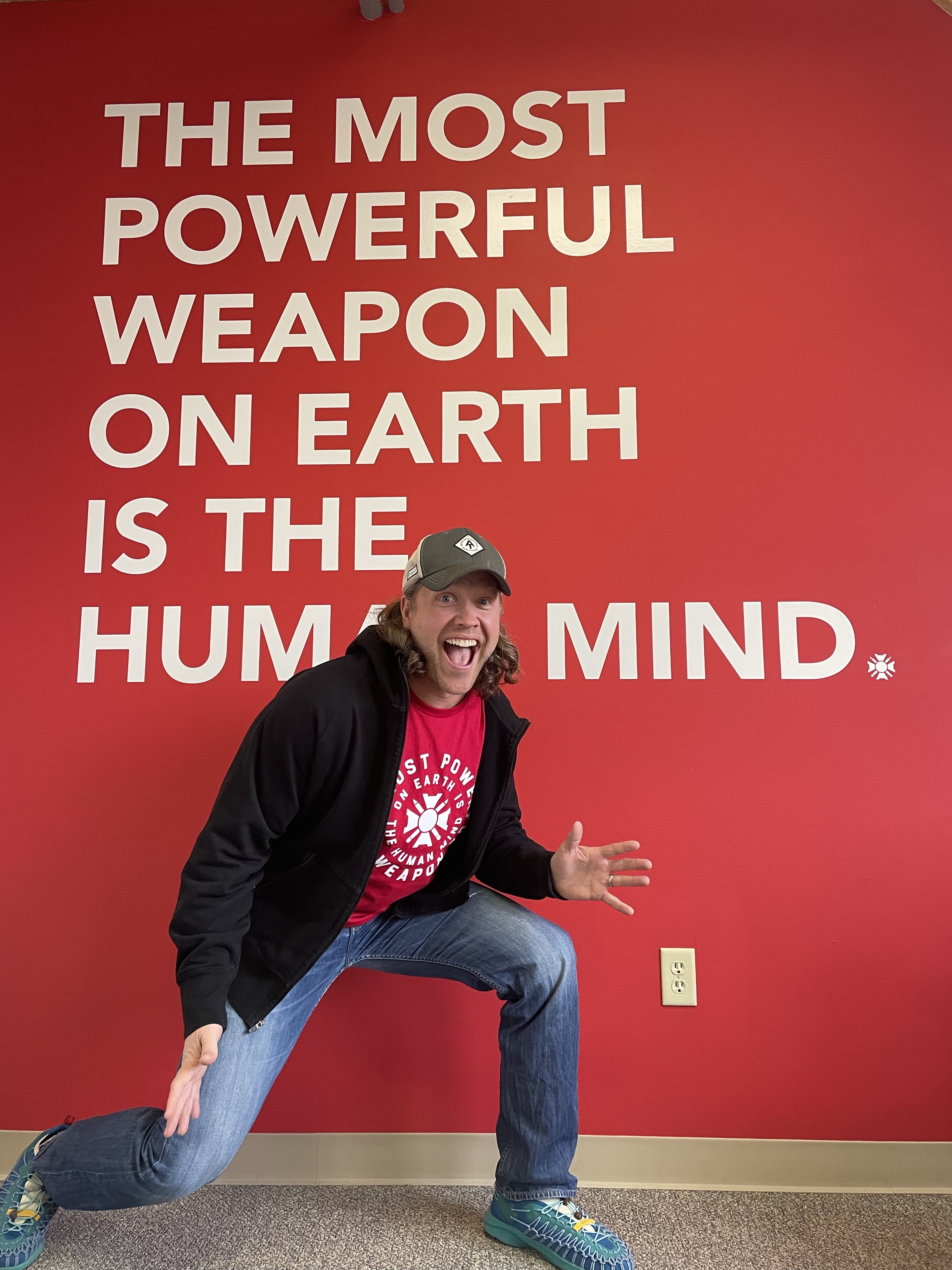
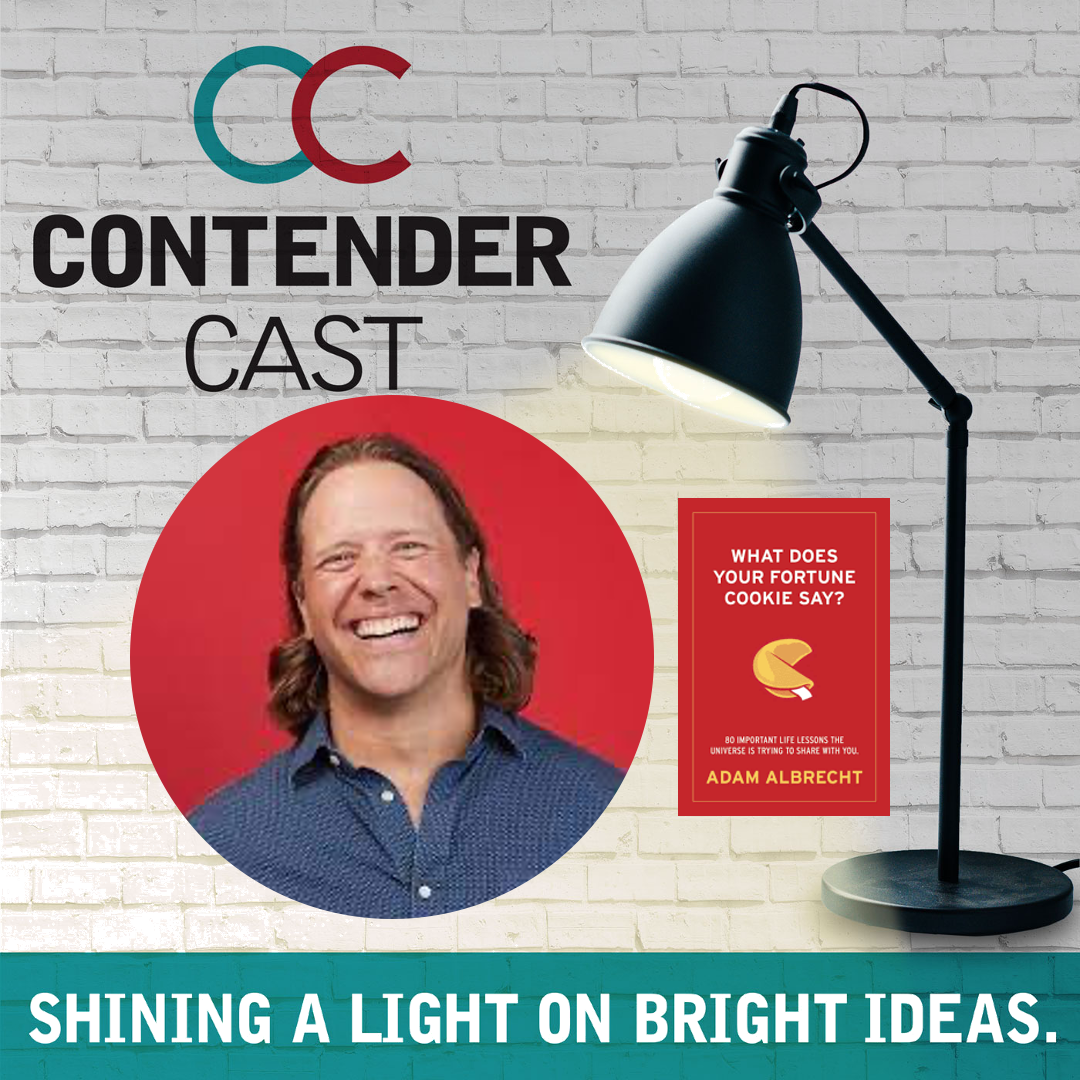
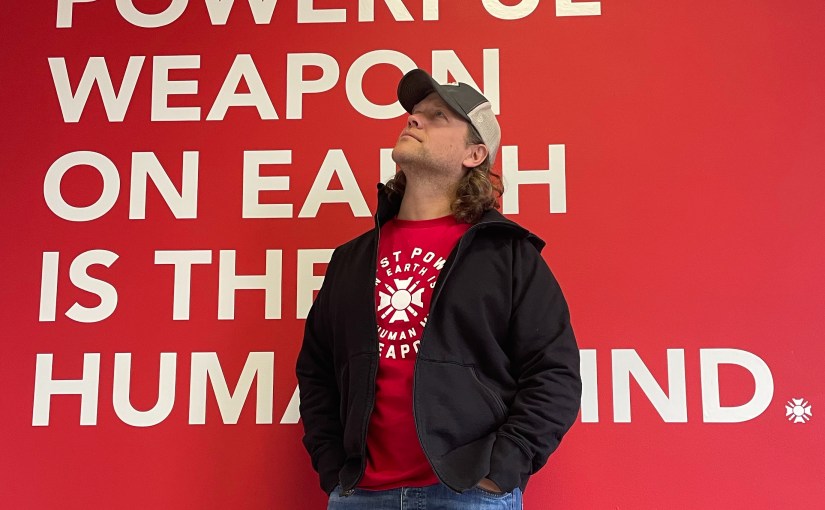
Adam Albrecht is the Founder and CEO of the advertising and idea agency, The Weaponry. He believes the most powerful weapon on Earth is the human mind. He is the author of the book, What Does Your Fortune Cookie Say? He also authors two blogs: the Adam Albrecht Blog and Dad Says. Daughter Says., a Daddy-Daughter blog he co-writes with his 16-year old daughter Ava. Adam can be reached at adam@theweaponry.com.
It is finally Election Day in the United States. Which means that the political landscape may shift dramatically today. But then again, it might not.
Either way, when you wake up tomorrow morning the political ads will be gone. And you’ll be happy to see commercials from your favorite local personal injury lawyers again.
I hope that you vote today. Or that you voted early, like me. Just don’t do both. And if the election doesn’t go your way don’t claim the election was rigged. It wasn’t. You were just part of the less popular crowd. And politics are a lot like high school.
The Everyday Elections
But today is not the only day you vote.
You cast important votes every day.
Not just for politicians or your favorite new Pringles flavor.
You vote with your actions. (And your non-actions.)
You vote with your time. (Investing or Wasting)
You vote with your attitude. (Positive or Negative)
You vote when you eat. (Both Quality and Quantity)
You vote with your habits. (Good or Bad)
You vote with your wallet. (This is more important than you realize.)
You vote people on and off your personal island. (You social savage…)
And you vote yes or no on hundreds of other decisions every day.
Remember, the choices you make each day make you.
Never forget that.
And don’t waste your votes.
Your future depends on it.
*If you know someone who could benefit from this message, please share it with them.
I had several conversations this week with dreamers. They all had interesting ideas that they wanted to bring to life. Which led to our discussions about the next steps on their journey.
Through my countless conversations, with dreamers, it is clear that we do a poor job of teaching people how to bring their dreams to life. Which means that most people have an easier time creating a human than creating a blog. Which is crazy. Or it’s a sign that God wanted more babies than blog posts.
I have spent my entire career bringing ideas to life. First, as a professional advertising creative, then as a t-shirt creator. I ramped up the degree of difficulty when I created The Weaponry, a full-service advertising and ideas agency. Most recently I published the book What Does Your Fortune Cookie Say? Then I made 80 real fortune cookies, with my real fortunes inside them.
I know how to make dreams a reality. I follow a simple process. And I want to make sure you know it too. Here it is.
5 simple steps to convert your dreams into reality.
1. Dream: Think of the fun, interesting, and rewarding things you would like to create or do. Most people who come to me to talk about their next steps have gotten this far. I’m guessing you’ve gotten this far, or you probably wouldn’t have been interested in this article. Because headlines help us decide. That’s the power of advertising.
2. Write: Get the dream out of your head and write it down. This creates the first real manifestation of your idea in the real world. It makes it tangible and detailed. This physical form of the idea is like a blueprint or a recipe card. Once you have the dream written down you can bring it to life. The more detail the better. You would be shocked how few people come to this step on their own. Most dreams never make it to written form. Yet it is the easiest part of the process. Easy like Sunday morning.
3. Research Once you have your dream written down, do a little research to educate yourself on the topic, process, industry, or whatever you need to learn to get the train moving. Google is your friend. (If you’d don’t know what Google is just google it.) But the key is to do a little research. Don’t analyze things to death. Learn just enough to get moving. Then go. If you are researching more than a week before you take your first steps you are procrastinating.
4. Deadline Give yourself a deadline. Dreams without a deadline are pure fantasy. To get into the non-fiction section you have to constrain your plans with a due date. Or a Do-date. Or a Zippity-do-date. Set a date to take your first action. And set a date for completion. If you really want results, create an entire timeline. And block time on your calendar to take action, Jackson. Again, none of this is hard.
5. Action Get to the doing. Take the very first action. When you do, the next action will magically appear. Like Platform Nine and 3 Quarters. Then just keep taking steps. Always have a bias towards action. Bloggers Note: I once dreamed of writing a blog. By the end of this month, I will have written 800 blog posts. Because I just keep taking action.
Key Takeaway
Bringing your dreams to life is easier than you think. Follow the process. The steps are not hard on their own. Just keep taking steps and soon your dream will be your reality. If your progress stalls, revisit the process. Your problem will be solved by taking steps 2, 3, 4 or 5.
*If you know someone who could benefit from this message, please share it with them.
I face challenges every day. Big ones. Small ones. New ones. And ones I have seen a thousand times before. As an entrepreneur, I’ve signed up for a life of challenges. As a parent, I’ve committed to helping 3 other humans work through their challenges too. I often feel like a contestant on American Ninja Warrior: Work & Home Edition. But I enjoy hard things. I find great value in the difficulties.
When life throws challenges my way I embrace them because I learn from them. I get better. I discover more about myself and my character. I develop more skills. I realize how capable I really am. #AintNothingGonnaBreakMyStride
The challenges of life are like the challenges of sports. Or video games. They are forms of competition. They are there to test you. To force you to think, learn, strategize and grow. Challenges force you to add tools to your toolbox, plays to your playbook, and tricks to your bag of tricks.
Triumphing over your personal and professional challenges is a rewarding part of the human experience. The more challenges you face the more you feel like you have faced the same type of challenge before. Which means you face each new obstacle with a greater sense of confidence that you can handle it. Because you can, Toucan!
In their training, the military special forces go through some of the most difficult challenges that humans will ever face. But those very challenges also provide the tools and confidence to overcome anything they face later. Both in the military and while shopping at the mall.
The challenges of life are not to be avoided. Or lamented. They are what make life interesting. They are the primary source of self-improvement. They teach you and make you stronger.
To accelerate your growth you can also read about the challenges that others have faced, and how they learned and improved through them. It is why reading is so valuable. It allows you to learn vicariously through the challenges of others without losing a battle, a war, or a limb. Because you can only lose so many limbs of your own.
Key Takeaway
Life challenges help you learn and grow. Each one leaves you better equipped to face the next. Each one adds to your skills, experience and understanding. It is a critical part of the evolutionary process. And it strengthens us both as individuals and as a species. You grow. You adapt. You thrive. And you are better prepared to face whatever comes next.
*If you know someone who could benefit from this message, please share it with them.
Humans are extremely intelligent animals. We have been able to transform the planet to better suit our needs. We envision a world that doesn’t exist and then we create plans to make it a reality. We are like the Walt Disney of the animal kingdom. (Meaning the real animal kingdom, not the Animal Kingdom that Disney created to illustrate this point.)
Humans are really good at knowing what actions we should take to get the result we want. In a perfect world, we would always get the results we wanted. Because we would always take the right steps. Like John Travolta.
But between deciding on the right actions to take and actually taking them a funny thing often happens. Not funny haha. Funny strange.
Every day, all over this big blue marble, the regular events of life get in the way of our plans.
Things change. New demands pop up. Curveballs get thrown. Wrenches get thrown. And eventually, the towel gets thrown in the ring.
But there is one simple solution that will prevent your plan from failing.
Remember that play that you were going to run to make your plans a reality? Before the noise and static?
Run the play anyway.
Do what you set out to do.
Modify your execution if you have to.
Take shorter actions.
Or change the time frame.
Adjust your process to work with the new conditions.
But don’t make excuses.
Change what needs to be changed.
But not the play.
You know that play will work.
Key Takeaway
Run the play anyway. You know it is right. You just need to run it.
*If you know someone who could benefit from this message, please share it with them.
I was recently in a meeting where I had a difference of opinion with one of my clients. So after he was done sharing his view, I threw my challenge flag. Then I realized we were not in an NFL game. So I had to actually say the words, ‘I challenge that perspective.’ Afterwhich, I introduced my perspective.
Then, like an episode of Seinfeld, or Murder She Wrote, the plot thickened.
Someone else in the room announced that he challenged my challenge. Which left me in a challenging position.
I had 2 options.
I could explain myself further to ensure that everyone clearly understood my perspective.
I could seek understanding of my challenger’s perspective.
(Ironically, I drove a rented Dodge Challenger to the meeting, which may have kicked off all of the challenges.)
I chose door number 2.
When there is a difference of opinions, the win is not to make sure everyone else knows why you think what you think. The win is to learn, understand and gain greater insight from the perspective of others.
Rather than digging in and repeating your perspective try one of these magical comeback lines:
Why do you think that?
Please explain.
How did you come to that conclusion?
Tell me more.
Who’s zooming who?
Key Takeaway
Seeking understanding doesn’t mean you have to change your mind. It doesn’t mean that one of you is right and the other is wrong. It simply means that you are keeping your mind open to learning about how others think. You get to understand the facts that others have collected and how they have processed those facts into conclusions. This will help you make better decisions in the future. And it will help you gain the respect of others. Because when you show someone else that you respect them and their thinking process they will often do the same for you.
*If you know someone who could benefit from this message, please share it with them.
I always loved the idea of being an entrepreneur. But like most normal people, I started my career as an employee. I worked for my first employer for 10 years. I worked for my next employer for 9 years. I liked my jobs. But I always knew that in my dream scenario I wanted to own my own business. I bet your dream scenario has a similar entrepreneurial ending. And maybe a swim-up bar.
After years of semi-scientific research, I have concluded that there are 3 great times to start your own business. I have published my findings below for your evaluation.
The 3 Great Times To Start Your Own Business.
When you are first out of school, and have nothing to lose.
When you retire, have plenty of money and time, and have nothing to lose.
When you are 40ish, have a lot of experience, skills, contacts, and confidence. And a lot to lose.
The first 2 paths are popular for obvious reasons. Like the-nothing-to-lose part. When you are right out of school, you aren’t giving up anything. And at the end of your regularly scheduled career, you get to choose an overtime period. Which is fun. And only threatens your shuffleboard time.
I am a mid-career entrepreneur. Jeff Hilimire started his entrepreneurial adventure while still in college. We’re both happy with our decisions.
Track Switching
But how in the world do you switch from the employee track to the entrepreneurial track mid-career? Even more challenging, how do you do it if you have a really successful career and are well compensated? How do you make the transition when you have a significant mortgage? And car payments? And kids? And a spouse you really want to keep? Plus, there is the insurance thing. And the annual company Christmas party with all the free alcohol! How do you walk away from all that gravy?
Dream it up and make it happen.
You can do it!
Well W-2 Nation, I did it. And it has been an amazing experience. When I turned 40, I realized that if I died then and there, on the dance floor, while doing the Electric Slide, my greatest regret would be that I never started my own advertising agency. So I resolved to start my own business within the next 2 years.
I launched The Weaponry, an advertising and idea agency, 6 years ago. Today, we have 26 clients, 2 offices, health insurance, dental insurance, and a matching 401(k) plan. (Never forget the k, or all you have is an area code.) We are looking at a 50% year-over-year revenue growth rate. And most importantly, I got to create the dress code.
Make the move!
Now, I want to help you begin your mid-carer entrepreneurial adventure. What lies below the fold is the collection of tips, how-tos, and advice I wish I had 7 years ago. This isn’t how-to-build-a-unicorn stuff. I’m not talking about a Zuckerberg, Gates, or Jobs path, where you drop out of college and start a trillion-dollar business. I am talking about advice for regular people, with regular careers, who want to use their experience as a launchpad to entrepreneurial success.
That’s what I did. And you can too. Here’s how, brown cow.
20 Key Steps To Becoming A Mid-Career Entrepreneur.
Surround Yourself With Entrepreneurs. Entrepreneurship is a mindset more than anything. It helps to spend as much time as you can with other entrepreneurs. It helps rewire your brain to see opportunities and become a problem solver. It will help you develop your risk tolerance. Because once you are around entrepreneurs who are enjoying the rewards of their risk tolerance you will realize the nice homes, cars, vacations, and freedoms are well worth the wager. Ask your Mentorpreneurs all the questions you can think of. They will want to help. And by hanging with your Mentorpreneurs, you realize it is far riskier to leave the control over your income to someone else. Plus, you quickly realize that you can create anything you dream up. Like the word Mentorpreneur.
2. Become really great at what you do. When you are great at what you do you become sought after. And when people seek you out, it means you no longer need your employer to develop opportunities for you. Because you can create those opportunities for yourself. This is called career capital. The more you develop the easier it becomes to call your own shots (shots shots shots!) When your clients at your day job are more in love with you than the company you work for you have a green light to start your own business. And green means go, Mario!
3. Develop And Maintain Your Network. People work with people. And they love to work with people they like and trust. Continuously expand and strengthen your relationships. The more people who like and trust you the better. Those people will become customers, partners, connectors, and referrals. And those are the 4 most important people in an entrepreneur’s life. (After the supportive spouse and great coworkers.) If you’ve neglected this area of your career, it’s time to get to work. When I started The Weaponry I quickly realized I had done much of the hardest work of entrepreneurship decades earlier through my relationship-building.
4. Save Your Money. By having reserves in your bank account or investments you can tap into, you buy yourself running room to start your own business. Most people can’t consider starting their own business because they don’t have the luxury of not having a dependable paycheck for several months. Don’t be that kid. If you don’t have the money on hand yet, start your Run-My-Own Business Fund today. You might not need the money. Or not much of it. But simply having it available provides the confidence to jump, like David Lee Roth.
5. Live Below Your Means. As your income increases, don’t let your expenses rise at the same rate or you will always need your current level of income. That’s a problem. You’ve heard of the golden handcuffs of a high-paying job that keep people locked into their employer. But the most dangerous career situation is the one where you need your current income level to support your lifestyle. Because you will never be able to downshift into a lesser-paying situation, even temporarily. And the first move an entrepreneur needs to make is downshifting into a lesser-paying situation for an undefined length of time. That is the price of entry. That is the entrepreneurial initiation ritual, my friends. Tip #4 helps you bridge that gap. My dip only lasted about a year. But it really made me hustle. And hustling helps you make money. #dothehustle
6. Don’t Quit Your Day Job. To combat the money challenges outlined in the previous points, don’t do something rash, like quit your job. Hold onto your job as long as you can. It will be the primary source of funding for your startup. Use your current job to help pay for the expenses of your next job as long as you can. Work on your startup at night and on the weekends. Like Shania Twain said, no one needs to know right now. Not quitting your day job allows your startup to gain speed, momentum, and cash flow. Not quitting until you have to makes it much easier to jump from the Employee Train to the Entrepreneur Train. If we were swinging from ring to ring on a playground, think about not letting go of the ring you are holding until you have your hand firmly on the next one. And if you never have a firm grip on the next ring, then you never let go of the one you were already holding. No harm. No foul. You tried. You can be proud of that.
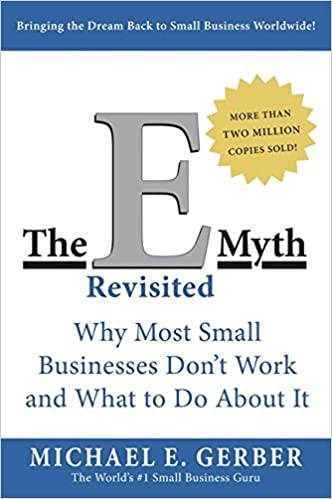
7. Read The Book The E-Myth by Michael Gerber. This book is the bible on how to start and run your business the right way. (Only there is no Jesus.) I followed all of the guidance in this book before launching The Weaponry. It helped me think about the whole process the right way, and avoid a lot of problems. When people tell me they are planning to start a business, or are floundering in their startup, I always recommend they read this. And everyone always thanks me. If I were you I would hit the link above and order the book right now. Tip #8 can wait.
8. Create Your Legal Entity: It’s easy to create a legal business entity. Start simply by applying for your FEIN. Which is your Federal Employer Identification Number. It’s like your business’s social security number. This ID number enables you to do everything the way the government and IRS want you to. With this in hand, you can file your legal business entity with your state as an LLC (Limited Liability Company), Corporation, Limited Partnership, General Partnership, or as a Sole Proprietor. I set up an LLC. (Yeah you know me.) It’s quick and easy. Then you can open your business bank accounts and get your company credit card. With these things in place, you have your financial and legal structures ready to roll. Which means you won’t need to ask your customers to pay you in cash. Or chickens.
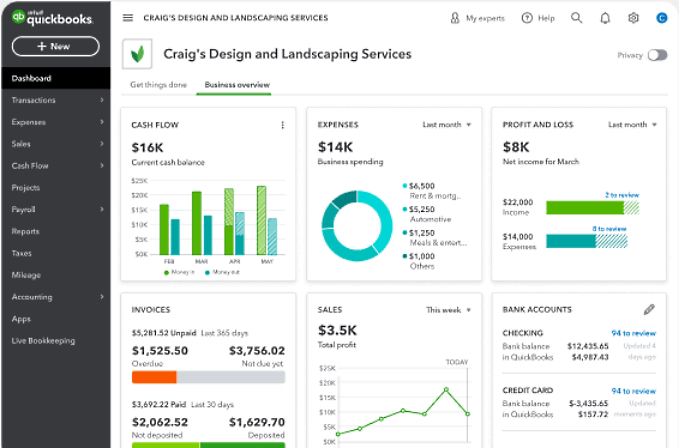
9. Get Quickbooks. Quickbooks is the accounting software that makes it easy to track and manage your accounting. You connect all of your bank accounts and credit cards to this. It makes it easy to create and send invoices (bills) and to know what is due and when. It also provides reports (profit and loss, profitability, balance sheets, etc.) and dashboards that help you manage your business. Get this going as soon as you can afford to. It will become the backbone of your accounting system. And your scoreboard. Best of all, Quickbooks is not the book equivalent to quicksand.
10. Get A Good Bookkeeper. Bookkeepers are God’s gift to entrepreneurs. They are reasonably priced specialists who have a valuable skillset that you likely don’t have. They can help you stay on top of your accounting while enabling you to spend more time on the things only you can do. Like finding paying clients. And putting on your deodorant.
11. Collect Recognizable People And Logos: You can start your business by working with anyone. But the goal should be to collect recognizable names as customers. That could mean that you work with well-known brands or people that other people know. When you share the kinds of brands or people that you work with you are elevating and legitimizing your brand by using theirs. If you work with individuals, work with the most popular most trusted, and most respected people you can. Their decision to work with you will carry more weight than say, your grandma. Sorry, Grandma.
12. Get involved in your community. The more involved you are in your community the more you will be connected to others and the opportunities they can introduce you to. You could be involved as a volunteer, member, attendee, or sponsor. You are going to want strong ties to the people around you and this is one of the best ways to get to know as many people as possible. Even better, when you support your community you will find that your community supports you too. It’s a thing.
13. Grab Chocolate Milk. Entrepreneurs understand the power of spending time with other people. Getting together for chocolate milk, (my preference) or coffee (most of America’s preference) is not about the beverage. It’s about the sharing and comparing of experiences and ideas. Through the process is sitting down with another person and talking you discover new ideas and resources. It creates a great transfer of knowledge and experience. It is the best way to tap into another person’s perspective and network. You could also meet for breakfast, lunch or drinks. Or fricken caramels. It’s all ah-bu-trary. #namethatmovie
14. Start A Blog, Podcast, Or Regularly Published Knowledge Share. It is not about who you know. It really is about who knows you. The more people who know about you, what you know, and what you are doing, the better. I started a blog right when I launched The Weaponry. And it has been a great vehicle to share my thoughts, ideas, successes, and learnings with the world. By doing so, my business and I are both top of mind when people have relevant opportunities. Podcasts, newsletters, columns, and social media channels all work too. The key is to share information and value with the world broadly so that more people than you could reach through individual messages know about you, your skills, philosophy, and eventually your business offering.
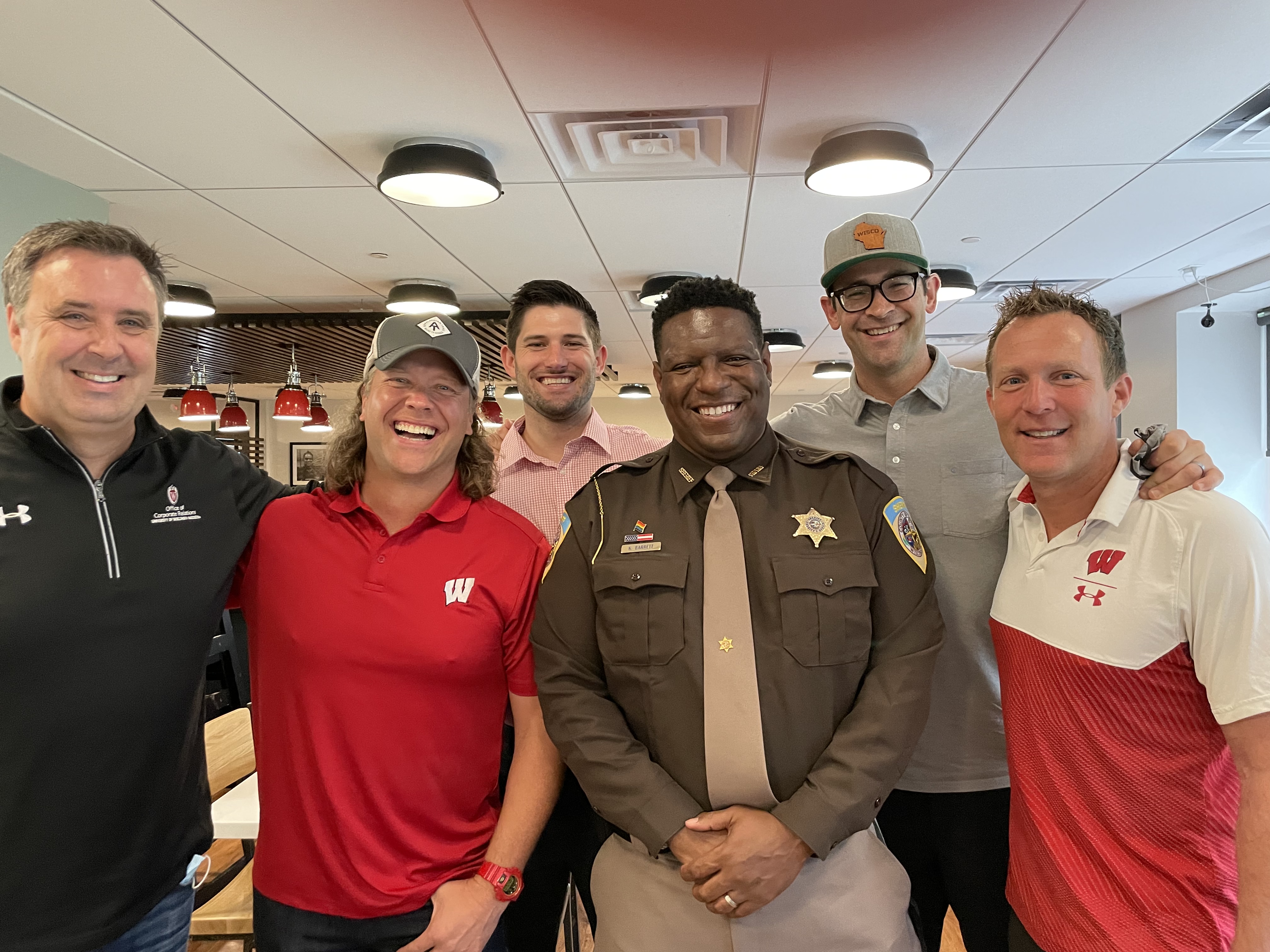
Me and my crew.
15.Find a supportive spouse. In the middle of your career, you are likely to have a spouse or life partner who is tied to your success or failure. Their support and encouragement are critical to your success. My wife Dawn has been amazingly supportive. She never batted an eye or raised an eyebrow when I shared my entrepreneurial vision with her. I would share this post with your partner so that they have an idea of what you are trying to do. That way they can help and support you as much as possible. If they are not supportive you have an important decision to make. And that’s all I have to say about that.
16. Read Read as much as you can about business ideas, successful companies, leaders, and entrepreneurs. This is the greatest entrepreneurial hack there is. Learn all you can from others who you admire and want to emulate. Read about how other Founders did what they did. There is no end to what you can learn from others. Read books, online articles, and blogs. Listen to podcasts and audiobooks as you commute. Drink that knowledge in. Create your own curriculum. And give yourself your own, self-directed advanced degree. You can even walk across your own stage and hand yourself an official-looking piece of paper. That would be weird. But you could do it.
17. Grow Your LinkedIn Connections. LinkedIn offers the best measure of your network. Create a profile if you haven’t already. Become an active user. Add everyone you meet to your LinkedIn profile by sending a custom invitation reminding them of how you know them or why you want to connect. This will become ground zero for raising your profile and staying in touch with your broader network and the opportunities they bring. Like, comment, and share content from other people. Make people who don’t know you curious about who you are. Insider Tip: LinkedIn offers an audio icon next to your name that let’s you share how your name is pronounced. Click on mine to see how it works.
18. Learn As Much As You Can About The Business You Are In Now. While you are still employed by someone else, take advantage of the experts in the organization. Learn from the finance or accounting teams. Talk to HR about how benefits, recruiting, and reviews work. Talk to sales about how they generate leads and close deals. Talk to operations about what makes them such smooth operators. Talk to IT about, well, IT. You can learn about all of the things you are going to need to know as an entrepreneur while in your current job. Think of it like studying. Your coworkers will love your interest in their work. And they will be flattered when you start your own business and credit them as your sliver mentor in their specialty. You’ll also know who would be a good resource to hire after your non-compete clause expires.
19. Write down your plans. It’s one thing to think about starting a business. It’s another to write down a plan to make it happen. Once you have a vision for your dream business, write it down. The more details the better. That written plan becomes your blueprint to build it for real. I followed the written plan approach from The E-Myth, and it gave me great structure and clarity around what I was creating. Do this too. Also carry notebooks. Not only are they great for capturing spontaneous ideas, but if you get shot in the notebook, it just may save your life.
My great client-friend Nicole Hallada was one of the first people I told about The Weaponry.
20. Talk To Former Clients About Your Plans. Your best prospective future clients are your past clients. When I launched The Weaponry I discussed my plans with several former clients. Within the first week of discussions I had 5 clients tell me that if I created a business they would send work our way. That confidence, interest, and demand in my offering made it much easier to jump. 4 out of those 5 former clients became future clients. The other one is living with constant regret. Right Chad?
Key Takeaway
Starting your own business in the middle of your career can sound intimidating. But the more you know, the easier it is. You can do it. Utilize the knowledge of those who have gone before you. Most of it is easier than it seems. With the tips above (that I wish I knew when I was starting out) you will be able to start taking steps today. Then simply never stop. If you need a Mentorpreneur, just reach out to me through Linkedin. Tell me I sent you.
*If you know someone who wants to start their own business and could benefit from this message, please share it with them.
Yesterday I coached my last youth football game of the season. It was a 3-month commitment of 4 to 6 days each week of practices, scrimmages, and games, beginning August 1st. Plus, as the defensive coordinator, I had to watch our game film at night and scout our opponent’s game film each week. It was a significant commitment of time, energy, and focus. And I loved it.
But there was one thing I didn’t love. The least enjoyable part of coaching in the Wisconsin All-American Youth Football League, WAAYFL, is all of the mandatory online training courses you have to complete to be eligible to coach.
Parents should take great comfort in knowing that their coaches have all been trained in nearly everything related to the health and safety of the players. In fact, I think that the next time I am on an airplane and they ask if there is a doctor onboard I will ring my call button and tell them that while I didn’t technically go to medical school, I did take the marathon health and safety coursework online required to coach in the Mequon-Thiensville Cardinal football program. So I should be good with whatever emergency they were dealing with up in the fuselage.
Yes, we learned how to coach the safest ways to hit and tackle. But we also learned about everything from concussions and heat-related health issues, to heart and neck concerns. And we learned to identify signs of physical and sexual abuse. It’s a lot of heavy stuff to wade through to coach a children’s game.
My Favorite Lesson
But there was one brief unit in our training that stood out the most. It may have felt insignificant to the other coaches compared to the heft of the lessons above. But for me, it offered the best new tool in my coaching toolbox. Granted, my coaching toolbox was pretty empty to begin with. (I only had an old roll of athletic tape and that quote about the size of the fight in the dog.)
The unit I loved was The 4 Points of Coaching Contact. It taught us the importance of developing a connection with our athletes. It provided a simple, memorable framework to follow to connect with each athlete at every practice. My language below may be slightly different than the WAAYFL shares. But the idea is the same.
The 4 Points of Coaching Contact.
1. Eye Contact: You should greet each athlete each day with your eyes. This means, making deliberate eye contact with them daily. (But don’t actually touch their eyes.)
2. Physical Contact: Greet each player with a handshake, fist bump, high five, or pat on the shoulder or back. No bum touching. (That was really part of the broader training.)
3. Ear Contact: This is not about ear flicking or Wet Willys. This is about connecting with a verbal greeting every practice. Say hello in whatever way you say hello. Make it heartfelt. Use their name. There is far great power in this simple act than most coaches realize.
4. Heart Contact: Talk to your athletes about something other than the sport. Ask them how their day is going. Ask about school, their family, or their other activities. Get to know them and develop a relationship with them as a non-athlete. Again, no physical contact with the actual heart is required. Or allowed.
Putting It Into Practice
I thought about The 4 Points of Contact every practice. It used the technique liberally. Although I didn’t hit all 4-points with every athlete every day, I purposefully connected with every athlete as much as was naturally possible. And it made a real difference.
But the impact of this simple relationship-building technique impacted me as much as it impacted the athletes.
Because every time I made eye contact with one of my players, they made eye contact with me.
When we would high-five, fist bump, or shake hands I felt the connective power the way they did.
When I greeted our players by name, they would greet me by name too.
But most importantly, you can’t touch someone else’s heart without them touching yours. It’s the universal law of heartiology. Or cardiology. Or whatever you call it. Remember, I’m not a real doctor.
Key Takeaway
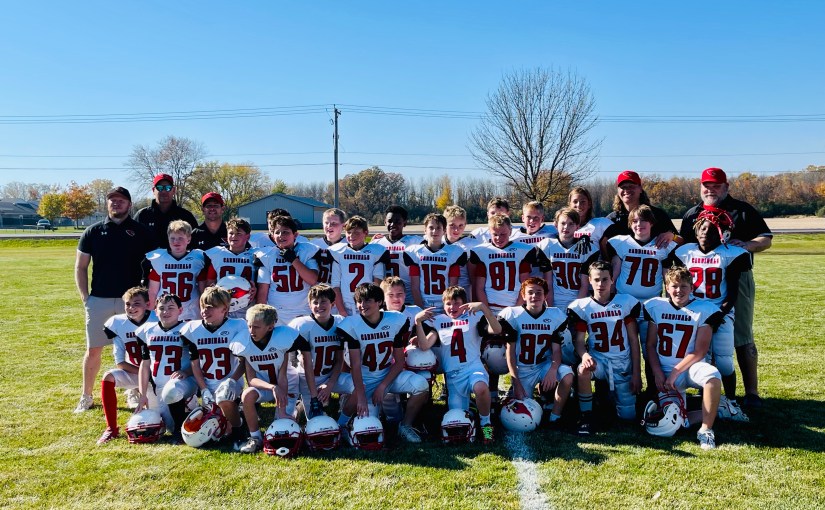
You have an opportunity to connect with other people every day. Connect with your eyes, your hands, your words, and your heart. This approach works wonders in youth sports. But it works just as well in business, in school, within families, and amongst friends. In fact, these 4 points of contact are how we turn strangers into friends. And if you use this approach every day, you’ll find those friends start to feel like family. That’s what happened to our 6th Grade Cardinal Football Team in Mequon, Wisconsin.
*If you know someone who could benefit from this message, please share it with them.
In 2006 Apple began running a popular ad campaign called Mac Vs PC. In the campaign, the 2 computers were personified and represented by 2 very different spokespeople.
The Mac dude was an easy-going, fairly hip cat who always seemed to know things. The PC guy was nerdy, out of touch, and always seemed less ready for the world. The 2 guys were clearly supposed to represent Steve Jobs and Bill Gates, only without the telltale money coming out of their wazoos.
Watching the commercials felt like you were being forced to choosing which team captain you were going to join for a game of Red Rover, nerd style.
But the idea that there are just 2 different types of computers is a gross oversimplification. The truth is that there are as many different computers as there are humans on the planet.
Your Personal Computer
We all run on the personal computers in our heads. Yours is unlike any other. It has different hardware. It operates different software. It arrives at different calculations and conclusions based on different inputs, filters, and if-then statements.
Your machine also has its own bugs. And its own glitches. Which are affected by how many windows are open, how long it has been since you rebooted, and that soda pop you spilled on the keyboard.
The computer in your head has rare and valuable capabilities. It can produce outputs that no other computer on Earth can. Never forget that. And never underestimate the power that your unique thinking has on the world around you.
Key Takeaway
We all think differently and process the world differently, thanks to the personal computers in our heads. Take good care of yours. Appreciate it. Upgrade it as you are able. Respect the conclusions of others. They are processing the world differently than you are. It’s all part of the master design. And we all benefit from the diversity of thought.
*If you know someone who could benefit from this message, please share it with them.
Our careers are full of choices. Some are small and arbitrary. Some feel ginormous. The tough thing about tough choices is that the right answer is never clear at the moment we need to make them. And we may not know whether we made the right call for years. Or decades.
Tough Call
Recently I was asked to think about one of the toughest business decisions I had to make in my career. Several decisions popped into my head. Including big ones like whether or not I should quit my job and launch my own business. And whether I should risk asking a coworker to go on a date. (I have now been married to that coworker for 20 years.) But there is one particularly challenging situation I faced that not even Robert Frost could help me through. I call it The Roanoke Decision. Here’s the story.
Roanoke
In the summer of 2008, I had a business trip to Roanoke, Virginia. I worked at an advertising agency called Engauge. And I was to fly to Roanoke from Columbus, Ohio with a client for a night of focus groups. I was excited about the trip because I love the knowledge and insights gained from a focus group of my client’s customers. I had never been to Roanoke. And visiting new places is one of my favorite things. Along with brown paper packages tied up with string.
A New Challenge
But a funny thing happened on my way to Roanoke. A new client of our advertising agency, Nationwide Insurance, scheduled a TV commercial shoot on the same day in Charlotte, North Carolina. #RutRo
To this point in the project, all of the work I had done was behind the scenes. My boss, the Chief Creative Officer, had been meeting with the client and presenting the work. The client had proved to be challenging, and after each meeting, there was a new story about the over-the-top client and how difficult they had been to please.
Could You, Would You, On A Plane?
Eventually, we landed on a TV commercial script to produce. And because of other scheduling conflicts, I was asked to attend the Nationwide TV shoot. We determined that I would be able to travel to Charlotte the day before the shoot for location scouting and the important pre-production meeting. Then I could attend the first half of the TV shoot, and leave for the airport at lunch to catch my flight to Roanoke. At that point, the 2 experienced Associate Creative Directors on the account would manage the rest of the shoot. Easy Peasy.
The Best Laid Plans
Things did not go as planned. While attending the preproduction meeting I met two clients from Nationwide Insurance. One was Steven Schreibman, who was as over-the-top as advertised. He wanted the spot to be Spectacular! The other was Jennifer Hanley, who I was ice cold in the meeting. She had clearly done this sort of thing before, knew exactly what she wanted, and wasn’t about to suffer any fools who didn’t know how to deliver. This was going to be interesting.
The Commercial
The commercial was a simple idea. It was called ‘Burnout’ (think NASCAR victory, not Jeff Spicoli). The spot opens on a shot of a cul de sac in a quiet suburban neighborhood. Suddenly, a sports car speeds into the cul de sac and begins doing donuts. We cut inside the car to a shot of the driver, NASCAR champion Kevin Harvick, who tells the camera that he just saved a bunch of money by switching to Nationwide Insurance. Hence the celebratory burnout.
The 100-Degree Wrinkle
However, it was supposed to hit 100 degrees that day in Charlotte. So everyone involved was worried about how the heat would affect our shoot, the talent, and the car.
My team, including talented ACDs Jason Thomas and Oscar Reza, got to the set early. And it was already hot as balls. When the two clients arrived we met them and gave them the plan for the morning. We enjoyed a nice on-set breakfast together as the crew readied for the shoot and the sun began to broil the blacktop.
The Thaw
As the day warmed, so did my relationship with Hanley and Schreibman. The iciness and the craziness of the initial meeting didn’t come to the set that morning. Instead, they were both very pleasant. They were excited about the shoot and excited to work with Harvick for the first time. But they were also greatly concerned about the heat. (And not Dwyane Wade’s former basketball team).
Secretly Sweating
I too was concerned about the heat. I was worried it would drench Harvick in sweat as he delivered his lines to the camera. I was worried about the impact the heat would have on the Corvette, which would be repeatedly pushed to its max as we spun it in high-speed circles. I was worried about the young stuntman who was going to be performing the donuts that afternoon. And I was worried about making a graceful exit in the middle of all of this to head to Roanoke.
What To Expect When You Are Expecting
The day went exactly as I expected. Meaning that I was quickly bonding with the new client, and the heat was causing real logistical problems for Kevin Harvick. He was a great sport, but would quickly sweat through his Nationwide polo and we would need to repeatedly break to freshen Kevin and his wardrobe. Which was slowing things down, and generating tension on the set.
Tick Tock Tick Tock
As the heat was burning up our time, I was making regular phone calls back to my office in Columbus. I was updating the account supervisor who lead the other account that was conducting the important focus groups in Roanoke. I was originally supposed to leave for the airport at 11am. But with the delays and tension on the set in Charlotte, I felt like I couldn’t leave at that hour.
What to do?
We decided to rebook my flight for another flight 2 hours later. I would have a car service pick me up at 1pm and speed me to the airport. I would then OJ Simpson through the airport, and make the flight just before they closed the boarding door. (Remember when we used to Associate OJ with running through airports?)
Bond. Personal Bond.
It was a good plan. But I still hadn’t told the Nationwide clients that I would be leaving the shoot. As so often happens in difficult situations, we were bonding. There was both stress and gallows humor as the clock raced faster than our progress. I worked with the producer, director and client to create a workable scenario and adjustments that would enable us to get all of the shots we needed. We decided that during some air-conditioned cool-off breaks we could record some voiceover work for the commercial and radio spots to save precious time.
Here it comes!!!
But 1pm was coming faster than Kevin Harvick in an 800hp stock car. And like The Clash, I had to decide, do I stay or do I go now? I knew that if I stayed there would be trouble. But if I go, it may be double. What to do?
The Walk
I walked off by myself for a moment, and carefully evaluated the situation. Not just the logistics. But the intangibles. The relationships. The commitments. The business development potential. And both clients’ needs. There was a lot to process in a little time.
The Call
Then I called Peter Zenobi, the account supervisor, and reluctantly told him that I would not be flying to Roanoke as planned.
The Decision
I decided that I had to be on Nationwide’s side. The degree of difficulty we were dealing with in the heat with the stunts and the celebrity talent was too high to walk away from. I recognized that I was quickly developing a strong rapport with both Jennifer Hanley and Steven Shreibman. And the focus group, while it was my original commitment, and I really, really hated to back away from it, would be recorded. And there would be a detailed report produced.
Ahead Of The Curve
While I didn’t technically go to Harvard Business School, I did read a book about it. In Ahead of the Curve, author Philip Delves Broughton writes about his experience as an MBA student at Harvard Business School. He reveals that the 2 greatest things gained in this prestigious program are 1. A remarkable network. 2. Confidence to make difficult decisions when you don’t have all the information you would like. And The Roanoke Decision was a clear case of having to make a tough decision without all that information.
Was it the right decision?
The heat-related challenges continued the rest of the afternoon. But we worked through it all. We got the footage we needed of the Corvette doing burnouts. But barely.
The young stunt driver needed a lot of time to get his driving dialed in. Which, in the 100-degree heat, took a toll on the car. In fact, the brand new Corvette, borrowed from a local dealership, overheated and shut down completely. So by late afternoon the car literally shut itself down, and could not be started again for 6 hours.
But we had what we needed. No one got hurt. And the Nationwide clients and I headed to the airport, together.
That night, on the flight home to Columbus, Jennifer Hanley and I sat together and talked the whole way. We developed a fast friendship. And before we landed, Jennifer said that she had a lot more work that she wanted to send to our agency.
The Partnership
Nationwide and Engauge quickly developed a very strong partnership. Soon we had an annual retainer with Nationwide of over $5 million. We handled the advertising for Nationwide’s sports sponsorships, including their high-profile NASCAR and PGA sponsorships, and work with NCAA basketball and the NHL. We refreshed their pet insurance brand, VPI. We rebranded Titan Insurance and created a very high-profile disaster response commercial, featuring Julia Roberts as the narrator.
My relationship with Jennifer continued to strengthen. And I developed strong relationships with many other great friends at Nationwide. In fact, my Nationwide relationships are among the strongest personal relationships I have developed in my career. (I considered listing all the great friends I made through Nationwide Insurance here, but it would double the length of the story.)
7 years after The Roanoke decision, when I made another difficult career decision to start my own advertising and idea agency called The Weaponry, those Nationwide relationships benefited me once again. In fact, they have led directly to our work with Hertz and Thrifty rental cars, Fifth Third Bank, and American Family Insurance. (Thank you Matt Jauchius, Dennis Giglio, Nick Ferrugia, Tiffanie Hiibner, Susan Jacobs, and Dawn Pepin.)
Steven
Starting that hot summer day in Charlotte I developed a very special relationship with Steven Schreibman. And when Steven passed away in May of 2018, the tribute I wrote about him on this blog became the most popular post of all time. And just last month, over 4 years after Steven’s passing his Mom, E.J. Bloom called to thank me for writing the story about Steven, and how she reads it often to enjoy wonderful memories of her wonderful son. We talked for an hour, like new old friends. Last week I received a package in the mail from E.J. that contained a copy of Steven’s book, Blood in My Hairspray. You can find the blog post here: Our time here is short. Make the most of it, like Steven did.
14 Years Later
Did I make the right choice on that blazing hot day in August of 2008, in the subdivision in Charlotte? When Roanoke was calling, and Charlotte wouldn’t let go? With more than a decade of great friendships, partnerships, and funny memories now in the bank, it would certainly appear I did.
Key Takeaway
When making difficult decisions, trust your instincts. There may not be a right or wrong choice. You may not have all the facts you want. But be confident in your decisions anyway. When you walk confidently in the direction of your decisions the universe rewards you. Know that you have the privilege of choosing your own adventure. Take advantage of that. Take control of your career and your life. Things will work out. Someday I expect to visit Roanoke. And I will thank the city for all it gave me in that trade years ago.
*If you know someone who could benefit from this message, please share it with them.
America has a problem with homelessness. We have a lot of people who don’t have a home or a proper place to shelter. And when you don’t have that basic human need met it is hard to bring your best self to the rest of life’s challenges.
I have a homelessness problem too. My problem is that I don’t know how to respond to homeless people. In most areas of my life, I have a well-considered way of thinking about situations. But when it comes to responding to homeless people I still have glitches in my processor.
Do I give them money? Food? Water? Boxes and sleeping bags? Or do I just walk past?
Early in my career, I got paid for a freelance writing project with a bunch of gift certificates to a crummy restaurant chain. I carried those certificates with me and handed them to homeless people. But when they saw the name of the restaurant they usually looked as if they wanted to hand them right back.
Last Week
On my morning commute last week I saw a homeless man holding a sign at a stoplight. The light was red, so I stopped. Because I remembered that rule from my driver’s education class.
I had my window down and my music up. I was in a great mood on a beautiful morning.
The man on the corner stepped towards me and began nodding his head to my music.
Then he said to me, ‘Man, you are the happiest person I have seen all day!
I smile at him and replied, ‘That’s my thing!’
I asked him his name.
He said, ‘Rick.’
I responded, ‘My name is Adam.’
He shared, ‘I used to be The Humble Artist.’
I replied, ‘You still are aren’t you?’
He said, ‘No.’
I asked what changed.
He confessed, ‘I don’t do art anymore. And I’m no longer humble.’
I said, ‘Neither am I! Deion Sanders once said “They don’t pay nobody to be humble!'”
We both laughed. It was really nice to hear a homeless person laugh.
The light turned green.
And I said “It was nice to meet you, Rick! Have a great day. And do your art!
As I drove through Milwaukee to my downtown office I reflected on my interaction with Rick.
Was our conversation worth more than money or food?
Was it worth anything?
How about the smile and happiness I shared with him?
Or my interest in learning his name?
Or the encouragement to create art?
Did any of that help?
I don’t know.
Maybe.
Maybe not.
But I wrote down his name, so I won’t forget.
And I hope that he feels like he made a new friend. And that someone else knows him by name. I hope that he felt like another human respected him as an equal. I hope he knows I am pulling for him to find a home so that he can spend more time thinking about art.
Key Takeaway
Keep trying to figure out the things you don’t know. Life is a big experiment full of trial and error. Don’t be afraid to try different approaches and learn what works for you. The aim should be to have a positive impact in your own way. And share what you learn so that others can learn too.
*If you know someone who could benefit from this message, please share it with them.



















 Adam Albrecht Blog