When you think about The Now you are encouraged to do the things that are rewarded now. Sleep in. Relax. Have fun. Indulge. Spend. Eat. Drink. And hang out with Mary.
When you think about The Next you do the things that are rewarded next. You wake up early. Work. Focus. Study. Save. Exercise. Build. Carefully monitor your food, drinks, and activity with Mary. (And Ben and Jerry.)
Focusing on The Now is immediately enjoyable. Focusing on The Next makes now less enjoyable in most ways. (Sorry, Charlie.)
But beware, the rewards switch.
In a literal blink, you are past The Now and into The Next. And what is rewarded in The Next is the opposite of The Now. Which is what makes life and the decisions you make so interestingly complicated. And it is why I encourage you to tie the following quote to your decision tree:
“It almost always happens that when the immediate consequence is favorable, the later consequences are disastrous, and vice versa.
-Frédéric Bastiat, French Economist.
Key Takeaway
Always think about the long-term consequences of your actions and inactions. Invest your time, energy, and growth into a much larger payout in the future. A delay of gratification is most often rewarded with compounded interest in The Next. And it’s always well worth the wait.
*If you know someone who could benefit from this message, please share it with them.
When you receive feedback from the world you process it with one of two devices in your noggin.
Your Growth Processer
Your Defense Processor.
The Growth Processer says: I have the ability to get better with this feedback. I can learn and improve and enhance my abilities and capacity. It acknowledges that you have room for improvement, and you have discovered an opportunity to press your advantage further. Think of this as the Billy Joel Processor. Because it starts evaluating feedback by saying, You may be right.I may be crazy.
The Defense Processor says: I should not change. I am already where I should be. The world doesn’t know what I know.There are important reasons for doing what I am doing and I need to defend against change or modification. I need to build a wall to protect my processes, decisions and style. Because they are not only as good as they ever need to be, they are better than anyone else. Therefore, I need to defend against decay. Think of this as the Donald Trump Processor. Because like Franks Redhot, he uses his defense processor on everything. Which offers a sense of confidence and superiority. But it prevents all possibility of growth and improvement. (Because just imagine how many times his hairdresser offered up a less imaginative hairdo.)
Real-World Example (But not from the MTV Show.)
If you are part of a race team you have to always be looking for ways to get faster. Speed is growth in racing. Everything that ultimately leads to speed should be sought out, embraced, and accepted. It’s simple. It’s scientific. It’s how you get better faster.
Key Takeaway
Always look for opportunities to improve. Find the valuable gems in your feedback. Consider everything. Think like a race team. Seek out and soak up everything that presses your advantage forward. It will help you get a little bit better every day.
*If you know someone who could benefit from his message, please share it with them.
Have you ever noticed that when apples break their stematic bonds with trees that they fall to the ground? Sir Isaac Newton noticed. And with this simple observation, he discovered gravity. Which we have come to know as the planetary pull. Gravity is the force that pulls us towards Earth. It also keeps the moon and all of the satellites in orbit. Including the Georgia Satellites. (So don’t give me no lines and keep your hands to yourself.)
But planets aren’t the only ones that create gravity. All heavenly bodies do. And you do too. Even if your body is no longer heavenly.
However, not all gravity is created equal. Which is why you feel like you weigh less on the moon than you do on the Earth. It’s why you feel heavier on Saturn or Jupiter. And it’s why you feel lazy when you are on your Uranus.
Your Gravitational Pull
Your personal gravitational pull is a result of the value you create for others and the energy you radiate. The more value you offer and the more energy you emit the more personal attraction you create.
There is an easy way to evaluate your own gravitational pull. Just look at the people you are attracting and ask yourself these 3 questions:
What kind of people are you attracting? This indicates the quality of your gravity.
Are you attracting many or are there few? This indicates the quantity of your gravity.
Is their orbit growing closer to you or drifting farther away? This indicates your relative growth.
Key Takeaway
The great sign of growth and improvement as a human is to look at who is in your orbit. As you grow wiser and kinder you will attract more and better people. Positive energy attracts. Negative energy repels. Dedicate yourself to improving your personal gravity. It will not only improve your own life, but it will improve the lives of those around you. It will attract more great people to your orbit. And that, my friends, is heavenly.
*If you know someone who could benefit from this message, please share it with them.
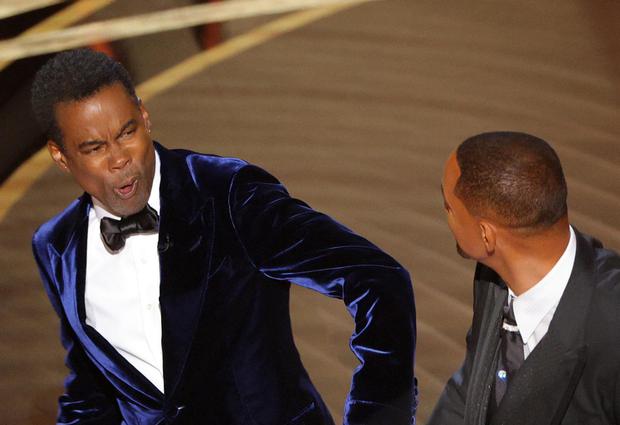
Everyone makes mistakes. Will Smith reminded us of that on Sunday night. And if you are a learning, growing, improving human your mistakes make you better prepared for the next challenge life throws your way. And life is going to throw more challenges your way. It’s what life does.
Early in my career, I made a mistake kinda like Will Smith’s. Granted, there were no Oscars involved. It was not on national television. I wasn’t mad at Chris Rock for saying that my wife looked like one of the fittest, most beautiful Hollywood actresses of all time. (You go Demi!) And I didn’t actually touch anyone.
But I did overreact to a coworker who had done something wrong.
In the moments that followed my overreaction, my boss gave me one of the most valuable lessons I have learned in my career. He simply and calmly told me:
‘When you are right, don’t respond in a way that makes you have to apologize.‘
It was great advice. It perfectly reframed my mistake for me. I could see that I was in the right, until I wasn’t. Yes, I had been wronged. But I became wronger. The court of public opinion would have acquitted me, until my behavior was such that they could no longer support me. #IWishIKnewHowToAcquitYou…
For two decades now that piece of advice has been written into my decision-making code. When I am processing how to respond to aggravations, slights, irritations, and insults I frequently access that code. And it always helps me make better decisions. As a result, I don’t give my power of rightness back to those who have wronged me.
Key Takeaway
When you are right, don’t respond in a way that makes you have to apologize.
*If you know someone who could benefit from this message, please share it with them.
Have you ever run out of gas? I have. I did it on purpose.
I was in my early 20s and home from college for the summer in Vermont. It seemed like knowing how far your car could go on empty was a valuable life lesson. Did E Really Mean E? Or was the needle on the fuel gauge of my 1982 Ford Escort just the little needle who cried E? Inquiring minds want to know.
On a warm June morning, I planned my knowledge-seeking pilgrimage. I called a friend and told him that I expected to run out of gas somewhere along my route that morning. I gave him a specific time to come look for me. And to bring some fuel.
Then I left my parents’ house and drove down a quiet country road in Vermont. And if you have ever been to Vermont you know that a quiet country road in Vermont is a redundant statement. Or maybe a redundant redundant statement.
About 5-miles into my trip, I ran out of gas and rolled to a stop on the side of the road. Minutes later my friend arrived with some spare gas. I gave the car 1 gallon of petro from the classically red gas can. I fired the car back up, and drove it to the nearest gas station a mile or so down the road and filled the tank with 12 gallons of gas.
How Low Can You Go?
As I climbed back into my car, not only was my tank full of gas, my brain was full of new knowledge. I now knew how far my car could go on empty. I knew what my car did after it drank its last drops. I knew that a good backup plan minimized the impact of running out of gas. And I knew how far I could safely push things in the future. Or as Salt N’ Peppa said, I now knew I could push it real good.
I have applied this same limit-seeking approach to other areas of my life. Because I want to find my real limits. Not for limit’s sake. But so that I know what the possibilities are. I want to know how far I can really push myself before I can’t go any farther. Most people never do this. But we all should.
Key Takeaway
Explore your outer bounds. You should know where the real limitations are. Know when your car will really run out of gas. But also know your real limits are for strength, work, endurance, and pain. Find the edge. It is the only way to know how much you are truly capable of. It’s more than you think.
*If you know someone who could benefit from this message please share it with them.
In 2016, after having been an employee of three successful companies for 19 years, I became an entrepreneur. I left behind the predictable employment, the benefits, the 401(k) and the Free Lunch Fridays.
I pushed all my chips to the center of the table and bet on myself when I launched the advertising and idea agency, The Weaponry.(The chip reference was supposed to be a poker thing. Not a potato chip thing. #JustClarifying)
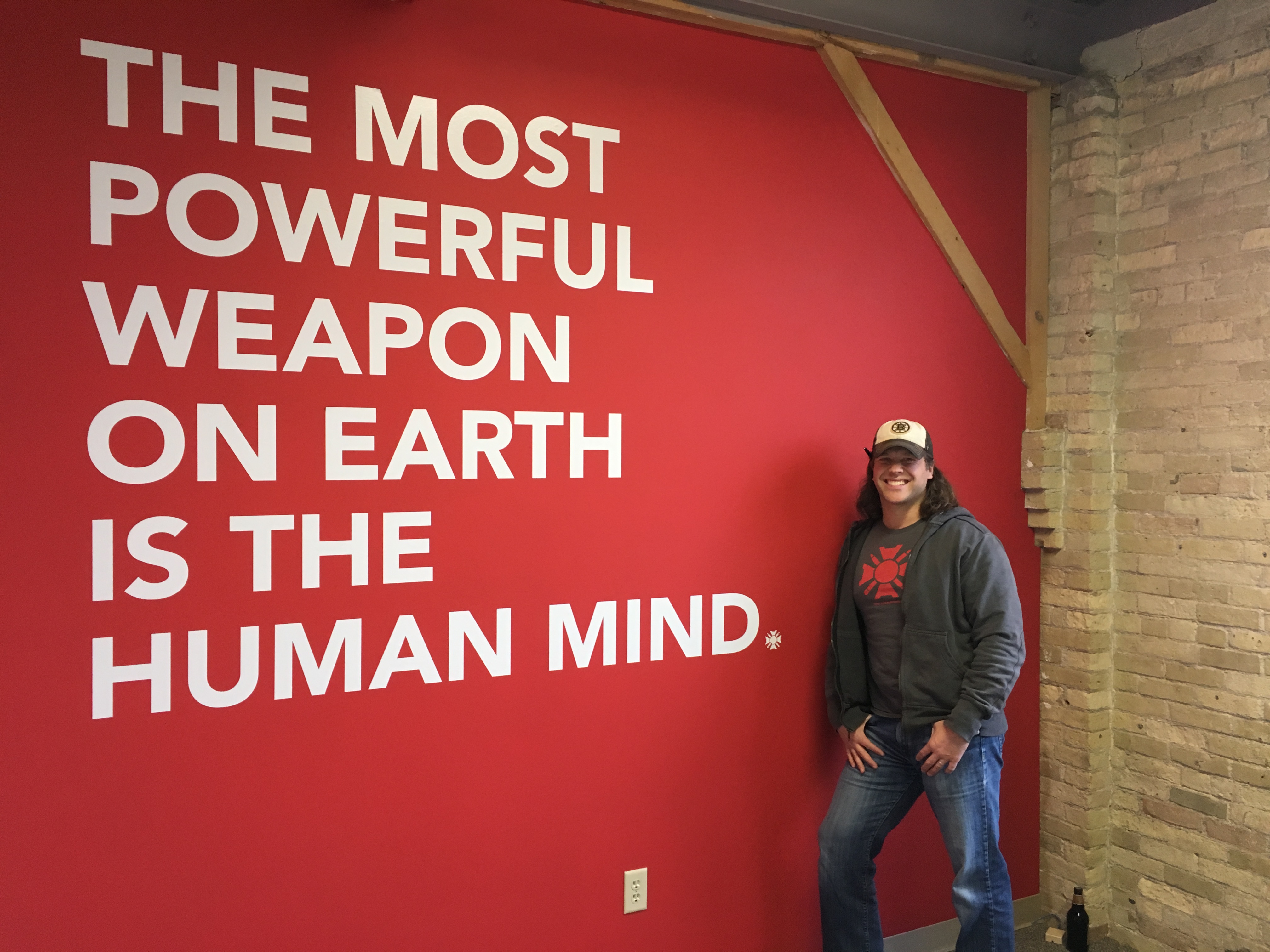
Me and a wall at The Weaponry.
But when I left my job as the Executive Vice President and Executive Creative Director of the largest advertising agency in Atlanta to start my own business it never seemed crazy to me. Because I knew a lot of other people who had started successful businesses. They seemed a lot like me. And they all looked like they were fed, sheltered and clothed. (Wait, yep, they were definitely clothed.)
My man Troy Allen started a design agency before starting the wildly successful Rise Brands.
I knew a bloggle of bloggers before I launched this blog.
I knew a stockyard of people who invested in stocks before I bought stocks.
I knew a neighborhood worth of people who owned rental property before I properly rented my property.
Writing my own book didn’t seem hard. Not even the hardcover.
Always Remember:
You Are Becoming More Like The People You Spend Your Time With.
Your peer group is your mirror group. To upgrade your likelihood of success upgrade your friends. Surround yourself with doers and diders. It creates positive peer pressure that pushes you to do better, more impressive things. The Joneses I know are badasses. And I want to keep up with all they are accomplishing. (Shout out to Bryan, Jill, Adam, Patti, Garrett, Kristen, Sharon, Courtney, Arnita and Rachel! Sorry you guys didn’t make it into that new truck commercial.)
My college teammate Bryan Jones is hard to keep up with, but I am trying.
Key Takeaway
Your friends are your on-ramp to success. Surround yourself with others who have already done the next big thing you want to do. It decreases the perceived degree of difficulty. It increases the odds of you successfully completing the same challenge. And the more successful your peers are the more insight they offer to all you can accomplish in your lifetime.
*If you know someone who could benefit from this message, please share it with them.
We could all use a good role model. Someone to model our behavior after. Someone who has work and life figured out. Someone who inspires us to think better about the big picture. For some that person may be Jeff Bezos, Sara Blakely, Jesus, Kim Kardashian, or Willie Nelson. To be clear, not all role models are created equal. No judgment. (Ok, a little judgement.)
If you are looking for a role model to pattern your thinking after I have a suggestion. Look to Hedge Fund Managers. (You thought I was going to say Bezos, didn’t you?) Like Jeff Bezos, the people who run hedge funds are among the wealthiest in the world. They bring in clinically insane amounts of money for their funds and their investors.
But the money itself is a lag indicator. It is a result. Which means you have to jump in the DeLorean and go back to the original lead indicator to see what makes the hedge fund manager so successful.
At the foundation of the hedge fund is a very simple philosophy. It’s a mindset that any of us can follow. The hedge fund is built on this basic belief:
No matter what happens, I will win.
-Hedge Fund Managers
The fund managers place Big Ben-sized bets on what they expect to happen. They place educated bets that derive from studying the past. They place data-driven bets on the future. And they place smart bets that I assume come from eating a lot of Smarties.
Yet all investment funds do this.
What sets hedge funds apart is the hedge. (Not the popular landscaping boundary made of bushy greenery.) The hedge in hedge funds means that you also place bets that things will go the opposite way that you expected or intended. Which means that you put contingencies in place to capitalize on shifts in markets, conditions, and trends. Or to protect yourself in case a dictator with small tators decides to invade a peaceful neighbor and jack up the world economy.
The hedge fund manager expects the unexpected and expects to win anyway.
I am an entrepreneur. But if you cut me open (please don’t) you’d probably find a hedge fund manager. Because I believe that I will win no matter what happens.
2020
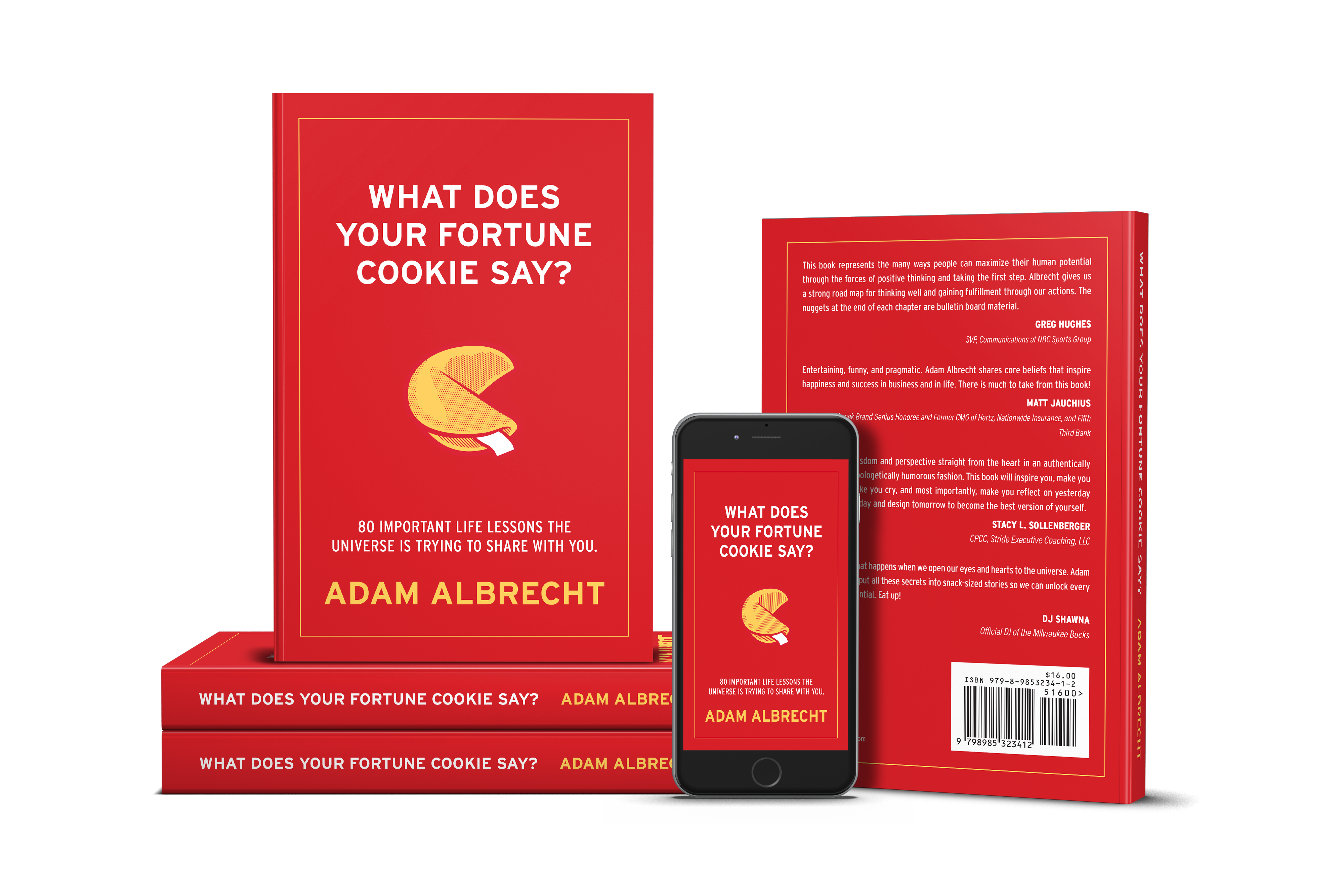
2020 was considered by most to be a doo-doo dumpster fire year. But there were many people who ended up benefitting from the pandemic in significant ways. I was one of them. Because the pandemic created new opportunities. My business, The Weaponry, did well because of how we responded. My personal life benefited from more time with my wife and children. I had more time to exercise than I usually do. I used the gift of time during the lockdown to write my first book, What Does Your Fortune Cookie Say? Because I simply decided that no matter what happened, it was going to benefit me.
Key Takeaway
In every situation, there is a way to win. Find it. Think like a hedge fund manager. Find your way to profit no matter which way the wind blows. See the opportunities disguised as bad news. Swim when the sun shines. Read when it rains. There is always an upside. Find it. And make it work for you.
*If you know someone who could benefit from this message please share it with them.
+If you’re on a personal growth journey check out my new book What Does Your Fortune Cookie Say? on Amazon. It features 80 life lessons the universe is trying to share with you.
We all have multiple identities that form our self construct. When you were young they were simple. You were a boy or girl. A son or daughter. Maybe a brother or sister. Or perhaps you saw yourself as a Bo, Luke, or Daisy.
As you grow, evolve and participate in more activities you add identities. You become a student, a girl scout or a baseball player. Throughout your schooling and into your career your identities expand and multiply in interesting ways. All of which morph your self construct, without the need for hallucinogenics.
Your identities influence how you see yourself. But they also determine how the world sees you. Your identities help broaden your self-image and give you more flavor, complexity and stability.
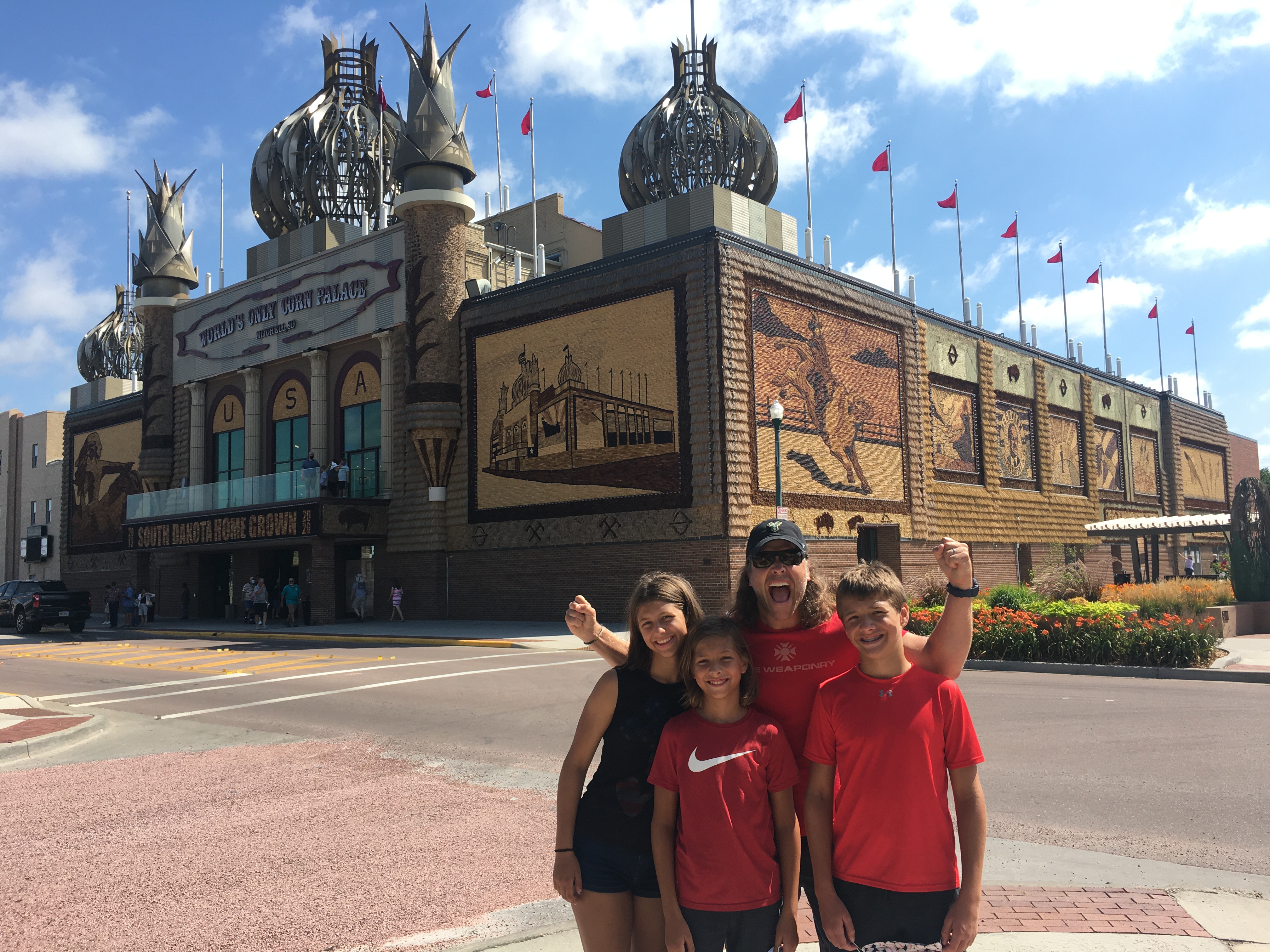
I’m a father, adventurer and Corn Palace visitor.
Here’s a partial view of my identity stack:
Father
Husband
Son
Brother
Uncle
Friend
Christian
Entrepreneur
Creative
Marauder
Badger
Dude ( I recently entered this when asked for my gender)
Vermonter
Wisconsinite
Adveritisng professional
Blogger
Patriots fan
Bucks fan
Red Sox fan
Perpetually but non-offensively immature
Exerciser
Initiator
Problem Solver
Homeowner
Adventurer
Adding Identities
In the past year, I have added a surprising number of new identities to my self-concept. Especially for a seemingly full-grown human.
Coach
Before last spring I would never have called myself a coach. Despite the fact that I coached a youth flag football team for 3 seasons. That just felt like the type of coaching that non-coaches do because the kids need a coach to be able to have a team. In other words, I simply identified as a dad doing some coaching. It’s like a dad playing the role of a chaperone, instead of adding the identity of bodyguard, or animal tamer.
But last spring I became a legit high school track and field coach when I started coaching the shot put and the discus for Homestead High School’s girl’s track and field team in Mequon, Wisconsin. In fact, 2 weeks ago I attended an all-day and all-evening event for track and field coaches in Madison. That really made me feel like I should walk around with a whistle or a stopwatch around my neck. Although you don’t really need either of those things to coach the shot put.
This was my best day of coaching. All 4 of my athletes threw their best ever. And I wore the shortest socks I own.
Then, last fall I began coaching youth tackle football. That was a multiple-times per week thing. With real strategy, conditioning and hype. I have a logoed polo, a hat and a picture of me and other coaches and 16 boys in full uniform looking very serious together to prove that I am now also a youth football coach.
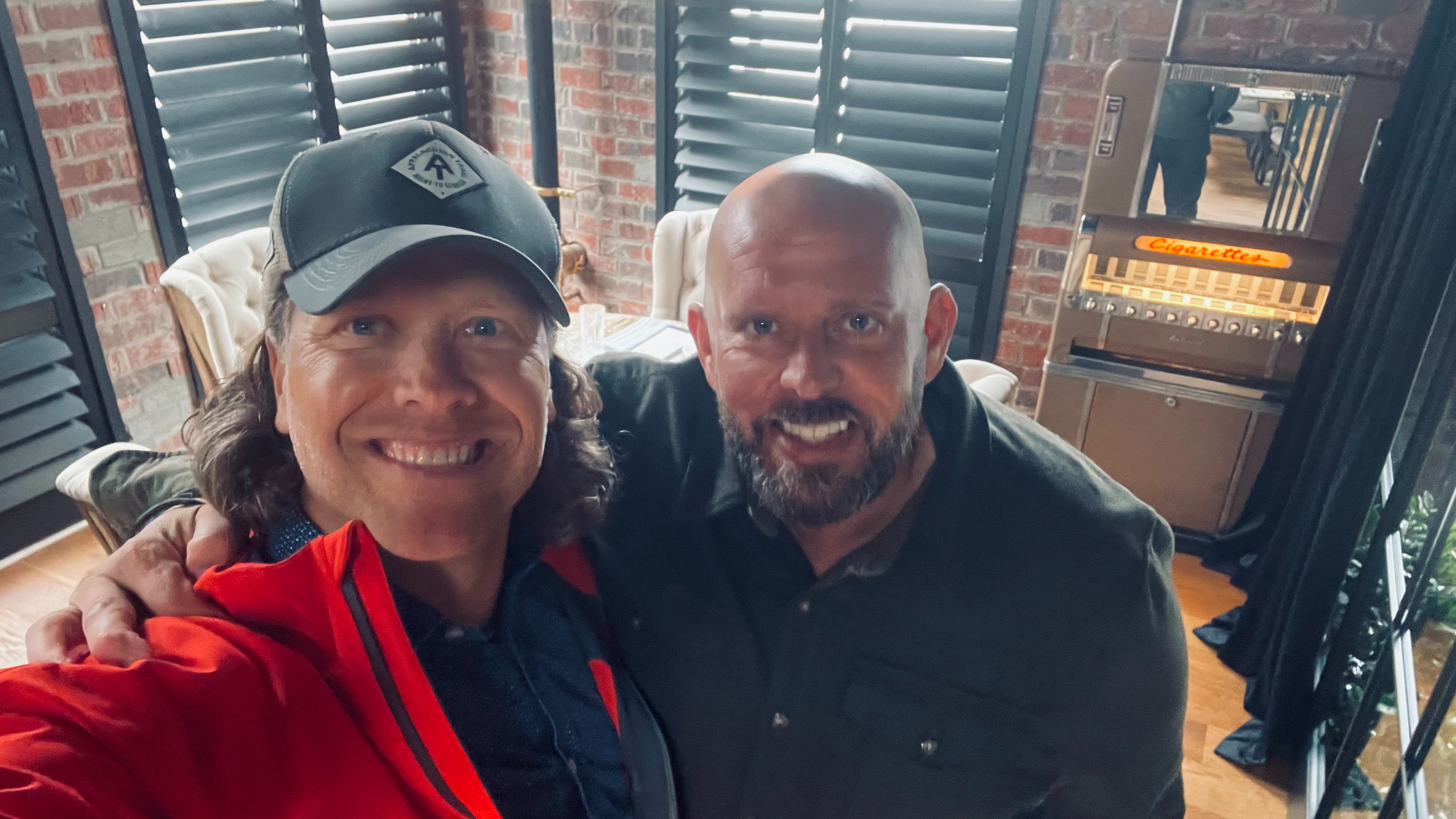
Me and Magnus after our last game of the season. We played on turf, which is why neither of our uniforms are dirty or grass stained.
Author
The week before Christmas I published my first book called What Does Your Fortune Cookie Say? Now, I add author to my self-identity. Despite the fact that I have been a blogger for nearly 7 years, author feels different. It’s more official, more difficult to attain. More respected by others. And authors get asked to sign their books way more often than bloggers get asked to sign their blog posts.
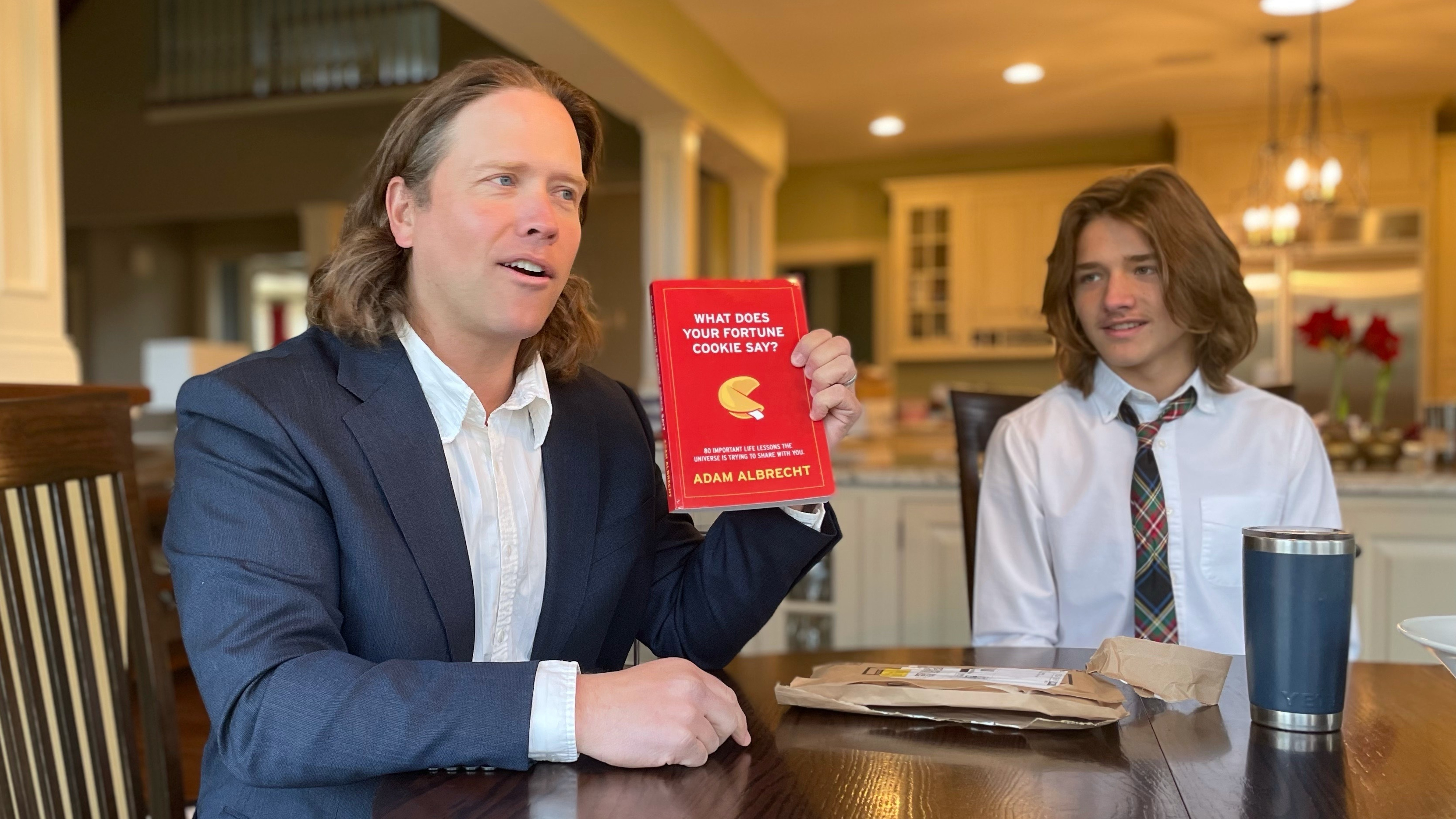
The time my first book emerged from its brown, paper Amazon cocoon. (As seen on the table.)
It’s hard not to add the author identity when the internet adds it for you. Here is how my online footprint has expanded since I published my book:
The other surprising new identity that I have added to my self-construct is Speaker. I have done a lot of public speaking throughout my life. Over the past couple of decades, I have seen myself as a business professional speaking about what I do or things I know. But now it feels different.
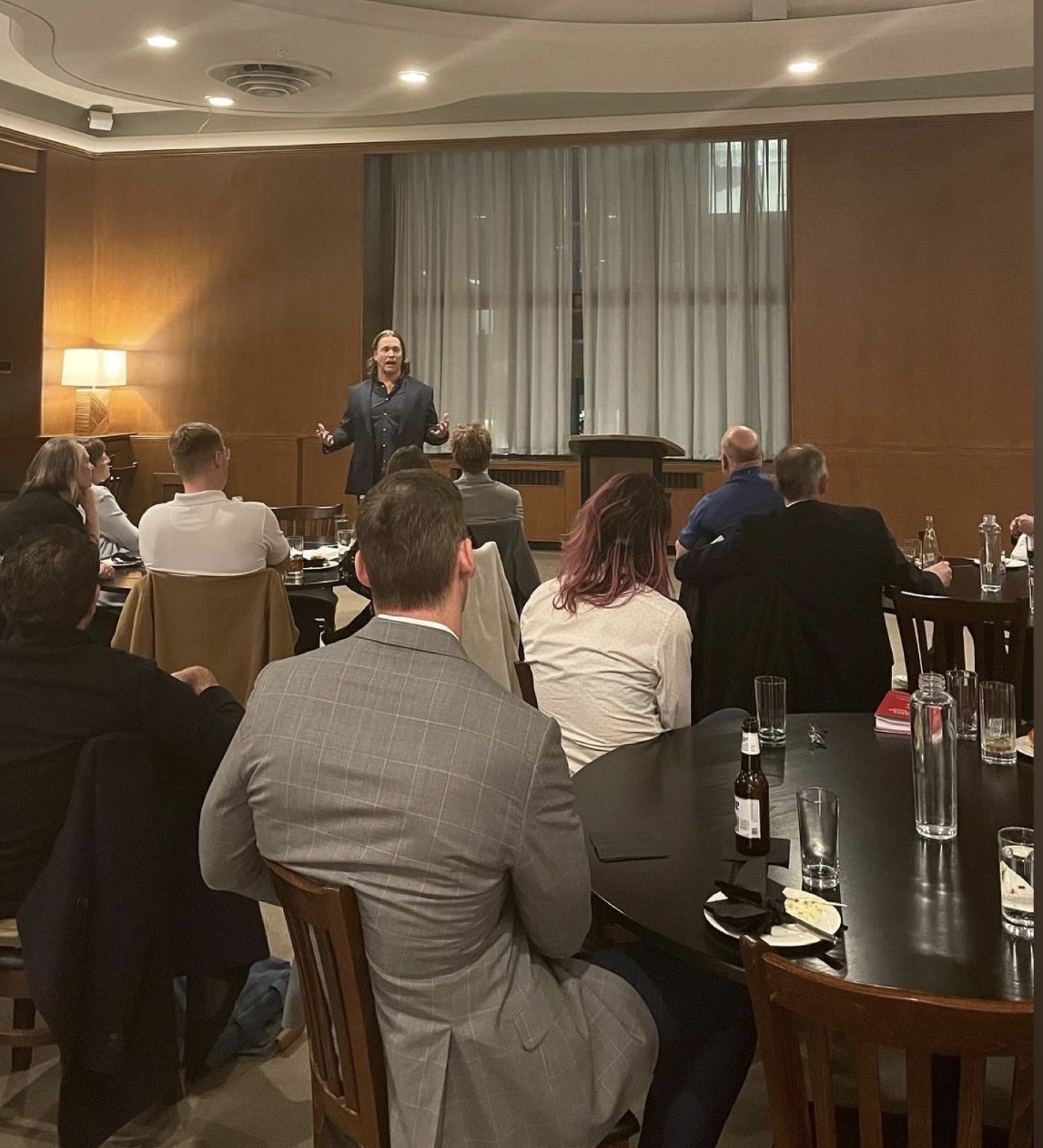
Me speaking to a round table at the Milwaukee Athletic Club. Here I am demonstrating the starting position for juggling watermelons.
Since I published the book I have received many requests to speak at local, state and national events. I have booked 6 speaking engagements in the past couple of weeks. It is an exciting and enjoyable new addition to my self-identity. And it helps me spread more positivity and inspiration with the world. Like Jonny Fortunecookieseed.
Dog Owner
As if all of this wasn’t enough, at the end of January I also got my first dog ever. Now I add dog owner or dog haver or whatever this makes me to my life resume. It may seem like a small thing compared to the attention you receive as an author, entrepreneur or public speaker. But when you come home to that wagging tail and face licks it is special. And when I am picking up dog poo, it’s hard to deny that I am a real Dog Dad.
Key Takeaway
Adding to your self-identity keeps you growing and evolving. More self-identities not only make you more interesting and creative, they add to your stability and resilience. Multiple identities help expand your social circle. They expand your reach and influence. The more identities you have the less likely that any one of them has the ability to negatively impact you. Conversely, the successes you experience in any identity helps to add to your overall self-esteem. All while making you a more interesting and valued contributor to your family, friends, communities, and planet. So go on with your bad selves.
*If you know someone who could benefit from this message, please share it with them.
Work is unavoidable. Even outside of your professional work there is always personal work to be done. Your personal work falls into 3 categories:
Chores These are the basics you have to do daily, weekly, monthly or annually to maintain the status quo. (And to keep all your teeth.)
Electives These are the things you choose to do that set you apart from others. (Even without tattoos and piercings.)
Special projects These are the bigger challenges you take on that have the ability to transform you. (In non-surgical ways.)
Chores
Chores don’t come with a choice. You don’t have the option not to do them. Although you can choose not to do them well. Or often. Which drops you below the basic human level of acceptability. Which is a great way to get yourself on a TV show like Hoarders, Intervention, or My 600-pound Life. You can, however, choose to do your chores very well. Which is a good habit to get into, and sets the tone for how you approach everything else in life.
Electives
Electives are the things you do that you don’t have to do. These are the activities that separate you from others and help make you interesting. They give you flavor, like Flavor Flav. They create your differentiation and your unique advantages.
Your electives include your hobbies, and interests. They also include all of your self-education, reading, podcasts, studying and training. Your electives include exercise, cooking, and meditation. Seeing a therapist or a coach are great electives. As are writing, volunteering, coaching and creating music. If you have a hard time coming up with interests to include in your work bio, online dating profile or obituary, you probably need more electives.
If there is not much elective activity in your life then you are not doing as much as you could to create joy and competitive advantages. And you are probably not making the most of your time.
Evaluating your electives is a great place to start when evaluating your life, trajectory, happiness, and achievement. Happiness is rooted in your electives. Make sure you have them, and that you participate in them frequently enough to find enjoyment, fulfillment and growth.
Special Projects
Special projects create opportunities for transformation. They are often an expansion of an elective. Writing a book, going back to school and trips to an exotic location are all examples. So is starting a business, a major physical challenge, or a significant career change. Special projects often provide an inflection point in our human experience, sending us on new, better and more enlightened paths.
Key Takeaway
Make sure you are always dedicating time to your electives. They are your difference makers. They are the building blocks of an enjoyable life. They fertilize your happiness. Your electives are gateways to bigger, more important activities that can become defining events and undertakings of your life. It is hard to transition directly from chores to special projects. Your electives are the bridges that help get you there.
*If you know someone who could benefit from this message, please share it with them.
A great life is built by establishing great routines. When you establish a strong routine you feel like a train picking up momentum as you roll down the track. Like Casey Jones, driving that train, high on… life.
Stacking several days, weeks or months of exercise, reading, writing, work or practice together is like laying brick after brick of progress. The cumulative effect turns into something substantial, noticeable and differentiating.
However, life isn’t easy on your routines. You will regularly encounter obstacles, events, and conflicts that disrupt your flow, Jo. This turbulence knocks you around and attempts to dislodge you from your productive habits.
But remember, turbulence is temporary. A plane flies in and out of turbulence, which shakes the plane, throws the passengers about and halts the beverage and peanut service. That’s why God invented barf bags.
But turbulence is simply a pocket of disruption. One of the greatest skills you can develop is the resilience to snap back into your routine on the other side of the turbulence. After the travel, the cold, the work crunch, the Covid, the kid’s needs, or the big test you need to get right back into your best habits.
Don’t allow the turbulence to ruin your mindset. Continue to lean into your habit mentally, even when the turbulence compromises your ability to keep your commitment. Keeping the connection to the commitment is critical to maintaining the momentum. (Which is like two alliterations in one.)
Key Takeaway
Turbulence is an unavoidable part of life. It will throw off your routine and threaten your habits. But hold tight to your commitments. And jump right back into your routine as soon as the turbulence passes. It’s how you ensure that your commitments always conquer your excuses. That’s how you win at life.
*If you know someone who could benefit from this message, please share it with them.