Get Lazy To Get Productive.

On a recent Saturday morning, I was really lazy. Like, pro-level lazy. I was lazy like a boy in an overstuffed recliner.

I got up early, as usual. I made my son Johann breakfast and made sure he had everything he needed to take the ACT’s that morning. Basically number 2 pencils. But hey…

After Johann left, my wife and I had an empty nest. Our daughter Ava was off at college. Johann was testing at school, and then would be off to practice music with his bandmates. And our youngest son, Magnus, was at a water park for the weekend with his friend Phineas and his family. I assume Ferb was there, too.

So Dawn and I were alone. And we sat in our living room and read. We read for a long time. It was great. And lazy. It felt as if we were finally recovering from our very active trip to Arizona. I hadn’t allowed myself to feel that lazy for a long time.

But then something quite predictable happened. I got itchy to do something. I had sat long enough that I was now compelled to work, to do, to be productive.

So I went outside with a rake and trimming equipment. I cleaned up, cut down and spruced up all of the beds in the back of my house. I then took 3 loads worth of yard waste to the dump.

After that, I came in the house and had a light bulb moment, which sent me on a mission to replace every burned-out light bulb I could find in the home.

Before I knew it, I had 5 hours of productive work done on the laziest Saturday in recent memory. Because for me, laziness serves as a springboard to productivity. I saturate with laziness, and then I have to do something. I lounge until I must labor. Then I labor until I must lounge. It’s a strong and satisfying approach that I recommend everyone have in their playbook.

Key Takeaway

Everyone needs a little downtime to recharge. It provides both a physical and mental reset. As soon as your batteries are fully recharged from rest, get right back to it. Then go until you need a good rest. The cycle will leave you feeling both productive and restored. That’s a win-win.

*If you know someone who could benefit from this message, please share it with them.

+For more of the best life lessons I have learned check out my book, What Does Your Fortune Cookie Say? from Ripples Media. And consider subscribing to Adam’s Good Newsletter.

Take a little time to save yourself a lot of time.

A few months ago, something coo-coo happened with my default search browser on my laptop. This is not something I would typically write about. (Or read about.) But stay with me. There is a valuable lesson at the end of this techno-rainbow.

Instead of defaulting to Google for search, suddenly my computer was defaulting to Yahoo’s search engine, as if it were 1995.

For months, I would type a search into the search bar and it would take me to Yahoo’s results page, which, unlike a Snickers, was not very satisfying.

So I began to simply type Google into the search bar, then click on Google, and then perform my search once I had arrived at the Googler.

This was inefficient. And a waste of time. (But you already knew that.)

So one day I went to Google, and googled how to make Google your default search engine.

I got the answer immediately.

Because Google is good like that.

The process of changing my search engine took about 20 seconds.

And every day since then I have enjoyed a highly efficient search process.

The Bigger Lesson

The experience served as a reminder that we all have unnecessary inefficiencies that are slowing us down, wasting our time, and negatively impacting our productivity or our quality of life.

Recognize those inefficiencies and eliminate the time-wasting workarounds. Look for opportunities to improve your processes to save you time, energy and money over the long haul.

This may include improving your processes. It may include training others to do tasks so that you don’t have to. It may include fixing a broken or worn-out thing you have been working around. It may involve cleaning or organizing so that you can easily find the things you need when you need them. Which is kind of like Google in the physical world.

Key Takeaway

There are unnecessary inefficiencies in your world right now. Addressing them will take a little bit of time now, but save you a lot of time later. Seek out ways to improve your professional and personal productivity by improving your processes, training others, fixing, and organizing. It will eliminate your time-stealing workarounds. And decrease the friction in your work and in your life.

*If you know someone who could benefit from this message, please share it with them.

+For more of the best life lessons I have learned check out my book, What Does Your Fortune Cookie Say? from Ripples Media.  And consider subscribing to Adam’s Good Newsletter.
A simple rule of thumb to get the most out of your people.

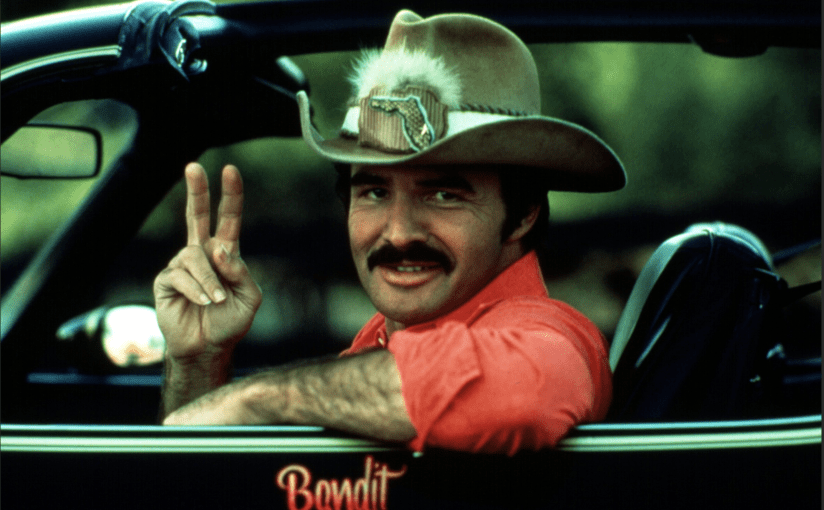
When I was a kid I loved the movie Smokey and The Bandit. I was into trucks and Trans Ams. So a movie about those two vehicles racing across America, starring Burt Reynolds and his mustache, was an obvious Oscar winner to me.

I also loved the theme song from the movie, East Bound and Down by Jerry Reed. My favorite line from the song is the classic, ‘We’ve got a long way to go, and a short time to get there.’

Those lyrics still play in my head today. Because as a business owner, and both a football and track and field coach, I have big goals for my teams to accomplish. And I have a short time to make them happen.

Getting The Most Out Of Your People

To get the most out of your people there is a simple exercise to help you budget the time and energy you spend with each of the members of your team.

Grab a sheet of paper. (Yes, they still make paper.) On the left side write down a list of those you manage or coach in order from most productive to least productive. Your productivity rock stars will be at the top. Your ‘Why-are-they-still-here’ person is at the bottom.

Then, to the right of that, create a list, in order, of how much time you spend managing or coaching each of the people you lead.

Now, you are going to draw a good old-fashioned straight line connecting the names on the left list to the same name on the right list.

If you are drawing straight lines, and the lines don’t cross, you are budgeting your time appropriately. If your lines Christopher Cross, you spend too little time with your most talented people, and too much time with your least talented people. It is time to re-budget.

Key Takeaway

Maximize the return on your time invested in your team. This means the most productive people should get the most time and attention. The least productive people should get the least of your time. This rewards good behavior from your best people. And it ensures that your time and energy are invested where they will get the greatest return. Spending more time with your less productive team members sends the wrong signal to your great talent. And it is a waste of time. With rare exceptions, the least productive team members will always generate the least results.

*If you know someone who could benefit from this message, please share it with them.

+For more of the best life lessons I have learned check out my book, What Does Your Fortune Cookie Say? from Ripples Media.

Tuesday is the most important workday of the week.

Like cogs in a machine, or tools in a toolbox, every day of the week has a different purpose.

Tuesday is the Do-Day.

After setting the goals and objectives for the week on Monday, Tuesday is the day to make things happen. Bite off big chunks. Pull the long levers. Create evidence of progress.

Tuesday is for tackling. Not tinkering.

Tuesday is for chopping. Not chipping.

Tuesdays should be spent in the shop.

Or in the lab.

Or at your desk and cranking.

Or on the pole and spinning. (If that’s the kind of work you do.)

As Redman said, Tuesday is time for some action.

There should be clear quantifiable evidence of progress by the time you turn off the lights Tuesday night. You should have sunk your treads deep in the soil of your workground, gained traction, and propelled your projects forward.

Tuesdays are great days to work alone. Put away your phone. Hold your calls. Forget about email for a day. And make some frick’n magic.

Spend as much time as you can afford in Total Focus mode.

Remember that scene in Elf when the rest of the workshop is disappointed in Buddy for only making 85 Etch-A-Sketches?

That’s a Tuesday mindset.

Key Takeaway

Tuesday is the difference-maker. Tune out the distractions. Get to your most important work of the week. And make things happen. The progress you make on Tuesday creates momentum that propels you the rest of the week.

*For maximum impact, share this message with your team on a Tuesday morning.

+For other important life lessons the universe is trying to share with you check out my new book What Does Your Fortune Cookie Say? from Ripples Media.

To have a great year start with Planuary!

For many people, 2021 was a year they would rather forget. But not me. 2021 was a year that I would take extra Ginkgo Biloba to remember. I had a remarkable year. Here’s a quick summary:

Noteworthy Happenings From My 2021:

  • I sold 2 homes during the hottest real estate market in history.
  • I bought the home I spent more than 2 years looking for. (Which means the soundtrack in my head finally switched from U2’s I Still Haven’t Found What I’m Looking For, to Kenny Loggin’s This Is It!
  • I coached high school track and field for the first time. (My daughter Ava made it to state in the discus as a freshman. Which made me look good as a freshman coach.)
  • I helped coach my son Magnus’s 5th-grade tackle football team. (I specialized in coaching the boys on their volume and hypeitude.)
  • I planned my high school class reunion in Hanover, New Hampshire. (And there was almost no drama. But enough to keep it interesting.)
  • I traveled to Vermont, New Hampshire Florida, Louisiana, Georgia, Ohio, Alabama, California, Texas, Minnesota, Indiana, Mississippi, Illinois, Pennsylvania New York, Rhode Island, Tennesee, Massachusettes, Kentucky, Connecticut, Arkansas and Missouri.
  • The Weaponry, the advertising and ideas agency I launched in 2016 celebrated its 5th birthday. (I invited Marilyn Monroe to jump out of the cake but she didn’t return my calls.)
  • I bought 2 new cars. Because the old ones (10+ years old) asked for a rest.
  • I published my first book titled What Does Your Fortune Cookie Say?
  • My Milwaukee Bucks won the NBA Championship
  • The Atlanta Braves and my guy Austin Riley won the World Series.
  • And my man Tom Brady won yet another Super Bowl.
  • (The last 3 are just fun for me. I had nothing to do with any of them.)

How To Make Your 2022 Great.

Great years don’t just happen. They are made to happen. And it all starts with planning. That’s why I call January Planuary. Because now is the time to plan your great year ahead.

What makes a year great is up to you. But if you don’t know what makes a year great feel free to use my plan, and adjust it to suit your own goals.

The 10 Things I plan in January. (Or Planuary)

  1. Travel: Especially the Places I gotta See Before I Die type of travel.
  2. Things I want to learn: This includes stuff like music, language, how to perform standup comedy, how to perform crouch down comedy, taking a hunter’s safety course, CPR certification, or getting my motorcycle license.
  3. Books to read: I pick some important books to read each year. Or set a goal like reading a book per month. Or 3 books per month. Audiobooks count. And they are one of my great life hacks.
  4. Career goals: I pick new challenges, set new targets to hit, make a change, or start a new business.
  5. Life goals: Like writing a book, hiking the Appalachian Trail, coaching or volunteering
  6. Connections to make: I ask, Who do I want to meet next? If you haven’t planned this before try it. It could change your whole life.
  7. Reconnections to make: Like planning a class reunion, team reunion or a friend meetup.
  8. Making time for big progress: I block time for progress against my goals. Like writing every morning between 6 am and 7 am. Or time for exercise. Or beard grooming.
  9. Timelines: I determine when I will do the big stuff. And I create timelines and deadlines to bring the more complicated goals to life.
  10. Other: This could be anything. Except for the 9 things above. Because if it is one of the 9 things above you don’t need a 10th category.

Key Takeaway

Great years don’t just happen. You have to make the year great through your plans and actions. Now is the time to create the plans. Put dates on the calendar. Make your year look amazing in January. Then make your plan your reality by living into it all year long. Then look back on New Year’s Eve at all you experienced and accomplished. Do this year after year, and you will have created a great life.

*If you know someone who could benefit from this message, please share it with them.

If you like this idea and wonder if I have any more good ideas, check out my new book What Does Your Fortune Cookie Say? from Ripples Media.

Become more focused and more productive by adding more pressure.

I recently moved into a new house. Moving is like putting your world into a blender. Or a tornado. Or a tornado full of blenders. You box up all of your belongings, move them into a foreign space, then you have to find spaces for everything in the new house. It creates chaos, disorganization and discomfort. It can be hard to know where to focus your efforts to make progress before a producer from the show Hoarders shows up on your front steps with a contract and and a pen.

Last Week

This past week I had a plan to help add focus to the chaos. I knew that Sunday night the Patriots were going to play Tom Brady and the Buccaneers for the first time since Brady left New England. #Boo

Under normal circumstances the game would have created a good opportunity for me to have some guys over to watch the game in the lower level of our new home. The problem was that the lower level was a high level disaster.

Despite the disaster, I invited some friends to come over for the game. #WAAZZZUP #ChillinHavinABud

Then I got to work. Like Daniel in a Karate Kid training montage.

I unpacked boxes, and put things in cabinets and drawers. I moved furniture. I organized the exercise room. I calibrated the downstairs refridgerator and filled it with a variety of beverages. (Ok, so my wife Dawn did that.) I set up the ping pong table, I mounted the downstairs TV and put the video game station together. I moved the piano into its new space. I organized the bar and pulled out the bottle opener. I made sure the downstairs bathroom was clean and ready. Then I stood in the middle of the basement and did The Crane Kick.

The result was that by Sunday night at 6:30 pm the lower level of our house was organized and ready for my friends. The false deadline gave me focus and motivation. It spurred me to action. And I checked a major to-do off my list.

You Can Too.

You can do the same thing. Invite guests over to force you to prepare your home. Sell a product, service, or event before it is ready. Then work like crazy to deliver it on time. Sign up for the race or competition to make yourself train. That pressure is great for you. It turns your electives into requirements. Which is where the magic happens.

Key Takeaway.

Force progress and growth by adding pressure to pressureless situations. It is a great way to create motivation and urgency. It’s a simple trick that makes you immensely more productive. And the rewards of the pressure often compound far into the future.

*If you know someone who could benefit from this message, please share it with them.

To accomplish more, learn to quiet your curiosity.

Curiosity is a powerful force. It drives creativity and innovation. It fuels growth and understanding. It inspires us to challenge assumptions and explore new frontiers.

However, just as curiosity can be highly detrimental to cats, it can also be the kryptonite to your success. Because unchecked curiosity kills focus. And focus is the key to progress.

When attacking your work you need a singular focus on the task at hand. (Even if you are in a relationship.) Curiosity is constantly working to distract and disrupt your focused efforts. Like a gremlin. Or The Noid that used to ruin your pizza in the 80s.

Curiosity, paired with the access to infinite information and endless rabbit holes at your fingertips, means that a fleeting thought or a sparkle of a question in your head can be instantly acted upon. By following your curiosity you destroy the momentum, thinking, and effort that pays off in the form of progress, creation, and accomplishment.

You have to train yourself that curiosity is not to be acted upon when you are in total focus mode. Or what I call ToFo. Which is when your most important gains are made. You need to fight curiosity like you would defend your house if you wore Under Armor. Or the way you would combat an opponent during competition.

It is valuable to train your brain to take greater pleasure from defending itself against the sirens of curiosity than from the scratched itch of answering trivial questions. Learn to recognize the negative influence of ill-timed curiosity. And don’t be afraid to tell curiosity, ‘You be illin’. (Just like I told spellcheck that it must not be a Run DMC fan.)

The Question

Ask yourself, ‘If I pursuit this curiosity now, will it distract me from more important work?’ When the answer is yes, simply don’t pursuit the answer. That simple act of denial will help you accomplish more every day..

Key Takeaway

Curiosity is a double-edged sword. While it drives innovative thinking, it often distracts us from our most important work. Make social media, search engines and other curiosity sucks off-limits during sessions of Total Focus in order to enjoy maximum progress. Put in the mindpower needed to accomplish the task at hand. Keeping curiosity at bay is the single greatest step you can take to accomplishing more. Focus on feeding your focus. There will plenty of time for curiosity when the work is done.

*If you know someone who could benefit from this message, please share it with them.

Don’t spend your whole life busy and not make progress.

Being busy is not the same as being productive. In fact, busyness is like Fool’s Gold. It looks like business to the uniformed. But it is easy to be busy without getting ahead. In fact, you can spend your whole career extremely busy but not make any progress. The same thing can happen in your personal life too.

The 80-20 rule says that 80 percent of the results come from just 20 percent of the work. (And that 80-year olds seen with 20-year olds have money coming out of the wazoo.) In other words, if you are spending your time on the wrong things you could get little to no results. 

Earlier in my career, when I was with a very large advertising agency, the majority of my time was sucked up with meetings. And meetings about meetings. And to the uninformed, it looked like we were all super busy beavers. But very little wood was actually chewed. And we weren’t building any damn dams.

Today, as an entrepreneur, I see a direct link between how I spend my time and the value that time creates. The goal of any business is to make money. And if you are spending time on anything that ultimately is not helping your organization make more money, you are wasting your time.

Your wasted time and wasted motions at work hurt your career. Because they rob you of time that could be used for self-improvement, networking or creating value for your organization. Those are the 3 keys to making your company more successful, rising within your organization, and earning more for yourself.

If you find yourself in meetings that are not adding value, do one of the following:

  1. Change the meeting. Take the initiative to alter the meeting to make it more valuable to your organization and the people in it.
  2. Shorten the meeting. Help fast forward to the information that needs to be shared or decision that needs to be made, and be done. Often we take a lot of time to do what could be done in just a few minutes. 
  3. Pull the cord. Just like riding the bus, you can pull the cord and ask to get out of the meeting at any time. Be polite, but clear that you don’t feel it is a valuable use of your time. If you feel that way, it is likely that others do too.
  4. Text someone outside the meeting to pull the fire alarm. That works every time.

Key Takeaway

Time is your most precious commodity. Evaluate the way you are spending your time. Look for inefficient and ineffective uses, then eliminate them. Don’t let others waste your time. The opportunity cost is too high with this non-renewable resource.

*If you know someone who could benefit from this message, please share it with them.

Why a midweek crisis is so good for you.

I have a confession to make. I love Mondays. I dislike the term Hump Day. And I have disdain for the term Finally Friday. Although I dig the song by George Jones. Wait, I think that was 4 confessions.

Your Week Is Your Life

I believe that your workweek is not something to survive. It is your life. In fact, 71% of your time is non-weekend. Which means the workweek is not your enemy. It is your greatest asset. If you dread Mondays and finally feel good again on Fridays, you are doing it wrong. Bang a gong. Now it’s time to get it on.

Rethinking The Week

Think about each week as if it was your entire life. Start Mondays like a youngster. State your goals and plans for the week. Then get to work. If you accomplish your goals by Friday you can enjoy a happy retirement. Which in this case, is your weekend.

Monday

I have been using this simple life-week construct for most of my life. There are 3 keys to making this construct work. The first is a clear Monday plan. Knowing what you want to accomplish during your week is key to keeping you focused and progressing.

The importance of Monday is no surprise. Although in my perfect life-week construct I actually start the plan on Sunday night. Which is probably a bit like planning your life while you are still in the womb. Like Womba Thurman. Or Mr. Wombastic.

Work Like Boots

The 2nd key is putting in the work. You have to put in the focused effort to make strong progress towards your goals. Without putting in the focused work you are simply wishing for success. And if wishes were fishes we would all have a fry.

The Wednesday Breakdown

However, the third key to this approach is not so obvious. If you think of your week like your entire life, then Wednesday is not the day to celebrate getting over the humpty-hump. Wednesday is the day to have your midweek crisis.

Having a midweek crisis means having a legit concern that you are not where you thought you would be at the midpoint of the week. This will cause you to closely re-evaluate your plan for the rest of the week. It will force you to make important adjustments in your priorities and productivity. The crisis and refocusing will help make sure you reach the end of your week with the type of progress and accomplishment you set out to have.

The Go In Goals

Your goals are your guides. You can’t just set them and forget them. You must check in with them often. They should guide your daily and hourly actions. They must drive your priorities. They tell you what you must sacrifice and what your non-negotiables are. So set your goals every Monday (or Sunday night). Then every Wednesday you must refocus on what is most important in order to hit your targets by Fri-yay.

Key Takeaway 

If you want to be more productive every week, start thinking of your week like your entire life. Set your goals at the start of the week. Have a serious evaluation of your progress on Wednesday. Refocus your efforts. Use your time. And achieve all that you set out to. Your life is built week by week. Don’t let another one slip by waiting for Friday.

*If you know someone who could benefit from this message, please share it with them by Wednesday.

How to protect the time you need to achieve your greatest goals.

When I was a student-athlete at the University of Wisconsin my schedule was booked solid. I was at class every day by 8:55am. Classes lasted until 2pm. At 2:30pm I was at track practice. I left practice at 6pm and went to dinner. I ate at the Sports Buffet until they kicked me out at 7pm. By 7:20pm I was at Helen C. White Library studying in the quiet section (seriously). By 10:30pm I was taking the Drunk Bus home.

Focus Pocus

During this time I had something magical working for me: large chunks of time with completely focused effort. First I was totally focused on my classes. Then track practice. Then on eating (which felt like a job because I was the smallest discus thrower in the Big Ten Conference). And finally, on studying.

All 4 of these time blocks helped me focus my undivided attention on my largest life goals. Plus, there were no smart phones back then to distract me with an Instagram feed full of hilarious Pro Wrestling fails. (@Wrestlebotch)

Scheduling Focused Time

Today, I am revisiting the focused scheduling I employed as a student-athlete. As as result, I hope to achieve the same level of productivity, growth and progress I enjoyed two decades ago. That’s why I have time-blocked my calendar to help create deep focus on my most important tasks. The tasks that will help me achieve my long-term goals.

The Time Blocks On My Calendar Now Include:

  • An hour of blocked writing time every morning starting at 6am.
  • 2 hours of totally focused work on my most important tasks from 10am to Noon.
  • A regular 1-hour lunch, starting at noon every day (which also helps keep my energy high, as I wrote about in 5 Things I do to keep my work energy high.).
  • 1 hour of total focus on my most important issues in the afternoon from 2pm-3pm.
  • Dedicated open time for meetings, calls and emails to start and end the day.
  • A 30-minute planning session every Sunday night when I can plan my most important tasks for the week. Tasks that will help me achieve my long term goals.

The One Thing
Make this the next book you read.  Then let me know how much you loved it by writing me at  adam@theweaponry.com.

I loved how my calendar blocks helped me in college. But a book I am reading has influenced me to reintroduce this useful scheduling technique again. In fact, The One Thing by Gary Keller and Jay Papasan may be the most powerful book I have read in the past 3 years. It teaches you a system that always leads you to the one, most important thing that you should be doing at any given time, in order to help you achieve your loftiest goals. A critical part of the program is creating calendar blocks that are reserved exclusively for your total focus on your most important activities. Spoiler Alert: The one thing you should be doing at any given time never involves WrestleBotch. #PriortitiesVsDistraction

Key Takeaway

It is not enough to have goals. You need to put in the work required to achieve them. That’s why it is so important to block large chunks of time on your calendar that allow you to completely focus on your most important tasks, every day. Add a chunk of focused time for planning on Sunday evenings, and it will ensure that you make demonstrable progress each and every week. Remember, scheduling your time costs nothing. But the dividends it pays by helping you achieve your goals could be enjoyed for generations.

*If you know someone who could benefit from this message, please share it with them.