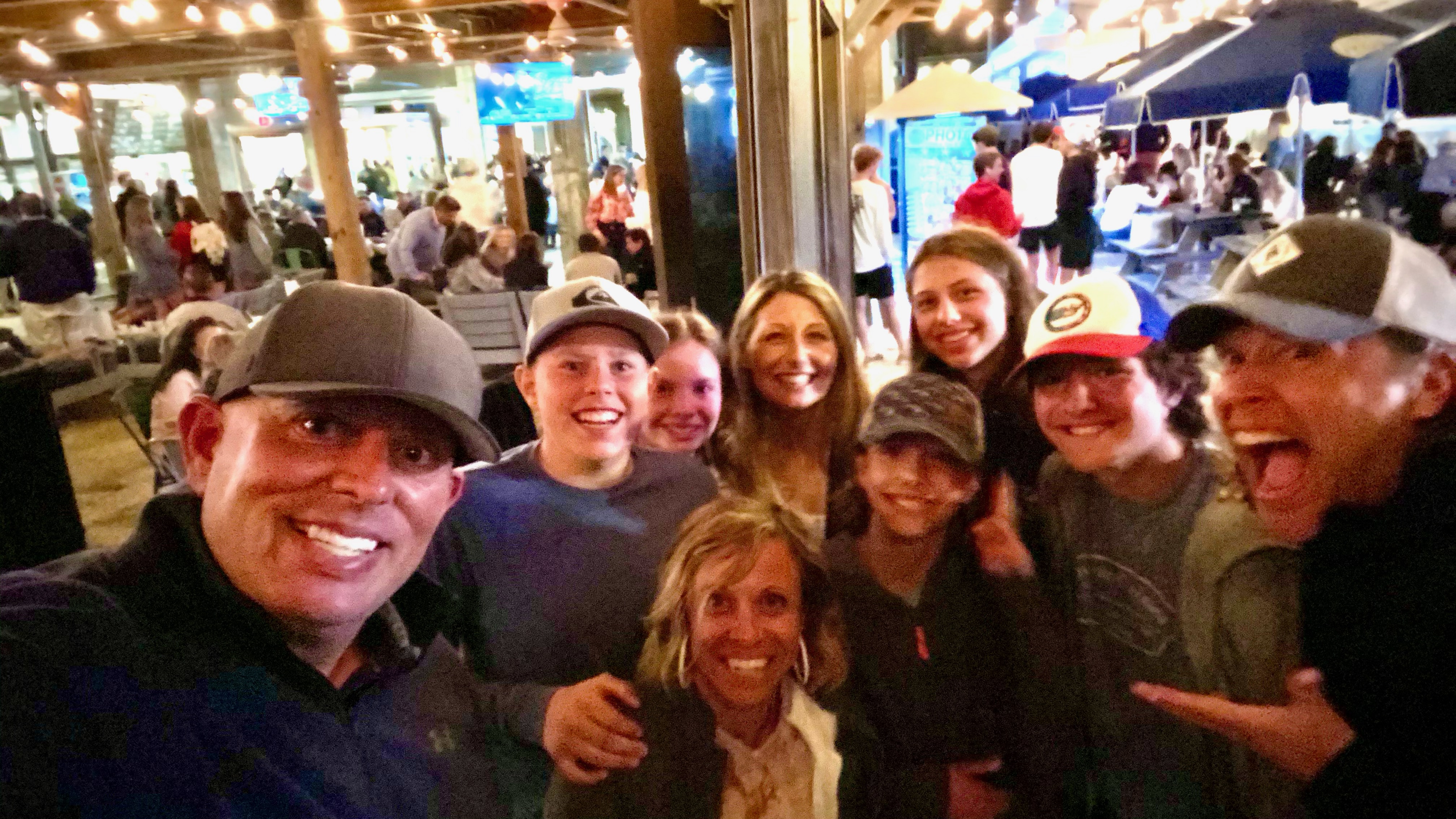
The most valuable asset to leave school with is not a high GPA or SAT score.

The end of the school year is fast approaching. And what a school year it has been! At graduation time I often reflect on my own schooling. It’s interesting to see just how much detail I can remember from that time. I can still picture where I sat in each class, the grades I received, and the number of times I laughed until I sprayed milk out of my nose.

The Numbers

There were a lot of numbers in school. And not just in math class. Do you remember your high school GPA? Or your class rank? How about your College GPA? Or your ACT, SAT, GMAT, LSAT, or MCAT scores? (If you had experience with BVDs, HPV or OPP you probably remember those too.)

Most of us have a pretty good memory for these scores. Because it is how we measured how successful we were in school. They represented the scorecard of academic success.

However, there is another number from our school days that is even more important to your long-term success and happiness. Very few people think about it. Almost no one has it memorized.

Perhaps the best indicator of long term happiness and success is the number of friends you make in school. While the overwhelming focus is on academic statistics, the great residual value of your schooling is measured in humans.
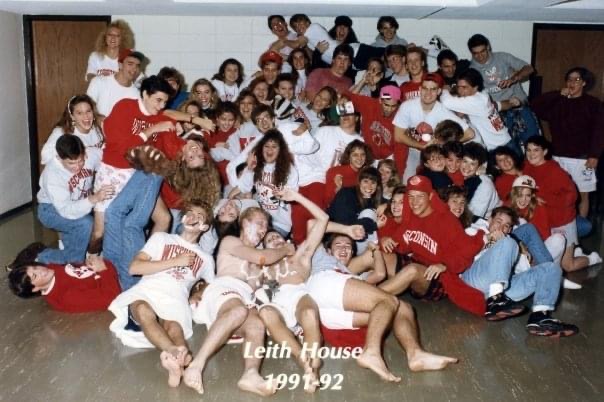
Me and some of my University of Wisconsin dorm mates. We had a pretty good time in Madison.

Chuck the Clique

It can seem cool to find your core group of friends and circle the wagons. Or to create an exclusive group. But that won’t serve you best over time. A much better approach is to become part of many different social circles. This vastly expands the total number of people you are exposed to. And if you volunteer to be a sketch or sculpture model for art classes you get exposed to even more people.

Me and some of my high school friends just before graduation. With t-shirts. And no masks. It was a simpler time.

Get Involved

There are a wide variety of high school and college opportunities that are ideal for developing long-lasting relationships.

  • Sports
  • Dance Team
  • Cheerleading
  • Band
  • Orchestra
  • Streaking The Quad
  • Clubs
  • Plays
  • Smoking In The Boys Room
  • Volunteer Programs
  • Yearbook
  • Food Fights
  • Homecoming Committee
  • Fraternities
  • Sororities
  • Epic Prank Planning
  • Class Trips
  • Outing or Adventure groups.
  • Special Interest Groups Of All Sorts
  • Breakfast Club
  • Detention
Me and my college track & field teammates. I am still in touch with many of these guys. We smile more now.

High School

In high school, make a point of knowing as many people as you can. Get involved in extracurricular activities. Introduce yourself to your classmates. Learn names. Meet the kids in grades above and below you. It is especially easy and beneficial as an upperclassperson to introduce yourself to younger students. Because younger students will highly value having older friends, who can drive a car, and grow a mustache like Pedro.
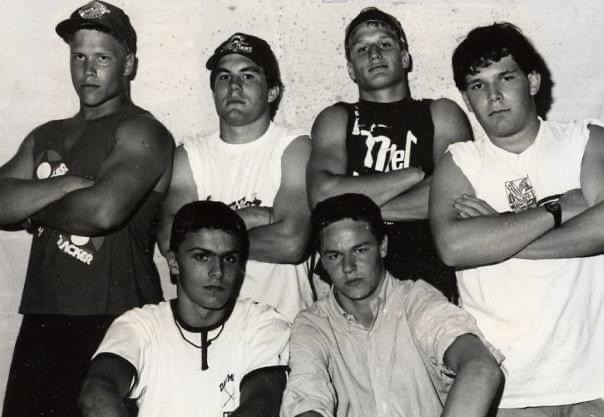
A high school graduation night party pic. We’re looking tough because we just slammed some Capri Suns.

College

In college, live in the dormitory for 2 years, or even become a Resident Hall Advisor (dorm leader). By doing this you are exposed to far more kids than you are living in off-campus housing by yourself or with a handful of roommates. Having hundreds or even thousands of other kids within your orbit on a daily basis vastly increases the total number of friends you are likely to make during that time.

Me and some of my college roommates revisited our off campus house several years after graduation. The wallpaper was still there. But they were out of paper towels.

Introduce Yourself

At parties and at bars introduce yourself to other people. Make a point of meeting someone new every time you go out. Then connect with them on social media too. Because social media is an easy and informal way of turning weak relationship into strong ones.

My college roommates at Dave and Angie Schatz’s wedding. (I have no idea if that is how you possess a plural word ending with Z.)

The Number That Really Matters

My GPA in high school and college was fine. My SAT scores were fine. But I know far more people than most people I know. And that has been one of my greatest advantages in life and business. And one of my greatest sources of happiness and fulfillment.

Me and my high school friends at our last class reunion. The guys with bad backs asked to be up front.

Key Takeaway

Make as many friends in school as you can. Because the benefit of having many friends lasts the rest of your life. And while there is little chance for you to Billy Madison your way to a higher GPA or class rank later in life, it’s not too late to make more friends. Make it a lifelong habit. Or hobby. Or both. Collect as many people as possible. Because at the end of our days the person who has made the most friends wins.

*If you know a student who could benefit from this message please share it with them.

Why you should approach self improvement like a sport.

I first published this post a few years ago while reflecting on my track & field career. I recently shared the post with some track athletes and coaches who really appreciated the message, especially the Key Takeaway (so you could just jump to that). So I decided to repost it again during the heart of track season.

Pre-Note: Wednesday I was at a track meet and took the cover pic of our family friend Eva Brandenburg hurdling. Eva and my daughter Ava (confusing right?) have played basketball together since 5th grade, and are now having fast starts to their freshman track seasons. Keep an eye out for Eva. She is going to do special things!

Here is the original post, now in an unoriginal post...

I love track and field. I first got involved in the sport as a freshman in high school, mostly because I was terrible at baseball. But also because it was co-ed. And, I thought the fact that it was a no-cut sport significantly improved my chances of actually making the team.

Trying Everything

I have competed in a wide variety of track and field events. My resume includes the 100 meters, 400 meters, 1600 meters, high jump, long jump, shot put, discus, javelin, hammer, 35-pound weight, 110-meter hurdles, 4×100 meter relay, 4×400 meter relay, and, yes, even the pole vault (which I approached more like the high jump with a stick).

I have enjoyed every event I have ever competed in (except the 1600 meter run). I love the energy and atmosphere at track meets. But you know when track and field becomes really fun?

The Second Meet.

The second meet is the most important and impactful event in a track athlete’s career. In your first meet, you are just setting a baseline. But once you get to your second meet you walk in with a time, distance, or height to beat. And most of the time, the results in the second meet are a rewarding step forward from the first meet.

In track and field, every result is measured in minutes and seconds, or feet and inches. Which means that your linear progression is clear and quantifiable. Your undeniable improvement in the second meet gets you thinking about the third meet. It makes you think about practicing more, training harder, lifting weights, warming up smarter and getting some better hype music. You start wondering just how much better you can get. The seeds of self-improvement are planted, fertilized and watered in that second meet.

The Broader Lesson

This is not just a track and field thing. This is a life thing. The same principle of self-improvement applies to our careers, our relationships, our responsibilities and our hobbies. Our first attempts simply set a baseline. The second time we do anything we start the improvement process. We recognize that as we pour more energy, time and focus into any activity we get better and better. This is true of presenting a closing argument in court, hiring good employees and folding fitted sheets (although my wife, Dawn is so good at the fitted sheet thing that I focus on the closing arguments in court instead).

Key Takeaway

Don’t be afraid to try something new because you think you will be bad at it. You will be bad at it. Or at least you will be the worst you will ever be. But that first attempt creates a starting point. The climb from there is both exciting and rewarding. As you improve, remember that first attempt. Recognize how far you have come since you first started. It is one of the most rewarding reflections in life.

*If you know someone who could benefit from this message, please share it with them.

Why it’s important to give yourself permission to be an amateur.

When I became an entrepreneur one of the greatest gifts I gave myself was permission to be an amateur. Or perhaps the only reason I became an entrepreneur is that I was okay with being an amateur. It’s hard to say.

Entrepreneurs ultimately need to know everything there is to know about starting and running a business. Yet the vast majority of this knowledge comes from on-the-job training. Which is how you learned to ride a bike. It’s how the Wright Brothers learned to fly. It’s how MLK learned to give great speeches. And how we all learned to do the Electric Slide. #boogiewoogiewoogie

By allowing yourself to be an amateur you allow for mistakes. You put a premium on learning, not knowing. Remember, you could never learn to juggle without making mistakes. The same is true for standup comedy. And parenting your children. (Don’t tell my kids that.) We start every area of life stupid. Being okay with that is the smart way to begin.

I make progress by doing what I know to do until I discover a better way. The secret is to always be looking for and open to that better way. Once you find it, you add it to your personal weaponry and you take another step forward. Those who reach the highest level of achievement simply never stop taking steps forward. Neither should you.

My kids and I recently learned to surf. Which is kind of like learning to ride a bike. Only with tighter fitting clothes.

Key Takeaway

Allow yourself to be a beginner. It makes you much more likely to begin. Allow for mistakes. When you accept your amateur status the journey from ignorance to intelligence is more enjoyable and rewarding. Learn and grow as you go. Recognize your improvements. And know that you can apply the same approach to anything in life.

*If you know someone who could benefit from this message, please share it with them.

+For more of the best life lessons I have learned check out my new book, What Does Your Fortune Cookie Say? from Ripples Media.

The great value of scheduling your Saturdays and Sundays solid.

For most of us, the weekends are our free time. But when you consider that time is your most precious and un-renewable resource, wasting your free time comes at a very high cost. That’s why I employ time investment strategies to help me get the most out of my days.

Yesterday, was a Saturday on my part of the planet. And I only really had one must-do obligation. But I scheduled my entire day on a calendar so that I could get the greatest return on my free time. Here’s what it looked like.

Adam Albrecht’s Yesterday

6:30am Wake Up (I set my alarm for no later than 6:30am every Saturday, Sunday, Holiday and Vacation Day.)

6:45am Read Principles by Ray Dalio (It’s not about Victoria’s family or leaders of high schools)

7:45am Take Ava to driving lessons (I dropped my little girl off to drive around in a car for 2 hours with a dude I had never met. She said the strangest part was that he was listening to sports talk radio. And commercials about erectile disfunction came on at least 3 times during her drive. #awkward )

8:10am: Eat Breakfast (3 eggs)

8:30am: Finish Planning My Day (This is when I finished out my calendar)

9:15am: Clean Bedroom/Bathroom and Laundry (Every Saturday morning I make sure to clean up the stuff I didn’t put away properly during the week. Don’t give me too much credit for the laundry. That’s mostly to-and-from laundry room stuff. Dawn doesn’t trust me to do much more.)

9:50am: Pick up Ava and run to the library. (Ava was alive. And her arms were tired from all the 10-and-2ing. We dropped off Chronicles of Narnia books and picked up 3 science project kits for the kids. Yep, we are those parents.)

10:15am: Yardwork (The kids picked up sticks and I mowed the lawn for the first time this spring. It felt good to get back in the saddle of my John Deere lawn tractor. #shethinksmytractorssexy)

12:00pm: Magnus’ Lacrosse game (First game ever. Only 4 practices to prepare. They won 6-1.)

2:00pm: Eat lunch

2:30pm Nap (I scheduled this)

3:00pm Work on T-shirt Business (I love making t-shirts. And I have bigger plans in the works. Which I worked on at 3pm yesterday.)

3:30pm Organize next steps on my book (I have written a manuscript for my first book. And I needed to focus on what needs to happen next.)

4:00pm Plan next steps for Tucker Hill Properties (The property investment business Dawn and I started has some serious work in the works right now.)

4:30pm Go to the gym with Ava and Johann (My kids and I lift weights together 4 times per week.)

6:15pm Dinner (I eat. It helps me stay alive)

7:00pm Walk with Dawn (We take a regular 1.5 to 5-mile walk-and-talk. It’s good for marriage.)

8:00pm Family Game Night (Mexican Dominoes)

9:00pm Reading (This is the only thing on the calendar that didn’t happen. Because game night went until after 10pm. Then I worked on a puzzle for 20 minutes instead. Because I am a party animal.)

The Result

By scheduling my Saturday full and putting it into my Google calendar I made the most of my day. I prioritized my activities, which were a combination of work, play, togetherness, exercise, and responsibility. And aside from my evening reading, my day went exactly as planned. The time felt well invested and purposeful. And I moved a lot of my important trains forward.

Key Takeaway

Schedule your free time. By making a specific plan for your evenings, weekends, and vacations you will make the most of your ever-dwindling time. It is a great way to feel productive. Yet it lets you bake in your perfect combination of work and play. Plus, by utilizing a time-blocking calendar you face the reality of how much can actually be accomplished in a day. No overestimating. No underestimating. Now if you’ll excuse me, I need to finish this up. I have a lot of other things to do today.

*If you know someone who could benefit from this message, please share it with them.

Why you should embrace the bumps and the resistance.

Humans are full of potential. We are loaded with more energy and ability than you can possibly imagine. Unless maybe you are John Lennon.

Thomas Edison said, “If we did all the things we are capable of, we would literally astound ourselves.” It was that type of enlightened thinking that enabled Edison to invent both the modern light bulb and the ‘How many does it take to screw in a light bulb?’ jokes.

As you work to become all that you can be, like the United States Army, you will encounter bumps and resistance along your journey. It is important to recognize the full value they provide. Because humans are like matchsticks. #RobThomas We are meant to be set on fire. It is the bumps and the friction we encounter that create the sparks and the heat that ignite us. It is the adversity and struggle that strengthen us and bring out our best. Like Budweiser in 1984.

Key Takeaway

Embrace the struggle. Value the resistance. Don’t avoid it. Go through it. It helps reveal all that you are capable of.

*If you know someone who could benefit from this message, please share it with them.

**If you like short and sweet positive messages up to 3 times per week, considering subscribe to this blog.

***If you think 3 asterisks are too many, you are probably right.

Do you have a pre-game hype ritual?

We’ve all seen pre-game introductions before sporting events to get the teams and the fans excited for competition. They typically involve some combination of lights, video, music, smoke machines, pyrotechnics, pom-poms, well-caffeinated announcers, and a deer. (Actually, the deer may only be a Milwaukee Bucks thing.)

However, hype routines should not be limited to sporting events. Because each day of your life is a game. Every day is a challenge to see how much you can accomplish. The more you can do to hit the day prepared to perform the more you are likely to achieve. #LetsDoThisThang

If there is one thing I am good at it is hyping myself up. In the morning as I drive to work I inspire myself with either an audiobook related to success or self-improvement, a podcast on the same topic, or music that gets me ready to perform. Sometimes it’s a cocktail of 2 or 3 of those elements. I would also be willing to bet there is more singing and clapping in my car than in the average Honda.

Once I get to the office, (or bust into my home office like I own the place) I launch my computer and crank up more hype music as I create my success list for the day. At the header of my list, I include a collection of my personal goals and personal success mantras. By the time my list is complete, I have worked up the needed attitude, energy, and inspiration to make the most of my day. I am like my own Michael Buffer. And I am now ready to rumblllle. #DingDingDing

Key Takeaway

Hype routines are not just for NBA players, boxers, and concertgoers. Pump up your own jam every morning with a routine that gets you excited and inspired to perform at your best. Remember, every day of your life is a game. Prepare your mind to make the most of it.

*If you know someone who could benefit from this message, please share it with them.

Are you surrounding yourself with the best people?

If you are growing and developing at a rapid rate, you are likely to outgrow your peers. That means outperforming and outranking friends and co-workers who are your age. It means that the professional group you belong to will someday feel less stimulating and helpful. It’s what happened to Doogie Howser in daycare.

As you learn, grow, and advance you will need new peers to support, inspire and push you. Seek out those who are already at the next level. Or 2 levels up. Put the power of positive peer pressure to work for you.

Jim Rohn once said, ‘You are the average of the 5 people you spend the most time with.’ (Actually, I bet he said that a whole bunch of times because it’s a really good line.)

Attitudes and expectations are contagious. Surrounding yourself with ambitious and accelerating humans is like sharing a lollipop with someone who has Chicken Pox. (Or huffing with someone who has COVID-19.) You are likely to catch what they have. Which makes you more likely to do the things they do. Like UB40 said.

Key Takeaway

Pay close attention to your peer group. Seek out the best people to spend your time with. Find others who have been where you are going. Or people who are on their way now. You’ll travel farther and faster together.

*If you know someone who could benefit from this message please share it with them.

5 Random Observations From Vacation.

I’m on vacation this week with my family. We loaded up the Family Truckster and headed south for a week of warmth and adventure. But there is no Wally World for us. This trip is actually last year’s spring break beach trip that got canceled because of the plague. One year later we are certainly enjoying it more than we would have last year.

I have had a lot of time to think over the past few days. Here are 5 random things I’ve been thinking about during my time away.

  1. The work must go on. Even when I am on vacation there is work to do. It is what you sign up for when you become an entrepreneur. To minimize the impact on my family I work early, or late, or both. I am thankful for all the work to be done. I don’t believe in work-life balance. I believe in work-life integration. My vacations are evidence of this. I appreciate my team at The Weaponry who keep things running while I’m away. I’m also thankful for my family who understands my work commitments. They enjoy having food, clothing, and shelter too. And they see how having a job helps pay for such things.

2. Your family role is part of your career. Your role within your family is your most important role of all. You should view your parental and spousal job performance as part of your career success. You need to take it seriously or you will be the only one at your funeral. Seriously.

Me and my 3 interns catching the Baylor vs Gonzaga game.

3. My people are everywhere. I am at the beach in Florida. And I discovered several friends nearby. My former Engauge co-worker Raghu was in a hotel room right above mine. (We first talked on the balcony.) Our across-the-street neighbors from Atlanta, Christy, Kevin, and Fam, are less than a mile away, and we had lunch with them yesterday. Our Columbus, Ohio friends Troy and Katie are just down the beach a piece. So we had dinner with them last night. Running into your people randomly makes the world feel smaller. And better.

The Allens and the Albrechts: Brought together by spring break and alphabetical order.
Raghu isn’t as good at smiling as I am.

4. Boogie boarding is my jam. If I am on vacation at the beach I am boogie boarding. It represents everything you need to know about life. It’s about positioning yourself well, being prepared when opportunities come along, enjoying the ride, and laughing off the crashes. Oh, and if you are not careful you could lose your britches. For more on my life lessons from boogie boarding read 16 important life lessons I learned from boogie boarding.

Skimboarding is my daughter Ava’s jam. I don’t have a pic of me boogie boarding. No one really wants to see that anyway.

5. Funny things happen every day. Each night my 10, 13, and 15 year old kids love to recap all the funny things that happened each day. There is no shortage of funny things to talk about. It’s a great reminder that life is either a comedy or a tragedy, depending on which things you choose to focus on. I choose the funny.

Thanks for reading. I hope your day is full of meaningful work, friends, family, and funny.

*If you know someone who would benefit from this message, please share it with them.

How habits help you do things you don’t feel like doing.

Excuses are easy to find. They are everywhere. Like Subway sandwich shops. And they can get you out of doing just about anything if you let them. But like James Taylor said, don’t you let them.

For years now I have committed to writing and sharing 3 blog posts per week, every week, for however many weeks there are in a year. (Which is like, 76 right? Or is that how many trombones lead the big parade?)

But today is Easter. And it’s a Sunday. (It seems like Easter falls on a Sunday a lot. Like Chick-fil-A cravings.)

Plus, I am on vacation. And I have a hundred other things I could be doing.

But, here I am, writing anyway. And you’re reading my Easter morning post. (Thank you!) Because I’ve developed a habit.

Habits destroy excuses. Because habits make actions automatic. They help you build momentum. Because once you get the flywheel turning you don’t need willpower, or discipline. You just do it. Like Nike. Or like one of Pavlov’s drooling dogs.

Key Takeaway

Turn your most important actions into habits. Science shows that by the 60th repetition an action becomes a habit. After that it is easy to keep your commitment. So develop your habits. Keep showing up. Keep coming back. Keep working, or writing, or exercising, or chopping wood, or whatever you have committed to do.

And special thanks today to my man Jesus. I appreciate you Bro! I’ve been using the Forgiveness of Sins you gave me everyday too.

*If you know someone who could benefit from this message, please share it with them.

How to turn your setbacks into success.

Progress is not linear. It zigs and zags. It stalls. It reverses. In fact, progress moves like a good 1980s breakdancer. It often leaves you spinning on your head. And wondering why you are carrying around a large piece of cardboard, and a boombox.

But don’t fear the setback. Setbacks are a profit center. Because, like Alanis Morissette said, every time you lose, you learn. Which means that setbacks are full of education, growth and things you, you, you oughta know. They make you smarter and stronger if you let them.

Obstacles, challenges, and losses provide game film to study. They reveal weaknesses, vulnerabilities, and flaws. And they teach you how to strengthen your weaknesses so you can overcome challenges the next time you face them. Luckily, life supplies a Hong Kong Buffet of challenges to overcome. So you will always have more opportunities to put your loss-based learnings to good use.

Key Takeaway

Don’t lament the setback. Embrace it. Dissect it. It provides a very specific, high level course in personal or professional development. Enroll in that class. Take good notes. You’re sure to come out smarter and more prepared than you started.

*If you know someone who could benefit from this message, please share it with them.