I recently discussed my upcoming travel plans with my teenage daughter, Ava. I told her that the next morning I had a flight that left at 5:40am. Her jaw dropped. She looked at me in disbelief. Finally, she said, ‘You are sooo lucky!!!’
I was not sure she understood what I had said. I clarified that my flight left at 5:40, AM. Which is the morning one. She said, ‘I know.’
I asked, ‘What time do you think I need to get up to make a 5:40am flight?’ She ran some quick calculations in her head and confidently replied, ‘4:00am.’ Which both Steve Harvey and Richard Dawson’s surveys said was the number one answer on the board.
I asked, ‘Then why do you think I am so lucky? To which she responded:
‘You are lucky because you get to go on a trip! For work! Dad, you are getting paid to travel! Which means you are killing it! Plus, you love your job. And you won’t be working the entire time. So you’ll get to enjoy some good meals and free time in a fun city. And I have to go to school.’
-Ava Albrecht (14 y/o)
Me and my daughter, Ava, and some Chihuly glass.
From The Mouths of Babes
What a great perspective. When I was planning the launch of my advertising and idea agency, The Weaponry I dreamed of the day that a client would pay me to travel for business. Today, we have 3 Weapons traveling to Las Vegas for a week to do important work for one of our great clients. And I am feeling extremely lucky. Like a rabbit with its lucky rabbit’s feet all still attached.
One Last Reminder
As I boarded my flight at 5am, I spotted my friend Mark in line behind me. We greeted each other enthusiastically. He told me that he and his family were headed to Costa Rica for spring break. He continued, ‘I assume you are traveling for business.’ I confirmed that I was. To which he responded, ‘Yeah, but you love your work.’
Indeed I do. Which makes me really lucky.
Key Takeaway.
If you enjoy your work you are lucky. If you get paid to travel you are lucky. If you start a business and attract customers or clients who dig what you do, you are lucky. It is easy to lose sight of your good fortune. Or to take it for granted. So this is a simple reminder that having family and friends to remind your of the good things in your life is lucky too. Have a great day! I hope you kill it!
*If you know someone who could use this reminder, please share it with them.
Happy Leap Day! February 29th is your lucky day. In fact, it’s luckier than a 5-leaf clover. And it’s rarer than a mooing steak. In fact, it is so rare that it only happens every 4 years. Like the Olympics, a Presidential election, or Halley’s Comet.
Opportunity Day!
However it is not the rarity of Leap Day that matters. It’s the opportunity. Today is a totally free, bonus day! Which means that today is the perfect day to do something extra. Like Michael Jackson said, today, ‘You got to be startin’ somethin’. Or finishing somethin’. Or working hard on somethin’. #MaMaSeMaMaSaMaMaCooSa
Saturday Day Fever
Even better, this year Leap Day is the perfect bonus day. Because it falls on a Saturday. Which means you probably don’t have to work or go to school today. So take a few minutes to think about those things you have always wanted to do. Those things you can never seem to find the time to start, plan or complete. And get rolling.
Possible Leap Day Activities:
Exercise
Take a hike
Play a Game
Start a blog, vlog, slog, or drink Glogg
Start a business
Pick up a new hobby, or re-engage in an old hobby, like Holly
Create a podcast
Play an instrument
Create a product
Start a book (reading or writing)
Paint
Marie Kondo your house
Volunteer, or sign up to volunteer
Go to church (or find a place of worship to go to this week)
Start a meetup
Join a club or worthy organization
Ask someone to be your mentor.
Call someone you haven’t talked to for too long
Find a dentist
Find a doctor
Find a nurse
Find a lady with an alligator purse
Start your taxes
Plan a vacation
Organize a girls night, or a guys night, or a Michael Knight.
Make a career or life plan
Do something that’s more you, because no one knows you better than you.
Start Now
I started planning my own business, The Weaponry, during a little bonus time like you have today. Now we have 2 offices and clients from California to Quebec. I also started this blog during a little bit of free time. And this is post number 411. #Information Now it’s your turn to go do something meaningful today.
Key Takeaway
Time is your more precious resource. Use it wisely. Alchemize it into magic. And when you get a bonus day, or a bonus hour, take advantage of it. Otherwise, when you come to the end of your time, you will wish you had.
Which begs the question: What will you do with your Leap Day?
Money does not grow on trees. Unless you work in lumber industry, you’ve likely heard this saying a hundred times. The takeaway is that money is not free. You don’t have an endless supply of it. So be careful how you spend it. However, there is another extremely valuable asset that you have at your disposal, right now, that I encourage you to give to others as often as you can.
Compliments
If you have ever received a great compliment you know that they are worth more than gold. They are the currency that pre-pay many of the greatest accomplishments in our lives. They are the prizes that reward our greatest efforts. They positively reinforce our positive actions. They pick us up when we are feeling down. They keep us going when the going gets tough. And they help counterbalance the times we are told we have lipstick on our teeth, bats in the cave, or have left our barn door open.
Confidencements
Receiving compliments builds confidence. Compliments are proof that the world noticed you getting things right. They shine a spotlight on the skills and abilities that others value in you. Which reminds you to value them in yourself.
Get Comfortable With It.
However, paying people compliments can feel uncomfortable. We worry that our praise will sound weird. Or creepy. Or Weinsteiny. Or that a compliment won’t mean much coming from little ole me.
To avoid personal discomfort we often add a qualifier or a disclaimer to our compliments. We say things like, ‘Don’t take this the wrong way…’ or, ‘I don’t want to give you a big head but…’ (which is materially different than giving someone a big headbutt.)
Straight Up, like Paula Abdul
Don’t add disclaimers to your compliments. Serve them straight up. Share your positive feedback and observations without any negativity. That’s how it has the most positive impact, and greatest value. Compliments are a tremendous gift. And they should be offered the way you offer cash in a birthday card. Crisp. Clean. Un-crumpled, un-ripped, un-torn. And in reasonably large quantities.
Making It Rain Up In Here
I make a point of offering compliments any time I can. Which means that I notice all the good things I want to see in the world. And I encourage others to create even more of it. I find myself complimenting others for the following:
skill
effort
humor
kindness
adventuresnous
intelligence
braveness
creativity
problem solving
style
taste
commitment
improvement
inspiration
positivity
giving
smiling
good cooking
unselfishness
creating nice lists of bullet points
Creating Change
Mahatma Gandhi said that we must be the change we wish to see in the world. (He also said, ‘I feel like sheet today!’) But we must also call out and compliment the good that we want to see in the world. That positive reinforcement is the best way to ensure that you will see even more of it around you in the future.
Key Takeaway
Compliments are one of the most valuable gifts we can give another human. They are often the greatest payments a person will receive for their efforts. Compliments encourage. They reinforce. They have the power to change lives. So give them freely. Give them often. Give them without qualifier or disclaimer. And know that your small investment of time and effort may last a lifetime.
*If you know someone who could benefit from this message, please share it with them.
Tuesday night I guest lectured to an advertising campaigns class at Marquette University taught by Erin Napier. I talked about creative thinking and the creative process. I talked about my advertising career path, from college student to Copywriter to Creative Director to Chief Creative Officer. I talked about Entrepreneurship. I shared my experience as Founder & CEO of The Weaponry. And I told them about the time me and Danica Patrick filled a Motorhome with 1.2 million ping pong balls.
Q & A
I showed samples of the creative work I have created, and then I asked if anyone had questions. This is one of the first questions I was asked:
‘What was you greatest career failure, and what did you learn from it?’
Now I am all about learning from your failures. And I am all about turning lemons into lemonade, like Ralph Lemonader. But I didn’t have an answer for this question.
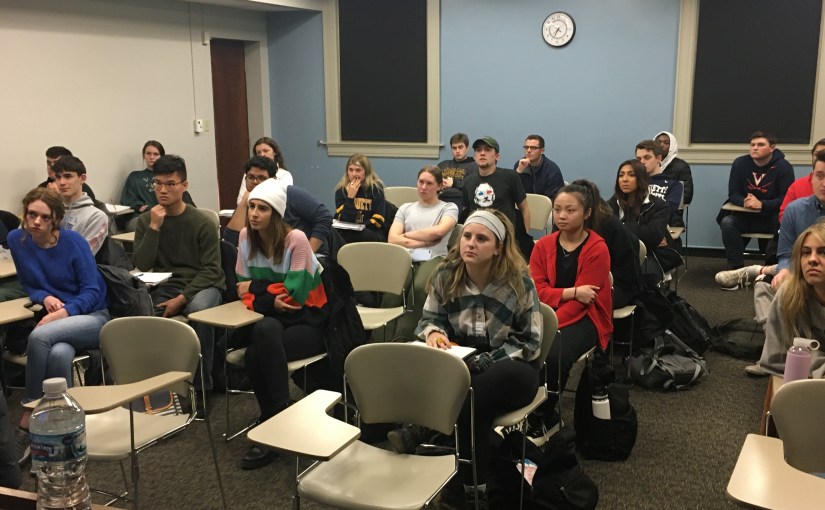
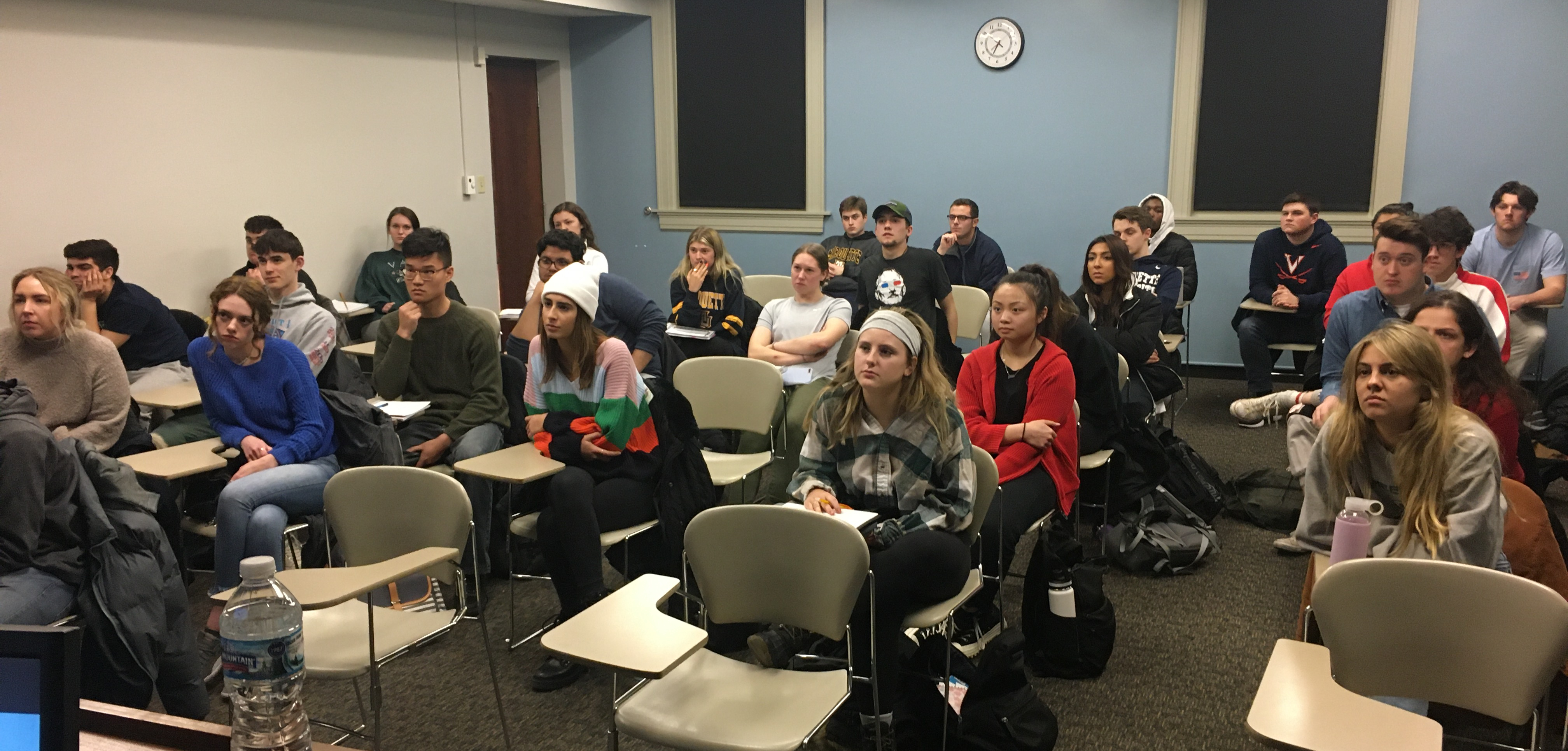
This is the class I spoke to at Marquette University. And everyone is still awake. I consider that a win.
It’s not that I haven’t made mistakes in my career. I certainly have. But what I recognized when trying to access my colossal mistakes file, was that I don’t hold my failures close. They are not raw and ready to be examined. I am not dwelling on them, stewing over them of kicking myself because of them. I’m not like that super pale dude from The Da Vinci Code, who was torturing himself with his power slinky. I quickly learn my lesson and move on, better than before.
Maximizer
When I read Tom Rath’s Strength Finders, and took the test in the book (which I recommend you do), it told me that I am a raging Maximizer. Which means I have no interest in analyzing things that went wrong in the past. I simply focus on what we can do from here.
My Biggest Failure Answer
The best answer I could give that Marquette student was that I was pretty sure I don’t know what my biggest mistake was. It was likely something I didn’t do, rather than something I did do. It was probably some path I didn’t take, or some Monty Hall door I didn’t open. I’ll never know where that would have taken me. And I’m not losing any sleep over it. #Zzzzzzz
Learn & Move On
Our failures should be like touching a hot stove. We should do it once, recognize the mistake quickly, file the lesson away, and move on. No dwelling or hand wringing. We just learn our lessons, and get back to life. #BackToReality.
Key Takeaway
Learn from your failures and keep going. Don’t beat yourself up. Don’t rank your greatest failures of all time. Instead, focus on your successes. Know what works for you. Remember what you did right. Repeat the positive actions. And pass that knowledge along for others to learn from too.
*If you know someone who could benefit from this story, please share it with them.
I am constantly trying to enhance the performance of my brain. I don’t do it with aftermarket parts. Or with surgery. Or with drugs. Although I have heard some really good things about drugs from my crack dealer friends.
Reading Rainbow
I enhance the performance of my brain by reading books. I read as much as I can. As a result, my thinking keeps improving. With each book I read I become more capable, insightful, empathetic and resourceful. I am collecting dots and connecting dots. And today I arrive at better ideas faster than ever before. Granted, I had a lot of room for improvement.
The One Recommendation
If you want to improve your thinking and your doing, I highly recommend reading The One Thing, by Gary Keller and Jay Papasan. This #1 Wall Street Journal Best Seller is one of the most influential books I have read in the past 20 years.
Focus
The One Thing’s main focus is to teach you how to focus your thinking and your efforts. We are often faced with a brazillion things we could do with our time. As a result, we often do nothing. Or the easiest thing, the closest thing, or the most urgent thing. But not the one most important thing to help us get to our goals.
There is no trickery to this book. It is simple and logical. Yet it is eye-opening and insightful. (Although opening your eyes is typically outsightful, right?)
Dominoes Delivers
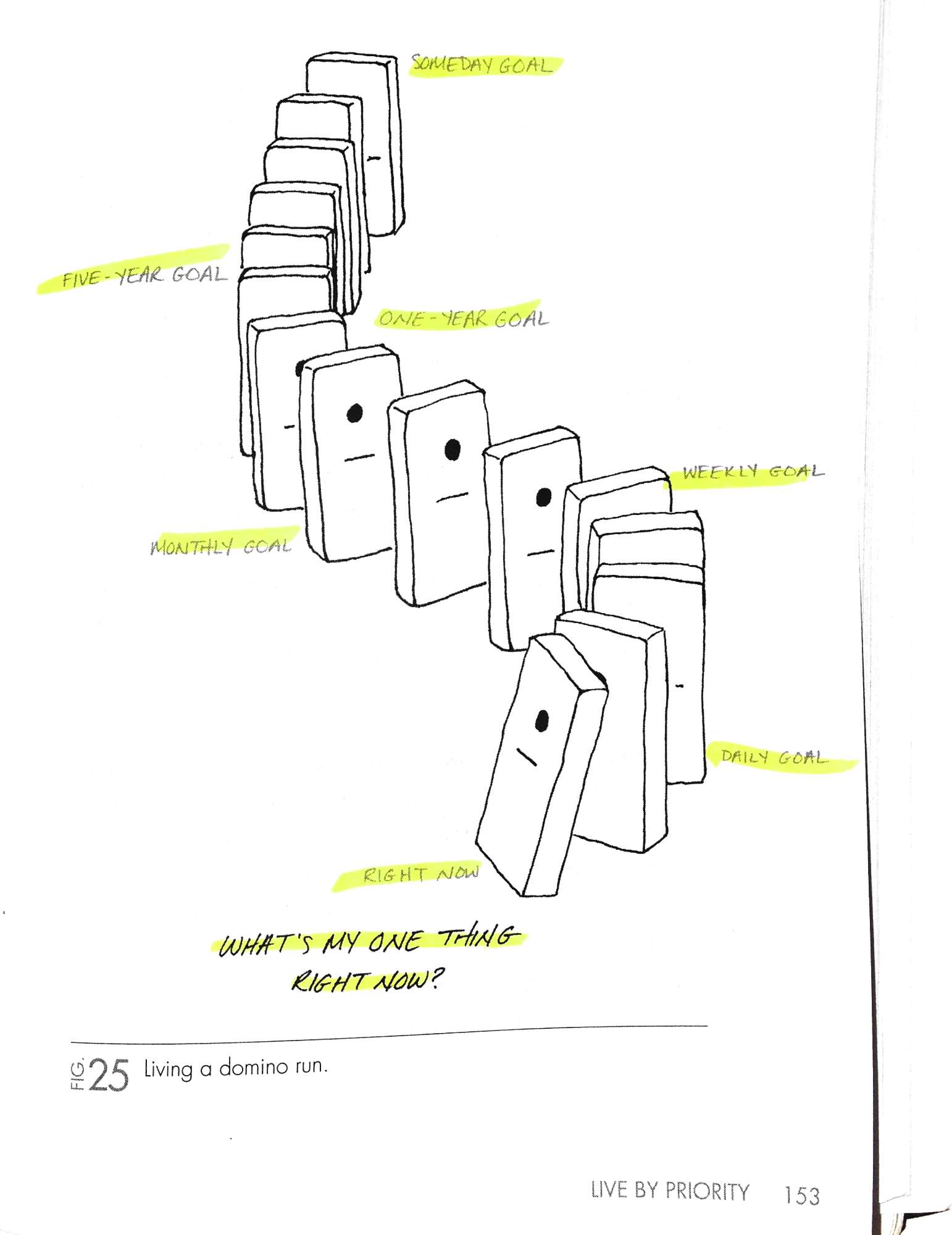
The books starts by encouraging you to look at your actions like knocking down dominoes (the game piece, not the pizza joint). We need to focus on the first domino, and then the next, with purpose. By doing so we can make great things happen, one domino at a time.
This is how your actions work.
Determining Your Priorities.
The book shines a spotlight on the erroneous short term thinking that typically fills our daily to-do list. It points out the critical difference between a To-do list and a Success List. A key lesson here is, ‘That which matters most should never take a backseat to that which matters least.’ In other words, your priorities need to call ‘Shotgun!’
80/20
Keller and Papasan explore the 80/20 rule of Pareto Efficiency, which states that 80 percent of your results come from 20% of your effort. (Not that 80-years olds should not make out with 20-year olds. But that should also be a rule.) They then propose applying the 80/20 rule to your 20% activities. This enables you to find the most important of the most important activities to focus on.
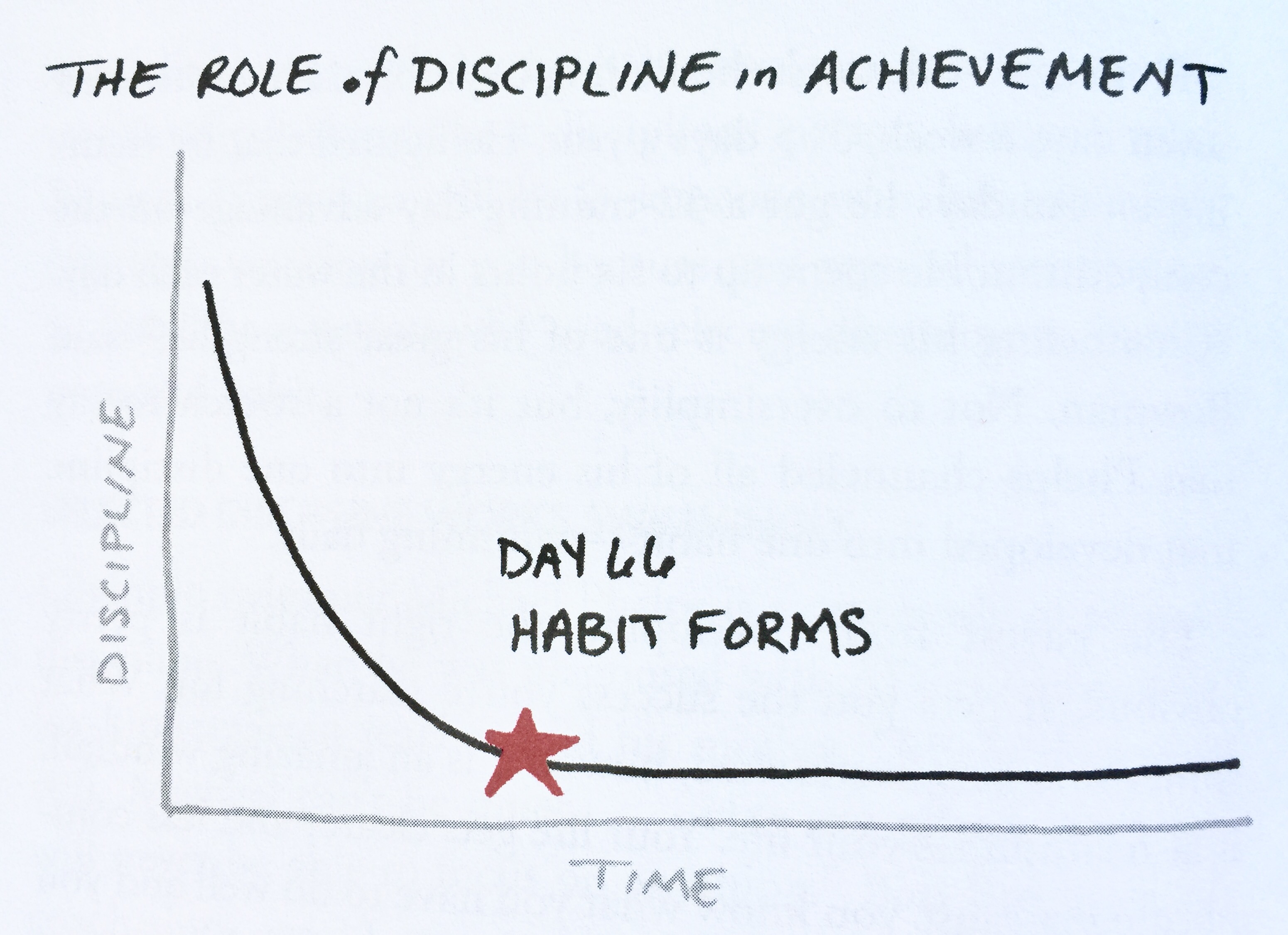
The book breaks down the critical difference between self discipline, which is hard, and habits, which become easy and automatic. I loved learning that on average it takes us 66 days to create a new habit. Which means that if you made a resolution to start a new activity on January 1st, and could make it to the end of the first week of March, you would likely keep that habit rolling forever. But most people quit in January or February, and never create a new habit. Then again, those resolutioners stop coming to the gym by the beginning of February, leaving more room for me, so I am not complaining.
By 66 days habit kicks in, and self discipline is no longer necessary. You will know when you are there because a big red star fish will appear on your line.
Forget The Balanced Life
The authors share the idea that a balanced life doesn’t enable us to do amazing things. Instead we need to be constantly balancing our lives, so that we can go all in on our goals for long stretches, to create extraordinary results. Then we can balance those periods with longer stretches of time with family and friends, relaxing and recreating. But if we never get ourselves out of balance by going all-in on one thing, we will never achieve great things.
The Focusing Question
Finally, the book introduces the key focusing question for your life:
‘What is the one thing that I can do such that by doing it everything else will be easier or unnecessary?’ -The One Thing By Gary Keller and Jay Papasan
This question can be asked as a big picture question, and as a small, focusing question. Meaning, it can help you discover the one thing you should be doing with your life, and what is the one thing you can do, right now, to make it happen.
The One Thing applies to all areas of your life.
Key Takeaway
If you want to supercharge your thinking and your actions, pick up this book. It will teach you how to focus, prioritize and act to get the most out of your precious time. It will help you think about your long term goals, and what you need to do now to achieve them. And it will help you say no to things that just don’t matter.
*If you know someone who could benefit from this book, please share this with them.
In 7th grade I had a social studies teacher named Mr. Wilson. I think his first name was Roger. Although Brian, Russell and Annandnancy all sound right as prefixes to Wilson. So it may have been one of those.
I remember Mr. Wilson as a portly, middle aged white man. But it wouldn’t surprise me if I discovered that he was the same age I am now. Because when you are 12 years old you think all adults are old.
Like most teachers, Mr. Wilson had go-to phrases that enabled us to do some hilarious impressions of him when he wasn’t around. We did hilarious impressions of all of our teachers. It’s probably why I never wanted to be a teacher.
The Sound Bite
Several times in every class, while we were supposed to be working on our assignments Mr. Wilson would bellow out, ‘T-O-T.!’ He was not announcing his craving for tater tots (at least I don’t think so). It was an acronym for Time On Task. When my friend Marcus Chioffi (rhymes with coffee) and I would hear T.O.T. we would snicker at how much Mr. Wilson sounded like our impression of Mr. Wilson.
Fast Forward 3 Decades.
Today I own my own advertising and idea agency called The Weaponry. And I find myself thinking about T.O.T. a lot. As I reflect on what has worked for me throughout my career and my entrepreneurial journey, I keep coming back to T.O.T.
Time To Make It Real
We all have dreams, goals and wishes. But we tend to spend far too little time working on them to force them into reality. The amount of time you actually spend working on a task is the key determinant of success in that area. There simply is no substitute for the focused work. It is why Time On Task is the key to progress.
Key Takeaway
If you want to be an entrepreneur, or achieve any lofty goal, you have to spend Time On Task. Focus your time. Block your time. Invest your time. Block out distractions. And do the work. It’s the only way to make great things happen. Just like Mr. Wilson said.
*If you know someone who could benefit from this story, please share it with them.
When I was a kid I knew about college. My parents both went to the University of Minnesota (and I still turned out okay). Dartmouth College was across the street from my high school in Hanover, New Hampshire. Everyone from Hanover High School seemed to go to college. There was never a question of whether or not I would go to college. It was just a matter of where. And whether or not I would get kicked out.
UW-Madison
After high school I went to the University of Wisconsin. I earned bachelor’s degrees in journalism and psychology. Following college I had many friends who did even more schooling. They got master’s degrees, went to law school or medical school.
I did none of those things. Instead I began to self-educate. I began reading books, not just for entertainment, but for knowledge. I subscribed to various magazines and devoured them monthly. Eventually I learned that devouring reading materials does not mean that you actually eat them. Once I discovered that I began enjoying reading materials significantly more.
There’s Something Happening Here
I started noticing an interesting phenomenon. When I read a book, article or blog that I found valuable there would be a reference to another book, article, blog, vlog or podcast. I would add that new reference to my list of materials to explore. Then, not only would I find great value in that material, I would find another reference to other worthwhile material to explore.
One Thing Leads To Another.
I began compiling a rich list of books, authors, blogs and podcasts that continuously linked me to even more valuable new material. Like the required set of coursework you must take to earn a college degree, my self-directed readings began creating a unique and valuable path forward. Like my own yellow brick road.
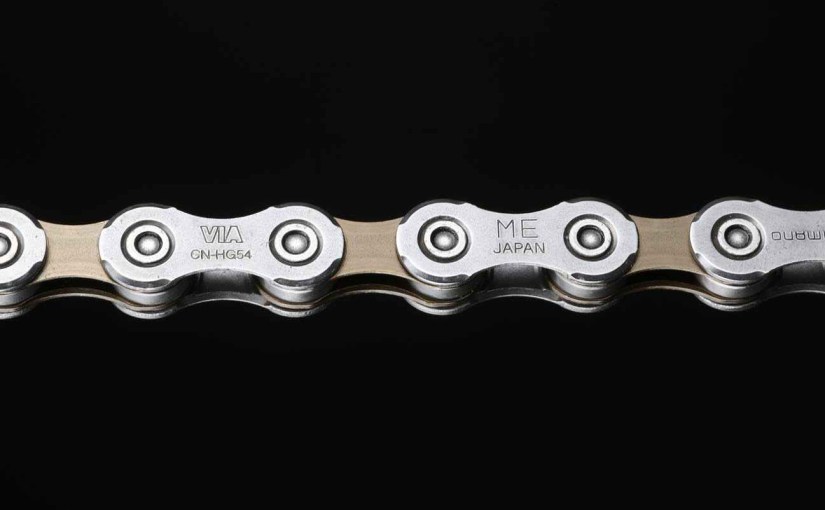
Chains and Change
As I followed this chain of knowledge it changed my life in profound ways. I didn’t know it at the time, but my chain of knowledge created my coursework for entrepreneurship. Some of it was inspirational. Some of it was instructional. But each link added profound value.
Boarding The Entrepreneurship
In 2015 I began planning the launch of my own advertising agency. My readings and self education prepared me well for the process. I didn’t need an MBA. Or a business coach. I just needed my own self-directed chain of knowledge. And action.
The Weaponry
In the spring of 2016 I launched my own business called The Weaponry. At the same time, I launched this blog to help others build their chain of knowledge.
I have discovered that to accomplish great and difficult feats you don’t have to go back to school, like Rodney Dangerfield or Billy Madison. You simply have to keep adding links to your own chain.
Here are some sources that have provided strong links in my chain of knowledge.
Books
Rich Dad. Poor Dad.
The Alchemist
Think And Grow Rich.
The E-Myth
Traction
TheCash Flow Quadrant
7 Habits of Highly Effective People.
Everything by John C. Maxwell
Everything by Jim Collins
Everything by Daniel Pink
The Hard Thing About Hard Things
Talent Is Overrated
Delivering Happiness
Call Me Ted
Pour Your Heart Into it
The One Thing
Podcasts
How I Built This
Bigger Pockets
Side Hustle School
Open For Business
Startup
Magazines
Inc.
Fast Company
Key Takeaway
To become the best You that you can be build your own chain of knowledge. Direct your own education. Add to it every day. It will empower you to do great things. Things that you alone are uniquely qualified to do. And please share what you discover with others. Because like Billy Madison, I still have a lot left to learn.
*If you know someone who could benefit from this story, please share it with them.
I fancy myself a badass. A bull rider. A street fighter. A come-back-here-and-I’ll-bite-your-kneecaps-off type. A finger-waving, head-shaking Hulkimaniac who won’t stay on the mat, even when the rest of the world is saying, ‘Stay on the mat!’ (I was also an impressionable boy in the 1980’s).
The Truth
Am I really a badass? I don’t know. And I don’t care.
The Value
This self concept, false or real, has helped me more than anything in my personal weaponry. It helps when I have to work long, sleep little, stand my ground, or attack. It prevents me from being intimidated, or from feeling that I am ever not good enough.
I Use My Inside Voice.
It is important to note that I would never tell anyone but myself that I am a badass. It’s like telling people you are cool. The moment you do, you are decidedly uncool. Which perhaps means that when you call yourself a badass, people think of you as a good ass, (which is interesting reverse psychology).
I am simply sharing my mindset here. Because it might help you the way it helps me.
Key Takeaway
Think of yourself as a badass. It helps you do hard things.
*If you know someone who could benefit from this message, please share it with them.
**I had a really hard time finding a picture of myself where I am not smiling. Which perhaps means that I am a very smiley badass, if there is such a thing. Which there probably isn’t. #selfperceptioniseverything
Happy 2020! I absolutely love the Mulligan that every new year brings. If you are like most people you’ve resolved to make this your best year yet. According to a quick and dirty research project I conducted there are four basic ways to improve your life with a New Year’s resolution.
You can start something good.
You can quit something bad.
You can make a habit of something positive.
Or you can generally just stop being lame.
Best! Year! Ever!
I have one goal that will help make 2020 the best year in my career and personal life. Simply stated, I want to make the most of my remnant time.
What That Means
We all have a slew of things we have to do. Those include our standard work and home obligations. Make sure you take care of those must-do’s or your fresh new year will spoil before February. But like that poor forgotten ‘r’ in February, we all have time in every day that we are overlooking.
Today I’m envisioning all that I can do with my remnant time over the next 12 months. In fact, I am considering adding this quote to the back of the next round of business cards I print this year:
“Guard well your spare moments. They are like uncut diamonds. Discard them and their value will never be known. Improve them and they will become the brightest gems in a useful life.” -Ralph Waldo Emerson
Apparently Ralph Waldo was into the bling.
Go Rumpelstiltskin in 2020
Today consider what you can do with the time hidden between your must-dos. Instead of killing that time with digital thumb twiddling or catching Zs, spin that time-straw into gold.
The Perfect You Project
I challenge you to use your remnant time to do the things the perfect version of you would do. Read something, write something, create something, solve something, learn something, experience something, accomplish something, improve something. Or maybe buy a thesaurus and find other words to use instead of something.
Compounding Interest
Like compound interest, even little moments add up over the course of a year. Two months ago I began picking up my daughter’s guitar each night and practicing for just a few minutes. And while I’m no Eddie Van Halen, a little invested time each night enables me to play most Christmas songs well enough to not get booed off stage at a nursing home.
Entrepreneurship
I started my advertising and idea agency, The Weaponry in my spare time. I looked for little moments at night, on the weekends or over my lunch hour to research, plan and create the business. And like Andy Dufresne, by using my remnant time wisely, I was able to create a path to the place I always wanted to be. Except, unlike Andy, I didn’t have to crawl through an active sewer pipe. And chances are, neither will you.
Key Takeaway
Make the most of 2020 by making the most of your spare time. Use it to make magic in your career. Strengthen your connections to family and friends. Start that business you always wanted to start. Read more. Finally do those things you have always wanted to do. Use you spare moments to have more fun, learn something new, and accomplish more than ever. Start today. You have 1440 minutes every day to work with.
I love my job. I thoroughly enjoy all aspects of my work. Not just the advertising-specific stuff. But all of the businessy work I have to do as an entrepreneur. The problem solving I do is extremely rewarding. Every day feels like a game. Sometimes it’s Monopoly. Sometimes it’s Go Fish. Sometimes it’s The Running Man.
Netflix
As much as I love the work I do, one of my favorite parts of the workday at The Weaponry is when we eat lunch and watch shows on Netflix. We watch a broad range of programming that either helps stimulate our thinking, makes us laugh, or both.
The Repair Shop
Yesterday we watched an episode of The Repair Shop, which is a reality show about a British repair shop (go figure) that people bring antique treasures to in order to have them restored to their former glory. At the shop there is a furniture expert, a fabric expert, an art expert, an electronics expert, a clock expert and more.
I love watching the experts at The Repair Shop work, because they are all really great problem solvers. And I learn from the way they solve their problems
The Desk
In the episode we watched yesterday an old Davenport desk came into the shop with a great deal of damage. One of the problems that had to be addressed was that there were drawers with locks but no keys to open them. Because the furniture expert really wanted to get in those drawers (#snickering), he approached the clock and lock expert to see if he could help unlock the locked drawer. The clock and lock jock was happy to help.
A Davenport desk, like the one on The Repair Shop. Not like the Davenport my Grampy used to nap on.
The Keys
The lock expert then pulled out a large jar full of all kinds of random old keys. The man explained that he has a large collection of old spare keys that he uses to help unlock tricky locks. He then said that whenever he sees keys in an antique shop he will always buy them to add to his collection. So that he can unlock even more locks in the future.
A collection of skeleton keys, in case you ever need to get inside a locked skeleton.
Ditto
I instantly recognized that I do the same thing. I am always collecting keys. Except my keys don’t come from antique shops. They come from books, magazines and podcasts. From discussions with experts, and from asking a lot of questions.
The keys that I collect don’t go into a jar. They get stored in my library, my notebooks and in the files of information in my head. My keys wait patiently for me to call on them to help me unlock the next problem I need to solve. And while I can’t display them for the world to see, I know they are there. And the older I get, the more keys I have in my collection. Which means I can unlock problems faster now than ever before.
Key Takeaway (literally)
There are keys to unlocking problems everywhere. They are found in the things you read and the experts you meet. They are found through experience, and observation. So look for them. Collect them before you need them. And be prepared for whatever your world and your work send your way.
*If you know someone who could benefit from this story, please share it with them.











 Adam Albrecht Blog