One of the best things you can do for others is to let them know when you see their skills and talents at work. When you see someone perform well, give great effort, or step up to take on responsibility, you’ve got to let them know.
It’s kind of like a sailor high in the crow’s nest, yelling ‘Land Ho!’ (Ho didn’t used to be a derogatory term.) And it can generate the same kind of feeling of success, accomplishment and enthusiasm.
When you call out great effort, ability, or accountability, it creates a valuable reward for the person recognized. It says, ‘I see what you are doing. It is good. It is valuable. Do more of that. ‘ Mark Twain once said, “I can live for two months on a good compliment.” (Which also seems to indicate that he stopped getting compliments at the end of his life.)
Your positive reinforcement can call other people’s attention to the good things you see. Which shines more sunlight on the good and helps it grow and flourish.
Humans grow towards praise. So praise people for their valued actions, and you will see more. Gandhi said, “Be the change you want to see in the world.” But you should also praise the change you want to see in the world. When you do, it will multiply.
Key Takeaway
When you see others doing good, call it out. Even if it’s awkward. Even if you don’t know them. (Especially if you don’t know them!) That random reward creates positive reinforcements around valued actions and behaviors. And it encourages others to develop into a greater version of themselves. So when you see something good, say something good, and the world will get more good in return.
*If you know someone who could benefit from this message, please share it with them.
A few weeks ago, I attended a family reunion. It took place in the tiny but personally significant town of Elkton, Minnesota, where my mom Jill (Sprau) Albrecht was born and raised. Elkton is a town of 130 people. My mom is one of 9 kids. So the Sprau family made up a significant percentage of the town.In fact, the town was so small that the gerrymandering lines were drawn between the bedrooms in my Mom’s childhood home.
The Sprau family reunion took place at my Uncle Jerry’s farm. Which is next to my Uncle Randy’s farm, which is next to my Uncle Rod’s farm, where my Grammy’s family, The Andersons, first settled in Mower County, Minnesota. Straight outta Norway.
In addition to the typical cheek-pinching, wow-you’ve-gotten-talling, hot dog and burger eating, photo-taking, game playing and storytelling, we did something else that really got me thinking thoughty thoughts.
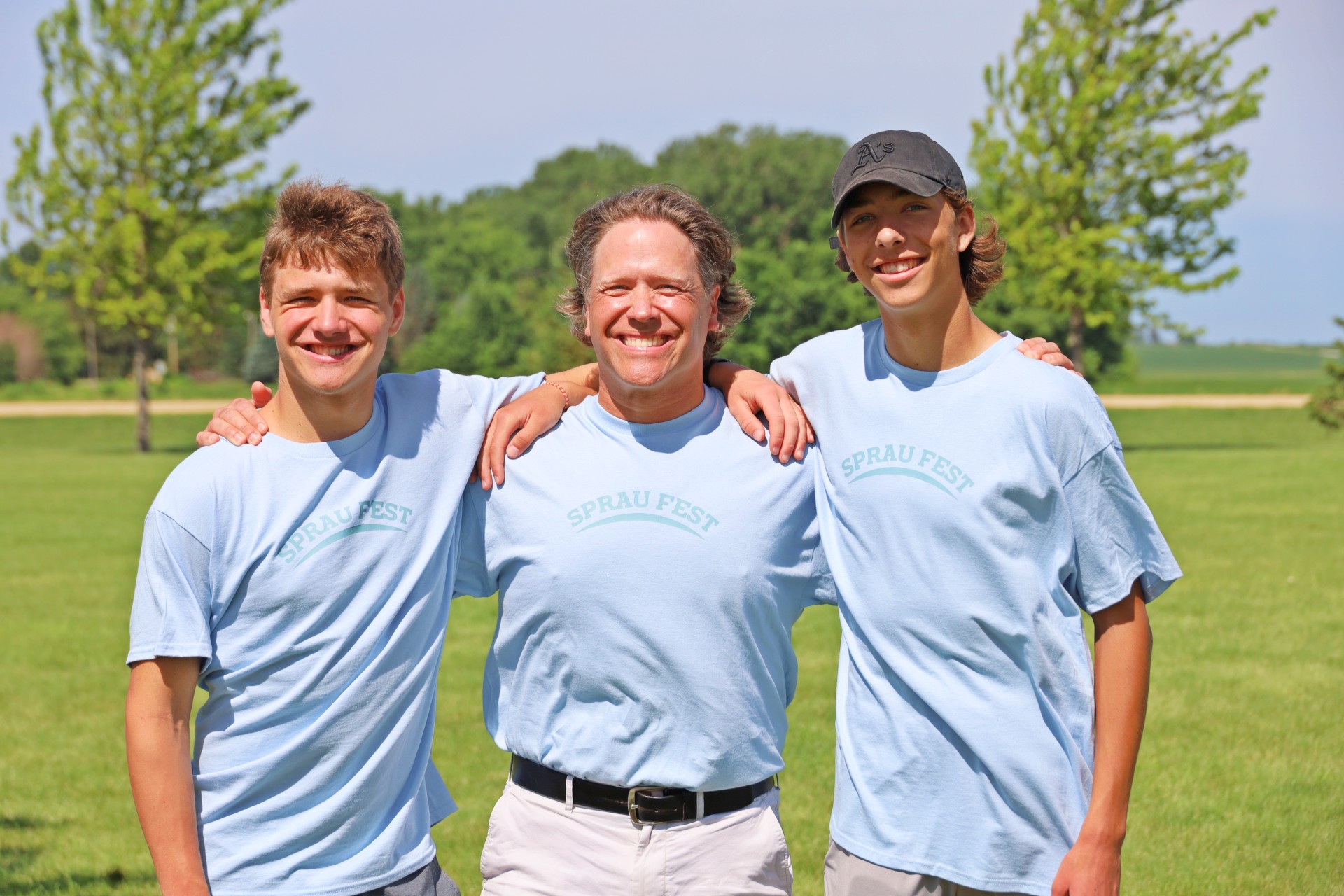
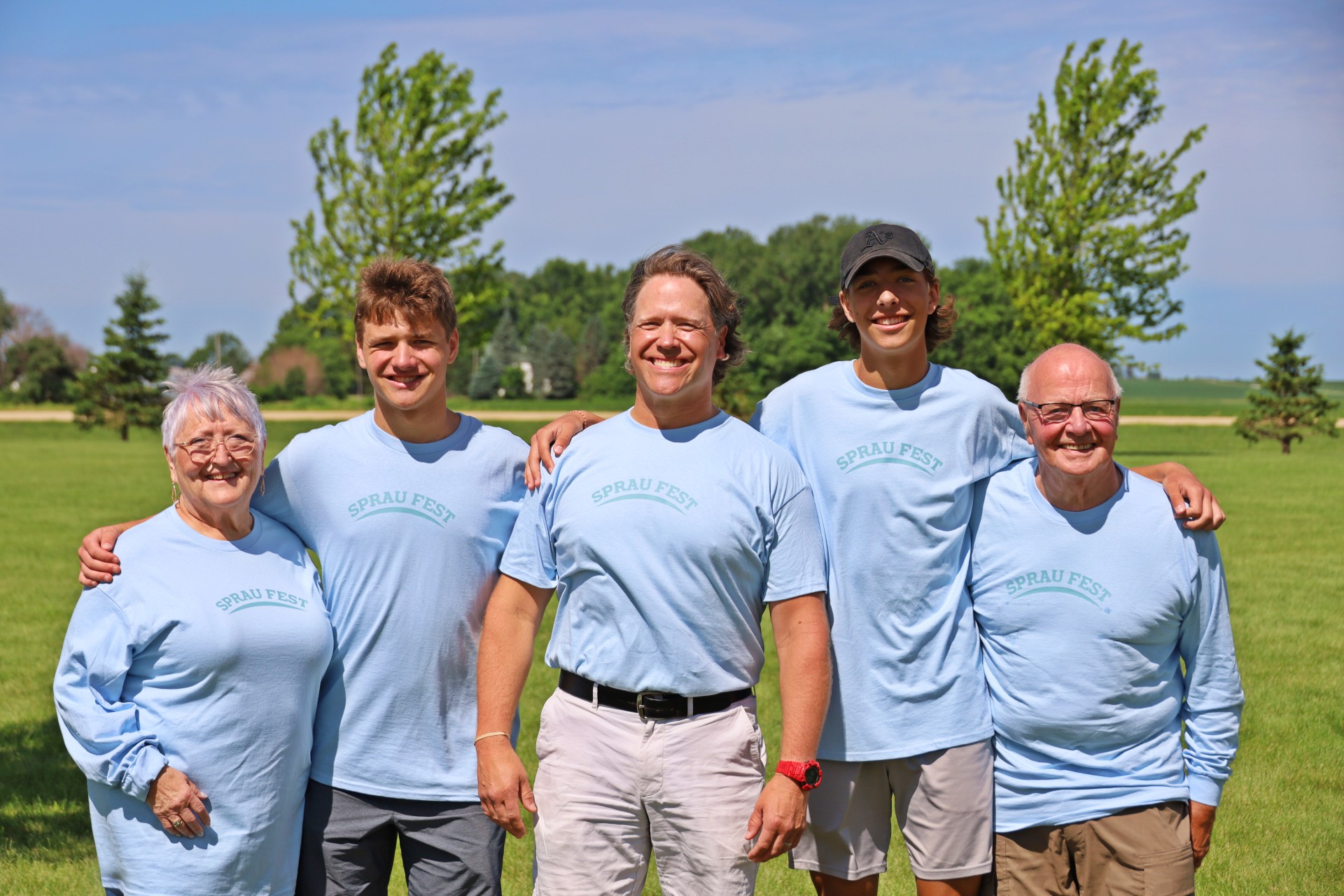
Me, my sons Johann and Magnus, and two hands growing out of my neck.
I was asked to lead a session on our Sprau and Anderson family history. I am an amateur genealogist and probably the closest thing we have to a family historian. Much of this started when I was younger and I was told how important my first name, Adam, is on my mom’s side of the family. And of course, my last name, Albrecht, is significant on my Dad’s side of the family. And my middle name, Robert, is both my dad’s first name and my maternal great grandfather, Robert Anderson’s, first name. So it’s not hard to see that I got tangled into this family history through a few well gifted names.
Following my Shed Talk on Friday, which is like a Ted Talk, but in a shed, I had an aha moment. (It was not about a black and white hand drawn music video.)
As a result of my family history talk, and the genealogical homework I did to prepare for the weekend, I started to visualize a model of my life and my place in my family history that I had never considered before.
Me and my sisters, Donielle, Alison, and Heather, my Mom and Dad, and me. But none of our feet.
I imagined a simplified version of my family tree that led to me.
Here’s what I pictured:
Above me on my family tree are my 2 parents. So my simplest genealogical tree is an inverted triangle with my parents at the top, and me at the lower point. (Which makes me the low point in our family’s history.)
When you add the layer above that, you find 4 people atop my parents. Obviously, those are my 4 grandparents. And the level above them holds my 8 great-grandparents. Which makes that a pretty great level.
Me and my cousins and sisters about to be hauled off.
As you trace your family history you just keep building a taller and wider triangle. And by the time you rise 7 generations you have 128 grandparents. By 10 generations, you have 1,024 grandparents on a single level of your tree. That’s like compound interest, in reverse. And we are all a product of this construct. It’s nature’s math.
My realization over the weekend is that all of the genes and traits, skills, lessons, strengths and abilities of the generations before me have poured into me like a funnel. All of these people have been learning and teaching, improving and growing and passing along what they learned in the best way they knew how.
They also accumulated flaws and habits that didn’t serve them. But much of that got passed along too, through the bottom of the family funnel.
I got the accumulated nature and nurture of countless generations before me from as many as 3 different continents.
That is wild.
However, what happens next is just as wild.
Me and my cousins and sisters getting tanked.
Because I married and decided to have children, the pyramid flips over. I am now at the top of a triangle of my own descendants.
My wife Dawn and I will forever sit at the top of a triangle of our own creation.
We know that pyramid has 3 descendants on the next level: our kids, Ava, Johann and Magnus.
The Three Generation Station
The pyramid may stop right there. Like that woman said to Meatloaf. Or it may continue until the end of time. Like Meatloaf was praying for.
But regardless of how long it builds, all of the nature and nurture that follows flows from me and Dawn.
As the next generations grow and multiply it becomes evident that our genealogy really looks like an hourglass.
There is an inverted triangle above us, that funnels down to us.
Below us is the pyramid of accumulating generations.
This means that many, many ancestors have poured not only their genetics, but their experiences, decisions, strengths and accumulated wisdom into you.
It is hard to say where the sayings, prayers, traditions, terms of affection, mannerisms or womanerisms you use today really started. But there is a strong chance they are deeply rooted in your family tree.
If you choose to have your own children, you are not only passing along your genetic traits, but you are also pouring your habits, values and lessons into the next generations.
This means that you are the center of the hourglass.
You are the filter.
You are the gate keeper.
You are the seed of all that comes after you.
Your decisions, biases, lessons, choices, habits and behaviors will influence everyone who comes after you.
Choose wisely what you pass along to the next generations.
Give them your best.
Filter out the worst. (Although, if you are Germanic, you should give them the best wurst.)
Share as much knowledge and wisdom as you can.
Pass along great habits.
Pass along strong traditions.
Eliminate the things that don’t serve you and won’t serve them.
Ensure that your offspring get the best of what is available to them.
You are the teacher.
The coach.
The prioritizer.
And the great example.
They say sex is hereditary. If your parents didn’t have it, it likely you won’t either.
But the same is true for religion.
And a love for books.
And quality time together.
And games.
And travel.
And sports, culture and music.
And love and kindness.
And generosity.
And friendship.
And braveness
And humor.
And resiliency.
And work ethic.
And grit.
Pass the good stuff along.
It’s how you can pass the best of you along deep into the future.
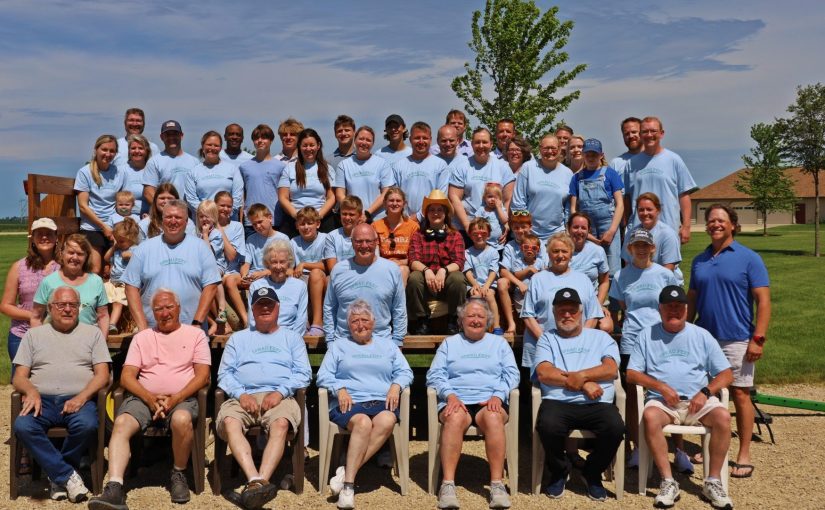
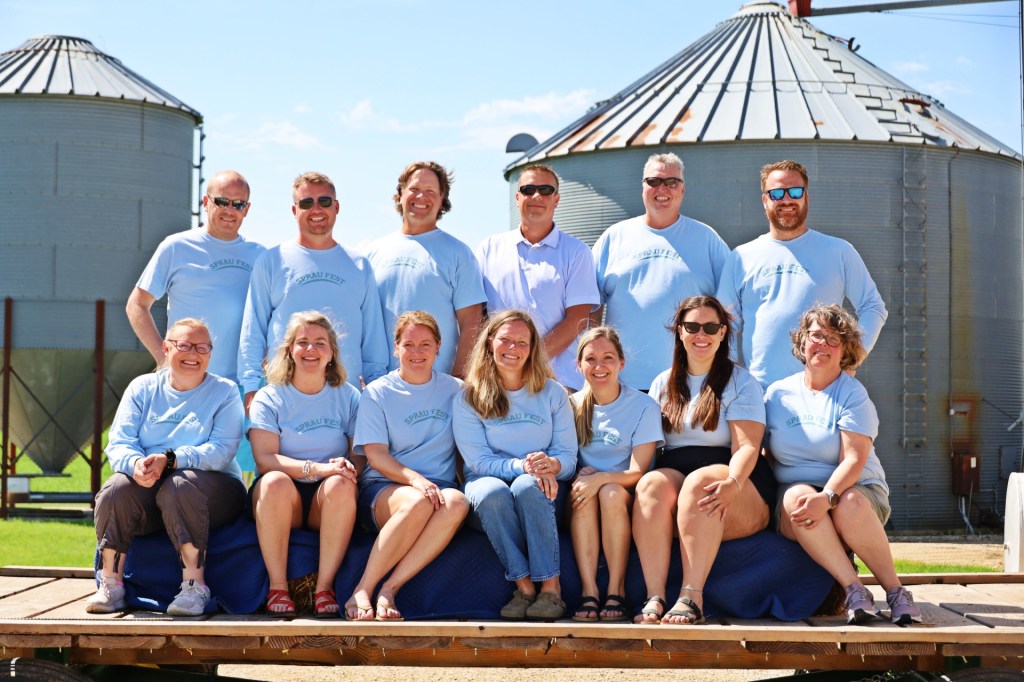
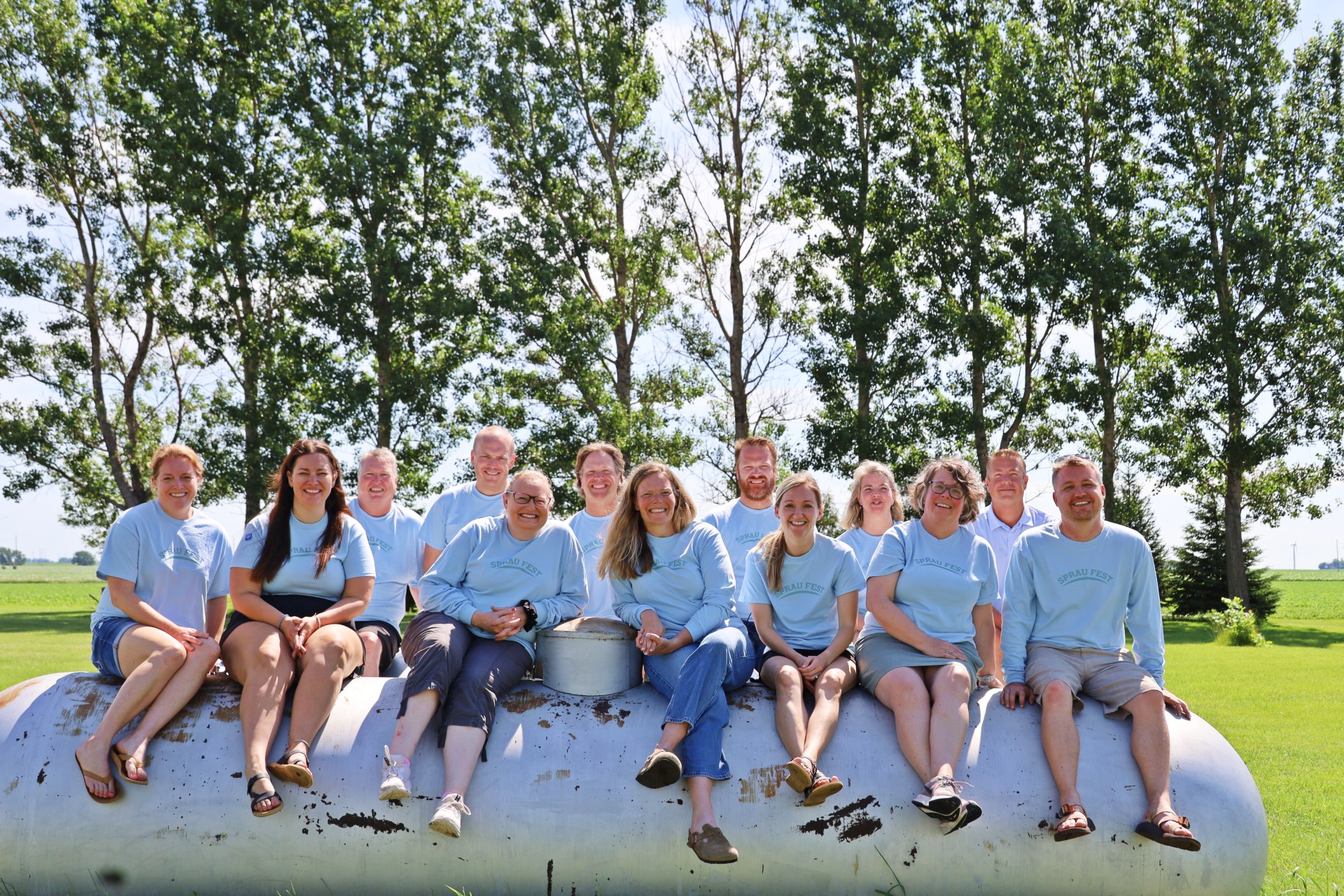
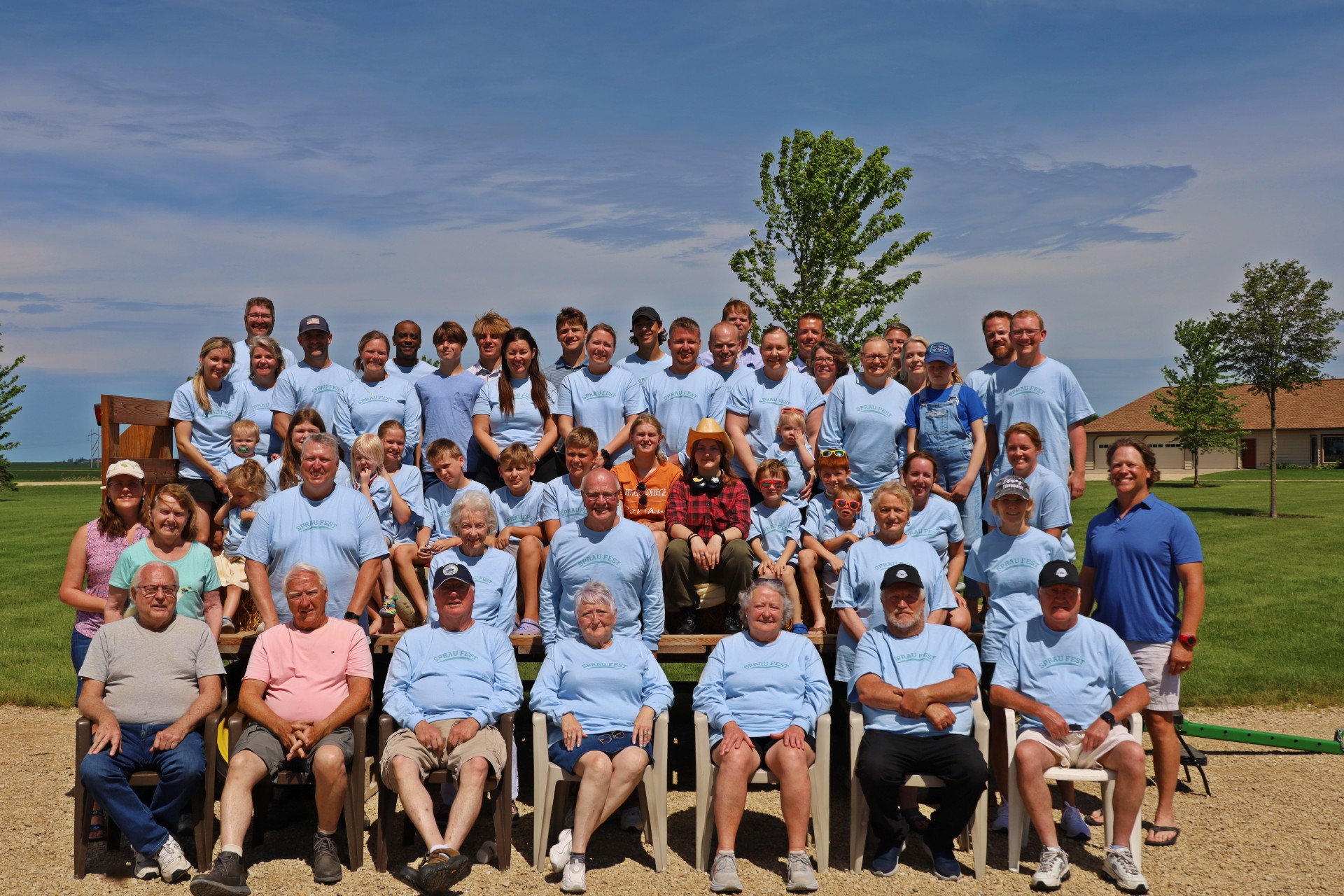
A healthy portion of the Kenneth and Lilian Sprau Family in Elkton, Minnesota on June 28, 2025.
Key Takeaway
Your ancestors have poured the best they have into you. Now you get to pour the best of you into the future generations. Make sure you carefully consider your contributions. And pass along the best inheritance you can.
*If you know someone who could benefit from this message, please share it with them.
This weekend I will be coaching at the Wisconsin State High School Track & Field Championships in La Crosse, Wisconsin. I work with two great athletes who have had impressive seasons and are in the running to end the state meet and the season, standing on the podium with medals around their necks. And when this Hollywood ending happens, I will treat everyone to the non-alcoholic drink of their choice at the local Kwik Trip.
At this point in the season, all of the preparation is done. As we say in track & field, the hay is in the barn. (I think they also say that in farming.)
My job now is mostly not to do anything to mess my kids up. Which is also my number one responsibility of parenting. But I have found that there is one thing coaches can do at the pinnacle of the season that helps more than anything else.
Build Their Confidence
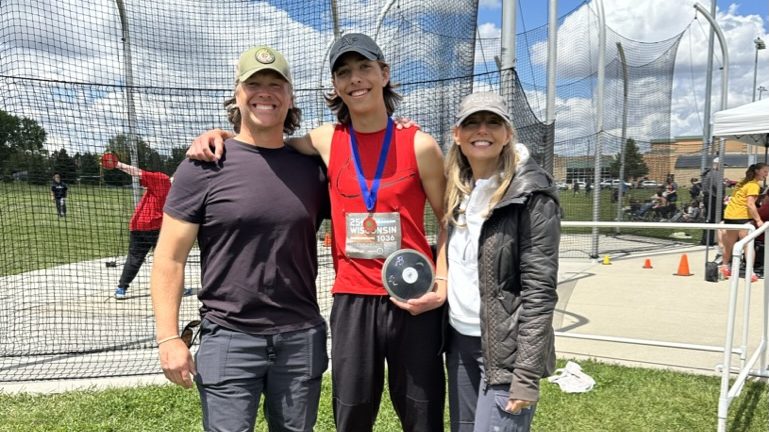
Two weeks ago, my son Magnus, who is in 8th grade, won the Wisconsin State Middle School Track Meet in the discus. When I asked him afterwards when he knew he was going to win, he said, ‘After my first throw.’ I then asked him how he built his confidence for the meet. He replied, ‘I just focused on feeling happy, excited and playing a great, exciting song in my head.’
That sounds like a winning formula to me.
Why Confidence Is So Important
Confidence is the magic ingredient in high-pressure situations. When the heat is on, it is confidence that keeps you cool.
Confidence makes you feel as big as the moment itself.
Confidence enables you to focus.
Confidence keeps your attention on yourself and the things you can control. (Like Janet Jackson.)
Confidence makes you feel prepared. Like a Boy Scout.
Believing in yourself when you are facing strong competition is the ultimate win.
Self assurance can be felt by others.
Your visible confidence, as communicated through your body language, positively impacts your teammates and negatively impacts your competition.
Confidence keeps you fully engaged in the competition to the very end, preserving the premium value of your final efforts.
Confidence quiets the doubt. And fear. And gets the butterflies to quit flapping and flying in your stomach.
Confidence neutralizes the shifting landscape of competition.
Confidence helps you overcome a weak week of practice.
Confidence lets you lock into what you know.
Confidence lets your training shine through.
Confidence means you can’t wait to step up to the line, the runway, the circle or apron. (Or onto the field, court, pitch, rink, floor or whatever you call that thing that fencers stand on.)
Confidence helps you remember all of your preparation.
Confidence helps you remember all of your past successes.
Confidence helps you forget the times you fell short.
The Keys To Building Confidence In others
Shift the feedback diet from correction to celebration.
Share success stories parallel to their own story.
Confidence is a game-changer. It helps you perform at your very best. It enables you to tap into all of your preparation and rise to the occasion. As a coach, leader or parent, your most important job is to instill confidence in those you lead. As a competitor, it is important to create your own competitive advantage by tapping into the magical powers of your own self-confidence. Create pre-competition routines, self-talk and soundtracks that build your self-belief. When you do, the results will naturally follow.
*If you know someone who could benefit from this message, please share it with them.
I never wanted to be a coach. Some people are innately drawn to it. I am not. I thought it was a cool role for other people. But I just wasn’t that into whistles and sweatpants. When I graduated from college, I fully expected to never be involved in sports again, other than as a fan. Even after I had 3 kids, I never expected to coach them at any level. I didn’t feel like I knew anything well enough to coach. Except maybe being a class clown. But I felt I could teach that through more of a mentoring relationship.
So it is very strange to realize that this fall I wrapped up my 7th season coaching my son Magnus’ football team. So, how did this happen? To find out we’ve got to go back in time, like Marty McFly.
In The Big Inning…
Like most things, my coaching career started very small. When Magnus was in first grade, we signed him up for flag football. At that level, the teams practiced for one hour and then played a game for one hour on Saturdays in the fall. At the first practice-game the two guys coaching Magnus’ team asked me if I could help out the following week because one of them was traveling. I was happy to help. And I felt like a helper more than a coach. Plus the kids were in Kindergarten and first grade. So they wouldn’t be fact-checking my coaching.
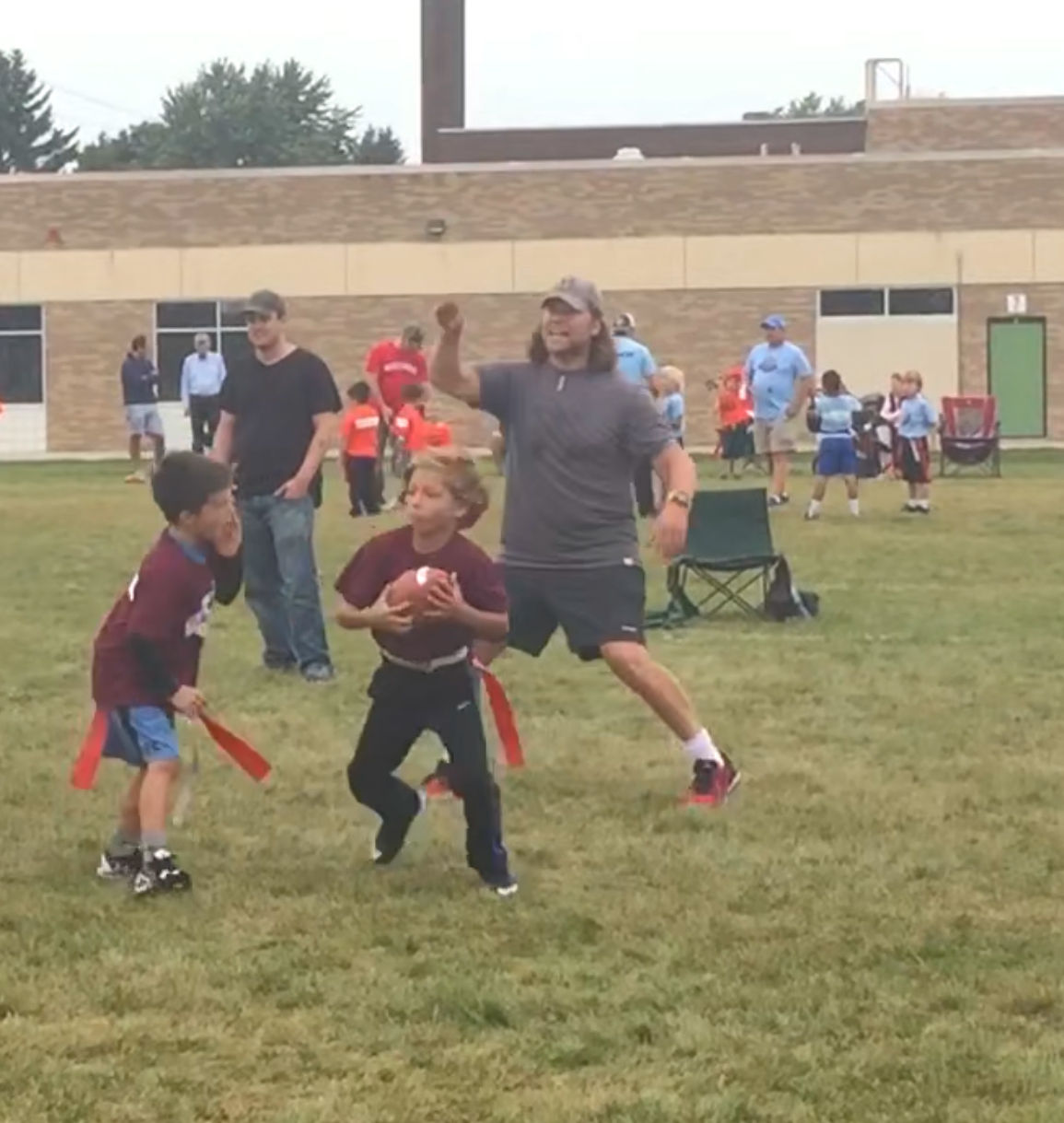
Magnus carrying the ball in 1st grade, when I could point where I wanted the players to go.
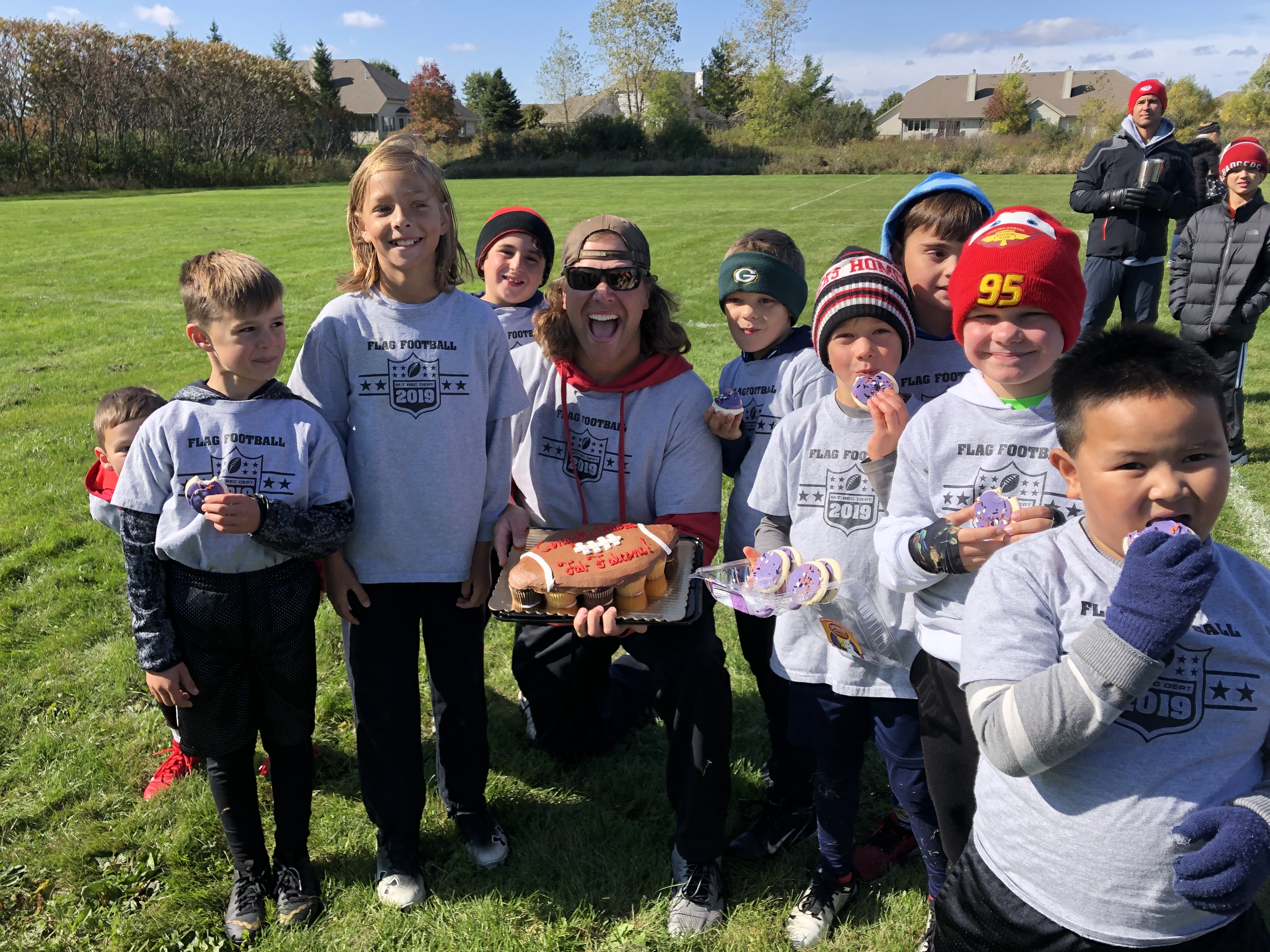
That Saturday’s practice-game went well. I had fun. Magnus enjoyed having me involved. None of the kindergartners asked to be traded or held out for more NIL money. So I became the third coach on the staff, helping whenever I could the rest of that cute little 6-week season.
Stepping Up A Notch
When Magnus entered 2nd grade, the program was looking for more parents to coach. My wife Dawn encouraged me to volunteer. So I got paired with another father. And we had a good time. Again, this was just 2nd and 3rd graders with one practice-game combo pack each week on Saturday mornings in the fall. And we were literally on the field placing each player in position and whispering in their ear what we wanted them to do. It was kinda like playing chess with tiny humans. Even better, the play didn’t start until the coaches said they were ready. The hardest part was organizing which parents were bringing the snacks.
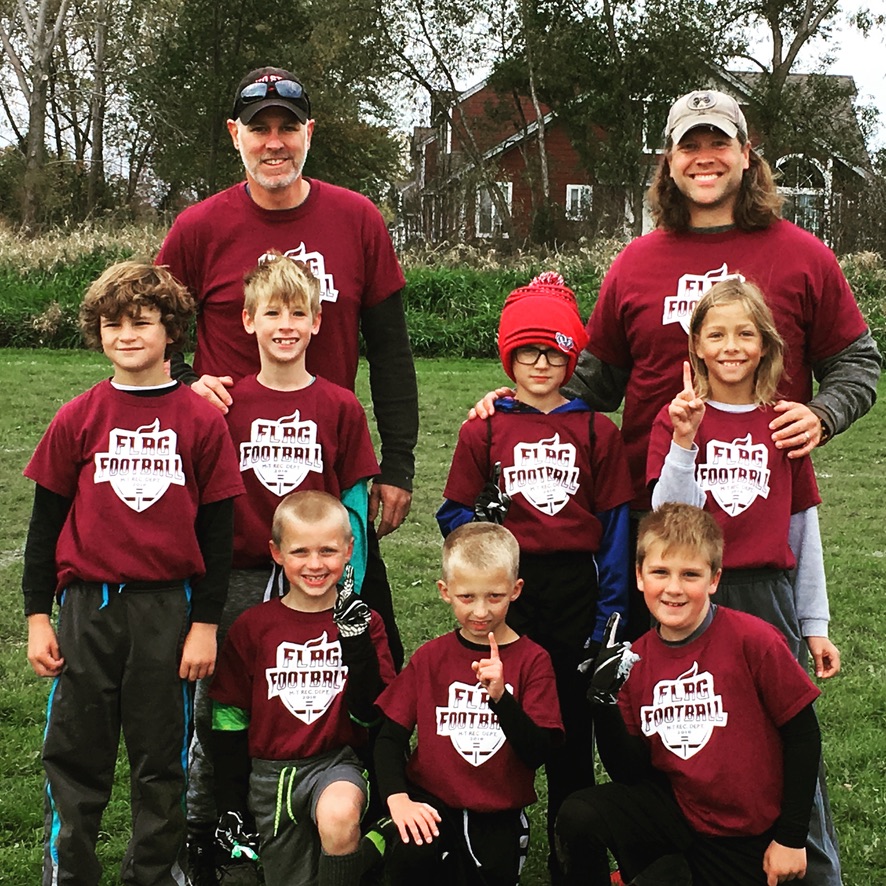
Magnus and Me in our second season together. That’s a happy father/son combo pack.
Gaming The System
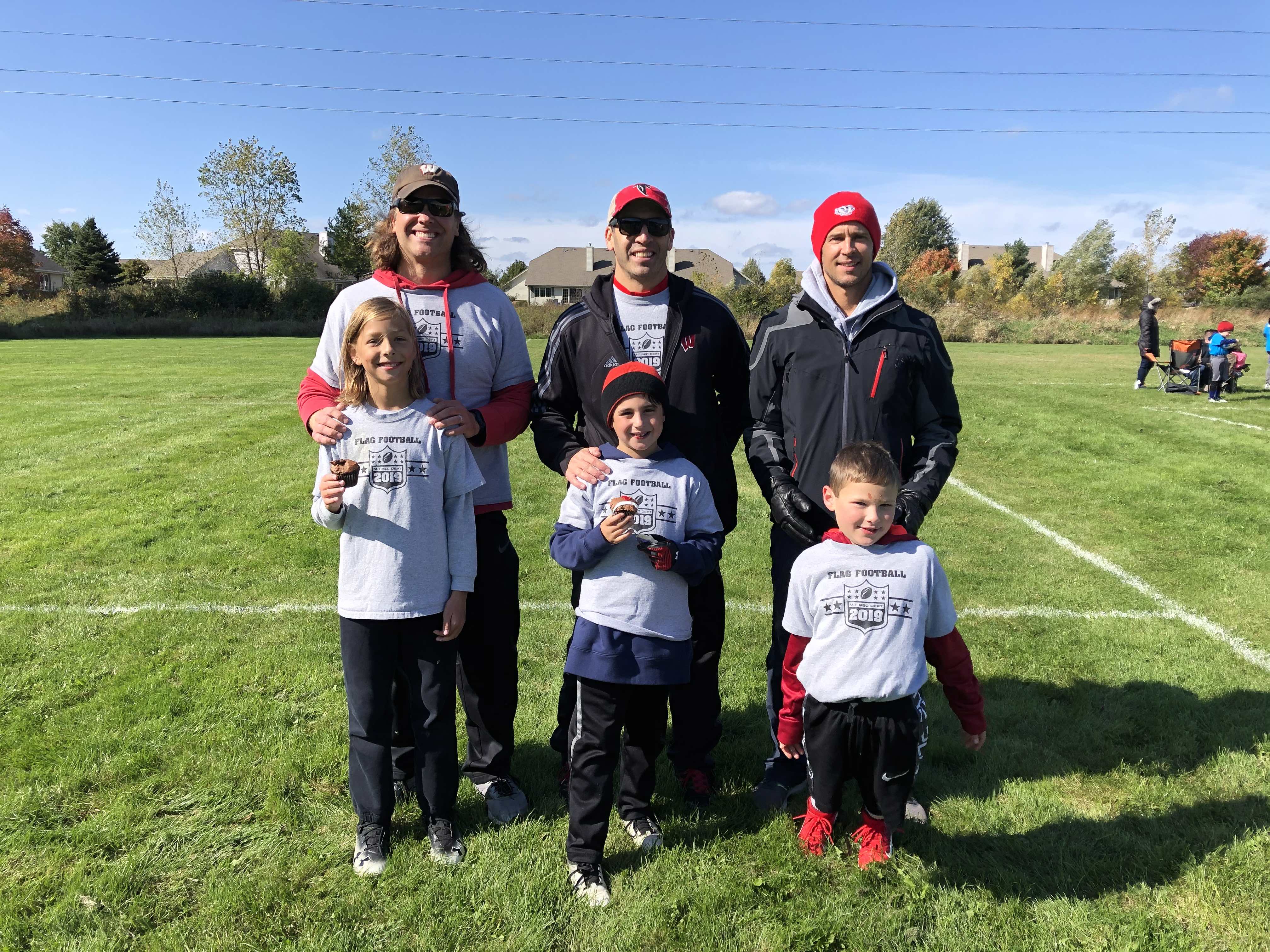
By 3rd grade, I realized that you could choose to pair up with another coach to lead a team. And when you did that, it allowed you to stack your team with 2 good players. So my great friend Dr. Mike Brin and I teamed up to coach. DMB played football for the University of Wisconsin Badgers, and we had been friends since we were teenage college athletes in Madison. Mike’s son Josh ‘Aquaman’ Brin was a talented and enthusiastic athlete. Josh and Magnus gave us a strong nucleus to build a team around. Kinda like D-Wade and Chris Bosh. We were lucky enough to land a few other really talented second and third graders, and we had a fun and successful season, even before the snacks.
Season 3. We were really upping our snack game by then.Me and Magnus, Mike and Josh Brin, Josh and Hudson Hunt. All 3 of the guys in the back row were UW Badger athletes, which meant we knew how to recruit. (You do it with cupcakes.)
The Curve Ball
In 4th grade, COVID-19 hit. And the program was canceled for the year. Boo. But Magnus was desperate to play football. So we were allowed to enroll him in the 5th grade Mequon-Thiensville Cardinals tackle football program, where he played up a grade as a tall and eager 4th grader. The boys played with face masks over their face masks, which looked funny and may have had no practical effect, but it made everyone feel better about playing football during a global pandemic. No kids got sick. And I got to sit in the stands, 6 feet apart from other fans, and cheer through a mask like a normal COVID-era parent.
At this point, I thought I was finished coaching. I enjoyed the season as a fan only. (Not to be confused with Fans Only.
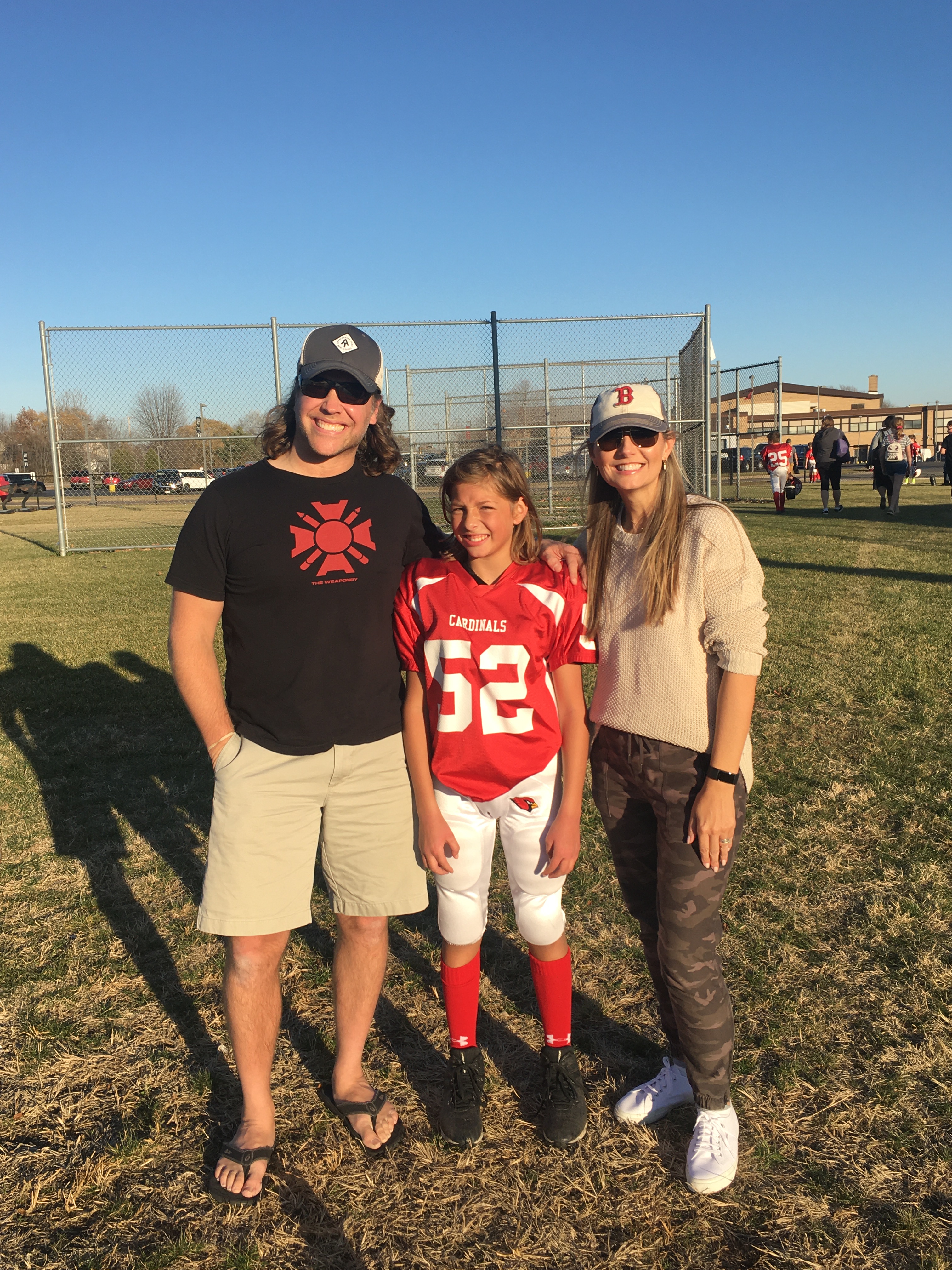
When Magnus was in 4th grade, he played tackle football with 5th graders, And I got to cheer in the stands with Dawn. I also got to wear flip-flops without a fear of getting cleated.
Magnus and a little wind machine for the hair.
Back On Track
That spring, I made a much bigger coaching commitment and started coaching high school track and field. My daughter Ava Albrecht was a freshman at Homestead High School in Mequon, Wisconsin. And I knew that I knew more about throwing the discus and putting the shot than most Mequonians. The flag football coaching experience made me think I could handle track. After all, when you coach throwing, you simply coach technique. There is no strategy. Or defense. Or concussion protocol. Go track!
Tackling Tackle Football
When Magnus entered 5th grade I was asked to help coach his tackle football team. I was reluctant because of the time commitment, especially on the heels of a long track season that went almost to July and left me with just 1 month without coaching obligations. But my coaching confidence was growing. So, I agreed to coach part-time. I was another warm body there to supervise kids and help run drills. I cheered a lot. And I tried to make it fun. For much of the season we only had 16 kids available. So we could only run 8 vs 8 scrimmages. Which was pretty silly. But I like silly.
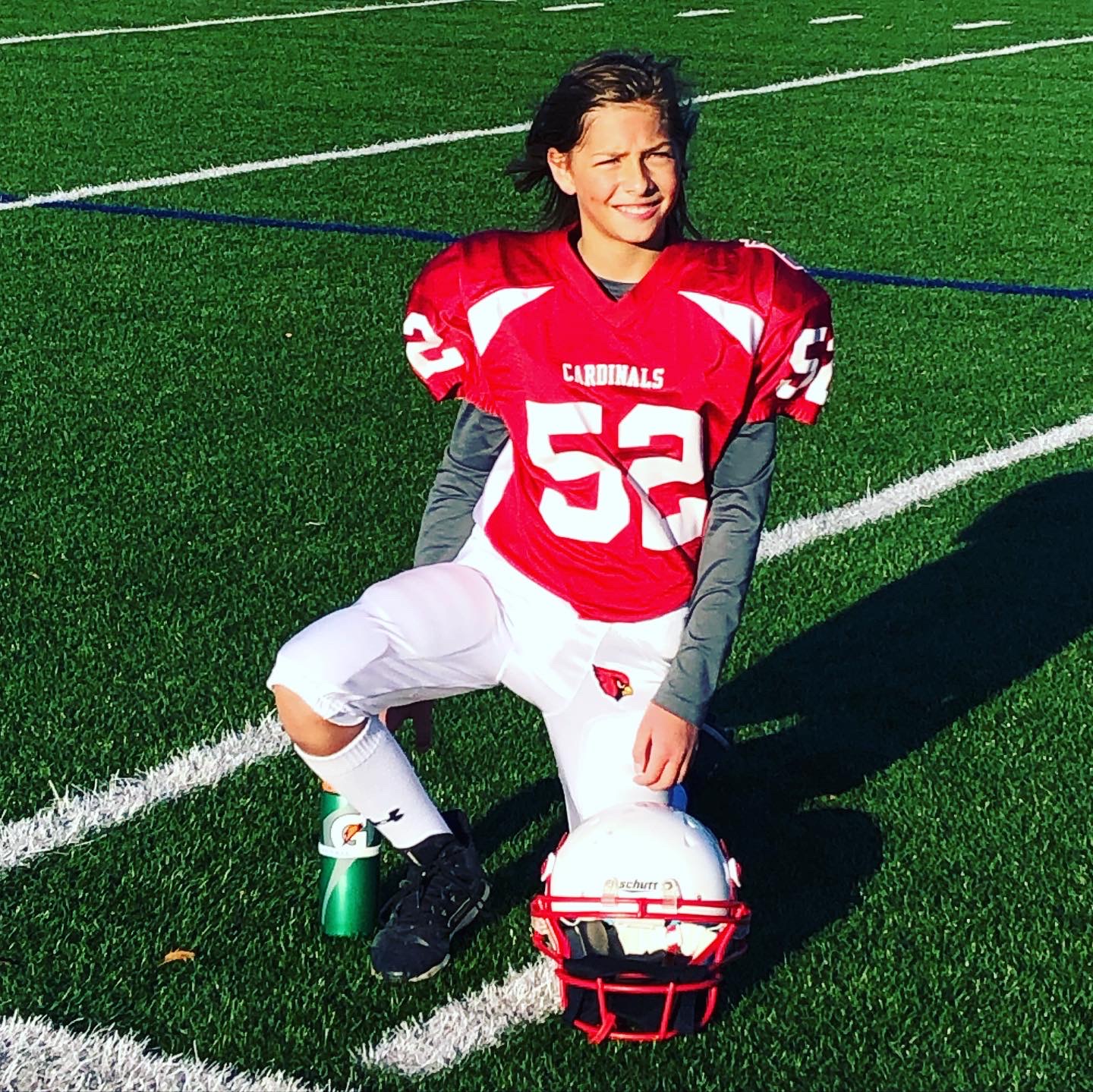
5th Grade. And We’re back together for Cardinal Rules football.
Jumping Into The Deep End Of The Pool.
When Magnus entered 6th grade my friend Josh Hunt volunteered to become the team’s head coach. Josh played football at the University of Wisconsin and had a lot of coaching experience. He asked me if I would be willing to be the defensive coordinator for the team. I agreed. Because Josh is a nice guy and didn’t seem like the type to burn my house down if I made some mistakes.
Realer Than Real Deal Holyfield
That’s when coaching got real. The slow build of casual coaching obligations helped lead me to a very real coaching position. Suddenly, I would be preparing for every week by watching game film of the teams we would be playing that week. I sketched out every unique formation and play the upcoming opponent ran, noted who carried or caught the ball, how frequently they ran each play, and generally how effective it had been. This represented a huge increase in both my time commitment and my emotional investment. I started to understand why Bobby Knight threw chairs and why Mike Leach went off on a seemingly insane rant about the players fat little girlfriends. Now I certainly don’t condone their behavior. But I started to understand it.
In practice, I taught our team the opponent’s plays and devised strategies to defend against them. Then, on Sundays, I watched our own game film from Saturday and marked up all of the footage on software called Hudl to show what we did right, what we did wrong and how to do things better the next time. I learned that those 3 lessons are the basic pillars of coaching.
I spent more time than I care to admit watching game film, preparing defensive strategies and developing lineups each week. It was a significant commitment. But I loved coaching this group of boys. And I loved spending so much additional time with Magnus.
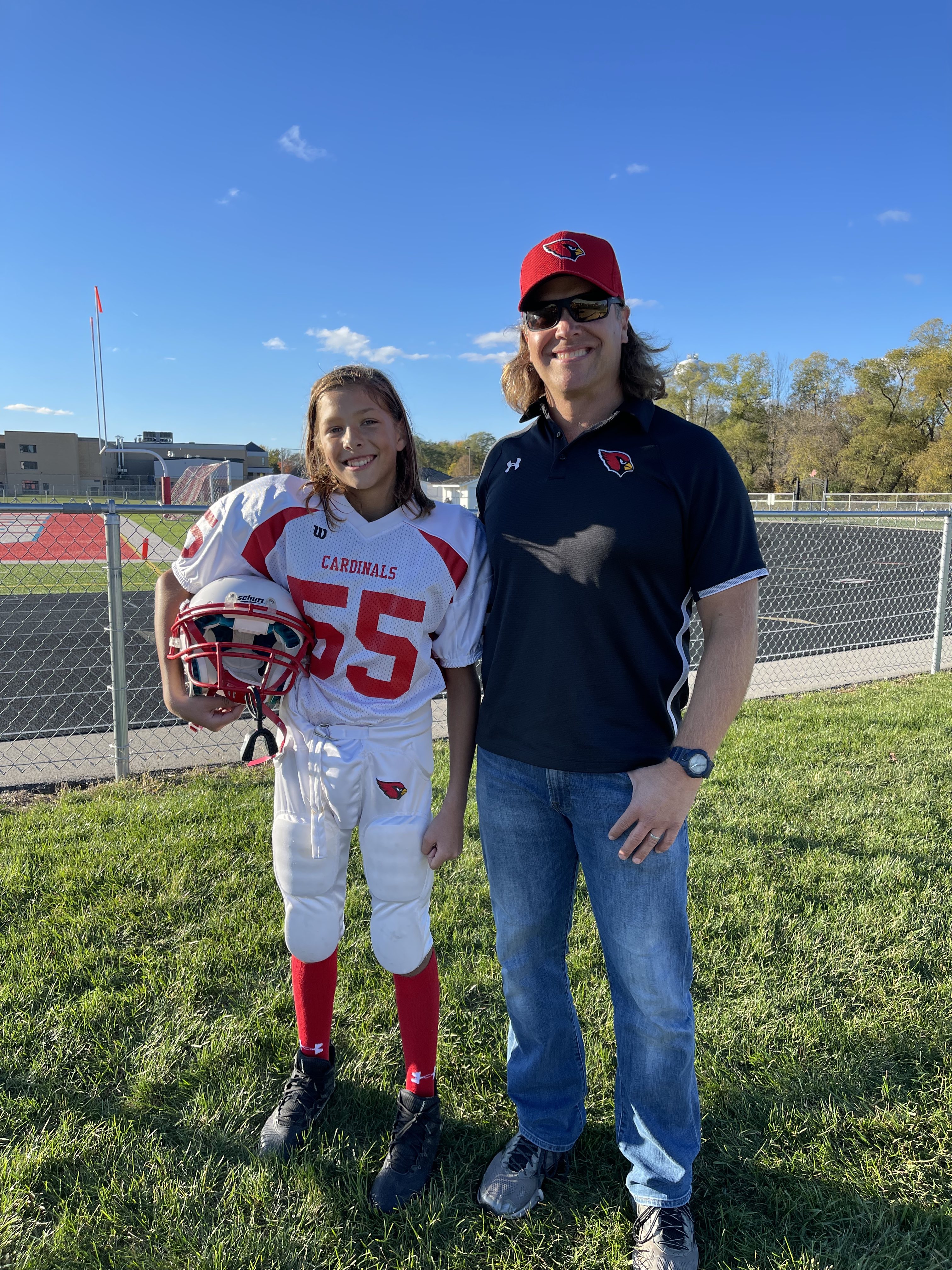
6th Grade. And one of my favorite photos. If you look closely you can see my knee next to Magnus’ (#55)
So I raised my hand to do it again in 7th grade.
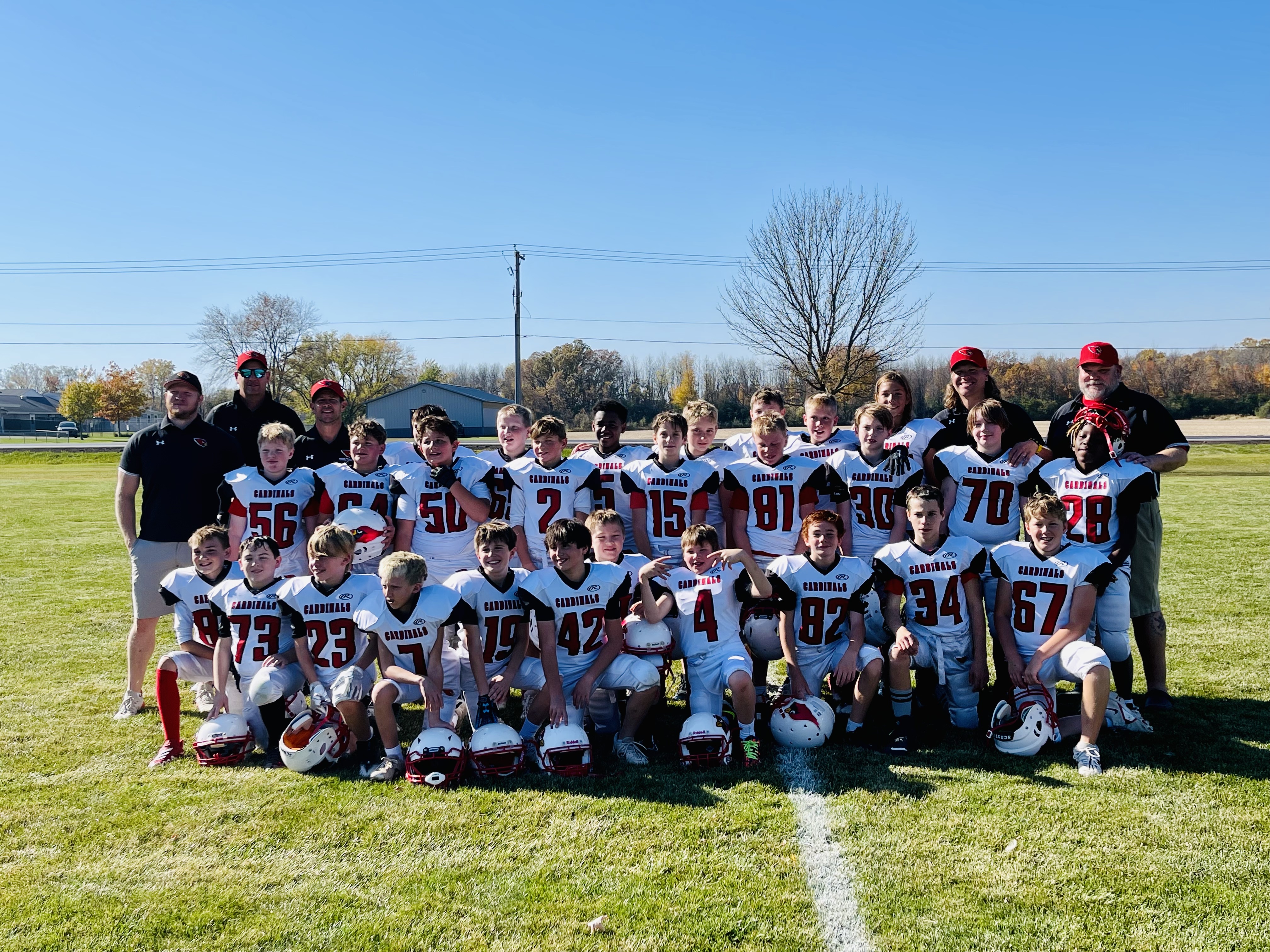
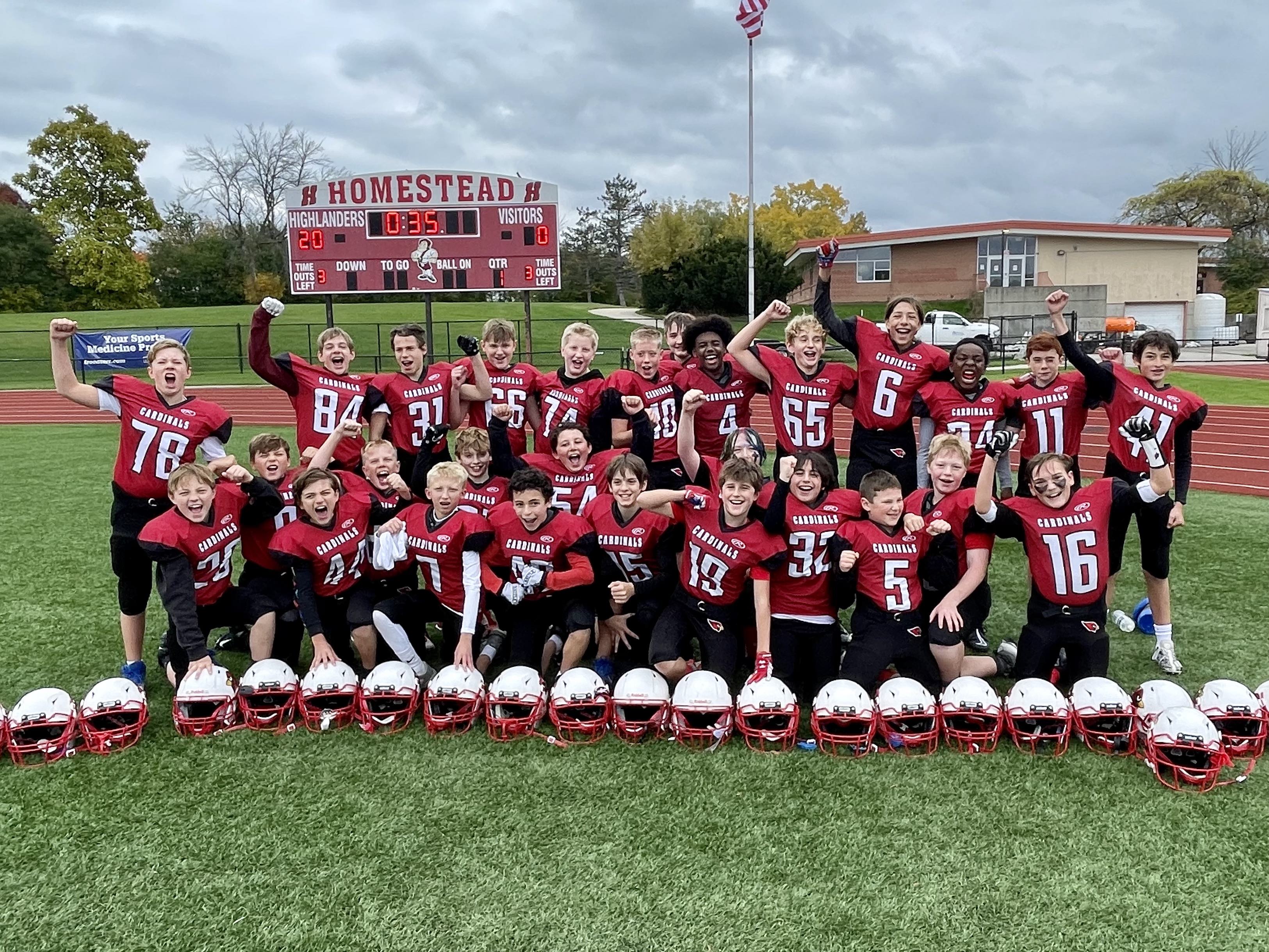
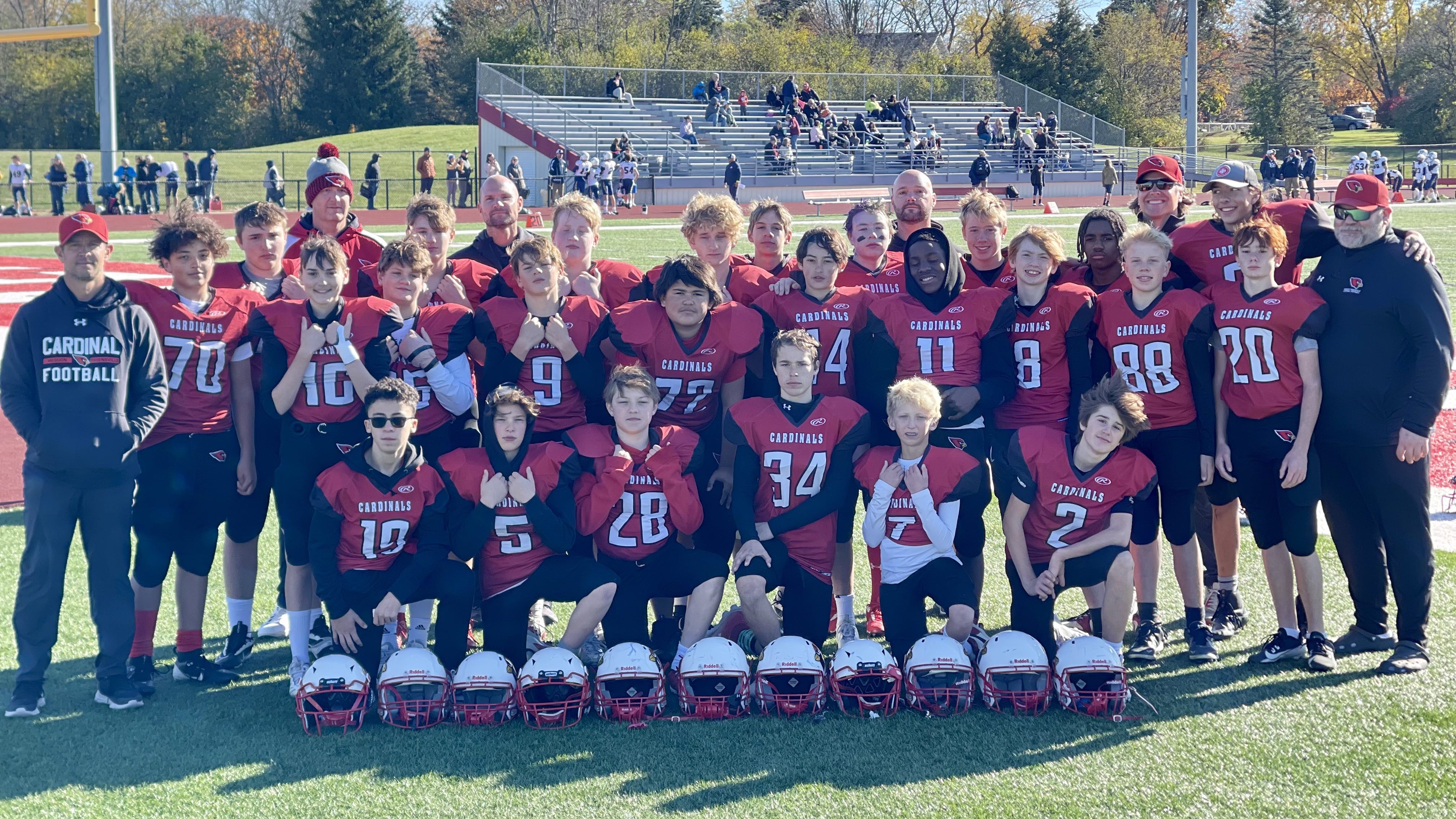
We had a great season in 7th Grade. This was after our last game of the season. Every team should end the year feeling like this.
And again in 8th grade.
For the past four years, from August through October, football has been an intense focus for me. I felt the pressure that comes with being an amateur coach in a high-profile team sport like football. So I prepared as much as I could to help give the boys an edge in the games. Sometimes it really helped. Sometimes it didn’t seem to help at all. This was either because our opponent was so good at doing what they do that we couldn’t stop them, or because they were bigger, faster and stronger than us, and we couldn’t stop them. But either way, I always felt as if I did all I knew to do to prepare our team for each game. And I learned a little from each win and each loss. Which meant that I found a way to win no matter what the outcome was.
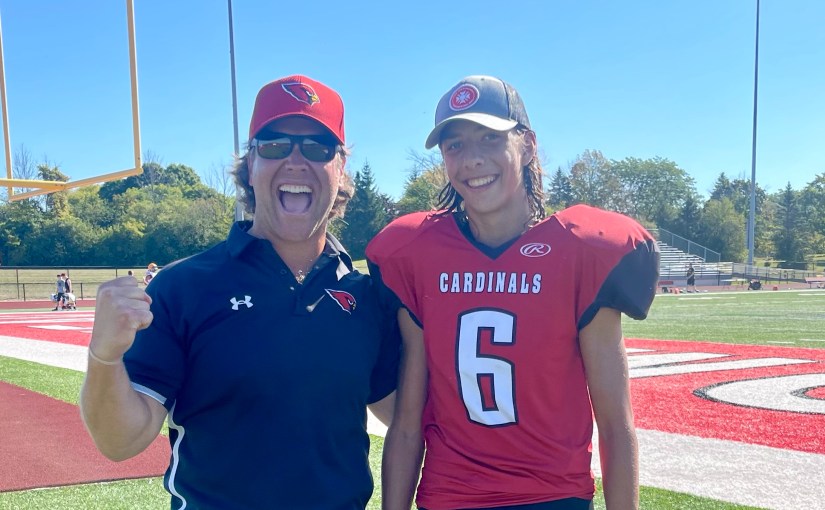
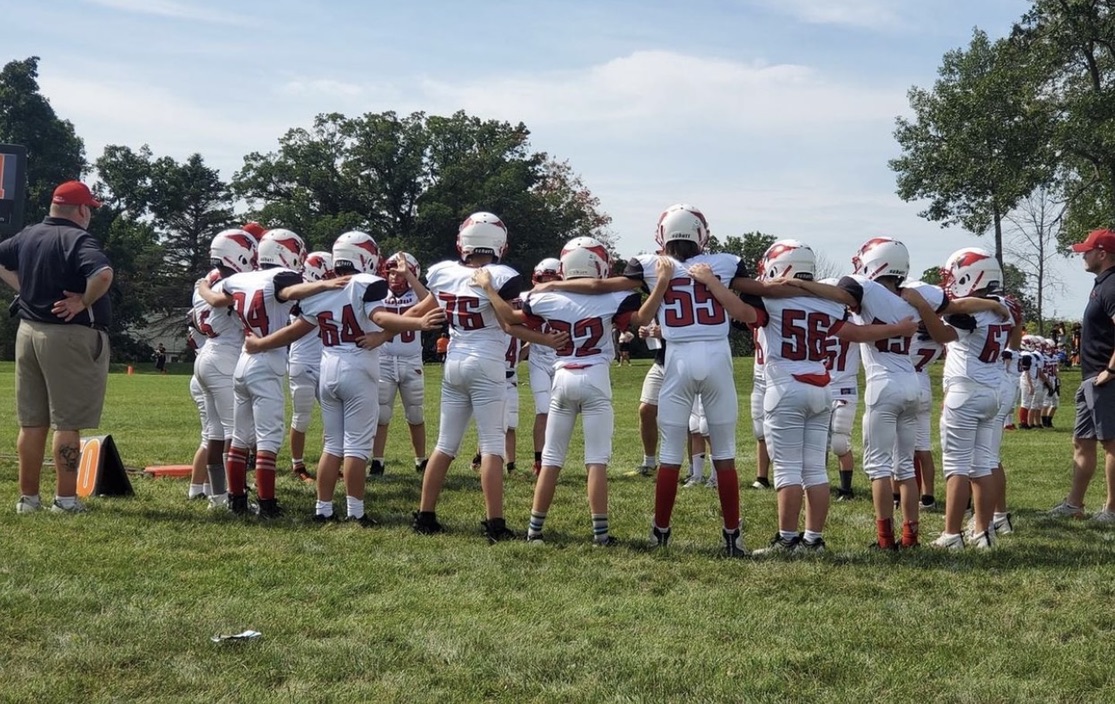
Magnus’ 8th grade season. My last year coaching football. And the first time Magnus was taller than me..
The 10 Best Things About Coaching Football.
1. Winning. There is nothing quite like winning a team sport.
2. Being called Coach. For years, I have been called Coach in our community. It’s always fun and surprising for someone who never expected to coach anything to be called that on the sidewalk, in the schools, and in stores and restaurants. It feels both respectful and as if you had a positive influence on a child’s life. It also makes me feel like I should be wearing a whistle everywhere I go.
3. The Brotherhood: Seeing these boys support each other and coming together as a strong team is amazing. Hearing the stories of them sitting together at lunch at school is rewarding. And knowing how close I still am to the guys I played football with makes me excited for them and the relationships they are forging through their collective football experience.
4. Hearing our defense call out the opponent’s offensive formation and the play they are about to run during a game. It meant the boys were paying attention in practice, they recognized what they were seeing and were prepared to defend the play. I loved that.
5. Stops in the backfield: Quarterback sacks and stuffed runs were the big wins for a defensive coordinator. We have had plenty of those over the past few years. It was a thrill every time.
6.Blocked Punts and Kicks. These have a huge impact on the game. They are magical gifts from heaven. Magnus had a slew of these during his Cardinal football career. And I discovered that a slew is the same amount in both the English and Metric system.
7.Interceptions: These are mission-accomplished plays. They are never not exciting.
8. The Funny Kids: Football is a serious game. But I love the kids who brought their sense of humor to practice and made us all laugh. The funnies often create stronger memories than the wins.
9. The Intense Kids: These kids set the tone for the team at practice and in games. They helped get the team mentally prepared to go to work. I always admired the mentality these winners brought to the field.
10.The Respectful Kids. The kids who responded to all coaching with Yes, Coach and No Coach, who looked you in the eyes, and who asked intelligent questions were a pure pleasure to work with and a sign of good parenting.
Key Takeaway
If you have a chance to positively impact the lives of kids, do it. Coaching, mentoring, volunteering, teaching, chaperoning. All of it helps. And you will get just as much out of it as the kids. Our youth can never have too many positive adult influences in their lives. And you gain by sharing your time, talent and knowledge with others. Don’t worry that you don’t know enough. Raise your hand and learn as you go. That’s what I did. And I can’t imagine my life without this chapter, these experiences, and these boys.
*If you know someone who could benefit from this message, please share it with them.
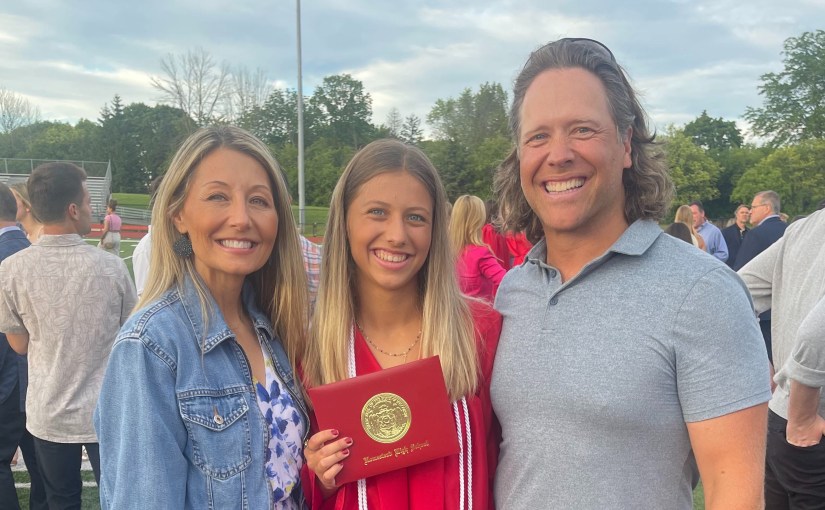
My daughter Ava graduated from high school a month ago. It opened an interesting new chapter for our family. By all accounts, we are a close family. And we have been since Ava, the first of our 3 children, was born. Next month Ava will leave home to attend college at The University of Wisconsin in Madison. To have a member of our nuclear family of 5 leave the reactor is going to change things. And I hope I don’t Chernolbyl.
There are a lot of exciting unknowns ahead that are fun to ponder. What will her career path be like? Who will she meet along the way? Where will she live? Will she make enough money to put me in the good retirement home and buy me the fancy cremation?
But as I prepare for Ava to leave home next month I find myself reflecting. I’ve asked a lot of questions about the past 18 years and how I have performed in my role as a parent. I’ve given myself a performance review. And I am sharing it with you.
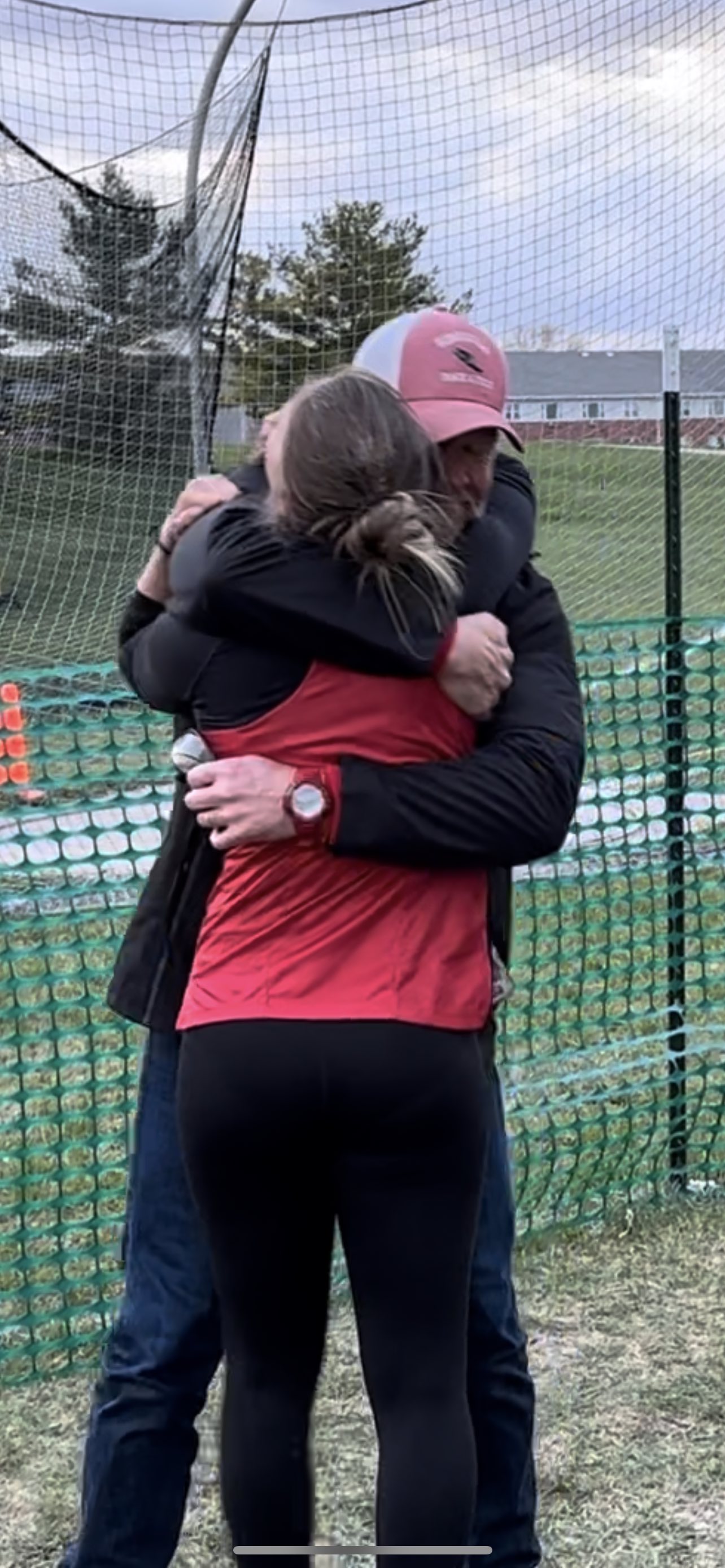
Ava and I after she broke her high school’s 44-year-old discus record.
10 Questions I asked myself as my child prepares to leave home.
Did I spend enough time with Ava? The answer here is complex. Yes, I spent enough time with my daughter. As her high school track and field coach I got far more quality time with Ava than most parents do. Yes, I will always want more. But our time was enough to create a strong bond, to teach, learn and laugh together. I will miss our time together and hope she comes home regularly so we can enjoy more.
Did I set a good example? Yes and no. Certainly, I set a good example in many ways. I was an involved parent in all areas of her first 18 years. I showed her how to work hard, how to make friends and how to make money. But I could have set a better example of how to keep your cool. To be slower to anger when frustrated. I could have used fewer naughty words in front of her. And I could have been stricter about her using naughty words. (But sometimes naughty words express feelings best.)
Did we create enough memories? Yes. This one is a slam dunk. We piled up the memories. Holidays, travel, traditions, sports, adventures, and all the funny unique things along the way. If there is one area of parenting I think I got right, this is it.
Did I pass along my values? Yes. My wife Dawn and I place a high value on values. Our family has The Albrecht’s 5 Most Important Things. My kids know they need to be Smart, Nice, Brave, Funny and Adventurous. We preached this constantly and underscored the importance of each value. When there was some sort of misstep or shortcoming it could always be connected to not adhering to one of the 5 Most Important Things.
Did I make her laugh enough? I’m pretty sure I met my quota. We laugh a lot at our house. It’s one of my favorite things. Ava has a strong sense of humor and we can find lots of reasons to laugh. Even when looking back at the things that were originally painful or embarrassing.
Did I teach her to say I am sorry? I think so. Dawn and I are good at this. It’s important to demonstrate that when you hurt someone’s feelings, were rude, mean or insensitive you should acknowledge it. Even when it was unintentional. And saying you are sorry helps change the whole memory of experiences and relationships, because we rewire the memory once there has been a positive resolution. But just because we taught Ava how to say I’msorry doesn’t mean she will. She’s stubborn.
Did I teach her enough about money? Yes. I read Rich Dad. Poor Dad. to Ava when she was in elementary school, my dear Watson. I have emphasized the importance of knowing the difference between an asset and a liability. Ava has had a job since 6th or 7th grade. She leaves home with a bank account at The UW Credit Union. She has her own credit card that she uses monthly for small responsible purchases to build her credit. She owns stock in 4 different companies and has seen the value of investing. She knows she needs to make her money work for her, and not just work for money. (If you need to become smarter about money I suggest reading Rich Dad. Poor Dad., Think and Grow Rich, andThe Richest Man In Babylon. All of them are easy and informative reads.)
Did I take advantage of the opportunities over the past 18 years? I think so. We spent quality time together. We adventured and traveled. I coached Ava throughout high school. Which created many opportunities to learn about hard work, goal setting, determination, disappointment, resilience and the joy of winning and attaining goals. But we never did a Daddy-Daughter Dance. I probably need more time to see what opportunities I missed.
Is she prepared for her next chapter? Yes. She is about as prepared as a well-cared-for child can be before leaving home. Had we neglected her and forced her to raise herself she may be more prepared for everything to come next. But she would also likely have resentment and other scars. So I think we found a happy medium.
What might I do better with my 2 teenage boys still at home? I could be more patient. Slower to get frustrated or angered. I could teach them more life skills. Tire changing, basic plumbing and electrical work. How to ask your waiter to replace the food that wasn’t quite right.
Key Takeaway
We all take on many roles. It’s valuable to reflect on our performance in each to become better parents, spouses, friends, neighbors volunteers and any other job we take on. It is not through experience, but through reflecting on our experiences that we gain wisdom. So make sure to take time to look back. It ensures that you will be even better at your roles in the future.
I think this girl is going to be alright.
*If you know someone who could benefit from this message, please share it with them.
The basic premise of the book, and the inspiration for the title, is that all of us, kids included, are good inside. Kinda like a Tootsie Pop. Furthermore, it is important to remember that when we make bad decisions or exhibit bad behavior, it is simply a reflection of a strong understandable desire, fear or discomfort that manifests itself in a negative way. (Which reminds me of my friend who got yelled at by a flight attendant when she got up from her airplane seat to run to the bathroom as the plane was taking off. But my friend was quite literally pooping her pants. So, yeah, you go to the bathroom girl.)
Good for parenting. But also good if you are a leader or a human.
The Good Inside assumption is a valuable reminder to us all. We know that we are good people. We know that our kids, coworkers, friends, and neighbors are good inside, with very rare Dahmerish exceptions. When you recognize this, you come to a much better understanding of what is really driving poor behavior.
Kennedy introduces the MGI, short for Most Generous Interpretation. (Not Most Gassy Intestines.) If you believe that we are all good inside, it is valuable to consider the Most Generous Interpretation of any negative or problematic behavior. This means that when someone acts up, melts down, or their behavior is otherwise misaligned with norms and expectations, rather than simply cursing and condemning, we should generously interpret the very normal and understandable feelings that are underlying such behaviors.
This MGI enables you to demonstrate empathy and compassion. It helps you arrive at an understanding, and address the real and relatable issue the person is dealing with, not just the negative expression that leaks out. (Like my friend on that plane.)
Key Takeaway
You make the world a better place when you assume people are good inside, even when they do bad things. The best thing we can do for each other is consider the Most Generous Interpretation of each other’s words and actions. It enables us to understand, address and resolve negative behavioral challenges in the most positive way. And that’s a win for everyone.
*If you know someone who could benefit from this message, please share it with them.
Life isn’t easy. It never has been. In fact, things go wrong all the time. And when you are trying to do hard things personally or professionally you will experience bumps, twists, stops, and restarts. It can be maddening. But so is quitting.
When things get hard and the ride gets rough, I always tell myself these 5 simple words:
Just stay on the horse.
Like you, most of the challenges I face don’t involve riding an actual horse.
But many of the difficult things we encounter feel like a bucking horse trying to throw us to the ground.
Things like work issues, relationship challenges, parenting, adversaries, unexpected expenses, illness, and weather. (Did I mention parenting?)
Remember, problems and challenges will keep coming. But they will also go away. You just have to make sure you stay on the horse long enough to enjoy watching the challenges go away.
So don’t quit, Buckaroo. And don’t give up. Tame the challenge. And enjoy the smooth ride on the other side.
Key Takeaway
Just stay on the horse. The bumps are part of the adventure. They make the ride more difficult. But they make the success sweeter. They make the story better. And ultimately, they make you better too.
*If you know someone who could benefit from this message, please share it with them.
We always want the best for the people in our lives. But our people don’t always find the best. We’ve all seen friends or family members in less-than-ideal situations. It’s hard to watch. It’s even harder to bite your tongue and not say anything to them. (Or bite your thumbs if you are the texting type.)
Sometimes the less-than situation is a bad job that makes them miserable. Or at a minimum, it doesn’t enable them to utilize their full talents. Other times we see our people in bad relationships. It could be a romantic relationship that isn’t so romantic. Or peers who are putting the wrong kind of pressure on your person. Or any number of lesser situations that bring your peeps down rather than raise them up, like a good Josh Groban song.
What Would Scooby Do?
When you recognize that your people are in situations that are bringing them down, bring it up to them. Let them know how great and capable and worthy they are of more. Encourage them to find the right job, the right people, or the right situation for them.
Your people will know you are right. And they will want better for themselves too. But when you hear someone who cares about you tell you that you deserve more it carries more weight. And more urgency.
If you can help your person stack one more stone on the right side of the scale, you can help them tip their next decision in favor of a better future. Which means you have done your job as a valuable supporter. (Even if you’re not an athletic supporter.)
My Reminder
Last night I saw a good friend of mine at a school event. He is successful, well-liked, and well-respected. But a few years ago he found himself in a position where he wasn’t fully appreciated for his talents, vision and work ethic. His greatness had earned him a major opportunity. But the organization wasn’t worthy of my friend. I could see that he was wasting his time in what seemed like a great role. But it really wasn’t. And I told him so. Last night, he told me that my words to him encouraged him to make a change. Today he is in a job that is just as big, but way better, and far more supportive. Like Spanx.
Key Takeaway
Tell your people in lesser situations that they deserve better. They know it. Let them know you know it too. Show them you care. Add to their confidence. Give them the push they need. At a minimum, they will know how much you care for them. At a maximum, you will help change their life.
*If you know someone who could benefit from this message, please share it with them.
Over the past 16 years, I have learned a lot about what it takes to be a good Dad. Most of what I now know I have learned by making mistakes. Like the time I dropped my 6-month-old over a railing at the Zoo. I knew I had made a mistake when everyone around me started screaming. #truestory
One of the things I’ve learned is that to be a good father you should spend more time with your kids than writing blog posts on Father’s Day. So let’s get right to the list.
10 things Dads should teach their kids to love.
Books
Collect Books. Read to your kids. Let them see you reading. Dads who read books keep getting smarter, more creative and more capable. It’s a great way to teach kids to fill their free time with something positive. I recommend the books with more words than pictures, but do what you have to do.
2. Alarm Clocks
Love your alarm clock. Set it every day. Let your kids know that the alarm clock helps you get the most out of every day. Let them see you get up and get productive in the morning. It will teach them to find gold in those golden morning hours.
3. Their Mom
The greatest gift a Dad can give his kids is to love their Mom. Treat her with respect and kindness, even if you are no longer together. If you are still together gross your kids out with how much you love their Mom. It’s like forcing them to eat really healthy food that they think is icky, but is really good for them.
4. Travel
Show your kids the world. Roadtrips. Camping trips. Trips to the store. Sunday drives. Overseas trips. They all count. Show your kids new places and it will spark new ideas, new understanding, and a new appetite to see even more.
5. Hard Work
Teach your kids how hard work leads to great results. Show them that there is no elevator to the top. You have to take the stairs. And if they see you taking the stairs 2 or 3 steps at a time they will too.
6. Encouragement
Kids who receive encouragement encourage others too. It’s one of the best ways you can improve the world through your children. You can do it. I know you can!
7. Saving Money
A kid doesn’t need a role model to know how to spend money. But as a Dad, you can teach them the critically important value of saving. Teach them to accumulate money by always saving part of what they earn. So like 50 Cent, they can watch the money pile up. And as the money piles up so do your options and your peace of mind.
Bonus: Read Rich Dad. Poor Dad. to your kids. I have read that book to each of my kids. It’s the best way to teach them about money.
8. Laughter
The world is full of funny stuff. Enjoy it. Laugh loud and often. Teach your kids to laugh at all that goes wrong. It is the best medicine. And while it may be addicting, it doesn’t cause constipation.
9. Donating
Teach your kids to love donating to causes they care about. Show them how to give without expectations of a return. There are endless ways to give. Share your time, talents and treasure. Or, if you are like my Dad, give blood as often as they will let you. That stuff is more valuable than gold to a fellow human in need.
10. Friendship
Be a good friend to your friends. Collect and maintain as many great friendships as you can. Let your kids see you connect and share love with others outside your family. It will teach them to connect and extend their love too.
Happy Father’s Day!
+For more of the best life lessons I have learned check out my new book What Does Your Fortune Cookie Say? from Ripples Media. It makes a great belated Father’s Day gift. Or a great be-earlied Father’s Day gift for next year.
Yesterday my daughter Ava had a basketball tournament 90 minutes from home. Ava and I enjoyed some daddy-daughter time as we drove to and from the tournament together. We always talk a lot on our drives. Our conversation yesterday included such random topics as:
Top 3 cities in the US you would want to live in someday
How to become a songwriter
How old you have to be to join the CIA
Elbows to the throat
Billy Eilish
Basketball moves that work
How Silicon Valley became a thing
Hair tossing and checking my nails
Honors Geometry terms (we studied for her quiz together)
How the championship medals they won glow in the dark
What is the 3rd Jonas Brother’s name (It’s Kevin)
Entrepreneurship
We also talked about my work. When I started The Weaponry, my advertising and ideas agency, I also started this blog to share what I learned on my entrepreneurial journey. This is the 382nd post. So I must be learning something. But I don’t just blog about what I am learning. I try to teach my children as much as they can absorb. And maybe just a little more.
Recent Updates
I told Ava about some of the projects I am working on. I told her about work travel that I have coming up to Los Angeles, Las Vegas and potentially Orlando. I gave her an update on some of the things I just did on trips to Dallas and San Antonio.
Then she said something that really struck me. She said,
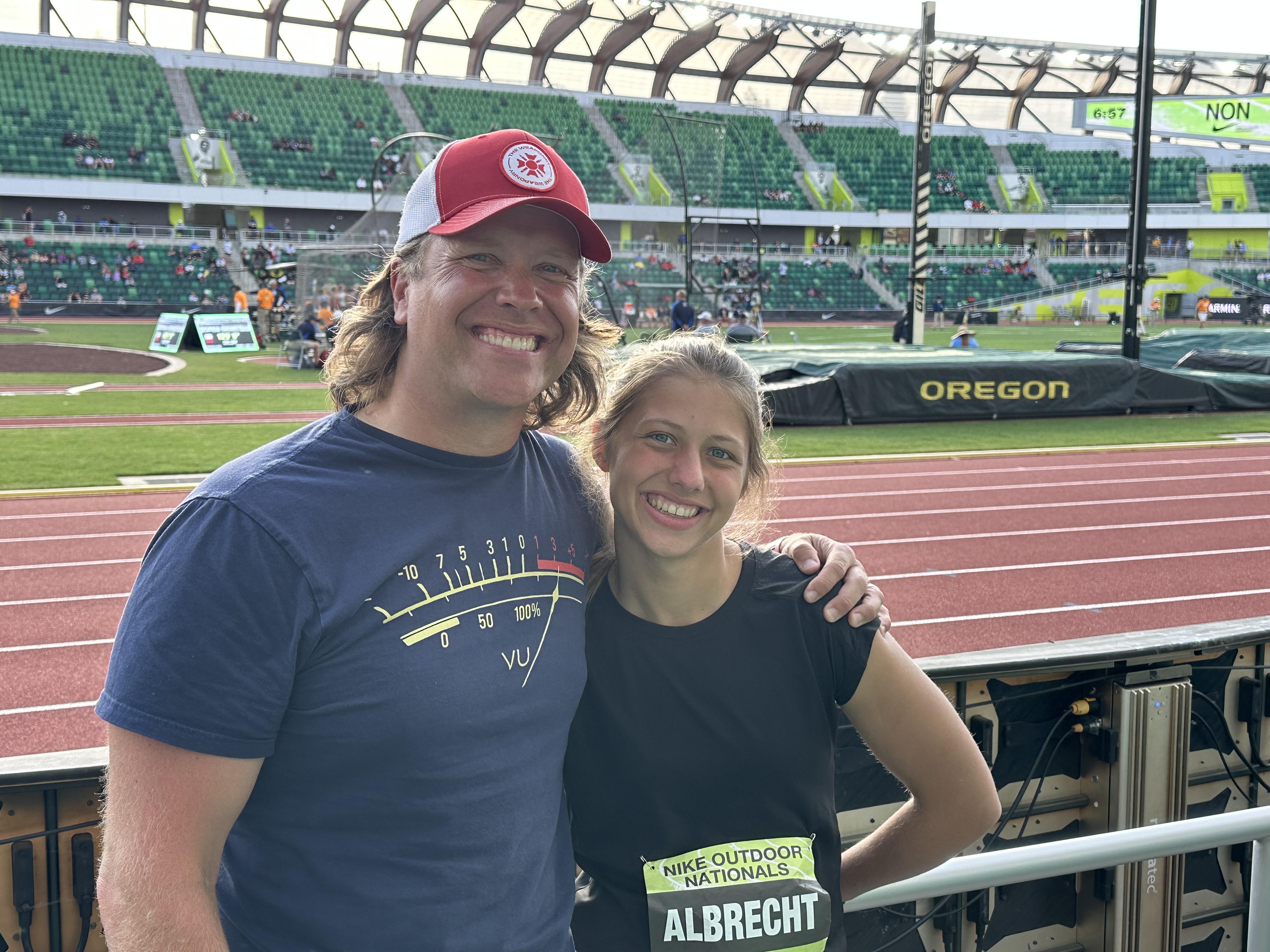
‘Dad, you are so lucky. You have the coolest job.’ -Ava Albrecht (14)
I smiled, and told Ava that my entire advertising career has been filled with cool opportunities and experiences. But the thing worth noting now is that I created my own job. I started my own business. All of the cool things I get to do now were not offered to me by an employer. I didn’t find this job like you find a 4-leaf clover. I created the opportunity to do cool things myself.
How Long Does It Take?
I knew that when I launched my own business I would be walking away from a number of amazing opportunities to do fun and interesting work. I wondered how long it would take before I got to do those same kinds of projects for The Weaponry.
It didn’t take long. Today I get to work on rewarding projects for many of my clients. I get to travel all over the country. I get to work with interesting and well known people. And so do my teammates.
Go Luck Yourself
Ava was right, I do have a cool job. But I am not lucky to have this job. I made this job. I knew the kind of work I wanted to do. And I created a job where I would get to do it. I told Ava that I want to make sure she knows that she has the ability to create her own dream job. And I want you to know that you do too.
Key Takeaway
The best way to land your dream job is to create it yourself. Know what you want. And realize you have the potential to make it happen. Today, I am busy creating my dream job. I am certainly not done yet. And neither are you.
*If you know someone who could benefit from this story please share it with them.






 Adam Albrecht Blog