Do you process your feedback for growth or defense?

When you receive feedback from the world you process it with one of two devices in your noggin.

  1. Your Growth Processer
  2. Your Defense Processor.

The Growth Processer says: I have the ability to get better with this feedback. I can learn and improve and enhance my abilities and capacity. It acknowledges that you have room for improvement, and you have discovered an opportunity to press your advantage further. Think of this as the Billy Joel Processor. Because it starts evaluating feedback by saying, You may be right. I may be crazy.

The Defense Processor says: I should not change. I am already where I should be. The world doesn’t know what I know. There are important reasons for doing what I am doing and I need to defend against change or modification. I need to build a wall to protect my processes, decisions and style. Because they are not only as good as they ever need to be, they are better than anyone else. Therefore, I need to defend against decay. Think of this as the Donald Trump Processor. Because like Franks Redhot, he uses his defense processor on everything. Which offers a sense of confidence and superiority. But it prevents all possibility of growth and improvement. (Because just imagine how many times his hairdresser offered up a less imaginative hairdo.)

Real-World Example (But not from the MTV Show.)

If you are part of a race team you have to always be looking for ways to get faster. Speed is growth in racing. Everything that ultimately leads to speed should be sought out, embraced, and accepted. It’s simple. It’s scientific. It’s how you get better faster.

Key Takeaway

Always look for opportunities to improve. Find the valuable gems in your feedback. Consider everything. Think like a race team. Seek out and soak up everything that presses your advantage forward. It will help you get a little bit better every day.

*If you know someone who could benefit from his message, please share it with them.

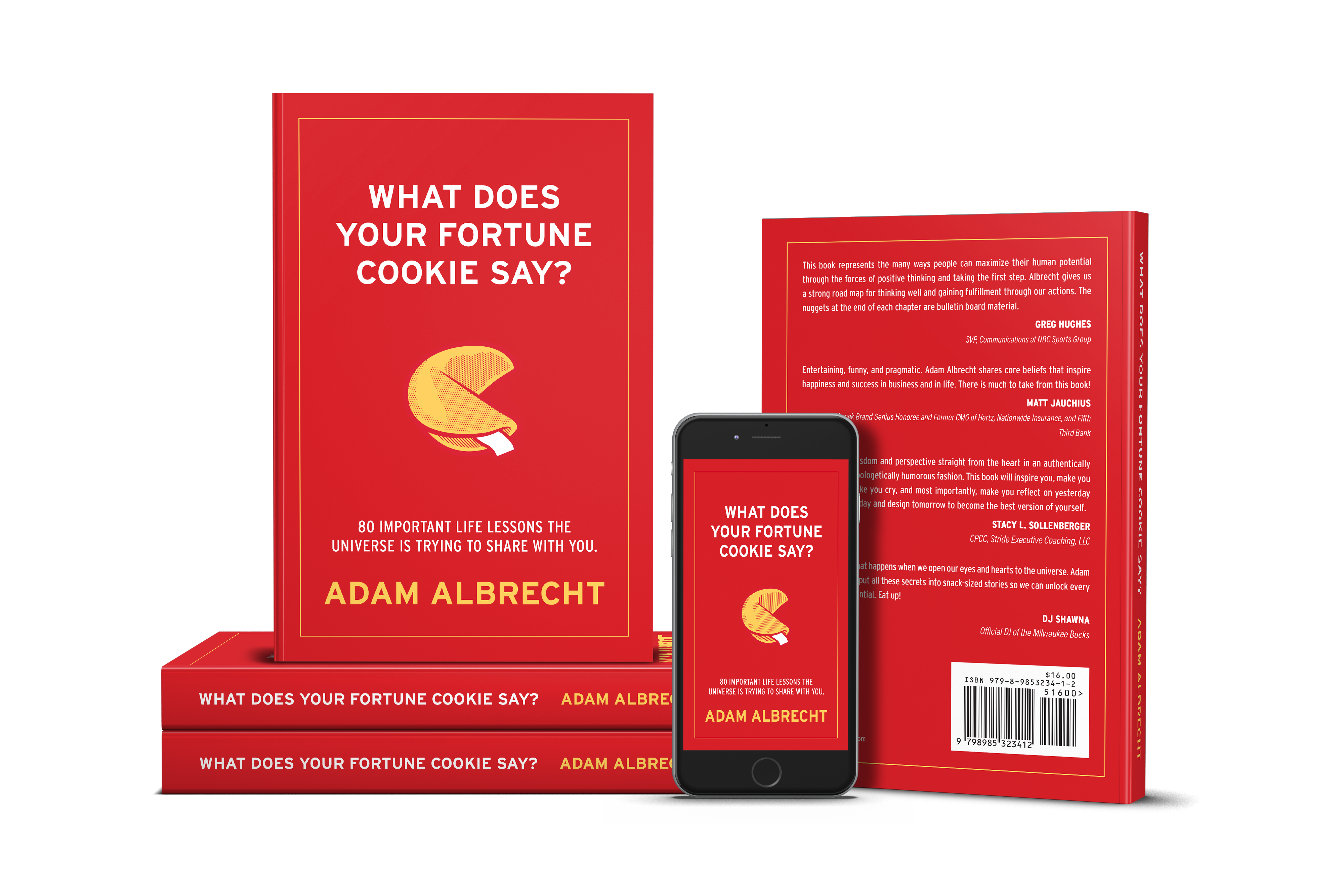
+For more ideas on personal growth and self-improvement check out my book What Does Your Fortune Cookie Say? from Ripples Media.

The absolute best way to climb the corporate ladder fast.

Every year, throughout your career, you will gain another year of valuable experience. Which means that you will get a little bit smarter every year. This process of steady improvement could go on for 40 or 50 years. The accumulated knowledge makes you more capable and more valuable to your organization. Which leads to more responsibility and more income. Which is good.

The problem is that everyone else who started their career when you did is gaining knowledge and experience at the same pace. So while you are growing as an individual, you are maintaining pace with the cohort who began their careers when you did. Which is like the nuclear arms race. Only without the threat of global destruction and Olympic figure skater subplots.

The Key To A Highly Succesful Career.

The key to a highly successful career is to outpace your peers. This means that instead of gaining 1 year of experience and knowledge in 1 year, you gain 2 years in one. Or 3 years in 1. Heck, why not gain 20 years of experience in just 12 months? That’s what Doogie Howser would do.

How Do You Do This?

To pack multiple years of growth into one year you can’t simply rely on your own experiences. You have to borrow from others. Luckily, there are many ways to absorb mass quantities of knowledge and experience from others in a short time. And none of them involve cannibalism.

1. Books. Books are quite literally the lessons and experiences learned by others, captured and summarized for you. Which means that you can buy 10, 20 or 40 years of knowledge and experience for under $30. Crazy, right? (Do this.)

2. Workshops: Workshops are designed to put you through time-compressed experiences to help you improve your skills at a highly accelerated pace. During a workshop, there are eyes on you to make sure you learn how to perform a task the ideal way. You receive quick and constructive feedback. It’s the kind of feedback that may have taken you years or decades to receive on your own. Especially if you and your Swingline stapler are still stuck in the basement.

3. Coaching: Coaching comes in many forms. From actual career, business or executive coaches. From mentors. From experts who take you under their wings. Coaches feed you their knowledge and experience like a mama bird feeds a baby bird. Which means they are directly regurgitating their knowledge into you. Just not usually by barfing it in your face.

4. Podcasts: Podcasts drop knowledge like an audio college. Podcasts are often great knowledge aggregators that share insights, ideas and experiences from many different perspectives. It’s easy to listen to a podcast while doing something else, like commuting, mowing the lawn, or sitting at your child’s sporting or religious event.

5. Blogs: Blogs are full of smart, informative and actionable tips. They usually come at you fast-paced with dense growth nutrition. Eat that stuff up. If you need a blog to subscribe to I suggest adamalbrecht.blog.

6. Magazines: Magazines that are specific to your industry or role are extremely helpful. The great advantage here is that the knowledge is purposefully fresh and well-polished by a professional staff. There are many different topics covered in every issue which has the potential to add a lot to your knowledge base every month. Pro Tip: Choose magazines where everyone wears clothes.

7. Documentaries: I love watching a film or TV show about a successful person. It’s an easy way to learn what made them successful. Then simply start doing what they did. You just may end up with your own documentary.

Next Level

To gain the most knowledge and experience in the shortest amount of time, stack multiple knowledge sources. Read books, listen to podcasts, and attend workshops. Or any combination that works best for you. The pace at which you gain knowledge will quickly surpass your peers. It will turn heads. And make you seem like you are smarter and more capable than others in your competitive set. Then you will Usain Bolt past those in front of you. You’ll be surprised how quickly you can overtake others who are gaining one year of experience per year.

Key Takeaway

Don’t settle for the natural pace of growth and improvement. Accelerate your knowledge, experience and skill acquisition by learning from other people. The accelerated path is available to anyone interested. But far too few people take the opportunity. Be one of those who do. It’s possible to pack a decade of growth into one year. And you will feel yourself pulling away from others. And when you do, make sure to share what you have learned so that others can benefit from you.

*If you know someone who could benefit from this message, please share it with them.

+To learn more of what I have learned through decades of accelerated learning check out my new book What Does Your Fortune Cookie Say? from Ripples Media.

Are you making each day an original?

Your alarm clock invites you to the day at the same time each morning. And if you follow the best sleep science you are probably going to bed at the same time each night. But in between those 2 bookends, remember this:

Each day is meant to be a work of art. Not a reproduction.

Your time is your life. In order to create a colorful, beautiful, interesting or epic life you have to treat each day like an original piece of art in your collection. Try new things with each new day. Experiment and explore. Learn and grow. Smack it up. Flip it. Rub it down. Like BBD would do.

It’s easy to fall into the trap of simply copying and pasting each day. (What we used to call carbon copying. Or Xeroxing. Or dittoing.) But those identical days simply produce identical experiences, identical feelings and identical perspectives. The new and the novel make you more interesting. They help expand your thinking. And they make the world around you more interesting too.

Key Takeaway

Don’t simply go through the same motions every day. Add to your portfolio of experiences and successes. Fill your personal gallery with new memories and unique ideas each day. It is how you turn your life into a work of art that others will want to imitate.

*If you know someone who could benefit from this message, please share it with them.

+ If you enjoy ideas on personal growth check out my new book, What Does Your Fortune Cookie Say? from Ripples Media.

Do you make money from your writing?

My son Johann saw me writing in my office early this morning, as I do at least 5 days per week. Today Johann stopped and asked me, ‘Dad, do you make money from your writing?’ I paused for a moment. Then, instead of answering his question, I said, ‘Come back and ask me your question again when I am done writing. And bring me the broomstick of the Wicked Witch of The West. NOW GET OUT…’ (Ok, so half of that is true.)

The answer is not cut and dry.

The simplest answer is no, I don’t get paid to write this blog. I am not making it rain up in this URL. I don’t have advertisers, sponsors, or paid subscribers. In that respect, my blog writing is not a job. It is a volunteer activity. An elective.

Your Electives

However, I have found that what separates us from each other are our electives. The things that we undertake that we don’t have to do. The things that not everyone does. Those are often the things that make you different, interesting, and valuable to others. But not so different and interesting that the circus wants to add you to their Tent of Freaks.

Adding Value

What I am trying to do when I write my blog is provide value to others. I am trying to share insights, experiences, ideas, techniques, inspiration, motivation, positivity, or humor. By sharing these things I am creating a value-adding resource.

Universal Math

I believe in a very simple math equation. The value of your income is equal to the value of your contribution.

Income = Contribution

So if I add more value to the world, eventually, somehow, the world will add more value to me.

But there is more to my writing than that.

  1. It keeps me top of mind.
  2. It demonstrates relevant capabilities.
  3. It means more people know me.
  4. It helps expand and strengthen my network.
  5. It keeps me engaged with my clients, customers, friends, and family.
  6. It allows me to share my expertise.
  7. It makes me a thought leader.
  8. It makes great people think about joining my team.
  9. It helps my team think they are on a pretty good team with a leader who thinks about and cares about their wellbeing and happiness.
  10. My writing, if funny enough, may someday cause someone to blow milk out of their nose. This is the superpower I have always wanted. As in, ‘You saved us, Snarf Man! We never would have escaped if you hadn’t made that bad man laugh and blow his beverage out of his nose!’ My catchphrase would be, ‘Can I buy you a drink…?’

The Greatest Reward

Perhaps most importantly, as I write, I am learning. I am sharpening my thoughts, perspectives, and techniques. All of which makes me better and more capable in other areas of my work and personal life. This enables me to do better work for others. Which ultimately helps me make money. Sorry for the long answer, Johann.

Key Takeaway

The more you write and share your thoughts the more you will profit from it. The value may not come in direct cash payments. In fact, it probably won’t. It will come through the inevitable compensation you will receive for the value you created and shared with the world. It will come through your connections with others. Through your own learning and development. Through the awareness and positivity you generate. So keep writing. Or start writing. Be patient. But persistent. And good things will come your way.

*If you know someone who could benefit from this message, please share it with them.

To be your best always be wet clay.

Throughout your childhood, you are wet clay. Moldable, impressionable, flexible. Capable of becoming anything. Sometimes a mess. But always ready for change and improvement. And always ready for your big scene with Demi Moore and Patrick Swayze.

Most people remain wet clay throughout their schooling. And into the beginning of their careers.

Then people separate into 2 groups.

  1. Those who dry and (James) harden. (Either they throw themselves into the kiln or are simply left out to dry.)
  2. Those who continue to evolve.

Key Takeaway

Don’t harden. Remain wet clay. Remember that you are not finished until you are dead, or give up. Keep growing, learning and improving. Keep working towards those goals you set when you still felt like wet clay. Because you are wet clay as long as you think you are.

*If you know someone who could benefit from this message, please share it with them.

Why it’s important to give yourself permission to be an amateur.

When I became an entrepreneur one of the greatest gifts I gave myself was permission to be an amateur. Or perhaps the only reason I became an entrepreneur is that I was okay with being an amateur. It’s hard to say.

Entrepreneurs ultimately need to know everything there is to know about starting and running a business. Yet the vast majority of this knowledge comes from on-the-job training. Which is how you learned to ride a bike. It’s how the Wright Brothers learned to fly. It’s how MLK learned to give great speeches. And how we all learned to do the Electric Slide. #boogiewoogiewoogie

By allowing yourself to be an amateur you allow for mistakes. You put a premium on learning, not knowing. Remember, you could never learn to juggle without making mistakes. The same is true for standup comedy. And parenting your children. (Don’t tell my kids that.) We start every area of life stupid. Being okay with that is the smart way to begin.

I make progress by doing what I know to do until I discover a better way. The secret is to always be looking for and open to that better way. Once you find it, you add it to your personal weaponry and you take another step forward. Those who reach the highest level of achievement simply never stop taking steps forward. Neither should you.

My kids and I recently learned to surf. Which is kind of like learning to ride a bike. Only with tighter fitting clothes.

Key Takeaway

Allow yourself to be a beginner. It makes you much more likely to begin. Allow for mistakes. When you accept your amateur status the journey from ignorance to intelligence is more enjoyable and rewarding. Learn and grow as you go. Recognize your improvements. And know that you can apply the same approach to anything in life.

*If you know someone who could benefit from this message, please share it with them.

+For more of the best life lessons I have learned check out my new book, What Does Your Fortune Cookie Say? from Ripples Media.

How to turn your setbacks into success.

Progress is not linear. It zigs and zags. It stalls. It reverses. In fact, progress moves like a good 1980s breakdancer. It often leaves you spinning on your head. And wondering why you are carrying around a large piece of cardboard, and a boombox.

But don’t fear the setback. Setbacks are a profit center. Because, like Alanis Morissette said, every time you lose, you learn. Which means that setbacks are full of education, growth and things you, you, you oughta know. They make you smarter and stronger if you let them.

Obstacles, challenges, and losses provide game film to study. They reveal weaknesses, vulnerabilities, and flaws. And they teach you how to strengthen your weaknesses so you can overcome challenges the next time you face them. Luckily, life supplies a Hong Kong Buffet of challenges to overcome. So you will always have more opportunities to put your loss-based learnings to good use.

Key Takeaway

Don’t lament the setback. Embrace it. Dissect it. It provides a very specific, high level course in personal or professional development. Enroll in that class. Take good notes. You’re sure to come out smarter and more prepared than you started.

*If you know someone who could benefit from this message, please share it with them.

Find people who ask you questions you didn’t know to ask.

I have a new startup business idea in the embryonic stage. I know what I want it to look like fully-formed, but I don’t know some of the most basic details that will help me get there. Or at least I didn’t until yesterday (when all my trouble seemed so far away).

Good Call

Yesterday morning I had a call with an expert that I would need to partner with to make this idea a reality. He asked me many important questions about my plan that I simply had no answers to. There were a lot of TBDs. But with each of the TBDs, I became more D to find the answers.

One Giant Leap For Startupkind

That conversation was a huge leap forward for me. Because now I have my homework assignments. I know the answers I need to find. I know the boxes I need to chickity check. I know what I don’t know, you know. And like Robert Frost said, that makes all the difference.

Move Forward.

Entrepreneurship, and growth of all kinds, are adventures into the unknown. The most important thing is to start moving forward. Take a step and the next step will reveal itself. Kinda like a striptease.

Don’t be afraid to be asked questions you don’t know the answers to. Those questions are gifts. They tell you what you are looking for next, where you need to go next, what you need to do next. Because growth is all about what’s next.

Grow vs. Wade

Get in over your head. It is the fastest way to discover the next step. Getting into a conversation that makes you feel dumb is the best way to get smart. Stepping out of your comfort zone is simply the first step to expanding your comfort zone. That is how you grow.

Key Takeaway

When you step into the unknown growth is inevitable. It helps you collect questions. In the beginning, the questions themselves are the answers you are looking for. Learn the questions. Find the answers. Then find yourself where you always envisioned you would be.

*If you know someone who could benefit from this message, please share it with them.

To experience far greater success adapt an experimentality.

If you are like most people, you have enjoyed some success in life. But if you are like almost everyone, you haven’t enjoyed as much as you would like. To enjoy greater performances, better results, and more success you have to experiment. And this requires an experimentality.

An experimentality is a growth mindset. It is willing to learn and try new approaches in order to get better results. It is believing that good is not good enough. And that there is always a better way, José.

Constants

There are 2 parts to your experimentality. First, there are the constants. These are the aspects of your approach that don’t change. Your constants are the parts of your plan that are proven to work. These become elements of your repeatable process. Not only should you have constants in your approach, you should be constantly increasing the number of constants, like Constance.

Variables

The other part of your experimentality is your variables. These are the things you change to test the possibility of driving even greater results. There is more risk in the variables. But you will never change the magnitude of your success without adjusting the variables.

Like a David Copperfield show, this is where the magic happens. Changing the variables is the only way to experience breakthroughs. You have to be willing to try new ways, or you will always get old results.

10,000 to 1.

Thomas Edison said he never failed in his lightbulb experiments. He simply discovered 10,000 approaches that didn’t work. But through experimentation, and changing the variables, he found 1 approach that not only worked, it changed the world.

Without Edison and his experimentality, the world wouldn’t have known the lightbulb, the phonograph or the electric grid. And without Edison, nothing would appear above your head when you have a good idea. Plus, we wouldn’t have, ‘How many (blanks) does it take to change a lightbulb’ jokes. Scary right?

Whether you are trying to change the world, or simply change your world, keep changing the variables. The new approaches, techniques, and inputs are certain to impact your outputs. Some of them will lead to significant, vast, or even epic improvements. It’s up to you to determine which inputs those are.

Key Takeaway

Adopt an experimentality. The only way to get different results is to try different approaches. Keep track of your experiments. Note the impact of each adjustment. Because each one will get you closer to your goals. And one of them is likely to blow things wide open. Keep pushing until you find it. Don’t stop until the lightbulb burns bright.

*If you know someone who could benefit from this message, please share it with them.

The 2 things you need to get better at anything.

You are the greatest project you will ever have. As a human being, you are the most complicated machine on Earth. Which means there is no limit to the amount of self-improvement you are capable of.

Your improvements can be highly specific. They can be physical, mental, emotional, spiritual, psychological, philosophical, or professional. But even these broad categories that all end in -al barely scratch the surface.

You can get better at signing your name, walking, selling, replacing an organ, or serving a tennis ball. You can get better at eating hot dogs. Just ask Joey Chestnut. You can get better at streaking. Just ask the dude who invited himself onto the field at Super Bowl LV. Heck, you can get better at eating hot dogs while streaking. And if you do you can probably get a sponsorship deal.

The 2 Ingredients

Regardless of what you want to do better, there are 2 key drivers of self-improvement: the things you learn and the things you do. Because you improve through a combination of knowing better and doing better.

1. The things you learn.

This is all about gaining new information. This can come in many ways.

  • Reading books, magazines, articles, and reports.
  • Watching instructional videos
  • Taking classes and courses.
  • Learning from others through discussions, conversations, observation, and spying.
  • Working with a coach or mentor
  • Experimenting
  • Experience

2. The things you do.

All the knowledge in the world does no good without action. Your actions drive results. Those actions include:

  • Effort
  • Focus
  • Commitment
  • Practice
  • Habits
  • Stamina
  • Optimization

Key Takeaway

Learn all you can. Then put that new knowledge to work through your deliberate actions. By doing so you will end each day better than you began. You are the greatest project you will ever have. And you are nowhere near finished.

*If you know someone who could benefit from this idea, please share it with them.