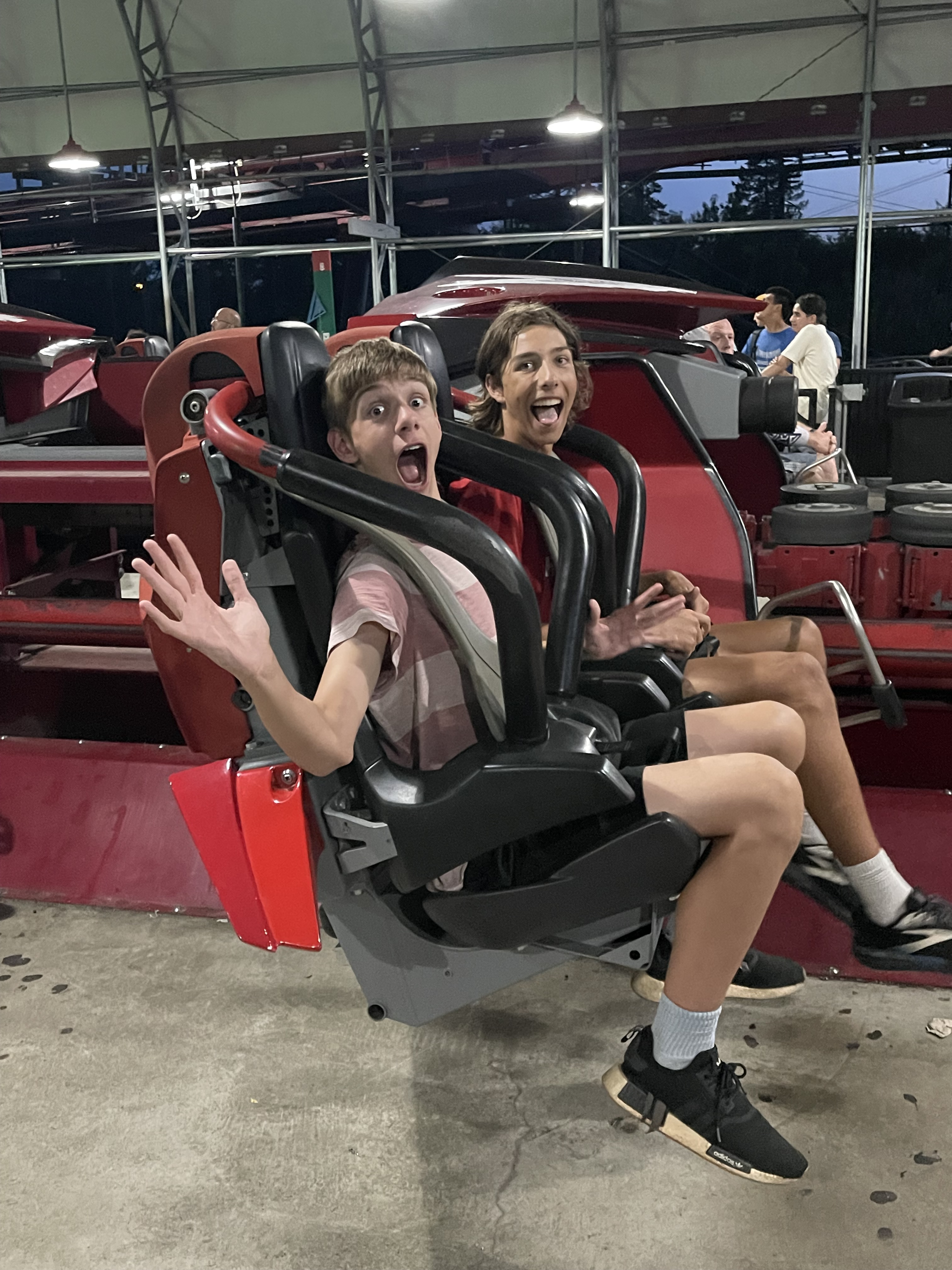
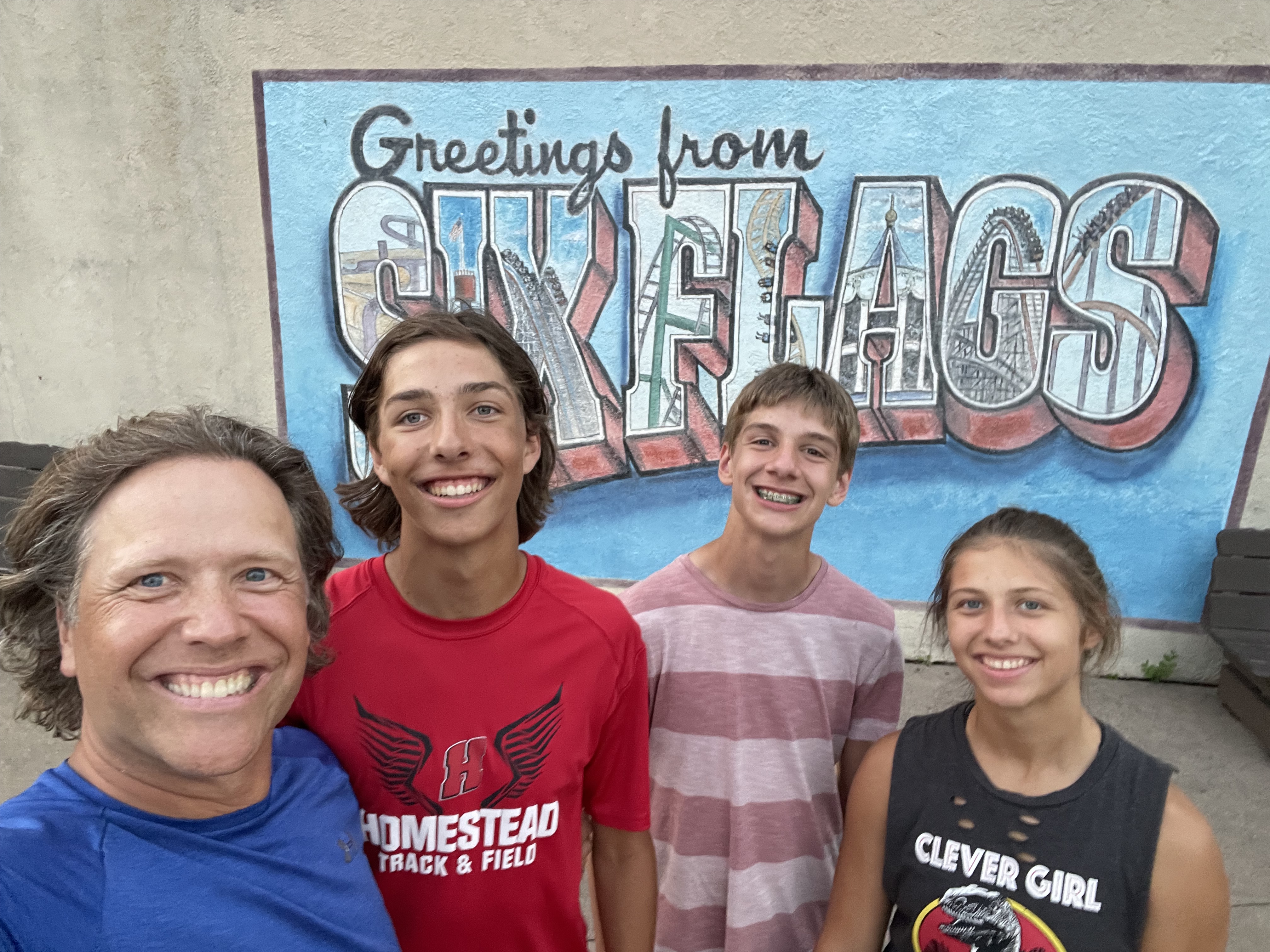
Earlier this week, I took the day off from work to take my son Magnus to Six Flags for his 15th birthday. We invited Magnus’ friend Phineas along for the day of adventure. I had to go because they can’t drive. And also because I FREAKING LOVE ROLLER COASTERS! (Did I type that too loud?) In fact, if I could take a roller coaster to work, I would be living my ideal life.
I picked Magnus and Phineas up after their strength and conditioning session in Mequon, Wisconsin, at 9:30 am. We drove a giddy hour to the park, which is just north of Chicago. We chattered about all the rides we couldn’t wait to hit.
Then we arrived at the park, and crushed it!
In fact, I didn’t drop Phineas off at his home until 11:30pm. (This is the point where I warn you that if I invite you or your kids to an amusement park, we are going to stay until they kick us out.) By the time those boys got to bed, it was midnight in Mequon. And Montgomery.
But early the next morning, when I dropped Magnus off for strength and conditioning at Homestead High School, I saw Phineas bouncing across the parking lot with his large jug of water, ready to run and lift weights.
Phineas and Magnus were roller coaster riding pros.
I love what these high school freshmen did in those 24 hours.
First, they worked out hard in the morning.
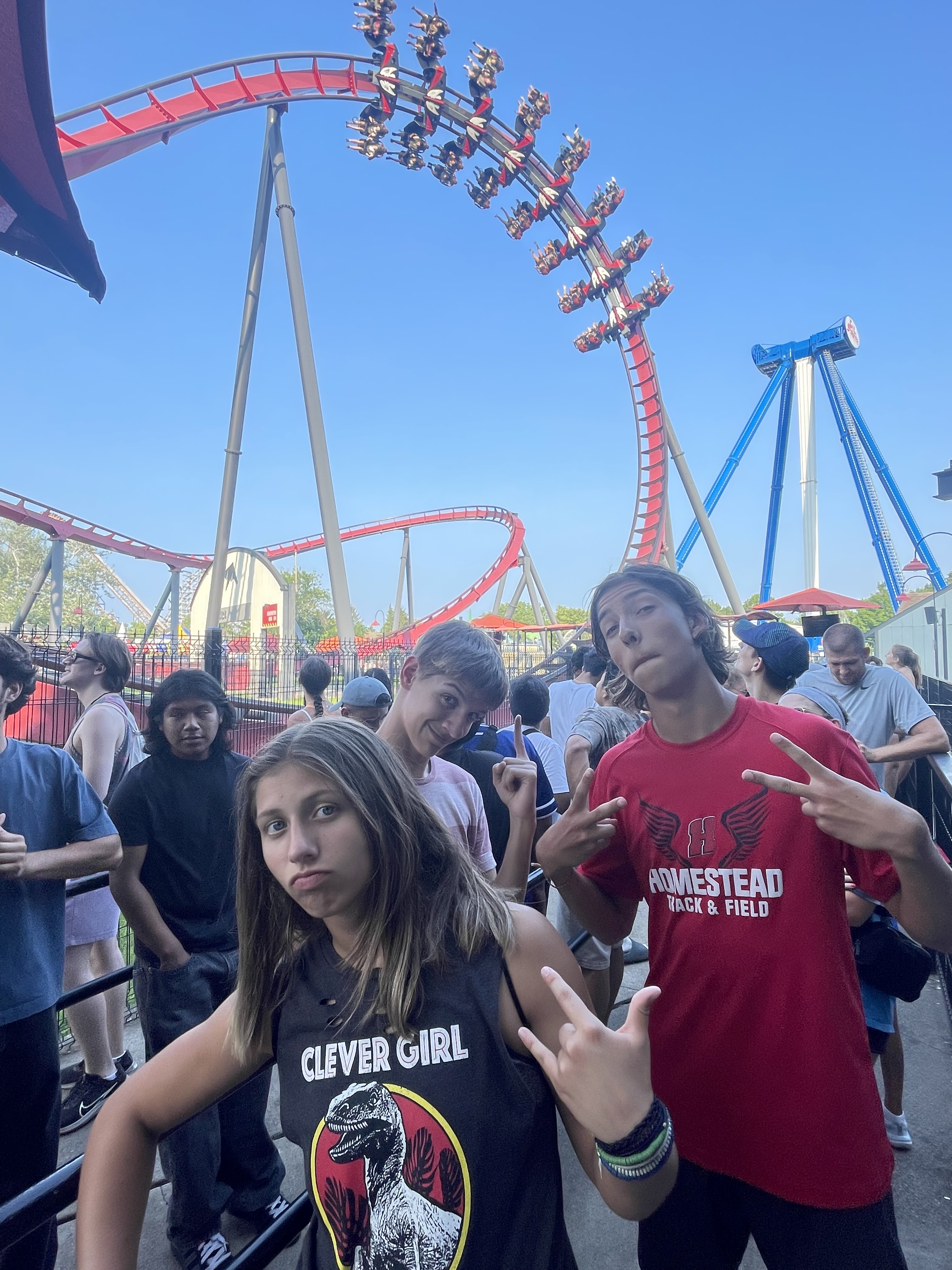
Then they played all day, and practically all night long. Like Lionel Richie. They rode 11 different roller coasters that flipped, spun and dropped them until the park closed. Neither of them ever hinted at wanting to quit early. Or barfing.
They got home late.
They got to bed late.
But the next day, they woke up early and got right back to work.
That is a work hard, play hard, work hard approach to life. Wiz Khalifa-style.
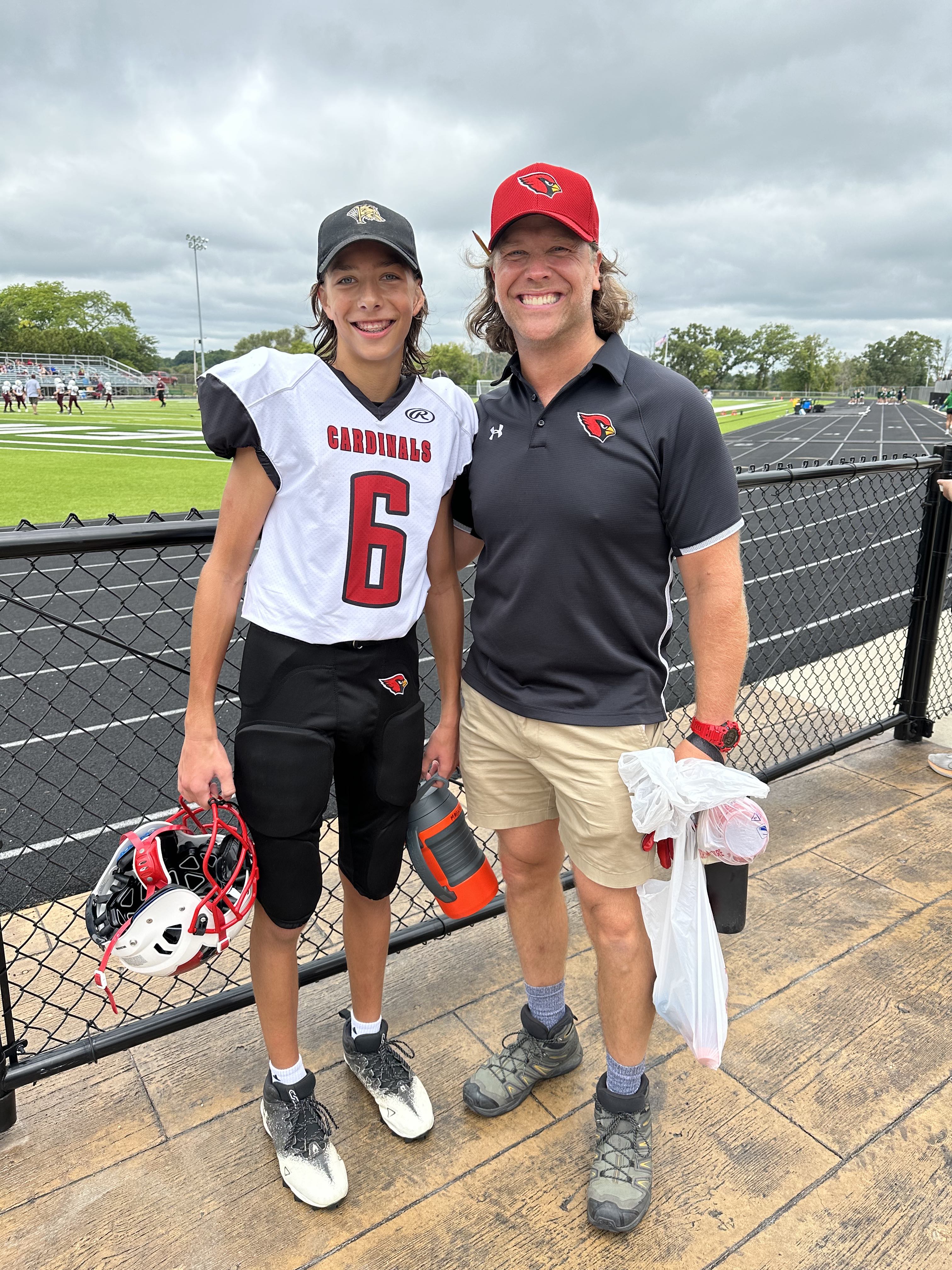
The Mid-Week Coaster Crew. And my coaster hair.
Through their own actions, those boys are telling themselves that they are the kind of people who will soak up as much fun as they can. And they will still keep their commitments the next morning.
They will do hard things, even when they don’t necessarily feel like doing them.
Because to be highly successful, you do what you have committed to do, even when you don’t feel like it.
Through such actions, you tell yourself that you are resilient, determined and focused. And when you believe your positive self-talk, you stick to your commitments. And you build momentum. Like a roller coaster on that first drop.
That type of discipline will get you everything in life.
Keep up the strong work, boys.
You’re training. yourselves to be great.
My daughter Ava also joined, because roller coasters, like pickle ball, are better with 4 people.
Key Takeaway
To achieve great things, you need to take action. You need to commit to hard work. Even when you are tired. Even when you have good excuses not to. Even when you don’t feel like it. Even when you played hard the night before. But when you stick to your personal commitments, you send a powerful message to yourself. You tell yourself that you do do hard things. That you are committed, disciplined and determined. Those actions build trust in yourself. They build self-confidence. And they lead to outstanding results.
*If you know someone who could benefit from this message, please share it with them.
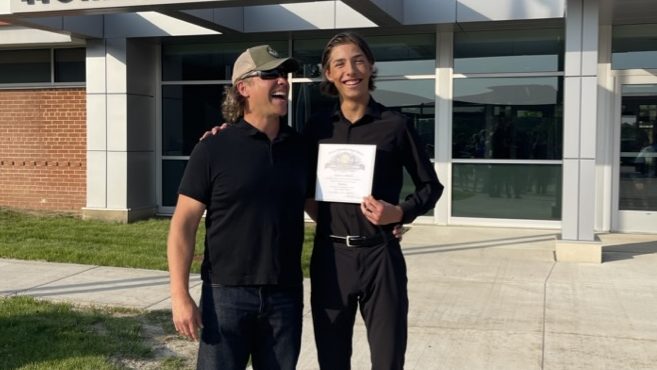
Last week, my son Magnus wrapped up his 3-year run as Magnus In The Middle School. It culminated with a graduation service on Wednesday evening. My friend Dr. Matt Joynt, the Super Duper Intendent of the Mequon-Thiensville School District, spoke at the ceremony and gave the graduating 8th graders five great pieces of advice. And since I am in the business of passing along the good advice I have heard, here is the High 5 from Dr. J.
Dr. Matthew Joynt, Superintendent of The Mequon-Thiensville School District and Dropper of Knowledge.
Do More Of What Works For You. I love this. To me, this means figure out what works for you in the broadest sense. The routines. The preparation. The responses. The flossing and deodoranting. It means spending your time in areas that offer you a strong return and doing things that build your confidence and drive good outcomes.
2.Make a plan for handling challenges. Challenges will always come. Like Cold & Flu season. In fact, life is one long hurdle race of interesting challenges. So expect them. And have a framework for working through them ahead of time. Develop a philosophy for dealing with them. (I repeat ‘This Too Shall Pass” a lot.) Keep advisors and supporters you can turn to when times get tough on speed dial. Or at least keep them on speed text.
3. Praise Your Base. And Show Your Gratitude. None of us does this, whatever this is, on our own. We all have people who support our success. It is important to recognize those who help you succeed and to show gratitude for what you have. And thank your tribe for tribing with you.
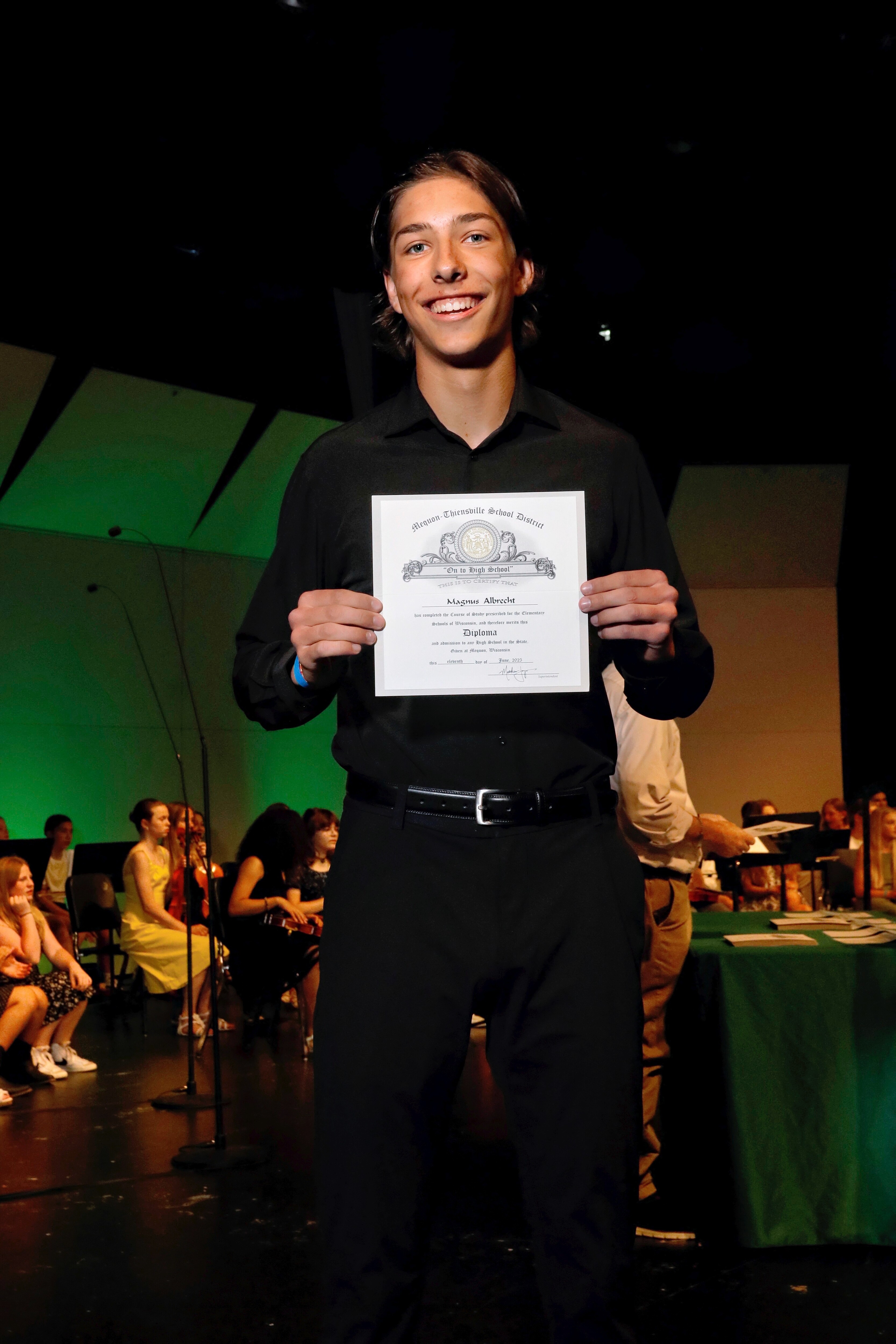
My son, Magnus, and his certificate of high school eligibility.
4. Choose a trusted adult and commit to talking to them about anything. This is strong advice for young people. Developing a trusting relationship with an adult can be one of the greatest relationships and advantages of your life. There are parents, teachers, coaches and bosses who want to help you succeed. They have already experienced many of the things you are going through, or will go through. Having that kind of resource in your corner is a huge help. Even if you don’t have an actual corner. But adults should so the same. Find someone 10 years older than you who you can talk with regularly. They can give your perspective from a decade down the road. That is a valuable resource. Kinda like Google Maps, but better equipped to eat food and drink beverages with you.
5.Thank your community. It is important to recognize that schools are supported by the community. This is through taxes, votes, volunteerism, attendance and a variety of other methods. It takes a village to create and support the schools that support your growth and development. Recognize the efforts and commitment of those in your community to your success.
However, students aren’t the only people supported by their community.
I recognize the variety of communities that support me. As a parent, I recognize that my local community helps support my children’s education and development. As an entrepreneur and business owner, my community of clients, partners and advocates support me and my team in a wide variety of ways. As an author, blogger and newsletterer, my community of readers, including you, provide valuable support through your time, attention, purchases, endorsements, recommendations and feedback. As a track coach, a strong community of athletes, parents, fans, coaches, trainers, administrators, officials, referees and media support my efforts.
Thank you to all of you who help support my efforts. You are much appreciated.
Key Takeaway
Thank you, Dr. Joynt, for sharing this good advice with our kids. But commencement speeches are not just valuable for the graduating students. They offer great advice and reminders for everyone willing to listen. So do more of what works for you, make a plan for facing challenges, praise your base, find a mentor, and thank your community. It’s timeless advice that will compound in value over time.
*If you know someone who could benefit from this message, please share it with them.
I never wanted to be a coach. Some people are innately drawn to it. I am not. I thought it was a cool role for other people. But I just wasn’t that into whistles and sweatpants. When I graduated from college, I fully expected to never be involved in sports again, other than as a fan. Even after I had 3 kids, I never expected to coach them at any level. I didn’t feel like I knew anything well enough to coach. Except maybe being a class clown. But I felt I could teach that through more of a mentoring relationship.
So it is very strange to realize that this fall I wrapped up my 7th season coaching my son Magnus’ football team. So, how did this happen? To find out we’ve got to go back in time, like Marty McFly.
In The Big Inning…
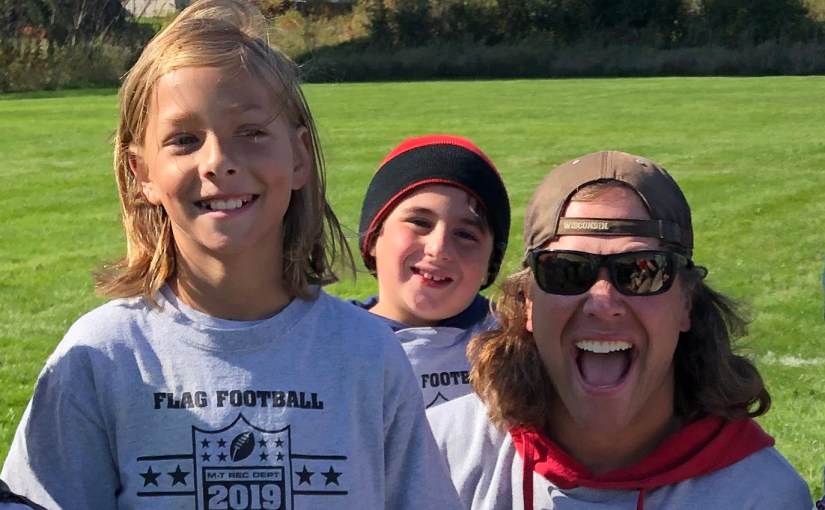
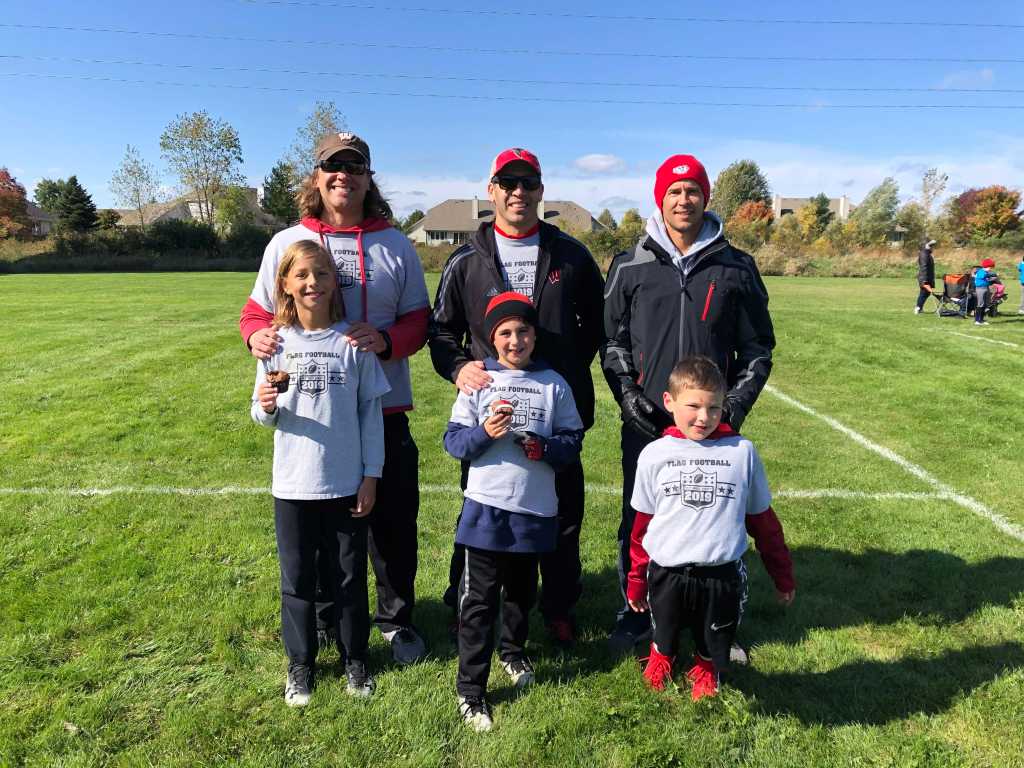
Like most things, my coaching career started very small. When Magnus was in first grade, we signed him up for flag football. At that level, the teams practiced for one hour and then played a game for one hour on Saturdays in the fall. At the first practice-game the two guys coaching Magnus’ team asked me if I could help out the following week because one of them was traveling. I was happy to help. And I felt like a helper more than a coach. Plus the kids were in Kindergarten and first grade. So they wouldn’t be fact-checking my coaching.
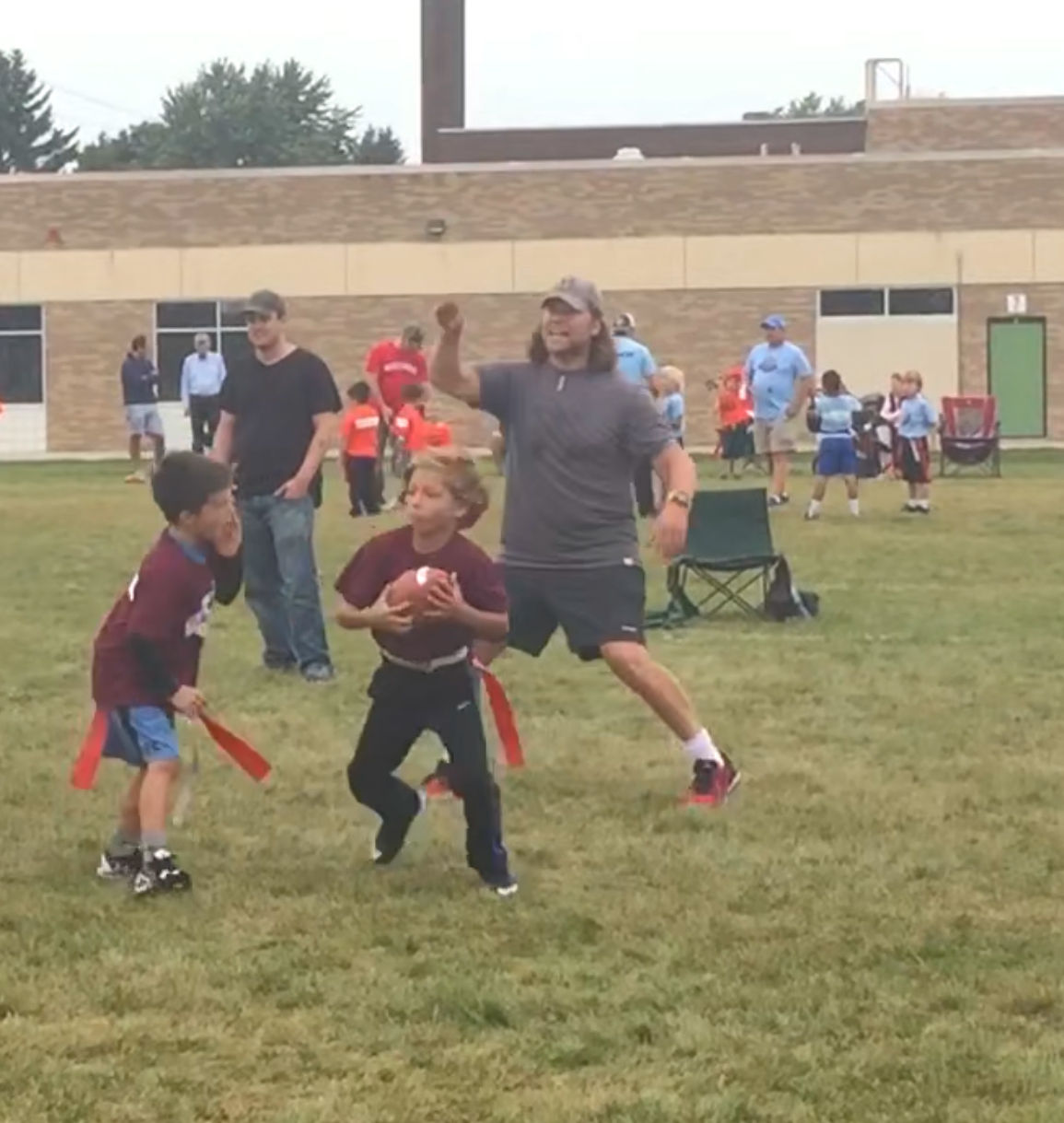
Magnus carrying the ball in 1st grade, when I could point where I wanted the players to go.
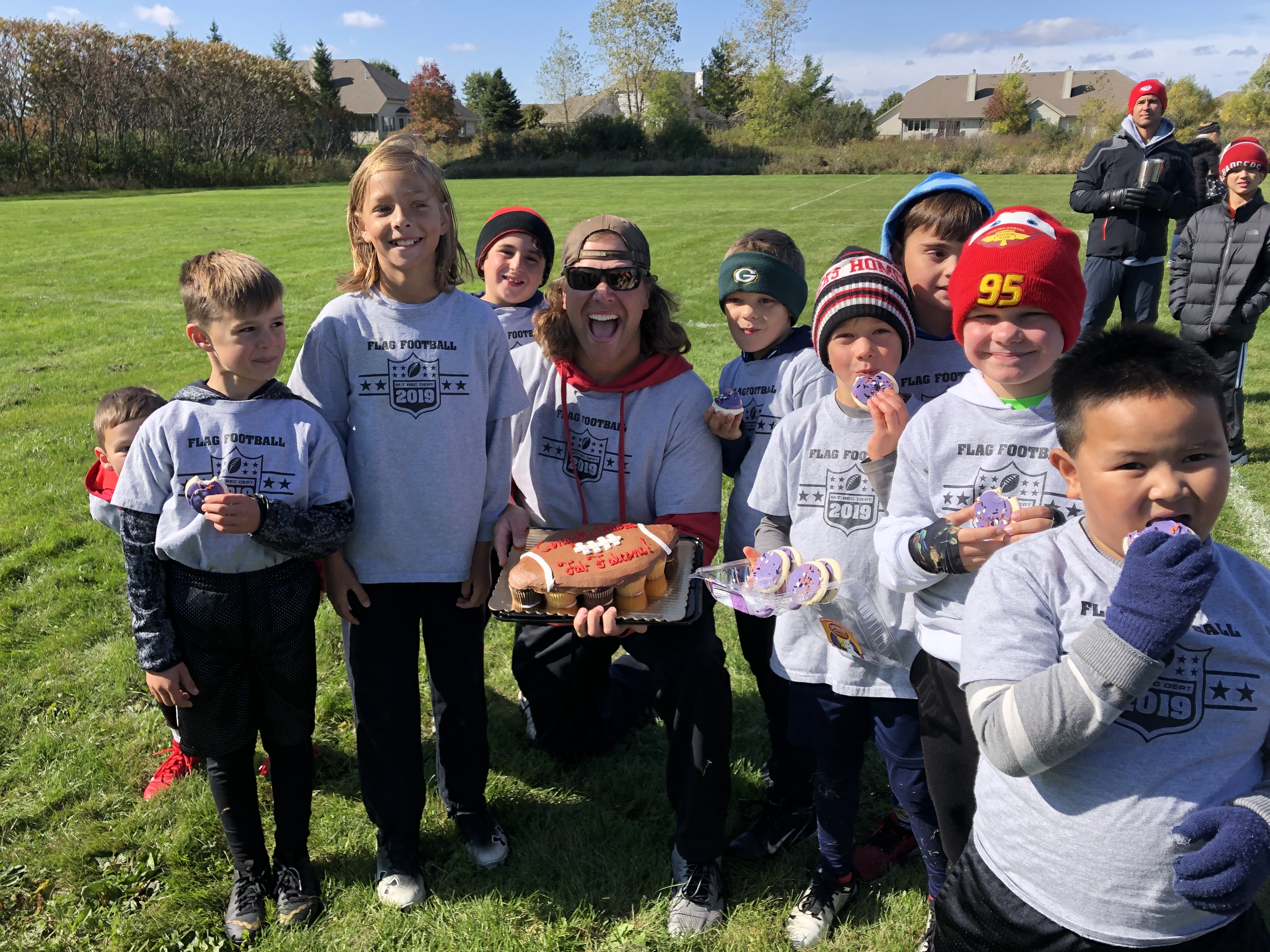
That Saturday’s practice-game went well. I had fun. Magnus enjoyed having me involved. None of the kindergartners asked to be traded or held out for more NIL money. So I became the third coach on the staff, helping whenever I could the rest of that cute little 6-week season.
Stepping Up A Notch
When Magnus entered 2nd grade, the program was looking for more parents to coach. My wife Dawn encouraged me to volunteer. So I got paired with another father. And we had a good time. Again, this was just 2nd and 3rd graders with one practice-game combo pack each week on Saturday mornings in the fall. And we were literally on the field placing each player in position and whispering in their ear what we wanted them to do. It was kinda like playing chess with tiny humans. Even better, the play didn’t start until the coaches said they were ready. The hardest part was organizing which parents were bringing the snacks.
Magnus and Me in our second season together. That’s a happy father/son combo pack.
Gaming The System
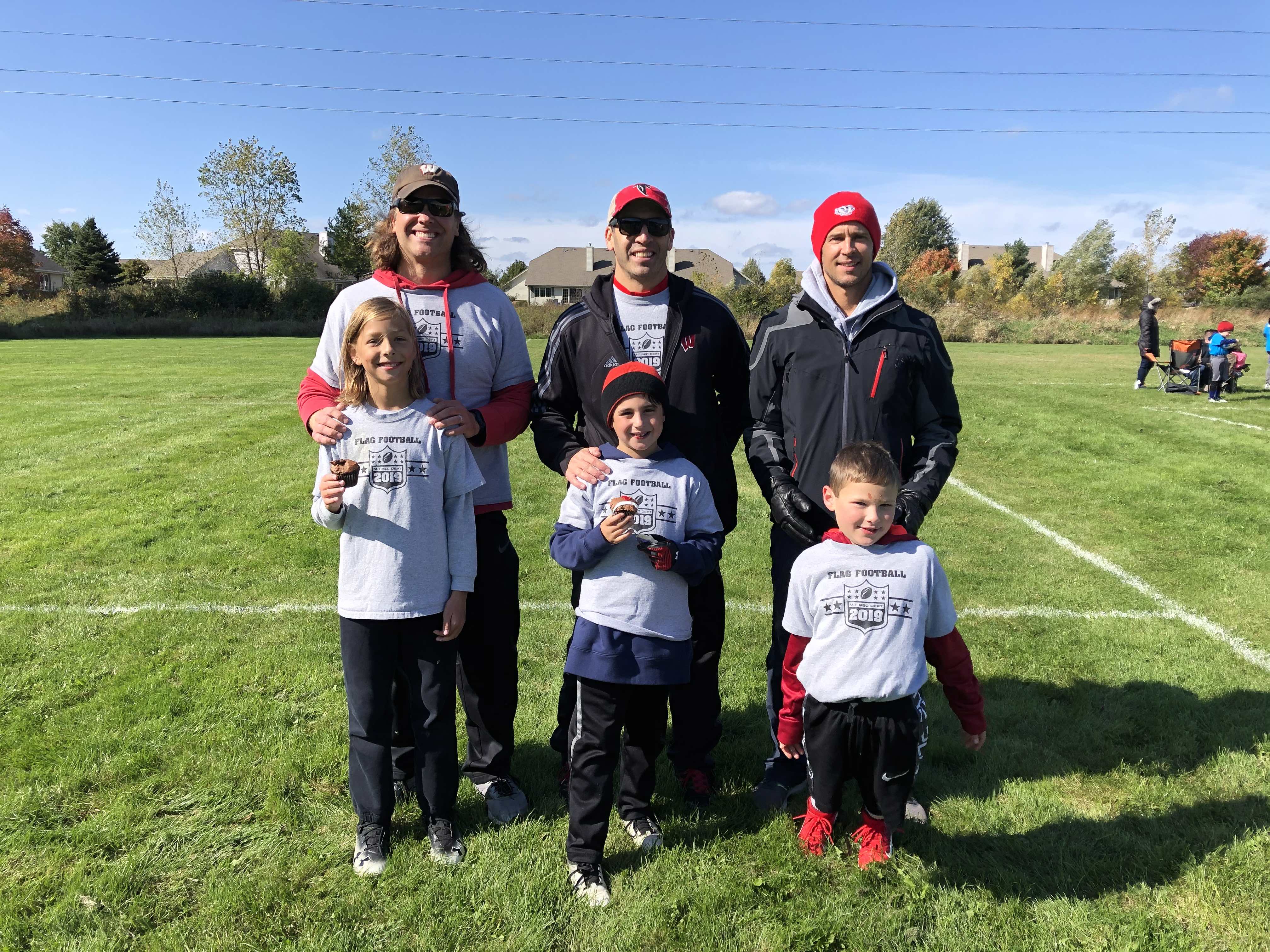
By 3rd grade, I realized that you could choose to pair up with another coach to lead a team. And when you did that, it allowed you to stack your team with 2 good players. So my great friend Dr. Mike Brin and I teamed up to coach. DMB played football for the University of Wisconsin Badgers, and we had been friends since we were teenage college athletes in Madison. Mike’s son Josh ‘Aquaman’ Brin was a talented and enthusiastic athlete. Josh and Magnus gave us a strong nucleus to build a team around. Kinda like D-Wade and Chris Bosh. We were lucky enough to land a few other really talented second and third graders, and we had a fun and successful season, even before the snacks.
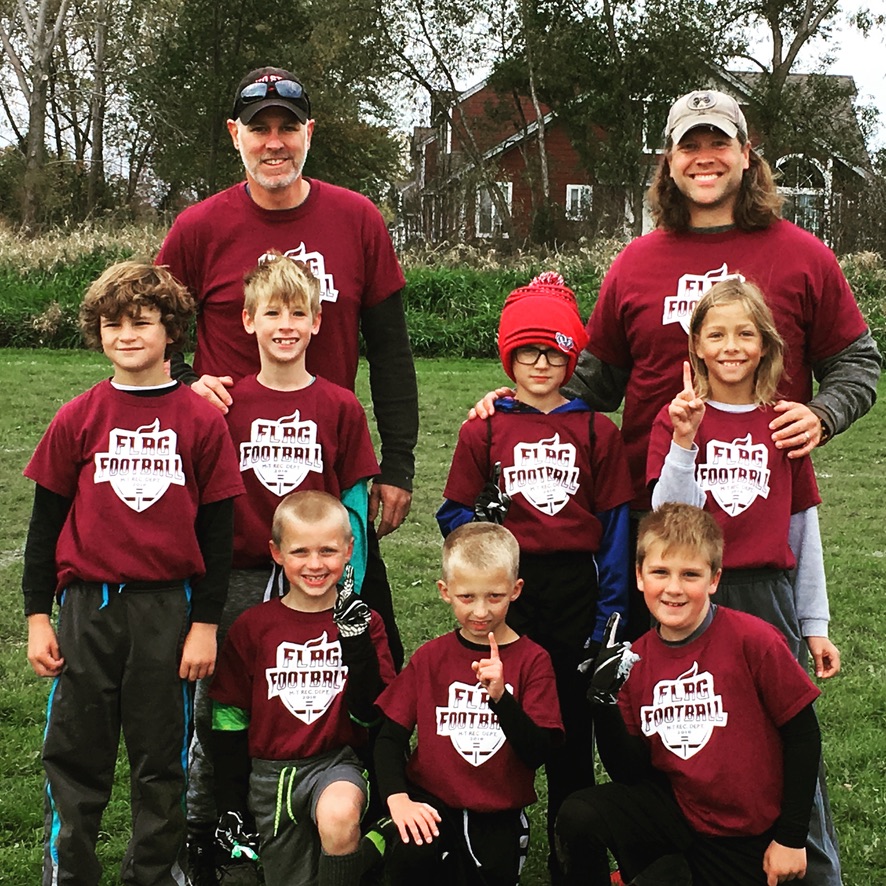
Season 3. We were really upping our snack game by then.Me and Magnus, Mike and Josh Brin, Josh and Hudson Hunt. All 3 of the guys in the back row were UW Badger athletes, which meant we knew how to recruit. (You do it with cupcakes.)
The Curve Ball
In 4th grade, COVID-19 hit. And the program was canceled for the year. Boo. But Magnus was desperate to play football. So we were allowed to enroll him in the 5th grade Mequon-Thiensville Cardinals tackle football program, where he played up a grade as a tall and eager 4th grader. The boys played with face masks over their face masks, which looked funny and may have had no practical effect, but it made everyone feel better about playing football during a global pandemic. No kids got sick. And I got to sit in the stands, 6 feet apart from other fans, and cheer through a mask like a normal COVID-era parent.
At this point, I thought I was finished coaching. I enjoyed the season as a fan only. (Not to be confused with Fans Only.
When Magnus was in 4th grade, he played tackle football with 5th graders, And I got to cheer in the stands with Dawn. I also got to wear flip-flops without a fear of getting cleated.
Magnus and a little wind machine for the hair.
Back On Track
That spring, I made a much bigger coaching commitment and started coaching high school track and field. My daughter Ava Albrecht was a freshman at Homestead High School in Mequon, Wisconsin. And I knew that I knew more about throwing the discus and putting the shot than most Mequonians. The flag football coaching experience made me think I could handle track. After all, when you coach throwing, you simply coach technique. There is no strategy. Or defense. Or concussion protocol. Go track!
Tackling Tackle Football
When Magnus entered 5th grade I was asked to help coach his tackle football team. I was reluctant because of the time commitment, especially on the heels of a long track season that went almost to July and left me with just 1 month without coaching obligations. But my coaching confidence was growing. So, I agreed to coach part-time. I was another warm body there to supervise kids and help run drills. I cheered a lot. And I tried to make it fun. For much of the season we only had 16 kids available. So we could only run 8 vs 8 scrimmages. Which was pretty silly. But I like silly.
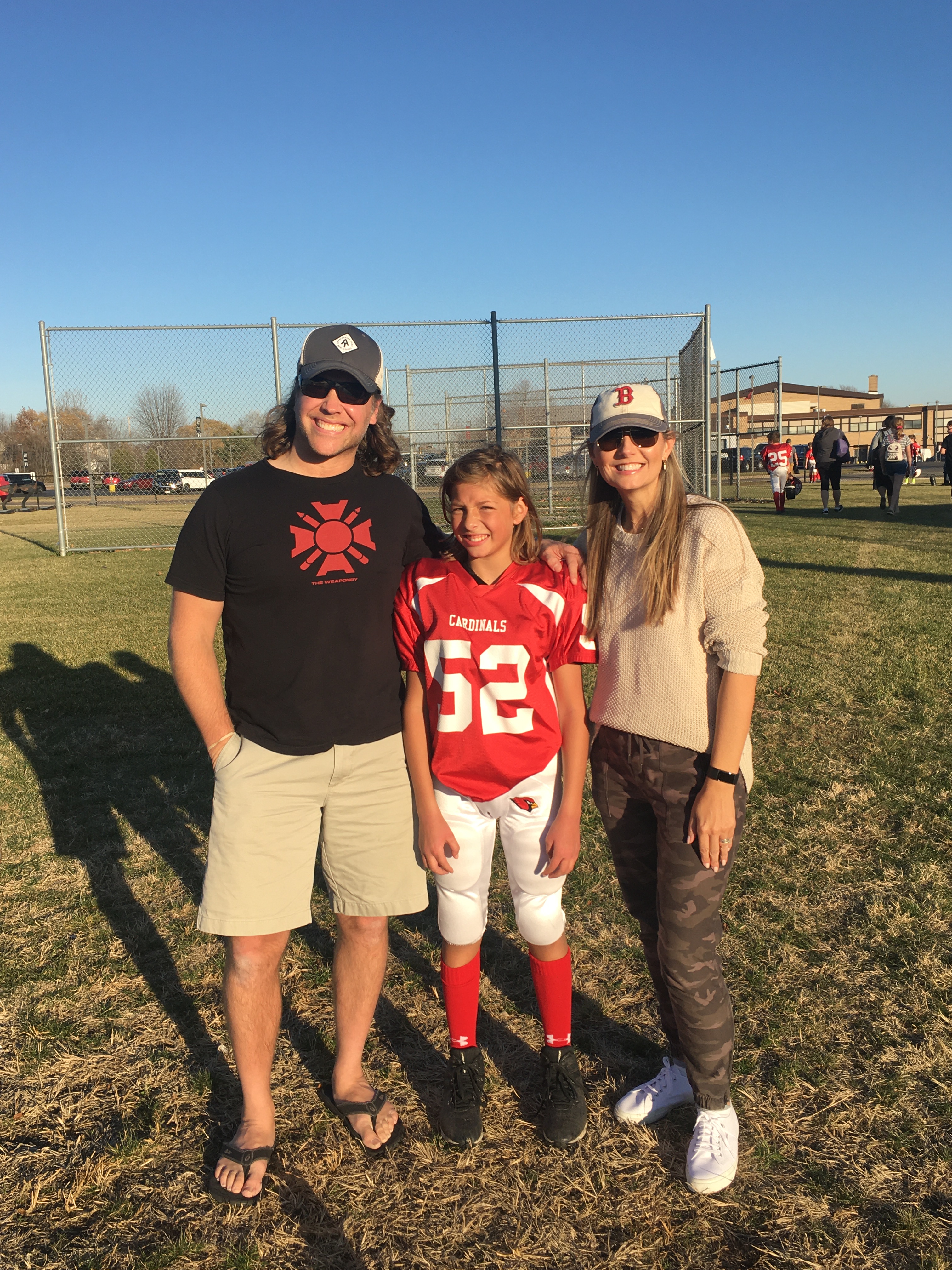
5th Grade. And We’re back together for Cardinal Rules football.
Jumping Into The Deep End Of The Pool.
When Magnus entered 6th grade my friend Josh Hunt volunteered to become the team’s head coach. Josh played football at the University of Wisconsin and had a lot of coaching experience. He asked me if I would be willing to be the defensive coordinator for the team. I agreed. Because Josh is a nice guy and didn’t seem like the type to burn my house down if I made some mistakes.
Realer Than Real Deal Holyfield
That’s when coaching got real. The slow build of casual coaching obligations helped lead me to a very real coaching position. Suddenly, I would be preparing for every week by watching game film of the teams we would be playing that week. I sketched out every unique formation and play the upcoming opponent ran, noted who carried or caught the ball, how frequently they ran each play, and generally how effective it had been. This represented a huge increase in both my time commitment and my emotional investment. I started to understand why Bobby Knight threw chairs and why Mike Leach went off on a seemingly insane rant about the players fat little girlfriends. Now I certainly don’t condone their behavior. But I started to understand it.
In practice, I taught our team the opponent’s plays and devised strategies to defend against them. Then, on Sundays, I watched our own game film from Saturday and marked up all of the footage on software called Hudl to show what we did right, what we did wrong and how to do things better the next time. I learned that those 3 lessons are the basic pillars of coaching.
I spent more time than I care to admit watching game film, preparing defensive strategies and developing lineups each week. It was a significant commitment. But I loved coaching this group of boys. And I loved spending so much additional time with Magnus.
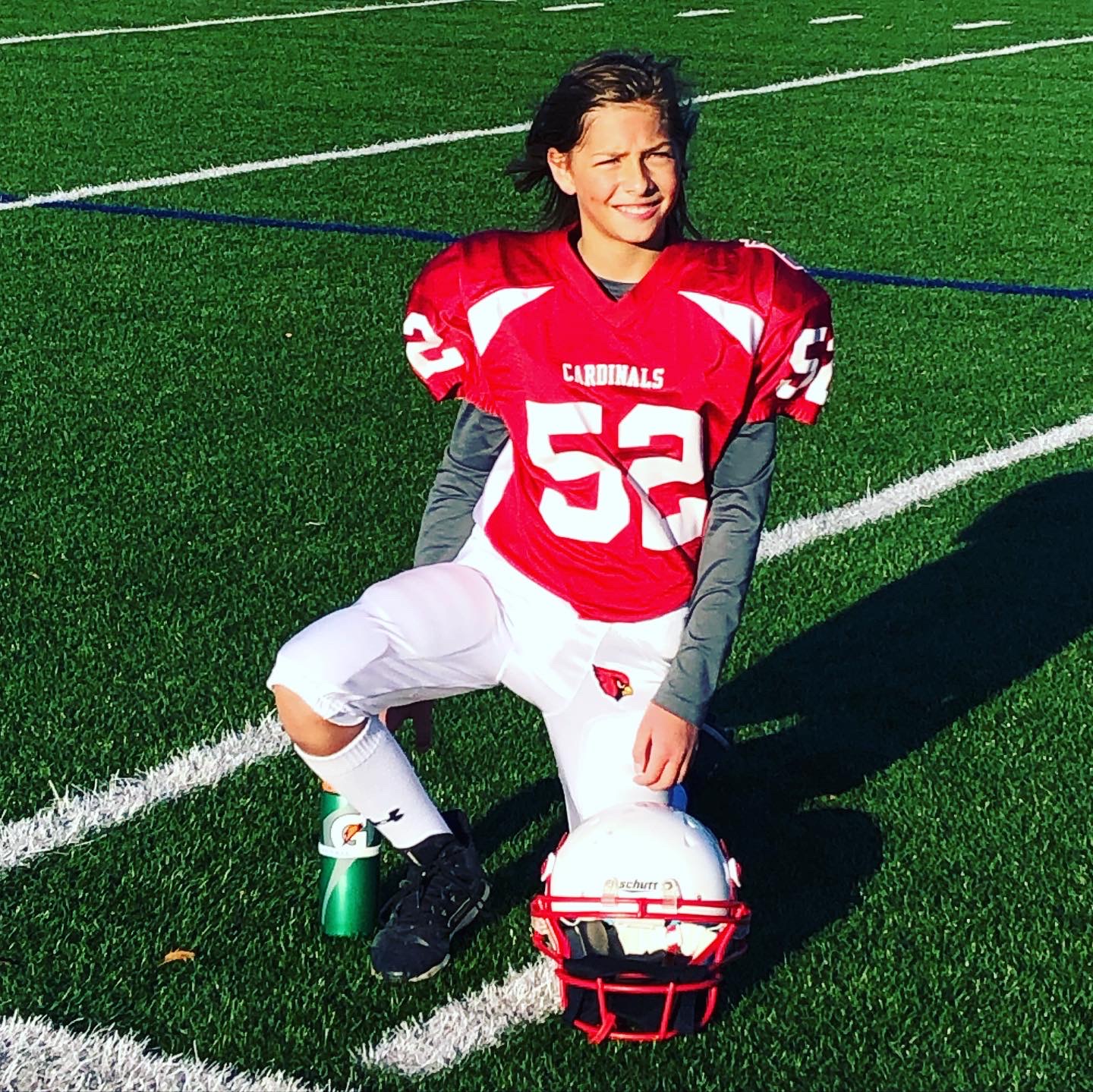
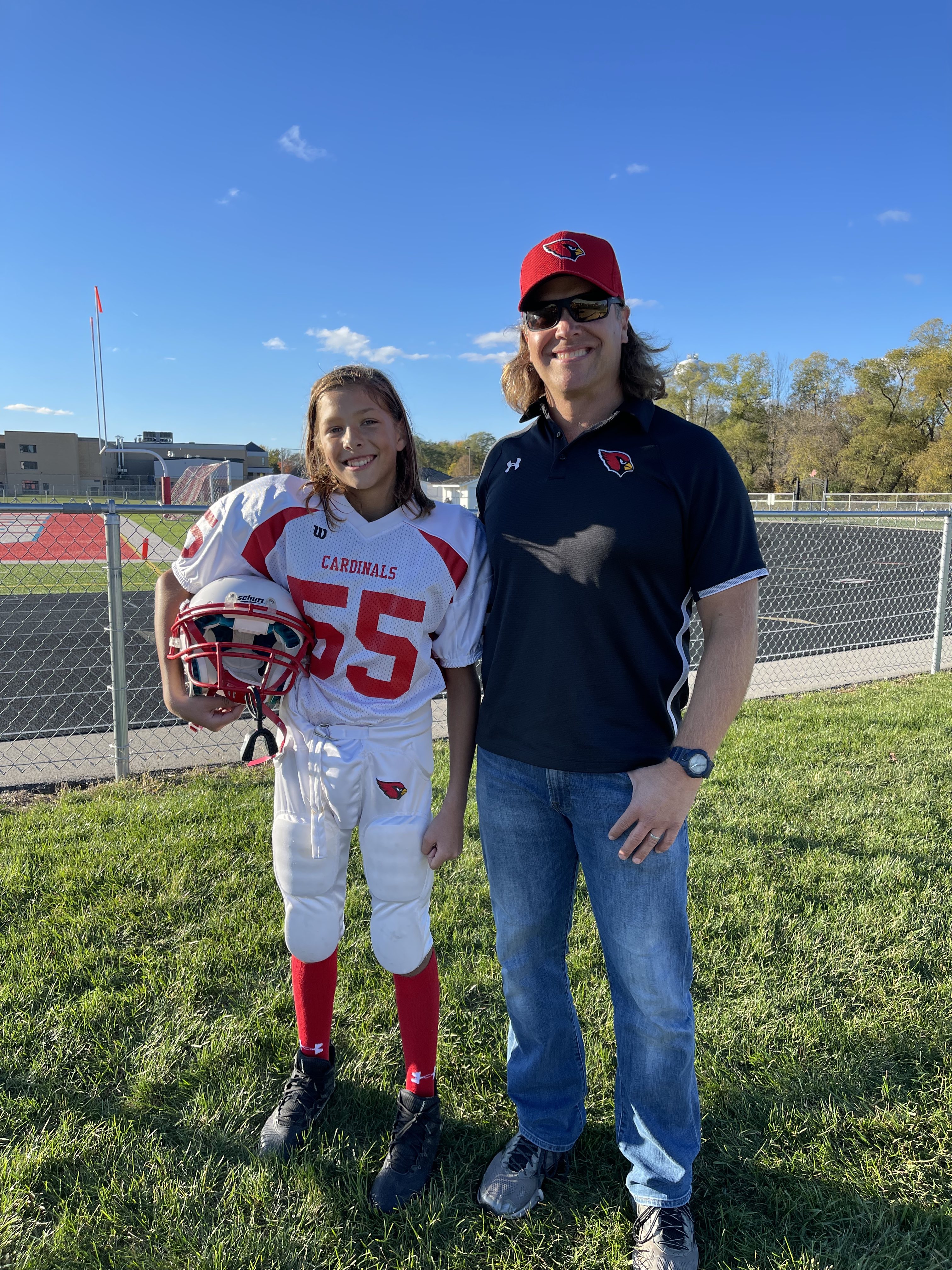
6th Grade. And one of my favorite photos. If you look closely you can see my knee next to Magnus’ (#55)
So I raised my hand to do it again in 7th grade.
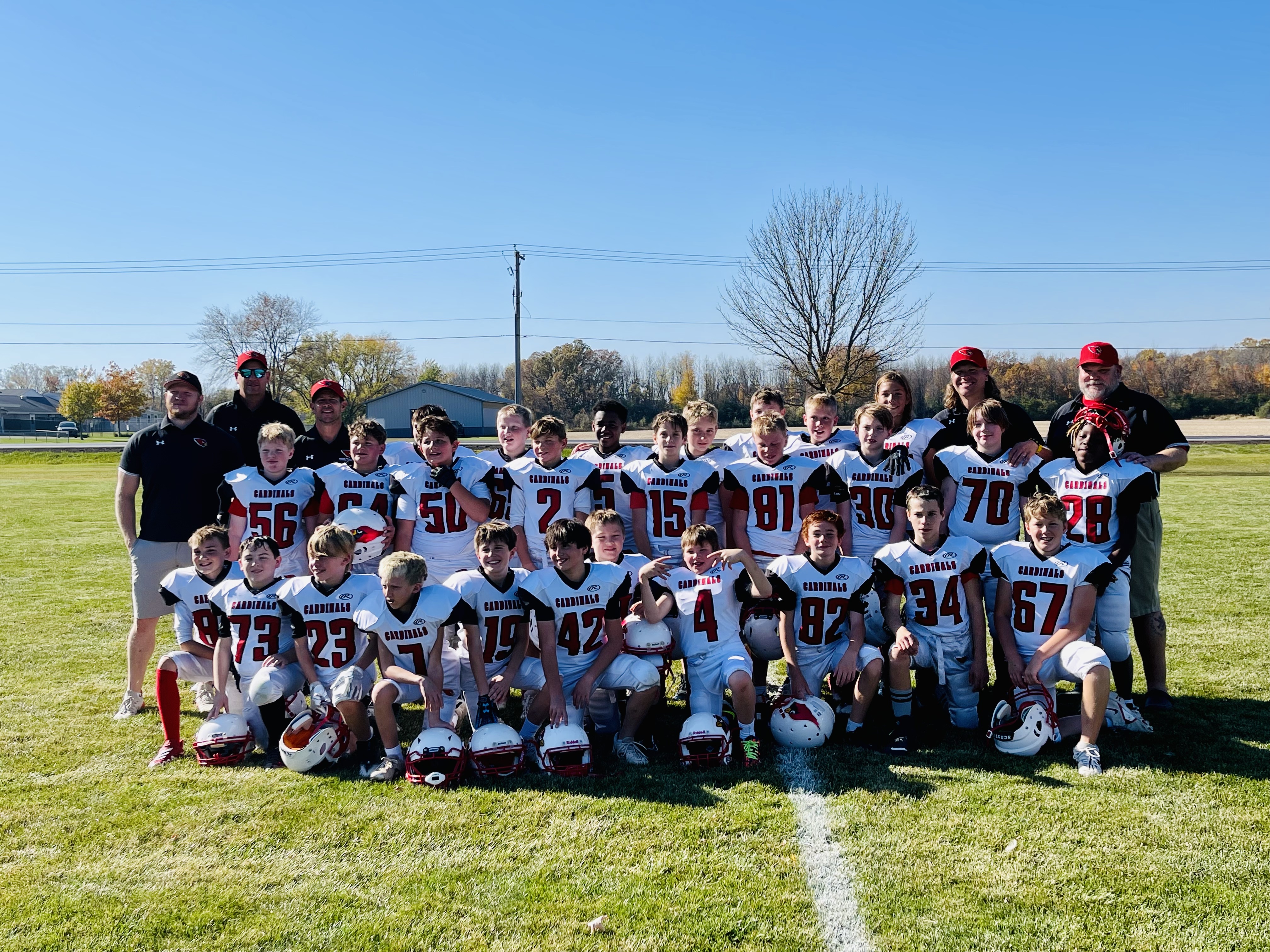
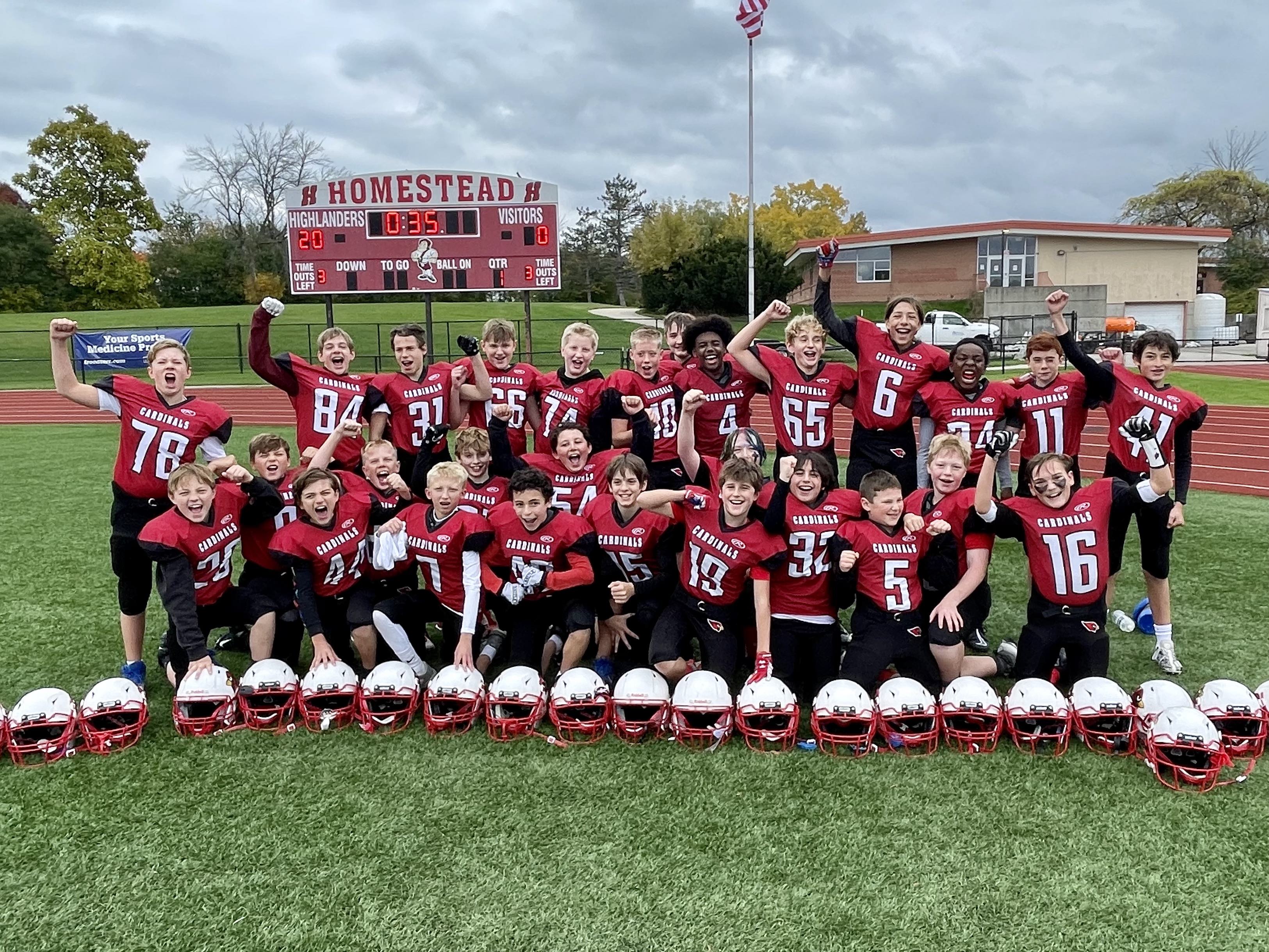
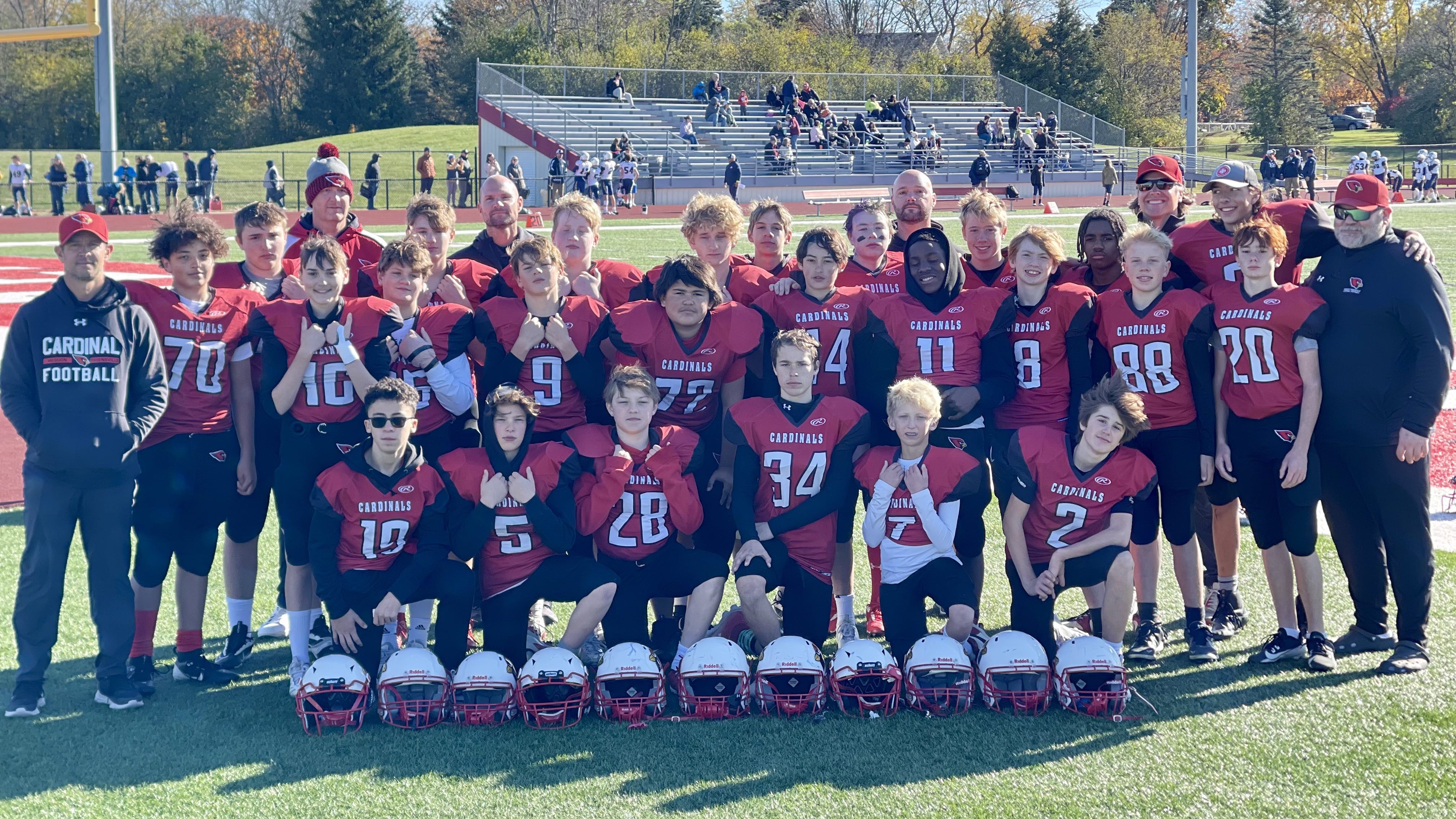
We had a great season in 7th Grade. This was after our last game of the season. Every team should end the year feeling like this.
And again in 8th grade.
For the past four years, from August through October, football has been an intense focus for me. I felt the pressure that comes with being an amateur coach in a high-profile team sport like football. So I prepared as much as I could to help give the boys an edge in the games. Sometimes it really helped. Sometimes it didn’t seem to help at all. This was either because our opponent was so good at doing what they do that we couldn’t stop them, or because they were bigger, faster and stronger than us, and we couldn’t stop them. But either way, I always felt as if I did all I knew to do to prepare our team for each game. And I learned a little from each win and each loss. Which meant that I found a way to win no matter what the outcome was.
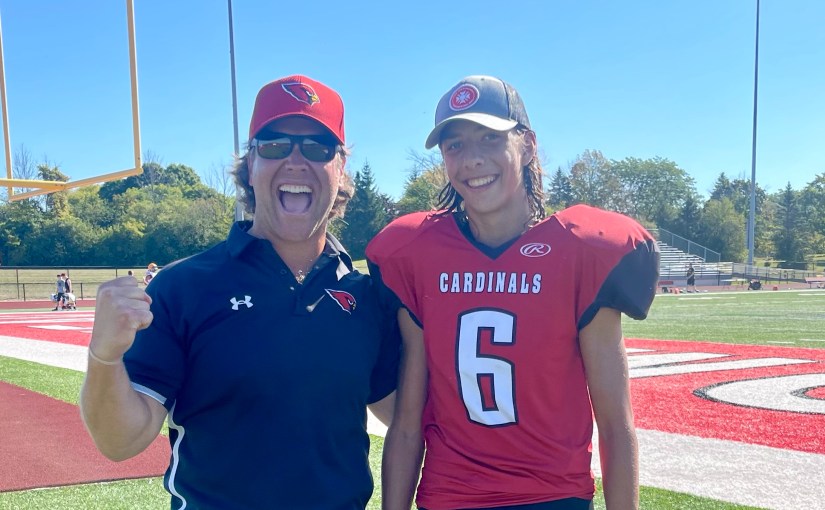
Magnus’ 8th grade season. My last year coaching football. And the first time Magnus was taller than me..
The 10 Best Things About Coaching Football.
1. Winning. There is nothing quite like winning a team sport.
2. Being called Coach. For years, I have been called Coach in our community. It’s always fun and surprising for someone who never expected to coach anything to be called that on the sidewalk, in the schools, and in stores and restaurants. It feels both respectful and as if you had a positive influence on a child’s life. It also makes me feel like I should be wearing a whistle everywhere I go.
3. The Brotherhood: Seeing these boys support each other and coming together as a strong team is amazing. Hearing the stories of them sitting together at lunch at school is rewarding. And knowing how close I still am to the guys I played football with makes me excited for them and the relationships they are forging through their collective football experience.
4. Hearing our defense call out the opponent’s offensive formation and the play they are about to run during a game. It meant the boys were paying attention in practice, they recognized what they were seeing and were prepared to defend the play. I loved that.
5. Stops in the backfield: Quarterback sacks and stuffed runs were the big wins for a defensive coordinator. We have had plenty of those over the past few years. It was a thrill every time.
6.Blocked Punts and Kicks. These have a huge impact on the game. They are magical gifts from heaven. Magnus had a slew of these during his Cardinal football career. And I discovered that a slew is the same amount in both the English and Metric system.
7.Interceptions: These are mission-accomplished plays. They are never not exciting.
8. The Funny Kids: Football is a serious game. But I love the kids who brought their sense of humor to practice and made us all laugh. The funnies often create stronger memories than the wins.
9. The Intense Kids: These kids set the tone for the team at practice and in games. They helped get the team mentally prepared to go to work. I always admired the mentality these winners brought to the field.
10.The Respectful Kids. The kids who responded to all coaching with Yes, Coach and No Coach, who looked you in the eyes, and who asked intelligent questions were a pure pleasure to work with and a sign of good parenting.
Key Takeaway
If you have a chance to positively impact the lives of kids, do it. Coaching, mentoring, volunteering, teaching, chaperoning. All of it helps. And you will get just as much out of it as the kids. Our youth can never have too many positive adult influences in their lives. And you gain by sharing your time, talent and knowledge with others. Don’t worry that you don’t know enough. Raise your hand and learn as you go. That’s what I did. And I can’t imagine my life without this chapter, these experiences, and these boys.
*If you know someone who could benefit from this message, please share it with them.
My 13-year-old son Magnus plays the cello. He has been playing for 4 years and I can tell that he has a natural talent for it. But he doesn’t typically practice the way you need to to Rumplestilskin your raw straw talent into golden skill.
Last week, I tried a different approach to Magnus’ practice routine. I asked him to tell me what he thought an effective practice schedule looks like. He said, ‘I should play all 3 of my songs for the week twice every day. And I should listen to my songs once every day.’ Like everyday people.
While I thought playing the songs twice seemed too light, I wanted his practice plan to be driven by him. So I overruled my judgy internal objection and sustained his proposal.
Following our discussion, something interesting happened. Magnus followed his own prescription for a successful week of cello practice. While it was not Yo-Yo Ma level, The Yo-Yo Magnus approach got good results.
Last night Magnus had his cello lesson. He had the best lesson ever. It happened because he followed his own formula for success. And his formula was self-prescribed at a strength he felt he could sustain for a week. Which is the best way to start. Then, as you enjoy the return on your time invested you are more likely to increase the input to enjoy an even better output.
Key Takeaway
Practicing is the key to self-improvement. But the key to getting yourself to practice is spelling out what you think appropriate practice should look like in your world. Create a plan that works with your timing, your energy and your desired outcome. Once you have set your own plan based on those criteria, you are more likely to follow through and enjoy the return on your invested time.
*If you know someone who could benefit from this message, please share it with them.
This fall marks my 6th year of coaching football. I never had any interest in coaching. I started when my son Magnus’ flag football program needed parent coaches. It was only a Saturday morning commitment back then. But like the mythical slowly boiled frog, who forgot to jump out of the pot, I am now the defensive coordinator for Magnus’ 7th grade tackle football team. Which is an everyday-in-August commitment. Oy.
As a coach, I am really a student. I am trying to learn as much about football as I can to help my players play well, have fun, and be safe. But like Uncle Rico, I still have a strong desire to win.
Back to School
2 weeks ago I had a great opportunity to learn some new things about the game of football. On Varsity Day, Coach Tom Price, President of Cardinal Football, brought the local Varsity football players from Homestead High School in Mequon, Wisconsin to practice to work with the 5th-8th grade players in the Cardinal football program that feeds players into Homestead. While the high schoolers were working with our athletes, one of the outstanding Homestead football coaches on Head Coach Drake Zortmans’s staff talked to the Cardinal coaches about football.
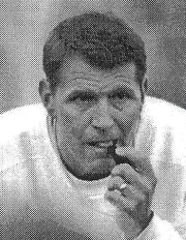
The coach, Dan Juedes, is a 70-something who is not only in the Wisconsin Football Coaches Hall of Fame, he is in the National Football Coaches Hall of Fame. He coaches at football camps across the country, including at many of the Big Ten schools. In fact, Dan has been coaching so long that when he started the Big 10 conference only had 5 teams.
Coach Dan Juedes looking very coachy.
Dan’s Lessons
As the novice coaches gathered around Dan, he shared a few gems about coaching football. His first lesson had been passed along to him by the legendary Bo Schembechler, the former head football coach at the University of Michigan. Dan told us:
‘The average football play lasts 7 seconds. All players look pretty much the same during the first 2 seconds. What separates great players from the ordinary is what they do in seconds 3 through 7.‘
-Coach Dan Juedes
When Dan shared this I felt like I had heard Einstein explain the Universe with E= MC2. Because Dan’s 7-second rule took a very complex game and broke it down into a very simple formula for success.
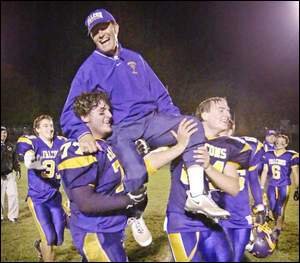
Coach Juedes carried off the field, presumably because he was tired from coaching so hard.
Josh Hunt, our 7th-grade teams’ head coach, and I couldn’t wait to share this valuable insight with our players. So once we were reunited with our athletes (and it felt so good) we eagerly shared our new insight with our team. And we have been resharing the 7-second secret every day since.
Applying the 7-Second Success Formula
On Saturday we had our first game of the season. The last thing I told the players before they took the field was to give a full 7 seconds of effort on every play and great things would happen.
But the much bigger opponents overwhelmed our team out of the gate. They ran around us and over us until they were knock, knock knocking on the endzone’s door.
But with our backs to our own endzone, defending a first and goal play from the 6-yard line our team gave a 7-second effort. My son Magnus fired across the line from his defensive end position and engaged with a tight end. He shed the blocker at 2 seconds and attacked the opposing team’s quarterback. What happened over the next 5 seconds changed everything.
Magnus sprinted after the quarterback, and not only did he tackle him deep in the backfield, he punched the ball out of his hands in the process. Our middle linebacker Jaden Daniels was also giving a 7-second effort and pounced on the loose ball. This meant that we went from our opponent having the ball on first and goal from the 6-yard line, to our team having a first and ten at the 17-yard line. Boom!
Then our offense became a 7-Second Squad. We put together an 83-yard scoring drive that led to a 6-0 lead.
It turns out that’s all we needed to win the game. Because thanks to our 7-second efforts we held our formidable and much bigger opponent to 0 points. A shutout.
Me and Magnus after our opening game win.
The 7-Second Life Lesson
Dan’s 7-second rule teaches us to go hard to the end of every play. While everyone starts out doing the right thing on nearly every play, at some point, most people stop giving maximum effort and forfeit the advantage to those who go hard until the whistle blows.
But the 7-Second rule doesn’t just apply to football. The basic concept applies to success in all areas of life. Most people start out strong. But they give up too early. They stop or quit just when their effort is needed most. It is true in sports and in your career. It is true in marriage and in parenting. And it is true anywhere effort is needed to create results.
Key Takeaway
The difference in life is not made at the start. It is what you do after the start. Don’t stop 2 seconds in. That’s when most people let up, thinking they have done their job. Don’t fall into that trap. True success comes from your effort during seconds 3 through 7. So play the full play. Give a full effort every time. That effort and the advantage it creates compounds, play after play, day after day, year after year. Play until the end. And the end will be sweeter than you could have imagined. Just like the donuts I will bring my team today to celebrate the donut they put on the scoreboard on Saturday. Boom!
Final Note
Over the weekend as I reviewed the game film to provide feedback, I saw the 7-second rule over and over again. The great plays were made by those playing hard for 7 seconds. The best results of all came when the entire team played hard for 7 seconds. And as a proud Dad-Coach, I saw that Magnus had 3 sacks in the game and the game-winning tackle on 4th down in the 4th quarter. All of which came from giving full effort all the way to whistle. And I was amazed as I counted to 7 seconds over and over on our biggest plays. It turns out that Dan and Bo really know what they are talking about.
Also, I want to note that Dan Juedes and Tom Price have been a great help to me as track and field officials running the shot put and discus events at Homestead’s home meets in the spring. Thanks guys!
*If you know someone who could benefit from this message, please share it with them.
In December of 2021, I accomplished a long-term goal when I published my first book. The book, titled What Does Your Fortune Cookie Say? is a collection of 80 important life lessons the universe has shared with me. And because the great lessons of life are typically dispensed after enjoying some egg foo young and chop suey, the book title was obvious.
Surprisingly, one of the more challenging aspects of writing the book was deciding who to dedicate the book to. I’m sure that doesn’t seem that hard. Especially when compared to say, writing the rest of a 290-page book. But it was.
The Reasons:
First, I didn’t know how good the first book would be. After all, the first pancake on the griddle always turns out a little funky. So I didn’t want to dedicate a subpar book to someone really important to me. Although, I wouldn’t dedicate any book to someone unimportant to me. Hence the conundrum.
Second, from the beginning, I planned to write several books. So ultimately there should be several different dedications. Pairing each book with the proper dedicatee complicates things.
Finally, I wanted a simple, focused dedication. Not a long list of everyone I could ever thank. I would save that for the acknowledgements section in the back of the book. And for when I win an academy award.
Despite the challenges, I initially wrote a dedication that I liked. But late in the process, I altered the dedication several times. Which included both who I dedicated the book to, and what I wrote to them.
9 months after publishing the fortune cookie bookie I had more or less forgotten about the dedication dilemma. That is until this week.
A couple of days ago I opened the original digital layout of the book I received from my publisher, Ripples Media. The layout featured the original dedication. And while I am very happy with the final published dedication, I liked the original one too. It was playful. Yet meaningful. It featured both a pop culture reference and some humor. Which is my favorite kind of writing.
Instead of taking this dedication to the grave with me, I’d like to share it with you as a sort of deleted scene from my book.
The Published Version:
Dedication
To my children Ava, Johann, and Magnus. I hope this helps.
The Original Version:
Dedication
I’m dedicating this book to Casey Kasem. It’s a long-distance dedication.
But if I weren’t dedicating this to Casey Kasem (which I am), I would dedicate this to my grandfathers, Alton Archibald Albrecht and Kenneth Adam Sprau. The process of preparing the eulogies for your memorial services changed my life. It made me think about what is important and what lessons I will pass down to others. (I’m not sure if I have to mention that my grandfathers have both passed away or if the eulogy part made that kinda obvious.)
Why The Change
Ultimately, the fact that my grandfathers were highly unlikely to read the book, while my kids would at least crack the cover to see if their names were in the book, inspired me to dedicate it to my offspring.
Truth be told, Ava, Johann and Magnus are the reasons I wrote the book. I wanted to pass along a collection of the best lessons I have learned to them. Because even though I can’t be with them everywhere they go in life, they can always have the book with them. Even in prison. And as the book came together I could tell it was good, valuable, and something I could be very proud of dedicating to my children.
Key Takeaway
When you write a book, make it great, and dedicate it to people who may actually read your book. Who knows, it may inspire them to empty the dishwasher. At least that’s the dream.
*If you know someone who could benefit from this message, please share it with them.
Over the past year, I have been able to spend more time with my family than ever before. For several months I conducted all of my work from my home office. Which allowed my 3 kids to see more of what I do during the day. This created interesting new opportunities to talk to them about work, business, and making money.
As an entrepreneur and business owner, I couldn’t resist talking to my kids about the challenges the pandemic was causing for businesses. And how toilet paper didn’t grow on trees. (They corrected me). But more importantly, I shared how much opportunity there was for businesses to innovate, solve new problems, and benefit from helping others.
As the stock market went into the toilet like a dooky, I shared that this was an amazing time to invest. My kids asked me if they could invest some of their money. So I helped them buy their first stock.
We also read books on money, investing, and wealth. I was surprised by how interested they were in the topic. And it gave me hope that someday they may be able to afford to put me in the good nursing home.
I was even more surprised when my youngest son Magnus came home one day and told me he wrote a story in school on how to get rich. I was curious to read it. I wanted to know what his 10-year old mind was thinking. When the paper finally came home I was tickled, like Elmo, to read what he wrote. I have reprinted the story here in its entirety with permission from Magnus.
How To Get Rich!
The first thing you need to know to be rich is the difference between what you need and what you want. Another way you can put this is you need to know the difference between an asset and a liability.
A asset is something that makes you money. A liability is something that wastes your money.
Some assets would be starting a business, buying stocks, set up a lemonade stand, or any stand, mow someone’s lawn or sell things.
But buying stock is the most efficient way to make money. Especially at a time like this when all the stocks are down.
If you don’t know what a stock is, it’s something you buy on any device and without doing anything you make money. You can also hold on to your stock and get paid four times a year.
My stock pays me 30 cents four times a year. When I bought the shares of my stock each one cost me $3.75. So in total I paid $37.50. And that stock has went up so high that last time I checked it was worth $120 if I sold it.
You can sell things, but I sometimes wouldn’t recommend it. What my Dad taught me is sell when it is high, buy when it is low.
A book I would recommend to get you started is called, Rich Dad. Poor Dad. That was the first book I read about how to get rich. So after reading this get up and ‘Act Now!’
-Magnus Albrecht 3-9-21
Key Takeaway
Teach others what you know. By sharing your knowledge you raise the intelligence and confidence of others. Talk to kids about important life lessons and skills, including financial literacy, when they are young. They are like sponges, primed for learning. Make it fun. Make it interesting. And you can make a positive, life-long impact. It may just be the most valuable investment you ever make.
*If you know someone who could benefit from this message please share it with them.
My son Magnus is 10 years old and loves football. I have been coaching his flag football team for the past 3 years. It is our favorite thing to do together. And our best bonding time.
This fall I was looking forward to another season of coaching with my fellow University of Wisconsin alumni Dr. Michael Brin and Josh Hunt, both of whom played football for the Badgers. Their sons Josh and Hudson are both great kids, great athletes, and we have had a really good team together. But by late summer we heard that the flag football program was cancelled. Boo.
Me, Mike, Josh and our boys, with pre-covid splits. Hudson is doing his funhouse mirror impression.
When we learned the flag had been pulled off the flag football season I contacted our local tackle football program. The league starts in 5th grade. But roster space permitting, they will also accept a few 4th graders if they meet the size requirement. Magnus is a sizable boy (a sizable boy they all say) and has met the 5th grade size requirement since 2nd or 3rd grade.
When the tackle program was green lighted, there was room for Magnus. So this fall, instead of playing flag football, video-game football or paper triangle football, he has been training in full cleats, helmet, mouthguard, shoulder pads and boy part protector.
Yesterday Magnus had his only scrimmage of the season. His 5th grade team played the program’s 6th graders. Which meant that Magnus, my 4th grader had his first full-contact tackle football experience against kids 2 years older than him. Because sometimes life just works out that way.
The highlight of the experience occurred as Magnus was playing defensive end. A 6th grade ball carrier broke past the line of scrimmage and began running down the field. Magnus turned in hot pursuit as if the kid had stolen his lunch money. Magnus caught up to the running back, leapt, landed on the 6th grader and brought him decisively to the ground. My friend Matt Joynt, who was standing a social distance from me said, ‘That looked like a lion jumping off a rock onto a gazelle.’
I instantly cheered my little 4th grader’s first-ever tackle. As did my wife Dawn and daughter Ava. It was an exciting moment for our family. And for a kid who just weeks earlier looked as if he would have a football-free fall.
After the scrimmage, when Magnus rejoined us, I asked him about his tackle. A broad smile lit up his face as he replied, “It was so awesome! I still feel like I have rainbows in my stomach!’
Key Takeaway
Life is short. Pursuit your interests, curiosities and passions like a lion chases a gazelle. Find the experiences that fill your stomach with rainbows. Pack your life with joy and fulfillment. We only get one chance to play this game. Between the opening whistle and the final tick of the clock, I hope you are flooded with positive feelings that are beyond your ability to articulate. That’s how you win this game.
*If you know someone who could benefit from this message, please share it with them.
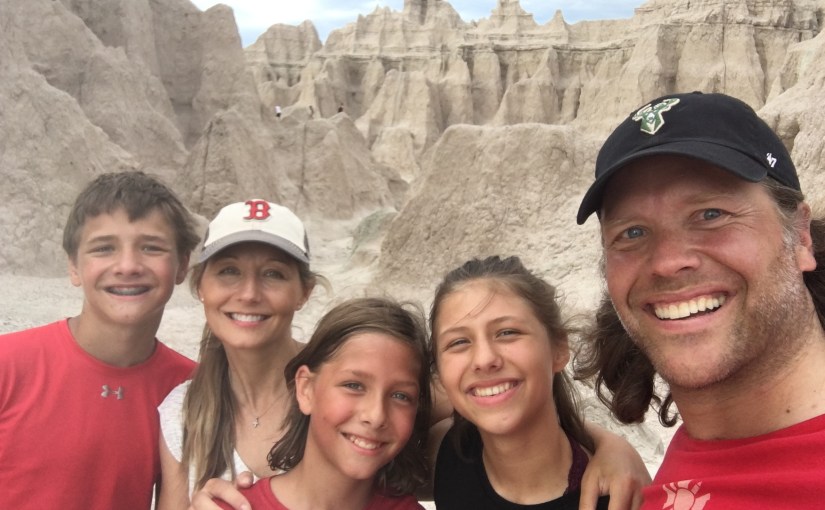
My family and I just returned home from a 4100-mile road trip. It was one of the great adventures of my life. I know that sounds dramatic. But the trip itself was dramatic. And I don’t just mean the dramatic splattering of bugs on the front of our car.
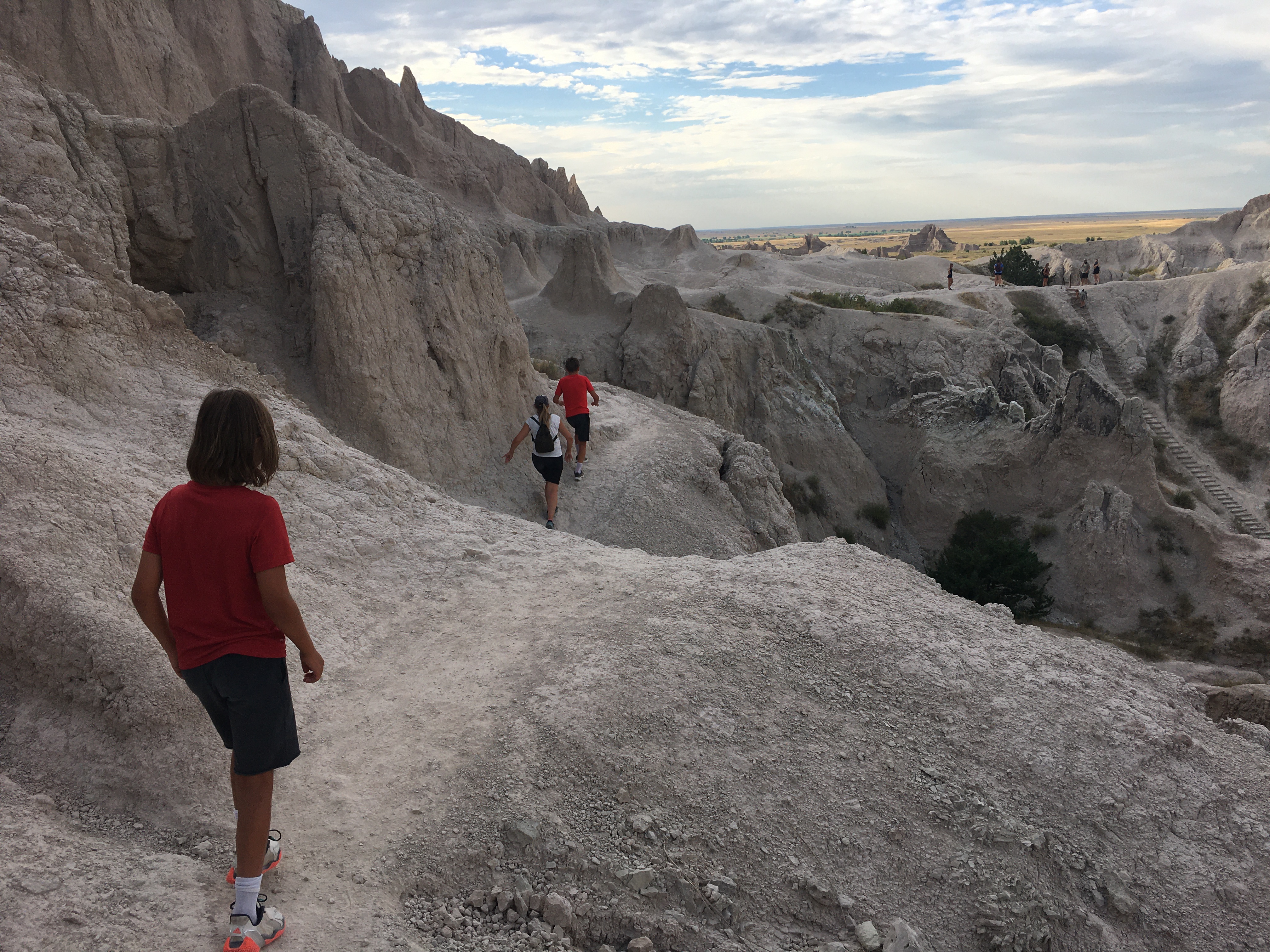
Hiking at the Badlands National Park in South Dakota wasn’t bad at all.
We pulled into our driveway last night just before 6pm, parked and began unloading our Family Truckster. As my 10-year-old son Magnus and I were walking into our home for the first time in a week and a half he turned to me and said,
I feel like I am a different person now. -Magnus Albrecht (10 y/o)
I told him I felt the same way. Over the past 11 days we had seen and done too much to be unchanged. We had seen a Jolly Green Giant and the world’s largest Holstein cow. We had seen famous presidents’ faces carved on a mountainside, creating the greatest marketing tactic in the history of state marketing.
Magnus didn’t get the memo that he was supposed to wear green.
We got an all-access tour of my cousin Rita and her husband Joe’s 2000 cow dairy where my kids got to pet wet and wobbly calves the moment they were born. If you want to follow a really great blog check out Rita’s blog So She Married A Farmer
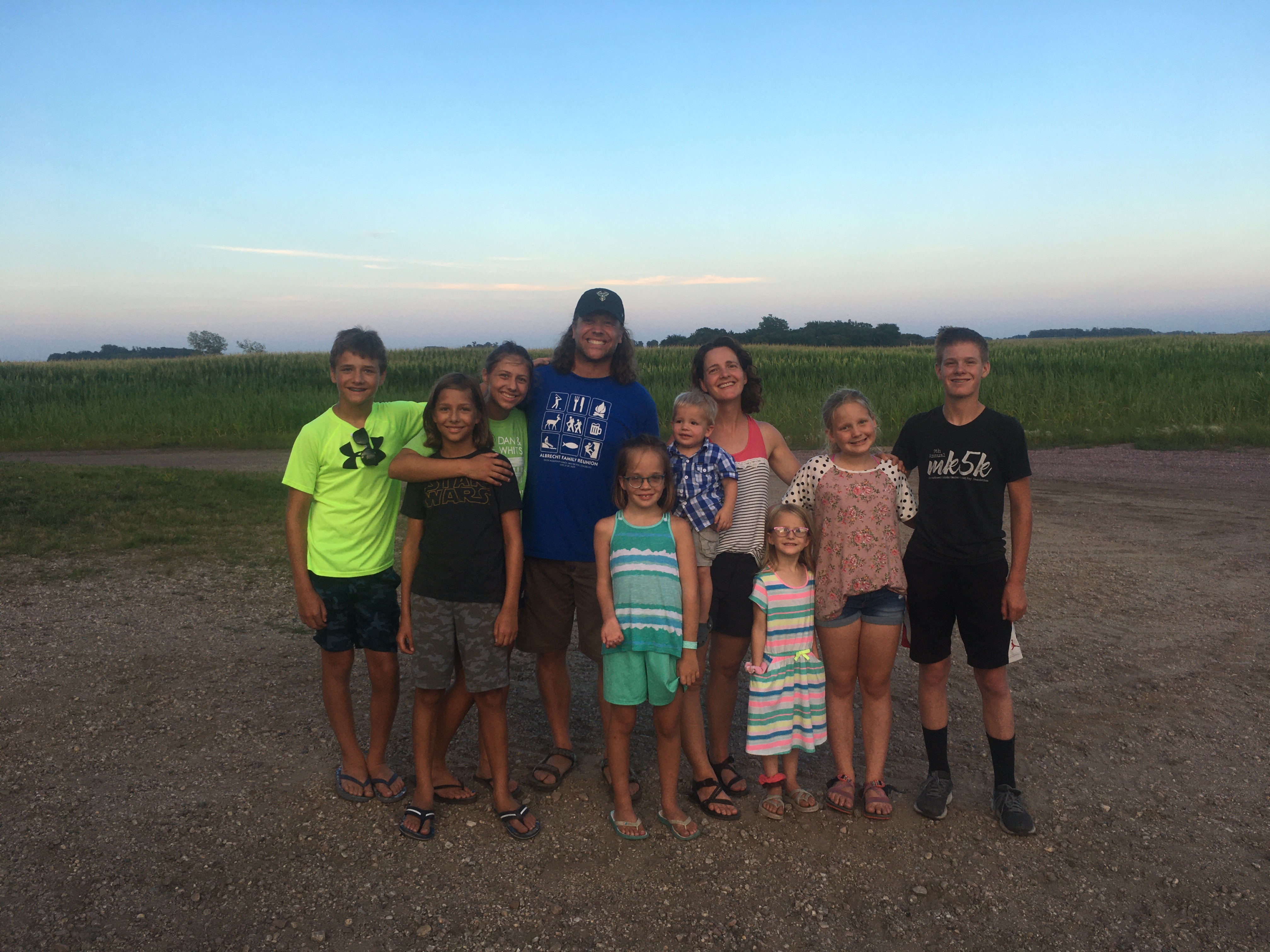
Me and my cousin Rita and a crop of kids.
We chased Lewis and Clark across the land and water they first navigated over 200 years ago. We saw fields of sunflowers, and I heard Post Malone every time.
We saw the world’s only Corn Palace. So there’s that.
We visited the Minuteman Missle National Historic Site and learned about all the nuclear missiles that dotted the Northern Great Plains, designed for peace, but ready to destroy the Earth and its inhabitants in just 30 minutes. Like a Dominoes pizza.
Yellowstone blew Magnus’ mind.
We had close encounters with moose, mice, mountain goats, elk, bighorn sheep, a fisher, prairie dogs and a dead snake.
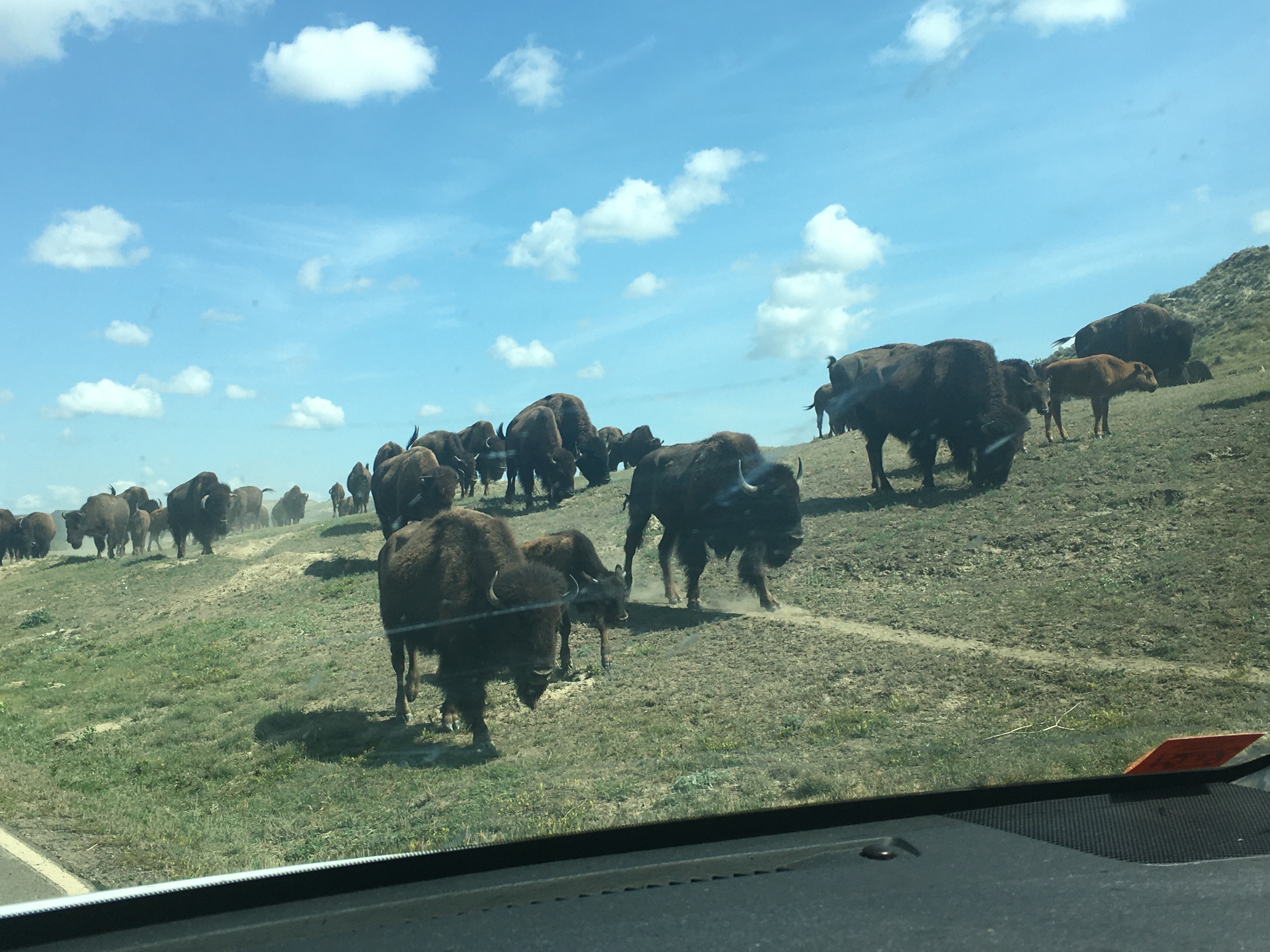
We were surrounded by a herd of buffalo at the Theodore Roosevelt National Park in North Dakota. We swam in glacier-fed streams in Montana. We went cliff jumping. We saw geysers and gal-sers, glaciers and bubbling mud volcanoes.
Being among the buffalo at Theodore Roosevelt National Grasslands was wild.
We hiked to a lake fed by no less than 6 waterfalls. We hiked in badlands that looked like the moon, only closer, and less made of cheese. We camped just feet from where dinosaur fossils were found and can still be seen, and we lived to tell about it.
My son Johann and a bit of scenery at Glacier National Park.
We connected the dots of 4100 miles of America. As a result, our brains, our lives, and our image of our country and our planet will never be the same. We developed new mental maps that showed the connections between previously unconnected places, experiences and ideas. Which is exactly why we adventure in the first place. To see, do, learn and grow.
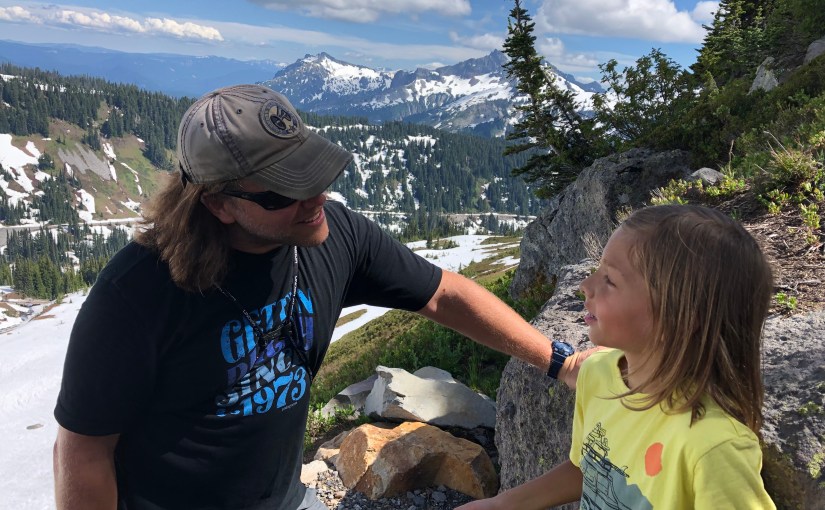
Me and Magnus at Avalanche Lake in Glacier National Park. We were both disappointed to not see any avalanches. #FalseAdvertising
Key Takeaway
Experience as much of life as you can. See the world. Understand it. It will help you grow and expand your views and thinking. It improves creativity and innovation. It will make you more compassionate and empathetic. It will help you relate to others. It helps you refuel and reset and come back smarter and more capable than before. You know, like a whole new you.
Being a dad can be hard. One of the great challenges for me as a dad is not laughing at the really funny but inappropriate things my kids say and do. Potty humor has not lost its power over me. I regularly get in trouble with Dawn, my parenting partner, for laughing at things I’m not supposed to laugh at. I am told that I am encouraging my kids’ behavior. But hey, I want to be an encouraging Dad.
To counterbalance my chronic immaturity, I also try to be a good influence and teach my kids important life lessons. I have been reading Dale Carnegie with my 13-year old son, Johann. I have read Rich Dad. Poor Dad. to my now 14-year old daughter Ava. And I am currently reading Rich Dad. Poor Dad. with my 9-year-old son, Magnus.
Magnus is really fun to teach about business. Even though he is only 9 he is displaying the same type of interest in business ideas that he has in sports. Which is great, because business is the ultimate competitive sport. And because Magnus is now my retirement plan.
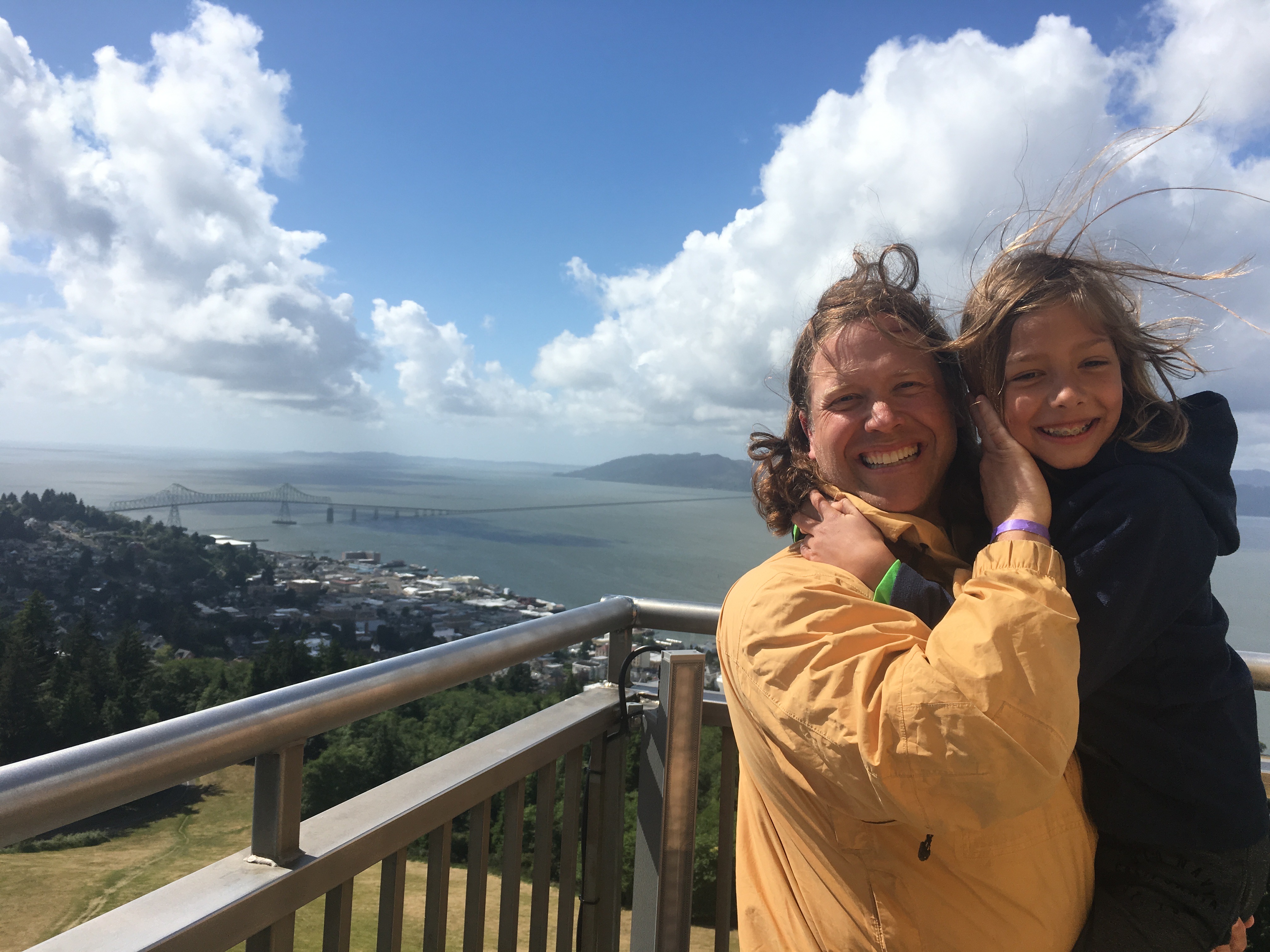
Me and Magnus and our hair and some wind in Astoria, Oregon.
As we read Rich Dad. Poor Dad. Magnus is fascinated by the good financial advice offered by the book. He now knows that assets are things that make you money and that liabilities are things that cost you money. He knows that poor people work for money and that rich people make their money work for them.
Over the past few weeks, Magnus has shared a steady stream of business thoughts. He has a notebook that he is filling with ideas. The ideas range from a garage cleaning business to a business idea for boys with long hair. Because Magnus has long hair, like his father. And like 9-year-old girls. Which I expect is why he likes wearing baseball caps. And why he doesn’t like wearing pink dresses.
Magnus and I have talked about business processes, research, pricing, margin and the value of good employees. What started out as a father wanting to teach his son a few important ideas about business has turned into a son asking lots of great questions to extract more information in order to help him paint a more complete picture in his head.
Last weekend as we were working on a yard project, Magnus revealed with great excitement that he came up with a business that he and I could partner on. I was proud and curious about what he was thinking. So I asked him to tell me more about his business idea. He started by sharing that he picked out a great name for the business already. Curious, I asked him what the name of the business was going to be. He said, ‘We’ll be Madams! It’s a combination of Magnus and Adam’s!
It tried not to burst with laughter. He was so proud of his name. It was the perfect mashup of our first names. But little did little Magnus know that it also sounded like this 9-year-old boy thought it would be a great business idea to run a brothel. It seems I have much more to teach.
Key Takeaway
Take time to teach your kids, nieces, nephews and neighbors what you know. Whether it is about business, how to fix a lawnmower, applying first-aid, or any of the millions of things in between, your knowledge is valuable. Pass it along. You may be surprised how enthusiastically a child responds to your teaching. It can help develop confidence and prepare them with life skills. But it could also expose them to a career path or hobby that will positively influence the trajectory and quality of their life. Who knows, you may also enjoy a good laugh along the way. Because kids say the darndest things.
*If you know someone who could benefit from this message, please share it with them.






 Adam Albrecht Blog