I recently experienced a suspicious outreach. That happens when someone you don’t know very well or haven’t spoken to in a long time reaches out, suddenly eager to talk. Typically this means they are newly unemployed, have something they want to sell you, or a judge has asked them to let you know there is a sex offender in your neighborhood.
This person who contacted me and I have never met in person. He initially reached out to me a few years ago, but after his original introduction, there was never any maintenance to the relationship. In fact, he acknowledged his deadbeatness in his outreach. But suddenly he was eager to talk. Like a close-lipped criminal after being granted legal immunity. I could tell from the note that whatever he was selling at his Tupperware Party would be far more valuable to him than to me.
I don’t mind hearing about what you have going on or what you are trying to sell. But I am much more interested in talking about it if we have spent time talking about other things first.
A Rule of Thumb
Don’t meet and sell on the same day. Don’t do it on the second interaction either. Instead, create a base for your relationship before you develop your base for sales. As a good rule of thumb, meet, email, or call 3 times before you start asking for a transaction. Better yet, provide value to the other person first. Find an article or book they should read. Connect them with another person they should meet. Let them know if they have spinach in their teeth. You know, be helpful.
People don’t like to be sold, but they love to buy. Give others a chance to approach you about your offering first. If you develop a real relationship, and they are a good candidate for your offering, there is a good chance they will bring it up first if you just give them a chance.
Key Takeaway
Develop relationships first. Add value first. Once a good relationship is established the sale, donation or vote may come without an ask.
*If you know someone who could benefit from this message, please share it with them.
Last week I had a work trip to Columbus. People will often refer to the city as Columbus, Ohio. But because C-Bus is the 14th largest city in the U.S., I go first name only. Like LeBron. Or Covid.
On my flight back to Milwaukee I sat next to a real Yinzer from Pittsburgh named Nicole. (She was actually wearing a Yinzer t-shirt. That’s representing!)
Nicole Bakewell is an engineer and was traveling to Milwaukee for work, to meet with a client about some robotic warehouse improvements. That’s some cool stuff, Mrs. Roboto!
Nicole asked me what I did for work. I told her I led the advertising and ideas agency The Weaponry. Then she asked what I was doing in Columbus. Which was a fun question to be asked. Because I had a story.
I asked Nicole if she had heard of the new bar in Pittsburgh called Pins Mechanical. She replied, “I love that place!’
I continued, ‘Well, I am also an author, and wrote a book. (Which is required to be called an author.) And I was invited to be the keynote speaker at Pins Mechanical’s parent company’s annual meeting.’
She said that sounded cool. Then she asked what my book was about. But instead of telling her about it I pulled a copy of What Does Your Fortune Cookie Say? out of my backpack and handed it to her to see for herself.
She read the front and back covers. She said she thought it sounded really interesting. So I flipped the book open to chapter 12 and invited her to read that 4-page chapter, titled, Never Give Up.
A few minutes later she finished the chapter, turned to me, and said, ‘Wow, I feel really inspired!’ Can I buy this on Amazon? I said yes. But I can share a payment link to buy the copy in your hands right now.
She said, let’s do that!
She bought the copy and has emailed me that she has been reading and enjoying the book. And Nicole and I are friends now. Which is the real win.
But I also enjoyed the opportunity to share my book with her. I loved that I was able to serve up a small taste test of the book. One chapter. 4 pages. Make or break. Thumbs up or thumbs down. Win or lose. And 4 pages in, Nicole told me she felt inspired. That was extremely rewarding. Thanks for the feedback, Nicole.
Key Takeaway
When creating a product or service, make sure you create something so great that it performs well when sampled. If so, you have a winner. And you will sell as much of your offering as you can get people to try. If not, go back to the lab again and keep working until your taste test wins every time.
*If you know someone who could benefit from this message, please share it with them.
Winning new business is exciting. It means you convinced a customer or client to take a chance on you. (Like ABBA said.) But at this point, you are selling the promise of what you can do for them. Because in the beginning, the promise is all you’ve got.
The best moment in business is when a customer or client comes back for thesecondhelping. Because this time it is not because of a promise you made them. It is because of the proof you gave them. (It’s in the pudding.)
The first transaction is based on your promise. The second is based on your proof.
The first engagement is based on hope. The second engagement is based on expectations met. Businesses live and die based on met expectations. Which is why repeat business is so important. It is the lag indicator that you are offering value and a positive experience.
If you track just one measurement on your way to success it should be repeat purchases. It is the pass-fail measure of long-term success. Because without repeat purchasers, you will run out of new prospects. And your business will be all grind, and no bump.
Recent History
Last week I had two great repeat experiences.
First, The Weaponry, the advertising and idea agency I lead, got a call from one of our first-time clients. We were almost done building a website for this client, and they called to tell us they want us to take on another website build for another division of their business.
Second, we had our first creative presentation to another new client. At the end of the presentation, The Boss Man told us he wanted us to work with their procurement team to get set up as an official, long-term supplier. Boom!
These second projects came because we lived up to expectations. We passed an important test. We weren’t one and done, like a University of Kentucky freshman basketball player. Which means we are running a sustainable business.
A Personal Note
The same principle holds true in your personal life. You get a first shot at relationships, opportunities, and trust based on the promise of delivering the goods. The second shot comes because you proved you were worthy the first time. Keep delivering and good things just keep coming your way.
Key Takeaway
Winning new business is simply an opportunity to prove what you can do. It is where the hard work begins. Make sure to deliver on the promises you made to that first-time customer. Because when you do, they’ll come back for more. And businesses only thrive if happy customers keep coming back for more.
*If you know someone who would benefit from this message, please share it with them.
**If this post lived up to your expectations, please consider subscribing to get the next one emailed to your inbox.The subscribe button is at the top left of this page.
I get a boatload of emails, calls, and LinkedIn requests from strangers who are trying to sell to me. Most of them want to help me generate more business leads for The Weaponry, an advertising and idea agency that I lead.
It is crazy how many people want to help me with this. It is as if they all looked at my demographic information alone and want to sell me a hair growth tonic. But if you knew me, or ever looked at my LinkedIn profile pic, you would know I may have problems, but growing hair is not one of them.
The sales promises are often quantified. They say they will deliver hundreds or thousands of qualified leads per month. To the uninitiated, unsuccessful, lazy or naive this must sound amazing.
But business growth and development doesn’t work that way. Qualified leads and prospects are not a commodity. You can’t outsourcethem to a stranger. The type of clients or customers you want to work with are not like crops in a field. You can’t simply run a harvester through them, load them into a wagon and sell them on the open market.
Prospective customers and clients are not all created equal. The valuable ones come from relationships, connections, and conversations. From shared philosophies and values. You and your team should find the right ones for you. Then earn their trust. Develop a mutual attraction. And decide you are right for each other.
For a stranger to spam* me and tell me that they can find me a steady supply of qualified leads is like telling me that they can find me more friends. ‘We’ll dump a list of friends on you. You’ll really like them and they will like you too.’ But it doesn’t work that way. That’s a job we have to do ourselves.
*No offense to Spam, the innovative meat. If a stranger offered me some fried Spam for breakfast we would be friends for life.
Key Takeaway
Earn your own customers and clients. Create systems and processes to find them. Develop relationships. Keep your promises. Deliver results. Create a core of happy customers that spread the word about you. That never fails.
*If you know someone who could benefit from this message, please share it with them.
All of the good things that have happened in my life have a common theme. They happened because I prepared to take advantage of an opportunity point. Which means I put in work or research before an important moment. Like a Boy Scout would do. Although I was never a Boy Scout. I heard the Be Prepared motto and felt I got the gist of it.
When my big moments came, I drew on the work or the research I had performed to maximize the opportunities. I performed impressively. I made a strong impression. I drove a result. I became memorable for being prepared, capable, smart, insightful, knowledgable, interesting, thoughtful, or resourceful. Then, I was able to cash in my preparation for rewards. Just like you cash in your tickets for prizes at Chuck E Cheese.
Opportunity Points
Make sure you know what your opportunity points are. Here are a few examples:
Competitions
Meetings
Job interviews
Sales calls
Tests
Dates
Sorority rush
Meetups
Performances
Parties
Introductions
Tradeshows
Seminars
Auditions
Conferences
Social media encounters
America’s Got Idols
Preparation allows you to convert an opportunity point into an inflection point. A point where things change for you. A new door opens. An angle of growth steepens. The trajectory of your life alters in a positive way. Suddenly, people want more of your time. Which means the value of your time goes up too.
How to capitalize on your opportunities.
To turn your opportunities into inflection points try the following approach:
Look at your calendar. (You do have a calendar, right?)
Identify the opportunity points. (They are everywhere.)
Determine what you could do today, and each day before the event to be best prepared to make that event a moment of inflection. (Start with researching all you can about the people and the topic you will encounter. Don’t be afraid to stalk. That’s how I found my wife. Training and practice are also important.)
Do the prep work you determined would be beneficial. (It is not enough to know what you should do. You gotsta do it for realzies.)
Luck is what happens when preparation meets opportunity.
-Maybe Seneca (But maybe someone else. They can’t find any credible witnesses.)
Key Takeaway
Every week we encounter dozens of opportunity points. Once you recognize them you can prepare for them. That preparation allows you to capitalize on the opportunity. Sometimes the rewards are small and grow over time. Sometimes the rewards hit in major ways that alter your life path immediately. But if you don’t prepare it is as if the opportunity wasn’t even there. Don’t let that happen.
*If you know someone who could benefit from this message, please share it with them.
I recently was introduced to the CEO of a really fun business in Milwaukee. A mutual friend introduced us via email. And in the quick hellos and thanks-for-the-introduction exchange that followed the CEO invited me to his office for a pow-wow.
When we met in person a week later we talked and developed a quick friendship. Despite the fact that we had just met it was clear that we were on the same wavelength. Our mutual friend, who I will call Erin, because that is her name, must have detected that too.
The two of us began talking about his business. I loved the conversation. I am a big fan of his company. Like one of those Big Ass Fans you see in a warehouse. I noted the remarkable quality of the product his team creates. I shared my enthusiasm for his brand and the great potential for growth, expansion and domination.
Then something interesting and unexpected happened. The CEO paused and said, ‘Adam, every agency in town has come to me wanting my business. They all talk about what they can do for us. And they share their vision for our brand. But you are the only one who has shared MY vision for the brand.’
At that point the conversation changed from 2 guys getting to know each other to two business leaders collaborating and working through problems and opportunities together. Which is what I love most about business.
I didn’t think of our conversation as a sales call. I didn’t think I was pitching him on working with me and my business. I was just excited to meet a new friend. I’m like a puppy in that way. And in the process of developing a friendship we talked about his business, the same way we talked about his family, the places he has lived and what he likes to do in his free time.
Make Friends. Not Sales.
But sales is not what most people think it is. So much of business development is simply developing friendships and rapport. It is showing a genuine interest in getting to know others. It is about helping and providing value. It is not about asking for business.
I always focus on friendship first. I was genuinely interested in this baller of a CEO first. I was not about to ask for a shot at his business. Perhaps that was part of the appeal.
As the sales expert Jeffry Gitomer says, people hate to be sold, but they love to buy. That is why I always let people buy into me instead of asking for the sale.
Does it work? Well, I now have a meeting scheduled with my new friend and his leadership team next week.
6 Key Takeaways From This Experience
A good introduction from a trusted mutual friend creates a great start to a new relationship.
Make friends. Not sales calls.
Add value first, last, and always.
Think bigger.
Paint a picture others want to buy into.
Let your enthusiasm, energy and passion show.
Follow Up:
Between the time I first wrote this post and published it a lot has happened. We had a great meeting with the executive leadership team. We were asked for a proposal. The proposal was signed last Friday afternoon. We kicked off our official relationship with a 3-hour meeting (Gilligan’s Island-Style) on Monday afternoon. We will present ideas next week. And we will have new ads live for the holidays.
*If you know someone who could benefit from this message please share it with them.
Business development is a vital function of any healthy business. And it is dependent on interactions with non-customers. This is why trade shows exist. They are like massive dates for people with problems and people with solutions. They are the male and female counterparts that make business work. #Bowchickabowbow Lots of business opportunities are created at trade shows. Because people get to meet, mingle and leave non-single.
Trade No-Shows
Right now, thanks to the Covid-19 curveball, in-person trade shows are simply off the table. As are most in-person networking events. Which creates a major impact on new business prospects for most companies. This is a significant problem to solve. And a significant business opportunity.
Calling It Off
New sales calls are challenged right now too. You can’t simply ask if you can swing by someone’s office to show off your cart of potions and elixirs. Because the people you want to meet with are not there. In fact, most of my clients at The Weaponry have not been in the office for 7 months. Some of them have even moved far from the city they work in, because it doesn’t matter where people live when no one goes into the office.
With all of the Zooming that is happening now, it isn’t easy to get prospects to jump on yet another video conference either. Especially since video conferencing today means inviting people into your home, where families are hosting a 3-ringed circus of work, school and personal life.
Where Do We Grow From Here?
This means that to continue growing your network and your new business prospects you have to find new ways to interact with people. So it’s time to adopt new approaches. Or act like Chubby Checker and put new twists on old ideas.
What I Have Been Doing
Over the past 2 months here is what I have done to expand my network during a time of social contraction:
I spoke to the quarterly gathering of Spearity clients. Spearity is a great management consulting organization. This introduced me to 40 impressive people I didn’t know.
I gave an in-person speech at a country club to a group of 70 people participating in a fundraiser for Chapman Basketball Academy.
I did 3 virtual workshops on leadership during a crisis for University of Wisconsin student athletes and staff.
I guest-lectured on creativity to a Marquette University marketing class via video conference.
I guest lectured on creativity to a Carroll University marketing class via video conference.
I was a guest on the Sport Coats Podcast with Will Jurgensen. (podcast coming soon to a podcast player near you)
I published 25 new blog posts.
The Results
As a result of these actions I have grown my LinkedIn network. I have received new introductions, I have had in-person, yet comically-physically-distanced meetings. I have developed great new relationships. In fact, it looks as if I will have developed at least 4 new clients as a direct result of these activities.
I didn’t make a single cold call. I didn’t ask anyone for their business. I simply gave away my time, knowledge and expertise. I gave value first. And as a result I got even more value return. Anyone can do this. Even today.
Key Takeaway
Remember it is not who you know. It is who knows you. During these unusual times you have to make sure more people know who you are in order to grow your network and improve your long term prospects, opportunities and sales. Provide value first. And good things will come your way. Even in 2020.
*If you know someone who could benefit from this message, please share it with them.
I was recently invited to speak at a Metro Milwaukee Chamber of Commerce event about storytelling. As the 3rd of 3 speakers on the same topic of storytelling, I knew I better take a unique angle on the topic in order to cover some new ground. I reframed storytelling in a different, perhaps more approachable or understandable context for business owners, small marketing teams and generalists. Here is the story I presented.
The Story on Storytelling
I have spent over 2 decades in marketing and advertising. About 10 years ago people started talking about ‘Storytelling’ like it was the hot new thing in marketing communications. But as the author of 23 years of ad campaigns and marketing programs, I’ll tell you that I don’t think about marketing in terms of storytelling.
The term ‘storytelling’ is weird for adults. If conjures images of fairytales, campfires, ghost stories, and once-upon-a-time-ness. It can be hard to connect the dots back to business and marketing. Unless, of course, you are Mother Goose, work at Disney, or are one of the Brothers Grimm.
This is the kind of image the word ‘storytelling’ often conjures. And it is not very businessy. Unless you are in a really weird business.
Reframing Storytelling
If you are struggling with the idea of incorporating storytelling into your work, I want you to think about storytelling another way. I want you to think of business-related storytelling as Recruiting. Because marketing, advertising and sales is really just recruiting:
Recruiting customers to your store, show or restaurant.
Recruiting shoppers to your shelf.
Recruiting clients to your firm or agency.
Recruiting voters to the polls to vote for you or your agenda.
Recruiting attendees to an event.
Recruiting employees to work for you.
Where I learned this
Let’s go back in time to where I learned about marketing as recruiting. It wasn’t at my first advertising job. Or in my college classes. I learned about selling, marketing and advertising from an unexpected teacher: my college track coach.
Mark Napier
Mark Napier, my coach at the University of Wisconsin, was a great track coach. But Mark Napier, was a world class recruiter. To be successful in college athletics you need to be able to recruit great athletic talent. And Coach Napes was masterful at it.
I have bachelor’s degrees in both journalism and psychology. But I earned a master’s degree in selling by studying how Professor Napier recruited. (He wasn’t really a professor. He didn’t even own any elbow patches).
The Essential Recruiting Technique
You know how Napes recruited top track and field athletes from across the country, the Caribbean, and Europe to come to Wisconsin? Where it snows from October through May?
He told stories. Stories that sold people. The most important lesson I learned from Napes was, know your audience. What do they want? What do they need? Because if you know what they want and what they need you know what to tell them to sell them.
It’s not you. It’s them.
But remember, don’t tell the story you want to tell. It is all about the story they want to hear. When it came to recruiting high school track and field athletes there were many different wants and needs. You had to do your homework to understand their hot buttons. You have to do your own research. You have to observe the athlete. Ask questions. And listen to what they say.
I helped Coach Napes recruit my teammate Jeremy ‘Shakes’ Fischer, from Los Angeles. Shakes was a 7’4″ high jumper in high school. He is now one of the world’s best jump coaches.
The Prospective College Athlete Hot Buttons May Include:
Academic quality and reputation
Facilities
Proximity to home
The athletic program
Proximity to Aunt Deanie (my Aunt Deanie lived in Madison and was a draw for me. But many other kids have their own version of Aunt Deanie).
The town itself
National reputation
School size
Proximity to stupid high school girlfriends or boyfriends.
A particular major or program
Family tradition
The conference you compete in.
Good looking girls
Spring training trips
Travel schedule
The coaches track record of success
Ass-Kicking-Ness (You can tell this by smelling their shoes)
Someone just like them in the program
Acceptance/Belonging
I recruited Napes to have dinner with me in Punta Gorda, Florida.
Pushing The Hot Button
Coach Napes was masterful at discovering the hot buttons of each athlete we were recruiting, and telling them the story they wanted to hear. Or demonstrating it. Or making them experience it.
The Results
As a result were able to successfully recruit national champions from Southern California and from Florida to join our track team in Madison, Wisconsin.
In fact, my junior and senior years we were Big 10 Champions in both indoor and outdoor track. My senior year our team was 6th in the nation. I had 6 teammates who were Division 1 National Champs in their events.
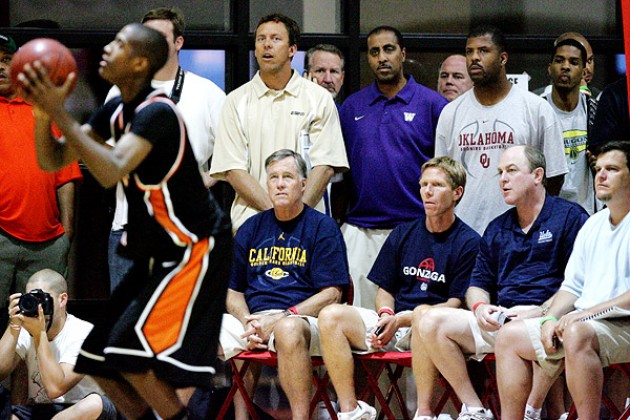
A bunch of college basketball coaches, all trying to figure out what they are going to tell some 17- year old kid to make him want to come to their school. #UmmWeHaveGreatPizza
Putting Recruiting To Work At Work
You can use the same approach to recruiting in your business. I want you to think of yourself like a Division 1 coach who is trying to attract 5 Star Recruits. For those of you who are sports illiterates, that means you are coaching at the highest level, and recruiting the very best athletes.
Departments or roles that should be recruiting for you:
Advertising
Marketing
Sales
Human Resources
We All Have Needs
It all starts with understanding your potential customer’s wants and needs. Know this and you will know what story to tell. Because in business the only thing that matters is what your audience wants or needs. And whether they think they can get it from you.
I recruit to my team at The Weaponry by telling people they will smile a lot at work.
This is where the story starts.
Create a persona of the target audience you want to recruit. Understand them in detail.
Age
Occupation
Education
Geography
Hot Buttons
Pain points
Needs
Wants
Once you know who you are trying to reach, you talk to them about the things they want to hear.
Price
Quality
Value
Style
Quantity
Fun
Innovation
Service
Community Member
Organic
Cool Kids
Smarter
Money Making
Satisfaction
Track record of Success
Happy Customers
Ease of Use
Strategy
Find the most compelling story you can tell to make people buy into you and your offering. That is your strategy. Then tell the stories that make you appear more attractive to those you are trying to recruit.
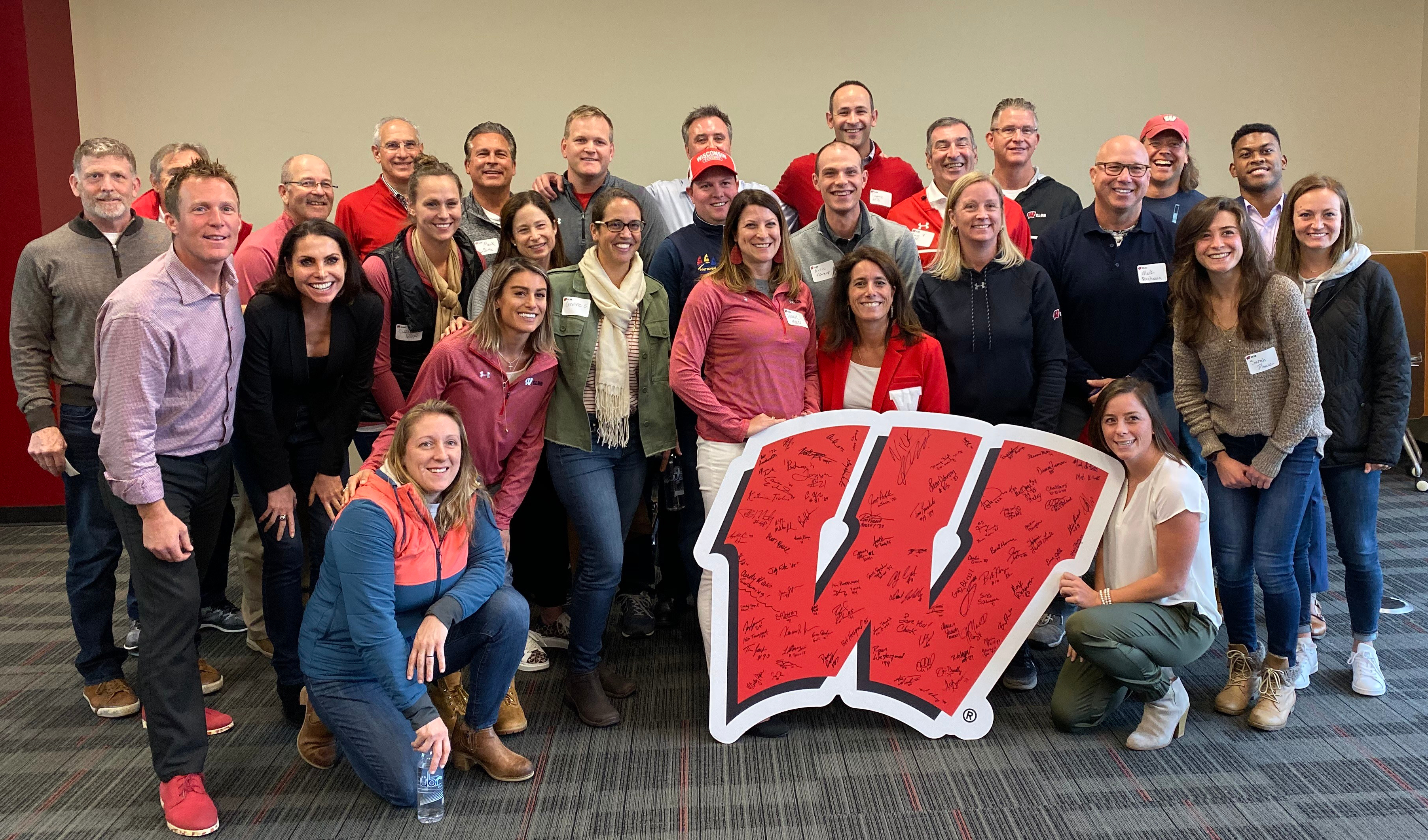
I still hang with a bunch of impressive Badgers who apply what they learned about college recruiting in their professional careers.
Key Takeaways:
Storytelling in business is simply recruiting. It is sharing the great things about you, your organization, your products, and your services, with those you want to attract. Know your audience and what they want. And then show and tell them how you can deliver against their wants and needs. The End.
*If you know someone who could benefit from this story, please share it with them.
I have never done any drugs and I never plan to. When I was a kid Nancy Reagan told me to just say no to drugs. And I listened. Then Whitney Houston told me that crack is whack. But I’m not sure she was even listening to herself. Although I don’t blame her. There are a lot of people who can’t seem to get enough crack. In fact, saying that something ‘is like crack’ is the ultimate customer experience compliment.
Getting Customers Hooked.
If you have a great product or service that you think people will love, think like a crack dealer. The crack dealer does not try to sell potential customers on the various product benefits of crack. They do not share testimonials, or research findings. Or charts and graphs. They don’t print up brochures highlighting the various features of their products, or images of happy users.
The crack dealer knows they have a hit (pun intended). So they give away the crack for free. Then they let the crack experience sell itself. And customers come running back for more. That is, until they come shuffling back for more, shaking like a Parkinson’s Disease victim.
Sample As Sales Tool
Since I launched my advertising and idea agency, The Weaponry, I have found that when we give our strategic thinking, our creative ideas and our enthusiasm away for free, the recipient very often comes back for more. I want our initial free meetings to feel like test drives of a real engagement. This approach has been a key driver of our growth and success. In fact I wrote about it here in Give it away, Give it away now!
Key Takeaway
If you want to start selling a product or service that you know is great, or you have a great offering that you are not selling enough of, try acting like a crack dealer. Give your crack away for free. Let your ideal customers experience your crack first hand. Let them feel what they are missing. Get them addicted to your crack over a short time period, or in a small quantity. Then capitalize on the addiction over the long-term. But never lower the quality of the product or service.
If the free sample doesn’t get customers hooked, your crack needs work. In which case you should keep refining and improving your crack until it is fully addictive. Focus on the lifetime value of a new customer, and the free samples will feel like a tiny price to pay for future sales.
*Don’t ever really do crack. Or sell crack. Don’t step on a crack. Don’t break your Mama’s back. And don’t show your crack. Not even if you are a plumber.
Those where you just show up and work for the clients that someone else attracted.
I have had a significant role in attracting new clients since the 3rd year of my career. In fact, I spent so much time earning the trust of prospective clients throughout my career that it gave me the confidence to launch my own advertising and idea agency, The Weaponry, in 2016.
One of the questions I have been asked most often over the past two years is: ‘Where do you find your clients?’ There are a lot of fun answers I could give. Because all of our client relationships seem to have a fun origin story. But a couple of facts stand out.
4 Fun Facts About Our Clients.
Our first four clients at The Weaponry were clients I had worked with earlier in my career.
Two of our clients have now hired The Weaponry for two different businesses.
One of our clients has now hired The Weaponry for three different businesses.
One of our collaborative partners has introduced us to 8 new businesses that have become clients.
Key Takeaway
Doing great work for your current clients is the best approach to business development. Those clients will recommend you to others. They will hire you again when they change jobs. The partners you collaborate with will see how you treat your shared clients and recommend you to other clients they work with. It has been a key driver of growth for The Weaponry. So, as Bill Belichick would say, ‘Do your job.’ Because when you do, more opportunities will come your way.











 Adam Albrecht Blog