Why you should spend 1 hour each week working on building your own business.

You know who is great at starting a business? (Besides Richard Branson.)

Someone who already works in a business.

Someone who has seen how their employer’s business runs.

They know how their current business wins and how it gets beaten.

They see the flaws to be fixed and the opportunities to improve.

In other words, the best people to start their own business are people just like you. (And Richard Branson.)

Always Be Planning

You should always be thinking of what your own business would look like.

  • Think about the systems and processes.
  • Think about the customer you will serve.
  • Think about your values.
  • Think about your culture.
  • Think of who would be on your team.
  • Think about the epic company parties that aren’t yet restricted by a buzz-killin’ CFO. (I hope Kid Rock, Beyonce and The Rolling Stones are all playing at your party, and asking you to sign their foreheads, because they know you are a rock star!)

Imagining the details of your own business is how you build your own life raft. That way, it will be ready to use when you are ready to jump. (Or if your current business sinks or you get thrown overboard.) You can use your boat to save yourself, create your own epic adventure, or sail off into the sunset.

1 Hour Per Week

Spend an hour per week thinking about building your own business.

Take it from your InstaSnapTok time.

Then, every year, you will spend 52 hours working on your own business.

10 years into your career, you will have spent 520 hours working on your business.

And 2 decades into your career, you will have spent 1,040 hours on your own business. #mathwhiz

That’s how a steady drip of thinking, formulating, and crafting turns into a business started by a veteran with 20 years of experience, a vision, and a valuable network of industry experts, coworkers, partners and suppliers.

I know this approach works. Because it is how I started The Weaponry nearly 10 years ago. And it was the best career move I ever made.

Key Takeaway

Spend a little time each week thinking about what your own business would look like. Capture your ideas in a notebook or a Google Doc. Add a little bit each week. It is a great way to slowly plan your own business before you need it. And if you never need it, it will provide a great roadmap to improve the business you are currently in. It is a win-win that could lead to the greatest adventure of your career.

*If you know someone who could benefit from this message, please share it with them.

+For more of the best life lessons I have learned check out my book, What Does Your Fortune Cookie Say? from Ripples Media. And consider subscribing to Adam’s Good Newsletter.

The Power Of Client Friends: Maximizing Your Professional Relationships.

I use a term I never hear anyone else use.

It’s not gazoinkers. Or tootsnickers. Or zwerp. All of which I use as well.

The term I use regularly that others don’t is client friend.

Even Grammarly tells me this is not a thing.

Oh, Grammarly, but it is a thing.

The term client friend is an important addition to my vocabulary, necessary to accurately describe many of the important people in my life.

Client Friend helps me express the duality of my relationship with many of my clients.

The Origin

Early in my career, I realized that I was not accurately representing my relationship with a large swath of people in my orbit by simply referring to them as clients. That was way too transactional, or distant, or businessy.

For me, the client relationship is simply the introductory vehicle to many of my favorite friendships. And the workplace is just the meetup venue for our friending actions.

So for the dictionary entry I propose the following:

Client Friend. /klient frend/ nouny. A friend whom you originally met as a client.

For comparative context, some people have drinking friends or fishing buddies. Other people have friends who they play softball with, or poker, or fantasy football. I have even heard of knitting circle friends. And hunting wives.

I have friends who I do commerce with.

We meet up and talk about their business. We talk about branding, and marketing and advertising. We talk about sales and products and services. We talk about innovation and customer experience, and off-menu creative ideas to enhance their brand image. We talk about competitive pressures, and trends and threats. (Oh My!)

And we love it!

We nerd out on all these things. Because we are gazoinkeers for business, marketing, advertising and creative problem solving.

We also share stories about the fun travel we’ve done together. And film and photo shoots in interesting places. And the great meals we have shared. And all the hilarity that happened along the way. Zwerp!

But we also talk about our families, vacations, hobbies and pets.

I freaking love making new friends. I go gazoinkers for adding new people to my world. Because my clients and I have so much in common, we typically become friends quickly, both because of the work, and beyond the work.

When I began seriously thinking about starting my own advertising and ideas agency back in 2015, a couple of my client friends called me to encourage me to do it. Then I called more client friends to talk about it. I met other client friends at restaurants and talked with them for hours about it. And when I first launched The Weaponry, my very first client was actually my friend, Dan Richards, whom I have known since we were in 7th grade in Hanover, New Hampshire.

Looking back, I can clearly see that it was my client friends who enabled me to start The Weaponry. And it has been client friends who have sustained us for the past 9 years.

We spend something like 100% of our time at work. Which makes the workplace a great place to develop and maintain friendships and deepen relationships with the people you work with. Take advantage of this rich field for meaningful social interactions. (Did I mention I also met my wife, Dawn, at work? I did. And she’s amazing!)

At the end of your career, you won’t care about the awards you won nearly as much as you will value the client friends you won and the work-related relationships you developed. Those client friends are just as good as any other form of friendship. Maybe even better. Because you have so much history and so much to talk about in retirement.

Not everyone has client friends. Instead, you may have customer friends. Or member friends. Or partner friends. Or collaborator friends. Or vendor friends. Or Joey, Chandler, Ross, Monica, Phoebe and Rachel. Collect them all. Enjoy them all. The universe put them in your world so that you can develop a human relationship. We are not just here for business transactions. We are here to engage meaningfully with each other for the greater good of all.

Key Takeaway

Make more client friends. And customer friends. And co-worker friends. And people-you-interact-with-because- of-work friends. Working with your friends makes life more enjoyable. And friending with the people you work with is the ultimate relationship hack. More and better friends lead to a better life. So make friends everywhere you can. Especially at work. And if you want to work with people who want to be your friend, shoot me a text or call me at 614-256-2850, or email me at adam@theweponry.com. I always have room for more friends.

*If you know someone who could benefit from this message, please share it with them.

+For more of the best life lessons I have learned check out my book, What Does Your Fortune Cookie Say? from Ripples Media.And consider subscribing to Adam’s Good Newsletter.
Why you need to have a need for speed.

If there is one defining factor of how the world works today versus any other time in history it is speed.

Today, everything happens faster. Not just Jimmy John’s. And Tinactin.

Communication technology has advanced from mail, to email to Slack and texting. Information arrives instantly.

News can be reported with a tweet, just seconds after it occurs.

You can stream practically anything you want to watch on demand, anytime.

AI has squeezed the gestational period of our research, discovery, query and analysis down to a mere burp.

So Why All The Slow Motion?

Yet, with all of the technology enabling us to move at Lightning McQueen-speed, I am constantly surprised by how slow many organizations move.

Nearly all technological friction has been taken out of our systems, yet human friction is still ubiquitous. K, why is that?

Human decision making, prioritization and hesitation still kill momentum, push deadlines and slow progress to a snail-mail’s pace.

The Weaponry, the advertising and ideas agency I lead, was launched 9 years ago, and the urgency of the social era was baked into our DNA. Because in the social era, opportunities come and go in a flash. In the social era, you must harvest social opportunities during the very short season when the opportunities are ripe. This can be as short as a few seconds, but never longer than a couple of days.

One of the mandates for our organization is to operate with the urgency of social media. Move quickly. Jump on opportunities. Thwart threats quickly. Move faster than other organizations. It was programmed into our genomic code from the start.

When we present timelines in our proposals, we share aggressive timelines, and note that this timeline only works if the client can keep up, and turn approvals around within our reasonable, but not generous, turnaround periods.

Yet as much as we hear about how important the work we do is to our clients’ success and how they want to get it done quickly, organizations can rarely keep up with their own ambitions. They are simply not built for speed and urgency.

While not all windows of opportunity close as quickly as social media does, all opportunities are finite.

When you fail to get your advertising in market in time, you also fail to drive sales during that time. For seasonal businesses, that is revenue lost forever. For non-seasonal businesses, it means your sales slide later in the year or into the next year. When you delay decisions, your overall revenue numbers for the current month, quarter or year are lower than they should be. That’s a loss. And an avoidable one.

My friend and client Bob Monnat, Senior Partner at Mandel Group Inc, shared some insights with me about one of his organization’s best partners. He revealed that they are great partners because they are always pushing them to move faster, to decide quicker, to get the work done so that they can ultimately turn their projects into cash-flowing assets.

Never lose sight of the reason businesses exist. They are created to make money. And time is money. The quicker you move, the more money you are likely to make.

Key Takeaway

Move faster. Today, advanced technology means that the slowest part of the process is the humans who have the most to gain. Slow actions and slow decisions cause wasteful delays. Identify the bottlenecks and pinch points in your process. Then attack them. Address your delays to help move your organization faster so that everyone can enjoy the success of speed. It is today’s competitive advantage.

*If you know someone who could benefit from this message, please share it with them.

+For more of the best life lessons I have learned check out my book, What Does Your Fortune Cookie Say? from Ripples Media. And consider subscribing to Adam’s Good Newsletter.

17 Ways To Develop Your Entrepreneurial Mindset

On Monday, I had the opportunity to talk to a talented group of young entrepreneurs about the entrepreneurial mindset. This 2025 cohort of Youth Mean Business was inspiring, engaging, curious, and full of good questions and good answers. They made me feel like a total Slackle Jack for waiting until I was in my 40s to start my own business.

To prepare for my talk, I combed through the things I feel have most helped me develop my entrepreneurial mindset. This mindset offers a valuable approach to life that enables you to create value for others. It’s not just about starting businesses. It’s about creating value, solving problems, and developing resilience in yourself. But like Trix Cereal, these approaches aren’t just for kids. Here are tips anyone can use. Even silly rabbits.

17 Ways To Help Develop Your Entrepreneurial Mindset

  1. Spend Time With Other Entrepreneurs.

 Jim Rohn famously declared, “You are the average of the five people you spend the most time with.”

So, spend time with entrepreneurs to become more like them. Entrepreneurs think differently. They see the world through a different lens. Surround yourself with them. Read about them. Ask them questions. It’s the fastest way to transform your mindset. And for Pete’s sake, stop hanging out with Debbie Downer.

2. Tap Into Your Energy & Enthusiasm

They make things happen. And they attract customers, employees and partners.

3. Create Things

James Clear shared, ‘Education teaches you to analyze. Entrepreneurship teaches you to create.’

So always Be Creating.

Not just businesses:

  • Systems
  • Processes
  • Clubs
  • Blogs
  • Newsletters
  • Events
  • Content
  • Videos
  • Words
  • Lists of bullet points

4. Develop a Bias Towards Action

Nontrepreneurs Talk. Entrepreneurs Act.

Take action. When you see an opportunity that you think is right for you, take steps towards it. Each time you take a step, the next step is likely to reveal itself. It is more important to take action than to plan everything out ahead of time. The need to plan everything will prevent you from taking steps. And there is no elevator to success. You’ve got to take the steps.

5. Be An Imperfectionist.

Perfectionists have to get everything exactly right. They down’t lyke mayking missteaks. But entrepreneurship is quick, messy and full of janky solutions, until you can afford better solutions.

Create quick models, products, services, content and promotions. Then improve as you go. That is how life works. You don’t have to have everything figured out from the beginning.

6. Give Yourself Permission To Be An Amateur.

One of the greatest gifts I gave myself as an entrepreneur was the permission to be an amateur.

It took the pressure off. It allows me to learn as I go. And to not beat myself up over the mistakes I would surely make, Shirley.

In fact, I loved what this did for my entrepreneurial mindset so much that I have adopted this in all areas of my life.

Today, I give myself permission to be an amateur as a:

  • Parent
  • Husband
  • Speaker
  • Coach
  • Blogger
  • Author
  • Newsletterer
  • Content Creator
  • Brain Surgeon (Which is probably why my rating is so low on Health Grades.)

As a result, I am always learning a lot. And I remain open to suggestions.

7. Read

Read as much as you can. On a plane. On a train. In a box. With a Fox. Entrepreneurs need to know things about all areas of their business.

  • Read about business and entrepreneurship.
  • Read for motivation and inspiration.
  • Read biographies of successful people to pick up clues you can use to be more successful.
  • Read to practice the slow grind of reading.
  • Listen to audiobooks when you are commuting.

8. Be Trustworthy

The most important thing you need to do to become an entrepreneur is to have people trust you.

To earn your first customers, you have to sell on trust.

  • So do what you say you will do.
  • Show up on time.
  • Deliver what you said you would deliver
  • Catch people if you do that trust-fall team-building exercise. (But if you do drop someone, make sure to get it on video.)

9. Approach Your Business Like A Video Game

Entrepreneurs face endless challenges and obstacles. Embrace the challenges.

Video games are fun specifically because they offer a challenge. The deeper you get into them, the higher level you achieve, the more challenging they get.

That’s part of the fun.

When things get hard, think of it as a fun and interesting challenge that will help you level up and become even better. And remember, you get points for eating Inky, Pinky, Blinky and Clyde.

10. Collect Friends

All opportunities come through people.

The more people you know the better.

My very first client was a friend of mine I have known since 7th grade.

  • Always be meeting new people.
  • Introduce yourself to people.
  • Ask for introductions to people you think would be good to know.
  • If you don’t have business cards, get them printed and hand them out whenever you can.
  • Then, make a regular effort to reach out to your people.
  • Especially when you don’t want or need anything from them. (Read this bullet again. And then reach out to me to practice this.)
  • This is how you maintain relationships and make them valuable when either of you needs something later on.

11. Grab Chocolate Milk

Get together with people to talk.

Adults grab coffee or beer or wine or cocktails.

I don’t drink alcohol.

So I grab chocolate milk.

Or Ice Cream

Or Juice or Soda.

Or Carmels.

It all works the same way. These activities offer a good opportunity to get together and talk and develop your friendship, share ideas and discuss other opportunities.

12. Become A Problem Solver

Businesses are designed to solve problems.

So, become good at spotting problems.

And become good at solving them. Like Vanilla Ice.

This means replacing ‘I can’t do that.’ with ‘How could I do that?’

13. Focus

You will have the greatest success when you really focus on the most important thing at the moment.

FOCUS = Focus On Completely Until Solved

Focus fully on the important things you need to do or create. Do less. And do them better.

*Focus is the English word that many of my native French-speaking friends pronounce most hilariously. Listen for it. And let me know when you hear it.

14. Be Willing To Sacrifice

To be a successful entrepreneur, you have to sacrifice things you would like to do or have now. But you do this to get more freedom and more opportunities later. The delay of gratification means more gratification later. So don’t eat the first marshmallow right away.

15. Don’t worry about how much milk you spill as long as you don’t lose your cow.

You will lose money at times.

That’s ok.

Just don’t lose your money maker, and you will always be ok.

16. Bet On Yourself

You are the safest bet you will ever make. You can stack the odds in your favor through your hard work, determination, and creativity.

Bet!

17. Don’t Burnout

You need to pace yourself.
Entrepreneurship is a marathon. Not a sprint.

Key Takeaway

Entrepreneurship is a mindset. It is a way of approaching life. So develop yours. And it will empower you to create businesses and all kinds of other valuable things that make the world a better place. And remember to share what you know. When others approach you to share your knowledge, do it. It’s one of the best ways you can add value to the Universe and positively impact lives.

*If you know someone who could benefit from this message, please share it with them.

+For more of the best life lessons I have learned check out my book, What Does Your Fortune Cookie Say? from Ripples Media.And consider subscribing to Adam’s Good Newsletter.
11 Essential Truths About Great Advertising.

Advertising is typically thought of as a creative endeavor. More Art Garfunkel than science. But here are 11 simple truths about making great and effective advertising that every marketer, businessperson and communications professional should know. At The Weaponry, these truths drive everything we do. Here they are in a particular order.

11 Truths About Great Advertising.

1. It stems from great strategy: All great advertising and marketing begins with a great strategy. You have to know how you win. You need to know which of your advantages to leverage. You need to know who your audience is. And what they need to hear from you in order to give you their money, their vote, or their blood.

2. It differentiates. Great advertising sets you apart from the crowd. You are no longer a commodity. You are special. Like that little girl from The Help. This is the power we build into strong brands. It makes you irreplaceable. You want to be seen as a special exception. Be the option that sparkles and calls your customer’s name. They have to think, This is the brand that gets me.

3. You haven’t seen or heard it before. Great advertising feels new. It tickles a part of the brain that has never been tickled before. It offers phrases, imagery, design, or attitude that you have never encountered before. Which helps your advertising land in a new place on the perceptual map. Like new art. Or Chipotle. Which is why so many new food concepts are now described as the Chipotle of their cuisine type. You also know that Chipotle has built a strong brand because when people tell you they are going to grab Chipotle, you don’t imagine them grabbing a smoke-dried jalapeno.

4. You have to earn a longer leash to create it. Great advertising often represents a perceived risk. Because it feels different than what you’ve seen from the brand or the category before. Which means that the client-approver needs to trust the creators. The client approvers must trust that the creators have their best interest at heart. They must trust that this is a smart and calculated departure from the past, or from a norm. (Norm!!!) They must trust that you know what you are doing. This type of trust, which I call earning rope, or earning leash, takes time. Sometimes this is earned through a handful of interactions, like during the new business pitch process. Sometimes this is earned over years of working together. But without first earning trust, advertisers are less likely to jump the gap with you. (Which has nothing to do with mugging people at The Gap. Or minding the gap. Or Michael Strahan.)

5. It avoids layers of approval. Great advertising doesn’t get approved by an army of approvers. The more approvers that are involved, the more likely the work gets pushed right back to the center of the expected range from your category. The people who will be approving the great work should all be in the room or on the Zoom when the great work is presented. They should be exposed to the strategic thinking and the insights that birthed the idea. And they should be able to compare the work in question to the other ideas presented and their relative merits. (Not the merits of their relatives.)

6. It can not be evaluated devoid of the strategy. To judge great creative work you need to know the strategy. This is critical. If you don’t know the strategy the work can’t be right and it can’t be wrong. The strategy represents the aim of the work. Without knowing the aim, you can’t know if it hit the target. Armchair quarterbacks don’t know what the insiders know. You have to know the insider information to judge the idea and the execution.

7. A great idea gets better partners than your budget deserves. Creative people love creative ideas. They are more interested in bringing a creative idea to life than making money. Which means they will often slash their rates or even do work for free to be involved in great creative work that they can add to their portfolio, reel, or website. As a result, a great creative idea attracts talent and resources beyond what you can afford. So great ideas often get favorable treatment and privileges that ordinary work does not. In turn, it gets even greater at each step in the process.

8. You have to sweat the details. To make great advertising, you have to start with a great idea. But then you have to pay attention to all of the details throughout the process. You have to set high standards for every aspect of the work, and then be vigilant, and critical, to ensure that every element is done right. The words, colors, imagery, size of everything, performances, sound, casting, announcer, kerning, leading editing, graphics, photography, and retouching all have to be right. A flaw in any of those areas can ruin the whole thing. Like the pea under the mattress, the fly in the soup, or the toothy grin on Mona Lisa.

9. It causes envy. Great work may seem subjective. And in some ways it is. Supreme Court Justice Potter Steward once remarked that hardcore pornography may be hard to define, but “I know it when I see it.’ The same holds true for great advertising. The measure I always use is that it creates envy. When I see great advertising, I wish I had created it. I wish I had it in more portfolio. I wish I could brag about it. In fact, when I am hiring creative talent that is my requirement. The candidate must have work in their portfolio that makes me jealous. That’s what great advertising does. And indeed, great work of any type should create envy. (Side note: Don’t you wonder just how much hardcore porn Justice Steward has seen?)

10. It drives results. Great advertising can’t be great without driving results. Results don’t just mean sales. Because there are other factors that advertising can’t overcome that impact a final sale. But great advertising must drive interest, or engagement, inquiries, calls, store visits, website traffic, leads, votes or whatever it was intended to do. Ultimately, this is the measure that trumps everything else. (That was not a political sentence.) Agencies and marketers alike win when the work works.

11. It makes people look forward to your next idea. Great advertising flips the dynamics in the favor of the advertiser. The audience no longer sees you as an interrupter. They see you as interesting, entertaining, smart, or funny. They see you as adding value to their lives. And when you do that, the world looks forward to what you do next. They want to know what great idea you will share next. Whether it’s your funny Super Bowl commercials, your engaging content, your frame-worthy print ads, your stunning billboards, or your crazy stunts, great advertising means you are no longer interrupting. You are anticipated. You are sought out. This is the ultimate benefit of great advertising. The gatekeeper is keeping an eye out for you. And when you appear, they invite you to cut the line and make your way inside.

Key Takeaway

Great advertising is fundamentally different than technically sound advertising. It is created differently. It is approved differently. It triggers a different and more valuable response from your audience. Great advertising offers tremendous value and creates advantages that help you win your unfair share of the pie. If your advertising is not great, revisit this list to understand why and where it may have gone wrong. Then fix it. You always have the ability to get it right.

*If you know someone who could benefit from this message, please share it with them.

+For more of the best life lessons I have learned check out my book, What Does Your Fortune Cookie Say? from Ripples Media.

Navigating Growth Amid Headwinds That Make Big Goals Impossible.

In a perfect world, you would get better every day. You would become smarter, make more money, lose weight, grow your business and enjoy clearer skin 7 days a week. It’s what competitors want to do. You have these kinds of growth desires both at work and in your personal life. They tend to be even stronger in the months leading up to your high school reunions.

But at times you will face headwinds that won’t allow for growth. Not even Bob Seger can run against them. These headwinds won’t allow you to hit your goals, increase revenue, lose weight, or improve on whatever metrics you are using to measure yourself.

This is because sometimes the prevailing conditions work against you. These conditions can come in various forms, including the following:

  • Interest rates
  • Pandemics
  • Elections
  • Seasons
  • Weather
  • Fuel Prices
  • Illness
  • Injury
  • Cost of Goods
  • Scarcity of Labor
  • Venus in retrograde
  • Holidays
  • Recessions
  • Depressions
  • Travel
  • Embargoes
  • Bird Flu (Good luck with those Easter egg dye kits, PAAS…)

These factors can freeze industries and opportunities. They are abnormalities that create additional uncontrolled variables in your success experiments. But they are typically temporary. Unless your category has been totally disrupted. (Make sure you don’t mistake a headwind for category disruption. Or you will find yourself working at Blockbuster, waiting for customers who are never coming back.)

Remember the life-saving advice not to swim against the forces of a riptide. Apply the same advice to headwind conditions. Don’t tire yourself out trying to fight a force you can’t beat. Instead, conserve your energy. Wait it out. Or escape the headwind by moving to a different product, category, opportunity or goal.

Key Takeaway

Set lofty growth and improvement goals for yourself and your organization. But recognize when conditions create headwinds that make them difficult or impossible to achieve. Those conditions are almost always temporary. Adjust your expectations. And prepare to resume your march towards your big hairy, audacious goals as soon as the headwinds abate.

*If you know someone who could benefit from this message, please share it with them.

+For more of the best life lessons I have learned check out my book, What Does Your Fortune Cookie Say? from Ripples Media.

Top 10 Must-Have Software for Startups

There has never been a better time to start a business. Because so much of the infrastructure needed to run a business is simply a small stack of software that you can set up and run online. The software needs of a newborn business may seem intimidating from the outside. But they are easy to find, easy to implement and easy to scale. Like Eazy-E. To help make it even easier for you to start your own business, I am sharing the ten software suggestions to get your startup party started right.

One of the first things we did when we created The Weaponry in 2016 was set up a series of software accounts. This, in essence, becomes your operational center. It’s super easy to set up. And generally quite affordable to maintain. Not only are the software accounts scalable, which means you pay a small amount for a small business, and then slowly increase your payments as your needs or size increase, but there are free versions or free trial periods of many software offerings that allow you to try them out before you get too deep.

Here’s a quick overview of the software systems we use to run The Weaponry.

Google Workspace is the central hub of our business. It offers email. It offers Google Docs for writing. (I also write my books on Google Docs.) It provides Sheets for spreadsheets (not bed sheets) and Slides for building decks and presentations. (Not playgrounds.) It offers an online calendar, chat, a file storage drive for documents and much, much more. Microsoft Office also offers this type of functionality. Choose your favorite and get businessing!

We use Slack for instant communication. This is the primary venue for our teams day to day communication. This takes a lot of unnecessary traffic out of your email inbox. You can have real-time communications and share files instantly on this platform. Think of it like a super chat platform. (Or chatform.) You can create dedicated channels for specific accounts, departments or teams. There is a ton you can do for free. Or you can upgrade and also use Slack to store all of the documents you ever share on the platform. Which is cool. I also find that Slack is a better platform for sharing funny comments than email because it is quicker. And the little emoji responses make it feel like people think you are funny. (Just in case funniness is important to you.)

Quickbooks is the accounting software we use to track and manage all of our accounting. This is the heart of our accounting world. You connect all of your business bank accounts and credit cards here. It makes it easy to create and send invoices (bills) and to know what is due and when. It also provides reports (profit and loss, profitability, balance sheets, etc.) and dashboards that help you manage your business. You can set up Quickbooks to receive payments from your clients, including via credit cards. Get this going as soon as you can afford to. It will become the backbone of your accounting system. And your business’s scoreboard. It helps make everything official, and easy to share with your tax accountant when it is time to talk taxes. And best of all, Quickbooks is not the book equivalent of quicksand. (Just in case you were wondering.)

We use Harvest for all of our time tracking and reporting. Our team members enter the time they spend on each task, project, or client on a daily basis. This easy-to-use software helps us track our labor costs for every client. Plus it enables us to track our staff utilization. So we always know how much of our team’s time is billable. Which helps you know when you should hire more people. However, this software does not let us know the best time to harvest the stuff we grow in our gardens. I hope they fix that in the next update.

We use Asana as our project management tool. We use this to help house important information like timelines, files, overviews, and due dates on each project, by client. This becomes the central hub for all information needed to deliver a project. Like The Manhattan Project, The Alan Parsons Project, or The Mindy Project.

We use Gusto to process our payroll. You want a payroll processing software to help make sure you are automating everything in accordance with the IRS as well as state and local laws related to taxes and various benefits. Plus, it just makes your life a lot easier when you’re not wanted by the feds for tax evasion.

We use Guideline to provide and administer our 401(k) plan. Guideline is offered as a partner through Gusto. That makes it an easy add-on when your organization is mature enough to offer this great employee savings and retirement benefit. Which is kinda like hitting puberty for a startup. Only without the bad skin.

We use DropBox for file storage. This works as both a server and as a way to share and request large files with clients and partners. As an advertising and ideas agency, we create and move a lot of large files. Like art files, video files, X-Files and Simone Files.

We use Zoom for video conferencing. Thanks to the COVID-19 global pandemic, everyone on the planet knows about Zoom. At The Weaponry, we’ve been using Zoom for both internal and client meetings from day one. Because our clients are all over the country and in Canada. Not to mention we have worked with great clients in England, France and India. (Except I did just mention them. Which ruins the not-to-mention thing.) Google Meet also works well, and is offered as part of the Google Workspace. And if you go with Microsoft software you can use Teams.

We use Grasshopper as our virtual phone system. As a startup business you don’t need a receptionist or a fancy phone system. Grasshopper and options like it allow you to create a virtual system that connects your teams’ mobile phones and makes you appear professional and organized in a way that transcends simply using your personal phone as the phone number for the business. (Which of course is fine to do in your early stages. Part of the charm of a baby business is having a voicemail that says, ‘Hi, you’ve reached Billy’s voicemail, and the world headquarters for Galactic Pickles.)

Specialty Software

You will also find specialty software available for your specific industry. In our world, those things include the Adobe Creative Cloud for all creative development software including Photoshop, Illustrator, InDesign and more. We use Figma when creating websites. A quick Google search will help you discover the useful software services available to you and your industry online.

To Shop or Not To Shop…

There are plenty of other options for each of the software offerings shared above. But my goal is not to list all the options. It is to show you what you can grab today and get going so you don’t put off your great business idea any longer. I encourage you to look at these options first, and if you have a problem with something they don’t offer that you want or need, keep looking. But don’t let research and shopping turn into procrastination and delay. The key is to get going. And get rid of all the things that are stopping you from starting. Which sounds funny, but it’s true.

Key Takeaway

It has never been easier to set up your business infrastructure online. Start with the relevant software shared here. Shop for potential alternatives if these options don’t serve your specific needs. Many of these are available as free versions to get started, or for very low trial rates. The software offerings make it easy for you to set up a fully functional business quickly. So don’t let your infrastructure needs delay your entrepreneurial dreams. You don’t even need an IT expert to get these resources up and running. I am living proof of that.

*If you know someone who could benefit from this message, please share it with them.

+For more of the best life lessons I have learned check out my book, What Does Your Fortune Cookie Say? from Ripples Media.

If you want to start a successful business, start getting involved in your community. 

You’ve heard the saying that it takes a village to raise a child. Well, the same principle applies to creating a business. Because you need customers, suppliers, employees, partners, contractors, references and promoters to make a business sing. Even if you’re not in the singing business. In other words, even as a solo entrepreneur, you can’t do it alone.

That’s why it is so important to get involved in your community. As a community member, there are countless ways to show your community they can count on you, like an abacus. You can get involved as a volunteer, member, attendee, leader, or sponsor. You can teach, coach or create. You can donate your time, talent, treasure or tasty treats. And all of this helps create fertile ground to grow your business.

This happens in several different ways.

First, the more people you know, the more people will know about your business. Think of this as word-of-mouth advertising about the existence of your business. This is extremely beneficial. Because the first thing a business needs to be successful is for people to know it exists. It’s hard to hire or buy from a business that you don’t know exists. Because if you are invisible or autonomous, you are wicked hard to google.

Speaking to high school students about my career path and why I get to wear flip-flops to work.

Second, being actively involved in your community helps people connect the dots for you. (In some communities, the dots are actually women named Dot. Especially in the senior community.) The more people know about you and your business, the more likely they are to share their relevant connections to businesses, suppliers, distributors and other experts and resources that may benefit you.

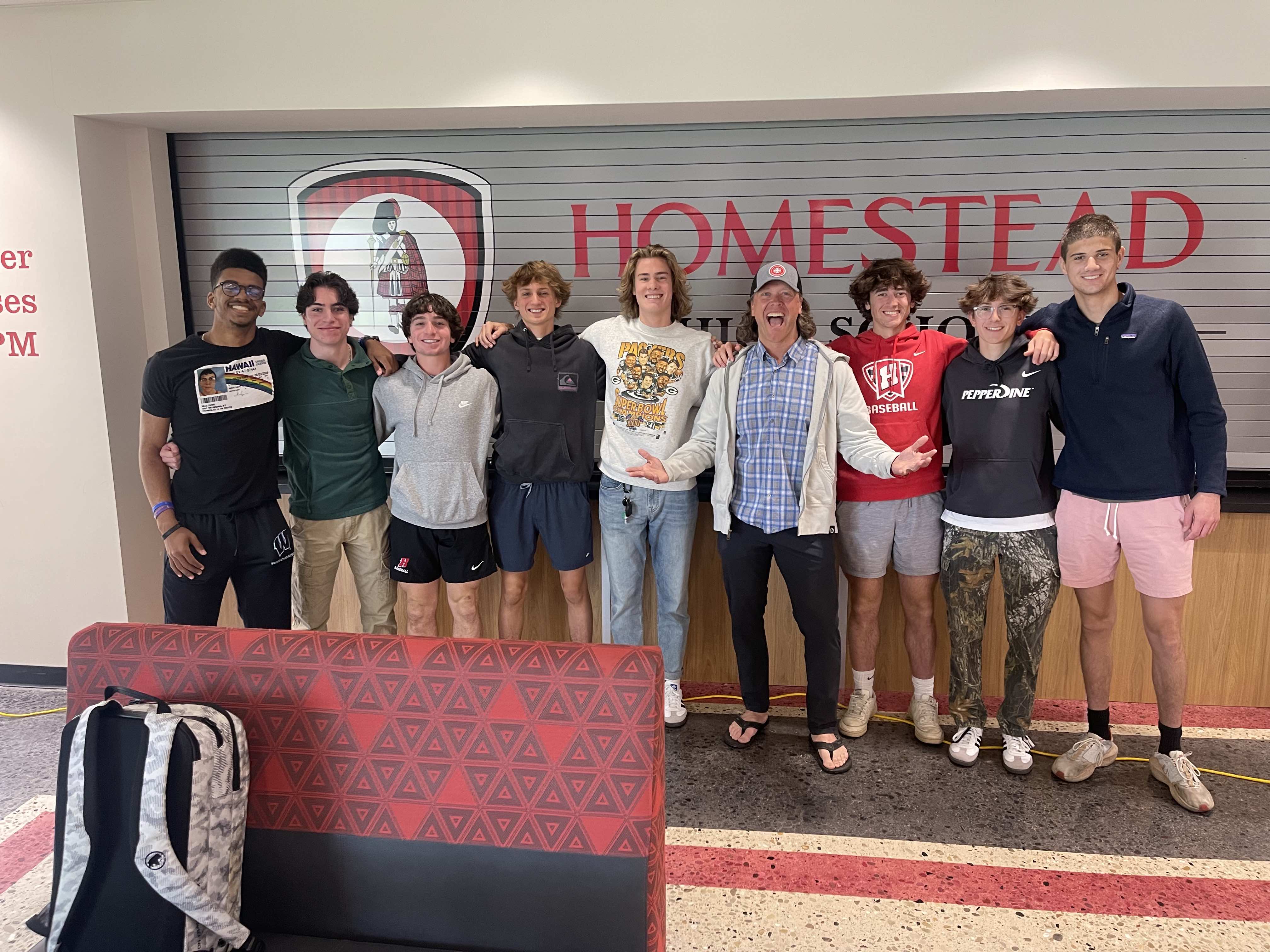
Me and some of the amazing ladies I have coached on the girl’s track team at Homestead High School.

But what may be even more important is that there is a great reciprocity factor at play. When you support your community, the people of your community are more likely to support you. It’s a thing. This happens as community members buy from you, refer potential customers to you, or include you on valuable lists, or in media or social opportunities. Community members look out for their own. And the more valuable you are to your community, the more they will look out for you. Which means the more time you spend in the dunk tank at the community fundraiser the less likely your business is to get dunked or tank in real life.

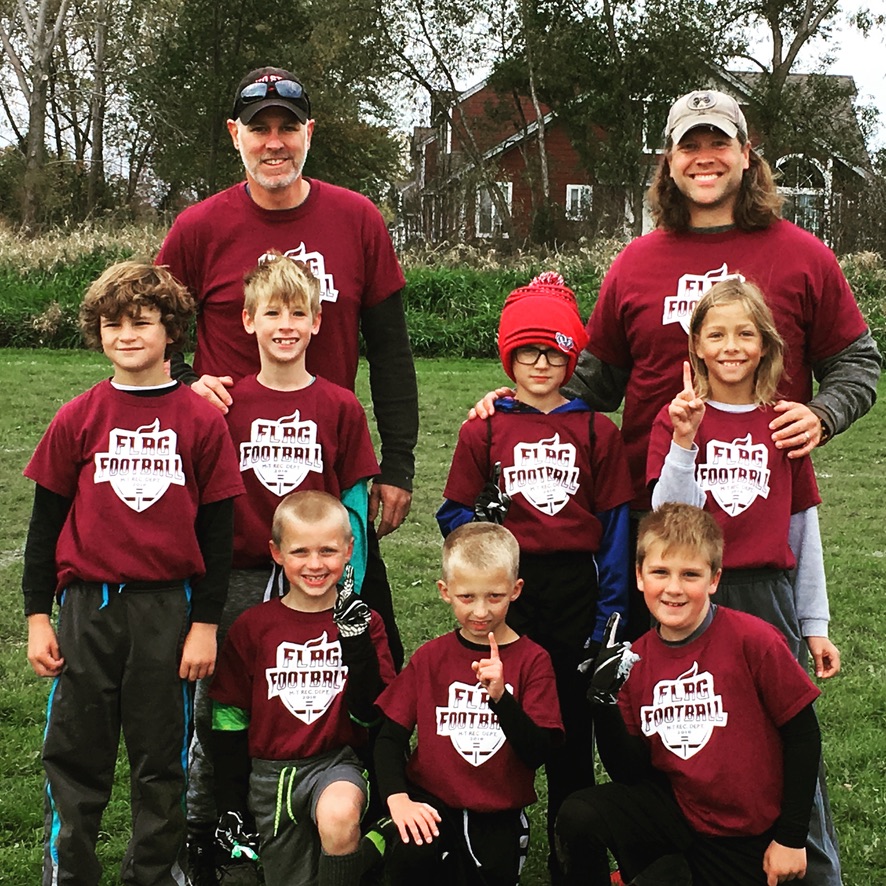
Coaching flag football and teaching the boys which finger is called the index.

Your community could mean your neighborhood, your town, or the larger city you live in or near. (I like to think of this like being an active member of the village people.) But your community could also mean a community of interests at a local, state, or national level. It could mean becoming active within an industry, association, or regular event. The key is to consider where your business is active and get involved there.  

I am involved in my local community in a number of ways. I am a regular speaker within our local school district, where I talk about my career path to middle and high school students. I regularly speak at the university in our town too. (It used to be our town too…) I have coached high school track and field for 4 years. I have coached youth football for 8 years.

My business, The Weaponry, has been a presenting sponsor of our youth football program. Which included signage, announcements at games, company logos on program-issued clothing and mentions on the program website. All of which help get the word out about my business and our interest in being athletic supporters to the local community.

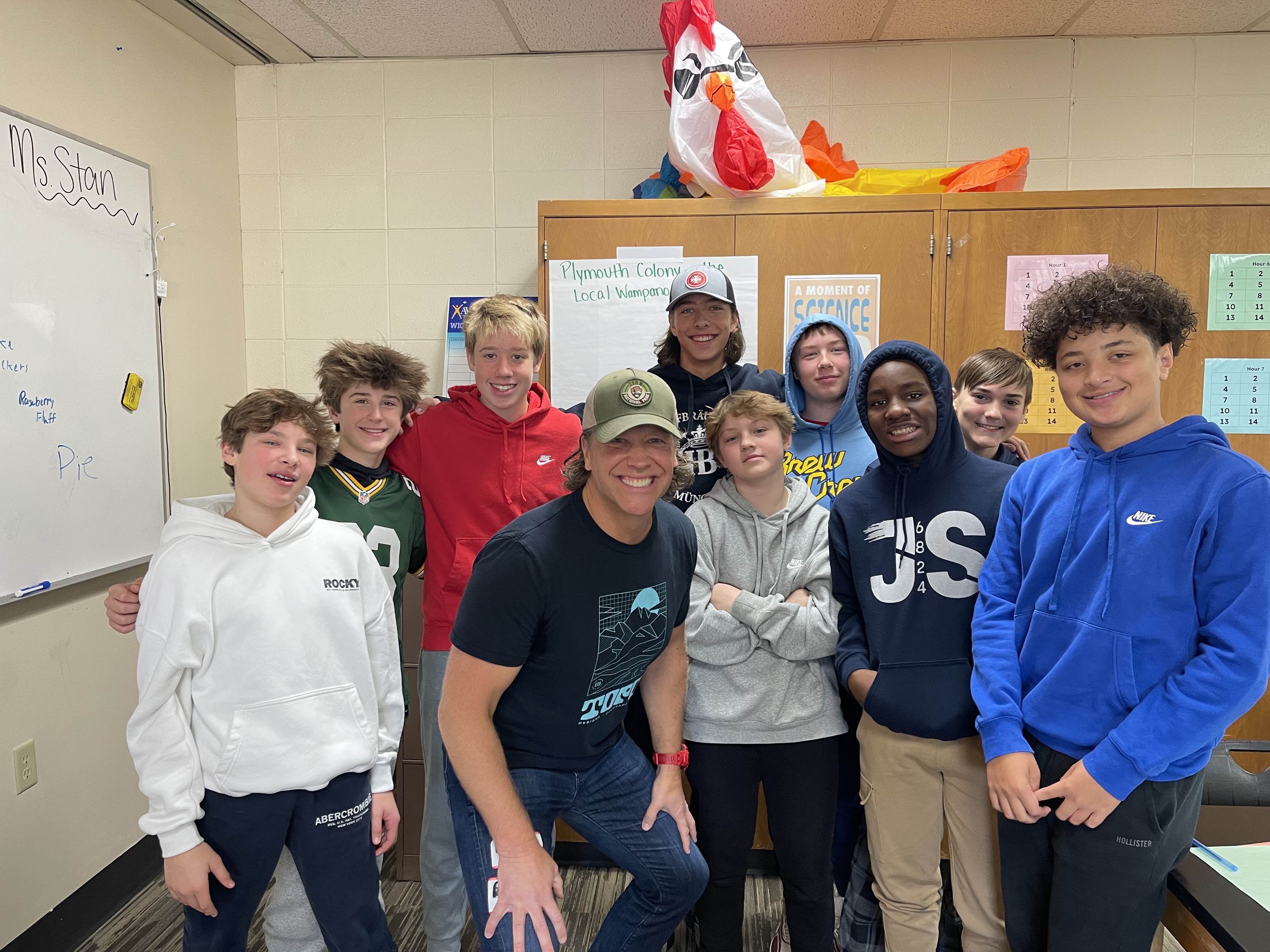
Speaking to my guys at Steffen Middle School, and a partially inflated chicken.

My family and I also attend band and orchestra concerts and sporting events of all types. We go to and participate in parades, festivals and fun runs. (And eat Funyuns.) We volunteer at concession stands and other activities that add value to our community. We are seen at local events regularly. And all of those events, both large and small, create connections and relationships and keep me and my business top of mind within our home base. It’s not the primary reason we do all these things. But I can assure you that your involvement is also good for you, your reputation and your business.

As you are planning or growing your business, make sure to get out and spend time supporting and adding value to your community. The more involved you are in your community, the more you will be connected to others and the valuable opportunities they can introduce you to.

Key Takeaway

As an entrepreneur or business owner, the more involved you are in your community, the more you connect with others and the opportunities they can introduce you to. You want strong ties to the people around you, and this is one of the best ways to get to know as many people as possible. Even better, when you support your community and its interests, you will find that your community supports you and your interests, too. It’s what communities do.

*If you know someone who could benefit from this message, please share it with them.

+For more of the best life lessons I have learned check out my book, What Does Your Fortune Cookie Say? from Ripples Media.

The 2 Key Factors That Determine Success in Sports and Life.

I have spent a lot of time coaching and participating in sports. Both team sports and individual sports. My teams have won and lost. The individual athletes I have coached have both dominated and been dominated. Along the way, I have carefully analyzed what creates wins and losses. And I have discovered that there are 2 key factors that determine the outcomes of all sporting events. And despite what Nike and Mars Blackmon would like you to believe, it is not da shoes.

The key 2 factors that determine the outcomes of all sporting events are effort and errors.

Effort

In sporting competitions, the effort exerted by a team or individual competitor is stacked directly against the effort exerted by the other team or individual competitor.

The more effort you exert, the more likely you are to win. This is true in contact sports, races of all types, gymnastics, putting the shot, dodgeball, and Red Rover. (Where you always ask your opponent to send that low-effort kid over.)

However, effort is not the only factor at play. (See what I did there?)

Errors

The other key element that impacts every sporting event outcome is errors.

There is an ideal way to perform every move in sports, from the discus throw to the jump shot to the form tackle to the Triple Lindy. Any deviation from that technique, form, move or execution is an error. The more errors you commit, the less likely you are to win. Like Bruce Hornsby said, that’s just the way it is,

Sometimes, errors result from a lack of focus and are self-created. Other times, your errors are forced by your opponent. In fact, it is your job as a competitor to force errors in your competitors. You do this either through physical effort or through mental or psychological stress applied through pressure, confusion, conditions, or crowd noise. (Although crowd noise is illegal in tennis and golf.)

However, you and your opponent aren’t the only ones committing errors. There are also errors made by officials, judges, referees, umpires, scoreboard operators, timekeepers, and eager Cubs fans in left field excited to catch a foul ball. Their errors have the potential to completely change the outcome of a competition. Those are simply the facts of life, like Tootie, Blair, Jo and Mrs. G.

As a competitor, there are two things you can do to impact the outcome of a sporting event.

  1. Maximize your own effort.
  2. Minimize your own errors.

The rest is beyond your control.

Beyond Sports

The impact of effort and errors doesn’t just apply to sports. The same key factors influence such varied fields as business, relationships, and academic success. They are the key ingredients in gardening, investing, music performance, and even picking up hotties at a nightclub. So pay close attention to both your successes and failures. You’ll find these two critical variables play a major role in each.

Key Takeaway

Success in sports is simply a result of maximizing effort and minimizing errors. It is why you train and improve your strength and stamina. It is why you practice and drill over and over and over again. But these same influences on sports also determine the outcomes in most areas of life. From marriage to sales to self-confidence. Which is why sports are so valuable. They teach you how to be successful in all areas of life. And that’s the great win for us all.

*If you know someone who could benefit from this message, please share it with them.

+For more of the best life lessons I have learned check out my book, What Does Your Fortune Cookie Say? from Ripples Media.

Keys to a Successful Marriage or Business Relationship: Lessons from My Grandfather.

Marriage is a fascinating human experience. It’s both highly rewarding and challenging. Yet while most couples put a lot of preparation into the wedding day, few put much, if any effort into preparing for the marriage itself. Which is why half of marriages end in I don’t. And a healthy percentage of the other half of marriages aren’t as healthy as they could be.

The Program

To help prepare for our marriage, my wife Dawn and I listened to an audio program called Marathon Marriage. We learned the many lessons and philosophies of the program and did all of the exercises shared in the 4 CD set. (At least it wasn’t on 8-track cassettes.) It was a good reminder that just as you need to prepare to run a successful marathon, you need to prepare for a long and successful marriage. So we stocked up on plenty of Gatorade and snacks. And we felt like we had a good game plan.

The Mentors

Then, on our wedding day I wanted to cram in one last bit of preparation. So I scheduled breakfast with my three marriage mentors, which included my dad and my two grandfathers (who would all laugh me off the family tree for calling them my marriage mentors). At the time, my parents had been married 32 years. My two sets of grandparents had been hitched for 61 and 63 years.

After we sat down at Emma Krumbees in Wausau, Wisconsin and worked through some Northwoods pancakes and sausage, I decided it was time for the knowledge share. I asked The Paternity Council, ‘What is the key to making a marriage great?’  With 156 years of experience at the table, I was about to get the fatherlode of great advice.

Then my 86-year-old maternal grandfather, Kenny Sprau, crossed his arms, leaned back in his chair and shared,

‘Keep doing what you’re doing.’

Um… WTF Grampy?  61 years of trial and error, nine kids and a World War, and that’s all you’ve got?  I wanted to give him a mulligan and see if he could hit it past the ladies’ tee this time. But he went on. ‘You have to keep doing the things that got you to this point.’

My Grampy, Kenneth Adam Sprau. (Thanks for the hair.)

Perspective On The Advice

While at the time the 29-year-old me was totally underwhelmed by the advice, over the past 22 years I have developed a deep appreciation for what Grampy Sprau said. Because when we are dating, we are at our best. The unfortunate tendency is to drop the hard work, energy, attention, and charm we put into the relationship after the contract is signed. Without pouring that effort, care and prioritization into the relationship, the relationship isn’t as healthy and strong as it was during your courtship and engagement. Which is kind of like leaving the cap off a bottle of soda-pop, only to realize that it’s the cap that keeps the soda popping.

Over our 22 years of marriage, I have recognized plenty of times when I was not putting in the same kind of attention and prioritization into our relationship as I did when we were just kids in the heartland, like in that little ditty ’bout Jack and Diane. It gets much harder alongside the demands of raising children, building a successful career, growing a business, and the effort required to fend off the Dad bod creep. But whenever I find that my attention to my bride has slipped (or I am reminded by my bride that my attention to my bride has slipped), I use Grampy Sprau’s advice, to help make the appropriate adjustments and corrections.

Applying The Advice To Business

Eight years after launching the advertising and ideas agency, The Weaponry, I have discovered that Grampy Sprau’s advice holds true in business as well as marriage.  You need to treat your potential clients and partners well. Act as if you would like nothing more than to spend the rest of your time together. Listen. Make them laugh. Show them you are interesting, kind and thoughtful. And then after you get the contract signed, keep doing what you’ve been doing.

In business, as in marriage, listening and collaborating are valuable approaches to your growth strategy. Clients and spouses alike really like that stuff. (Crazy right?)  When you respond favorably to a client’s request, they generate something called ‘good feelings’ about you.  And these ‘good feelings’ make them want to see you more and work with you more. And the result is business growth.

The opposite is also true.  If you are the all-time best seller at The Jerk Store, no one wants to be around you. This is true of both the individual and the organization.

If you recognize complacency, apathy or combativeness between your organization and your clients or between you and your spouse, stamp that out like a flaming bag of dog poo on your front porch. The behavior may feel justified today. But you’ll regret the justice leveled tomorrow when you’re trading the offspring in the McDonald’s parking lot.

Key Takeaway

Treat your spouse the way you did when you were dating. Treat your current business like new business. Never take either of them for granted. Work to re-win them every day. Even after you put a ring on it.

Thanks for the wise advice, Grampy.

*If you know someone who could benefit from this message, please share it with them.

+For more of the best life lessons I have learned check out my book, What Does Your Fortune Cookie Say? from Ripples Media.