The slow no is the decision that is always going to be no. No matter how much support there is for a yes.
Decision makers will let you explore, research, propose, pile up work towards, and spend a lot of time diddling on things that are always going to finish with a no.
It’s a waste of time, energy, enthusiasm and hope. Like that romantic interest that you know is way out of your league, but they are really nice to you, and you start thinking there is a chance, when there is really no chance there is a chance.
What’s the best way to deal with the slow no?
Cut to the chase.
Ask if this is likely to end in a slow no.
Ask the decision-makers, if all the evidence seems to support a yes, will it still be a no because of politics, budget, bias, distance, favored-competitors, or other factors out of your control.
The slow no is likely to occur when:
You wonder why the decision maker hasn’t made a decision like this before
The cost seems out of line with the budget
It all seems too good to be true (like the whole Lance Armstrong thing)
The action would be out of character for the decision maker
You smell political factors or nepotism at play
They say you are facing 1 in a million odds, and you think they are saying there’s a chance
The decision maker puts the word pro in procrastination
The best thing you can do is hit fast forward and turn that slow no into a fast no. Or a know-now no.
You can also openly rescind your proposal or request.
When your change of heart is met with a shrug, you know it was a slow no.
That puts time back into your account. So you can use it more productively on something else. Or someone else.
Key Takeaway
Don’t lose time on a slow no. Sniff them out. Fast forward them to the final answer. And use your time on something more valuable.
*If you know someone who could benefit from this message, please share it with them.
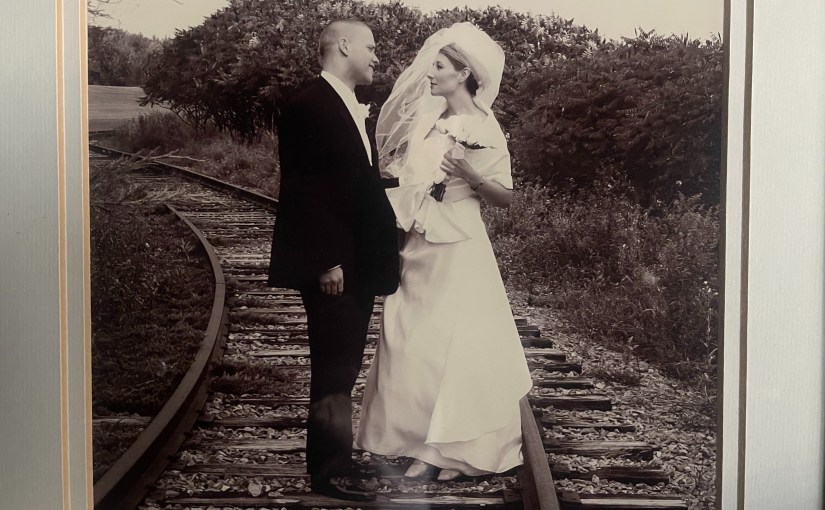
Marriage is a fascinating human experience. It’s both highly rewarding and challenging. Yet while most couples put a lot of preparation into the wedding day, few put much, if any effort into preparing for the marriage itself. Which is why half of marriages end in I don’t. And a healthy percentage of the other half of marriages aren’t as healthy as they could be.
The Program
To help prepare for our marriage, my wife Dawn and I listened to an audio program called Marathon Marriage. We learned the many lessons and philosophies of the program and did all of the exercises shared in the 4 CD set. (At least it wasn’t on 8-track cassettes.) It was a good reminder that just as you need to prepare to run a successful marathon, you need to prepare for a long and successful marriage. So we stocked up on plenty of Gatorade and snacks. And we felt like we had a good game plan.
The Mentors
Then, on our wedding day I wanted to cram in one last bit of preparation. So I scheduled breakfast with my three marriage mentors, which included my dad and my two grandfathers (who would all laugh me off the family tree for calling them my marriage mentors). At the time, my parents had been married 32 years. My two sets of grandparents had been hitched for 61 and 63 years.
After we sat down at Emma Krumbees in Wausau, Wisconsin and worked through some Northwoods pancakes and sausage, I decided it was time for the knowledge share. I asked The Paternity Council, ‘What is the key to making a marriage great?’ With 156 years of experience at the table, I was about to get the fatherlode of great advice.
Then my 86-year-old maternal grandfather, Kenny Sprau, crossed his arms, leaned back in his chair and shared,
‘Keep doing what you’re doing.’
Um… WTF Grampy? 61 years of trial and error, nine kids and a World War, and that’s all you’ve got? I wanted to give him a mulligan and see if he could hit it past the ladies’ tee this time. But he went on. ‘You have to keep doing the things that got you to this point.’
My Grampy, Kenneth Adam Sprau. (Thanks for the hair.)
Perspective On The Advice
While at the time the 29-year-old me was totally underwhelmed by the advice, over the past 22 years I have developed a deep appreciation for what Grampy Sprau said. Because when we are dating, we are at our best. The unfortunate tendency is to drop the hard work, energy, attention, and charm we put into the relationship after the contract is signed. Without pouring that effort, care and prioritization into the relationship, the relationship isn’t as healthy and strong as it was during your courtship and engagement. Which is kind of like leaving the cap off a bottle of soda-pop, only to realize that it’s the cap that keeps the soda popping.
Over our 22 years of marriage, I have recognized plenty of times when I was not putting in the same kind of attention and prioritization into our relationship as I did when we were just kids in the heartland, like in that little ditty ’bout Jack and Diane. It gets much harder alongside the demands of raising children, building a successful career, growing a business, and the effort required to fend off the Dad bod creep. But whenever I find that my attention to my bride has slipped (or I am reminded by my bride that my attention to my bride has slipped), I use Grampy Sprau’s advice, to help make the appropriate adjustments and corrections.
Applying The Advice To Business
Eight years after launching the advertising and ideas agency, The Weaponry, I have discovered that Grampy Sprau’s advice holds true in business as well as marriage. You need to treat your potential clients and partners well. Act as if you would like nothing more than to spend the rest of your time together. Listen. Make them laugh. Show them you are interesting, kind and thoughtful. And then after you get the contract signed, keep doing what you’ve been doing.
In business, as in marriage, listening and collaborating are valuable approaches to your growth strategy. Clients and spouses alike really like that stuff. (Crazy right?) When you respond favorably to a client’s request, they generate something called ‘good feelings’ about you. And these ‘good feelings’ make them want to see you more and work with you more. And the result is business growth.
The opposite is also true. If you are the all-time best seller at The Jerk Store, no one wants to be around you. This is true of both the individual and the organization.
If you recognize complacency, apathy or combativeness between your organization and your clients or between you and your spouse, stamp that out like a flaming bag of dog poo on your front porch. The behavior may feel justified today. But you’ll regret the justice leveled tomorrow when you’re trading the offspring in the McDonald’s parking lot.
Key Takeaway
Treat your spouse the way you did when you were dating. Treat your current business like new business. Never take either of them for granted. Work to re-win them every day. Even after you put a ring on it.
Thanks for the wise advice, Grampy.
*If you know someone who could benefit from this message, please share it with them.
In 2015 I read a book titled The Little Black Book of Connections by the self-proclaimed King of Sales, Jeffery Gitomer. One of the important tenets of the book is, Success is not about who you know, but who knows you. (Who knew?)
Gitomer goes on to share that the best way to have more people know you is to share your knowledge, expertise, ideas and experiences broadly. Which is what Kim Kardashian did with her first home movie back in 2007. And look how well that worked out for her.
Gitomer points out that platforms like blogs, vlogs, podcasts, editorial columns and books enable you to share your ideas with many people at once. In fact, it allows people you would never meet face to face to discover your ideas and be positively impacted by your knowledge and expertise.
What started with a single blog post has gone farther than I ever imagined.
Gettin’ Bloggy With It
In the fall of 2015, I began planning to launch a new advertising agency. So I decided to take Gitomer’s advice and start blogging to share my ideas about advertising, branding, and creativity. I also wanted to share what I was learning about entrepreneurship. Success leaves clues. And I wanted to share breadcrumbs for other entrepreneurs to follow. (It seems I failed to learn the downside of leaving breadcrumbs from Hansel and Gretel.)
I wasn’t sure how the whole blogging thing would go. I had tried it before. In fact, I had started 5 or 6 different blogs and quickly stopped. But this time I felt more inspired. I had Gitomer’s encouragement. I had a strong desire to succeed as an entrepreneur. (And I wanted to be able to feed my family.) I believed that writing a blog would be a great way to share my expertise, let people know I was starting The Weaponry, and share our growth and success.
I have always enjoyed writing. I started my career as a copywriter. So I figured that writing a blog would be fun. It would enable me to tap into my strengths. And most importantly, it would allow me to write funny things without a client or editor telling me no.
So I began writing in November of 2015. And like Forrest Gump, I just kept going, and people started to follow. I began slowly, with a blog post every week. Then I moved to 2 posts per week. And finally, I developed a 3 post-per-week habit, writing 5 days a week, and publishing on Tuesdays, Thursdays and Sundays, when Chick-fil-A was closed.
Today, less than 9 years later, I have published 1000 blog posts!
My writings have generally fallen into 3 buckets:
Marketing: This covers the topics of marketing, advertising, branding, creativity, design, writing and yes, blogging. Which is totally meta. (Non-Zuckerberg meta.)
Business: This includes entrepreneurship, startups, sales, network development, professional development, and my personal favorite, funny business.
Self-Improvement: This was unintentional. But I have written a lot about personal development and motivation. I have learned so much over the past 9 years about how to do better and be better (through trial and error) that I felt I had to share these lessons.
These are all the countries where my blog has been read. North Korea, Iran and the croissant in Africa are holding out on me.
What Do 1000 blog posts look like?
111 blog posts every year.
More than 2 new blog posts every week.
The equivalent of 10 full length 50,000 word books
A minimum of 2000 hours of writing time.
The equivalent of one full year of 40-hour work weeks spent writing blog posts.
The equivalent word count of writing The Old Testament of The Bible. (Truly I say to you, this fact hath blown my mind.)
Blogging created a pathway to publishing books. And holding books I published.
5 Benefits Of Blogging
It provides original content I can share on LinkedIn, Twitter, Facebook, Instagram, Threads, Medium and Reddit (Although Reddit readers hate everything, like Mikey.)
It provides a great collection of well-considered and well-organized ideas and stories that are ready to be adapted to books. The hardest work of writing my books happens in the blog stage. The easiest work is collecting blog posts with related themes to create chapters and books.
Blogging created a path to professional speaking. The blog posts led to a book. The book led to speaking opportunities. The speaking opportunities have created the best source of income in my Information Creation + Communication Ecosystem.
Blogging organizes great ideas, lessons and stories to share as a professional speaker.
The blogs have allowed me to share far more jokes and humorous asides than I would be able to share any other way. This is really the thing that keeps me writing.
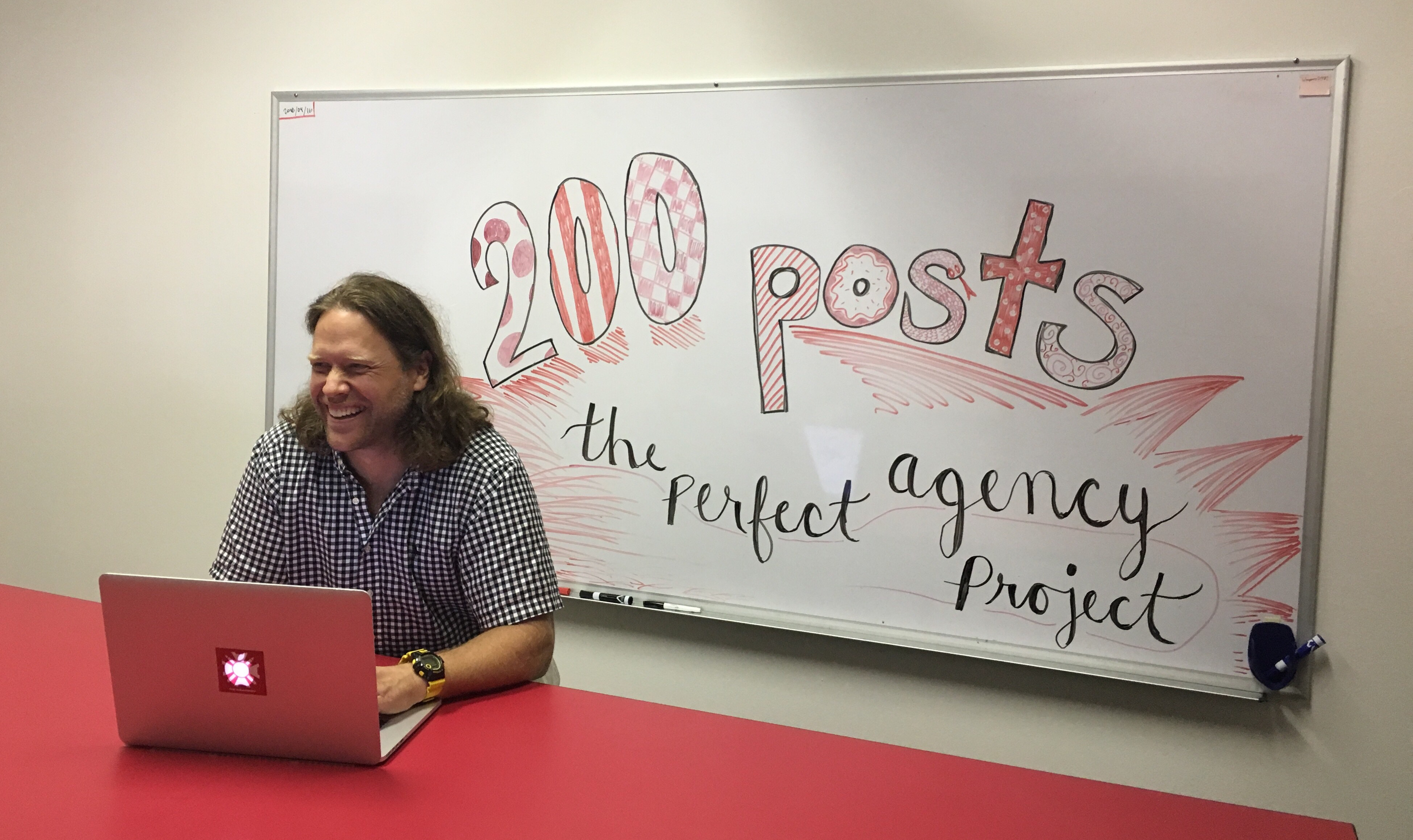
I was excited to hit 200 posts back in 2018 when I was just a baby blogger.
6 Things I Want Everyone To Know About Writing 1000 Blog Posts
Anyone can do it.
There are no barriers.
There are tons of tools and templates that make it easy. (I use WordPress to write and publish my blog.)
The 2 key steps are: 1. Get Started 2. Don’t Stop.
To sustain a blog you have to create a regular writing habit. Write at the same time for a set duration every day, or every weekday, or every Friday or whatever works for you. The habit is how it happens. (Which is also how you know someone is a nun.)
Don’t do it for huge numbers of readers. You can’t predict who will read your posts, or how many people will read what you write. If you are like most people, including me, your reach and readership will always be lower than you would want. And my blog has been read in over 160 countries. But you can create good information that can have a huge impact on one reader. That’s the real win of blogging.
Key Takeaway
As the saying goes, the best way to eat an elephant is one bite at a time. And the best way to write 1000 blog posts is one post at a time. Find a topic or topics that you are really interested in. Get started. And just don’t stop. Write at a regular time each day or each week. And when people tell you they enjoy reading your posts, or somehow benefited from your writings, use that as fuel to keep going. The world needs more good ideas, lessons, and stories. You have them. So start sharing. You’ll be surprised by how many lives you can positively impact. And that is the real benefit.
*If you know someone who could benefit from this message, please share it with them.
I recently experienced a suspicious outreach. That happens when someone you don’t know very well or haven’t spoken to in a long time reaches out, suddenly eager to talk. Typically this means they are newly unemployed, have something they want to sell you, or a judge has asked them to let you know there is a sex offender in your neighborhood.
This person who contacted me and I have never met in person. He initially reached out to me a few years ago, but after his original introduction, there was never any maintenance to the relationship. In fact, he acknowledged his deadbeatness in his outreach. But suddenly he was eager to talk. Like a close-lipped criminal after being granted legal immunity. I could tell from the note that whatever he was selling at his Tupperware Party would be far more valuable to him than to me.
I don’t mind hearing about what you have going on or what you are trying to sell. But I am much more interested in talking about it if we have spent time talking about other things first.
A Rule of Thumb
Don’t meet and sell on the same day. Don’t do it on the second interaction either. Instead, create a base for your relationship before you develop your base for sales. As a good rule of thumb, meet, email, or call 3 times before you start asking for a transaction. Better yet, provide value to the other person first. Find an article or book they should read. Connect them with another person they should meet. Let them know if they have spinach in their teeth. You know, be helpful.
People don’t like to be sold, but they love to buy. Give others a chance to approach you about your offering first. If you develop a real relationship, and they are a good candidate for your offering, there is a good chance they will bring it up first if you just give them a chance.
Key Takeaway
Develop relationships first. Add value first. Once a good relationship is established the sale, donation or vote may come without an ask.
*If you know someone who could benefit from this message, please share it with them.
On the eve of my 40th birthday, I sat down and wrote about the things I was most proud of from my first 4 decades on The Big Blue Marble. It was a fun process. I thought about my family and friends. I thought about my wins. My adventures. My career successes. I thought about that time I petted a hummingbird in the wild. (I have now done that twice!) And I thought about how I was creating a better person every day. (Not in a Mary Shelley kind of way)
Then I shifted my focus to my unfinished business. I asked myself this very simple question.
If you died tomorrow what would you most regret not doing?
-39.99 year-old Adam Albrecht
The first and most obvious answer was that I had not tried to start my own advertising agency. So I put that at the top of my list. And I got to work on a plan to avoid that regret. The more I thought about it the more real the plan became. I was like Joaquin Phoenix in the movie Her. Or maybe like the dudes in Weird Science bringing their project to life.
To start your own business you need the support of your family. A couple of mums and pumpkins don’t hurt.
Go Time!
When I was 42 years old, I did it. I launched the advertising and ideas agency The Weaponry.
That was 6 years ago today!
Simply trying to start my own agency would have eliminated the regret. Because I put a premium on simply trying. It was the not-trying that I knew would have bothered me most when things started heating up at the crematorium. It’s a major bonus that things have worked out and that The Weaponry is thriving 6 years later. Plus, most businesses don’t last past 5 years. And I never wanted to be like most people. Except maybe Johnny Most. (Bird Steals The Ball!)
Just keep swimming!
Earning and Learning
I have learned a lot from starting my own business. And fortunately, when I started planning the business I also created this blog to share what I was learning along the way. (Cue Dana Carvey’s Church Lady saying ‘Well isn’t that special!’)
6 Things I Have Learned About Business.
`1. Every year in business is a success in itself. Leadership’s primary responsibility is to keep the business in business forever. Each anniversary is proof that we are doing our jobs. Just like we should be thankful for each day on top of the topsoil, having your doors open is a success. Although today businesses don’t even need doors. Kinda like a Jeep Wranger in summer.
2. You have to keep looking for ways to improve. I am always thinking about the gap between the ideal version of The Weaponry and who we are today. So the mission becomes to continuously work on closing that gap. We meet every Friday to talk about ways to improve our processes and strengthen our weaknesses. You have to call that stuff out into the light in order to be able to address it, work on it and improve it. Fall in love with that process and you’ll fall in love with business. Kinda like Lee Majors in that TV show where he was the stuntman.
3. You need great people. Our team is amazing. We are loaded with nice people who like to collaborate to get great team results. We take a lot of pride in doing what we said we would do. Our team members love to solve problems for our clients. The team is quick and productive. They are great at accumulating knowledge and applying that knowledge to create more and more value for our clients. They are smart people who are really enjoyable to be around. Recruiting and working with a great team has been one of the greatest rewards of the past 6 years.
4. You have to keep adding new clients. Like Lucille in that Kenny Rogers song, a client could leave you at any time. The decision-makers could quit, get pushed out, die or simply change their minds at any moment. So you have to always be growing your business with new clients because you can’t protect yourself from all client attrition through hard work, great ideas and excellent customer service alone. Plus, you need to create a diverse portfolio of clients to protect against shifts in markets, dry spells, spending cuts, or making a client so wildly successful that they no longer need to do anything to help their business thrive.
5. You have to have fun. Fun comes in a lot of different forms. And I love to have fun in everything I do. Including business. Here are just some of the things I find fun at The Weaponry.
Learning new things.
Game Planning
Problem Solving
Meeting New People
Sending out job offers with a lot of funny non-traditional language.
Saying silly things in meetings.
Making clients smile and laugh
Storytelling
Travel
Typing funny comments into the chat during Zoom meetings
Creating new stuff
Getting new swag
Eating lunch together
Winning new business
Helping our clients grow
Wowing our clients
Putting on a show
Receiving compliments for a job well done.
Being told we are fun
Baking humor into our setup slides.
The humorous final slides of our presentation.
We love to laugh. Like that song in Mary Poppins.
6. You have to be paranoid that the business will collapse. I am never comfortable with our success. I am afraid that if we are not careful everything we have been doing and building will go away. You can’t ignore the opportunities to get better. You can’t let things slide. Just like you should try to win over your spouse again every day, you have to be concerned that things could go bad with your clients if you take your eye off the ballpoint. And if you worry enough, and do something about it, the bad things will never happen.
Key Takeaway
A great business is simply a collection of great people running great processes, contributing great value to customers, having fun, and worrying that it will all end if they are not careful. I am extremely thankful for all of our Weapons, our great clients, and our partners who work as a trusted extension of our team. Here’s to 6 fun years. Let’s keep this thing going forever.
*If you know someone who could benefit from this message, please share it with them.
I get a boatload of emails, calls, and LinkedIn requests from strangers who are trying to sell to me. Most of them want to help me generate more business leads for The Weaponry, an advertising and idea agency that I lead.
It is crazy how many people want to help me with this. It is as if they all looked at my demographic information alone and want to sell me a hair growth tonic. But if you knew me, or ever looked at my LinkedIn profile pic, you would know I may have problems, but growing hair is not one of them.
The sales promises are often quantified. They say they will deliver hundreds or thousands of qualified leads per month. To the uninitiated, unsuccessful, lazy or naive this must sound amazing.
But business growth and development doesn’t work that way. Qualified leads and prospects are not a commodity. You can’t outsourcethem to a stranger. The type of clients or customers you want to work with are not like crops in a field. You can’t simply run a harvester through them, load them into a wagon and sell them on the open market.
Prospective customers and clients are not all created equal. The valuable ones come from relationships, connections, and conversations. From shared philosophies and values. You and your team should find the right ones for you. Then earn their trust. Develop a mutual attraction. And decide you are right for each other.
For a stranger to spam* me and tell me that they can find me a steady supply of qualified leads is like telling me that they can find me more friends. ‘We’ll dump a list of friends on you. You’ll really like them and they will like you too.’ But it doesn’t work that way. That’s a job we have to do ourselves.
*No offense to Spam, the innovative meat. If a stranger offered me some fried Spam for breakfast we would be friends for life.
Key Takeaway
Earn your own customers and clients. Create systems and processes to find them. Develop relationships. Keep your promises. Deliver results. Create a core of happy customers that spread the word about you. That never fails.
*If you know someone who could benefit from this message, please share it with them.
All of the good things that have happened in my life have a common theme. They happened because I prepared to take advantage of an opportunity point. Which means I put in work or research before an important moment. Like a Boy Scout would do. Although I was never a Boy Scout. I heard the Be Prepared motto and felt I got the gist of it.
When my big moments came, I drew on the work or the research I had performed to maximize the opportunities. I performed impressively. I made a strong impression. I drove a result. I became memorable for being prepared, capable, smart, insightful, knowledgable, interesting, thoughtful, or resourceful. Then, I was able to cash in my preparation for rewards. Just like you cash in your tickets for prizes at Chuck E Cheese.
Opportunity Points
Make sure you know what your opportunity points are. Here are a few examples:
Competitions
Meetings
Job interviews
Sales calls
Tests
Dates
Sorority rush
Meetups
Performances
Parties
Introductions
Tradeshows
Seminars
Auditions
Conferences
Social media encounters
America’s Got Idols
Preparation allows you to convert an opportunity point into an inflection point. A point where things change for you. A new door opens. An angle of growth steepens. The trajectory of your life alters in a positive way. Suddenly, people want more of your time. Which means the value of your time goes up too.
How to capitalize on your opportunities.
To turn your opportunities into inflection points try the following approach:
Look at your calendar. (You do have a calendar, right?)
Identify the opportunity points. (They are everywhere.)
Determine what you could do today, and each day before the event to be best prepared to make that event a moment of inflection. (Start with researching all you can about the people and the topic you will encounter. Don’t be afraid to stalk. That’s how I found my wife. Training and practice are also important.)
Do the prep work you determined would be beneficial. (It is not enough to know what you should do. You gotsta do it for realzies.)
Luck is what happens when preparation meets opportunity.
-Maybe Seneca (But maybe someone else. They can’t find any credible witnesses.)
Key Takeaway
Every week we encounter dozens of opportunity points. Once you recognize them you can prepare for them. That preparation allows you to capitalize on the opportunity. Sometimes the rewards are small and grow over time. Sometimes the rewards hit in major ways that alter your life path immediately. But if you don’t prepare it is as if the opportunity wasn’t even there. Don’t let that happen.
*If you know someone who could benefit from this message, please share it with them.
Businesses are complex machines. They have lots of moving parts. They need constant attention. They are challenging to maintain, and even more difficult to grow. Which means that if you own or lead a business there are always plenty of reason to grow gray hairs.
6 Things For Business Leaders To Worry About.
Are you growing your business? Businesses are either growing or shrinking. And no one likes shrinkage.
Do you have the people you need? Businesses are simply a group of people running a group of systems. Having the right people is everything.
Are your people delivering what they need to deliver? Even the best people don’t always perform the best without the right direction.
Are your products and services good enough? Are the things you deliver superior? Competitive? Still functional?
Are you heading in the right direction? Industries and opportunities are fluid and constantly changing. Are you moving towards the next great opportunity? Or are you trying to rent people VHS tapes in a Netflix world?
Are you going to be sunk by a global pandemic? Or do you have a plan and reserves to outlast it?
The Cure For Worry
Just as vaccinations stop viruses, antidotes combat poisons, and clothing cures nudity, there is a surefire cure to business worry.
Work.
The best way to combat anything that threatens your business is to get to work.
Work on your business development efforts to make sure you are growing.
Work on your recruiting, training and development to makes sure you have the right people in the right seats on the bus.
Work on your processes to make sure you continuously improve what you deliver and how you deliver it. Especially if you are a stork.
Work on product development and service refinement to dial into what the market wants next and is willing to pay a premium for.
Work on your strategy and plan to make sure you are ready to take advantage of the next great opportunities. And make sure you are protecting your business against the negative impact of external factors.
Key Takeaway
The best cure for worry is to do something to avoid, minimize or fix the problem that concerns you. By putting in the work you take control of a situation, instead of letting it take control of you.
*If you know someone that could benefit from this message, please share it with them.
There has been a recurring theme at work lately. My team at The Weaponry has been involved in several new business pitches. Which means we are competing with other advertising or design agencies to win a project. Sometimes there are 2 agencies. And the pitch is like a rap battle, or the knife fight in Michael Jackson’s Beat It video. Sometimes it is a Royal Rumble where you are competing with every superhero and their sidekick.
The 3 Factors
There are 3 factors involved in winning a new project from a client or customer. At least where organized crime is not involved. (Those organizations add a few other important factors. Like how much you enjoy your family, and your limbs.)
The Proposal. This is the written plan detailing what you are going to offer the customer or client if they choose you. This is quite literally the overview of the product or service being offered.
The Price: This is the summary of how much your offering is going to cost. Your price relative to your competitor’s price is important. The critical question is how does the price and value of your offering stack up against the other options they are considering.
Your likability. Do the deciders like you? Do they trust you? Are you funny, smart, kind, good-looking or tell great stories? Do they want to spend time working and problem solving with you?
All Things Considered
Recently we have heard several times that our price was more expensive than the other options we were weighed against. However, they chose us anyway. This creates a valuable math equation boys and girls.
The Math
In this case, what we were offering and our likability combined was greater than the price we were charging for it.
Offering + Likability > Price
This is exactly where you want to be in business. When you offer superior products or services, and a combination of likability, fun, and trustworthiness, more times than not you will not lose out on price. In fact, if the other two factors are strong enough you can charge more, because you are offering more value. And everyone comes out ahead.
Key Takeaway
In any business transaction, there are always more factors at play than price. As the seller, your responsibility is to provide a superior product and service. And if you deliver that with more likable, more trustworthy people you will not only break any ties, you will add more value to the overall experience, and people will be willing to pay more for your offering. So don’t fight others on price. Compete with them on the offering itself, and on the people who offer it. And like Bob Barker said, the price will always be right.
*If you know someone who could benefit from this message, please share it with them.
On March 16th, 2020 my family and I began playing an epic game of dodgeball with the COVID-19 virus. We played to win. And winning meant not getting the virus. Every day the virus didn’t hit our home felt like a win. Like we made it to the next round on Frogger.
Gamifying COVID avoidance made it a competition that my family and I could win. But we didn’t hibernate. Not even close. In 2020 we traveled to Hilton Head Island, South Carolina, and road tripped from Wisconsin to Idaho. But we were smart and precautitory. We wore masks, socially distanced, washed, sanitized, wore garlic necklaces, burned our stuffed animals as sacrifices, and drank the blood of albino newts. You know, the basic CDC stuff.
The Vaccine
I have been a big fan of a vaccine for Covid-19 since, well, since the first talk of developing one. Because it is the only way we as a planet can beat the virus and party like it’s 2019.
Just as polio, chickenpox, measles, and corded telephones feel like challenges of the past, I wanted Covid-19 to be retired to the lore of yesteryear. That’s why I was ready for the vaccine as soon as I could get it.
On Saturday I got my second round of the Pfizer vaccine. I had no side effects other than my arm looked band-aidy. I know that there are still a few days before I reach maximum resilience, but I feel like I have won the game of dodgeball. And I am taking great pride in defeating my opponent, thanks to an army of scientists who quickly whipped up a sweet vaccine like Tom Cruise whipped up sweet cocktails in that movie where he whips up cocktails. (I forgot the name of the movie.)
Reasons For Getting Vaccinated
I was never afraid of getting sick. I’m not high risk. I have a robust immune system from all the dirt I ate as a kid, and as an adult. But I have plenty of other reasons to get vaccinated. Here they are in a particular order.
5Reasons I got vaccinated.
Because my kids can’t. I didn’t want to bringCOVID home and infect 3 kids who didn’t have an option to get vaccinated. I didn’t want to be the reason they missed school, sports, music programs, or the Dad Appreciation Parade (that I am organizing).
I don’t want to get other people sick. Other friends, family, coworkers, and lovely elderly people would be vulnerable if I got infected. I don’t like the idea of doing avoidable harm to others.
Flying In a non-COVID year I fly a lot. Flying is odd right now. And the empty middle seats are going away. To fly again regularly I will feel best if I am not immunally naked.
I want to see people again. Getting together with other people who have been vaccinated is a no-brainer. Getting together with people who have not been vaccinated is still a brainer. I don’t want people to have reservations about seeing me. I just want people to have reservations with me.
To get back to business. Yes, my team at The Weaponry has been fully functional throughout the pandemic, with one notable exception. We really haven’t spent time with our clients or prospective clients in person in well over a year. There has been very little in-person relationship building. That is one of the greatest joys of business. And my next 2 weeks are already filling up with plans to see clients and friends (and client-friends) for the first time in 15 months.
Key Takeaway
Getting vaccinated feels like a win. It is how we defeat the threat of COVID-19. It is how we protect each other, especially those who can’t or shouldn’t get the vaccine right now. It is how we get back to life as we want it to be. And it is how we get back to developing culture within our organizations, and relationships within our communities. I am thrilled to be fully vaccinated, and I hope to see you in person soon!
*If you know someone who could benefit from this message, please share it with them.










 Adam Albrecht Blog