Why you should spend 1 hour each week working on building your own business.

You know who is great at starting a business? (Besides Richard Branson.)

Someone who already works in a business.

Someone who has seen how their employer’s business runs.

They know how their current business wins and how it gets beaten.

They see the flaws to be fixed and the opportunities to improve.

In other words, the best people to start their own business are people just like you. (And Richard Branson.)

Always Be Planning

You should always be thinking of what your own business would look like.

  • Think about the systems and processes.
  • Think about the customer you will serve.
  • Think about your values.
  • Think about your culture.
  • Think of who would be on your team.
  • Think about the epic company parties that aren’t yet restricted by a buzz-killin’ CFO. (I hope Kid Rock, Beyonce and The Rolling Stones are all playing at your party, and asking you to sign their foreheads, because they know you are a rock star!)

Imagining the details of your own business is how you build your own life raft. That way, it will be ready to use when you are ready to jump. (Or if your current business sinks or you get thrown overboard.) You can use your boat to save yourself, create your own epic adventure, or sail off into the sunset.

1 Hour Per Week

Spend an hour per week thinking about building your own business.

Take it from your InstaSnapTok time.

Then, every year, you will spend 52 hours working on your own business.

10 years into your career, you will have spent 520 hours working on your business.

And 2 decades into your career, you will have spent 1,040 hours on your own business. #mathwhiz

That’s how a steady drip of thinking, formulating, and crafting turns into a business started by a veteran with 20 years of experience, a vision, and a valuable network of industry experts, coworkers, partners and suppliers.

I know this approach works. Because it is how I started The Weaponry nearly 10 years ago. And it was the best career move I ever made.

Key Takeaway

Spend a little time each week thinking about what your own business would look like. Capture your ideas in a notebook or a Google Doc. Add a little bit each week. It is a great way to slowly plan your own business before you need it. And if you never need it, it will provide a great roadmap to improve the business you are currently in. It is a win-win that could lead to the greatest adventure of your career.

*If you know someone who could benefit from this message, please share it with them.

+For more of the best life lessons I have learned check out my book, What Does Your Fortune Cookie Say? from Ripples Media. And consider subscribing to Adam’s Good Newsletter.

Why you should bring your freakin idea to life and share it with the world.

A couple of weeks ago, I saw the band Bombargo. They were playing a free concert in a park 2 miles from my house. The band is a bundle of energy and entertainment from the off-off Broadway, town of Saskatoon, Saskatchewan. Which is also one of the cartooniest place names ever invented. The band was on their Disco Surf Rodeo Tour, because any one of those things on its own is just not enough.

For a flavor of their fun music, check out Let It Grow or Oxygen. (Songs I assume were inspired by The Lorax.)

An hour into their set, the band told an interesting story as they introduced one of their signature songs.

During the winter months, Saskatoon is often among the coldest places on the planet. And during one of those cold spells, the lead singer stopped by his brother-bandmate’s igloo home. His brother-bandmate was playing a new song idea on the piano. The lead singer really liked what he was playing and decided that they should write a song to it.

So they wrote the full song that day.

The next day, they recorded the song, shot a video for it, and shared it online.

Then something swiftdiculous happened. Taylor Swift, the most influential musician on the planet, heard the song, loved it, and added it to her Spotify playlist.

The song immediately blew up thanks to Swift’s endorsement.

The band shared that it was rare for them to work so fast and not tweak a song to death. But it was exactly this speed of creating and sharing that led to the success of the song Mr. No Good.

Reminder

Each of the ideas you bring to life is like a lottery ticket. It has the potential to pay off in a big way. So create it, share it and move on. Don’t analyze it to death. Great work doesn’t have to take a long time. Focus on creating work that you love. If you love it, there is a great chance that others will love it too.

Key Takeaway

Create things you love and share them quickly. It’s the key to being a successful artist, innovator, or entrepreneur. The world benefits from your ideas. And your ideas benefit from real-world exposure. Successful ideas are a percentage game. The more ideas you bring to life, the more likely you are to produce hits. And when you love your creations, there is a great chance others will too. So don’t die with your song in your head, your art in your heart or your startup in your soul.

*If you know someone who could benefit from this message, please share it with them.

+For more of the best life lessons I have learned check out my book, What Does Your Fortune Cookie Say? from Ripples Media.And consider subscribing to Adam’s Good Newsletter.

Are you playing small ball or swinging for home runs?

Last week, I talked to my friend Ashley Skubon about her fun wine-focused business in Austin, Texas, called Snooti. Ashley and I worked together at Engauge. The first time I met Ashley, she said, ‘My name is Ashley, by the way.’ So naturally, I asked her if she was related to any other Bytheways.

I had seen through social media that Ashley and The Snooties had introduced some exciting new offerings recently, and I wanted to get the scoop.

During our conversation, she said something that has stayed with me.

As she told me the story about the big idea she recently launched, she shared that she felt that she had been playing small ball.

Which is a way of saying that she hadn’t been thinking big enough.

In baseball or softball terms, small ball is a careful approach that focuses on small opportunities for singles, walks, bunts and stolen bases. But when you play small ball, you are not swinging for the fences. You are not hitting home runs or grand slams. And AC/DC won’t sing songs about you.

The small ball mindset can keep you in the game. But it will also prevent you from recognizing when a home run opportunity is perfectly teed up for you.

Remember, Hank Aaron and Babe Ruth are American legends for their home run hitting prowess. While Brett Butler, the all-time leader in bunt hits, is the baseball player most likely to be confused with a character from Gone With the Wind. Or Grace Under Fire.

It is easy to buy into the safety of small-ball thinking. It keeps the lights on. It allows you to live to fight another day. But it doesn’t change the world. It won’t change your fortunes, your career or your tax bracket.

Key Takeaway

If you find you are playing small ball in life, in your career, as an entrepreneur, leader, innovator or artist, it’s time to carve out time to think bigger. Consider the smash hit opportunities right in front of you. See the benefits of your big swings. They can change your trajectory and your life in an instant.

*If you know someone who could benefit from this message, please share it with them.

+For more of the best life lessons I have learned, check out my book, What Does Your Fortune Cookie Say? from Ripples Media. And consider subscribing to Adam’s Good Newsletter.

Why you need to have a need for speed.

If there is one defining factor of how the world works today versus any other time in history it is speed.

Today, everything happens faster. Not just Jimmy John’s. And Tinactin.

Communication technology has advanced from mail, to email to Slack and texting. Information arrives instantly.

News can be reported with a tweet, just seconds after it occurs.

You can stream practically anything you want to watch on demand, anytime.

AI has squeezed the gestational period of our research, discovery, query and analysis down to a mere burp.

So Why All The Slow Motion?

Yet, with all of the technology enabling us to move at Lightning McQueen-speed, I am constantly surprised by how slow many organizations move.

Nearly all technological friction has been taken out of our systems, yet human friction is still ubiquitous. K, why is that?

Human decision making, prioritization and hesitation still kill momentum, push deadlines and slow progress to a snail-mail’s pace.

The Weaponry, the advertising and ideas agency I lead, was launched 9 years ago, and the urgency of the social era was baked into our DNA. Because in the social era, opportunities come and go in a flash. In the social era, you must harvest social opportunities during the very short season when the opportunities are ripe. This can be as short as a few seconds, but never longer than a couple of days.

One of the mandates for our organization is to operate with the urgency of social media. Move quickly. Jump on opportunities. Thwart threats quickly. Move faster than other organizations. It was programmed into our genomic code from the start.

When we present timelines in our proposals, we share aggressive timelines, and note that this timeline only works if the client can keep up, and turn approvals around within our reasonable, but not generous, turnaround periods.

Yet as much as we hear about how important the work we do is to our clients’ success and how they want to get it done quickly, organizations can rarely keep up with their own ambitions. They are simply not built for speed and urgency.

While not all windows of opportunity close as quickly as social media does, all opportunities are finite.

When you fail to get your advertising in market in time, you also fail to drive sales during that time. For seasonal businesses, that is revenue lost forever. For non-seasonal businesses, it means your sales slide later in the year or into the next year. When you delay decisions, your overall revenue numbers for the current month, quarter or year are lower than they should be. That’s a loss. And an avoidable one.

My friend and client Bob Monnat, Senior Partner at Mandel Group Inc, shared some insights with me about one of his organization’s best partners. He revealed that they are great partners because they are always pushing them to move faster, to decide quicker, to get the work done so that they can ultimately turn their projects into cash-flowing assets.

Never lose sight of the reason businesses exist. They are created to make money. And time is money. The quicker you move, the more money you are likely to make.

Key Takeaway

Move faster. Today, advanced technology means that the slowest part of the process is the humans who have the most to gain. Slow actions and slow decisions cause wasteful delays. Identify the bottlenecks and pinch points in your process. Then attack them. Address your delays to help move your organization faster so that everyone can enjoy the success of speed. It is today’s competitive advantage.

*If you know someone who could benefit from this message, please share it with them.

+For more of the best life lessons I have learned check out my book, What Does Your Fortune Cookie Say? from Ripples Media. And consider subscribing to Adam’s Good Newsletter.

How I screwed up my very first email, but lived to email you about it.

Do you remember writing your first email?

I do.

It was very confusing.

I composed my first email message when I was a college student. It was my second or third year of college at the University of Wisconsin. I wrote the email to my parents from the computer lab at college. Because back then, almost no students in my socio-economic subdivision owned their own computers.

I was awestruck by the idea of this new technology. It would allow me to send a written letter to my parents, but without having to find a sheet of paper or an envelope. I wouldn’t have to buy a stamp. Or lick a stamp. I wouldn’t have to find a mailbox. Or lick a mailbox. And I wouldn’t have to wait a week for them to get the letter. They would get it instantaneously! This was some kind of magic from the future. And I couldn’t wait to try it out.

But when I went to write my first high-tech email letter, something went wrong.

I quickly filled the small field provided for the message with my first sentence. Then, as I continued to type, the new words pushed the old words out of the field. It was very confusing. But, hey, this was magic mail. And I was just a regular human. So I figured I wasn’t supposed to fully understand the wizardry.

I stared at the email for a long time, trying to understand what was happening to my message. But finding no good explanation, I eventually poked the send button and sent my magic mail into the ether, hoping it would land as promised inside my parents’ home computer in the woods of Norwich, Vermont.

The next day, when I received a reply email from my parents, I realized what had gone wrong.

I wrote my entire email letter to them in the subject field.

Looking back, it is easy to laugh at that mistake. It is easy to say I was a dufus. Or a doofus. (Both of which are dictionarily acceptable.)

But I find inspiration in this story. Because it serves as a reminder that when you try new things, you will be bad at them. Or at least as bad as you will ever be.

But just because you are bad at things at first doesn’t mean you will be bad at them forever. In fact, the only way to greatness is to travel through badness and mediocrity. It’s like traveling through the wardrobe into Narnia.

My first email experience demonstrates that by trying, experimenting and exploring, you grow and expand your capabilities. You have to be willing to try new things to accomplish new things. You have to be willing to be bad to become good. You have to be willing to make mistakes to make yourself great.

I am now 9 years into leading the advertising and ideas agency, The Weaponry. And I can draw a direct connection from my willingness to try to ride a bike, to my willingness to try to write my first email, to my eagerness to try to launch a startup business. They are all plunges into the unknown. They all involved missteps, mistakes, mistypes, or mispedals.

Here’s The Recipe:

You try.

You mess up.

You learn.

You correct.

You try again.

You improve.

You try again.

You improve again.

And you just keep trying.

Forgive my braggadocio, but today, I am freaking good at writing emails. I can fill in the To, CC, and BCC fields like a boss. I can write a subject that will tell the recipient why they should want to read the email. I can craft a clear, concise, compelling and occasionally comedic message. And I write that whole message in the body section. I can add an attachment. I can change the font size. I have a standard signature that includes my name, title, office location, and website address. My email also lets people know that I wrote a book called, What Does Your Fortune Cookie Say? And that I publish Adam’s Good Newsletter. Which is a newsletter that I send out regularly via email. Boom!

Key Takeaway

Don’t be afraid to try something new because you think you will be bad at it. You will be bad at it. At least as bad as you will ever be. But that is the price you pay to achieve greatness. You have to humble yourself at the beginning of the process. Which helps you appreciate your growth and ultimate success. The learning journey is the life journey. So learn as much as you can. It’s how you create the most rewarding life.

*If you know someone who could benefit from this message, please share it with them. And if you want to show off your email skillz, send me a note at adam@theweaponry.com.

+For more of the best life lessons I have learned, check out my book, What Does Your Fortune Cookie Say? from Ripples Media. And consider subscribing to Adam’s Good Newsletter.

Would people stand in long lines to get to you?

Over the 4th of July weekend, I completed a circle tour of Lake Michigan. My wife Dawn, sons Johann and Magnus, and I took 4 and a half days to circumnavigate the lake clockwise, starting in Milwaukee. Which is on the southwestern shore of the Great Lake, 90 miles north of Chicago. But a world away in terms of traffic, cost of living and pizza.

On our adventure, we saw a lot of new things. New cities and towns. New parks and National Lakeshores. We took new ferries and boat tours. We crossed new bridges. We explored new islands. Who knew there was so much new to know?

We also needed to eat, drink and do a little shopping. In the process we found many establishments that were mostly empty and easily accessible.

But we found other establishments with long lines out the door and down the sidewalk.

The places with the long lines still have my attention as I return to work at The Weaponry, the advertising and ideas agency I lead. Because generating long lines of eager customers should be the goal of those who create, run or contribute to successful businesses. And it should be the goal of every brand that offers products or services.

Today, I encourage you to think about creating lines out the door for your offerings. Here are the 6 things that help create long lines that people are happy to stand in.

6 Factors That Create Lines Out The Door.

1. Quality products. Offer products that really work. Things that are well-made and do their jobs well. Products that take care of business will take care of your business. Like Bachman-Turner Overdrive.

2. Great Service: Take care of your customers. Make them feel that their needs and expectations are met, their questions are answered, and their time is respected. Treat them like that boyfriend or girlfriend you really want to keep. But don’t make out with them. Unless that’s part of your service. (I hope it’s not.)

3. Great Value: Make your customers feel like they get more than they paid for. Or more than they would get for the same dollar spent somewhere else. This does not mean your offering is cheap or inexpensive. It means every penny is well worth the investment.

4. Great Experience: You want your customers to feel that the whole experience was interesting, fun, worthwhile, memorable, and story-worthy. It wasn’t just a transaction. There was something more to it. It felt different than other seemingly similar transactions or purchases. It was worth doing again. It was worth telling others about. It was something you are proud to have done. Even if you can’t fully articulate why it was so great. Even if you are a fully articulate human.

5. Scarcity: This means that what you offer isn’t easy to find. There is no easy substitute. It means that people are willing to make additional sacrifices for your offering. They will wait and trade more of their time in order to get what you are offering. They are ok suffering inconveniences like standing in line. Or sitting in a waiting area for their opportunity to enjoy your offering. Because nothing compares to you. Like Sinead O’Connor said.

6. Esteem: Some offerings are so good that they transcend mere preference and become part of what can be considered esteem experiences. This means that you get additional social credit for having experienced the offering.

Examples:

  • People who saw the play Hamilton in its first year.
  • Consumer space travel
    • Eating a Cronut in 2013
    • Attending a Taylor Swift, Coldplay or Noah Kahan concert in 2025.
    • Owning American Giant hoodies when there was a waiting list.

Cue the Queue

Consider these 6 factors when crafting your offers. They will push you to develop things that are beyond compare. Beyond substitute. Things that are rewarding to experience. Things that are hard or impossible to find anywhere else. They lead to offerings that command a higher price and are still worth every penny, Marshall. And they leave customers feeling like you did a great job taking care of them.

It’s a winning recipe. It is how brands thrive. It is how startups become stalwarts. It is how you grow revenue, profits and envy. It is how you create momentum. And competitive advantages. It is how you build a moat around your business. It is how you generate talk value, word of mouth advertising, referrals, 5-star ratings, and repeat customers.

That’s how you create lines out the door.

Key Takeaway

Never settle for good enough. Push for greatness. Continually look for opportunities to improve your offering, your experience, your value and your uniqueness. If others copy you, innovate again. You can’t create advantages or envy with commodity and parody offerings. Your goal should always be to create lines out the door, and be able to charge a premium to your competitors. Better yet, innovate your offering to the point where there are no competitors. There are just customers lined up out the door.

*If you know someone who could benefit from this message, please share it with them.

+For more of the best life lessons I have learned check out my book, What Does Your Fortune Cookie Say? from Ripples Media.And consider subscribing to Adam’s Good Newsletter.

17 Ways To Develop Your Entrepreneurial Mindset

On Monday, I had the opportunity to talk to a talented group of young entrepreneurs about the entrepreneurial mindset. This 2025 cohort of Youth Mean Business was inspiring, engaging, curious, and full of good questions and good answers. They made me feel like a total Slackle Jack for waiting until I was in my 40s to start my own business.

To prepare for my talk, I combed through the things I feel have most helped me develop my entrepreneurial mindset. This mindset offers a valuable approach to life that enables you to create value for others. It’s not just about starting businesses. It’s about creating value, solving problems, and developing resilience in yourself. But like Trix Cereal, these approaches aren’t just for kids. Here are tips anyone can use. Even silly rabbits.

17 Ways To Help Develop Your Entrepreneurial Mindset

  1. Spend Time With Other Entrepreneurs.

 Jim Rohn famously declared, “You are the average of the five people you spend the most time with.”

So, spend time with entrepreneurs to become more like them. Entrepreneurs think differently. They see the world through a different lens. Surround yourself with them. Read about them. Ask them questions. It’s the fastest way to transform your mindset. And for Pete’s sake, stop hanging out with Debbie Downer.

2. Tap Into Your Energy & Enthusiasm

They make things happen. And they attract customers, employees and partners.

3. Create Things

James Clear shared, ‘Education teaches you to analyze. Entrepreneurship teaches you to create.’

So always Be Creating.

Not just businesses:

  • Systems
  • Processes
  • Clubs
  • Blogs
  • Newsletters
  • Events
  • Content
  • Videos
  • Words
  • Lists of bullet points

4. Develop a Bias Towards Action

Nontrepreneurs Talk. Entrepreneurs Act.

Take action. When you see an opportunity that you think is right for you, take steps towards it. Each time you take a step, the next step is likely to reveal itself. It is more important to take action than to plan everything out ahead of time. The need to plan everything will prevent you from taking steps. And there is no elevator to success. You’ve got to take the steps.

5. Be An Imperfectionist.

Perfectionists have to get everything exactly right. They down’t lyke mayking missteaks. But entrepreneurship is quick, messy and full of janky solutions, until you can afford better solutions.

Create quick models, products, services, content and promotions. Then improve as you go. That is how life works. You don’t have to have everything figured out from the beginning.

6. Give Yourself Permission To Be An Amateur.

One of the greatest gifts I gave myself as an entrepreneur was the permission to be an amateur.

It took the pressure off. It allows me to learn as I go. And to not beat myself up over the mistakes I would surely make, Shirley.

In fact, I loved what this did for my entrepreneurial mindset so much that I have adopted this in all areas of my life.

Today, I give myself permission to be an amateur as a:

  • Parent
  • Husband
  • Speaker
  • Coach
  • Blogger
  • Author
  • Newsletterer
  • Content Creator
  • Brain Surgeon (Which is probably why my rating is so low on Health Grades.)

As a result, I am always learning a lot. And I remain open to suggestions.

7. Read

Read as much as you can. On a plane. On a train. In a box. With a Fox. Entrepreneurs need to know things about all areas of their business.

  • Read about business and entrepreneurship.
  • Read for motivation and inspiration.
  • Read biographies of successful people to pick up clues you can use to be more successful.
  • Read to practice the slow grind of reading.
  • Listen to audiobooks when you are commuting.

8. Be Trustworthy

The most important thing you need to do to become an entrepreneur is to have people trust you.

To earn your first customers, you have to sell on trust.

  • So do what you say you will do.
  • Show up on time.
  • Deliver what you said you would deliver
  • Catch people if you do that trust-fall team-building exercise. (But if you do drop someone, make sure to get it on video.)

9. Approach Your Business Like A Video Game

Entrepreneurs face endless challenges and obstacles. Embrace the challenges.

Video games are fun specifically because they offer a challenge. The deeper you get into them, the higher level you achieve, the more challenging they get.

That’s part of the fun.

When things get hard, think of it as a fun and interesting challenge that will help you level up and become even better. And remember, you get points for eating Inky, Pinky, Blinky and Clyde.

10. Collect Friends

All opportunities come through people.

The more people you know the better.

My very first client was a friend of mine I have known since 7th grade.

  • Always be meeting new people.
  • Introduce yourself to people.
  • Ask for introductions to people you think would be good to know.
  • If you don’t have business cards, get them printed and hand them out whenever you can.
  • Then, make a regular effort to reach out to your people.
  • Especially when you don’t want or need anything from them. (Read this bullet again. And then reach out to me to practice this.)
  • This is how you maintain relationships and make them valuable when either of you needs something later on.

11. Grab Chocolate Milk

Get together with people to talk.

Adults grab coffee or beer or wine or cocktails.

I don’t drink alcohol.

So I grab chocolate milk.

Or Ice Cream

Or Juice or Soda.

Or Carmels.

It all works the same way. These activities offer a good opportunity to get together and talk and develop your friendship, share ideas and discuss other opportunities.

12. Become A Problem Solver

Businesses are designed to solve problems.

So, become good at spotting problems.

And become good at solving them. Like Vanilla Ice.

This means replacing ‘I can’t do that.’ with ‘How could I do that?’

13. Focus

You will have the greatest success when you really focus on the most important thing at the moment.

FOCUS = Focus On Completely Until Solved

Focus fully on the important things you need to do or create. Do less. And do them better.

*Focus is the English word that many of my native French-speaking friends pronounce most hilariously. Listen for it. And let me know when you hear it.

14. Be Willing To Sacrifice

To be a successful entrepreneur, you have to sacrifice things you would like to do or have now. But you do this to get more freedom and more opportunities later. The delay of gratification means more gratification later. So don’t eat the first marshmallow right away.

15. Don’t worry about how much milk you spill as long as you don’t lose your cow.

You will lose money at times.

That’s ok.

Just don’t lose your money maker, and you will always be ok.

16. Bet On Yourself

You are the safest bet you will ever make. You can stack the odds in your favor through your hard work, determination, and creativity.

Bet!

17. Don’t Burnout

You need to pace yourself.
Entrepreneurship is a marathon. Not a sprint.

Key Takeaway

Entrepreneurship is a mindset. It is a way of approaching life. So develop yours. And it will empower you to create businesses and all kinds of other valuable things that make the world a better place. And remember to share what you know. When others approach you to share your knowledge, do it. It’s one of the best ways you can add value to the Universe and positively impact lives.

*If you know someone who could benefit from this message, please share it with them.

+For more of the best life lessons I have learned check out my book, What Does Your Fortune Cookie Say? from Ripples Media.And consider subscribing to Adam’s Good Newsletter.

Finding Value in Discarded Items: A Life Lesson

When I was a kid, my older sister Heather bought a pack of glow-in-the-dark star stickers to put on her ceiling. After she carefully adhered them to her bedroom ceiling, she called me to her room to show me how they glowed in the dark. I thought Heather’s new constellation was the coolest thing I had ever seen.

That evening, on a routine trip to the bathroom, I saw that Heather had thrown away the packaging from the stickers in the bathroom garbage can. I immediately noticed that the entire sticker sheet that she removed the stars from was made of the same glow-in-the-dark material as the stars. Which meant that the discarded star sheet carcass, or starcass, still had great value.

Instantly, a little glow in the dark light bulb appeared above my head.

I snatched the de-starred sheet from the garbage can. I ran to our craft closet and pulled out a pair of scissors. Despite my excitement, I did not run with them. I carried them, pointed down, the way I was taught to safely pack such a dangerous weapon in school. Once I safely transported the scissors to my upstairs bedroom and secured the door to my bedroom/laboratory of invention, I proceeded to cut the remnant sticker sheet into dozens of little squares and stuck them all over my ceiling.

I was so excited by my new star-stickered ceiling that I rushed down the hall to Heather’s room and exclaimed, ‘You’ve got to see something awesome in my room!’ She followed me back down the upstairs hall to my room to see what all the fuss was about. I turned off the lights, and my little star scraps speckled the ceiling. I could practically hear the angels sing. It was like that moment in Christmas Vacation when Clark Griswold finally gets his outdoor Christmas masterpiece to light up. I felt like I was the smartest boy alive.

The effect was amazing. The small squares dotting my ceiling looked just like the stars outside in the Vermont night sky. (Note: Rural Vermont has literally zero light pollution. Also note: Rural Vermont is a redundant statement.)

But Heather was not amused.

She had spent several dollars on her star stickers. And I had spent nothing. Yet we essentially had the same amazing result.

After a small sibling flare-up, we agreed that I would pay her 50 cents for the sticker refuse material that I had stuck up in da club. It was still a great value for me. And an even better lesson.

Key Takeaway

Be careful what you throw away. It may still contain great value. Keep an eye on what others are discarding, giving away or selling for next to nothing. There is unrecognized value everywhere. Train yourself to see it. And then take action to extract that value. You will find it in the garbage, in giveaway items, in collectibles and second hand markets. You will find untapped value in remnant time and in leftover space. Once you condition yourself to see it, you will find that untapped value everywhere. It is the perfect straw for your entrepreneurial mind to spin into gold.

*If you know someone who could benefit from this message, please share it with them.

+For more of the best life lessons I have learned check out my book, What Does Your Fortune Cookie Say? from Ripples Media.

Top 10 Must-Have Software for Startups

There has never been a better time to start a business. Because so much of the infrastructure needed to run a business is simply a small stack of software that you can set up and run online. The software needs of a newborn business may seem intimidating from the outside. But they are easy to find, easy to implement and easy to scale. Like Eazy-E. To help make it even easier for you to start your own business, I am sharing the ten software suggestions to get your startup party started right.

One of the first things we did when we created The Weaponry in 2016 was set up a series of software accounts. This, in essence, becomes your operational center. It’s super easy to set up. And generally quite affordable to maintain. Not only are the software accounts scalable, which means you pay a small amount for a small business, and then slowly increase your payments as your needs or size increase, but there are free versions or free trial periods of many software offerings that allow you to try them out before you get too deep.

Here’s a quick overview of the software systems we use to run The Weaponry.

Google Workspace is the central hub of our business. It offers email. It offers Google Docs for writing. (I also write my books on Google Docs.) It provides Sheets for spreadsheets (not bed sheets) and Slides for building decks and presentations. (Not playgrounds.) It offers an online calendar, chat, a file storage drive for documents and much, much more. Microsoft Office also offers this type of functionality. Choose your favorite and get businessing!

We use Slack for instant communication. This is the primary venue for our teams day to day communication. This takes a lot of unnecessary traffic out of your email inbox. You can have real-time communications and share files instantly on this platform. Think of it like a super chat platform. (Or chatform.) You can create dedicated channels for specific accounts, departments or teams. There is a ton you can do for free. Or you can upgrade and also use Slack to store all of the documents you ever share on the platform. Which is cool. I also find that Slack is a better platform for sharing funny comments than email because it is quicker. And the little emoji responses make it feel like people think you are funny. (Just in case funniness is important to you.)

Quickbooks is the accounting software we use to track and manage all of our accounting. This is the heart of our accounting world. You connect all of your business bank accounts and credit cards here. It makes it easy to create and send invoices (bills) and to know what is due and when. It also provides reports (profit and loss, profitability, balance sheets, etc.) and dashboards that help you manage your business. You can set up Quickbooks to receive payments from your clients, including via credit cards. Get this going as soon as you can afford to. It will become the backbone of your accounting system. And your business’s scoreboard. It helps make everything official, and easy to share with your tax accountant when it is time to talk taxes. And best of all, Quickbooks is not the book equivalent of quicksand. (Just in case you were wondering.)

We use Harvest for all of our time tracking and reporting. Our team members enter the time they spend on each task, project, or client on a daily basis. This easy-to-use software helps us track our labor costs for every client. Plus it enables us to track our staff utilization. So we always know how much of our team’s time is billable. Which helps you know when you should hire more people. However, this software does not let us know the best time to harvest the stuff we grow in our gardens. I hope they fix that in the next update.

We use Asana as our project management tool. We use this to help house important information like timelines, files, overviews, and due dates on each project, by client. This becomes the central hub for all information needed to deliver a project. Like The Manhattan Project, The Alan Parsons Project, or The Mindy Project.

We use Gusto to process our payroll. You want a payroll processing software to help make sure you are automating everything in accordance with the IRS as well as state and local laws related to taxes and various benefits. Plus, it just makes your life a lot easier when you’re not wanted by the feds for tax evasion.

We use Guideline to provide and administer our 401(k) plan. Guideline is offered as a partner through Gusto. That makes it an easy add-on when your organization is mature enough to offer this great employee savings and retirement benefit. Which is kinda like hitting puberty for a startup. Only without the bad skin.

We use DropBox for file storage. This works as both a server and as a way to share and request large files with clients and partners. As an advertising and ideas agency, we create and move a lot of large files. Like art files, video files, X-Files and Simone Files.

We use Zoom for video conferencing. Thanks to the COVID-19 global pandemic, everyone on the planet knows about Zoom. At The Weaponry, we’ve been using Zoom for both internal and client meetings from day one. Because our clients are all over the country and in Canada. Not to mention we have worked with great clients in England, France and India. (Except I did just mention them. Which ruins the not-to-mention thing.) Google Meet also works well, and is offered as part of the Google Workspace. And if you go with Microsoft software you can use Teams.

We use Grasshopper as our virtual phone system. As a startup business you don’t need a receptionist or a fancy phone system. Grasshopper and options like it allow you to create a virtual system that connects your teams’ mobile phones and makes you appear professional and organized in a way that transcends simply using your personal phone as the phone number for the business. (Which of course is fine to do in your early stages. Part of the charm of a baby business is having a voicemail that says, ‘Hi, you’ve reached Billy’s voicemail, and the world headquarters for Galactic Pickles.)

Specialty Software

You will also find specialty software available for your specific industry. In our world, those things include the Adobe Creative Cloud for all creative development software including Photoshop, Illustrator, InDesign and more. We use Figma when creating websites. A quick Google search will help you discover the useful software services available to you and your industry online.

To Shop or Not To Shop…

There are plenty of other options for each of the software offerings shared above. But my goal is not to list all the options. It is to show you what you can grab today and get going so you don’t put off your great business idea any longer. I encourage you to look at these options first, and if you have a problem with something they don’t offer that you want or need, keep looking. But don’t let research and shopping turn into procrastination and delay. The key is to get going. And get rid of all the things that are stopping you from starting. Which sounds funny, but it’s true.

Key Takeaway

It has never been easier to set up your business infrastructure online. Start with the relevant software shared here. Shop for potential alternatives if these options don’t serve your specific needs. Many of these are available as free versions to get started, or for very low trial rates. The software offerings make it easy for you to set up a fully functional business quickly. So don’t let your infrastructure needs delay your entrepreneurial dreams. You don’t even need an IT expert to get these resources up and running. I am living proof of that.

*If you know someone who could benefit from this message, please share it with them.

+For more of the best life lessons I have learned check out my book, What Does Your Fortune Cookie Say? from Ripples Media.

If you want to start a successful business, start getting involved in your community. 

You’ve heard the saying that it takes a village to raise a child. Well, the same principle applies to creating a business. Because you need customers, suppliers, employees, partners, contractors, references and promoters to make a business sing. Even if you’re not in the singing business. In other words, even as a solo entrepreneur, you can’t do it alone.

That’s why it is so important to get involved in your community. As a community member, there are countless ways to show your community they can count on you, like an abacus. You can get involved as a volunteer, member, attendee, leader, or sponsor. You can teach, coach or create. You can donate your time, talent, treasure or tasty treats. And all of this helps create fertile ground to grow your business.

This happens in several different ways.

First, the more people you know, the more people will know about your business. Think of this as word-of-mouth advertising about the existence of your business. This is extremely beneficial. Because the first thing a business needs to be successful is for people to know it exists. It’s hard to hire or buy from a business that you don’t know exists. Because if you are invisible or autonomous, you are wicked hard to google.

Speaking to high school students about my career path and why I get to wear flip-flops to work.

Second, being actively involved in your community helps people connect the dots for you. (In some communities, the dots are actually women named Dot. Especially in the senior community.) The more people know about you and your business, the more likely they are to share their relevant connections to businesses, suppliers, distributors and other experts and resources that may benefit you.

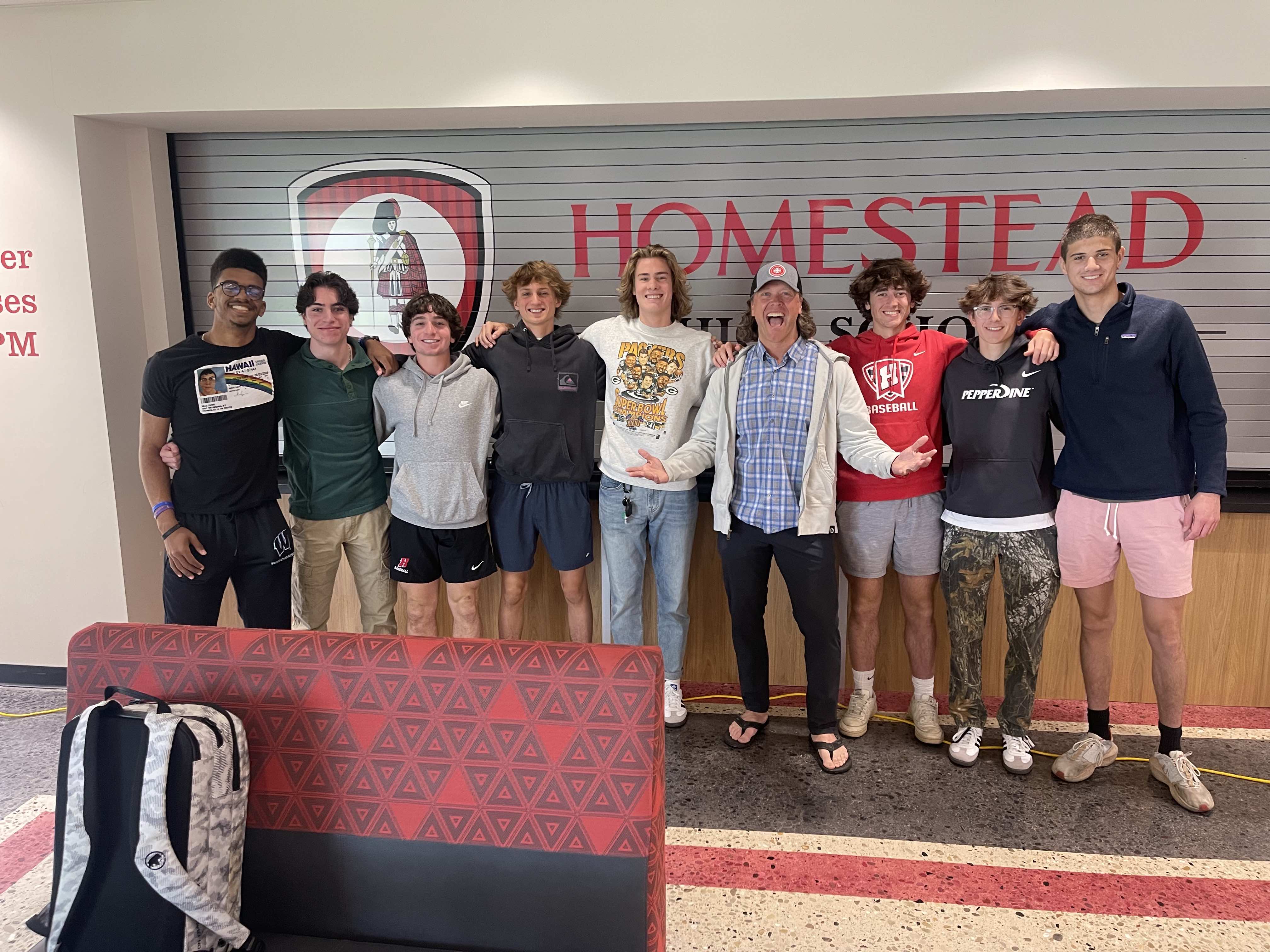
Me and some of the amazing ladies I have coached on the girl’s track team at Homestead High School.

But what may be even more important is that there is a great reciprocity factor at play. When you support your community, the people of your community are more likely to support you. It’s a thing. This happens as community members buy from you, refer potential customers to you, or include you on valuable lists, or in media or social opportunities. Community members look out for their own. And the more valuable you are to your community, the more they will look out for you. Which means the more time you spend in the dunk tank at the community fundraiser the less likely your business is to get dunked or tank in real life.

Coaching flag football and teaching the boys which finger is called the index.

Your community could mean your neighborhood, your town, or the larger city you live in or near. (I like to think of this like being an active member of the village people.) But your community could also mean a community of interests at a local, state, or national level. It could mean becoming active within an industry, association, or regular event. The key is to consider where your business is active and get involved there.  

I am involved in my local community in a number of ways. I am a regular speaker within our local school district, where I talk about my career path to middle and high school students. I regularly speak at the university in our town too. (It used to be our town too…) I have coached high school track and field for 4 years. I have coached youth football for 8 years.

My business, The Weaponry, has been a presenting sponsor of our youth football program. Which included signage, announcements at games, company logos on program-issued clothing and mentions on the program website. All of which help get the word out about my business and our interest in being athletic supporters to the local community.

Speaking to my guys at Steffen Middle School, and a partially inflated chicken.

My family and I also attend band and orchestra concerts and sporting events of all types. We go to and participate in parades, festivals and fun runs. (And eat Funyuns.) We volunteer at concession stands and other activities that add value to our community. We are seen at local events regularly. And all of those events, both large and small, create connections and relationships and keep me and my business top of mind within our home base. It’s not the primary reason we do all these things. But I can assure you that your involvement is also good for you, your reputation and your business.

As you are planning or growing your business, make sure to get out and spend time supporting and adding value to your community. The more involved you are in your community, the more you will be connected to others and the valuable opportunities they can introduce you to.

Key Takeaway

As an entrepreneur or business owner, the more involved you are in your community, the more you connect with others and the opportunities they can introduce you to. You want strong ties to the people around you, and this is one of the best ways to get to know as many people as possible. Even better, when you support your community and its interests, you will find that your community supports you and your interests, too. It’s what communities do.

*If you know someone who could benefit from this message, please share it with them.

+For more of the best life lessons I have learned check out my book, What Does Your Fortune Cookie Say? from Ripples Media.