Collecting Dots: A Valuable Life Lesson from Slumdog Millionaire.

Back in 2008, the movie Slumdog Millionaire hit the big screens. This smash hit was about a young boy in India, growing up on the streets of Mumbai. Through a series of fortunate events, he becomes a contestant on the game show Who Wants To Be A Millionaire. And apparently he wanted to be a millionaire.

The movie was nominated for 10 Academy Awards in 2009, winning a remarkable 8 OSCARS, including Best PictureBest Director (Danny Boyle), and Best Adapted Screenplay. It also won an Adam Albrecht Award for Most Badass Type Of Millionaire.

The thing I loved most about the movie was that every question our hero, Jamal (Mr Slumdog), is asked triggers a flashback to the moment or event where Jamal learned the answer to that question.

I have been thinking a lot about this movie lately, even though I only saw it once, nearly two decades ago. I am thinking about the movie now, because I am recognizing the same flashback effect in my own life. It’s kinda like the flashback scenes from Wayne’s World, but without the wavy lines and sound effects.

Today, as I am digging into my ever-larger collection of knowledge, I often experience flashbacks to the moment I acquired the now-useful knowledge. It is as if I am playing an epic game of connect the dots, and as I connect dots, I am not just drawing a line between the dots; I am understanding the origin story of each dot. Which I recognize is getting pretty deep for dots.

This is happening for 2 reasons.

First, I am thinking about the original knowledge-gain experience as I am dippin’ into my dots. I am not mindlessly accessing the answers. I am watching it happen in my head, as if I were the third person, observing the story.

Essentially, the things I could be doing involuntarily, I am performing voluntarily or consciously, which creates a deeper level of insights and understanding.

Second, I am actively trying to collect more dots. Like a knowledge farmer. Or maybe a knowledge hunter and gatherer. I read books with the purpose of collecting dots, which include facts, trivia and history. I am actively collecting tips, tricks, best practices, insights, study results, good news, quotes and positive examples. I ask a lot of questions. I listen closely to details in my conversations. And I am mindful of the knowledge harvest as it happens. It enables me to sort, label and store the knowledge harvest more effectively. Which means that a great reason I am easily accessing my dots is that I am cataloging them on arrival. Like a nerdy librarian. Which may be the only kind of librarian.

The natural question is, ‘Why am I consciously labeling and sorting the new dots I am collecting?’ I believe that this is a result of blogging and writing books. It is rewiring the way my brain works. (Which is good, because my brain has always had pretty wonky wiring.)

As a writer, it is useful to file, organize and label my dots for future use. But the same approach is also beneficial as an advertising professional, strategist, creative thinker and entrepreneur. In fact, creative thinking is nothing more than connecting dots in new and novel ways.

The Insight

We are as wise and worldly as the dots we collect and the dots we can connect. To become a better thinker, more insightful, more creative, more strategic and more empathetic, collect more dots. As you collect, consider the lessons, insights and knowledge you are gaining as you gain them. This helps you store them more effectively and access them more easily. When you have a greater collection of valuable dots, well cataloged, like spice jars stored alphabetically in your spice rack, you can access them when you need them, and create a greater range of outputs with deliberately nuanced flavors. This is a valuable skill and asset. It improves your thinking, and your value to others.

Key Takeaway

Collect more dots so you can connect more dots. Recognize the value of your dots as you amass them. Think like a prospector, and learn to recognize gems when you see them. When you understand what you have collected, whether it is the results of a scientific study, or a broken heart, it becomes more valuable to your human experience. Because you never know when you will need that information again. But when you can easily access your knowledge, you can profit from it greatly, just like the Slumdog Millionaire.

*If you know someone who could benefit from this message, please share it with them.

+For more of the best life lessons I have learned check out my book, What Does Your Fortune Cookie Say? from Ripples Media.

The best way to get back on course.

There are proven ways to get results in every area of your life. Some methods are universally true. Some are proven to work for you. But when you discover a process that gets you results, use it. And don’t lose it.

I have proven processes:

  • To help me shed pounds when I creep above my target weight. (Like a creeper.)
  • To help me gain strength.
  • To help me put out 3 blog posts per week. (Which is a safe way to put out.)
  • To help me grow my business.
  • To feel closer to God.
  • To wake up well-rested. (Instead of feeling like I rested in a well.)
  • To make my hedges look good.
  • To read 3 books every month
  • To make sure my teeth don’t fall out

But sometimes I get away from my processes. And I gain weight, lose strength, fall off my reading pace, wake up tired, think less about God, write less, and give the Cavity Creeps a shot at my teeth.

When these things happen, and I realize I have strayed from my ideals, goals and norms, it is time to get back on track, Jack. And to get back on track, I give myself a 3-word reminder:

Trust The Process.

You have developed great habits that are proven to get great results over time. But only when you follow the process. If you are not getting the results you have come to expect, chances are that you have gotten away from your best habits.

In those times, return to the process. Resume the great habits. Trust the process. The results won’t come the same day. (Like Amazon.) Or overnight. (Like FedEx.) But be patient. The results will come.

Key Takeaway

Trust your proven processes to get you the results you seek. Give your processes time to work their magic. Your good habits are like the processes in an assembly plant, creating great results. You have to run the process through the full line. And when you do, you will be happy with the final product that rolls out of the factory.


*If you know someone who could benefit from this message, please share it with them.

+For more of the best life lessons I have learned check out my book, What Does Your Fortune Cookie Say? from Ripples Media.

Don’t be a fool. Make sure to get all the value you can from your vacation days.

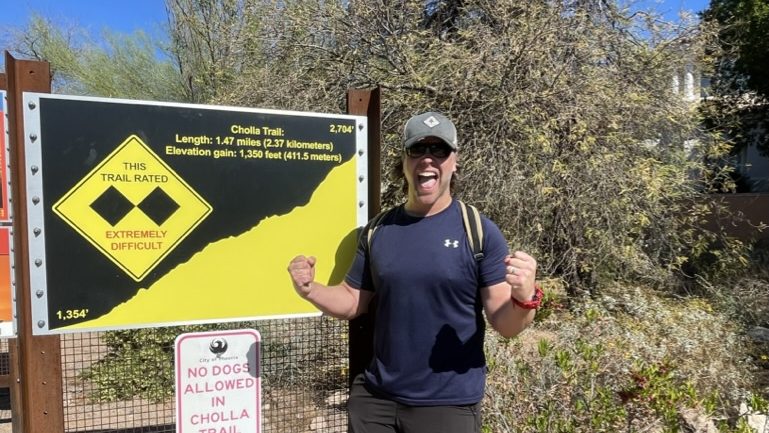
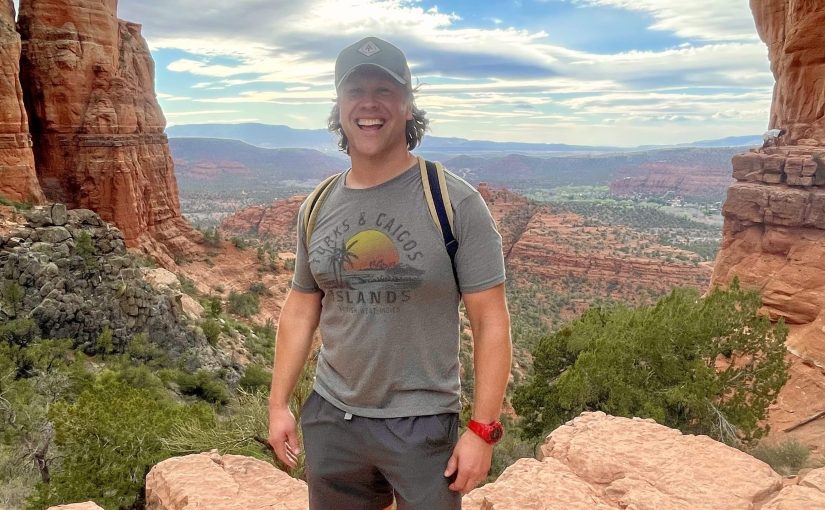
Happy April Fool’s Day! I just returned from a spring break trip with my family. The best thing I came back with was not relaxation or a tan. In fact, my vacations are rarely relaxing. I logged nearly 30 miles worth of desert hikes in Scottsdale and Sedona, Arizona. And my dermatologist would be happy with how much F-ing SPF I used. (Ok, so I don’t actually have a dermatologist. But I do pack a lot of derm, like a pachyderm)

Inspiration

What I came back from vacation with were more memories with my family, new inspiration, and more ideas. None of those things took up any space in my carry- on bag. In fact, the only souvenir I bought on vacation was a single ornament to hang on our Christmas tree. It’s a family tradition. And I’m traditional.

I saw new things. I ate new things. I explored new places that expanded my thinking.

I discovered businesses that made me think about businesses that I could start. And things I could introduce to The Weaponry, the advertising and ideas agency I lead.

People

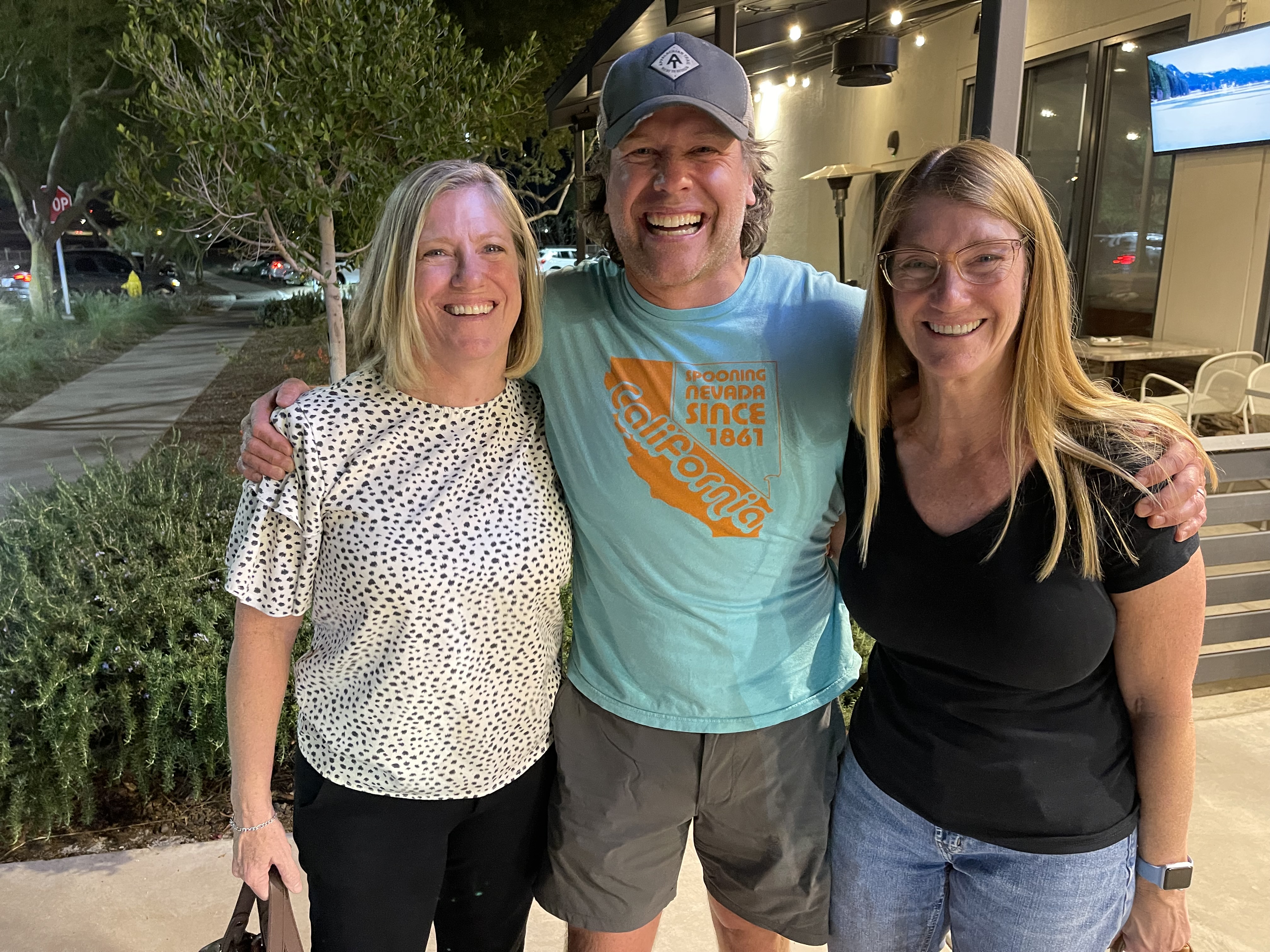
I met new people at hotels, on planes, and on hiking trails. I also saw my cousins Cher Fesenmaier and Chawn Tipton who live in Phoenix, whom I hadn’t seen since our Grandma Albrecht’s funeral a few years ago. Which was a surprisingly fun funeral. After all, she was 99 and taught us how to have fun. Even at funerals.

Cher, Adam and Chawn in Tempe. Make sure to see your people in real life.

Reading

I finished a book on vacation. (The Splendid and The Vile) I started reading 2 new books. (Barbarian Days and Dave Grohl’s The Storyteller.) Everything you read helps make you more creative. It feeds your brain more material and creates more dots to connect. Vacations would be valuable even if you just stayed at home and read. Your dermatologist would probably like that too.

Appetizers

I got to really dig into some locations that I had only experienced as appetizers in the past. My mom taught me that short visits to new places are like having appetizers. If you enjoy the appetizer, you can come back for more another time.

Memories

Your most valuable possessions are your memories. They are like pieces of art, movies, photos and paintings that you hang in the museum in your mind. The more new experiences you have the more you fill the most valuable gallery in your head. That gallery serves as your perpetual source of inspiration when you need ideas, and as your perpetual source of entertainment and conversation starters when you don’t have the time or money to travel. You get to relive the experiences of your memories over and over in your mind. Even when you are too old, weak, or poor to travel and adventure.

My people in Sedona. 10 out of 10. Can definitely recommend.

Key Takeaway

Make sure to take your vacation time. Use it to do new things. It enhances your creativity in immense ways. You collect new dots to connect to the other dots you already have. This helps you come up with new ideas and combine old ideas in new and novel ways. It expands your world and your thinking. It creates new perspective. It introduces you to new people. It gifts you new stories. And new reasons to laugh. It creates new memories. And sooner or later you realize that your relationships and your memories are your most valuable possessions. Your vacation days help you develop both.

*If you know someone who could benefit from this message, please share it with them.

+For more of the best life lessons I have learned check out my book, What Does Your Fortune Cookie Say? from Ripples Media.

8 Great Books I Have Read In 2025.

If you want to have a great year of growth, create a great year of reading. That’s because the books you read change you. They change your thinking and your expectations. They increase the number of tools, tips and tricks you can tap into. They alter your perspective and add to your experience, knowledge and wisdom. They increase your inspiration and motivation and various other forms of ation.

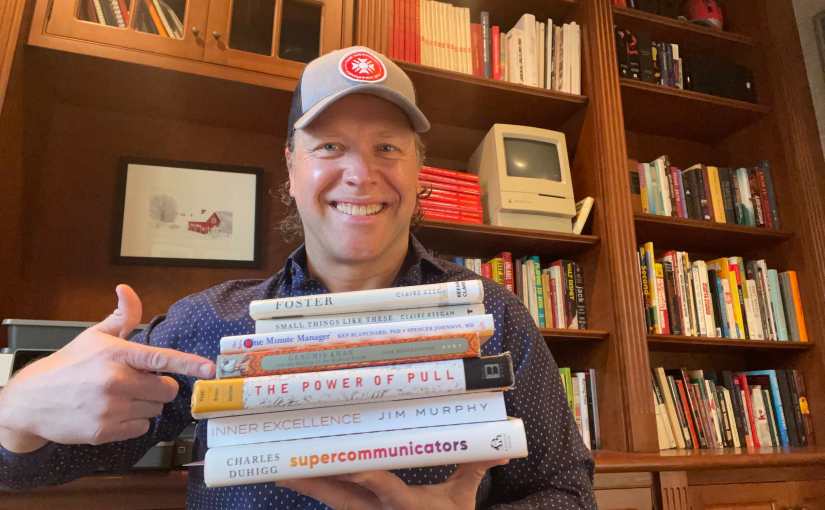
I keep a reading log of the books I read each year. I try to add 2 to 4 books per month to the list. I am extremely happy with both the quality and quantity of books I have read over the first 2 months of 2025. Which means I can’t just keep these to myself. So here are the books I have read this year, in the order I read them.

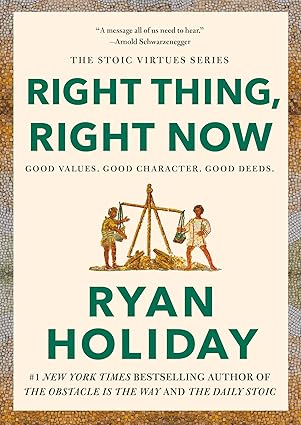
The Right Thing Right Now: Good Values. Good Character. Good Deeds. By Ryan Holiday

This is a good book full of stories about good people doing the right thing. Even when it was really hard or unpopular. Holiday says that of all the books he has written, this is the one he most wants his kids to read. I agree. It’s a top shelf book. (If being on the top shelf was a good thing in books, like it is in hard liquor. But being top shelf in books may mean inappropriate for kids, or short adults. And that’s not what I mean.)

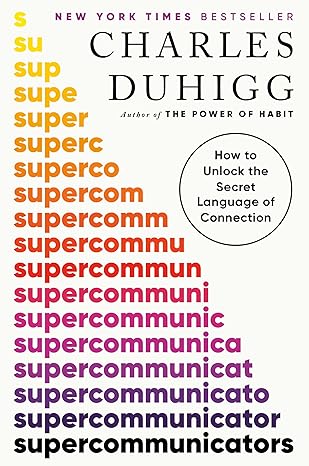
Supercommunicators: How to Unlock the Secret Language of Connection by Charles Duhigg

I learned about this super book because my wife Dawn is reading it with her Mahjong Crew, Laura, Maria and Molly. The title of the book intrigued me. So I listened to the audio version on a road trip. It was full of good lessons, examples, tips and tricks about communication, persuasion and deepening relationships. A highlight was an analysis of the difference between the way that happy and unhappily married couples fight. And yes, they both fight, and they fight about the same things. But the subtle difference in the way they fight makes a huge difference. I am supercurious to know who at this point in the paragraph has decided that they don’t need better communications skills. I superrecommend.

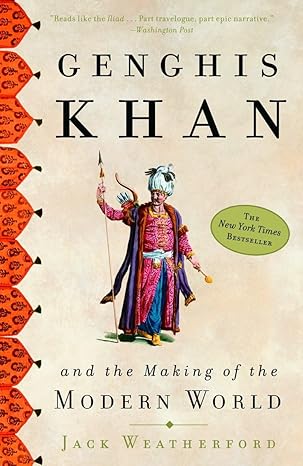
Genghis Khan and the Making of the Modern World by Jack Weatherford

Wow! Not only did this book open my eyes to one of the great figures in world history, it reminded me of how little I know about world history that takes place outside of the United States or Western Europe. Khan’s is the ultimate rags to riches story. He was a brutal warrior and conqueror, but an open-minded and inclusive leader who ruled over a larger empire than any other conqueror on the planet. It was also interesting to note that he changed his name a couple of times. Kinda like Yvette Marie Stevens, who you now know as Chaka Khan. It must be a Khan thing. Another Top Shelf book.

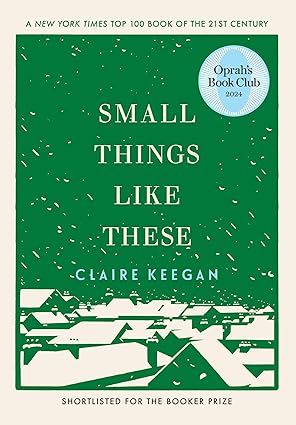
Small Things Like These by Claire Keegan

I saw this book on the list of 100 most important books of the 21st Century. And I knew it had recently been turned into a motion picture. Both of which are good indicators that it’s a worthwhile read. This short book, about 114 pages, was as well written as any book I have read. Packed with imagery-evoking description, but easy to digest, the book flew by like Maverick and Goose buzzing the control tower. For three quarters of the book I wondered where we were going to land. Then, like a good Seinfeld episode, all the pieces came together in a real wow in the last quarter. And I learned about another dark corner of history I knew nothing about. Everyone in your household should read this.

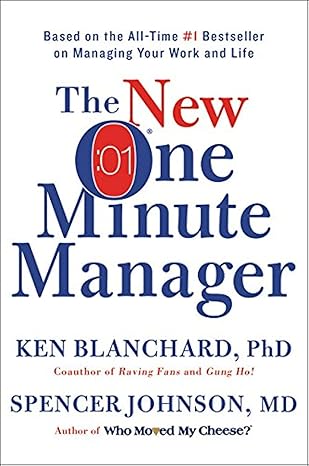
The New One Minute Manager by Ken Blanchard & Spencer Johnson

I re-read this helpful management guide for the first time in several years. I love how it simplifies management into a few very simple steps that are easy to understand and implement. A great read for any manager of other humans. Including parents, coaches and parole officers.

Foster by Claire Keegan

When I dug deeper into Keegan’s body of work, Foster surfaced as another fan favorite. It was another quick and enjoyable read. Descriptive. Simple. With interesting situations hiding in the shadows throughout. And a great reminder how different people are. And how much influence we can all have on another human’s experience. Spoiler alert: the book is not about the guys who invented the banana dessert. It’s a good read.

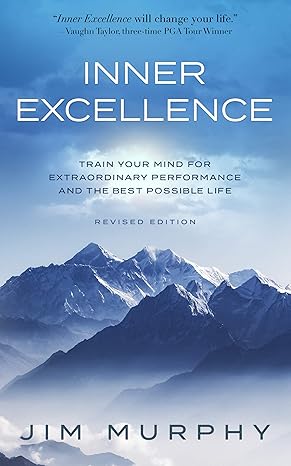
Inner Excellence: Train Your Mind for Extraordinary Performance and the Best Possible Life by Jim Murphy

I couldn’t get enough of this book. I discovered it during the NFL playoffs, when A.J. Brown of the Philadelphia Eagles was spotted on the sideline reading the book during a game. I immediately ordered the book to see what might be so valuable that you would keep in next to the Gatorade during a competition. I quickly found out. The book is a must read for athletes and coaches. It introduces a healthier and more empowering way to think about competition and performance than I had ever heard before. And I have been a highly involved is athletics as an athlete and a coach for a large part of my life. I can’t wait for the sequel, Outer Excellence, to help me with my hair, nail and skin care routine, and to teach me how to dress snazzy. This gets my top shelf AA rating.

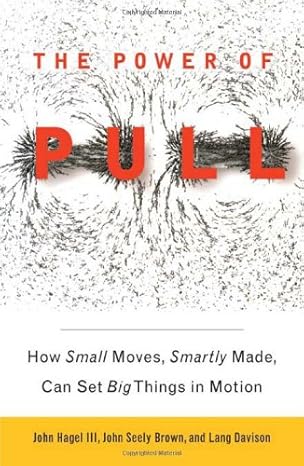
The Power of Pull: How Small Moves, Smartly Made, Can Set Big Things in Motion by John Hagel, John Seely Brown and Lang Davison

I read a lot, and am always looking for the graduate level books on the subjects I care most about. This was definitely a graduate-level book on the powerful transformation of markets, industries, growth and relationships. As soon as I finished the book, I wanted to begin again, like Poor Old Michael Finnegan. I don’t remember the last time I dog-eared so many pages in a book or noted so many sections. I found this book incredibly inspiring and empowering. Perhaps one of my all-time top 10 books. I recommend this for business and economics geeks. And for people with deep passions. And anyone who wants to know how the world really works.

Key Takeaway

Books are powerful tools for self-improvement. I am amazed by how much I have added to my body of knowledge in the past 2 months alone. Make sure to constantly seek out great and important books that increase your knowledge, expand your view, and add to your skills and decision-making abilities. Remember, life is short. So read the good books first. And remember that short books are great for building your reading muscles.

If you have read some great books you think that I would enjoy, please send them my way. I can be reached at adam@theweaponry.com or 614-256-2850.


*If you know someone who could benefit from this message, please share it with them.

+For more of the best life lessons I have learned check out my book, What Does Your Fortune Cookie Say? from Ripples Media.

Navigating Growth Amid Headwinds That Make Big Goals Impossible.

In a perfect world, you would get better every day. You would become smarter, make more money, lose weight, grow your business and enjoy clearer skin 7 days a week. It’s what competitors want to do. You have these kinds of growth desires both at work and in your personal life. They tend to be even stronger in the months leading up to your high school reunions.

But at times you will face headwinds that won’t allow for growth. Not even Bob Seger can run against them. These headwinds won’t allow you to hit your goals, increase revenue, lose weight, or improve on whatever metrics you are using to measure yourself.

This is because sometimes the prevailing conditions work against you. These conditions can come in various forms, including the following:

  • Interest rates
  • Pandemics
  • Elections
  • Seasons
  • Weather
  • Fuel Prices
  • Illness
  • Injury
  • Cost of Goods
  • Scarcity of Labor
  • Venus in retrograde
  • Holidays
  • Recessions
  • Depressions
  • Travel
  • Embargoes
  • Bird Flu (Good luck with those Easter egg dye kits, PAAS…)

These factors can freeze industries and opportunities. They are abnormalities that create additional uncontrolled variables in your success experiments. But they are typically temporary. Unless your category has been totally disrupted. (Make sure you don’t mistake a headwind for category disruption. Or you will find yourself working at Blockbuster, waiting for customers who are never coming back.)

Remember the life-saving advice not to swim against the forces of a riptide. Apply the same advice to headwind conditions. Don’t tire yourself out trying to fight a force you can’t beat. Instead, conserve your energy. Wait it out. Or escape the headwind by moving to a different product, category, opportunity or goal.

Key Takeaway

Set lofty growth and improvement goals for yourself and your organization. But recognize when conditions create headwinds that make them difficult or impossible to achieve. Those conditions are almost always temporary. Adjust your expectations. And prepare to resume your march towards your big hairy, audacious goals as soon as the headwinds abate.

*If you know someone who could benefit from this message, please share it with them.

+For more of the best life lessons I have learned check out my book, What Does Your Fortune Cookie Say? from Ripples Media.

How to Develop a Growth Mindset Effectively, And Grow Baby, Grow!

When I was a little boy, I had a piece of needlepoint art in my bedroom. It depicted a little cowboy, like me, and the words, ‘Please by patient. God isn’t finished with me yet.’ It was my first reminder that who I was as a young boy was not who I was going to be as a full-grown adult. I just didn’t know that I would never outgrow my love for potty humor.

The Growth Mindset

As I grew older, I recognized how much I was changing, learning and growing. First, in elementary, middle and high school. Then, the growth and learning continued at The University of Wisconsin, where I majored in psychology, journalism and cheese curds.

But I liked learning, growing and developing so much that when I graduated from college, I enrolled in Adam Albrecht’s Self-Directed School of Life Long Learning. It’s where I have received all of my advanced degrees. The tuition at AASDSLLL is a great value. But our basketball team couldn’t beat a drum.

Lessons I Have Learned Along The Way.

I have learned that everyone adopts 1 of 2 mindsets.

Those with a fixed mindset believe their knowledge, skills, abilities and limitations are fixed and unchanging.

People with a growth mindset believe that they are continuously growing, evolving and improving. Which sounds way more hopeful. (Pro Tip: It’s also the mindset they are looking for at your parole hearing.)

A growth mindset means you recognize that what you know now is just a tiny percentage of what you could know.

A growth mindset means that you believe that you can feed your brain, your body, and your emotions with better inputs and get better outputs.

It means that if you currently stink at stuff, you are not condemned to a life sentence of stinkage.

It means that you have the superpower to transform yourself into a much better and more powerful version of yourself. Like Ironman.

A growth mindset means that every time you spend time with someone better than you are, their knowledge, skills and mindset rub off on you and make you better.

A growth mindset means that when you read a book, you reach the back cover smarter and more capable than you were when you lifted the front cover.

A growth mindset means you don’t say things like, I can’t or I don’t. And you don’t say Popeye stuff like, ‘I yam what I yam.’ What kind of sweet potato nonsense is that?

A growth mindset means that you see your self-improvement journey as an infinite staircase. The level, step or stair that you are on today is simply where you are today. You have the ability to take another step up in any area of your life, and by any measure you choose, any time you choose.

A growth mindset means having faith in the self-improvement process. Like George Michael. It means that small incremental gains will add up to have a transformational effect. Like compound interest in every area of your life that you invest time and energy into.

Leveling Up

When I entered high school, I was a 6-foot-tall, 150-pound freshman. During my 4 years at Hanover High School in Hanover, New Hampshire, no one spent more time in the weight room than I did. As a result, I graduated as a senior who was 6 feet tall and 215 pounds. (I couldn’t seem to do anything about the height. Maybe I have a fixed heightset.)

In my first track meet as a high school shot putter my freshman year, I finished 28th out of 30 throwers. My senior year I was the state champion.

During my freshman year, my coach didn’t think I was good enough to throw the discus in a meet. But, by the time I was a senior, I was a state champ, New England champ, and held the all-time state record in the discus. All of this happened because I could imagine it happening. So I put in the work to keep climbing that staircase.

How To Develop A Growth Mindset

The first step to developing a growth mindset is to visualize the best version of yourself. Imagine the greatest version of yourself you can conceive of. That is your ideal self. What you are today is your real self. It is the version of you that you have already realized or attained. Now, your job is to simply put in the effort to close the gap between your real self and your ideal self.

The Model And The Path

A growth mindset is simply having an open mind to your ability to improve yourself into someone greater than you are today. One of the best ways to do this is to find a model and a path.

A model is a person whom you aspire to be like. Pick a person you think has the skills, abilities, success, character or mindset that you want to have. (They don’t have to be an actual model, like Heidi Klum, Bella Hadid, or a T Ford.)

Then, examine your model’s path. Learn what work, steps, opportunities and influences helped them develop into the person they are today. (Or, if you choose a historical figure, focus on the path they traveled before they died. And decomposed.) Learn their helpful habits and routines. Learn about their knowledge sources. Which could be books, coaches, teachers, and role models. Learn about their experiences and influences.

Next, reproduce or approximate the helpful forces that pushed them to grow into the model you admire. This provides both a great recipe for improvement, and prevents you from having to reinvent the wheel. Or become a psycho stalker.

A Few Final Thoughts

A growth mindset is about experimenting. It is about adjusting variables to get better results.

A growth mindset means you give yourself permission to be an amateur. You can’t beat yourself up over all the things you don’t yet know or can’t do yet. By giving yourself permission to be an amateur, you allow yourself to start and put a premium on all the growth you experience along the way.

A growth mindset is about developing great habits. You are a product of your habits. Growth-focused habits have the power to help you improve every day. These include reading, practicing the skills you want to develop, time management, exercise, sleep, and gratitude.

Key Takeaway

To become the greatest version of yourself, you have to adopt a growth mindset. Imagine a version of yourself far greater and more capable than you are today. Then continuously work to close the gap. Allow yourself to be an amateur. Develop great habits that help you learn and grow. Experiment. Stay curious. Find someone who you want to be more like and discover their path. It will help you discover your own path to an even greater you.

*If you know someone who could benefit from this message, please share it with them.

+For more of the best life lessons I have learned check out my book, What Does Your Fortune Cookie Say? from Ripples Media.

I have finally developed a skill I was never good at.

There are some things that I am good at. And other things I am not good at at all. (Like folding fitted sheets and stopping myself from thinking, ‘That’s what she said…’ a thousand times a day.)

One of the things I haven’t been good at at work is entering my time into our time-tracking software at the end of each day. (I also wasn’t good at avoiding that at-at thing in the previous sentence.)

To be clear, I keep a detailed to-do list each day that lists my activities. Plus, I schedule my daily activities on my calendar, which provides a detailed log of my time. So I have records of how I spent each day for great reference. In fact, when archaeologists someday discover my notebooks, they will have a strong understanding of how I spent my days and could enter my time for me. But I expect it will be too late for us to invoice that time.

Still, I have never liked walking away from the office without completing my time entry for that day. Yet the tight demands on my schedule often meant that I did anyway.

One of my goals for 2025 was to enter my detailed time each day on the day I did the work. So, I added something new and simple to my long list of habits.

On my daily Success List (what you might call a to-do list, and what Scooby Doo might call a Scooby To-Doo list), I have added a line that says, Enter Time in Harvest. Harvest is The Weaponry’s time-tracking software.

As we started February, I noticed something interesting. I entered my time each day for the entire month of January.

The key to my behavior change was simply writing Enter Time in Harvest on my daily Success List.

I love crossing things off my list. It makes me feel accomplished. Having a list keeps me productive and focuses my time on my most important activities throughout the day. Because I already had a strong list-making and list-crossing-off habit established, I simply utilized my habit of doing the things on my daily list daily to create this valuable new habit.

The key was right in front of me all along. Or should I say, write in front of me?

Bonus: Another valuable thing I added to my daily Success List last year was the line No Social Media Before Lunch. This prevented me from falling down social media rabbit holes and wasting precious time during the golden morning hours of productivity. Again, because I love crossing things off my list, I avoided the socials between 9 am and whenever I stopped for lunch. As a result, I got more important work done each day.

Key Takeaway

You are a product of your habits. If you use a daily to-do list or Success List, try adding the behaviors you want to modify to your list. Remember, those may be behaviors you want to add or eliminate. By writing them on your daily activity guide and crossing the actions off your list at the end of the day, you may discover the easiest way to get the results you want.

*If you know someone who could benefit from this message, please share it with them.

+For more of the best life lessons I have learned check out my book, What Does Your Fortune Cookie Say? from Ripples Media.

It’s time for your next step to a great 2025.

One great day is just one great day.

But if you can string together 4 to 7 great days you have a great week.

And if you can string together 4 or 5 great weeks you have a great month.

And if you string together 12 great months you have a great year.

And if you string together great year after great year, you create a great life.

And if you string together 6 great strings, you might have a guitar. Or an afghan.

Creating A Great 2025

I am trying to make 2025 my best year ever. I call it Project 2025. (Not to be confused with any other Project 2025s you may have heard about lately.) I hope you are doing the same. And if you haven’t been thinking about creating your own great 2025, now is the time to start. Because no one can make it happen but you. (With a strong assist from God, the world’s all-time assist leader.)

As we wrapped up the first 12th of the year, I spent Friday evening evaluating my January. Here are the bullet points in my self-report:

Adam’s January 2025

  • I went skiing 4 times. (That’s an average of once per week and twice the number of times I have skied between 1990 and 2024.)
  • I read 3 books. (More to come on this. But they were all great. And none of them involved coloring.)
  • I published 10 new blog posts.
  • I published 2 new editions of Adam’s Good Newsletter. (Please sign up if you like positive stuff.)
  • I met major milestones on a special writing project I have been working on. (I assume much of the world calls them kilometerstones.)
  • I worked out 16 times (despite being sick for a week with one of those little Gremlins Americans circulated in January. Which made me appreciate my good health even more.)
  • I booked 3 new speaking engagements. (Does that mean I now have 3 new speaking fiances?)
  • I bought a new set of Rogue dumbbells from 5 to 50 pounds and an additional set of 45-pound Rogue bumper plates. Then, I put them all to good use in my home gym. (I also drove from Milwaukee to Columbus to pick them up and save $300 in shipping costs. Plus, I got to see that huge candle in Indiana. #IYKYK)
  • The Weaponry conducted 2 transformative strategy workshops for new brands.
  • My great team added some cool new clients and we have several more about to come aboard, like the opening to The Love Boat.
  • I visited 5 states. And discovered that the new Salt Lake City airport is amazing. Tom Hanks should have been stuck in that terminal.
  • I visited my great friends Amy and Todd Urowsky at their beautiful home in Park City, Utah, and then skied at Brighton.
  • I spent time with my parents Bob and Jill Albrecht, in Lafayette, Indiana. Having parents is the best. Don’t take it for granted.
  • I planned and booked a spring break trip to Arizona. I’d love to hear your favorite things in Scottsdale and Sedona. (I already know about the tall cans of tea.)
  • I spent a lot of quality time with my wife Dawn, and sons Johann and Magnus. Plus, my daughter Ava was home from college for 3 weeks in January. Which was wonderful. Like George Bailey’s life.
  • I added several great new people to my Great People collection. Great people are the most valuable things you can collect.

I share this list to encourage you to create your own. You have to look back at your wins, both large and small, to recognize the great things in your life. The successes, the adventures, the experiences, the relationships, the learnings, the growth, and the commitments kept. By reflecting on them, you both tally your wins, and you get to enjoy them all again.

Let’s Go February!

Now, it’s time for us all to create a great February. I am excited about it. I hope you are, too. It all starts simply by having a great day today, whatever that looks like to you. And then doing it again tomorrow.

Key Takeaway

A great life, a great marriage, and a great career are built one day at a time. Start by knowing what great means to you. Then, live into that every day. String together great days. They create great weeks, months and years. You have to make it happen. And it is never too late to start.

*If you know someone who could benefit from this message, please share it with them.

+For more of the best life lessons I have learned check out my book, What Does Your Fortune Cookie Say? from Ripples Media.

The 2 Key Factors That Determine Success in Sports and Life.

I have spent a lot of time coaching and participating in sports. Both team sports and individual sports. My teams have won and lost. The individual athletes I have coached have both dominated and been dominated. Along the way, I have carefully analyzed what creates wins and losses. And I have discovered that there are 2 key factors that determine the outcomes of all sporting events. And despite what Nike and Mars Blackmon would like you to believe, it is not da shoes.

The key 2 factors that determine the outcomes of all sporting events are effort and errors.

Effort

In sporting competitions, the effort exerted by a team or individual competitor is stacked directly against the effort exerted by the other team or individual competitor.

The more effort you exert, the more likely you are to win. This is true in contact sports, races of all types, gymnastics, putting the shot, dodgeball, and Red Rover. (Where you always ask your opponent to send that low-effort kid over.)

However, effort is not the only factor at play. (See what I did there?)

Errors

The other key element that impacts every sporting event outcome is errors.

There is an ideal way to perform every move in sports, from the discus throw to the jump shot to the form tackle to the Triple Lindy. Any deviation from that technique, form, move or execution is an error. The more errors you commit, the less likely you are to win. Like Bruce Hornsby said, that’s just the way it is,

Sometimes, errors result from a lack of focus and are self-created. Other times, your errors are forced by your opponent. In fact, it is your job as a competitor to force errors in your competitors. You do this either through physical effort or through mental or psychological stress applied through pressure, confusion, conditions, or crowd noise. (Although crowd noise is illegal in tennis and golf.)

However, you and your opponent aren’t the only ones committing errors. There are also errors made by officials, judges, referees, umpires, scoreboard operators, timekeepers, and eager Cubs fans in left field excited to catch a foul ball. Their errors have the potential to completely change the outcome of a competition. Those are simply the facts of life, like Tootie, Blair, Jo and Mrs. G.

As a competitor, there are two things you can do to impact the outcome of a sporting event.

  1. Maximize your own effort.
  2. Minimize your own errors.

The rest is beyond your control.

Beyond Sports

The impact of effort and errors doesn’t just apply to sports. The same key factors influence such varied fields as business, relationships, and academic success. They are the key ingredients in gardening, investing, music performance, and even picking up hotties at a nightclub. So pay close attention to both your successes and failures. You’ll find these two critical variables play a major role in each.

Key Takeaway

Success in sports is simply a result of maximizing effort and minimizing errors. It is why you train and improve your strength and stamina. It is why you practice and drill over and over and over again. But these same influences on sports also determine the outcomes in most areas of life. From marriage to sales to self-confidence. Which is why sports are so valuable. They teach you how to be successful in all areas of life. And that’s the great win for us all.

*If you know someone who could benefit from this message, please share it with them.

+For more of the best life lessons I have learned check out my book, What Does Your Fortune Cookie Say? from Ripples Media.

Balancing Growth and Goals in Your Self-Improvement Journey.

We are all on some type of self-improvement journey. It’s how we are wired as humans. There are always things we can find to improve. And the beginning of a new year is like Improvapalooza. Suddenly, we are thinking of all the things we should do to make more money, read more books and look better naked. (Presumably while reading books.)

There are 3 key points on your self improvement journey.

  1. Your starting point
  2. Your current position
  3. Your ideal

To maintain motivation, you need to balance how much time you spend focused on the distance to your goal, versus the progress you have made.

If you only focus on the ideal goal you will spend somewhere between 99% and 100% of your time on the journey disappointed.

Because you are always falling short. Like Martin.

If you spend all of your time focused on your growth you can feel like you have done enough.

Which will make you feel prematurely satisfied. A condition I call PreMatSat. (Which I think is also the test you take to get into med school.)

In this case, you are likely to settle for less than you set out to achieve.

The key is a balanced diet of both perspectives.

Just as your ideal food intake requires a proper balance of protein and carbohydrates, motivation requires a balance of attention towards both your goals and your growth.

I have found a simple formula that works best for me.

2/3rd Goal Perspective + 1/3 Growth Perspective = Motivation + Reward

Think of this like spending your work week focused on your goals and your weekends enjoying your growth. It provides a great combination of grind time and satisfaction with your accomplishments.

Key Takeaway

It is important to set lofty goals to push yourself to become the best you can be. But the real win isn’t simply in achieving your goals. The win is in the improvement. The goal is the tool to keep you marching forward. The growth is the reward. It’s the fruit you harvest. If you don’t take a little time to look at your improved physique in the mirror, enjoy a bit of that hard-won money, or admire your elevated skills, you are planting a garden without ever eating the crop. Don’t focus so much on the destination that you forget that the real value is in the journey. And it always has been.


*If you know someone who could benefit from this message, please share it with them.

+For more of the best life lessons I have learned check out my book, What Does Your Fortune Cookie Say? from Ripples Media.