How to get the most out of each workday.

Yesterday when I arrived at work I sat down at my desk to plan my day at The Weaponry. I firmly believe that you must get on top of each day before the day gets on top of you. #ItsBetterOnTop

Like Lynyrd Skynyrd, I plan my days in 3 steps, mister.

  1. I open up my daily calendar to see my obligations for the day.
  2. I open Stickies on my laptop to see My Priorities List. I created a list that includes my clients, business development efforts, and major life goals.
  3. I open up my notebook and create my Daily Success List.

The Success List

At the top left corner of the page, I write Success List, because names matter. Then I add the date, for historic purposes.

Next, I fill the rest of the header section of the page with my 3 major career goals. I do this to keep them in mind, and to make sure the rest of the day aligns with my major goals. Because each day is like a tool we can use to achieve our dreams. Which means each day is kinda like a dreamcatcher, only without the feathers, string and rearview mirror.

After the page header has been properly transformed into a navigational tool, I begin my list.

Yesterday, I had no external obligations on my calendar. So I was free to make it the perfectly productive day. Which is probably why this topic is top of mind today.

With no meetings of any kind required of me, which is a real rarity, I filled my success list with my priorities.

The list included:

  • Creating a new planning process for one of our service offerings
  • Contacting several clients
  • Prepping for the implementation of our new 401(k) plan
  • Contacting potential future Weapons
  • Reaching out to friends in my network for no good reason
  • Strategic work for a client
  • Creative work for a client
  • Naming work for a client
  • Scheduling a client presentation
  • Reviewing an updated video script
  • Checking in on a logo design project
  • Contacting my tax accountant
  • Contacting my realtor
  • Contacting my favorite banking professional
  • Checking on our plans for an upcoming film and photoshoot

Making It Happen

When I was done creating the list there were 24 action items on it. The 24th action item was the most important. It simply said, Schedule Day Full. Which meant that now that I had my list of things to do for the day, I had to put them on the calendar in order to create a concrete plan to make the day productive. I then filled the rest of my calendar from 9:30 am to 5 pm with actions to take.

This meant that by 9:30 am I had transformed my day of no obligations into a day packed with actions and priorities. As a result, I knocked off 22 of the 24 items on my success list.

I even scheduled an hour for lunch at noon. Because eating food keeps me alive. And like the BeeGees, I find that staying alive is important to my long-term success. Over my lunch hour, I watched several videos on MasterClass, which I have added to my self-improvement program. More on that in another post.

Key Takeaway

Create a Success List every day. Start by listing your long term goals, and let them guide your actions and priorities on a daily basis. Schedule your workday full each day. And make sure to eat lunch and learn something new. Do this day after day, and not only will you cross your daily actions off your list, you will start crossing your long term goals off the top of the page.

*If you know someone who could benefit from this message, please share it with them.

How to stand out in a crowd using your unique identifiers.

There are a lot of people to compete with on this planet. If you are looking for a job, a significant other, or a great opportunity, it helps to stand out from the herd. Or so I’ve heard.

Only You.

In advertising, we are always looking for that thing that only our brand can say. We were the first brand to do ________. We are the only brand to offer ________. We are the only brand that does __________ in Dallas, besides Debbie.

What we are doing is creating a clear and distinguishing image of our brand without an equal competitor. To do this, we create evaluation criteria that we naturally win.

Your Personal Brand

You can do the same thing for your personal brand. To do this, simply find something that makes you stand out. Use the following question as your guide.

What is something you have done that you are fairly confident you are the ONLY person in the considered set to have done?

The considered set means you are the only person in the room, at the party, in the new business pitch, or being interviewed who could say this. When someone asks you to share a fun fact about yourself, this is what they mean. I always think this would be a really fun game to play in prison.

Your Unique Identifiers

This question offers you an opportunity to become unforgettable. It allows you to reach into your bag of uniqueness and pull out that crazy fact, that interesting experience, that crazy condition, that remarkable accomplishment, and hold it up for everyone to see. Like when Anthony Michael Hall holds up Molly Ringwald’s underwear in Sixteen Candles. When you do, you have created your own Unique Identifier.

Your Unique Identifier serves as a valuable story that dramatically increases your memorability. And if you want opportunities to come your way, it helps to stand out from the crowd.

Some Unique Identifiers I use:

  • I once pet a hummingbird in the wild.
  • I once got stuck in a Murphy bed in Germany.
  • My Mom is one of 9 kids and my Dad is one of 12.
  • I lived in 5 states by the time I was in 7th Grade.
  • Me and Danica Patrick once filled a Prevost motorhome with ping pong balls.
  • My older sister Heather and I have the same birthday 2 years apart. And my 2 younger sisters, Alison and Donielle, have the same birthday 2 years apart.
  • In high school, I broke the state record in the discus 8 months after having my ACL reconstructed.
  • I launched The Weaponry because I had two different clients call me the same day and encourage me to start my own advertising agency.

Key Takeaway

We all have Unique Identifiers. Think about yours. Write them down and keep them handy. Use them at parties, on dates, and in interviews. They give others something interesting and differentiating to remember you by. Just ask Mikhail Gorbachev.

*If you know someone who could benefit from this message, please share it with them.

Suddenly it is now or never for your 2020 goals.

You started 2020 with exciting goals to achieve. But the aspirations of New Year’s Day probably feel like a lifetime ago. Whether you set goals specifically for 2020, or goals to achieve in your lifetime, you began the year with something important you wanted to accomplish. If the wild ride that is 2020 has caused goal amnesia, take a moment now to remember your goals for the year. (cue the Jeopardy music…)

It’s go time.

Today is December 1st, and you are down to your last month of 2020. The next 31 days are what you have left to work with to make personal and professional progress this year. Don’t let the remaining time slip away. These are the days to remember. Cause they will not last forever.

Remember, self-imposed deadlines are the key drivers of accomplishment and self-improvement. And as Buddy knows, elf-imposed deadlines are the key drivers of elf-improvement.

Don’t worry if you can’t complete everything in 31 days. A good start is plenty valuable. In fact, the more you can accomplish in the next month, the better you will be positioned for a great 2021.

Things You Can Still Do In December

  • Lose weight
  • Start exercising
  • Read a book
  • Start writing a book
  • Begin a business
  • Create a meetup group
  • Expand your network
  • Look for a new job
  • Volunteer
  • Give Blood (A life goal I accomplished in November.)
  • Learn a new skill ( I just subscribed to Master Class)
  • Develop a new product or service
  • Take a class
  • Learn to ski, skate, scat or ska
  • Improve your business development efforts.
  • Begin to learn a new language
  • Create a plan for your financial security
  • Spend quality time with your family. (Over Thanksgiving my family focused on family game nights again.)
  • Reconnect with an old friend or family member
  • Quit smoking, drinking or drugging (It only takes one day as I wrote about here.)

Pro-gress Tip

Break the goal or project you want to make the most progress on into 31 smaller pieces. Do a little each day. Or break the goal into fewer chunks, depending on what day you first read this post. However, if you are reading this on December 31st I suggest you skip the last 2 paragraphs and get straight to work.

Remember, the best way to eat an elephant is one bite at a time. (I recommend starting with elephant ears covered in powdered sugar and cinnamon.) And the best way to complete your 2020 goals in December is 1/31st at a time.

Key Takeaway

Get going. The rest of the world may use the excuse that the end is near and give up, but the positive procrastinators say It’s Go Time! Don’t let these 31 days slip away. They are your opportunity for progress, change, new beginnings, or completion. It’s not too late to salvage 2020. Let the progress you make over the next 31 days be your holiday gift to yourself.

*If you know someone who could benefit from this message today, please share it with them.

The most valuable construction material in the world arrives at midnight.

Do you know what the most valuable construction material is? In case you are no Bob The Builder and haven’t partied at The Home Depot since before the pandemic, here’s a quick refresher on some of the more popular materials:

  • Lumber
  • Brick
  • Concrete
  • Steel
  • Glass (If your house is made of this don’t throw Mick Jagger)
  • Bamboo
  • Corn (Mitchell, South Dakota only)
  • Plastic
  • Aluminum
  • Adobe

But the most valuable construction material of all, is time. You can use time, like blocks, bricks and legos to create anything you can think of. We all get a delivery of 1,440 shiny new minutes every day. They arrive at your doorstep at midnight.

Each minute is perfectly sized for human use. They enable you to create great things. To build your dreams. To construct the life you want to live. To make memories and relationships.

Your daily delivery of minutes can be used to build businesses. They can be used to write a book, a movie or a blog post. They can create quality time with others. They can be used for self-improvement, to build intelligence and construct confidence. They can be used to build homes. And they can even be volunteered to good causes.

The most interesting thing about your daily delivery of minutes is that if you use them you get to keep them forever. But if you don’t use them, they disappear at midnight.

Key Takeaway

Use your minutes today.

*If you know someone who could benefit from this message please share it with them. It will only take a minute.

How to approach your career like a sport.

Business is the ultimate sport. Not only is it highly competitive, it is played for money. And the better you are at this game the more money you and your teammates make. And while many professional athletes are well paid, it is because someone else is making even more money in business by owning the team or the league the athletes play in.

Sports and Business

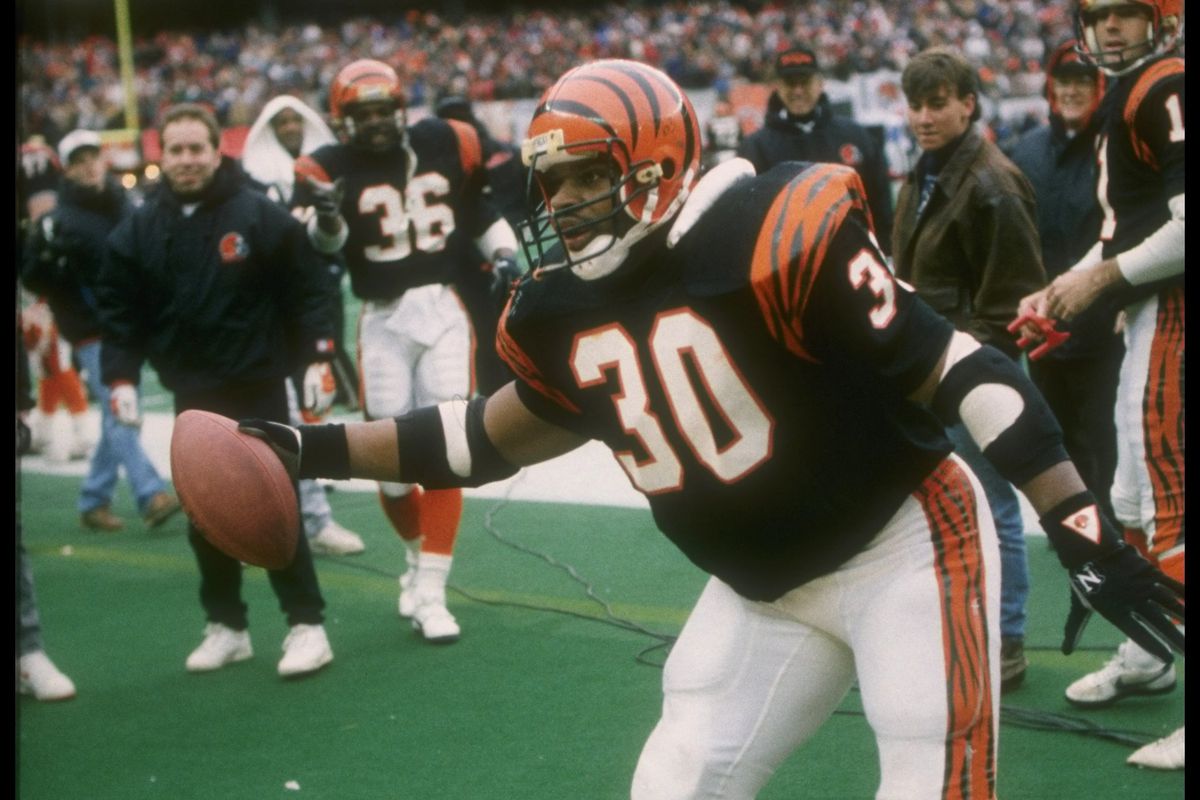
Will Jurgensen loves exploring the parallel between sports and business. In fact, he began a podcast called Sport Coats to profile the stories of athletes who applied their approach to athletics to successful business careers. I would have liked to have been in the room when Will realized how perfect the name Sport Coats was for his sports/business podcast. Because I bet that boy celebrated like Ickey Woods.

Everyday Ickey Woods is shuffling.

I recently sat down with Will to talk about my experience as a track and field athlete at The University of Wisconsin. But more importantly, we talked about how I have applied my approach to athletics to my career in advertising. And we talked about how my athletic career prepared me to become an entrepreneur when I launched The Weaponry.

Sound bites from the podcast:

On Focus:

‘I remember early in my career, getting hyper-focused on concepts for a campaign or ideas for a new business pitch. It felt the same as those times when I was in the weight room focusing hard on getting those last few reps. It’s the same thing, it’s the exact same feeling.’

On Transitioning: (Not like Caitlyn Jenner)

‘When you are done with your athletics, a lot of athletes say, “I was lost, I felt like it wasn’t me without sports.” I would say I never felt that at all. As soon as I graduated, I just turned my attention to my career and took the exact same focus and drive, and willingness to put in the energy to be great that I did for my athletics. I put that into my career and it surprises me how few athletes do this, because it is the exact same blueprint for athletic success that drives the rest of the success in your career.’

On Self Improvement:

‘Track and field is a little different than a traditional team sport because it is all you, and it’s so cut and dry. I would put a tape measure out or use a stopwatch to figure out if I was improving and if I was better than other people who have tried this. From that standpoint, I found the challenge of self-improvement to be intoxicating.’

On Training:

“The structure, the discipline, the focus, the background work that you have to do as an athlete, you know, all the little drills that you do over and over to perfect a piece of what you do, when you do that in your career you become highly specialized. And you become world-class at the smallest things. You add extreme value to organizations that make money off of that kind of work.’

Hear Ye! Hear Ye! Ye Can Hear It Here.

You can listen to my interview here at The Sport Coats Podcast. You can also read more of the transcript if you prefer the voice in your head over mine. I listened to the podcast on the podcast app on my iPhone.

I think you will enjoy it, even if you aren’t into sports. It feels like a motivational talk. Will is a great host. And after listening to the episode I understood why people think I am excited about life.

Key Takeaway

Business is the ultimate competitive sport. It requires discipline, teamwork and strategy. Everything you know about athletic competition, hard work, focus and determination translates directly to business. It is an inherently fun game to play with others. And it is even more fun to win. The money is a bonus. But what a bonus that is.

*If you know someone who could benefit from this message, or from this podcast, please share it with them.

Do you know what your most important values are?

Businesses often spend a great deal of time identifying and declaring their core values. However, very few repeat them often enough, or bake them into their day-to day operations to make them meaningful. Just ask the Weinstein brothers.

Declaring your values is really declaring your priorities. Your values provide a framework for your decision making. Your values tell you where to focus your time and attention. Because when you have a clear set of values you know which things are important, which things are peripheral and which things are witch things.

At my advertising and idea agency, The Weaponry we value 3 things above all else.

  1. Great Creative Ideas
  2. Excellent Customer Service
  3. A Fun Experience For Everyone Involved

We talk about these 3 things in all of our company meetings. We share these with our clients. And we measure ourselves against them. They are at the heart of our operation. Like Junior Mints.

Declaring Value At Home

We have a clear set of values at our home. However, we don’t call them our values. Partly because my wife Dawn and I started teaching them to our children when they were too young to understand what values were. So instead, we call them our most important things. And here they are.

The Albrecht Family 5 Most Important Things In Life

1. Being Smart We have to focus on our education, learning, thinking, reading and developing our minds. If we are not smart, we won’t know what’s important and what’s not (and what’s snot).

2. Being Brave We have to try difficult things. We have to face our fears. We have to push beyond our comfort zone, and stand up for what we know is right. We have to jump off that cliff into the water below. When we do, we will feel the fear transform into excitement, and then into accomplishment and then into confidence.

3. Being Nice We have to treat others the way we want to be treated. Be kind to others. Even when we don’t feel like it. Because kindness has to start somewhere. And the world is a nicer place when people are nicer to each other. Especially in Nice, France.

4. Being Funny Humor is the best way to get through difficult challenges. It makes us feel better. It brings people together. It decreases pressure. Making someone smile or laugh is one of the greatest gifts you can give them. If laughter is the best medicine, being funny makes you a doctor, or a pharmacist, or a drug dealer.

5. Being Adventurous You only have one life. So go, do, see, feel, taste and live. Soak up as much of life as you can. Try things to know and learn what you like and what you don’t. Except for drugs. Drugs will ruin your life. Unless the drug is laughter (see point 4).

Putting It Into Action

We talk about the 5 Most Important Things weekly at our house. In fact, they provide a great framework for teaching, encouragement and behavior modification. Plus, I can usually defend my actions by citing Important Thing #4. Although you can never place #4 above #3.

If you see my kids, ask them what the 5 Most Important Things In Life Are. You’ll see that they are baked into Ava, Johann and Magnus like The Pledge of Allegiance and the Lord’s Prayer. I take comfort in knowing that they will carry those values with them as a guiding framework for life, even when Dawn and I are not there to help them make decisions. Which is the ultimate goal of parenting.

Dreaming…

I find our 5 Most Important Things so valuable that I have been thinking of creating a family workshop to help other families develop their 5 Most Important Things. (Although it could be 3, 5 or 7 things in your family. Or 10 if you are a Letterman.) I’d like to do the workshop on January 1st every year. Because families are usually together that day. And I can’t think of a better way for a family to start a new year. Except for maybe skiing. Or Snowmobiling. (If this is something that interests you shoot me a note at adam@theweaponry.com and we can talk more about it.)

Key Takeaway

Know your values. Declare them. Share them with your organization, team or family. They will provide a strong framework for both thoughts, decisions and actions. Then live your values every day. Even when no one is watching.

*If you know someone who could benefit from this message, please share it with them.

You don’t need to have a passion to be happy and successful.

I have a passion. I love advertising. I love everything about the creativity and strategery involved. My friends I grew up with tell me I was born for my career in advertising. They also tell me that I was born with a glitch in my brain. They are probably right on both accounts. Advertising plays to my natural interests and talents. Which makes my work easier and more enjoyable. It also led to me launch my own advertising and idea agency called The Weaponry.

However, discovering your true passion is fairly rare. Like a 4-leaf clover. Or a civil political debate. Over the course of my career, I have had conversations with countless people (meaning none of them were Counts) who have no idea what their passion is. In fact, I have come to think of the search for personal passion like the search for Sasquatch, or The Fountain of Youth. While it is exciting to think that it is out there somewhere there is a great chance you will never find it.

Don’t Worry. Passion Is Overrated

Don’t be discouraged if you haven’t discovered your special purpose. You don’t need to have one specific passion to be wildly successful in life. There are many conduits to wealth and happiness. So instead of focusing on discovering your personal passion, utilize any of the following drivers to experience fulfillment, joy and success.

7 Substitutes For Passion

  1. Problem-Solving. If you like solving problems, you can be wildly successful. Because life, business and careers are full of problems. People who are good at solving problems are extremely valuable. That’s why they land in executive roles. Plus, problem-solving is inherently rewarding. Which is why Vanilla Ice was so into it, while the DJ revolved it.
  2. Competition: If you like playing games and competing you can apply that to your career. This is why former athletes are often great at things like pharmaceutical sales. It isn’t as if they have a natural passion for antidiarrheals and commercial- grade wart removers. They simply approach their work as if it is a competition. Which it is. In fact, business is the ultimate competitive sport. Because you are playing for money, honey.
  3. Goal Achievement: If you are goal-oriented, set lofty goals for your life and career. Because if you have audacious goals, like Goal D. Locks, you can use any business or career opportunities that come your way as tools to help you attain those goals.
  4. Enjoying Team Work: Work is more fun when done as part of a team. If you like working with others and achieving great things together, use that to drive your success. Again, don’t worry about what you are doing if you enjoy doing it with others (snickering).
  5. Enthusiasm: Some people are just naturally enthusiastic. It is a great quality to have. In fact, if you have enthusiasm, you don’t need to have one specific passion. Simply apply your positive energy towards whatever you do and you’ll experience positive results.
  6. Personal Growth: Do you like getting better and better at things? You can put that to use in anything you undertake. And you can experience rewards on a daily basis. Enjoying your daily progress and growth is a perfect recipe for long-term happiness and accomplishment.
  7. Love For Money: There is nothing wrong with loving money. Money is like a key that opens doors. It can help comfort and entertain us. It brings peace of mind. It can be used to experience real joy and adventure. If you enjoy having money and what it enables you to do, let that drive you. As Gordon Gekko said, greed is good. He also said that he was tired of being mistaken for the GEICO spokes animal.

Key Takeaway

Having a personal passion is nice. But is not a requirement for happiness and success. Don’t feel bad if you don’t know what you were born to do. In fact, not having one defining passion means that you can take many different paths to an enjoyable and rewarding career. Use any or all of the 7 drivers above to power you along your path. You may even find that these drivers are your passion. Enjoy the journey. It is the key to enjoying your life.

*If you know someone who could benefit from this message, please share it with them.

Why right now is the perfect time to create outside the lines.

If you want to develop as a creative thinker you have to color outside the lines. I don’t mean the way a young kid does when they have no sense of how to stop themselves when they get to a delineating line on a piece of paper.

What I mean is that creative thinking can not and should not be contained. To improve your creative thinking don’t simply create when and where you are told to create. Don’t create only when a teacher gives you a creative project. Don’t create only when a boss says they want you to help develop a new idea for the summer picnic (which was a fun event we used to have pre-covid, or what I am now calling PC).

As a creative thinker, you should create all the time, because you can’t help thinking, creating and making stuff. And we should all see ourselves as creative thinkers.

Since the initial covid lockdown back in March, I have written over 80 blog posts. I started an illustrated cartoon series called Kirky. I have written the manuscript for a book, which I am deep into the second draft of right now. I am working on bringing a new brand to life in my spare time with my son Magnus and friend Dan Koel. And I have been using Moleskin notebooks the way most people use mousetraps to catch my ideas and make sure they don’t get away.

I always ask people interviewing for creative jobs what they do creatively in their spare time. This isn’t just a curiosity. It helps me tell if you are a true creative thinker who can’t help but develop ideas and bring them to life. Or if you are someone who wants a fun job. But if they tell me they like to make furniture and lampshades out of human remains I know not to hire them. #SorryNotSorryEdGein

One of the women who freelances for The Weaponry (whom I hope to hire full time) is regularly sharing her extracurricular creative projects on social media. I love that. It shows me that she is really a creative thinker at her core. Those kinds of thinkers don’t have to be spurred into action. They can’t stop the thinking and the valuable actions that follow even if they wanted to. Those are the most valuable thinkers to have on your team. And they can’t be replaced by an app or a monkey, or automated by a machine. #JobSecurity

My great friend Betty Garrot, who lived across the street from me in Atlanta, is a Pediatrician by day. But Mrs. Dr. Garrot as we call her at our house, because her husband Crain is an Oncologist, paints a lot. Her home is full of beautiful paintings she has created of scenes she has witnessed around the world. But she paints so much that I expect she has a secret self-storage space stuffed full of paintings that she doesn’t have wall space for in her home. Betty is an amazing painter. But she rarely paints for money. Because it removes the joy of creating. Which is why she does it.

However, I have recognized that some people simply don’t know that they can think and act creatively when they aren’t asked to. They don’t realize that they can create their own assignments and deliver their own ideas.

So here is your reminder to create. Write, paint, photograph, draw, bake, cook, brew, garden, dance, make music, design, develop a business idea, host, decorate, or whatever you like to do to tap into and express your own ideas. Do it even if no one asks you to. Even if no one is watching. Even if you are not getting paid. Even if you are not great at it at first. Because it is great for your brain and your mental health.

Key Takeaway

When I visited Iceland several years ago I met a man named Sven (of course), who told me that Icelanders embrace the short and dark days of winter to engage in their creative activities. Now that we are to our short days and long nights in the Northern Hemisphere, I encourage you to do as the Icelanders do. And make the darkest days of the year the brightest days for thinking and creating.

*If you know someone who could benefit from this message, please share it with them.

If you want results stop chipping and start chopping.

Not all actions are equal. Which means the return on your invested time and energy is not equal. Occasional effort put into an activity, practice, or exercise is not the same as fully-dedicated effort with a plan, a schedule, and a timer. #TimeToMakeTheDonuts

Chipping

Chipping is the occasional effort you put towards a task. Sometimes you go for a run, eat a salad, read, or play an instrument. Chipping is going to church at Christmas and Easter, which makes you a  Chreaster. Chipping is shooting hoops in the driveway, sometimes, in your flip flops.

Chipping means you partake occasionally, when you feel like it. You write, sometimes. You study, now and then. You work late once a month.    

Chipping lets you say you tried. But it doesn’t move the needle. It doesn’t build momentum. And it won’t help your New Year’s resolution survive until February.

Chopping

Chopping is focusing on your goals, making a plan, writing it down, creating a schedule. Chopping means declaring a goal. Or declaring war. Chopping means setting a timer to your activity. Chopping is creating a habit. Chopping is swinging away and working up a sweat like clockwork. Over and over again. Like Nelly and Tim McGraw.

Key Takeaway

Chipping allows you to say you tried. Chopping brings down the tree.

How to be a better leader during a crisis.

It’s 2020, and we are all taking a crash course on crisis management, whether we want to or not. This is a crazy time. But life is full of crazy times. And when the crazy times come they create opportunities for leaders to step up and lead their people through the experience. So as Prince once said, let’s go crazy.

The Crisis Question

The great question that we all have to ask ourselves when we face a crisis is: What role will I play?

There are always many roles available to us. We can be The Complainer, The Blamer, The Eye-Roller. The Conspiracy Theorist, Negative Nancy, Debbie Downer, or RBF. These are easy roles to take on. But they add no value to others.

However, there are also these roles:

  • The Optimist
  • The Cheerleader
  • The Rock (the Dwayne Johnson role)
  • The Person of Few Words.
  • The Sage
  • The Jester
  • The Father Figure (George Michael called dibs on this)
  • The Mother Figure.
  • The Big Brother or Sister (Not the CBS version)
  • The Listener
  • The Stabilizer
  • The Rebel (Billy Idol and James Dean role)

These can all be valuable leadership roles that help your organization, team or family through challenging times.

When to Choose Your Role

The best time is to decide which role you will take on is before a crisis occurs. It’s good to think about which of these roles work with your natural tendencies and personality. It’s also good to understand which roles your team, group or organization already have covered, and what is available to you. Just like in Dungeons & Dragons.

Consistency

Once you pick your role, never waiver. I have spent my career building brands for some of the world’s best companies. And the most important factor in developing a strong brand is consistency.

So as you develop your strong crisis leadership brand always be who your team needs you to be.  Don’t be the optimist some days and the complainer other days. That spoils everything.

De-escalation*

In a crisis, emotions naturally escalate. Which simply exacerbates the problem. That’s why there is tremendous value in those who can help decrease the pressure in a situation. Always focus on making things better. Not worse. Others will recognize that, and seek you out in challenging times.

*This is not the down escalator.

Conflict Resolution.

My wife and I recently celebrated our 18-year wedding anniversary. I attribute much of our successful marriage to the fact that we resolve our conflicts quickly. We recently both agreed that in the 20 years we have been together as a couple, including 2 years pre-ring-wearing) the longest we have been in conflict with each other is 24 hours. We swear by the following conflict resolution formula to help get through our sticking points. (I also swear when I am not by the following conflict resolution formula.)

The Sure-Fire Formula

  1. The first person speaks without interruption.
  2. The second person plays back what they heard.
  3. The second person speaks without interruption
  4. The first person plays back what they heard.

Why this works:

  1. You both get to say everything you want to say.
  2. You both feel heard.

Try this the next time you have a conflict with another person. If it doesn’t work I’ll refund the money you spent on this blog post.

Leadership Is Lonely.

As a leader and an entrepreneur, I can’t show indecision or weakness to my team. They have put their trust in me, and I can’t waiver in front of them. Instead, organizational leaders need to find their own support group. This consists of a person or people outside your organization, team or family who you can share your challenges with.

I am part of a CEO roundtable that meets once a month to discuss the challenges we are facing, support each other and offer advice and guidance. It has proven to be a highly effective way of supporting leaders who don’t have a natural support structure within their own organization. And research on roundtables groups has indicated that any shaped table will do.

I have also created a meetup group of men who live in my community. All of them are either successful entrepreneurs or top leadership within their businesses. They are all husbands and fathers. We talk about issues that dudes don’t typically talk about. In this environment we can discuss the real challenges we face, the uncertainty we feel and share thoughts on how to be better businessmen, family men and members of our community.

Taking Care Of Yourself In Crisis.

There are stresses, frustrations and losses that accumulate every day. We are drained by daily setbacks. And 2020 has taken things to 11. So we have to prevent the stress gunk from building up and fouling our systems. The key is to figure out how to reboot, regenerate, and respond positively. 

The following 3 activities provide a proven formula for positively dealing with stress.

  1. Sleep helps your body and mind refresh and recover.
  2. Exercise helps you burn the stress off.
  3. Worship helps you rebalance and offers big-picture perspective.

You need to get rid of the stress gunk that builds up like WD-40. These back-to-basics keys help you find your balance again when you start to weeble or wobble. Try them for yourself. They will make you feel like a better human.

Key Takeaway

  1. Crisis is unavoidable.
  2. Crisis creates opportunity (Remember, chaos is a ladder).
  3. Find your most valuable role and play it consistently.
  4. Learn to de-escalate.
  5. Use the 4-Step approach to conflict resolution.
  6. Leaders need to find their own support system.
  7. Decrease your stress through, exercise, sleep and your own spirituality.

*If you know someone who could benefit from this message, please share it with them.