One of the best things you can do for others is to let them know when you see their skills and talents at work. When you see someone perform well, give great effort, or step up to take on responsibility, you’ve got to let them know.
It’s kind of like a sailor high in the crow’s nest, yelling ‘Land Ho!’ (Ho didn’t used to be a derogatory term.) And it can generate the same kind of feeling of success, accomplishment and enthusiasm.
When you call out great effort, ability, or accountability, it creates a valuable reward for the person recognized. It says, ‘I see what you are doing. It is good. It is valuable. Do more of that. ‘ Mark Twain once said, “I can live for two months on a good compliment.” (Which also seems to indicate that he stopped getting compliments at the end of his life.)
Your positive reinforcement can call other people’s attention to the good things you see. Which shines more sunlight on the good and helps it grow and flourish.
Humans grow towards praise. So praise people for their valued actions, and you will see more. Gandhi said, “Be the change you want to see in the world.” But you should also praise the change you want to see in the world. When you do, it will multiply.
Key Takeaway
When you see others doing good, call it out. Even if it’s awkward. Even if you don’t know them. (Especially if you don’t know them!) That random reward creates positive reinforcements around valued actions and behaviors. And it encourages others to develop into a greater version of themselves. So when you see something good, say something good, and the world will get more good in return.
*If you know someone who could benefit from this message, please share it with them.
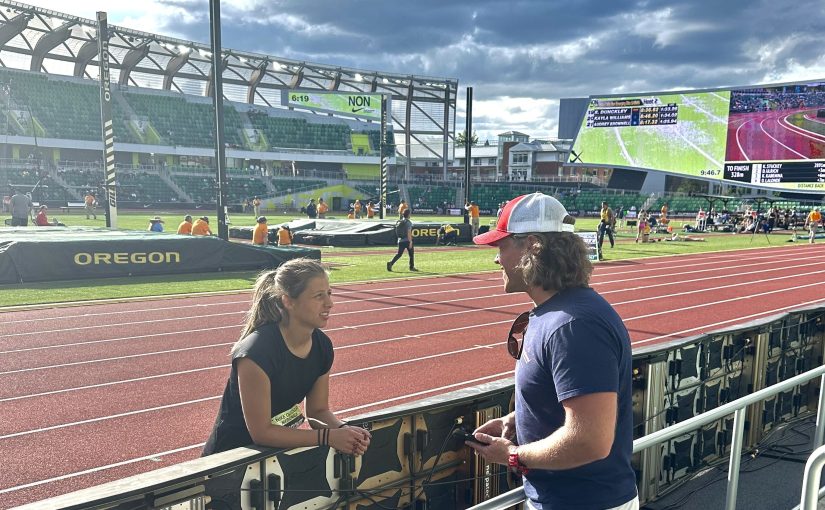
This weekend I will be coaching at the Wisconsin State High School Track & Field Championships in La Crosse, Wisconsin. I work with two great athletes who have had impressive seasons and are in the running to end the state meet and the season, standing on the podium with medals around their necks. And when this Hollywood ending happens, I will treat everyone to the non-alcoholic drink of their choice at the local Kwik Trip.
At this point in the season, all of the preparation is done. As we say in track & field, the hay is in the barn. (I think they also say that in farming.)
My job now is mostly not to do anything to mess my kids up. Which is also my number one responsibility of parenting. But I have found that there is one thing coaches can do at the pinnacle of the season that helps more than anything else.
Build Their Confidence
Two weeks ago, my son Magnus, who is in 8th grade, won the Wisconsin State Middle School Track Meet in the discus. When I asked him afterwards when he knew he was going to win, he said, ‘After my first throw.’ I then asked him how he built his confidence for the meet. He replied, ‘I just focused on feeling happy, excited and playing a great, exciting song in my head.’
That sounds like a winning formula to me.
Why Confidence Is So Important
Confidence is the magic ingredient in high-pressure situations. When the heat is on, it is confidence that keeps you cool.
Confidence makes you feel as big as the moment itself.
Confidence enables you to focus.
Confidence keeps your attention on yourself and the things you can control. (Like Janet Jackson.)
Confidence makes you feel prepared. Like a Boy Scout.
Believing in yourself when you are facing strong competition is the ultimate win.
Self assurance can be felt by others.
Your visible confidence, as communicated through your body language, positively impacts your teammates and negatively impacts your competition.
Confidence keeps you fully engaged in the competition to the very end, preserving the premium value of your final efforts.
Confidence quiets the doubt. And fear. And gets the butterflies to quit flapping and flying in your stomach.
Confidence neutralizes the shifting landscape of competition.
Confidence helps you overcome a weak week of practice.
Confidence lets you lock into what you know.
Confidence lets your training shine through.
Confidence means you can’t wait to step up to the line, the runway, the circle or apron. (Or onto the field, court, pitch, rink, floor or whatever you call that thing that fencers stand on.)
Confidence helps you remember all of your preparation.
Confidence helps you remember all of your past successes.
Confidence helps you forget the times you fell short.
The Keys To Building Confidence In others
Shift the feedback diet from correction to celebration.
Share success stories parallel to their own story.
Confidence is a game-changer. It helps you perform at your very best. It enables you to tap into all of your preparation and rise to the occasion. As a coach, leader or parent, your most important job is to instill confidence in those you lead. As a competitor, it is important to create your own competitive advantage by tapping into the magical powers of your own self-confidence. Create pre-competition routines, self-talk and soundtracks that build your self-belief. When you do, the results will naturally follow.
*If you know someone who could benefit from this message, please share it with them.
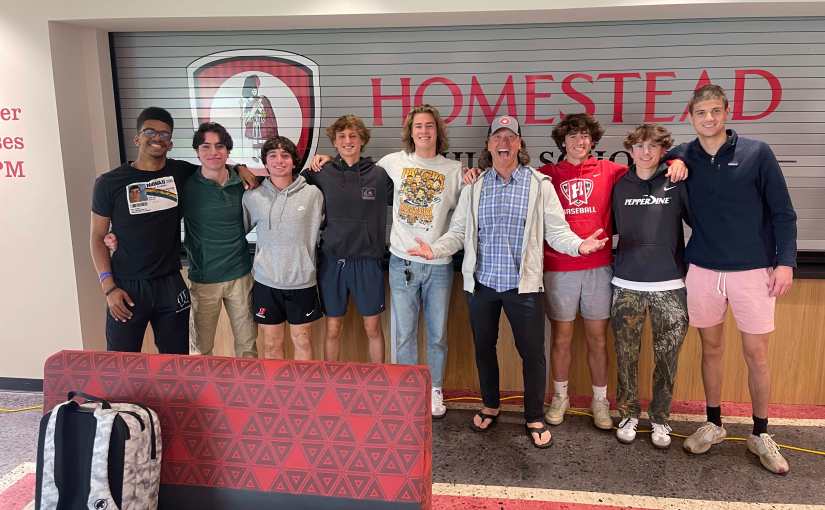
I got an email yesterday from Matt Wolf. Matt is the Academic & Career Planning Coordinator at Homestead High School in Mequon, Wisconsin, where I live. And Wolf, in case you hadn’t noticed, is a rock star kind of last name. So, for the rest of this story, I will refer to Matt simply as The Wolf.
The Wolf was putting together a Career Day extravaganza at Homestead. I knew this was happening, because he reached out to me to ask if I knew anyone that would be a great speaker on sports marketing. The Wolf share that students frequently list sports marketing as a career area they are highly interested in. I blame Jake Paul.
So I connected The Wolf with my friend and former coworker Leslie Stachowiak, who, in addition to having a name that would trip up a Spelling Bee champion, works for the Milwaukee Brewers, the Major League Baseball team.
The Request
But now The Wolf was apologetically asking me at the last hour if I could also fill a slot in the career day lineup. He wrote this apologetically because he asks me multiple times a year to come speak to the middle schools in The Quon about my career as the Founder and CEO of the advertising and ideas agency, The Weaponry. And since I volunteer for that job multiple times each year, he was trying to avoid asking me to also volunteer to speak at the high school.
My Most Important Work
What The Wolf doesn’t know is that I think the most important and impactful work I do is having a positive influence on the youth in my community. That’s why I always raise my hand to speak to the middle schools. (I also raise my hand because I use Sure Deodorant.) It is why I speak each year at Career Day at our neighboring Whitefish Bay High School.
It is why I volunteer to guest lecture at The University of Wisconsin, Madison (the most fun university in the history of universities), Marquette University, Concordia University, and basically any school that invites me to come speak.
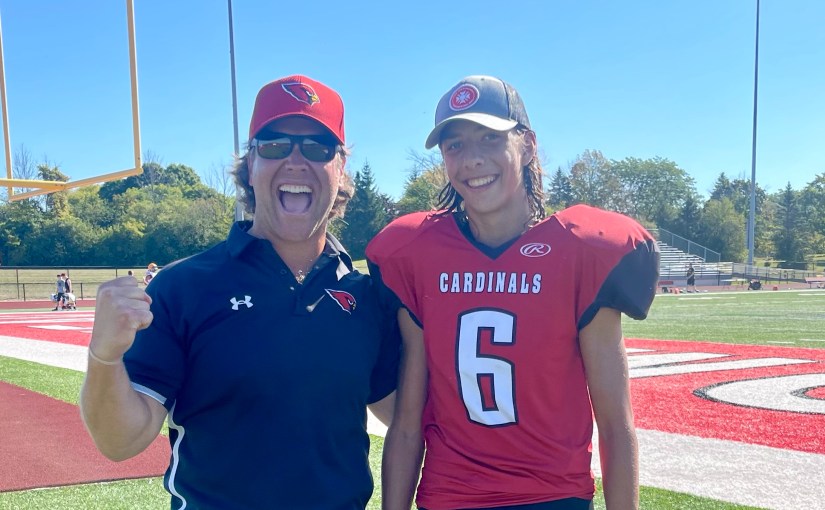
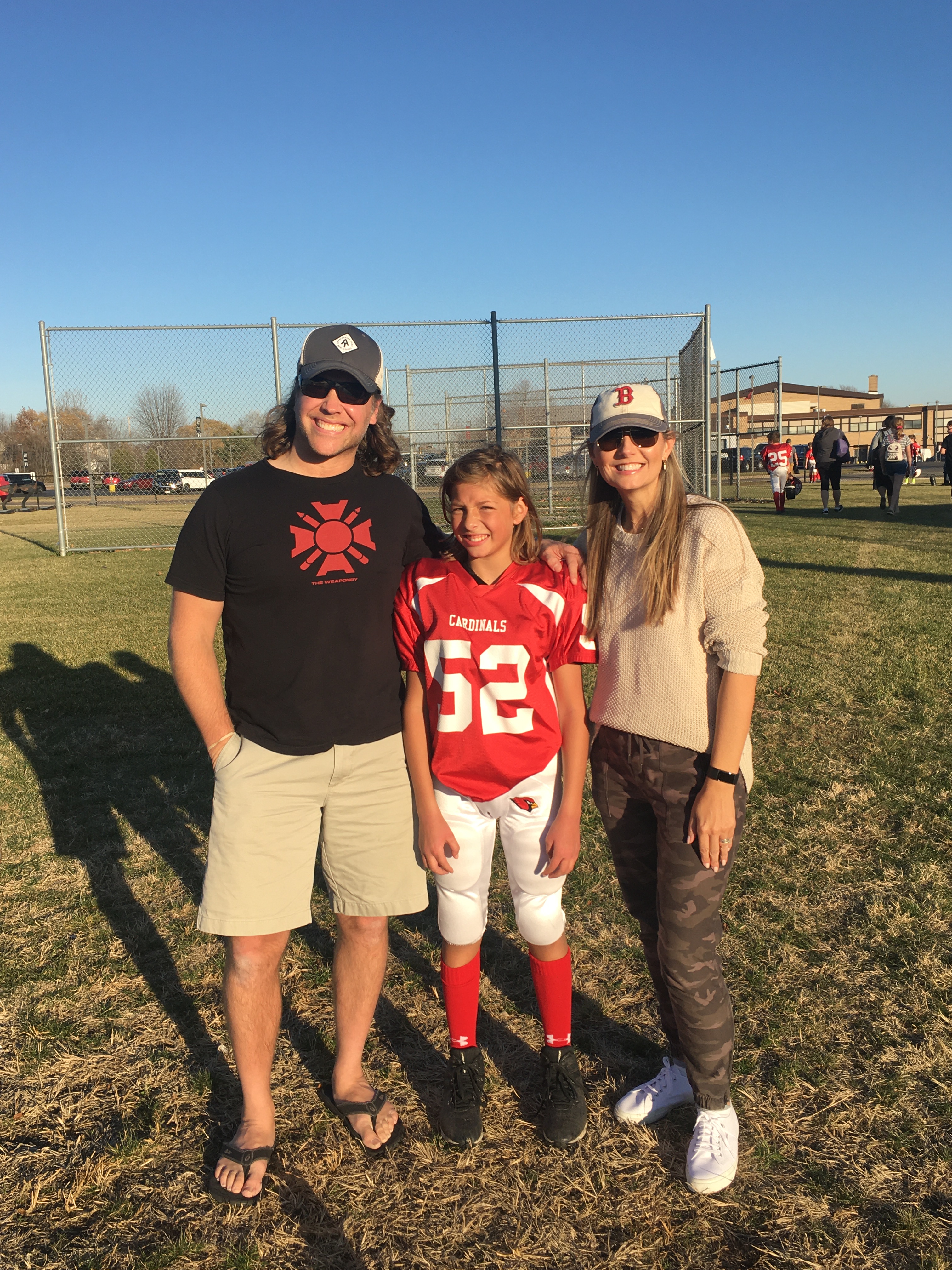
My interest in having a positive influence on youth is also why I coach track and field at Homestead. It is why I also volunteered to coach track and field at Steffen Middle School this year. And it is why I have coached youth football in Mequon for the past 7 years. Which means I have proudly passed a lot of background checks. (The hardest part of those tests is remembering my address from 7 years ago.)
I love teaching life lessons and character development through athletics. Because the life lessons I learned through athletics have benefited me for a lifetime. Plus, there were never any Scantron sheets or number 2 pencils required on the track or football fields.
Not only have I coached these boys on the football field, I have shared my educational and career path with them. I also showed them how to grow hair. It looks like my work here is done.
Helping future generations is why I volunteer to speak with student-athletes at the University of Wisconsin whenever I can. Which is why my great friend Nicholas Pasquarello, Executive Director of the W Club and Strategic Partnerships, invites me to so many events and activities with current and former Badger athletes.
Helping kids is also why I wrote the book, What Does Your Fortune Cookie Say? I wanted my kids and the rest of the next generation to have quick access to valuable life and career lessons it took me decades and a lot of mistakes to learn.
The Answer
So I told The Wolf that I would happily come speak at Career Day next week. Because this type of work is a priority. I can’t think of more important or more impactful work.
Key Takeaway
Please consider sharing what you know with the next generation. And the generations after that. Whether you take time to share your knowledge and experience with the youth in your community, college students, recent graduates, or those navigating careers in your field of expertise, your wisdom and guidance is extremely valuable. You help provide a model and a path for others to follow. You have the ability to inspire others to follow your lead, to develop their skills, and to lean into their interests, passions and strengths. It is the easiest and most rewarding way to have a positive impact on the world.
*If you know someone who could benefit from this message, please share it with them.
I have spent a lot of time coaching and participating in sports. Both team sports and individual sports. My teams have won and lost. The individual athletes I have coached have both dominated and been dominated. Along the way, I have carefully analyzed what creates wins and losses. And I have discovered that there are 2 key factors that determine the outcomes of all sporting events. And despite what Nike and Mars Blackmon would like you to believe, it is not da shoes.
The key 2 factors that determine the outcomes of all sporting events are effort and errors.
Effort
In sporting competitions, the effort exerted by a team or individual competitor is stacked directly against the effort exerted by the other team or individual competitor.
The more effort you exert, the more likely you are to win. This is true in contact sports, races of all types, gymnastics, putting the shot, dodgeball, and Red Rover. (Where you always ask your opponent to send that low-effort kid over.)
However, effort is not the only factor at play. (See what I did there?)
Errors
The other key element that impacts every sporting event outcome is errors.
There is an ideal way to perform every move in sports, from the discus throw to the jump shot to the form tackle to the Triple Lindy. Any deviation from that technique, form, move or execution is an error. The more errors you commit, the less likely you are to win. Like Bruce Hornsby said, that’s just the way it is,
Sometimes, errors result from a lack of focus and are self-created. Other times, your errors are forced by your opponent. In fact, it is your job as a competitor to force errors in your competitors. You do this either through physical effort or through mental or psychological stress applied through pressure, confusion, conditions, or crowd noise. (Although crowd noise is illegal in tennis and golf.)
However, you and your opponent aren’t the only ones committing errors. There are also errors made by officials, judges, referees, umpires, scoreboard operators, timekeepers, and eager Cubs fans in left field excited to catch a foul ball. Their errors have the potential to completely change the outcome of a competition. Those are simply the facts of life, like Tootie, Blair, Jo and Mrs. G.
As a competitor, there are two things you can do to impact the outcome of a sporting event.
Maximize your own effort.
Minimize your own errors.
The rest is beyond your control.
Beyond Sports
The impact of effort and errors doesn’t just apply to sports. The same key factors influence such varied fields as business, relationships, and academic success. They are the key ingredients in gardening, investing, music performance, and even picking up hotties at a nightclub. So pay close attention to both your successes and failures. You’ll find these two critical variables play a major role in each.
Key Takeaway
Success in sports is simply a result of maximizing effort and minimizing errors. It is why you train and improve your strength and stamina. It is why you practice and drill over and over and over again. But these same influences on sports also determine the outcomes in most areas of life. From marriage to sales to self-confidence. Which is why sports are so valuable. They teach you how to be successful in all areas of life. And that’s the great win for us all.
*If you know someone who could benefit from this message, please share it with them.
I never wanted to be a coach. Some people are innately drawn to it. I am not. I thought it was a cool role for other people. But I just wasn’t that into whistles and sweatpants. When I graduated from college, I fully expected to never be involved in sports again, other than as a fan. Even after I had 3 kids, I never expected to coach them at any level. I didn’t feel like I knew anything well enough to coach. Except maybe being a class clown. But I felt I could teach that through more of a mentoring relationship.
So it is very strange to realize that this fall I wrapped up my 7th season coaching my son Magnus’ football team. So, how did this happen? To find out we’ve got to go back in time, like Marty McFly.
In The Big Inning…
Like most things, my coaching career started very small. When Magnus was in first grade, we signed him up for flag football. At that level, the teams practiced for one hour and then played a game for one hour on Saturdays in the fall. At the first practice-game the two guys coaching Magnus’ team asked me if I could help out the following week because one of them was traveling. I was happy to help. And I felt like a helper more than a coach. Plus the kids were in Kindergarten and first grade. So they wouldn’t be fact-checking my coaching.
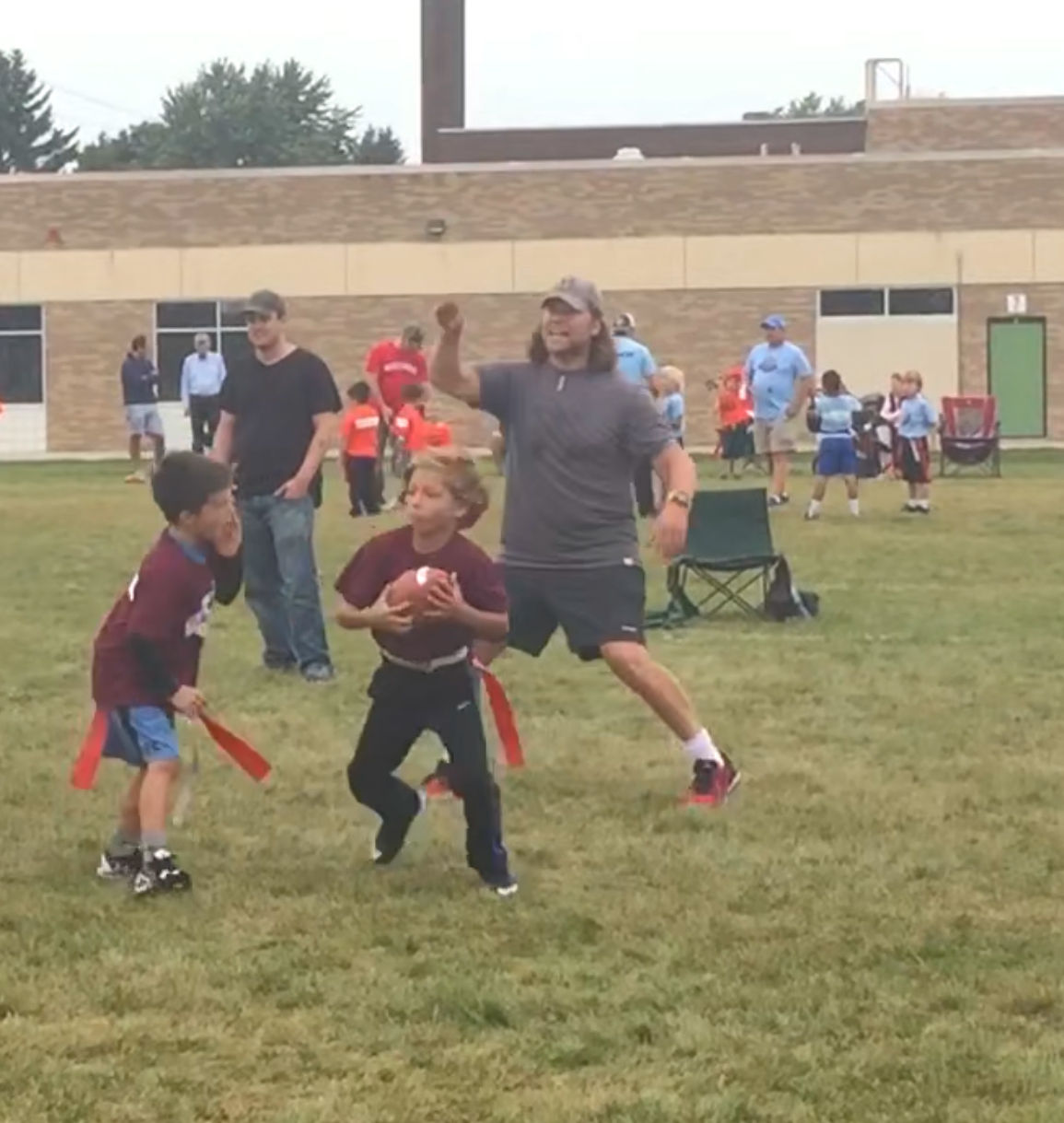
Magnus carrying the ball in 1st grade, when I could point where I wanted the players to go.
That Saturday’s practice-game went well. I had fun. Magnus enjoyed having me involved. None of the kindergartners asked to be traded or held out for more NIL money. So I became the third coach on the staff, helping whenever I could the rest of that cute little 6-week season.
Stepping Up A Notch
When Magnus entered 2nd grade, the program was looking for more parents to coach. My wife Dawn encouraged me to volunteer. So I got paired with another father. And we had a good time. Again, this was just 2nd and 3rd graders with one practice-game combo pack each week on Saturday mornings in the fall. And we were literally on the field placing each player in position and whispering in their ear what we wanted them to do. It was kinda like playing chess with tiny humans. Even better, the play didn’t start until the coaches said they were ready. The hardest part was organizing which parents were bringing the snacks.
Magnus and Me in our second season together. That’s a happy father/son combo pack.
Gaming The System
By 3rd grade, I realized that you could choose to pair up with another coach to lead a team. And when you did that, it allowed you to stack your team with 2 good players. So my great friend Dr. Mike Brin and I teamed up to coach. DMB played football for the University of Wisconsin Badgers, and we had been friends since we were teenage college athletes in Madison. Mike’s son Josh ‘Aquaman’ Brin was a talented and enthusiastic athlete. Josh and Magnus gave us a strong nucleus to build a team around. Kinda like D-Wade and Chris Bosh. We were lucky enough to land a few other really talented second and third graders, and we had a fun and successful season, even before the snacks.
Season 3. We were really upping our snack game by then.Me and Magnus, Mike and Josh Brin, Josh and Hudson Hunt. All 3 of the guys in the back row were UW Badger athletes, which meant we knew how to recruit. (You do it with cupcakes.)
The Curve Ball
In 4th grade, COVID-19 hit. And the program was canceled for the year. Boo. But Magnus was desperate to play football. So we were allowed to enroll him in the 5th grade Mequon-Thiensville Cardinals tackle football program, where he played up a grade as a tall and eager 4th grader. The boys played with face masks over their face masks, which looked funny and may have had no practical effect, but it made everyone feel better about playing football during a global pandemic. No kids got sick. And I got to sit in the stands, 6 feet apart from other fans, and cheer through a mask like a normal COVID-era parent.
At this point, I thought I was finished coaching. I enjoyed the season as a fan only. (Not to be confused with Fans Only.
When Magnus was in 4th grade, he played tackle football with 5th graders, And I got to cheer in the stands with Dawn. I also got to wear flip-flops without a fear of getting cleated.
Magnus and a little wind machine for the hair.
Back On Track
That spring, I made a much bigger coaching commitment and started coaching high school track and field. My daughter Ava Albrecht was a freshman at Homestead High School in Mequon, Wisconsin. And I knew that I knew more about throwing the discus and putting the shot than most Mequonians. The flag football coaching experience made me think I could handle track. After all, when you coach throwing, you simply coach technique. There is no strategy. Or defense. Or concussion protocol. Go track!
Tackling Tackle Football
When Magnus entered 5th grade I was asked to help coach his tackle football team. I was reluctant because of the time commitment, especially on the heels of a long track season that went almost to July and left me with just 1 month without coaching obligations. But my coaching confidence was growing. So, I agreed to coach part-time. I was another warm body there to supervise kids and help run drills. I cheered a lot. And I tried to make it fun. For much of the season we only had 16 kids available. So we could only run 8 vs 8 scrimmages. Which was pretty silly. But I like silly.
5th Grade. And We’re back together for Cardinal Rules football.
Jumping Into The Deep End Of The Pool.
When Magnus entered 6th grade my friend Josh Hunt volunteered to become the team’s head coach. Josh played football at the University of Wisconsin and had a lot of coaching experience. He asked me if I would be willing to be the defensive coordinator for the team. I agreed. Because Josh is a nice guy and didn’t seem like the type to burn my house down if I made some mistakes.
Realer Than Real Deal Holyfield
That’s when coaching got real. The slow build of casual coaching obligations helped lead me to a very real coaching position. Suddenly, I would be preparing for every week by watching game film of the teams we would be playing that week. I sketched out every unique formation and play the upcoming opponent ran, noted who carried or caught the ball, how frequently they ran each play, and generally how effective it had been. This represented a huge increase in both my time commitment and my emotional investment. I started to understand why Bobby Knight threw chairs and why Mike Leach went off on a seemingly insane rant about the players fat little girlfriends. Now I certainly don’t condone their behavior. But I started to understand it.
In practice, I taught our team the opponent’s plays and devised strategies to defend against them. Then, on Sundays, I watched our own game film from Saturday and marked up all of the footage on software called Hudl to show what we did right, what we did wrong and how to do things better the next time. I learned that those 3 lessons are the basic pillars of coaching.
I spent more time than I care to admit watching game film, preparing defensive strategies and developing lineups each week. It was a significant commitment. But I loved coaching this group of boys. And I loved spending so much additional time with Magnus.
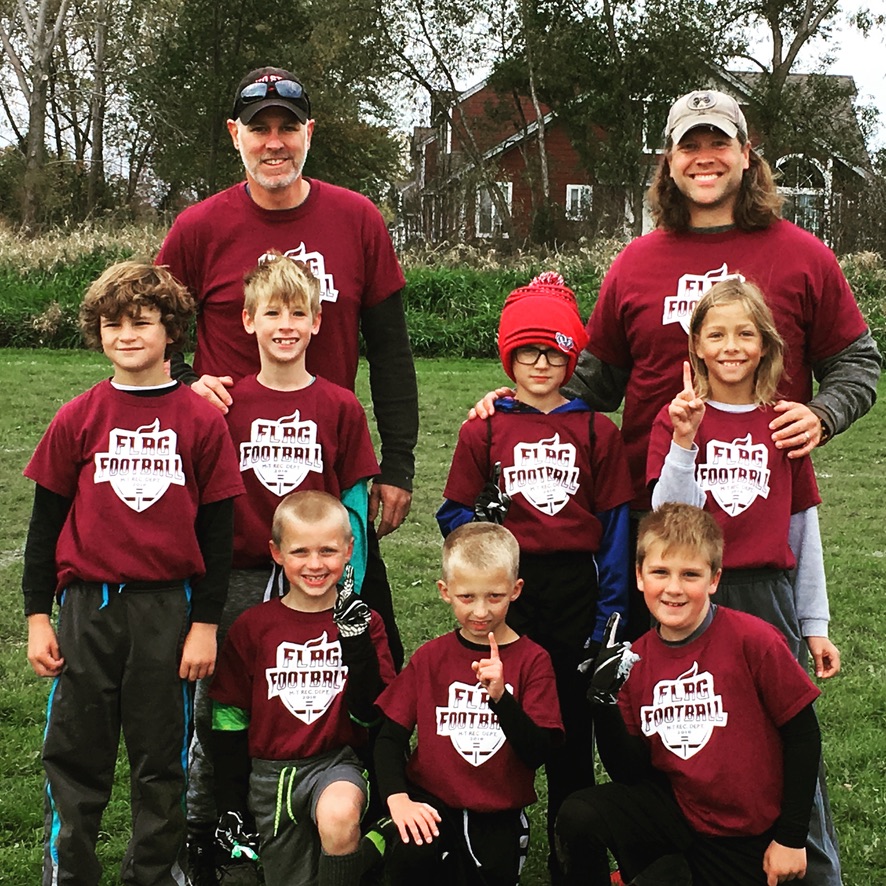
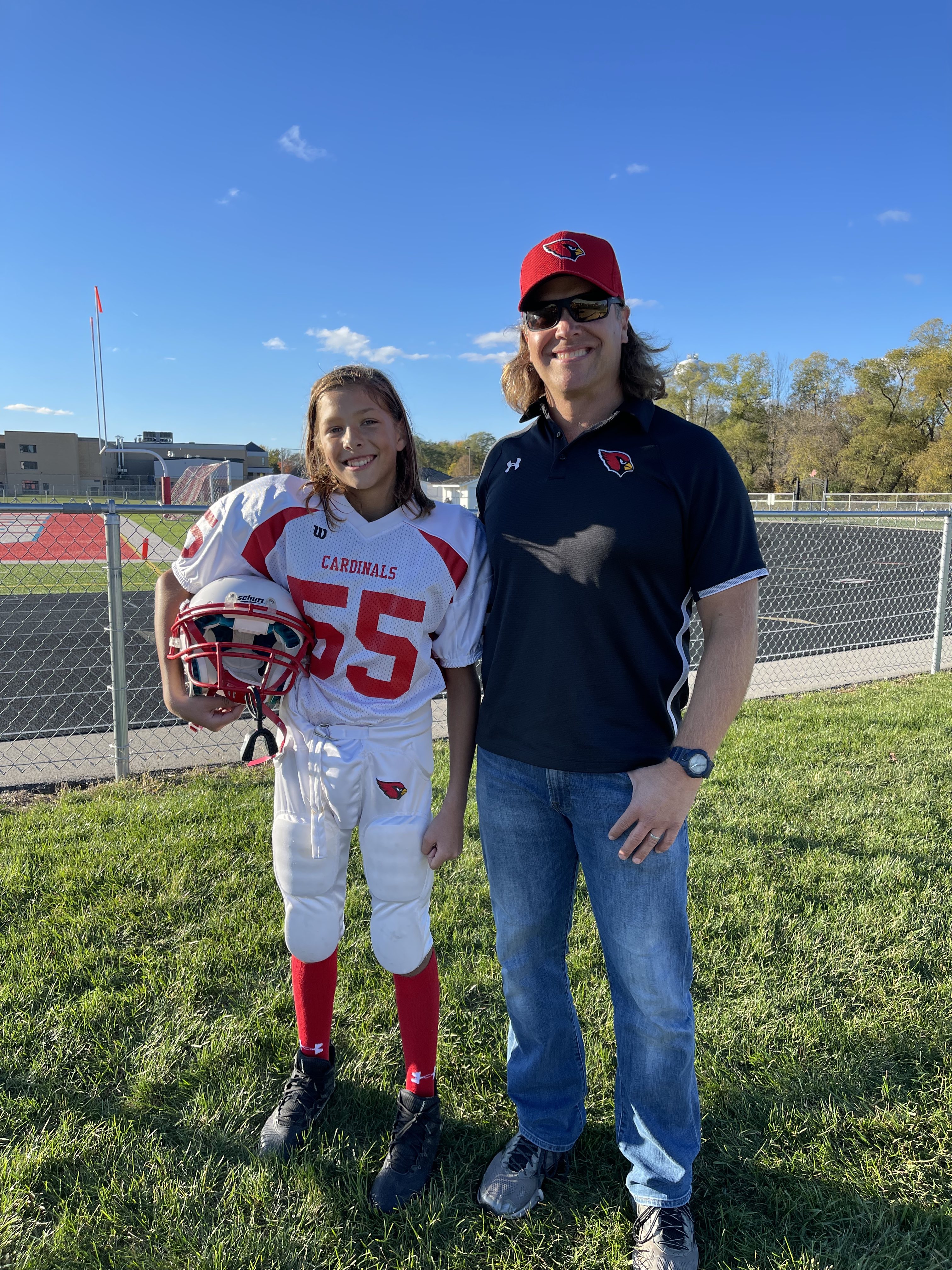
6th Grade. And one of my favorite photos. If you look closely you can see my knee next to Magnus’ (#55)
So I raised my hand to do it again in 7th grade.
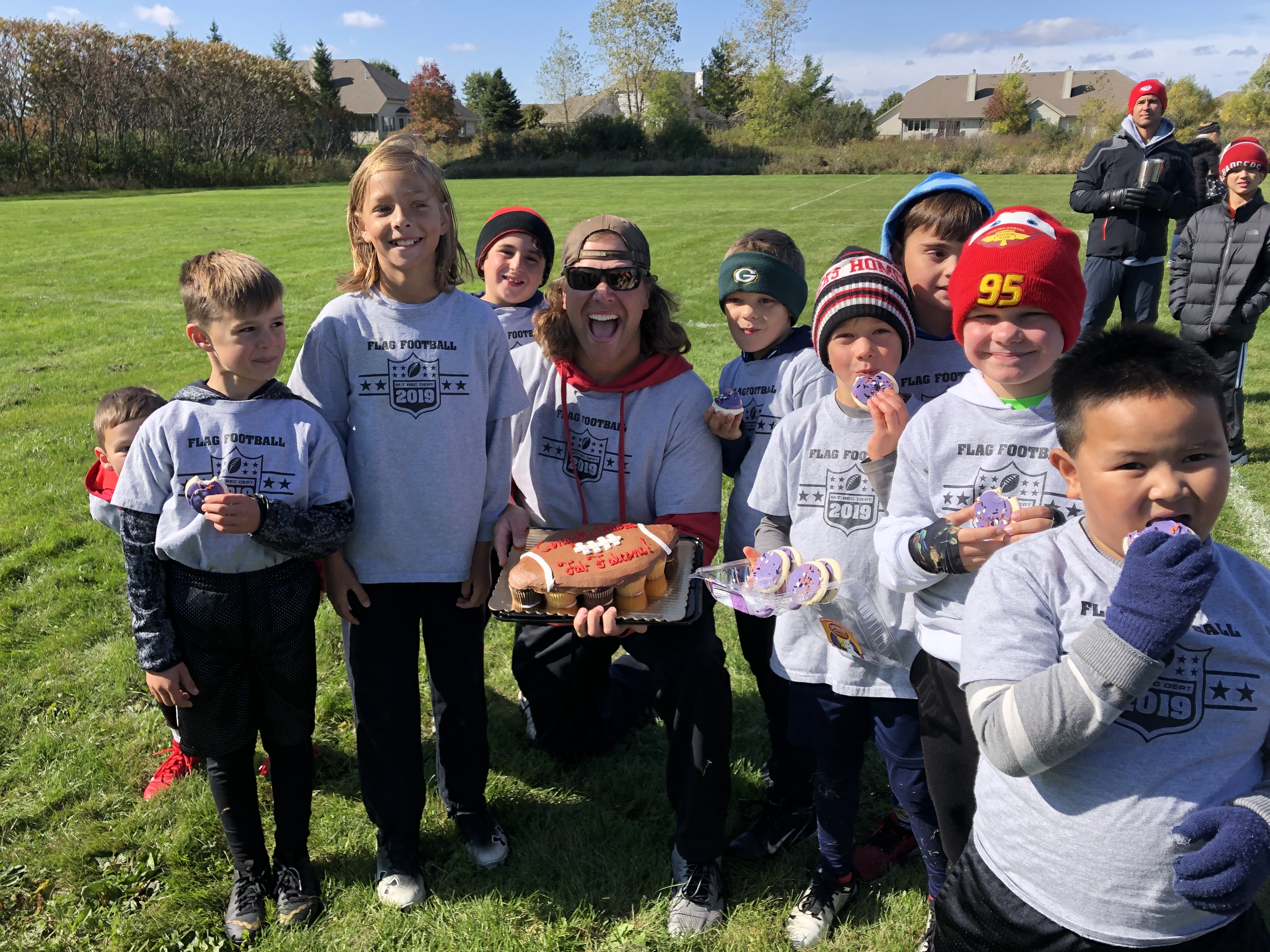
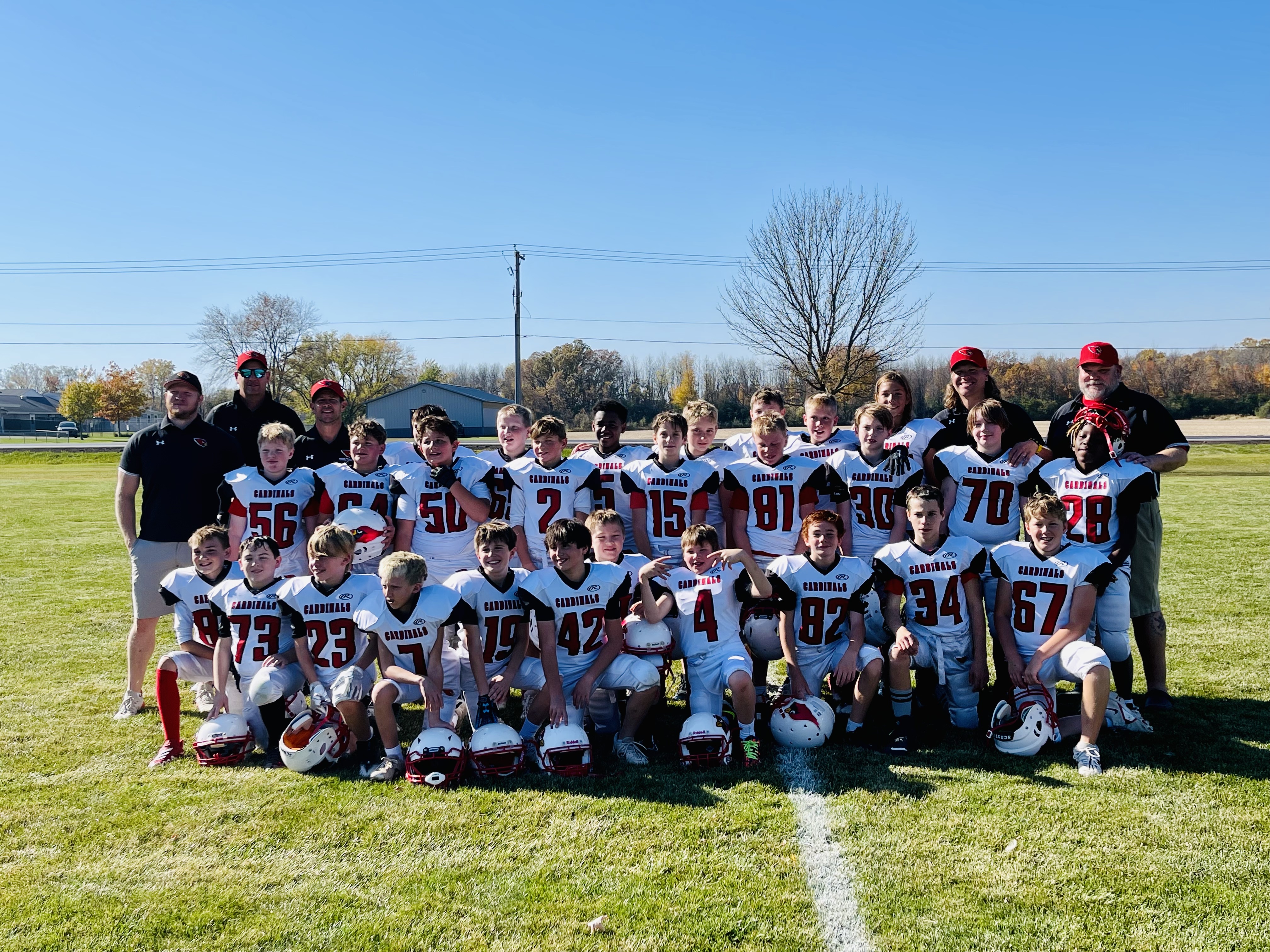
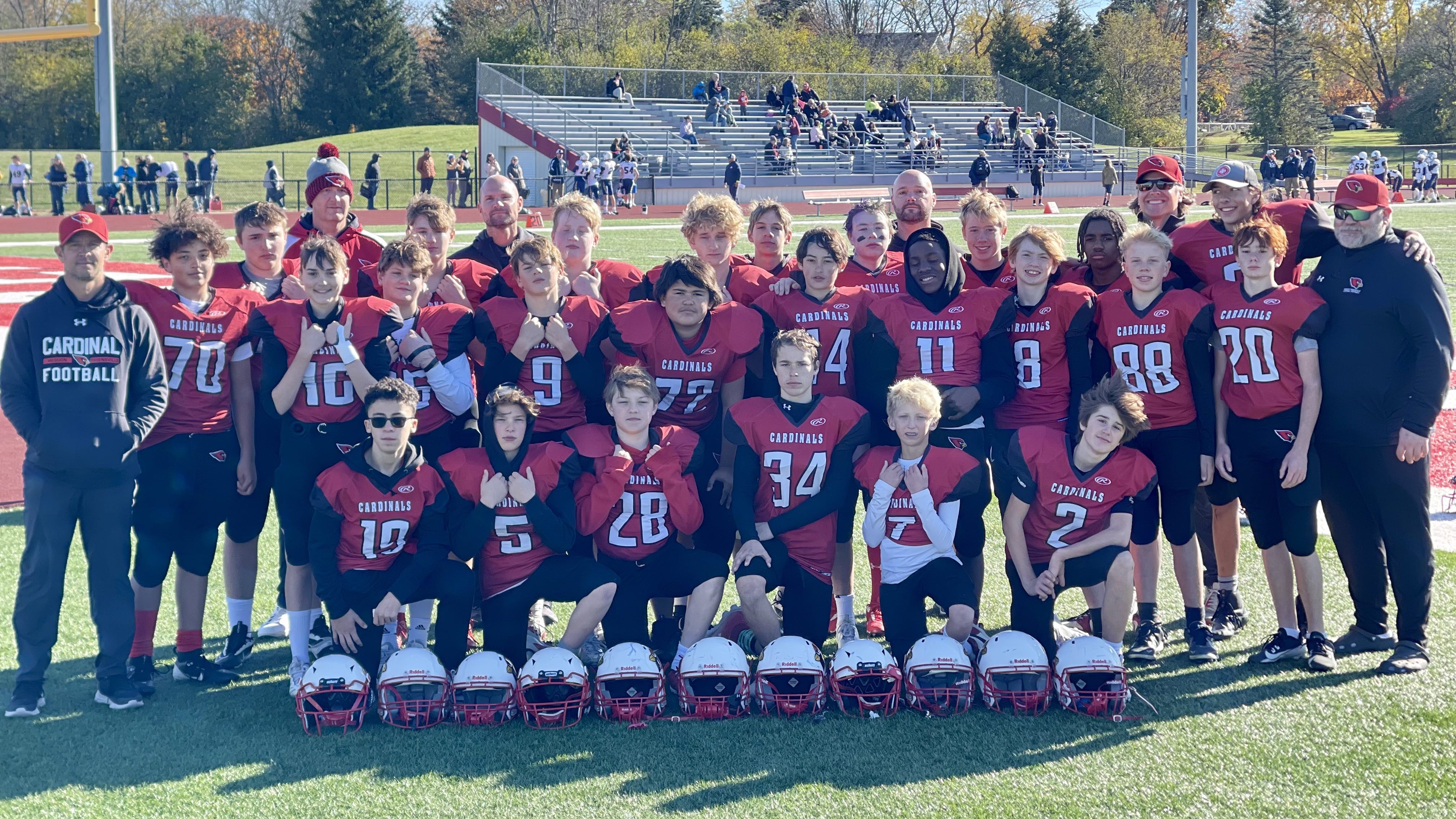
We had a great season in 7th Grade. This was after our last game of the season. Every team should end the year feeling like this.
And again in 8th grade.
For the past four years, from August through October, football has been an intense focus for me. I felt the pressure that comes with being an amateur coach in a high-profile team sport like football. So I prepared as much as I could to help give the boys an edge in the games. Sometimes it really helped. Sometimes it didn’t seem to help at all. This was either because our opponent was so good at doing what they do that we couldn’t stop them, or because they were bigger, faster and stronger than us, and we couldn’t stop them. But either way, I always felt as if I did all I knew to do to prepare our team for each game. And I learned a little from each win and each loss. Which meant that I found a way to win no matter what the outcome was.
Magnus’ 8th grade season. My last year coaching football. And the first time Magnus was taller than me..
The 10 Best Things About Coaching Football.
1. Winning. There is nothing quite like winning a team sport.
2. Being called Coach. For years, I have been called Coach in our community. It’s always fun and surprising for someone who never expected to coach anything to be called that on the sidewalk, in the schools, and in stores and restaurants. It feels both respectful and as if you had a positive influence on a child’s life. It also makes me feel like I should be wearing a whistle everywhere I go.
3. The Brotherhood: Seeing these boys support each other and coming together as a strong team is amazing. Hearing the stories of them sitting together at lunch at school is rewarding. And knowing how close I still am to the guys I played football with makes me excited for them and the relationships they are forging through their collective football experience.
4. Hearing our defense call out the opponent’s offensive formation and the play they are about to run during a game. It meant the boys were paying attention in practice, they recognized what they were seeing and were prepared to defend the play. I loved that.
5. Stops in the backfield: Quarterback sacks and stuffed runs were the big wins for a defensive coordinator. We have had plenty of those over the past few years. It was a thrill every time.
6.Blocked Punts and Kicks. These have a huge impact on the game. They are magical gifts from heaven. Magnus had a slew of these during his Cardinal football career. And I discovered that a slew is the same amount in both the English and Metric system.
7.Interceptions: These are mission-accomplished plays. They are never not exciting.
8. The Funny Kids: Football is a serious game. But I love the kids who brought their sense of humor to practice and made us all laugh. The funnies often create stronger memories than the wins.
9. The Intense Kids: These kids set the tone for the team at practice and in games. They helped get the team mentally prepared to go to work. I always admired the mentality these winners brought to the field.
10.The Respectful Kids. The kids who responded to all coaching with Yes, Coach and No Coach, who looked you in the eyes, and who asked intelligent questions were a pure pleasure to work with and a sign of good parenting.
Key Takeaway
If you have a chance to positively impact the lives of kids, do it. Coaching, mentoring, volunteering, teaching, chaperoning. All of it helps. And you will get just as much out of it as the kids. Our youth can never have too many positive adult influences in their lives. And you gain by sharing your time, talent and knowledge with others. Don’t worry that you don’t know enough. Raise your hand and learn as you go. That’s what I did. And I can’t imagine my life without this chapter, these experiences, and these boys.
*If you know someone who could benefit from this message, please share it with them.
I met with an entrepreneur earlier this week who has a startup. My friend is in the early stages of his newborn business where you don’t get much sleep and you change a lot of diapers. (Your own.)
As my entrepreneur friend talked about his startup experience, I realized I had advice that would help with each of his challenges. I shared some actions to take, resources to employ, strategies to consider and helpful materials to read. I also shared the relative merits of Zantac, Tums and Rolaids for heartburn and upset stomachs. Because I know what Rolaids spells.
I could tell that my friend found my guidance valuable. Both because he told me it was useful and because he later texted me and said the same thing. (I’m quick like that.)
However, what I shared wasn’t complicated, specialized or exclusive knowledge. It was simply logical common sense. Or so I thought. Until I thought about it more.
The Insight
It’s important to recognize that much of what feels like logical common sense to you today was once completely foreign and unknown.
You improve your logic and common sense every day. It is a byproduct of your experience and education. The more logic and common sense you accumulate the more valuable you become to others, both as a user of your own knowledge and as acoach, mentor or advisor. (Those are all different things. My friend Stacy Sollenberger taught me that in the book Guide Coaching.)
Since you were a wobbly, pooping-you-pants toddler you have collected a lifetime of logic and common sense. You have racked up far more than you know, and in more areas than you recognize. Realize that others don’t know what now feels obvious and commonplace to you. That makes you a valuable resource to people who are one or more steps behind you. You can offer tremendous help when you pass your baton of wisdom to them. (And good job not pooing yourself anymore.)
Examples
-As an entrepreneur, you can share your wisdom with anyone who is behind you.
-As a career haver, you can pass your knowledge to anyone junior to you to help them advance their learnings at a faster pace than they could through their own experience alone.
-As a married human you can share your learnings with anyone considering getting married, newlyweds and others passing through the various phases and challenges of the most important relationship you will ever have. This is true even if you are bad at marriage because you have discovered what doesn’t work. Like Edison said about his lightbulb moment.
-As a parent, you can pass along great insights and approaches to both new parents and parents who are passing through phases you have already passed through, like the valley of the shadow of death. Or raising 3-year-olds.
Key Takeaway
As you accumulate knowledge and experience it can camouflage itself as common sense. It is not. It just feels like logic because it has become an obvious truth to you. Recognize the value of your earned wisdom and share it with those trailing behind you on the learning curve. It will help them accelerate their own growth and impact. It will help them accumulate wisdom that will increase their value to the world. And as the people you share your knowledge with pass your baton of wisdom to others your positive impact on the world compounds without end.
*If you know someone who could benefit from this message, please share it with them.
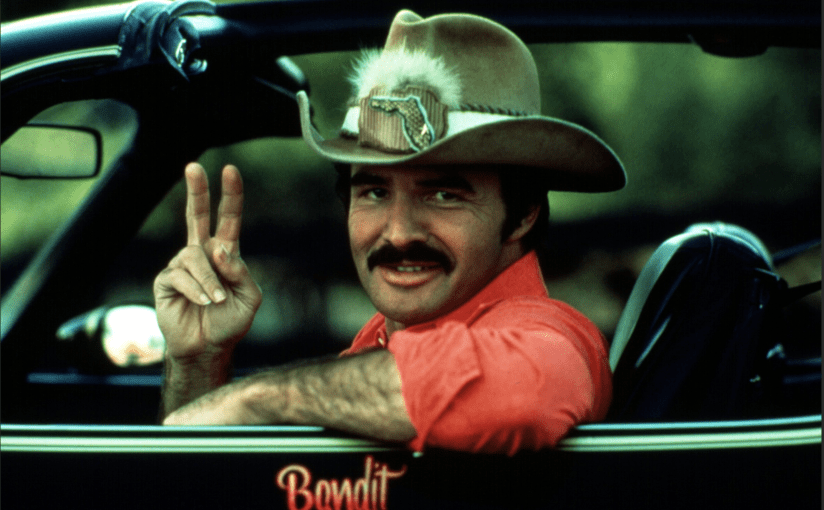
When I was a kid I loved the movie Smokey and The Bandit. I was into trucks and Trans Ams. So a movie about those two vehicles racing across America, starring Burt Reynolds and his mustache, was an obvious Oscar winner to me.
I also loved the theme song from the movie, East Bound and Down by Jerry Reed. My favorite line from the song is the classic, ‘We’ve got a long way to go, and a short time to get there.’
Those lyrics still play in my head today. Because as a business owner, and both a football and track and field coach, I have big goals for my teams to accomplish. And I have a short time to make them happen.
Getting The Most Out Of Your People
To get the most out of your people there is a simple exercise to help you budget the time and energy you spend with each of the members of your team.
Grab a sheet of paper. (Yes, they still make paper.) On the left side write down a list of those you manage or coach in order from most productive to least productive. Your productivity rock stars will be at the top. Your ‘Why-are-they-still-here’ person is at the bottom.
Then, to the right of that, create a list, in order, of how much time you spend managing or coaching each of the people you lead.
Now, you are going to draw a good old-fashioned straight line connecting the names on the left list to the same name on the right list.
If you are drawing straight lines, and the lines don’t cross, you are budgeting your time appropriately. If your lines Christopher Cross, you spend too little time with your most talented people, and too much time with your least talented people. It is time to re-budget.
Key Takeaway
Maximize the return on your time invested in your team. This means the most productive people should get the most time and attention. The least productive people should get the least of your time. This rewards good behavior from your best people. And it ensures that your time and energy are invested where they will get the greatest return. Spending more time with your less productive team members sends the wrong signal to your great talent. And it is a waste of time. With rare exceptions, the least productive team members will always generate the least results.
*If you know someone who could benefit from this message, please share it with them.
I have competed all my life. As an athlete. As a businessman. And as a coach. I have seen how some teams and businesses always generate great results, while others never do. (Coughing: Cleveland Browns.)
I have learned what it takes to achieve great results. And like Bennifer, Hall & Oates, and Gin n’ Juice, successful results are a product of two things.
The System and The Subject.
The System is the way of doing things.
It is the process. The expectations. The values. The technique. It is the school of thought. The philosophies. It is the declared purpose and priorities. It is the tolerances permitted. It is the culture. It is the rituals and norms. And the people with other names besides Norm.
The Subject is the person being coached, led or taught.
Subjects vary in skills, talent, commitment, attitude, experience, determination, resolve and grit. They vary in natural ability and capacity. They vary in tolerance for pain and suffering. They vary in height, weight and speed. And subjects vary in loyalty, royalty, and the price they are willing to pay.
What This Means.
The system will determine how much you can get out of the subject.
The subject will determine how much you can get out of the system.
A better system will generate better results for a subject.
A better subject will generate better results within a system.
Key Takeaway
For the team to create the greatest results, continuously improve your system, and attract better subjects. For the individual to achieve the greatest results, find the greatest system.
*If you know someone who could benefit from this message, please share it with them.
This fall marks my 6th year of coaching football. I never had any interest in coaching. I started when my son Magnus’ flag football program needed parent coaches. It was only a Saturday morning commitment back then. But like the mythical slowly boiled frog, who forgot to jump out of the pot, I am now the defensive coordinator for Magnus’ 7th grade tackle football team. Which is an everyday-in-August commitment. Oy.
As a coach, I am really a student. I am trying to learn as much about football as I can to help my players play well, have fun, and be safe. But like Uncle Rico, I still have a strong desire to win.
Back to School
2 weeks ago I had a great opportunity to learn some new things about the game of football. On Varsity Day, Coach Tom Price, President of Cardinal Football, brought the local Varsity football players from Homestead High School in Mequon, Wisconsin to practice to work with the 5th-8th grade players in the Cardinal football program that feeds players into Homestead. While the high schoolers were working with our athletes, one of the outstanding Homestead football coaches on Head Coach Drake Zortmans’s staff talked to the Cardinal coaches about football.
The coach, Dan Juedes, is a 70-something who is not only in the Wisconsin Football Coaches Hall of Fame, he is in the National Football Coaches Hall of Fame. He coaches at football camps across the country, including at many of the Big Ten schools. In fact, Dan has been coaching so long that when he started the Big 10 conference only had 5 teams.
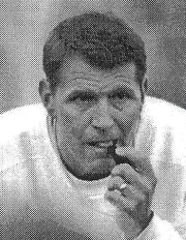
Coach Dan Juedes looking very coachy.
Dan’s Lessons
As the novice coaches gathered around Dan, he shared a few gems about coaching football. His first lesson had been passed along to him by the legendary Bo Schembechler, the former head football coach at the University of Michigan. Dan told us:
‘The average football play lasts 7 seconds. All players look pretty much the same during the first 2 seconds. What separates great players from the ordinary is what they do in seconds 3 through 7.‘
-Coach Dan Juedes
When Dan shared this I felt like I had heard Einstein explain the Universe with E= MC2. Because Dan’s 7-second rule took a very complex game and broke it down into a very simple formula for success.
Coach Juedes carried off the field, presumably because he was tired from coaching so hard.
Josh Hunt, our 7th-grade teams’ head coach, and I couldn’t wait to share this valuable insight with our players. So once we were reunited with our athletes (and it felt so good) we eagerly shared our new insight with our team. And we have been resharing the 7-second secret every day since.
Applying the 7-Second Success Formula
On Saturday we had our first game of the season. The last thing I told the players before they took the field was to give a full 7 seconds of effort on every play and great things would happen.
But the much bigger opponents overwhelmed our team out of the gate. They ran around us and over us until they were knock, knock knocking on the endzone’s door.
But with our backs to our own endzone, defending a first and goal play from the 6-yard line our team gave a 7-second effort. My son Magnus fired across the line from his defensive end position and engaged with a tight end. He shed the blocker at 2 seconds and attacked the opposing team’s quarterback. What happened over the next 5 seconds changed everything.
Magnus sprinted after the quarterback, and not only did he tackle him deep in the backfield, he punched the ball out of his hands in the process. Our middle linebacker Jaden Daniels was also giving a 7-second effort and pounced on the loose ball. This meant that we went from our opponent having the ball on first and goal from the 6-yard line, to our team having a first and ten at the 17-yard line. Boom!
Then our offense became a 7-Second Squad. We put together an 83-yard scoring drive that led to a 6-0 lead.
It turns out that’s all we needed to win the game. Because thanks to our 7-second efforts we held our formidable and much bigger opponent to 0 points. A shutout.
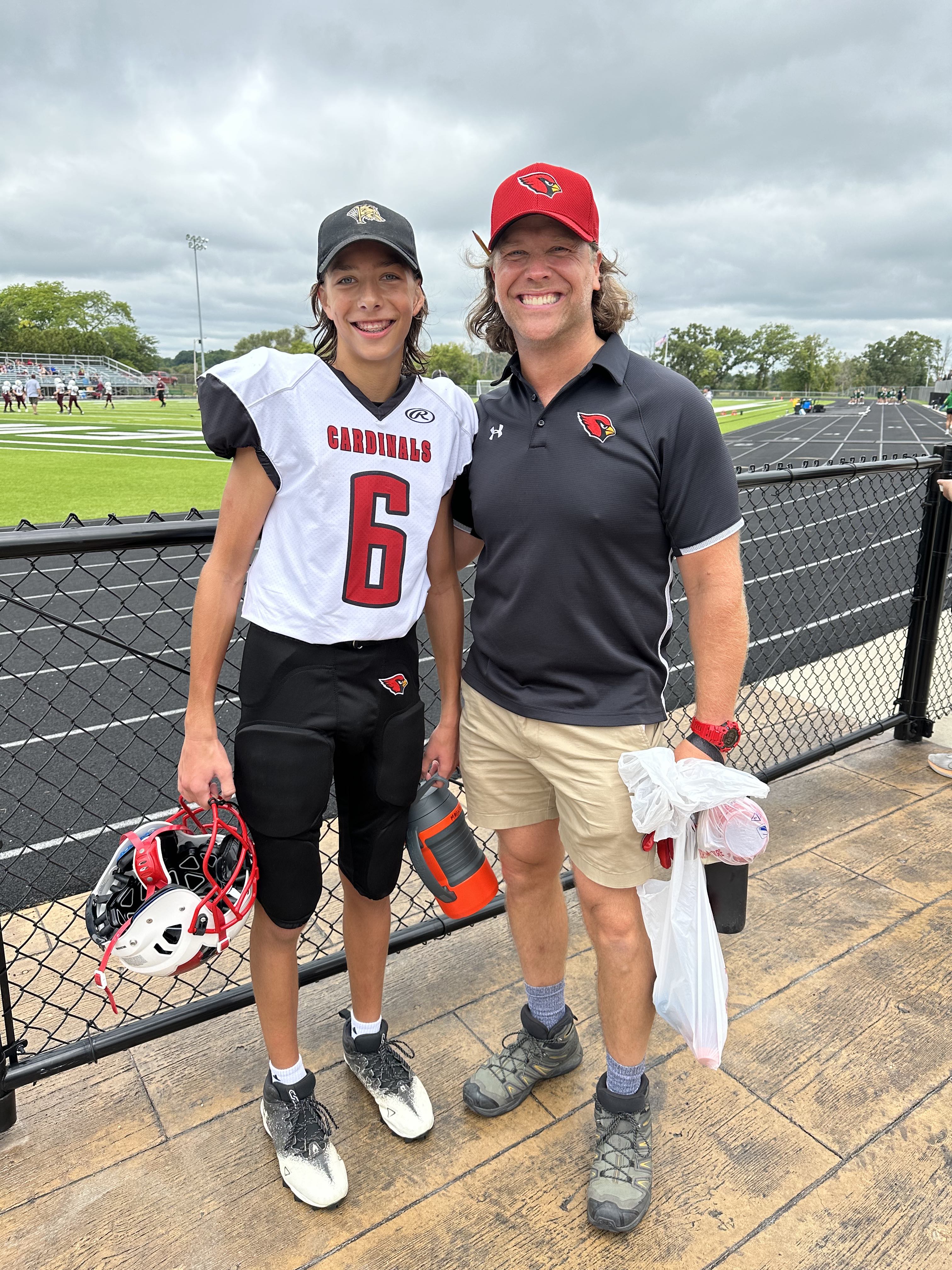
Me and Magnus after our opening game win.
The 7-Second Life Lesson
Dan’s 7-second rule teaches us to go hard to the end of every play. While everyone starts out doing the right thing on nearly every play, at some point, most people stop giving maximum effort and forfeit the advantage to those who go hard until the whistle blows.
But the 7-Second rule doesn’t just apply to football. The basic concept applies to success in all areas of life. Most people start out strong. But they give up too early. They stop or quit just when their effort is needed most. It is true in sports and in your career. It is true in marriage and in parenting. And it is true anywhere effort is needed to create results.
Key Takeaway
The difference in life is not made at the start. It is what you do after the start. Don’t stop 2 seconds in. That’s when most people let up, thinking they have done their job. Don’t fall into that trap. True success comes from your effort during seconds 3 through 7. So play the full play. Give a full effort every time. That effort and the advantage it creates compounds, play after play, day after day, year after year. Play until the end. And the end will be sweeter than you could have imagined. Just like the donuts I will bring my team today to celebrate the donut they put on the scoreboard on Saturday. Boom!
Final Note
Over the weekend as I reviewed the game film to provide feedback, I saw the 7-second rule over and over again. The great plays were made by those playing hard for 7 seconds. The best results of all came when the entire team played hard for 7 seconds. And as a proud Dad-Coach, I saw that Magnus had 3 sacks in the game and the game-winning tackle on 4th down in the 4th quarter. All of which came from giving full effort all the way to whistle. And I was amazed as I counted to 7 seconds over and over on our biggest plays. It turns out that Dan and Bo really know what they are talking about.
Also, I want to note that Dan Juedes and Tom Price have been a great help to me as track and field officials running the shot put and discus events at Homestead’s home meets in the spring. Thanks guys!
*If you know someone who could benefit from this message, please share it with them.
When I started my career as an advertising copywriter I learned about the power of a campaign. While it is relatively easy to come up with a single idea to promote your client’s offerings, it is much more difficult to come up with a campaign.
To determine if an idea was campaignable, you had to come up with at least 3 executions based on the same conceptual idea that would allow you to broadly extend the advertising message. Think of the Got Milk? campaign, Allstate’s Mayhem campaign, or the way KFC recently reintroduced Colonel Sanders without the use of CGI, AI, or a mortician.
The campaignability of an idea is the difference between having a one-hit wonder, like Chumbawamba, and having something bigger and more useful, like Taylor Swift’s 44-song Eras Tour. (It’s funny that the Tubthumpers, who admitted to getting knocked down but claimed to get right back up again, only had one hit. Maybe it was the Whiskey drink, or the Vodka drink, or the Lager drink, or the Cider drink that did them in.)
The Rule of 3s
The campaignability rule of 3s is a great rule to apply to other areas of life as well. Because until you have had success in a specific area 3 different times you don’t have proof that you have a repeatable process for success.
For example:
Investors don’t know if they have a valid investment strategy until they have applied it successfully 3 times and gained the targeted rate of return on their money invested.
A coach doesn’t know whether their system truly works until they have had 3 teams or 3 athletes achieve great success following their process.
An artist doesn’t know how to create commercially viable or critically acclaimed art until they do it at least 3 times, without their parents buying their work.
A blogger can’t claim to have proof for their theory of 3s unless they can provide 3 examples, like the 3 I’ve listed above.
What Success 3 Times Means
Once you have had success with an undertaking 3 times, you have proven that you have a repeatable process. Once you have proof that your way works, your opinion carries more weight. You become a credible authority on that subject. In discussions and debates, your perspective has more value because it has been validated by your track record of success.
Investing
As an investor, I have had success buying stock in great companies in industries that have run into bad times. My first success was buying banking stocks during the housing crisis of 2008. I repeated that success with oil stocks in 2020. Then cruise line stocks in 2021. All of these have proven to be great investments. Which provides me with a validated approach that I could share with you.
Coaching
As a track coach all 3 of the girls who I have coached for 3 years have improved their discus throws by at least 45 feet. So I am confident in telling any young athlete I work with that wherever they start out, we will be able to improve at least 45 feet if they follow my system.
Advertising
In advertising, the approach that my team uses for developing brands has proven effective and helped drive business for our clients over and over and over again. So we are confident that our process can be applied to virtually any brand to help drive growth through marketing.
Key Takeaway
If you can achieve success in an area 3 times you have a proven process. Your experience is valuable and transferrable. Remember that you should only take qualified advice from someone who has successfully implemented the advice they are sharing with you at least 3 times. This indicates credibility and a high probability of future success. Anyone can get lucky once. But luck is not a safe bet.
*If you know someone who could benefit from this message, please share it with them.









 Adam Albrecht Blog